 The relationship of good competitive farming practices and pig production efficiency in Mekong delta, Vietnam
ABSTRACT.
This study assesses farmers' perception towards good competitiveness practices (GCP) and explores the factors affecting pig production efficiency in Vietnam. Using binary regression analysis, the study examined variables that significantly affected the production efficiency of 260 pig farmers in Tra Vinh and Ben Tre provinces. The results showed that most farmers were male with the majority working in pig farming as their primary occupation (83.5%). The average age of farmers was 50 years, with the majority having less than ten years of experience. Most farms used artificial insemination (91.9%) and received training (93.5%), although only 39.6% used automated equipment. In GCP, the perception of pork production and sales and financial management of pig production were highly rated by farmers. However, the ability to expand business and production scale were rated lower. Farmers focusing only on pig farming had a negative impact on production efficiency. In contrast, experience and training positively affected production efficiency, emphasizing the value of practical experience and knowledge through informal education. Additionally, perception of herd and farm size in GCP were essential for improving pig production efficiency. These findings provide important insights for improving the competitiveness and productivity of pig farming in the Mekong Delta.
Keywords:
good competitive practice; pig; sustainable agriculture; production efficiency.
Introduction
Pig farming is an essential industry in Vietnam's agriculture, contributing significantly to millions of rural households' food supply and income. The industry is experiencing rapid growth to meet the increasing demand for pork. Still, it faces many challenges, such as price fluctuations, product quality requirements (Qui et al., 2020), and increased competition from other suppliers (Jiang, 2009). To maintain and enhance competitiveness, pig farms must improve production efficiency by applying advanced technology, better management, and improved product quality (Distanont & Orapan, 2020; Smith et al., 2021). The pig industry's sustainable development depends on farms' ability to adapt to changing environmental and market factors (Qui et al., 2020) while improving productivity and production efficiency.
In Vietnam and worldwide, there are many methods and processes to increase productivity in agriculture. These processes have positive effects on agricultural production. For example, the process of increasing productivity in livestock (Hoang, 2020a), crops (Hoang, 2020b), aquaculture (Quyen et al., 2022), or more specifically, GAP or VietGAP (Hoang, 2020b). To implement these processes, farmers need to have appropriate skills. Meanwhile, pig farms' production capacity and competitiveness are affected not only by technical factors but also by sociological factors (Guntoro et al., 2023). According to the research of Hoang (2020a), improving education, providing technical training and credit services, promoting farmers use of information technology tools for marketing, and developing extension services for livestock farmers are ways to facilitate farmers to apply VietGAP processes. Accordingly, these factors partly influence the awareness and application of methods to increase farm competitiveness. According to Bachev (2021), good competitiveness implies that a farm: (1) produces and sells its goods and services efficiently to the market; (2) manages its finances effectively; (3) adapts to changing markets, institutions, and natural environments; and (4) is sustainable over time. Furthermore, innovation, productivity, and competitiveness are closely linked (Elias & Evangelos, 2016); due to a lack of profit and capital, farmers are unable to invest in their farms with advanced technologies that can increase competitiveness. To survive and succeed, farmers must find competitive and sustainable farming methods to improve their livestock performance (Nybom et al., 2021).
In addition, according to research by Phung and Dao (2024), many complex factors influence farmers' decisions to adopt sustainable agricultural development policies to bring profits and efficiency to livestock farming, including socioeconomic status, demographic characteristics, and access to institutional services. The age of livestock farmers can affect their ability to access and adopt new technologies. Education level is also an essential factor in improving production efficiency. Experience in the industry also plays an important role. In addition, participation in support or cooperation groups can provide valuable knowledge, experience sharing, and resources, contributing to improving farm competitiveness. These are also shown in previous studies (Vu et al., 2019). Adopting technology and automated equipment is also related to sociological factors; Those with good support networks are more likely to access and use new technologies (Diaz et al., 2021). Understanding the sociological factors that influence production efficiency is essential to developing strategies to improve productivity and competitiveness in the pig farming industry.
This study aims to investigate the influence of sociological factors and farmers' perceives of competition on production efficiency and competitiveness within Vietnam's pig farming sector, addressing existing challenges and gaps in the literature. The influence of sociological elements, including farmers' demographics, education, experience, and social networks, on agricultural output has been insufficiently examined, despite numerous research focusing on technical aspects. This study seeks to determine key factors of productivity and competitiveness to enhance farm production efficiency in Vietnam's pig farming sector.
Materials and methods
Location
The study was conducted in two provinces, Tra Vinh and Ben Tre, in the Mekong Delta, for five months from February to July 2024. The number of pigs recorded in these two provinces reached 225.7 and 301.1 thousand heads (General Statistics Office, 2023). Located on the route to Ho Chi Minh City, one of the largest markets in Vietnam, the pig farming industry of the two provinces has many outstanding points in terms of output and quality. It somewhat represents the pig farming situation of the provinces in the Mekong Delta.
Sampling methods
The study was conducted in 2 provinces with a sample size of 270. It was conducted in 3 districts in each province, namely Cang Long, Tra Cu, Tieu Can for Tra Vinh Province and Giong Trom, Mo Cay Nam, Mo Cay Bac for Ben Tre province. The random sampling method was used, with each district having a sample size of 45. The study used a survey questionnaire to record information about farmers. With a total of 270 samples issued, the total number of required questionnaires was 260, so the number of samples used for data processing was 260. The remaining 10 questionnaires were not collected due to prevalent problems in survey-based research. Included in this are non-responses, wherein certain respondents may have opted not to complete or submit the questionnaire due to disinterest or time constraints. Additionally, certain questions may have been excluded due to inaccurate or incomplete responses. Such challenges are prevalent in field studies and do not significantly affect the overall validity of the data. The number of samples for the study is consistent with the study of Levine and Stephan (2010); a minimum of 30 samples for each survey unit is appropriate. In addition, the sample was selected according to the following requirements: (1) farmers must have at least five years of experience in pig farming or participating in farm activities, and (2) farmers must have at least five pig units. This ensures that farmers will have basic knowledge about pig trading and production and that pig farming is one of their main jobs, not a side job. Besides, farmers will think it is part of their income and pay more attention to their pig farms.
Moreover, farmers will tend to work and think about their farms. Besides, the number of pigs in small-scale farms is large enough to think about farming business. The survey questionnaire was used in Vietnamese and translated into English (Qui et al., 2020). The survey questionnaire includes the following contents:
The first part asks about the socio-demographic information of farmers, including information on age, gender, farm labor, education level, principal occupation, experience, and training (Table 1).
The second part asks about the production status of the farm, the number of pigs on the farm, the source of pigs imported, the breeding technique, the time of raising, the equipment on the farm, and the distance to the market. The third part asks about the people's perception of the implementation of good competitiveness, including four variables: average score of perception (AVG1) was producing and selling their goods and services effectively to the market using 2 questions to assess; average score of perception (AVG2) was managing their finances effectively using 3 questions to determine; average score of perception (AVG3) was adapting to changing markets, institutions, and natural environment using 2 questions to assess; and average score of perception (AVG4) was sustainability over time using 2 questions to determine.
Data analysis
The study evaluated the variables using descriptive and binary regression methods. The data were processed descriptively using SPSS 26.0 data processing software (IBM Corp, Armonk, NY, USA). The variables used in the questionnaire were defined as follows:
Production productivity is calculated from the variables presented in Equation 1. According to the study (Zelenyuk, 2023), in economics, productivity is often assessed by examining the ratio of output to input, but not always. When a single output, a, is produced from a single input, b, productivity can be easily understood. It can be precisely expressed as the ratio of output to input; the term used to describe this measure is single-factor productivity. It can be calculated at a particular time t using Equation 1:
Productivity = a t /b t (1)
The measure of productivity changes in such simple environments can then be simply defined as the productivity ratio of a factor over a period, which can be rearranged as the ratio between the output index (VND) and the input index (VND), Equation 2:
Productivity = Output / Input = Total pig revenue / Feed, piglets, services (2)
Inputs include factors related to production costs (feed, piglets, veterinary services, electricity, and water), and outputs are revenues from pig sales. Specifically, feed: the cost of purchasing pig feed per cycle. Piglet price: The cost of purchasing piglets per cycle. Veterinary costs: The cost of veterinary services per cycle. Electricity and water costs: Using electricity and water during the production process per cycle. Outputs include Pig market price: The average revenue from selling pigs after each cycle. The production cycle was average of 5 months in small-scale pig farmers in Mekong delta of Vietnam in 2025 (Qui et al., 2025).
In addition, after calculating the productivity of pig farms according to Equation 2, the study will convert this result into production efficiency, in which a ratio > 1 is considered efficient and a ratio ≤ 1 is considered inefficient.
The data were processed using the binary logistic regression (BLR) method to assess the impact of independent variables X (n=1,….n) on the dependent variable Y of the study. Specifically, we can write it according to the formula Equation 3:
Log (P / 1 - P) = Y = b0 + b1X1 + b2X2 +…+ biXk(3)
where log(P / 1 - P) or Y is a probability of the formula; X is the predictor/independent variable; b is the regression coefficient; X(1-n) are independent variables.
In the present study, the dependent variable (Y) is the productivity of pig farms, which is calculated and converted into a dummy variable after calculating the farm's productivity (efficient or inefficient). The independent variables (Xn) include: X1: age; X2: gender; X3: labor; X4: experience; X5: education level; X6: main occupation; X7: pig herd size; X8: training; X9: raising time; X10-X14: 4 variables of perception of farmers towards good competitiveness practices.
From the above variables, we can establish a specific formula as follows (Equation 4):
Y = b0 + b1X1 + b2X2 + … + b14X14(4)
where: Y is the probability of farm efficiency, including efficiency or inefficiency; X1 to X14 are the independent variables, as mentioned above; b is the regression coefficient.
In the present study, the binary logistic regression (BLR) method is used to explore the impact of independent variables which are showed above on the dependent variable which is farm efficiency. The result is expected to be an increase or decrease in one of the dependent variables, leading to an increase or decrease in the production efficiency of pig farms.
Results and discussion
Social profiles and production characteristics in small-scale pig farms
Table 2 presents factors related to pig farming activities. The farmers have an average age of 50.20 ± 7.260 years. Regarding gender, the proportion of males (85.8%) is more dominant than that of females (14.2%). The average number of laborers in a farm is 1.50 ± 0.606 people. In terms of educational level, most farmers have completed high school (69.6%), while lower levels of education account for a smaller proportion (primary school: 5.4%, secondary school: 20.0%, university: 5.0%). The main occupation of farmers is mainly pig farming (83.5%), with only 16.5% of farmers working outside of agriculture. The average experience is less than ten years (10.78 ± 6.865 years). The distance from the farm to the nearest market is less than 4 km (3.468 ± 1.915 km). In terms of pig unit size, most households have 10-20 pig units (38.1%), while farms with smaller (less than ten units) or larger sizes (more than ten units) are unevenly distributed. Pigs are mainly sourced from outside the farm (60.8%), and artificial insemination is widely used (91.9%). Most farmers have attended training in pig farming (93.5%). The average pig-raising time is 5.050 ± 0.616 years, and about 39.6% of households use automatic equipment in pig farming, while 60.4% do not.
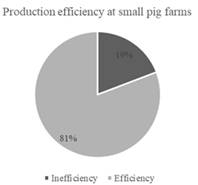
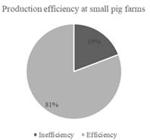
Figure 1 shows the production efficiency of small pig farms. Accordingly, 81% of the farms are assessed as efficient in production, while the remaining 19% are inefficient. The significant difference between these two groups shows that most small pig farms have achieved significant production efficiency in terms of cost-benefit ratio.
Regarding socioeconomics, the study's results are similar to those of previous studies (Qui et al., 2020, 2021). The pig farming group is mainly middle-aged males, indicating that this is a job that requires physical labor and farm management experience, and may also reflect that females are less involved in this industry due to the heavy activities of the work (Guntoro et al., 2023; Qui et al., 2021). With a relatively small number of household laborers and a high school education level, it can be seen that pig farming is a suitable occupation for small-scale households with self-managed activities and does not require too high a level of expertise. Most of the pig farmers have less than ten years of experience, which suggests that many may be new to the pig industry or have not had much time to accumulate knowledge. Short distances from the farm to the source of input materials indicate that farmers have easy access to markets and necessary materials (Linh et al., 2022), which is favorable for maintaining production activities. The fact that most farmers use external pig breeds may explain that they have not yet produced their pig breeds or have not had enough conditions to develop a closed process. Although artificial insemination is used and many farms have participated in technical training, the use of automatic equipment is still limited. This may reflect that, although farmers have access to new techniques, they still have difficulty modernizing the entire production process, possibly due to financial constraints or the ability to invest in technology (Dhraief et al., 2019).
Perception of farmers towards good competitiveness practices
Table 3 shows the farmers' perception of good competitiveness practices to improve the competitiveness of pig farms. Accordingly, the production and consumption of pork products in the market are assessed as effective with a high average (AVG1 = 4.215 ± 0.496), indicating a consensus on production efficiency. Financial management in pig production is also highly appreciated by farmers, reflecting a positive perception of economic efficiency (AVG2 = 3.843 ± 0.362). The ability to adapt to market, institutional, and natural changes is assessed positively, indicating that new technologies and information play an essential role in improving efficiency (AVG3 = 4.142 ± 0.333). However, the ability to expand and develop the pig business in the current period is rated lower, showing difficulties in improving the scale and competitiveness of the industry (AVG4 = 3.463 ± 0.539).
In addition, through the research results on farmers' perception of good competitiveness practices, we can see that farmers understand the market and the influence of the market on pig production efficiency. This is also shown in the study of (Wongnaa et al., 2023). In addition, financial management in livestock farming shows that livestock households have achieved specific efficiency in optimizing financial resources, which may come from optimal management. The ability to adapt to the institutional and natural environment indicates that pig farms have recognized the importance of applying new technology and market changes to improve efficiency. This is similar to the study of (Zabatantou et al., 2023). However, the ability to expand and develop the business to increase competitiveness is rated lower, possibly due to challenges in investment capital, infrastructure, and competition in the industry (Rosanowski et al., 2023). This shows that, although farmers are well perceived as the critical factors in improving competitiveness, they still face difficulties in developing scale and expanding the market, especially when unfavorable financial barriers and market conditions.
The relationship of social profiles-perception of farmers and pig production efficiency
Table 4 highlights the results of the binary regression analysis of the factors affecting the production efficiency at the farm. The model explained 26.9% of the variance in the outcome variable. The main occupation of pig farming shows a significant adverse effect on production efficiency with a coefficient of B = -1.763 (p = 0.035), indicating that pig farmers with no off-farm jobs have more difficulty in achieving high efficiency, possibly due to the complexity and high costs associated with this activity (Exp(B) = 0.172). Experience in the pig industry also plays an important role, with each additional year of experience increasing the likelihood of achieving production efficiency (B = 0.080, p = 0.033; Exp(B) = 1.083), emphasizing the need for expertise to improve production results.
Pig farming training has a strong positive effect on production efficiency, with a coefficient of B = 2.046 (p = 0.011; Exp(B) = 7.736), indicating that participation in intensive training courses can significantly increase farm production efficiency. In addition, expanding the pig herd size to improve farm competitiveness reduces farm production efficiency by 0.898 times, holding other variables constant. Other factors such as gender, education level, automatic equipment, and good competitive practices do not significantly affect this analysis model.
Y = −0.420 + (−1.763 x Pig raising) + (0.080 x Experience) + (2.046 x Training for swine production) + (−0.898 x AGV4).
Pig farming as a primary occupation has a negative impact on production efficiency. This result suggests that those whose primary occupation is pig farming often have more difficulty achieving high production efficiency. Previous studies have shown that pig farming is an activity that requires a considerable investment of time, skills, and finances (Malak-Rawlikowska et al., 2021). High input costs, fluctuating market prices, and disease-related risks may make it difficult for specialized pig farms to achieve stable production efficiency (Qui et al., 2020). In addition, those who focus solely on pig farming without other sources of income may lack the flexibility to adjust their production strategies as the market changes. Participation in off-farm work can reduce liquidity constraints faced by farms and thus can lead to higher productivity and improved farm income (Anang & Apedo, 2023). Furthermore, research by (Tran, 2015) shows that doing extra work outside of pig farming will also increase farmers' income, which can then increase investment in technology or capital that is beneficial for improving the efficiency of agricultural land production later.
Experience in pig farming has a positive effect on production efficiency. This result shows that each year of pig farming experience significantly increases the likelihood of achieving higher production efficiency. Farmers with many years of experience can handle emerging problems more effectively and optimize the farming process. Previous studies have emphasized the importance of experience in helping farmers solve complex issues in farm management and technology adoption (Qui et al., 2021). Experienced farmers are often better able to cope with market fluctuations and diseases (Wang & Hu, 2023), as well as optimize resource use to improve productivity and product quality. Experience also plays a vital role in improving production efficiency through improving management and decision-making skills and developing stable market relationships (Malak-Rawlikowska et al., 2021). Studies have shown that men with higher incomes and more experience are less likely to face challenges and are more likely to adopt sustainable agricultural practices or practice alternative methods than their counterparts (Priya & Singh, 2024). In addition, years of accumulated professional experience help farmers evaluate technical information more effectively than those with less experience (Quy & Ha, 2023).
Pig farming training has a strong positive effect on production efficiency. This result emphasizes the importance of exercise in improving production efficiency. Training courses on livestock farming techniques and animal health care help farmers grasp new methods, reduce risks, and improve livestock farming efficiency (Qui et al., 2020). According to previous studies, livestock training provides knowledge about advanced techniques and helps farmers improve their financial management skills, optimize production costs, and increase market access (Dione et al., 2020). In addition, training sessions also help people better understand pig farming techniques, apply biosecurity measures, and help limit disease (Dione et al., 2020), thereby improving pig herd productivity and bringing high farming efficiency.
In addition, the perception of expanding the pig herd to increase competitiveness has a negative impact on farming efficiency. This may demonstrate that, according to pig farmers, expanding the scale and increasing the number of pigs cannot increase competitiveness, thereby not improving farming efficiency. According to (Maes et al., 2020), the benefits of increasing the herd and expanding the scale of farming are increasing competitiveness, reducing potential impacts on the environment, thereby increasing productivity and the ability to manage the quality of the entire production process strictly and are often applied in large-scale farms. However, in the current study, the implementation of measures to increase competitiveness at the household level cannot be met due to small-scale farming conditions, and expanding the scale is not yet at a level that can bring about significant changes and requires a lot of investment capital. In addition, according to small-scale farmers, expanding the herd and farm scale will somewhat reduce economic efficiency due to the high initial costs. The reason may be because farmers often need capital to adopt new technologies and purchase inputs in larger farms. However, small-scale farmers face financial constraints, coupled with low incomes and high costs, requiring the use of agricultural credit (Kumari & Garg, 2023; Khan et al., 2024). In addition, smallholders also usually depend more on family labor than on large-scale farms that have to pay outside workers, which might help to cut running expenses. Small farms are also more adaptable and can fast adjust to changes in the market or unanticipated challenges as they depend on family labor. Furthermore, small farms can maximize resources and byproducts. Large farms may, however, have declining returns due to their higher fixed costs, more complex management needs, and increased sensitivity to systemic hazards.
Other factors did not significantly impact the study, which is consistent with other studies on pig farms in the Mekong Delta (Qui et al., 2020, 2021). Good competitive practices, including market, finance, and environment, did not significantly impact this analysis (this does not mean that they are not necessary in other contexts). In addition, many studies have shown that education level can affect the ability to adopt new technologies, while the use of automated equipment can help reduce labor and production costs. However, in the specific context of this study, these factors may not have had a strong enough impact or may not have been widely applied in the farming community participating in the survey.
Conclusion
It can be concluded that a range of factors affect production efficiency in pig farms. The main occupation of pig farming had a significant negative impact on efficiency, possibly due to high operating costs and the complexity of the production process. However, industry experience and participation in pig farming training both had positive impacts, indicating the importance of specialized skills and knowledge in improving efficiency. In addition, other factors, such as pig herd size, tended to reduce production efficiency with expansion. In contrast, factors such as gender, education level, and automated equipment did not have significant effects. These results highlight the importance of carefully considering social and technical aspects to improve efficiency and sustainability in the pig farming industry, especially for small-scale farmers.
Data availability
Not applicable.
Acknowledgment
We acknowledge the support of time and facilities from Tra Vinh University (TVU) for this study.
References
-
Anang, B. T., & Apedo, C. K. (2023). The influence of off-farm work on farm income among smallholder farm households in northern Ghana. Cogent Economics & Finance, 11(1), 2196861. https://doi.org/10.1080/23322039.2023.2196861
» https://doi.org/https://doi.org/10.1080/23322039.2023.2196861 -
Bachev, H. L. (2021). Unpacking competitiveness of agricultural farms in Bulgaria. Journal of Economics Bibliography, 8(1), 56-81. https://doi.org/10.1453/jeb.v8i1.2180
» https://doi.org/https://doi.org/10.1453/jeb.v8i1.2180 -
Dhraief, M. Z., Bedhiaf, S., Dhehibi, B., Oueslati-Zlaoui, M., Jebali, O., & Ben-Youssef, S. (2019). Factors affecting innovative technologies adoption by livestock holders in arid area of Tunisia. Journal of Economics, Agriculture and Environment, 4, 3-18. https://doi.org/10.30682/nm1904a
» https://doi.org/https://doi.org/10.30682/nm1904a -
Diaz, A. C., Sasaki, N., Tsusaka, T. W., & Szabo, S. (2021). Factors affecting farmers’ willingness to adopt a mobile app in the marketing of bamboo products. Resources, Conservation & Recycling Advances, 11, 200056. https://doi.org/10.1016/j.rcradv.2021.200056
» https://doi.org/https://doi.org/10.1016/j.rcradv.2021.200056 -
Dione, M. M., Dohoo, I., Ndiwa, N., Poole, J., Ouma, E., Amia, W. C., & Wieland, B. (2020). Impact of participatory training of smallholder pig farmers on knowledge, attitudes and practices regarding biosecurity for the control of African swine fever in Uganda. Transboundary and Emerging Diseases, 67(6), 2482-2493. https://doi.org/10.1111/tbed.13587
» https://doi.org/https://doi.org/10.1111/tbed.13587 -
Distanont, A., & Orapan, K. (2020). The role of innovation in creating a competitive advantage. Kasetsart Journal of Social Sciences, 41(1), 15-21. https://doi.org/10.1016/j.kjss.2018.07.009
» https://doi.org/https://doi.org/10.1016/j.kjss.2018.07.009 -
Elias, C., & Evangelos, G. (2016). Quadruple innovation helix and smart specialization: knowledge production and national competitiveness. Foresight and STI Governance, 10(1), 31-42. https://doi.org/10.17323/1995-459x.2016.1.31.42
» https://doi.org/https://doi.org/10.17323/1995-459x.2016.1.31.42 -
General Statistics Office. (2023). Statistical Year Book of 2023 Statistical Publishing House. https://www.nso.gov.vn/en/default/2024/07/statistical-yearbook-of-2023/
» https://doi.org/https://www.nso.gov.vn/en/default/2024/07/statistical-yearbook-of-2023/ -
Guntoro, B., Triatmojo, A., Ariyadi, B., & Qui, N. (2023). Risk analysis in cattle farmers’ prevention practices of anthrax and foot and mouth disease in yogyakarta province, Indonesia. Advances in Animal and Veterinary Sciences, 11(6), 987-997. https://doi.org/10.17582/journal.aavs/2023/11.6.987.997
» https://doi.org/https://doi.org/10.17582/journal.aavs/2023/11.6.987.997 -
Hoang, G. H. (2020a). Adoption of good agricultural practices by cattle farmers in the Binh Dinh Province of Vietnam. Journal of Agricultural Extension, 24(4), 151-160. https://doi.org/10.4314/jae.v24i4.15
» https://doi.org/https://doi.org/10.4314/jae.v24i4.15 -
Hoang, G. H. (2020b). Exploring farmers' adoption of VietGAP from systemic perspective: implication for developing agri-food systems. British Food Journal, 122(12), 3641-3661. https://doi.org/10.1108/BFJ-09-2019-0724
» https://doi.org/https://doi.org/10.1108/BFJ-09-2019-0724 -
Jiang, H. (2009). Review of vietnamese agricultural policy. Transnational Corporations Review, 1(3), 17-29. https://doi.org/10.1080/19186444.2009.11658201
» https://doi.org/https://doi.org/10.1080/19186444.2009.11658201 -
Khan, F. U., Nouman, M., Negrut, L., Abban, J., Cismas, L. M., & Siddiqi, M. F. (2024). Constraints to agricultural finance in underdeveloped and developing countries: a systematic literature review. International Journal of Agricultural Sustainability, 22(1), 2329388. https://doi.org/10.1080/14735903.2024.2329388
» https://doi.org/https://doi.org/10.1080/14735903.2024.2329388 -
Kumari, A., & Garg, V. (2023). Impact of credit on sustainable agricultural development in India. Journal of Sustainable Finance & Investment, 13(1), 560-571. https://doi.org/10.1080/20430795.2021.1964811
» https://doi.org/https://doi.org/10.1080/20430795.2021.1964811 - Levine, D. M., & Stephan, D. F. (2010). Even you can learn statistics: A guide for everyone who has ever been afraid of statistics FT Press.
-
Linh, N. T., Dong, N. T. K., & Thu, N. V. (2022). A survey of Muscovy duck production in rural areas of Tra Vinh Province, Vietnam. Journal of the Indonesian Tropical Animal Agriculture, 47(2), 138-145. https://doi.org/10.14710/jitaa.47.2.138-145
» https://doi.org/https://doi.org/10.14710/jitaa.47.2.138-145 -
Maes, D. G. D., Dewulf, J., Piñeiro, C., Edwards, S., & Kyriazakis, I. (2020). A critical reflection on intensive pork production with an emphasis on animal health and welfare. Journal of Animal Science, 98(Suppl 1), S15-S26. https://doi.org/10.1093/jas/skz362
» https://doi.org/https://doi.org/10.1093/jas/skz362 -
Malak-Rawlikowska, A., Gębska, M., Hoste, R., Leeb, C., Montanari, C., Wallace, M., & Roest, K. (2021). Developing a methodology for aggregated assessment of the economic sustainability of pig farms. Energies, 14(6), 1760. https://doi.org/10.3390/en14061760
» https://doi.org/https://doi.org/10.3390/en14061760 -
Nybom, J., Hunter, E., Micheels, E., & Melin, M. (2021). Farmers’ strategic responses to competitive intensity and the impact on perceived performance. SN Business & Economics, 1(6), 74. https://doi.org/10.1007/s43546-021-00078-1
» https://doi.org/https://doi.org/10.1007/s43546-021-00078-1 -
Phung, Q. A., & Dao, N. (2024). Farmers’ perceptions of sustainable agriculture in the Red River Delta, Vietnam. Heliyon, 10(7), e28576. https://doi.org/10.1016/j.heliyon.2024.e28576
» https://doi.org/https://doi.org/10.1016/j.heliyon.2024.e28576 -
Priya, & Singh, S. (2024). Factors influencing the adoption of sustainable agricultural practices: a systematic literature review and lesson learned for India. Forum for Social Economics, 53(1), 1-17. https://doi.org/10.1080/07360932.2022.2057566
» https://doi.org/https://doi.org/10.1080/07360932.2022.2057566 -
Qui, N. H., Guntoro, B., & Syahlani, S. P. (2020). The social profile, constraints, and its impact on swine herd size in Tra Vinh Province, Vietnam. Tropical Animal Science Journal, 43(4), 385-390. https://doi.org/10.5398/tasj.2020.43.4.385
» https://doi.org/https://doi.org/10.5398/tasj.2020.43.4.385 -
Qui, N. H., Guntoro, B., Syahlani, S. P., & Linh, N. T. (2021). Factor affecting the information Sources and communication channels toward pig farmer’s perception of African swine fever in Tra Vinh province, Vietnam. Tropical Animal Science Journal, 44(2), 248-254. https://doi.org/10.5398/tasj.2021.44.2.248
» https://doi.org/https://doi.org/10.5398/tasj.2021.44.2.248 -
Qui, N. H., Guntoro, B., Putra, A. R. S., Thu, N. T. A., Liangco, N. C., & Linh, N. T. (2025). Analysis of pig farming productivity and the perceptions of farmers towards government support policies in the Mekong delta, Vietnam. Advances in Animal and Veterinary Sciences, 13(2), 279-288. https://dx.doi.org/10.17582/journal.aavs/2025/13.2.279.288
» https://doi.org/https://dx.doi.org/10.17582/journal.aavs/2025/13.2.279.288 -
Quy, M. D., & Ha, D. T. (2023). Pig farmers’ preferences for the adoption of good animal husbandry practices in Vietnam: a choice experiment. Sustainability, 15(13), 10545. https://doi.org/10.3390/su151310545
» https://doi.org/https://doi.org/10.3390/su151310545 -
Quyen, N. T. K., Yen, T. T. B., & Riple, A. K. L. (2022). Adoption of vietnamese good agricultural practices (VietGAP) in aquaculture: evidence from small-scale shrimp farming. Asian Fisheries Science, 34(2021), 393-403. https://doi.org/10.33997/j.afs.2021.34.4.012
» https://doi.org/https://doi.org/10.33997/j.afs.2021.34.4.012 -
Rosanowski, S. M., Magouras, I., Ho, W.-C., Yiu, W. C. J., Pfeiffer, D. U., & Zeeh, F. (2023). The challenges of pig farming in Hong Kong: a study of farmers’ perceptions and attitudes towards a pig health and production management service. BMC Veterinary Research, 19(1), 30. https://doi.org/10.1186/s12917-023-03591-7
» https://doi.org/https://doi.org/10.1186/s12917-023-03591-7 -
Smith, H. E., Sallu, S. M., Whitfield, S., Gaworek-Michalczenia, M. F., Recha, J. W., Sayula, G. J., & Mziray, S. (2021). Innovation systems and affordances in climate smart agriculture. Journal of Rural Studies, 87, 199-212. https://doi.org/10.1016/j.jrurstud.2021.09.001
» https://doi.org/https://doi.org/10.1016/j.jrurstud.2021.09.001 -
Tran, T. Q. (2015). Nonfarm employment and household income among ethnic minorities in Vietnam. Economic Research, 28(1), 703-716. https://doi.org/10.1080/1331677X.2015.1087872
» https://doi.org/https://doi.org/10.1080/1331677X.2015.1087872 -
Vu, V., Ho, H., & Le, Q. (2019). Impact of farmer education on production efficiency: The case of rice farms in Vietnam. Management Science Letters, 9(11), 1909-1918. https://doi.org/10.5267/j.msl.2019.6.002
» https://doi.org/https://doi.org/10.5267/j.msl.2019.6.002 -
Wang, J., & Hu, X. (2023). Factors influencing disease prevention and control behaviours of hog farmers. Animals, 13(5), 787. https://doi.org/10.3390/ani13050787
» https://doi.org/https://doi.org/10.3390/ani13050787 -
Wongnaa, C. A., Ansah, R. O., Akutinga, S., Azumah, S. B., Acheampong, R., Nana, S. Y., Mensah, G. A., Gidisu, S., & Awunyo-Vitor, D. (2023). Profitability, market outlets and constraints to Ghana's pig production. Cleaner and Circular Bioeconomy, 6, 100068. https://doi.org/10.1016/j.clcb.2023.100068
» https://doi.org/https://doi.org/10.1016/j.clcb.2023.100068 -
Zabatantou, L. H., Bouity, C. A., & Owonda, F. (2023). Impact of agricultural credit on productivity. Theoretical Economics Letters, 13(06), 1434-1462. https://doi.org/10.4236/tel.2023.136081
» https://doi.org/https://doi.org/10.4236/tel.2023.136081 -
Zelenyuk, V. (2023). Productivity analysis: roots, foundations, trends and perspectives. Journal of Productivity Analysis, 60(3), 229-247. https://doi.org/10.1007/s11123-023-00692-1
» https://doi.org/https://doi.org/10.1007/s11123-023-00692-1
Edited by
-
Associate Editor in charge:
Leandro Dalcin Castilha