 Inflammatory cytokines, molecular stress factors and oxidative DNA damage markers of female Clarias gariepinus from different fishing sites of Ureje river of Ado Ekiti, Nigeria
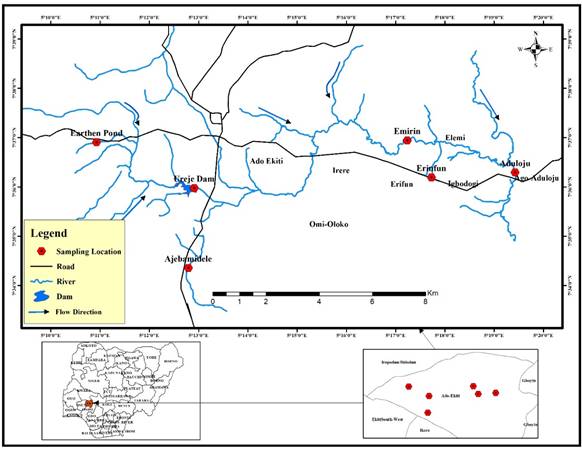
Fish are highly susceptible to water pollution due to their direct exposure to contaminants. Chemical pollutants of rivers, such as toxic chemicals, heavy metals, pesticides, oil spills, excessive nutrients and industrial effluents, can have pathophysiological effects on fish populations and their habitats. The present study evaluated inflammatory cytokines, molecular stress factors and oxidative DNA damage markers of female catfish captured from different fishing sites of Ureje river in Ado Ekiti. Sixty matured female African catfish, Clarias gariepinus were caught with nets by fishermen from an Earthen Pond, and different fishing points of Ureje river as it flows through the metropolis (waterworks, Ajebamidele, Emirin, Erinfun and Aduloju fishing locations) Blood samples were collected and serum obtained for analysis. The result showed that 8-hydroxy-2'-deoxyguanosine (8OHdG) of female catfish from the Waterworks, Ajebamidele, Emirin, Erinfun and Aduloju fishing points were significantly higher (p<0.05) than those from the Earthen Pond. Nuclear Factor kappa B (NF-kB) of female catfish were significantly (p<0.05) higher in fishing points than those at the Ureje reservoir (waterworks) and earthen pond. The Transforming growth factor beta 1 and Interleukin 6 of catfish from Water Works and Earthen Pond were significantly higher (p<0.05) than those from Emirin, Erinfun, Ajebamidele, and Aduloju fishing points. The Heat shock protein 70, Tumor necrosis factor α, Interferon γ, Interleukin 10 and Immunoglobulin M were higher in catfish from the Earthen Pond. In conclusion, this study revealed that fishes captured from fishing points far away from Ureje reservoir within Ado Metropolis are prone to oxidative DNA damage and abberations occasioned by higher 8-OHdG and NF-kB, while higher stocking density of earthen ponds perturb the inflammatory cytokines of female African catfish.
Keywords:
deoxyribose nuclei acid; oxidative status; fishing sites; fishermen
 Thumbnail