 Parameterization of the apsim model for irrigated maize-signalgrass intercropping system
ABSTRACT.
The Agricultural Production Systems Simulator (APSIM) has been widely used in studies to simulate the growth and development of pastures and grain crops in single-crop and intercropping cultivation systems. The objective of this study was to parameterize the APSIM and evaluate its effectiveness in estimating the growth and productivity of maize and signalgrass (Urochloa ruziziensis) in single-crop and intercropping systems in northern Piauí State, Brazil. Data were collected from the experimental field of the Brazilian Agricultural Research Corporation (Embrapa Mid-North) in Teresina, Piauí State, Brazil. The photosynthetically active radiation and soil water content were the main measurement parameters to calibrate the light extinction coefficient and radiation use efficiency, with adjustments to the phenological and structural parameters of maize. The leaf, stalk, and total shoot dry weights and leaf area index (LAI) of both crops and maize organs (husk, cob, and grains) were evaluated. The model showed coefficient of determination (R2) values ranging from 0.81 to 0.99 and Nash-Sutcliffe efficiency (NSE) values ranging from 0.72 to 0.99 for single-crop cultivation of signalgrass; R2 values ranging from 0.87 to 0.93 and NSE values ranging from 0.62 to 0.67 for intercropping cultivation of signalgrass; R2 values ranging from 0.43 to 0.97 and NSE values ranging from -3.33 to 0.95 for single-crop cultivation of maize; and R2 values ranging from 0.30 to 0.93 and NSE values ranging from 0.21 to 0.92 for intercropping cultivation of maize. The APSIM model provided an adequate fit for growth simulations of signalgrass and maize in single-crop and intercropping systems. It can simulate the growth and yield of irrigated signalgrass and maize in single-crop and intercropping systems.
Keywords:
Zea mays; Urochloa ruziziensis; agricultural simulation; crop model; forage
Introduction
Maize is cultivated in various regions in Brazil across different crop systems, mainly in single-crop systems. Intercropping maize with forage grass species, particularly those of the genus Urochloa (signalgrass), has become increasingly important in crop‒livestock integration systems. Despite the growing interest in these systems, the growth dynamics of forage grasses intercropped with maize must be investigated further to optimize grain and forage yields (Martuscello et al., 2009). In recent years, maize-signalgrass intercropping has become a widespread practice in crop-livestock integration systems. This crop association serves multiple purposes, such as promoting soil cover, straw formation, and grain and silage production and providing grazing fields. These benefits are important for ensuring sustainable agriculture, especially given the climatic uncertainties inherent to agriculture (Ceccon et al., 2018).
Modeling agricultural systems is a promising approach for crop yield forecasting and economic risk reduction. Field research to obtain data on plant yield and growth levels is a time-consuming and resource-intensive process. Models of crop growth and development based on key parameters can assist in monitoring, forecasting, and early decision-making.
Simulation models are widely employed as tools to explore the impacts of technologies, assisting researchers in field studies and examining their effects across various biophysical and socioeconomic systems. The Agricultural Production Systems Simulator (APSIM) platform integrates specific soil, climate, and dry matter modules, allowing the simulation of plant development, plant-nitrogen interactions, climatic risk, and management practices and thereby facilitating the estimation of plant growth under various management strategies (Holzworth et al., 2018).
Significant advances have been made in modeling signalgrass pastures and maize crops, reflecting the importance of maize-signalgrass intercropping systems for the agricultural sector, especially in crop-livestock integration systems. However, few studies have aimed to model this intercropping system to better understand the growth and yield interactions and variations influenced by climatic factors and nutrient competition. Thus, understanding the dynamics of these systems and synthesizing this information through mechanistic global models such as the APSIM model are essential. According to Bosi et al. (2023), parametrizing, calibrating, and combining the APSIM-Maize and APSIM-Tropical Pasture models enables the creation of a maize‒pasture intercrop model (the APSIM‒Maize‒Tropical Pasture model).
Within this context, the hypothesis considered is that the APSIM model can utilize management and environmental data from intercropping systems to perform complex simulations on the basis of system observations. The objective of this study was to parameterize the APSIM and evaluate its effectiveness in estimating the growth and productivity of maize and signalgrass (Urochloa ruziziensis) in single-crop and maize-signalgrass intercropping systems in northern Piauí State, Brazil.
Material and methods
The experimental data used to parametrize the APSIM model were obtained from tests conducted at the Brazilian Agricultural Research Corporation (Embrapa Mid-North) in Teresina, Piauí State, Brazil (05°05' S, 42°48' W; with an altitude of 74.4 m) from June to September 2021 (Figure 1).

Location of the state of Piauí in the northeastern region of Brazil and the experimental area of the Brazilian Agricultural Research Corporation (Embrapa Mid-North) in Teresina, Piauí State, Brazil.
The regional climate can be characterized as a dry subhumid and megathermal climate, with a moderate rainfall season in summer, a mean annual temperature of 28.5°C, and a mean annual rainfall of 1,318 mm (Medeiros et al., 2020). Soil samples were collected from the 0.0-0.2, 0.2-0.4, and 0.4-0.6 m layers for chemical analysis and soil fertility correction. The soil in the experimental area was classified as a Typic Hapludult (Dystrophic Red-Yellow Argisol) (Santos et al., 2018).
Maize seeds were sown on June 7, 2021, with a 0.5-m spacing between rows. Signalgrass (Urochloa ruziziensis) seeds were sown at a rate of 7 kg ha-1 on the same date as maize sowing. Soil acidity and fertility were corrected with 1,500 kg ha-1 dolomitic limestone, 20 kg ha-1 nitrogen, 30 kg ha-1 phosphorus, and 60 kg ha-1 potassium. A topdressing was applied 18 days after sowing using 130 kg ha-1 of nitrogen and 50 kg ha-1 of a commercial micronutrient formulation (FTE BR12; B, Cu, Mn, Zn, and S). The mean air temperature during the experiment was 26.9°C, with a maximum value of 33.8°C and a minimum value of 22.8°C.
The photosynthetically active radiation was measured using reference bars above the canopy and at ground level, thereby continuously monitoring the growth of signalgrass along with maize. The photosynthetically active radiation in the trial with single-crop cultivation of maize and in the trial with single-crop cultivation of signalgrass was measured by installing a PAR bar at 2 m above the canopy and a PAR bar at ground level. In the trial with maize intercropped with signalgrass, a PAR bar was installed at 2 m above the canopy and a PAR bar at ground level, in addition to a PAR bar installed following the growth of signalgrass. Radiation not intercepted by maize and signalgrass was measured every seven days to determine the quantity of intercepted radiation by the grass canopy. Weather data, including rainfall depth (mm), air temperature (°C), relative air humidity (%), wind speed (m s-1), and global solar radiation (MJ m-2 day-1), were collected throughout the experiment.
The experimental tests were located in three areas: 12 × 120 m for single maize, 12 × 60 m for single signalgrass, and 12 × 60 m for the maize-signalgrass intercropping (Figure 2).

Experimental area of the Brazilian Agricultural Research Corporation (Embrapa Mid-North) in Teresina, Piauí State, Brazil, and distribution of experimental fields.
The experiments (single maize, single signalgrass, and maize-signalgrass intercropping) were conducted under a conventional sprinkler irrigation system, with a total irrigation amount of 525.40 mm. The maize BM-709 PRO hybrid and the signalgrass species Urochloa ruziziensis were employed. The soil moisture content in the 0.0-1.2 m layer was monitored using sensors (TDR-CS616, Campbell Sci., Logan, USA), with three replications and weekly readings. Soil samples were collected from the 0.0-0.6 m layer to determine physical‒hydrological characteristics and to develop a water retention curve (Bosi et al., 2022).
Determination of biometric parameters
Samples were collected from the plants in all the treatments at 14-day intervals, starting 28 days after sowing and continuing until 118 days, which corresponds to physiological maturation. Maize plants were evaluated for leaf, stalk, and total fresh and dry weights (g), leaf area (cm2), grain dry weight (g), cob dry weight (g), and husk dry weight (g). Seven collections of maize and signalgrass plants were performed within an area of 0.5 m2 in each plot, with four replications. The fresh samples were weighed, and the leaf area was evaluated via an LI-3100 leaf area meter. The samples were then dried in an oven at 65°C. The leaf area-to-dry weight ratio was used to determine the specific leaf area for maize and signalgrass plants, which was subsequently incorporated into the APSIM model as a basis for simulations.
Methods of entry in the APSIM model
The APSIM model requires two main entry files to start the simulations. These files included data on the annual mean temperature (°C), annual thermal amplitude (°C), daily maximum and minimum air temperatures (°C), rainfall depth (mm), and solar radiation (MJ m-2). These climatic data were obtained from an automatic meteorological station of the Brazilian National Institute of Meteorology (INMET) in Teresina. Additionally, the required information included soil data and geographical coordinates (latitude and longitude).
The SoilWat submodule includes data on the soil water balance, and specific parameters were maintained. The SoilOrganicMatter submodule includes data on soil organic matter, and the default model values were maintained. The Chemical submodule includes data on the soil chemical composition for organic carbon and pH. The Fertilizer submodule includes data on the initial soil nitrogen content, and values described by Bosi et al. (2022) were employed.
APSIM-Tropical Pasture model structure
The APSIM-Tropical Pasture model is a next-generation version of APSIM software (Holzworth et al., 2018) that aims to estimate the growth and organic matter flows in grass species. Settings and calibrations were performed for each species through submodels of plant organs calculated for biomass and nitrogen demands. The model accounts for the specific leaf area, leaf area index, and leaf weight for estimating the dry weights of plant parts (Brown et al., 2014). Adjustments were performed considering the day length, crop age and phenological stages. The model included eight developmental stages controlled by the thermal time and photoperiod, thereby simulating water, nitrogen, and organic matter. The management practices and irrigation were implemented following the methodology proposed by Bosi et al. (2022).
APSIM-Maize model structure
The APSIM-Maize model is a simulation model that can be used to estimate the growth of maize on the basis of several factors, such as climate, water, and nitrogen. These modules assist in estimating the allocation of dry matter and nitrogen in different plant parts, such as roots, leaves, and grains. Additionally, it simulates plant development, grain yield on the basis of the size and number of grains, and root growth across the soil profile, and it calculates water, nitrogen, and organic matter processes (Bosi et al., 2023).
APSIM-Maize-Tropical Pasture model structure
The APSIM-Tropical Pasture and APSIM-Maize models were parametrized and integrated to form a single file. These submodels were inserted into the simulation, thus creating a maize-signalgrass intercropping model, denoted the APSIM-Maize-Tropical Pasture model. An intercrop submodule was added to the validation module, which was connected to the soil and water submodules. Maize and pasture management practices were added to the operations and irrigation schedule submodules. Phenological, climate, and soil parameters for maize-signalgrass intercropping were added to the report submodule. The integration of the submodels results in shared climate and soil conditions for the crops, making it possible to simulate the competition between them for radiation, fertility, and water.
Parameterization of the APSIM-Tropical Pasture model
Data on signalgrass (Urochloa brizantha cv. Piatã) were used by Bosi et al. (2022) to adjust the model for single-crop systems. These data were replaced with the values of this study, including coefficients of extinction (k = 0,67) and radiation use efficiency (RUE = 1,56 g MJ-1). The coefficient of extinction (k) was determined on the basis of the Beer‒Lambert law, and the mean temperature was calculated using experimental data (Souza et al., 2022). The radiation use efficiency was estimated on the basis of the dry biomass, the solar radiation intercepted by the plant canopy, and air temperature correction. The model was adjusted for single signalgrass crops considering the total shoot dry weight (TSDW), the leaf dry weight (LDW), the stalk dry weight (SDW Bsc), and the leaf area index (LAI) (Bosi et al., 2022).
Parameterization of the APSIM-Maize model
Data on weather and maize crops were used to parametrize the APSIM-Maize model for the irrigated crops grown in the experimental area of the Brazilian Agricultural Research Corporation (Embrapa Mid-North). The default parameters of the model served as base values, and management practices, including sowing, soil fertilizer application, irrigation, and dry biomass of plant parts, were implemented. Data on the photosynthetically active radiation, soil moisture, and planting conditions were considered. The model was subsequently calibrated for maize grown in a single-crop system, adjusting the parameters via trial and error. The variables evaluated during the crop cycle were TSDW, LDW, SDW, LAI, and husk, cob, and grain dry weights.
Parameterization of the APSIM-Maize-Tropical Pasture model
The APSIM-Maize-Tropical Pasture model was created by combining the structures of the APSIM-Maize and APSIM-Tropical Pasture models. Climatic data from the meteorological station of the Embrapa Mid-North in Teresina were substituted into the model. The next phase included the incorporation of management practices for the simulation experiment, such as sowing, soil fertilizer application, irrigation, and dry biomass measurements. The soil module and its operations and irrigation schedule submodules were used to input information on sowing, soil fertilizer application, and irrigation. Data on soil physical and chemical characteristics were substituted into the same module for the maize and signalgrass crops to simulate competition. Submodules were used to incorporate data related to the management approach adopted in the intercropping system.
Evaluation of the APSIM model
The performance of the model in the tests conducted at Embrapa Mid-North was assessed for accuracy and precision of the estimates using five indices:
On the basis of the coefficient of determination (R2), the linear regressions between the observed and estimated values of each variable were classified as inadequate (R2 ≤ 0.60), adequate (0.60 < R2 ≤ 0.70), high (0.70 < R2 ≤ 0.80) and very high (R2 > 0.80) (Bosi et al., 2022).
The Nash-Sutcliffe efficiency (NSE) (Equation 1) is a dimensionless measure that describes the accuracy of the model (Equation 3), which can be used to classify the model accuracy as inadequate (NSE ≤ 0.50), adequate (0.50 < NSE ≤ 0.65), high (0.65 < NSE ≤ 0.75) and very high (NSE > 0.75) (Bosi et al., 2022).
(1)
The mean error (ME) serves as an indicator of the bias in the simulations and can be calculated as:
(2)
The mean absolute error (MAE) can be calculated as follows:
(3)
The root mean square error (RMSE) (Equation 4) is a measure of the overall model performance by summing the mean differences between the observed and estimated values.
(4)
Results and discussion
Single-crop cultivation of signalgrass (Urochloa ruziziensis)
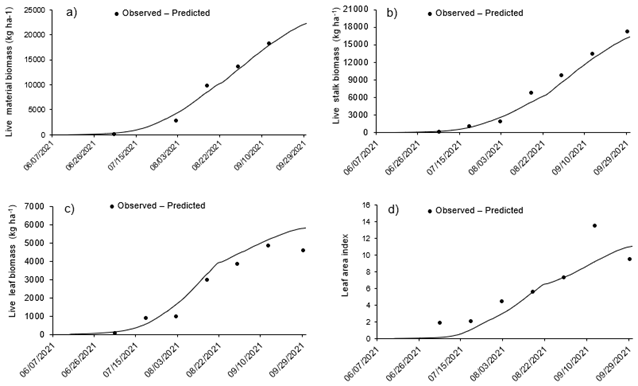
Figure 3 shows the variations in the observed and estimated data used to calibrate the parameters for the total shoot dry weight (TSDW), leaf dry weight (LDW), stalk dry weight (SDW), and leaf area index (LAI) throughout the production cycle of irrigated signalgrass grown in a single-crop system.
The radiation use efficiency for the entire signalgrass plant was 2.5 g MJ-1, on the basis of the assumption that 20% of photoassimilates are directed to root development. However, the value was 1.56 g MJ-1, on the basis of the assumption that 50% of the intercepted radiation is photosynthetically active radiation, with a base temperature of 10.3°C (Souza et al., 2022).
Variations in the observed and estimated fresh weights and leaf area indices used in the parameterization of irrigated signalgrass (Urochloa ruziziensis) grown as a single crop from June to September 2021 in Teresina, Piauí State, Brazil.
The APSIM model showed high performance in the growth simulations, yielding results similar to those observed under the analysis conditions (Figure 3a, b, c, and d). The biomass increased according to the same trend as that in the observed data. The simulated data exhibited a strong correlation with the observed data (R2 = 0.99), indicating high precision of the model with a Nash-Sutcliffe efficiency (NSE) value of 0.99 (Table 1). The leaf biomass increased consistently, following the observed trend, highlighting the model effectiveness in estimating the development of irrigated signalgrass plants. Souza et al. (2022) reported the same trend for irrigated signalgrass (Urochloa brizantha cv. Marandu) grown in a single-crop system, indicating that the model is effective in assessing the effects of the management and environmental conditions of signalgrass (Figure 3c).
The observed and estimated results for the TSDW, LDW, SDW, and LAI of single signalgrass plants are listed in Table 1.
The APSIM model adequately and precisely simulated the growth of the plant and its different parts, with R2 = 0.99 and NSE = 0.99. This result is consistent with those of Bosi et al. (2022), who reported high to very high coefficient values for signalgrass (Urochloa brizantha cv. Piatã), with R2 values between 0.75 and 0.86 and NSE values between 0.32 and 0.85. The biomass analysis results were adequate, with an RMSE of 801.4 kg ha-1, which is consistent with the trends observed for irrigated signalgrass (Urochloa brizantha cv. Marandu) reported by Souza et al. (2022). The biomass results were consistent with those of Bosi et al. (2022), who reported very high precision (R2 values between 0.89 and 0.94) and accuracy levels (NSE values ranging from 0.88 to 0.92). The RMSE observed by Bosi et al. (2022) for the leaf biomass (RMSE = 468 kg ha-1) was similar to that obtained in this study (RMSE = 604.8 kg ha-1). These results confirm the model capacity to simulate leaf growth, biomass, and yield throughout the plant's phenological development under the soil and climatic conditions and the management used for the growth of irrigated signalgrass grown in a single-crop system.
Signalgrass (Urochloa ruziziensis) intercropped with maize
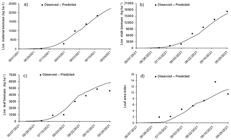
Figure 4 shows the variations in the observed and estimated data used to calibrate the parameters for the TSDW, LDW, SDW, and LAI of signalgrass intercropped with maize.
Variations in the observed and estimated fresh weights and leaf area indices used in the parameterization of irrigated signalgrass (Urochloa ruziziensis) intercropped with maize from June to September 2021 in Teresina, Piauí State, Brazil.
The simulation efficiency for signalgrass growth varied between the single-crop system (Figure 3) and the intercropping system (Figure 4). The NSE values of the signalgrass growth simulations ranged from 0.62 to 0.63 (intercropping system) and 0.72 to 0.99 (single-crop system) (Table 2). This result is likely connected to the difficulty of the model in assessing interspecific competition within the intercropping system, as these plants typically adapt to environments with competition. Previous studies have shown that shading stimulates leaf and stalk growth and increases the plant height, indicating a loss of energy during photorespiration to the detriment of photosynthesis for sustaining biomass production (Paciullo et al., 2008; Pezzopane et al., 2019). The correlations between the observed and estimated TSDW, LDW, SDW, and LAI values of the signalgrass plants in the intercropping system are listed in Table 2.
Statistical indices, coefficients, and errors between the observed and estimated values obtained by the APSIM-Tropical Pasture model for the variables of irrigated signalgrass (Urochloa ruziziensis) grown in an intercropping system from June to September 2021 in Teresina, Piauí State, Brazil.
The simulated signalgrass TSDW values in the intercropping system showed high precision (R2 = 0.88) and adequate efficiency (NSE = 0.67), and the model adequately estimated the TSDW (RMSE = 2418.90 kg ha-1). The LDW simulations showed high precision (R2 = 0.87) and adequate efficiency (NSE = 0.66). Gomes et al. (2020) reported biomass simulations with very high precision (R2 = 0.83) and high accuracy (NSE = 0.75), indicating that the model adequately simulates the biomass of plants and their components, especially the LDW (RMSE = 687 kg ha-1). The model simulated the grass biomass with high precision, indicating its capacity to simulate intercropping systems with grain and tropical pasture species under different environmental conditions. Bosi et al. (2022) reported that the APSIM model simulated the biomass of a forage species with very high precision (R2 values ranging from 0.89 to 0.94) and accuracy (NSE values ranging from 0.88 to 0.92 and an RMSE of 620.30 kg ha-1).
Single-crop cultivation of maize
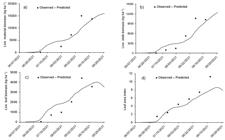
Figure 5 shows the variations in the observed and estimated data used to calibrate the parameters for the TSDW, LDW, SDW, and LAI throughout the production cycle of irrigated maize grown in a single-crop system.

Variations in the observed and estimated fresh weights and leaf area index used in the parameterization of irrigated maize grown in a single-crop system from June to September 2021, in Teresina, Piauí State, Brazil.
The model effectively simulated maize growth (TSDW, LDW, and SDW) on a daily scale (Figure 5a, b, and c, respectively). However, despite the model yielding simulated LAI values similar to the observed data, the index was underestimated, denoting a slight inconsistency in fitting the data (Figure 5d). Chisanga et al. (2021) reported inaccuracies in LAI estimations by the APSIM-Maize model for three maize cultivars. The determination of the LAI encompasses many steps, which can increase error variability, thus demanding rigor to avoid systematic errors that restrict the accuracy of model estimations.
Figure 6 shows the variations in the observed and estimated data used to calibrate the husk dry weight (HDW), grain dry weight (GDW), and cob dry weight (CDW) parameters.
The model effectively simulated the effects of management and environmental conditions on plant yield components (husk, cob, and grains) for irrigated maize grown in a single-crop system (Figure 6). Baum et al. (2023) reported adequate APSIM model simulations, with R2 values ranging from 0.80 to 0.97 and grain yields ranging from 546 to 1714.7 kg ha-1 across various locations and nitrogen fertilizer rates. Furthermore, Chisanga et al. (2021) reported that the APSIM model accurately simulated the grain weight. However, despite the adequacy of most APSIM model simulations, studies indicate that different submodels should be improved to enhance the data fit to estimations (Bosi et al., 2022; Morel et al., 2020; Berghuijs et al., 2021).

Variations in the observed and estimated husk (e), cob (f), and grain (g) dry weights used in the parameterization of irrigated maize grown in a single-crop system from June to September 2021 in Teresina, Piauí State, Brazil.
The correlations between the observed and estimated TSDW, LDW, SDW, LAI, HDW, GDW, and CDW values of irrigated maize grown in a single-crop system are listed in Table 3.
The TSDW and LDW were estimated with high precision (R2 = 0.93 and 0.97, respectively) and accuracy (NSE = 0.79 and 0.95, respectively), demonstrating the high performance of the APSIM model for the TSDW (RMSE = 2609.60 kg ha-1) and LDW (RMSE = 223.50 kg ha-1) (Table 3). These results occurred within acceptable ranges, supported by strong correlations and high efficiency compared with the observed data, confirming the ability of the model to simulate maize the crop biomass with high precision.
The model effectively simulated the HDW, GDW, and CDW, achieving high precision (R2 values ranging from 0.94 to 0.98 and NSE values ranging from 0.88 to 0.97) (Table 3). The strong correlations between the observed and estimated data and the simulation accuracy of the model further validate its performance for the GDW (RMSE = 1260.90 kg ha-1). The observed and simulated maize yields at the end of the crop cycle were approximately 9906 kg ha-1 and 9475 kg ha-1, respectively, indicating an adequate simulation accuracy.
Gaydon et al. (2017) simulated the grain yield using the APSIM model under different soil and climatic conditions for maize crops grown in Asia and reported results similar to those obtained in this study, reflecting the model's ability to simulate the maize grain yield under different conditions and management practices. Studies have shown that the APSIM model can be used to simulate the maize grain yield, although with inconsistencies compared with the observed data due to genotype, climate, soil, and management factors (Duarte & Sentelhas, 2020).
Maize intercropped with Urochloa Ruziziensis
Figure 7 shows the variations in the observed and estimated data used to calibrate the parameters for the TSDW, LDW, SDW, and LAI of maize intercropped with signalgrass.

Variations in the observed and estimated fresh weights and leaf area indices used in the parameterization of irrigated maize grown in an intercropping system from June to September 2021 in Teresina, Piauí State, Brazil.
The model effectively simulated maize growth (TSDW, LDW, and SDW) on a daily scale, although it overestimated the daily LDW accumulation (Figure 7c). The LAI was also effectively simulated, with slight underestimation at the beginning of the crop cycle and overestimation at later developmental stages compared with the observed data (Figure 7d). Chisanga et al. (2021) reported variabilities in their simulated LAI values ranging from 3.02 to 3.35 m2 m-2, with R2 values ranging from 0.15 to 0.60, for three maize cultivars. In contrast, the results of this study revealed a maximum LAI of 3.29 m2 m-2 and an R² value of 0.75, indicating adequate precision of the simulations (Figure 7d). Additionally, Zhao et al. (2022) reported similar LAI values for maize cultivars, with variation between crop seasons, highlighting the importance of rigor in LAI determination.
Figure 8 shows the variations in the observed and estimated data used to calibrate the parameters for the GDW, HDW, and CDW of maize intercropped with signalgrass.
The model effectively simulated management and environmental effects on the development of yield components (husk, cob, and grains). The results revealed a satisfactory fit for crop development at the daily scale (Figure 8) and a decrease in the grain yield for intercropping cultivation of maize (Figure 8g) compared with single-crop cultivation of maize (Figure 6g). The APSIM-Maize model exhibited high performance in simulating maize yield components, with an observed grain yield of 5688.10 kg ha-1 and a simulated yield of 4693.33 kg ha-1. Ceccon et al. (2018) reported that increasing the population of signalgrass (Urochloa ruziziensis) plants increased the biomass yield but reduced the maize grain yield (5800 kg ha-1). Similarly, this study revealed a reduction of approximately 50% in the grain yield for intercropping cultivation of maize compared with single-crop cultivation of maize, probably due to interspecific competition for nutrients and climatic factors (Costa et al., 2012).

Variations in the observed and estimated husk (e), cob (f), and grain (g) weights used in the parameterization of irrigated maize grown in an intercropping system from June to September 2021 in Teresina, Piauí State, Brazil.
The correlations between the observed and estimated TSDW, LDW, SDW, LAI, GDW, HDW, and CDW values of irrigated maize grown in an intercropping system are listed in Table 4.
The APSIM model effectively simulated the TSDW and SDW, with high precision (R2 = 0.93 and 0.77, respectively) and high accuracy (NSE = 0.92 and 0.74, respectively) (Table 4). The model also simulated the LAI with notable precision (R2 = 0.75) and accuracy (NSE = 0.62) (Table 4). The strong correlation between the simulated and observed data and high efficiency support the use of SDW data (RMSE = 867.80 kg ha-1) and LAI data (RMSE = 0). However, the precision and accuracy of the model were inadequate for the LDW, with R2 = 0.30 and NSE = 0.21, and a low performance was obtained, with RMSE = 823.70 kg ha-1 (Table 4). Zhang et al. (2023) also reported inconsistencies in leaf biomass simulations by the APSIM model. Nevertheless, simulations for intercropping systems remain limited, highlighting the need for further research and a greater understanding of crop dynamics in intercropping systems.
The APSIM model effectively simulated the GDW, showing high precision and accuracy, with R2 = 0.82 and NSE = 0.79 (Table 4). The strong correlation between the simulated and observed data supports the GDW data (RMSE = 819.10 kg ha-1). Ojeda et al. (2018) considered various environments and management approaches for maize crops and observed differences in simulations, with RMSE values ranging from 835 to 2099 kg ha-1 for the grain yield, indicating that variations in environmental conditions probably affect crop development dynamics.
Conclusion
The Agricultural Production Systems Simulator (APSIM) model provides a suitable fit for simulating the growth and yield of signalgrass (Urochloa ruziziensis) in both single-crop and maize-supplemented intercropping systems. The APSIM model provides a favorable fit for simulating the growth of maize in both single-crop and maize-signalgrass intercropping systems. The parameterized APSIM-Maize model can simulate the total shoot biomass accumulation and grain yield throughout the crop development cycle of irrigated maize in both single-crop and maize-signalgrass intercropping systems.
Data availability
The dataset and metadata used and analyzed in this study are not publicly available due to internal restrictions of the project that funded the data collection; however, they can be provided by the authors upon prior request.
References
- Baum, M. E., Sawyer, J. E., Nafziger, E. D., Huber, I., Thorburn, P. J., Castellano, M. J. & Archontoulis, S. V.. (2023). Evaluating and improving APSIM's capacity in simulating long-term corn yield response to nitrogen in continuous-and rotated-corn systems. Agricultural Systems, 207, 103629.
-
Berghuijs, H. N., Weih, M., Van Der Werf, W., Karley, A. J., Adam, E., Kiær, L. P., Newton, A. C., Scherber, C., Tavoletti, S. & Vico, G.. (2021). Calibrating and testing APSIM for wheat-faba bean pure cultures and intercrops across Europe. Field Crops Research, 264, 1-14. https://doi.org/10.1016/j.fcr.2021.108088
» https://doi.org/https://doi.org/10.1016/j.fcr.2021.108088 -
Bosi, C., Huth, N. I., Sentelhas, P. C. & Pezzopane, J. R. M.. (2022). APSIM model performance in simulating Piatã palisade grass growth and soil water in different positions of a silvopastoral system with eucalyptus. Agricultural Systems, 195, 103302. https://doi.org/10.1016/j.agsy.2021.103302
» https://doi.org/https://doi.org/10.1016/j.agsy.2021.103302 - Brown, H. E., Huth, N. I., Holzworth, D. P., Teixeira, E. I., Zyskowski, R. F., Hargreaves, J. N. G. & Moot, D. J.. (2014). Plant modelling framework: Software for building and running crop models on the APSIM platform. Environmental Modelling & Software, 62, 385-398.
- Ceccon, G., Silva, J. F., Makino, P. A. & Neto, A. L. N.. (2018). Consórcio milho-braquiária com densidades populacionais da forrageira no centro-sul do Brasil. Revista Brasileira de Milho e Sorgo, 17(1), 157-167.
-
Chisanga, C. B., Phiri, E. & Chinene, V. R.. (2021). Evaluating APSIM-and-DSSAT-CERES-Maize models under rainfed conditions using zambian rainfed maize cultivars. Nitrogen, 2(4), 392-414. https://doi.org/10.3390/nitrogen2040027
» https://doi.org/https://doi.org/10.3390/nitrogen2040027 -
Costa, N. R., Andreotti, M., Gameiro, R. A., Pariz, C. M., Buzetti, S. & Lopes, K. S. M.. (2012). Adubação nitrogenada no consórcio de milho com duas espécies de braquiária em sistema plantio direto. Pesquisa Agropecuária Brasileira, 47(8), 1038-1047. https://doi.org/10.1590/S0100-204X2012000800003
» https://doi.org/https://doi.org/10.1590/S0100-204X2012000800003 -
Duarte, Y. C. & Sentelhas, P. C.. (2020). Intercomparison and performance of maize crop models and their ensemble for yield simulations in Brazil. International Journal of Plant Production, 14(1), 127-139. https://doi.org/10.1007/s42106-019-00073-5
» https://doi.org/https://doi.org/10.1007/s42106-019-00073-5 -
Gaydon, D. S., Balwinder-Singh, W, Poulton, P. L., Ahmad, B., Ahmed, F., Akhter, S., Ali, I., Amarasingha, R., Chaki, A. R., Chen, C., Choudhury, B. U., Darai, R., Das, A., Hochman, Z., Horan, H., Hosang, E. Y., Vijaya Kumar, P., Khan, A. S. M. M. R., Laing, A. M., Liu, L. & Roth, C. H.. (2017). Evaluation of the APSIM model in cropping systems of Asia. Field Crops Research, 204, 52-75. https://doi.org/10.1016/j.fcr.2016.12.015
» https://doi.org/https://doi.org/10.1016/j.fcr.2016.12.015 -
Gomes, F. J., Bosi, C., Pedreira, B. C., Santos, P. M. & Pedreira, C. G. S. (2020). Parameterization of the APSIM model for simulating palisadegrass growth under continuous stocking in monoculture and in a silvopastoral system. Agricultural Systems, 184. https://doi.org/10.1016/j.agsy.2020.102876
» https://doi.org/https://doi.org/10.1016/j.agsy.2020.102876 -
Holzworth, D., Huth, N. I., Fainges, J., Brown, H., Zurcher, E., Cichota, R., Verrall, S., Herrmann, N. I., Zheng, B. & Snow, V.. (2018). Next Generation: Overcoming challenges in modernising a farming systems model. Environmental Modelling & Software, 103, 43-51. https://doi.org/10.1016/j.envsoft.2018.02.002
» https://doi.org/https://doi.org/10.1016/j.envsoft.2018.02.002 -
Martuscello, J. A., Jank, L., Gontijo Neto, M. M., Laura, V. A. & Cunha, D. N. F. V.. (2009). Produção de gramíneas do gênero Brachiaria sob níveis de sombreamento. Revista Brasileira de Zootecnia, 38(7), 1183-1190. https://doi.org/10.1590/S1516-35982009000700004
» https://doi.org/https://doi.org/10.1590/S1516-35982009000700004 - Medeiros, R. M., Cavalcanti, E. P. & Medeiros Duarte, J. F.. (2020). Classificação Climática de Köppen para o estado do Piauí-Brasil. Revista Equador, 9(3), 82-99.
- Morel, J., Parsons, D., Halling, M. A., Kumar, U., Peake, A., Bergkvist, G., Brown, H. & Hetta, M.. (2020). Challenges for simulating growth and phenology of silage maize in a nordic climate with APSIM. Agronomy, 10(5), 1-18.
-
Ojeda, J. J., Volenec, J. J., Brouder, S. M., Caviglia, O. P. & Agnusdei, M. G.. (2018). Modelling stover and grain yields, and subsurface artificial drainage from long-term corn rotations using APSIM. Agricultural Water Management, 195, 154-171. https://doi.org/10.1016/j.agwat.2017.10.010
» https://doi.org/https://doi.org/10.1016/j.agwat.2017.10.010 -
Paciullo, D. S. C., Campos, N. R., Gomide, C. A. M., Castro, C. R. T., Tavela, R. C. & Rossiello, R. O. P.. (2008). Crescimento de capim-braquiária influenciado pelo grau de sombreamento e pela estação do ano. Pesquisa Agropecuária Brasileira, 43(7), 917-923. https://doi.org/10.1590/S0100-204X2008000700017
» https://doi.org/https://doi.org/10.1590/S0100-204X2008000700017 -
Pezzopane, J. R. M., Bernardi, A. C. C., Bosi, C., Oliveira, P. P. A., Marconato, M. H., Pedroso, A. F. & Esteves, S. N.. (2019). Forage productivity and nutritive value during pasture renovation in integrated systems. Agroforestry Systems, 93, 39-49. https://doi.org/10.1007/s10457-017-0149-7
» https://doi.org/https://doi.org/10.1007/s10457-017-0149-7 - Santos, H. D., Jacomine, P. T., Anjos, L. H. C., Oliveira, V. A., Lumbreras, J. F., Coelho, M. R., Almeida, J. A., Araujo Filho, J. C., Oliveira, J. B. & Cunha, T. J. F. (2018). Brazilian soil classification system. (5th ed.) Embrapa Solos.
-
Souza, D. P., Mendonça, F. C., Bosi, C., Pezzopane, J. R. M. & Santos, P. M.. (2022). APSIM‐Tropical Pasture model parameterization for simulating Marandu palisade grass growth and soil water in irrigated and rainfed cut‐and‐carry systems. Grass and Forage Science, 77(3), 216-231. https://doi.org/10.1111/gfs.12560
» https://doi.org/https://doi.org/10.1111/gfs.12560 -
Zhang, W., Zhao, Z., He, D., Liu, J., Li, H. & Wang, E.. (2023). Combining field data and modeling to better understand maize growth response to phosphorus (P) fertilizer application and soil P dynamics in calcareous soils. Journal of Integrative Agriculture, 23(3), 1006-1021. https://doi.org/10.1016/j.jia.2023.07.034
» https://doi.org/https://doi.org/10.1016/j.jia.2023.07.034 -
Zhao, B., Ata-ul-karim, S. T., Duan, A., Gao, Y., Lou, H. L, Qin, A., Ning, D., Ma, S. & Liu, Z.. (2022). Estimating the impacts of plant internal nitrogen deficit at key top-dressing stages on corn productivity and intercepted photosynthetic active radiation. Frontiers in Plant Science, 13(864258), 1-14. https://doi.org/10.3389/fpls.2022.864258
» https://doi.org/https://doi.org/10.3389/fpls.2022.864258
Edited by
-
Associate Editor in charge:
Alessandro Lucca BracciniCarlos Alberto Scapim