 Regional dynamics of Huanglongbing (HLB) incidence and management in Brazilian citrus orchards
ABSTRACT.
Huanglongbing (HLB), one of the most destructive citrus diseases worldwide, is caused by a phloem-limited bacterium for which there are no effective control measures. Its rapid spread poses a major threat to citrus production globally. In Brazil, legislation requires citrus growers to submit semi-annual reports on HLB-infected plants; however, data inconsistencies have been observed. This study analysed official reports from 2015 to 2018 in northwestern Paraná State, Brazil, revealing fluctuating disease incidence, with the highest levels recorded in 2015. Contributing factors include inaccurate data reporting and growers’ reluctance to eradicate infected plants. Field inspections in Nova Esperança (Paraná State) showed that HLB incidence ranged from 4.79 to 55.08% among orchards and was strongly influenced by orchard size and management practices. Well-managed orchards exhibited lower infection rates, whereas those retaining infected trees showed greater disease spread. PCR of asymptomatic plants detected no bacterial presence in large, well-managed orchards, and smaller, poorly managed orchards exhibited high infection rates. These findings emphasise the critical role of consistent disease and vector management in mitigating HLB dissemination.
Keywords:
greening; Candidatus Liberibacter asiaticus; visual inspection; PCR
Introduction
Huanglongbing (HLB), also known as citrus greening, is the most destructive disease affecting major citrus-producing regions worldwide, including Asia, North America, South America, and Africa (Trivedi et al., 2012). The disease has continued to spread globally, infecting new areas over time (Bassanezi et al., 2020; Bové, 2006; Graham et al., 2020). When not properly managed, HLB can decimate entire orchards, causing severe yield losses in citrus-growing regions (Singerman et al., 2017).
Paraná is one of Brazil’s leading citrus-producing states. HLB was first reported in Brazil in São Paulo in 2004 (Coletta-Filho et al., 2004) and reached Paraná in 2007 (Nunes et al., 2007). Three bacterial species are associated with HLB: Candidatus Liberibacter asiaticus, Candidatus Liberibacter africanus, and Candidatus Liberibacter americanus. Among them, Ca. L. asiaticus is the most widespread globally, including Brazil, and is transmitted by the Asian citrus psyllid Diaphorina citri (Hall et al., 2012). As D. citri transmits this highly destructive pathogen, it is considered the most harmful pest in citrus production and has been extensively studied for its capacity for rapid dissemination (Grafton-Cardwell et al., 2013). In addition to vector transmission, the bacteria can spread through grafting with contaminated buds or scions (Bové, 2006; Garnier & Bové, 1983).
According to Bassanezi et al. (2013), regional management is the most effective strategy for controlling HLB, and it is necessary to manage the entire surrounding area to minimise primary inoculum sources. Key mandatory measures for all citrus growers include the eradication of infected plants, control of the insect vector, and the use of healthy, certified nursery seedlings (Bové, 2006; Halbert & Manjunath, 2004). This study compared producer-reported data with detailed research-based field inspections to identify potential discrepancies in the actual incidence of HLB in citrus orchards.
Material and methods
Official data sources and selection of properties
Data were obtained from the Biannual Inspection Report of Host Plants of the Causal Agent of Huanglongbing (HLB or Greening) - Inspection by the Owner, a standardised report provided by the Agricultural Defense Agency of Paraná (ADAPAR). These reports are submitted semi-annually by citrus growers in compliance with Normative Instruction (NI) No. 53, issued on October 16, 2008, by the (Ministério da Agricultura, Pecuária e Abastecimento [MAPA], 2017). Data from 2015 to 2018 were analysed.
Properties were selected based on their location, disease management practices, and size. Orchards were distributed along the northern, southern, eastern, and western perimeters of Nova Esperança, Paraná State, Brazil (23°11'43.2" S, 52°12'09.1" W). The analysed properties were coded as 1-17, 19, 22, 23, 26, 27, 31, and 39, all of which had complete data for the study period.
Data collection and disease assessment
Citrus growers are responsible for inspecting their orchards and identifying symptomatic plants based on visual observation. When symptoms are observed, the plant is classified as infected and must be eradicated, with removal reported to ADAPAR. NI No. 53/2008 mandates four annual inspections (one per quarter). Data from 2015-2018 were compared among properties to assess HLB incidence and data consistency. Statistical analyses were performed using the Scott-Knott test at a 5% probability level.
Seven properties (codes 2, 4-8, and 11) were selected for detailed field validation to identify discrepancies between reported and actual HLB incidence. These orchards varied in size (small to large) and cultivated Citrus sinensis (sweet orange) trees of different ages. Management practices were categorised based on whether infected plants were eradicated or retained.
All plants in the selected orchards were visually inspected between May 2018 and May 2019. Each plant was examined individually from the trunk to the canopy, including leaves and fruit. Plants showing characteristic HLB symptoms were marked as positive. Orchards were surveyed row by row to ensure complete coverage. Plants with uncertain or ambiguous symptoms, such as those potentially related to nutrient deficiencies, were considered negative pending laboratory confirmation.
The inspections involved walking each orchard and recording symptomatic plants on manual spreadsheets, which were later used to generate disease incidence maps. We aimed to compare field-based incidence with the data submitted to ADAPAR.
Datasets and statistical analysis
Two datasets were analysed official data from ADAPAR reports (2015-2018); and field inspection data collected from the seven selected orchards (May 2018-May 2019). Statistical analyses using the Scott-Knott test (5% probability) were performed to detect significant differences in HLB incidence across years and properties.
Molecular diagnosis (PCR)
To determine whether asymptomatic or questionable plants were infected with Candidatus Liberibacter asiaticus, conventional PCR was performed on samples from 2 of the 24 previously studied orchards. Selection criteria included property size and management quality. One large, well-managed property (80 ha, Property 2) and one small, poorly managed property (10 ha, Property 4) were selected.
At Property 2, the grower implemented comprehensive disease and vector management, including eradication of infected trees under 8 years old, use of certified seedlings, and periodic insecticide applications targeting D. citri, with active ingredient rotation to prevent resistance. At Property 4, management was inadequate: infected plants were not removed, inspections were infrequent (once per year), and insecticide applications were irregular and reactive to visible symptoms.
Leaf samples from asymptomatic and questionable plants were collected randomly from both properties. Four leaves per plant were sampled (one from each quadrant) to form composite samples, which were stored in labelled paper bags. A total of 76 samples from Property 2 and 14 samples from Property 4 were analysed.
Total DNA was extracted following the method described by Murray and Thompson (1980). Conventional PCR was performed using an Eppendorf Mastercycler thermocycler (Eppendorf GmbH, Oldenburg, Germany) and specific primers for Ca. L. asiaticus (LPas: 5’-TGGTGATAGGGTGGATTTAG-3’ and RPas: 5’-CAACCTCGAAGAAAACAGAC-3’) (Coletta-Filho et al., 2005). PCR products were visualised by agarose gel electrophoresis stained with ethidium bromide using a UVP GDS-8000 documentation system. Samples showing a 950-bp amplicon were considered positive for HLB infection (Coletta-Filho et al., 2005).
Results
Table 1 presents the analysis of HLB incidence across all properties from 2015 to 2018. For properties 1-8, 11, 17, 23, and 27, no significant differences were detected in disease incidence over the analysed years using the Scott-Knott test at the 5% probability level, although these orchards exhibited relatively high incidence values. For properties 9, 10, 12, 13, and 26, the highest incidence occurred in 2015, exceeding the tolerance levels established by NI 53/2008. For example, property 10 had a disease incidence of 28.10%. Properties 14 and 16 had a higher incidence in 2018 and 2017, respectively. At property 15, incidence peaked in 2015 and 2017, with no statistical difference between these years. Property 19 had the highest incidence in 2016 and 2017, and property 22 exhibited high incidence in all years except 2017, when it was statistically lower. Property 31 showed elevated values in 2016 and 2018, and property 39 peaked in 2015 and 2016.
The inspection reports submitted to ADAPAR provided sufficient data to determine annual disease incidence for each year. As shown in Table 2, the overall incidence was highest in 2015, decreased in 2016, slightly increased in 2017, and decreased again in 2018. Although these values might appear low in magnitude, they are epidemiologically significant given the destructive potential of HLB in citrus crops. Statistically, HLB incidence in 2015 differed significantly from all other years, whereas it was not significantly different from 2016 to 2018. The observed fluctuations, particularly the temporary decline in incidence, contradict the typical HLB progression trends reported in the literature (Gottwald, 2010). Similar patterns of disease escalation have been described in Florida, USA, where Sétamou et al. (2020) observed an increase from less than 1% of infected plants in 2012 to 38.7% in 2017, indicating that the disease had become endemic in all commercial orchards.
During this study, several properties were visited to confirm compliance with disease and vector management protocols. Among the 24 orchards analysed, 7 were inspected in the field, and only one followed all recommended measures, with regular eradication of infected plants, quarterly inspections, and biweekly insecticide applications for D. citri control. Based on reports from growers and local technicians, most non-inspected properties failed to remove infected plants, thereby maintaining inoculum sources for disease dissemination.
When assessing discrepancies between official reports and field data, no significant differences were detected in the reported HLB incidence across years for the selected properties (Table 3). However, field inspection data (“Inspection”) revealed higher incidence levels compared to those reported to ADAPAR. In all cases except property 2, the field incidence was significantly greater than the reported values.
The highest incidence was recorded at property 7 (55.08%), and property 2 showed the lowest (4.79%). Property 2 adhered to all disease and vector management recommendations, including regular inspections, biweekly insecticide applications, and systematic removal of symptomatic trees. Its large cultivation area likely enhanced the “edge effect”, reducing vector entry and disease spread. These factors likely explain the consistently low incidence observed in both reported and inspected data for this property.
In contrast, properties 4, 5, 6, 7, 8, and 11 exhibited inspection-based incidence rates of 45.23, 36.59, 37.48, 55.08, 31.24, and 19.64%, respectively. These orchards shared poor management characteristics, including irregular inspections, absence of eradication of symptomatic trees, and sporadic insecticide applications only when symptoms became evident. Moreover, they were among the smallest sweet orange cultivation areas, which could have facilitated rapid intra-orchard disease spread.
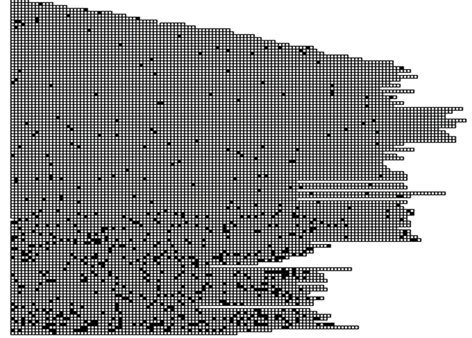
Spatial analysis maps (Figures 1, 2, 3, 4 and 5) further support these findings. At property 2 (Figure 1a and b), contaminated plants were concentrated along the orchard perimeter, particularly at the head and foot rows. This pattern aligns with previous reports showing higher HLB incidence near orchard borders (22.6%) than in interior areas (8.3%) (Fundo de Defesa da Citricultura [Fundecitrus], 2019). At properties 4-8, the disease was widespread across the orchard, preventing identification of infection foci and limiting the effectiveness of sequential insecticide applications. Even at medium-sized property 11 (Figure 4), rapid disease spread was evident, likely due to inadequate management practices.

Representative map of property 2, demonstrating the number of healthy and HLB-contaminated plants in plots 1-16 based on research inspections. The black squares represent contaminated plants, and the white squares represent healthy plants.
The smaller orchards (properties 4-8) were located in the same region (23°07'57.8" S, 52°13'21.9" W), and HLB incidence reached critically high levels according to field inspections. The observed trend indicates potential abandonment or total eradication of these orchards in the near future. For producers to resume citrus cultivation, the implementation of coordinated regional management strategies is essential, provided that disease and vector control measures are rigorously followed.
Conventional PCR was used to detect Candidatus Liberibacter asiaticus in asymptomatic and symptomatically questionable plants (data not shown). Samples 1-74, collected from property 2, revealed only one positive case. This reflects the effectiveness of proper management and vector control practices on this property. In contrast, samples 75-93 from property 4-where recommended measures were not implemented-showed that over 50% of asymptomatic or symptomatically questionable plants tested positive for Ca. L. asiaticus. These findings confirm that inadequate management enables the silent spread of HLB within orchards.

Representative map of property 2, demonstrating the number of healthy and HLB-contaminated plants in plots 17-31 based on research inspections. The black squares represent contaminated plants, and the white squares represent healthy plants.

Representative map of property 4, demonstrating the number of healthy and HLB-contaminated plants present in the area based on research inspections. The black square represents contaminated plants, and the white square represents healthy plants.

Representative map of property 11, demonstrating the number of healthy and HLB-contaminated plants present in the area based on research inspections. The black square represents contaminated plants, and the white square represents healthy plants.

Representative map of properties 5-8, demonstrating the number of healthy and HLB-contaminated plants present in the area based on research inspections. The black square represents contaminated plants, and the white square represents healthy plants.
Discussion
Preventing the introduction of HLB into orchards is virtually impossible due to the disease’s epidemiological features, including the vector’s capacity for short- and long-distance dispersal (Wu et al., 2015). For example, property 10 (Table 1) showed an incidence of 28.10% in 2015, which subsequently decreased to 7.12% in 2016, 6.37% in 2017, and 0.01% in 2018. This contradicts the expected progressive increase in incidence typically observed in infected orchards (Bassanezi et al., 2010; Belasque Junior et al., 2009), suggesting inconsistencies in data reporting. The decrease observed here likely reflects underreporting, as legislation permits up to 2.8% HLB incidence before full eradication is required (Belasque Junior et al., 2009). Statistically significant reductions were also observed at properties 9, 12, 13, 26, and 39 (Table 1).
Fluctuations were observed at properties 15, 16, 22, and 31, where incidence varied substantially over the 4-year period. For instance, property 15 showed incidences of 10.43% (2015), 3.38% (2016), 13.06% (2017), and 2.99% (2018). Such variability deviates from the expected epidemiological trend of a steady increase (Bergamin Filho et al., 2016), reinforcing the likelihood of inaccuracies in reported data. Growers’ reluctance to remove infected trees, especially during peak fruit production, remains a key issue (Bassanezi et al., 2020). Although eradication is easier when plants are young or disease incidence is low, mature orchards are often retained for economic reasons, as infected trees can remain productive for years (Bassanezi, 2018). Several additional factors may contribute to inaccurate reporting, including the bacterium’s long incubation period, insufficient field inspections, and secondary infections.
The incubation period of Candidatus Liberibacter asiaticus may extend for at least 4 months after infection, with a latent period of 10-15 days (Coletta-Filho et al., 2010). During this time, asymptomatic but infectious plants serve as inoculum sources, facilitating spread before detection. Thus, eradication often lags behind new infections. Moreover, the minimum of four annual inspections mandated by law is inadequate for accurate symptomatic tree detection (Belasque Junior et al., 2009). Effective surveillance requires multiple inspections per year by trained teams. When management measures-particularly vector control and infected tree removal-are neglected, disease progression becomes exponential, severely reducing orchard productivity and lifespan (Gottwald, 2010; Gottwald et al., 2008).
Studies in Florida, USA, have shown that the movement of D. citri between orchards significantly influences HLB spread, especially from abandoned groves (Boina et al., 2009). Psyllids can move up to 100 m in 3 days (Boina et al., 2009) and as far as 2000 m in 12 days (Lewis-Rosenblum et al., 2015). Consequently, unmanaged orchards and non-commercial citrus trees act as reservoirs for the pathogen and its vector, emphasising the need for coordinated regional management programs. Thus, the discrepancies between reported and observed data (Table 3) can be explained by latent infections, challenges in visual detection, and external vector migration (Gasparoto et al., 2018; Gottwald, 2010; Grafton-Cardwell et al., 2013). Epidemiological studies have consistently shown that HLB incidence increases over time (Gottwald, 2010), in contrast to the decreasing trends shown in Table 2, indicating the underestimation of actual disease levels in Nova Esperança, Paraná State, Brazil.
Gottwald and Graham (2014) reported that well-managed orchards adhering to strict phytosanitary measures-use of certified seedlings, intensive psyllid control, and prompt symptomatic plant removal-achieved annual HLB eradication rates of 2-5%. Although the properties studied here appear to fall within this range, the actual incidence is likely higher due to inconsistent management. Even frequent insecticide applications do not proportionally reduce disease progression without coordinated regional efforts (Bergamin Filho et al., 2016). The effectiveness of regional management depends directly on the number of participating growers and the synchronicity of insecticide applications (Singerman et al., 2017).
Primary infections typically arise from psyllid migration from unmanaged citrus plants in abandoned orchards, backyards, and forested areas, reintroducing the vector even after insecticide applications (Boina et al., 2009; Hall & Hentz, 2011). Our field inspections revealed that actual disease incidence (“Inspection” data) was consistently higher than that reported, except at property 2, where management practices were properly implemented. Fundecitrus (2019) reported similar patterns in São Paulo and Minas Gerais, where orchards with fewer than 10,000 trees had an HLB incidence of 47.5%, compared to 10.2% in orchards exceeding 200,000 trees. Bové (2014) attributed this difference to the “edge effect”, in which larger blocks reduce disease spread within the orchard interior-consistent with our findings for property 2 compared to smaller properties.
Visual HLB diagnosis can be confounded by nutrient deficiencies, such as zinc deficiency, and asymptomatic infections further complicate detection (Gopal et al., 2010; Li et al., 2009; Teixeira et al., 2008). Therefore, reliance on symptom-based inspections likely underestimates the true incidence, reinforcing the importance of molecular confirmation (Devi et al., 2020). Detailed mapping of symptomatic and asymptomatic plants (Figures 1-5) enabled visualisation of the disease distribution in each orchard, aiding in management planning.
Economic constraints among smallholders hinder effective control. Many lack resources for sequential insecticide applications or hesitate to remove infected trees due to income loss (Bassanezi et al., 2013; 2020). Consequently, poorly managed and abandoned orchards act as inoculum sources, threatening nearby commercial areas and undermining regional management success. In contrast, larger orchards tend to maintain lower disease levels (Graham et al., 2020), partly due to the higher planting density, which minimises replanting and reduces early infection risk (Ferrarezi et al., 2018). National data corroborate this relationship: smaller orchards exhibit proportionally higher HLB incidence (Bassanezi et al., 2020; Fundecitrus, 2019; Gottwald et al., 2008).
Between 2007 and 2018, the number of citrus properties in São Paulo decreased by 35%, mainly among small and medium growers who are unable to sustain management costs (Ruiz et al., 2010). Abandoned orchards accelerate regional spread by serving as reservoirs for D. citri (Bassanezi et al., 2020). Once incidence surpasses manageable levels, growers tend to cease control efforts, leading to near-total infection. However, coordinated regional management initiatives in São Paulo State and Triângulo Mineiro have shown success when preventive measures are consistently applied (Bassanezi et al., 2020).
PCR-based detection of Candidatus Liberibacter asiaticus proved highly effective, confirming infections in asymptomatic plants (Jagoueix et al., 1996; Kaipeng et al., 2017). This highlights the limitations of visual inspection and the necessity of integrating molecular diagnostics into management programs (Canale et al., 2016). Our findings showed that properties following recommended practices, such as property 2, have a lower HLB incidence. Conversely, properties neglecting these measures-such as property 4-showed infection rates exceeding 50% even among asymptomatic plants. Asymptomatic infection during the bacterium’s incubation period complicates visual diagnosis (Hong et al., 2019).
Successful HLB management requires large-scale, coordinated action among growers. Without such cooperation, psyllid dispersal and bacterial transmission continue unchecked (Yuan et al., 2021). Bové (2014) noted that well-managed orchards maintain an HLB incidence below 1%, while poorly managed ones may rise from 2 to 23% within 3 years. Preventive strategies for establishing new orchards should therefore include: (i) selection of disease-free or low-incidence areas, (ii) large-scale continuous planting to enhance the edge effect, (iii) a block planting design, and (iv) row orientation parallel to the farm boundaries (Bassanezi et al., 2020). Adherence to these principles from planting onward significantly reduces the likelihood of disease establishment.
Conclusion
This study provides evidence that the actual incidence of HLB in commercial orchards of Nova Esperança, Paraná, is substantially higher than that reported to ADAPAR. The discrepancy is likely the result of growers’ underreporting due to legal eradication requirements and concerns over profit loss, particularly among small and medium producers. Such practices facilitate disease persistence and spread, even into orchards that adhere to recommended management protocols. Inadequate management remains among the principal drivers of increased HLB incidence. Implementation of coordinated regional management programs and educational and extension initiatives in Paraná’s citrus-growing regions represent critical steps toward sustainable control. Large orchards demonstrated lower internal disease incidence due to the edge effect, highlighting the benefits of scale and rigorous management. Strengthening regional cooperation and adherence to integrated vector and disease management practices are essential for the long-term viability of the citrus industry.
Data availability
Research data are available online at Figshare - https://doi.org/10.6084/m9.figshare.33213129 - with the file name “Regional dynamics of Huanglongbing (HLB) incidence and management in Brazilian citrus orchards”.
Acknowledgements
This research was partially funded by the National Council for Scientific and Technological Development - Brazil (CNPq) through project 302809/2022-8
References
- Bassanezi, R. B.. (2018). Evolución de la severidad y el daño de Huanglongbing en plantaciones de naranjo dulce y sus implicaciones para el manejo de la enfermedad. Cítricos en las Américas, 1(1), 31-44.
-
Bassanezi, R. B., Lopes, S. A., Belasque Junior, J., Spósito, M. B., Yamamoto, P. T., Miranda, M. P., Teixeira, D. C. & Wulff, N. A.. (2010). Epidemiologia do Huanglongbing e suas implicações para o manejo da doença. Citrus Research & Technology, 31(1), 11-23. http://dx.doi.org/10.5935/2236-3122.20100002
» https://doi.org/http://dx.doi.org/10.5935/2236-3122.20100002 -
Bassanezi, R. B., Belasque Junior, J. & Montesino, L. H.. (2013). Frequency of symptomatic trees removal in small citrus blocks on citrus Huanglongbing epidemics. Crop Protection, 52, 72-77. https://doi.org/10.1016/j.cropro.2013.05.012
» https://doi.org/https://doi.org/10.1016/j.cropro.2013.05.012 -
Bassanezi, R. B., Lopes, S. A., Miranda, M. P., Wulff, N. A., Volpe, H. X. L. & Ayres, A. J.. (2020). Overview of citrus Huanglongbing spread and management strategies in Brazil. Tropical Plant Pathology, 45, 251-264. https://doi.org/10.1007/s40858-020-00343-y
» https://doi.org/https://doi.org/10.1007/s40858-020-00343-y -
Belasque Junior, J., Bergamin Filho, A., Bassanezi, R. B., Barbosa, J. C., Fernandes, N. G., Yamamoto, P. T., Lopes, S. A., Machado, M. A., Leite Junior, R. P., Ayres, A. J. & Massari, C. A.. (2009). Base científica para a erradicação de plantas sintomáticas e assintomáticas de Huanglongbing (HLB, Greening) visando o controle efetivo da doença. Tropical Plant Pathology, 34(3), 137-145. https://doi.org/10.1590/S1982-56762009000300001
» https://doi.org/https://doi.org/10.1590/S1982-56762009000300001 -
Bergamin Filho, A., Inoue-Nagata, A. K., Bassanezi, R. B., Belasque Junior, J., Amorim, L., Macedo, M. A., Barbosa, J. C., Willocquet, L. & Savary, S.. (2016). The importance of primary inoculum and area-wide disease management to crop health and food security. Food Security, 8, 221-238. https://doi.org/10.1007/s12571-015-0544-8
» https://doi.org/https://doi.org/10.1007/s12571-015-0544-8 -
Boina, D. R., Meyer, W. L., Onagbola, E. O. & Stelinki, L. L.. (2009). Quantifying dispersal of Diaphorina citri (Hemiptera: Psyllidae) by immunomarking and potential impact of unmanaged groves on commercial citrus management. Environmental Entomology, 38(4), 1250-1258. https://doi.org/10.1603/022.038.0436
» https://doi.org/https://doi.org/10.1603/022.038.0436 -
Bové, J. M.. (2006). Huanglongbing: A destructive, newly-emerging, century-old disease of citrus. Journal of Plant Pathology, 88(1), 7-37. https://doi.org/10.4454/jpp.v88i1.828
» https://doi.org/https://doi.org/10.4454/jpp.v88i1.828 -
Bové, J. M. (2014). Huanglongbing or yellow shoot, a disease of Gondwanan origin: Will it destroy citrus worldwide? Phytoparasitica, 42(5), 579-583. https://doi.org/10.1007/s12600-014-0415-4
» https://doi.org/https://doi.org/10.1007/s12600-014-0415-4 -
Canale, M. C., Tomaseto, A. F., Haddad, M. L., Coletta-Filho, H. D. & Lopes, J. R. S.. (2016). Latency and persistence of “Candidatus Liberibacter asiaticus” in its psyllid vector, Diaphorina citri (Hemiptera: Liviidae). Phytopathology, 107(3), 264-272. https://doi.org/10.1094/PHYTO-02-16-0088-R
» https://doi.org/https://doi.org/10.1094/PHYTO-02-16-0088-R -
Coletta-Filho, H. D., Targon, M. L. P. N., Takita, M. A., De Negri, J. D., Machado, M. A., Amaral, A. M. & Muller, G. W.. (2004). First report of the causal agent of Huanglongbing (“Candidatus Liberibacter asiaticus”) in Brazil. Plant Disease, 88(12), 1382. https://doi.org/10.1094/pdis.2004.88.12.1382c
» https://doi.org/https://doi.org/10.1094/pdis.2004.88.12.1382c - Coletta-Filho, H. D., Takita, M. A., Alves, K. C. S., Targon, M. L. P. N. & Machado, M. A.. (2005). Desenvolvimento de um sistema de diagnóstico de Candidatus Liberibacter sp. através de PCR-multiplex. In XXXVIII Congresso Brasileiro de Fitopatologia. Fitopatologia Brasileira, 30, 60.
-
Coletta-Filho, H. D., Alves, K. C. S., Pereira, M. A. R., Boscariol-Camargo, R. L., Souza, A. A. & Machado, M. A.. (2010). In planta multiplication and graft transmission of ‘Candidatus Liberibacter asiaticus’ revealed by real-time PCR. European Journal of Plant Pathology, 126, 53-60. https://doi.org/10.1007/s10658-009-9523-2
» https://doi.org/https://doi.org/10.1007/s10658-009-9523-2 -
Devi, E. J., Labala, R. K., Modak, R., Singh, N. S. & Devi, H. S.. (2020). Molecular detection of “Candidatus Liberibacter asiaticus” causing HLB in Manipur and correlation of its incidence with elevation. Tropical Plant Pathology, 45(6), 658-667. https://doi.org/10.1007/s40858-020-00392-3
» https://doi.org/https://doi.org/10.1007/s40858-020-00392-3 -
Ferrarezi, R., Wright, A. & Schumann, A.. (2018). Increasing yield through high-density planting. Citrus Industry, 99, 8-12. https://journals.flvc.org/edis/article/view/106824
» https://journals.flvc.org/edis/article/view/106824 - Fundo de Defesa da Citricultura (2019). Levantamento da incidência das doenças dos citros: Greening, CVC e cancro cítrico. Fundecitrus.
-
Garnier, M. & Bové, J. M.. (1983). Transmission of the organism associated with citrus greening disease from sweet orange to periwinkle by dodder. Phytopathology, 73(1), 1358-1363. https://doi.org/10.1094/Phyto-73-1358
» https://doi.org/https://doi.org/10.1094/Phyto-73-1358 -
Gasparoto, M. C. G., Hau, B., Bassanezi, R. B., Rodrigues, J. C. & Amorim, L.. (2018). Spatiotemporal dynamics of citrus Huanglongbing spread: A case study. Plant Pathology, 67(7), 1621-1628. https://doi.org/10.1111/ppa.12865
» https://doi.org/https://doi.org/10.1111/ppa.12865 -
Gopal, G. V., Gopi, V., Kalyani, L., Sreelatha, M. & Sreenivasulu, B.. (2010). Symptom-based diagnosis of Huanglongbing (citrus greening) disease by PCR in sweet orange (Citrus sinensis Osbeck) and acid lime (Citrus aurantifolia Swingle). Archives of Phytopathology and Plant Protection, 43(9), 863-870. https://doi.org/10.1080/03235400802021116
» https://doi.org/https://doi.org/10.1080/03235400802021116 -
Gottwald, T. R.. (2010). Current epidemiological understanding of citrus Huanglongbing. Annual Review of Phytopathology, 48, 119-139. https://doi.org/10.1146/annurev-phyto-073009-114418
» https://doi.org/https://doi.org/10.1146/annurev-phyto-073009-114418 - Gottwald, T. R., Irey, M. & Gast, T. (2008). The plantation edge effect of HLB: A geostatistical analysis. In T. R. Gottwald & J. H Graham (Eds.), Proceedings of the International Research Conference on Huanglongbing. (pp. 305-308). IRCHLB.
-
Gottwald, T. R. & Graham, J. H.. (2014). Citrus diseases with global ramifications including citrus canker and Huanglongbing. CAB Reviews, 9, 1-11. https://doi.org/10.1079/PAVSNNR20149016
» https://doi.org/https://doi.org/10.1079/PAVSNNR20149016 -
Grafton-Cardwell, E. E., Stelinski, L. L. & Stansly, P. A.. (2013). Biology and management of Asian citrus psyllid vector of the Huanglongbing pathogens. Annual Review of Entomology, 58, 413-432. https://doi.org/10.1146/annurev-ento-120811-153542
» https://doi.org/https://doi.org/10.1146/annurev-ento-120811-153542 -
Graham, J., Gottwald, T. & Setamou, M.. (2020). Status of Huanglongbing (HLB) outbreaks in Florida, California and Texas. Tropical Plant Pathology, 45, 265-278. https://doi.org/10.1007/s40858-020-00335-y
» https://doi.org/https://doi.org/10.1007/s40858-020-00335-y -
Halbert, S. E. & Manjunath, K. L.. (2004). Asian citrus psyllids (Sternorryncha: Psyllidae) and greening disease of citrus: A literature review and assessment of risk in Florida. Florida Entomologist, 87(1), 330-353. https://www.jstor.org/stable/3496747
» https://www.jstor.org/stable/3496747 -
Hall, D. G. & Hentz, M. G.. (2011). Seasonal flight activity by the Asian citrus psyllid in east central Florida. Entomologia Experimentalis et Applicata, 139(1), 75-85. https://doi.org/10.1111/j.1570-7458.2011.01108.x
» https://doi.org/https://doi.org/10.1111/j.1570-7458.2011.01108.x -
Hall, D. G., Richardson, M. L., Ammar, E. & Halbert, S. E.. (2012). Asian citrus psyllid, Diaphorina citri, vector of citrus Huanglongbing disease. Entomologia Experimentalis et Applicata, 146(2), 207-223. https://doi.org/10.1111/eea.12025
» https://doi.org/https://doi.org/10.1111/eea.12025 -
Hong, Y., Luo, Y., Yi, J., He, L., Dai, L. & Yi, T.. (2019). Screening nested-PCR primer for ‘Candidatus Liberibacter asiaticus’ associated with citrus Huanglongbing and application in Hunan, China. PLoS ONE, 14(2), 1-15. https://doi.org/10.1371/journal.pone.0212020
» https://doi.org/https://doi.org/10.1371/journal.pone.0212020 -
Jagoueix, S., Bové, J. M. & Garnier, M.. (1996). PCR detection of the two ‘Candidatus’ Liberobacter species associated with greening disease of citrus. Molecular and Cellular Probes, 10(1), 43-50. https://doi.org/10.1006/mcpr.1996.0006
» https://doi.org/https://doi.org/10.1006/mcpr.1996.0006 -
Kaipeng, D. L., Karmakar, K., Ghosh, S., Rahaman, L., Nath, N. & Sharma, B. K.. (2017). Huanglongbing: Causal disease for decline of Citrus reticulata and Citrus macroptera production in Tripura, Northeast India. Journal of Plant Pathology, 99(1), 273-278. https://doi.org/10.4454/jpp.v99i1.3834
» https://doi.org/https://doi.org/10.4454/jpp.v99i1.3834 -
Lewis-Rosenblum, H., Martini, X., Tiwari, S. & Stelinski, L. L.. (2015). Seasonal movement patterns and long-range dispersal of Asian citrus psyllid in Florida citrus. Journal of Economic Entomology, 108(1), 3-10. https://doi.org/10.1093/jee/tou008
» https://doi.org/https://doi.org/10.1093/jee/tou008 -
Li, W., Levy, L. & Hartung, J. S.. (2009). Quantitative distribution of “Candidatus Liberibacter asiaticus” in citrus plants with citrus Huanglongbing. Phytopathology, 99(2), 139-144. https://doi.org/10.1094/phyto-99-2-0139
» https://doi.org/https://doi.org/10.1094/phyto-99-2-0139 -
Ministério da Agricultura (2017). Instrução Normativa IN53/2008. MAPA. https://www.gov.br/agricultura/pt-br/assuntos/sanidade-animal-e-vegetal/sanidade-vegetal/arquivos-prevencao/IN53_2008HLB.pdf/view
» https://www.gov.br/agricultura/pt-br/assuntos/sanidade-animal-e-vegetal/sanidade-vegetal/arquivos-prevencao/IN53_2008HLB.pdf/view -
Murray, M. G. & Thompson, W. F.. (1980). Rapid isolation of high molecular weight plant DNA. Nucleic Acids Research, 8(19), 4321-4326. https://doi.org/10.1093/nar/8.19.4321
» https://doi.org/https://doi.org/10.1093/nar/8.19.4321 -
Nunes, W. M. C., Molina, R. O., Albuquerque, F. A., Corazza-Nunes, M. J., Zanutto, C. A. & Machado, M. A.. (2007). Flutuação populacional de cigarrinhas vetores de Xylella fastidiosa Wells et al. em pomares comerciais de citros no Noroeste do Paraná. Neotropical Entomology, 36(2), 254-260. https://doi.org/10.1590/S1519-566X2007000200012
» https://doi.org/https://doi.org/10.1590/S1519-566X2007000200012 -
Ruiz, G. J. P., Tozze Júnior, H. J., Sguarezi, C. N., Usberti, R., Martello, V. P. & Tomazela, M. S.. (2010). Ações de defesa sanitária vegetal no estado de São Paulo contra o Huanglongbing. Citrus Research & Tecnolology, 31(2), 155-162. http://dx.doi.org/10.5935/2236-3122.20100015
» https://doi.org/http://dx.doi.org/10.5935/2236-3122.20100015 -
Sétamou, M., Alabi, O. J., Kunta, M., Dale, J. & Graça, J. V.. (2020). Distribution of Candidatus Liberibacter asiaticus in citrus and the Asian citrus psyllid in Texas over a decade. Plant Disease, 104(4), 1118-1126. https://doi.org/10.1094/PDIS-08-19-1779-RE
» https://doi.org/https://doi.org/10.1094/PDIS-08-19-1779-RE -
Singerman, A., Lence, S. H. & Useche, P.. (2017). Is area-wide pest management useful? The case of citrus greening. Applied Economic Perspectives and Policy, 39(4), 609-634. https://doi.org/10.1093/aepp/ppx030
» https://doi.org/https://doi.org/10.1093/aepp/ppx030 -
Teixeira, D. C., Saillard, C., Couture, C., Martins, E. C., Wulff, N. A., Eveillard-Jagoueix, S., Yamamoto, P. T., Ayres, A. J. & Bové, J. M.. (2008). Distribution and quantification of Candidatus Liberibacter americanus, agent of huanglongbing disease of citrus in São Paulo State, Brasil, in leaves of an affected sweet orange tree as determined by PCR. Molecular and Cellular Probes, 22(3), 139-150. https://doi.org/10.1016/j.mcp.2007.12.006
» https://doi.org/https://doi.org/10.1016/j.mcp.2007.12.006 -
Trivedi, P., He, Z., Van Nostrand, J. D., Albrigo, G., Zhou, J. & Wang, N.. (2012). Huanglongbing alters the structure and functional diversity of microbial communities associated with citrus rhizosphere. International Society for Microbial Ecology Journal, 6(2), 363-383. https://doi.org/10.1038/ismej.2011.100
» https://doi.org/https://doi.org/10.1038/ismej.2011.100 -
Yuan, X., Chen, C., Bassanezi, R. B., Wu, F., Feng, Z., Shi, D., Li, J., Du, Y., Zhong, L., Zhong, B., Lu, Z., Song, X., Hu, Y., Ouyang, Z., Liu, X., Xie, J., Rao, X., Wang, X., Wu, D. O. & Wang, N.. (2021). Region-wide comprehensive implementation of rouging infected trees, tree replacement, and insecticide applications successfully controls citrus Huanglongbing. Phytopathology, 111(8), 1361-1368. https://doi.org/10.1094/phyto-09-20-0436-r
» https://doi.org/https://doi.org/10.1094/phyto-09-20-0436-r -
Wu, F., Cen, Y., Deng, X., Chen, J., Xia, Y. & Liang, G.. (2015). Movement of Diaphorina citri (Hemiptera: Liviidae) adults between Huanglongbing-infected and healthy citrus. Florida Entomologist, 98(2), 410-416. https://doi.org/10.1653/024.098.0203
» https://doi.org/https://doi.org/10.1653/024.098.0203