 Silicon sources can promote growth and induce systemic resistance at the microscale to control fungal diseases in sugarcane
ABSTRACT.
Sugarcane is a crop of great economic importance for Brazil. However, it is affected by several fungal foliar diseases that compromise its agricultural productivity. The use of elicitor agents can induce and enhance plant resistance, in addition to reducing the need for pesticides, thus promoting sustainable production. Our hypothesis was that fertilization with silicon as a constituent element of the cell wall can create greater resistance and control of foliar fungal infections responsible for red rot and ringspot diseases and has a greater effect when combined with genetic resistance. The objective was to apply and investigate the potential of silicon Si as an inducer of systemic resistance and modulator of phenotype for the control of fungi in two sugarcane cultivars, RB867515, which is recognized for its greater productivity in the Iturama-Minas Gerais region, and the transgenic cultivar CTC9001BT, which has resistance to the sugarcane borer, by analyses of morphophysiological and micromorphometric parameters. The greatest discovery of this scientific research was the positive effect of greater systemic resistance of sugarcane with different management techniques: the application of Si sources resulted in the genetic transformation of plants, as observed in the CTC9001BT cultivar with higher doses of Si. Therefore, silicon may be an option for integrated pest and disease management. However, some significant differences observed in the biometric, anatomical and micromorphometric analyses may result from genetic differences between the cultivars studied.
Keywords:
Saccharum officinarum; leaf micromorphometry; elicitor agente; CTC9001BT
Introduction
Brazil is the world's largest producer of sugarcane (Saccharum officinarum L.), accounting for approximately 40% of the global production of sugar and ethanol. However, with the expansion of cultivated areas and intensification of production, pests and new challenges to sustainability have emerged. Among the recurring pests, the sugarcane borer Diatraea saccharalis stands out, but other diseases also negatively impact production, such as those caused by fungi that colonize leaves, such as red rot caused by the fungus Colletotrichum falcatum Went and ringspot, a fungal disease caused by the pathogen Leptosphaeria sacchari (Lopes et al., 2022; Monteiro et al., 2024).
Anatomical phenotypic plasticity, for example, can provide a line of defense by altering leaf structures to limit the penetration of pathogens through cuticle thickening, epidermal modification or even changes in stomata. These characteristics can be successfully exploited in the development of integrated disease control strategies and in increasing the natural resistance of plants (Pennacchi et al., 2021; Misra et al., 2023).
In sugarcane cultivation, there is a tendency for greater phenotypic plasticity in the synthesis of starch and sucrose after the induction of stress, which is associated with the reduction in water flow through the plant's xylem, which subsequently impacts the phloem load and flow for the accumulation of sucrose in the sugarcane stalk during its physiological maturation in noninfected plants (Pennacchi et al., 2021). Among the various resistance-inducing compounds in sugarcane, silicon (Si) is noteworthy and is scarcely available in the upper horizons of Cerrado soils (El-Shetehy et al., 2021; Chen et al., 2024).
When silicon is incorporated into plants, it is deposited in epidermal cells, forming a physical barrier against pathogens and promoting the activation of defense mechanisms, reducing pathogenic infections through the production of phytoalexins and phenolic compounds (Deng et al., 2020; Jain, 2025). Research shows that the use of silicon can increase plant resistance to various diseases and mitigate resistance under drought conditions (Santos et al., 2021; Ghosh & Ganguly, 2022). These findings highlight the potential of silicon as a sustainable and particularly effective alternative for managing leaf fungal diseases in crops of agronomic interest (Zhang et al., 2023; Ramalingam et al., 2025).
There is evidence that leaf tissue silicification acts as the first physical barrier in controlling fungal colonization in this plant organ, thereby reducing the infestation of the sugarcane borer Leptosphaeria sacchari in the field, ultimately disrupting the interaction and opportunism with the fungus Colletotrichum falcatum (Deng et al., 2020; Song et al., 2021; Santos et al., 2021).
Our hypothesis was that the fertilization of sugarcane with silicon as a cell wall constituent can create greater resistance and control of foliar fungal infections responsible, for example, for red rot and ringspot diseases, with greater effects when combined with genetic resistance (Verma et al., 2021; Oliveira et al., 2022). The objective of this study was to investigate the potential of silicon sources as inducers of systemic resistance and phenotype modulators for the control of fungal diseases in two sugarcane cultivars: transgenic CTC9001BT, which is resistant to the sugarcane borer (Diatraea saccharalis), and RB867515, which is considered highly productive in the Iturama, Minas Gerais State, Brazil and Triângulo Mineiro regions.
Material and methods
Characterization of the project site
The experiment was conducted in the experimental area of Fazenda Escola Alípio Soares Barbosa, belonging to the Federal University of Triângulo Mineiro (UFTM), located in the municipality of Iturama in the state of Minas Gerais, Brazil, at an altitude of 474 m, 19°43'47.1" S latitude, and 50°13'59.7" W longitude. The region is considered a transition zone between the Atlantic Forest and Cerrado biomes with a tropical climate. The soil in the area is classified as red latosol with a sandy texture.
Experimental design and trials
The sugarcane cultivars used in the experiment were CTC9001BT and RB867515, obtained through donations from Agrícola Sarto and Usina Coruripe de Iturama-MG, respectively. On the basis of the soil analysis, fertilization was carried out following the fertilization and liming recommendations for sugarcane crops. Planting was performed manually, with 50 sugarcane plots of the cultivars and 2 plots per furrow. Ortho-silicic acid (H4SiO4) was applied as the source of silicon (Si) in the planting furrow, with spacing between lines of up to 1.50 m between treatments. Border plants were discarded, and the experimental unit consisted of plants located in the central area.
The potassium silicate source used was Sifol® (Wox Agrociência Comercial Ltda.), which is registered with the Ministry of Agriculture, Livestock and Food Supply (MAPA) for use as a soil acidity corrector and/or a source of silicon for plants. The application methodology was via a backpack sprayer at the recommended times (6:00 am or 6:00 pm) and at lower wind speeds to avoid the effect of product drift, according to the manufacturer's recommendations. Silicon was applied at two different times. The first application (Time 1) was performed manually before planting and was broadcast over the entire plot area after the furrows were opened in the soil; ortho-silicic acid (H4SiO4) was used as the source of silicon (Si). The second application (Time 2) involved leaves 50 days after emergence, followed by 6 additional applications at 30-day intervals using potassium silicate (K2SiO3). The treatments consisted of different Si doses, with the control group receiving no Si (T1), while the reference group was treated with water without Si (T2). The other treatments received different doses (T3 = ½×), (T4 = 1.5×), and (T5 = 2×) in relation to the manufacturer's standard recommendation (Table 1).
Plants derived from sets were planted in a 21 m² area per treatment. The experimental design was randomized blocks, consisting of 5 blocks with 5 subdivided repetitions, for a total of 25 plots. Each plot was composed of a row of each cultivar. Each row was 3 m long, with 7 plants per linear meter, totaling 21 plants per plot.
Microclimatic analysis
The microclimatic data on temperature and relative humidity were obtained hourly using a digital thermo-hygrometer with a data logger (Model RHT10, Extech Instruments, Boston, MA, USA) installed 1.5 m above ground in the center of the experimental area, allowing for the measurement of maximum, minimum, and daily average values throughout the entire experimental period. The precipitation values (mm) were obtained through a Campbell CR1000x weather station installed on the same property. On the basis of the temperature (T) and relative humidity (RH) data, the atmospheric vapor pressure deficit (VPD kPa) was calculated as described by Jones (1992).
Identification and quantification of leaf symptoms
Before leaf samples were collected for biological analyses, mature leaves that were fully expanded, with or without fungal disease symptoms, were identified to obtain the infection intensity index in the cultivated plants. Six plants were randomly chosen per plot, totaling 30 individuals of each cultivar per block, followed by the identification and quantification of the symptoms.
To measure the incidence of the disease present, a plant selection method was used, which expresses the proportion of leaves with symptoms relative to the total number of sampled leaves, multiplied by 100 to express the result as a percentage, resulting in the following formula: Incidence (%) = (Number of leaves with symptoms/Number of sampled leaves) × 100. These data are fundamental for gathering information about the phytosanitary status of the crop, the progression of diseases, the effectiveness of treatments, and the validation of scientific hypotheses.
Biometric and micromorphometric analyses of leaves
Every 30 days during the experiment, biometric analyses were performed on fifteen individuals per treatment, with three plants per plot, to determine the following parameters: stem diameter, plant height, number of leaves, total leaf area, and total relative chlorophyll content, via a chlorophyll meter (atLEAF-CHL BLUE/USA). The total leaf area was determined using the direct proportionality method, which is based on the product of the total mass of dry leaves and their specific leaf mass, obtained by weighing leaf discs of known areas taken from the middle third of the leaves.
For the anatomical and micromorphometric analyses of leaves, the collection of mature, fully expanded leaves was standardized, with a preference for those showing symptoms of leaf diseases. Three leaves were collected from fifteen plants, for a total of 45 samples per treatment. The samples were fixed in formaldehyde, acetic acid, and 70% ethanol (FAA); after 24h, the samples were preserved in 70% ethanol (Johansen, 1940).
The samples were used to prepare histological cross-sections of the central vein and leaf blade, followed by staining with Astra blue and safranin to identify and characterize the tissues and structures. Additionally, leaf samples were used to make paradermic impressions for studying the structures of the epidermis. The stomatal density was also calculated by counting the stomata per unit area (1 mm²), as well as measuring the polar diameter (PD) and equatorial diameter (ED) of the stomata, allowing for inferences about their functionality through the PD/ED ratio. Images were obtained using a digital camera (Model EOS REBEL SL2, Canon, Japan) attached to a microscope (Model Laboval 4, Zeiss, Germany), followed by micromorphometric analyses of the main vein in the leaves of the cultivars as a function of different doses of silicon, allowing for measurement of the total thicknesses of the main vein, adaxial and abaxial faces of the epidermis, vascular bundle, xylem and phloem. In addition to the micromorphometry of the leaf blades of the cultivars, the total thicknesses of the leaf blades, mesophyll, adaxial and abaxial faces of the epidermis, cuticle, xylem, phloem, stomatal functionality, and stomatal density were measured via Anati Quanti 2.0 software.
Data analysis and statistics
The obtained results were subjected to the Shapiro‒Wilk test to assess the normality of the data, followed by an analysis of variance to observe statistically significant differences (p < 0.001). For the paired multiple comparison procedures, the Student-Newman-Keuls (SNK) method was employed, with a significance level set at p < 0.050, utilizing SigmaPlot software version 11.0.
Results
Microclimatic analysis
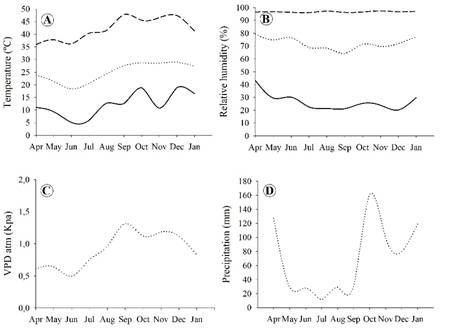
Analyses were conducted in the field during the dry season from April 2023 to the mid-rainy season in January 2024. Increased drought was detected between May and September, which led to lower temperatures during this period, lower air humidity, and an increase in the vapor pressure deficit - VPDatm (kpa). The opposite occurred between October and April, with increased rainfall, higher temperatures, higher air humidity, and a trend of decreasing VPDatm (kpa).
The average temperature during the study period was 24.9°C, with a sharp drop between June and July, reaching 3.7°C, and a rise between September and April, with a maximum of 47.8°C. The average relative humidity showed a downward trend between May and September, reaching 20.2%, followed by an increase between October and April, with a maximum of 97.4%. The average atmospheric vapor pressure deficit VPDatm (kPa) also showed a decreasing trend between October and April, reaching the lowest value of 0.2767 kPa, and an increasing trend between June and September, reaching the highest value of 1.3085 kPa. The average recorded rainfall was 71.4 mm, with a dry period between May and September, with 11 mm recorded, and a rainy season between October and April, with 160 mm recorded (Figure 1).
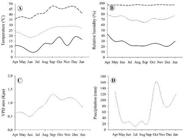
Monthly microclimatic analysis of the experimental area. The dashed line represents the maximum values, the dotted line represents the average values, and the solid line represents the minimum values. A) Temperature. B) Relative humidity. C) Vapor pressure deficit. D) Precipitation.
Identification and quantification of leaf symptoms
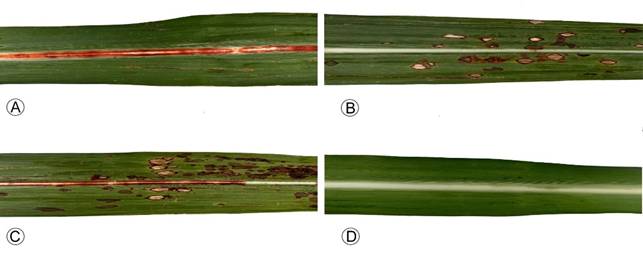
In the field, visual assessment can be used to identify potential leaf diseases. Two patterns of symptoms, potentially caused by fungi, were recorded and contrasted with those described in the specialized literature. The first symptom pattern consists of a lesion on the central vein, showing an elongated spot with an intense red color, which may or may not exhibit a lighter shade in the center. The second symptom pattern observed manifests as fusiform lesions on the leaf blade, accompanied by dark borders, with or without a straw-colored center. Some individuals were found to exhibit both symptoms on the same leaf (Figure 2).
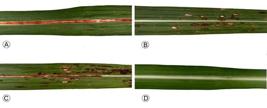
Visual identification of fungal disease symptoms in mature and expanded leaves of sugarcane plants in the experimental area: A) Symptom 1 - chlorotic and necrotic areas in the central vein associated with (red rot) Colletotrichum falcatum; B) Symptom 2 - dark or straw-colored spots with variable shapes on the leaf blade associated with (ringspot) Leptosphaeria sacchari; C) both symptoms on the same leaf; D) a leaf without visual symptoms.
Symptom 1 was compared with those described by Marins et al. (2022) and was associated with the fungus Colletotrichum falcatum, which is recognized as the etiological agent of red rot disease in sugarcane. Symptom 2, characterized as a ring spot and compared to the literature, was associated with Leptosphaeria sacchari. It was also possible to find lesions at different levels of infection on the same plant, as well as the presence of both symptoms on the same leaf, which aligns with findings in the literature (Indrawan et al., 2024).
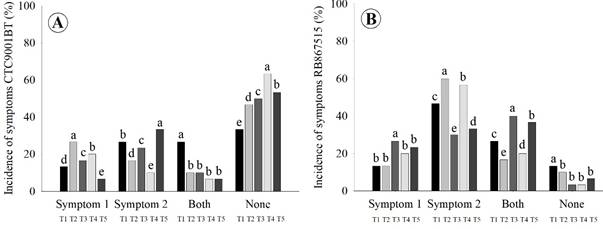
The RB867515 cultivar presented a relatively high overall incidence of leaf symptoms, especially Symptom 2, with an average infection rate of 45.33% within the population. In contrast, the CTC9001BT cultivar presented a lower total incidence of symptoms, with 49.33% of the leaves showing no visible symptoms, indicating greater resistance to the monitored fungal infections in the leaves. Through the quantification of leaf diseases, it was also observed that plants treated with silicon presented a significant reduction in the incidence of diseases compared with the control treatment, where the inducer was absent, particularly in the CTC9001BT cultivar (Figure 3).
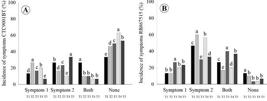
Incidence of symptoms of fungal foliar diseases in cultivars A) CTC9001BT and B) RB867515. The treatments consisted of different doses of silicon (Si), with the control group receiving no Si (T1), while the reference group was treated only with water without Si (T2). The other treatments comprised different doses of Si (T3 = ½×), (T4 = 1.5×), and (T5 = 2×) in relation to the manufacturer's standard recommendation. The means followed by the same lowercase letters do not differ from each other according to the SNK test, with a significance level of p < 0.050.
Biometric and micromorphometric analyses of leaves
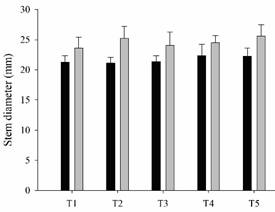
The results of the individual biometric and physiological assessments by treatment for the RB867515 and CTC9001BT cultivars showed a significant difference in the variable stem diameter between the cultivars, with the highest average of 25.58 mm recorded in T5 (20 L ha-1) of the RB867515 cultivar and the lowest average of 21.13 mm in T2 (reference) of the CTC9001BT cultivar, which may be a genotypic difference rather than a phenotypic modulation induced by silicon. However, the application of silicon sources generally did not significantly influence biological variables such as the plant height, number of leaves, total leaf area, or total chlorophyll content, even at the highest dose of 20 L ha-1 (T5), which is double the recommended dose (Figure 4).
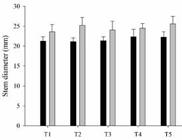
Biometric analysis of the stem diameter in millimeters for the sugarcane cultivars CTC9001BT (black bars) and RB867515 (gray bars). The treatments consisted of different doses of silicon (Si), with the control group receiving no Si (T1), while the reference group was treated only with water without Si (T2), with the other treatments receiving different doses of Si (T3 = ½×), (T4 = 1.5×), or (T5 = 2×) in relation to the manufacturer's standard recommendation. The upper line in the bar represents the statistical indicator of the multiple comparisons between the means. When the line is equal to or greater than the bar of another treatment, they do not differ from each other according to the SNK (Student-Newman-Keuls) test, with a significance level of p < 0.050.
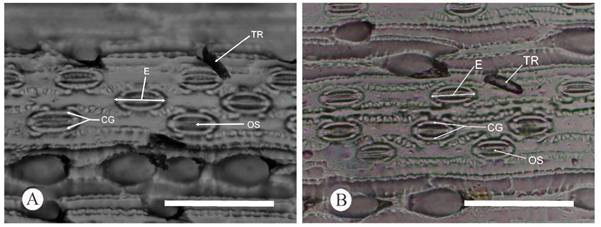
For the anatomical analyses, the sugarcane leaf epidermis presented structures with paracytic-type stomata, silica cells, and trichomes. The epidermis is divided into three zones: the two peripheral zones have long cells alternating with short cells and trichomes, whereas the central zone contains the stomata (Figure 5).
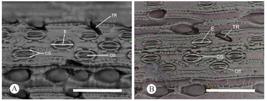
Leaf anatomy via the paradermal impression technique of the epidermis abaxial surface of sugarcane: A) cultivar RB867515; B) cultivar CTC9001BT. E - stomata; TR - trichomes; CG - guard cells; OS - ostiole. Scale bar = 10 μm.
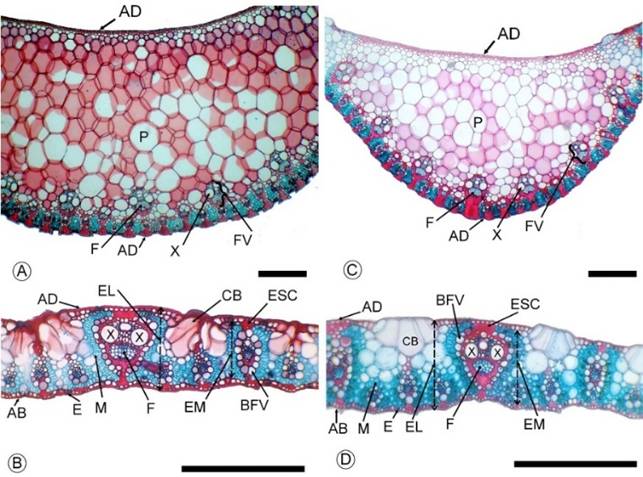
From transverse sections of the sugarcane central vein, the epidermis on the adaxial and abaxial surfaces was unistratified with a thick cuticle. Inside, there were parenchymal cells and collateral vascular bundles. In the transverse sections of the leaf blade, structures such as an unistratified epidermis on both the adaxial and abaxial surfaces were observed, with a thick cuticle and specialized water-storage cells on the adaxial surface called bulliform cells. In addition, stomata and subsidiary cells were present primarily on the abaxial surface. The mesophyll had a homogeneous and radiated structure. The vascular bundle was collateral with a "Kranz" anatomy and was characterized by a thick vascular bundle sheath (Figure 6).
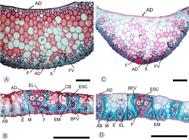
Leaf anatomy of transverse sections of sugarcane leaves: A and C) central vein; B and D) leaf blade; A and B) RB867515 cultivar; C and D) CTC9001BT cultivar. AD - adaxial surface of the epidermis; P - parenchyma; F - phloem; X - xylem; AB - abaxial surface of the epidermis; FV - vascular bundle; E - stomata; EM - mesophyll thickness; EL - leaf blade thickness; M - mesophyll; CB - bulliform cell; ESC - sclerenchyma; BFV - vascular bundle sheath. Scale bar = 40 μm.
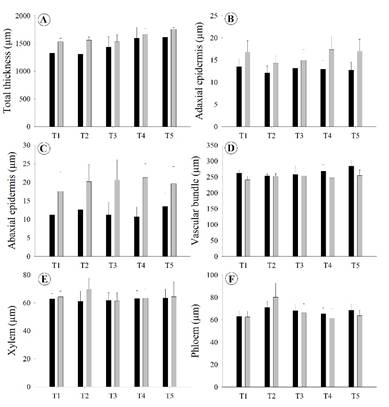
Micromorphometric analyses of the main vein revealed significant differences in all the analyzed variables between the cultivars. In terms of the total thickness, treatment 5 of the RB867515 cultivar had the greatest average thickness of 1758.097 µm, whereas the lowest average thickness was 1308.768 µm in treatment 2 of the CTC9001BT cultivar. For the adaxial epidermis variable, the highest average was recorded in treatment 4 for the RB867515 cultivar at 17.36 µm, whereas the lowest average was 12.06 µm in treatment 2 for the CTC9001BT cultivar. The abaxial epidermis of the RB867515 cultivar was greatest in treatment 4 at 21.30 µm, whereas the lowest average was 10.67 µm in treatment 4 for the CTC9001BT cultivar (Figure 7).
The vascular bundles in treatment 5 of the CTC9001BT cultivar presented the highest average size, at 283.93 µm, whereas those in treatment 1 of the RB867515 cultivar presented the lowest average size, at 240.9 µm. The xylem in treatment 2 of the RB867515 cultivar presented the largest diameter at 69.94 µm, whereas that in treatment 2 of the CTC9001BT cultivar presented the smallest diameter at 61.04 µm. The phloem of the RB867515 cultivar in treatment 2 presented the highest average diameter at 80.15 µm, and the lowest recorded average diameter was 61.44 µm in treatment 4 of the RB867515 cultivar.
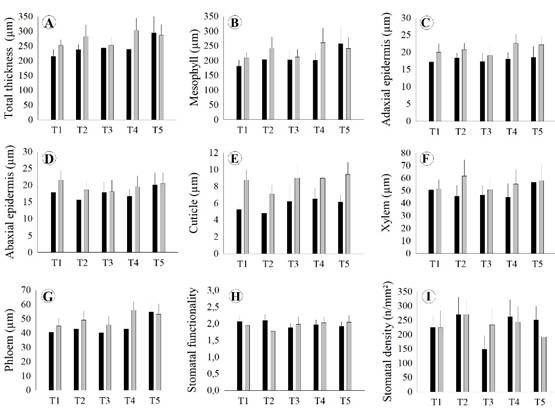
The results of the micromorphometric analyses of the leaf blades revealed significant differences in all the analyzed variables between the cultivars. The total thickness variable showed the highest average in the plants from treatment 4 of the RB867515 cultivar, at 302.21 µm, whereas the lowest average was recorded in treatment 1 of the CTC9001BT cultivar, at 214.83 µm. For the mesophyll thickness, the highest average occurred in treatment 4 for the RB867515 cultivar, at 261.28 µm, whereas the lowest average, 180.81 µm, occurred in treatment 1 for the CTC9001BT cultivar.
For the adaxial epidermis, the highest average was recorded in treatment 4 for the RB867515 cultivar at 22.59 µm, and the lowest average, 17.19 µm, was recorded in treatment 1 for the CTC9001BT cultivar. In terms of the abaxial epidermis, the highest average was 21.5 µm in treatment 1 of the RB867515 cultivar, whereas the lowest average, 15.63 µm, was in treatment 2 of the CTC9001BT cultivar. The adaxial cuticle of the RB867515 cultivar presented the greatest average size of 9.43 µm in treatment 5, whereas the lowest average size of 5.24 µm was recorded in treatment 1 of the CTC9001BT cultivar. The xylem in treatment 2 of the RB867515 cultivar had the highest average size of 61.69 µm, whereas the lowest average size of 44.65 µm was in treatment 4 of the CTC9001BT cultivar. The phloem in treatment 4 of the RB867515 cultivar had the highest average size of 56.15 µm, whereas the lowest average size of 42.53 µm was recorded in treatment 3 of the CTC9001BT cultivar.
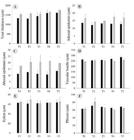
Micromorphometry of the main leaf vein in the sugarcane cultivar CTC9001BT (black bars) and RB867515 (gray bars). The treatments consisted of different doses of silicon (Si), with the control group receiving no Si (T1), whereas the reference group was treated only with water without Si (T2), with the other treatments receiving different doses of Si (T3 = ½×), (T4 = 1.5×), (T5 = 2×) in relation to the manufacturer's standard recommendation: A) Total thickness of the main vein. B) Adaxial epidermis. C) Abaxial epidermis. D) Vascular bundle. E) Xylem. F) Phloem. The upper line in the bar represents the statistical indicator of the multiple comparisons between the means. When the line is equal to or greater than the bar of another treatment, they do not differ from each other according to the SNK (Student-Newman-Keuls) test, with a significance level of p < 0.050.
The highest stomatal functionality value of 2.1 was observed in treatment 2 of the CTC9001BT cultivar, whereas the lowest average value of 1.77 was recorded in treatment 2 of the RB867515 cultivar. The highest stomatal density was observed in treatment 2 for both cultivars, with a value of 270 stomata/mm², and the lowest average stomatal density of 142 stomata/mm² was obtained in treatment 3 for the CTC9001BT cultivar (Figure 8).
Discussion
Microclimatic variations and leaf functionality
Understanding microclimatic variations during sugarcane cultivation is essential for understanding biological variables and their influence on crop growth and development. A greater volume of rainfall may be related to increased water potential and cell turgor, inducing greater growth, which may have influenced the effectiveness of silicon absorption and metabolism to induce greater resistance in the CTC9001BT cultivar, especially in treatments with higher Si concentrations (T4 and T5) (Silva et al., 2019; McGree et al., 2020).
During periods of greater rainfall, leaves tend to have more open stomata for gas exchange because of higher relative humidity, lower temperatures and lower atmospheric pressure differences. This favors the entry of carbon for the carboxylation process, allowing for a greater increase in carbon for the formation of protective structures against pathogens and leaf waterproofing (Frazão et al., 2020; Ramalingam et al., 2025).
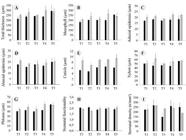
Micromorphometry of the leaf blades of sugarcane cultivars CTC9001BT (black bars) and RB867515 (gray bars). The treatments consisted of different doses of silicon (Si), with the control group receiving no Si (T1), whereas the reference group was treated only with water without Si (T2), with the other treatments receiving different doses of Si (T3 = ½×), (T4 = 1.5×), (T5 = 2×) in relation to the manufacturer's standard recommendation: A) Total leaf blade thickness. B) Mesophyll thickness. C) Adaxial epidermis. D) Abaxial epidermis. E) Cuticle. F) Xylem. G) Phloem. H) Stomatal functionality. I) Stomatal density. The upper line in the bar represents the statistical indicator of the multiple comparisons between the means. When the line is equal to or greater than the bar of another treatment, they do not differ from each other according to the SNK test, with a significance level of p < 0.050.
Silicon (Si) may reduce the incidence of fungal foliar diseases
The lowest significant incidence of symptoms associated with the fungal diseases red rot and ringspot occurred in the cultivar CTC9001BT compared to the cultivar RB867515 (Figure 3), especially with higher doses of silicon in the T4 and T5 treatments (Table 1). The effects of Si may be more pronounced in plants under biotic stress. It is considered a quasiessential multibeneficial element that provides tolerance to different types of stress in sugarcane by generating different types of chemical and structural barriers (Ghosh & Ganguly, 2022).
The improvement in disease symptoms is due to the effects of silicon on several factors involved in providing host resistance, namely, the incubation duration, size, shape and number of lesions. The reduction in infections may be related to silicon at relatively high concentrations, which may be an inducer of systemic resistance in sugarcane. Silicon aids in the formation and rigidity of the cell wall, enabling greater resistance and leaf architecture and reducing the vulnerability of plants to fungal infections (Taratima et al., 2020; Verma et al., 2020). The most notable impact of silicon is the decrease in the number and intensity of soil-borne and foliar diseases caused by biotrophic, hemibiotrophic and necrotrophic pathogens (Song et al., 2021).
Biometric variation between cultivars without silicon effects
The stem diameter was significantly different only between cultivars, with no influence from the silicon dose. This characteristic reveals a genetic difference between cultivars, with a relatively high average value for cultivar RB867515 (Figure 4). It is known that increased growth in stem diameter can positively impact sugarcane productivity. However, it varies according to the number of tillers, the spacing used, the leaf area, and, in particular, the climatic conditions that can modulate the phenotypic plasticity of plants and alter the source‒sink relationship and the flow and accumulation of sucrose in the stem (Pennacchi et al., 2021; Farias-Ramírez et al., 2024).
Unlike our work, other studies on the application of silicon (Si) to sugarcane have shown that this element can significantly influence biometric variables such as the stalk thickness, fresh biomass, and leaf area (Oliveira et al., 2022; Farias-Ramírez et al., 2024). Si can promote increases in sugarcane height and leaf width and activate secondary metabolism defense pathways, which effectively reduce the incidence of diseases and infections (Hong et al., 2021). Furthermore, Verma et al. (2021) reported that silicon supply also influenced greater photosynthesis in sugarcane leaves, along with an increase in biomass productivity (Islam et al., 2020).
Silicon (Si) can modify leaf structural parameters
In the micromorphometric analyses of the main leaf vein, there was a significant difference between the cultivars for all the variables analyzed. In addition, there was an influence of higher silicon concentrations in treatments T4 and T5 for cultivar CTC9001BT, resulting in significantly increased total thicknesses of the main vein and the vascular bundle (Figure 7). Some anatomical characteristics, such as the cell wall thickness, vascular bundle size, stomatal size and density, can be used as important markers for evaluating biotic stress in sugarcane leaves (Taratima et al., 2020; Verma et al., 2020).
In the micromorphometric analyses of the leaf blades, there was also a significant difference between the cultivars for all the variables analyzed. In addition, an influence of higher silicon concentrations in the T4 and T5 treatments for cultivar CTC9001BT was observed, which resulted in significantly increased total thicknesses of the leaf blade and mesophyll (T5) and increased thicknesses of the cuticle (T4 and T5), xylem and phloem (T5) (Figure 8).
These characteristics may have contributed to a more robust leaf structure and resistance to fungal infections in the CTC9001BT cultivar, as well as a reduced occurrence of pathogen penetration into the vascular system and through the stomata, and provided greater leaf waterproofing capacity in this genetically transformed cultivar. Plants treated with silicon promote the silicification of epidermal cells due to the precipitation of amorphous silica, which acts as a mechanical barrier against attacks by phytopathogens (Hong et al., 2021).
There are two types of mechanisms that combat attacks by pests, such as fungi and insects: physical‒mechanical barriers and biochemical‒molecular mechanisms (Alhousari & Greger, 2018; Chen et al., 2024). When Si is applied via foliar application, it is absorbed by the stomata, and the element is stored in the mesophyll, which activates the defense mechanism against pathogen attack by inducing an immune response known as systemic acquired resistance (SAR) (El-Shetehy et al., 2021).
The cuticle is the main initial barrier against the colonization process of foliar pathogens in sugarcane and reduces water loss through transpiration (Islam et al., 2020; Haworth et al., 2021). Owing to the increased barrier formed by silica deposition, leaves resist pathogen penetration, validating our initial hypothesis that exogenous silicon application induces greater resistance against fungal infections in sugarcane leaves, especially in the genetically transformed cultivar (Hasanuzzaman et al., 2023; Chen et al., 2024).
The formation of a mechanical barrier below the cuticle and in the cell walls by silicon polymerization is proposed to explain how this element reduces the severity of disease in plants (Misra et al., 2023). We can infer that Si can attenuate and positively modify leaf morphoanatomy and improve gas exchange parameters, thus increasing the growth and production of the CTC9001BT cultivar (Sousa Junior et al., 2024).
Silicon (Si) can modify leaf functional parameters
Several parameters evaluated in this research show possible positive effects of silicon on sugarcane leaves; in addition, changes in other parameters have been observed in the literature, such as increased epidermal silica cells and stomata, increased leaf pigment content, increased production of secondary metabolites, increased net photosynthesis and increased leaf dry matter. Previous studies associated these changes in various structural and functional parameters due to silicon with reductions in the incidence of diseases and increases in the productive yield of sugarcane. The application of Si can reduce biotic stress in the long term, which can be beneficial for ecological and integrated strategies that avoid the use of pesticides to increase sugarcane productivity (Verma et al., 2020; Deng et al., 2020; Jain, 2025; Verma et al., 2021; Santos et al., 2021; Zellner et al., 2021).
Conclusion
At different biological scales, higher doses of silicon can improve several leaf parameters, such as biometric, morphological and anatomical characteristics, in both cultivars, resulting in greater formation of physical barriers against phytopathogens. Owing to this leaf phenotypic plasticity, silicon can increase the resistance of sugarcane to pathogen penetration and improve its efficiency in regulating physiological processes, such as carbon and water flow, contributing to increased sustainable productivity. The CTC9001BT cultivar obtained the best experimental results when the highest concentration of silicon (Si) was applied. Thus, silicon can be an option for integrated pest and disease management. However, some of the differences observed may result from genetic differences.
Data availability
The data supporting the findings of this study are available from the corresponding author upon request.
References
-
Alhousari, F. & Greger, M.. (2018). Silicon and mechanisms of plant resistance to insect pests. Plants, 7(2), 1-11. https://doi.org/10.3390/plants7020033
» https://doi.org/https://doi.org/10.3390/plants7020033 -
Chen, J., Li, Y., Zeng, Z., Zhao, X., Zhang, Y., Li, X., Chen, J. & Shen, W.. (2024). Silicon induces ROS scavengers, hormone signalling, antifungal metabolites, and silicon deposition against brown stripe disease in sugarcane. Physiologia Plantarum, 176(3), 1-22. https://doi.org/10.1111/ppl.14313
» https://doi.org/https://doi.org/10.1111/ppl.14313 -
Deng, Q., Wu, J., Chen, J. & Shen, W.. (2020). Physiological mechanisms of improved smut resistance in sugarcane through application of silicon. Frontiers in Plant Science, 11, 1-13. https://doi.org/10.3389/fpls.2020.568130
» https://doi.org/https://doi.org/10.3389/fpls.2020.568130 -
El-Shetehy, M., Moradi, A., Maceroni, M., Reinhardt, D., Petri-Fink, A., Rothen-Rutishauser, B., Mauch, F. & Schwab, F.. (2021). Silica nanoparticles enhance disease resistance in Arabidopsis plants. Nature Nanotechnology, 16, 344-353. https://doi.org/10.1038/s41565-020-00812-0
» https://doi.org/https://doi.org/10.1038/s41565-020-00812-0 -
Farias-Ramírez, A. J., Duarte, S. N., Moreno-Pizani, M. A., Costa, J. O., Barros, T. H. S. & Coelho, R. D.. (2024). Combined effect of silicon and nitrogen doses applied to planting furrows on sugar, biomass and energy water productivity of sugarcane (Saccharum spp. ). Agricultural Water Management, 296, 1-10. https://doi.org/10.1016/j.agwat.2024.108796
» https://doi.org/https://doi.org/10.1016/j.agwat.2024.108796 -
Frazão, J. J., Prado, R. M., Souza Júnior, J. P. & Rossatto, D. R.. (2020). Silicon changes C:N:P stoichiometry of sugarcane and its consequences for photosynthesis, biomass partitioning and plant growth. Scientific Reports, 10, 1-10. https://doi.org/10.1038/s41598-020-69310-6
» https://doi.org/https://doi.org/10.1038/s41598-020-69310-6 -
Ghosh, R. & Ganguly, S.. (2022). Silicon fertilizers inciting plant defence against pathogenic fungi. Journal of Mycopathological Research, 60(4), 515-521. https://doi.org/10.57023/JMycR.60.4.2022.515
» https://doi.org/https://doi.org/10.57023/JMycR.60.4.2022.515 -
Hasanuzzaman, M., Zhou, M. & Shabala, S. (2023). How does stomatal density and residual transpiration contribute to osmotic stress tolerance? Plants, 12(3), 1-19. https://doi.org/10.3390/plants12030494
» https://doi.org/https://doi.org/10.3390/plants12030494 -
Haworth, M., Marino, G., Loreto, F. & Centritto, M.. (2021). Integrating stomatal physiology and morphology: evolution of stomatal control and development of future crops. Oecologia, 197, 867-883. https://doi.org/10.1007/s00442-021-04857-3
» https://doi.org/https://doi.org/10.1007/s00442-021-04857-3 -
Hong, D., Talha, J., Yao, Y., Zou, Z., Fu, H., Gao, S., Xie, Y & Wang, J.. (2021). Silicon enhancement for endorsement of Xanthomonas albilineans infection in sugarcane. Ecotoxicology and Environmental Safety, 220, 1-10. https://doi.org/10.1016/j.ecoenv.2021.112380
» https://doi.org/https://doi.org/10.1016/j.ecoenv.2021.112380 -
Indrawan, A. D., Nirwanto, H., Windriyanti, W. & Jati, W. W.. (2024). Study of the symptoms and distribution pattern detection of ring spot disease (Leptosphaeria sp.) on sugarcane plants using aerial images. Advances in Biological Sciences Research, 41, 255-269. https://doi.org/10.2991/978-94-6463-451-8_23
» https://doi.org/https://doi.org/10.2991/978-94-6463-451-8_23 -
Islam, W., Tayyab, M., Khalil, F., Hua, Z., Huang, Z. & Chen, H. Y. H.. (2020). Silicon-mediated plant defense against pathogens and insect pests. Pesticide Biochemistry and Physiology, 168. https://doi.org/10.1016/j.pestbp.2020.104641
» https://doi.org/https://doi.org/10.1016/j.pestbp.2020.104641 -
Jain, R.. (2025). Role of silicon in sugarcane: A review. Agricultural Reviews, 46(2), 288-294. https://doi.org/10.18805/ag.R-2568
» https://doi.org/https://doi.org/10.18805/ag.R-2568 - Johansen, D. A. (1940). Plant Micro technique. McGraw-Hill Book Company.
-
Jones, H. G. (1992). Plants and microclimate: A quantitative approach to environmental plant physiology. Cambridge University Press. https://doi.org/10.1017/CBO9780511845727
» https://doi.org/https://doi.org/10.1017/CBO9780511845727 -
Lopes, A. B., Sousa, B. B., Oliveira, R. A. P., Guimarães, C. R. R. & Cerqueira, F. B.. (2022). Technological evaluation of four sugarcane cultivars as a function of Diatraea saccharalis infestation in Pedro Afonso, TO - case study. Research, Society and Development, 11(13), 1-11. https://doi.org/10.33448/rsd-v11i13.35388
» https://doi.org/https://doi.org/10.33448/rsd-v11i13.35388 -
Marins, E. F. C., Silva, M. J. S., Silva, J. L., Silva-Cabral, J. R. A., Costa, J. F. O., Feijó, F. M., Assunção, I. P. & Lima, G. S. A.. (2022). Colletotrichum species associated with sugarcane red rot in Brazil. Fungal Biology, 126(4), 290-299. https://doi.org/10.1016/j.funbio.2022.02.002
» https://doi.org/https://doi.org/10.1016/j.funbio.2022.02.002 -
McGree, S., Schreider, S., Kuleshov, Y. & Prakash, B.. (2020). On the use of mean and extreme climate indices to predict sugar yield in western Fiji. Weather and Climate Extremes, 29, 1-11. https://doi.org/10.1016/j.wace.2020.100271
» https://doi.org/https://doi.org/10.1016/j.wace.2020.100271 -
Misra, V., Mall, A. K., Ansari, S. A., Raheem, A., Tripathi, M. K. & Ansari, M. I. (2023). Silicon as a beneficial nutrient for productivity augmentation and abiotic/biotic stress tolerance in sugarcane. Biocatalysis and Agricultural Biotechnology, 54. https://doi.org/10.1016/j.bcab.2023.102944
» https://doi.org/https://doi.org/10.1016/j.bcab.2023.102944 -
Monteiro, G. G., Perontia, A. L. B. G. & Martinellia, N. M.. (2024). Biological development of Saccharicoccus sacchari (Cockerell, 1895) (Hemiptera: Pseudococcidae) on sugarcane in different temperatures. Brazilian Journal of Biology, 84, 1-6. https://doi.org/10.1590/1519-6984.279770
» https://doi.org/https://doi.org/10.1590/1519-6984.279770 -
Oliveira, K. S., Prado, R. M., Checchio, M. V. & Gratão, P. L.. (2022). Interaction of silicon and manganese in nutritional and physiological aspects of energy cane with high fiber content. BMC Plant Biology, 22(1), 374. https://doi.org/10.1186/s12870-022-03766-8
» https://doi.org/https://doi.org/10.1186/s12870-022-03766-8 -
Pennacchi, J. P., Lira, J. M. S., Rodrigues, M., Garcia, F. H. S., Mendonça, A. M. C. & Barbosa, J. P. R. A. D.. (2021). A systemic approach to the quantification of the phenotypic plasticity of plant physiological traits: The multivariate plasticity index. Journal of Experimental Botany, 72(5), 1864-1878. https://doi.org/10.1093/jxb/eraa545
» https://doi.org/https://doi.org/10.1093/jxb/eraa545 -
Ramalingam, S. P., Narayanan, J., Radhakrishnan, S., Nayakkar, S. M., Balraj, R., Muthuraman, Y., Gomasa, S., Nadarajan, S., Palanisamy, M. A., Chandrasekaran, B., Govindan, S. K., Loganathan, K., Sanjeevi, N., Natarajan, C. & Cyriac, J.. (2025). Multifarious activity of silicon in sugarcane productivity escalation: Regulatory mechanisms and future outlook. Silicon, 17, 635-671. https://doi.org/10.1007/s12633-024-03215-1
» https://doi.org/https://doi.org/10.1007/s12633-024-03215-1 -
Santos, L. C., Silva, G. A. M., Abranches, M. O., Rocha, J. L. A., Silva, S. T. A., Ribeiro, M. D. S., Gomes, V. R., Severo, P. J. S., Brilhante, C. L. & Sousa, F. Q.. (2021). The role of silicon in plants. Research, Society and Development, 10(7), 1-19. https://doi.org/10.33448/rsd-v10i7.16247
» https://doi.org/https://doi.org/10.33448/rsd-v10i7.16247 -
Silva, W. K. M., Freitas, G. P., Coelho Junior, L. M., Pinto, P. A. L. A. & Abrahão, R.. (2019). Effects of climate change on sugarcane production in the state of Paraíba Brazil: A panel data approach, 1990-2015. Climatic Change, 154, 195-209. https://doi.org/10.1007/s10584-019-02424-7
» https://doi.org/https://doi.org/10.1007/s10584-019-02424-7 -
Song, X., Verma, K. K., Tian, D., Zhang, X., Liang, Y., Huang, X., Li, C. & Li, Y.. (2021). Exploration of silicon functions to integrate with biotic stress tolerance and crop improvement. Biological Research, 54(19), 1-12. https://doi.org/10.1186/s40659-021-00344-4
» https://doi.org/https://doi.org/10.1186/s40659-021-00344-4 -
Sousa Junior, G. S., Hurtado, A. C., Alves, R. C., Gasparino, E. C. & Santos, D. M. M.. (2024). Silicon attenuates aluminum toxicity in sugarcane plants by modifying growth, roots morphoanatomy, photosynthetic pigments, and gas exchange parameters. Scientific Reports, 14(4717), 1-16. https://doi.org/10.1038/s41598-024-53537-8
» https://doi.org/https://doi.org/10.1038/s41598-024-53537-8 -
Taratima, W., Ritmaha, T., Jongrungklang, N., Maneerattanarungroj, P. & Kunpratum, N.. (2020). Effect of stress on the leaf anatomy of sugarcane cultivars with different drought tolerance (Saccharum officinarum, Poaceae). Revista de Biología Tropical, 68(4), 1159-1170. http://dx.doi.org/10.15517/rbt.v68i4.41031
» https://doi.org/http://dx.doi.org/10.15517/rbt.v68i4.41031 -
Verma, K. K., Anas, M., Chen, Z., Rajput, V. D., Malviya, M. K., Verma, C. L., Singh, R. K., Singh, P., Song, X. & Li, Y.. (2020). Silicon supply improves leaf gas exchange, antioxidant defense system and growth in Saccharum officinarum responsive to water limitation. Plants, 9(8), 1-19. https://doi.org/10.3390/plants9081032
» https://doi.org/https://doi.org/10.3390/plants9081032 -
Verma, K. K., Song, X., Tian, D., Guo, D., Chen, Z., Zhong, C., Nikpay, A., Singh, M., Rajput, V. D., Singh, R. K., Minkina, T. & Li, Y.. (2021). Influence of silicon on biocontrol strategies to manage biotic stress for crop protection, performance, and improvement. Plants, 10(10), 1-22. https://doi.org/10.3390/plants10102163
» https://doi.org/https://doi.org/10.3390/plants10102163 -
Zellner, W., Tubaña, B., Rodrigues, F. A. & Datnoff, L. E.. (2021). Silicon’s role in plant stress reduction and why this element is not used routinely for managing plant health. Plant Disease, 105(8), 2033-2049. https://doi.org/10.1094/PDIS-08-20-1797-FE
» https://doi.org/https://doi.org/10.1094/PDIS-08-20-1797-FE -
Zhang, Q., Wang, J., Wang, J., Liu, M., Ma, X., Bai, Y., Chen, Q., Sheng, S. & Wang, F.. (2023). Nano-silicon triggers rapid transcriptomic reprogramming and biochemical defenses in Brassica napus challenged with Sclerotinia sclerotiorum. Journal of Fungi, 9(11), 1-18. https://doi.org/10.3390/jof9111108
» https://doi.org/https://doi.org/10.3390/jof9111108
Edited by
-
Associate Editor in charge:
Alessandro Lucca BracciniCarlos Alberto Scapim