 Essential oil of Citrus aurantium var. dulcis: A new approach to control Diatraea saccharalis and Spodoptera eridania larvae
ABSTRACT.
Studies focusing on the potential use of botanical insecticides have increased significantly in recent years. Essential oils extracted from citrus fruit peels contain limonene, a monoterpene that is widely used in agricultural pest control studies. This study aimed to investigate the insecticidal properties of the essential oil of Citrus aurantium (L.) var. dulcis and analyze its effects on the midgut of Diatraea saccharalis (Fabricius, 1794) (Lepidoptera: Crambidae) and Spodoptera eridania (Stoll, 1782) (Lepidoptera: Noctuidae) neonate larvae. After essential oil dilution, five concentrations (0.06; 0.12; 0.25; 0.50 and 1.00%) were obtained and topically applied to the prothorax of larvae. Behavioral observations and larval mortality data were recorded every 24h for a duration of 120h. Midgut samples were collected 24 and 48h after the bioassays to perform histological and ultrastructural analyses. Both species exhibited low mobility, which progressed to paralysis after treatment, and mortality was only recorded in the first 48h. D. saccharalis and S. eridania larvae treated with 1.00% essential oil concentration had mortalities of 89 and 47%, respectively. The lethal concentrations (LC50) of essential oil have been estimated to be 0.50% (CI = 0.45-0.57%) for D. saccharalis and 1.06% (CI = 0.89-1.35%) for S. eridania. The histological and ultrastructural analyses revealed significant midgut damage, such as detachment of the muscle fibers from the basal region of the epithelium and spacing of columnar cells, which progressed to a complete degeneration of the epithelial cells. The negative effects of C. aurantium var. dulcis essential oil on D. saccharalis and S. eridania neonate larvae indicate its bioinsecticide potential. Our results suggest that this essential oil can be implemented in integrated pest management for sustainable crop production.
Keywords:
botanical insecticide; limonene; sweet orange; sustainability; southern armyworm; sugarcane borer
Introduction
Diatraea saccharalis (Fabricius) and Spodoptera eridania (Stoll) are two lepidopteran pests that severely damage crops of economic interest, such as sugarcane (Saccharum officinarum L.) and soybean (Glycine max [L.] Merr.), respectively. In sugarcane, D. saccharalis larvae cause primary and secondary damage by penetrating stems and forming galleries that damage vascular bundles, impair nutrient transport, cause tillering, and indirectly provide entry points for phytopathogenic fungi (Assis et al., 2023; Puentes-Cala et al., 2023; Silva et al., 2020). For their part, the larvae of S. eridania defoliate and damage soybean plants (Damascena et al., 2023; Parra et al., 2021), reducing pod production and, consequently, grain yield. Currently, chemical control is the predominant strategy for managing insect populations (Dent & Binks, 2020), but its negative effects on human health and the environment are concerning (Dhankhar & Kumar, 2023; Pathak et al., 2022; Rosca et al., 2023; Sharma et al., 2023).
The use of essential oils as plant-based bioinsecticides may be an alternative method for pest control in various crops (Ngegba et al., 2022; Oliveira et al., 2024b). This not only reduces the environmental impact caused by chemical insecticides but also ensures a sustainable crop production (Assadpour et al., 2023; Sena-Filho et al., 2023; Pavela & Benelli, 2016). Essential oils, also known as “green insecticides,” are produced by specific glands involved in plant metabolism and are considered some of the best substitutes for chemical pesticides (Assadpour et al., 2023; Pavela & Benelli, 2016). Their applicability has been highlighted in the control of insect pests owing to their toxicological properties and low adverse effects on non-target organisms (Lima et al., 2024; Oliveira et al., 2024a; Oliveira et al., 2024b; Pavela & Benelli, 2016).
The toxic activity of citrus essential oils has been described for several pests (Campolo et al., 2018; Damascena et al., 2023; Jain et al., 2021; Lima et al., 2024; Moungthipmalai et al., 2023), and has relation to limonene, a monoterpene extracted from the peels of citrus species that is used in the cosmetic and food industries (Anandakumar et al., 2021; Lima et al., 2024; Oliveira et al., 2024b). D-limonene is the principal active form of limonene and is abundant in various plant species, such as the peel oil of grapefruits and oranges (González-Mas et al., 2019). While this molecule has low toxicity in humans (Anandakumar et al., 2021; Braz et al., 2021; Eddin et al., 2021), it induces lethal, repellent, and deterrent effects in insects (Arokiyaraj et al., 2022; Damascena et al., 2023; Duque et al., 2022; Gadelhaq et al., 2023; Lima et al., 2024; Lin et al., 2024; Mursiti et al., 2019; Oliveira et al., 2021; Oyedeji et al., 2020). The use of limonene and some of its insecticidal properties are well known, however, the cellular response of insects to exposure needs to be elucidated, particularly in the digestive system.
The midgut of insects has an endodermal, embryonic origin and is responsible for food digestion and nutrient absorption (Caccia et al., 2019). As the midgut plays a functional role in the alimentary canal and encompasses most of the body in insect larvae, analyzing this region can effectively measure the cellular damage caused by essential oils. The lepidopteran midgut epithelium is composed of a single layer comprising four different cellular types: columnar, goblet, endocrine, and regenerative cells. These are responsible for secreting digestive enzymes and bioactive peptides, absorbing nutrients, maintaining ionic homeostasis, and renewing epithelial cells (Caccia et al., 2019; Lehane & Billingsley, 1996; Pinheiro & Gregório, 2003).
This study aimed to (i) evaluate the insecticidal properties of C. aurantium var. dulcis essential oil on D. saccharalis and S. eridania neonate larvae and (ii) analyze its effects on the midgut of exposed insects. The results of this study may serve to improve our understanding of the effects of this essential oil on two insect pests of economic interest and promote its use in biocontrol studies for sustainable agriculture.
Material and methods
Insects
Neonate larvae of D. saccharalis and S. eridania (between 12-24h of age) were obtained from mass rearing at the Laboratory of Biological Control and Bioprospection of Insects, Department of Biotechnology, Genetics and Cell Biology, State University of Maringá, Maringá, Paraná State, Brazil (23°25′30″ S and 51°56′20″ W).
Essential oil
The C. aurantium var. dulcis essential oil was obtained by cold pressing sweet orange peel (Florananda Industry and Commerce of Cosmetics and Natural Products Ltda., Jaú, São Paulo State, Brazil). The obtained essential oil contained 95.41% limonene, with no solvents or diluents, being belonging to the chemical group of terpene hydrocarbons, as described in the corresponding technical report (Lot 231125, available from: www.bioessencia.com.br). The concentration of essential oil suggested by Lima et al. (2024) is 0.70%.
Bioassays
Five concentrations were obtained after essential oil dilution in 0.2% Tween® 20 solution based on previously mentioned study: 0.06, 0.12, 0.25, 0.50, and 1.00%; v/v. Subsequently, 60 μL of the prepared solutions were topically applied on the larvae prothorax. In the control group, 60 μL of 0.2% Tween® 20 solution were applied. All treatments were performed with 10 replicates (containing 10 larvae per replicate), totaling 100 insects per essential oil concentration. After treatment, the larvae were placed in Petri dishes (60 x 15 mm) containing 7.5 mL of an artificial diet (Daquila et al., 2019) specific to D. saccharalis (Hensley & Hammond, 1968) and S. eridania (Greene et al., 1976). The Petri dishes were maintained at 25 ± 2°C, with a 12:12 h photoperiod and 70 ± 10% relative humidity (Araújo, 1987; Sampaio et al., 2024). Behavioral observations and larval mortality data were evaluated every 24 for 120h.
Histochemical analyses
Larvae of both species (n = 10 per species) were collected 24 and 48h after the bioassays that induced the highest mortality rates (0.50 and 1.00%) and the control groups. The insects were cryoimmobilized at -4ºC, and the midgut was dissected in a phosphate-buffered solution for insects (NaCl, KCl, Na2HPO4.7H2O, KH2PO4; 80:2:21.7:2; m/m) under a stereomicroscope (Zeiss, Oberkochen, Germany) at 16x magnification. Subsequently, the midgut was fixed in alcoholic Bouin solution (formaldehyde, picric acid, acetic acid; 7.5:2:0.5; v/v) for 24h, dehydrated in a series of ethanol of increasing grade (70, 80, 90, and 100%; v/v), clarified in xylene, and immersed in paraffin. Transversal sections (6 µm) were cut using a Leica RM 2250 microtome (Leica Biosystems, Germany) and stained with hematoxylin/eosin (Junqueira & Junqueira, 1983). Images were taken using a Moticam® camera (Motic, Kowloon Bay, China) and analyzed using an Olympus® CX21FS1 microscope (Tokyo, Japan).
Transmission electron microscopy (TEM)
For TEM analysis, the midgut of larvae of both species (treated with 1.00% essential oil solution and control groups) were collected 24h after the bioassays. Midguts were fixed with Karnovsky solution (2.5% v/v glutaraldehyde and 4% v/v paraformaldehyde in 0.1 M phosphate buffer, pH 7.3) for 24h at room temperature (25°C). Subsequently, they were post-fixed in 1% (w/v) osmium tetroxide diluted in the same buffer for 2h. The samples were washed with distilled water and a 0.5% (w/v) aqueous solution of uranyl acetate for 2h, dehydrated in increasing concentrations of acetone (50, 60, 70, 80, 90, and 100%; v/v), and embedded in Araldite® resin (Huntsman Advanced Materials, Salt Lake City, UT, USA). Ultrathin sections were obtained using an ultramicrotome (Leica EM UC7; Leica Biosystems) and stained with 1% lead citrate (v/v) and 1% uranyl acetate (v/v). The samples were analyzed using a Tecnai™ Spirit TEM (FEI Company, Eindhoven, Netherlands) or JEOL JEM 1400 (Akishima, Tokyo, Japan) at the Electron Microscopy Center of the Institute of Biosciences of Botucatu, São Paulo State University, Botucatu, São Paulo State, Brazil, and the Complex of Research Support Centers (COMCAP) at the State University of Maringá, Maringá, Paraná State, Brazil.
Statistical analysis
The accumulated mortality data for the treatments were analyzed using the SPSS software v.
25.0 (IBM, Armonk, NY, USA). Normality and homogeneity were verified using the Kolmogorov-Smirnov and Bartlett tests, respectively. One-way analyses of variance using Kruskal-Wallis and post hoc Dunn tests were then performed, with α = 0.05 (IBM Corporation, 2017). Furthermore, probit regression analyses of the bioassay results were used to estimate the lethal concentrations (LC50 and LC90). InkscapeTM 1.1 was used to design the mortality graph (Inkscape, 1991). All tests were performed at a significance level of 5%.
Results
The larvae of D. saccharalis and S. eridania exposed to C. aurantium var. dulcis essential oil exhibited low mobility that progressed to complete paralysis. The mortality of D. saccharalis and S. eridania larvae exposed to the different solutions demonstrated to be concentration-dependent.
Larval mortality
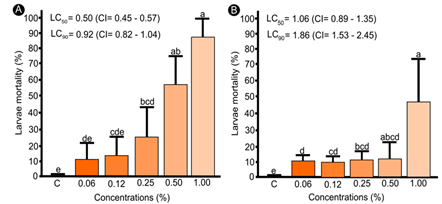
All concentrations of C. aurantium var. dulcis essential oil were toxic to D. saccharalis larvae. The Kruskal-Wallis test results indicated differences in D. saccharalis larval mortality according to the essential oil concentrations used (χ 2 = 27.204, p = 0.000). The treated group were significantly different to the control groups (Dunn test, p < 0.05) (Figure 1A). The multiple comparisons analysis showed no significant differences in mortality of D. saccharalis larvae between the control and 0.06 and 0.12% concentration treatments (p > 0.05). However, mortality in the 0.25, 0.50, and 1.00% concentration groups was significantly different than observed in the control group (p < 0.005). Mortality in the 0.06% treatment was similar to that in the 0.12 and 0.25% groups (p = 0.877 and p = 0.346, respectively) but different from mortality in the 0.50% (p = 0.008) and 1.00% (p = 0.000) treatments. Similar results were observed when comparing the 0.12% group with the 0.50 and 1.00% treatments (p = 0.005 and p = 0.000, respectively); however, mortality in the 0.12 and 0.25% treatments was similar (p = 0.273). The 0.25% group had a significantly different mortality to than in the 1.00% treatment (p = 0.004), while that under the 0.50% concentrations was similar to mortality in the 0.25% (p = 0.091) and 1.00% (p = 0.237) treatments.
D. saccharalis larvae treated with 0.06, 0.12, 0.25, 0.50, and 1.00% concentrations showed 12, 13, 26, 58, and 89% mortality, respectively, 120h after essential oil application (Figure 1A). The lethal concentrations were LC50 = 0.50% (CI = 0.45-0.57%) and LC90 = 0.92% (CI = 0.82-1.04%) (Figure 1A). The lack of overlap in confidence intervals confirms the difference between the lethal concentrations and reliability of the data.
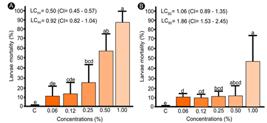
Mortality rates induced by different concentrations (0.06, 0.12, 0.25, 0.50, and 1.00%) of Citrus aurantium var. dulcis essential oil in larvae of (A) Diatraea saccharalis and (B) Spodoptera eridania, 120h after the bioassays. LC50 and LC90 represent the lethal concentrations for 50 and 90% of insects according to probit regression. CI, confidence interval; C, control group. Different letters denote significant differences in relation to the control group (Kruskal-Wallis and Dunn test; α= 0.05).
Experiments with S. eridania showed similar results to those of D. saccharalis. All the concentrations of essential oil tested were toxic to S. eridania larvae. The Kruskal-Wallis test indicated significant differences in the mortality of S. eridania larvae under different essential oil concentrations (χ 2 = 35.893, p = 0.000). Comparisons between the control group and treatments also showed significant differences in larvae mortality (Dunn test, p < 0.05) (Figure 1B). The 0.06% treatment yielded similar results to those of the 0.12% (p = 0.531), 0.25% (p = 0.505), and 0.50% (p = 0.632) groups. The essential oil concentration of 0.12% had a similar mortality to those of the 0.25% (p = 0.968) and 0.50% (p = 0.269) treatments, which were also similar to each other (p = 0.252). However, the 0.50 and 1.00% concentrations were not significantly different (p = 0.094).
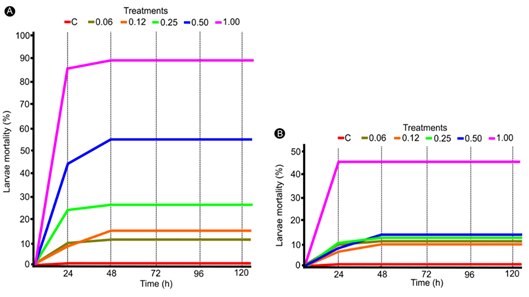
In S. eridania, 120h after exposure, the insects treated with 0.06, 0.12, 0.25, 0.50, and 1.00% essential oil concentrations had mortalities of 11, 9, 12, 13, and 47%, respectively (Figure 1B). The lethal concentrations were LC50 = 1.06% (CI = 0.89-1.35%) and LC90 = 1.86% (CI = 1.53-2.45%) (Figure 1B). Once more, the lack of overlap between the confidence intervals confirms the difference between lethal concentrations and reliability of the data. The two highest concentrations of essential oil, 0.50 and 1.00%, showed the highest toxicity in both species. However, their mortality rates stabilized after 48h (Figure 2A and B).
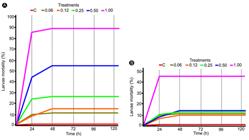
Toxicity persistence of Citrus aurantium var. dulcis essential oil induced by different concentrations (0.06, 0.12, 0.25, 0.50, and 1.00%) in larvae of (A) Diatraea saccharalis and (B) Spodoptera eridania 24-120h after the bioassays. C, control group.
Cytotoxic effects
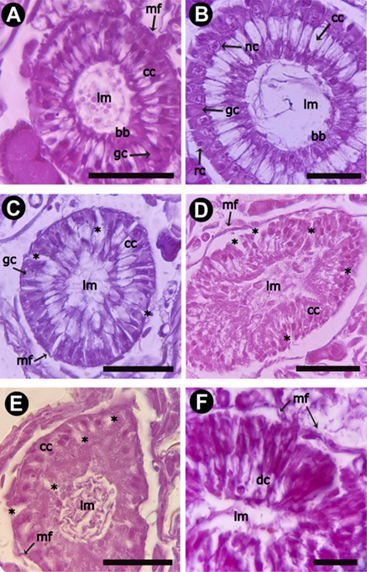
The histochemical analysis showed that the epithelium of the D. saccharalis control larvae at 24 and 48h did not show any morphological differences. This epithelium was mostly composed of columnar, goblet, and regenerative cells supported by muscle fiber bundles (Figure 3A and B). Columnar cells with striated surface projections towards the lumen, called microvilli, formed the brush border in the apical region (Figure 3A and B). In contrast, the larvae treated with essential oil solutions began exhibiting morphological alterations after 24h. The two highest concentrations (0.50 and 1.00%) showed the most prominent damage to the intestinal epithelium, including intercellular spaces, reduced intestinal lumen, and muscle fiber detachment (Figure 3C and E). After 48h, damage was more noticeable, featuring an almost complete detachment of the muscle fibers from the base region and spaced columnar cells (Figure 3D), progressing to a complete degeneration of the epithelial cells (Figure 3F).
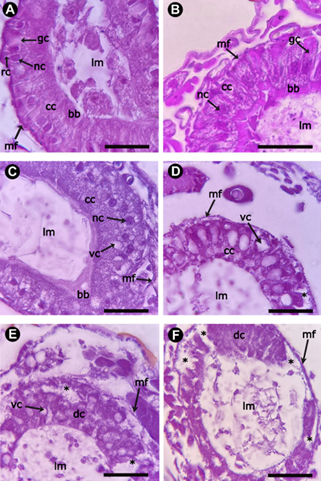
Similar to D. saccharalis, the histochemical analysis showed no morphological differences in the epithelium of S. eridania control larvae 24 and 48h after treatment. Despite their evident intestinal size difference, S. eridania and D. saccharalis are very similar, with columnar, goblet, and regenerative cells in the epithelium supported by muscle fiber bundles (Figure 4A and B). After 24h, S. eridania larvae treated with essential oil solutions began presenting morphological alterations such as muscle fiber detachment, vacuolization, intercellular spacing, and a compromised integrity of the epithelium (Figure 4C and E). After 48h, the damage became more notable, particularly under the 1.00% treatment; intercellular spaces became more prominent, resulting in cell lysis (Figure 4D) and epithelial degeneration (Figure 4F).
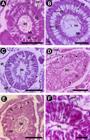
Light microscopy of the midgut in first-instar Diatraea saccharalis larvae. Transversal sections (6 µm) stained with hematoxylin and eosin. Control larvae after (A) 24h and (B) 48h. lm, lumen; nc, columnar cell nucleus; cc, columnar cells; rc, regenerative cell; gc, goblet cells; mf, muscle fiber bundles; bb, brushed border. Morphological alterations in the midgut of neonate larvae treated with (C and D) 0.50% and (E and F) 1.00% Citrus aurantium var. dulcis essential oil solutions, after (C and E) 24 h and (D and F) 48h. lm, reduced lumen; cc, columnar cells with irregularities; gc, less visible goblet cells; nc, nucleus; mf, muscle fiber bundle detachment; *, intercellular spaces; dc, degenerated cells. Scale bars in A, D, and G = 30 µm; B, E, and H = 20 µm; and C, F, and I = 10 µm.
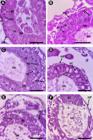
Light microscopy of the midgut in first-instar Spodoptera eridania larvae. Transversal sections (6 µm) stained with hematoxylin and eosin. Control larvae after (A) 24h and (B) 48h. lm, lumen; cc, columnar cells; gc, goblet cells; nc, nucleus; rc, regenerative cell; bb, brush border; mf, muscle fiber bundles. Morphological alterations in the midgut of neonate larvae treated with (C and D) 0.50% and (E and F) 1.00% Citrus aurantium var. dulcis essential oil solutions, after (C and E) 24h and (D and F) 48h. lm, lumen; cc, damaged columnar cells; nc, nucleus; mf, muscle fiber bundles detachment; vc, vacuoles; *, intercellular spaces; dc, degenerated cells. Scale bars = 10 µm.
TEM
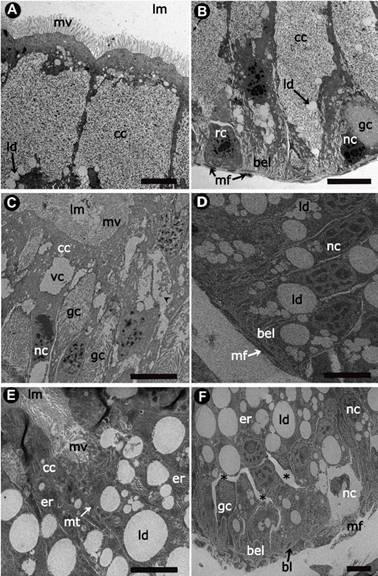
Through TEM, we observed that the columnar cell apex of the control D. saccharalis larvae presented an electron-dense cortical cytoplasm and prolonged microvilli towards the lumen (Figure 5A). Well-developed basal labyrinths, lipid droplets, and regenerative cells were observed in the basal and infranuclear regions of the columnar cells (Figure 5B). In the nuclei, a predominance of decondensed chromatin and evident nucleoli were observed (Figure 5B). Conversely, in larvae treated with 1.00% essential oil solution, a reduced lumen due to cell hypertrophy was observed 24h after the bioassays (Figure 5C and E). In the apical region of the columnar cells, irregularities were observed in the microvilli and cytoplasmic rarefaction (Figure 5C). Additionally, enlarged intercellular spaces and nuclei with a predominance of heterochromatin were observed in the basal region of the epithelium (Figure 5D and F), while a rough endoplasmic reticulum was found in the cell cytoplasm in two distinct concentric or stacked organizations (Figure 5E).
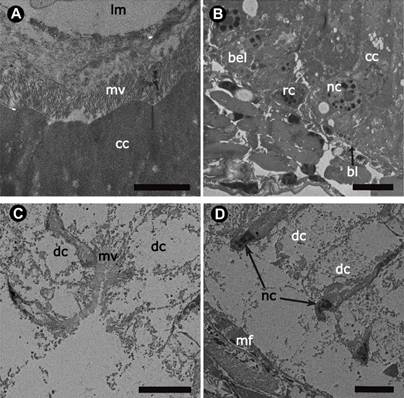
The columnar cell apex of control S. eridania had electron-dense characteristics and prolonged microvilli towards the lumen (Figure 6A). The basal labyrinth and regenerative cells in the basal and infranuclear regions of the columnar cells were supported by the basal lamina (Figure 6B). In the nuclei, the nucleolus and various heterochromatic lumps were observed in a circular shape (Figure 6B). In contrast, the intestinal epithelium of larvae treated with 1.00% essential oil presented a lot of damage after 24h, including the complete disintegration of columnar cells, leaving only their imprint and some cytoplasmic content in both apical and basal regions (Figure 6C and D). Furthermore, some degenerated nuclei were found in the basal region (Figure 6D), while cells detached from the basal lamina and migrated towards the lumen region and absent basal labyrinth (Figure 6D).
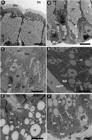
Transmission electron microscopy of the midgut in first-instar Diatraea saccharalis larvae. Cross sections. (A and B) Control larvae. lm, lumen; mv, microvilli; cc, columnar cell; ld, lipid droplets; rc, regenerative cell; gc, goblet cell; bel, basal labyrinth; mf, muscle fibers; nc, nucleus. (C, D, E, and F) Neonate larvae 24h after treatment with 1.00% Citrus aurantium var. dulcis essential oil solution. lm, reduced lumen region; mv, microvilli; ld, lipid droplets; gc, damaged goblet cells; vc, vacuoles; nc, degenerated nucleus; *, intercellular spaces; bel, basal labyrinth; er, endoplasmic reticulum; bl, basal lamina, mf, rupture muscle fibers. Scale bars = 5 µm.
Discussion
The reduced mobility and paralysis observed in both larval species after treatment with C. aurantium var. dulcis essential oil solution may be attributed to the action of limonene on the central nervous system of the insect, suggesting neuromuscular collapse. Limonene has shown systemic activity in Aleurocanthus woglumi (Ashby) (Oliveira et al., 2024b), interacting with the insect neurotransmitters (Leite-Andrade et al., 2022). This neurotoxic effect was also observed in pigeon lice (Columbicola columbae, Linnaeus) in which limonene may act through the neuromuscular inhibition of acetylcholinesterase (Gadelhaq et al., 2023). The analysis of acetylcholinesterase activity and oxidative stress in pigeon lice treated with D-limonene nanoemulsions showed significant inhibition of this enzyme, with higher percentages than those found when using deltamethrin (Gadelhaq et al., 2023). Inhibition of acetylcholinesterase activity in Callosobruchus maculatus (Fabricius) and Sitophilus zeamais (Motschulsky) adults treated with Citrus sinensis (Pers.) essential oil has also been reported (Oyedeji et al., 2020). Acetylcholinesterase is linked to synaptic transmissions and regulates neurotransmission in the insect body by hydrolyzing the neurotransmitter acetylcholine (Ryan & Byrne, 1988). Its inhibition can cause acetylcholine accumulation in the synaptic cleft, resulting in a usually fatal overstimulation of the nervous system. Hence, acetylcholinesterase is the primary target of organophosphate insecticides (Corrêa et al., 2023).
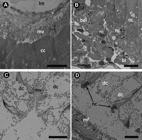
Transmission electron microscopy of the midgut in first-instar Spodoptera eridania larvae. Cross sections. (A and B) Control larvae. lm, lumen; mv, microvilli; cc, columnar cell; ld, lipid droplets; rc, regenerative cell; gc, goblet cell; bel, basal labyrinth; mf, muscle fibers; nc, nucleus. (C and D) Neonate larvae 24h after treatment with 1.00% Citrus aurantium var. dulcis essential oil solution. dc, cells completely degenerated; nc, damaged nucleus; mv, damaged basal microvilli; mf, muscle fibers detached from basal lamina. Scale bars= 5 µm.
The knockdown effect we observed could also be explained by the destruction of the wax layer that covers the respiratory system, thereby interrupting gas exchange, as suggested by Abdallah et al. (2017). The respiratory system of insects is composed of the trachea and tracheoles, which are invaginations from the epidermis covered by a chitinous cuticle, the intima (Muthukrishnan et al., 2012). Monoterpenoids derived from plant essential oils have hydrophilic and hydrophobic properties that confer them with the capacity to penetrate insect cuticles and reach the hemolymph, subsequently altering their physiological processes (Arokiyaraj et al., 2022). The deleterious effects of limonene on the chitin layer of insects were also reported by Gadelhaq et al. (2023). After treating pigeon lice with nanoemulsions, the authors observed disfigured, collapsed bodies and damage in the cuticle of the mouthparts; additionally, they reported the loss of sensilla appendices.
In this study, C. aurantium var. dulcis essential oil showed dose-dependent mortality in D. saccharalis and S. eridania larvae. This characteristic has also been reported by Oliveira et al. (2024a) when the larvae of S. frugiperda were exposed to some essential oils, such as Cinnamodendron dinisii (Schwacke) Occhioni (Canellaceae), Eugenia uniflora L. (Myrtaceae), and Melaleuca armillaris (Sol. ex Gaertn.) Sm. (Myrtaceae). The mortality data collected suggest that the two higher concentrations (0.50 and 1.00%) exhibited the highest toxicity. However, the mortality rates stabilized for both species after 48h, suggesting that toxicity was reduced owing to the volatilization of the product. These results highlight the low persistence of limonene, which was also reported by Damascena et al. (2023). The authors recorded mortality within 72h of exposure, after which they applied 2% of encapsulated D-limonene over leaves of a Cucurbita moschata (Duchesne) to verify the residual effect over Plutella xylostella (Linnaeus), S. eridania, and Diaphania hyalinata (Linnaeus) larvae. The authors did not observe mortality, indicating that D-limonene has a maximum residual effect of 72h.
After treating second-instar crawlers of Planococcus lilacinus (Ckll.) with L-limonene combined with geraniol, Arokiyaraj et al. (2022) reported synergistic properties and a significant level of toxicity 96 h after treatment (LD50 = 0.03 µg-1 insect). This improved formulation with synergistic compounds can prolong the toxicity of limonene. The synergistic properties of limonene have also been reported by Cruz et al. (2017), who registered testicular apoptosis in third-instar Spodoptera frugiperda (Smith) larvae 48h after topically treating them with limonene, trans-anethole, and a combination of the two compounds. The authors reported LD50 values of 0.28 mg g-1 insect (IC = 0.22-0.33) and 31.53 mg g-1 insect (IC = 20.98-39.25) in insects treated with limonene and limonene + trans-anethole, respectively. Additionally, they observed a reduction in oviposition and longevity after adult emergence. In addition to its larvicidal effects, limonene has also shown repellent and fumigant properties against Cimex spp., commonly known as bed bugs (Mursiti et al., 2019).
Although all the concentrations of C. aurantium var. dulcis essential oil tested here demonstrated toxicity against neonatal larvae, the 0.50 and 1.00% treatments showed the most prominent cellular damage to the midgut of both species. As for the histological analysis, the control group midgut epithelium of both species exhibited the histological pattern in the larval stage as described by Bowling et al. (2019) and Daquila et al. (2019). The histopathological damage observed in the present study was similar to that reported in previous studies using bioinsecticides made from botanical essential oils (Rahayu et al., 2024; Caballero-Gallardo et al., 2023; Souza et al., 2023; Oliveira et al., 2021; Scudeler & Santos, 2013; Silva et al., 2017) and microorganism toxic proteins (Bowling et al., 2019; Daquila et al., 2019).
The cytotoxic effects and complete disorganization of the epithelium of the midgut after limonene exposure in this study are similar to those described in the midgut of Aedes aegypti (L.) larvae treated with a lethal concentration of D-limonene (Oliveira et al., 2021). The cellular injuries observed in the present study highlight damage to the histophysiology of the midgut, which causes a reduced acquisition of nutrients, enzymatic and hormonal malfunctions, and the eventual death of the insect (Lehane & Billingsley, 1996). Similar results were observed by Silva et al. (2017) in the midgut of third-instar S. frugiperda larvae treated with citronella essential oil, and in the midgut of fourth-instar Spodoptera litura (Fabricius, 1775) (Lepidoptera: Noctuidae) larvae treated with papaya leaf extract (Rahayu et al., 2024). The altered epithelium observed in that study presented cytoplasmic protrusions, columnar cell extrusions, and pyknotic nuclei. The authors also reported damage to trophocytes after exposure to citronella, including intense vacuolation and mitotic bodies.
The epithelium of the midgut in both treated species showed the formation and expansion of intercellular spaces between epithelial cells, which may have been caused by the action of limonene at the cellular junctions. Such intercellular damage has also been reported in the epithelium of other insects treated with botanical insecticides, including neem oil and Illicium verum (Hook. f.) (star anise) essential oils, leading to the loss of cohesion with neighboring cells (Souza et al., 2022; Scudeler & Santos, 2013).
In treated larvae of S. eridania, the columnar cells detached from the basal lamina and migrated towards the lumen region, followed by complete cell disintegration 48h after treatment. Similar to these results, Caballero-Gallardo et al. (2023) reported sever damage to the midgut epithelium - especially the detachment of columnar cells - by investigating the epithelium of Ceraeochrysa claveri (Navás) exposed to citronella essential oil. However, the injuries observed in S. eridania midgut columnar cells were more prominent.
Conclusion
The larvicidal and toxicological properties of C. aurantium var. dulcis essential oil on D. saccharalis and S. eridania neonate larvae elucidated here could be useful for the development of environmentally friendly pesticides. All the concentrations of essential oils tested caused mortality in D. saccharalis and S. eridania neonate larvae, with respective LC50 values of 0.50 and 1.06%. The highest concentrations resulted in significant damage to the midgut epithelium of both species, which compromised their survival and may reflect their population dynamics. Therefore, the C. aurantium var. dulcis essential oil may be used to control both insect species. Its neurotoxic action is similar to that of synthetic organophosphate insecticides, while its damage to the midgut is comparable to that of other natural bioinsecticides such as neem oil, which cause cellular injuries that compromise the histophysiology of the midgut and result in mortality. Furthermore, we recommend that studies on the persisten
ce and degradation of C. aurantium var. dulcis essential oil be expanded, as field conditions such as temperature and light exposure must be carefully considered (Turek & Stintzing, 2013). Additionally, the combination of essential oils with chemical substances may accelerate their oxidation and modify their effectiveness against insect pests. Consequently, research that evaluates the compatibility of essential oils with pesticides and bioinsecticides or biological control agents, along with the development of new application technologies, is highly encouraged.
Data availability
The dataset was derived from experiments conducted by the authors themselves. The analyzed data is available upon request from the corresponding author.
Acknowledgements
Richard H. S. Bergamo and Bruno V. Daquila thank the Coordination for the Improvement of Higher Education Personnel (CAPES). All authors thank the Complex of Research Support Centers (COMCAP) at the State University of Maringá and the Center of Electron Microscopy of the Institute of Biosciences (IB) at the São Paulo State University of Botucatu.
References
-
Abdallah, M. S. I., Muhammad, I. & Warodi, F. A.. (2017). Review on some plants as bio-pesticides. International Journal of Contemporary Research and Review, 8(7), 20186-20191. http://dx.doi.org/10.15520/ijcrr/2017/8/07/203
» https://doi.org/http://dx.doi.org/10.15520/ijcrr/2017/8/07/203 -
Anandakumar, P., Kamaraj, S. & Vanitha, M. K.. (2021). D-limonene: a multifunctional compound with potent therapeutic effects. Journal of Food Biochemistry, 45(9), e13566. https://doi.org/10.1111/jfbc.13566
» https://doi.org/https://doi.org/10.1111/jfbc.13566 - Araújo, J. R. (1987). Guia prático para a criação da broca da cana-de-açúcar e de seus parasitoides em laboratório. IAA/Planalsucar.
-
Arokiyaraj, C., Bhattacharyya, K. & Reddy, S. G. E.. (2022). Toxicity and synergistic activity of compounds from essential oils and their effect on detoxification enzymes against Planococcus lilacinus. Frontiers in Plant Science, 13, 1-14. https://doi.org/10.3389/fpls.2022.1016737
» https://doi.org/https://doi.org/10.3389/fpls.2022.1016737 -
Assadpour, E., Karaça, A. C., Fasamanesh, M., Mahdavi, S. A., Shariat-Alavi, M., Feng, J., Kharazmi, M. S., Rehman, A. & Jafari, S. M.. (2023). Application of essential oils as natural biopesticides: recent advances. Critical Reviews in Food Science and Nutrition, 63(19), 6477-6497. https://doi.org/10.1080/10408398.2023.2170317
» https://doi.org/https://doi.org/10.1080/10408398.2023.2170317 -
Assis, H. L. B., Paiva, P. E. B., Dinardo-Miranda, L. L. & Yamamoto, P. T.. (2023). Estimating the relationship of sugarcane borer larvae and crop damage based on adult captures and climate variables. Scientia Agricola, 80, 1-8. https://doi.org/10.1590/1678-992X-2021-0274
» https://doi.org/https://doi.org/10.1590/1678-992X-2021-0274 -
Bowling, A. J., Sopko, M. S., Tan, S. Y., Larsen, C. M., Pence, H. E. & Zack, M. D.. (2019). Insecticidal Activity of a Vip3Ab1 chimera is conferred by improved protein stability in the midgut of Spodoptera eridania. Toxins, 11(5), 1-17. https://doi.org/10.3390/toxins11050276
» https://doi.org/https://doi.org/10.3390/toxins11050276 -
Braz, J. V. C., Carvalho, F. O., Meneses, D. V. C., Calixto, F. A. F., Santana, H. S. R., Almeida, I. B., Aquino, L. A. G., Araújo, A. A. S. & Serafini, M. R.. (2021). Mechanism of action of limonene in tumor cells: a systematic review and meta-analysis. Current Pharmaceutical Design, 27(26), 2956-2965. https://doi.org/10.2174/1381612826666201026152902
» https://doi.org/https://doi.org/10.2174/1381612826666201026152902 -
Caballero-Gallardo, K., Scudeler, E. L., Santos, D. C., Stashenko, E. E. & Olivero-Verbel, J.. (2023). Deleterious effects of Cymbopogon nardus (L.) essential oil on life cycle and midgut of the natural predator Ceraeochrysa claveri (Navás, 1911) (Neuroptera: Chrysopidae). Insects, 14(4), 1-11. https://doi.org/10.3390/insects14040367
» https://doi.org/https://doi.org/10.3390/insects14040367 -
Caccia, S., Casartelli, M. & Tettamanti, G.. (2019). The amazing complexity of insect midgut cells: types, peculiarities, and functions. Cell and Tissue Research, 377(3), 505-524. https://doi.org/10.1007/s00441-019-03076-w
» https://doi.org/https://doi.org/10.1007/s00441-019-03076-w -
Campolo, O., Giunti, G., Russo, A., Palmeri, V. & Zappalà, L.. (2018). Essential oils in stored product insect pest control. Journal of Food Quality, 2018(906105), 1-18. https://doi.org/10.1155/2018/6906105
» https://doi.org/https://doi.org/10.1155/2018/6906105 -
Corrêa, E. J. A., Carvalho, F. C., Oliveira, J. A. C., Bertolucci, S. K. V., Scotti, M. T., Silveira, C. H., Guedes, F. C., Melo, J. O. F., Melo-Minardi, R. C. & Lima, L. H. F.. (2023). Elucidating the molecular mechanisms of essential oils’ insecticidal action using a novel cheminformatics protocol. Scientific Reports, 13(4598), 1-19. https://doi.org/10.1038/s41598-023-29981-3
» https://doi.org/https://doi.org/10.1038/s41598-023-29981-3 -
Cruz, G. S., Wanderley-Teixeira, V., Oliveira, J. V., Cunha, F. M., Guedes, C. A., Dutra, K. A., Barbosa, D. R. & Breda, M. O.. (2017). Effect of trans-anethole, limonene and your combination in nutritional components and their reflection on reproductive parameters and testicular apoptosis in Spodoptera frugiperda (Lepidoptera: Noctuidae). Chemico-Biological Interactions, 263, 74-80. https://doi.org/10.1016/j.cbi.2016.12.013
» https://doi.org/https://doi.org/10.1016/j.cbi.2016.12.013 -
Damascena, A. P., Santos, M. R., Costa, B. S., Soares, J. T., Peterle, A. B., Oliveira, C. M. R. & Pratissoli, D.. (2023). D-limonene-based formulations for the management of Diaphania hyalinata, Plutella xylostella and Spodoptera eridania in a greenhouse. Revista Delos, 16(42), 219-230. https://doi.org/10.55905/rdelosv16.n42-016
» https://doi.org/https://doi.org/10.55905/rdelosv16.n42-016 -
Daquila, B. V., Scudeler, E. L., Dossi, F. C. A., Moreira, D. R., Pamphile, J. A. & Conte, H.. (2019). Action of Bacillus thuringiensis (Bacillales: Bacillaceae) in the midgut of the sugarcane borer Diatraea saccharalis (Fabricius, 1794) (Lepidoptera: Crambidae). Ecotoxicology and Environmental Safety, 184, 109642. https://doi.org/10.1016/j.ecoenv.2019.109642
» https://doi.org/https://doi.org/10.1016/j.ecoenv.2019.109642 - Dent, D. & Binks, R. H. (2020). Insect pest management. CABI.
-
Dhankhar, N. & Kumar, J.. (2023). Impact of increasing pesticides and fertilizers on human health: A review. Materials Today: Proceedings, 72, 2202-2213. https://doi.org/10.1016/j.matpr.2023.03.766
» https://doi.org/https://doi.org/10.1016/j.matpr.2023.03.766 -
Duque, J. E., Urbina, D. L., Vesga, L. C., Ortiz-Rodríguez, L. A., Vanegas, T. S., Stashenko, E. E. & Mendez-Sanchez, S. C.. (2022). Insecticidal activity of essential oils from American native plants against Aedes aegypti (Diptera: Culicidae): an introduction to their possible mechanism of action. Scientific Reports, 13(2989), 1-15. https://doi.org/10.1038/s41598-023-30046-8
» https://doi.org/https://doi.org/10.1038/s41598-023-30046-8 -
Eddin, L. B., Jha, N. K., Meeran, M. F. N., Kesari, K. K., Beiram, R. & Ojha, S.. (2021). Neuroprotective potential of limonene and limonene containing natural products. Molecules, 26(15), 1-26. https://doi.org/10.3390/molecules26154535
» https://doi.org/https://doi.org/10.3390/molecules26154535 -
Gadelhaq, S. M., Aboelhadid, S. M., Abdel-Baki, A., Hassan, K. M., Arafa, W. M., Ibrahium, S. M., Al-Quraishy, S., Hassan, A. O. & El-Kareem, S. G. A.. (2023). D-limonene nanoemulsion: lousicidal activity, stability, and effect on the cuticle of Columbicola columbae. Medical and Veterinary Entomology, 37(1), 63-75. https://doi.org/10.1111/mve.12607
» https://doi.org/https://doi.org/10.1111/mve.12607 -
González-Mas, M. C., Rambla, J. L., López-Gresa, M. P., Blázquez, M. A. & Granell, A.. (2019). Volatile compounds in Citrus essential oils: A comprehensive review. Frontiers in Plant Science, 10(12), 1-18. https://doi.org/10.3389/fpls.2019.00012
» https://doi.org/https://doi.org/10.3389/fpls.2019.00012 -
Greene, G. L., Leppla, N. C. & Dickerson, W. A.. (1976). Velvetbean caterpillar: a rearing procedure and artificial medium. Journal of Economic Entomology, 69(4), 487-488. https://doi.org/10.1093/jee/69.4.487
» https://doi.org/https://doi.org/10.1093/jee/69.4.487 -
Hensley, S. D. & Hammond, A. H.. (1968). Laboratory techniques for rearing the sugarcane borer on an artificial diet. Journal of Economic Entomology, 61(6), 1742-1743. https://doi.org/10.1093/jee/61.6.1742
» https://doi.org/https://doi.org/10.1093/jee/61.6.1742 -
IBM Corporation. (2017). IBM SPSS Statistics for Windows (Version 25.0). IBM. http://www.ibm.com
» http://www.ibm.com -
Inkscape. (1991). Inkscape Free Software Foundation Inc. Version 1.2.2. http://www.inkscape.org
» http://www.inkscape.org -
Jain, P., Satapathy, T. & Pandey, R. K.. (2021). Acaricidal activity and biochemical analysis of Citrus limetta seed oil for controlling ixodid tick Rhipicephalus microplus infesting cattle. Systematic and Applied Acarology, 26(7), 1307-1320. https://doi.org/10.11158/saa.26.7.13
» https://doi.org/https://doi.org/10.11158/saa.26.7.13 - Junqueira, L. C. U. & Junqueira, L. M. M. S. (1983). Técnicas básicas de citologia e histologia. Santos.
- Lehane, M. J. & Billingsley, P. F. (1996). Biology of the Insect Midgut. Chapman and Hall.
-
Leite-Andrade, M. C., Neto, L. N. A., Buonafina-Paz, M. D. S., Santos, F. A. G., Alvez, A. I. S., Castro, M. C. A. B., Mori, E., Lacerda, B. C. G. V., Araújo, I. M., Coutinho, H. D. M., Kowalska, G., Kowalski, R., Baj, T. & Neves, R. P.. (2022). Antifungal effect and inhibition of the virulence mechanism of D-Limonene against Candida parapsilosis. Molecules, 27(24), 1-12. https://doi.org/10.3390/molecules27248884
» https://doi.org/https://doi.org/10.3390/molecules27248884 -
Lin, H., Li, Z., Sun, Y., Zhang, Y., Wang, S., Zhang, Q., Cai, T., Xiang, W., Zeng, C. & Tang, J.. (2024). D-Limonene: Promising and sustainable natural bioactive compound. Applied Sciences, 14(11), 1-27. https://doi.org/10.3390/app14114605
» https://doi.org/https://doi.org/10.3390/app14114605 -
Lima, V. O., Braghini, A., Paula, F. C., Souza, J. M. R., Figueiredo, G. P. & Vacari, A. M.. (2024). Toxicity of botanical insecticides at different developmental stages of the coffee leaf miner, Leucoptera coffeella (Lepidoptera: Lynetiidae), and their side effects on predator Chrysoperla externa (Neuroptera: Chrysopidae). Crop Protection, 155, 106678. https://doi.org/10.1016/j.cropro.2024.106678
» https://doi.org/https://doi.org/10.1016/j.cropro.2024.106678 -
Moungthipmalai, T., Puwanard, C., Aungtikun, J., Sittichok, S. & Soonwera, M.. (2023). Ovicidal toxicity of plant essentials oils and their major constituents against two mosquito vectors and their non-target aquatic predators. Scientific Reports, 13(2119), 1-13. https://doi.org/10.1038/s41598-023-29421-2
» https://doi.org/https://doi.org/10.1038/s41598-023-29421-2 -
Mursiti, S., Lestari, N. A., Febriana, Z., Rosanti, Y. M. & Ningsih, T. W.. (2019). The activity of D-limonene from sweet orange peel (Citrus sinensis L.) extract as a natural insecticide controller of bedbugs (Cimex Cimicidae). Oriental Journal of Chemistry, 35(4), 1420-1425. http://dx.doi.org/10.13005/ojc/350424
» https://doi.org/http://dx.doi.org/10.13005/ojc/350424 - Muthukrishnan, S., Merzendorfer, H., Arakane, Y. & Kramer, K. J. (2012). Chitin metabolism in insects. In L. I. Gilbert (Ed.), Insect molecular biology and biochemistry. Academic Press.
-
Ngegba, P. M., Cui, G., Khalid, M. Z. & Zhong, G.. (2022). Use of botanical pesticides in agriculture as an alternative to synthetic pesticides. Agriculture, 12(600), 1-24. https://doi.org/10.3390/agriculture12050600
» https://doi.org/https://doi.org/10.3390/agriculture12050600 -
Oliveira, F. M., Wanderley-Teixeira, V., Cruz, G. S., Silva, C. T. S., Dutra, K. A., Costa, H. N., Braga, V. A. A., Silva, E. J., Guedes, C. A., Alves, T. J. S. & Teixeira, A. A. C.. (2021). Histological, histochemical and energy disorders caused by R-limonene on Aedes aegypti L. larvae (Diptera: Culicidae). Acta Tropica, 221, 105987. https://doi.org/10.1016/j.actatropica.2021.105987
» https://doi.org/https://doi.org/10.1016/j.actatropica.2021.105987 -
Oliveira, J. A. C., Fernandes, L. A., Figueiredo, K. G., Corrêa, E. J. A., Lima, L. H. F., Alves, D. S., Bertolucci, S. K. V. & Carvalho, G. A.. (2024a). Effects of essential oils on biological characteristics and potential molecular targets in Spodoptera frugiperda. Plants, 13(13), 1-21. https://doi.org/10.3390/plants13131801
» https://doi.org/https://doi.org/10.3390/plants13131801 -
Oliveira, J. J., Passos, E. M., Alves, S. M., Sarmento, V. H. V., Bjerk, T. R., Cardoso, J. C., Blanco-Llamero, C., Souto, E. B., Severino, P. & Mendonça, M. C.. (2024b). Microemulsion of essential oil of Citrus aurantium var. dulcis for control of Aleurocanthus woglumi and evaluation of selectivity against Aschersonia aleyrodis and Ceraeochrysa cornuta. Crop Protection, 155, 1-9. https://doi.org/10.1016/j.cropro.2024.106586
» https://doi.org/https://doi.org/10.1016/j.cropro.2024.106586 -
Oyedeji, A. O., Okunowo, W. O., Osuntoki, A. A., Olabode, T. B. & Ayo-Folorunso, F.. (2020). Insecticidal and biochemical activity of essential oil from Citrus sinensis peel and constituents on Callosobrunchus maculatus and Sitophilus zeamais. Pesticide Biochemistry and Physiology, 168, 104643. https://doi.org/10.1016/j.pestbp.2020.104643
» https://doi.org/https://doi.org/10.1016/j.pestbp.2020.104643 -
Parra, J. R. P., Cuervo-Rugno, J. B., Garcia, A. G., Moral, R. A., Specht, A. & Dourado-Neto, D.. (2021). Important pest species of the Spodoptera complex: biology, thermal requirements and ecological zoning. Journal of Pest Science, 95, 169-186. https://doi.org/10.1007/s10340-021-01365-4
» https://doi.org/https://doi.org/10.1007/s10340-021-01365-4 -
Pathak, V. M., Verma, V. K., Rawat, B. S., Kaur, B., Babu, N., Sharma, A., Dewali, S., Yadav, M., Kumari, R., Singh, S., Mohapatra, A., Pandey, V., Rana, N. & Cunill, J. M.. (2022). Current status of pesticide effects on environment, human health and it’s eco-friendly management as bioremediation: A comprehensive review. Frontiers in Microbiology, 13, 1-29. https://doi.org/10.3389/fmicb.2022.962619
» https://doi.org/https://doi.org/10.3389/fmicb.2022.962619 -
Pavela, R. & Benelli, G.. (2016). Essential oils as ecofriendly biopesticides? Challenges and constraints. Trends in Plant Science, 21(12), 1000-1007. https://doi.org/10.1016/j.tplants.2016.10.005
» https://doi.org/https://doi.org/10.1016/j.tplants.2016.10.005 - Pinheiro, D. O. & Gregório, E. A.. (2003). Ultrastructure of the columnar epithelial cell along the midgut of the Diatraea saccharalis (Lepidoptera: Pyralidae) larvae. Acta Microscopica, 12(1), 27-30.
-
Puentes-Cala, E., Atehortúa-Bueno, M., Tapia-Perdomo, V., Navarro-Escalante, L., Hernández-Torres, J. & Castillo-Villamizar, G.. (2023). First insights into the gut microbiome of Diatraea saccharalis: from a sugarcane pest to a reservoir of new bacteria with biotechnological potential. Frontiers in Ecology and Evolution, 11, 1-8. https://doi.org/10.3389/fevo.2023.1027527
» https://doi.org/https://doi.org/10.3389/fevo.2023.1027527 -
Rahayu, S. E., Leksono, A. S., Gama, Z. P. & Tarno, H.. (2024). Histological and physiological responses of Spodoptera litura F. larvae after exposure to papaya leaf extract (Carica papaya L.). BIO Web of Conferences, 117, 1-8. https://doi.org/10.1051/bioconf/202411701028
» https://doi.org/https://doi.org/10.1051/bioconf/202411701028 - Rosca, M., Cozma, P. & Hlihor, R.. (2023). Environmental and human impacts of the toxic pesticides use in agriculture: a review. Proceedings of the Romanian Academy, Series B, 25(2), 185-191.
-
Ryan, M. F. & Byrne, O.. (1988). Plant-insect coevolution and inhibition of acetylcholinesterase. Journal of Chemical Ecology, 14(10), 1965-1975. https://doi.org/10.1007/BF01013489
» https://doi.org/https://doi.org/10.1007/BF01013489 -
Sampaio, F., Batista, M. M. & Machioro, C. A.. (2024). Temperature-dependent reproduction of Spodoptera eridania: developing an oviposition model for a novel invasive species. Pest Management Science, 80(3), 1118-1125. https://doi.org/10.1002/ps.7842
» https://doi.org/https://doi.org/10.1002/ps.7842 -
Scudeler, E. L. & Santos, D. C.. (2013). Effects of neem oil (Azadirachta indica A. Juss) on midgut cells of predatory larvae Ceraeochrysa claveri (Navas, 1911) (Neuroptera: Chrysopidae). Micron, 44(1), 125-132. https://doi.org/10.1016/j.micron.2012.05.009
» https://doi.org/https://doi.org/10.1016/j.micron.2012.05.009 -
Sena-Filho, J. G., Almeida, A. S., Pinto-Zevallos, D., Barreto, I. C., Cavalcanti, S. C. H., Nunes, R., Teodoro, A. V., Xavier, H. S., Barbosa Filho, J. M., Guan, L., Neves, A. L. A. & Duringer, J. M.. (2023). From plant scent defense to biopesticide discovery: evaluation of toxicity and acetylcholinesterase docking properties for Lamiaceae monoterpenes. Crop Protection, 163, 106126. https://doi.org/10.1016/j.cropro.2022.106126
» https://doi.org/https://doi.org/10.1016/j.cropro.2022.106126 - Sharma, A., Kumar, V. & Zheng, B. (2023). Pesticides in the environment. Elsevier.
-
Silva, C. T. S., Wanderley-Teixeira, V., Cunha, F. M., Oliveira, J. V., Dutra, K. A., Ferraz-Navarro, D. M. A. & Teixeira, A. A. C.. (2017). Effects of citronella oil (Cymbopogon winterianus Jowitt ex Bor) on Spodoptera frugiperda (J. E. Smith) midgut and fat body. Biotechnic & Histochemistry, 93(1), 36-48. https://doi.org/10.1080/10520295.2017.1379612
» https://doi.org/https://doi.org/10.1080/10520295.2017.1379612 -
Silva, M. F., Funichello, M. & Souza, D. M.. (2020). Desempenho de inseticidas no controle de Diatraea saccharalis (Lepidoptera: Crambidae) em cana-de-açúcar. Arquivos do Instituto Biológico, 87, 1-6. https://doi.org/10.1590/1808-1657000782018
» https://doi.org/https://doi.org/10.1590/1808-1657000782018 -
Souza, L., Cardoso, M. G., Konig, I. F. M., Ferreira, V. R. F., Caetano, A. R. S., Campolina, G. A. & Haddi, K.. (2022). Toxicity, histopathological alterations and acetylcholinesterase inhibition of Illicium verum essential oil in Drosophila suzukii. Agriculture, 12(10), 1-17. https://doi.org/10.3390/agriculture12101667
» https://doi.org/https://doi.org/10.3390/agriculture12101667 -
Souza, C. O., Teixeira, V. W., Cruz, G. S., Guedes, C. A., Nascimento, J. C. S., Lapa-Neto, C. J. C. & Teixeira, A. A. C.. (2023). Toxicology, histophysiological and nutritional changes in Apis mellifera (Hymenoptera: Apidae) submitted to limonene and natural pesticides in comparison to synthetic pesticides. Journal of Apicultural Research, 62(2), 912-923. https://doi.org/10.1080/00218839.2023.2166229
» https://doi.org/https://doi.org/10.1080/00218839.2023.2166229 -
Turek, C. & Stintzing, F. C.. (2013). Stability of essential oils: A review. Comprehensive Reviews in Food Science and Food Safety, 12(1), 40-53. https://doi.org/10.1111/1541-4337.12006
» https://doi.org/https://doi.org/10.1111/1541-4337.12006
Edited by
-
Associate Editor in charge:
Alessandro Lucca BracciniCarlos Alberto Scapim