 Effects of sodium hypochlorite on seed germination and seedling emergence in Rangpur lime
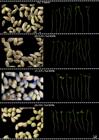
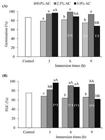
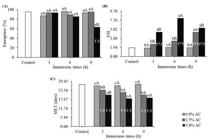
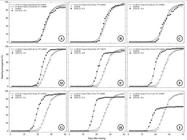
Citrus seedlings are typically propagated through grafting, using rootstocks grown from seeds. However, the coating of citrus rootstock seeds can hinder germination. Therefore, applying sodium hypochlorite (NaClO) provides an alternative to manually removing the seed coat, potentially enhancing seed germination and seedling emergence. This study investigates the use of sodium hypochlorite (NaClO) as a scarification agent on freshly harvested Rangpur lime seeds to improve germination and seedling emergence. The experiment employed a completely randomized design with a 3 × 3 factorial arrangement and an additional treatment across four replications. The variables assessed included three NaClO concentrations (0.0% - distilled water; 2.5%, and 5.0% active chlorine) and three soaking durations (3, 6, and 9 hours), with a control of unsoaked seeds retaining their coats. The evaluated parameters were germination rate, first germination count, seedling emergence, speed index, and mean seedling emergence time. Results showed that NaClO effectively degrades the seed coat, with a 2.5% concentration for 6 hours optimizing germination. While NaClO treatment did not alter emergence rates, it reduced the average time to seedling emergence. Conversely, a 5.0% concentration for 9 hours detrimentally affected germination and vigor. Sodium hypochlorite soaking presents a viable alternative for seed coat removal, accelerating germination and emergence processes in Rangpur lime tree seeds, potentially enhancing seedling production efficiency.
Keywords:
Citrus limonia Osbeck; NaClO; scarification; seed coat; vigor
 Thumbnail
 Thumbnail
 Thumbnail
 Thumbnail
 Thumbnail
 Thumbnail