 Fuzzy logic in the simultaneous selection of quantitative and qualitative descriptors for kale
ABSTRACT.
Simultaneous selection in genetic improvement presents difficulties in selecting qualitative traits as well as the desired commercial ranges for quantitative traits. Thus, fuzzy logic has become an alternative, enabling the computational modelling of the researcher’s experience. This study aimed to assess the efficiency of fuzzy logic in simultaneous selection considering both qualitative and quantitative descriptors. The developed methodology was applied to data from two experiments with kale half-sibs. The first experiment was carried out in Viçosa in randomised blocks, with 24 families of kale half-sibs, 4 replications, and 5 plants per plot. The second experiment was carried out in Montes Claros in randomised blocks, with 36 kale genotypes, 33 families of half-sibs, and 3 commercial cultivars, with 4 replications and 6 plants per plot. Quantitative and qualitative traits were evaluated, and individual genetic values were obtained using REML/BLUP. Genetic gains were evaluated based on the Mulamba-Mock index and the developed fuzzy systems. The selection gains were similar for quantitative traits, but fuzzy logic also selected qualitative traits, and thus stands out as a potential tool for kale genetic improvement. The selection of individuals by the fuzzy methodology enables estimated selection gains in a favourable direction for qualitative and quantitative traits, enabling the automation of more accurate and standardised decision-making.
Keywords:
selection indices; Mulamba-Mock; computational intelligence; genetical improvement; Brassica oleracea L. var. acephala DC.
Introduction
The use of varieties obtained through genetic improvement is considered one of the most important strategies in modern agriculture. Improved varieties are more productive and present resistance to biotic and abiotic stresses, higher nutraceutical quality, and lower environmental impacts and production costs (Rincker et al., 2014; Fang & Xiong, 2015; Huang et al., 2016).
In breeding programmes, superior genotypes are obtained through the selection and consideration of multiple characteristics. Selection should not be made based on just one character because cultivars of economic merit combine multiple characters that are of interest to farmers and consumers (Bertini et al., 2010; Rodrigues et al., 2011). Several selection indices can be applied, such as the classic index or the Smith (1936) and Hazel (1943) index, the base index, and the sum of ranks index. Among them, the sum of ranks index (Amaral Júnior et al., 2010; Rosado et al., 2012; Luz et al., 2018), proposed by Mulamba and Mock (1978), stands out. This nonparametric index is based on the linear combination of several uncorrelated characters, so it has the advantage of not requiring the estimation of economic weights.
The genetic improvement of cabbage (Brassica oleracea L. var. acephala DC.), a vegetable of great economic and food importance in several regions of the world, aims to select new cultivars with an individual height of 40-65 cm, a petiole length of 4-6 cm, a stem diameter of 3-5 cm, a leaf blade length of 15-25 cm, and a width of 12-22 cm. Qualitatively, the choice of new cultivars that stand out for the shape and margin of the leaf and the colour of the vein and petiole are essential.
In this sense, there is still little research that relates the use of simultaneous selection indexes with qualitative and quantitative traits, as well as the selection of traits with a pre-established commercial standard (Fernandes et al., 2022). The use of computational intelligence through fuzzy logic has become a potential methodology, as it allows working with quantitative and qualitative data simultaneously (Casillas et al., 2013; Pang & Bai, 2013). Through this model, it is possible to translate verbal expressions, generally imprecise and from experts, into numerical values (Papadopoulos et al., 2011), which makes computational automation possible in several areas, such as the classification of the best genotypes. This allows the quick and accurate automation of classifications by computational systems. Although fuzzy logic is used infrequently in agricultural sciences, several recent studies have demonstrated its applicability in plant breeding, highlighting the efficiency of using fuzzy logic to automate plant adaptability and stability (Carneiro et al., 2019), in the selection of coloured fibre cotton genotypes based on stability and adaptability (Cardoso et al., 2021), in the simultaneous selection of sweet potato genotypes (Fernandes et al., 2022), as well as for cultivar recommendation (Carneiro et al., 2018). Therefore, this study aimed to apply fuzzy logic in simultaneous selection considering qualitative and quantitative descriptors and to compare its efficiency with the Mulamba-Mock methodology in the evaluation of kale half-sib progenies.
Material and methods
Experimental setup and data acquisition
Experiment 1
The experiment was conducted at the Federal University of Viçosa (UFV) - Horta Velha, Viçosa, Minas Gerais State, Brazil (20°45′26″ S, 42°52′29″ W; 648.74 m above sea level). The regional climate is classified by Köppen as a subtropical climate with a dry winter and a hot and rainy summer (Cwa), with recorded annual average maximum and minimum temperatures of 26.4 and 14.8°C, respectively, and average annual precipitation of 1,221.4 mm.
Twenty-four kale half-sib progenies from the Federal University of the Jequitinhonha and Mucuri Valleys (UFVJM) germplasm bank, arranged in a randomised block design with four replications and five plants per plot, were evaluated. Sowing was carried out in 128-cell Styrofoam trays in a protected environment under 50% shading, with daily irrigations.
Seedlings were transplanted to beds with an approximate width of 2.50 m and height of 0.30 m, using a spacing of 1.00 × 0.50 m. Harvests were carried out every 14 days, for a total of 15 evaluations.
Experiment 2
The second experiment was conducted from October 2016 to August 2017 at the Institute of Agricultural Sciences (ICA) of the Federal University of Minas Gerais, Montes Claros, Minas Gerais State, Brazil (16°41′ S, 43°50′ W; 646.29 m above sea level). According to the Köppen classification, the regional climate is classified as tropical Savanna with a dry winter and a rainy summer (AW).
A randomised block design with four replications was used. Thirty-six kale genotypes - 33 families of half-sibs and 3 commercial cultivars (Manteiga, Manteiga Portuguesa, and Manteiga da Georgia) - were evaluated. The half-sibs came from the UFVJM germplasm bank. Shoots were removed from the plants when they were approximately 5 cm and rooted in 72-cell polystyrene trays filled with a commercial substrate. The shoots remained in a greenhouse for 40 days until they reached the seedling point for field planting. The plots consisted of six seedlings, transplanted in a double row to beds with an approximate width of 1.20 m and spacing of 1.00 × 0.50 m. Harvests were carried out every 15 days.
Analysed traits
The following traits were evaluated in five plants per plot: the number of shoots (when they were removed), the number of leaves, and marketable leaf fresh matter. Fully expanded leaves with leaf blade length longer than 15 cm and without damage and signs of senescence were considered marketable (Azevedo et al., 2017). The total number of leaves, number of shoots, and leaf fresh matter per plant obtained in all harvests were considered for statistical analysis. The plant height was evaluated by measuring the distance from the soil level to the tip of the tallest leaf, while the stem diameter was measured using a calliper at half the height of the plant (Azevedo et al., 2017).
The fifth newest expanded leaf of each plant was used to evaluate the leaf blade length and width, measured using a ruler graduated in centimetres, and the petiole length, measured using a ruler graduated in centimetres from its insertion in the stem to the beginning of the leaf blade. The fifth newest expanded leaf was chosen for standardisation purposes in the evaluations.
The following traits were also evaluated using a score scale proposed by the International Board for Plant Genetic Resources (International Board for Plant Genetic Resources [IBPGR], 1990): leaf blade shape (1 - orbicular, 2 - elliptic, 3 - obovate, 4 - spatulate, and 5 - ovate), leaf margin shape (0 - entire, 1 - crenate, 2 - dentate, 3 - serrate, 4 - undulate, 5 - doubly dentate, and 6 - others), and petiole and main vein colour (1 - white, 2 - greenish-white, 3 - green, 4 - purple, 5 - red, and 6 - others).
Configuration and use of fuzzy logic
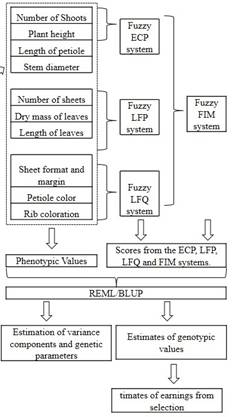
Three fuzzy systems were created to reduce the system complexity due to the large number of descriptors considered in the kale genetic improvement. The first system was named ECP (easiness in cultural practices), the second system was named LFP (leaf production), and the third system was named LFQ (leaf quality). Subsequently, the outputs of these three fuzzy systems were used as the input to a system named FIM (Figure 1), which allows obtaining a general score for the plants.
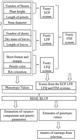
Scheme of the fuzzy inference systems used as selection indices for easiness in cultural practices (ECP), leaf production (LFP), leaf quality (LFQ), and all criteria simultaneously (FIM) in kale half-sib progenies.
Trapezoidal membership functions were used for all traits in the fuzzification step (Equation 1):
(1)
with its parameters (a, b, c, and d) arbitrated according to the kale ideotype. Triangular functions were used for qualitative traits and the ECP, LFP, and LFQ system outputs (Equation 2):
(2)
The parameters (a, b, c, and d) were arbitrated in the model membership functions, considering each evaluated trait (Table 1).
Rules were generated in the inference step by relating the input linguistic variables with the output variable scores of each system. The number of rules for each system corresponds to the multiplication of the number of categories of each considered input variable, reaching 81 for ECP (3 × 3 × 3 × 3), 81 for LFP (3 × 3 × 3 × 3), 625 for LFQ (5 × 5 × 5 × 5), and 125 for FIM (5 × 5 × 5) (Supplementary Material). The ‘and’ connector was used in all rules. The ‘Mamdani min’ methodology was used. The centroid method was used for defuzzification. Thus, scores were obtained for each fuzzy system from the phenotypic values that indicate the predilection of each genotype, with values ranging from 1 to 5. These criteria were used for selection. The fuzzy logic systems were configured and employed by using the FuzzyToolkitUoN package of the R software (R Core Team, 2019).
Estimate of individual and simultaneous selection gains
The model y = Xr + Za + Wc + e was used for the statistical analysis of the quantitative descriptors and scores obtained by the four fuzzy systems (using the phenotypic data), where y is the data vector, in which y~N(Xr,V), V=ZAσ a 2 Z’+Wiσ c 2 W’+Iσ e 2, σ a 2 is the additive genetic variance, σ c 2 is the environmental variance between plots, and σ e 2 is the residual variance; r is the vector of the repeat effects (assumed to be fixed) added to the overall mean; a is the vector of the individual additive genetic effects (random), in which a~N(0,Aσ a 2); p is the vector of the plot effects (random), in which c~N(0,Iσ c 2 ); and e is the vector of (random) errors, in which e~N(0,Iσ e 2 ). The uppercase letters represent incidence matrices for these effects. This model allowed estimating the variance components and predicting the genetic values by the REML-BLUP methodology using the sommer package of the R software (R Core Team, 2019). The variance components allowed obtaining the estimates of heritability: h2a = σ a 2/(σ a 2 + σ c 2 + σ e 2); the coefficient of genotypic variation: CVgi% = 100 × Va0.5/OM; the coefficient of residual variation: CVe% = 100 × σ e 2/OM; and the coefficient of relative variation: CVr = CVg/CVe, in which Va is the additive variance, Vplot is the plot variance, Ve is the residual variance, and OM is the overall mean.
Direct and indirect gains expected with the selection of the best progenies (15% selection index) were obtained through the genetic values of each trait. The genetic values allowed obtaining the rank for each plant for all traits, and the sum of these ranks was estimated later and used as an index for simultaneous selection (the Mulamba-Mock index). The genetic values obtained from the scores of the four fuzzy systems were used as a criterion for simultaneous selection. For this, the following estimators were used: DSGi (%) = 100 × (GVi − OMi)/OMi, ISGij (%) = 100 × (GVij - OMi)/OMi, and SSGij (%) = 100 × (GVSij - OMi)/OMi, where DSGi (%) is the direct selection gain for the i-th descriptor, GVi is the mean of genotypic values of selected individuals (15% best) for the i-th descriptor, OMi is the overall mean of the i-th descriptor, ISGij (%) is the indirect selection gain for the i-th descriptor considering the selection of the best individuals for the j-th descriptor, GVij is the mean of genotypic values for the i-th descriptor of selected individuals considering the j-th descriptor, SSGij (%) is the simultaneous selection gain in the i-th evaluated descriptor considering the j-th index (fuzzy system index [ECP, LFP, LFQ, and FIM], or the Mulamba-Mock index), and GVSij is the mean of the genotypic values of selected individuals considering the j-th index. The expected selection gains were determined by using the R software (R Core Team, 2019). Pearson’s correlation was estimated to analyse the influence of the indices in each of the studied variables using the cor.test function in the R software (R Core Team, 2019). Para verificar a eficiencia da metodologia para a seleção de caracteres qualitativos, foi estimada a frequencia de plantas com as características desejadas nas amostras selecionadas considerando cada um dos critérios de seleção (Mulamba-Mock e os escores obtidos pelo sistema Fuzzy).
Results
The genetic parameters estimated for the two experiments (Table 2) presented genetic superiority for the traits number of shoots and number of leaves, with coefficients of genotypic variation that were higher than the coefficients of residual variation and, consequently, higher genetic variability. Experiment 2 presented higher coefficients of residual variation for the other traits, demonstrating a higher environmental influence on the traits.
The highest heritability estimates were obtained in experiment 1 for the traits number of shoots (0.66) and petiole length (0.52). The traits leaf length (0.3) and leaf width (0.37) also presented notable heritability estimates. Experiment 2 had heritability estimates greater than or equal to 50% for plant height (0.50) and the number of leaves (0.84). The trait number of shoots presented a heritability of 0.49.
The correlation of the fuzzy system scores showed low values between the ECP, LFP, and LFQ systems, with estimates of less than 0.26 for experiment 1 and less than 0.11 for experiment 2. The FIM system had higher correlations with the others, with values greater than 0.45 in both experiments (Table 3). The ECP scores were greater than 0.32 for the traits number of shoots, plant height, and petiole length for both experiments. Leaf production had higher correlations for the traits associated with this system, such as the number of leaves, leaf fresh matter, the leaf length, and the leaf width. There were low correlation values when comparing the LFQ system with the quantitative traits (Table 3).
The estimates of expected gain with direct selection showed a higher magnitude (in modulus) for the number of shoots in both experiments (47.87 and 41.46%, respectively) (Table 4). However, the selection for this trait allowed unfavourable indirect gains for the traits stem diameter (−7.15%), number of leaves (−7.61%), and leaf fresh matter (−15.90%) in experiment 1. On the other hand, the selection for the number of shoots in experiment 2 allowed favourable indirect selection gains for the studied population.
There were favourable genetic gains for both experiments when considering the trait leaf fresh matter, with a direct increase of 8.70% for experiment 1 and 18.06% for experiment 2. In addition, it allowed an indirect increase in the number of leaves (6.24 and 11.53%, respectively) and a desirable decrease in the plant height (−2.07 and −9.01%, respectively) (Table 4).
Plant selection by the ECP system allowed higher estimates of selection gain in experiment 1 for the number of shoots (−41.54%), followed by the petiole length (−14.99%). In addition, selection based on the LFP system showed a favourable estimate of gain for traits related to yield, with an increase in the number of leaves (5.38%) and leaf fresh matter (1.73%), as well as a reduction in the petiole length (−8.79%), the leaf length (−7.10%), and the leaf width (−6.13%). The LFQ system, on the other hand, provided a low selection gain for quantitative traits for both experiments (Table 5). The Mulamba-Mock index, traditionally used for simultaneous selection, showed estimates of gains that are similar to those of the developed FIM fuzzy system (Table 5).
However, selection based on the Mulamba-Mock method reduced the frequency of plants with the desirable petiole colour (Table 6). The ECP and LFP systems, which did not consider qualitative traits in their configuration, presented inferior results compared with the FIM system for all analysed traits (Table 6). However, the LFQ system, aimed at leaf quality, selected plants with a higher frequency of desirable qualitative traits, similarly to the FIM system. The FIM system showed lower performance than the LFQ system for the qualitative traits leaf margin and petiole colour for both experiments. However, its results were more favourable for these traits than those obtained by the Mulamba-Mock method in the studied populations (Table 6).
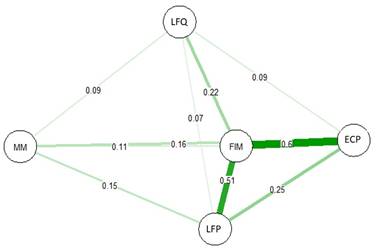
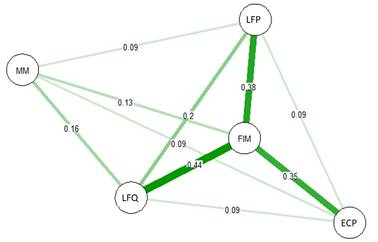
There were low coincidence indices between selected individuals between the traditional Mulamba-Mock methodology and the developed fuzzy systems (Figures 2 and 3). The value between the Mulamba-Mock index and the FIM system was 0.11 for experiment 1 and 0.13 for experiment 2. The FIM system allowed a higher coincidence of selected individuals with the other systems, with a value greater than 0.5 for the ECP and LFP systems for experiment 1 (Figure 2), and greater than 0.3 for the ECP, LFP, and LFQ systems for experiment 2 (Figure 3). These results indicate the selection superiority of the developed systems compared with the traditional methodology.
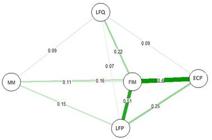
Graphical scattering of the coincidence of genotypes selected by the Mulamba-Mock methodology and the leaf production (LFP), leaf quality (LFQ), easiness in cultural practices (ECP), and FIM fuzzy systems for experiment 1.
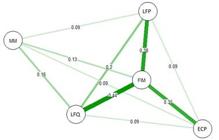
Graphical scattering of the coincidence of genotypes selected by the Mulamba-Mock methodology and the leaf production (LFP), leaf quality (LFQ), easiness in cultural practices (ECP), and FIM fuzzy systems for experiment 2.
Discussion
There are several methodologies for plant genetic improvement, but simultaneous selection is still a challenge because it makes difficult situations in which commercial break and pre-defined qualitative traits are desired. Fuzzy logic has proved to be a useful tool for breeding programmes. It allows linking information from different parameters to understand the behaviour of crops relative to environmental variations (Carneiro et al., 2018) by modelling the breeder’s experience and automating decision-making (Papadopoulos et al., 2011; Mardani et al., 2015). Thus, genotypic analyses associated with the use of new technologies have been used for the genetic improvement of several crops, such as kale.
The high estimates of the coefficient of genotypic variation for most traits showed the possibility of success with the genetic improvement of the population under study, especially for the traits number of shoots and number of leaves, which presented a coefficient of relative variation higher than the unit and medium-to-high estimates of heritability (Table 2). The expressive estimate of heritability for the traits of both experiments indicates high genotypic variation and low residual variation. It indicates that it is easy to improve high-heritability traits (Table 2) in studied plants populations (Azevedo et al., 2017).
Azevedo et al. (2017) obtained medium-to-high heritability estimates when evaluating 22 kale genotypes. The highest estimates were obtained for the number of leaves and leaf fresh matter, while the lowest estimates were obtained for the plant height. Of note, these heritability values are higher than those obtained in the populations investigated in the present study. This discrepancy may be associated with different genotypic traits between the analysed populations and differences in the experimental design.
There were positive and negative correlations between the evaluated traits and the four developed fuzzy systems. The FIM system presented the highest correlation estimates (Table 3), demonstrating that it efficiently gathered the descriptors included in the ECP, LFP, and LFQ systems. These findings highlight the feasibility of using the simultaneous selection of traits in the populations under study. There was a low correlation between the LFQ system scores and the yield attributes (Table 3), which is justified by the low association of the traits that make up LFQ (leaf blade shape, leaf margin, petiole colour, and main vein colour) with the evaluated quantitative variables.
Kale genetic improvement seeks to increase the yield per area and to facilitate cultural practices, resulting in higher profitability (Azevedo et al., 2017). For this purpose, it is necessary to select genotypes with fewer shoots, a shorter height, more leaves, and wider stems to reduce the need for staking and plant loss due to lodging. These traits were favourably associated with the FIM system scores for experiment 1, while stem diameter had unfavourable scores for experiment 2 (Table 3). This difference in stem diameter is associated with the climate conditions of the Montes Claros region, where the experiment was carried out. According to Chakwizira et al. (2009), stem diameter is influenced by genetic as well as the climate conditions of the growing region.
This positive association with the FIM system scores indicates the efficiency of the fuzzy system developed in the selection of progenies. The efficiency of fuzzy logic was verified in the recommendation of bean cultivar strains, based on adaptability and stability (Carneiro et al., 2018; 2019). Moreover, it allowed for the integration of soil, climate, and agricultural conditions in terms of support for decision-making regarding soil nitrogen fertilisation (Papadopoulos et al., 2011).
Among all the analysed descriptors, the number of shoots enabled the highest direct and simultaneous selection gains by the Mulamba-Mock index and the ECP and FIM systems (Tables 4 and 5). A reduction in the number of shoots is advantageous for kale production, as it reduces the costs associated with cultural practices (Azevedo et al., 2017). Selection based on leaf fresh matter is advantageous for the genetic improvement of the analysed populations, as it allows an increase in yield by directly increasing leaf fresh matter and indirectly increasing the number of leaves. Furthermore, it provides the desired reduction for the plant height, petiole length, leaf length, and leaf width.
The selection gains obtained by the LFQ system were low for all analysed quantitative traits due to the distinct system characteristics - that is, it was developed for qualitative descriptors. The selection gains obtained by the Mulamba-Mock index showed similarities with those obtained by the FIM system for quantitative traits. The comparison between selection indices in genetic improvement showed that the Mulamba-Mock index is highly efficient in the selection of genotypes. Studies evaluating genetic selection for the ornamental use of pepper obtained a Mulamba-Mock index more efficient than the Smith and Hazel, Pesek and Baker, and Williams selection indices (Luz et al., 2018). On the contrary, the Mulamba-Mock index was more adequate for selecting corn hybrids for silage (Crevelari et al., 2018).
Regarding qualitative parameters, plants with an orbicular (1), elliptic (2), or obovate (3) leaf blade shape; a crenate (1) or dentate (2) leaf margin shape; and greenish-white (2) or green (3) leaf main vein and petiole colour are desired. The LFQ and FIM systems were superior to the Mulamba-Mock index and the ECP and LFP systems for selecting these traits (Table 6). This efficient compilation between quantitative and qualitative traits highlights the efficiency of the FIM fuzzy system (Figures 2 and 3) in the simultaneous selection of descriptors for the genetic improvement of the studied kale populations: there were higher coincidence indices among the selected individuals. Thus, the superiority of selection for the developed systems compared with the traditional methodology can be confirmed.
The present study confirmed the efficiency of the Mulamba-Mock index for quantitative traits, but this index cannot be used for simultaneous analysis of data with distinct traits without significant losses in selection. In this sense, the use of fuzzy logic stands out, as it has the advantage of working with non-linear and complex processes compared with the traditional techniques (Petropoulos et al., 2017). It can adapt to adverse situations due to the computational automation of specialised knowledge and the ability to make decisions considering human subjectivity in a more precise and standardised way.
Another relevant feature of fuzzy algorithms is their multidisciplinary character, which allows the analysis of quantitative and qualitative data simultaneously (Lee, 1990; Casillas et al., 2013; Pang & Bai, 2013), a fact that may explain the satisfactory results obtained by the ECP, LFP, and LFQ systems separately and the compilation of the data in the single FIM system in all analyses. Moreover, this system allows for the interaction and adequacy of data by experts, responding in less time than other methods (Mushtaq et al., 2016). It allows breeders to model the desired commercial ranges to each trait and to select kale half-sib families with a higher efficiency and a shorter selection time than selection indices.
Conclusion
The FIM system provided selection gains for quantitative traits similar to those obtained by the Mulamba-Mock method, in addition to providing the selection of plants with desired qualitative traits. This fuzzy system is efficient for the simultaneous selection of qualitative and quantitative traits, allowing the selection for commercially pre-defined ranges for different kale populations. Therefore, the methodology is a useful tool for kale genetic improvement, reducing time and human resources in breeding programmes.
Data availability
Not applicable.
Acknowledgements
This study was supported by the Coordination for the Improvement of Higher Education Personnel - Brazil (CAPES) - Financing Code 001, the National Council for Scientific and Technological Development (CNPq), and the Fundação de Amparo à Pesquisa de Minas Gerais (FAPEMIG).
References
-
Amaral Júnior, A. T., Freitas Júnior, S. P., Rangel, R. M., Pena, G. F., Ribeiro, R. M., Morais, R. C. & Schuelter, A. R. (2010). Improvement of a popcorn population using selection indexes from a fourth cycle of recurrent selection program carried out in two different environments. Genetics and Molecular Research, 9(1), 340-347. https://doi.org/10.4238/vol9-1gmr702
» https://doi.org/https://doi.org/10.4238/vol9-1gmr702 -
Azevedo, A. M., Andrade Júnior, V. C., Santos, A. A., Sousa Júnior, A. S., Oliveira, A. J. M. & Ferreira, M. A. M.. (2017). Population parameters and selection of kale genotypes using Bayesian inference in a multi-trait linear model. Acta Scientiarum. Agronomy, 39(1), 25-31. https://doi.org/10.4025/actasciagron.v39i1.30856
» https://doi.org/https://doi.org/10.4025/actasciagron.v39i1.30856 -
Bertini, C. H. C. M., Almeida, W. S., Silva, A. P. M., Silva, J. W. L. & Teófilo, E. M. (2010). Análise multivariada e índice de seleção na identificação de genótipos superiores de feijão-caupi. Acta Scientiarum. Agronomy, 32, 613-619. https://doi.org/10.4025/actasciagron.v32i4.4631
» https://doi.org/https://doi.org/10.4025/actasciagron.v32i4.4631 -
Cardoso, D. B. O., Oliveira, L. F., Souza, G. S. D., Garcia, M. F., Medeiros, L. A., Faria, P. N., Cruz, C. D. & Sousa, L. B. D.. (2021). Using fuzzy logic to select coloured-fibre cotton genotypes based on adaptability and yield stability. Acta Scientiarum. Agronomy, 43, e50530. https://doi.org/10.4025/actasciagron.v43i1.50530
» https://doi.org/https://doi.org/10.4025/actasciagron.v43i1.50530 -
Carneiro, A. R. T., Sanglard, D. A., Azevedo, A. M., Souza, T. L. P. O., Pereira, H. S. & Melo, L. C.. (2019). Fuzzy logic in automation for interpretation of adaptability and stability in plant breeding studies. Scientia Agricola, 76(2), 123-129. https://doi.org/10.1590/1678-992x-2017-0207
» https://doi.org/https://doi.org/10.1590/1678-992x-2017-0207 -
Carneiro, V. Q., Prado, A. L., Cruz, C. D., Carneiro, P. C. S., Nascimento, M. & Carneiro, J. E. S.. (2018). Fuzzy control systems for decision-making in cultivars recommendation. Acta Scientiarum. Agronomy, 40(1), 1-8. https://doi.org/10.4025/actasciagron.v40i1.39314
» https://doi.org/https://doi.org/10.4025/actasciagron.v40i1.39314 - Casillas, J., Cordón, O., Triguero, F. H. & Magdalena, L. (2013). Interpretability issues in fuzzy modeling (v. 128). Springer.
- Chakwizira, E., Fletcher, A. L., Ruiter, J. M., Meenken, E., Maley, S. & Wilson, D. R.. (2009). Kale dry matter yield responses to nitrogen and phosphorus application. Agronomy New Zealand, 39(1), 59-70.
-
Crevelari, J. A., Durães, N. N. L., Bendia, L. C. R., Silva, A. J., Azevedo, F. H. V., Azeredo, V. C. & Pereira, M. G.. (2018). Assessment of agronomic performance and prediction of genetic gains through selection indices in silage corn. Australian Journal of Crop Science, 12(5), 800-807. https://doi.org/10.21475/ajcs.18.12.05.PNE1004
» https://doi.org/https://doi.org/10.21475/ajcs.18.12.05.PNE1004 -
Fang, Y. & Xiong, L.. (2015). General mechanisms of drought response and their application in drought resistance improvement in plants. Cellular and Molecular Life Sciences, 72, 673-689. https://doi.org/10.1007/s00018-014-1767-0
» https://doi.org/https://doi.org/10.1007/s00018-014-1767-0 -
Fernandes, A. C.G., Azevedo, A. M., Valadares, N. R., Rodrigues, C. H. O., Brito, O. G., Andrade Júnior, V. C. & Aspiazú, I.. (2022). Fuzzy logic applied to simultaneous selection of sweet potato genotypes. Horticultura Brasileira, 40, 63-70. http://dx.doi.org/10.1590/s0102-0536-20220108
» https://doi.org/http://dx.doi.org/10.1590/s0102-0536-20220108 -
Huang, S., Weigel, D., Beachy, R. N. & Li, J.. (2016). A proposed regulatory framework for genome-edited crops. Nature Genetics, 48(2), 109-111. https://doi.org/10.1038/ng.3484
» https://doi.org/https://doi.org/10.1038/ng.3484 -
Hazel, L. N.. (1943). The genetic basis for constructing selection indexes. Genetics, 28(6), 476-490. https://doi.org/10.1093/genetics/28.6.476
» https://doi.org/https://doi.org/10.1093/genetics/28.6.476 - International Board for Plant Genetic Resources (1990). Descriptors for Brassica and Raphanus. IBPGR.
-
Lee, C. C.. (1990). Fuzzy logic in control systems: fuzzy logic controller. In IEEE Transactions on Systems, Man, and Cybernetics, 20(2), 404-418. https://doi.org/10.1109/21.52551
» https://doi.org/https://doi.org/10.1109/21.52551 -
Luz, P. B., Santos, A. A. B., Ambrosio, V. C., Neves, L. G. & Tavares, A. R.. (2018). Selection of indexes to evaluate the genetic variability aiming ornamental use of peppers accessions. Ornamental Horticulture, 24(1), 7-11. https://doi.org/10.14295/oh.v24i1.1109
» https://doi.org/https://doi.org/10.14295/oh.v24i1.1109 -
Mardani, A., Jusoh, A. & Zavadskas, E. K.. (2015). Fuzzy multiple criteria decision-making techniques and applications-Two decades review from 1994 to 2014. Expert Systems with Applications, 42(8), 4126-4148. https://doi.org/10.1016/j.eswa.2015.01.003
» https://doi.org/https://doi.org/10.1016/j.eswa.2015.01.003 - Mulamba, N. N. & Mock, J. J.. (1978). Improvement of yield potential of the Eto Blanco maize (Zea mays L. ) population by breeding for plant traits. Egyptian Journal of Genetics and Cytology, 7(1), 40-51.
-
Mushtaq, Z., Sani, S. S., Hamed, K., Ali, A., Ali, A., Belal, S. M. & Naqvi, A. A. (2016). Automatic agricultural land irrigation system by fuzzy logic. In 2016 3rd International Conference on Information Science and Control Engineering. IEEE. https://doi.org/10.1109/ICISCE.2016.190
» https://doi.org/https://doi.org/10.1109/ICISCE.2016.190 -
Pang, B. & Bai, S.. (2013). An integrated fuzzy synthetic evaluation approach for supplier selection based on analytic network process. Journal of Intelligent Manufacturing, 24, 163-174. https://doi.org/10.1007/s10845-011-0551-3
» https://doi.org/https://doi.org/10.1007/s10845-011-0551-3 -
Papadopoulos, A., Kalivas, D. & Hatzichristos, T.. (2011). Decision support system for nitrogen fertilization using fuzzy theory. Computers and Electronics in Agriculture, 78(2), 130-139. https://doi.org/10.1016/j.compag.2011.06.007
» https://doi.org/https://doi.org/10.1016/j.compag.2011.06.007 -
Petropoulos, S., Karavas, C. S., Balafoutis, A. T., Paraskevopoulos, I., Kallithraka, S. & Kotseridis, Y. (2017). Fuzzy logic tool for wine quality classification. Computers and Electronics in Agriculture, 142(Part B), 552-562. https://doi.org/10.1016/j.compag.2017.11.015
» https://doi.org/https://doi.org/10.1016/j.compag.2017.11.015 -
R Core Team. (2019). R: A language and environment for statistical computing. R Foundation for Statistical Computing. http://www.r-project.org/index.html
» http://www.r-project.org/index.html -
Rincker, K., Nelson, R., Specht, J., Sleper, D., Cary, T., Cianzio, S. R., Casteel, S., Conley, S., Chen, P., Davis, V., Fox, C., Graef, G., Godsey, C., Holshouser, D., Jiang, G., Kantartzi, S. K., Kenworthy, W., Lee, C., Mian, R. & Diers, B.. (2014). Genetic improvement of U. S. soybean in maturity groups II, III, and IV. Crop Science, 54(4), 1419-1432. https://doi.org/10.2135/cropsci2013.10.0665
» https://doi.org/https://doi.org/10.2135/cropsci2013.10.0665 -
Rodrigues, F., Von Pinho, R. G., Albuquerque, C. J. B. & Von Pinho, E. V. R. (2011). Índice de seleção e estimativa de parâmetros genéticos e fenotípicos para características relacionadas com a produção de milho-verde. Ciência e Agrotecnologia, 35, 278-286. https://doi.org/10.1590/S1413-70542011000200007
» https://doi.org/https://doi.org/10.1590/S1413-70542011000200007 -
Rosado, L. D. S., Santos, C. E. M., Bruckner, C. H., Nunes, E. S. & Cruz, C. D.. (2012). Simultaneous selection in progenies of yellow passion fruit using selection indexes. Revista Ceres, 59(1), 95-101. https://doi.org/10.1590/S0034-737X2012000100014
» https://doi.org/https://doi.org/10.1590/S0034-737X2012000100014 -
Smith, H. F.. (1936). A discriminant function for plant selection. Annals of Eugenics, 7(3), 240-250. https://doi.org/10.1111/j.1469-1809.1936.tb02143.x
» https://doi.org/https://doi.org/10.1111/j.1469-1809.1936.tb02143.x
Edited by
-
Associate Editor in charge:
Alessandro Lucca BracciniCarlos Alberto Scapim