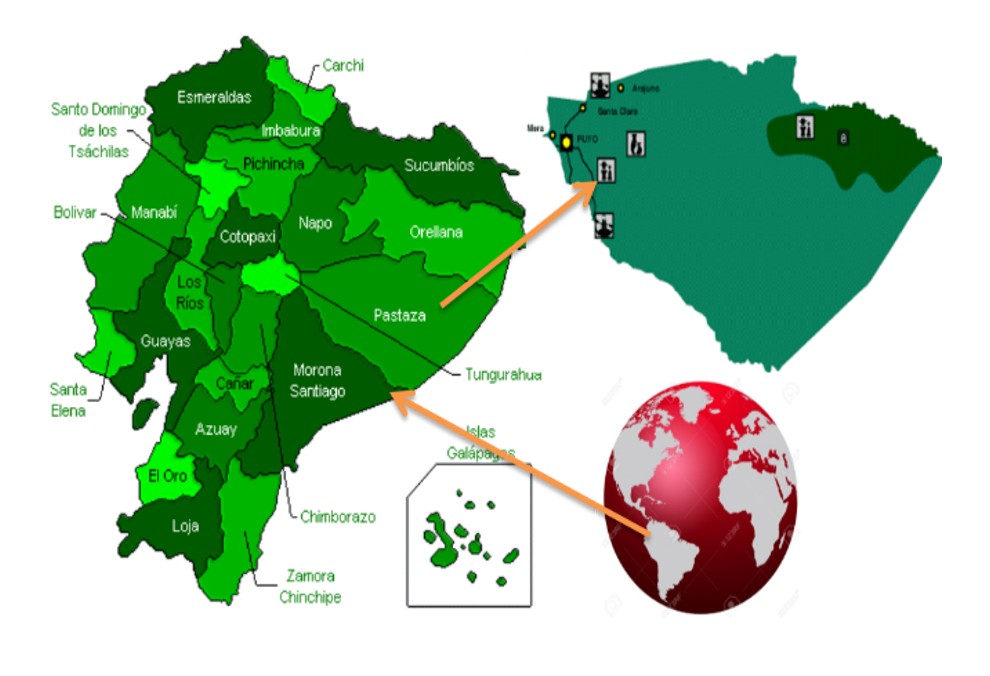
 Effect of the use of eCG on the pregnancy rate in dairy cows treated with a prolonged proestrus protocol in the Ecuadorian Amazon
The objective of this study was to evaluate the effect of eCG on the time of ovulation, preovulatory follicle diameter and pregnancy rate in Holstein cows with a prolonged proestrus protocol in the Ecuadorian Amazon. This research was conducted between October 2018 to October 2019. We used 447 multiparous cows, milked once a day, with an average milk production of 8 to 9 liters cow/day. Two treatments were used, T1 with the addition of eCG (206 cows); and T2 without the application of eCG (241 cows). The pregnancy rate was higher in cows that received eCG (59.2%, T1) than in cows that did not receive eCG (45.6% T2: P<0.05), but the presence or absence of estrus did not differ (P>0.05) among groups (T1: 70.4%), T2: 65.6%). The diameter of the dominant follicle at P4 device removal (T1: 9.5 ± 0.6 mm vs T2: 9.7 ± 0.7 mm), as well as at the time of artificial insemination (T1: 11.6 ± 0.7mm vs T2: 11.2 ± 1.1mm) was not different among groups (P>0.05). However, the diameter of the dominant preovulatory follicle was greater (P<0.05) in cows in T1 (13.5 ± 1.1 mm) than those in T2 (12.5 ± 1.6 mm), with a follicular growth rate of 1.3 ± 0.1 mm/day and 0.9 ± 0.1 mm/day, for T1, T2 respectively (P<0.05). The mean ovulation time from device removal was shorter for T1 (94.7 h; P<0.05) than for T2 (101.5 h). The diameter of the CL was greater (P<0.05) for T1 (20.8 ± 2.3 mm) than T2 (19.1 ± 3.6 mm), while plasma concentrations of P4 did not differ among groups (P>0.05). In conclusion, the addition of eCG to the J-Synch protocol increased the diameter of the preovulatory follicle and the resulting CL, which favored the pregnancy rate in cows in the Ecuadorian Amazon.
Keywords:
Holstein cows; proestrus; eCG; follicular diameter; progesterone
 Thumbnail
 Thumbnail
 Thumbnail
 Thumbnail
 Thumbnail