 How is plankton affected by physical and chemical eutrophication control techniques? A systematic review
Abstract Eutrophication control techniques primarily target the reduction of cyanobacterial biomass. However, it is crucial to consider the effects of these techniques on non-target planktonic organisms, as their dynamics and community structure are still not well understood.
Aim The objective of this study was to perform a systematic review of the literature to observe the effects of chemical and physical eutrophication control techniques on planktonic organisms in eutrophic environments. It also aimed to evaluate bibliometric production and determine knowledge gaps.
Methods The review was carried out based on the PRISMA methodology. The articles were searched in the databases of Scopus and Web of Science. The articles were screened so that only those within our objective remained. The systematic review was carried out with a final sample of 136 articles.
Results The most frequently mentioned techniques were “Floc & Sink”, “Floc & Lock”, and algaecide application, (chemicals methods); aeration, dredging, and ultrasound (physical methods). There was an increase in the number of publications from 1974 until July 2020, especially on cyanobacteria. The identified gaps were studies on the zooplankton population and plankton community succession, and long-term experiments. All the chemical techniques remove cyanobacteria biomass or biovolume. Aeration, dredging, and ultrasound, which had conflicting results without conclusive findings. The few studies about the plankton community show positive effects on phytoplankton diversity after the “Floc & Sink” technique and an increase in richness after “Floc & Lock” and aeration. All the techniques negatively affect zooplankton, reducing biomass, survival, or abundance.
Conclusions There are many studies on the effect of eutrophication control techniques on cyanobacteria, and they provide good removal of their biomass. However, there is a large gap regarding other phytoplankton taxonomic groups and zooplankton, making it difficult to draw definitive conclusions about the overall impacts of these techniques.
Keywords:
biomass; cyanobacteria; phytoplankton; zooplankton

Resumo As técnicas de controle da eutrofização visam principalmente a redução da biomassa de cianobactérias, no entanto, entender os efeitos dessas técnicas em organismos planctônicos não-alvo é crucial, pois sua dinâmica e estrutura de comunidade após a aplicação das técnicas ainda não são bem compreendidas.
Objetivo Este estudo teve como objetivo realizar uma revisão sistemática da literatura para observar os efeitos das técnicas químicas e físicas de controle da eutrofização em organismos planctônicos em ambientes eutróficos. Também teve como objetivo avaliar a produção bibliométrica e determinar lacunas de conhecimento.
Métodos A revisão foi realizada baseada na metodologia PRISMA, e para a busca dos artigos foi usada as bases de dados Scopus e Web of Science. Os artigos encontrados foram traidos para que permanecessem apenas aqueles dentro do nosso objetivo. A análise cienciométrica foi realizada com uma amostra final de 136 artigos.
Resultados As técnicas que continham o maior número de estudos foram “Floc & Sink”, “Floc & Lock” e aplicação de algicidas (métodos químicos); aeração, dragagem e ultrassom (métodos físicos). Houve um aumento no número de publicações de 1974 até julho de 2020, especialmente sobre cianobactérias. As lacunas encontradas foram estudos sobre a população de zooplâncton e sucessão da comunidade planctônica, e experimentos de longo prazo. Todas as técnicas químicas conseguem remover biomassa ou biovolume de cianobactérias. Ao contrário da aeração, dragagem e ultrassom, que tiveram resultados conflitantes sem descobertas conclusivas. Os poucos estudos sobre comunidade mostram efeitos positivos na diversidade do fitoplâncton após a técnica “Floc & Sink” e um aumento na riqueza após “Floc & Lock” e aeração. Todas as técnicas afetaram negativamente o zooplâncton, reduzindo biomassa, sobrevivência ou abundância.
Conclusões Existem muitos estudos sobre o efeito das técnicas em cianobactérias, e elas fornecem boa remoção dessa biomassa. No entanto, há uma grande lacuna em outros grupos taxonômicos de fitoplâncton e zooplâncton, por isso é difícil tirar conclusões definitivas sobre os impactos gerais dessas técnicas.
Palavras-chave:
biomassa; cianobactérias; fitoplâncton; zooplâncton
1. Introduction
The first step in controlling cyanobacterial blooms in eutrophic aquatic ecosystems is to halt the input of nutrients from external point sources (Lürling et al., 2016a) such as domestic sewage, as well as from diffuse sources, such as agriculture and livestock (Le Moal et al., 2019). However, with this measure alone, the recovery of some lakes would take decades due to the internal loading process (Cooke et al., 2005). In addition to reducing the external nutrient input, additional mitigation actions within the lake are necessary to effectively control eutrophication (Hilt et al., 2006; Lürling et al., 2016a).
There are several physical, chemical, and biological techniques available to control eutrophication. These methods aim to rapidly reduce cyanobacterial blooms, leading to improvements in water quality and ensuring access to water for drinking, irrigation, industry, and recreation (Jančula & Marsálek, 2011). These can be either palliative measures that address the consequences of eutrophication, or focused on controlling its source and underlying causes (Lürling & Mucci, 2020).
Physical techniques, also known as engineering measures (Estrada et al., 2011), encompass various methods such as aeration (surface aeration, metalimnion or hypolimnion oxygenation/aeration), increased water flow, ultrasound, mechanical algae removal, containment barriers, and sediment dredging (Jagtman et al., 1992; Chen et al., 2009; Visser et al., 2016; Norris & Laws, 2017). Chemical control techniques involve the addition of chemical compounds or manipulation of biogeochemical cycles, primarily targeting phosphorus. These techniques include geo-engineering approaches (“Floc & Sink”, “Floc & Lock”), algaecide application, and the use of magnetic particles. Biological techniques, particularly biomanipulation through fish, have been the subject of significant studies globally (Jeppesen et al., 2012). The removal of planktivorous and benthivorous fish or the introduction of piscivorous fish can trigger cascading effects, which enhance zooplankton grazing and, consequently, exert top-down control on phytoplankton. Additionally, reducing benthivorous populations decreases sediment resuspension, thereby contributing to water quality maintenance (Van de Bund & Van Donk, 2002; Søndergaard et al., 2007).
These mitigation techniques primarily target the reduction of cyanobacterial biomass (Lürling et al., 2016a). However, it is important to consider the potential impact on other planktonic groups (Bishop & Richardson, 2018; Sinha et al., 2018). In their study, Lucena-Silva et al. (2019) showed that chlorophytes were also affected by the “Floc & Sink” mitigation technique. Álvarez-Manzaneda et al. (2019) demonstrated that phosphorus adsorbents used in geoengineering techniques can physically immobilize and accumulate on Daphnia. Thus, understanding the effects of these techniques on non-target planktonic organisms is crucial, as their dynamics and community structure are still not well understood.
The goal of this study was to perform a systematic review of the literature (1974 - 2020) to investigate how global scientific production has advanced in understanding the effects of eutrophication control techniques, both chemical and physical, on all planktonic organisms both target and non-target. Our study also aimed to find the main perspectives and identify knowledge gaps in this field.
2. Methods
2.1. Data sources and search criteria
A survey of scientific articles was conducted using the Scopus and Web of Science databases on July 6, 2020, considering the period between 1974 and 2020. The articles were initially selected based on the following keywords: “restoration” OR “mitigation” OR “control”, “eutrophication”, “plankton” OR “phytoplankton” OR “cyanobacteria” OR “algae” OR “zooplankton”, NOT “biomanipulation” OR “bioremediation”, NOT “estuary”. In this study, biomanipulation studies will not be considered. We found 2542 articles after removing duplicated articles in both databases.
We used the Preferred Reporting Items for Systematic Reviews and Meta Analyses (PRISMA) methodology. To be included in our study, the article needed to incorporate: a) at least one parameter (e.g. biomass, abundance, diversity) related to plankton and/or b) study at least one species or planktonic group. Also, the articles were excluded based on the following criteria: a) studies conducted in non-lentic freshwater environments, and b) non-experimental studies, such as modeling. These inclusion and exclusion criteria were evaluated by reading the title and abstract and then reading the full article (Figure 1). Following the application of these criteria, a total of 136 articles were selected for the study (Table 5, available in https://doi.org/10.48331/SCIELODATA.D99HXD).

2.2. Data extraction
Bibliometric and plankton data were extracted from the final sample of 136 articles. We organized the results according to two approaches: Bibliometric analysis and Plankton analysis, as described below:
I. Bibliometric analysis: keywords, year and journal of publication, climatic region, country, experimental design and duration of the study, and techniques type. Considering that each study provided multiple results for most of the extracted variables, we analyzed only keywords, year, and journal of publication per total number of articles (n = 136). The other variables were analyzed by the number of results, as some articles use more than one technique, study different organisms, scales and duration. This changes the total n. The classification of the articles according to climatic region and country was done based on the origin of the study subjects rather than where the experiments took place (n=164). The experimental designs (n=164) were classified as microcosm (conducted in laboratory bottles up to 5L); mesocosm (carried out in containers larger than 5L and smaller than the whole lake, either in the laboratory or within the lake); whole lake (when the technique was applied in full scale). The duration (n=164) of the study was classified as short (<3 days), medium (>3 days and <1 year), or long (>1 year).
The techniques analyzed (n=145) in the study were divided into three categories: physical, chemical, and combination (involving the use of multiple techniques regardless of the approach). The specific techniques were classified (n=145), and for the analysis of plankton data, the focus was placed on the six most frequently studied techniques. They are: “Floc & Sink”, algaecide, “Floc & Lock”, aeration, dreading, and ultrasound.
II. Plankton analyses: The articles were categorized based on whether they focused on phytoplankton, zooplankton, or both (n=136). Additionally, the classification of the plankton was further specified as either cultivated in a laboratory setting or naturally occurring (n=136). When available, taxonomic group (n=349) and species (phytoplankton: n=198; zooplankton: n=36) information were recorded. The analyzed plankton parameters related to the effects of the techniques included: biomass (n=194), biovolume (n=88), abundance (n=196), survival (n=34), population growth rate (n=61), richness (n=28), and diversity (n=29). The terminology used by the authors for each parameter was adopted, and no differentiation was made between the employed methodologies.
2.3. Data analyses
We used a linear regression model to analyze the temporal trend of scientific articles on the subject. The response variable was the number of published articles, and the explanatory variable was the years (1974 to 2020). We checked the homoscedasticity and normality assumptions of the data before doing the linear regression model. The significance level considered was 0.5%. The linear regression model was performed using RStudio 2023.4.3.0.
For the keywords analysis, the software VOSviewer (version 1.6.15) was utilized to form clusters. The analysis included authors’ keywords that appeared at least 5 times in the selected articles. The words in singular and plural forms were considered the same (e.g., “cyanobacteria bloom” and “cyanobacteria blooms” “lakes” and “lake”). Additionally, terms with similar meanings were treated as equals, and the terms were consolidated to a single word (e.g., “lake restoration” was transformed into “restoration”).
The other variables (journal of publication, climatic region, country, experimental design and duration of the study, and techniques analyzed) were described and analyzed through graphs. All graphs, except for the keyword analysis, were created with the help of the ggplot2 package.
To analyze the parameters related to the effects of the techniques on the plankton, we have grouped the results into three categories: increase, decrease, or no effect on the parameters (biomass, biovolume, density, survival, population growth rate, richness, and diversity). We calculated the percentage of each of these categories in relation to the total results. Based on this percentage, the prevailing result, which is the majority, was utilized.
3. Results
3.1. Bibliometric data
The number of scientific articles increased over the years (r2 = 0.54, P < 0.001) (Figure 2). Most studies have been carried out in the temperate region (64.24%) when compared to tropical region (35.76%). The articles are distributed across 24 different countries (Table 2, available in https://doi.org/10.48331/SCIELODATA.D99HXD). Most of the articles had their study site in China (25), followed by the United States of America (17), the Netherlands (11), and Brazil (9). The three journals with the highest number of scientific articles were Water Research (14), followed by Environmental Pollution (7), and Hydrobiologia (7) (available in https://doi.org/10.48331/SCIELODATA.D99HXD).

Temporal trend of published scientific articles from 1974 to 2020. Data for 2020 stops on the 6th of July, when the survey was carried out. Y = number of articles, X = years, P = statistical significance, R² = measures how well the regression line fits the data.
The keyword cluster analysis showed four different clusters (Figure 3). The three main clusters words, “cyanobacteria”, “eutrophication”, and “restoration” are related to each other. Cluster I consist of 12 keywords, with “cyanobacteria” being the most cited word (46 times), and it is linked to other keywords such as “Microcystis”. Cluster II comprises 9 keywords, with “eutrophication” being the main word (cited 71 times), which is correlated with “phytoplankton” and “zooplankton” community structure (diversity and biomass), and controlled studies. Cluster III includes 6 keywords, with “restoration” being cited 53 times, and it is related to “phosphorus” and chemical techniques, mainly geoengineering products. Cluster IV consists of 5 keywords, with “Microcystis aeruginosa” being used 28 times and linked to “microcystin” and “hydrogen peroxide.”

Keywords cluster analysis of the 136 selected scientific articles. The size of the circles represents the number of articles that used the respective keyword, while the width of the lines indicates the strength of the connection between the words.
The majority of the studies was carried out at microcosm scale (55.1% of the results), followed by whole lake experiments (28.7% of the results), and mesocosms (16.2% of the results) (Figure 4). The chemical techniques (algaecide application, “Floc & Sink”, “Floc & Lock”) and the use of ultrasound are predominant in the short and medium-term studies, while aeration and dredging in the long-term. Most of the techniques analyzed were medium-term (Figure 5), lasting between 4 days to 1 year (51.5%), followed by short-term studies (26.5%), and long-term studies (22.0%). The “Floc & Lock” was more evenly distributed across the study duration when compared to the other techniques

Distribution of the numbers of results of the scientific articles by technique, according to experimental design. AE=artificial aeration; AG=Algaecide; DD=Dredging; FL= “Floc & Lock”; FS= “Floc & Sink”; US= Ultrasound.

Distribution of the numbers of results of the scientific articles by technique, according to duration of the experiment. Short term = up to 3 days; Medium term = between 3 days to 123 days; Long term = between 184 days to 24 years. d= day; y= year; AE=artificial aeration; AG=Algaecide; DD=Dredging; FL= “Floc & Lock”; FS= “Floc & Sink”; US= Ultrasound.
A total of twenty-two different techniques were utilized in the studies, categorized as isolated and combined (Figure 6). The majority of the experiments employed a single technique (Figure 6a), with 62.7% classified as chemical techniques and 28.4% as physical techniques. The six principal techniques were “Floc & Sink” (35), algaecide application (33), and “Floc & Lock” (22) (chemical techniques), followed by aeration (11), dredging (8), and ultrasound (7) (physical techniques). Aeration is a broad term encompassing artificial mixing, metalimnion or hypolimnion aeration, and sediment aeration. Combined techniques accounted for 8.9% of the total (Figure 6b), and in terms of their nature, they included physical+physical, chemical+chemical, and physical+chemical combinations. The most frequent combination recorded was “Floc & Lock” plus dredging.
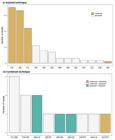
Distribution of the number of results per technique isolated (a) and combined (b). AE=artificial aeration; AG=Algaecide; CB = contention barrier; DD=Dredging; ED = electric discharge; FL= “Floc & Lock”; FS= “Floc & Sink”; LS=Light shading; MR = mechanic removal; NC = nutrient control; UR = ultraviolet radiation; US= Ultrasound, WF = water flow.
3.2. Plankton data
Regarding the plankton data, 69.8% (n=94) of the results obtained from the scientific articles focused solely on studying phytoplankton, while 24.3% (n=33) examined both phytoplankton and zooplankton. Only 6.6% (n=9) of the results specifically focused on zooplankton. It is possible that this difference between phytoplankton and zooplankton is a consequence of the terms chosen for the bibliometric search, which included the cyanobacteria group, but no zooplankton groups.
The analysis of phytoplankton data revealed the predominant taxonomic groups composition (Figure 7a). Cyanobacteria accounted for 43.4% of the results (105), followed by Chlorophyceae at 21.7% (51 results), Bacillariophyceae at 17.9% (42 results), Cryptophyceae at 7.6% (18 results), Chrysophyceae at 5.1% (12 results), and Euglenophyceae at 4.3% (10 results). The most frequently recorded genus was Microcystis, which appeared in 59 results (28.2%). The dominant species within the genus was Microcystis aeruginosa (Kützing) Kützing, followed by Planktothrix spp. and Aphanizomenon spp. (available in https://doi.org/10.48331/SCIELODATA.D99HXD).

The zooplankton data indicated a predominance of results related to Cladocera's group (49.2%), followed by Rotifer (23.0%) and Copepod (27.8%) (Figure 7b). Regarding the most studied genera, Daphnia presented the highest number of results (16 times), especially the species Daphnia magna Straus, 1820, followed by Brachionus spp., and Bosmina spp. (available in https://doi.org/10.48331/SCIELODATA.D99HXD).
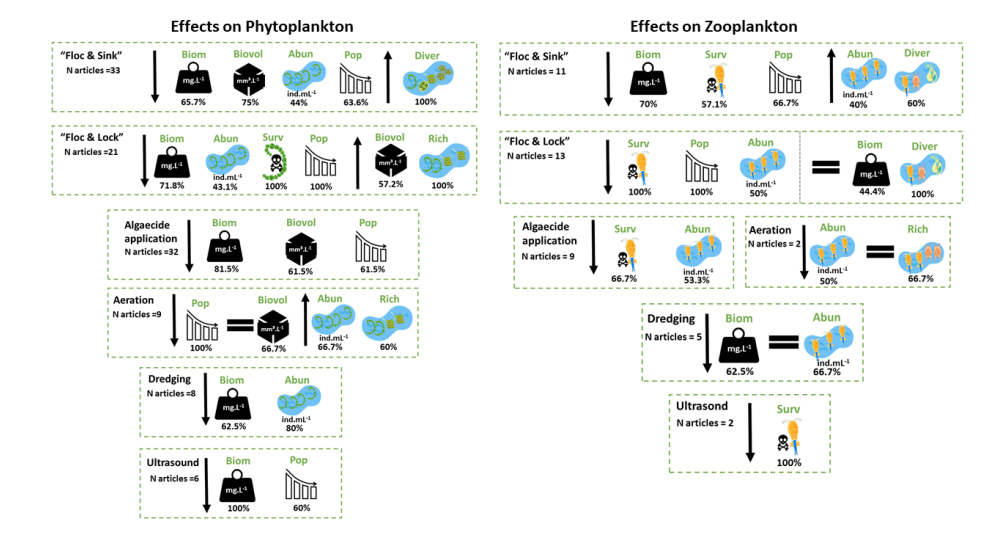
The most common metrics to measure the effect of techniques were biomass and abundance. The “Floc & Sink” technique decreased phytoplankton biomass or biovolume, abundance, population growth, number of cells, efficiency of photosystem II, and survival (based on one result). Nevertheless, the technique led to an increase in phytoplankton diversity. Similarly, the algaecide application exhibited a similar pattern to “Floc & Sink”, except for survival, for which there was no available data, and richness, for which no significant effect was observed (based on one result). The “Floc & Lock” technique resulted in a decrease in phytoplankton biomass, abundance, survival, and population growth, while it increased biovolume and richness (Figure 8; Table 1, available in https://doi.org/10.48331/SCIELODATA.D99HXD).

Effects of the main chemical and physical techniques on phytoplankton, in different parameters. Biom = Biomass; Biovol = Biovolume; Pop = Population growth; Abun = abundance; Surv = Survival; Diver = Diversity; Rich = Richness. The percentages represent the amount of times each result was found whithin these articles.
The aeration technique decreased phytoplankton population growth and number of cells, while increasing abundance, richness, and diversity (based on one result). However, aeration did not have any effect on the biovolume of phytoplankton. The ultrasound technique resulted in a decrease in biomass, abundance (based on one result), population growth, number of cells, and photosystem II (the two latter are based in one result). Dredging had an impact on the biomass and abundance of phytoplankton, with a recorded decline in these variables (available in https://doi.org/10.48331/SCIELODATA.D99HXD).
The main techniques employed in studies focused on zooplankton were similar to those for phytoplankton: Algaecide application, “Floc & Sink”, “Floc & Lock”, Dredging, Aeration, and Ultrasound. The “Floc & Sink” technique decreased zooplankton biomass, survival, and population growth, while increasing abundance and diversity. Similarly, the algaecide application technique led to a decrease in zooplankton abundance, survival, and biomass (based on one result), but increased population growth (based on one result). The “Floc & Lock” technique resulted in a decrease in abundance, survival, and population growth of zooplankton. This technique had no effect on biomass (based on one result), richness, and diversity of the zooplankton community. Aeration decreased zooplankton abundance and had no effect on the richness of this community. Dredging decreased zooplankton biomass and had no effect on abundance. Each of the other techniques had only one article focused on zooplankton (Figure 9).

Effects of the main techniques on zooplankton, in different parameters. . Biom = Biomass; Biovol = Biovolume; Pop = Population growth; Abun = abundance; Surv = Survival; Diver = Diversity; Rich = Richness. The percentages represent the amount of times each result was found whithin these articles.
4. Discussion
4.1. Bibliometric data
We observed an increasing trend in publications about the effects of eutrophication control techniques (chemical, physical, and combined) on plankton over the years (1974 - 2020), which can be explained by the need for effective control measures. This trend can also be associate with the increasing number of limnology and lake ecology publications (Fontaneto et al., 2021). The increase in freshwater eutrophication and cyanobacterial blooms worldwide since the 1970s (Cooke et al., 2005; Huisman et al., 2018) has created a higher demand for the implementation of eutrophication control techniques. However, it is important to note that the focus of the scientific articles analyzed in this study was primarily on eutrophication control techniques which target the removal of phytoplankton biomass (main parameter studied). Limited information was available regarding the effects of these techniques on other aspects of the plankton community structure, such as richness, diversity, abundance, and survival. This reinforces the importance of studying community structure. Additionally, gaps were identified regarding taxonomic groups of phytoplankton other than cyanobacteria, as well as in the investigation of effects on zooplankton.
The keywords analysis shows a strong relationship between eutrophication and cyanobacteria, as well as restoration measures. Cyanobacteria blooms are recognized as a major consequence of eutrophication, primarily caused by the accumulation of phosphorus, which otherwise would be the limiting nutrient in this process (Le Moal et al., 2019). The keywords associated with “restoration” primarily focused on eutrophication control, with an emphasis on geo-engineering, a chemical technique aimed at manipulating the biogeochemical cycle of phosphorus (Lürling et al., 2016a). Products such as Phoslock® (lanthanum-modified bentonite clay) and chitosan (organic coagulant), which were widely mentioned in the results, are commonly used for this purpose in various locations around the world.
Among the cyanobacteria, Microcystis is a cosmopolitan genus and one of the most common ubiquitously found in blooms. It is also known to be a potential producer of cyanotoxins, namely microcystin (Huisman et al., 2018). Microcystis aeruginosa (Kützing) was the most frequently recorded in the studies. Filamentous cyanobacteria genus can co-occur with the Microcystis in most blooms, some of the most commonplace are Dolichospermun, Aphanizomenon and Raphidiopsis (Burkholder, 2009; Soares et al., 2013; Shan et al., 2019), which explains Microcystis aeruginosa were the most studied species and was one of the main keywords found.
Only about 30% of the articles included in our analysis reported results regarding the zooplankton, and there were only nine articles specifically focused on this group. This indicates a need for more studies examining the effects of the techniques on zooplankton. The majority of the already limited studies available focused on cladocerans, highlighting the necessity for studies on other important zooplankton groups such as rotifers and copepods. These groups are widely found in aquatic ecosystems, especially in eutrophic environments. The most commonly studied cladocerans are Daphnia spp., Daphnia magna in particular. This species is considered a model organism and is extensively used in ecology, evolution, and ecotoxicology studies (Meester et al., 2023). Also, Daphnia species, including D. magna, are among the most common cladoceran zooplankton worldwide, and can be easily cultured in laboratory settings (Núñez & Hurtado, 2005; Meester et al., 2023), thereby facilitating their handling in microscale experiments.
The majority of the studiesfocused on microscale experiments (maximum of 5L) conducted in laboratory settings. This can be attributed to the fact that testing techniques often begin with controlled laboratory experiments to assess their effectiveness and safety before moving on to larger-scale and more complex experiments (Lürling et al., 2016a). Conducting laboratory experiments can save time and money, as unsatisfactory results can be identified early on without proceeding to larger-scale testing. In addition, our results indicate that experiments conducted in mesocosms were the least common. This highlights the need for incorporating this stage in the testing of techniques. Mesocosms are a valuable tool for conducting in situ experiments in lakes and reservoirs. They provide a greater level of realism compared to microcosms, while also offering easier replication compared to whole-lake experiments.
Medium and short-term experiments are more technically viable compared to long-term and usually produce quicker results (Lürling et al., 2016a, b). This may explain why most of the studies reported acute responses to the applied techniques (Galvez-Cloutier et al., 2012; Grover et al., 2013; Silva et al., 2016; Bishop & Richardson, 2018; Thoo et al., 2020). Some techniques have an effect on phytoplankton biomass within a few days or even hours. Commonly long-term experiments were used associated with mesocosms or even manipulation of entire lakes. However, to fully understand the effects of these techniques on the structure and composition of the phytoplankton community, it is crucial to conduct studies with longer time. Long-term studies provide valuable insights into the durability of the efficacy and sustainability of the techniques (Ruggiu et al., 2002; Su et al., 2016).
4.2. “Floc & Sink”
The “Floc & Sink” technique aims to remove algal biomass by promoting its sedimentation to the bottom (Noyma et al., 2017). The effectiveness of this technique may vary depending on factors such as the emplyoed products and doses (coagulant and ballast), and the dominant species and its density (Miranda et al., 2017; Noyma et al., 2017). Some phytoplankton species have natural mechanisms to regulate their position in the water column, including adaptive strategies for buoyancy, like large mucilaginous sheaths, composed mainly of polysaccharides (Padisák et al., 2003), or gas vacuoles (aerotopes) (Burkholder, 2009), which can inhibit aggregation and sedimentation with clay (Lucena-Silva et al., 2022).
Therefore, the effectiveness of the “Floc & Sink” technique can be compromised due to the functional attributes, organisms with sedimentation resistance mechanism, as those with a mucilage sheath and aerotopes (such as Microcystis, Dolichospermun and Raphidiopsis) make sedimentation difficult (Miranda et al., 2017; Lucena-Silva et al., 2022; Monicelli et al., 2024). Thus, a higher dose of coagulant and ballast may be needed to sink these cyanobacteria. The density of the bloom also plays a role in the effectiveness of technique and in the determinations of the product dose. Higher bloom densities require larger amounts of coagulant and ballast for effective flocculation and sedimentation of cyanobacteria (Araújo et al., 2018). Large flocs formed from the application of the coagulant can accumulate on the surface if the ballast dose is insufficient (Noyma et al., 2017).
The few papers about the effect on the phytoplankton community showed an increased diversity after the “Floc & Sink” application. Despite the initial loss of certain groups and species, over time, the technique promotes the growth of others in the environment (Pan et al., 2011). The articles justify this increase in diversity with the decrease in nutrients (Dai et al., 2013). The study by Pan et al. (2011), suggests that the increase in diversity is due to the fact that the material used in the technique is a local soil, and particles from local soil can naturally enter the lake through runoff, therefore, as it is a natural material, it would not have affected organisms as much as modified materials. However, the number of articles is small (N = 3), and there is a need for further studies on the phytoplankton community.
Regarding the zooplankton, the “Floc & Sink” technique can decrease the biomass, population growth, and survival. The ballasts used in this technique can physically immobilize these organisms by adhering to their carapaces, making it difficult for them to move and altering their behavior (Álvarez-Manzaneda & Vicente, 2017). Moreover, the ballasts can accumulate in Daphnia, as they may ingest these suspended particles (Arco et al., 2018; Álvarez-Manzaneda et al., 2019), resulting in reduced growth, smaller size at maturity, and decreased reproduction. Consequently, population growth rates are also reduced (Lürling & Tolman, 2010).
Daphnia magna is a generalist feeder, therefore, it is possible for Daphnia to ingest small-sized particles of adsorbents (Álvarez-Manzaneda et al., 2019). Other cladocerans may also be affected. The Ceriodaphnia was more sensitive to suspended clay particles than Daphnia, leading to stronger negative effects (Kirk & Gilbert, 2016). However, in realistic exposure scenarios, the accumulation of ballasts in daphnids is not expected due to the faster uptake and depuration of Phoslock® in these organisms (Álvarez-Manzaneda et al., 2019). There is a lack of studies on the effects of this technique (“Floc & Sink”) on rotifers and copepods. Some papers show an improvement in the zooplankton (e.g. increase of diversity, biomass and survival). Pan et al. (2011) found an increase in zooplankton biodiversity after the “Floc & Sink” application, because the technique returned the lake to the clear water state with the presence of macrophytes.
4.3. “Floc & Lock”
The “Floc & Lock” technique involves the formation of a sediment capping layer using an adsorbent material, which effectively prevents the release of phosphorus from the sediment back into the water column (Van Oosterhout & Lürling, 2011; Waajen et al., 2016). The results found in our study of the “Floc & Lock” technique can vary depending on the specific product used and on the duration of the study. Short-term studies have shown that this technique not only impacts cyanobacteria, but also has an impact on other phytoplankton groups, such as green algae (Chlorophyceae) and diatoms (Van Oosterhout & Lürling, 2013; Su et al., 2016). However, in some long-term studies we can observe the increase of the richness or diversity, of phytoplankton communities, along with an increase in biomass specifically of Chlorophyceae, Euglenophyceae, and Cryptophyceae (Lang et al., 2016; Su et al., 2016). These shifts in the community composition suggest a change in nutrient limitation, likely due to the reduction in phosphorus concentration in the water column (Lang et al., 2016). Further studies investigating the effects on the phytoplankton community are necessary to gain a better understanding of these processes following the application of the floc and lock technique.
Regarding the zooplankton, some studies reported that the “Floc & Lock” application can cause negative effects (Silva et al., 2016; Frau et al., 2019). In some cases, the cladoceran population disappeared for up to three months following the application of “Floc & Lock”, however, in other cases, acute toxicity tests indicated no significant mortality (Van Oosterhout & Lürling, 2011; Yamada-Ferraz et al., 2015). An increase in Daphnia survival was observed because the flocs reduce Daphnia's contact with contaminants, and decrease the phosphorus concentration (Galvez-Cloutier et al., 2012).
The materials used in the “Floc & Lock” technique form a layer at the bottom of the lake, above the sediment, which can bury the eggs and act as a physical barrier for copepods, preventing their return (Spencer et al., 1983). Furthermore, the application of this technique can alter the relative abundance of cladocerans to copepods, even without affecting the total biomass of zooplankton. However, copepods tend to exhibit more movement to escape clay flakes, and their ability to reproduce is stronger compared to cladocerans (Tang et al., 2018).
The negative effects on zooplankton observed in both the “Floc & Sink” and “Floc & Lock” techniques can be attributed to direct and/or0 indirect processes. Direct effects can occur through co-precipitation of organisms with the applied material and the algae, resulting in animals being trapped in the flocs and precipitated to the sediment (Schumaker et al., 1993; Leoni et al., 2007). Another direct effect is due to the temporary increase in turbidity in the water column (Van Oosterhout & Lürling, 2013). The elevated turbidity resulting from suspended clays particles during the initial days can have a toxic effect, negatively affecting the feeding rate of zooplankton and causing significant feeding inhibition (Kirk, 1991; Van Oosterhout and Lürling, 2013; Yamada-Ferraz et al., 2015; Arco et al., 2018). This effect is particularly pronounced in filtering organisms such as the cladocerans, compromising their ability to acquire food and leading to theingestion of inedible materials that are adsorbed onto their prey (Campos et al., 2013; Silva et al., 2016).
The indirect effects on zooplankton occur due to the impact of these techniques on phytoplankton. There is a decrease in food availability caused by the sedimentation of algae (Spencer et al., 1983; Holz & Hoagland, 1996; Van Oosterhout & Lürling, 2011; Yamada-Ferraz et al., 2015; Silva et al., 2016; Tang et al., 2018). In addition, these techniques alter the phytoplankton community, thereby changing the quality of food resources, which can either limit zooplankton growth (Spencer et al., 1983) or have positive effects by making better food available.
Moreover, some effects on zooplankton are temporary, and the organisms tends to recover quickly (Spencer et al., 1983; Ni et al., 2010; Van Oosterhout & Lürling, 2011; Yamada-Ferraz et al., 2015; Waajen et al., 2016). The negative impacts may be counterbalanced by significant reductions in cyanobacteria and subsequent improvements in the ecosystem (Van Oosterhout & Lürling, 2013). Additionally, lake restorations are typically carried out in unbalanced aquatic ecosystems, and the expected effects are short-term, are not expected long-term effects (Lürling & Tolman, 2010; Álvarez-Manzaneda et al., 2019).
4.4. Algaecides
The direct application of algaecides to remove cyanobacteria has been employed for a long time (Jančula & Marsálek, 2011), and its effectiveness to remove cyanobacteria biomass and biovolume has been proven (Bauzá et al., 2014; Shen et al., 2019). The most commonly used algaecides are copper sulfate and hydrogen peroxide (H2O2). Copper caused a negative impact on phytoplankton diversity and composition, particularly affecting diatoms and Chrysophyceans. In contrast, green algae species have shown higher tolerance to it (Le Jeune et al., 2006). Among phytoplankton taxonomic groups, cyanobacteria, especially nitrogen-fixing species, are the most sensitive to copper (Van Hullebusch et al., 2002; Le Jeune et al., 2006). The observed toxicity of copper sulfate has prompted the exploration of hydrogen peroxide as an alternative (Drábková et al., 2007; Matthijs et al., 2012).
Cyanobacteria were more sensitive to H2O2 compared to eukaryotic phytoplankton. A possible explanation can be that cyanobacteria produce an insufficient amount of enzymes able to eliminate reactive oxygen species, such as H2O2 (Sinha et al., 2018). The use of H2O2 can lead to changes in the composition of the phytoplankton community by selectively killing cyanobacteria and promoting the growth of eukaryotic phytoplankton, thereby reducing competition (Weenink et al., 2015). Furthermore, the use of hydrogen peroxide and copper sulfate can damage the membrane integrity of the cyanobacteria, resulting in a release of intracellular toxins and of the dissolved phosphorus (Jančula & Marsálek, 2011; Barrington et al., 2013; Merel et al., 2013; Bauzá et al., 2014; Coloma et al., 2017).
The application of algaecides has been shown to have negative effects on zooplankton, leading to decreased survival, biomass, and abundance (Murray-Gulde et al., 2002; Bishop et al., 2018). Copper sulfate is considered, also for zooplankton, the most toxic among the copper-based algaecides (Clossom & Paul, 2010). Studies have shown that zooplankton can be affected by both high (Matthijs et al., 2012; Sinha et al., 2018; Thoo et al., 2020) and low (Reichwaldt et al., 2012; Thoo et al., 2020) concentrations of hydrogen peroxide (H2O2).
Toxic effects observed in non-target organisms due to algaecide applications are generally a result of the initial exposure rather than cumulative exposure (Murray-Gulde et al., 2002), for example, the added H2O2 degrades within a few days (Sinha et al., 2018). The reduction in zooplankton might have also been a consequence of a reduction of eukaryotic phytoplankton, which serves as their food (Sinha et al., 2018). However, as already discussed, these products can promote the release of cyanotoxins, prosing a health hazard for zooplankton (Lürling & van Oosterhout, 2013, 2014).
4.5. Aeration
Several forms of aeration were employed, including artificial mixing, metalimnetic and hypolimnetic aeration/oxygenation, and sediment aeration (Cowell et al., 1987; Visser et al., 2016). Oxygen is used to control eutrophication because an anoxic environment can trigger P release from the sediment, thus, maintaining dissolved oxygen availability reduces internal P cycling and mitigates eutrophication (Rathore et al., 2016). These techniques have two different effects on phytoplankton. Firstly, they reduce the positive buoyancy of cyanobacteria, what prevents them from remaining at the surface. It allows other algae to receive more light and nutrients, promoting their growth. Secondly, it transports cyanobacteria downwards to the bottom of the water column, where light levels are lower, thus slowing down their growth rate (Visser et al., 2016).
The effect of aeration on zooplankton is controversial, as each paper has found different results. However, it is important to note that each article refers to a different type of aeration. Cowell et al. (1987) showed that artificial mixing had effects on the zooplankton community, the abundance of crustacean zooplankton, copepods, and cladocerans declined significantly (91-92%). The authors cite some reasons for this effect: increased fish predation, changes and reductions in the sizes of phytoplankton, and the release of toxic substances from the sediment. In contrast, the abundance of Rotifers increased, which could be attributed to reduced competition for algal food with crustaceans during the first year. The zooplankton was unaffected during eleven years after hypolimnetic aeration (Horne & Beutel, 2019). On the other hand, metalimnion aeration has been shown to bring about changes in the structure of the zooplankton community, with the returns of Daphnia sp. dominance (Kortmann et al., 1994). This change in community can be attributed to the increased transparency of the lake (Kortmann et al., 1994).
4.6. Dredging
Sediment dredging involves excavating and removing sediment from the lake bottom (Pereira & Mulligan, 2023), and has been shown to result in a decrease in phosphorus concentrations (Ruley & Rusch, 2002). Consequently, it causes a decrease of the phytoplankton biomass or biovolume of the cyanobacteria (Van Duin et al., 1998; Phillips et al., 2005; Ayala et al., 2007; Lürling & Faassen, 2012; Jing et al., 2019). On the other hand, studies have also revealed that this technique may promote the growth of other phytoplankton groups, such as the green algae (Van Duin et al., 1998; Phillips et al., 2005; Ayala et al., 2007).
However, it is possible for the lake to remain eutrophic, with cyanobacteria still present, potentially due to the presence of phosphorus-rich materials that may have been left in the lake after dredging (Ayala et al., 2007; Lürling & Faassen, 2012) The positive effects in the lakes are generally short-lived (Akinnawo, 2023). In such cases, the efficiency of the dredging technique may be compromised because of the sediment resuspension, and can cause secondary pollution due to the leaching of metals/contaminants from the sediment into the water column (Akinnawo, 2023). Jing et al. (2019) proved that after the dredging application, the low N/P ratios cause growth of nitrogen-fixing cyanobacteria, such as Aphanizomenon and Raphidiopsis. This could occur because the suspended sediments released nutrients during the dredging process (Morgan et al., 2012).
The sediment dredging negatively affects the zooplankton (Phillips et al., 2005; Jing et al., 2019). Cladocerans appear to be particularly affected, with decreased biomass (Phillips et al., 2005), biovolume (Ayala et al., 2007) and abundance (Lürling et al., 2017). The decrease in biomass happened because of a reduction in organism numbers, rather than changes in the proportions of total zooplankton biomass (Phillips et al., 2005). These effects on zooplankton can be explained by food scarcity (Lürling et al., 2017), and due to the initial increase of the turbidity caused by the disturbance in the sediment, which affects the zooplankton.
4.7. Ultrasound
The ultrasound technique operates by concentrating the energy of sound waves, inducing a process called acoustic cavitation. The ultrasound causes the rupture of gas vesicles, inhibition of photosynthesis, and destruction of cell membranes, affecting algal biomass (Jong Lee et al., 2000; Holm et al., 2008; Rajasekhar et al., 2012a). The reduction in algae is influenced by the frequency and intensity of the ultrasound. However, the idea that higher frequency increases removal has been disproven (Rajasekhar et al., 2012b). Numerous studies have shown the ultrasound to be ineffective (Kardinaal et al., 2008; Purcell et al., 2013; Lürling & Tolman, 2014a, b) or to have minimal effect on M. aeruginosa (Zhang et al., 2006). The ultrasound treatment causes marginal damage to cyanobacterial cells, resulting in a slight increase in dissolved microcistins and a slight reduction in PSII activity (Lürling et al., 2014).
Ultrasound is more effective against filamentous species. Due to their morphology, they have a larger surface area, making it more likely for the algae to come into contact with the bubbles generated by the technique (Purcell et al., 2013). However, it should be noted that there can be regeneration of gaseous vacuoles and subsequent regrowth of cyanobacteria in a short period of time (Jong Lee et al., 2000; Hao et al., 2004). Overall, the results obtained do not provide strong evidence that cyanobacteria can be effectively controlled using ultrasound techniques.
Two articles (Lürling & Tolman, 2014a, b) investigated the impact of ultrasound on the survival of zooplankton, and both articles yielded these results: the ultrasound technique caused the death of Daphnia magna within 15 minutes. Both higher and lower frequencies were found to be acutely lethal under the tested conditions (Lürling & Tolman, 2014a, 2014b). These studies do not recommend the use of ultrasound as a green and environmentally friendly solution (Lürling & Tolman, 2014a, b).
5. Conclusions
There has been an increase in publications over time about the effect of lake restoration techniques on plankton, especially on cyanobacteria. The gaps found were in studies on the zooplankton population, where most of the focus centered on Daphnia magna. It is crucial to expand our understanding of these effects on other species and taxonomic groups. Other gaps are the effects on plankton community succession, and long-term experiments.
Chemical techniques (“Floc & Sink”, “Floc & Lock” and algaecides) have removed cyanobacterial biomass or biovolume. On the other hand, aeration, dredging, and ultrasound have produced conflicting and inconclusive results. The few studies about plankton community show positive effects on the phytoplankton diversity after the “Floc & Sink” technique and an increase on the richness after “Floc & Lock” and aeration.
Overall, all the techniques have shown negative effects on zooplankton, including decreased biomass, reduced survival, and decreased abundance, however these effects waswere temporary. Only the “Floc and Sink” technique has demonstrated a positive effect by increasing zooplankton diversity. Despite that, due to the limited number of studies on zooplankton, it remains challenging to draw definitive conclusions.
Acknowledgements
The authors wish to thank the Conselho Nacional de Desenvolvimento Científico e Tecnológico (CNPq) for its financial support of the Universal Projects “Mitigation and control of cyanobacterial blooms and internal fertilization in springs in the Brazilian semi-arid region” Universal grant (process nº 437618/2018-8). V.B particularly wishes to thank CNPq for the productivity scholarship (process n° 308652/2019-3). We also are thankful to the Estudos Limnológicos do Semiárido Research Group (ELISA) and Letícia Quesado; and Dr. Renata Panosso and Dr. Kemal Ali Ger for their comments and important suggestions for improving the article. This research was financed in part by the Coordenação de Aperfeiçoamento de Pessoal de Nível Superior-Brazil (CAPES)- Finance Code 001.
-
Cite as:
Monicelli, F. et al. How is plankton affected by physical and chemical eutrophication control techniques? A systematic review. Acta Limnologica Brasiliensia, 2025, vol. 37, e24. https://doi.org/10.1590/S2179-975X10324
-
Data availability
The data set analyzed/produced in this study can be requested from the corresponding author as they are part of a larger database that can be used to produce other articles. SciELO Data V1, http://doi.org/10.48331/SCIELODATA.D99HXD
References
-
Akinnawo, S.O., 2023. Eutrophication: causes, consequences, physical, chemical and biological techniques for mitigation strategies. Environ. Chall. 12, 100733. http://doi.org/10.1016/j.envc.2023.100733
» http://doi.org/10.1016/j.envc.2023.100733 -
Álvarez-Manzaneda, I., & Vicente, I., 2017. Assessment of toxic effects of magnetic particles used for lake restoration on Chlorella sp. and on Brachionus calyciflorus. Chemosphere 187, 347-356. PMid:28858716. http://doi.org/10.1016/j.chemosphere.2017.08.129
» http://doi.org/10.1016/j.chemosphere.2017.08.129 -
Álvarez-Manzaneda, I., Baun, A., Cruz-Pizarro, L., & de Vicente, I., 2019. Ecotoxicity screening of novel phosphorus adsorbents used for lake restoration. Chemosphere 222, 469-478. PMid:30721804. http://doi.org/10.1016/j.chemosphere.2019.01.103
» http://doi.org/10.1016/j.chemosphere.2019.01.103 -
Araújo, F., Van Oosterhout, F., Becker, V., Attayde, J.L., & Lürling, M., 2018. Effects of polyaluminum chloride and lanthanum-modified bentonite on the growth rates of three Cylindrospermopsis raciborskii strains. PLoS One 13(4), e0195359. PMid:29614118. http://doi.org/10.1371/journal.pone.0195359
» http://doi.org/10.1371/journal.pone.0195359 -
Arco, A., Parra, G., & Vicente, I., 2018. Going deeper into phosphorus adsorbents for lake restoration: combined effects of magnetic particles, intraspecific competition and habitat heterogeneity pressure on Daphnia magna. Ecotoxicol. Environ. Saf. 148, 513-519. PMid:29125954. http://doi.org/10.1016/j.ecoenv.2017.11.001
» http://doi.org/10.1016/j.ecoenv.2017.11.001 -
Ayala, R., Acosta, F., Mooij, W.M., Rejas, D., & Van Damme, P.A., 2007. Management of Laguna Alalay: a case study of lake restoration in Andean valleys in Bolivia. Aquat. Ecol. 41(4), 621-630. http://doi.org/10.1007/s10452-007-9123-1
» http://doi.org/10.1007/s10452-007-9123-1 -
Barrington, D.J., Reichwaldt, E.S., & Ghadouani, A., 2013. The use of hydrogen peroxide to remove cyanobacteria and microcystins from waste stabilization ponds and hypereutrophic systems. Ecol. Eng. 50, 86-94. http://doi.org/10.1016/j.ecoleng.2012.04.024
» http://doi.org/10.1016/j.ecoleng.2012.04.024 -
Bauzá, L., Aguilera, A., Echenique, R., Andrinolo, D., & Giannuzzi, L., 2014. Application of hydrogen peroxide to the control of eutrophic lake systems in laboratory assays. Toxins 6(9), 2657-2675. PMid:25208009. http://doi.org/10.3390/toxins6092657
» http://doi.org/10.3390/toxins6092657 -
Bishop, W.M., & Richardson, R.J., 2018. Influence of Phoslock® on legacy phosphorus, nutrient ratios, and algal assemblage composition in hypereutrophic water resources. Environ. Sci. Pollut. Res. Int. 25(5), 4544-4557. PMid:29188598. http://doi.org/10.1007/s11356-017-0832-2
» http://doi.org/10.1007/s11356-017-0832-2 -
Bishop, W.M., Willis, B.E., Richardson, R.J., & Cope, W.G., 2018. The presence of algae mitigates the toxicity of copper-based algaecides to a nontarget organism. Environ. Toxicol. Chem. 37(8), 2132-2142. PMid:29736933. http://doi.org/10.1002/etc.4166
» http://doi.org/10.1002/etc.4166 -
Burkholder, J.M., 2009. Harmful algal blooms. In: Likens, G.E., ed. Encyclopedia of inland waters. Cambridge: Academic Press, 264-285. http://doi.org/10.1016/B978-012370626-3.00239-8
» http://doi.org/10.1016/B978-012370626-3.00239-8 -
Campos, B., Rivetti, C., Rosenkranz, P., Navas, J.M., & Barata, C., 2013. Effects of nanoparticles of TiO2 on food depletion and life-history responses of Daphnia magna. Aquat. Toxicol. 130–131, 174-183. PMid:23416410. http://doi.org/10.1016/j.aquatox.2013.01.005
» http://doi.org/10.1016/j.aquatox.2013.01.005 -
Chen, F.Z., Song, X.L., Hu, Y.H., Liu, Z.W., & Qin, B.Q., 2009. Water quality improvement and phytoplankton response in the drinking water source in Meiliang Bay of Lake Taihu, China. Ecol. Eng. 35(11), 1637-1645. http://doi.org/10.1016/j.ecoleng.2008.01.001
» http://doi.org/10.1016/j.ecoleng.2008.01.001 -
Closson, K., & Paul, E., 2014. Comparison of the toxicity of two chelated copper algaecides and copper sulfate to non-target fish. Bull. Environ. Contam. Toxicol. 93(6), 660-665. PMid:25283368. http://doi.org/10.1007/s00128-014-1394-3
» http://doi.org/10.1007/s00128-014-1394-3 -
Coloma, S.E., Dienstbier, A., Bamford, D.H., Sivonen, K., Roine, E., & Hiltunen, T., 2017. Newly isolated Nodularia phage influences cyanobacterial community dynamics. Environ. Microbiol. 19(1), 273-286. PMid:27878952. http://doi.org/10.1111/1462-2920.13601
» http://doi.org/10.1111/1462-2920.13601 - Cooke, G.D., Welch, E.B., Peterson, S.A., & Nichols, S.A., 2005. Restoration and Management of Lakes and Reservoirs. Boca Raton: CRC Press.
-
Cowell, B.C., Dawes, C.J., Gardiner, W.E., & Scheda, S.M., 1987. The influence of whole lake aeration on the limnology of a hypereutrophic lake in central Florida. Hydrobiologia 148(1), 3-24. http://doi.org/10.1007/BF00018162
» http://doi.org/10.1007/BF00018162 - Dai, L., Yan, Q., Li, L., Li, H., Wang, L., Feng, W., Pan, G., & Yu, Y., 2013. Microplankton Community Dynamics During the algae removal process for nutrient control. Fres. Environ. Bul. 22(12), 3759-3767.
-
Drábková, M., Admiraal, W., & Maršálek, B., 2007. Combined exposure to hydrogen peroxide and light-selective effects on cyanobacteria, green algae, and diatoms. Environ. Sci. Technol. 41(1), 309-314. PMid:17265964. http://doi.org/10.1021/es060746i
» http://doi.org/10.1021/es060746i -
Estrada, V., Di Maggio, J., & Diaz, M.S., 2011. Water sustainability: a systems engineering approach to restoration of eutrophic Lakes. Comput. Chem. Eng. 35(8), 1598-1613. http://doi.org/10.1016/j.compchemeng.2011.03.003
» http://doi.org/10.1016/j.compchemeng.2011.03.003 -
Fontaneto, D., Martínez, A., Mammola, S., & Marchetto, A., 2021. The use of the term ‘limnology’ and its scientometrics consequences for limnologists. J. Limnol. 80(3), http://doi.org/10.4081/jlimnol.2021.2042
» http://doi.org/10.4081/jlimnol.2021.2042 -
Frau, D., Spies, M.E., Battauz, Y., Medrano, J., & Sinistro, R., 2019. Approaches for phosphorus removal with calcium hydroxide and floating macrophytes in a mesocosm experiment: impacts on plankton structure. Hydrobiologia 828(1), 287-299. http://doi.org/10.1007/s10750-018-3819-1
» http://doi.org/10.1007/s10750-018-3819-1 -
Galvez-Cloutier, R., Saminathan, S.K.M., Boillot, C., Triffaut-Bouchet, G., Bourget, A., & Soumis-Dugas, G., 2012. An evaluation of several in-lake restoration techniques to improve the water quality problem (eutrophication) of Saint-Augustin Lake, Quebec, Canada. Environ. Manage. 49(5), 1037-1053. PMid:22476666. http://doi.org/10.1007/s00267-012-9840-7
» http://doi.org/10.1007/s00267-012-9840-7 -
Grover, J.P., Roelke, D.L., Brooks, B.W., Gable, G.M., Neisch, M.T., Hayden, N.J., Valenti Junior, T.W., Prosser, K.N., Umphres, G.D., & Hewitt, N.C., 2013. Ammonium treatments to suppress toxic blooms of Prymnesium parvum in a subtropical lake of semi-arid climate: results from in situ mesocosm experiments. Water Res. 47(13), 4274-4285. PMid:23764578. http://doi.org/10.1016/j.watres.2013.05.001
» http://doi.org/10.1016/j.watres.2013.05.001 -
Hao, H., Wu, M., Chen, Y., Tang, J., & Wu, Q., 2004. Cavitation mechanism in cyanobacterial growth inhibition by ultrasonic irradiation. Colloids Surf. B Biointerfaces 33(3–4), 151-156. http://doi.org/10.1016/j.colsurfb.2003.09.003
» http://doi.org/10.1016/j.colsurfb.2003.09.003 -
Hilt, S., Gross, E.M., Hupfer, M., Morscheid, H., Mählmann, J., Melzer, A., Poltz, J., Sandrock, S., Scharf, E.M., Schneider, S., & van de Weyer, K., 2006. Restoration of submerged vegetation in shallow eutrophic lakes: a guideline and state of the art in Germany. Limnologica 36(3), 155-171. http://doi.org/10.1016/j.limno.2006.06.001
» http://doi.org/10.1016/j.limno.2006.06.001 -
Holm, E.R., Stamper, D.M., Brizzolara, R.A., Barnes, L., Deamer, N., & Burkholder, J.A.M., 2008. Sonication of bacteria, phytoplankton and zooplankton: application to treatment of ballast water. Mar. Pollut. Bull. 56(6), 1201-1208. PMid:18343457. http://doi.org/10.1016/j.marpolbul.2008.02.007
» http://doi.org/10.1016/j.marpolbul.2008.02.007 -
Holz, J.C., & Hoagland, K.D., 1996. Experimental microcosm study of the effects of phosphorus reduction on plankton community structure. Can. J. Fish. Aquat. Sci. 53(8), 1754-1764. http://doi.org/10.1139/f96-104
» http://doi.org/10.1139/f96-104 -
Horne, A.J., & Beutel, M., 2019. Hypolimnetic oxygenation 3: an engineered switch from eutrophic to a meso-/oligotrophic state in a California reservoir. Lake Reserv. Manage. 35(3), 338-353. http://doi.org/10.1080/10402381.2019.1648613
» http://doi.org/10.1080/10402381.2019.1648613 -
Huisman, J., Codd, G.A., Paerl, H.W., Ibelings, B.W., Verspagen, J.M.H., & Visser, P.M., 2018. Cyanobacterial blooms. Nat. Rev. Microbiol. 16(8), 471-483. PMid:29946124. http://doi.org/10.1038/s41579-018-0040-1
» http://doi.org/10.1038/s41579-018-0040-1 -
Jagtman, E., Van der Molen, D.T., & Vermij, S., 1992. The influence of flushing on nutrient dynamics, composition and densities of algae and transparency in Veluwemeer, The Netherlands. Hydrobiologia 233(1–3), 187-196. http://doi.org/10.1007/BF00016107
» http://doi.org/10.1007/BF00016107 -
Jančula, D., & Marsálek, B., 2011. Critical review of actually available chemical compounds for prevention and management of cyanobacterial blooms. Chemosphere 85(9), 1415-1422. PMid:21925702. http://doi.org/10.1016/j.chemosphere.2011.08.036
» http://doi.org/10.1016/j.chemosphere.2011.08.036 -
Jeppesen, E., Søndergaard, M., Lauridsen, T.L., Davidson, T.A., Liu, Z., Mazzeo, N., Trochine, C., Özkan, K., Jensen, H.S., Trolle, D., Starling, F., Lazzaro, X., Johansson, L.S., Bjerring, R., Liboriussen, L., Larsen, S.E., Landkildehus, F., Egemose, S., & Meerhoff, M., 2012. Biomanipulation as a restoration tool to combat eutrophication. recent advances and future challenges. Adv. Ecol. Res. 47(1), 411-488. http://doi.org/10.1016/B978-0-12-398315-2.00006-5
» http://doi.org/10.1016/B978-0-12-398315-2.00006-5 -
Jing, L., Bai, S., Li, Y., Peng, Y., Wu, C., Liu, J., Liu, G., Xie, Z., & Yu, G., 2019. Dredging project caused short-term positive effects on lake ecosystem health: a five-year follow-up study at the integrated lake ecosystem level. Sci. Total Environ. 686, 753-763. PMid:31195283. http://doi.org/10.1016/j.scitotenv.2019.05.133
» http://doi.org/10.1016/j.scitotenv.2019.05.133 -
Jong Lee, T., Nakano, K., & Matsumura, M., 2000. A new method for the rapid evaluation of gas vacuoles regeneration and viability of cyanobacteria by flow cytometry. Biotechnol. Lett. 22(23), 1833-1838. http://doi.org/10.1023/A:1005653124437
» http://doi.org/10.1023/A:1005653124437 - Kardinaal, E., De Haan, M., & Ruiter, H., 2008. Maatregelen ter voorkoming blauwalgen werken onvoldoende. H2O, 41(7), 4-7.
-
Kirk, K.L., 1991. Suspended clay reduces Daphnia feeding rate: behavioural mechanisms. Freshw. Biol. 25(2), 357-365. http://doi.org/10.1111/j.1365-2427.1991.tb00498.x
» http://doi.org/10.1111/j.1365-2427.1991.tb00498.x -
Kirk, K.L., & Gilbert, J.J., 2016. Suspended clay and the population dynamics of planktonic rotifers and cladocerans. Ecology 71(5), 1741-1755. http://doi.org/10.2307/1937582
» http://doi.org/10.2307/1937582 -
Kortmann, R.W., Knoecklein, G.W., & Bonnell, C.H., 1994. Aeration of stratified lakes: theory and practice. Lake Reserv. Manage. 8(2), 99-120. http://doi.org/10.1080/07438149409354463
» http://doi.org/10.1080/07438149409354463 -
Lang, P., Meis, S., Procházková, L., Carvalho, L., Mackay, E.B., Woods, H.J., Pottie, J., Milne, I., Taylor, C., Maberly, S.C., & Spears, B.M., 2016. Phytoplankton community responses in a shallow lake following lanthanum-bentonite application. Water Res. 97, 55-68. PMid:27085846. http://doi.org/10.1016/j.watres.2016.03.018
» http://doi.org/10.1016/j.watres.2016.03.018 -
Le Jeune, A.H., Charpin, M., Deluchat, V., Briand, J.F., Lenain, J.F., Baudu, M., & Amblard, C., 2006. Effect of copper sulphate treatment on natural phytoplanktonic communities. Aquat. Toxicol. 80(3), 267-280. PMid:17095105. http://doi.org/10.1016/j.aquatox.2006.09.004
» http://doi.org/10.1016/j.aquatox.2006.09.004 -
Le Moal, M., Gascuel-Odoux, C., Ménesguen, A., Souchon, Y., Étrillard, C., Levain, A., Moatar, F., Pannard, A., Souchu, P., Lefebvre, A., & Pinay, G., 2019. Eutrophication: a new wine in an old bottle? Sci. Total Environ. 651(Pt 1), 1-11. PMid:30223216. http://doi.org/10.1016/j.scitotenv.2018.09.139
» http://doi.org/10.1016/j.scitotenv.2018.09.139 -
Leoni, B., Morabito, G., Rogora, M., Pollastro, D., Mosello, R., Arisci, S., Forasacco, E., & Garibaldi, L., 2007. Response of planktonic communities to calcium hydroxide addition in a hardwater eutrophic lake: results from a mesocosm experiment. Limnology 8(2), 121-130. http://doi.org/10.1007/s10201-007-0202-8
» http://doi.org/10.1007/s10201-007-0202-8 -
Lucena-Silva, D., Molozzi, J., Severiano, J.S., Becker, V., & Lucena Barbosa, J.E., 2019. Removal efficiency of phosphorus, cyanobacteria and cyanotoxins by the “flock & sink” mitigation technique in semi-arid eutrophic waters. Water Res. 159, 262-273. PMid:31102855. http://doi.org/10.1016/j.watres.2019.04.057
» http://doi.org/10.1016/j.watres.2019.04.057 -
Lucena-Silva, D., Severiano, J.S., Silva, R.D.S., Becker, V., Barbosa, J.E.L., & Molozzi, J., 2022. Impacts of the Floc and Sink technique on the phytoplankton community: a morpho-functional approach in eutrophic reservoir water. J. Environ. Manage. 308, 114626. PMid:35131708. http://doi.org/10.1016/j.jenvman.2022.114626
» http://doi.org/10.1016/j.jenvman.2022.114626 -
Lürling, M., & Tolman, Y., 2010. Effects of lanthanum and lanthanum-modified clay on growth, survival and reproduction of Daphnia magna. Water Res. 44(1), 309-319. PMid:19801159. http://doi.org/10.1016/j.watres.2009.09.034
» http://doi.org/10.1016/j.watres.2009.09.034 -
Lürling, M., & Faassen, E.J., 2012. Controlling toxic cyanobacteria: effects of dredging and phosphorus-binding clay on cyanobacteria and microcystins. Water Res. 46(5), 1447-1459. PMid:22137447. http://doi.org/10.1016/j.watres.2011.11.008
» http://doi.org/10.1016/j.watres.2011.11.008 -
Lürling, M., & van Oosterhout, F., 2013. Case study on the efficacy of a lanthanum-enriched clay (Phoslock®) in controlling eutrophication in Lake Het Groene Eiland (The Netherlands). Hydrobiologia 710(1), 253-263. http://doi.org/10.1007/s10750-012-1141-x
» http://doi.org/10.1007/s10750-012-1141-x -
Lürling, M., Meng, D., & Faassen, E.J., 2014. Effects of hydrogen peroxide and ultrasound on biomass reduction and toxin release in the cyanobacterium, Microcystis aeruginosa Toxins 6(12), 3260-3280. PMid:25513892. http://doi.org/10.3390/toxins6123260
» http://doi.org/10.3390/toxins6123260 -
Lürling, M., & van Oosterhout, F., 2014. Effect of selected plant extracts and D- and L-lysine on the cyanobacterium Microcystis aeruginosa. Water 6(6), 1807-1825. http://doi.org/10.3390/w6061807
» http://doi.org/10.3390/w6061807 -
Lürling, M., & Tolman, Y., 2014a. Beating the blues: is there any music in fighting cyanobacteria with ultrasound? Water Res. 66, 361-373. PMid:25240117. http://doi.org/10.1016/j.watres.2014.08.043
» http://doi.org/10.1016/j.watres.2014.08.043 -
Lürling, M., & Tolman, Y., 2014b. Effects of commercially available ultrasound on the zooplankton grazer Daphnia and consequent water greening in laboratory experiments. Water 6(11), 3247-3263. http://doi.org/10.3390/w6113247
» http://doi.org/10.3390/w6113247 -
Lürling, M., Mackay, E., Reitzel, K., & Spears, B.M., 2016a. Editorial – A critical perspective on geo-engineering for eutrophication management in lakes. Water Res. 97, 1-10. PMid:27039034. http://doi.org/10.1016/j.watres.2016.03.035
» http://doi.org/10.1016/j.watres.2016.03.035 -
Lürling, M., Waajen, G., & de Senerpont Domis, L.N., 2016b. Evaluation of several end-of-pipe measures proposed to control cyanobacteria. Aquat. Ecol. 50(3), 499-519. http://doi.org/10.1007/s10452-015-9563-y
» http://doi.org/10.1007/s10452-015-9563-y -
Lürling, M., Waajen, G., Engels, B., & van Oosterhout, F., 2017. Effects of dredging and lanthanum-modified clay on water quality variables in an enclosure study in a hypertrophic pond. Water 9(6), 380. http://doi.org/10.3390/w9060380
» http://doi.org/10.3390/w9060380 -
Lürling, M., & Mucci, M., 2020. Mitigating eutrophication nuisance: in-lake measures are becoming inevitable in eutrophic waters in the Netherlands. Hydrobiologia 847(21), 4447-4467. http://doi.org/10.1007/s10750-020-04297-9
» http://doi.org/10.1007/s10750-020-04297-9 -
Matthijs, H.C.P., Visser, P.M., Reeze, B., Meeuse, J., Slot, P.C., Wijn, G., Talens, R., & Huisman, J., 2012. Selective suppression of harmful cyanobacteria in an entire lake with hydrogen peroxide. Water Res. 46(5), 1460-1472. PMid:22112924. http://doi.org/10.1016/j.watres.2011.11.016
» http://doi.org/10.1016/j.watres.2011.11.016 -
Meester, L., Declerck, S.A.J., & Ger, K.A., 2023. Beyond Daphnia: a plea for a more inclusive and unifying approach to freshwater zooplankton ecology. Hydrobiologia 850, 4693-4703. http://doi.org/10.1007/s10750-023-05217-3
» http://doi.org/10.1007/s10750-023-05217-3 -
Merel, S., Walker, D., Chicana, R., Snyder, S., Baurès, E., & Thomas, O., 2013. State of knowledge and concerns on cyanobacterial blooms and cyanotoxins. Environ. Int. 59, 303-327. PMid:23892224. http://doi.org/10.1016/j.envint.2013.06.013
» http://doi.org/10.1016/j.envint.2013.06.013 -
Miranda, M., Noyma, N., Pacheco, F.S., Magalhães, L., Pinto, E., Santos, S., Soares, M.F.A., Huszar, V.L., Lürling, M., & Marinho, M.M., 2017. The efficiency of combined coagulant and ballast to remove harmful cyanobacterial blooms in a tropical shallow system. Harmful Algae 65, 27-39. PMid:28526117. http://doi.org/10.1016/j.hal.2017.04.007
» http://doi.org/10.1016/j.hal.2017.04.007 -
Monicelli, F., Araújo, F., Cunha, K.P.V., Dias, J.D., & Becker, V., 2024. Effects of the Floc & Sink technique on the biomass and composition of phytoplankton morpho-functional groups using natural ballasts. Hydrobiologia 852(12), 3081-3094. http://doi.org/10.1007/s10750-024-05664-6
» http://doi.org/10.1007/s10750-024-05664-6 -
Morgan, B., Rate, A.W., & Burton, E.D., 2012. Water chemistry and nutrient release during the resuspension of FeS-rich sediments in a eutrophic estuarine system. Sci. Total Environ. 432, 47-56. PMid:22706184. http://doi.org/10.1016/j.scitotenv.2012.05.065
» http://doi.org/10.1016/j.scitotenv.2012.05.065 -
Murray-Gulde, C.L., Heatley, J.E., Schwartzman, A.L., & Rodgers Junior, J.H., 2002. Algicidal effectiveness of Clearigate, Cutrine-Plus, and copper sulfate and margins of safety associated with their use. Arch. Environ. Contam. Toxicol. 43(1), 19-27. PMid:12045870. http://doi.org/10.1007/s00244-002-1135-1
» http://doi.org/10.1007/s00244-002-1135-1 -
Ni, J., Yu, Y., Feng, W., Yan, Q., Pan, G., Yang, B., Zhang, X., & Li, X., 2010. Impacts of algal blooms removal by chitosan-modified soils on zooplankton community in Taihu Lake, China. J. Environ. Sci. 22(10), 1500-1507. PMid:21235177. http://doi.org/10.1016/S1001-0742(09)60270-9
» http://doi.org/10.1016/S1001-0742(09)60270-9 -
Norris, B., & Laws, E.A., 2017. Nutrients and phytoplankton in a shallow, hypereutrophic urban lake: prospects for restoration. Water 9(6), 431. http://doi.org/10.3390/w9060431
» http://doi.org/10.3390/w9060431 -
Noyma, N.P., De Magalhães, L., Miranda, M., Mucci, M., Van Oosterhout, F., Huszar, V.L.M., Marinho, M.M., Lima, E.R.A., & Lurling, M., 2017. Coagulant plus ballast technique provides a rapid mitigation of cyanobacterial nuisance. PLoS One 12(6), e0178976. PMid:28598977. http://doi.org/10.1371/journal.pone.0178976
» http://doi.org/10.1371/journal.pone.0178976 -
Núñez, M., & Hurtado, J., 2005. NOTA CIENTÍFICA Bioensayos de toxicidad aguda utilizando Daphnia magna Straus (Cladocera, Daphniidae) desarrollada en medio de cultivo modificado. Rev. Peru. Biol. 12(121), 165-170. http://doi.org/10.15381/rpb.v12i1.2373
» http://doi.org/10.15381/rpb.v12i1.2373 -
Padisák, J., Soróczki-Pintér, É., & Rezner, Z., 2003. Sinking properties of some phytoplankton shapes and the relation of form resistance to morphological diversity of plankton - An experimental study. Hydrobiologia 500(1-3), 243-257. http://doi.org/10.1023/A:1024613001147
» http://doi.org/10.1023/A:1024613001147 -
Pan, G., Chen, J., & Anderson, D.M., 2011. Modified local sands for the mitigation of harmful algal blooms. Harmful Algae 10(4), 381-387. PMid:28690475. http://doi.org/10.1016/j.hal.2011.01.003
» http://doi.org/10.1016/j.hal.2011.01.003 -
Pereira, A.C., & Mulligan, C.N., 2023. Practices for eutrophic shallow lake water remediation and restoration: a critical literature review. Water 15(12), 2270. http://doi.org/10.3390/w15122270
» http://doi.org/10.3390/w15122270 -
Phillips, G., Kelly, A., Pitt, J.A., Sanderson, R., & Taylor, E., 2005. The recovery of a very shallow eutrophic lake, 20 years after the control of effluent derived phosphorus. Freshw. Biol. 50(10), 1628-1638. http://doi.org/10.1111/j.1365-2427.2005.01434.x
» http://doi.org/10.1111/j.1365-2427.2005.01434.x -
Purcell, D., Parsons, S.A., & Jefferson, B., 2013. The influence of ultrasound frequency and power, on the algal species Microcystis aeruginosa, Aphanizomenon flos-aquae, Scenedesmus subspicatus and Melosira sp. Environ. Technol. 34(17-20), 2477-2490. PMid:24527608. http://doi.org/10.1080/09593330.2013.773355
» http://doi.org/10.1080/09593330.2013.773355 -
Rajasekhar, P., Fan, L., Nguyen, T., & Roddick, F.A., 2012a. A review of the use of sonication to control cyanobacterial blooms. Water Res. 46(14), 4319-4329. PMid:22727861. http://doi.org/10.1016/j.watres.2012.05.054
» http://doi.org/10.1016/j.watres.2012.05.054 -
Rajasekhar, P., Fan, L., Nguyen, T., & Roddick, F.A., 2012b. Impact of sonication at 20kHz on Microcystis aeruginosa, Anabaena circinalis and Chlorella sp Water Res. 46(5), 1473-1481. PMid:22119237. http://doi.org/10.1016/j.watres.2011.11.017
» http://doi.org/10.1016/j.watres.2011.11.017 -
Rathore, S.S., Chandravanshi, P., Chandravanshi, A., & Jaiswal, K., 2016. Eutrophication: impacts of excess nutrient inputs on aquatic ecosystem. IOSR J. Agric. Vet. Sci. 09(10), 89-96. http://doi.org/10.9790/2380-0910018996
» http://doi.org/10.9790/2380-0910018996 -
Reichwaldt, E.S., Zheng, L., Barrington, D.J., & Ghadouani, A., 2012. Acute toxicological response of Daphnia and Moina to hydrogen peroxide. J. Environ. Eng. 138(5), 607-611. http://doi.org/10.1061/(ASCE)EE.1943-7870.0000508
» http://doi.org/10.1061/(ASCE)EE.1943-7870.0000508 -
Ruggiu, D., Morabito, G., Panzani, P., & Pugnetti, A., 2002. Trends and relations among basic phytoplankton characteristics in the course of the long-term oligotrophication of Lake Maggiore (Italy). Entomol. Exp. Appl. 369, 243-257. http://doi.org/10.1023/A:1017058112298
» http://doi.org/10.1023/A:1017058112298 -
Ruley, J.E., & Rusch, K.A., 2002. An assessment of long-term post-restoration water quality trends in a shallow, subtropical, urban hypereutrophic lake. Ecol. Eng. 19(4), 265-280. http://doi.org/10.1016/S0925-8574(02)00096-4
» http://doi.org/10.1016/S0925-8574(02)00096-4 -
Schumaker, R.J., Funk, W.H., & Moore, B.C., 1993. Zooplankton responses to aluminum sulfate treatment of Newman Lake, Washington. J. Freshwat. Ecol. 8(4), 375-387. http://doi.org/10.1080/02705060.1993.9664876
» http://doi.org/10.1080/02705060.1993.9664876 -
Shan, K., Song, L., Chen, W., Li, L., Liu, L., Wu, Y., Jia, Y., Zhou, Q., & Peng, L., 2019. Analysis of environmental drivers influencing interspecific variations and associations among bloom-forming cyanobacteria in large, shallow eutrophic lakes. Harmful Algae 84, 84-94. PMid:31128816. http://doi.org/10.1016/j.hal.2019.02.002
» http://doi.org/10.1016/j.hal.2019.02.002 -
Shen, X., Zhang, H., He, X., Shi, H., Stephan, C., Jiang, H., Wan, C., & Eichholz, T., 2019. Evaluating the treatment effectiveness of copper-based algaecides on toxic algae Microcystis aeruginosa using single cell-inductively coupled plasma-mass spectrometry. Anal. Bioanal. Chem. 411(21), 5531-5543. PMid:31201458. http://doi.org/10.1007/s00216-019-01933-9
» http://doi.org/10.1007/s00216-019-01933-9 -
Silva, M.B., Abrantes, N., Nogueira, V., Gonçalves, F., & Pereira, R., 2016. TiO2 nanoparticles for the remediation of eutrophic shallow freshwater systems: efficiency and impacts on aquatic biota under a microcosm experiment. Aquat. Toxicol. 178, 58-71. PMid:27471045. http://doi.org/10.1016/j.aquatox.2016.07.004
» http://doi.org/10.1016/j.aquatox.2016.07.004 -
Sinha, A.K., Eggleton, M.A., & Lochmann, R.T., 2018. An environmentally friendly approach for mitigating cyanobacterial bloom and their toxins in hypereutrophic ponds: potentiality of a newly developed granular hydrogen peroxide-based compound. Sci. Total Environ. 637–638, 524-537. PMid:29754087. http://doi.org/10.1016/j.scitotenv.2018.05.023
» http://doi.org/10.1016/j.scitotenv.2018.05.023 -
Soares, M.C.S., Huszar, V.L.M., Miranda, M.N., Mello, M.M., Roland, F., & Lurling, M., 2013. Cyanobacterial dominance in Brazil: distribution and environmental preferences. Hydrobiologia 717(1), 1-12. http://doi.org/10.1007/s10750-013-1562-1
» http://doi.org/10.1007/s10750-013-1562-1 -
Søndergaard, M., Jeppesen, E., Lauridsen, T.L., Skov, C., Van Nes, E.H., Roijackers, R., Lammens, E., & Portielje, R., 2007. Lake restoration: Successes, failures and long-term effects. J. Appl. Ecol. 44(6), 1095-1105. http://doi.org/10.1111/j.1365-2664.2007.01363.x
» http://doi.org/10.1111/j.1365-2664.2007.01363.x -
Spencer, D.F., Yeung, H.Y., & Greene, R.W., 1983. Alteration in the zooplankton community of a fly ash treated lake. Hydrobiologia 107(2), 123-130. http://doi.org/10.1007/BF00017427
» http://doi.org/10.1007/BF00017427 -
Su, Y., Zhang, C., Liu, J., Weng, Y., Li, H., & Zhang, D., 2016. Assessing the impacts of phosphorus inactive clay on phosphorus release control and phytoplankton community structure in eutrophic lakes. Environ. Pollut. 219, 620-630. PMid:27346441. http://doi.org/10.1016/j.envpol.2016.06.029
» http://doi.org/10.1016/j.envpol.2016.06.029 -
Tang, X., Zhang, X., Cao, T., Ni, L., & Xie, P., 2018. Reconstructing clear water state and submersed vegetation on behalf of repeated flocculation with modified soil in an in situ mesocosm experiment in Lake Taihu. Sci. Total Environ. 625, 1433-1445. PMid:29996440. http://doi.org/10.1016/j.scitotenv.2018.01.008
» http://doi.org/10.1016/j.scitotenv.2018.01.008 -
Thoo, R., Siuda, W., & Jasser, I., 2020. The effects of sodium percarbonate generated free Oxygen on Daphnia-implications for the management of harmful algal blooms. Water 12(5), 1-12. http://doi.org/10.3390/w12051304
» http://doi.org/10.3390/w12051304 -
Van de Bund, W.J., & Van Donk, E., 2002. Short-term and long-term effects of zooplanktivorous fish removal in a shallow lake: A synthesis of 15 years of data from Lake Zwemlust. Freshw. Biol. 47(12), 2380-2387. http://doi.org/10.1046/j.1365-2427.2002.01006.x
» http://doi.org/10.1046/j.1365-2427.2002.01006.x -
Van Duin, E.H.S., Frinking, L.J., Van Schaik, F.H., & Boers, P.C.M., 1998. First results of the restoration of Lake Geerplas. Water Sci. Technol. 37(3), 185-192. http://doi.org/10.2166/wst.1998.0204
» http://doi.org/10.2166/wst.1998.0204 -
Van Hullebusch, E., Deluchat, V., Chazal, P.M., & Baudu, M., 2002. Environmental impact of two successive chemical treatments in a small shallow eutrophied lake: part I – case of aluminium sulphate. Environ. Pollut. 120(3), 617-626. PMid:12442785. http://doi.org/10.1016/S0269-7491(02)00192-6
» http://doi.org/10.1016/S0269-7491(02)00192-6 -
Van Oosterhout, F., & Lürling, M., 2011. Effects of the novel “Flock & Lock” lake restoration technique on Daphnia in Lake Rauwbraken (The Netherlands). J. Plankton Res. 33(2), 255-263. http://doi.org/10.1093/plankt/fbq092
» http://doi.org/10.1093/plankt/fbq092 -
Van Oosterhout, F., & Lürling, M., 2013. The effect of phosphorus binding clay (Phoslock®) in mitigating cyanobacterial nuisance: A laboratory study on the effects on water quality variables and plankton. Hydrobiologia 710(1), 265-277. http://doi.org/10.1007/s10750-012-1206-x
» http://doi.org/10.1007/s10750-012-1206-x -
Visser, P.M., Ibelings, B.W., Bormans, M., & Huisman, J., 2016. Artificial mixing to control cyanobacterial blooms: a review. Aquat. Ecol. 50(3), 423-441. http://doi.org/10.1007/s10452-015-9537-0
» http://doi.org/10.1007/s10452-015-9537-0 -
Waajen, G., Van Oosterhout, F., Douglas, G., & Lürling, M., 2016. Management of eutrophication in Lake De Kuil (The Netherlands) using combined flocculant e Lanthanum modified bentonite treatment. Water Res. 97, 83-95. PMid:26647298. http://doi.org/10.1016/j.watres.2015.11.034
» http://doi.org/10.1016/j.watres.2015.11.034 -
Weenink, E.F.J., Luimstra, V.M., Schuurmans, J.M., van Herk, M.J., Visser, P.M., & Matthijs, H.C.P., 2015. Combatting cyanobacteria with hydrogen peroxide: A laboratory study on the consequences for phytoplankton community and diversity. Front. Microbiol. 6, 714. PMid:26257710. http://doi.org/10.3389/fmicb.2015.00714
» http://doi.org/10.3389/fmicb.2015.00714 -
Yamada-Ferraz, T.M., Sueitt, A.P.E., Oliveira, A.F., Botta, C.M.R., Fadini, P.S., Nascimento, M.R.L., Faria, B.M., & Mozeto, A.A., 2015. Assessment of Phoslock® application in a tropical eutrophic reservoir: an integrated evaluation from laboratory to field experiments. Environ. Tech. Innovat 4, 194-205. http://doi.org/10.1016/j.eti.2015.07.002
» http://doi.org/10.1016/j.eti.2015.07.002 -
Zhang, G., Zhang, P., Liu, H., & Wang, B., 2006. Ultrasonic damages on cyanobacterial photosynthesis. Ultrason. Sonochem. 13(6), 501-505. PMid:16413996. http://doi.org/10.1016/j.ultsonch.2005.11.001
» http://doi.org/10.1016/j.ultsonch.2005.11.001
Edited by
-
Associate Editor:
Bárbara Dunck Oliveira.
The data set analyzed/produced in this study can be requested from the corresponding author as they are part of a larger database that can be used to produce other articles. SciELO Data V1, http://doi.org/10.48331/SCIELODATA.D99HXD