 Quantification and analysis of emerging threats studies on freshwater zooplankton (Copepoda, Cladocera and Rotifera) in Brazil from 2014 to 2023
Abstract
Abstract
Aim This study aimed to quantify and analyze research on emerging threats to freshwater zooplankton (Copepoda, Cladocera, and Rotifera) in Brazil, published between 2014 and 2023. The primary focus was to systematically identify the main environmental stressors studied, knowledge gaps, and methodological trends employed in the research.
Methods The analysis was conducted through a systematic literature review in the Web of Science, Scopus, and SciELO databases, using specific terms related to zooplankton and emerging threats. Peer-reviewed articles published within the defined period were included. Each study was categorized based on the type of stressor analyzed (e.g., climate change, microplastic pollution, biological invasions), taxonomic groups addressed, and methodological approaches employed, following the PRISMA model.
Results A total of 176 articles were initially retrieved from the databases, of which 53 met all inclusion criteria and were selected for analysis in this review. Most of these studies focused on multiple zooplankton groups (e.g., Cladocera and Rotifera) and used laboratory experiments or field studies as the primary methodology. The most analyzed stressors were biological invasions (28%) and climate change (24%), followed by harmful algal blooms and emerging contaminants.
Conclusions The review highlights the need to expand studies on the combined impacts of emerging stressors on zooplankton and to integrate more robust methodologies that better reflect natural conditions.
Keywords:
biological invasions; climate change; environmental stressors; aquatic ecosystems; anthropogenic impacts
Resumo
Resumo
Objetivo Este estudo teve como objetivo quantificar e analisar as pesquisas sobre ameaças emergentes ao zooplâncton de água doce (Copepoda, Cladocera e Rotifera) no Brasil, publicadas entre 2014 e 2023. O foco principal foi identificar sistematicamente os principais estressores ambientais avaliados, as lacunas de conhecimento e as tendências metodológicas empregadas nos estudos.
Métodos A análise foi realizada a partir de uma revisão sistemática de literatura nas bases de dados Web of Science, Scopus e SciELO, utilizando termos específicos relacionados à zooplâncton e ameaças emergentes. Foram incluídos artigos publicados em periódicos revisados por pares no período definido. Cada estudo foi categorizado quanto ao tipo de estressor avaliado (mudanças climáticas, poluição por microplásticos, invasões biológicas, entre outros), grupos taxonômicos abordados e abordagens metodológicas utilizadas, seguindo o modelo PRISMA.
Resultados Foram inicialmente encontrados 176 artigos nas bases de dados, dos quais 53 atenderam a todos os critérios de inclusão e foram considerados relevantes para esta revisão. A maioria desses estudos focou em múltiplos grupos de zooplâncton (e.g., Cladocera e Rotifera) e utilizou experimentos laboratoriais ou estudos de campo como metodologia principal. Os estressores mais analisados foram as invasões biológicas (28%) e a mudança climática (24%), seguidos por eutrofização e contaminantes emergentes.
Conclusões A revisão destaca a necessidade de ampliar os estudos sobre os impactos combinados de estressores emergentes no zooplâncton e de integrar metodologias mais robustas que reflitam melhor as condições naturais.
Palavras-chave:
invasões biológicas; mudanças climáticas; estressores ambientais; ecossistemas aquáticos; impactos antrópicos
1. Introduction
The term emerging contaminants refers to active pharmaceutical compounds, illegal drugs, additives in personal care products, newer pesticides, endocrine disruptors, and nanomaterials, that have raised recent concerns (Sauvé & Desrosiers, 2014). Freshwater ecosystems have long been subjected to severe impacts from these contaminants, compounded by multiple stressors such as chemical pollution, deforestation, damming, and invasive species (Dudgeon et al., 2006). However, in the last years, new impacts have been added to the list of threats to freshwater biodiversity (Reid et al., 2019). Emerging threats in freshwater are novel or increasingly recognized stressors that pose potential risks to aquatic ecosystems and their biodiversity (Reid et al., 2019). They are multifaceted and complex, impacting various species and ecological processes (Vörösmarty et al., 2010; Reid et al., 2019). Examples include harmful algal blooms that can disrupt trophic dynamics (Amorim et al., 2019), and invasive species that pose significant risks to local biodiversity (Palazzo et al., 2023). Additionally, emerging contaminants (Sauvé & Desrosiers, 2014) such as engineered nanomaterials (i.e., man-made materials with structures at the nanoscale; Rex et al., 2023) and microplastics (i.e., small plastic pieces less than five millimeters long; Bertoldi et al., 2021) present new challenges for the health of freshwater organisms. In this sense, Reid et al. (2019), in their global review, identified 12 emerging and persistent threats to freshwater biodiversity, emphasizing the need for integrated approaches to address these growing pressures in multiple taxa.
Zooplankton are highly sensitive organisms to environmental changes. Also, they play a crucial role in freshwater ecosystems, serving as a key link in food chains and contributing to nutrient recycling and phytoplankton population control (Fernando, 1994; Urrutia‐Cordero et al., 2024). Consequently, studying emerging threats to zooplankton is essential for understanding ecological shifts in freshwater systems (Castilho-Noll et al., 2023). Assessing these threats provides valuable insights into the resilience of these communities and their potential impacts on ecosystem services (Duchet et al., 2024).
Zooplankton research has addressed various topics in Brazil, from basic ecology to environmental monitoring and water resource management (Castilho-Noll et al., 2023; Elmoor-Loureiro et al., 2023). Recent studies have focused on diversity patterns (Diniz et al., 2023), responses to natural and anthropogenic disturbances (Bomfim et al., 2021), and the role of zooplankton in structuring aquatic ecosystems (Severiano et al., 2021). However, while some research has explored the impacts of environmental changes, few studies have thoroughly examined the emerging threats specifically affecting freshwater zooplankton in Brazil. This highlights an important knowledge gap that must be addressed to better understand the impact of these emerging pressures on zooplankton communities across this megadiverse country. A systematic review of Brazilian studies on emerging threats regarding freshwater zooplankton can fill some knowledge gaps, find new others and contribute to conservation and management strategies for aquatic ecosystems facing global environmental challenges.
We conducted a systematic review on emerging threats to freshwater zooplankton in Brazil from 2014 to 2023, as the investigation of emerging impacts is most relevant within a short and recent timeframe to capture dynamic and rapidly evolving environmental challenges. Based on the data collected from the literature, our specific objectives are: (i) to identify emerging threats (i.e., climate change, harmful algal blooms, emerging contaminants, engineered nanomaterials, microplastic pollution, light pollution, noise pollution, freshwater salinization and cumulative stressors); (ii) to analyze how these threats impact Brazilian zooplankton biodiversity, physiology, and survival; and (iii) to highlight research gaps regarding studies on emerging threats in Brazilian zooplankton.
2. Material and Methods
For data collection, we used the list of major emerging threats to aquatic biodiversity identified by Reid et al. (2019). This study highlights twelve key threats: (i) changing climates; (ii) e-commerce and invasions; (iii) infectious diseases; (iv) harmful algal blooms; (v) expanding hydropower; (vi) emerging contaminants; (vii) engineered nanomaterials; (viii) microplastic pollution; (ix) light and noise; (x) freshwater salinisation; (xi) declining calcium; and (xii) cumulative stressors. We did not include expanding hydropower and declining calcium in our review for specific reasons. Expanding hydropower was excluded because Brazilian reservoirs, including small hydroelectric plants, have been extensively studied regarding zooplankton communities for decades (Arcifa, 1984; Almeida et al., 2009; Sartori et al., 2021). Declining calcium levels, a concern particularly in regions like Europe and North America due to acid rain and forest regrowth (Jeziorski et al., 2008), is less documented in Brazil and may not be an urgent issue due to distinct geological and environmental conditions (Esteves, 2011).
Our research was carried out during the month of August and was conducted using the Web of Science (2025), SciVerse Scopus (2025), and SciELO (2025) databases, using the following keywords: (“climate change” OR “invasion*” OR “infection* disease*” OR “harmful algal bloom*” OR “emerging contaminant*” OR “engineered nanomaterial*” OR “ microplastic pollution” OR “light pollution” OR “noise pollution” OR “freshwater salini*ation” OR “cumulative stressor*”) AND (cladocer* OR copepod* OR rotifer* OR zooplan*ton) AND (“Bra*il”). The asterisk (*) was used to encompass all linguistic variations of words. The inclusion criteria covered studies conducted in Brazil published between 2014 and 2023. We retrieved a total of 176 articles through database searches conducted in SciELO (n = 2), Web of Science (n = 101), and Scopus (n = 73). The selection process followed the PRISMA protocol (Moher et al., 2015) to ensure transparency and replicability. The first screening stage involved reading titles and abstracts, during which 66 articles were excluded. The reasons for exclusion at this stage were: publication date outside the period from 2014 to 2023; studies not conducted in Brazil; studies not related to freshwater environments; duplicate records; articles that did not involve any of the biological groups Copepoda, Cladocera, or Rotifera; and review articles. The remaining 110 articles were read in full during the eligibility stage. An additional 57 articles were excluded for the following reasons: the article was not peer-reviewed (e.g., theses, technical reports, or abstracts); zooplankton were not the biological group analyzed in the context of a threat; or the study did not clearly address the impacts of emerging environmental threats on zooplankton. After applying all inclusion and exclusion criteria, 53 articles were selected for qualitative synthesis. The complete flow of the article selection process is shown in Figure 1.

For each publication we organized the identification by i) year of publication; ii) types of studies carried out (e.g., experimental or observational); iii) types of systems - river, lake, lagoon, ponds, reservoir, floodplain, wetlands, phytotelma, microcosm, mesocosm, ponds, coastal environments (comprise various aquatic systems, such as estuaries, lagoons, and bays) and unreported; iv) target biological group - Copepoda, Rotifera, Cladocera and not reported; v) scale of organization - population, community, ecosystem and not reported; vi) emerging threat - Climate change, Invasions, Infectious diseases, Harmful algal blooms, Emerging contaminants, Engineered nanomaterials, Microplastic pollution, Light pollution, Noise pollution, Freshwater salinization, and Cumulative stressors.
To understand whether there was a temporal trend in the articles, we performed a simple linear regression analysis in relation to the total number of articles. We performed all analyses and graphs using R software (R Development Core Team, 2024) version 4.4.0.
3. Results
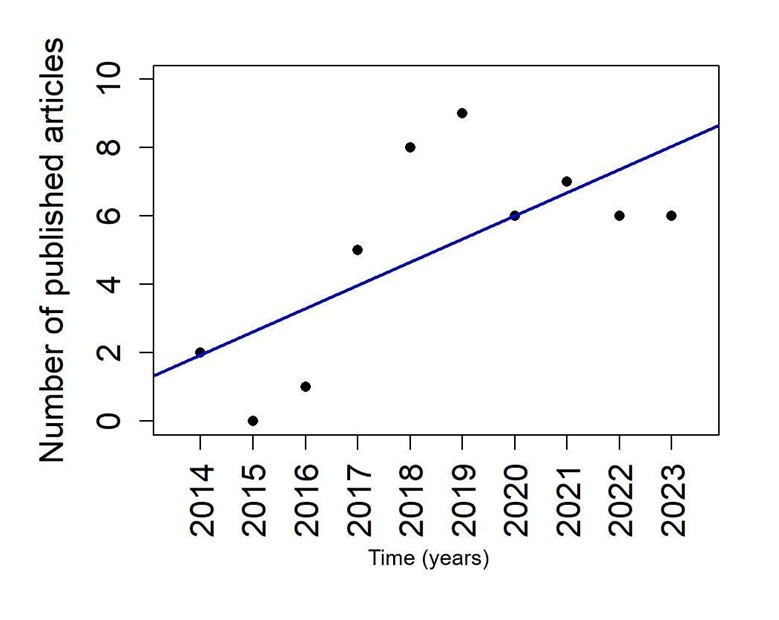
We observed a significant temporal increase (R2 = 0.47, F = 7.13, p < 0.05) in the number of papers retrieved using our search criteria on emerging threats to freshwater zooplankton in Brazil from 2014 to 2023 (Figure 2). While this trend indicates growing academic attention within this scope, we acknowledge that it reflects the specific combination of keywords and inclusion parameters applied and may not capture all studies on zooplankton threats during this period.
Number of publications on emerging threats to freshwater zooplankton in Brazil (2014–2023).
We identified a total of eight emerging threats to freshwater zooplankton in Brazil from a total of 10 topics investigated (Table 1). Invasions are the most widely studied threat (28.30%, n = 15 papers), underscoring the introduction of non-native species such as Kellicottia bostoniensis (Rousselet, 1908), Daphnia lumholtzi Sars, 1885, and copepod parasites such as Lamproglena monodi Capart, 1944. Climate change was explored in 12 papers (22.64%), focusing on the broad impacts of increased temperatures and droughts, and emphasizing the synergistic effects when combined with other environmental stressors like eutrophication. Harmful algal blooms (13.20%, n = 7 papers) revealed significant concern due to their toxicity and disruption of food webs, particularly through altered predator-prey interactions. Emerging contaminants (13.20%, 7 = papers) primarily addressed the ecological risks posed by pharmaceutical drugs, which can interfere with zooplankton physiology and reproductive success. Engineered nanomaterials are studied in six papers (11.32%) and focus on the toxicological impacts of various metal nanoparticles, including copper, iron, graphene oxide, and gold, on planktonic communities, addressing bioaccumulation, biotransformation, chronic exposure, and recovery. Research on microplastic pollution is limited to four studies (7.54%), and studies collectively explore the effects of microplastics on cladocerans, highlighting concerns about how these contaminants affect the development, behavior, and diet of this organism. Fewer studies focus on cumulative stressors (3.77%, n = 2 papers), where the combined effects of drought and harmful algal blooms exacerbate ecosystem degradation.
Overview of emerging threats to freshwater zooplankton in Brazil from 2014 to 2023: number of studies, geographic distribution, and key ecological impacts.
We provided an overview of the methodological approaches used in studies addressing emerging threats to freshwater zooplankton in Brazil (Figure 3). Regarding invasions, most studies (13 out of 15) employ observational approaches (Figure 3a). The largest number of studies (4) focus on reservoirs, followed by rivers and floodplains (3 each). Lakes, wetlands, and lagoons are less commonly studied, with only one paper each. No studies investigated biological invasions using microcosms or mesocosms (Figure 3b). Rotifera is the most studied group in the context of invasions (8 papers), followed by Cladocera (4 papers) and Copepoda (2 papers) (Figure 3c). Research at the population level is the most common (9 papers), followed by community-level studies (4 papers) and ecosystem-level research (2 papers) (Figure 3d).
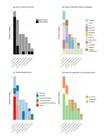
Main methodological characteristics of studies on emerging impacts on freshwater zooplankton in Brazil from 2014 to 2023. This figure presents: (a) Types of studies conducted; (b) Types of freshwater systems investigated; (c) Target biological groups; (d) Scales of organization of the analyzed studies.
Climate change is emphasized in experimental research, with 7 out of 12 studies using this approach (Figure 3a). Research is evenly distributed across reservoirs, microcosms, lakes, floodplains, and coastal environments, with two studies each. Phytotelma and pond systems were each investigated in one study (Figure 3b). Multiple taxa are often studied together, with five studies focusing on Copepoda, Rotifera, and Cladocera, followed by studies exclusively on Cladocera (4 studies) and Copepoda (2 studies) (Figure 3c). Five studies comprise population, followed by ecosystem level (4 papers) and community-level studies (3 papers) (Figure 3d).
Research on harmful algal blooms predominantly uses experimental approaches, with 6 out of 7 studies following this method (Figure 3a). Studies are conducted in microcosms (3) and reservoirs (2), with one study in lakes (Figure 3b). The research is focused on Cladocera (4 studies) and Copepoda (3 studies), with no studies on Rotifera (Figure 3c). Community-level studies are the most common (4 papers), followed by population-level studies (3 papers) (Figure 3d).
All studies on emerging contaminants (7 papers) were experimental (Figure 3a). Most studies (4) were conducted using microcosms, one used a mesocosm, and two did not report the system used (Figure 3b). Research on this topic focuses on Cladocera populations (7 studies), with no studies on Rotifera, Copepoda, or multiple taxa (Figures 3c and 3d). Engineered nanomaterials are represented by six experimental studies, all focusing on Cladocera populations (Figures 3a-d). Research on microplastic pollution predominantly used experimental approaches (3 papers) and one observational study, with one study conducted in a lake, and two studies with unreported data. (Figures 3a and 3b). The research is focused on the Cladocera population (2 studies) and one at community level (Figures 3c and 3d). Studies on cumulative stressors are equally distributed between an observational study in a reservoir (1 paper), focusing on Copepoda and Rotifera, and an experimental study on Copepoda (Figures 3a-d).
4. Discussion
The literature review on emerging threats to freshwater zooplankton in Brazil highlights a significant increase in research output over the past decade, with a total of 176 papers retrieved and 53 studies selected for analysis. A notable temporal trend was identified, and this growing body of work underscores the pressing need to understand the multifaceted threats facing zooplankton communities, particularly invasions, which emerged as the most studied threat. Climate change, harmful algal blooms, and emerging contaminants were prominent topics, reflecting a broad range of environmental challenges. Furthermore, the analysis highlights methodological trends, with observational studies predominating in invasion research, while experimental approaches are increasingly employed to examine the impacts of climate change, algal blooms, and contaminants. Despite these advancements, several emerging threats remain understudied, revealing critical gaps in the current understanding of the ecological impacts on freshwater zooplankton.
4.1. Invasions and e-commerce
The threat of biological invasions has been predominantly studied through observational methodologies, with 13 out of 15 studies focusing on this approach. These studies emphasize monitoring the introduction and impacts of non-native species, particularly K. bostoniensis and D. lumholtzi, in reservoirs and rivers. K. bostoniensis, a rotifer native to North America, and D. lumholtzi, originally from Australia, southwestern Asia, and Africa, had their occurrences documented in Brazil before the current study period. K. bostoniensis was first detected in the Segredo Reservoir on the Iguaçu River in the 1990s (Lopes et al., 1997), while D. lumholtzi was recorded in Brazil in 2000 at the Três Irmãos Reservoir, São Paulo (Zanata et al., 2003). Recent studies have focused on the spread of K. bostoniensis across Brazil's inland waters (Palazzo et al., 2023) and employed molecular tools to trace the genetic similarity of D. lumholtzi with populations from Mexico (Nunes et al., 2018).
In addition to these two free-living species, Lamproglena monodi Capart, 1944, an African gill parasite copepod, was reported for the second time in Brazilian fish farms, in the Paranapanema Basin (Garcia et al., 2019). This species, previously identified on the gills and body surfaces of native Brazilian fish (Astronotus ocellatus (Agassiz, 1831) and Cichla ocellaris, Bloch & Schneider, 1801) and cultured species (Oreochromis niloticus Linnaeus, 1758 and Tilapia rendalli (Boulenger, 1896)), poses risks to aquaculture and native biodiversity.
The primary concern identified by these studies is the ecological impact and risk invasive species pose to aquaculture. D. lumholtzi and K. bostoniensis exploit similar food resources as native zooplankton, which can lead to the competitive displacement of native species (Palazzo et al., 2023). The presence of the parasitic copepod L. monodi in aquaculture systems raises concerns about the health of both native and farmed species, potentially causing economic losses for fish producers (Garcia et al., 2019). In addition to the ecological impacts, it is crucial to implement prevention strategies against the introduction of new invasive species. For instance, a current pathway for the dispersal of invasive species is e-commerce. In Brazil, the unregulated sale of D. magna and D. similis eggs online poses a potential threat to aquatic ecosystems. Although these two species have so far been found only in artificial environments and have not been detected in natural ecosystems, climate change could alter the physical and chemical properties of freshwater, potentially creating environmental suitability for aquatic invasive species in natural habitats (Sousa et al., 2017; Reid et al., 2019). Furthermore, there is a need to implement educational programs aimed at raising public awareness about the risks posed by invasive species encouraging preventive practices in local communities and among recreational water users.
4.2. Climate change
Research on the effects of climate change on freshwater zooplankton has shown a stronger focus on experimental environments. This suggests that researchers are particularly interested in understanding the mechanisms behind climate impacts, especially the effects of increased temperatures (Rezende et al., 2021), droughts (Brazil et al., 2022), and the relation between climate change and other environmental stressors (Goussen et al., 2020). Additionally, most studies involve multiple zooplankton groups (Copepods, Rotifers, and Cladocerans), indicating a broader approach to understanding the dynamics of aquatic communities under climate change. This is crucial, as different taxa respond in distinct ways to climate shifts, such as rising temperatures (Diniz et al., 2023).
There are also studies proposing tools to mitigate the impacts of climate change. For instance, Amorim et al. (2019) demonstrated experimentally the potential of a medium-sized cladoceran, Macrothrix spinosa King, 1853, to control algal blooms, particularly chlorophytes, which could be utilized in biomanipulation strategies in eutrophic freshwater environments.
Regarding the types of freshwater systems investigated, coastal environments, including lagoons, estuaries, and bays, often represent freshwater habitats with salinity levels below 0.5. These ecosystems are particularly vulnerable to salinization due to factors such as changes in hydroperiods, marine intrusions, negative water balance, and sea level rise, among others. Importantly, these impacts may be further exacerbated by climate change, increasing the risk to ecosystem integrity. Our review identified only three studies addressing this topic, which may indicate a significant gap in research and highlight the urgent need for further investigation to understand and mitigate the emerging threats to these sensitive coastal freshwater ecosystems. Our review did not identify studies in certain environments, such as rivers and wetlands, highlighting research opportunities. These ecosystems may be especially sensitive to climate change due to their dynamic characteristics and vulnerability to extreme events (e.g., droughts and floods), and thus require further investigation.
4.3. Emerging contaminants
In Brazil, emerging contaminants were predominantly studied using experimental methodologies, focusing on their ecological impacts primarily in microcosm settings. The focus on Cladocera, particularly Ceriodaphnia silvestrii Daday, 1902, Ceriodaphnia dubia Richard, 1894, and D. similis, underscores their vulnerability to pollutants and their important role as bioindicators in freshwater ecosystems. Studies examine the acute and chronic toxicity of pharmaceutical drugs (Damasceno de Oliveira et al., 2018), antimicrobials like florfenicol and oxytetracycline (Freitas et al., 2018), antivirals (Almeida et al., 2021), disinfection by-products from chlorinated algal organic matter (Leite et al., 2022), cyanobacterial diets (Vilar et al., 2022), and the influence of temperature conditions related with climate change on pesticides (Pitombeira de Figueirêdo et al., 2022). For instance, Damasceno de Oliveira et al. (2018) indicated acute and chronic effects (reproductive adverse effects) of three pharmaceuticals (the analgesic acetaminophen, the anti-inflammatory diclofenac, and the antihypertensive propranolol) in the tropical crustacean species C. silvestrii. Although the effects of these pollutants on organism populations are known, no studies have focused on Rotifera, Copepoda, or multiple taxa at the community level, highlighting a significant gap in our understanding of how these groups are impacted by emerging contaminants.
4.4. Harmful algal blooms
The threat of harmful algal blooms was predominantly addressed through experimental studies (6 out of 7), with significant attention given to Cladocera and Copepoda. These results suggest that researchers are increasingly designing controlled experiments to better understand the processes and directly test interventions for the toxicity and ecological disruptions caused by these blooms. Most studies focus on predator-prey interactions, such as those between copepods and cladocerans as predators and microalgae and cyanobacteria as prey (Leitão et al., 2018; Rangel et al., 2020). These findings indicate a clear interest in understanding the top-down control of cyanobacteria by predators and how this control varies depending on different feeding behaviors (e.g., raptorial versus filter feeding). For example, Leitão et al. (2018) experimentally demonstrated that the top-down effect of selective grazing by copepods varies significantly between current-feeding calanoids and raptorial-feeding cyclopoids. Similar to the impact of climate change, this topic includes studies on the development of biological tools to manage cyanobacterial blooms in tropical water bodies (De-Souza et al., 2021). The combination of these findings suggests that, over the past decade, research has shifted towards understanding the mechanisms that can inform real-world management scenarios, enabling better control of algal bloom events, rather than simply monitoring the incidence of harmful algal blooms, as was more common in earlier decades, particularly in Brazilian reservoirs.
4.5. Engineered nanomaterials (NPs)
Engineered nanomaterials (NPs) refer to man-made materials with structures at the nanoscale, which may have various applications but also pose risks to aquatic ecosystems due to their potential toxicity (Rex et al., 2023). Our review highlights the growing concern regarding the effects of different nanoparticles on aquatic organisms, with a focus on various cladocerans species. The research areas multiple nanoparticles, such as TiO2 (Lucca et al., 2018) CuO (Mansano et al., 2018), Fe3O4 (Gebara et al., 2019), gold nanorods (Souza et al., 2021), and graphene oxide (Akere et al., 2023), examining both acute and chronic effects on reproduction, metabolism, bioaccumulation, and recovery. For example, Gebara et al. (2019) indicated the effects of iron oxide nanoparticles (Fe3O4) on life history and metabolism of the Neotropical cladocerans C. silvestrii. In another study, the effects of NPs were shown to extend beyond impacts on reproduction and filtration rates (Souza et al., 2021). The researchers suggested that the toxic mechanism of these NPs in cladocerans was attributed to an increase in the generation of reactive oxygen species (ROS). Similar to emerging contaminants, no studies reported effects on Rotifera or Copepoda, either alone or in combination. This bias suggests that the susceptibility of other important zooplankton groups to contaminants is not well understood and may be overlooked in Brazilian research. This underscores a narrow scope in the current research, as interactions at the community and ecosystem levels are crucial for understanding broader ecological consequences.
4.6. Microplastic pollution
Microplastic pollution (plastic particles <5 mm) is a growing concern in aquatic ecosystems, as these particles can have detrimental effects on a wide range of organisms (Wagner et al., 2014). While significant knowledge has been gained about the effects of microplastics in marine environments, much less is known about their impact on freshwater biodiversity (Bertoldi et al., 2021). Recently, microplastics have been reported in several Brazilian rivers, including the Cuiabá River in the Pantanal region (Faria et al., 2021) and the Sinos River (Bertoldi et al., 2021). For instance, Faria et al. (2021) found higher microplastic concentrations in urban tributaries compared to the lowlands of the Pantanal. Fibers were the most dominant type of microplastic, suggesting that these particles may either originate from urban areas or be transported downstream, posing potential risks to local biota.
Our review indicates that studies on zooplankton in Brazil are predominantly experimental, focusing mainly on cladoceran populations (Castro et al., 2020). One exception is a study that experimentally evaluated microplastic consumption in planktonic communities and its implications for the food web (Silva et al., 2022). Silva et al. (2022) found that smaller microplastic particles significantly impact trophic webs, as they are more readily consumed by lower trophic levels such as protists. Although higher trophic levels do not directly consume microplastics, they can ingest them indirectly through prey, leading to bioaccumulation. This process can potentially disrupt food webs and affect the physiological functions of organisms, ultimately threatening ecosystem services.
4.7. Cumulative stressors
Cumulative stressors refer to the combined effect of multiple environmental stressors on aquatic ecosystems, including pollution, climate change, habitat modification, and others (Segner et al., 2014). According to our review, two papers have been on this topic in the last decade (Rangel et al., 2016; Silva et al., 2020). For instance, Silva et al. (2020) highlights that low zooplankton richness was observed in a reservoir in northeastern Brazil, likely due to the combined effects of drought and eutrophication. Although globally the last decade has seen considerable growth in interest in potential multiple stressor problems (Reid et al., 2019), our results suggest that research on this topic in Brazil remains relatively scarce. This gap may be attributed to several factors, with two key reasons standing out. First, there are significant uncertainties regarding how different stressors interact in natural environments, particularly in tropical ecosystems where biodiversity and ecological interactions are highly complex (Reid et al., 2019). This lack of understanding of underlying mechanisms may discourage further investigation. Second, studying multiple stressors requires the design of experiments that realistically simulate environmental conditions while controlling for multiple variables simultaneously, which increases experimental complexity (Breitburg et al., 1998). Such studies demand specialized resources, time, and infrastructure, which are not always readily available in Brazilian laboratories, especially in regions with limited funding.
4.8. Other emerging threats not found in Brazil
Our review did not identify studies specifically addressing the effects of freshwater salinization, infectious diseases, light pollution, noise pollution on zooplankton communities. These threats, highlighted by Reid et al. (2019) as potential risks to aquatic biodiversity, could impact zooplankton across various regions in Brazil, particularly in urban areas, semi-arid regions, and water bodies near agricultural and industrial activities. Although these works were not registered in the period analyzed, below we register works that address these themes and that are addressed throughout the world
The increasing salinization of inland waters, driven by irrigation and excessive fertilizer use, poses a significant threat to freshwater zooplankton (Gutierrez et al., 2024). In Brazil, studies on zooplankton have primarily focused on estuarine regions indicating disturbances due to increased salinity in the face of the resilience of zooplankton communities, demonstrating the potential role of the dormant egg bank (Araújo et al., 2013; Santangelo et al., 2014). These studies indicate that the main structural consequences of salinization include a decrease in taxonomic richness and a reduction in size and biomass, leading to a predominance of smaller organisms. Freshwater ecosystems, and consequently zooplankton communities, are particularly vulnerable to salinization resulting from human activities, including agricultural practices, resource extraction, and land clearing (Gutierrez et al., 2024). In vulnerable ecosystems such as Brazil’s semi-arid regions, rising water salinity may occur due to reduced rainfall under warming scenarios (Marengo et al., 2017). This phenomenon can exacerbate the concentration of salts in surface waters, particularly as water tables are mitigated and runoff is decreased.
Infectious diseases have long been a focus of human interest, particularly as freshwater environments harbor numerous pathogenic microbes, primarily because water is essential to these organisms' life cycles (Reid et al., 2019). However, the relative impact of infectious diseases on aquatic biodiversity remains poorly understood (Zhang et al., 2022). Zooplankton can be affected by pathogens and parasites that influence their survival, reproduction, and behavior. For instance, Terrill Sondag et al. (2023), examined the mechanisms underlying crustacean immunity through interactions between the crustacean host Daphnia dentifera Forbes, 1893, in United States, and its fungal pathogen Metschnikowia bicuspidata (Metschnikoff) Kamienski, 1899. The researchers found that gene ontology enrichment analysis revealed immune-related molecules and processes—such as cuticle development, prostaglandin pathways, and defense responses—were enriched among differentially expressed genes. In tropical and subtropical ecosystems, such as those in Brazil, high biodiversity and favorable environmental conditions may facilitate the spread of infectious diseases, potentially impacting keystone zooplankton species and altering ecological dynamics.
Light acts as a primary environmental cue for nearly all organisms on Earth, yet much of our understanding of its effects centers on responses during daylight hours. In contrast, artificial light at night (ALAN) is increasingly recognized as a form of pollution, with growing awareness of its negative ecological consequences on aquatic organisms. Studies suggest that artificial light disrupts the diel vertical migration of zooplankton (Moore et al., 2000), potentially altering species interactions within aquatic environments, including predator-prey dynamics in lakes (Tałanda et al., 2022).
Noise pollution, while more commonly studied in marine ecosystems, also poses substantial threats to freshwater zooplankton. For example, McCauley et al. (2017) reported that air gun signals, similar to those used for oil exploration, reduced zooplankton abundance by over 60% within an hour after exposure, doubling mortality rates in a bay in Tasmania, Australia. Another threat is the impact of vessel noise on zooplankton life cycles and feeding behaviors. Aspirault et al. (2023) demonstrated that vessel noise reduced egg production in the rotifer Brachionus plicatilis Müller, 1786, though no feeding behavior changes were observed in blue mussel (Mytilus edulis Linnaeus, 1758) veligers or the copepod Eurytemora herdmani (Thompson & Scott, 1898). The authors emphasize that noise effects on plankton are complex and call for further research to unravel these often-subtle impacts. Brazil holds potential for both light and noise pollution impacts due to its extensive network of reservoirs, many of which feature artificial beaches and serve multiple purposes, including boating and night lighting. These conditions present unique opportunities to explore both issues, as such environments are ideal for studying the combined ecological effects of artificial light and noise on aquatic life.
5. Conclusion
In conclusion, this review underscores the essential role of emerging threat studies in advancing freshwater zooplankton research in Brazil. Over the past decade, the increase in publications on invasive species, climate change, harmful algal blooms, and emerging contaminants has contributed significantly to understanding these complex stressors on zooplankton communities. However, gaps remain, particularly regarding cumulative stressors and specific threats like salinization, microplastics, and light and noise pollution. Addressing these gaps is crucial for a more comprehensive understanding of how Brazilian zooplankton respond to environmental changes. Moreover, this growing body of research is pivotal for informing conservation strategies and management practices, emphasizing the need for integrative approaches that consider multiple stressors and their ecological consequences.
Looking ahead, several of the threats identified in this review are expected to intensify in Brazil over the coming decades. Climate change may increase the frequency and severity of droughts, particularly in semi-arid regions, leading to rising salinity and altered temperature regimes in freshwater bodies—conditions that can disrupt zooplankton reproduction, development, and survival. Urban expansion and inadequate waste management are likely to elevate the input of microplastics and other contaminants into aquatic ecosystems, while invasive species may further expand their range due to warming and increased hydrological connectivity. These pressures can interact synergistically, producing non-linear and potentially irreversible effects on zooplankton population dynamics, community composition, and ecosystem functioning. As such, future research should prioritize long-term monitoring, experimental studies under multiple stressor scenarios, and the development of mitigation strategies that consider the complex and interconnected nature of emerging environmental threats.
Acknowledgements
JLP and DKP thank the CNPq—Conselho Nacional de Desenvolvimento Científico e Tecnológico (402680/2023-5 and 403223/2023-7, respectively). We also gratefully acknowledge the valuable input from two anonymous reviewers, whose constructive comments improved the quality of this manuscript.
Data availability
All research data from this study is available on SciELO Data. Access is free. It can be accessed at https://doi.org/10.48331/SCIELODATA.OPAXAA.
-
Cite as:
Marcelino, C.N. et al. Quantification and analysis of emerging threats studies on freshwater zooplankton (Copepoda, Cladocera and Rotifera) in Brazil from 2014 to 2023. Acta Limnologica Brasiliensia, 2025, vol. 37, e30. https://doi.org/10.1590/S2179-975X1525
References
-
Akere, T.H., Zigiotto de Medeiros, A.M., Martinez, D.S.T., Ibrahim, B., Ali-Boucetta, H., & Valsami-Jones, E., 2023. Nanotoxicity of graphene oxide: gold nanohybrid to Daphnia magna. Aquat. Toxicol. 260, 106552. PMid:37182271. http://doi.org/10.1016/j.aquatox.2023.106552
» http://doi.org/10.1016/j.aquatox.2023.106552 -
Almeida, L.C., Mattos, A.C., Dinamarco, C.P.G., Figueiredo, N.G., & Bila, D.M., 2021. Chronic toxicity and environmental risk assessment of antivirals in Ceriodaphnia dubia and Raphidocelis subcapitata. Water Sci. Technol. 84(7), 1623-1634. PMid:34662301. http://doi.org/10.2166/wst.2021.347
» http://doi.org/10.2166/wst.2021.347 -
Almeida, V.L., Dantas, Ê.W., Melo-Júnior, M.D., Bittencourt-Oliveira, M.D.C., & Moura, A.D.N., 2009. Zooplanktonic community of six reservoirs in northeast Brazil. Braz. J. Biol. 69(1), 57-65. PMid:19347146. http://doi.org/10.1590/S1519-69842009000100007
» http://doi.org/10.1590/S1519-69842009000100007 -
Amorim, C.A., Valença, C.R., Moura-Falcão, R.H., & Nascimento Moura, A., 2019. Seasonal variations of morpho-functional phytoplankton groups influence the top-down control of a cladoceran in a tropical hypereutrophic lake. Aquat. Ecol. 53(3), 453-464. http://doi.org/10.1007/s10452-019-09701-8
» http://doi.org/10.1007/s10452-019-09701-8 -
Araújo, L.R., Lopes, P.M., Santangelo, J.M., Petry, A.C., & Bozelli, R.L., 2013. Zooplankton resting egg banks in permanent and temporary tropical aquatic systems. Acta Limnol. Bras. 25(3), 235-245. http://doi.org/10.1590/S2179-975X2013000300004
» http://doi.org/10.1590/S2179-975X2013000300004 -
Arcifa, M.S., 1984. Zooplankton composition of ten reservoirs in southern Brazil. Hydrobiologia 113(1), 137-145. http://doi.org/10.1007/BF00026600
» http://doi.org/10.1007/BF00026600 -
Aspirault, A., Winkler, G., Jolivet, A., Audet, C., Chauvaud, L., Juanes, F., Olivier, F., & Tremblay, R., 2023. Impact of vessel noise on feeding behavior and growth of zooplanktonic species. Front. Mar. Sci. 10, 1111466. http://doi.org/10.3389/fmars.2023.1111466
» http://doi.org/10.3389/fmars.2023.1111466 -
Bertoldi, C., Lara, L.Z., Mizushima, F.A. de L., Martins, F.C.G., Battisti, M.A., Hinrichs, R., & Fernandes, A.N., 2021. First evidence of microplastic contamination in the freshwater of Lake Guaíba, Porto Alegre, Brazil. Sci. Total Environ. 759, 143503. PMid:33218802. http://doi.org/10.1016/j.scitotenv.2020.143503
» http://doi.org/10.1016/j.scitotenv.2020.143503 -
Bomfim, F.F., Lansac-Tôha, F.M., Bonecker, C.C., & Lansac-Tôha, F.A., 2021. Determinants of zooplankton functional dissimilarity during years of El Niño and La Niña in floodplain shallow lakes. Aquat. Sci. 83(2), 41. http://doi.org/10.1007/s00027-021-00796-6
» http://doi.org/10.1007/s00027-021-00796-6 -
Brazil, T., Caetano, A.C.L., Vargas, A.L., Bozelli, R.L., & Santangelo, J.M., 2022. Desiccation increases the hatching of resting eggs of a freshwater calanoid copepod. J. Plankton Res. 44(2), 273-277. http://doi.org/10.1093/plankt/fbac008
» http://doi.org/10.1093/plankt/fbac008 -
Breitburg, D.L., Baxter, J.W., Hatfield, C.A., Howarth, R.W., Jones, C.G., Lovett, G.M., & Wigand, C., 1998. Understanding effects of multiple stressors: ideas and challenges. In: Pace, M.L., & Groffman, P.M., eds. Successes, limitations, and frontiers in ecosystem science. New York: Springer, 416-431. http://doi.org/10.1007/978-1-4612-1724-4_17
» http://doi.org/10.1007/978-1-4612-1724-4_17 -
Castilho-Noll, M.S.M., Perbiche-Neves, G., Santos, N.G., Schwind, L.T.F., Lansac-Tôha, F.M., Silva, A.C.S., Meira, B.R., Joko, C.Y., Morais-Júnior, C.S., Silva, E.E.C., Eskinazi-Sant’Anna, E.M., Oliveira, F.R., Santos, G.S., Silva, J.V.F., Portinho, J.L., Araujo-Paina, K., Chiarelli, L.J., Diniz, L.P., Braghin, L.S.M., Velho, L.F.M., Souza, M.E.T., Silva, M.L.C., Rocha, M.A., Progênio, M., Ferreira, N., Cirillo, P.H., Morari, P.H.R., Arrieira, R.L., Mantovano, T., Gazulha, V., Melo, V.L.S.A., Ghidini, A.R., Melo Júnior, M., Lansac-Tôha, F.A., Bonecker, C.C., & Simões, N.R., 2023. A review of 121 years of studies on the freshwater zooplankton of Brazil. Limnologica 100, 126057. http://doi.org/10.1016/j.limno.2023.126057
» http://doi.org/10.1016/j.limno.2023.126057 -
Castro, G.B., Bernegossi, A.C., Felipe, M.C., & Corbi, J.J., 2020. Is the development of Daphnia magna neonates affected by short-term exposure to polyethylene microplastics? J. Environ. Sci. Health Part A Tox. Hazard. Subst. Environ. Eng. 55(8), 935-946. PMid:32362232. http://doi.org/10.1080/10934529.2020.1756656
» http://doi.org/10.1080/10934529.2020.1756656 -
Damasceno de Oliveira, L.L., Nunes, B., Antunes, S.C., Campitelli-Ramos, R., & Rocha, O., 2018. Acute and chronic effects of three pharmaceutical drugs on the tropical freshwater Cladoceran Ceriodaphnia silvestrii. Water Air Soil Pollut. 229(4), 116. http://doi.org/10.1007/s11270-018-3765-6
» http://doi.org/10.1007/s11270-018-3765-6 -
De-Souza, V.R., Alves-Amorim, C., Moura, A.N., De-Souza, V.R., Alves-Amorim, C., & Moura, A.N., 2021. Effects of the submerged macrophyte Ceratophyllum demersum (Ceratophyllaceae) and the cladoceran Moina micrura (Cladocera: Moinidae) on microalgal interactions. Rev. Biol. Trop. 69(4), 1276-1288. http://doi.org/10.15517/rbt.v69i4.42589
» http://doi.org/10.15517/rbt.v69i4.42589 -
Diniz, L.P., Petsch, D.K., Mantovano, T., Rodrigues, L.C., Agostinho, A.A., & Bonecker, C.C., 2023. A prolonged drought period reduced temporal β diversity of zooplankton, phytoplankton, and fish metacommunities in a Neotropical floodplain. Hydrobiologia 850(5), 1073-1089. http://doi.org/10.1007/s10750-023-05140-7
» http://doi.org/10.1007/s10750-023-05140-7 -
Duchet, C., Grabicová, K., Kolar, V., Lepšová, O., Švecová, H., Csercsa, A., Zdvihalová, B., Randák, T., & Boukal, D.S., 2024. Combined effects of climate warming and pharmaceuticals on a tri-trophic freshwater food web. Water Res. 250, 121053. PMid:38159539. http://doi.org/10.1016/j.watres.2023.121053
» http://doi.org/10.1016/j.watres.2023.121053 -
Dudgeon, D., Arthington, A.H., Gessner, M.O., Kawabata, Z.I., Knowler, D.J., Lévêque, C., Naiman, R.J., Prieur-Richard, A.H., Soto, D., Stiassny, M.L., & Sullivan, C.A., 2006. Freshwater biodiversity: importance, threats, status and conservation challenges. Biol. Rev. Camb. Philos. Soc. 81(2), 163-182. PMid:16336747. http://doi.org/10.1017/S1464793105006950
» http://doi.org/10.1017/S1464793105006950 -
Elmoor-Loureiro, L.M.A., Sousa, F.D.R., Oliveira, F.R., Joko, C.Y., Perbiche-Neves, G., Silva, A.C.S., Silva, A.J., Ghidini, A.R., Meira, B.R., Aggio, C.E.G., & Morais-Junior, C.S., 2023. Towards a synthesis of the biodiversity of freshwater Protozoa, Rotifera, Cladocera, and Copepoda in Brazil. Limnologica 100, 126008. http://doi.org/10.1016/j.limno.2022.126008
» http://doi.org/10.1016/j.limno.2022.126008 - Esteves, F.A., 2011. Fundamentos de Limnologia. Rio de Janeiro: Interciência, 3 ed.
-
Faria, E., Girard, P., Nardes, C.S., Moreschi, A., Christo, S.W., Junior, A.L.F., & Costa, M.F., 2021. Microplastics pollution in the south American pantanal. Case Stud. Chem. Environ. Eng. 3, 100088. http://doi.org/10.1016/j.cscee.2021.100088
» http://doi.org/10.1016/j.cscee.2021.100088 -
Fernando, C.H., 1994. Zooplankton, fish and fisheries in tropical freshwaters. Hydrobiologia 272(1), 105-123. http://doi.org/10.1007/BF00006516
» http://doi.org/10.1007/BF00006516 -
Freitas, E.C., Rocha, O., & Espíndola, E.L.G., 2018. Effects of florfenicol and oxytetracycline on the tropical cladoceran Ceriodaphnia silvestrii: A mixture toxicity approach to predict the potential risks of antimicrobials for zooplankton. Ecotoxicol. Environ. Saf. 162, 663-672. PMid:30056931. http://doi.org/10.1016/j.ecoenv.2018.06.073
» http://doi.org/10.1016/j.ecoenv.2018.06.073 -
Garcia, D.A.Z., Orsi, M.L., & Silva-Souza, A.T., 2019. From Africa to Brazil: detection of African Oreochromis niloticus parasites in Brazilian fish farms. Acta Limnol. Bras. 31, e202. http://doi.org/10.1590/s2179-975x6218
» http://doi.org/10.1590/s2179-975x6218 -
Gebara, R.C., Souza, J.P., Mansano, A.S., Sarmento, H., & Melão, M.D.G.G., 2019. Effects of iron oxide nanoparticles (Fe3O4) on life history and metabolism of the Neotropical cladoceran Ceriodaphnia silvestrii. Ecotoxicol. Environ. Saf. 186, 109743. PMid:31593827. http://doi.org/10.1016/j.ecoenv.2019.109743
» http://doi.org/10.1016/j.ecoenv.2019.109743 -
Goussen, B., Rendal, C., Sheffield, D., Butler, E., Price, O.R., & Ashauer, R., 2020. Bioenergetics modelling to analyse and predict the joint effects of multiple stressors: meta-analysis and model corroboration. Sci. Total Environ. 749, 141509. PMid:32827825. http://doi.org/10.1016/j.scitotenv.2020.141509
» http://doi.org/10.1016/j.scitotenv.2020.141509 -
Gutierrez, M.F., Andrade, V.S., Flores-Mendez, D.N., Frau, D., Licursi, M., & Negro, L., 2024. The relative importance of salinization in lowland stream zooplankton: implications of the ecosystem nutrient status. Sci. Total Environ. 912, 169240. PMid:38072253. http://doi.org/10.1016/j.scitotenv.2023.169240
» http://doi.org/10.1016/j.scitotenv.2023.169240 -
Jeziorski, A., Yan, N.D., Paterson, A.M., DeSellas, A.M., Turner, M.A., Jeffries, D.S., Keller, B., Weeber, R.C., McNicol, D.K., Palmer, M.E., McIver, K., Arseneau, K., Ginn, B.K., Cumming, B.F., & Smol, J.P., 2008. The widespread threat of calcium decline in fresh waters. Science 322(5906), 1374-1377. PMid:19039134. http://doi.org/10.1126/science.1164949
» http://doi.org/10.1126/science.1164949 -
Leitão, E., Ger, K.A., & Panosso, R., 2018. Selective Grazing by a Tropical Copepod (Notodiaptomus iheringi). Front. Microbiol. 9, 301. PMid:29527199. http://doi.org/10.3389/fmicb.2018.00301
» http://doi.org/10.3389/fmicb.2018.00301 -
Leite, L.S., Ogura, A.P., Santos, D.V., Espíndola, E.L.G., & Daniel, L.A., 2022. Acute toxicity of disinfection by-products from chlorination of algal organic matter to the cladocerans Ceriodaphnia silvestrii and Daphnia similis: influence of bromide and quenching agent. Environ. Sci. Pollut. Res. Int. 29(24), 35800-35810. PMid:35061173. http://doi.org/10.1007/s11356-022-18752-8
» http://doi.org/10.1007/s11356-022-18752-8 - Lopes, R.M., Lansac-Tôha, F.A., Vale, R.D., & Serafim-Júnior, M., 1997. Comunidade zooplanctônica do reservatório de Segredo. In: Agostinho, A.A., & Gomes, L.C., eds. Reservatório de Segredo: bases ecológicas para o manejo. Maringá: Eduem, 39-60.
-
Lucca, G.M., Freitas, E.C., & Melão, M.G.G., 2018. Effects of TiO2 Nanoparticles on the Neotropical Cladoceran Ceriodaphnia silvestrii by waterborne and dietary routes. Water Air Soil Pollut. 229(9), 307. http://doi.org/10.1007/s11270-018-3964-1
» http://doi.org/10.1007/s11270-018-3964-1 -
Mansano, A.S., Souza, J.P., Cancino-Bernardi, J., Venturini, F.P., Marangoni, V.S., & Zucolotto, V., 2018. Toxicity of copper oxide nanoparticles to Neotropical species Ceriodaphnia silvestrii and Hyphessobrycon eques. Environ. Pollut. 243(Pt A), 723-733. PMid:30228063. http://doi.org/10.1016/j.envpol.2018.09.020
» http://doi.org/10.1016/j.envpol.2018.09.020 -
Marengo, J.A., Torres, R.R., & Alves, L.M., 2017. Drought in Northeast Brazil: past, present, and future. Theor. Appl. Climatol. 129(3-4), 1189-1200. http://doi.org/10.1007/s00704-016-1840-8
» http://doi.org/10.1007/s00704-016-1840-8 -
McCauley, R.D., Day, R.D., Swadling, K.M., Fitzgibbon, Q.P., Watson, R.A., & Semmens, J.M., 2017. Widely used marine seismic survey air gun operations negatively impact zooplankton. Nat. Ecol. Evol. 1(7), 195. PMid:28812592. http://doi.org/10.1038/s41559-017-0195
» http://doi.org/10.1038/s41559-017-0195 -
Moher, D., Shamseer, L., Clarke, M., Ghersi, D., Liberati, A., Petticrew, M., Shekelle, P., & Stewart, L.A., 2015. Preferred reporting items for systematic review and meta-analysis protocols (PRISMA-P) 2015 statement. Syst. Rev. 4(1), 1-9. PMid:25554246. http://doi.org/10.1186/2046-4053-4-1
» http://doi.org/10.1186/2046-4053-4-1 -
Moore, M.V., Pierce, S.M., Walsh, H.M., Kvalvik, S.K., & Lim, J.D., 2000. Urban light pollution alters the diel vertical migration of Daphnia SIL Proc. 27(2), 779-782. http://doi.org/10.1080/03680770.1998.11901341
» http://doi.org/10.1080/03680770.1998.11901341 -
Nunes, A.H., Miracle, M.R., Dias, J.D., Fabrin, T.M.C., Braghin, L.S.M., & Bonecker, C.C., 2018. First genetic characterization of non-native Daphnia lumholtzi Sars, 1885 in Brazil confirms North American origin. Int. Rev. Hydrobiol. 103(3-4), 48-53. http://doi.org/10.1002/iroh.201701914
» http://doi.org/10.1002/iroh.201701914 -
Palazzo, F., Moi, D.A., Mantovano, T., Lansac-Tôha, F.A., & Bonecker, C.C., 2023. Assessment of the occurrence and abundance of an exotic zooplankton species (Kellicottia bostiniensis) across a neotropical wetland over 12 years. Limnology 24(2), 137-149. http://doi.org/10.1007/s10201-022-00712-3
» http://doi.org/10.1007/s10201-022-00712-3 -
Pitombeira de Figueirêdo, L., Athayde, D.B., Pinto, T.J. da S., Daam, M.A., Guerra, G. da S., Duarte-Neto, P.J., & Espíndola, E.L.G., 2022. Influence of temperature on the toxicity of the elutriate from a pesticide contaminated soil to two cladoceran species. Ecotoxicology 31(6), 956-966. PMid:35672617. http://doi.org/10.1007/s10646-022-02560-4
» http://doi.org/10.1007/s10646-022-02560-4 - R Development Core Team, 2024. R: a language and environment for statistical computing. Version 4.4.0. Vienna: R Foundation for Statistical Computing.
-
Rangel, L.M., Ger, K.A., Silva, L.H.S., Soares, M.C.S., Faassen, E.J., & Lürling, M., 2016. Toxicity overrides morphology on Cylindrospermopsis raciborskii grazing resistance to the calanoid copepod Eudiaptomus gracilis. Microb. Ecol. 71(4), 835-844. PMid:26888523. http://doi.org/10.1007/s00248-016-0734-8
» http://doi.org/10.1007/s00248-016-0734-8 -
Rangel, L.M., Silva, L.H.S., Faassen, E.J., Lürling, M., & Ger, K.A., 2020. Copepod prey selection and grazing efficiency mediated by chemical and morphological defensive traits of Cyanobacteria. Toxins 12(7), 465. PMid:32708114. http://doi.org/10.3390/toxins12070465
» http://doi.org/10.3390/toxins12070465 -
Reid, A.J., Carlson, A.K., Creed, I.F., Eliason, E.J., Gell, P.A., Johnson, P.T.J., Kidd, K.A., MacCormack, T.J., Olden, J.D., Ormerod, S.J., Smol, J.P., Taylor, W.W., Tockner, K., Vermaire, J.C., Dudgeon, D., & Cooke, S.J., 2019. Emerging threats and persistent conservation challenges for freshwater biodiversity. Biol. Rev. Camb. Philos. Soc. 94(3), 849-873. PMid:30467930. http://doi.org/10.1111/brv.12480
» http://doi.org/10.1111/brv.12480 -
Rex, M.C., Anand, S., Rai, P.K., & Mukherjee, A., 2023. Engineered nanoparticles (ENPs) in the aquatic environment: an overview of their fate and transformations. Water Air Soil Pollut. 234(7), 462. http://doi.org/10.1007/s11270-023-06488-1
» http://doi.org/10.1007/s11270-023-06488-1 -
Rezende, F., Antiqueira, P.A.P., Petchey, O.L., Velho, L.F.M., Rodrigues, L.C., & Romero, G.Q., 2021. Trophic downgrading decreases species asynchrony and community stability regardless of climate warming. Ecol. Lett. 24(12), 2660-2673. PMid:34537987. http://doi.org/10.1111/ele.13885
» http://doi.org/10.1111/ele.13885 -
Santangelo, J. M., Esteves, F.A., Manca, M., & Bozelli, R.L., 2014. Disturbances due to increased salinity and the resilience of zooplankton communities: the potential role of the resting egg bank. Hydrobiologia 722, 103-113. http://doi.org/10.1007/s10750-013-1683-6
» http://doi.org/10.1007/s10750-013-1683-6 -
Sartori, M., Martins, B.A., & Perbiche-Neves, G., 2021. A variação da diversidade de microcrustáceos (Cladocera e Copepoda) a jusante de pequenos reservatórios é influenciada por táxons litorâneos. Iheringia Ser. Zool. 111, e2021004. http://doi.org/10.1590/1678-4766e2021004
» http://doi.org/10.1590/1678-4766e2021004 -
Sauvé, S., & Desrosiers, M., 2014. A review of what is an emerging contaminant. Chem. Cent. J. 8(1), 15. PMid:24572188. http://doi.org/10.1186/1752-153X-8-15
» http://doi.org/10.1186/1752-153X-8-15 -
Scientific Electronic Library Online – SciELO, 2025. Retrieved in 2025, February 26, from https://www.scielo.org
» https://www.scielo.org -
Scopus, 2025. Retrieved in 2025, February 26, from www.scopus.com
» www.scopus.com -
Segner, H., Schmitt-Jansen, M., & Sabater, S., 2014. Assessing the impact of multiple stressors on aquatic biota: the receptor’s side matters. Environ. Sci. Technol. 48(14), 7690-7696. PMid:24905720. http://doi.org/10.1021/es405082t
» http://doi.org/10.1021/es405082t -
Severiano, J.D.S., Amaral, C.B., Diniz, A.S., & Moura, A.D.N., 2021. Species-specific response of phytoplankton to zooplankton grazing in tropical eutrophic reservoirs. Acta Limnol. Bras. 33, e17. http://doi.org/10.1590/s2179-975x10719
» http://doi.org/10.1590/s2179-975x10719 -
Silva, C.O.R., Rangel Junior, A., Perbiche-Neves, G., Pinheiro, A.P., & Lacerda, S.R., 2020. Low zooplankton richness indicating adverse drought and eutrophication conditions in a reservoir in northeastern Brazil. Iheringia Ser. Zool. 110, e2020009. http://doi.org/10.1590/1678-4766e2020009
» http://doi.org/10.1590/1678-4766e2020009 -
Silva, J.V.F., Lansac-Tôha, F.M., Segovia, B.T., Amadeo, F.E., Braghin, L.D.S.M., Velho, L.F.M., Sarmento, H., & Bonecker, C.C., 2022. Experimental evaluation of microplastic consumption by using a size-fractionation approach in the planktonic communities. Sci. Total Environ. 821, 153045. PMid:35033570. http://doi.org/10.1016/j.scitotenv.2022.153045
» http://doi.org/10.1016/j.scitotenv.2022.153045 -
Sousa, F.D.R., Palaoro, A.V., Elmoor-Loureiro, L.M.A., & Kotov, A.A., 2017. Predicting the invasive potential of the cladoceran Daphnia lumholtzi Sars, 1885 (Crustacea: Cladocera: Daphniidae) in the Neotropics: are generalists threatened and relicts protected by their life-history traits? J. Limnol. 76(2), 272-280. http://doi.org/10.4081/jlimnol.2016.1571
» http://doi.org/10.4081/jlimnol.2016.1571 -
Souza, J.P., Mansano, A.S., Venturini, F.P., Marangoni, V.S., Lins, P.M.P., Silva, B.P.C., Dressler, B., & Zucolotto, V., 2021. Toxicity of gold nanorods on Ceriodaphnia dubia and Danio rerio after sub-lethal exposure and recovery. Environ. Sci. Pollut. Res. Int. 28(20), 25316-25326. PMid:33453024. http://doi.org/10.1007/s11356-021-12423-w
» http://doi.org/10.1007/s11356-021-12423-w -
Tałanda, J., Maszczyk, P., Babkiewicz, E., Rutkowska, K., & Ślusarczyk, M., 2022. The short-term effects of planktivorous fish foraging in the presence of artificial light at night on lake zooplankton. J. Plankton Res. 44(6), 942-946. PMid:36447780. http://doi.org/10.1093/plankt/fbac046
» http://doi.org/10.1093/plankt/fbac046 -
Terrill Sondag, E.E., Stewart Merrill, T.E., Drnevich, J., Holmes, J.R., Fischer, E.K., Cáceres, C.E., & Strickland, L.R., 2023. Differential gene expression in response to fungal pathogen exposure in the aquatic invertebrate, Daphnia dentifera. Ecol. Evol. 13(8), e10354. PMid:37529587. http://doi.org/10.1002/ece3.10354
» http://doi.org/10.1002/ece3.10354 -
Urrutia‐Cordero, P., Langvall, O., Weyhenmeyer, G.A., Hylander, S., Lundgren, M., Papadopoulou, S., Striebel, M., Lind, L., & Langenheder, S., 2024. Cyanobacteria can benefit from freshwater salinization following the collapse of dominant phytoplankton competitors and zooplankton herbivores. Freshw. Biol. 69(12), 1748-1759. http://doi.org/10.1111/fwb.14323
» http://doi.org/10.1111/fwb.14323 -
Vilar, M.C.P., Silva Ferrão-Filho, A., & Azevedo, S.M.F.O., 2022. Single and mixed diets of the toxic Cyanobacteria Microcystis aeruginosa and Raphidiopsis raciborskii differently affect Daphnia feeding behavior. Food Webs 32, e00245. http://doi.org/10.1016/j.fooweb.2022.e00245
» http://doi.org/10.1016/j.fooweb.2022.e00245 -
Vörösmarty, C.J., McIntyre, P.B., Gessner, M.O., Dudgeon, D., Prusevich, A., Green, P., Glidden, S., Bunn, S.E., Sullivan, C.A., Liermann, C.R., & Davies, P.M., 2010. Global threats to human water security and river biodiversity. Nature 467(7315), 555-561. PMid:20882010. http://doi.org/10.1038/nature09440
» http://doi.org/10.1038/nature09440 -
Wagner, M., Scherer, C., Alvarez-Muñoz, D., Brennholt, N., Bourrain, X., Buchinger, S., Fries, E., Grosbois, C., Klasmeier, J., Marti, T., Rodriguez-Mozaz, S., Urbatzka, R., Vethaak, A.D., Winther-Nielsen, M., & Reifferscheid, G., 2014. Microplastics in freshwater ecosystems: what we know and what we need to know. Environ. Sci. Eur. 26(1), 12. PMid:28936382. http://doi.org/10.1186/s12302-014-0012-7
» http://doi.org/10.1186/s12302-014-0012-7 -
Web of Science, 2025. Retrieved in 2025, February 26, from www.isiwebofknowledge.com
» www.isiwebofknowledge.com -
Zanata, L.H., Espíndola, E.L.G., Rocha, O., & Pereira, R.H.G., 2003. First record of Daphnia lumholtzi (Sars, 1885), exotic cladoceran, in São Paulo State (Brazil). Braz. J. Biol. 63(4), 717-720. PMid:15029383. http://doi.org/10.1590/S1519-69842003000400019
» http://doi.org/10.1590/S1519-69842003000400019 -
Zhang, Q.-Y., Ke, F., Gui, L., & Zhao, Z., 2022. Recent insights into aquatic viruses: emerging and reemering pathogens, molecular features, biological effects, and novel investigative approaches. Water Biol. Secur. 1(4), 100062. http://doi.org/10.1016/j.watbs.2022.100062
» http://doi.org/10.1016/j.watbs.2022.100062
Edited by
-
Associate Editor:
André Megali Amado.