 Green Energy Adoption and Financial Inclusion: Mapping Global Research Trends and Collaborative Gaps
Abstract
The present study deals with the identification of prominent areas and trends in the adoption of green energy and financial inclusion using a systematic study of the literature and bibliometric analysis. A sample of 703 studies has been undertaken from the Scopus database to analyse current research endeavours towards the adoption of green energy and financial inclusion between 1992 and early 2024, using a bibliometric analysis. Bibliometric tools including Bibliometrix®, Biblioshiny, and VOSviewer were used to evaluate the publication pattern, keyword co-occurrence, citation structures, collaboration networks and thematic clusters to meet the objectives of this paper. The results indicate that although research endeavours on green energy adoption and financial inclusion have been conducted globally, a lack of collaborative work occurs within country borders, particularly amongst researchers from emerging and developed nations. This study further revealed that previous literature has mainly focused on aspects of economic and environmental sustainability and carbon emission reduction. Despite their significant policy relevance. issues such as barriers to green energy adoption and the role of financial inclusion in overcoming these challenges have received comparatively less attention being paid. The study of the first kind reviews maps different facets of green energy adoption and financial inclusion through a systematic study of literature review and bibliometric analysis. This study aims not only to contribute to existing knowledge but also to identify gaps that require further investigation.
Keywords:
Clean energy; Finance; SDG7
Resumo
O presente estudo aborda a identificação de áreas e tendências proeminentes na adoção de energia verde e inclusão financeira através de um estudo sistemático da literatura e análise bibliométrica. Uma amostra de 703 estudos da base de dados Scopus foi selecionada para analisar os esforços de investigação atuais sobre a adoção de energia verde e a inclusão financeira entre 1992 e o início de 2024, utilizando uma análise bibliométrica. Ferramentas bibliométricas, incluindo o Bibliometrix®, Biblioshiny e VOSviewer foram utilizadas para avaliar o padrão de publicação, a co-ocorrência de palavras-chave, as estruturas de citação, as redes de colaboração e os agrupamentos temáticos para atender aos objetivos deste artigo. Os resultados indicam que, embora os esforços de investigação sobre a adoção da energia verde e a inclusão financeira tenham sido conduzidos a nível global, existe uma falta de trabalho colaborativo dentro das fronteiras nacionais, particularmente entre os investigadores dos países emergentes e desenvolvidos. Este estudo revelou ainda que a literatura anterior se centrou principalmente em aspectos de sustentabilidade econômica e ambiental e de redução das emissões de carbono, apesar da sua significativa relevância política. Questões como as barreiras à adoção de energia verde e o papel da inclusão financeira na superação destes desafios têm recebido comparativamente menos atenção. O estudo de revisão de primeira ordem mapeia diferentes facetas da adoção de energia verde e da inclusão financeira através de um estudo sistemático de revisão de literatura e análise bibliométrica. Este estudo visa não somente contribuir para o conhecimento existente, mas também identificar lacunas que requerem investigação adicional.
Palavras-chave:
Energia limpa; Finanças; ODS 7
1 Introduction
In recent decades, the onus of global warming has become an imminent concern of the global community (Bakhsh et al. 2023). The two main problems that have vexed the global community are, first, a rise in energy demand and, second, an increase in greenhouse gas (GHG) emissions. One of the main obstacles behind rising GHG emissions is the excessive reliance on fossil fuels for energy production (IEA 2017). In emerging nations, environmental pollution and energy constraints are prevalent problems (Das et al. 2019), to refute the postulates of green and sustainable development. For the first time in 2024, global energy investment is expected to exceed USD 3 trillion, with USD 2 trillion allocated to infrastructure and clean energy (IEA 2024). However, the rising demand for fossil fuels is exerting a major impact on energy markets worldwide. In developing countries, the growth of green energy sources has to be sped up to bail out the energy crisis and achieve sustainable development (Gu 2023).
The United Nations introduced 17 Sustainable Development Goals (SDGs) in 2015, out of which the 7th goal primarily stresses the attainment of renewable (green) energy, i.e., accessible, affordable, reliable, and sustainable, to combat ecological concerns. As a matter of course, the 7th goal urges countries around the globe to embrace green energy for consumption to impede ecological damage (Murtaza et al. 2024; Sachdeva et al. 2025). Green energy can be defined as clean energy and non-polluting sources that are harnessed to create and sustenance of life (Chakraborty & Mazzanti 2020). Hence, green energy has attracted substantial research attention around the globe. Globally, the Government have also focused towards generating electricity from renewable energy sources (Kumar et al. 2024; Sangroya & Nayak 2017).
Recently, the United Nations Framework Convention on Climate Change (UNFCCC) hosted the 28th Conference of the Parties (COP 28), emphasising the transition from conventional to green energy sources as a crucial approach to address climate change and attain net-zero emissions by 2050 (Murtaza et al. 2024). During COP 28, member parties highlighted the significance of financial inclusion in facilitating the green energy transition across all sectors of society (Murshed et al. 2022). However, a sound financial system can contribute to climate targets by supporting green innovation in the energy business (Murtaza et al. 2024). As a sub-system of the international monetary system, financial inclusion provides affordable opportunities for both individuals and businesses to access financial services (Mukalayi & Inglesi-Lotz 2023). The significance of financial inclusion as an essential mechanism in supporting sustainable energy transitions is highlighted by Ababio et al. (2024). These financial aids support individuals and businesses in adopting green technologies and practices, thereby promoting sustainable development (Murshed et al. 2022).
Yet, financial inclusion can be a negative attribute. For instance, research from the perspective of environmental sustainability finds that financial inclusion is detrimental to nature, by raising income levels, by manufacturing and industrialisation (Ozturk & Ullah 2022). An increase in finance also leads to exclusion, which may reduce access to financial services and exposure to barriers to inclusion that forbid access to financial services (Rao & Baza 2017)
Therefore, the study highlights the primary regions and current robustness in green energy adoption and financial inclusion and outlines further research avenues. The author has identified publishing patterns and conceptual structure maps in this field using bibliometric analysis. Prior studies similar to Qin et al. (2022) predominantly focused on content analysis, whereas Odilova et al. (2023) have limited their work to descriptive analysis, leaving a large void in terms of research methodologies to give a rich understanding of the area under study. There are various ways that our review of literature differs from others. First, to the best of the author’s knowledge, no previous review of literature focusing on green energy adoption and financial inclusion has employed a bibliometric analysis to assess the state of research in the area and answer the previously stated RQs. Second, Fakih et al. (2022) and Odilova et al. (2023), analysed minimum data compared to our study. Third, the paper outlines challenges affecting the research on green energy adoption and financial inclusion and proposes future research directions.
To the best of our knowledge, this study is the first that integrates a systematic review of the literature with a bibliometric analysis on the adoption of green energy and financial inclusion. In this study, the following research questions (RQs) have taken into consideration:
-
RQ1: What is the current trend in publication in green energy adoption and financial inclusion?
-
RQ2: Which major articles have contributed to the literature on green energy adoption and financial inclusion?
-
RQ3: Which themes involving green energy adoption and financial inclusion are the most popular among scholars?
-
RQ4: Who are the most prolific authors in the field of green energy adoption and financial inclusion?
-
RQ5: What is the current status of collaboration on green energy adoption and financial inclusion?
-
RQ6: What is the conceptual structure of the present research on green energy adoption and financial inclusion?
-
RQ7: What sorts of problems impede studies on green energy adoption and financial inclusion?
-
RQ8: What aspects of green energy adoption and financial inclusion require further research?
2 Review of Literature
This literature review aims to focus on key themes in the correlation between green energy adoption and financial inclusion. The role of financial inclusion on supporting green energy adoption is central to research on green energy. According to Ababio et al. (2024), financial inclusion is a crucial tool for facilitating the transition to a sustainable energy source. The sustainable disparity is meant to benefit from green technology by supplying the required financial resources, thereby fostering inclusive growth and sustainable development. Previous studies have recognised that engagement in financial inclusion can offer an improved understanding of adopting renewable energy Bakhsh et al. (2023). According to claims identified by Ozturk & Ullah (2022), financial inclusion contributes to economic growth but negatively affects the environmental quality due to an increase in CO₂ emissions. Similarly, Jingpeng et al. (2023) find a positive correlation between sustainable development and the growth of another project. Currently, due to the global rise in CO₂ emissions, policymakers, academics, and scholars have examined determinants that cause carbon emissions. However, a few studies revealed that financial development enhances the development of the economic business and reduces pollution in the environment.
In light of these findings, researchers have determined the factors which influence green energy adoption through financial inclusion. Bilgili et al. (2015) conducted an empirical study to examine the relevance of renewable energy in environmental sustainability and established an effective way to enhance environmental sustainability. In addition, Yu et al. (2021) formulated that the usage of renewable energy in China provokes the obstructor effect of CO₂ emission. Similarly, Wu et al. (2022) suggest that the expansion of financial structure has increased the positive influence on energy utilization efficiency from the past to the present by more than 15% and has also minimized pollution of the ecological environment by more than 10% across the country in the effective use of resources.
In addition to the impact of green energy adoption on a sustainable future, researchers have focused on several factors that influence the involvement of investment in green energy. Environmental factors such as societal benefits, global harmony, ecological effects, better quality of life, a clean atmosphere and surroundings, technical factors such as accessibility, network connectivity, technology usage, developments in technology, and modern technology, and economic factors such as production costs, lower operating expenses, affordable recovered energy costs, lower transportation cost, investments, external factors have been discussed Wang et al. (2023).
However, the existing research on green energy adoption and financial inclusion is scattered in the literature. There is an unclear positive relationship between green energy adoption and financial inclusion, as research on financial inclusion was inconclusive and stymied. Consequently, the status of the literature and avenues for future research are unclear. The study aims to fill impediment in existing research, identifying significant pattern, and suggesting directions for future research.
3 Methodology
Thus, for the purpose of achieving the objective of this paper, articles were retrieved from the Scopus database, a scientific publication database maintained by Elsevier. According to the current review article by Kumar et al. (2024), Meloni & Kwilinski (2024), Seminario-Córdova and Rojas-Ortega (2023), and Sotnyk et al. (2023), the data source was subsequently limited to Scopus. This review paper was conducted based on the Scopus database and highlights the research article's quality aspects. Although Sotnyk et al. (2023) noted that this database is commonly used in the literature for bibliometric analysis and systematic review for article collections. The Scopus database provides vast quality papers that are relevant to the achievements of the objectives of the current study. However, this study follows a comprehensive search procedure by applying a topic (including keywords, timeframes, and publication types (Identification in Scopus) search with our search string.
The search procedure was determined based on a set of keywords, and the ideas were retrieved from the UNESCO thesaurus (UNESCO 1977). In line with the systematic guidelines for extracting the data as outlined by Kumar et al. (2024), Seminario-Córdova and Rojas-Ortega (2023). As earlier stated, the search was carried out during the first week of September 2024 by using Elsevier’s Scopus database. The keywords have been entered into the search engines of the database with the help of the following search equation and set of operators:
(TITLE-ABS-KEY("green energy" AND "Clean energy" OR "energy" AND "Renewable energy") OR TITLE-ABS-KEY("financial inclusion" AND "FI")) AND PUBYEAR > 1992 AND PUBYEAR < 2024 AND ( LIMIT-TO ( DOCTYPE, "ar" ) ) AND ( LIMIT-TO ( LANGUAGE, "English" ) ) AND ( LIMIT-TO ( SUBJAREA, "SOCI" ) OR LIMIT-TO ( SUBJAREA, "BUSI" ) OR LIMIT-TO ( SUBJAREA, "ECON" ) )
Other keywords, such as clean and renewable energy, were also included in the search engines. From the initial search, there were 4538 articles between 1992 and early 2024; the number of articles was reduced to 2393 by filtering out articles only published in English and focusing exclusively on scholarly, peer-reviewed journal articles, excluding book chapters, articles in press, and conference proceedings. To do so, the author of this study applied further filters based on the Scopus categories and considered only the articles in the domains of Social Sciences, Economics, Econometrics, Finance, Business, Management, and Accounting. The final research articles were filtered down to 703 articles. Table 1 summarises an overview of the study selection procedure and retrieval approach.
3.1 Approach to Analysis
Kent Baker et al. (2020) and Ronda-Pupo (2017) have opined that; the framework of any scientific field can be measured by its research activity. In this study, a bibliometric approach has been used to determine the structural patterns of green energy adoption and financial inclusion. When combined with a social network analysis, this research clarifies the structure and main themes of the field (Lyles 2012). Consequently, the researcher can determine the most influential journals and publications in current trends, dynamic analysis, and emerging theories in each discipline by using bibliometric analysis (Donthu et al. 2021). Due to these reasons, this study used bibliometric analysis combined with a systematic literature review (Mani et al. 2024; Thomas & Gupta 2022). Based on the insights of Bota-Avram (2022), Kumar et al. (2023) and Wuni et al. (2020), more specifically, for this study, the author employed the following bibliographic tools: co-citation analysis, citation analysis, keyword co-occurrence analysis and co-authorship analysis. These extensive tools are appropriate for addressing our RQs (Kumar et al. 2023; Quintero-Quintero et al. 2021). After these works, the utilized software package includes R studio Bibliometrix package and VOS viewer software are employed (Kumar et al. 2023). Biblioshiny is an R package that provides an attractive user interface to perform bibliometric analysis using other software like VOSviewer, CiteSpace & HistCite (Kaur et al. 2024; Sarkar et al. 2022).
Further, VOSviewer offers a customised and user-friendly environment for network analysis (Moral-Muñoz et al. 2020). The author extracted bibliographic data on the complete sample (i.e., 703 publications) using the Scopus database. For further analysis, the articles chosen were exported in a compatible format like CSV or BibTeX. Then, used Biblioshiny; a graphical user interface for the Bibliometrix package in R to compile bibliometric network data containing citation data and other characteristics in the full sample. Then, create separate network files for different analyses including collaboration networks, keyword and co-keyword networks, citation networks, and co-citation networks.
Finally, the study has exported the data into VOSviewer, a specialized software for visualizing and analyzing bibliometric networks. Figure 1 shows the research methodology of our study.

4 Results and Discussion
Therefore, to address RQ1 (What is the current trend in publication in green energy adoption and financial inclusion?), for instance, this study investigated the trends in publication of green energy adoption and financial inclusion using publication by year, region of origin, specific publication, the main contributing author and organisation involved. To conduct this analysis, the present study included bibliographic data from the Scopus database.
4.1 Year of Publication
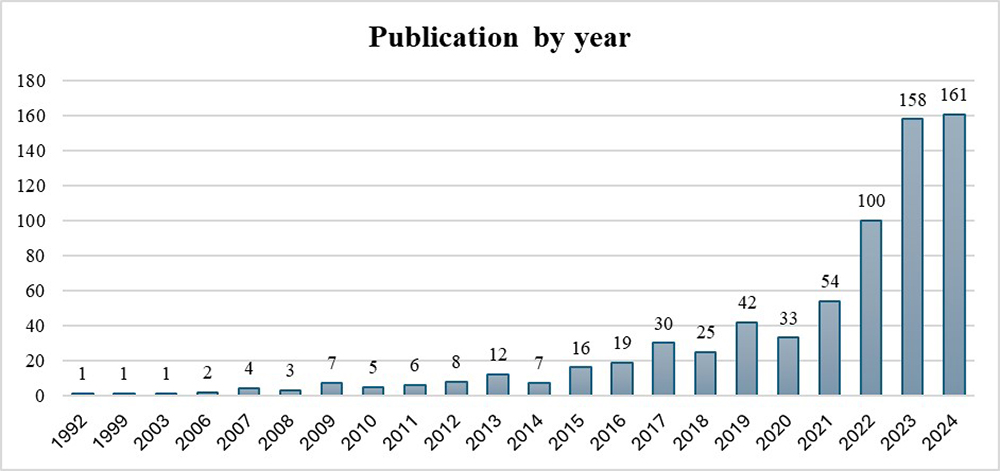
To address RQ1, the study examines the publication trends of articles over the past few years. The results indicate that 703 articles written by 2042 authors were appeared in 314 Scopus-indexed journals with an average citation count of 14.76 contributed to the literature on green energy adoption and financial inclusion. Between 1992 and 1999, only two articles were published. The keen demand for green energy started in 2022. A potential cause for this could be the Paris Agreement of 2015, the International Solar Alliance of 2015 and the National Action Plan on Climate Change of 2008, which diverted the scholars towards the commitment to enhancing energy access and improving financial inclusion through targeted subsidies and support (Al-Smadi et al. 2023).
Before 2015, the output was 57; in the last decade, i.e. from 2011 to 2024, 638 articles have been published, which is 90% of the total number of publications. The increasing number of publications signifies a growing academic interest in green energy and financial inclusion, indicating a promising direction for study in this area. Before the year 2000, there was a dearth of literature in this field covering themes like the adoption of renewable energy and the accessibility of financial services in developing nations.
After 2010, significant shifts occurred, that were primarily brought about by the global agreement of the Kyoto Protocol and growing national commitments to fulfil targets for renewable energy (Al-Smadi et al. 2023). It also reveals that publication activity on financial inclusion augmented gradually and intensified after 2012, more specifically after 2016, when mobile banking and digital financial services were the most important phenomena for enhancing financial inclusion (Afjal 2023). As identified by (Murtaza et al. (2024), there was also a significant growth in the studies following the advent of the Sustainable Development Goals (SDGs) in 2015, particularly with emphasis on SDG7 (cheap and clean energy) and SDG8 (decent work and economic growth) attracted significant attention from academics. To conduct an in-depth analysis of the research corpus, Figure 2 illustrates number of journals from different disciplines that focus on green energy and financial inclusion.

Yearly distribution of articles on green energy adoption and financial inclusion extracted from the Scopus database. This figure shows the annual publication of articles related to green energy adoption, and financial inclusion from the Scopus database between 1992 and 2024 early.
4.2 Publication by Country
Green energy adoption and financial inclusion have attracted considerable interest among scholars, as evidenced by the contributions from 89 countries. Table 2 shows the countries with the top publications on green energy adoption and financial inclusion, with the top three being China, India, and the United States. China was at the epicentre of the publishing articles on green energy adoption and financial inclusion. In the case seen, the Chinese government has increased investment in clean energy technology as a way to emphasize the significance of preserving economic and environmental sustainability (Xie et al. 2020). Therefore, major strategies such as the National 13th Five-Year Plan (FYP) and the Made in China 2025 Plan (Agarwala & Chaudhary 2021), are declared to promote green industrial development. The top second and third publishing country in Asia is India and the developed country is the United States. India was the 4th highest greenhouse gas emitter in the world, after China, the United States, and the European Union (UNEP 2023). Furthermore, India has committed to obtain 50% of its energy from renewable and reduce projected CO₂ emissions by one billion metric tons (Bakhsh et al. 2023).
4.3 Journal Publishing Activity
A total of 314 journals published approximately 703 articles. Table 3 lists the journals that publish the most articles addressing green energy adoption and financial inclusion. The leading journal is Sustainability (Switzerland), followed by Journal of Cleaner Production, International Journal of Energy Economics and Policy, Resources Policy, and Energy Economics. The subject of green energy adoption and financial inclusion belongs to the broader area of sustainable development and environmental economics, which aligns closely with the themes of these journals. Further, a few of these journals have a high ranking, with an ABS (Association of Business Schools) rating of 3, which means gained significant attention to this topic by leading journals in the subject areas of Social Sciences, Economics, Econometrics, Finance, Business, Management, and Accounting research.
4.4 Publications by Author and Organization
Following on the corpus of literature, this study documented that 703 articles involved 2042 authors on the subject of green energy adoption and financial inclusion. Table 4 represents the leading contributing authors. The table indicates that Zhang, Yinyin appears as the impactful author with an h-index of 4 and 467 total citations. Interestingly, Zhang Yinyin also holds the top rank with the most citations from leading publications and h-index. Adebayo, Tomiwa Sunday, tops the list, with the second highest citation among all, with publication (4). It can be concluded from the table that, on average, authors have a high h-index, indicating that their work has contributed to the understanding of new concepts in the field of study.
Table 5 lists the most prominent organisations in the area of green energy adoption and financial inclusion and shows a broad geographical distribution, marking notable contributions from universities across Asia, Europe, and North America. The given table shows that Symbiosis International (Deemed University) in India has published 12 articles, followed by Al-Farabi Kazakh National University in Kazakhstan and Qassim University in Saudi Arabia, each with 11 articles published. Among them, Near East University in Northern Cyprus and the University of Sfax in Tunisia contribute 10 articles, respectively.
Huazhong University of Science and Technology (HUST), Anhui Polytechnic University, and Xi'an Jiaotong University in China have individually contributed to 27 papers. However, institutions like Universiti Putra Malaysia (9 articles), Aalto University in Finland (8 articles), and Purdue University in the U.S. (8 articles) also make significant contributions to the study on green energy adoption and financial inclusion. These findings shed light on the global collaboration and increasing scholarly focus on this subject.
4.5 Analysis of Citation Networks
The purpose of RQ2 (Which major articles have contributed to the literature on green energy adoption and financial inclusion?) is to determine the most significant articles on green energy adoption and financial inclusion. To address question 2, the authors of this paper examined citation analysis of 703 articles. Although various approaches are accessible to analyse the most significant articles, citation network analysis is the most widely used approach (Cho et al. 2011). Citation analysis visualises the interrelations and citations between the most cited articles within the research field (Losse & Geissdoerfer 2021). Similarly, the identification of citation patterns demonstrates the growth of the literature. This paper used VOSviewer for citation analysis.
Table 6 lists the most scholarly articles cited based on global and local citations. To achieve this, the authors use the Biblioshiny package in RStudio to identify the local and global citations of the top articles on green energy adoption and financial inclusion. The global citation indicates the frequency that articles are cited in the database, taking into account the interdisciplinary structure of other research work and its impact on academic research. On the other hand, local citations show how many times an article has been cited by other articles in the review corpus (i.e. our 703-article sample). Documents that receive a higher number of citations tend to attract more attention compared to those cited less (Didegah et al. 2018); consequently, highly cited documents are regarded as central to the academic discourse (Bornmann & Daniel 2008), guiding future investigations and theory development. According to global citation, the leading article in this discourse is (Chibba 2009), published by the European Journal of Development Research, with many local and global citations. In the study of Chibba, financial inclusion is underscored by its pivotal role in fostering inclusive development, providing incremental and complementary strategies to alleviate poverty, and advancing efforts to achieve the Millennium Development Goals (MDGs). Other significant contributions in this field include Sethi and Sethy (2019), Rastogi and Ragabiruntha (2018), Chikalipah (2017), Babajide and Adegboye (2015), Yoshino et al. (2019), etc. Publications. with more local citations have greater influence on the growth of green energy adoption and financial inclusion. This study used VOSviewer to calculate the citation network of 703 articles for the network analysis.
Figure 3 shows the article citation network on green energy adoption and financial inclusion. The size of the bubbles indicates the paper’s high frequency of citations. Citation analysis was conducted to determine the most widely articles on green energy adoption and financial inclusion.

4.6 Keyword and Co-occurrence Analysis
RQ3 (Which themes involving green energy adoption and financial inclusion are the most popular among scholars?) aimed to identify themes among researchers focusing on green energy adoption and financial inclusion. To address RQ2, this study conducted a keyword and co-occurrence analysis using VOSviewer. The underpinning for conducting the keyword analysis is that an author’s keywords are sufficient to define an article (Bekhuis 2015). In an article, keyword co-occurrence is when two keywords occur together, indicating a relationship between the two themes. Therefore, to conduct a keyword co-occurrence to illustrate the theme formation and to support the bibliographic coupling and thematic analysis (Donthu et al. 2021). According to the scientific researcher (Wormell 2000), this approach to track innovations and flow of information to measure performance.
Thus, to identify the rife trends under green energy adoption and financial inclusion, this paper undertakes keyword and keyword co-occurrence analysis. Table 7 shows that the keyword that appeared the most (202) was renewable energy; whilst the other with (164) occurrences was alternative energy next to green energy (157), energy policy (136), sustainable development (107), financial inclusion (95) and sustainability (81). These keywords indicate the prominent usage of articles with significant link strengths. In addition, the keywords that appear the most are associated with the conceptual thematic map's themes.
Figure 4 displays the keyword co-occurrence network between 1992 and early 2024. As pointed out by Bekhuis (2015) keyword and co-occurrence analysis is the cornerstone of bibliometric analysis and identifies the most frequently terms used in the literature. This technique highlights the primary themes and areas of interest within the field of study. The nodes of the keywords represent the frequency of the co-occurrence of terms, while the nodes of the keywords reflect how frequently they appear. Out of 3,879 keywords, three clusters with 46 keywords, 939 links, and 6034 total link strength formed by a minimum keyword occurrence of 20. Of the most relevant keywords, 77.08% are found in the three most important clusters.

Co-occurrence network of keyword on green energy adoption and financial inclusion. The top keyword analysis using VOSviewer software is shown in this picture. The size of the bubbles represents the most frequent occurrence of the keyword in the literature. A minimum threshold of at least 20 occurrences is enacted.
4.6.1 Thematic Map of Keywords
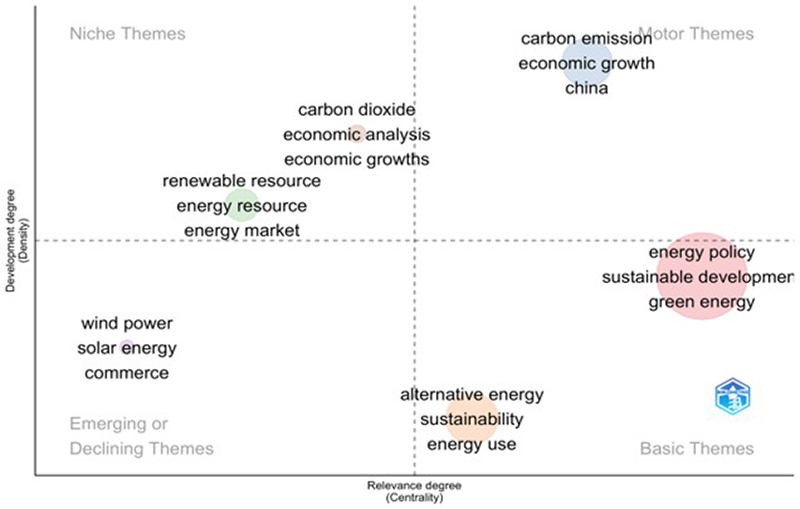
The most significant themes identified by the keywords for green energy and financial inclusion are shown on a two-dimensional strategic thematic map (Figure 5), This map shows the degree of internal relationships (density, measured on the vertical axis) and external relationships (centrality, measured on the horizontal axis) within the cluster represented by each theme. Each region of the map highlights a distinct category of themes. This map aims to visually represent the major and popular concepts pertinent to financial inclusion and green energy. The insights derived from the four quadrants; mainstream subjects, basic and transversal issues, specialist topics, and emerging or underdeveloped themes; facilitate a comprehensive understanding of the thematic structure within the research area (Chen & Lee, 2006; López-Robles et al., 2018).
As display in Figure 5, the map shows quadrant 1 (motor themes with high density and centrality), quadrant 2 (basic themes with low density and high centrality), quadrant 3 (niche themes with high density and low centrality) and quadrant 4 (emerging or declining themes with low centrality and low density).
The basic themes are shown in the lower-right portion of the map. These themes include alternative energy, sustainability, energy policy, sustainable development, energy uses and green energy. The themes in these sections are pertinent in the particular field, require further exploration to deepen the impact of research in these domains. Now heading to the top right quadrant of the map, motor themes in the literature of green energy and financial inclusion. Topics related to carbon emission in the literature of green energy and financial inclusion, such as economic growth associated with China. Within the research, these themes represent emerging fields of interest and attention. In contrast, the niche themes are shown in the upper left section of the map. As far as the level of development is concerned. These themes, such as carbon dioxide, economic growth, and economic analysis, indicate areas that include renewable resources, energy resources and the energy market, more comprehensive study and analysis in future studies. However, such themes are less central to the broader research field. Finally, the quadrant with low density and centrality has less developed themes. An enormous amount of work on sustainability revolves around it, whereas the complexities of financial inclusion remain largely overlooked in the discourse. Lastly, the emerging or declining theme, categorized as transition themes, illustrates that wind power, solar energy and commerce fall under this theme. These themes indicate areas with potential for future research. However, these themes have low density and centrality.

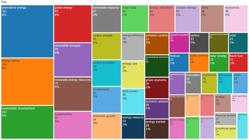
The TreeMap illustrating the key dynamics of author keywords, as illustrated in Figure 6, offers insightful information on the major themes and evolving patterns in this field of study. Analyzing these dynamics can help researchers identify focus areas and discover new topics in the field. The TreeMap highlights associations between the dimensions, defining the structure of the chart, and the measures, referring to the frequency of keyword usage.
For instance, as observed, the keyword “Alternative Energy” is the most prominent, representing 8% of all keyword occurrences across 703 articles, whereas “remittances” appears with the lowest frequency (see Figure 7). Such insights are valuable in determining prominent research topics and guiding future research directions within this field.1

4.6.2 Three Field Plots of Author Country and Keywords
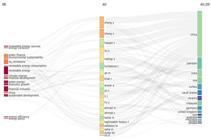
Figure 8 presents a three-field plot (Sankey Diagram) containing keywords on the left, the author in the center, and the country on the right. An analysis utilizing a three-field plot was conducted to pinpoint the performance areas in green energy and financial inclusion. The size of each node represents the number of articles published by each country. A significant connection between the two subjects can be observed seen in the thickness of the overlapping lines. The figure shows that China is the leading contributor in this field.
4.7 Analysis of Co-authorship
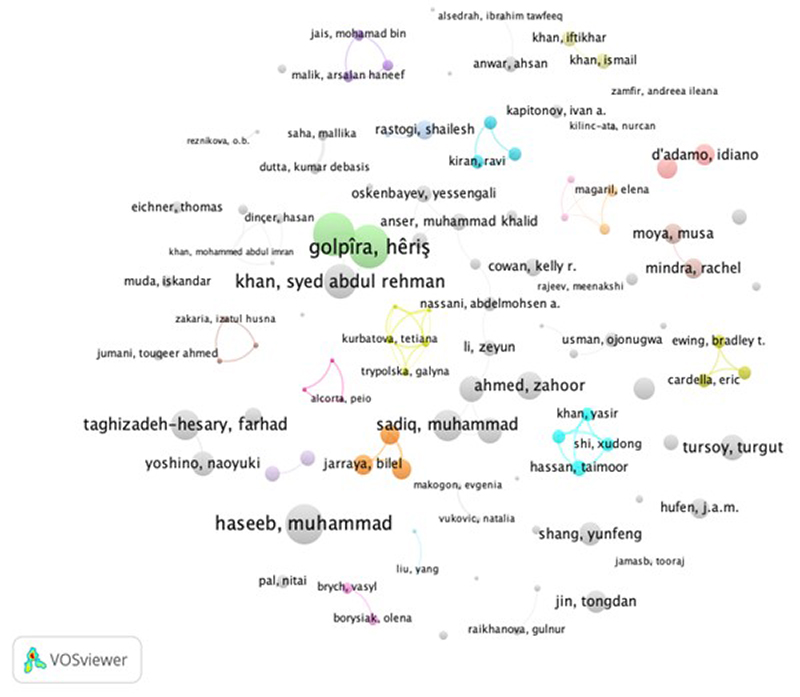
To answer our RQ4 and RQ5 (Who are the most prolific authors in the field of green energy adoption and financial inclusion? and what is the current status of collaboration on green energy adoption and financial inclusion?), the collaboration networks of authors from the retrieved data were examined in this study. Co-authorship is suggested as one of the most efficient bibliographic methods of collaboration with other researchers in scientific collaboration (Biscaro & Giupponi 2014). Furthermore, for analyzing the co-authorship data, the authors examine the most productive authors and their collaboration patterns among researchers to determine key contributors to the field and their networks. As Figure 9 suggests the most influential authors in terms of their collaboration efforts are Hêriş Golpîra, Zhang Yu, Haseeb, Muhammad and Khan, and Syed Abdul Rehman from Iran, Malaysia and China, respectively. Collaboration between authors from various disciplines and nations creates a multitude of novel opportunities for research and provides new information to address challenging issues (Lang et al. 2012).
Isolated Collaboration Between Authors.
Some nodes appear to be relatively isolated from a few other authors; lack of collaboration among these authors. For instance, more cross-country collaborations among scholars are required to develop a field.

Co-authorship network on green energy adoption and financial inclusion. Using the VOSviewer software, this figure displays the co-authorship network on green energy adoption and financial inclusion with a minimum threshold of at least two articles.
Figure 10 illustrates the co-authorship relations among countries. As depicted in this figure, China produced 116 documents with 2207 citations, followed by India (76 documents) with 717 citations and the USA (72 documents) with 1372 citations. It indicates that the two most prominent countries in the area of green energy adoption and financial inclusion are China and India.

4.8 Co-citation Analysis
To investigate RQ6 (What is the conceptual structure of the present research on green energy adoption and financial inclusion?) this study employs co-citation and content analysis to identify the conceptual connection of literature on green energy adoption and financial inclusion. According to Backhaus et al. (2011) and Gmür (2006), the scientific mapping technique argues that when numerous scholars cite the same pair of articles, it indicates a thematic relationship among the co-cited works. However, co-citation is suitable for bibliometrics analysis, revealing the intellectual structure of a topic among scholars (Lazzeretti et al. 2017). It also reveals the cognitive structure of research fields and identifies research gaps in the scientific domain Anuradha and Gopalan (2007) and Westgate et al. (2015) by evaluating more commonly cited sources to determine content and subject areas.
Based on the results of the co-citation analysis, 65 sets of articles were identified that were cited together at least five times. The most cited reference was Sarma and Paes (2011) with the strongest link strength (27) and highest citations (27), followed by Sarma (2008) with 21 citations and 20 link strength.
In Figure 11, the links connecting the nodules indicate the co-citation linkages and the nodules directly represent the highly cited papers. The Frequently cited papers are interconnected in the left, which is actually in congruent with knowledge base by co-citation.

The most comprehensive network of linkages is observed among Sarma and Pais (2011), Sarma (2008), Neaime and Gaysset (2018), Demirgüç-Kunt et al. (2020), Beck et al. (2007) and Blundell and Bond (1998), thereby illustrating the crucial idea in the field of green energy and financial inclusion. The articles that are frequently co-cited have empirically concentrated on establishing an inclusive financial system aimed at fostering financial inclusion and ensuring financial stability (Neaime & Gaysset (2018); Sarma (2008); Sarma & Pais (2011). The central theme of cited references revolved around the decision, dedication and evolution of various financial activities across multiple economies.
Publications with higher co-citation frequencies tend to show higher co-citation linkages within individual clusters, which are the cornerstones of many subfields. According to Tang et al. (2014) and Waltman et al. (2010) state that clustering methods are used to identify the set of related articles, authors, or journals. Using the VOS viewer mapping approach, six clusters were created, each containing a group of articles with similar co-citation trends. Consequently, there's a possibility that every cluster will contribute themes or knowledge bases.
To determine the specific subjects connected with each cluster, the articles under each cluster were thoroughly analyzed. The particular focus on each cluster can be determined by carefully reviewing the papers beneath that cluster (Jain et al. 1999).
4.9 Content Analysis
The co-citation analysis yielded six clusters to identify and organise the broader framework of research on green energy and financial inclusion. Table 8 summarises all the details of the clusters.
4.9.1 Cluster 1. Advancing Financial Inclusion for Sustainable Development through Gender Equity and Digital Innovation: gender, digital solutions, and measurement approaches. In this cluster, the author discusses disparity in access to financial services based on gender-based inequalities and development goals (Adegbite & Machethe 2020; Demirgüç-Kunt et al. 2020). Also pointed out was how financial services contribute to poverty alleviation, improved agricultural productivity and access to essential sources like education and health care. The study by Adegbite and Machethe (2020) emphasises the gender gap in financial inclusion (FIGG) in Nigerian smallholder agriculture and its implications for sustainable development. The study findings, when extended to the entire population, the FIGG grew significantly from 7% in 2011 to 20% in 2014 and 24% in 2017. The study found a large disparity in focused approaches to financial inclusion. Intending to increase access to formal financial services, Demirgüç-Kunt et al. (2020) underlined the significance of measuring financial inclusion utilising the Global Findex database. The study has found that digital financial services, including mobile money, payment cards, and fintech applications, have a positive impact in enhancing financial inclusion. This study also revealed the gap, despite the availability of comprehensive data, there is still a need for localised interventions that consider the barriers and needs of underserved communities.
4.9.2 Cluster II. Determinants and Dimensions of Financial Inclusion in Development Contexts: This group examined the potential and difficulties associated with financial inclusion. The study also extends prior research Sarma and Pais (2011) by offering insights into the determinants of financial inclusion, revealing that traditional measures like the health of the banking sector have a highly ambiguous impact, whereas ownership patterns of financial institutions have a highly considerable effect. This study contributes by empirical correlations between human development and financial inclusion, highlighting the role of literacy, inequality and physical connectivity in driving inclusive financial systems. Using a qualitative approach, Sarma (2008) found that by developing the index of financial inclusion (IFI), the study contributes a standardised and easy-to-compute tool that enables cross-country comparisons of financial inclusion. The study has also discussed the significance of the Index resides in its capacity to cover various aspects of financial inclusion, such as access, usage and quality of financial services. Furthermore, Bruhn and Love (2014) emphasised the impact of access to finance on poverty. This study specifically focused on the impact of financial access through the opening of Banco Azteca on labour market effects and income levels in Mexico. Further research could be undertaken to challenge the findings of Neaime and Gaysset (2018), which suggest that financial inclusion appears to reduce income inequality, it has no impact on poverty in the MENA region. As highlighted by Beck et al. (2007), it extends the existing literature on the role that financial structure plays in influencing firm performance and credit.
4.9.3 Cluster III. According toPesaran (2021,2007) andWesterlund (2007) captured Econometric Advances in Panel Data Analysis for Financial and Energy Research: These studies contribute to the field of panel data analysis by providing new statistical tests and methods that address common issues such as cross-sectional dependence Pesaran (2021), unit roots Pesaran (2007), and cointegration in panel data models Westerlund (2007). The methods presented in these papers enhance the reliability of empirical results in a variety of applications, including economics and finance, by providing robust tests that apply to different sample sizes and are resilient to structural breaks and heterogeneous dynamics.
4.9.4 Cluster IV. Financial Inclusion, Economic Growth, and Development Outcomes:Sarma (2016) investigates the divergent stages of economic and financial sector development in Asian economies, highlighting the level of financial inclusion across income groups. The study's primary contribution is to examine the gap in financial access between marginalized groups, while Sethi and Sethy (2019) contribute to the existing literature by proposing a multidimensional time-varying index for financial inclusion and economic growth in India. In addition, Gupte et al. (2012) proposed a new, multidimensional index for financial inclusion that incorporates several aspects of both qualitative and quantitative methods that have not been considered previously. As pointed out by (Beck et al. 2007) demonstrates the functions of financial development in reducing poverty and inequality, reveal the peculiarities of the impact on the poorest populations. This study highlights dual channels, that benefit the poor: First, by directly increasing their income, and second, indirectly by lowering overall inequality. Chauvet and Jacolin (2017) discovered the effects of bank concentration and financial inclusion on business performance in developing and emerging nations. In the study of Chauvet and Jacolin (2017), a sample of 55,596 firms from 79 countries are used to establish the conditional effect of financial inclusion on firm growth contingent upon the banking competition in the markets.
4.9.5 Cluster V. Financial inclusion, digital finance, and global policy goals: As stated Chibba (2009) observed in their study that financial inclusion shows significant importance in promoting inclusive development and addressing the millennium development goals. Furthermore, Deng et al. (2024) and Kaur and Dhiman (2025) this study recommended the implementation of carbon taxes to incentivize industries to switch to sustainable practices and green energy. In this literature, the study determined the impact of natural resources, fintech and green investment on environmental sustainability. In comparison, the study Ozili (2018) highlights the role in addressing poverty and other (MDGs), extending threefold aspects: (i) to identify the key pillars of the financial inclusion-poverty reduction-MDG nexus (ii) to present case studies from various countries to distil lessons for policy and practice; and (iii) proposes explanatory models that elucidate the dynamics of financial inclusion and Demirgüç-Kunt et al. (2020) stressed that the financial inclusion is positively impacted by digital financial services, including fintech applications, mobile money, and payment cards, according to the report, on how adults worldwide engage with financial systems, including their savings, borrowing, payments, and risk management practices.
4.9.6 Cluster VI. Economic and Financial Drivers of Renewable Energy Transition: This group of work investigates the economic and political determinants affecting the shift to renewable energy and a low-carbon economy. According to Przychodzen and Przychodzen (2020), the contributes to the literature offers novel empirical evidence on the factors that influence renewable energy production in transition economies, emphasising the complex array between economic growth, government policies, and market dynamics. This study employs a quantitative method using extensive panel data from 27 transition economies over the period 1990-2014, allowing for robust empirical analysis. The finding reveals that higher economic growth, rising unemployment levels, and increasing government debt stimulate renewable energy generation, whereas Anton and Nucu (2020) empirically analyse that financial development across three dimensions (capital market, banking sector, and bond market) positively affects green energy consumption.
5. Discussions
Lastly, this study presented the results of the study and future research recommendations (What sorts of problems impede studies on green energy adoption and financial inclusion? And What aspects of green energy adoption and financial inclusion require further research?). The paper also identifies the challenges facing current researchers. In response to RQ1, the thematic analysis provides the clarification of the current state of studies on green energy adoption and financial inclusion. Green energy has been a topic of discussion among academicians and scholars worldwide for a long time. Before 2000, the topics of green energy adoption and financial inclusion were relatively niche areas of research. The main focus at this time was on traditional energy sources and general economic inclusion. Between 2000 and 2010, it gradually becomes most efficient ways to eliminate carbon emission-free. Most researchers believe that financial development can reduce energy consumption by encouraging the adoption of green technology.
Most literature on green energy adoption and financial inclusion prioritize on China because its government maintains a balance between the environment and the economy and influences investment in clean energy technology. The study also found globally that authors and organizations contribute to the literature on green energy adoption and financial inclusion. According to the findings of our citation analysis, this field is affected by a limited number of publications (RQ2). According to research done by Chibba (2009), the study forms the most prominent nodes within the network. The study by Chibba (2009), has the most citations both locally and globally, with the highest degree of centrality, followed by Bai et al. (2022) and Yoshino et al. (2019).
For RQ3, the study examined keyword and co-occurrence analysis suggesting common themes in the study of green energy adoption and financial inclusion. The author finds that renewable energy is greater reign discussion in this area. Our findings also indicates that most research is limited and focused on financial inclusion and its effects on green energy. This finding requires further attention in the area of financial inclusion as during COP28, UNFCC member parties highlighted the importance of financial inclusion to mitigate climate change which is a major rationale for its implementations.
According to the co-authorship network, the findings depict the current status of collaboration in the literature on green energy adoption and financial inclusion and the most influential authors in this area of research (RQ4 & RQ5). The findings provided in this study that relatively minimum collaboration occurs among authors. A few of the prominent authors in this network include Hêriş Golpîra, Zhang Yu, Haseeb, Muhammad and Khan, Syed Abdul Rehman plays an important role. As a matter of fact, having limited numbers of relational contacts, they serve as knowledge intermediaries at the juncture among groups. Our findings also conclude that Dutta and Kumar Debasis have more publications on green energy adoption and financial inclusion yet comparatively limited contact with others. This outcome may be impelled by limited collaboration among limited groups. For this reason, the study further concluded that more scholarly collaboration is needed.
For RQ6, content analysis and co-citation analysis, make an effort to identify the present conceptual structure in the literature on green energy adoption and financial inclusion. Results reveal six clusters focusing on the green energy role in financial inclusion in six major areas. Cluster I addresses how financial inclusion bridges the gaps for sustainable development: gender, digital solutions, and measurement approaches. Cluster II defines the development of financial inclusion. Cluster III captured advanced panel data econometric techniques. Cluster IV addresses the theme of financial inclusion, economic growth and economic development. Cluster V describes how financial inclusion, digital finance, and global development initiatives promote inclusive development. Articles in Cluster VI explained economic determinants influencing the transition to a low-carbon economy through renewable energy.
6. Conclusions, limitations, and future aspects of the study
The study summarises the origin, evolution and development of research topics focused on improving green energy adoption through financial inclusion. The study delivers various opportunities for academics to gain insight from the investigation. This study enhances the field of sustainable development and expands on existing reviews in a variety of ways. Evidence suggests that financial inclusion in developing countries can improve renewable energy uptake and environmental sustainability (Ababio et al. 2024). It is evident from the present study that authors from all over the world have published research in this field, however, the structure of the relationship is quite similar across countries. The author determines the most cited works and milestones in the field. Based on the keywords and co-occurrences analysis, it has been found that researchers have continued to concentrate on green energy performance. In line with the aforementioned literature review, this study employed a co-citation analysis approach to categorise the literature into six clusters based on the main theme of the impacts of green energy adoption and financial inclusion, enabling us to identify the intervention of the various variables.
The contribution of this paper is sixfold. First, the literature on the adoption of green energy and financial inclusion is thoroughly examined using bibliometric analysis and a systematic literature review (Mahato et al. 2023). Second, the study investigates the yearly publication trends and author, country, and institution contributions in this area. Third, analyse citation and co-authorship patterns to find the most significant studies and authors. Fourth, the author applies co-occurrence and co-citation to identify the key themes and the conceptual framework of this field to help researchers avoid repetition in the existing literature to envisage a new direction. Fifth, describe several factors which hinder the advancement of knowledge in this field. Lastly, this study presents the directions for future research to proceed in the context of this study.
Therefore, this study aims to provide a comprehensive understanding of the research conducted on green energy adoption and financial inclusion using bibliometric analysis and systematic literature review.
However, similar to other studies, too, is not free from limitations. This study has several limitations. First, the sample period is restricted to publications from 1992 to January 2024. Extending the timeframe in future research could provide greater insights of the patterns in green energy adoption and financial inclusion. Second, while this study utilized advanced tools like R software (Biblioshiny) and VOSviewer for bibliometric and network analysis, alternative tools such as Cite Net Explorer and Gephi (Mani et al. 2024) could be applied in future research to explore different dimensions of the literature and uncover potentially complementary insights. Third, this study was limited to articles available in the Scopus database, focusing solely on peer-reviewed and published articles. Although the peer-review process is widely accepted as a standard for assessing the quality of academic publications (Marsh & Ball 1989), it is important to acknowledge the rapid pace of knowledge development. In addition to the contributions from Social Sciences, Economics, Econometrics, Finance, Business, Management, and Accounting, expanding the analysis to other subject areas could yield more significant results. Finally, the validity of these findings must be considered in the context of the specific time of analysis, as the evolving nature of the field may influence future developments.
The author uses a content analysis and systematic literature in this area to identify several factors that impede development, although progressive improvement. It is evident from the literature review that there is an apparent interdisciplinary research gap concerning the integration of Green energy adoption and financial inclusion. Although green energy adoption and financial inclusion have garnered rapid growth in the field of sustainable development and increased publications over the past two decades, there remains scope for further advancement in this area. Through a comprehensive review of the literature, this paper examines the barriers impeding the development of its subject.
According to the literature, although much attention has been focused on the influence of financial inclusion on economic growth and poverty alleviation, little is known about how it can directly support environmentally friendly, sustainable energy alternatives. Previous studies have addressed several aspects separately: (1) Financial inclusion's effects on urbanisation and economic growth, in turn affecting energy access and poverty reduction (e.g., Koomson & Danquah 2021; Acheampong et al. 2022); (2) Renewable energy helps achieve sustainable development goals, particularly in developing and low-income countries (Nguyen 2021); and (3) the barriers posed by energy poverty to equitable access to green energy (Soto & Martinez-Cobas 2024). However, prior research has not addressed the way financial inclusion can serve as a mechanism to reduce these barriers by providing accessible financial instruments (e.g., green finance or microloans). The researcher has pointed out a critical gap in the literature, highlighting the need for a comprehensive framework that examines financial inclusion as a catalyst for green energy adoption. This gap limits the development of strategic policies that integrate financial inclusion with green energy sustainability and access.
There is lack of significant gaps in academic collaboration among scholars in developed and developing countries. Studies by Pedersen (2015), addressing societal issues in the knowledge-based economy requires collaboration among scholars. According to Li et al. (2013), greater scholarly collaboration boosts the flow of information and improves the efficiency of research productivity.
A well-developed research framework is needed for green energy adoption and financial inclusion. Although few studies of Fazal et al. (2023) and Yu and Tang (2023) conceptual papers are available and require more work on identifying the factors and barriers to green energy adoption and financial inclusion, and building a conceptual framework. The previous studies, such as Adnan (2024) and Li et al. (2024), discuss parts of the issues well on government subsidy, consumer intentions and attitudes. However, more extensive studies that specifically target green energy adoption and financial inclusion are still required. Future research should focus globally, thereby encouraging more collaboration among scholars and helping to develop a robust framework for implementing green energy adoption and financial inclusion. Additionally, further investigation is needed on social policies such as awareness campaigns, which could offer new insights into the literature.
7. References
-
Ababio, J.O.M., Yiadom, E.B., Mawutor, J.K.M., Tuffour, J.K. & Attah-Botchwey, E. 2024, 'Sustainable energy for all: the link between financial inclusion, renewable energy and environmental sustainability in developing economies', International Journal of Energy Sector Management, vol. 18, pp. 1088-1108, DOI: 10.1108/IJESM-07-2023-0012
» https://doi.org/10.1108/IJESM-07-2023-0012 -
Acheampong, A.O., Shahbaz, M., Dzator, J. & Jiao, Z. 2022, 'Effects of income inequality and governance on energy poverty alleviation: Implications for sustainable development policy', Utilities Policy, vol. 78, DOI: 10.1016/j.jup.2022.101403
» https://doi.org/10.1016/j.jup.2022.101403 -
Adnan, N. 2024, 'Powering up minds: Exploring consumer responses to home energy efficiency', Energy Reports, vol. 11, pp. 2316-2332, DOI: 10.1016/J.EGYR.2024.01.048
» https://doi.org/10.1016/J.EGYR.2024.01.048 -
Adegbite, O.O. & Machethe, C.L. 2020, 'Bridging the financial inclusion gender gap in smallholder agriculture in Nigeria: An untapped potential for sustainable development', World Development, vol. 127, p. 104755, DOI: 10.1016/J.WORLDDEV.2019.104755
» https://doi.org/10.1016/J.WORLDDEV.2019.104755 -
Afjal, M. 2023, 'Bridging the financial divide: a bibliometric analysis on the role of digital financial services within FinTech in enhancing financial inclusion and economic development', Humanities and Social Sciences Communications, vol. 10, p. 1234567890, DOI: 10.1057/s41599-023-02086-y
» https://doi.org/10.1057/s41599-023-02086-y -
Agarwala, N. & Chaudhary, R.D. 2021, '“Made in China 2025”: Poised for Success?', DOI: 10.1177/09749284211027250
» https://doi.org/10.1177/09749284211027250 -
Alsmadi, A.A., Al-Okaily, M., Alrawashdeh, N., Al-Gasaymeh, A., Moh’d Al-Hazimeh, A. & Zakari, A. 2023, 'A Bibliometric Analysis of Green Bonds and Sustainable Green Energy: Evidence from the Last Fifteen Years (2007-2022)', Sustainability, vol. 15, p. 5778, DOI: 10.3390/SU15075778
» https://doi.org/10.3390/SU15075778 -
Al-Smadi, M.O. 2023, 'Examining the relationship between digital finance and financial inclusion: Evidence from MENA countries', Borsa Istanbul Review, vol. 23, pp. 464-472, DOI: 10.1016/J.BIR.2022.11.016
» https://doi.org/10.1016/J.BIR.2022.11.016 -
Anton, S.G. & Nucu, A.E.A. 2020, 'The effect of financial development on renewable energy consumption. A panel data approach', Renewable Energy, vol. 147, pp. 330-338, DOI: 10.1016/J.RENENE.2019.09.005
» https://doi.org/10.1016/J.RENENE.2019.09.005 -
Anuradha, K.T. & Gopalan, T.K. 2007, 'Trend and patterns in explicit organizational knowledge: A correspondence analysis and cluster analysis', The International Information & Library Review, vol. 39, pp. 247-259, DOI: 10.1016/J.IILR.2007.07.005
» https://doi.org/10.1016/J.IILR.2007.07.005 - Babajide, A. & Adegboye, F.B. 2015, 'Financial inclusion and economic growth in Nigeria', International Journal of Economics and Financial Issues, vol. 5, pp. 629-637
-
Backhaus, K., Lügger, K. & Koch, M. 2011, 'The structure and evolution of business-to-business marketing: A citation and co-citation analysis', Industrial Marketing Management, vol. 40, pp. 940-951, DOI: 10.1016/J.INDMARMAN.2011.06.024
» https://doi.org/10.1016/J.INDMARMAN.2011.06.024 -
Bai, X., Wang, K.T., Tran, T.K., Sadiq, M., Trung, L.M. & Khudoykulov, K. 2022, 'Measuring China’s green economic recovery and energy environment sustainability: Econometric analysis of sustainable development goals', Economic Analysis and Policy, vol. 75, pp. 768-779, DOI: 10.1016/J.EAP.2022.07.005
» https://doi.org/10.1016/J.EAP.2022.07.005 -
Bakhsh, S., Zhang, W., Ali, K. & Anas, M. 2023, 'Can digital financial inclusion facilitate renewable energy consumption? Evidence from nonlinear analysis', Energy and Environment, DOI: 10.1177/0958305X231204029
» https://doi.org/10.1177/0958305X231204029 -
Balcilar, M., Usman, O. & Ike, G.N. 2023, 'Investing green for sustainable development without ditching economic growth', Sustainable Development, vol. 31, pp. 728-743, DOI: 10.1002/SD.2415
» https://doi.org/10.1002/SD.2415 -
Beck, T., Demirgüç-Kunt, A. & Levine, R. 2007, 'Finance, inequality and the poor', Journal of Economic Growth, vol. 12, pp. 27-49, DOI: 10.1007/S10887-007-9010-6
» https://doi.org/10.1007/S10887-007-9010-6 -
Bekhuis, T. 2015, 'Keywords, discoverability, and impact', Journal of the Medical Library Association, vol. 103, p. 119, DOI: 10.3163/1536-5050.103.3.002
» https://doi.org/10.3163/1536-5050.103.3.002 -
Bilgili, F., Koçak, E. & Bulut, Ü. 2015, 'The dynamic impact of renewable energy consumption on CO₂ emissions: A revisited Environmental Kuznets Curve approach', DOI: 10.1016/j.rser.2015.10.080
» https://doi.org/10.1016/j.rser.2015.10.080 -
Biscaro, C. & Giupponi, C. 2014, 'Co-Authorship and Bibliographic Coupling Network Effects on Citations', PLoS One, vol. 9, p. e99502, DOI: 10.1371/JOURNAL.PONE.0099502
» https://doi.org/10.1371/JOURNAL.PONE.0099502 -
Blundell, R. & Bond, S. 1998, 'Initial conditions and moment restrictions in dynamic panel data models', Journal of Econometrics, vol. 87, pp. 115-143, DOI: 10.1016/S0304-4076(98)00009-8
» https://doi.org/10.1016/S0304-4076(98)00009-8 -
Bornmann, L. & Daniel, H.D. 2008, 'What do citation counts measure? A review of studies on citing behavior', Journal of Documentation, vol. 64, pp. 45-80, DOI: 10.1108/00220410810844150
» https://doi.org/10.1108/00220410810844150 -
Bota-Avram, C. 2022, 'Bibliometric analysis of sustainable business performance: where are we going? A science map of the field', DOI: 10.1080/1331677X.2022.2096094
» https://doi.org/10.1080/1331677X.2022.2096094 -
Bruhn, M. & Love, I. 2014, 'The Real Impact of Improved Access to Finance: Evidence from Mexico', Journal of Finance, vol. 69, pp. 1347-1376, DOI: 10.1111/JOFI.12091
» https://doi.org/10.1111/JOFI.12091 -
Chakraborty, S.K. & Mazzanti, M. 2020, 'Energy intensity and green energy innovation: Checking heterogeneous country effects in the OECD', Structural Change and Economic Dynamics, vol. 52, pp. 328-343, DOI: 10.1016/J.STRUECO.2019.12.002
» https://doi.org/10.1016/J.STRUECO.2019.12.002 -
Chatterjee, A. 2020, 'Financial inclusion, information and communication technology diffusion, and economic growth: a panel data analysis', Information Technology for Development, vol. 26, pp. 607-635, DOI: 10.1080/02681102.2020.1734770
» https://doi.org/10.1080/02681102.2020.1734770 -
Chauvet, L. & Jacolin, L. 2017, 'Financial Inclusion, Bank Concentration, and Firm Performance', World Development , vol. 97, pp. 1-13, DOI: 10.1016/J.WORLDDEV.2017.03.018
» https://doi.org/10.1016/J.WORLDDEV.2017.03.018 -
Chen, T.T. & Lee, M.R. 2006, 'Revealing Themes and Trends in the Knowledge Domain’s Intellectual Structure', Lecture Notes in Computer Science (including subseries Lecture Notes in Artificial Intelligence and Lecture Notes in Bioinformatics), vol. 4303 LNAI, pp. 99-107, DOI: 10.1007/11961239_9
» https://doi.org/10.1007/11961239_9 -
Chibba, M. 2009, 'Financial inclusion, poverty reduction and the millennium development goals', European Journal of Development Research, vol. 21, pp. 213-230, DOI: 10.1057/EJDR.2008.17
» https://doi.org/10.1057/EJDR.2008.17 -
Chikalipah, S. 2017, 'What determines financial inclusion in Sub-Saharan Africa?', African Journal of Economic and Management Studies, vol. 8, pp. 8-18, DOI: 10.1108/AJEMS-01-2016-0007
» https://doi.org/10.1108/AJEMS-01-2016-0007 -
Cho, Y., Jo, S.J., Park, S., Kang, I. & Chen, Z. 2011, 'The current state of human performance technology: A citation network analysis of Performance Improvement Quarterly, 1988-2010', Performance Improvement Quarterly, vol. 24, pp. 69-95, DOI: 10.1002/piq.20103
» https://doi.org/10.1002/piq.20103 -
Das, D., Talukdar, M.K. & Mahanta, R. 2019, 'Energy: An Exploratory Study on the Experience of Developing Countries in the Context of Development and the State of the Environment', Space and Culture, India, vol. 7, pp. 27-38, DOI: 10.20896/SACI.V7I1.235
» https://doi.org/10.20896/SACI.V7I1.235 -
Demirgüç-Kunt, A., Klapper, L., Singer, D., Ansar, S. & Hess, J. 2020, 'The Global Findex Database 2017: Measuring Financial Inclusion and Opportunities to Expand Access to and Use of Financial Services', World Bank Economic Review, vol. 34, pp. S2-S8, DOI: 10.1093/wber/lhz013
» https://doi.org/10.1093/wber/lhz013 -
Deng, Y., Cao, Z. & Yang, N. 2024, 'Understanding the nexus between fintech, natural resources, green investment, and environmental sustainability in China: A DYNARDL approach', Resources Policy, vol. 91, 104900, DOI: 10.1016/J.RESOURPOL.2024.104900
» https://doi.org/10.1016/J.RESOURPOL.2024.104900 -
Didegah, F., Bowman, T.D. & Holmberg, K. 2018, 'On the differences between citations and altmetrics: An investigation of factors driving altmetrics versus citations for Finnish articles', J Assoc Inf Sci Technol, vol. 69, pp. 832-843, DOI: 10.1002/ASI.23934
» https://doi.org/10.1002/ASI.23934 -
Donthu, N., Kumar, S., Mukherjee, D., Pandey, N. & Lim, W.M. 2021, 'How to conduct a bibliometric analysis: An overview and guidelines', J Bus Res, vol. 133, pp. 285-296, DOI: 10.1016/J.JBUSRES.2021.04.070
» https://doi.org/10.1016/J.JBUSRES.2021.04.070 -
Fakih, A., Sayour, N., Khalid, U., Desalegn, G. & Tangl, A. 2022, 'Enhancing Green Finance for Inclusive Green Growth: A Systematic Approach', Sustainability, vol. 14, 7416, DOI: 10.3390/SU14127416
» https://doi.org/10.3390/SU14127416 -
Fazal, S.A., Hayat, N. & Al Mamun, A. 2023, 'Renewable Energy and Sustainable Development-Investigating Intention and Consumption among Low-Income Households in an Emerging Economy', Sustainability (Switzerland), vol. 15, DOI: 10.3390/SU152115387
» https://doi.org/10.3390/SU152115387 -
Gerpott, T.J. & Mahmudova, I. 2010, 'Determinants of price mark-up tolerance for green electricity - lessons for environmental marketing strategies from a study of residential electricity customers in Germany', Bus Strategy Environ, vol. 19, pp. 304-318, DOI: 10.1002/BSE.646
» https://doi.org/10.1002/BSE.646 -
Gmür, M. 2006, 'Co-citation analysis and the search for invisible colleges: A methodological evaluation', Scientometrics, vol. 57, pp. 27-57, DOI: 10.1023/A:1023619503005
» https://doi.org/10.1023/A:1023619503005 -
Gu, J. 2023, 'Intra-industry or spatial spillovers: Empirical study on the impact of digital finance on green energy innovation', J Clean Prod, vol. 433, DOI: 10.1016/j.jclepro.2023.139797
» https://doi.org/10.1016/j.jclepro.2023.139797 -
Gupte, R., Venkataramani, B. & Gupta, D. 2012, 'Computation of Financial Inclusion Index for India', Procedia Soc Behav Sci, vol. 37, pp. 133-149, DOI: 10.1016/J.SBSPRO.2012.03.281
» https://doi.org/10.1016/J.SBSPRO.2012.03.281 -
IEA. 2017, World Energy Outlook 2017, https://www.iea.org/reports/world-energy-outlook-2017
» https://www.iea.org/reports/world-energy-outlook-2017 -
IEA 2024, World Energy Investment 2024: Overview and key findings, https://www.iea.org/reports/world-energy-investment-2024/overview-and-key-findings
» https://www.iea.org/reports/world-energy-investment-2024/overview-and-key-findings -
Jain, A.K., Murty, M.N. & Flynn, P.J. 1999, 'Data clustering', ACM Computing Surveys (CSUR), vol. 31, pp. 264-323, DOI: 10.1145/331499.331504
» https://doi.org/10.1145/331499.331504 -
Jingpeng, L., Ullah, A., Raza, S.A. & Ahmed, M. 2023, 'Nonlinear and nonparametric causal relationship between financial inclusion and sustainable environment in South Asia', Environmental Science and Pollution Research, vol. 30, pp. 2218-2232, DOI: 10.1007/S11356-022-22301-8
» https://doi.org/10.1007/S11356-022-22301-8 -
Kaur, A., Kumar, V., Sindhwani, R., Singh, P.L. & Behl, A. 2024, 'Public debt sustainability: a bibliometric co-citation visualization analysis', International Journal of Emerging Markets, DOI: 10.1108/IJOEM-04-2022-0724
» https://doi.org/10.1108/IJOEM-04-2022-0724 -
Kaur, M. & Dhiman, B. 2025, 'Performance Evaluation and Scientific Mapping in Sustainability-Focused Green Finance and Literacy', Anuario do Instituto de Geociencias, vol. 48, DOI: 10.11137/1982-3908_2025_48_63945
» https://doi.org/10.11137/1982-3908_2025_48_63945 -
Kebede, J., Naranpanawa, A. & Selvanathan, S. 2021, 'Financial inclusion: Measures and applications to Africa', Econ Anal Policy, vol. 70, pp. 365-379, DOI: 10.1016/J.EAP.2021.03.008
» https://doi.org/10.1016/J.EAP.2021.03.008 -
Kent Baker, H., Pandey, N., Kumar, S. & Haldar, A. 2020, 'A bibliometric analysis of board diversity: Current status, development, and future research directions', J Bus Res , vol. 108, pp. 232-246, DOI: 10.1016/j.jbusres.2019.11.025
» https://doi.org/10.1016/j.jbusres.2019.11.025 -
Koomson, I. & Danquah, M. 2021, 'Financial inclusion and energy poverty: Empirical evidence from Ghana', Energy Econ, vol. 94, 105085, DOI: 10.1016/J.ENECO.2020.105085
» https://doi.org/10.1016/J.ENECO.2020.105085 -
Kumar, A., King, T. & Ranta, M. 2024, 'Corporate governance characteristics and involvement in ESG activities: current trends and research directions', The International Journal of Business in Society, vol. 24, pp. 175-209, DOI: 10.1108/CG-09-2023-0397
» https://doi.org/10.1108/CG-09-2023-0397 - Kumar, D., Shandilya, A.K. & Choudhuri, S. 2023, 'Artificial Intelligence-Enabled Bibliometric Analysis in Tourism and Hospitality Using Biblioshiny and VOSviewer Software', AI-Centric Modeling and Analytics, pp. 260-291.
-
Lang, D.J., Wiek, A., Bergmann, M., Stauffacher, M., Martens, P., Moll, P., Swilling, M. & Thomas, C.J. 2012, 'Transdisciplinary research in sustainability science: Practice, principles, and challenges', Sustain Sci, vol. 7, pp. 25-43, DOI: 10.1007/S11625-011-0149-X
» https://doi.org/10.1007/S11625-011-0149-X -
Lazzeretti, L., Capone, F. & Innocenti, N. 2017, 'Exploring the intellectual structure of creative economy research and local economic development: a co-citation analysis', European Planning Studies, vol. 25, pp. 1693-1713, DOI: 10.1080/09654313.2017.1337728
» https://doi.org/10.1080/09654313.2017.1337728 -
Li, E.Y., Liao, C.H. & Yen, H.R. 2013, 'Co-authorship networks and research impact: A social capital perspective', Res Policy, vol. 42, pp. 1515-1530, DOI: 10.1016/J.RESPOL.2013.06.012
» https://doi.org/10.1016/J.RESPOL.2013.06.012 -
Li, J. & Li, A. 2024, 'Optimizing Electric Vehicle Integration with Vehicle-to-Grid Technology: The Influence of Price Difference and Battery Costs on Adoption, Profits, and Green Energy Utilization', Sustainability (Switzerland), vol. 16, DOI: 10.3390/su16031118
» https://doi.org/10.3390/su16031118 -
Li, Z., Cui, R. & Shen, Z. 2024, 'How Can the Government Effectively Promote Consumers’ Green Purchasing Behavior?-Based on the Diffusion Study of New Energy Vehicles in China', World Electric Vehicle Journal, vol. 15, 437, DOI: 10.3390/WEVJ15100437
» https://doi.org/10.3390/WEVJ15100437 -
López-Robles, J.R., Otegi-Olaso, J.R., Arcos, R., Gamboa-Rosales, N.K. & Gamboa-Rosales, H. 2018, 'Mapping the structure and evolution of JISIB: A bibliometric analysis of articles published in the Journal of Intelligence Studies in Business between 2011 and 2017', Journal of Intelligence Studies in Business, vol. 8, pp. 9-21, DOI: 10.37380/JISIB.V8I3.362
» https://doi.org/10.37380/JISIB.V8I3.362 -
Losse, M. & Geissdoerfer, M. 2021, 'Mapping socially responsible investing: A bibliometric and citation network analysis', DOI: 10.1016/j.jclepro.2021.126376
» https://doi.org/10.1016/j.jclepro.2021.126376 -
Lyles, W. 2012, 'The Uses of Social Network Analysis in Planning: A Review of the Literature', Journal of Planning Literature, DOI: 10.1177/0885412211411092
» https://doi.org/10.1177/0885412211411092 -
Mahato, T., Jha, M.K., Nayak, A.K. & Kaushal, N. 2023, 'Empowerment of women through participation in self-help groups: a bibliometric analysis and systematic review', Journal of Enterprising Communities, DOI: 10.1108/JEC-08-2022-0114
» https://doi.org/10.1108/JEC-08-2022-0114 -
Mani, S.P., Bansal, S., Bhaskar, R. & Kumar, S. 2024, 'Unravelling the board committee puzzle: a comprehensive review and future research agenda', Qualitative Research in Financial Markets, DOI: 10.1108/QRFM-05-2023-0128
» https://doi.org/10.1108/QRFM-05-2023-0128 -
Marsh, H. & Ball, S. 1989, 'The peer review process used to evaluate manuscripts submitted to academic journals: Interjudgmental reliability', Taylor & Francis, vol. 57, pp. 151-169, DOI: 10.1080/00220973.1989.10806503
» https://doi.org/10.1080/00220973.1989.10806503 -
Meloni, E. & Kwilinski, A. 2024, 'Mapping Global Research on Green Energy and Green Investment: A Comprehensive Bibliometric Study', Energies, vol. 17, 1119, DOI: 10.3390/EN17051119
» https://doi.org/10.3390/EN17051119 -
Moral-Muñoz, J.A., Herrera-Viedma, E., Santisteban-Espejo, A. & Cobo, M.J. 2020, 'Software tools for conducting bibliometric analysis in science: An up-to-date review', Profesional de la Información, vol. 29, pp. 1699-2407, DOI: 10.3145/EPI.2020.ENE.03
» https://doi.org/10.3145/EPI.2020.ENE.03 -
Mukalayi, N.M. & Inglesi-Lotz, R. 2023, 'Digital financial inclusion and energy and environment: Global positioning of Sub-Saharan African countries', Renewable and Sustainable Energy Reviews, vol. 173, 113069, DOI: 10.1016/J.RSER.2022.113069
» https://doi.org/10.1016/J.RSER.2022.113069 -
Murshed, M., Apergis, N., Alam, M.S., Khan, U. & Mahmud, S. 2022, 'The impacts of renewable energy, financial inclusivity, globalization, economic growth, and urbanization on carbon productivity: Evidence from net moderation and mediation effects of energy efficiency gains', Renew Energy, vol. 196, pp. 824-838, DOI: 10.1016/J.RENENE.2022.07.012
» https://doi.org/10.1016/J.RENENE.2022.07.012 -
Murtaza, M.R., Hongzhong, F., Magdalena, R., Javed, H. & Ileana, S.C. 2024, 'Nexus of green energy, financial inclusion, militarization, and environmental sustainability: A global perspective', PLoS One , vol. 19, DOI: 10.1371/JOURNAL.PONE.0301122
» https://doi.org/10.1371/JOURNAL.PONE.0301122 -
Neaime, S. & Gaysset, I. 2018, 'Financial inclusion and stability in MENA: Evidence from poverty and inequality', Financ Res Lett, vol. 24, pp. 230-237, DOI: 10.1016/J.FRL.2017.09.007
» https://doi.org/10.1016/J.FRL.2017.09.007 -
Nguyen, T.T.H. 2021, 'Measuring financial inclusion: a composite FI index for the developing countries', Journal of Economics and Development, vol. 23, pp. 77-99, DOI: 10.1108/jed-03-2020-0027
» https://doi.org/10.1108/jed-03-2020-0027 -
Odilova, S., Sharipova, Z. & Azam, S. 2023, 'Investing in the Future: A Systematic Literature Review on Renewable Energy and its Impact on Financial Returns', International Journal of Energy Economics and Policy, vol. 13, pp. 329-337, DOI: 10.32479/ijeep.14375
» https://doi.org/10.32479/ijeep.14375 -
Ozili, P.K. 2018, 'Impact of digital finance on financial inclusion and stability', Borsa Istanbul Review, vol. 18, pp. 329-340, DOI: 10.1016/J.BIR.2017.12.003
» https://doi.org/10.1016/J.BIR.2017.12.003 -
Ozturk, I. & Ullah, S. 2022, 'Does digital financial inclusion matter for economic growth and environmental sustainability in OBRI economies? An empirical analysis', Resour Conserv Recycl, vol. 185, 106489, DOI: 10.1016/J.RESCONREC.2022.106489
» https://doi.org/10.1016/J.RESCONREC.2022.106489 -
Pedersen, D.B. 2015, 'Collaborative Knowledge: The future of the academy in the knowledge-based economy NANo ranking found for “On the Facilitation of the Academy”', in On the Facilitation of the Academy, pp. 57-70, DOI: 10.1007/978-94-6209-974-6_5
» https://doi.org/10.1007/978-94-6209-974-6_5 -
Pegels, A., Vidican-Auktor, G., Lü Tkenhorst, W. & Altenburg, T. 2018, Politics of Green Energy Policy, Sage, DOI: 10.1177/1070496517747660
» https://doi.org/10.1177/1070496517747660 -
Pesaran, M.H. 2007, 'A simple panel unit root test in the presence of cross-section dependence', Journal of Applied Econometrics, vol. 22, pp. 265-312, DOI: 10.1002/JAE.951
» https://doi.org/10.1002/JAE.951 -
Pesaran, M.H. 2021, 'General diagnostic tests for cross-sectional dependence in panels', Empir Econ, vol. 60, pp. 13-50, DOI: 10.1007/S00181-020-01875-7
» https://doi.org/10.1007/S00181-020-01875-7 -
Przychodzen, W. & Przychodzen, J. 2020, 'Determinants of renewable energy production in transition economies: A panel data approach', Energy, vol. 191, 116583, DOI: 10.1016/J.ENERGY.2019.116583
» https://doi.org/10.1016/J.ENERGY.2019.116583 -
Qin, Y., Xu, Z., Wang, X. & Škare, M. 2022, 'Green energy adoption and its determinants: A bibliometric analysis', Renewable and Sustainable Energy Reviews, vol. 153, DOI: 10.1016/j.rser.2021.111780
» https://doi.org/10.1016/j.rser.2021.111780 -
Quintero-Quintero, W., Blanco-Ariza, A.B. & Garzón-Castrillón, M.A. 2021, 'Intellectual Capital: A Review and Bibliometric Analysis', Publications, vol. 9, 46, DOI: 10.3390/PUBLICATIONS9040046
» https://doi.org/10.3390/PUBLICATIONS9040046 -
Rao, K.S. & Baza, A.U. 2017, 'Barriers to Access to and Usage of Financial Services in Ethiopia', Business and Economic Research, vol. 7, DOI: 10.5296/ber.v7i1.11034
» https://doi.org/10.5296/ber.v7i1.11034 -
Rastogi, S. 2018, 'Financial inclusion and socioeconomic development: Gaps and solution', Int J Soc Econ, vol. 45, pp. 1122-1140, DOI: 10.1108/IJSE-08-2017-0324
» https://doi.org/10.1108/IJSE-08-2017-0324 -
Ronda-Pupo, G.A. 2017, 'The effect of document types and sizes on the scaling relationship between citations and co-authorship patterns in management journals', Scientometrics, vol. 110, pp. 1191-1207, DOI: 10.1007/S11192-016-2231-8
» https://doi.org/10.1007/S11192-016-2231-8 -
Sachdeva, C., Dubey, S., Gangwar, V.P., Bansal, R., Aziz, A.L. & Propheto, A. 2025, 'Technology adoption and energy conservation: A bibliometric and systematic literature review approach', Taylor & Francis, vol. 11, DOI: 10.1080/27658511.2025.2551988
» https://doi.org/10.1080/27658511.2025.2551988 -
Saha, M. & Dutta, K.D. 2022, 'Revisiting financial inclusion-stability nexus: cross-country heterogeneity', Journal of Financial Economic Policy, vol. 14, pp. 713-742, DOI: 10.1108/JFEP-06-2021-0162
» https://doi.org/10.1108/JFEP-06-2021-0162 -
Sangroya, D. & Nayak, J.K. 2017, 'Factors influencing buying behaviour of green energy consumer', J Clean Prod , vol. 151, pp. 393-405, DOI: 10.1016/j.jclepro.2017.03.010
» https://doi.org/10.1016/j.jclepro.2017.03.010 -
Sarkar, A., Wang, H., Rahman, A., Memon, W.H. & Qian, L. 2022, 'A bibliometric analysis of sustainable agriculture: based on the Web of Science (WOS) platform', Environmental Science and Pollution Research , vol. 29, pp. 38928-38949, DOI: 10.1007/S11356-022-19632-X
» https://doi.org/10.1007/S11356-022-19632-X -
Sarma, M. 2008, 'Index of financial inclusion', Econstor, DOI: https://hdl.handle.net/10419/176233
» https://hdl.handle.net/10419/176233 -
Sarma, M. 2016, 'Measuring Financial Inclusion for Asian Economies', in Financial Inclusion in Asia, pp. 3-34, DOI: 10.1057/978-1-137-58337-6_1
» https://doi.org/10.1057/978-1-137-58337-6_1 -
Sarma, M. & Pais, J. 2011, 'Financial Inclusion and Development', J Int Dev, vol. 23, pp. 613-628, DOI: 10.1002/JID.1698
» https://doi.org/10.1002/JID.1698 -
Seminario-Córdova, R. & Rojas-Ortega, R. 2023, 'Renewable energy sources and energy production: A bibliometric analysis of the last five years', Sustainability, vol. 15, DOI: 10.3390/SU151310499
» https://doi.org/10.3390/SU151310499 -
Sethi, D. & Sethy, S.K. 2019, 'Financial inclusion matters for economic growth in India: Some evidence from cointegration analysis', Int J Soc Econ, vol. 46, pp. 132-151, DOI: 10.1108/IJSE-10-2017-0444
» https://doi.org/10.1108/IJSE-10-2017-0444 -
Sotnyk, I., Kurbatova, T., Trypolska, G., Sokhan, I. & Koshel, V. 2023, 'Research trends on the development of energy efficiency and renewable energy in households: A bibliometric analysis', Environmental Economics, vol. 14, pp. 13-27, DOI: 10.21511/EE.14(2).2023.02
» https://doi.org/10.21511/EE.14(2).2023.02 -
Soto, G.H. & Martinez-Cobas, X. 2024, 'Green energy policies and energy poverty in Europe: Assessing low carbon dependency and energy productivity', Energy Econ, vol. 136, 107677, DOI: 10.1016/J.ENECO.2024.107677
» https://doi.org/10.1016/J.ENECO.2024.107677 -
Tang, K.Y., Tsai, C.C. & Lin, T.C. 2014, 'Contemporary intellectual structure of CSCL research (2006-2013): a co-citation network analysis with an education focus', Int J Comput Support Collab Learn, vol. 9, pp. 335-363, DOI: 10.1007/S11412-014-9196-5
» https://doi.org/10.1007/S11412-014-9196-5 -
Thomas, A. & Gupta, V. 2022, 'Tacit knowledge in organizations: bibliometrics and a framework-based systematic review of antecedents, outcomes, theories, methods and future directions ', Journal of Knowledge Management, vol. 26, pp. 1014-1041, DOI: 10.1108/JKM-01-2021-0026
» https://doi.org/10.1108/JKM-01-2021-0026 -
Tram, T.X.H., Lai, T.D. & Nguyen, T.T.H. 2023, 'Constructing a composite financial inclusion index for developing economies', The Quarterly Review of Economics and Finance, vol. 87, pp. 257-265, DOI: 10.1016/J.QREF.2021.01.003
» https://doi.org/10.1016/J.QREF.2021.01.003 -
UNEP 2023, Emissions Gap Report 2023 , https://www.unep.org/resources/emissions-gap-report-2023
» https://www.unep.org/resources/emissions-gap-report-2023 -
UNESCO 1977, UNESCO Thesaurus: Structured list of descriptors, https://vocabularies.unesco.org/browser/thesaurus/es/?clang=en
» https://vocabularies.unesco.org/browser/thesaurus/es/?clang=en -
Vachon, S. & Menz, F.C. 2006, 'The role of social, political, and economic interests in promoting state green electricity policies', Environ Sci Policy, vol. 9, pp. 652-662, DOI: 10.1016/J.ENVSCI.2006.07.005
» https://doi.org/10.1016/J.ENVSCI.2006.07.005 -
Waltman, L., van Eck, N.J. & Noyons, E.C.M. 2010, 'A unified approach to mapping and clustering of bibliometric networks', J Informetr, vol. 4, pp. 629-635, DOI: 10.1016/J.JOI.2010.07.002
» https://doi.org/10.1016/J.JOI.2010.07.002 -
Wang, D., Li, J. & Liu, Y. 2023, 'Evaluating barriers and strategies to green energy innovations for sustainable development: developing resilient energy systems', Front Energy Res, vol. 11, DOI: 10.3389/fenrg.2023.1201692
» https://doi.org/10.3389/fenrg.2023.1201692 -
Westerlund, J. 2007, 'Testing for Error Correction in Panel Data*', Oxf Bull Econ Stat, vol. 69, pp. 709-748, DOI: 10.1111/J.1468-0084.2007.00477.X
» https://doi.org/10.1111/J.1468-0084.2007.00477.X -
Westgate, M.J., Barton, P.S., Pierson, J.C. & Lindenmayer, D.B. 2015, 'Text analysis tools for identification of emerging topics and research gaps in conservation science', Conservation Biology, vol. 29, pp. 1606-1614, DOI: 10.1111/cobi.12605
» https://doi.org/10.1111/cobi.12605 -
Wormell, I. 2000, 'Bibliometric analysis of the welfare topic', Scientometrics, vol. 48, pp. 203-236, DOI: 10.1023/a:1005696722014
» https://doi.org/10.1023/a:1005696722014 -
Wu, C., Yuan, Y.-H., Yang, C. & Masron, T.A. 2022, 'Impact of Digital Finance on Energy Efficiency in the Context of Green Sustainable Development', Sustainability, vol. 14, 11250, DOI: 10.3390/SU141811250
» https://doi.org/10.3390/SU141811250 - Wu, J., Tseng, H., Ferrell, J. & Liu, X. 2017, 'Transforming waste management operations to green energy initiatives: Opportunities and challenges', International Journal of Energy Economics and Policy, vol. 7, pp. 50-57.
-
Wuni, I.Y., Shen, G.Q. & Osei-Kyei, R. 2020, 'Sustainability of off-site construction: A bibliometric review and visualized analysis of trending topics and themes', Journal of Green Building, vol. 15, pp. 131-154, DOI: 10.3992/JGB.15.4.131
» https://doi.org/10.3992/JGB.15.4.131 -
Xie, W., Yan, T., Xia, S. & Chen, F. 2020, 'Innovation or Introduction? The Impact of Technological Progress Sources on Industrial Green Transformation of Resource-Based Cities in China', Front Energy Res, vol. 8, DOI: 10.3389/fenrg.2020.598141
» https://doi.org/10.3389/fenrg.2020.598141 -
Yoshino, N., Taghizadeh-Hesary, F. & Nakahigashi, M. 2019, 'Modelling the social funding and spill-over tax for addressing the green energy financing gap', Econ Model, vol. 77, pp. 34-41, DOI: 10.1016/J.ECONMOD.2018.11.018
» https://doi.org/10.1016/J.ECONMOD.2018.11.018 -
Yu, Y., Profile, S., Sun, H., Taghizadeh-Hesary, F. & Li, S. 2021, 'Energy carbon emission reduction of China’s transportation sector: An input-output approach', Econ Anal Policy , vol. 69, pp. 378-393, DOI: 10.1016/j.eap.2020.12.014
» https://doi.org/10.1016/j.eap.2020.12.014 -
Yu, Y. & Tang, K. 2023, 'Does financial inclusion improve energy efficiency?', Technol Forecast Soc Change, vol. 186, 122110, DOI: 10.1016/J.TECHFORE.2022.122110
» https://doi.org/10.1016/J.TECHFORE.2022.122110 -
Zhakupova, A., Aigerim, L., Elmira, S., Dinara, S. & Azamat, Z. 2021, 'Impact of the Adopted Financial Processes for Carrying Out Green Energy Projects in Georgia', International Journal of Energy Economics and Policy, DOI: 10.32479/ijeep.10766
» https://doi.org/10.32479/ijeep.10766
-
1
“Keyword Plus” refers to phrases or words that are commonly found in an article's references but not in its title. The study displays the word tree map and groupings of the most widely used keywords., as shown in Figure 10.
-
Funding information
Not applicable.
-
Data availability statement
The data are available conditional on a justified request.
The data are available conditional on a justified request.