 The Brazilian Transition in Differentiated Thyroid Carcinoma Management: A 25-Year Nationwide Analysis of Declining High-Activity Radioiodine Use (2000-2024)
Objective: To analyze temporal trends in radioiodine (RAI) prescription patterns for differentiated thyroid carcinoma (DTC) in Brazil from 2000 to 2024, assessing adherence to evolving clinical guidelines and identifying opportunities for practice optimization.
Materials and methods: This retrospective study utilized data from the Brazilian Unified Health System (Datasus) to evaluate RAI prescriptions, categorized by activity: low (30 and 50 mCi), high (100 and 150 mCi), and very high (200 and 250 mCi). Population-adjusted rates, procedure-adjusted ratios (RAI/oncologic thyroidectomies and RAI/new cases), and activity-level trends were analyzed.
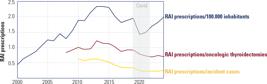
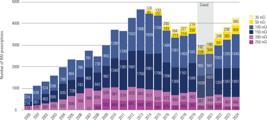
Results: Three distinct phases emerged: (1) 2000-2007, marked by increasing very high-activity RAI use (≥ 200 mCi); (2) 2008-2015, peak utilization with initial diversification (introduction of 30/50 mCi in 2014); and (3) 2016-2024, significant de-escalation, with high/very high-activity prescriptions declining by 34.2% and low-activity use increasing by 163%. By 2024, RAI distribution comprised 15.3% very high-, 67.1% high-, and 17.6% low-activity prescriptions. The RAI/new cases ratio fell sharply from 0.63 (2010) to 0.25 (2024), and RAI/oncologic thyroidectomies dropped from 1.22 (2013) to 0.70 (2024), reflecting more selective prescription.
Conclusion: Brazilian medical practice has increasingly aligned with international DTC guidelines, showing a decline in RAI use and a shift toward low-to-high RAI activities. This suggests broader adoption of risk-adapted strategies. Notwithstanding, high-dose RAI still predominates, pointing that dissemination of standardized treatment protocols could further enhance DTC care within the Brazilian health system.
Keywords:
Differentiated thyroid carcinoma; radioiodine; treatment
 Thumbnail
 Thumbnail
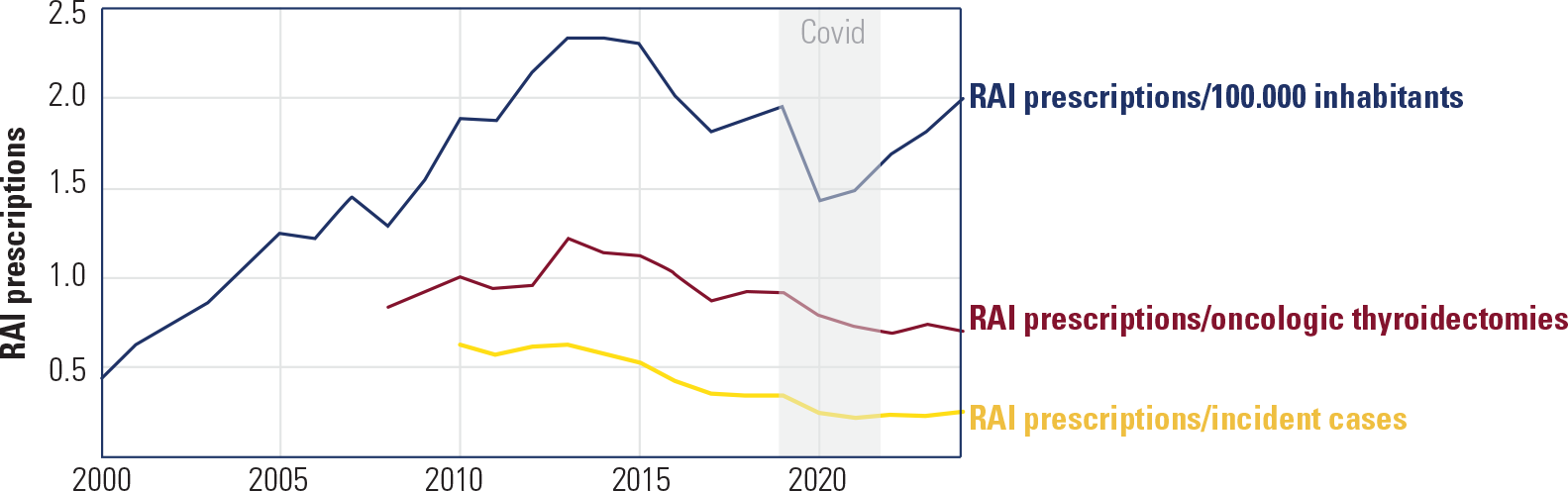 Data sources: DATASUS, INCA and IBGE.
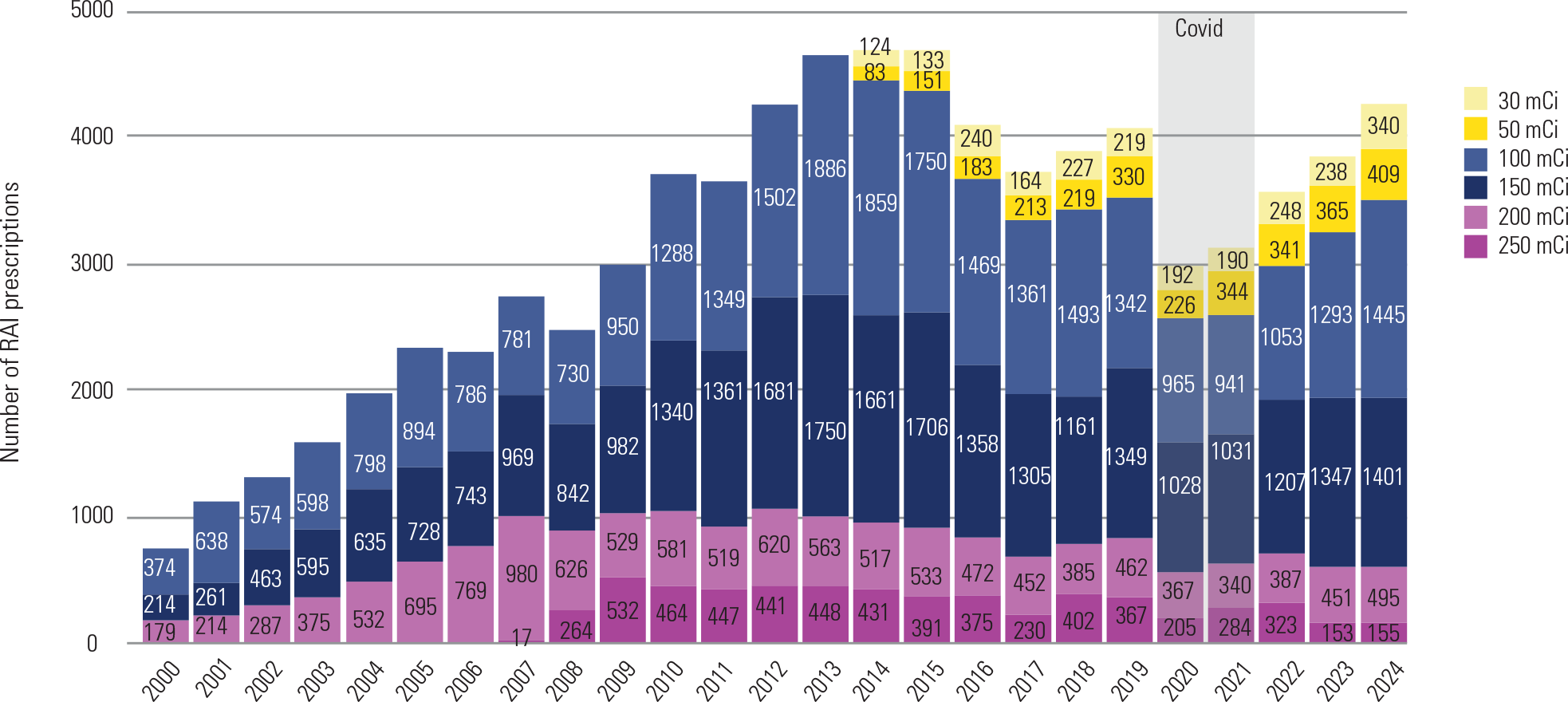 Data source: DATASUS.