
 Role of insulin-regulated aminopeptidase as potential biomarker in insulin resistant polycystic ovary syndrome patients
Objective: To measure serum insulin-regulated aminopeptidase levels in women diagnosed with polycystic ovary syndrome and to investigate their potential contribution of these levels to the development of insulin resistance, which plays a central role in the pathophysiology of polycystic ovary syndrome.
Methods: The study group, recruited between May and December 2021, consisted of 40 patients diagnosed with polycystic ovary syndrome and 40 age-matched healthy controls. Serum insulin-regulated aminopeptidase levels were compared between the groups using the ELISA method.
Results: Serum insulin-regulated aminopeptidase levels were significantly lower in the polycystic ovary syndrome group compared with the control group (p < 0.001). Subparameter assessments revealed that insulin-regulated aminopeptidase levels were even lower in insulin-resistant polycystic ovary syndrome patients (p = 0.001). Moreover, insulin-regulated aminopeptidase levels demonstrated a statistically significant negative correlation with fasting blood glucose, insulin, glycated hemoglobin, and HOMA-IR values.
Conclusion: Serum insulin-regulated aminopeptidase levels were found to be lower in women with polycystic ovary syndrome than those in healthy controls. Furthermore, these levels appear to reflect insulin resistance, a key factor in the pathogenesis of polycystic ovary syndrome. Overall, these findings suggest that insulin-regulated aminopeptidase may serve as a potential biomarker for the identifification of insulin resistance in women with polycystic ovary syndrome.
Keywords:
Polycystic ovary syndrome; Insulin; Insulin resistance
 Thumbnail
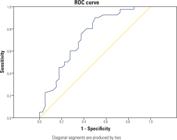
 ROC: Receiver Operating Characteristic.