
 Hemostatic net in cervical and facial surgeries: evidence from a systematic review and meta-analysis
ABSTRACT
Purpose: Hematoma remains the most frequent complication of cervicofacial surgeries. The hemostatic net (HN), a transcutaneous suture designed to minimize dead space and bleeding, has shown promise, but pooled evidence of its safety and efficacy is limited. Thus, we conducted this study to clarify the safety profile and complication rates associated with the use of HN in cervical and facial surgeries.
Methods: A systematic search of MEDLINE, Embase, Scopus, Cochrane, and Web of Science was performed through August 2025. Eligible studies involved adults undergoing cervical and/or facial surgery with HN, with no restrictions on suture caliber or spacing between stitches. The primary outcome was hematoma incidence; secondary outcomes included skin necrosis, seroma, infection, persistent skin marks, patient-reported satisfaction, and other adverse events.
Results: Eleven studies including 3,393 patients (2,748 HN; 645 controls) were analyzed. Single-arm meta-analysis of HN cases showed low pooled rates for hematoma (0.6%; 95% confidence interval 0.4–1.0; low certainty), skin necrosis (0.4%; 95% confidence interval 0.1–1.0; low certainty), seroma (1.5%; 95% confidence interval 0.6–4.0; low certainty), infection (0.1%; 95% confidence interval 0.0–25.5), and persistent skin marks (0.6%; 95% confidence interval 0.2–2.1). Comparative analyses showed no significant difference for hematoma (risk ratio = 0.15; 95% confidence interval 0.01–3.20; very low certainty) or seroma (risk ratio = 1.06; 95% confidence interval 0.41–2.75; low certainty). Patient-reported satisfaction data were scarce and nonspecific.
Conclusion: The HN is a safe technique with very low complication rates, though evidence of superiority over standard surgery remains inconclusive due to limited certainty of meta-analyzed data, heterogeneity of surgical procedures, and the paucity of patient-reported outcomes.
Key words
Rhytidectomy; Hemostasis; Systematic Reviews as Topic; Meta-Analysis as Topic
Introduction
Facial and cervical plastic surgeries ranked in 2024 as the most frequently performed group of aesthetic procedures worldwide, surpassing five million cases, mainly through eyelid surgery and rhytidectomy1, which restore a youthful appearance by refining contours and correcting facial laxity2-6. This surgery alone accounted for over 1.7 million procedures worldwide, with 115,124 procedures performed in the United States of America1,7. Cervical and facial surgeries often involve extensive skin detachment. Therefore, postoperative hematoma represents a major clinical concern and remains the most frequent complication, potentially leading to venous congestion, permanent scarring, and flap necrosis if not promptly treated8-12.
Despite advancements in perioperative care, including systolic blood pressure control8, surgical drains8,13-16, compression dressings15,17-19, and meticulous intraoperative hemostasis20-22, hematoma continues to occur, with incidence reported in 0 to 15% of cases8,23. This variability underscores the absence of a consistently effective preventive strategy.
In this context, the hemostatic net (HN), a surgical technique developed by Auersvald et al.24,25, has emerged as a novel approach to stabilize tissue planes, minimize dead space, and enhance hemostasis, thereby reducing the risk of postoperative bleeding8,26-29. Although early reports suggest favorable outcomes, the evidence lacks pooled analyses to confirm its benefits over established methods and estimate the real-world incidence of complications following this technique8,27-31. To address this gap, the present systematic review and meta-analysis evaluated the efficacy of the HN in reducing postoperative complications following facial and cervical plastic surgeries.
Definition of hemostatic net
The HN, as originally described by Auersvald and Auersvald24,25, consists of a continuous transcutaneous suture that anchors the skin flap to the underlying fibroconnective tissue of the superficial musculoaponeurotic system and platysma24,28,31. The suture is passed percutaneously in a crisscross fashion, producing an external grid with the characteristic appearance of a fishing net24,28,31. This external pattern corresponds to the internal fixation points, which stabilize the flap, obliterate dead space, and provide homogeneous compression across the undermined area8,24,26-29,32,33. By limiting shear forces and securing the flap against deeper tissues, the technique enhances hemostasis, prevents fluid accumulation, and thereby reduces the incidence of postoperative hematoma and seroma8,24,26-29,32,33.
Methods
This systematic review and meta-analysis was conducted in accordance with the Cochrane Handbook for Systematic Reviews of Interventions34 and the PRISMA Statement guidelines35. The protocol was prospectively registered in PROSPERO under the number CRD420251143364.
Search strategy
A systematic literature search was performed for studies published up to August 2025 in MEDLINE, Embase, Scopus, Cochrane, and Web of Science databases. Search terms combined keywords related to HN in facial or cervical surgeries, including their synonyms and Medical Subject Headings (MeSH) terms.
Eligibility criteria
Inclusion criteria
The authors included studies that met the following criteria:
-
Involved adult patients (≥ 18 years old) of both genders, undergoing any cervical or facial surgery;
-
Reported the use of an external HN technique, following our previous definition (external transcutaneous running quilting sutures, regardless of suture caliber, timing of removal, spacing between stitches, or specific anatomical application);
-
Any follow-up duration was accepted;
-
Eligible study designs included randomized trials, observational studies, and case series.
Exclusion criteria
The authors excluded the following studies and patient groups:
-
Cadaveric or animal studies;
-
Studies using quilting sutures other than the external HN;
-
Individual case reports, reviews, editorials, and letters without original data;
-
Studies with overlapping populations. In cases in which multiple articles reported data from the same patient cohort, we included only the study with the largest sample size. An exception was made when one of the overlapping studies was a controlled trial and another was an uncontrolled study. In these situations, both were included in the systematic review, but only one was included in each quantitative analysis—the larger cohort was used for the single-arm meta-analysis, and the controlled study was used for the comparative meta-analysis, ensuring no overlapping at all.
Screening and study selection
The initial screening was conducted in Rayyan (Rayyan Systems Inc., Qatar), after deduplication in EndNote Online 20 (Clarivate, PA, United States of America). Two reviewers independently assessed titles and abstracts, with discrepancies resolved by a third reviewer. Full-text articles were also independently reviewed by the same two authors, and disagreements were resolved by the third one. No automation or artificial intelligence tools were applied at any step of the process.
Endpoints
The primary endpoint was the incidence of postoperative hematoma, while secondary endpoints included skin necrosis, seroma, infection, persistent skin markings, patient-reported satisfaction, and any other adverse events reported by included studies (such as congestion, transient neuromuscular deficits, and other ones). Complication outcomes were collected as defined in the original studies.
Data extraction
To extract the data from the articles, two independent authors used a predefined protocol. The variables included demographics, surgery details, HN techniques, follow-up, and clinical outcomes.
Articles quality assessment
Risk of bias was assessed according to study design: randomized controlled trials (RCTs) with the Cochrane RoB 2 tool36; non-randomized controlled studies with ROBINS-I37; and case series with the Joanna Briggs Institute (JBI) Checklist for Case Series38. Two investigators performed all assessments independently, resolving disagreements by discussion and consensus.
Statistical analysis
For pooled proportion analysis, a single-arm model was conducted using the generalized linear mixed model. Pooled estimates were exposed with their respective 95% confidence intervals (95%CI). The comparative meta-analyses were performed using pooled risk ratios (RR) with 95%CI under random-effects models to account for clinical and methodological variability. Statistical significance was defined as a two-sided p < 0.05. Heterogeneity was assessed using the I2 statistic, and values ≥ 30% were used as a prespecified threshold to trigger sensitivity analyses (leave-one-out [LOO] and meta-regressions) to explore potential sources of variability. All analyses were conducted in R (version 4.5.0; R Foundation for Statistical Computing, Vienna, Austria) using RStudio (Posit, PBC, Boston, MA, United States of America).
Certainty of evidence was assessed using the Grading of Recommendations Assessment, Development and Evaluation (GRADE)39 approach.
Results
Study selection and characteristics
After conducting the systematic search, 452 articles were initially identified. Following deduplication, 204 studies remained. After screening titles, abstracts, and full texts, 11 studies6,8,28,29,40-46 met the eligibility criteria and were included in this review (Fig. 1). Collectively, these studies encompassed 3,393 patients, of whom 2,748 were allocated to the HN group and 645 to the control group. A detailed summary of the baseline characteristics of the included studies is presented in Table 1, and the clinical endpoints reported are outlined in Table 2.

PRISMA 2020 flow diagram for new systematic reviews which included searches of databases and registers only.
Primary endpoint
The single-arm meta-analysis of postoperative hematoma included 10 studies6,8,29,40-46, totaling 2,343 patients treated with a HN after cervical and/or facial surgery. The pooled incidence was 0.6% (95%CI, 0.4–1.0%; I2 = 0%; low certainty) (Fig. 2), with no heterogeneity.

The comparative meta-analysis comprised five studies8,28,29,42,44 with 1,542 patients (897 with HN and 645 without). The initial pooled estimate revealed high heterogeneity and no significant difference between groups (RR = 0.15; 95%CI 0.01–3.20; p = 0.23; I2 = 73.2%; very low certainty) (Fig. 3). A LOO sensitivity analysis showed that Ismail and Ghoraba’s8 omission yielded a significant effect favoring the HN (RR = 0.048; 95%CI 0.003–0.871; p = 0.04), while heterogeneity remained high (I2 = 70.8%) (Fig. 4).


Given the absence of heterogeneity in the single-arm analysis, we hypothesized that variability in the comparative analysis stemmed mainly from control arms, in which hematoma rates varied widely. This variability likely reflects differences across studies in perioperative management protocols, surgical technique, and hematoma definitions within the control groups, rather than inconsistency in the performance of the hemostatic net itself. A meta-regression using control-group hematoma incidence (Fig. 5) confirmed a significant association with the outcome (β = -36.5; standard error = 14.1; p = 0.009) and reduced the residual variance (τ2) to 0, indicating that this factor fully explained the heterogeneity. R2 was not computed because the base model’s between-study variance was near 0.

Meta-regression of hematoma: hemostatic net versus control—control-group hematoma incidence as the covariate.
Secondary endpoints
The single-arm meta-analysis of skin necrosis included seven studies8,28,41,42,44-46, comprising 1,062 patients treated with HN. The pooled incidence was 0.4% (95%CI 0.1–1.0%; I2 = 0%; low certainty) (Fig. 6), indicating no heterogeneity. The comparative meta-analysis for this endpoint encompassed four studies8,28,42,44 with 879 patients (593 with HN and 286 without). Among these, three studies reported zero events in both groups, so only a single study contributed meaningfully to the pooled effect estimate. Consequently, the pooled analysis favored the HN group (RR = 0.15; 95%CI 0.04–0.58; p = 0.006; low certainty) (Fig. 7), but heterogeneity statistics (I2 and τ2) could not be calculated.


The single-arm meta-analysis of seroma included seven studies8,40-42,44-46, comprising 1,676 patients treated with HN. The pooled incidence was 1.5% (95%CI 0.6–4.0%; I2 = 74.8%; low certainty) (Fig. 8), with high heterogeneity. Sensitivity analysis using the LOO method revealed that omitting Ismail and Ghoraba8 markedly reduced heterogeneity, yielding a pooled incidence of 1.1% (95%CI 0.7–1.7%; I2 = 7.6%) (Fig. 9). The comparative meta-analysis encompassed three studies8,42,44 including 354 patients (188 with HN and 166 without) and showed no significant difference between groups (RR = 1.06; 95%CI 0.41–2.75; p = 0.90; I2 = 0.0%; low certainty) (Fig. 10).

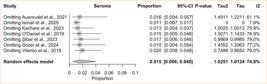

The single-arm meta-analysis of infection included five studies8,41,43,44,46, with 317 patients treated with HN, and showed an incidence of 0.1% (95%CI 0.0–25.5%; I2 = 0%) (Fig. 11). For persistent skin marks, the single-arm meta-analysis of seven studies6,28,41,42,44,45 comprising 1,221 patients demonstrated an incidence of 0.6% (95%CI 0.2–2.1%; I2 = 28.8%) (Fig. 12).


The qualitative synthesis of patient-reported satisfaction included data from four studies. Two of these addressed only patient concerns regarding the disappearance of skin marks after HN application, whereas the other two reported overall satisfaction with the surgical outcome rather than satisfaction specifically related to the net, as presented in Table 2.
Finally, all but one29 study reported other adverse events. Occasional cases of ischemia, swelling, congestion, and transient neuromuscular disturbances were described among patients treated with HN. Table 2 provides a detailed overview of these additional events.
Quality assessment
Risk of bias was assessed using appropriate tools for each study design. For RCTs, the Cochrane Risk of Bias 2.0 tool36 was applied: the study by Ismail and Ghoraba8 demonstrated a rigorous methodological process, being evaluated as low risk of bias (Fig. 13).

Observational studies, such as retrospective cohorts and non-randomized prospective studies, were evaluated using the ROBINS-I tool37. Most showed moderate risk of bias28,29,45, mainly due to the absence of demographic data, while two studies, by Kachare et al.41 and Şibar et al44, were evaluated as low risk (Fig. 14).

Case series studies were assessed using the JBI Critical Appraisal Checklist for Case Series38. All articles6,40,42,43,46 were considered as low risk of bias (Fig. 15).

Certainty of evidence
The GRADE39 assessment is presented in Table 3. Because most of the included studies are non-randomized, the certainty of evidence could not be rated higher than low level of certainty.
Discussion
Despite a broad range of preventive strategies, including strict blood-pressure control, optimized pain management, local infiltration of vasoconstrictor, careful patient selection, and the use of quilting sutures, hematoma remains the most common postoperative complication of facial and cervical surgeries17,18,20,21,32,33,47-52. Quilting sutures, first described as early as 3400 BCE26 and introduced to plastic surgery in 197953, gained wide acceptance after Baroudi and Ferreira54, demonstrated a significant reduction in seroma rates in abdominoplasty in 1998. By obliterating dead space, these stitches are hypothesized to lower the risk of both seroma and hematoma6,8,26,28,29,32,33,40-46,55-58. In 2003, Pollock and Pollock55 adapted this concept to rhytidectomy.
Seeking to avoid the potential skin irregularities associated with internal quilting, Auersvald and Auersvald24,25 introduced the HN in 2012, a continuous external suture resembling a fishing net, and reported a dramatic reduction in hematoma incidence from 14 to 0%. Since then, numerous studies have evaluated this technique with varying results.
Two systematic reviews have addressed quilting suture. However, these reviews show some limitations. Ballan et al.59 focused exclusively on quilting sutures in rhytidectomy and published before several pivotal studies were available. Caimi et al.60 incorporated more recent data but limited inclusion to facelifts and only four series using external HN, which restricts generalizability61. To address these gaps, we performed a comprehensive systematic review and meta-analysis of 11 studies on HN6,8,28,29,40-46 spanning both cervical and facial procedures, whether aesthetic or reconstructive.
Hematoma remains a critical concern after cervicofacial surgery, carrying risks that range from aesthetic compromise to life-threatening airway obstruction when located in the cervical region17,23,47,62-64. Preventing this complication is therefore paramount. In our analysis, the incidence of hematoma among patients treated with a HN was very low (0.6%), substantially below rates previously reported in patients without HN23,47 and consistent with prior evidence on internal quilting sutures32,33. This concordance suggests that the principal protective effect arises from mechanical obliteration of dead space rather than from whether the suture is external or internal.
In comparative analyses, the pooled estimate showed no significant difference in hematoma risk between patients with or without HN, except when the only randomized trial8 was excluded in LOO sensitivity analysis, which yielded a significant difference favoring net use. The dependence of statistical significance on the omission of this single RCT raises the possibility of publication bias in the non-randomized series. Such bias could not be formally assessed because funnel plots and Egger’s test are not recommended when fewer than 10 studies are available34. Overall heterogeneity for this endpoint was high and persisted despite LOO analysis. Given the negligible heterogeneity observed in the single-arm analysis of patients receiving the HN, we hypothesized that variability originated primarily in the control groups, in which hematoma incidence ranged from 0 to 14%. Meta-regression using control-group hematoma incidence as a moderator confirmed this hypothesis: the residual between-study variance (τ2) dropped to 0, indicating that this single factor fully accounted for the observed heterogeneity.
Skin necrosis is another recognized concern in cervicofacial surgery, as in any procedure involving skin undermining. Nevertheless, facial procedures generally carry a lower risk of ischemia or necrosis because of the region’s rich vascularity65,66. Theoretically, the external compression of a HN could compromise cutaneous blood supply or venous drainage, increasing the risk of ischemia or necrosis. However, recent evidence demonstrates that the net does not impair blood flow67, a finding consistent with our single-arm meta-analysis, which showed a very low incidence of necrosis (0.4%) with no heterogeneity. Our comparative meta-analysis even suggested a reduced risk of necrosis in the HN group, though this result must be interpreted cautiously because only one study contributed events, while the other three reported none in either arm.
Seroma after cervicofacial surgery is generally rare47,68, and our data confirm this. The single-arm analysis revealed a pooled incidence of 1.5% among patients treated with HN. Heterogeneity was initially high but dropped dramatically to 7.6%, and the incidence to 1.1%, after the exclusion of Ismail and Ghoraba8. This again raises concern about potential publication bias in the non-randomized studies and may also reflect differences in surgical techniques or in how seromas were diagnosed and reported.
Patient-reported outcomes (PROs) were poorly documented across the included literature. Only four of the 11 studies provided any PRO data: two simply noted nonspecific concerns regarding the disappearance of skin marks, and the other two reported overall satisfaction with the surgical result (gliding brow lift) rather than with the net itself. This paucity of PRO data is striking because PROs are widely recognized as essential in evaluating results of cervicofacial plastic surgery, whether aesthetic or reconstructive. Such measures capture dimensions not fully addressed by objective clinical metrics, such as satisfaction with appearance, psychosocial impact, quality of life, and overall well-being69-73. Given these gaps and the reported concerns about transient skin marks, we believe the development of a dedicated patient-reported satisfaction scale specific to the HN would substantially strengthen future evidence.
Infections are uncommon after face or neck lifts74,75, and our findings mirror this pattern, with a pooled incidence of only 0.1% in patients treated with HN. Early postoperative skin marks are common, as noted by Wongkietkachorn and Wongkietkachorn6, but approximately 90% of patients are free of marks by the end of the first postoperative month. Our single-arm analysis found a low incidence of persistent skin marks (0.6%), indicating that the HN provides hemostatic benefits without imparting a meaningful long-term aesthetic risk.
This review has some limitations. The scarcity of RCTs in plastic surgery was well recognized by Song and Chung76, and our meta-analysis included only one RCT8, which we rated as low risk of bias. For two outcomes, this trial acted as an outlier, raising concerns about potential publication bias among the non-randomized studies—which could not be formally evaluated in accordance with Cochrane34 guidance. Furthermore, substantial clinical and technical heterogeneity was observed across the included studies. Technical aspects such as suture material and caliber, spacing between stitches, precise anatomical placement, and dissection plane varied widely and were inconsistently reported, precluding systematic analysis. Although these factors—and the inherently operator-dependent nature of the technique—may influence outcomes, their impact could not be formally evaluated in the present analysis. Similarly, the distinction between minor and major adverse events could not be consistently accounted for, as most studies did not differentiate between events requiring surgical reintervention and those managed conservatively in an outpatient setting, including but not limited to hematoma.
Importantly, GRADE39 assessments indicated low to very low certainty for all analyzed outcomes, reflecting the predominance of non-randomized evidence, and the heterogeneity introduced into the controlled meta-analyses by historical control groups in some studies, as demonstrated by our meta-regression. Operative time was infrequently reported, and the potential impact of the hemostatic net on surgical duration remains unclear, warranting further investigation in future studies. Finally, while generally safe, the technique is not without inherent risks: all but one of the included studies documented adverse events beyond those formally analyzed, such as transient ischemia, congestion, swelling, and neuromuscular disturbances, likely reflecting the intrinsic challenges of an external quilting method applied without direct visualization of underlying structures and inevitably exerting some degree of skin compression, even when tension is low.
Conclusion
The HN appears safe, with consistently low rates of hematoma, skin necrosis, and other complications. However, proving its superiority over standard surgery remains challenging due to the overall low certainty of evidence and the heterogeneity between the analyzed surgical procedures. Moreover, the lack of PROs highlights the need to develop dedicated PRO instruments to assess satisfaction and quality-of-life impacts in patients undergoing cervicofacial procedures with HN.
Acknowledgements
Not applicable.
Funding
Declaration of use of artificial intelligence tools
Data availability statement
All data sets were generated or analyzed in the current study.
References
-
1 International Society of Aesthetic Plastic Surgery. ISAPS international survey on aesthetic/cosmetic procedures performed in 2024: full report. Hanover; 2024 [cited 2026 Mar 16]. Available from: https://www.isaps.org/discover/about-isaps/global-statistics/global-survey-2024-full-report-and-press-releases/
» https://www.isaps.org/discover/about-isaps/global-statistics/global-survey-2024-full-report-and-press-releases/ -
2 Auersvald A, Auersvald LA, Uebel CO. Subplatysmal necklift: a retrospective analysis of 504 patients. Aesthet Surg J. 2017;37(1):1–11. https://doi.org/10.1093/asj/sjw107
» https://doi.org/10.1093/asj/sjw107 -
3 Wan DM, Small KH, Barton FE. Face lift. Plast Reconstr Surg. 2015;136(5):676e–89e. https://doi.org/10.1097/PRS.0000000000001695
» https://doi.org/10.1097/PRS.0000000000001695 -
4 Auersvald A, Auersvald LA. Management of the submandibular gland in neck lifts: indications, techniques, pearls, and pitfalls. Clin Plast Surg. 2018;45(4):507–25. https://doi.org/10.1016/j.cps.2018.06.001
» https://doi.org/10.1016/j.cps.2018.06.001 - 5 Connell BF. Neck contour deformities. The art, engineering, anatomic diagnosis, architectural planning, and aesthetics of surgical correction. Clin Plast Surg. 1987;14(4):683–92.
-
6 Wongkietkachorn A, Wongkietkachorn N. The use of the hemostatic net in Asian population: hyperpigmentation and the duration required for hemostatic net marking to disappear. Aesthetic Plast Surg. 2025;49(3):627–34. https://doi.org/10.1007/s00266-024-04561-6
» https://doi.org/10.1007/s00266-024-04561-6 -
7 American Society of Plastic Surgeons. 2024 ASPS procedural statistics release [Internet]. Arlington Heights: American Society of Plastic Surgeons; 2024 [cited 2026 Mar 16]. Available from: https://www.plasticsurgery.org/documents/news/statistics/2024/plastic-surgery-statistics-report-2024.pdf
» https://www.plasticsurgery.org/documents/news/statistics/2024/plastic-surgery-statistics-report-2024.pdf -
8 Ismail M, Ghoraba S. Hemostatic net versus surgical drain after deep plane facelift surgery: a prospective randomized controlled trial. Aesthetic Plast Surg. 2025;49(16):4572–8. https://doi.org/10.1007/s00266-025-04745-8
» https://doi.org/10.1007/s00266-025-04745-8 -
9 Moyer JS, Baker SR. Complications of rhytidectomy. Facial Plast Surg Clin N Am. 2005;13(3):469–78. https://doi.org/10.1016/j.fsc.2005.04.005
» https://doi.org/10.1016/j.fsc.2005.04.005 -
10 Baker DC, Stefani WA, Chiu ES. Reducing the incidence of hematoma requiring surgical evacuation following male rhytidectomy: a 30-year review of 985 cases. Plast Reconstr Surg. 2005;116(7):1973–85; discussion 1986–7. https://doi.org/10.1097/01.prs.0000191182.70617.e9
» https://doi.org/10.1097/01.prs.0000191182.70617.e9 -
11 Baker TJ, Gordon HL. Complications of rhytidectomy. Plast Reconstr Surg. 1967;40(1):31–9. https://doi.org/10.1097/00006534-196707000-00004
» https://doi.org/10.1097/00006534-196707000-00004 -
12 Batniji RK. Complications/sequelae of neck rejuvenation. Facial Plast Surg Clin N Am. 2014;22(2):317–20. https://doi.org/10.1016/j.fsc.2014.01.007
» https://doi.org/10.1016/j.fsc.2014.01.007 -
13 Perkins SW, Williams JD, Macdonald K, Robinson EB. Prevention of seromas and hematomas after face-lift surgery with the use of postoperative vacuum drains. Arch Otolaryngol Head Neck Surg. 1997;123(7):743–5. https://doi.org/10.1001/archotol.1997.01900070087014
» https://doi.org/10.1001/archotol.1997.01900070087014 -
14 Niamtu J III. Facelift drains and dressings: to be or not to be? Dermatol Surg. 2012;38(5):793–6. https://doi.org/10.1111/j.1524-4725.2011.02286.x
» https://doi.org/10.1111/j.1524-4725.2011.02286.x -
15 Kleinberger AJ, Spiegel JH. What is the best method for minimizing the risk of hematoma formation after rhytidectomy? Laryngoscope. 2015;125(3):534–6. https://doi.org/10.1002/lary.24685
» https://doi.org/10.1002/lary.24685 -
16 Khansa I, Khansa L, Meyerson J, Janis JE. Optimal use of surgical drains: evidence-based strategies. Plast Reconstr Surg. 2018;141(6):1542–9. https://doi.org/10.1097/PRS.0000000000004413
» https://doi.org/10.1097/PRS.0000000000004413 -
17 Jones BM, Grover R. Avoiding hematoma in cervicofacial rhytidectomy: a personal 8-year quest. Reviewing 910 patients. Plast Reconstr Surg. 2004;113(1):381–7; discussion 388–90. https://doi.org/10.1097/01.PRS.0000097291.15196.78
» https://doi.org/10.1097/01.PRS.0000097291.15196.78 -
18 Beer GM, Goldscheider E, Weber A, Lehmann K. Prevention of acute hematoma after face-lifts. Aesthetic Plast Surg. 2010;34(4):502–7. https://doi.org/10.1007/s00266-010-9488-8
» https://doi.org/10.1007/s00266-010-9488-8 -
19 Tiourin E, Barton N, Janis JE. Methods for minimizing bleeding in facelift surgery: an evidence-based review. Plast Reconstr Surg Glob Open. 2021;9(8):e3765. https://doi.org/10.1097/GOX.0000000000003765
» https://doi.org/10.1097/GOX.0000000000003765 -
20 Stewart CM, Bassiri-Tehrani B, Jones HE, Nahai F. Evidence of hematoma prevention after facelift. Aesthet Surg J. 2024;44(2):134–43. https://doi.org/10.1093/asj/sjad247
» https://doi.org/10.1093/asj/sjad247 -
21 Ganesh Kumar N, Sherif R, Schultz K, Hidalgo DA, Stuzin JM, Rohrich RJ. Role of selective neck sutures in face lifts. Plast Reconstr Surg. 2025;156(2):194e–7e. https://doi.org/10.1097/PRS.0000000000011968
» https://doi.org/10.1097/PRS.0000000000011968 -
22 Schroeder RJ II, Langsdon PR. Effect of local tranexamic acid on hemostasis in rhytidectomy. Facial Plast Surg Aesthetic Med. 2020;22(3):195–9. https://doi.org/10.1089/fpsam.2020.0061
» https://doi.org/10.1089/fpsam.2020.0061 - 23 Niamtu J III. Expanding hematoma in face-lift surgery: literature review, case presentations, and caveats. Dermatol Surg. 2005;31(9 Pt 1):1134–44; discussion 1144.
-
24 Auersvald A, Auersvald L, Biondo-Simões ML. Hemostatic net: an alternative for the prevention of hematoma in rhytidoplasty. Rev Bras Cir Plást. 2012;27(1):22–30. https://doi.org/10.1590/S1983-51752012000100006
» https://doi.org/10.1590/S1983-51752012000100006 - 25 Auersvald A, Auersvald L. Rede hemostática para a prevenção de hematoma e seroma em cirurgia plástica. Arq Catarin Med. 2012;41(Suppl.1):86–8.
-
26 O’Daniel TG, Kachare MD. Evolution of the surgical net. Facial Plast Surg. 2025;41(1):70–81. https://doi.org/10.1055/a-2334-4448
» https://doi.org/10.1055/a-2334-4448 -
27 Pellini E, Finocchi V, Albanese R. Innovations in rhytidoplasty: 480 cases validating the efficacy of the inner hemostatic net. Aesthet Surg J. 2025;45(9):875–81. https://doi.org/10.1093/asj/sjaf108
» https://doi.org/10.1093/asj/sjaf108 -
28 Auersvald A, Auersvald LA. Hemostatic net in rhytidoplasty: an efficient and safe method for preventing hematoma in 405 consecutive patients. Aesthetic Plast Surg. 2014;38(1):1–9. https://doi.org/10.1007/s00266-013-0202-5
» https://doi.org/10.1007/s00266-013-0202-5 -
29 Janssen TJ, Maheshwari K, Sivadasan A, Waterhouse N. Hemostatic net in facelift surgery: a 5-year single-surgeon experience. Aesthet Surg J. 2023;43(10):1106–11. https://doi.org/10.1093/asj/sjad097
» https://doi.org/10.1093/asj/sjad097 -
30 Nahai F, Bassiri-Tehrani B, Santosa KB. Hematomas and the facelift surgeon: it’s time for us to break up for good. Aesthet Surg J. 2023;43(10):1207–9. https://doi.org/10.1093/asj/sjad225
» https://doi.org/10.1093/asj/sjad225 -
31 Auersvald A, Auersvald LA. Commentary on: quilting sutures in rhytidectomy: a systematic review of the literature. Aesthet Surg J. 2020;40(11):1165–7. https://doi.org/10.1093/asj/sjaa014
» https://doi.org/10.1093/asj/sjaa014 -
32 Cabas Neto J, Rodriguez Fernandez DE, Boles M. Reducing the incidence of hematomas in cervicofacial rhytidectomy: new external quilting sutures and other ancillary procedures. Aesthetic Plast Surg. 2013;37(5):1034–9. https://doi.org/10.1007/s00266-013-0084-6
» https://doi.org/10.1007/s00266-013-0084-6 -
33 Cabas Neto J, Fernandez D, Boles M. A new technique of external quilting sutures: their importance in preventing hematomas in cervicofacial rhytidectomies. Plast Reconstr Surg. 2013;131(1):121e. https://doi.org/10.1097/PRS.0b013e318272a1cc
» https://doi.org/10.1097/PRS.0b013e318272a1cc - 34 Higgins J. Cochrane Handbook for Systematic Reviews of Interventions. Version 6.5. Cochrane Handbook for Systematic Reviews of Interventions; 2024.
-
35 Page MJ, McKenzie JE, Bossuyt PM, Boutron I, Hoffmann TC, Mulrow CD, Shamseer L, Tetzlaff JM, Akl EA, Brennan SE, Chou R, Glanville J, Grimshaw JM, Hróbjartsson A, Lalu MM, Li T, Loder EW, Mayo-Wilson E, McDonald S, McGuinness LA, Stewart LA, Thomas J, Tricco AC, Welch VA, Whiting P, Moher D. The PRISMA 2020 statement: an updated guideline for reporting systematic reviews. BMJ. 2021;372:n71. https://doi.org/10.1136/bmj.n71
» https://doi.org/10.1136/bmj.n71 -
36 Sterne JAC, Savović J, Page MJ, Elbers RG, Blencowe NS, Boutron I, Cates CJ, Cheng HY, Corbett MS, Eldridge SM, Emberson JR, Hernán MA, Hopewell S, Hróbjartsson A, Junqueira DR, Jüni P, Kirkham JJ, Lasserson T, Li T, McAleenan A, Reeves BC, Shepperd S, Shrier I, Stewart LA, Tilling K, White IR, Whiting PF, Higgins JPT. RoB 2: a revised tool for assessing risk of bias in randomised trials. BMJ. 2019;366:l4898. https://doi.org/10.1136/bmj.l4898
» https://doi.org/10.1136/bmj.l4898 -
37 Sterne JA, Hernán MA, Reeves BC, Savović J, Berkman ND, Viswanathan M, Henry D, Altman DG, Ansari MT, Boutron I, Carpenter JR, Chan AW, Churchill R, Deeks JJ, Hróbjartsson A, Kirkham J, Jüni P, Loke YK, Pigott TD, Ramsay CR, Regidor D, Rothstein HR, Sandhu L, Santaguida PL, Schünemann HJ, Shea B, Shrier I, Tugwell P, Turner L, Valentine JC, Waddington H, Waters E, Wells GA, Whiting PF, Higgins JP. ROBINS-I: a tool for assessing risk of bias in non-randomised studies of interventions. BMJ. 2016;355:i4919. https://doi.org/10.1136/bmj.i4919
» https://doi.org/10.1136/bmj.i4919 -
38 Munn Z, Barker TH, Moola S, Tufanaru C, Stern C, McArthur A, Stephenson M, Aromataris E. Methodological quality of case series studies: an introduction to the JBI critical appraisal tool. JBI Evid Synth. 2020;18(10):2127–33. https://doi.org/10.11124/JBISRIR-D-19-00099
» https://doi.org/10.11124/JBISRIR-D-19-00099 -
39 Guyatt GH, Oxman AD, Vist GE, Kunz R, Falck-Ytter Y, Alonso-Coello P, Schünemann HJ; GRADE Working Group. GRADE: an emerging consensus on rating quality of evidence and strength of recommendations. BMJ. 2008;336:924. https://doi.org/10.1136/bmj.39489.470347.AD
» https://doi.org/10.1136/bmj.39489.470347.AD -
40 Auersvald LA, Auersvald A. Sternohyoid muscles plication and sternocleidomastoid muscles rejuvenation in neck lift: a retrospective study of 1,019 consecutive patients. Plast Aesthetic Res. 2021;8:4. https://doi.org/10.20517/2347-9264.2020.187
» https://doi.org/10.20517/2347-9264.2020.187 -
41 Kachare MD, Moore AC, Little J, O’Daniel TG. Establishment of safety of hemostatic net application utilizing laser-assisted fluorescence angiography with SPY-Q software analysis. Aesthet Surg J. 2023;43(6):623–30. https://doi.org/10.1093/asj/sjad007
» https://doi.org/10.1093/asj/sjad007 -
42 O’Daniel T, Auersvald A, Auersvald L. Hemostatic net in facelift surgery. MKG-Chir. 2019;12(2):78–85. https://doi.org/10.1007/s12285-019-0195-4
» https://doi.org/10.1007/s12285-019-0195-4 -
43 Orra S, Bald M, Wagner G, Grotting JC. The gliding brow lift: an analysis of outcomes and maintenance of lift in a single surgeon’s practice. Aesthet Surg J. 2025;45(3):225–31. https://doi.org/10.1093/asj/sjae224
» https://doi.org/10.1093/asj/sjae224 -
44 Şibar S, Erdal AI, Deniz E, Kılıç Ö, Tuncer S. Comparison of the effectiveness and safety of the “endoscope-assisted polypropylene mesh lift” and “gliding brow lift” techniques for the treatment of lateral brow ptosis. J Plast Reconstr Aesthet Surg. 2023;83:455–62. https://doi.org/10.1016/j.bjps.2023.04.079
» https://doi.org/10.1016/j.bjps.2023.04.079 -
45 Sozer SO, Sibar S, Kachare MD. Progressive contouring of the platysma with barbed sutures. Aesthet Surg J. 2024;44(5):449–62. https://doi.org/10.1093/asj/sjad362
» https://doi.org/10.1093/asj/sjad362 -
46 Viterbo F, Auersvald A, O’Daniel TG. Gliding brow lift (GBL): a new concept. Aesthetic Plast Surg. 2019;43(6):1536–46. https://doi.org/10.1007/s00266-019-01486-3
» https://doi.org/10.1007/s00266-019-01486-3 -
47 Griffin JE, Jo C. Complications after superficial plane cervicofacial rhytidectomy: a retrospective analysis of 178 consecutive facelifts and review of the literature. J Oral Maxillofac Surg. 2007;65(11):2227–34. https://doi.org/10.1016/j.joms.2006.10.075
» https://doi.org/10.1016/j.joms.2006.10.075 -
48 Prakasam S, Stein K, Lee MK, Rampa S, Nalliah R, Allareddy V, Allareddy V. Prevalence and predictors of complications following facial reconstruction procedures. Int J Oral Maxillofac Surg. 2016;45(6):735–42. https://doi.org/10.1016/j.ijom.2015.12.020
» https://doi.org/10.1016/j.ijom.2015.12.020 -
49 Bassiri-Tehrani B, Abi-Rafeh J, Baker NF, Kerendi AN, Nahai F. Systolic blood pressure less than 120 mmHg is a safe and effective method to minimize bleeding after facelift surgery: a review of 502 consecutive cases. Aesthet Surg J. 2023;43(12):1420–8. https://doi.org/10.1093/asj/sjad228
» https://doi.org/10.1093/asj/sjad228 -
50 Moris V, Bensa P, Gerenton B, Rizzi P, Cristofari S, Zwetyenga N, Guilier D. The cervicofacial lift under pure local anaesthesia diminishes the incidence of post-operative haematoma. J Plast Reconstr Aesthet Surg. 2019;72(5):821–9. https://doi.org/10.1016/j.bjps.2018.10.046
» https://doi.org/10.1016/j.bjps.2018.10.046 -
51 Maricevich MA, Adair MJ, Maricevich RL, Kashyap R, Jacobson SR. Facelift complications related to median and peak blood pressure evaluation. Aesthetic Plast Surg. 2014;38(4):641–7. https://doi.org/10.1007/s00266-014-0353-z
» https://doi.org/10.1007/s00266-014-0353-z -
52 Cason RW, Avashia YJ, Shammas RL, Savetsky IL, Rohrich RJ. Perioperative approach to reducing hematoma during rhytidectomy: what does the evidence show? Plast Reconstr Surg. 2021;147(6):1297–309. https://doi.org/10.1097/PRS.0000000000007943
» https://doi.org/10.1097/PRS.0000000000007943 -
53 Mehta HK. A new method of full thickness skin graft fixation. Br J Ophthalmol. 1979;63(2):125–8. https://doi.org/10.1136/bjo.63.2.125
» https://doi.org/10.1136/bjo.63.2.125 -
54 Baroudi R, Ferreira CA. Seroma: how to avoid it and how to treat it. Aesthet Surg J. 1998;18(6):439–41. https://doi.org/10.1016/S1090-820X(98)70073-1
» https://doi.org/10.1016/S1090-820X(98)70073-1 -
55 Pollock H, Pollock TA. Management of face lifts with progressive tension sutures. Aesthet Surg J. 2003;23(1):28–33. https://doi.org/10.1016/S1090-820X(03)90020-3
» https://doi.org/10.1016/S1090-820X(03)90020-3 -
56 Pollock H, Pollock T. Progressive tension sutures: a technique to reduce local complications in abdominoplasty. Plast Reconstr Surg. 2000;105(7):2583–6; discussion 2587–8. https://doi.org/10.1097/00006534-200006000-00047
» https://doi.org/10.1097/00006534-200006000-00047 -
57 Hudson DA. The quilting suture: its application in face lifts. Plast Reconstr Surg. 2010;126(2):72e–3e. https://doi.org/10.1097/PRS.0b013e3181de23fb
» https://doi.org/10.1097/PRS.0b013e3181de23fb -
58 Wongkietkachorn A, Wongkietkachorn N. Endoscopic gliding forehead lift: a brow shaping method to lift the medial and lateral brow. Aesthetic Plast Surg. 2025;49(20):5712–8. https://doi.org/10.1007/s00266-025-05027-z
» https://doi.org/10.1007/s00266-025-05027-z -
59 Ballan A, Jabbour S, El Rayess Y, Jabbour K, El Hachem L, Nasr M. Quilting sutures in rhytidectomy: a systematic review of the literature. Aesthet Surg J. 2020;40(11):1157–64. https://doi.org/10.1093/asj/sjz353
» https://doi.org/10.1093/asj/sjz353 -
60 Caimi E, Pellicanò F, El Choueiri J, Vaccari S, Di Giuli R, Furlan S, Bucci F, Klinger F, Vinci V. Hemostatic nets in facelifts: a systematic review and meta-analysis of postoperative complications and patient outcomes. Aesthet Surg J Open Forum. 2025;7:ojaf082. https://doi.org/10.1093/asjof/ojaf082
» https://doi.org/10.1093/asjof/ojaf082 -
61 Gonçalves FGA, da Silva LD, Sampaio ECDF, Camargo CP. Response by Gonçalves et al. to “Hemostatic nets in facelifts: a systematic review and meta-analysis of postoperative complications and patient outcomes” by Caimi et al. Aesthet Surg J Open Forum. 2025;7:ojaf152. https://doi.org/10.1093/asjof/ojaf152
» https://doi.org/10.1093/asjof/ojaf152 -
62 AbuRahma AF, Avgerinos ED, Chang RW, Darling RC 3rd, Duncan AA, Forbes TL, Malas MB, Perler BA, Powell RJ, Rockman CB, Zhou W. The Society for Vascular Surgery implementation document for management of extracranial cerebrovascular disease. J Vasc Surg. 2022;75(1Suppl.):26S–98S. https://doi.org/10.1016/j.jvs.2021.04.074
» https://doi.org/10.1016/j.jvs.2021.04.074 -
63 Quick E, Byard RW. Postoperative cervical soft tissue hemorrhage with acute upper airway obstruction. J Forensic Sci. 2013;58(Suppl.1):S264–6. https://doi.org/10.1111/1556-4029.12026
» https://doi.org/10.1111/1556-4029.12026 -
64 Shah-Becker S, Greenleaf EK, Boltz MM, Hollenbeak CS, Goyal N. Neck hematoma after major head and neck surgery: risk factors, costs, and resource utilization. Head Neck. 2018;40(6):1219–27. https://doi.org/10.1002/hed.25102
» https://doi.org/10.1002/hed.25102 -
65 Schaverien MV, Pessa JE, Saint-Cyr M, Rohrich RJ. The arterial and venous anatomies of the lateral face lift flap and the SMAS. Plast Reconstr Surg. 2009;123(5):1581–7. https://doi.org/10.1097/PRS.0b013e3181a20544
» https://doi.org/10.1097/PRS.0b013e3181a20544 -
66 Sepúlveda A, Sastre N. Necrotizing fasciitis of the face and neck. Plast Reconstr Surg. 1998;102(3):814–7. https://doi.org/10.1097/00006534-199809030-00028
» https://doi.org/10.1097/00006534-199809030-00028 -
67 Henry G, Auersvald A, Auersvald LA, Ospital C, Boucher F, Mojallal A. Skin perfusion after hemostatic net: an anatomic and radiologic study in a cadaver model. Aesthet Surg J. 2024;44(3):245–53. https://doi.org/10.1093/asj/sjad286
» https://doi.org/10.1093/asj/sjad286 -
68 Fang AH, Torre J. A systematic review of rhytidectomy complications and prevention methods: evaluating the trends. Ann Plast Surg. 2025;94(6Suppl.):S502–16. https://doi.org/10.1097/SAP.0000000000004272
» https://doi.org/10.1097/SAP.0000000000004272 -
69 Dobbs TD, Gibson JAG, Hughes S, Thind A, Patel B, Hutchings HA, Whitaker IS. Patient-reported outcome measures for soft-tissue facial reconstruction: a systematic review and evaluation of the quality of their measurement properties. Plast Reconstr Surg. 2019;143(1):255–68. https://doi.org/10.1097/PRS.0000000000005112
» https://doi.org/10.1097/PRS.0000000000005112 -
70 Imadojemu S, Sarwer DB, Percec I, Sonnad SS, Goldsack JE, Berman M, Sobanko JF. Influence of surgical and minimally invasive facial cosmetic procedures on psychosocial outcomes: a systematic review. JAMA Dermatol. 2013;149(11):1325–33. https://doi.org/10.1001/jamadermatol.2013.6812
» https://doi.org/10.1001/jamadermatol.2013.6812 -
71 Zebolsky AL, Patel N, Heaton CM, Park AM, Seth R, Knott PD. Patient-reported aesthetic and psychosocial outcomes after microvascular reconstruction for head and neck cancer. JAMA Otolaryngol Head Neck Surg. 2021;147(12):1035–44. https://doi.org/10.1001/jamaoto.2021.1563
» https://doi.org/10.1001/jamaoto.2021.1563 -
72 Alsarraf R. Outcomes research in facial plastic surgery: a review and new directions. Aesthetic Plast Surg. 2020;44(4):1210–5. https://doi.org/10.1007/s00266-020-01809-9
» https://doi.org/10.1007/s00266-020-01809-9 -
73 Du H, Liang H, Qi Z, Jin X. A prospective investigation of patient satisfaction and psychosocial status following facial bone contouring surgery using the FACE-Q. Aesthetic Plast Surg. 2024;48(13):2365–74. https://doi.org/10.1007/s00266-024-03990-7
» https://doi.org/10.1007/s00266-024-03990-7 -
74 Gupta V, Winocour J, Shi H, Shack RB, Grotting JC, Higdon KK. Preoperative risk factors and complication rates in facelift: analysis of 11,300 patients. Aesthet Surg J. 2016;36(1):1–13. https://doi.org/10.1093/asj/sjv162
» https://doi.org/10.1093/asj/sjv162 -
75 Dauwe PB, Pulikkottil BJ, Scheuer JF, Stuzin JM, Rohrich RJ. Infection in face-lift surgery: an evidence-based approach to infection prevention. Plast Reconstr Surg. 2015;135(1):58e–66e. https://doi.org/10.1097/PRS.0000000000000824
» https://doi.org/10.1097/PRS.0000000000000824 -
76 Song JW, Chung KC. Observational studies: cohort and case-control studies. Plast Reconstr Surg. 2010;126(6):2234–42. https://doi.org/10.1097/PRS.0b013e3181f44abc
» https://doi.org/10.1097/PRS.0b013e3181f44abc

 Source: adapted from Page et al.
 Source: Elaborated by the authors.
 Source: Elaborated by the authors.
 Source: Elaborated by the authors.
 Source: Elaborated by the authors.
 Source: Elaborated by the authors.
 Source: Elaborated by the authors.
 Source: Elaborated by the authors.
 Source: Elaborated by the authors.
 Source: Elaborated by the authors.
 Source: Elaborated by the authors.
 Source: Elaborated by the authors.
 Source: Elaborated by the authors.
 Source: Elaborated by the authors.
 Source: Elaborated by the authors.