
 Biomechanical evaluation of prophylactic reinforcement of the linea alba with a novel method of positioning and fixation of polypropylene mesh, in an animal model
Purpose: To evaluate the effectiveness of a new format of prophylactic mesh, with a new method of placement.
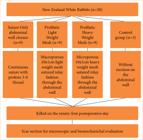
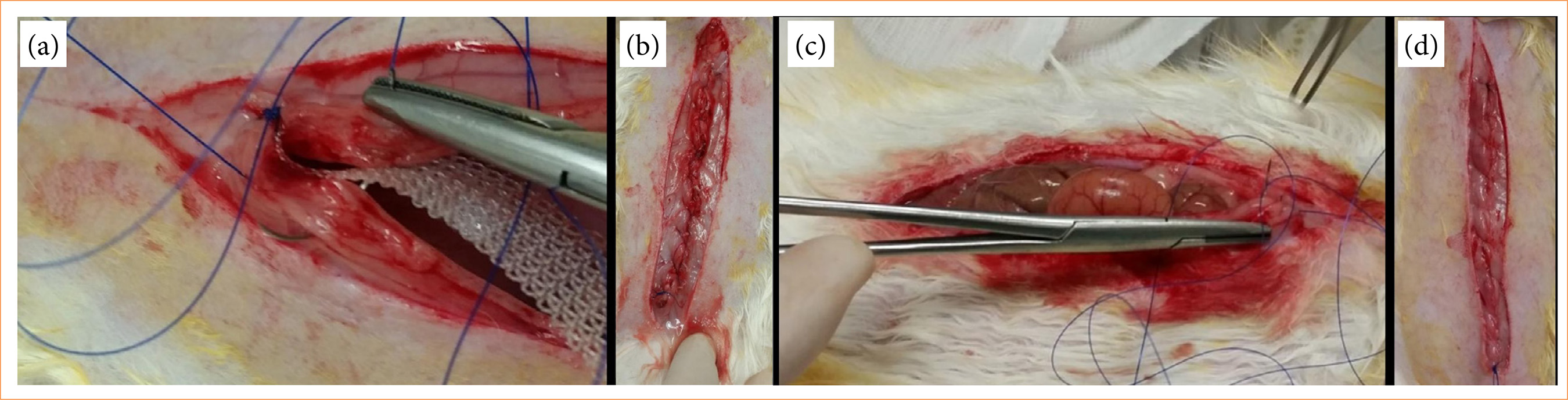
Methods: Rabbits were randomly distributed into four groups: control rabbits without laparotomy group; sutured rabbits (SR); light-weight mesh rabbits (LWMR); and heavy-weight mesh rabbits (HWMR). The meshes were cut to a size of 10 cm in length by 1 cm in width. A longitudinal, median abdominal incision, 11 cm in length, was performed, followed by an incision over the linea alba, encompassing the entire thickness of the abdominal wall. On the 91st postoperative day, the animals were killed for linea alba scar evaluation.
Results: There was a significant difference among the evaluated groups concerning elongation, maximum load, and elasticity modulus. HWMR and LWMR were statistically different from controls regarding elongation. As for the elasticity modulus, SR presented a higher mean when compared to the others. Microscopic visual analysis showed greater fibrotic scarring with a larger amount of implanted material in HWMR.
Conclusion: The reinforcement of scars with polypropylene mesh does not increase tensile strength when compared to the use of sutures. Mesh implantation results in scar remodeling with greater fibrosis, leading to increased elongation. However, midline reinforcement using only sutures has greater elasticity than the groups reinforced with mesh.
Key words
Hernia, Ventral; Models, Animal; Incisional Hernia
 Thumbnail
 Thumbnail
 Thumbnail
 Thumbnail
 Source: Elaborated by the authors.
 Source: Elaborated by the authors.
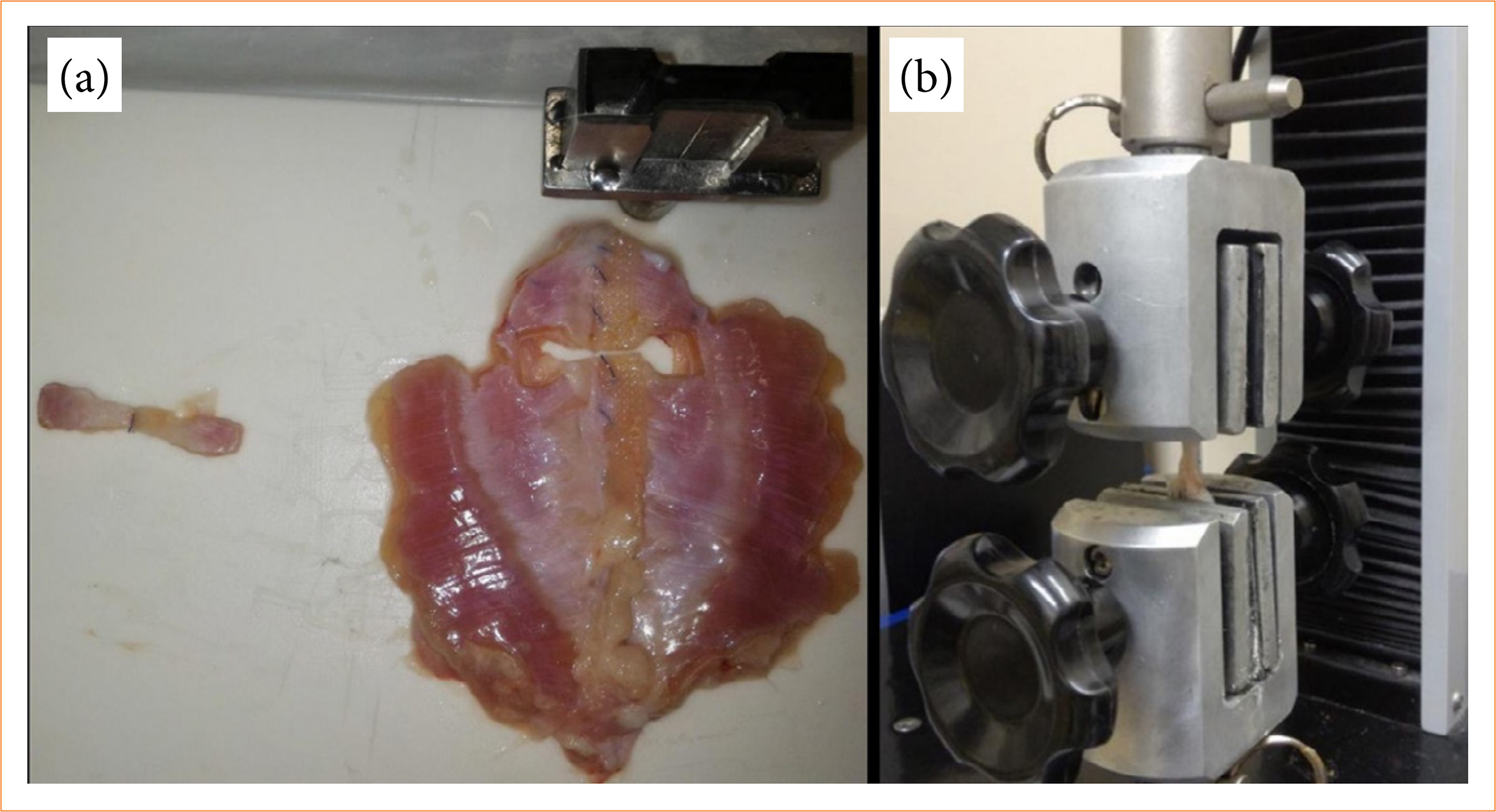 Explanted abdominal wall of New Zealand rabbits and confectionery of test body being submitted to biomechanical test. (a) Test body explanted after excision of explanted abdominal wall of experimental group; (b) test body being submitted to tensile test of the scar.
 Source: Elaborated by the authors.