Manufactured sand particle size and mechanical behaviour of strain-hardening cementitious composites
Abstract
This study investigates the replacement of natural sand with manufactured sand in PVA fibre-reinforced strain-hardening cementitious composites (SHCC), with emphasis on the influence of maximum particle size on mechanical behaviour. Five mixtures were produced using natural sand and manufactured sand with maximum particle sizes ranging from 0.30 to 2.36 mm. The mixtures were experimentally evaluated through compressive, uniaxial tensile, and bending tests, together with fracture characterization of the corresponding plain matrices. The results show that replacing natural sand with fine manufactured sand (0.30 mm) does not significantly affect compressive strength, Young’s modulus, or tensile and flexural performance. Increasing particle size had negligible influence on compressive properties but significantly affected post-cracking behaviour. Although first-cracking stress increased, tensile strain capacity, flexural deflection capacity and crack number decreased for the largest particle size investigated (2.36 mm), indicating reduced strain-hardening stability and earlier crack localization. A strong exponential correlation was identified between tensile strain capacity and flexural deflection capacity. Manufactured sand is therefore a viable alternative, provided that particle size is carefully controlled to maintain a balance between strength and ductility.
Keywords
Strain-hardening cementitious composites; Manufactured sand; Maximum particle size; Mechanical behaviour; Tensile behaviour
Resumo
Este estudo investiga a substituição da areia natural por areia industrializada em compósitos cimentícios com endurecimento por deformação (SHCC) reforçados com fibras de PVA, com ênfase na influência do tamanho máximo das partículas no comportamento mecânico. Cinco misturas foram produzidas utilizando areia natural e areia industrializada com tamanhos máximos de partícula variando de 0,30 a 2,36 mm. As misturas foram avaliadas por ensaios de compressão, tração uniaxial e flexão, além da caracterização à fratura das matrizes. Os resultados indicam que a substituição da areia natural pela industrializada fina (0,30 mm) não afeta significativamente o desempenho à compressão, à tração e à flexão. O aumento do tamanho de partícula teve influência desprezível nas propriedades à compressão, mas afetou significativamente o comportamento pós-fissuração. Embora a tensão de primeira fissura tenha aumentado, a capacidade de deformação à tração, a capacidade de deflexão e o número de fissuras diminuíram para o maior tamanho investigado (2,36 mm), indicando menor estabilidade do endurecimento por deformação e localização precoce de fissuras. Uma forte correlação exponencial foi identificada entre a capacidade de deformação à tração e a capacidade de deflexão. Assim, a areia industrializada mostrou-se uma alternativa viável, desde que o tamanho das partículas seja cuidadosamente controlado.
Palavras-chave
Compósitos cimentícios com endurecimento por deformação; areia industrializada; máximo tamanho de partícula; comportamento mecânico; tração direta
1 Introduction
In recent years, strain-hardening cementitious composites (SHCC) have attracted significant attention due to their remarkable tensile ductility, multiple cracking behaviour, and enhanced durability compared to conventional cementitious materials. The strain-hardening response of SHCC is governed by micromechanical design principles, particularly the balance between matrix fracture resistance and fibre bridging capacity, as originally formulated within the steady-state cracking theory (Kanda; Li, 2006; Li; Leung, 1992; Yang et al., 2008). From a micromechanical standpoint, the strain-hardening criteria require that the complementary energy provided by fibre bridging exceeds the crack tip fracture energy of the matrix, while maintaining a sufficient strength margin to sustain stable multiple cracking (Kanda; Li, 1998; Li, 1993).
In the early development of SHCC, very fine silica sand with maximum particle sizes typically below 250 μm was adopted to ensure low matrix fracture toughness and minimize intrinsic flaw dimensions, thereby facilitating the satisfaction of the strain-hardening criteria (Li, 1993; Wang; Li, 2007). The use of ultrafine sand was primarily motivated by micromechanical considerations, since smaller particle sizes reduce intrinsic flaw size and matrix fracture resistance, facilitating the satisfaction of the strain-hardening criteria (Li, 1993). However, due to cost and availability constraints (Ding; Yu; Mao, 2020; Guan et al., 2019), subsequent research progressively shifted toward more conventional sand, particularly natural river sand with larger particle sizes.
Recent investigations have demonstrated that SHCC mixtures incorporating river sand can still achieve stable multiple cracking and high tensile ductility when matrix cracking properties and fibre bridging mechanisms are properly tailored (Guan et al.2019; Li et al., 2021, 2022; Magalhães; Toledo Filho; Fairbairn, 2014). Extending this approach, Li et al. (2020) evaluated river sand with a maximum particle size of 4.75 mm and highlighted the so-called flaw effect associated with larger particles. According to fracture mechanics principles, larger inclusions may increase flaw size and matrix fracture toughness, potentially compromising strain-hardening unless compensated by adequate fibre bridging capacity (Li, 1993; Marshall; Cox, 1998). Nevertheless, through micromechanical optimization, saturated multiple cracking and significant tensile strain capacity were preserved.
Beyond river sand, alternative natural sand sources have also been explored to enhance sustainability and broaden practical applicability. Sea-sand SHCC, developed for marine and coastal environments using untreated sea sand with maximum particle sizes of 1.18 mm, 2.36 mm, and 4.75 mm, and seawater (Huang et al., 2020a, 2020b), demonstrated that stable strain-hardening behaviour and multiple cracking can be maintained even in chloride-rich mixtures. Although sea sand differs primarily in chemical composition and surface condition rather than particle morphology, these studies reinforce the broader principle that sand-related variations do not inherently preclude strain-hardening performance, provided that micromechanical energy and strength criteria remain satisfied.
Additional research has investigated alternative sands, including glass sand with maximum particle sizes of 0.17 mm and 0.20 mm (Adesina; Das, 2020), recycled fine sands with particle size of 0.42 mm, 0.72 mm, and 1.00 mm (Zhou et al., 2021), and iron ore tailings with maximum particle size of 1.18 mm (Huang et al., 2013), reporting varying influences on matrix fracture resistance and tensile strain capacity. An artificial engineered sand, consisting of geopolymer-based particles with a maximum particle size of 4.75 mm, has also been proposed to tailor crack initiation and propagation mechanisms (Xu; Huang; Dai, 2021; Xu et al., 2022a, 2022b). Collectively, these studies demonstrate that sand characteristics, including maximum particle size, shape, grading, and mineral composition, significantly influence matrix fracture toughness and fibre-matrix interfacial behaviour in SHCC mixtures.
Despite the growing body of research on alternative aggregates, relatively few studies have systematically examined the combined influence of sand type and progressive increases in maximum particle size within a consistent micromechanical design framework. In particular, the replacement of natural river sand with manufactured sand produced by controlled rock crushing processes remains insufficiently investigated. Manufactured sands typically exhibit more angular morphology and rougher surface texture than natural sands, which may increase internal friction and alter packing density and fibre–matrix interfacial bond behaviour (Mehta; Monteiro, 2014; Neville, 2015).
One of the earliest systematic investigations addressing sand characteristics in SHCC was conducted by Sahmaran et al. (2009), who evaluated crushed dolomitic limestone sand and gravel sand with maximum particle sizes of 1.18 mm and 2.38 mm. Their results showed that increasing particle size increased matrix fracture toughness and could reduce tensile strain capacity unless micromechanical parameters were recalibrated. More recently, studies focusing on manufactured sand in SHCC have generally adopted a constant maximum particle size of 4.75 mm while varying fineness modulus and grading characteristics (Chandrasekhar; Ransinchung, 2023, 2024). These investigations demonstrated that grading and angularity significantly influence fibre dispersion, workability, and cracking behaviour; however, the maximum particle size remained constant, and the influence of progressively increasing particle size within manufactured sand mixtures was not systematically assessed.
Overall, although existing evidence indicates that SHCC incorporating manufactured sand can achieve strain-hardening behaviour comparable to that of river sand-based mixtures, a systematic comparison between natural and crushed sands under controlled and progressively increasing maximum particle sizes remains lacking. Furthermore, the characteristics of both natural and manufactured sands can vary significantly depending on their geological origin and production processes (Mehta; Monteiro, 2014; Neville, 2015). Consequently, different sand sources may lead to distinct composite responses. The present study addresses this gap by comparatively evaluating SHCC mixtures produced with natural river sand and manufactured sand derived from crushed gneissic-granitic rock, considering different maximum particle sizes ranging from 0.30 mm to 2.36 mm. This upper limit corresponds to sieve n. 8, representing an intermediate grading commonly available in industrial crushing processes. The investigation focuses on the influence of manufactured sand particle size and sand type on the mechanical behaviour of SHCC, including compressive response, tensile strain-hardening behaviour, and flexural deformability.
2 Materials and methods
2.1 Materials
The materials used in this study comprised Brazilian Portland cement CP II-F-40, fly ash supplied by Pozo Fly, manufactured sand, natural sand, tap water, and a polycarboxylate ether-based superplasticiser. The reinforcing fibres were polyvinyl alcohol fibres supplied by Kuraray, with a length of 12 mm, a density of 1.31 g/cm³, a tensile strength of 1600 MPa, and a Young’s modulus of 40 GPa.
The CP II-F-40 cement corresponds to a Brazilian Portland cement containing limestone filler additions (11–25 wt.%) and presenting a minimum 28-day compressive strength class of 40 MPa, according to NBR 16697 (ABNT, 2018). The cement exhibited a specific gravity of 3.03 g/cm³ and a fineness of 2.25% retained on the 45 μm sieve. The fly ash presented a specific gravity of 2.10 g/cm³, a fineness of 43.80%, and a 28-day strength activity index with Portland cement of 87.71%. The specific gravity of the cementitious materials was determined using the pycnometer method in accordance with NBR 16605 (ABNT, 2017), employing kerosene as the immersion fluid, while the strength activity index was evaluated following NBR 5752 (ABNT, 2014). The chemical composition of the fly ash, determined by X-ray fluorescence spectrometry, is presented in Table 1.
The manufactured sand was supplied as crushed material with a maximum particle size of 2.36 mm. The material was air-dried and subsequently sieved to obtain fractions with different maximum particle sizes. From the original material, four fractions were selected, corresponding to particles passing the 2.36 mm (as-received material), 1.18 mm, 0.60 mm, and 0.30 mm sieves. These fractions were used to produce the different SHCC mixtures to evaluate the influence of maximum particle size on mechanical performance.
For comparison, a natural fine sand was used as the reference material. The sand was air-dried and sieved, and only the fraction passing the 0.30 mm sieve was used in the reference mixture to ensure compatibility with the SHCC matrix design. Figure 1 presents the natural sand and the manufactured sand fractions employed in this study.

Sands used in this study: (a) natural sand; manufactured sand fractions with maximum particle sizes of (b) 0.30 mm, (c) 0.60 mm, (d) 1.18 mm, and (e) 2.36 mm
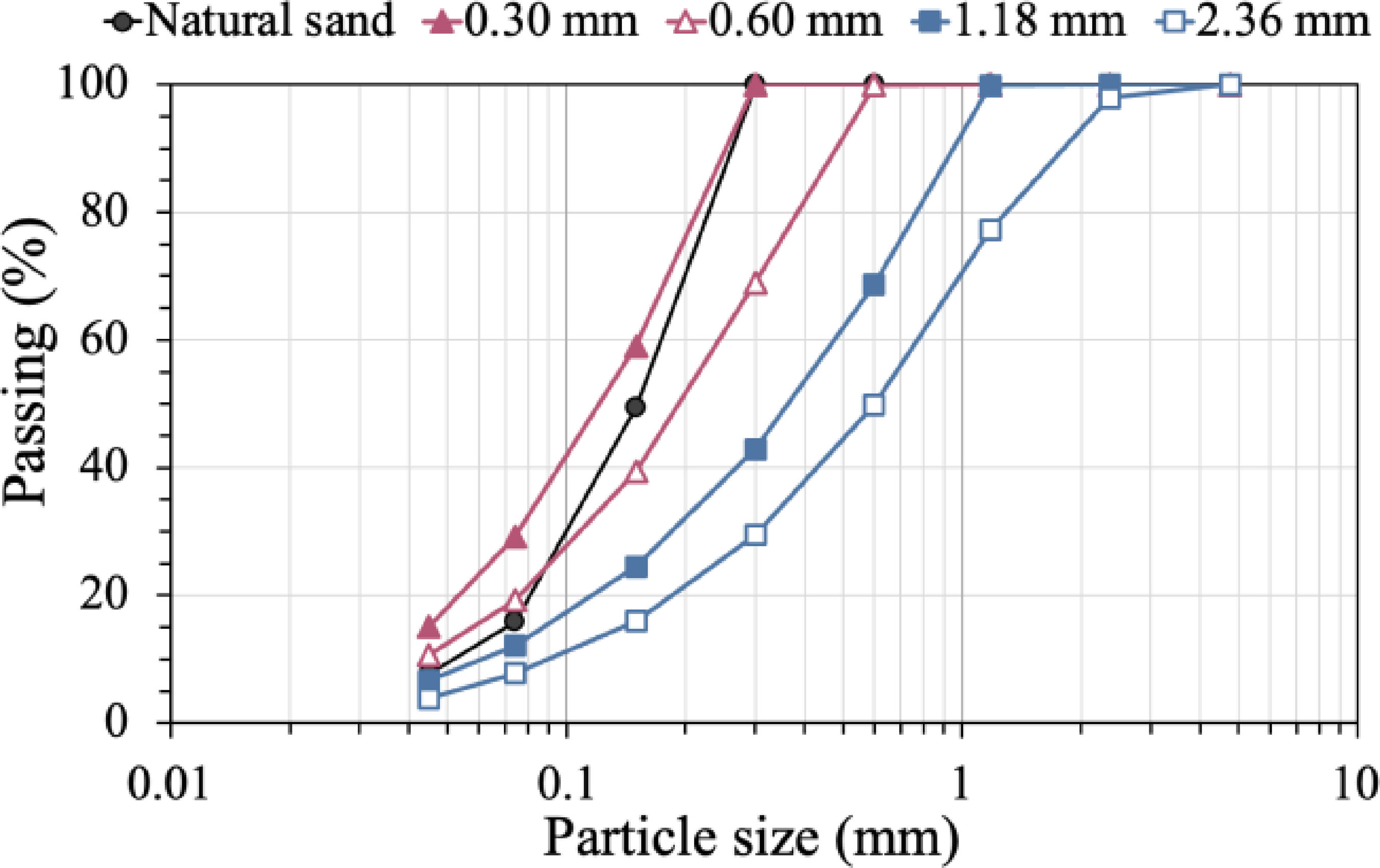
The particle size distributions of all sands were determined in accordance with NBR 17054 (ABNT, 2022), and the corresponding grading curves are presented in Figure 2. A progressive shift toward coarser distributions was observed as the maximum particle size increased for the manufactured sand fractions. Notably, although both the natural fine sand and the 0.30 mm manufactured sand fraction were limited to particles passing the 0.30 mm sieve, the manufactured sand exhibited a slightly finer internal grading. This difference is attributed to the crushing process, which promotes the generation of very fine particles and modifies the overall packing profile.

The main physical properties of the sands are summarised in Table 2, including maximum particle size, fineness modulus, specific gravity, and water absorption. Specific gravity and water absorption were determined in accordance with NBR 16916 (ABNT, 2021a). The fineness modulus values reflect the controlled differences in grading, while variations in water absorption are likely related to surface texture and the presence of adhered fines generated during crushing.
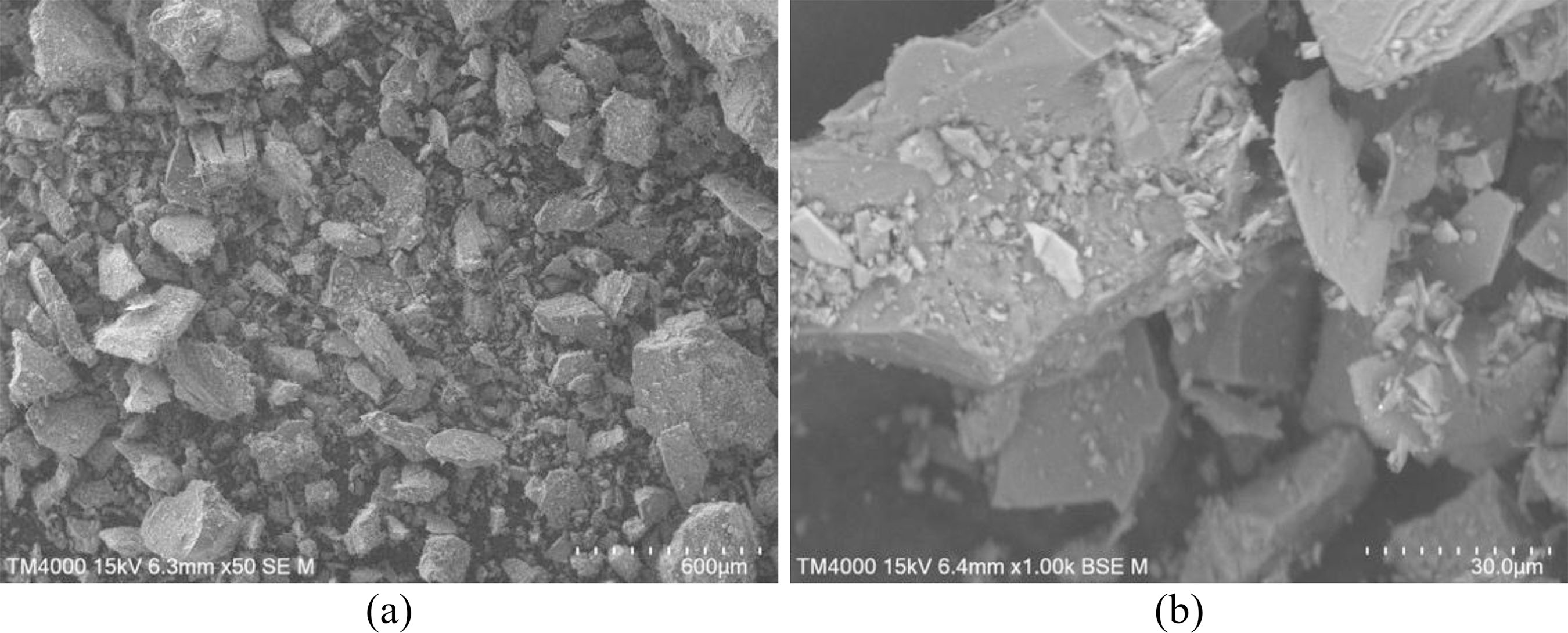
The microstructural characteristics of the manufactured sand were further examined by scanning electron microscopy (SEM), as shown in Figure 3. The particles exhibited predominantly angular and irregular morphologies, characterised by sharp edges, flat faces, and lamellar or flaky shapes. The surfaces presented pronounced roughness, with visible micro-asperities and adhered fines generated during the crushing process. These features confirm the non-alluvial origin of the material and clearly distinguish it from the smoother and more rounded morphology typically associated with natural fine sand.
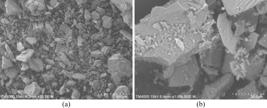
SEM images of manufactured sand particles: (a) general morphology; (b) higher magnification detail
2.2 Mixture proportions, specimen preparation and fresh-state characterization
Five strain-hardening cementitious composite (SHCC) mixtures were produced in this study. One reference mixture incorporating natural sand (NS) was adopted as a baseline, while four additional mixtures were formulated using manufactured sand fractions with maximum particle sizes of 0.30, 0.60, 1.18, and 2.36 mm. The mixtures were designated according to the maximum particle size of the manufactured sand fraction and are hereafter referred to as MS-0.3, MS-0.6, MS-1.18, and MS-2.36, respectively.
The reference mixture was based on the SHCC formulation originally proposed by Wang and Li (2007) and subsequently adapted to Brazilian materials by Magalhães, Toledo Filho and Fairbairn (2015), providing a reliable benchmark for comparison. The main matrix design parameters, including the fly ash-to-cement ratio, water-to-cementitious material ratio, sand-to-cementitious material ratio, and fibre volume fraction, were kept constant to evaluate the influence of sand characteristics on composite performance. However, the superplasticiser dosage was adjusted to ensure sufficient fresh-state consistency for casting, satisfactory fibre dispersion, and mixture stability without visible bleeding or segregation, considering differences in particle size distribution and surface characteristics among the sands. Fibre distribution was qualitatively monitored during mixing by visual inspection to verify the absence of fibre agglomeration.
The mixture proportions were defined as follows: a fly ash-to-cement mass ratio of 1.20, a sand-to-cementitious material ratio of 0.36, and a water-to-cementitious material ratio of 0.31. The cementitious material content corresponded to the combined mass of Portland cement and fly ash. The superplasticiser dosage ranged from 0.40% to 0.80% by mass of cementitious material, while the fibre volume fraction was fixed at 2% for all mixtures. Table 3 summarises the material proportions used in each SHCC mixture, expressed in kg/m³.
Mixing was carried out using a 20 L capacity mortar mixer. Initially, the dry constituents (cement, fly ash, and natural or manufactured sand) were blended to ensure homogeneity. Water was then gradually introduced, followed by the superplasticiser. Mixing was continued for approximately 5 minutes to promote proper homogenization of the fresh matrix. Subsequently, fibres were slowly added to prevent fibre agglomeration and promote uniform distribution within the composite. After fibre incorporation, mixing was maintained for an additional 2 minutes.
The fresh-state behaviour of the SHCC mixtures was evaluated through flow table tests performed in accordance with NBR 13276 (ABNT, 2016). The flow spread diameter was measured immediately after lifting the truncated cone and applying the prescribed drops of the flow table. Composite specimens were cast into steel moulds and demoulded after 24 hours for physical characterization, as well as compressive, tensile, and flexural testing.
Plain matrix specimens without fibres were also produced for each corresponding SHCC mixture for compressive strength and fracture toughness evaluation. The matrices were prepared using the same constituent proportions and mixing procedure adopted for the corresponding SHCC mixtures, except for fibre incorporation. However, the superplasticiser dosage was adjusted separately for the matrix mixtures, as the absence of fibres altered the fresh-state rheological behaviour and reduced the water demand required to achieve adequate workability. The finer matrices (NS and MS-0.3) incorporated 0.2% superplasticiser by mass of cementitious material to compensate for the greater surface area of the finer particles and maintain adequate workability, whereas no superplasticiser was required for matrices containing the coarser manufactured sand fractions (MS-0.6, MS-1.18, and MS-2.36). After casting, all specimens were cured in lime-saturated water until 28 days of age.
2.3 Experimental program
2.3.1 Physical characterization and compressive tests
Dry bulk density, total porosity and compressive strength were determined using cylindrical specimens measuring 50 mm in diameter and 100 mm in height, in accordance with Brazilian standards. Bulk density and total porosity were evaluated for SHCC specimens, whereas compressive tests were performed on both SHCC and plain matrix specimens. Three specimens were tested for each mixture in each experimental procedure.
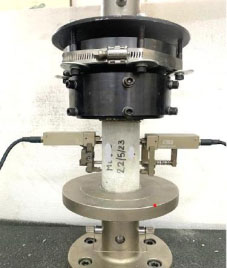
Bulk density and total porosity were determined in accordance with NBR 9778 (ABNT, 2005), based on dry, saturated-surface-dry, and immersed mass measurements. Compressive tests were carried out using a 100 kN servo-controlled Instron universal testing machine under displacement control at a loading rate of 0.3 mm/min. Axial strain was monitored using a dual-gauge LVDT extensometer with a gauge length of 50 mm, positioned diametrically opposite on the specimen surface. Young’s modulus was determined from the initial linear portion of the compressive stress-strain curve up to 30% of the peak stress, following the recommendations of NBR 8522-1 (ABNT, 2021). The test configuration and instrumentation are illustrated in Figure 4.

2.3.2 Fracture toughness tests
The fracture toughness of the plain cementitious matrices (Kₘ) was determined through three-point bending tests following procedures based on E399 (ASTM, 2023). Tests were conducted using a 100 kN servo-controlled Instron universal testing machine under displacement control at a loading rate of 0.5 mm/min and a support span of 320 mm. Four notched prismatic specimens measuring 400 mm in length, 80 mm in height, and 40 mm in width were tested for each matrix composition.
Prior to casting, a central notch was introduced at mid-span by inserting a 1.6 mm thick acrylic plate into the mould. The plate was removed during demoulding, ensuring the formation of a well-defined preformed notch with a depth corresponding to 30% of the specimen height. This procedure improves notch geometry control and minimizes potential damage or microcracking associated with mechanical cutting. The specimen geometry, notch configuration, and test setup are shown in Figure 5.
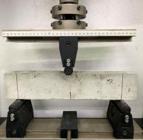
Fracture toughness was calculated using Equations 1 and 2, according to Xu and Reinhardt (1999):
Where:
Km is the matrix fracture toughness (MPa.m1/2)
P is the peak load (N)
G is the gravitational acceleration (m/s2)
S is the span length (mm);
A is the notch depth (mm) and
b, w and m are the specimen width (mm), height (mm) and mass (kg), respectively.
The crack-tip fracture energy (Jₜᵢₚ) was estimated using Equation 3, as proposed by Li (1993):
Where:
Jₜᵢₚ is the crack-tip fracture energy (J/m2); and
Eₘ is the Young’s modulus of the matrix (MPa).
2.3.3 Uniaxial tensile tests
The tensile behaviour of SHCC mixtures was evaluated using dogbone-shaped specimens with an overall length of 330 mm and a reduced central gauge section of 30 mm × 30 mm. The specimen geometry and dimensions are presented in Figure 6a. Five specimens were tested for each mixture following the recommendations of the Japan Society of Civil Engineers (JSCE, 2008).

Tensile and flexural test configurations: (a) geometry and dimensions of the tensile specimens; (b) tensile test setup; and (c) four-point bending test setup
Tensile loading was applied using a 100 kN servo-controlled Instron universal testing machine under displacement control at a constant displacement rate of 0.1 mm/min. Axial deformation was monitored using a dual-gauge LVDT extensometer with a gauge length of 50 mm. The extensometer was attached to the specimens by spring-loaded knife edges, ensuring stable contact and accurate strain measurement throughout the test duration. The tensile test setup and instrumentation are illustrated in Figure 6b.
2.3.4 Flexural tests
Flexural behaviour was assessed through four-point bending tests conducted on prismatic SHCC specimens measuring 400 mm in length, 60 mm in width, and 12.5 mm in thickness. Three specimens were tested per mixture. The tests were performed using a 100 kN servo-controlled Instron universal testing machine under displacement control at a constant displacement rate of 0.5 mm/min.
A clear span of 300 mm was adopted, with the load applied through two symmetrically positioned rollers to create a constant bending moment region between the loading points. Mid-span deflection was monitored using an LVDT positioned at the centre of the bottom face of the specimen. The complete test setup, including supports, loading points, and instrumentation, is illustrated in Figure 6c.
2.3.5 Statistical analysis
Statistical analysis was conducted using one-way analysis of variance (ANOVA), followed by Tukey’s post hoc test at a significance level of 5% (p < 0.05), to identify statistically significant differences among the evaluated mixtures for each measured property. Mean values and corresponding standard deviations (SD) were reported for all properties. In addition, the coefficient of variation (CV) was calculated to quantify data dispersion, particularly for tensile and flexural test results.
3 Results and discussions
3.1 Fresh and physical properties
Table 4 summarises the consistency, bulk density, and total porosity of the SHCC mixtures produced with natural sand (NS) and manufactured sand with increasing particle sizes. The replacement of natural sand (NS) with manufactured sand (MS-0.3) resulted in a comparable flow diameter, with values of 252 mm and 255.33 mm, respectively. Although the manufactured sand exhibits higher angularity (Figure 3) and a slightly finer grading (Table 2), both of which would typically reduce flowability (Neville, 2015; Westerholm, 2006; Cabrera; Traversa; Ortega, 2011), these effects were not reflected in the measured flow diameter. This suggests that, within the investigated range, differences in particle morphology and grading had a negligible influence on the fresh-state behaviour. Regarding dry bulk density and total porosity, no significant variations were observed, indicating that replacing natural sand with fine manufactured sand did not significantly modify the hardened microstructure.
When analysing the effect of increasing the maximum particle size of manufactured sand, a clear reduction in workability is observed. The flow diameter decreased progressively from 255.33 mm (MS-0.3) to 199 mm (MS-2.36), corresponding to a total reduction of approximately 22%. This behaviour may be associated with the combined effects of changes in particle size distribution and variations in superplasticiser dosage among the mixtures. Although the coarser and more angular particles are expected to increase interparticle friction and hinder particle rearrangement, the influence of superplasticiser content cannot be disregarded.
In the hardened state, mixtures MS-0.3, MS-0.6 and MS-1.18 exhibited similar bulk densities (1.67–1.68 g/cm³) and porosity levels (26.3–27.0%), indicating stable packing efficiency up to 1.18 mm. However, MS-2.36 showed a reduction in bulk density to 1.63 g/cm³ (≈ 2% lower than MS-0.3) and an increase in total porosity to 28.53% ( ≈ 5.8% higher than MS-0.3). These results suggest that the coarsest fraction compromised hardened packing efficiency, likely due to larger intergranular voids not fully compensated by paste filling. These microstructural changes may influence the mechanical response of the material, particularly its fracture behaviour, as discussed in the following sections.
3.2 Compressive behaviour of SHCC
The compressive strength and Young’s modulus results of the SHCC mixtures, illustrated in Figure 7 –, indicate that replacing natural sand (NS) with fine manufactured sand (MS-0.3) did not significantly affect compressive performance. The compressive strength remained close to 37 MPa for both mixtures, while the Young’s modulus also remained essentially unchanged (≈19 GPa), indicating that elastic stiffness was not sensitive to sand origin at this maximum particle size.
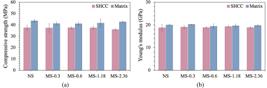
Compressive strength (a) and Young’s modulus (b) of SHCC and plain matrix mixtures containing natural sand (NS) and manufactured sand fractions
As illustrated in Figure 7a, the compressive strength of SHCC mixtures remained remarkably stable despite the increase in manufactured sand maximum particle size. According to ANOVA, no statistically significant differences were observed among the mixtures. This behaviour is consistent with the physical properties reported in Section 3.1, where mixtures MS-0.3, MS-0.6, and MS-1.18 exhibited very similar bulk density and porosity values. Although MS-2.36 showed a slight increase in porosity (+5.8%) accompanied by a reduction in dry bulk density (-2%), these changes were insufficient to significantly affect compressive strength.
Figure 7b shows that the Young’s modulus remained close to 19 GPa for all SHCC mixtures, further supporting the limited influence of maximum particle size on compressive behaviour. Considering that the elastic stiffness of SHCC is primarily governed by the properties and compactness of the cementitious matrix, particularly in the absence of coarse aggregates (Wang; Li, 2007; Yang; Yang; Li, 2007), the results suggest that sand grading played only a secondary role within the investigated range. This behaviour is consistent with findings reported by Sahmaran et al. (2009), who also observed limited sensitivity of compressive strength to variations in manufactured sand maximum particle size. However, their study considered crushed sand and gravel sand with maximum particle sizes of 1.19 mm and 2.38 mm, respectively, which differ slightly from the range investigated in the present work.
Overall, the results indicate that paste volume and fibre content, kept constant in this study, were the dominant factors controlling compressive behaviour. Manufactured sand can therefore replace natural sand in SHCC without compromising compressive performance, as variations in maximum particle size within the investigated range resulted in negligible changes mechanical response.
3.3 Mechanical and fracture behaviour of the plain matrices
For the plain matrices, Table 5 and Figure 7 show that replacing natural sand with manufactured sand (MS-0.3) did not significantly affect compressive strength or Young’s modulus, as confirmed by ANOVA. The negligible variation in Young’s modulus is consistent with the understanding that elastic response in mortar systems is predominantly governed by binder composition and porosity (Neville, 2015).
A similar trend was observed for the fracture properties reported in Table 5. Replacing natural sand with fine manufactured sand did not significantly alter fracture toughness (Km = 0.47 vs 0.46 MPa·m¹ᐟ²) or crack-tip fracture energy (Jtip = 10.81 vs 10.36 J/m²), indicating that, for the nominal particle size of 0.30 mm investigated in this study, sand origin alone did not significantly affect the intrinsic resistance to crack propagation.
A clearer trend emerged with increasing particle size (Table 5). While compressive strength and Young’s modulus, shown in Figure 7, remained statistically unchanged among the mixtures (fm: 41-43 MPa and Em: 19-20 GPa), fracture parameters increased systematically. Fracture toughness rose from 0.46 MPa·m¹ᐟ² (MS-0.3) to 0.52 MPa·m¹ᐟ² (MS-1.18), corresponding to an increase of approximately 13%. Similarly, Jtip increased from 10.36 J/m² to 13.56 J/m² (≈ 31% increase). For MS-2.36, fracture parameters remained higher than those observed for the MS-0.3 mixture.
This improvement can be attributed primarily to crack deflection and increased crack path tortuosity promoted by larger particles. Coarser particles act as obstacles to crack propagation, increasing energy dissipation at the crack tip, consistent with fracture mechanics concepts introduced by Hillerborg, Modéer and Petersson (1976) and further discussed by Bentur and Mindess (2007). Similar trends have been reported in strain-hardening cementitious composites incorporating sands with different particle sizes, where larger particles were shown to modify matrix cracking properties and promote more tortuous crack propagation paths (Li et al., 2021, 2022).
Since all manufactured sands were produced from the same gneissic-granitic parent rock, the observed differences are attributed mainly to maximum particle size effects rather than to variations in mineralogical composition. Manufactured sands derived from different parent rocks may exhibit distinct mineralogical characteristics and fragmentation behaviour during crushing, potentially influencing matrix fracture properties and the strain-hardening response of SHCC. Furthermore, the comparison between natural and manufactured sands was limited to the 0.30 mm fraction. Therefore, the absence of significant differences in fracture parameters under this specific condition should not be interpreted as evidence that particle morphology does not influence fracture behaviour for other particle size ranges or aggregate characteristics.
From a micromechanical perspective, the increase in matrix fracture toughness observed with increasing particle size is highly relevant for SHCC design. According to the strain-hardening criteria established by Li (2003), higher matrix toughness increases the energy demand for steady-state cracking and must be balanced by fibre bridging capacity to maintain multiple-cracking behaviour. Therefore, although compressive properties were not significantly affected by maximum particle size, the fracture response of the matrix was substantially modified, which may directly influence tensile ductility and crack distribution in the corresponding SHCC composites.
3.4 Uniaxial tensile behaviour
The uniaxial tensile stress–strain responses of the SHCC mixtures are presented in Figure 8 –, while the corresponding mean tensile parameters and standard deviations are summarized in Table 6 – . The coefficient of variation (CV) was also calculated to support the analysis of result variability and is reported within the discussion where relevant. All mixtures exhibited strain-hardening behaviour characterized by stress increase beyond first cracking followed by multiple cracking prior to localization. Although the overall tensile mechanism was preserved across mixtures, systematic variations were observed depending on sand origin and manufactured sand maximum particle size.
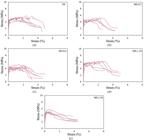
Tensile stress–strain curves for mixtures: (a) NS, (b) MS-0.3, (c) MS-0.6, (d) MS-1.18, and (e) MS-2.36
The stress-strain curves of NS and MS-0.3, shown in Figure 8, present very similar elastic slopes and comparable multiple cracking regimes. The tensile Young’s modulus (Et), reported in Table 6, was 17.23 GPa for NS and 18.34 GPa for MS-0.3. A similar trend was observed for the mixtures incorporating manufactured sand with different maximum particle sizes. The tensile elastic modulus remained essentially unchanged across MS-0.3, MS-0.6, MS-1.18, and MS-2.36, indicating that variations in particle size did not significantly affect the global stiffness of the composites. This result suggests that, within the investigated range, stiffness is not sensitive to sand size. Overall, the Et values are consistent with those obtained in compression, confirming mechanical consistency between loading modes.
The first-cracking stress (σfc), extracted from the first stress drop in the curves of Figure 8, remained virtually unchanged (3.79 MPa for NS and 3.77 MPa for MS-0.3). The ultimate tensile strength (σpc) showed only a slight reduction from 5.01 MPa to 4.72 MPa (≈ 6%), with low dispersion (CV between 7.6% and 9.0%). The strain capacity (εpc), corresponding to the onset of localization in Figure 8, remained practically identical at approximately 2.3%, although with higher variability (CV = 31% and 18%), which is typical for SHCC due to sensitivity to fibre dispersion and orientation (Li, 2003; Bentur; Mindess, 2007). The stress ratio σpc/σfc was 1.32 for NS and 1.25 for MS-0.3, satisfying the fundamental strength requirement for strain-hardening behaviour (σpc > σfc). In SHCC composites, this strength condition must be accompanied by an energy criterion to ensure stable multiple cracking, as described in the micromechanical framework proposed by Li (2003).
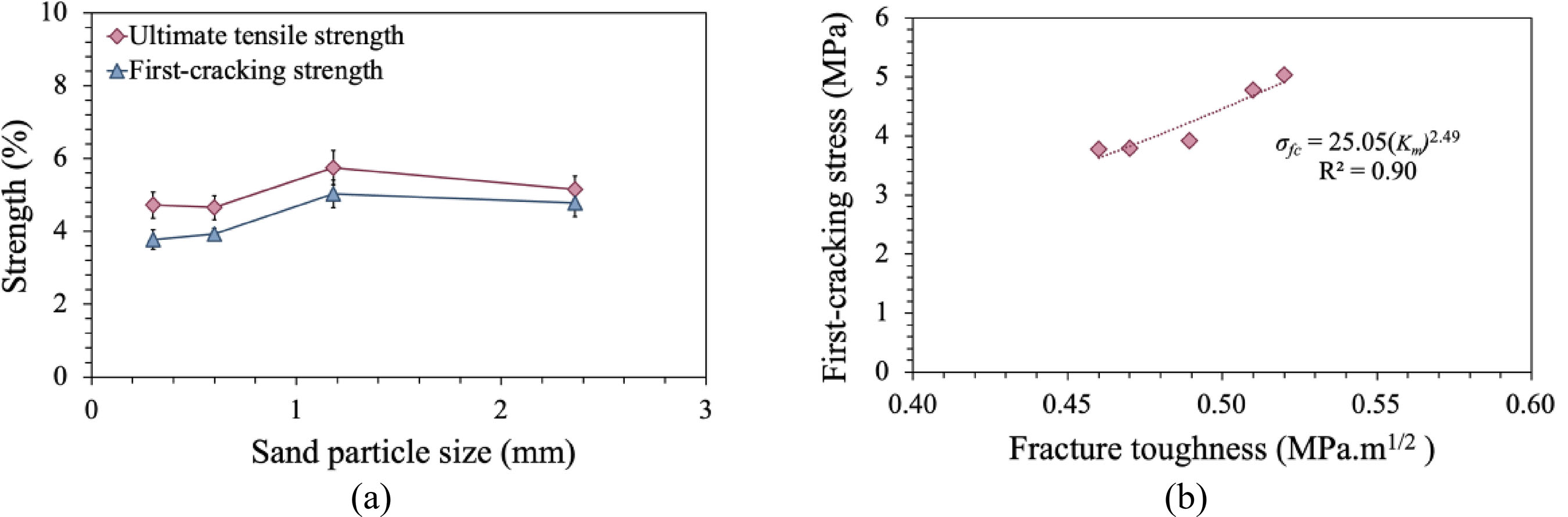
In contrast to the negligible effect of sand origin, a more pronounced influence is observed when the maximum particle size of manufactured sand was increased. As seen in Figure 9a, the first-cracking stress increased from 3.77 MPa (MS-0.3) to 5.03 MPa (MS-1.18), representing a 33% increase, before slightly decreasing to 4.78 MPa for MS-2.36. The low CV values (4.3-8%) confirm good experimental repeatability. Comparable behaviour was reported by Li et al. (2021), who observed that increasing sand particle size altered matrix cracking behaviour.

(a) First-cracking stress and ultimate tensile strength versus maximum particle size; (b) correlation between first-cracking stress (σfc) and matrix fracture toughness (Km)
When plotted against matrix fracture toughness (Km), a strong correlation was obtained, as illustrated in Figure 9b (R² = 0.90), confirming that σfc is primarily governed by intrinsic matrix fracture resistance. This behaviour is consistent with fracture mechanics principles originally proposed by Hillerborg, Modéer and Petersson (1976) and with the micromechanical framework for pseudo strain-hardening in SHCC developed by Li, Mishra and Wu (1995), as well as subsequent flaw-based cracking strength analyses in SHCC mixtures (Lu; Li; Leung, 2018).
The ultimate tensile strength (σpc), shown in Figure 9a, followed a similar tendency, reaching 5.75 MPa for MS-1.18 (≈ 22% higher than MS-0.3). However, the increase in σfc with particle size was proportionally greater than the increase in σpc. As a result, the σpc/σfc ratio progressively decreased from 1.25 (MS-0.3) to 1.08 (MS-2.36), indicating a reduction in the strain-hardening strength margin with increasing particle size (Figure 10). Since σpc can be taken as an approximation of the fibre bridging capacity (σo) in strain-hardening composites (Li, 2003), this trend suggests that the increase in matrix cracking strength is not matched by a proportional increase in bridging capacity. Within the micromechanical framework, this condition must be accompanied by a sufficient energy margin, which can be assessed through the evolution of crack-tip toughness.

In this context, the variation in crack-tip toughness (Jtip) provides further insight into the energetic balance governing strain-hardening behaviour. As shown in Table 5, Jtip increased from 10.36 J/m² (MS-0.3) to 13.56 J/m² (MS-1.18), remaining elevated for MS-2.36 (13.01 J/m²), revealing an increase in intrinsic matrix fracture resistance. Although the complementary fibre bridging energy was not directly measured, the simultaneous increase in Jtip and decrease in σpc/σfc indicate that the energetic demand at the crack tip progressively approached the energetic capacity provided by fibre bridging, thereby reducing the stability margin required for saturated multiple cracking.
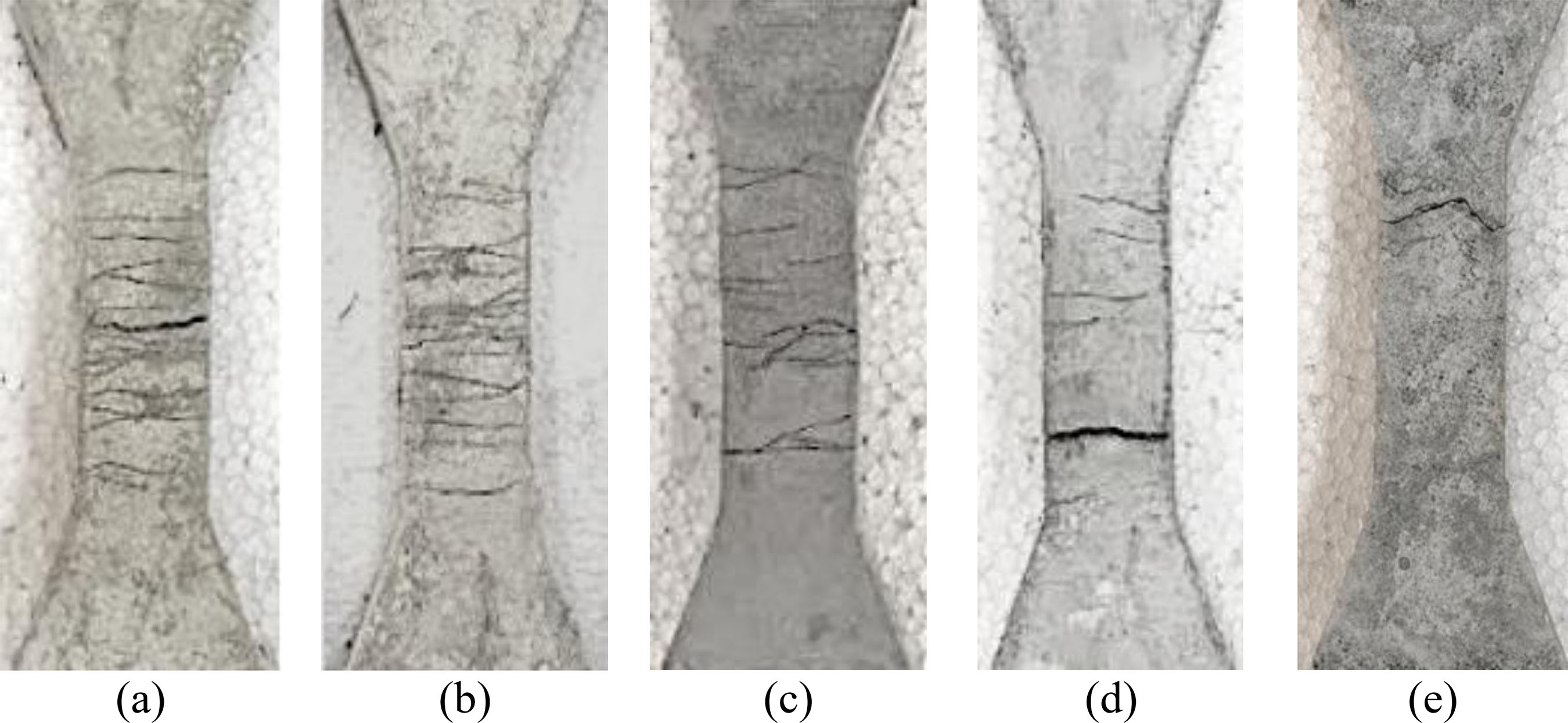
Consistently, the tensile strain capacity (εpc) declined with increasing particle size (Figure 10), confirming the progressive loss of strain-hardening stability. Mixtures up to MS-1.18 maintained strain capacities close to 2% (2.27%, 2.16%, and 1.98%, respectively), with CV values between 18% and 32%. In contrast, MS-2.36 exhibited a marked reduction to 0.97% (≈ 57% lower than MS-0.3), accompanied by a significant decrease in crack number from 18 to only 7 cracks (Table 6 and Figure 11), indicating premature strain localization. These results suggest that, beyond a certain particle size, the increase in matrix fracture resistance compromises the ability of the fibre bridging mechanism to sustain stable multiple cracking. Similar reductions in tensile ductility with increasing aggregate particle size were reported by Sahmaran et al. (2009).

Crack patterns after uniaxial tensile tests: (a) NS, (b) MS-0.3, (c) MS-0.6, (d) MS-1.18, and (e) MS-2.36
Despite this overall trend, MS-1.18 exhibited a particularly favourable balance between tensile strength and strain-hardening performance. While achieving the highest ultimate tensile strength (5.75 MPa), the composite maintained a strain capacity close to 2%, indicating that the increase in matrix fracture resistance remained compatible with the fibre bridging capacity. This balance enabled the development of multiple cracking without a substantial loss of tensile ductility.
Overall, the results demonstrate that particle size plays a decisive role in controlling the tensile strain-hardening response. While fine manufactured sand (MS-0.3) preserves the tensile performance of the reference mixture, increasing particle size progressively narrows the strain-hardening margin. The behaviour of MS-1.18 suggests that an intermediate particle size may provide a favourable compromise between strength enhancement and ductility retention. Further increases in particle size, however, adversely affected the balance between matrix fracture resistance and fibre bridging capacity, ultimately limiting the multiple-cracking behaviour at 2.36 mm.
3.5 Flexural Performance
The flexural stress-deflection responses of the SHCC mixtures are presented in Figure 12, and the corresponding mechanical parameters are summarised in Table 7. All mixtures exhibited deflection-hardening behaviour characterised by an initial linear elastic stage up to first cracking, followed by progressive stress increase associated with multiple cracking and fibre bridging prior to final localization. Nevertheless, clear differences in post-cracking performance were observed as a function of maximum sand particle size.

Stress–deflection curves under four-point bending: (a) NS, (b) MS-0.3, (c) MS-0.6, (d) MS-1.18, and (e) MS-2.36
Replacing natural sand (NS) with fine manufactured sand (MS-0.3) resulted in comparable flexural performance. The first-cracking stress (σfc) was practically identical for both mixtures (≈ 4 MPa for NS and MS-0.3), indicating similar resistance to crack initiation. Likewise, the ultimate flexural strength (9.31 MPa for NS and 9.74 MPa for MS-0.3) and deflection capacity remained within overlapping ranges (17.32 mm for NS and 19.19 mm for MS-0.3), with no statistically significant differences according to ANOVA. The mean crack number also remained of the same order, confirming that the distributed cracking pattern was preserved. These results indicate that replacing natural sand with fine manufactured sand does not significantly alter flexural strength, ductility, or cracking behaviour. The similarity between mixtures NS and MS-0.3 confirms that, within this particle size range, manufactured sand can be used without compromising the deflection-hardening mechanism.
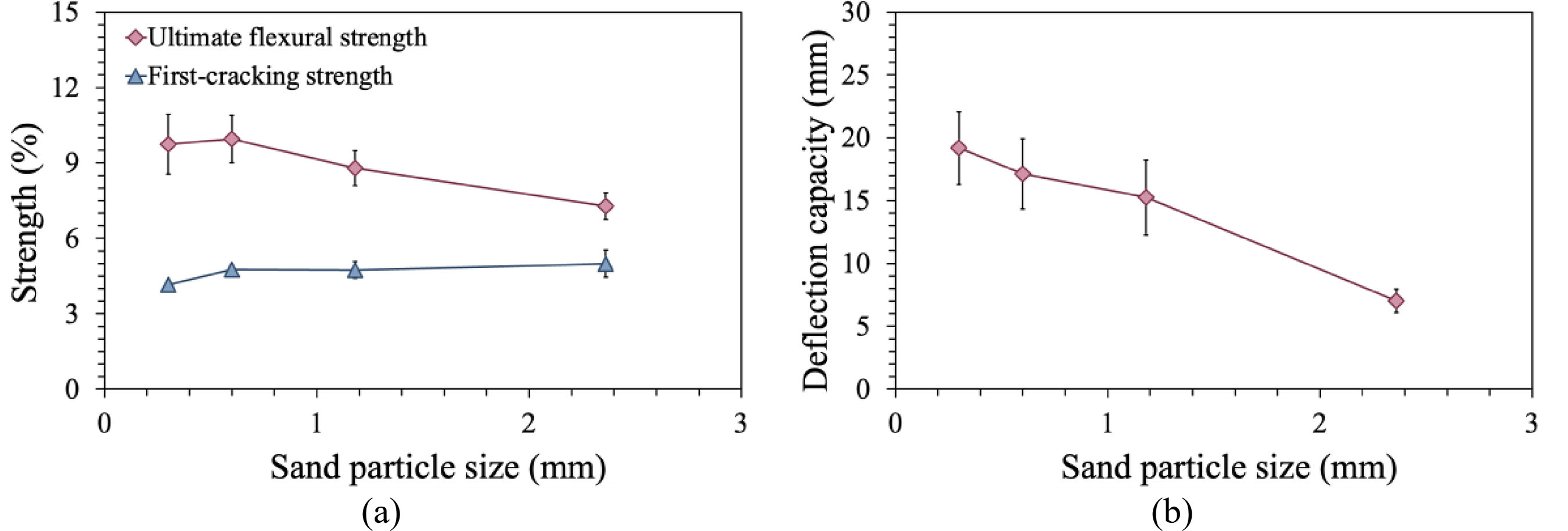
Increasing the particle size of manufactured sand, however, significantly affected the flexural properties. As shown in Figure 13a, the first-cracking stress (σfc) increased with particle size, from 4.16 MPa (MS-0.3) to 4.99 MPa (MS-2.36), indicating enhanced resistance to crack initiation. In contrast, the ultimate flexural strength (σu) remained statistically unchanged for MS-0.3 and MS-0.6 (≈ 10 MPa), according to ANOVA, and then decreased with further increases in particle size, reaching 8.79 MPa (MS-1.18) and 7.29 MPa (MS-2.36), corresponding to an overall reduction of approximately 25% relative to MS-0.3.

(a) First-cracking and ultimate flexural strength; (b) deflection capacity versus maximum particle size
This behaviour differs from that observed in uniaxial tensile (section 3.4), where the ultimate tensile strength increased for larger particle sizes. Under flexural loading, the non-uniform stress distribution promotes earlier crack localization and limits the development of multiple cracking, making the flexural response more sensitive to crack propagation mechanisms. The coefficients of variation remained within acceptable ranges for flexural tests, ranging from approximately 7% to 12%.

Crack patterns after four-point bending tests: (a) NS, (b) MS-0.3, (c) MS-0.6, (d) MS-1.18, and (e) MS-2.36
A more pronounced reduction was observed in deflection capacity, δu (Figure 13b). While mixtures up to MS-1.18 maintained deflections in the range 15-19 mm, MS-2.36 exhibited a sharp reduction to 7.02 mm (≈ 63% relative to MS-0.3). Crack patterns shown in Figure 14 corroborate these findings: mixtures up to MS-1.18 developed dense multiple cracking, whereas the MS-2.36 mixture exhibited fewer cracks (≈ 10) and earlier strain localization, indicating limited stress redistribution capacity. A similar tendency was reported by Sahmaran et al. (2009), who observed under uniaxial loading that increasing aggregate particle size reduced the multiple-cracking capacity and ductility of SHCC, promoting earlier strain localization.

A strong correlation was identified between tensile strain capacity (εpc) obtained from uniaxial tensile tests (Table 6) and flexural deflection capacity (δu), shown in Table 7. As illustrated in Figure 15, an exponential relationship (R² = 0.98) provided an excellent fit to the experimental data, indicating that flexural deformability increases nonlinearly with tensile strain capacity. Although the correlation was obtained from a limited number of experimental mixtures, the observed trend is physically consistent with the strain-hardening behaviour of SHCC and with relationships previously reported in the literature (Zhou et al., 2010; Qian; Li, 2007). Consequently, reductions in εpc lead to amplified decreases in δu, reflecting the high sensitivity of global flexural response to the stability of multiple cracking.
These results confirm that flexural ductility in SHCC is governed by the same micromechanical mechanisms controlling tensile strain-hardening, namely the balance between matrix fracture resistance and fibre bridging capacity, as described in the micromechanical framework proposed by Li (2003) and experimentally corroborated by Zhou et al. (2010). As the strain-hardening margin decreases, crack spacing increases and earlier localization occurs, directly limiting mid-span deflection capacity under bending.
Overall, the flexural results reinforce the conclusions drawn from uniaxial tensile tests. Manufactured sand with maximum particle sizes up to 1.18 mm preserved both strength and ductility, whereas excessive particle size (2.36 mm) progressively narrows the strain-hardening margin, limiting multiple cracking and decreasing global deformability. The close agreement between tensile and flexural ductility suggests that bending tests can serve as an indirect indicator of strain-hardening performance in SHCC.
4 Conclusions
This study investigated the influence of sand origin and maximum particle size on the compressive, tensile and flexural behaviour of strain-hardening cementitious composites. Based on the experimental results, the following conclusions can be drawn:
-
replacing natural sand with fine manufactured sand (maximum particle size of 0.30 mm) did not significantly affect compressive, tensile or flexural performance. Comparable first-cracking stress, ultimate strength, strain capacity, deflection capacity, and crack number were obtained, indicating that fine manufactured sand can be used without compromising the strain-hardening mechanism;
-
increasing the maximum particle size of manufactured sand had negligible influence on compressive strength and Young's modulus but significantly affected the tensile strain-hardening response. Both first-cracking stress and ultimate tensile strength increased with particle size, reflecting enhanced matrix fracture resistance;
-
despite the increase in tensile strength with particle size, strain capacity remained close to 2% for particle sizes up to 1.18 mm; however, it decreased markedly to approximately 1% for the larger particle size (2.36 mm). This reduction was accompanied by a significant decrease in crack number, indicating earlier strain localization. The observed behaviour was associated with a progressive reduction in the strength margin (σpc/σfc) together with an increase in matrix fracture toughness, reducing the energy margin available for stable multiple cracking;
-
flexural performance exhibited trends consistent with the tensile behaviour in terms of ductility and crack development. Mixtures incorporating larger particles showed reduced deflection capacity and earlier crack localization, reflecting the same loss of strain-hardening stability observed in tension;
-
a strong exponential correlation (R2 = 0.98) was identified between tensile strain capacity and flexural deflection capacity, demonstrating that flexural ductility is governed by the same micromechanical mechanisms controlling tensile strain-hardening; and
-
overall, the results indicate that controlling the maximum particle size of manufactured sand is critical to maintaining a favourable balance between matrix fracture resistance and fibre bridging capacity. Among the particle sizes investigated, 1.18 mm provided the most favourable balance between tensile strength and strain-hardening performance, whereas larger particles (2.36 mm) significantly reduced multiple cracking capacity and global deformability.
-
Declaration of Generative AI and AI-Assisted Technologies in the Writing Process
No generative AI or AI-assisted technologies were used in the preparation of this manuscript.
-
Financial Support
The research team gratefully acknowledges the funding provided by the Carlos Chagas Filho Foundation for Research Support of the State of Rio de Janeiro (FAPERJ). This support was fundamental to the study’s successful execution and significantly contributed to the advancement of research in sustainable cement-based materials.
-
COSTA, V. M. da; MAGALHÃES, M. da S. Manufactured sand particle size and mechanical behaviour of strainhardening cementitious composites. Ambiente Construído, Porto Alegre, v. 26, e154564, jan./dez. 2026. ISSN 1678-8621 Associação Nacional de Tecnologia do Ambiente Construído. http://dx.doi.org/10.1590/s1678-86212026000101003
Data Availability Statement
The data that support the findings of this study are available from the corresponding author upon reasonable request.
References
- ADESINA, A.; DAS, S. Mechanical performance of engineered cementitious composite incorporating glass as aggregates. Journal of Cleaner Production, v. 260, 121113, 2020.
- AMERICAN SOCIETY FOR TESTING AND MATERIALS. E399: standard test method for linear-elastic plane-strain fracture toughness of metallic materials. West Conshohocken, 2023.
- ASSOCIAÇÃO BRASILEIRA DE NORMAS TÉCNICAS. NBR 13276: argamassa para assentamento e revestimento de paredes e tetos: determinação do índice de consistência. Rio de Janeiro, 2016.
- ASSOCIAÇÃO BRASILEIRA DE NORMAS TÉCNICAS. NBR 16605: cimento Portland e outros materiais em pó: determinação da massa específica. Rio de Janeiro, 2017.
- ASSOCIAÇÃO BRASILEIRA DE NORMAS TÉCNICAS. NBR 16697: cimento Portland: requisitos. Rio de Janeiro, 2018.
- ASSOCIAÇÃO BRASILEIRA DE NORMAS TÉCNICAS. NBR 16916: agregado miúdo: determinação da densidade e da absorção de água. Rio de Janeiro, 2021a.
- ASSOCIAÇÃO BRASILEIRA DE NORMAS TÉCNICAS. NBR 17054: agregados: determinação da composição granulométrica: método de ensaio. Rio de Janeiro, 2022.
- ASSOCIAÇÃO BRASILEIRA DE NORMAS TÉCNICAS. NBR 5752: materiais pozolânicos: determinação do índice de desempenho com cimento aos 28 dias. Rio de Janeiro, 2014.
- ASSOCIAÇÃO BRASILEIRA DE NORMAS TÉCNICAS. NBR 8522-1: concreto endurecido: determinação dos módulos de elasticidade e de deformação: parte 1: módulos estáticos à compressão. Rio de Janeiro, 2021.
- ASSOCIAÇÃO BRASILEIRA DE NORMAS TÉCNICAS. NBR 9778: argamassa e concreto endurecidos: determinação da absorção de água, índice de vazios e massa específica. Rio de Janeiro, 2005.
- BENTUR, A.; MINDESS, S. Fibre Reinforced Cementitious Composites 2nd ed. London: Taylor & Francis, 2007.
- CABRERA, O. A.; TRAVERSA, L. P.; ORTEGA, N. F. Effect of crushed sand on mortar and concrete rheology. Material Construcción, v. 61, n. 303, p. 401-416, 2011.
- CHANDRASEKHAR, C.; RANSINCHUNG, G. Assessment of interface characteristics and durability aspects of manufactured sand (M-sand) in engineered cementitious composites. Journal of Building Engineering, v. 91, 109705, 2024.
- CHANDRASEKHAR, C.; RANSINCHUNG, G. Engineered cementitious composites (ECC) with manufactured sand (M-sand) for pavement applications. Composites Communications, v. 41, 101657, 2023.
- DING, Y.; YU, K.; MAO, W. Compressive performance of all-grade engineered cementitious composites: Experiment and theoretical model. Construction and Building Materials, v. 244, 118357, 2020.
- GUAN, X. et al. An economical ultra-high ductile engineered cementitious composite with large amount of coarse river sand. Construction and Building Materials, v. 201, p. 461-472, 2019.
- HILLERBORG, A.; MODÉER, M.; PETERSSON, P.-E. Analysis of crack formation and crack growth in concrete by means of fracture mechanics and finite elements. Cement and Concrete Research, v. 6, n. 6, p. 773–781, 1976.
- HUANG, B.-T. et al. High-strength seawater sea-sand Engineered Cementitious Composites (SS-ECC): Mechanical performance and probabilistic modeling. Cement and Concrete Composites, v. 114, 103740, 2020b.
- HUANG, B.-T. et al Seawater sea-sand Engineered Cementitious Composites (SS-ECC) for marine and coastal applications. Composites Communications, v. 20, 100353, 2020a.
- HUANG, X. et al Development of green Engineered cementitious composite using iron ore tailings as aggregates. Construction and Building Materials, v. 44, p. 757-764, 2013.
- JAPAN SOCIETY OF CIVIL ENGINEERS. Recommendations for design and construction of high-performance fiber reinforced cement composites with multiple fine cracks (HPFRCC). Concrete engineering series, n. 82. Tokyo: Japan Society of Civil Engineers, 2008.
- KANDA, T.; LI, V. C. Multiple cracking sequence and saturation in fiber reinforced cementitious composites. Concrete Research and Technology, v. 9, n. 2, p. 19-33, 1998.
- Kanda, T.; Li, V. C. Practical design criteria for saturated pseudo strain hardening behavior in ECC. Journal of Advanced Concrete Technology, v. 4, n. 1, p. 59-72, 2006.
- LI, V. C. Engineered cementitious composites (ECC): material, structural, and durability performance. Dordrecht: RILEM Publications S.A.R.L., RILEM State-of-the-Art Reports. 2003.
- LI, V. C. From micromechanics to structural engineering: the design of cementitious composites for civil engineering applications. Journal of Structural Mechanics and Earthquake Engineering, v. 10, n. 2, p. 37–48, 1993.
- LI, V. C.; LEUNG, C. K. Y. Steady-state and multiple cracking of short random fiber composites. Journal of Engineering Mechanics, v. 118, n. 11, p. 2246-2264, 1992.
- LI, V.; MISHRA, D. K.; WU, H.-C. Matrix design for pseudo strain-hardening fiber reinforced cementitious composites. Materials and Structures, v. 28, n. 10, p. 586–595, 1995.
- LI, Y. et al Development of high-strength and high-ductility ECC with saturated multiple cracking based on the flaw effect of coarse river sand. Journal of Materials in Civil Engineering, v. 32, n. 11, 04020317, 2020.
- LI, Y. et al. Investigation of matrix cracking properties of engineered cementitious composites (ECCs) incorporating river sands. Cement and Concrete Composites, v. 123, 104204, 2021.
- LI, Y. et al Mechanism study of crack propagation in river sand Engineered Cementitious Composites (ECC). Cement and Concrete Composites, v. 128, 104434, 2022.
- LU, C.; LI, V. C.; LEUNG, C. K. Flaw characterization and correlation with cracking strength in Engineered Cementitious Composites (ECC). Cement and Concrete Research, v. 107, p. 64-74, 2018.
- MAGALHÃES, M. S.; TOLEDO FILHO, R. D.; FAIRBAIRN, E. M. R. Influence of local raw materials on the mechanical behaviour and fracture process of PVA-SHCC. Materials Research, v. 17, n. 1, p. 146-156, 2014.
- MAGALHÃES, M. S.; TOLEDO FILHO, R. D.; FAIRBAIRN, E. M. R. Thermal stability of PVA fiber strain hardening cement-based composites. Construction and Building Materials, v. 94, p. 437-447, 2015.
- MARSHALL, D.; COX, B. N. A J-integral method for calculating steady-state matrix cracking stress in composites. Mechanics of Materials, v. 7, n. 2, p. 127-133, 1998.
- MEHTA, P. K.; MONTEIRO, P. J. M. Concreto: microestrutura, propriedades e materiais. 2. ed. São Paulo: IBRACON, 2014.
- NEVILLE, A. M. Properties of concrete 5. ed. London: Pearson, 2015.
- QIAN, S.; LI, V. C. Simplified inverse method for determining the tensile strain capacity of strain hardening cementitious composites. Journal of Advanced Concrete Technology, v. 5, n. 2, p. 235–246, 2007.
- SAHMARAN, M. et al. Influence of aggregate type and size on ductility and mechanical properties of engineered cementitious composites. ACI Materials Journal, v. 106, n. 3, p. 308-316, 2009.
- WANG, S.; LI, V. C. Engineered cementitious composites with high-volume fly ash. ACI Materials Journal, v. 104, n. 3, p. 233–241, 2007.
- WESTERHOLM, M. Rheology of the mortar phase of concrete with crushed aggregate Luleå: Luleå University of Technology, 2006.
- XU, L.-Y. et al. Enhancing long-term tensile performance of Engineered Cementitious Composites. (ECC) using sustainable artificial geopolymer aggregates. Cement and Concrete Composites, v. 133, 104676, 2022b.
- XU, L.-Y. et al. High-strength high-ductility Engineered/Strain-Hardening Cementitious Composites (ECC/SHCC) incorporating geopolymer fine aggregates. Cement and Concrete Composites, v. 125, 104296, 2022a.
- XU, L.-Y.; HUANG, B.-T.; DAI, J.-G. Development of engineered cementitious composites (ECC) using artificial fine aggregates. Construction and Building Materials, v. 305, 124742, 2021.
- XU, S.; REINHARDT, H. W. Determination of double-K criterion for crack propagation in quasi-brittle fracture, Part II: analytical evaluating and practical measuring methods for three-point bending notched beams. International Journal of Fracture, v. 98, n. 2, p. 151-177, 1999.
- YANG, E.-H. et al Fiber-bridging constitutive law of engineered cementitious composites. Journal of Advanced Concrete Technology, v. 6, n. 1, p. 181–193, 2008.
- YANG, E.-H.; YANG, Y.; LI, V. C. Use of high volumes of fly ash to improve ECC mechanical properties and material greenness. ACI Materials Journal, v. 104, n. 6, p. 620-628, 2007.
- ZHOU, J. et al Development of engineered cementitious composites with limestone powder and blast furnace slag. Materials and Structures, v. 43, n. 6, p. 803–814, 2010.
- ZHOU, Y. et al Feasibility of incorporating recycled fine aggregate in high performance green lightweight engineered cementitious composite. Journal of Cleaner Production, v. 280, Part 2, 124445, 2021.
Edited by
-
Editor-in-chief:
Enedir Ghisi