Potential of acidic volcanic rocks from the Serra Geral group as a partial replacement for Portland cement
Abstract
Searching for natural elements whose processing does not require burning and/or decarbonation, this research aimed to test acidic volcanic rocks from the Serra Geral Group as a partial substitute for Portland cement. After selecting relevant areas from consolidated bibliographies, rocks were selected in Caxias do Sul, Cambará do Sul, and São Joaquim in southern Brazil. Petrography confirmed the presence of volcanic glass in all samples. Pozzolanic activity was analyzed using standardized tests, including lime fixation, electrical conductivity variation, and amorphous material content. Both met the standardized chemical requirements but showed limited performance in pozzolanic activity with lime over 7 days. In physical tests, only Caxias do Sul and São Joaquim achieved the minimum required compressive strength. Caxias do Sul stood out for containing 52% amorphous material and having the highest consumption of Ca(OH)₂. Evaluating electrical conductivity, Caxias do Sul and Cambará do Sul showed variable pozzolanicity, while São Joaquim was considered non-pozzolanic. In summary, the rocks demonstrated pozzolanic properties, validating the use as supplementary cementitious materials. Therefore, this study contributes to the development of eco-efficient binders that are in line with the principles of the modern circular economy.
Keywords
Volcanic rocks; Pozzolanicity; Supplementary cementitious materials
Resumo
Buscando elementos naturais cujo processamento não necessite de queima e/ou descarbonatação, essa pesquisa teve como objetivo testar rochas vulcânicas de caráter ácido pertencentes à Serra Geral como substituição parcial ao cimento Portland. Após seleção de áreas relevantes a partir de bibliografias consolidadas, foram selecionadas rochas em Caxias do Sul, Cambará do Sul e São Joaquim, no Sul do Brasil. A petrografia realizada serviu para comprovar a existência de vidro vulcânico em todas as amostras. A pozolanicidade foi analisada por ensaios normatizados, incluindo fixação de cal, variação da condutividade elétrica e teor de material amorfo. Ambas atenderam aos requisitos químicos normatizados, mas apresentaram desempenho limitado na atividade pozolânica com cal em 7 dias. Nos ensaios físicos, apenas Caxias do Sul e São Joaquim alcançaram a resistência à compressão mínima exigida. Caxias do Sul destacou-se por conter 52% de material amorfo e maior consumo de Ca(OH)₂. Avaliando a condutividade elétrica, Caxias do Sul e Cambará do Sul mostraram pozolanicidade variável e São Joaquim considerado não pozolânico. Em síntese, demonstraram propriedades pozolânicas, validando a utilização como materiais cimentícios suplementares. Sendo assim, este estudo contribui para o desenvolvimento de ligantes ecoeficientes que estejam em consonância com os princípios da economia circular moderna.
Palavras-chave
Rochas vulcânicas; Pozolanicidade; Materiais cimentícios suplementares
1 Introduction
The manufacturing process of Portland cement causes harmful environmental impacts, due to both the large volume of raw materials extracted from natural deposits and the emission of pollutants, especially CO2, one of the main greenhouse gases. In this context, it is estimated that cement production is responsible for approximately 8% of global CO2 emissions (IEA, 2025). According to Battelle Memorial Institute (2002), 50% of CO2 emissions in the cement industry come from limestone decarbonation, 40% from kiln combustion, 5% from raw material transportation, and 5% from electricity consumption. In view of this, it is necessary to develop alternatives aimed at minimizing environmental impacts associated with extraction and production (Wilbert; Kazmierczak; Kulakowski, 2017), focusing on encouraging the use of construction waste and industrial by-products as additives or partial substitutes for cement (Hossain, 2003; Uzal; Turanli; Mehta, 2007; Chindaprasirt; Rukzon, 2008; Kannan et al., 2017; Binici et al., 2019).
Pozzolanic materials are at the forefront of this transition. According to Montanheiro et al. (2011), pozzolanic materials stand out as partial replacements for clinker in cement production, contributing to the reduction of pollutant emissions. The authors explain that the use of pozzolans reduces carbon dioxide emissions and preserves limestone deposits by replacing part of the clinker content. In general, active pozzolanic components can be found in different geological units, in the form of volcanic glass, zeolites, opals, and clay minerals, and therefore deserve investigation for immediate use in the construction industry. In southern Brazil, the Serra Geral Group - part of the Paraná Magmatic Province - represents one of the world's largest igneous events (Bergmann et al., 2014). Although traditionally used as aggregates, these rocks possess chemical characteristics that suggest untapped pozzolanic potential.
Within the Serra Geral Group, the Palmas Type is highlighted for this study, as it contains higher amounts of silica-rich acidic lava flows. According to Polo et al. (2017), some sequences of the Palmas Type can be considered important outcrops of acidic units of the Serra Geral Group, as they contain a significant amount of volcanic glass. Volcanic glasses are formed by the rapid cooling of magma with little or no crystallization and are characterized by high silica content, a glassy matrix, metastable nature, and conchoidal fracture (Andrade et al., 2018), being considered a promising pozzolanic material due to the wide geographic distribution of rocks that compose this lithological unit (Montanheiro et al., 2011). Although not all outcrops containing volcanic glass are fully identified, northern Rio Grande do Sul and southern Santa Catarina are favorable regions for their occurrence (Andrade et al., 2018; Koppe, 2021). Considering that intact volcanic glasses are reactive and can be used as pozzolans, research on these materials becomes relevant, especially due to the complexity associated with volcanic glass and its behavior as a partial replacement for Portland cement.
Based on these aspects, this research is justified by the potential partial replacement of Portland cement with powdered volcanic rocks prevalent in southern Brazil. Partial replacement with rock powder may contribute to reducing pollutant emissions associated with limestone decarbonation, as well as energy demand required for the clinkerization process, whether from electricity or fuel combustion. Since volcanic rock does not undergo decarbonation and does not require calcination, it is considered a potential alternative material, provided it exhibits properties that enable its use as a partial substitute for cement, which are investigated in this study.
2 Experimental program
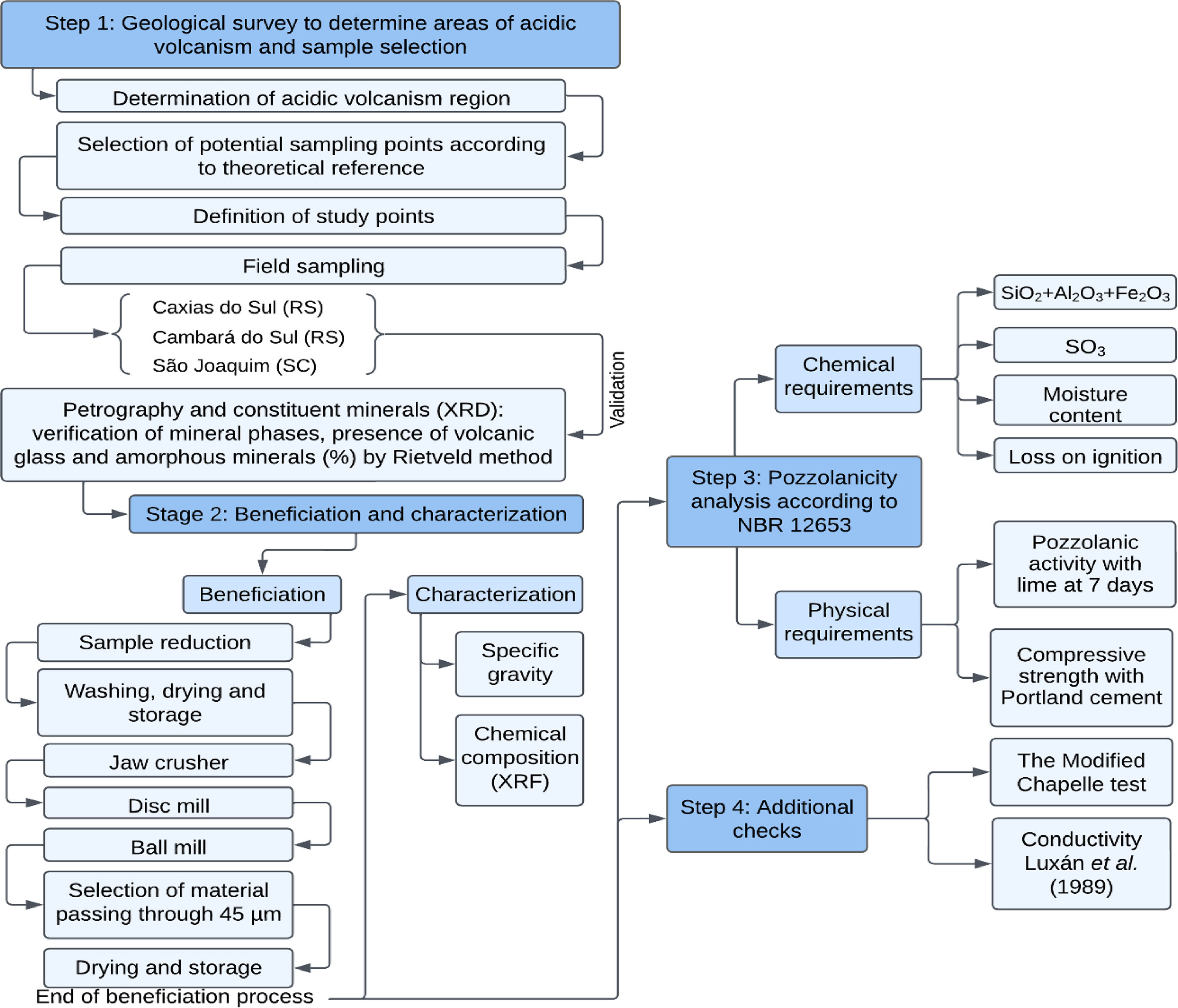
The schematic representation of the experimental program, divided into four stages, as well as the techniques and standards used, is presented in Figure 1. The results were analyzed using both qualitative and quantitative comparative approaches, based on the following statistical analyses, the non-parametric Kruskal–Wallis test and the non-parametric Mann–Whitney test. For this purpose, SPSS 25.0 software was used.
2.1 Materials
In addition to the analyzed rocks, Portland cement, water, fine aggregate, and analytical grade calcium hydroxide were used in this experimental program, as detailed below.
For mortar production, standardized fine aggregate was used, consisting of IPT standard sand, processed and supplied by IPT, in accordance with the requirements of NBR 7214 (ABNT, 2015a). The material was prepared following the standard specifications, with fractions passing the 2.4 mm sieve and retained on the 1.2 mm sieve, passing the 1.2 mm sieve and retained on the 0.6 mm sieve, passing the 0.6 mm sieve and retained on the 0.3 mm sieve, and passing the 0.3 mm sieve and retained on the 0.15 mm sieve. The material was oven-dried at 105 ± 5 °C for 24 hours and stored in a moisture-free environment protected from weather exposure. Potable water from an artesian well was used. The calcium hydroxide presented a minimum purity of 95% and a pH of 12.4, according to the manufacturer.
According to NBR 5752 (ABNT, 2014), CP II-F-32 has a reduced clinker content due to the presence of 11 to 25% carbonate material, which may compromise the evaluation of pozzolanic activity according to Meinhart et al. (2023). The authors emphasize the need to use cements with a higher clinker content, such as CP V-ARI, for more consistent results. In their study, the use of CP II-F-32 resulted in low compressive strength, attributed to the high content of calcareous and basaltic aggregates, which intensify the reduction of clinker. Considering these observations, this research opted for CP V-ARI, whose characterization provided by the manufacturer is presented in Table 1.

2.2 Method
As shown in Figure 1, the experimental program was divided into four stages, determination of acidic volcanism areas and sample selection, processing and characterization, analysis of pozzolanic potential according to NBR 12653 (ABNT, 2015b), and alternative methods, not included in NBR 12653 (ABNT, 2015b), for evaluating pozzolanicity.
2.2.1 Stage 1: geological study to determine areas of acidic volcanism and sample selection
The first stage consisted of a geological study to determine areas of acidic volcanism and to select the rocks. Covering the states of Rio Grande do Sul and Santa Catarina, the definition of the rocks used in this research was based on a geological survey aimed at identifying regions formed by acidic lava flows through literature review. The selection of potential sampling sites was based on the following parameters, acidic volcanic rocks, SiO2 content, presence of a glassy phase or vitreous luster, regional geological studies, exposed outcrops, and ease of access for sampling.
Koppe (2021) identified outcrops with potential chemical and geological characteristics based on studies by Nardy, Machado and Oliveira (2008), Nardy et al. (2011), Polo (2014), Polo and Janasi (2014a, 2014b), Polo et al. (2017), Andrade et al. (2018), and Polo et al. (2018):
-
Dacite from the Caxias do Sul type located along RS-229, known as Estrada do Sol, west of the municipality of Tainhas (UTM 22J 561492E, 6765485N);
-
Dacite flows of the Barros Cassal type and rhyolites of the Santa Maria type located along RS-73 north of Gramado Xavier (UTM 340350E, 6763229N), with difficult access and vegetation cover;
-
Rhyolitic obsidian along RS-73 in Barros Cassal (UTM 339950E, 6764059N and UTM 344765E, 6780763N), both covered by vegetation and difficult to identify;
-
Pitchstone found in an active quarry in the city of Caxias do Sul, at coordinates Lat. 29.1080 and Long. 51.1724. Koppe (2021) reports that the rock has a dark color, with an opaque luster compared to obsidian. The glassy breccia of this unit was estimated at 17222.559 m³, according to Selmo (2014);
-
Polo and Janasi (2014b) report outcrops of acidic volcanic rocks with a glassy character near the municipality of Barros Cassal (RS), at UTM coordinates (zone 22J) 341351E and 6763229N, elevation 423 m, belonging to the Caxias do Sul subgroup;
-
Volcanic glass reported by Besser (2017), with easy access, found in a road cut along SC-114 in the municipality of São Joaquim, whose sample was designated by the author as “SJ-255” (UTM 22J 598315E, 6860198N); and
-
Dacitic obsidian (Palmas Formation) located in the city of Cambará do Sul, reported by Rossetti et al. (2021). Private and fenced property, inactive ornamental stone quarry, with coordinates provided by the author Matheus S. Simões via email (UTM 22J 580367.68E, 6791727.28S).
From the selected volcanic occurrences of interest, three study sites were defined based on outcrop accessibility, safety during sampling, silica content, and the presence of volcanic glass. The selected locations were:
-
pitchstone found in an active quarry in the city of Caxias do Sul, reported and studied by Koppe (2021);
-
dacitic obsidian located in Cambará do Sul, according to Rossetti et al. (2021); and
-
volcanic glass in the municipality of São Joaquim, sample “SJ-255”, studied by Besser (2017).
In this study, each rock sample was named according to the city where it was collected, namely:
-
Caxias do Sul;
-
Cambará do Sul; and
-
São Joaquim.
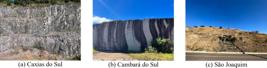
Field sampling was carried out manually using a chisel and hammer, with more than 15 kilograms of material collected at each study site. Figure 2 shows the sampling locations.
For validation purposes, the presence of volcanic glass in the three selected rocks was verified through petrographic analysis. The rocks were separated, cleaned, and selected for the preparation of thin sections produced in accordance with NBR 7211 (ABNT, 2019b) and NBR 7389-2 (ABNT, 2009). The samples were cut, bonded to a glass slide, ground to a thickness of 0.3 mm, and polished. The description of the thin sections was carried out using a trinocular transmitted light petrographic microscope with plane-polarized light, model Nikon Eclipse 50i POL. Image acquisition was performed using a digital capture system with a 10-megapixel Canon camera. The presence of carbonates was tested using 10% hydrochloric acid and, in all cases, the result was negative. The presence of magnetic minerals was assessed using a neodymium magnet.
To identify mineral phases and quantify amorphous content, X-ray diffraction (XRD) was performed using an Empyrean Panalytical diffractometer, configured in reflection-transmission mode with a spinner, scanning from 5 to 80° (2θ), step size of 0.01°, and acquisition time of 300 s, using a Cu tube at 40 kV and 40 mA. For amorphous quantification through the Rietveld method, zinc oxide (zincite phase, 10% by mass of rock powder), fully crystalline, was added as an internal standard to assist the refinement process. Amorphous content was calculated during refinement based on the sum of the peak areas of crystalline phases and the net area of the measured amorphous halo. The instrumental conditions adopted for Rietveld refinement are presented in Table 2. The obtained Rwp values were considered acceptable, ranging from 12.42% to 13.79%, below the maximum allowable value of 15% (Cordeiro; Masuero; Dal Molin, 2014).
The Gmelinite-Na phase was considered as zeolite due to the presence of its preferred orientation peak. The reference patterns used for phase identification were obtained from the OCD database (Open Crystallography Database): augite (96-900-9665), andesine (96-900-1032), quartz (96-901-5023), sanidine (96-900-5266), vermiculite (96-900-0147), and zincite (96-900-4182). The data were analyzed using HighScore Plus software.
2.2.2 Stage 2: processing and characterization
After collection, tools such as a hand hammer, electric hammer, and drill were used to reduce the samples until reaching dimensions of 10 × 10 × 5 cm. In the laboratory, the samples were washed to remove possible contaminants, oven-dried for 24 hours at 100 ± 5 °C, and stored in sealed containers. Subsequently, the samples were processed in a laboratory-scale jaw crusher, reducing them to sizes equal to or smaller than gravel, approximately between 3 mm and 5 mm.
The material was then sieved using a 4.75 mm mesh. The retained fraction was returned to the crusher, while the passing fraction was directed to a disc mill, Bico Inc., Pulveryte Type model. After disc milling, the samples were processed in a ball mill, Servitech model CT-241, for 30 minutes. After milling, the material was manually sieved through a 45 μm mesh, applying mechanical force with a brush in circular motions. The passing fraction was collected and oven-dried at 100 ± 5 °C for 24 hours. After drying, the material was cooled in a desiccator and stored in airtight containers, completing the comminution process. It is important to emphasize that all samples went through the same grinding process, including the same grinding time on the equipment. Particle size was determined using a PSA 1090 L laser diffractometer.
Density values were determined according to NBR 16605 (ABNT, 2017), with calcium hydroxide PA presenting a value of 2.553 g/cm³. Chemical composition was evaluated by X-ray fluorescence using an Epsilon 1 Panalytical equipment.
2.2.3 Stage 3: pozzolanicity analysis according to NBR 12653 (ABNT, 2015b)
The chemical and physical requirements established in NBR 12653 (ABNT, 2015b) were used to evaluate the pozzolanic potential of the rocks. For chemical requirements, the SO3 content and the sum of SiO2 + Al2O3 + Fe2O3 were verified, according to NBR 12653 (ABNT, 2015b), based on the XRF results described in Stage 2. Loss on ignition was also evaluated using XRF data, and moisture content was determined according to NBR NM 24 (ABNT, 2003).
For physical requirements, the amount of material retained on the 45 µm sieve, compressive strength performance with Portland cement at 28 days, and pozzolanic activity with lime at 7 days were analyzed. According to NBR 5751 (ABNT, 2015c), the evaluation of pozzolanic activity with lime requires mortars composed of one part, by mass, of calcium hydroxide and another part of the material with pozzolanic potential, corresponding to twice the volume of Ca(OH)2. Specimen molding and compressive strength testing followed NBR 7215 (ABNT, 2019a), performed in duplicate for each sample. The curing process followed the recommendations of NBR 5751 (ABNT, 2015c), with testing carried out at 7 days. The final strength value corresponds to the average compressive strength obtained from individual test specimens, as specified by the standard.
In addition, the performance index of pozzolanic materials with Portland cement, according to NBR 5752 (ABNT, 2014), establishes a 25% replacement level of cement by the material under study, with compressive strength evaluated at 28 days. Table 3 presents the mass of each component used to prepare the mortars. Three specimens were molded for each replacement level, totalling 72 units. A constant water-to-binder ratio was maintained, considering the binder as the sum of Portland cement and the tested material. The mixing procedure, specimen molding, curing conditions, and compressive strength testing were carried out in accordance with the standard procedures.
2.2.4 Stage 4: complementary analyses
Complementary methods were selected to evaluate pozzolanic activity, the Modified Chapelle method, according to NBR 15895 (ABNT, 2010), and the method proposed by Luxán, Madruga and Saavedra (1989).
For the Luxán, Madruga and Saavedra (1989) method, a saturated solution was prepared with 98.7 mg of calcium hydroxide in 70 g of deionized water, heated in a water bath and maintained at 40 ± 1 °C. The solution was kept under magnetic stirring for 20 minutes. Then, 1.75 g of the material with pozzolanic potential was added, and the conductivity variation was recorded over a period of 20 minutes. Conductivity was measured using an AZ 8306 conductivity meter, with a measurement range up to 30 mS.
The Modified Chapelle method, a direct method for determining the amount of fixed lime due to pozzolanic activity, consists of maintaining under agitation, in a water bath at 90 ± 5 °C, a mixture of 1 g of rock and 2 g of calcium oxide in 250 mL of water contained in an Erlenmeyer flask. After 16 hours of testing, the flask was removed from the water bath and cooled under running water at room temperature, and the result was obtained by titration.
3 Results and discussion
3.1 Hand sample evaluation and petrographic analysis
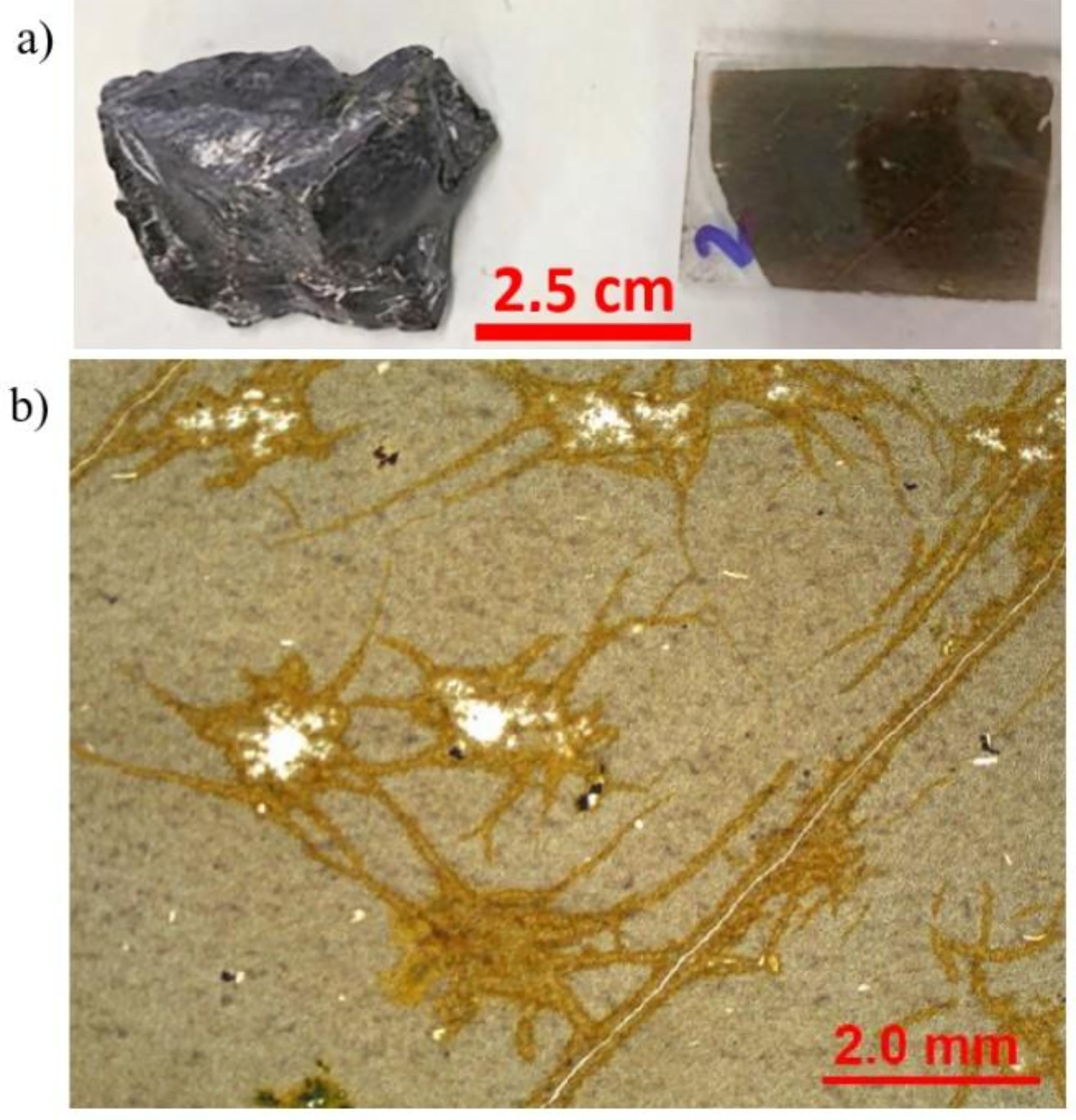
Sample Caxias do Sul belongs to the volcanic igneous class and is a vitreous basaltic rock (or andesite). Figure 3(a) shows the mesoscopic characteristics of sample Caxias do Sul: glassy appearance and presence of fractures that do not follow natural separation planes, confirming its glassy nature. It is a melanocratic rock, black in recent fractures, where conchoidal fractures typical of glassy rocks are evident, with aphanitic texture and slight magnetism to a hand magnet, indicating the presence of magnetite.

(a) Mesoscopic characterization of sample Caxias do Sul and (b) photomicrograph of the sample at 7× magnification with a 2.0 mm scale bar, showing a general view of the thin section under crossed polarized light
Regarding the microscopic characteristics, the sample presents a microporphyritic texture with an aphanitic matrix. It is visually rich in perlitic fractures and poor in crystallites, indicating the absence of devitrification. Extremely fine grains and microphenocrystals are observed in Figure 3(b).
As shown in Figure 3(b), sample Caxias do Sul presents a clearly vitreous matrix, with microphenocrysts smaller than 0.5 mm, irregular boundaries with corrosion embayments, and interfacial textures with swallowtail terminations due to re-equilibration reactions with the matrix. Figures 4(a) and 4(b) shows details of the microporphyritic texture with few microphenocrystals of plagioclase (pl) and clinopyroxene (px). The opaque mineral present is hematite; however, the occurrence of magnetite and brownish minerals is also possible, likely a clay mineral from the Vermiculite Group.

Detail of the previous photomicrograph, 25× magnification and 1.0 mm scale bar, with (a) plane-polarized light and (b) crossed polarized light. (c) XRD with the main identified mineral phases and an amorphous halo
XRD analysis (Figure 4(c)) reveals the main mineral phases present: plagioclase of the andesine type, clinopyroxene of the augite type, and a clay mineral from the Vermiculite Group, corroborating the petrographic analysis. The diffractogram also shows a pronounced amorphous halo, indicating that the sample is rich in non-crystalline and/or poorly crystalline material.
Regarding the crystalline structure of the samples, andesine and augite are predominant, both silicate minerals belonging to the plagioclase subgroup. Quantification by the Rietveld Method resulted in 52% amorphous material in the sample, emphasizing the pronounced halo between 17° and 35°, which indicates a significant fraction of non-crystalline material.
Figure 5(a) shows the mesoscopic characteristics of sample Cambará do Sul: a melanocratic rock, black in fresh fracture, with vitreous luster and conchoidal fractures, indicating the presence of a glassy matrix. The rock is massive, with few cavities filled by light-colored minerals, and it did not show magnetism with a hand magnet.

(a) Mesoscopic characterization of sample Cambará do Sul and (b) photomicrograph at 7× magnification with a 2.0 mm scale bar
Figure 5(b) shows the thin section at 7× magnification, where extremely fine grains and irregular cavities filled with a colorless mineral, likely quartz, can be observed. Regarding the microscopic characteristics, the sample presents a microporphyritic texture, with rare very fine plagioclase microphenocrystals (diameter smaller than 0.3 mm) embedded in an aphanitic to microcrystalline matrix, rich in clinopyroxene, plagioclase, and opaque mineral crystallites. Opaque minerals are abundant and occur as disseminations and crystallites throughout the matrix.
Some greenish minerals with low or no birefringence are also observed, indicating low crystallinity, possibly Vermiculite. Domains with very low birefringence (black) are also present, corresponding to isotropic vitreous domains, possibly devitrified material.
Figure 6(a) shows a plagioclase (pl) microphenocryst embedded in a vitreous matrix rich in crystallites and disseminated opaque minerals (op). The volcanic nature of the rock is evident from the described textures (microporphyritic, aphanitic matrix, and presence of crystallites). The extremely fine matrix makes precise classification difficult. According to the parameters of Streckeisen (1976), the rock can be classified as andesite or basalt. More details on the mineralogy are shown in Figure 6(c).

Detail 200× magnification with a 0.15 mm scale bar, (a) plane-polarized light and (b) crossed polarized light showing a plagioclase microphenocryst. (c) X-ray diffractogram with peaks of the main identified mineral phases and an amorphous halo due to the presence of a glassy matrix
XRD analysis (Figure 6(c)) reveals the main mineral phases present: plagioclase of the andesine type, clinopyroxene of the augite type, feldspars of the sanidine type, and goethite. A pronounced amorphous halo is also observed, indicating that the sample is rich in low-crystallinity material, glass, and or devitrified glass. Quantification by the Rietveld Method resulted in 24.8% amorphous material in the sample, confirming a more subtle amorphous halo when compared to sample Caxias do Sul.
Sample São Joaquim (Figure 7(a)) is a mesocratic volcanic igneous rock, dark gray in fresh fracture and with an aphanitic texture, with no visible crystals to the naked eye. It shows flow structure marked by the alternation of submillimetric light and dark layers, defining a subtle folded banding (yellow arrow). Figure 7(b) shows the thin section, where extremely fine grains and the presence of magmatic flow structure can be observed, including the closure of a fold (yellow arrow).
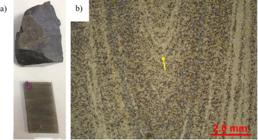
(a) Mesoscopic characterization of sample São Joaquim and (b) photomicrograph at 7× magnification with a 2.0 mm scale bar
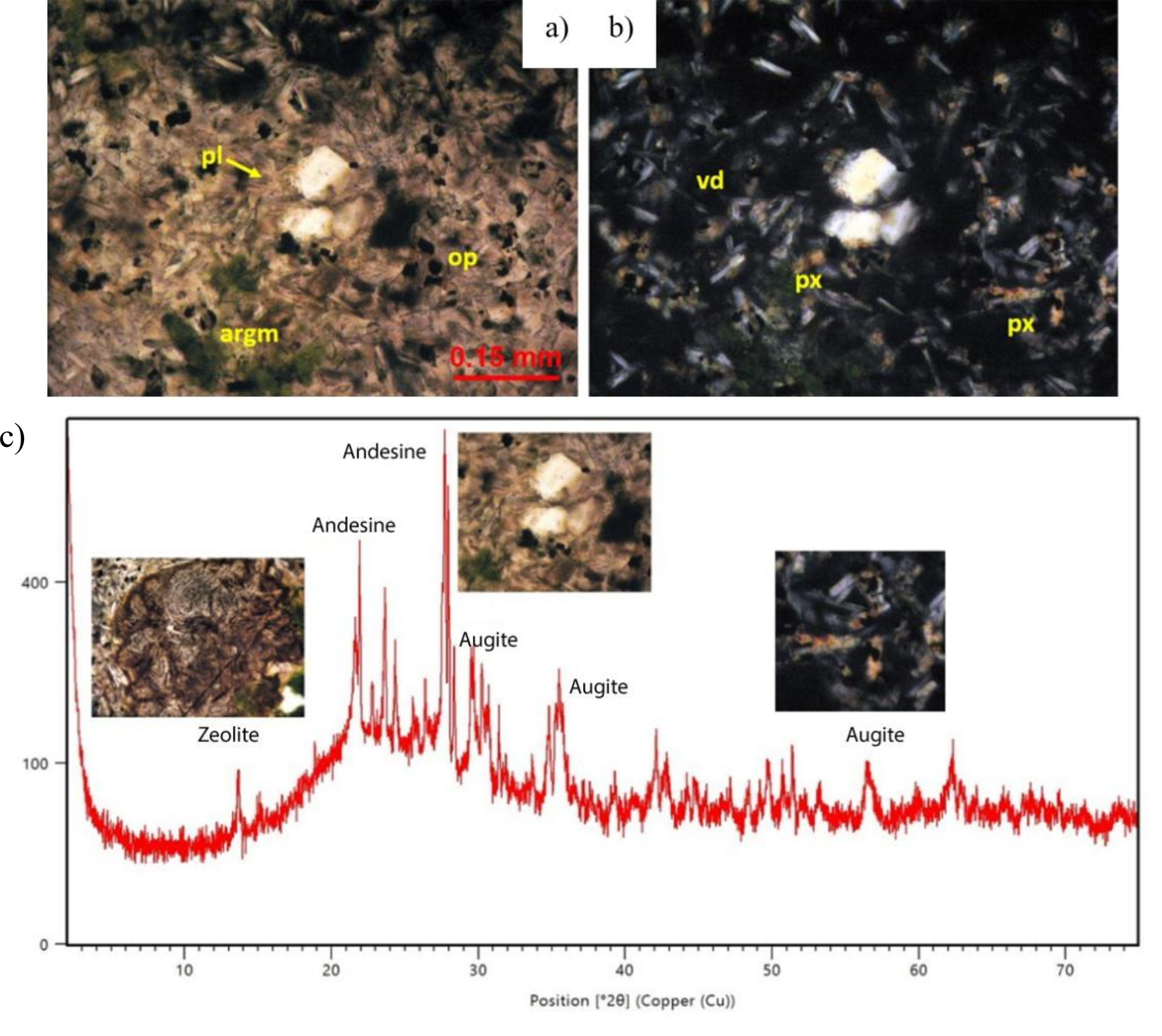
Regarding the microscopic characteristics, the sample presents a microporphyritic texture with very few plagioclase phenocrysts, smaller than 0.15 mm, prismatic and isolated, along with clinopyroxene microphenocrysts, embedded in a fine to vitreous matrix with grain size below 0.15 mm, composed of rare crystallites, likely plagioclase and clinopyroxene, and glassy material. Figures 8(a) and 8(b) shows plagioclase microphenocrysts (pl), clay minerals from the Vermiculite Group (argm) in an aphanitic matrix, clinopyroxene (px), and a dark matrix with low crystallinity. The opaque mineral present is hematite, indicated by reddish films associated with the mineral that borders and replaces clinopyroxene grains.
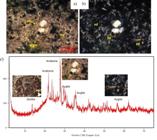
Detail at 200× magnification with a 0.15 mm scale bar, (a) plane-polarized light and (b) crossed polarized light. (c) X-ray diffractogram with peaks of the main identified mineral phases and an amorphous halo due to the glassy matrix
The X-ray diffractogram (Figure 8(c)) reveals the main mineral phases present: plagioclase of the andesine type, clinopyroxene of the augite type, and zeolite, which fills the cavities.
Quantification by the Rietveld Method resulted in 46.5% amorphous material in the sample, which was expected given the prominent amorphous scattering halo observed in Figure 8(c), indicating a significant fraction of non-crystalline material.
The volcanic nature of sample São Joaquim is evident from the described textures: microporphyritic, aphanitic matrix, and the presence of amygdales. The presence of an extremely fine to microcrystalline matrix makes precise classification difficult. Traditional classification based on the proportion of phenocrysts, mainly plagioclase, allows the rock to be classified as basalt or andesite according to Streckeisen (1976).
All three analyzed rocks show low crystallinity and or the presence of volcanic glass in their composition. Therefore, they were considered suitable to proceed with the experimental program.
3.2 Characterization
Table 4 presents the results of chemical composition, specific density, and specific surface area of the rocks. The density values are similar among the samples, with the Cambará do Sul rock showing the highest value, 2.60 g/cm³, indicating that this sample is denser. In Table 4, Caxias do Sul has a relatively narrow particle distribution and a predominance of finer particles, while CS suggests greater heterogeneity and the presence of coarser particles. In turn, sample São Joaquim presents the highest values in all metrics, characterizing a wider distribution and a predominance of larger diameter particles. In comparison, Caxias do Sul shows greater homogeneity when compared to the others. Regarding reactivity potential, finer particles tend to have a larger specific surface area, favoring dissolution, chemical reaction, and interaction with fluids. In this aspect, sample Caxias do Sul, due to its smaller average size and more concentrated distribution of fine particles, has a higher reactivity potential compared to the others. CS occupies an intermediate position.
As expected, the analyzed rocks present high silica content. Caxias do Sul and Cambará do Sul show silica contents above 64%, while São Joaquim reached 62.71%. The total content of silicon, aluminum, and iron oxide (SiO₂ + Al₂O₃ + Fe₂O₃) exceeds the minimum requirement according to C618 (ASTM, 2019) and NBR 12653 (ABNT, 2015b), of 70%, for all analyzed samples, with Caxias do Sul presenting the highest result. The SiO₂ + Al₂O₃ content ranges from 78.93% to 75.97% of the total. This parameter is important because reactive vitreous phases are generally richer in silica and alumina (Labbaci et al., 2017).
SO₃ was not detected in any of the samples. According to C618 (ASTM, 2019), MgO content should be lower than 5%, which is met in all rocks investigated. In addition, as expected for Palmas-type rocks, the samples present low TiO₂ content, below 2% (Nardy; Machado; Oliveira, 2008; Waichel et al., 2012; Koppe, 2021).
3.3 Pozzolanicity analysis according to NBR 12653
The rock samples were classified as “Class N” (natural and artificial pozzolans that meet the requirements of the standard, such as certain volcanic materials of acidic petrographic character, calcined clays, and siliceous cherts). Table 5 summarizes the chemical requirements established by NBR 12653 (ABNT, 2015b) and the results obtained.
Chemical requirements, comparison between obtained results and standardized values according to Class “N”
From Table 5, it can be observed that all evaluated properties meet the reference values for the analyzed class, corroborating the results of El-Didamony et al. (2015), Teymen (2017), Petropavlovskaya et al. (2018), and Amin et al. (2019). In addition, the studied samples show SiO₂ + Al₂O₃ + Fe₂O₃ values higher than the minimum required by NBR 12653 (ABNT, 2015b). None of the samples contained SO₃, in agreement with El-Didamony et al. (2015), Labbaci et al. (2017), and Amin et al. (2019).
The loss on ignition (LOI) values are below the maximum limit of 10% required for natural pozzolans according to NBR 12653 (ABNT, 2015b) and C618 (ASTM, 2019) for all samples. According to Bergmann et al. (2014), igneous rocks with LOI values higher than 3% may have undergone some type of alteration, and higher LOI values are associated with lower reactivity (Djobo et al., 2017; Koppe, 2021).
All three samples presented average moisture contents below 3%, as required by NBR 12653 (ABNT, 2015b) and C618 (ASTM, 2019). The moisture contents obtained in this study fall within the range reported by Laibao et al. (2013) and Saraya (2014). It is noted that this property varies according to chemical composition and proper execution of the test procedures.
Table 6 presents the physical requirements of the standard and the obtained results, except for compressive strength, which is presented later.
Physical requirements, comparison between obtained results and standardized values according to Class “N”
In this experimental program, only processed rock passing through a 45 µm sieve was used. Therefore, all tested samples meet the requirement of NBR 12653 (ABNT, 2015b) and the maximum value of 34% specified by C618 (ASTM, 2019). Regarding the pozzolanic activity index (IAP), the results for sample Caxias do Sul showed a decrease of 93.67% compared to the minimum value established by the standard. The same behavior was observed for Cambará do Sul, 94.33% lower than the minimum, and São Joaquim, 96.33% lower than the minimum. The low IAP results can be explained by a combination of structural, mineralogical, and methodological factors. One hypothesis is the low availability of the effective amorphous fraction. According to Snellings, Mertens and Elsen (2012), the reactivity of supplementary cementitious materials depends not only on the amount of amorphous phase but also on its solubility and structural accessibility. Natural pozzolans, such as acidic volcanic rocks, tend to exhibit late strength gains (Uzal; Turanli; Mehta, 2007), which explains the low IAP values observed at 7 days in this study.
Lemma et al. (2024) demonstrated that the vitreous fraction is responsible for the greatest pozzolanic contribution in mixed cements, while the zeolitic fraction exhibits very limited reactivity, even after 90 days of hydration. This behavior reinforces that materials with a high zeolite content, as observed in Cambará do Sul and São Joaquim, tend to exhibit reduced initial performance, although they may contribute at later ages. Despite the low initial reactivity, Scrivener, John and Gartner (2018) highlight that the incorporation of supplementary cementitious materials, even those with moderate activity, is strategic for reducing the clinker factor and CO₂ emissions, aligning with the eco-efficiency goals of the cement industry. Thus, the results obtained do not invalidate the potential of acidic volcanic rocks as mixed cement materials but indicate that their application should consider both the late nature of the pozzolanic reaction and the environmental benefit associated with the partial replacement of Portland cement.
The average compressive strength values of the produced mortars are presented in Figure 9.

Statistically, based on the non-parametric Kruskal–Wallis test, with the samples divided into groups and a significance value equal to 0, it can be stated that the groups differ in terms of compressive strength, with Cambará do Sul differing significantly from Caxias do Sul and São Joaquim.
In addition, when comparing the compressive strength results of Caxias do Sul, Cambará do Sul, and São Joaquim individually with Reference Mortar, Caxias do Sul and Reference Mortar do not differ in compressive strength, with a significance of 0.154. São Joaquim and Reference Mortar also do not differ, with a significance of 0.058. In contrast, Cambará do Sul differs from Reference Mortar, with a significance equal to 0.
When comparing the average compressive strength with Reference Mortar, Caxias do Sul and São Joaquim exceeded the 90% requirement of NBR 12653 (ABNT, 2015b), while only Cambará do Sul presented a result below the minimum, as shown in Table 7.
Physical requirements, compressive strength performance obtained and standardized values according to Class “N”
The analysis of the results in Table 7 and Figure 9 shows that, despite the low IAP values at 7 days (Table 6), the materials exhibit different evolution at later ages. Caxias do Sul and São Joaquim reached the minimum required strength at 28 days, while Cambará do Sul maintained inferior performance, confirming its lower reactivity. The strength curve in Figure 9 shows that Caxias do Sul has a consistent upward behavior, associated with the high content of amorphous material, while São Joaquim shows late gains, suggesting slow reactivity. Cambará do Sul, in turn, failed to compensate for the dilution effect, remaining below the normative limits. These results corroborate Lemma et al. (2024), which demonstrated that the vitreous fraction is responsible for the greatest pozzolanic contribution, while the zeolitic fraction shows low reactivity even after 90 days.
The NBR 5752 standard (ABNT, 2014) does not mention the possibility of testing substitution levels other than 25%. However, considering the large amount of CO₂ in the atmosphere and the climate scenarios reported by scientists, any reduction in emissions is beneficial. When compared to the minimum value specified by C618 (ASTM, 2019), 75%, the three studied rocks could be considered pozzolanic materials under this criterion. It is important to note that several authors, including Saraya (2014), El-Didamony et al. (2015), Amin et al. (2019), Dobiszewska, Pichór and Szoldra (2019), Qiao et al. (2019) and Lemma et al. (2024), evaluate later ages when assessing pozzolanic potential. At later ages, while clinker hydration decreases, the pozzolanic reaction continues gradually until ion mobility in hardened pastes becomes minimal. As a result of the progression of the pozzolanic reaction, there is an increase in C-S-H content at later ages (Massazza, 1998).
For this reason, evaluating extended curing ages beyond the 28 days specified in NBR 5752 (ABNT, 2014) is relevant when analyzing pozzolanicity. The 28-day period proposed by the standard is often considered insufficient to capture pozzolanic effects, which may not be observable at such early ages (Meinhart et al., 2023).
3.4 Complementary assessments
As complementary assessments, two methods were considered to evaluate pozzolanic activity: the Modified Chapelle method, according to NBR 15895 (ABNT, 2010), and the method proposed by Luxán, Madruga and Saavedra (1989), whose results are presented in Table 8.
NBR 15895 (ABNT, 2010) does not establish a minimum lime consumption value to classify a material as pozzolanic. However, according to Raverdy et al. (1980), a mineral addition should present values higher than 436 mg Ca(OH)₂/g to be considered pozzolanic. Based on this criterion, only Caxias do Sul exceeded the minimum value proposed by Raverdy et al. (1980), even surpassing the results reported by Montanheiro et al. (2011). On the other hand, the least reactive sample, São Joaquim, showed a lime consumption 45% lower than that of Caxias do Sul. Considering the values adopted by Montanheiro et al. (2011), Cambará do Sul and São Joaquim samples can be classified as potentially pozzolanic or as having low pozzolanic reactivity.
According to Luxán, Madruga and Saavedra (1989), if the difference between final and initial conductivity is higher than 1.2 µS/cm, the material can be classified as a good pozzolan. Values between 0.4 and 1.2 µS/cm indicate variable pozzolanicity, and values below 0.4 µS/cm indicate non-pozzolanic behavior. As each phase has different solubility and dissolution rates, ion consumption occurs during precipitation, leading to a decrease in ion concentration. The Cambará do Sul sample showed higher conductivity than the others, while São Joaquim was the only sample classified as non-pozzolanic.
Pozzolanic activity index obtained by the modified Chapelle method and conductivity by Luxán method
The comparison between the modified Chapelle method and Luxán reveals conceptual differences that justify the distinct results obtained for the analyzed samples. The Chapelle method directly quantifies the consumption of Ca(OH)₂ per gram of material, providing a chemical measure of the calcium hydroxide binding capacity. In this context, sample Caxias do Sul showed the highest consumption (539.62 mg/g), followed by Cambará do Sul and São Joaquim, indicating greater chemical reactivity. On the other hand, the Luxán method is based on the electrical conductivity of the suspension, reflecting the release of ions in solution. This approach is more sensitive to the physical and structural characteristics of the material, such as texture and solubility, which may limit the classification of pozzolanic activity. Thus, while Chapelle highlighted the high reactivity of Caxias do Sul, the Luxán method classified Caxias do Sul and Cambará do Sul as having variable pozzolanicity and São Joaquim as non-pozzolanic. This discrepancy stems from the distinct nature of the parameters evaluated: chemical consumption of Ca(OH)₂ versus electrochemical response in solution.
4 Conclusions
The investigation of the acidic volcanic rocks as supplementary cementitious materials reveals that their potential is directly governed by the synergy between mineralogical composition and amorphous content. The geological survey successfully identified samples with favorable precursor characteristics, such as the presence of volcanic glass and a low degree of crystallinity, despite a common mineralogical base of andesine and augite across all specimens. After grinding, Caxias do Sul showed greater reactive potential due to the predominance of finer particles and the smaller average particle size, characteristics that increase the surface area available for chemical interaction.
Although the three rocks met the chemical and physical requirements of NBR 12653 (ABNT, 2015b), their performance in short-term reactivity tests, such as the 7-day pozzolanic activity with lime, was limited. This suggests a slower reaction kinetic that may require extended curing periods to fully manifest. Furthermore, the study established a clear hierarchy of efficiency, where the amorphous content (peaking at 52% in Caxias do Sul) functioned as the primary driver for chemical and mechanical performance. This was corroborated by the Modified Chapelle test, where Caxias do Sul exhibited the highest calcium hydroxide consumption, significantly outperforming sample São Joaquim. Statistical analysis of the mortars’ compressive strength confirmed this trend, distinguishing the superior performance of Caxias do Sul and São Joaquim from the less reactive Cambará do Sul. Ultimately, while the Luxán method classifies the materials between variable and non-pozzolanic, the integrated analysis of mechanical and chemical data confirms that these volcanic rocks, particularly sample Caxias do Sul, represent technically viable alternatives for clinker replacement, contributing to the development of more sustainable cementitious systems.
Obviously, further studies are needed to complement the analysis carried out in this research, since the study was limited to the analysis of specific veins; therefore, other nearby rocks should be studied.
Acknowledgements
The authors express their gratitude for the communication with Professor Valdecir A. Janasi. The petrographic analyses were conducted with the assistance and supervision of geologist and professor of mineralogy and petrography, Andrea Sander. Special thanks to Professor Sander.
-
MEINHART, A. H.; BORGES, C. M.; MAUS, K. L. D.; POLESELLO, E.; SANDER, A.; KOPPE, A.; ARNOLD, D. C. M. Potential of acidic volcanic rocks from the Serra Geral group as a partial replacement for Portland cement. Ambiente Construído, Porto Alegre, v. 26, e154485, jan./dez. 2026. ISSN 1678-8621 Associação Nacional de Tecnologia do Ambiente Construído. http://dx.doi.org/10.1590/s1678-86212026000100991
-
Financial Support
The authors state that the research did not receive any type of financial support.
-
Declaration of Generative AI and AI-Assisted Technologies in the Writing Process
During the preparation of this work, the authors used Copilot to check for grammatical errors and improve readability. After using this tool/service, the authors reviewed and edited the content as needed and assume full responsibility for the content of the publication.
Data Availability Statement
Research data available only upon request to the corresponding author.
References
- AMERICAN SOCIETY FOR TESTING AND MATERIALS. C618/2019: standard specification for coal fly ash and raw or calcined natural pozzolan for use in concrete. West Conshohocken, 2019.
- AMIN, M. et al. The influence of basalt minerals as cement substitution materials in mortar. Acta Polytechnica, v. 59, n. 6, 2019.
- ANDRADE, F. R. D. et al Volcanic glass in Cretaceous dacites and rhyolites of the Paraná Magmatic Province, Southern Brazil: characterization and quantification by XRD-Rietveld. Journal of Volcanology and Geothermal Research, v. 355, p. 219–231, 2018.
- ASSOCIAÇÃO BRASILEIRA DE NORMAS TÉCNICAS. NBR 12653: materiais pozolânicos: requisitos. Rio de Janeiro, 2015b.
- ASSOCIAÇÃO BRASILEIRA DE NORMAS TÉCNICAS. NBR 15895: materiais pozolânicos: determinação do teor de hidróxido de cálcio fixado: método Chapelle modificado. Rio de Janeiro, 2010.
- ASSOCIAÇÃO BRASILEIRA DE NORMAS TÉCNICAS. NBR 16605: cimento Portland e outros materiais em pó: determinação da massa específica. Rio de Janeiro, 2017.
- ASSOCIAÇÃO BRASILEIRA DE NORMAS TÉCNICAS. NBR 5751: materiais pozolânicos: determinação da atividade pozolânica com cal aos sete dias. Rio de Janeiro, 2015c.
- ASSOCIAÇÃO BRASILEIRA DE NORMAS TÉCNICAS. NBR 5752: materiais pozolânicos: determinação do índice de desempenho com cimento Portland aos 28 dias. Rio de Janeiro, 2014.
- ASSOCIAÇÃO BRASILEIRA DE NORMAS TÉCNICAS. NBR 7211: agregados para concreto: especificação. Rio de Janeiro, 2019b.
- ASSOCIAÇÃO BRASILEIRA DE NORMAS TÉCNICAS. NBR 7214: areia normal para ensaio de cimento: especificação. Rio de Janeiro, 2015a.
- ASSOCIAÇÃO BRASILEIRA DE NORMAS TÉCNICAS. NBR 7215: cimento Portland: determinação da resistência à compressão de corpos de prova cilíndricos. Rio de Janeiro, 2019a.
- ASSOCIAÇÃO BRASILEIRA DE NORMAS TÉCNICAS. NBR 7389-2: agregados: análise petrográfica de agregado para concreto: parte 2: agregado graúdo. Rio de Janeiro, 2009.
- ASSOCIAÇÃO BRASILEIRA DE NORMAS TÉCNICAS. NBR NM 24: materiais pozolânicos: determinação do teor de umidade. Rio de Janeiro, 2003.
-
BATTELLE MEMORIAL INSTITUTE. Toward a sustainable cement industry: substudy 8: climate change. battelle – the business of innovation. 2002. Available: https://www.osti.gov/etdeweb/biblio/2026958 Access: 10 may 2022.
» https://www.osti.gov/etdeweb/biblio/2026958 - BERGMANN, M. et al. Considerações sobre o potencial de uso agronômico das rochas vulcânicas da Formação Serra Geral da Bacia do Paraná. In: HARTMANN, L. A.; SILVA, J. T. da; DONATO, M. (org.). Tecnologia e inovação em gemas, jóias e mineração Porto Alegre: UFRGS, 2014.
- BESSER, M. L. Sequência vulcânica ácida da região de São Joaquim-SC: reoignimbritos ou lavas? 2017. Tese (Doutorado em Geologia) – Universidade Federal do Paraná, Curitiba, 2017.
- BINICI, H. et al. Durability properties of concretes made with sand and cement size basalt. Sustainable Materials and Technologies, v. 145, 2019.
- CHINDAPRASIRT, P.; RUKZON, S. Strength, porosity and corrosion resistance of ternary blend Portland cement, rice husk ash and fly ash mortar. Construction and Building Materials, v. 22, n. 8, p. 1601-1606, 2008.
- CORDEIRO, L. N. P.; MASUERO, A. B.; DAL MOLIN, D. C. C. Análise do potencial pozolânico da cinza de casca de arroz (CCA) através da técnica de Refinamento de Rietveld. Revista Matéria, v. 19, n. 2, p. 150-158, 2014.
- DJOBO, J. N. Y. et al Volcanic ash-based geopolymer cements/concretes: the current state of the art and perspectives. Environmental Science and Pollution Research, v. 24, n. 5, p. 1-15, 2017.
- DOBISZEWSKA, M.; PICHÓR, W.; SZOŁDRA, P. Effect of basalt powder addition on properties of mortar. In: SCIENTIFIC CONFERENCE OF THE COMMITTEE FOR CIVIL ENGINEERING OF THE POLISH ACADEMY OF SCIENCES AND THE SCIENCE COMMITTEE OF THE POLISH ASSOCIATION OF CIVIL ENGINEERS, 64., Krynica-Zdrój, 2018. Proceedings [...] Les Ulis: EDP Sciences, 2019.
- EL-DIDAMONY, H. et al. Basalt as pozzolana and filler in ordinary portland cement. American Journal of Engineering and Applied Sciences, v. 8, n. 2, 2015.
- HOSSAIN, K. M. A. Blended cement using volcanic ash and pumice. Cement and Concrete Research, v. 33, n. 10, p. 1601–1605, 2003.
-
INTERNATIONAL ENERGY AGENCY. Standards for building a low-carbon and low-clinker future Paris: IEA, 2025. Available: https://www.iea.org/reports/breakthrough-agenda-report-2025 Access: 13 may 2026.
» https://www.iea.org/reports/breakthrough-agenda-report-2025 - KANNAN, D. M. et al. High performance concrete incorporating ceramic waste powder as large partial replacement of Portland cement. Construction and Building Materials, v. 144, p. 35-41, 2017.
- KOPPE, A. Verificação do potencial de ativação alcalina de rochas vulcânicas ácidas: um estudo de desempenho mecânico e caracterização do ligante. São Leopoldo, 2021. Tese (Doutorado em Engenharia Civil) – Universidade do Vale do Rio dos Sinos, São Leopoldo, 2021.
- LABBACI, Y. et al. The use of the volcanic powders as supplementary cementitious materials for environmental-friendly durable concrete. Construction and Building Materials, v. 133, p. 468-481, 2017.
- LAIBAO, L. et al. Investigating the influence of basalt as mineral admixture on hydration and microstructure formation mechanism of cement. Construction and Building Materials, v. 48, p. 434-440, 2013.
- LEMMA, R. et al. Natural pozzolan with different volcanic glass and zeolite content: Effect on the performance of blended cement. Construction and Building Materials, v. 451, p. 138821, 2024.
- LUXÁN, M. P.; MADRUGA, F.; SAAVEDRA, J. Rapid evaluation of pozzolanic activity of natural products by conductivity measurement. Cement and Concrete Research, v. 19, p. 63-68, 1989.
- MASSAZZA, F. Pozzolana and pozzolanic Cements. In: HEWLETT, P. C. (ed.). Lea’s chemistry of cement and concrete 4. ed. Oxford: Butterworth-Heinemann, 1998.
- MEINHART, A. H. et al Análise do potencial de uso do fíler basáltico como substituição parcial do cimento Portland. Ambiente Construído, Porto Alegre, v. 23, n. 4, p. 169-186, out./dez. 2023.
- MONTANHEIRO, T. J. et al Vidro vulcânico maciço: pozolana natural no oeste paulista. Geologia USP. Série Científica, São Paulo, v. 11, n. 1, p. 59–74, 2011.
- NARDY, A. J. R. et al Parâmetros físicos pré-eruptivos do magnetismo ácido da Província Magmática do Paraná: Resultados preliminares. Geociências, v. 30, n. 4, p. 575-588, 2011.
- NARDY, A. J. R.; MACHADO, F. B.; OLIVEIRA, M. A. F. As rochas vulcânicas mesozoicas ácidas da Bacia do Paraná: litoestratigrafia e considerações geoquímico-estratigráficas. Revista Brasileira de Geociências, v. 38, n. 1, p. 178-195, 2008.
- PETROPAVLOVSKAYA, V. et al The use of pulverized wastes of basalt production as a filler of gypsum compositions. In: INTERNATIONAL SCIENTIFIC CONFERENCE INTELLECTUAL PRODUCTION ENVIRONMENTAL AND CIVIL ENGINEERING, Moscow, 2018. Proceedings [...] Les Ulis: EDP Sciences, 2018.
- POLO, L. A. et al Effusive silicic volcanism in the Paraná Magmatic Province, South Brazil: Physico-chemical conditions of storage and eruption and considerations on the rheological behavior during emplacement. Journal of Volcanology and Geothermal Research, v. 355, p. 115-135, 2017.
- POLO, L. A. et al. Effusive silicic volcanism in the Paraná Magmatic Province, South Brazil: evidence for locally-fed lava flows domes from detailed field work. Journal of Volcanology and Geothermal Research, v. 355, p. 204-218, 2018.
- POLO, L. A. O vulcanismo ácido da Província Magmática Paraná-Etendeka na região de Gramado Xavier, RS: estratigrafia, estruturas, petrogênese e modelo eruptivo. São Paulo, 2014. Tese (Doutorado em Petrologia Ígnea e Metamórfica) – Instituto de Geociências, Universidade de São Paulo, São Paulo, 2014.
- POLO, L. A.; JANASI, V. A. Reply to the discussion by Duarte and Hartmann on “Volcanic stratigraphy of intermediate to acidic rocks in southern Paraná Magmatic Province, Brazil” by Polo and Janasi (2014). Revista do Instituto de Geociências, São Paulo, v. 14, n. 4, p. 101-105, 2014b.
- POLO, L. A.; JANASI, V. A. Volcanic stratigraphy of intermediate to acidic rocks in Southern Paraná Magmatic Province, Brazil Revista do Instituto de Geociências, São Paulo, v. 14, n. 2, p. 83-100, 2014a.
- QIAO, H. et al. The feasibility of basalt rock powder and superfine sand as partial replacement materials for Portland cement and artificial sand in cement mortar. Research and Application of Materials Science, v. 1, n. 1, 2019.
- RAVERDY, M. et al Appreciation de l’activite pouzzolanique des constituants secondaires. In: INTERNATIONAL CONGRESS ON THE CHEMISTRY OF CEMENT, 7., Paris, 1980. Proceedings […] Paris, 1980.
- ROSSETTI, L. de M. M. et al Estratigrafia do Grupo Serra Geral na calha de Torres, Sul do Brasil. In: JELINEK, A. R.; SOMMER, C. A. (org.). Contribuições à Geologia do Rio Grande do Sul e de Santa Catarina Porto Alegre: Compasso Lugar-Cultura, 2021.
- SARAYA, M. E.-S. I. Study physico-chemical properties of blended cements containing fixed amount of silica fume, blast furnace slag, basalt and limestone, a comparative study. Construction and Building Materials, v. 72, 2014.
- SCRIVENER, K. L.; JOHN, V. M.; GARTNER, E. M. Eco-efficient cements: Potential economically viable solutions for a low-CO₂ cement-based materials industry. Cement and Concrete Research, v. 114, p. 2–26, 2018.
- SELMO, L. T. Caracterização geológico-geotécnica da brecha vítrea ocorrente em uma jazida de riodacito: projeto de expansão da mina Maestra – Caxias do Sul – RS. Porto Alegre, 2014. Trabalho de Conclusão de Curso (Graduação em Geologia) –Universidade Federal do Rio Grande do Sul, Porto Alegre, 2014.
- SNELLINGS, R.; MERTENS, G.; ELSEN, J. Supplementary cementitious materials. Reviews in Mineralogy and Geochemistry, v. 74, n. 1, p. 211–278, 2012.
- STRECKEISEN, A. L. Classificação e nomenclatura de rochas ígneas. Neues Jahrbuch für Mineralogie Abhandlungen, v. 107, p. 144-240, 1976.
- TEYMEN, A. Effect of mineral admixture types on the grout strength of fully-grouted rockbolts. Construction and Building Materials, v. 145, 2017.
- UZAL, B.; TURANLI, L.; MEHTA, P. K. High-volume natural pozzolan concrete for structural applications. ACI Materials Journal, v. 104, n. 5, p. 535, 2007.
- WAICHEL, B. L. et al Stratigraphy and volcanic facies architecture of the Torres Syncline, Southern Brazil, and its role in understanding the Paraná-Etendeka Continental Flood Basalt Province. Journal of Volcanology and Geothermal Research, v. 215-216, p. 74–82, 2012.
- WILBERT, D. G. B.; KAZMIERCZAK, C. de S.; KULAKOWSKI, M. P. Análise da interface entre agregados reciclados de concreto e argamassas de concretos com cinza de casca de arroz e fíler basáltico por nanoindentação. Ambiente Construído, Porto Alegre, v. 17, n. 2, p. 253-268, abr./jun. 2017.
Edited by
-
Editor-in-chief:
Enedir Ghisi