
 Compliance of fire prevention systems in educational institutions: a case study in Santa Catarina
Abstract
This study assesses the compliance of fire safety systems in an educational building in the civil engineering department of the Federal University of Santa Catarina. The requirements of the 1994 fire safety standards, in force at the time of the fire prevention and protection plan, were compared with the current normative instructions of the Military Fire Brigade of Santa Catarina. The methodology consisted of on-site inspections, preparation of a plan for completed work, and application of normative checklists. The results showed significant non-conformities, despite the necessary safety systems being in place. In particular, deactivating the battery bank renders the emergency lighting and evacuation signage in one of the blocks unusable. In addition, some of the fire extinguishers are obstructed or depressurised, and the fire hydrant components are incomplete. In general, the building does not meet the safety requirements for its occupancy profile, underscoring the need to maintain and update the fire prevention and protection plan. The conclusions reinforce the importance of continuous fire safety management in educational institutions to ensure people's safety and protect public property.
Keywords
Compliance assessment; Fire safety; Public building; Normative instructions
Resumo
Este estudo avalia a conformidade dos sistemas de segurança contra incêndios em um prédio educacional no departamento de engenharia civil da Universidade Federal de Santa Catarina. Foram comparados os requisitos das normas de segurança contra incêndios de 1994, vigentes à época do plano de prevenção e proteção contra incêndios, com as instruções normativas atuais do Corpo de Bombeiros Militar de Santa Catarina (CBMSC). A metodologia consistiu em inspeções in loco, na elaboração de uma planta da obra concluída e na aplicação de listas de verificação normativas. Os resultados mostraram que há importantes não conformidades, embora os sistemas de segurança necessários estejam instalados. Em particular, a desativação do banco de baterias inutiliza a iluminação de emergência e a sinalização de evacuação de um dos blocos. Ademais, alguns dos extintores estão obstruídos ou despressurizados, e os componentes dos hidrantes estão incompletos. Em geral, o edifício não cumpre as exigências de segurança para o seu perfil de ocupação, evidenciando a necessidade de manutenção e de atualização do plano de prevenção e proteção contra incêndios. As conclusões reforçam a importância da gestão contínua da segurança contra incêndios nas instituições de ensino a fim de garantir a segurança das pessoas e proteger os bens públicos.
Palavras-chave
Avaliação de conformidade; Segurança contra incêndio; Edifício público; Instruções normativas
1 Introduction
The evolution of Fire Safety Systems (FSSs) directly accompanies the development of cities and engineering (Garcia-Castillo; Paya-Zaforteza; Hospitaler, 2023; Jones; Petrov; Jane, 2019). From the first post-fire urban legislation, such as that in European and North American regions, to modern international performance-based regulations (Meacham, 2022; Spinardi; Bisby; Torero, 2017), the central concern is to protect lives and property and ensure business continuity. FSSs are an interdisciplinary field that brings together engineering, human behaviour, materials science and risk management. Internationally, milestones such as the National Fire Protection Association (NFPA) standards, the ISO 8421 series and the advancement of engineering methodologies (Jones; Petrov; Jane, 2019; Rampinelli, 2018) have standardised concepts and performance criteria. Countries such as the United States, the United Kingdom, Australia and Europe use hybrid approaches (prescriptive and performance-based) to meet the demands of complex buildings (Jones; Petrov; Jane, 2019; Meacham, 2022). Recent work also highlights the emergence of automated visual inspection and deep learning methods for fire safety verification, improving the accuracy and frequency of compliance assessments (Lin et al., 2025).
Currently, FSSs integrate urban resilience and risk management policies (Carramiñana et al., 2024). In dense cities, detection and rapid response systems mitigate socio-economic losses (Ma et al., 2025). Catastrophic events, such as the fires at Grenfell Tower in 2017 (Benson; Elsmore, 2022; Khan; Haynes, 2021) and Notre-Dame in 2019 (Garcia-Castillo; Paya-Zaforteza; Hospitaler, 2023), have reignited the debate on governance, prevention culture and regulatory obsolescence. These episodes highlighted the need for continuous compliance and integration between design, operation, and maintenance (Dauda et al., 2025). Also, they emphasised the need for adaptive regulatory frameworks that respond to complexity rather than rely on reactive approaches (Mohan et al., 2025). In Brazil, legislative developments have been driven by tragedies. The fires at the Andraus building in 1972 and the Joelma building in 1974, both in São Paulo, prompted the structuring of fire departments and the definition of the first requirements for emergency exits and alarms (Franco; Gaydeczka, 2024; Silva, 2023). Decades later, the fire at the Kiss nightclub in 2013 (Braga; Moita, 2017) led to Law 13.425/2017 (Kiss Law), which established general guidelines for public gathering places, focusing on capacity, escape routes, and finishing materials (Rampinelli, 2018; Silva, 2023).
At the local level, the importance of continuous fire safety management at the Federal University of Santa Catarina (UFSC) was dramatically highlighted by the 1996 fire that affected the Civil Engineering Department building, causing extensive damage to laboratories, equipment, research projects, and physical infrastructure. In addition to the direct financial losses associated with reconstruction, the event disrupted teaching and research activities and exposed weaknesses in the maintenance and updating of safety systems. This historical background reinforces the relevance of revisiting the current condition of the same building, almost three decades later, to verify whether the lessons learned have effectively translated into improved fire safety performance.
Ordinance 108/2019 sought to standardise technical parameters at the national level, but each state retains regulatory autonomy. In Santa Catarina, the Military Fire Brigade's Normative Instructions (INs) were revised between 2021 and 2024, incorporating new guidelines (Matos et al., 2025). However, the challenge of existing buildings persists, many of which were designed according to previous standards, such as the older Fire Safety Regulations (NSCI 94) of 1994, that need updating. Given this, there is a growing demand for systematic compliance models, such as structured checklists, to guide designers and managers. The literature points out that recurring failures (depressurised fire extinguishers, inoperative light fixtures, obstructions) stem more from a lack of inspection than from design errors (Franco; Gaydeczka, 2024). Checklists ensure the inspection of critical items and are management tools recognised by standards such as NFPA 10 (fire extinguishers) and ISO 23601 (signage) (Franco; Gaydeczka, 2024; Jones; Petrov; Jane, 2019).
Compliance with firefighting requirements consists of strict adherence to national standards (such as ABNT) and state regulations (such as those of the Santa Catarina Fire Department), which are essential to the operational and legal safety of a building. It must be verified systematically, covering everything from the performance of individual components to the functionality of fire protection systems. Regulatory compliance transforms theoretical and technical guidelines into barriers for mitigating risks to life and property.
Studies indicate that investment in prevention is significantly lower than post-fire costs (Khan; Haynes, 2021; Ma et al., 2025). In Brazil, accidents at universities and hospitals result in high losses. The 1996 fire at UFSC's Civil Engineering Department, for example, caused substantial losses, reinforcing the need for maintenance and inspection. The asset management literature treats the life cycle of safety systems as a strategic investment (Dauda et al., 2025; Franco; Gaydeczka, 2024). Preventive maintenance and functional testing increase durability and ensure operation in critical situations (Yildiz, 2025). Negligence, on the other hand, increases the probability of failures and the costs of rehabilitation.
Another structural challenge in the Brazilian context is the limited emphasis given to fire safety in the training of civil engineers and related professionals. In practice, Fire Prevention and Protection Plans (FPPP) are often approached as secondary content, rather than as a strategic element of building performance and risk management. This perception tends to limit discussion of fire safety to the design approval phase, with insufficient attention to execution, maintenance, and periodic verification of systems throughout the building's life cycle. The case study presented herein illustrates how such cultural and educational gaps can manifest as persistent non-compliance, even in a university environment that emphasises technical expertise. Therefore, this study aligns with the international movement toward continuous and data-supported fire-safety management in educational facilities (Mohan et al., 2025; Lin et al., 2025; Rasa et al., 2024).
It is essential to analyse the compliance of existing buildings. Universities, in particular, present specific challenges: high user turnover, heavy traffic, laboratories and buildings from different areas (Franco; Gaydeczka, 2024; Matos et al., 2025). These factors complicate management and reinforce the need for systematic diagnostics. In this context, the objective of this work is to analyse the compliance of the Fire Safety Systems and Measures installed in the case-study building with the applicable regulations and to verify their operability under real conditions. Specifically, the study seeks to:
-
classify the building according to the current local Normative Instructions in one of Brazilian states, considering occupancy, height, area, and associated fire risk;
-
compare the systems implemented with the normative requirements at the time of construction and with the updated instructions in force in 2024; and
-
discuss the implications of the identified non-compliances for the users safety and for the management of fire safety in similar public educational institutions.
At last, the work contributes to the debate on continuous maintenance and regulatory updates in public institutions.
2 Literature review
To demonstrate the importance of compliance assessment studies in Brazilian buildings, an integrative review of the literature in journal articles was conducted. Elsevier's Scopus database was used with the search string: "Fire AND building* AND Brazil AND (safety OR hazard OR prevent*)". The search was conducted on 28 January 2026 and returned 28 articles, of which only 12 were selected after excluding articles that did not focus on buildings, firefighting, or compliance analysis. The articles were published between 2009 (one paper) and 2025 (4 papers), with most (8) published after 2022. The recent interest in fires is the subject of constant evolution in the research field, intensified by the significant fire hazard events in the country, as presented in the introduction.
The literature analysed reveals that the Brazilian fire safety scenario is characterised by prescriptive and heterogeneous state legislation (Tavares, 2009; Rodrigues; Rodrigues; Silva Filho, 2017), which historically evolves reactively in response to major tragedies, such as the Kiss Nightclub fire (Gragnani et al., 2017; Gabriel et al., 2022). Although there are technical efforts in risk management, there is a significant discrepancy between state regulatory requirements, which hinders the adoption of standardised techniques by designers and results in inconsistent required safety levels (Rodrigues; Rodrigues; Silva Filho, 2017; Minervino et al., 2025a). Recent statistical data also indicate an increase in electrical accidents (Souza et al., 2023) and a high prevalence of fires in residential environments (Corrêa et al., 2025), highlighting the importance of basing public policies on consolidated data rather than on responses to disasters.
There is a worrying divergence between regulatory requirements and the actual practice of maintenance and management of protection systems in buildings. Studies conducted in federal educational institutions and health facilities have demonstrated serious flaws, including the lack of management plans, inadequate training for fire brigades, and inadequate maintenance of basic equipment (Franco; Gaydeczka, 2023; Machi Junior et al., 2014). In the commercial sector, a significant proportion of properties lack mandatory electrical designs or protection against shocks and surges (Souza et al., 2025). In historic buildings, it was found that simple compliance with local legislation, which is often lenient to preserve architectural features, does not guarantee effective safety for the heritage and its occupants (Minervino et al., 2025b).
Given this context, there is an urgent need for compliance assessment studies to verify and incentivise that the installed systems meet safety requirements and operate as expected in emergency situations. The literature suggests that Brazil still faces cultural barriers to the full implementation of performance-based codes (Tavares, 2009), which reinforces the importance of comparing the effectiveness of prescribed firefighting applications with the actual risks observed. Therefore, it is essential to encourage new practical case studies, as these provide evidence about real contexts, which is necessary to improve legislation, validate computer simulation tools, and transform the national safety culture from reactive to preventive (Hennemann et al., 2022; Corrêa et al., 2025).
3 Method
In this study, a compliance assessment of the Fire Safety Systems and Measures installed in a university building in Florianópolis, Santa Catarina, was conducted. The verification considered the standards of the Santa Catarina Military Fire Brigade, including the 1994 Fire Safety Standards (NSCI 94), in force at the time of the Fire Prevention and Protection Plans (FPPP), as well as the updated Normative Instructions, in force as of 24 April 2024. The methodology involved on-site inspections, document analysis, and comparison between old and current regulatory requirements. The hypothesis tested is that the “current fire safety measures in the building are hindered by the lack of proper maintenance”. Besides serving as a case study, the manuscript also aims to highlight the importance of these safety precautions.
3.1 Object of study
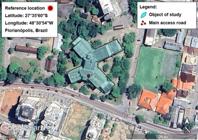
The object of study is the building of the Civil Engineering Department of the Federal University of Santa Catarina (UFSC), consisting of six floors, with a total height of 15.30 metres between the lowest and highest occupied floors and a total floor-plan area of 8,844.61 m². The estimated maximum capacity of the building is 1,164 people, per the IN 9 parameters of the Fire Brigade. The building is located on the UFSC university campus in Florianópolis and houses research laboratories, classrooms, professors' offices, administrative sectors, and common circulation areas. According to the classification defined by IN 1 – Part 2 of the Fire Brigade (CBMSC, 2024), the building falls under occupation “E” (Educational), subdivision E-1, intended for schools and educational institutions in general. Figure 1 shows the building and its location.
Based on the criteria of IN 1 – Part 2, the building is classified as an E-1 educational occupancy with a height between 12 m and 23 m and a total floor-plan area greater than 750 m², which places it in a category that requires a comprehensive set of fire safety systems, including fire extinguishers, a hydrant system, emergency lighting, evacuation signage, fire alarm, and structural protection. The combination of height, floor-plan area, and expected occupancy load characterises the building as one of significant fire risk, not only due to the potential number of people exposed in an emergency, but also because of the presence of laboratories and equipment that may increase the fire load. This classification underpins the selection of mandatory systems and the performance thresholds adopted in the compliance analysis.
3.2 Fire safety systems and measures
Using Table 7 of Normative Instruction (IN) 1 – Part 2 – “Fire Safety Systems and Measures” of the Fire Brigade, the mandatory systems for the object of study were identified: an E-1 type building with a height of 12 to 23 metres and a floor-plan area of 8,844.61 m². Table 1 lists all systems required for this classification; only those that could be verified as compliant were selected based on access. As the standards and NIs in force on the date of preparation of the FPPP differ from those currently in force, and considering that such regulations evolve to improve building safety, the assessment considered both: NSCI 94, in force at the time of the FPPP, and the INs updated as of 24 April 2024, the start date of this study.
3.3 Compliance assessment
The compliance analysis consisted of on-site inspections of all building floors, supplemented by measurements and verification of distances and heights using CAD software. For each system, the compliance with the criteria of NSCI 94 (regulations in force on the date of the FPPP) and with the criteria of the current Normative Instructions (INs 6, 7, 11, 12 and 13) were assessed; also, the operating conditions, functioning and preservation of systems and the recording of faults, obstructions, missing elements, deterioration and outdated elements were also analysed. This approach enabled the identification of execution faults, maintenance issues, regulatory obsolescence, and potential impacts on the building's safety and its users. Table 2 shows the items verified in the survey.
The assessment was supported by the 2013 FPPP approved for the building, which defines the original design intent regarding the number, type, and location of the fire safety systems. However, during the survey, it became evident that the actual configuration of the systems diverged from the FPPP in several aspects due to subsequent interventions, partial replacements, and changes in use. For this reason, local inspections were conducted to update the position and characteristics of the main safety systems.
3.4 Action plan
Based on the non-conformities found, an action plan was drawn up to guide possible corrective interventions, maintenance, and the updating of preventive systems, covering short-, medium-, and long-term actions. The plan includes specific recommendations for improving systems, standardising signage, replacing inoperative elements, adapting protection systems and making the necessary corrections. The GUT method was applied as a qualitative risk analysis technique, based on ISO 31010 (ISO, 2019), allowing events to be ranked based on criteria of impact (Severity), temporal urgency (Urgency) and prognosis of evolution (Trend). The analyses were subjective, with scores from 1 to 5 assigned by the authors. The final multiplication of the scores allows the risks of inaction in correcting the problems to be ranked.
4 Results and discussion
The inspected building has adequate coverage of the main Fire Safety Systems and Measures, including fire extinguishers, emergency lighting, evacuation signage, an alarm system, and a hydrant system. However, specific flaws were identified that compromise the effectiveness of these systems and, consequently, the safety of users. The following sections present analyses of specific systems and outline an action plan based on these considerations.
4.1 Assessment by the existing system
The building managers contract third parties to perform system maintenance; this maintenance includes preventive inspections, reports on inconsistencies, replacement of defective systems, and technical reports, among others. Thus, assessments were organised to provide information on the adequacy or otherwise of fire safety activities. According to the maintenance records and labels attached to the equipment, inspections of the emergency lighting, fire alarm, signage, fire extinguishers, and hydrants are carried out by the outsourced company at regular intervals, ranging from quarterly to annual checks, depending on the system. The field survey for this study was conducted shortly after the date indicated as the deadline for the most recent maintenance cycle, meaning the non-compliances identified reflect the condition of the systems immediately after they should, in principle, have been fully operational and up to standard. This temporal proximity highlights essential gaps in the effectiveness of maintenance routines and in the internal supervision of the services provided.
4.1.1 Fire extinguishers
In total, 49 fire extinguishers were checked, distributed across all floors, ensuring the minimum coverage required by IN 6, two extinguishers per floor and a maximum walking distance of 30 m. All extinguishers were within this distance, with an average walking distance of approximately 15 m. However, based on the analysis of the installation, access, signage, and pressurisation criteria, inconsistencies were observed that affect the system's performance. The fire extinguishers observed had two types of extinguishing agents: 29 Dry Chemical Powder (DCP) and 20 carbon dioxide (CO2). DCP fire extinguishers are used for A, B or C classes of fires, while CO2 extinguishers help fight classes B and C fires. Thus, the use of both types of fire extinguishers protects against fires caused by solids, flammable liquids, or electrical faults. Other classes are not necessary for the specified use in the building.
The installation was partially compliant in two ways: some of the fire extinguishers complied with NSCI 94 (between 1.00 m and 1.70 m), and others complied with IN 6 (installation on a floor support with a handle up to 1.60 m). This mixture of criteria creates visual and operational heterogeneity, making it difficult to standardise future inspections and the operation of the systems. Such complexity is a common problem in buildings that have not undergone a complete update after regulatory revisions.
In terms of access, seven extinguishers were obstructed by tables, bins or boxes placed in front of them. Even seemingly harmless objects can delay response at the onset of a fire, as seconds are critical for initial fire control. The simultaneous obstruction of the extinguisher and the manual trigger, observed on one floor, represents a serious flaw, as it compromises both manual detection and initial firefighting. Signage, although present in most locations, follows different standards, including old signs with a white background and red symbol (NSCI 94), some recent photoluminescent signs, and a total absence of signage in five locations. The lack of standardisation makes it difficult for an occupant to locate the equipment, especially in low-light conditions.
Lastly, pressurisation was checked, as it is considered the most critical criterion for proper operation. Of the 29 DCP fire extinguishers, two were depressurised. Fire extinguishers without pressure become unusable and pose a high risk, as initial firefighting almost always depends on this equipment, even before the hydrants are activated. The joint analysis shows that the system provides good coverage, but its effectiveness depends on maintenance and standardisation measures that are not being fully implemented.
4.1.2 Emergency lighting
The building has 196 emergency lights, distributed appropriately for its size. However, only 98 were working correctly, representing 50% operational efficiency, which is well below acceptable levels for a vital evacuation system. The analysis revealed a structural problem: the system is powered by two battery stations, one for block A and one for block B. The block B station was completely inactive, with accumulated boxes and materials in front of it, making preventive maintenance impossible. Comparable issues regarding maintenance and outdated systems were also identified by Ding et al. (2024), who found that ageing electrical components and unmonitored fuel-load variations significantly increase vulnerability to fire.
As a result, all the lights in block B were inoperative, several in block A were faulty due to interrupted electrical connections, and some lights remained burned out due to a lack of replacements. The inactive power station compromises not only lighting but also signalling, increasing the risk during evacuation. The presence of materials stored at the control centre site also poses an additional fire risk, in violation of basic safety guidelines. Regarding installation height, 125 light fixtures were installed below the smoke stratification level, as required. However, this does not compensate for the impact of the control centre failure, as a properly installed but unlit light fixture does not perform the necessary function.
4.1.3 Signs for abandoning the premises
Sixty-six signage plates distributed across the floors were checked. Although almost all of them were installed at the height specified by one of the standards (NSCI 94 or IN 13), only 35 were working, revealing faults originating from the same battery centre that affects the emergency lighting. The building uses old-style illuminated signs (red on white), which indicates that the signage has never been updated in accordance with IN 13, which establishes a green background with white symbols. The oxidation of the signs limits visibility and can impair the perception of the escape route in panic situations. In addition, points specified in the FPPP lacked signs, which can lead to a loss of spatial reference during evacuation, especially in long corridors and transition areas. Evacuation-simulation research in teaching buildings confirms that signage performance and crowd density strongly determine the time available for safe egress (Jing et al., 2025). The dependence on the emergency lighting system reinforces the need for technical upgrades. In the event of a power failure or fire, block B would be completely blind, with no indication of an exit, an unacceptable condition.
4.1.4 Fire alarm system
The alarm system performed best among those evaluated. The control panel was installed in an easily accessible location and was functioning correctly, although the electrolyte leakage from the batteries is a critical issue that requires immediate intervention. Of the 34 manual triggers, all were at the regulatory height, and 33 were accessible, indicating good compliance. However, the lack of photoluminescent signage on four triggers and the simultaneous obstruction of a trigger and a fire extinguisher at a specific point represent significant operational failures. Supervision indicated that the actuators were connected and monitored, reinforcing the system's integrity. However, minor visual and access failures can delay activation in a real situation, increasing the time to general alert.
4.1.5 Hydrants system
Twenty-two hydrants were inspected, of which 17 were in good condition. At the same time, the rest had problems such as missing or damaged hoses, missing nozzles, rusty shelter doors, and faded external identification. The hydrants were installed at heights compatible with standards, and 20 of them had unobstructed access. The presence of spring-loaded doors that protrude over five hydrants may hinder emergency use, although they do not prevent access. It was not possible to test flow or pressure, a standard limitation in non-invasive studies. However, it is recommended that future analyses include hydraulic tests to determine whether the technical reserve and pumps meet regulatory flow rates. The lack of adequate maintenance is evident, reflecting an inspection cycle that is not carried out with the necessary regularity. Regarding the water supply for the hydrant system, an analysis of the required volume was carried out. The technical firefighting water reserve for this type of structure requires a total volume of 15 m³ to supply water to the hydrants. However, only 12 m³ of water is reserved for firefighting, as the original firefighting plan required this volume at the time of design.
4.2 Assessment of compliance and fulfilment of safety requirements
Table 3 summarises the compliance of the systems analysed, showing that all are present, but with uneven performance. Vital systems, such as fire extinguishers, emergency lighting and signage, presented failures that could compromise safe evacuation and initial firefighting in the event of a fire. The leading cause observed is the lack of ongoing maintenance and regulatory changes that were not accompanied by the building's original fire prevention and control plan.
In university buildings, the coexistence of old elements with partial renovations and expansions makes it challenging to standardise systems. In addition, an approach based solely on outsourced maintenance, without continuous internal supervision, can lead to simple faults (such as burned-out light bulbs and obstructions) remaining unresolved for long periods. The failure to update signage and reliance on obsolete systems, such as battery-powered stations, highlight the need for comprehensive modernisation of Fire Safety Systems and Measures.
4.3 Creation of an action plan
Based on the non-conformities identified, a structured action plan was developed to support the management and prioritisation of interventions. The actions were classified using the GUT matrix. Table 4 shows a suggested action plan for the site, based on the results of the compliance analysis and ranked by the highest risks associated with the problems.
4.4 Impact of fire safety on buildings
Brazilian educational institutions have characteristics that make them particularly vulnerable to fire risks: high daily traffic, a variety of simultaneous activities, the presence of laboratories and flammable materials, and buildings that are often old or have been expanded without integrated safety planning (Franco; Gaydeczka, 2024). Historically, incidents recorded in schools and universities in Brazil and abroad show that the absence or malfunction of fire safety systems can result in human losses, the interruption of activities, structural damage, and the compromise of research, equipment, and collections. Although not all incidents gain national relevance, reports of fire outbreaks, electrical installation failures, and problems resulting from insufficient maintenance are recurrent in audits by control agencies and inspections by fire departments (Franco; Gaydeczka, 2024; Matos et al., 2025).
In this context, fire safety plays an essential role in risk mitigation, ensuring adequate conditions for evacuation, initial response, and fire control. Systems such as emergency lighting, evacuation signage, fire hydrants, fire extinguishers, and automatic detection are essential for saving lives and minimising material damage. The adoption of regular inspection, maintenance, and team training practices is essential and contributes to creating a safer, more resilient institutional environment. As shown by Wang et al. (2025), even when technical systems are adequate, limited fire-safety literacy among occupants can compromise evacuation efficiency and risk perception, underscoring the human dimension of safety management. Given the human, academic and patrimonial value involved, investing in fire safety in educational institutions should be understood not only as a regulatory requirement, but also as a strategic measure for the continuity of activities and the protection of the school and university community.
From this perspective, fire safety in educational buildings should be considered a strategic investment rather than a mere legal obligation. The costs associated with updating systems, standardising signage, and maintaining equipment in adequate operating condition are typically lower than the potential losses resulting from a significant fire, which may include not only structural damage and replacement of equipment, but also the interruption of academic activities, loss of research data, and long-term impacts on institutional credibility. By quantifying non-compliances and linking them to concrete risks, studies such as this one support decision-makers in prioritising resources and justifying investments for fire prevention.
4.5 Possible incorporation into other Brazilian educational buildings
The findings of this research can serve as a reference for other educational institutions, helping develop more efficient strategies for managing and maintaining fire safety systems. The incorporation of continuous inspection routines, updating of fire prevention and control plans, systematic verification of fire extinguishers, regular testing of emergency lighting and signalling systems, and training of technical teams and users constitute a set of replicable practices with a high preventive impact. The adoption of these measures in other educational buildings can significantly reduce the risk of events with great potential to cause human and material damage.
In addition to the specific results for the case-study building, the methodological approach adopted, combining regulatory classification, analysis of the existing FPPP, development of an as-built layout, and the use of structured checklists for each system, constitutes a practical diagnostic tool that can be replicated in other educational facilities. This step-by-step procedure allows managers and technical teams to systematically identify non-compliances, prioritise corrective actions according to risk, and monitor the effectiveness of maintenance programmes over time. Its application across different institutional contexts may help build a comparative database on the state of fire safety in Brazilian educational buildings and guide public policies for the sector.
4.6 Limitations and suggestions for further work
The research objectives were achieved, but it is essential to highlight limitations that influenced the scope of the results, and that may be addressed in future studies. Partial access to the building prevented checking all areas and units of the preventive systems, limiting the conclusions to those areas actually inspected. In addition, the sketch used to represent the fire safety systems was prepared based on the 2013 FPPP, which allows only an approximate view of the current layout of the systems, with low geometric accuracy.
To check CO2 extinguishers, the extinguisher was weighed, and the tare weight was subtracted to obtain the mass of extinguishing agent present inside the container. This mass must be equal to or greater than 90% of the total capacity of the extinguisher to be considered pressurised. Due to the absence of tare values for the CO2 extinguishers present in the building, it was not possible to verify the tares. This characteristic demonstrates a limitation and a problem with the building, as it makes it impossible for employees to continuously verify the extinguisher's compliance for use. Similarly, verification of manual triggers was limited to the indicated supervision status due to the technical impracticality of activation, and analysis of hydrants was restricted to the presence and general condition of the shelters, without in-depth inspection of the internal components.
For future studies, it is recommended that a fire prevention project be developed and updated in accordance with the current standards for the building analysed or similar types of buildings, broadening understanding of the practical implications of regulatory compliance. It is also suggested that experimental tests be carried out on the behaviour of finishing and coating materials in fire situations, with classification according to the applicable technical instructions, as well as the preparation of budget analyses that assess the investment required for the implementation of safety systems, comparing it to the potential costs of recovery after a disaster. Regarding the hydrants, future studies may assess performance using pressure measurements, further verifying and ensuring the system's effectiveness in use. It is also noteworthy that the hoses were not verified, and future compliance checks must assess for holes that could hinder performance. These approaches can deepen understanding of the performance, cost-effectiveness, and impact of adopting fire safety measures in the built environment.
5 Conclusions
The results of this study reinforce the importance of assessing fire safety systems in educational buildings, especially in institutions that concentrate a large number of people, expensive equipment, and essential activities. The analysis identified critical inconsistencies that could compromise user safety and property integrity. Even with maintenance routines and the work of technical teams, it was evident that failures in specific systems, such as fire extinguishers, emergency lighting, signage, and power supply centres, can significantly reduce the efficiency of the initial response in the event of an accident and increase operational and human risks.
Among the non-compliances identified, the most critical finding was the deactivation of the Block B battery bank, which supplies both the emergency lighting and the illuminated evacuation signage in that block. This single failure renders two vital systems simultaneously inoperative in a significant portion of the building, creating conditions of almost complete visual deprivation in the event of a power outage during an emergency. In practical terms, occupants in Block B would be exposed to evacuation routes without lighting or clear exit signs, which is incompatible with the required safety level for an educational facility with high circulation and high population density.
In view of these findings, fire safety should be understood as a strategic investment capable of mitigating human, material and institutional losses. Regulatory compliance, combined with systematic maintenance programmes, user training, and continuous improvement of prevention structures, directly contributes to increasing the resilience of Brazilian educational buildings. Thus, the study highlights the need to strengthen the culture of safety, expand research in this area, and encourage the adoption of updated standards to ensure safer academic environments better prepared to handle emergencies.
Acknowledgements
This study was funded in part by the Coordenação de Aperfeiçoamento de Pessoal de Nível Superior – Brasil (CAPES) – Finance Code 001. This work was supported in part by CNPq - Conselho Nacional de Desenvolvimento Científico e Tecnológico - through the CNPq/MCTI call no. 10/2023.
-
MATOS, Í. R. de; VAZ, I. C. M.; CUSTÓDIO, D. A.; GHISI, E. Compliance of fire prevention systems in educational institutions: a case study in Santa Catarina. Ambiente Construído, Porto Alegre, v. 26, e152235, jan./dez. 2026. ISSN 1678-8621 Associação Nacional de Tecnologia do Ambiente Construído. http://dx.doi.org/10.1590/s1678-86212026000100987
-
Financial Support
This study was financed in part by the Coordenação de Aperfeiçoamento de Pessoal de Nível Superior – Brasil (CAPES) – Finance Code 001, and by the National Council for Scientific and Technological Development (CNPq), Brazil.
-
Declaration of Generative AI and AI-Assisted Technologies in the Writing Process
The authors declare that no generative artificial intelligence tools were used in the writing of this manuscript.
Data Availability Statement
Data is available on the graduation thesis of the first author - available at https://repositorio.ufsc.br/handle/123456789/261758 - and upon reasonable request for the first author.
References
- BENSON, C. M.; ELSMORE, S. Reducing fire risk in buildings: the role of fire safety expertise and governance in building and planning approval. Journal of Housing and the Built Environment, v. 37, n. 2, p. 927–950, 2022.
- BRAGA, H. C.; MOITA, G. F. On the Boate Kiss Fire and the Brazilian safety legislation: what we can learn. Collective Dynamics, v. 2, p. A12, 2017.
- CARRAMIÑANA, D. et al. Towards resilient cities: a hybrid simulation framework for risk mitigation through data-driven decision making. Simulation Modelling Practice and Theory, v. 133, p. 102924, 2024.
- CORRÊA, C. et al. ¿Cuánto tiempo vivir? La supervivencia de las personas en incendios de dormitorios residenciales, con el uso de FDS. Revista Alconpat, v. 15, n. 3, p. 384–412, 2025.
- DAUDA, J. A. et al. A systematic review of building fire safety practices in the UK: approaches, challenges and recommendations. Fire Technology, v. 61, p. 5589-5612, 2025.
- DING, X. et al. Digitized fuel load survey in commercial and university office buildings for fire safety assessment. Fire Safety Journal, v. 152, 2024.
- FRANCO, B. L.; GAYDECZKA, B. Challenges and perspectives in the implementation of the Fire Protection System in Federal institutions of higher education in Brazil. REM - International Engineering Journal, v. 77, n. 2, p. e230110, 2024.
- GABRIEL, H. R. et al. Pesquisas de mestrado e doutorado relacionadas à segurança contra incêndio em edificações no Brasil: uma revisão sistemática. Arquitetura Revista, v. 18, n. 2, p. 244–271, 2022.
- GARCIA-CASTILLO, E.; PAYA-ZAFORTEZA, I.; HOSPITALER, A. Fire in heritage and historic buildings, a major challenge for the 21st century. Developments in the Built Environment, v. 13, p. 100102, 2023.
- GRAGNANI, A. et al. Response and legislative changes after the Kiss nightclub tragedy in Santa Maria/RS/Brazil: learning from a large-scale burn disaster. Burns, v. 43, n. 2, p. 343–349, 2017.
- HENNEMANN, G. G. et al. Investigation on the causes and consequences of Kiss nightclub fire in Brazil. Architecture, Structures and Construction, v. 2, n. 2, p. 291–309, 2022.
- INTERNATIONAL ORGANIZATION FOR STANDARDIZATION. IEC 31010: risk management: risk assessment techniques. Geneva, 2019.
- JING, M. et al Simulation method for fire evacuation safety of teaching buildings in colleges and universities. Results in Engineering, v. 25, 2025.
-
JONES, N.; PETROV, I.; JANE, K. Regulatory compliance and standards: comparison of international fire safety standards. Available: https://www.researchgate.net/publication/384402745_Regulatory_Compliance_and_Standards_Comparison_of_international_fire_safety_standards#fullTextFileContent Access: Jan. 22, 2026.
» https://www.researchgate.net/publication/384402745_Regulatory_Compliance_and_Standards_Comparison_of_international_fire_safety_standards#fullTextFileContent -
KHAN, N.‑U. M.; HAYNES, P. The role of corporate governance failure in the grenfell tower fire. SSRN Electronic Journal, Feb. 2021. Available: https://ssrn.com/abstract=3783861 Access: Jan. 22, 2026.
» https://ssrn.com/abstract=3783861 - LIN, Y. et al. Efficient visual inspection of fire safety equipment in buildings. Automation in Construction, v. 163, 2025.
-
MA, C. et al. From occurrence to consequence: a comprehensive data-driven analysis of building fire risk. arXiv, 2025. Available: http://arxiv.org/abs/2503.22689 Access: 4 dez. 2025.
» http://arxiv.org/abs/2503.22689 - MACHI JUNIOR, A. et al. Safety against fire in basic health units. Journal of Human Growth and Development, v. 24, n. 1, p. 93–97, 2013.
- MATOS, Í. R. de et al. Análise de conformidade dos sistemas preventivos de combate a incêndio de uma instituição de ensino. In: SIMPÓSIO NACIONAL DE SISTEMAS PREDIAIS, 16., 2025. Anais [...] Brasília, 2025.
- MEACHAM, B. J. Fire performance and regulatory considerations with modern methods of construction. Buildings and Cities, v. 3, n. 1, p. 464–487, 2022.
- MINERVINO, B. de L. F. et al. Fire risk analysis: a proposal for historic Buildings in Brazil. International Journal of Architectural Heritage, v. 19, n. 4, p. 542–550, 2025a.
- MINERVINO, B. de L. F. et al. Fire safety regulations in Brazil: analysis of the occupancy classification of buildings. Architecture, Structures and Construction, v. 5, n. 1, p. 15, 2025b.
- MOHAN, S. et al Collapse and imposition in the regulation of fire safety. Safety Science, v. 174, 2025.
- RAMPINELLI, D. H. Smoke control systems in buildings. Ignis: Revista Técnico Científica do Corpo de Bombeiros Militar de Santa Catarina, v. 3, n. 2, 2018.
- RASA, M. et al. Understanding human-obstacle interaction dynamics on staircases: implications for emergency evacuation and fire safety in high-rise buildings. Journal of Building Engineering, v. 92, 2024.
- RODRIGUES, E. E. C.; RODRIGUES, J. P. C.; SILVA FILHO, L. C. P. da. Comparative study of building fire safety regulations in different Brazilian states. Journal of Building Engineering, v. 10, p. 102–108, 2017.
-
SANTA CATARINA. Corpo de Bombeiros Militar. Fire Safety Technical Standards (Instruções Normativas) Florianópolis: Corpo de Bombeiros Militar de Santa Catarina, 2025. Available: https://cbmsc.cbm.sc.gov.br/index.php/seguranca-contra-incendio/instrucoes-normativas Access: Jul. 10, 2025.
» https://cbmsc.cbm.sc.gov.br/index.php/seguranca-contra-incendio/instrucoes-normativas -
SANTA CATARINA. Corpo de Bombeiros Militar. Instrução Normativa n. 007/DAT/CBMSC: Sistema Hidráulico Preventivo (SHP) Florianópolis: Corpo de Bombeiros Militar de Santa Catarina, 2014. Available: https://documentoscbmsc.cbm.sc.gov.br/uploads/0ed63c2310e9ed077a61e82e65fc65e0.pdf Access: Nov. 1, 2025.
» https://documentoscbmsc.cbm.sc.gov.br/uploads/0ed63c2310e9ed077a61e82e65fc65e0.pdf - SILVA, P. H. F. The evolution of fire safety in Brazil: from the principles of fire to integrated solutions in buildings. Revista Foco - Interdisciplinary Studies, v. 16, n. 8, p. 1–14, 2023.
- SOUZA, D. F. de et al. Investigation of the quality of electrical installations in commercial properties in Brazil. In: IEEE IAS ELECTRICAL SAFETY WORKSHOP, Jacksonville, 2025. Proceedings […] Jacksonville: IEEE, 2025.
- SOUZA, D. F. et al. An analysis of accidents of electrical origin in Brazil between 2016 and 2021. IEEE Transactions on Industry Applications, v. 59, n. 3, p. 3151–3160, 2023.
- SPINARDI, G.; BISBY, L.; TORERO, J. A review of sociological issues in fire safety regulation. Fire Technology, v. 53, n. 3, p. 1011–1037, 2017.
- TAVARES, R. M. An analysis of the fire safety codes in Brazil: Is the performance-based approach the best practice? Fire Safety Journal, v. 44, n. 5, p. 749–755, 2009.
- WANG, Q. et al. Fire safety literacy of personnel in high-rise buildings. Fire, v. 8, n. 2, p. 40, 2025.
- YILDIZ, M. Machine learning for fire safety in the built environment: a bibliometric insight into research trends and key methods. Buildings, v. 15, n. 14, p. 2465, 2025.
Edited by
-
Guest editor:
Daniel Sant’Ana

