A literature review on the ambient and post-fire behavior of load transfer mechanisms in columns
Abstract
The definition of load transfer mechanisms between beams and columns remains one of the main challenges in developing composite and hybrid structural systems. Although conventional shear connectors such as headed studs are well established, alternative devices like composite dowels have recently gained attention for their constructive efficiency. However, research on the post-fire behavior of shear connectors remains limited. Assessing these parameters is essential for optimizing repair interventions in fire-damaged buildings. Therefore, this study reviews the main parameters influencing the performance of shear connectors under ambient and post-fire conditions, with emphasis on composite dowels. The research methodology involved a systematic search of the Scopus, Compendex, and Web of Science databases using specific keywords related to post-fire shear connector performance. Only studies that directly investigated connector behavior after fire exposure and cooling were selected. Additionally, a concise review of the residual properties of steel and concrete is presented. The results aim to identify possible post-fire failure mechanisms and provide guidance for the assessment of load transfer mechanisms in fire-damaged columns.
Keywords
Load transfer; Shear connectors; Fire; Composite steel and concrete structures
Resumo
A definição dos mecanismos de transferência de carga entre vigas e pilares permanece como um dos principais desafios no desenvolvimento de sistemas estruturais mistos e híbridos. Embora os conectores de cisalhamento convencionais, como os pinos com cabeça, sejam amplamente consolidados, dispositivos alternativos, como os composite dowels, têm ganhado atenção recentemente devido à sua eficiência construtiva. No entanto, pesquisas sobre o comportamento pós-incêndio desses conectores ainda são limitadas. Avaliar esses parâmetros é essencial para otimizar as intervenções de reparo em edificações danificadas por incêndio. Portanto, este estudo revisa os principais parâmetros que influenciam o desempenho de conectores de cisalhamento em temperatura ambiente e pós-incêndio, com ênfase nos composite dowels. A metodologia de pesquisa envolveu uma busca sistemática nas bases de dados Scopus, Compendex e Web of Science, utilizando palavras-chave específicas relacionadas ao desempenho de conectores de cisalhamento após incêndio. Foram selecionados apenas estudos que investigaram diretamente o comportamento dos conectores após a exposição ao incêndio e resfriamento. Além disso, apresenta-se uma revisão concisa das propriedades residuais do aço e do concreto. Os resultados visam identificar possíveis modos de falha pós-incêndio e fornecer subsídios para a avaliação dos mecanismos de transferência de carga em pilares danificados pelo fogo.
Palavras-chave
Transferência de carga; Conectores de cisalhamento; Incêndio; Estruturas mistas de aço e concreto
1 Introduction
The use of composite and hybrid structural systems in civil engineering has become increasingly common over recent decades. These systems enable the exploitation of the unique properties of various materials, thereby complementing their individual limitations. In composite elements, this synergy is particularly pronounced, as the overall strength of the assembly surpasses that of a homogeneous element composed of a single material. Conversely, in specific scenarios, the adoption of hybrid elements can lead to cost reductions and enable shorter construction timelines, making them an economically attractive option.
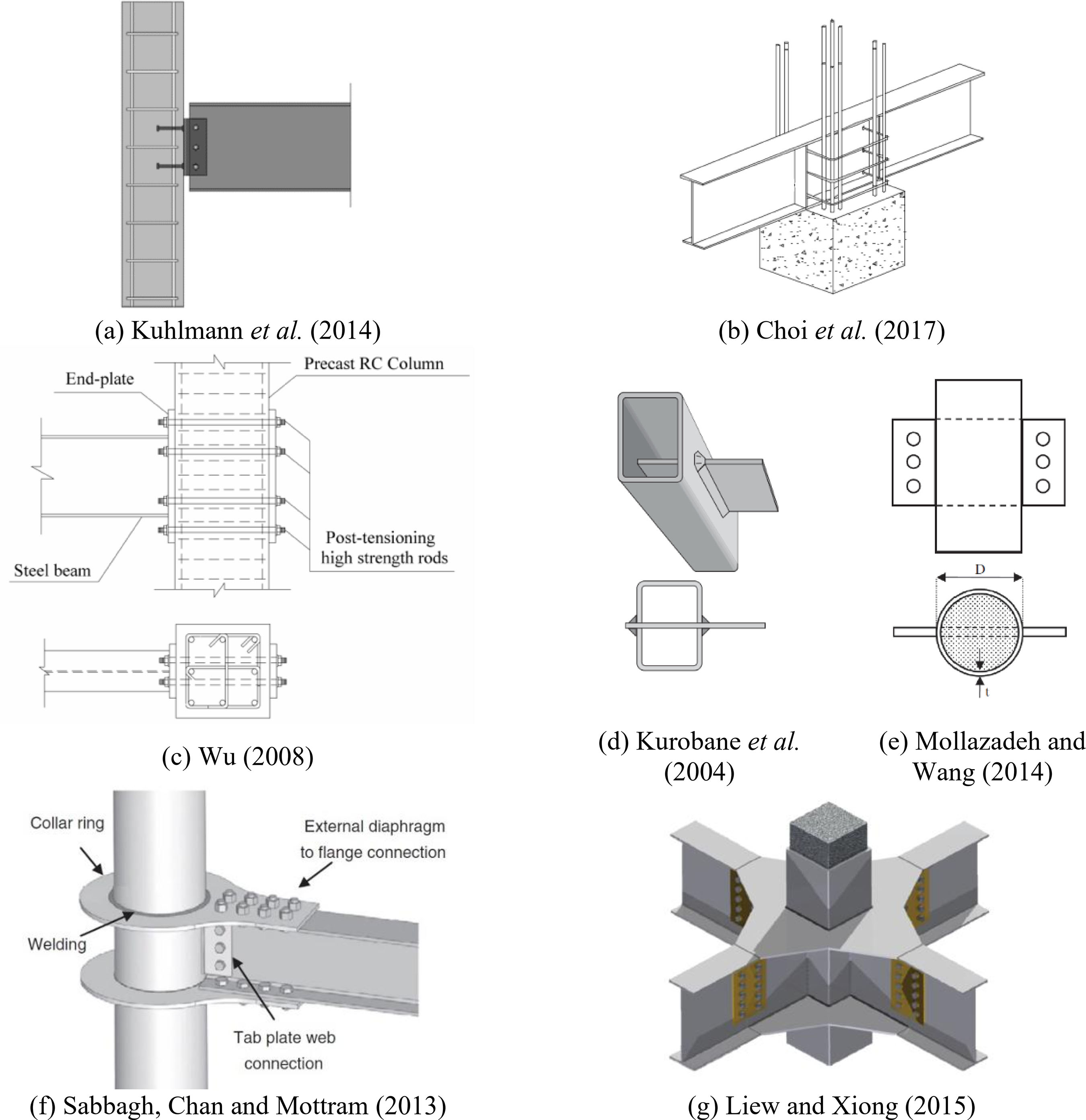
Among the challenges associated with designing such structures is the development of efficient load transfer mechanisms between beams and columns. The literature presents a variety of connection configurations suitable for these applications. For reinforced concrete columns, for example, a connection plate with headed studs welded to it can be embedded in the concrete (Figure 1a). After the concreting process, a perpendicular plate is welded to this embedded plate, facilitating the connection to the web of a steel beam and creating a connection characterized as flexible. To maintain beam continuity or achieve a rigid connection, the use of through-beams or through-bars can be considered (Figure 1b and 1c).
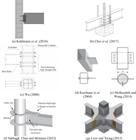
For concrete-filled composite tubular columns, through-plate connections can accommodate beams on one or both sides of the column, as shown in Figures 1d and 1e. This connection type can also be used for reinforced concrete columns, although it may interfere with the longitudinal and transverse reinforcement. For rigid connections, it is necessary to ensure the effective transfer of forces resulting from the end bending moment. This can be achieved through the use of external transverse rings or diaphragms (Figures 1f and 1g).
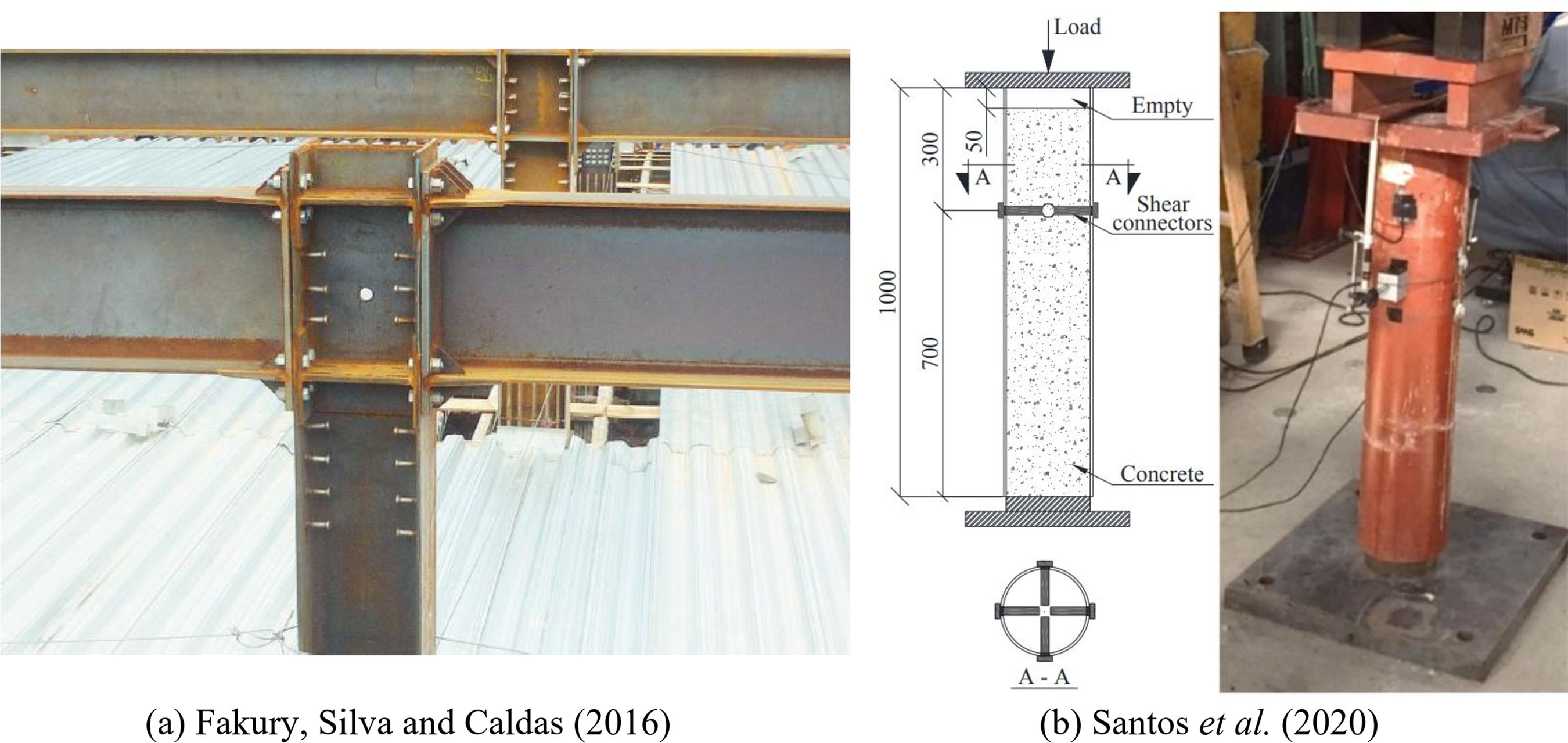
In composite columns, load introduction regions require special attention, as a portion of the load from the steel element must be transferred to the concrete. If the calculated shear strength of the interface is lower than the shear stress induced by the applied loads, stud bolts are commonly used to transfer the load (Figure 2a). Alternatively, bolts welded to the steel tube can be employed (Figure 2b). Although this is a simple and relatively easy solution, the field welding of these bolts introduces an additional construction step and requires subsequent inspection.
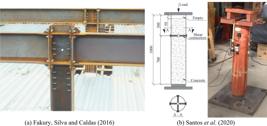
Load transfer mechanisms using (a) stud bolts in partially encased composite columns and (b) welded bolts in concrete-filled composite columns
In pursuit of new alternatives, recent research has focused on the application of connectors known as composite dowels for load transfer. In essence, these connectors consist of steel plates with regular cutouts. Over the years, different configurations have been tested and applied. However, the clothoidal and puzzle geometries (Figure 3b and 3c) are currently the most internationally accepted, and their design is addressed in the German technical approval Z-26.4-56 (DIB, 2023). Another option is the Crestbond connector (Figure 3a), studied in Brazil by Veríssimo (2007).

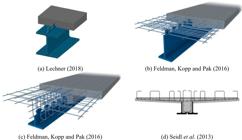
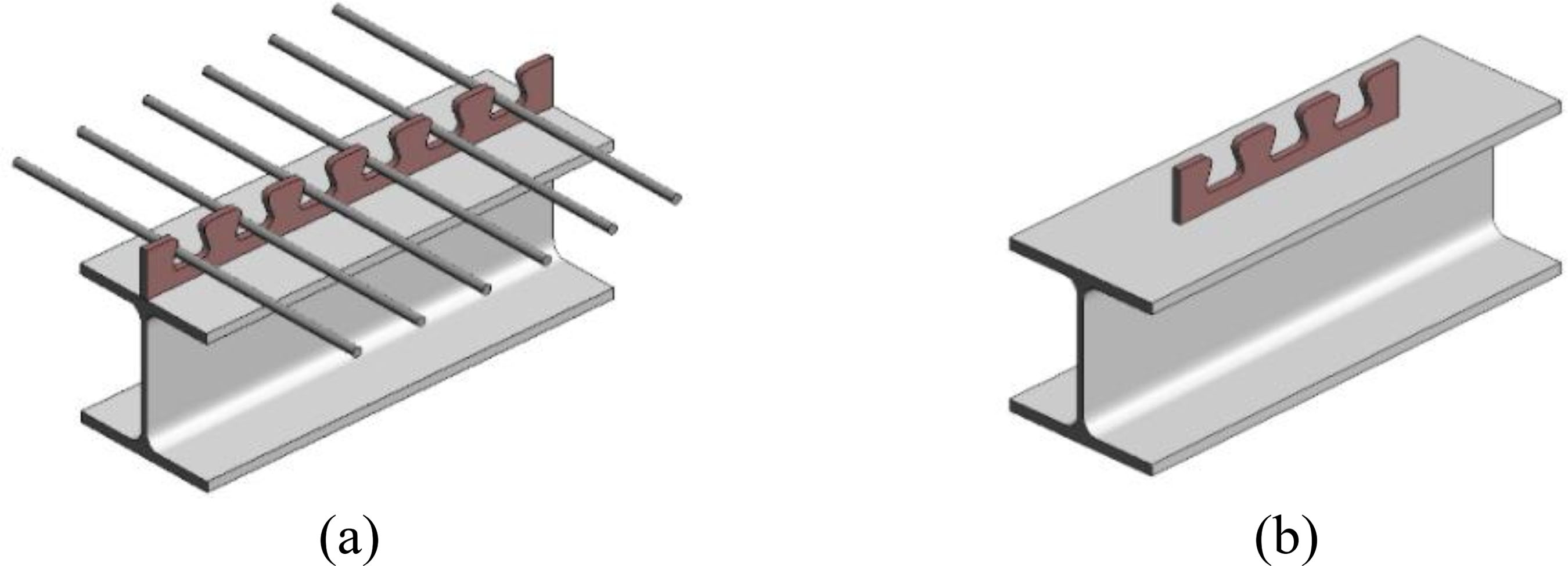
The clothoidal and puzzle shear connectors were originally designed for use in steel-concrete composite beams in bridge construction. These connectors can be welded to the top flange (Figure 4a) or integrated directly into the web of the steel beams (Figure 4b). The latter configuration offers material savings, as the top flange is eliminated, and the steel area near the neutral axis of the composite beam is minimized. Additionally, composite dowels can be employed in T-shaped composite beams, which utilize even less steel profile material. In this case, various configurations can be adopted, some of which are illustrated below (Figures 4c and 4d).
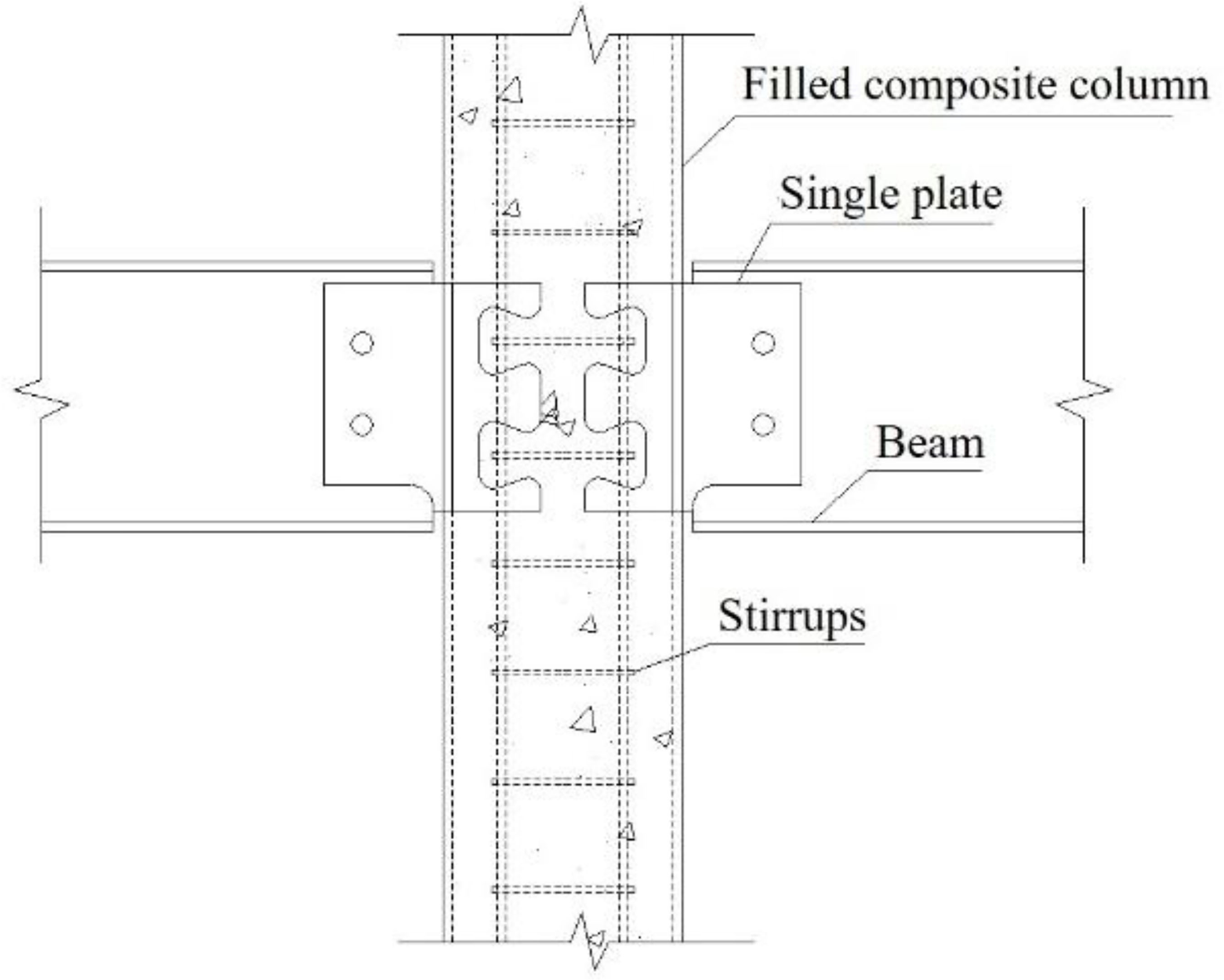
Following the successful results regarding the behavior of composite dowels in steel-concrete composite beams, their potential application as load transfer mechanisms between beams and columns was identified (Figure 5). In this new approach, the geometry of the composite dowel is directly incorporated into the connection plate, also referred to as single plate, featuring interleaved cutouts identical to those of the previously mentioned composite dowels. The regular spacing between the dowels on the plate facilitates the placement of stirrups that are part of the column reinforcement. Furthermore, depending on the load level, the connection plate itself can transfer the load without the need for additional elements, making this solution even more attractive.
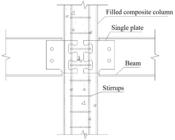
Connection between steel beams and a concrete-filled composite column using single plates with regular cutouts
This new connection model has been investigated over the past decade, particularly within the Graduate Program in Structural Engineering at the Federal University of Minas Gerais (UFMG). From these investigations, the following studies can be cited: Aguiar (2015), Aguiar et al. (2015, 2018), Cardoso, Caldas and Fakury (2016), Cardoso, Aguiar and Caldas (2020), Cardoso (2018), Pereira (2020), Santos (2021), Prado, Miranda and Caldas (2022), Pereira et al. (2023), Silveira et al. (2023), Silveira, Caldas and Santos (2024), Silveira (2024), Miranda (2024), and Camargo, Caldas and Santos (2024). All of these works confirmed the feasibility of this connection model, particularly in concrete-filled composite columns and reinforced concrete columns under ambient temperature conditions.
However, it is still evident that the behavior of composite dowels, as well as other types of shear connectors, requires further investigation. In recent years, there has been a growing interest among the scientific community in conducting research on this topic, but the number of publications remains limited. Consequently, there is a lack of guidelines or calculation procedures to assess the behavior of these load transfer mechanisms when applied to columns from buildings exposed to high temperatures. This gap limits the development of strategies aimed at reducing the costs associated with necessary repair interventions and enabling a faster return to service for users.
Thus, this article presents a literature review on the application of shear connectors under ambient and post-fire conditions, as well as on the residual properties of concrete and steel after exposure to high temperatures followed by cooling. The aim is to provide guidance for the structural analysis of these load transfer mechanisms when applied to columns, with particular emphasis on composite dowels, given their potential for use in buildings with composite and hybrid structural systems.
2 Methodology
Initially, a literature review was conducted to gather general information on the main types of shear connectors and on the development of those referred to as composite dowels. Subsequently, recent studies carried out at UFMG were analyzed, focusing on the application of shear connectors for load transfer in concrete-filled composite columns and reinforced concrete columns under ambient temperature conditions.
In the next step, a selection process was undertaken to identify articles addressing the behavior of shear connectors applied in structural elements subjected to elevated temperatures followed by cooling. The search strategy involved the use of specific keywords within the titles, abstracts, and keyword fields of the target publications: shear connector after fire or post fire, headed stud after fire or post fire, stud bolt after fire or post fire, and anchor after fire or post fire. Searches were conducted in the Scopus, Compendex, and Web of Science databases, given their relevance to the field of Structural Engineering. Due to the limited number of publications on this subject, no restrictions were imposed regarding the publication year. However, only studies that directly assessed the behavior or influence of shear connectors under post-fire conditions were included. Publications in which shear connectors were merely present in the structural elements, without being the focus of analysis, were excluded.
Regarding the residual properties of concrete and steel after fire exposure, the review was conducted with a more concise scope due to the broad nature of the topic and the large volume of publications available. Nevertheless, an overview is provided concerning the mechanical property changes of concrete and steel after exposure to high temperatures and subsequent cooling, along with findings from studies addressing different factors that directly affect these residual properties.
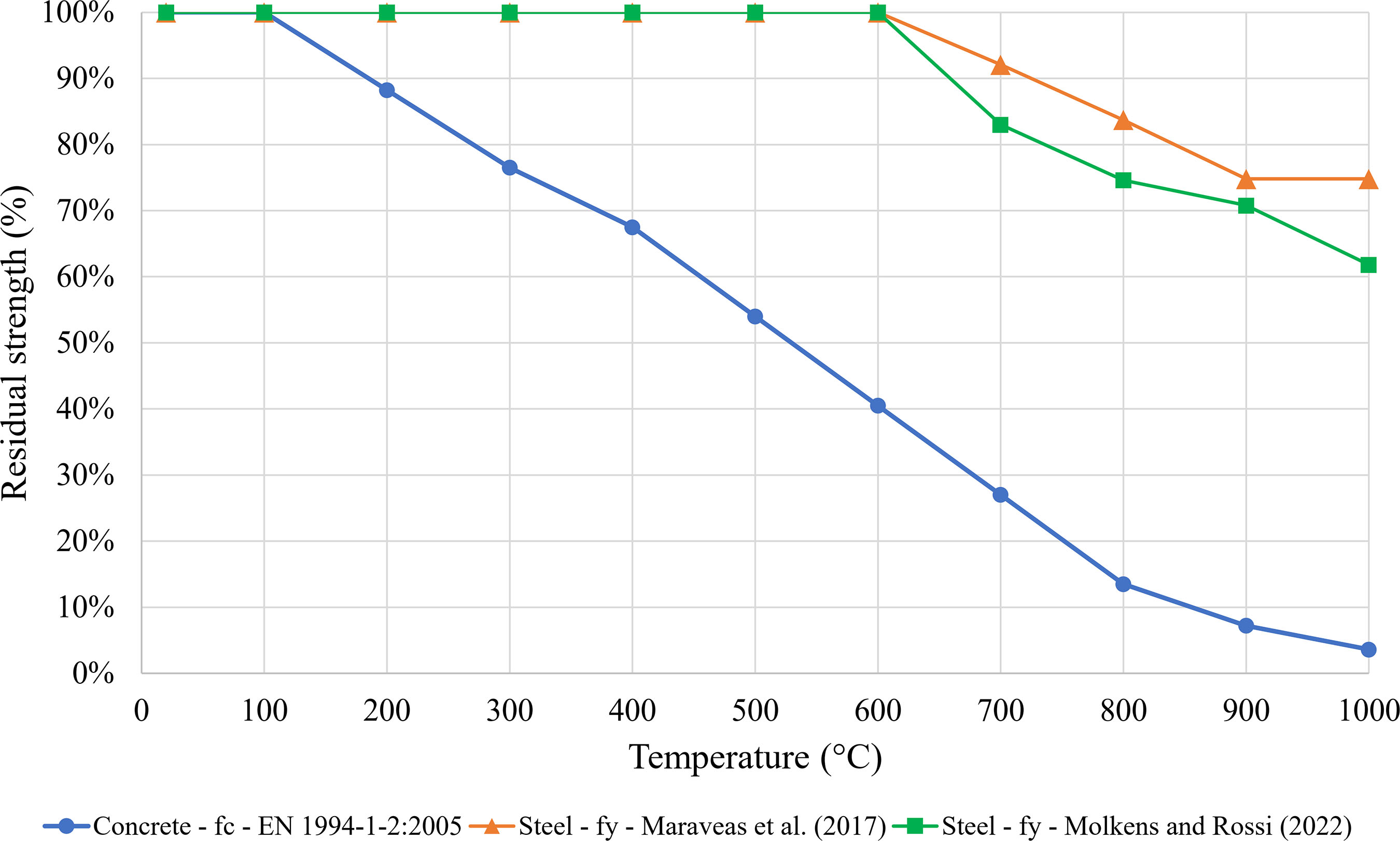
Finally, a comparison is presented between the residual compressive strength of concrete and the residual yield strength of steel as a function of the maximum temperature reached, aiming to illustrate the degradation of these properties at different temperature levels.
3 Results and discussion
The subsequent sections present the most relevant findings from the preceding literature review.
3.1 Main types of shear connectors
Shear connectors can be defined as elements that promote a mechanical bond between steel and concrete components, creating a unified system to resist applied loads. In general, they provide composite behavior to the structural element or connection in which they are employed.
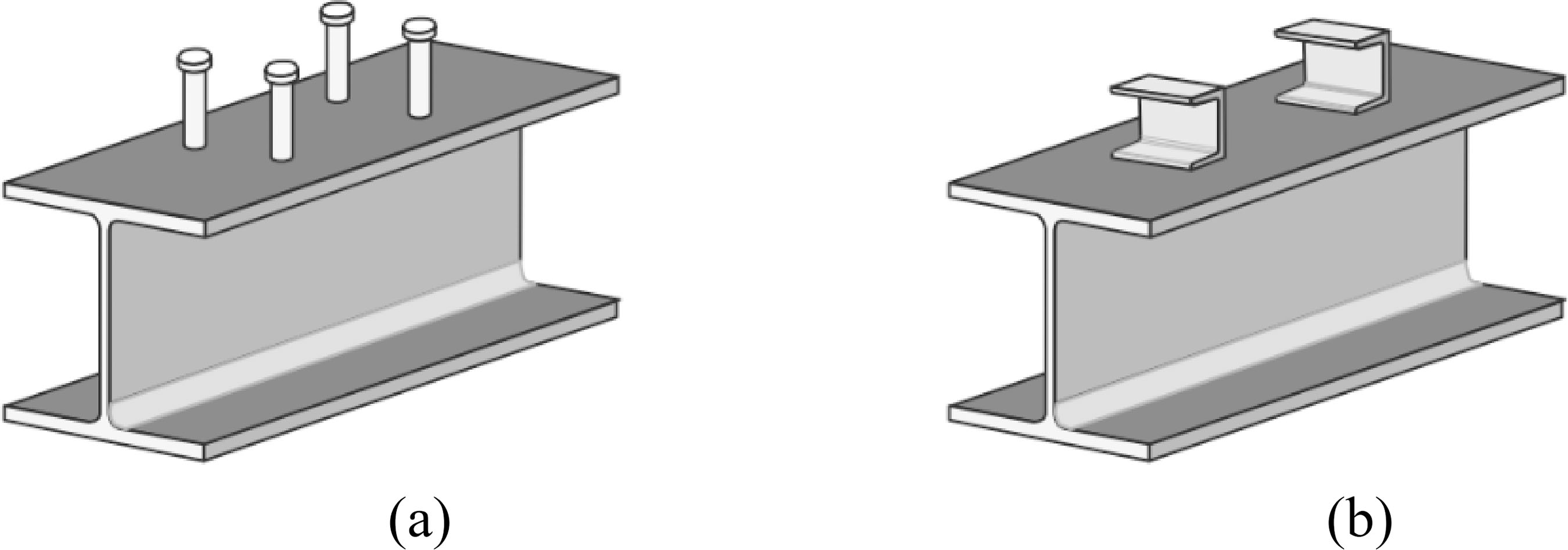
As reported by Malite (1993), Veríssimo (2007), and Chaves (2009), research on the behavior of shear connectors began in the first half of the 20th century. Today, several configurations of devices are available for this purpose. In Brazil, NBR 8800 (ABNT, 2024) approves the use of two types: headed studs (stud bolts) and U-shaped profiles, either laminated or cold-formed (Figure 6).
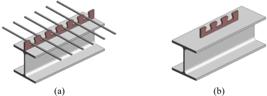
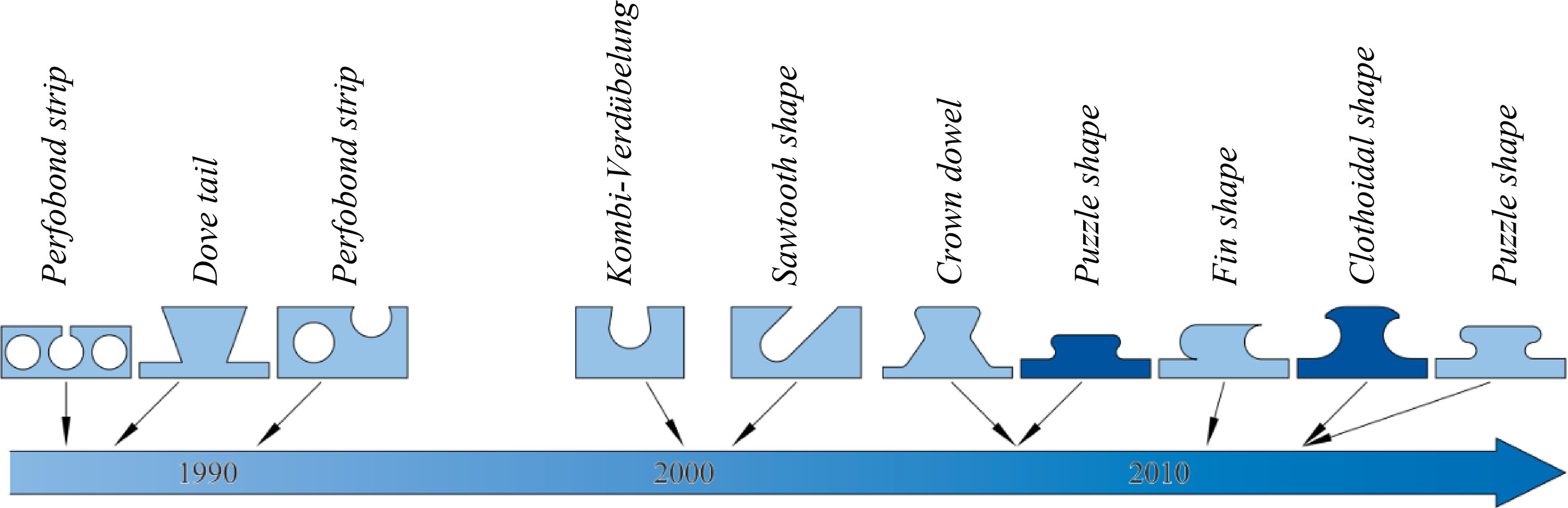
According to Kopp et al. (2018), research on shear connectors known as composite dowels began in the 1980s (Figure 7). These connectors can be described as steel plates with interleaved regular cutouts, forming steel and concrete dowels (Cardoso, 2018). Clothoidal (CL) and puzzle (PZ) connectors are currently the most internationally accepted models. The German technical approval Z-26.4-56 (DIB, 2023) has included these two models since 2013, and their use in composite bridge beams has become more widespread.
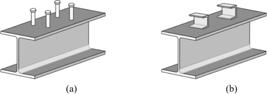

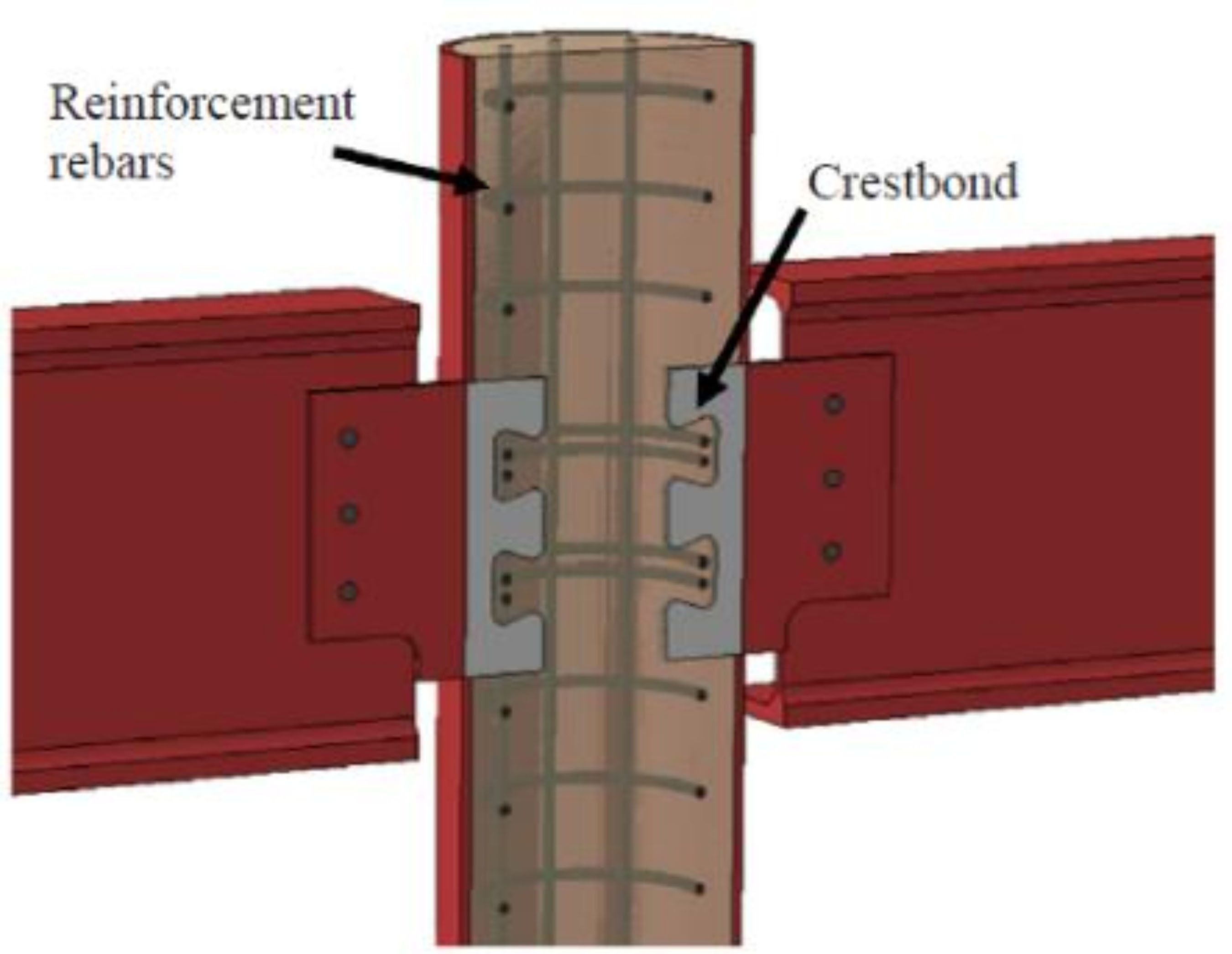
In Brazil, Veríssimo (2007) studied a steel plate shear connector with trapezoidal cutouts and rounded corners, named Crestbond (Figure 8). It was created as an alternative to stud bolts, U-profiles, and Perfobond, commonly used in composite steel-concrete beams. Its advantages include the possibility of installation in narrow flanges, where U-profiles are often impractical; higher ductility compared to Perfobond; open holes for the placement of slab reinforcement; installation without the need for special equipment, unlike stud bolts; higher productivity due to its symmetry; and easy installation in precast slab systems.
3.2 Failure mechanisms of composite dowel connectors
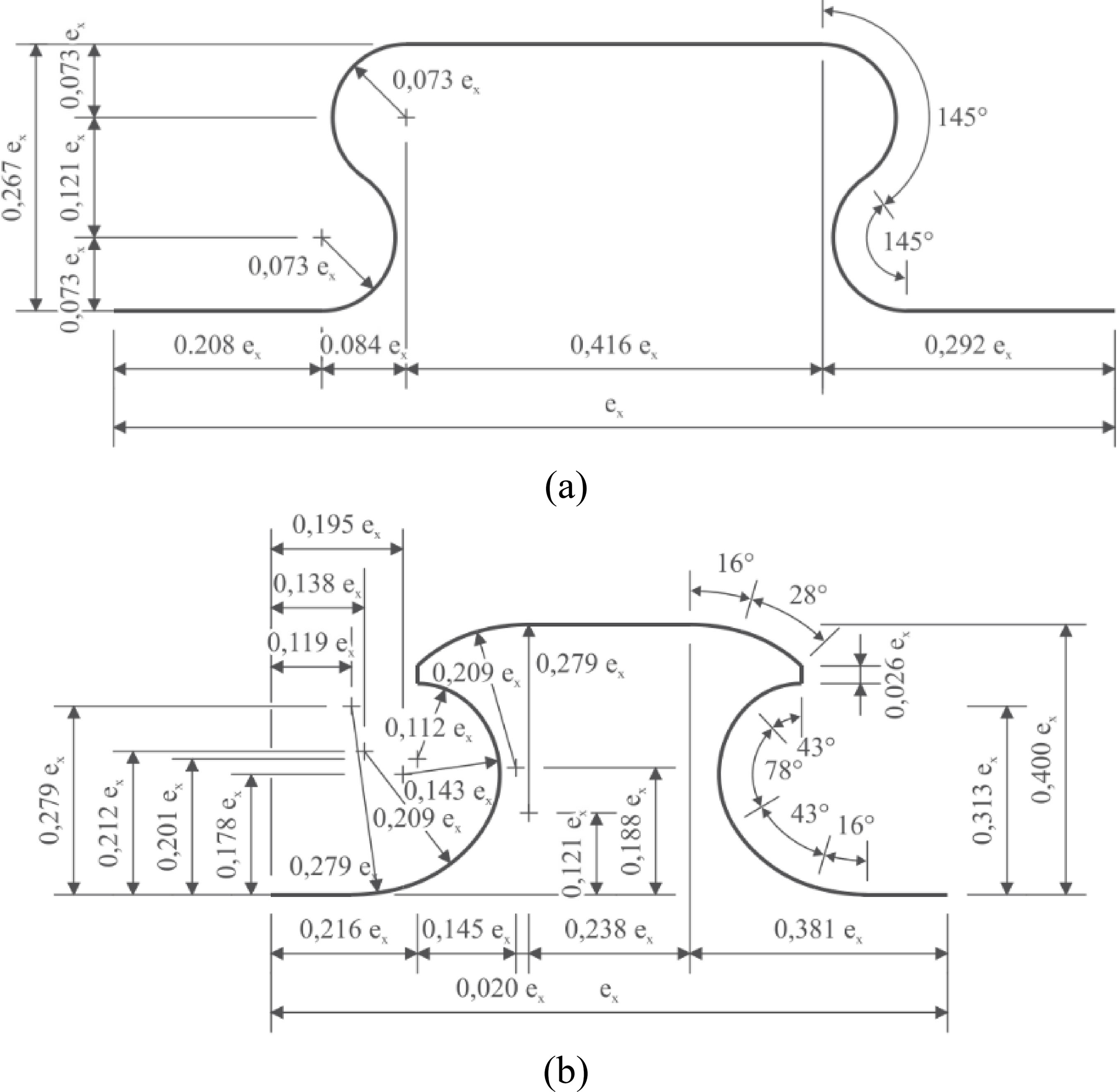
The German technical approval Z-26.4-56 (DIB, 2023) establishes design criteria for continuous clothoidal and puzzle connectors. Figure 9 presents the standardized dimensions of these two connector types as a function of ex, which represents the distance between the centers of the dowels.
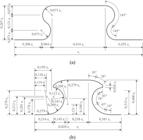
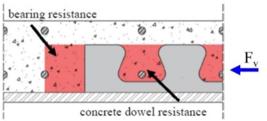
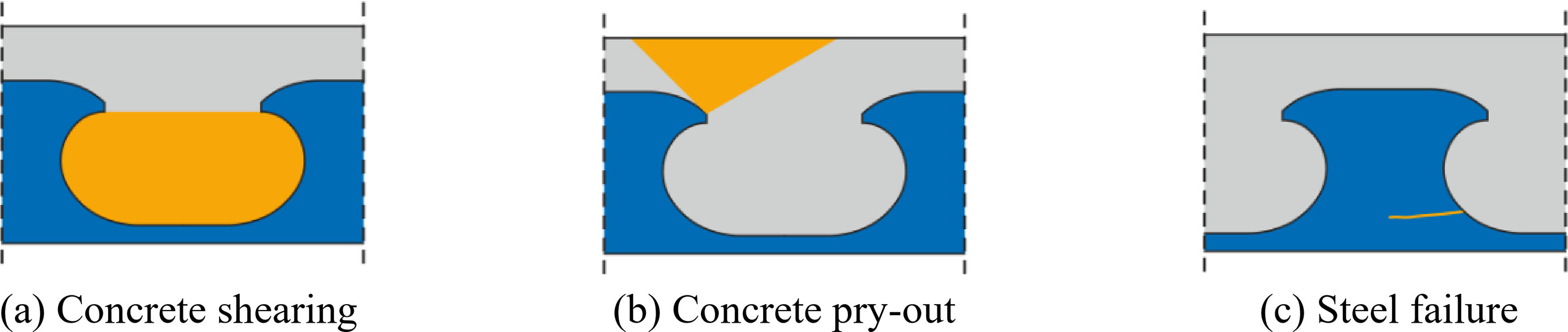
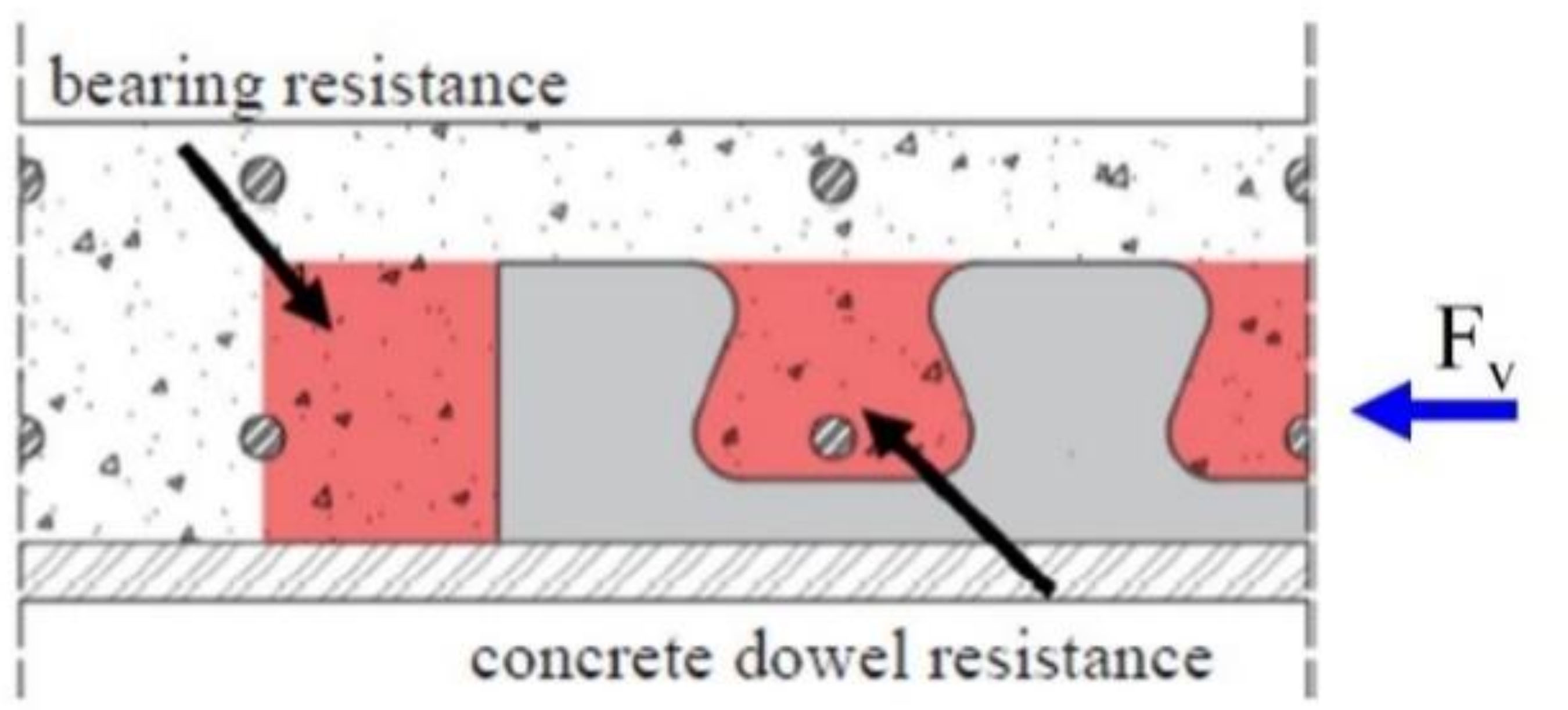
Three potential failure modes are considered for connectors subjected to static loading: concrete shearing (Figure 10a), concrete cone failure or pry-out (Figure 10b), and connector steel failure (Figure 10c). According to Cardoso et al. (2020), the technical approval only addresses continuous connectors and, therefore, does not consider in its formulation the contribution of the front region of the connector (Figure 11) to the resistance to shear forces, represented by the force Fv.
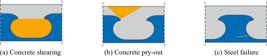
Kopp et al. (2018) describe concrete shear in connectors as characterized by the formation of two shear planes in the concrete dowel, predominantly occurring in connectors with large dowel thickness and small spacing. The main factors influencing load capacity are the shear area of the concrete dowel (AD) and the shear strength of concrete. Reinforcement bars within the dowel further enhance the load capacity by providing additional anchorage.
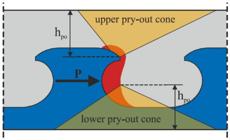
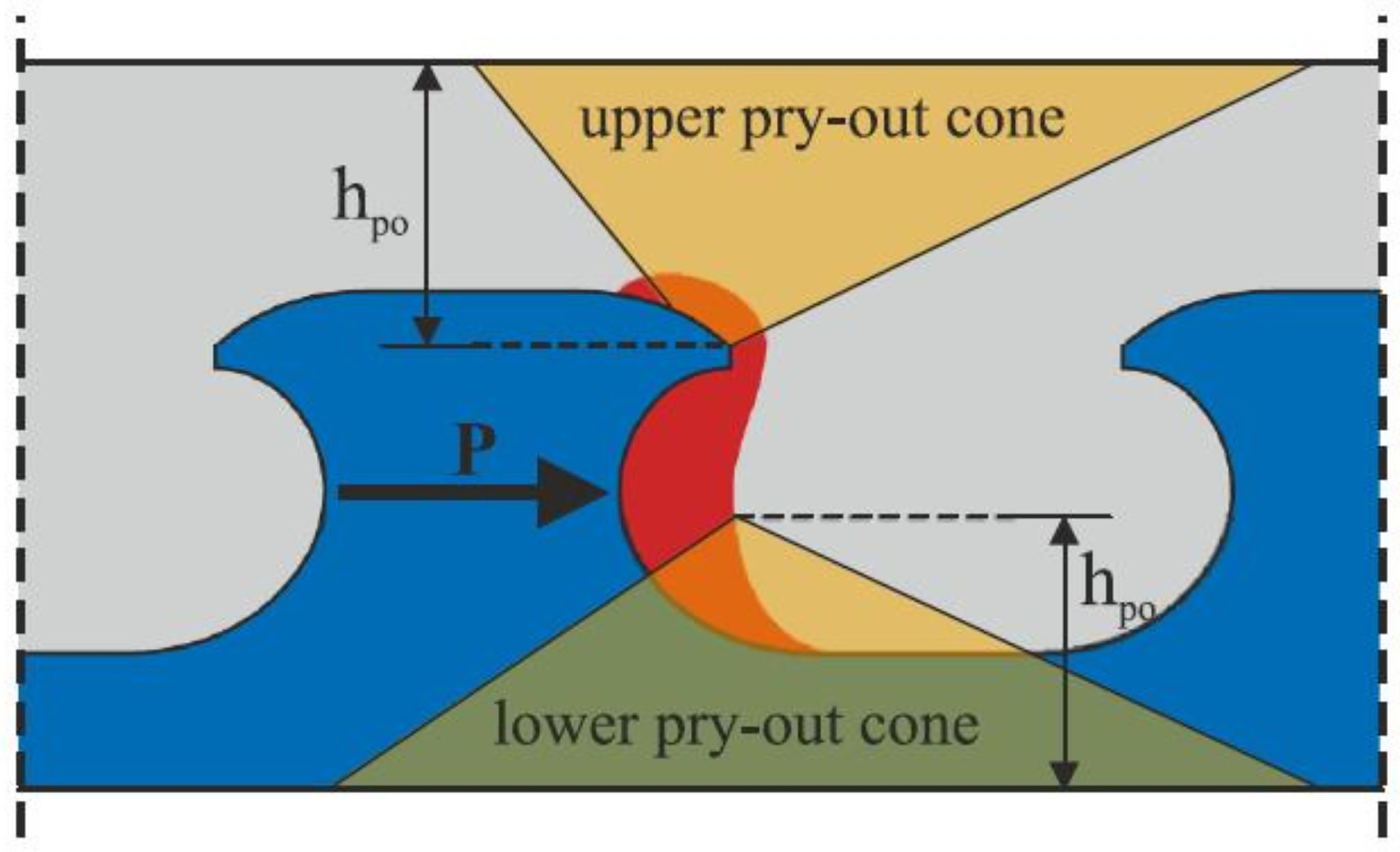
In contrast, as described by Kopp et al. (2018) and Classen and Hegger (2017), pry-out or conical concrete failure is attributed to hydrostatic pressure in the load introduction zone, generating rupture forces perpendicular to the shear force and leading to a breakout cone at the ultimate limit state. This failure mode is typical of shear connectors with openings but absent in closed connectors like Perfobond. It is characterized by ductile behavior and is more likely when the distance between the concrete dowel and the top or bottom surface is small (Figure 12).
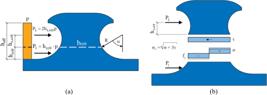
In turn, connector steel failure occurs when the shear force transferred by the steel dowel surpasses its plastic capacity, commonly affecting thin plates or low-strength steels. This failure mode results from the combined effects of shear and bending stresses, leading to rupture at the critical section and significant plastic deformations due to the ductile nature of steel (Kopp et al., 2018). As illustrated in Figure 13, within the critical width bcrit, shear stresses (τ) and bending-induced normal stresses (σ) act simultaneously. The total shear force remains constant along the dowel height (heff) but is divided into components P1 and P2, with P2 inducing stresses at the critical section through a lever arm (hcrit).
3.3 Application of composite dowel connectors for load transfer in concrete-filled composite columns and reinforced concrete columns
Recent studies at UFMG have investigated composite dowel connectors, focusing on their use as connection elements between beams and either concrete-filled composite columns or reinforced concrete columns under ambient temperature conditions (Figure 14).
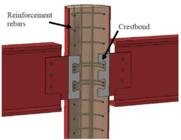
Aguiar (2015) developed numerical models based on experimental tests, aiming to replicate the conditions of prototypes tested with Crestbond connectors. Subsequently, Cardoso (2018) conducted a numerical and experimental study on the behavior of Crestbond connectors in compact-section concrete-filled steel composite (CFSC) columns. Initially, shear tests on composite beams were numerically analyzed to assess the confinement effects induced by the tubular profile, comparing the puzzle (PZ) geometry from technical approval Z-26.4-56 (DIB, 2013) with the Crestbond geometry, leading to adjustments in calculation coefficients for Crestbond connectors. Subsequently, 20 adapted experimental shear tests were performed, involving 17 specimens with Crestbond connectors and 3 with structural bolts, using conventional concrete with a high water-cement ratio (w/c) and self-compacting concrete. The results of these tests were used to calibrate numerical models.
Following this, a parametric study with 200 numerical models investigated variations in section geometry and material properties, including section type, connector thickness, spacing, and number of concrete dowels. The results showed that concrete shear was not the dominant failure mode due to strong lateral confinement provided by compact sections. In square and rectangular sections, Crestbond connectors failed due to yielding of the steel dowels, validating the resistance calculation method from Z-26.4-56 (DIB, 2013). In circular sections, however, the tubular profile significantly restricted connector deformation and lateral expansion of concrete, leading to steel failure at the critical section of the frontal dowel.
Finally, Cardoso (2018) concluded that for CFSC columns with compact sections, the only applicable ultimate limit state for the design of Crestbond connectors is steel failure of the connector. Thus, the author proposed a formulation for calculating the average and the characteristic strength associated with the failure of the Crestbond connector.
In the sequence, Santos (2021) investigated the performance of Crestbond, clothoidal, and puzzle connectors as load transfer mechanisms in slender circular concrete-filled steel composite (CFSC) columns and reinforced concrete columns. An experimental program involving ten models – nine CFSC columns and one reinforced concrete column – was conducted, including shear tests in two stages (Figure 15). The first stage evaluated single-connection models with Crestbond connectors under eccentric loading, while the second stage examined double-connection models with clothoidal and puzzle connectors. Both stages followed the recommendations provided in Annex B of EN 1994-1-1 (ECS, 2005). The results demonstrated that single-connection models achieved an average load-bearing capacity ratio of 0.89 compared to symmetric models from Cardoso (2018), validating the eccentric testing device.
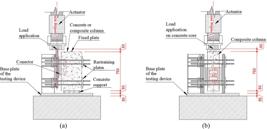
Schematic representation, with dimensions in mm, of the test specimens with (a) single connection and (b) two connections
Thereafter, Santos (2021) developed numerical models calibrated with experimental results using finite element software ABAQUS. In single-connection models, it was noted that failures occurred in the connector steel or as a mixed mode starting with steel failure followed by concrete shear failure. For double-connection models, mixed failure modes were observed in clothoidal connectors, while concrete shear failure predominated in puzzle connectors, attributed to geometric differences between the connectors.
A subsequent parametric study involving 136 models, including reinforced concrete and composite columns with compact, semi-compact, and slender sections, revealed that all composite columns exhibited steel failure in the connectors, regardless of local slenderness. However, this result was primarily based on Crestbond connectors, limiting its generalization to other types. With regard to reinforced concrete columns, steel failure occurred when reinforcement was present, connector thickness was reduced, or column areas were significantly larger than the areas loaded by the connector plates. Conversely, pry-out or concrete shear failures were observed in models without reinforcement, a condition that does not occur in practical structural applications.
Therefore, in terms of characteristic strength values, Santos (2021) proposed the following equations for composite columns (Equation 1) and concrete columns (Equation 2), respectively, applicable when the ultimate limit state (ULS) is governed by steel failure in the connectors:
Where:
n is the number of steel dowels;
ex is the connector spacing;
tsc is the connector thickness;
fysc is the yield strength of the connector steel;
λeq is the ratio between the concrete compressive strength and the yield strength of the connector steel (fc/fysc);
𝜉 is the confinement factor given by Equation 3 (whose fc = 30 MPa for any value of concrete compressive strength), and ρD is a parameter that expresses the increase in strength due to the presence of passing reinforcement bars, given by Equation 4:
Where:
Aa is the cross-sectional area of the steel tube;
Ac is the cross-sectional area of the concrete core;
fyt is the yield strength of the steel tube; and
fc is the compressive strength of the concrete.
Where:
Es is the elasticity modulus of the reinforcing steel;
Ab is the total cross-sectional area of the reinforcement passing through the concrete dowel;
Ecm is the mean secant modulus of elasticity of the concrete; and
AD is the area of the concrete dowel.
Thus, to determine the design strength of the connector in a composite column (PCFSC,Rd) or a concrete column (PRC,Rd), the characteristic value must be divided by the resistance partial safety factor γm =1.25.
Finally, Prado (2017) and Prado, Miranda and Caldas (2022) present the first numerical results under fire conditions for CFSC columns, comparing Crestbond connectors and passing plates as load transfer devices. Analyses of columns with diameters of 200, 400 and 600 mm under 30, 50 or 70% load levels showed that Crestbond connectors reached slightly higher temperatures, while passing plates offered greater resistance for diameters of 400 and 600 mm. It was also found that for load levels less than or equal to 30%, the failure occurred in the connector, whereas for higher load levels, the failure mode occurred in the concrete due to loss of confinement.
3.4 Post-fire behavior of shear connectors
The post-fire behavior of shear connectors remains largely unexplored, with most existing studies focusing on their performance at ambient temperatures or during fire exposure. Table 1 presents the 25 articles selected according to the methodology described in section 2. Each article was analyzed regarding the type of study conducted (theoretical, numerical, and/or experimental), the connector model investigated, and its structural application. Table 1 also provides the identification of the corresponding journal, its classification according to the 2017–2020 quadrennium evaluation by CAPES – which ranks journals into quality strata (A1, A2, A3, A4, B1, B2, B3, B4, B5, and C, from highest to lowest) – and the respective 2024 Journal Citation Reports (JCR) impact factor.
It is observed that the first publication on this topic dates from 2014. However, 20 of these articles (80% of the total) were published in the last five years, highlighting the current relevance of the subject and the growing interest of the scientific community. Specifically regarding composite dowels, no articles published in peer-reviewed journals were identified, which is why this type of connector is not included in Table 1. Nonetheless, when the search was extended to conference proceedings, the study by Camargo, Caldas and Santos (2024) emerged as the only available reference addressing the post-fire behavior of these connectors.
Concerning the type of shear connector addressed in the selected studies, most (16 articles, or 64%) analyzed headed stud connectors. This predominance can be attributed to their widespread use in steel-concrete composite structures. Additionally, 21 studies (84%) included experimental investigations, whereas only 11 studies (44%) presented numerical analyses. This may be due to the need for a more extensive experimental database to enable accurate development and calibration of numerical models.
Regarding the structural application of the analyzed connectors, 11 studies (44%) focused on slabs, 7 (28%) on composite beams, and 5 (20%) on columns. Only one article investigated the use of connectors in steel plates, and only one other study examined their application in concrete walls.
From these studies, it is possible to draw some important observations regarding the post-fire behavior of shear connectors. For instance, Mashiri et al. (2017) investigated the behavior of shear connectors, including headed studs and two types of blind bolts, at ambient temperature and after fire exposure. Prototypes were heated to 200 °C, 400 °C, and 600 °C following the ISO 834-1 (ISO, 1999) fire curve and maintained for one hour before testing in accordance with EN 1994-1-1 (ECS, 2005). Concrete rupture was identified as the dominant failure mode under all conditions. After cooling, reductions in failure loads for stud bolts were 31% at 200 °C, 52% and 43% at 400 °C, and 61% and 66% at 600 °C. For a blind bolt connectors type, reductions were 39% and 36% at 200 °C, 53% and 65% at 400 °C, and 61% and 70% at 600 °C.
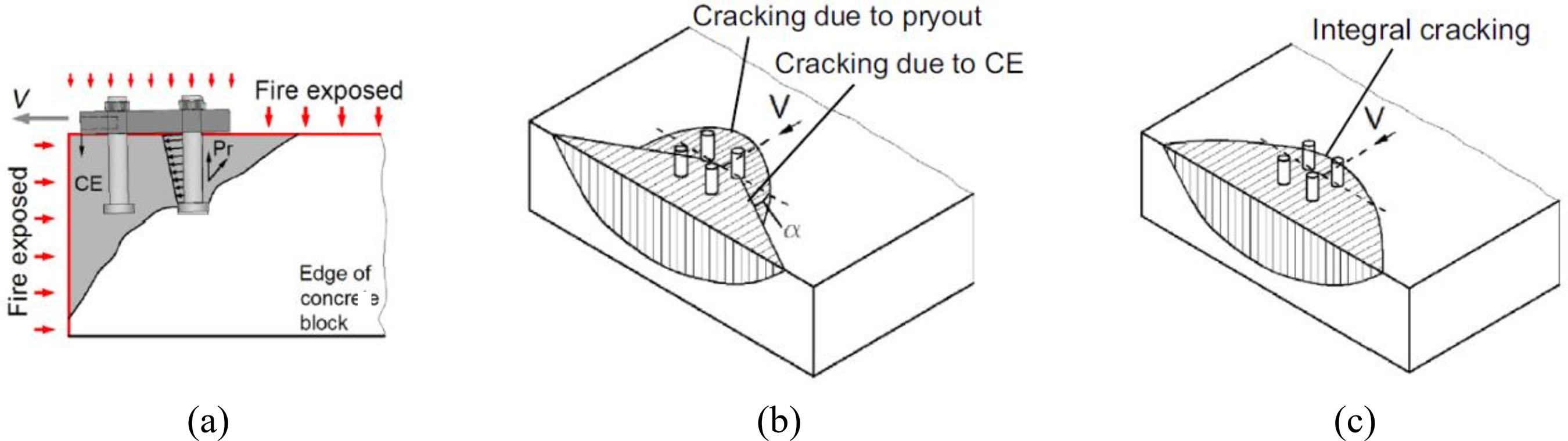
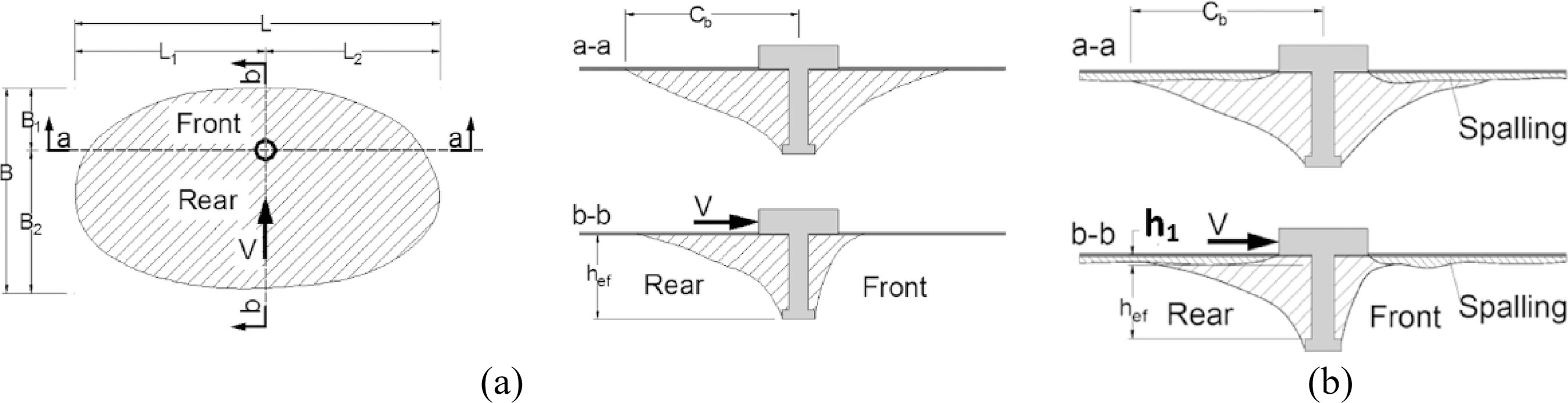
In contrast, Tian et al. (2018b) experimentally evaluated the strength of headed stud connectors subjected to shear forces perpendicular and along concrete slab edges under ambient conditions and after 15 and 60 minutes of fire exposure followed by natural cooling, using the ISO 834-1 (ISO,1999) standard fire curve. Post-fire failure patterns differed from ambient conditions, with crack propagation angles decreasing from 35° to less than 10° (Figure 16a), leading to expanded damage regions. The failure mechanism combined concrete edge failure and pry-out failure (Figure 16b), though edge failure primarily governed rupture. Resistance reductions were approximately 50% after 15 minutes and 85% after 60 minutes, leaving 15% of the original resistance – consistent with the 17.5% value in EN 1992-4 (ECS, 2018). Connector diameter and concrete properties were critical factors affecting strength after fire exposure.
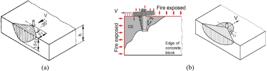
Tian, Ozbolt and Hofmann (2021) expanded on previous studies by conducting tests on isolated connectors and groups of two and four connectors under similar conditions. For 15-minute fire exposures followed by cooling, failure mechanisms involved concrete edge failure followed by pry-out (Figures 17a and 17b), whereas for 60-minute exposures, pry-out effects diminished, and failure was characterized by large cracks in the posterior region (Figure 17c). Groups of four connectors showed no visible cracks near the edges. Shear stiffness was initially proportional to the number of connectors but decreased significantly with longer fire durations. Regardless of the number of connectors, stiffness was reduced by an average of 75% and 95% for fire durations of 15 and 60 minutes, respectively.

(a) Failure pattern observed for a group of four connectors; failure pattern after (b) 15 minutes and (c) 60 minutes of fire exposure
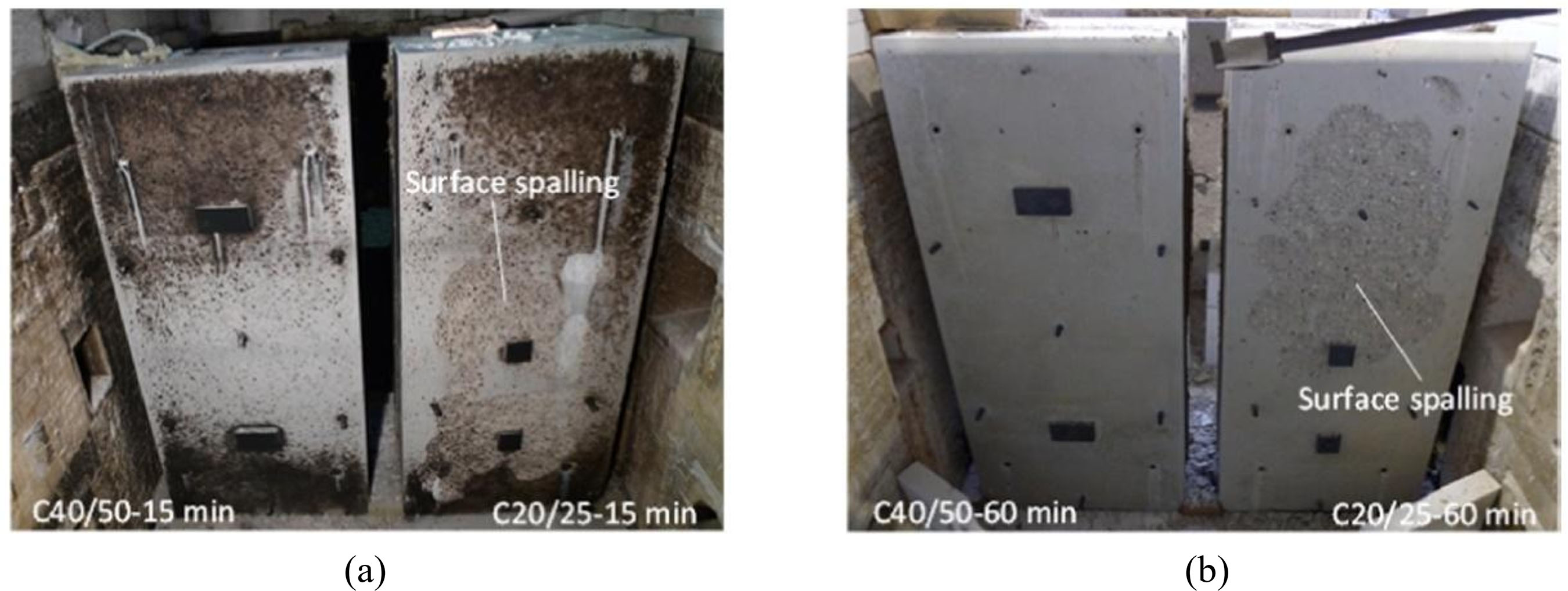
Tian and Ožbolt, Lackovic and Tian (2021) performed experimental and numerical studies on pry-out failure in isolated headed stud connectors after 15 and 60 minutes of fire exposure followed by natural cooling. Spalling was observed in low-strength concrete (C20/25) but was mitigated in higher-strength slabs (C40/50) with polypropylene fibers (Figure 18). Spalling reduced the concrete area near the connectors, lowering resistance to pry-out failure, with damaged depths averaging 15 mm and reaching up to 25 mm. After 60 minutes of fire exposure, damage became more severe, leading to smaller fracture areas compared to ambient conditions and 15-minute exposures. Numerical simulations revealed that the main crack developed behind the connector and became more abrupt with longer fire durations, resulting in reduced fracture sizes (Figure 19). The authors also highlighted that the mean compressive strength of concrete and the embedment length significantly affect the post-fire pry-out resistance of the connectors.
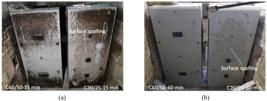
Effects of fire on concrete prototypes after (a) 15 minutes and (b) 60 minutes of standard fire exposure

Another recent study on the resistance of shear connectors after fire is presented in Mirza et al. (2021). This study investigated the behavior of headed stud connectors in steel-concrete composite beams at ambient temperature, during fire exposure (200, 400, and 600 °C), and after cooling, using both conventional concrete and concrete with carbon nanotubes. The results indicated that failure in all cases occurred due to shear failure of the connectors, with significantly lower shear strength and ductility during fire exposure compared to post-cooling, suggesting partial recovery of strength after cooling. In conventional concrete, shear strength losses at 200, 400, and 600 °C were 4%, 31%, and 60%, respectively, and reduced to 4%, 9%, and 31% after cooling. For concrete with carbon nanotubes, losses were 9%, 27%, and 50% at elevated temperatures and 4%, 11%, and 25% after cooling. The addition of carbon nanotubes effectively reduced strength losses between 400 °C and 600 °C during fire exposure and minimized spalling effects, but had minimal impact on shear strength after cooling.
3.5 Behavior of materials at elevated temperatures and after cooling
3.5.1 Concrete
Elevated temperatures progressively degrade the physical and mechanical properties of materials, reducing their strength and stiffness. Thelandersson (1972) highlights that, during heating, concrete aggregates expand, while the cement paste exhibits volumetric expansion up to approximately 150 °C, followed by significant shrinkage. These volumetric changes among constituents generate considerable internal stresses. Furthermore, temperature gradients within the concrete element during heating and cooling induce additional internal stresses, influenced by factors such as heating or cooling rates, element geometry, and thermal properties. This uneven temperature distribution leads to crack formation and strength reduction.
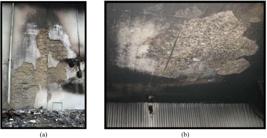
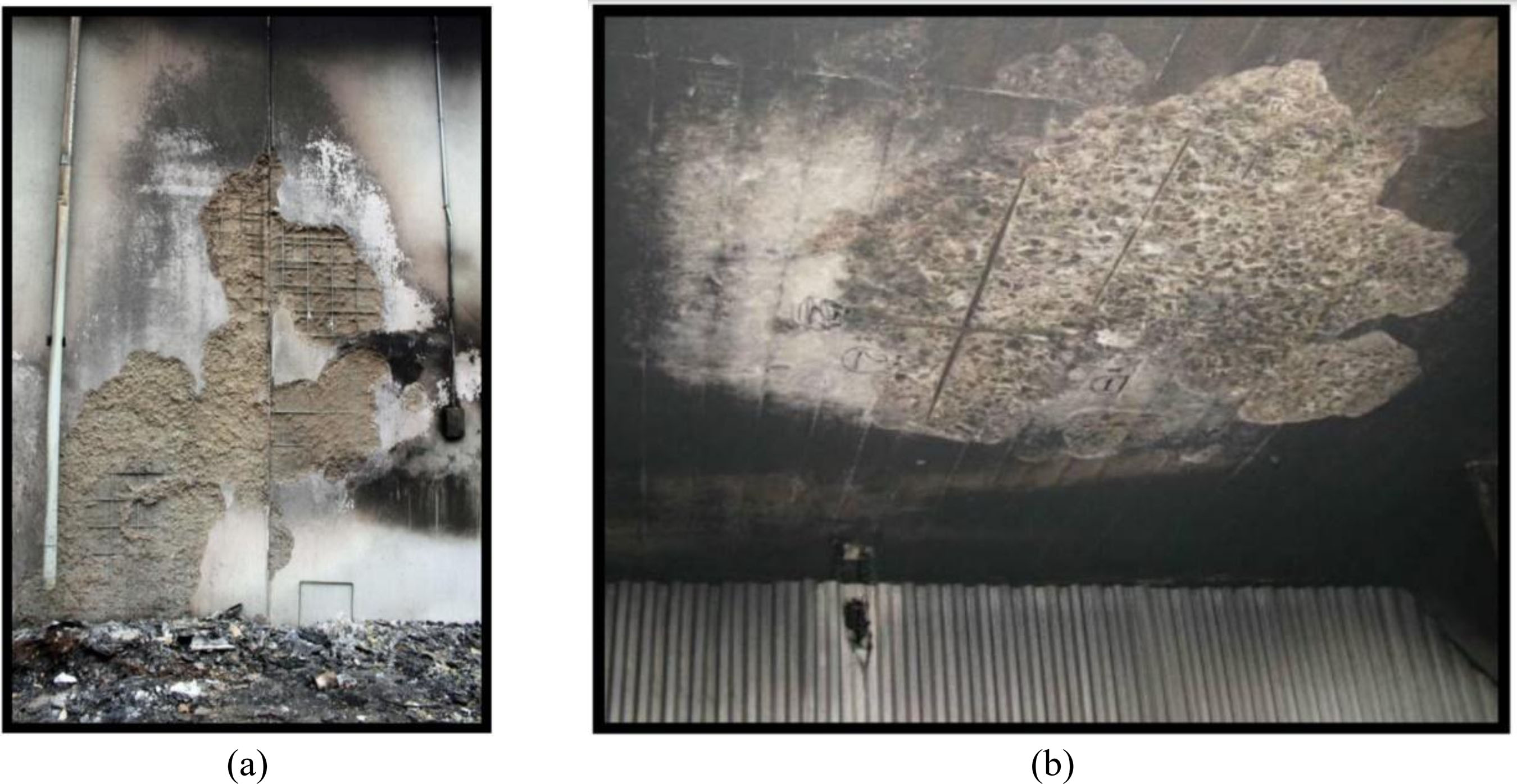
A notable high-temperature phenomenon in concrete is spalling or surface delamination, which decreases the cross-sectional area of structural elements (Figure 20). Costa, Figueiredo and Silva (2002) identify two forms of spalling in concrete exposed to high temperatures: surface detachment (sloughing) and violent fragmentation (explosive spalling). High-strength concrete is more susceptible to explosive spalling due to its low porosity, which restricts vapor movement and increases pressure near the surface. Bažant and Cusatis (2005) attribute this behavior to the higher strain energy storage capacity and brittleness of high-strength concrete, creating conditions favorable for violent fragmentation. In contrast, lower-strength concretes, with greater porosity, allow for easier vapor transport, but excessive moisture can lead to premature sloughing, exposing reinforcement bars.
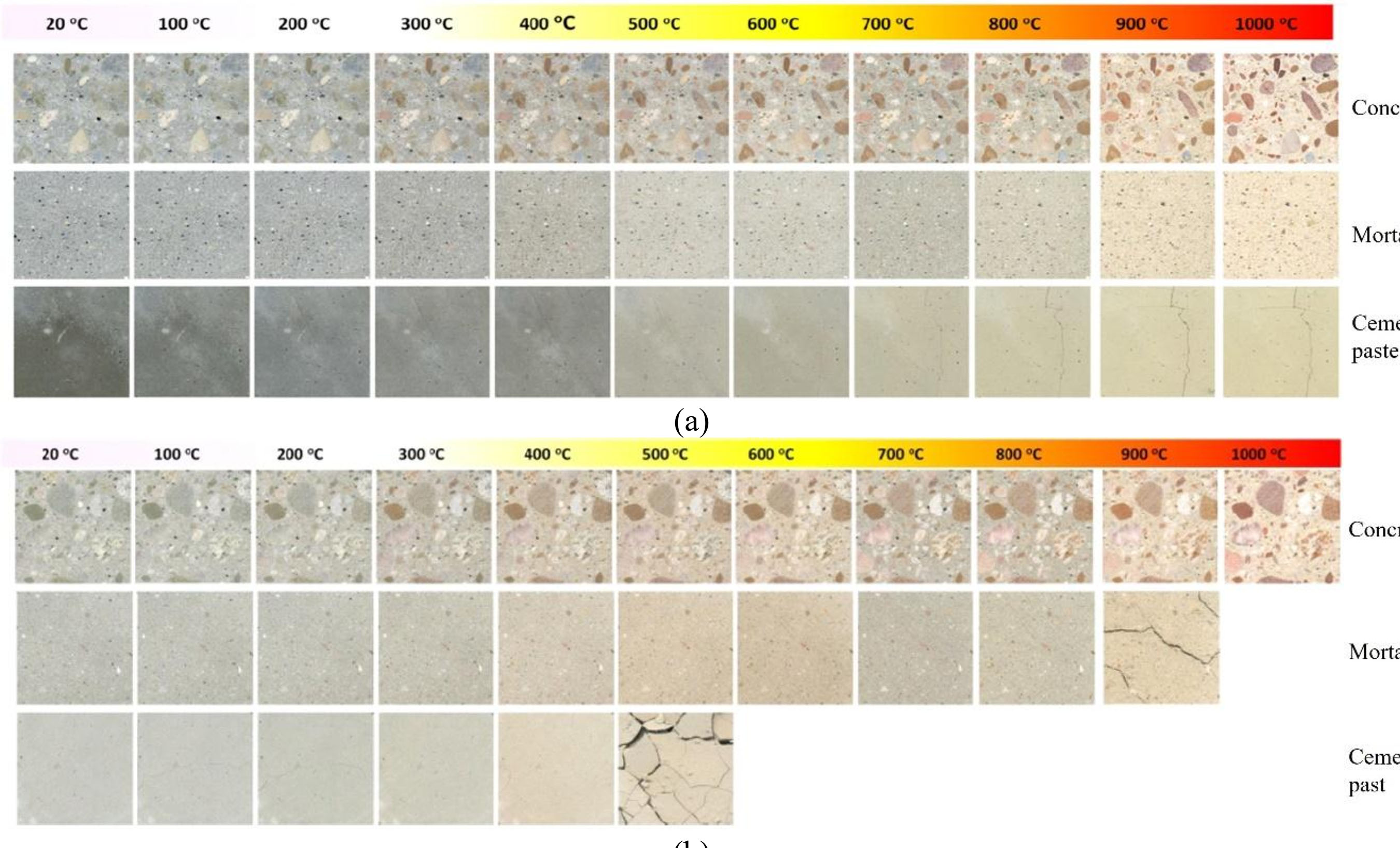
As reported by Neville (2016) and Hager (2014), concrete also undergoes changes in color when exposed to high temperatures. This change depends on the presence of specific iron compounds, resulting in different responses among various types of concrete. Approximately, the color sequence is pink or red between 300 °C and 600 °C, gray up to about 900 °C, and yellow above 900 °C (Figure 21). Thus, it is possible to estimate the temperature to which the concrete was exposed and, consequently, its residual strength.
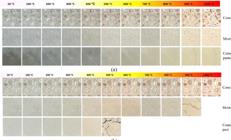
Color changes due to temperature increase in (a) high-performance concretes and (b) conventional concretes
Regarding the stress-strain relationship of concrete after a natural fire, Annex C of EN 1994-1-2 (ECS, 2004) addresses this topic. It is known that after being heated to a maximum temperature (θmax) and subsequently cooled to ambient temperature (20 °C), concrete does not recover its initial compressive strength. Concerning residual compressive strength (fc,θ,20 °C), the European standard provides the following relationship (Equation 5):
Where the reduction factor ϕ is given by Equations 6, 7 and 8:
For 20 °C ≤ θmax < 100 °C:
For 100 °C ≤ θmax < 300 °C:
For θmax ≥ 300 °C:
Where:
fc is the compressive strength of concrete at ambient temperature; and
kc,θmax is the reduction factor for the compressive strength of concrete at maximum temperature θmax.
Concerning the residual compressive strength of concrete Guo and Shi (2011) show that the residual compressive strength of concrete is strongly affected by the cooling method after heating. Air-cooled specimens experienced significantly greater strength loss than water-cooled ones, with the reduction increasing with both peak temperature and cooling rate. For air-cooled specimens, strength losses of approximately 6%, 48%, 86%, and 96% were observed at 400 °C, 600 °C, 800 °C, and 1000 °C, respectively, compared to ambient temperature.
Additionally, Annerel and Taerwe (2007, 2012) recommend assessing the residual compressive strength of concrete at least seven days after exposure to fire or high temperatures. Tests at 350 °C and 550 °C showed that strengths measured immediately after cooling were higher than those after extended storage, highlighting the influence of post-cooling conditions – a finding later confirmed by Kodur and Agrawal (2021). For specimens stored in water, rehydration slightly increased strength (up to 12%), but immediate water cooling caused an additional 30-35% strength loss, indicating its harmful effects.
On the other hand, the study of Li and Franssen (2011) revealed that, during heating, concrete with siliceous aggregates exhibited higher residual compressive strengths than limestone aggregate concrete at temperatures below 400 °C. However, above this threshold, both aggregate types showed similar behavior, consistent with the models in EN 1992-1-2 (ECS, 2004) and EN 1994-1-2 (ECS, 2004) for limestone aggregates.
During the cooling phase, Li and Franssen (2011) also observed an additional reduction in concrete compressive strength, reaching over 20% of the initial strength at 500 °C, exceeding the 10% reduction specified in Annex C of EN 1994-1-2 (ECS, 2004) for temperatures above 300 °C. The authors attempted to trace the origin of this standard formulation but noted that the relevant studies from the 1990s were either unpublished or lost.
Nazri et al. (2017) investigated the residual properties of 30 MPa normal-strength concrete exposed to high temperatures. Cube specimens were heated to 600 °C for durations of 30, 60, 90, 120, and 150 minutes, following the ISO 834-1 (ISO, 1999) standard fire curve and cooled at ambient temperature. Tests showed that longer fire exposure led to greater mass loss, due to water evaporation, and significant reductions in compressive strength.
Finally, Pasztetnik and Wróblewski (2021) conducted a comprehensive review of factors influencing the residual strength of concrete, including maximum temperature, heating duration, heating rate, cooling regime, post-fire curing, composition, age, load level, and heat accumulation. The study identified the maximum temperature reached (ranging from 300 to 700 °C) and exposure duration (especially within the first two hours) as the most critical factors affecting residual compressive strength. The authors also observed significant variability in experimental data, attributed to differences in methodologies, which complicates the development of precise formulations for predicting residual properties of concrete.
3.5.2 Steel
Silva et al. (2006) report that temperature increases induce microstructural transformations in steel. Up to 720 °C, steel can fully recover its initial tensile strength upon cooling. This temperature, known as the eutectic point, marks the onset of the transformation of austenite into pearlite. Beyond this point, air cooling causes the austenite to transform into ferrite and pearlite, retaining a coarser ferrite structure, which reduces mechanical strength due to the inverse relationship between ferrite grain size and steel strength (Smith et al., 1981).
However, the literature reveals some minor discrepancies regarding the temperature limit for the full recovery of the initial tensile strength of steel. Tao, Wang and Uy (2013), for example, reviewed 543 tensile tests from multiple studies, analyzing the residual strength of structural and reinforcing steels. Their formulations for residual yield and ultimate stress assume full recovery at temperatures up to 500 °C. They also proposed a single equation for residual modulus of elasticity recovery, establishing 500 °C as the threshold for complete restoration of this property.
Similarly, Maraveas, Fasoulakis and Tsavdaridis (2017), using 177 experiments from eight studies, proposed equations for the post-fire properties of structural steel. For low-carbon steels, residual yield strength exceeds 90% of the initial value at temperatures up to 725 °C, while high-strength or stainless steels recover at least 90% of their properties up to 685 °C and maintain 75% recovery even at 900 °C. Heat-treated steels exhibit similar behavior but with a slightly lower threshold of 650 °C. In contrast, cold-formed steels demonstrate reduced performance, retaining 90% of yield strength only up to approximately 508 °C.
To illustrate, the equations proposed by Maraveas, Fasoulakis and Tsavdaridis (2017) for determining the residual values of yield strength (Equation 9), ultimate strength (Equation 10), and modulus of elasticity (Equation 11) of mild steel are presented below.
Where:
fyθ, fuθ, and Esθ are the residual values of yield strength, ultimate strength, and modulus of elasticity of steel, respectively; and
fy, fu, and Es are the values of these mechanical properties at ambient temperature.
Alternatively, Pons, Lapuebla-Ferri and Romero (2022) investigated cold-formed S355 steel tubes under temperatures from 100 °C to 1000 °C. Post-fire tests without pre-loading followed Tao, Wang and Uy (2013), showing ductility increased up to 500 °C, dropped at 700 °C, and partially recovered at 900 °C and 1000 °C (82% and 64% of ambient values). With pre-loading at 400 °C, residual ductility rose up to 40% utilization but declined beyond 60%, yet remained higher than in non-preloaded specimens.
Finally, Molkens and Rossi (2022), employing reliability analysis, reviewed studies on the variation of steel properties after fire exposure and proposed reduction factors for yield strength and modulus of elasticity, independent of cooling methods. For normal-strength steels (fy ≤ 420 MPa), they observed full recovery of these properties at temperatures up to 600 °C. Beyond this threshold, yield strength decreases more significantly than the modulus of elasticity, with retention values ranging from 83% at 700 °C to 61.8% at 1000 °C. In contrast, the modulus of elasticity retains between 98.6% and 90.5% of its initial value across the same temperature range. The proposed retention factors for yield strength (Ry,θ) and modulus of elasticity (RE,θ) in normal-strength steels are presented at Table 2. For intermediate steel temperature values, linear interpolation can be applied.
Retention factors for normal-strength steels after being submitted to elevated temperatures θ followed by cooling
3.5.3 Evaluation of residual strength of concrete and steel after fire
To facilitate the visualization of the variation in residual compressive strength of concrete, based on Eq. 5 by EN 1994-1-2 (ECS, 2004), and the yield strength of steel after fire exposure, as proposed by Maraveas, Fasoulakis and Tsavdaridis (2017) and Molkens and Rossi (2022) (Equation 9 and Table 2, respectively), Figure 22 presents these properties according to the temperature to which the materials were subjected.
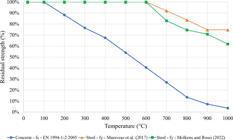
Comparison of the residual compressive strength values of concrete, as per EN 1994-1-2 (ECS, 2004), and the yield strength of steel, according to the models by Maraveas, Fasoulakis and Tsavdaridis (2017) and Molkens and Rossi (2022)
It can be observed that concrete has a lower capacity to recover its compressive strength compared to the ability of steel to recover its yield strength. For example, after being exposed to a temperature of 600 °C and cooled, concrete retains only 40% of its initial compressive strength. In contrast, steel, at the same temperature, fully recovers its yield strength. On the other hand, after exposure to 800 °C and subsequent cooling, concrete exhibits a residual compressive strength of approximately 13.5%. In comparison, steel, based on the models proposed by Maraveas, Fasoulakis and Tsavdaridis (2017) and Molkens and Rossi (2022), retains residual yield strengths of 83.7% and 74.6%, respectively.
It should be noted that, regarding the previously presented models for the residual yield strength of steel, there is agreement on the maximum temperature (600 °C) at which the steel can fully recover this mechanical property. However, beyond this temperature, the model by Molkens and Rossi (2022) predicts lower values compared to the equation by Maraveas, Fasoulakis and Tsavdaridis (2017), making this model more conservative.
4 Conclusions
Based on the presented information, it is evident that there is a noticeable scarcity of research focused on the application of shear connectors and steel plates as load transfer mechanisms in columns after exposure to elevated temperatures followed by cooling processes. However, most of the articles on this topic have been published in the past five years, underscoring its current relevance and the growing interest of the scientific community. At this point, it is worth noting that the majority of these studies focus on the behavior of headed stud connectors, due to their extensive application in steel-concrete composite structures.
Furthermore, the use of composite dowel connectors as load transfer mechanisms in columns appears to be highly promising. Nevertheless, further studies are required to investigate their behavior during and after fire exposure. In general, research conducted at ambient temperature indicates that the ultimate limit state for these connectors is associated with steel failure. However, concrete exhibits greater degradation of its mechanical properties compared to steel after both materials are subjected to high temperatures and cooling processes. This suggests that post-fire failure modes may be more closely related to the concrete.
Regarding the residual properties of steel after fire exposure, there is greater consistency in the reported results, although some divergence exists concerning the temperature threshold for full recovery of yield strength. Conversely, for concrete, discrepancies in residual strength values are more pronounced, primarily due to differences in testing methodologies and cooling methods. These variations highlight the need for further research in this field to establish reliable coefficients or calculation methods that can be incorporated into design standards.
Acknowledgments
This work was funded by the Brazilian research agencies: FAPEMIG (grant APQ-02988-21), CAPES and CNPq. The authors are also grateful for the support and collaboration of UFMG and CEFET-MG in the successful execution of this project.
Financial Support
Declaration of Generative AI and AI-Assisted Technologies in the Writing Process
Data Availability Statement
Research data is only available upon request.
References
- AGUIAR, O. P. Estudo do comportamento de conectores Crestbond em pilares mistos tubulares preenchidos com concreto Belo Horizonte, 2015. 129 f. Dissertation (M.Sc. in Structural Engineering) – Federal University of Minas Gerais, Belo Horizonte, 2015.
- AGUIAR, O. P. et al Crestbond shear connectors for load transfer in concrete filled tube columns. Revista IBRACON de Estruturas e Materiais, v. 11, n. 5, pp. 960-965, 2018.
- AGUIAR, O. P. et al Estudo dos conectores Crestbond em pilares mistos preenchidos com concreto. Revista da Estrutura de Aço, v. 4, n. 3, pp. 181-199, 2015.
- ANNEREL, E.; TAERWE, L. Approaches for the assessment of the residual strength of concrete exposed to fire. In: INTERNATIONAL WORKSHOP “FIRE DESIGN OF CONCRETE STRUCTURES – FROM MATERIALS MODELLING TO STRUCTURAL PERFORMANCE”, Coimbra, 2007. Proceedings [...] Coimbra: University of Coimbra, 2007.
- ANNEREL, E.; TAERWE, L. Assessment of the residual strength of concrete members after fire exposure. In: FARDIS, M. N. Innovative materials and techniques in concrete structures New York: Springer, 2012.
- ASSOCIAÇÃO BRASILEIRA DE NORMAS TÉCNICAS. NBR 8800: projeto de estruturas de aço e de estruturas mistas de aço e concreto de edificações. Rio de Janeiro, 2024.
- BARCLAY, S.; SALEM, O. Influence of the inclination angle of self-tapping screws on the fire performance of CLT-concrete composite floor slabs. Engineering Structures, v. 332, 2025.
- BAŽANT, Z. P.; CUSATIS, G. Concrete creep at high temperature and its interaction with fracture: recent progress. In: CONCREEP – CREEP, SHRINKAGE AND DURABILITY OF CONCRETE AND CONCRETE STRUCTURES, 7., Nantes, 2005. Proceedings [...] Nantes: Ecole Centrale de Nantes, 2005.
- CAMARGO, R. E. M.; CALDAS, R. C.; SANTOS, L. R. Santos. Análise experimental do comportamento de chapas de aço com recortes utilizadas para transferência de carga em pilares de concreto após incêndio. In: CONGRESSO BRASILEIRO DO CONCRETO, 65., Maceió, 2024. Anais [...] Maceió: IBRACON, 2024.
- CARDOSO, H. S. Avaliação do comportamento de conectores constituídos por chapas de aço com recortes regulares: ênfase em conectores de geometria Crestbond aplicados em pilares mistos. Belo Horizonte, 2018. 319 f. Thesis (Ph.D. in Structural Engineering) – Federal University of Minas Gerais, Belo Horizonte, 2018.
- CARDOSO, H. S.; AGUIAR, O. P.; CALDAS, R. B. Composite dowels as load introduction devices in concrete-filled steel tubular columns. Engineering Structures, v. 219, 2020.
- CARDOSO, H. S.; CALDAS, R. B.; FAKURY, R. H. Método de ensaio de cisalhamento utilizado em pilares mistos tubulares de aço preenchidos com concreto. Ciência & Engenharia, v. 25, n. 2, p. 29-38, 2016.
- CHAVES, I. A. Viga mista de aço e concreto constituída por perfil formado a frio preenchido São Carlos, 2009. 122 f. Dissertation (M.Sc. in Structural Engineering) – University of São Paulo, São Carlos, 2009.
- CHI, J. H.; CHI, M.; HUANG, Y. L. Fire Resistance of Steel Connectors of Precast Lightweight Concrete Walls. Journal of Marine Science and Technology, v. 29, n. 4, p. 487-497, 2021.
- CHOI, Y. C. et al. Development of a shear strength equation for beam: column connections in reinforced concrete and steel composite systems. International Journal of Concrete Structures and Materials, v. 11, n. 2, p. 185-197, 2017.
- CLASSEN, M.; HEGGER, J. Assessing the pry-out resistance of open rib shear connectors in cracked concrete: engineering model with aggregate interlock. Engineering Structures, v. 148, p. 254–262, 2017.
- COSTA, C. N.; FIGUEIREDO, A. D.; SILVA, V. P. O fenômeno do lascamento (“spalling’’) nas estruturas de concreto armado submetidas a incêndio. In: CONGRESSO BRASILEIRO DO CONCRETO, 44., Belo Horizonte, 2002. Anais [...] Belo Horizonte: IBRACON, 2002.
- DEUTSCHES INSTITUT FÜR BAUTECHNIK. Nr. Z-26.4-56: allgemeine bauaufsichtliche Zulassung der Verbunddübelleiste. Berlin, 2013.
- DEUTSCHES INSTITUT FÜR BAUTECHNIK. Nr. Z-26.4-56: allgemeine bauaufsichtliche Zulassung der Verbunddübelleiste. Berlin, 2023.
- EUROPEAN COMMITTEE FOR STANDARDIZATION. EN 1992-1-2: Eurocode 2: design of concrete structures: part 1-2: general rules: structural fire design. Brussels, 2004.
- EUROPEAN COMMITTEE FOR STANDARDIZATION. EN 1992-4: Eurocode 2: design of concrete structures: part 4: design of fastenings for use in concrete. Brussels, 2018.
- EUROPEAN COMMITTEE FOR STANDARDIZATION. EN 1994-1-1: Eurocode 4: design of composite steel and concrete structures: part 1-1: general rules and rules for buildings. Brussels, 2005.
- EUROPEAN COMMITTEE FOR STANDARDIZATION. EN 1994-1-2: Eurocode 4: design of composite steel and concrete structures: part 1-2: general rules: structural fire design. Bruxelas, 2004.
- FAKURY, R. H.; SILVA, A. L. R. C.; CALDAS, R. B. Dimensionamento básico de elementos estruturais de aço e mistos de aço e concreto São Paulo: Pearson Education do Brasil, 2016.
- FELDMANN, M.; KOPP, M.; PAK, D. Composite dowels as shear connectors for composite beams: background to the German technical approval. Steel Construction, v. 9, n. 2, p. 80–88, 2016.
- FENG, Z. R.; WANG, Y. C.; CUNNINGHAM, L. S. Behaviour of screw shear connections between oriented strand board and cold-formed steel sections under ambient and post-heating conditions: an experimental and analytical investigation. Engineering Structures, v. 334, 2025.
- GUO, Z.; SHI, X. Experiment and calculation of reinforced concrete at elevated temperatures Kidlington: Elsevier, 2011.
- HAGGER, I. Colour change in heated concrete. Fire Technology, v. 50, p. 945–958, 2014.
- INTERNATIONAL ORGANIZATION FOR STANDARDIZATION. ISO 834-1: fire-resistance tests: elements of building construction: part 1: general requirements for fire resistance testing. Geneva, 1999.
- JANSSON, R. Fire spalling of concrete: theoretical and experimental studies Stockholm, 2013. Thesis (Ph.D. in Sciences) – KTH Royal Institute of Technology, Stockholm, 2013.
- KODUR, V. K. R.; AGRAWAL, A. Estimating postfire residual capacity of heavily damaged concrete members. Journal of Performance of Constructed Facilities, v. 35, n. 2, 2021.
- KOPP, M. et al. Composite dowels as shear connectors for composite beams: background to the design concept for static loading. Journal of Constructional Steel Research, v. 147, p. 488–503, 2018.
- KUHLMANN, U. et al Design of steel-to-concrete joints: design manual II. Brussels: European Convention for Constructional Steelwork, 2014.
- KUROBANE, Y. et al CIDECT design guide 9: design guide for structural hollow section column connections. Cologne: CIDECT and Verlag TÜV Rheinland, 2004.
- LECHNER, T. Zur Anwendung von Verbunddübelleisten in schlanken Verbundträgern aus ultrahochfestem Beton Munich, 2018. Thesis (Ph.D. in Engineering) – Technischen Universität München, Munich, 2018.
- LI, Y. H.; FRANSSEN, J. M. Test results and model for the residual compressive strength of concrete after a fire. Journal of Structural Fire Engineering, v. 2, n. 1, p. 29-44, 2011.
- LIEW, J. Y. R.; XIONG, M. X. Design guide for concrete filled tubular members with high strength materials to Eurocode 4 Singapore: Research Publishing, 2015.
- LOU, G. B. et al Post-fire fatigue performance of steel-concrete composite beams: part I: experimental investigation. Journal of Constructional Steel Research, v. 234, 2025.
- LYU, J. et al Fire resistance of integral composite beams with superposed slabs. Structural Concrete, v. 21, n. 6, p. 2481-2493, 2020.
- MAHMOOD, E. M.; ALLAWI, A. A.; EL-ZOHAIRY, A. Analysis and residual behavior of encased pultruded GFRP I-Beam under fire loading. Sustainability, v. 14, n. 20, 2022.
- MALIJI, E.; YOUSEFPOUR, H. Postfire strength of channel-type shear connectors. Journal of Structural Engineering, v. 149, n. 10, 2023.
- MALIJI, E.; YOUSEFPOUR, H. Residual post-fire strength of shear studs in composite beams with solid slabs. Fire Technology, v. 60, p. 369-400, 2024.
- MALIJI, E.; YOUSEFPOUR, H. Revisiting the ambient and postfire strength of channel-type shear connectors. Journal of Structural Engineering, v. 151, n. 2, 2025.
- MALITE, M. Análise do comportamento estrutural de vigas mistas aço-concreto constituídas por perfis de chapa dobrada São Carlos, 1993. 253 f. Thesis (Ph.D. in Structural Engineering) – University of São Paulo, São Carlos, 1993.
- MARAVEAS, C.; FASOULAKIS, Z.; TSAVDARIDIS, K. D. Post-fire assessment and reinstatement of steel structures. Journal of Structural Fire Engineering, v. 8, n. 2, p. 181-201, 2017.
- MASHIRI, F. R. et al Post-fire behaviour of innovative shear connection for steel-concrete composite structures. Structures, v. 9, p. 147–156, 2017.
- MIRANDA, L. G. J. Análise da aplicação de conectores de cisalhamento em chapa de aço com recortes regulares para transmissão de esforços em pilares mistos de seção retangular preenchidos com concreto Belo Horizonte, 2024. 156 f. Thesis (Ph.D. in Structural Engineering) – Federal University of Minas Gerais, Belo Horizonte, 2024.
- MIRZA, O. et al Experimental and numerical studies on the shear connectors in steel concrete composite beams at fire and post fire exposures. Steel and Composite Structures, v. 39, n. 5, p. 529-542, 2021.
- MOLKENS, T.; ROSSI, B. The post-fire assessment of steel structures, a reliability-based semi-probabilistic approach. Fire Technology, v. 60, p. 3019-3041, 2022.
- MOLLAZADEH, M. H.; WANG, Y. C. New insights into the mechanism of load introduction into concrete-filled steel tubular column through shear connection. Engineering Structures, v. 75, n. 6, p. 139-151, 2014.
- NAGHIPOUR, M.; POURNIAZI, N.; HASANI, S. M. R. Experimental investigation of bond-slip stress of cold-formed CFSTs stub-columns in a post fire based on four cycles push out tests. Structures, v. 40, p. 977-990, 2022.
- NAZRI, F. M. et al. Effects of heating durations on normal concrete residual properties: compressive strength and mass loss. IOP Conference Series: Materials Science and Engineering, v. 271, 2017.
- NEVILLE, A. M. Propriedades do concreto 5 ed. Porto Alegre: Bookman, 2016.
- OLIVEIRA, H. M. S. et al Uso do conector crestbond em pilares mistos formados por perfis tubulares de aço preenchidos com concreto. In: JORNADAS SULAMERICANAS DE ENGENHARIA ESTRUTURAL, 36., Montevidéu, 2014. Anais [...] Montevidéu: ASAEE, 2014.
- OŽBOLT, J.; LACKOVIĆ, J.; TIAN, K. Post-fire concrete edge failure in single and multiple anchors pre-loaded in shear. Fire Safety Journal, v. 122, 2021.
- PASZTETNIK, M.; WRÓBLEWSKI, R. A literature review of concrete ability to sustain strength after fire exposure based on the heat accumulation factor. Materials, v. 14, n. 16, 2021.
- PEREIRA, A. C. Estudo numérico dos conectores Crestbond em pilares mistos tubulares circulares de seção esbelta Belo Horizonte, 2020. 107 f. Dissertation (M.Sc. in Structural Engineering) – Federal University of Minas Gerais, Belo Horizonte, 2020.
- PEREIRA, A. C. et al. Development of a numerical model to simulate the behavior of plate shear connectors applied to slender cross-section concrete-filled steel tube. Revista IBRACON de Estruturas e Materiais, v. 16, n. 1, e16108, 2023.
- PONS, D.; LAPUEBLA-FERRI, A.; ROMERO, M. L. Post-fire residual strength and ductility of structural steels from hollow sections. ce/papers, v. 5, n. 4, p. 458-466, 2022.
- PRADO, L. F. P. Estudo numérico do conector Crestbond e de chapa passante em pilares mistos tubulares circulares preenchidos com concreto em situação de incêndio Belo Horizonte, 2017. 181 f. Dissertation (M.Sc. in Structural Engineering) – Federal University of Minas Gerais, Belo Horizonte, 2017.
- PRADO, L. F. P.; MIRANDA, L. G. J.; CALDAS, R. B. Crestbond shear connector for load transfer on concrete filled composite columns in fire. Revista IBRACON de Estruturas e Materiais, v. 15, n. 3, e15310, 2022.
- REZAEICHERATI, F. et al Experimental study of post-fire bond behavior of concrete-filled stiffened steel tubes: a crucial aspect for composite structures. Structures, v. 62, 2024.
- SABBAGH, A. B.; CHAN, T. M.; MOTTRAM, J. T. Detailing of I-beam-to-CHS column joints with external diaphragm plates for seismic actions. Journal of Constructional Steel Research, v. 88, p. 21-33, 2013.
- SANTOS, L. R. Conectores Composite Dowels aplicados a pilares mistos de seção tubular de aço esbelta Belo Horizonte, 2021. 262 f. Thesis (Ph.D. in Structural Engineering) – Federal University of Minas Gerais, Belo Horizonte, 2021.
- SANTOS, L. R. et al Finite element model for bolted shear connectors in concrete-filled steel tubular columns. Engineering Structures, v. 203, 2020.
- SEIDL, G. et al Wirtschaftliche Verbundbauweisen im Brückenbau: Bauweisen mit Verbunddübelleisten. Stahlbau, v. 82, n. 7, 2013.
- SHAN, Z. W.; SU, R. K. L. Behavior of shear connectors joined by direct fastening. Engineering Structures, v. 196, 2019.
- SILVA, V. P. et al. A real fire in small apartment: a case study. In: STRUCTURES IN FIRE, 4., Aveiro, 2006. Proceedings [...] Aveiro: University of Aveiro, 2006.
- SILVEIRA, E. G. Comportamento de conector em chapa com recortes retangulares aplicado em pilar misto tubular de aço preenchido com concreto Belo Horizonte, 2024. 291 f. Thesis (Ph.D. in Structural Engineering) – Federal University of Minas Gerais, Belo Horizonte, 2024.
- SILVEIRA, E. G. et al Análise da influência de parâmetros geométricos e do material no comportamento estrutural do conector de cisalhamento em chapa com recortes regulares retangulares. Revista da Estrutura de Aço, v. 12, n. 1, pp. 41-61, 2023.
- SILVEIRA, E. G.; CALDAS, R. B.; SANTOS, L. R. Steel failure mode of composite dowel shear connector with rectangular regular cutoff. Revista IBRACON de Estruturas e Materiais, v. 17, n. 3, e17310, 2024.
- SMITH, C. I. et al The reinstatement of fire damaged steel framed structures. Fire Safety Journal, v. 4, n. 1, p. 21–62, 1981.
- TAO, Z.; WANG, X. Q.; UY, B. Stress-strain curves of structural and reinforcing steels after exposure to elevated Temperatures. Journal of Materials in Civil Engineering, v. 25, n. 9, p. 1306-1316, 2013.
- THELANDERSSON, S. Effect of high temperatures on tensile strength of concrete. Bulletines of Division of Structural Mechanics and Concrete Construction, v. 26, 1972.
- TIAN, K. et al An experimental and numerical investigation of concrete pry-out failure after fire exposure: group effects and failure mechanism. Engineering Structures, v. 266, 2022.
- TIAN, K. et al Concrete edge failure of single headed stud anchors exposed to fire and loaded in shear: Experimental and numerical study. Fire Safety Journal, v. 100, p. 32-44, 2018b.
- TIAN, K. et al Experimental study on concrete edge failure of single headed stud anchors after fire exposure. Fire Safety Journal, v. 96, p. 176-188, 2018a.
- TIAN, K.; OŽBOLT, J. Concrete pry-out failure of single headed stud anchors after fire exposure: experimental and numerical study. Engineering Structures, v. 232, 2021.
- TIAN, K.; OŽBOLT, J.; HOFMANN, J. Experimental investigation of concrete edge failure for single stud anchors and anchor groups after fire exposure. Construction and Building Materials, v. 266, part B, 2021.
- VERÍSSIMO, G. Desenvolvimento de um conector de cisalhamento em chapa dentada para estruturas mistas de aço e concreto e estudo do seu comportamento Belo Horizonte, 2007. 290 f. Thesis (Ph.D. in Structural Engineering) – Federal University of Minas Gerais, Belo Horizonte, 2007.
- WU, Y. Development of precast concrete and steel hybrid special moment-resisting frames Los Angeles, 2008. Thesis (Ph.D. in Civil Engineering) – University of Southern California, Los Angeles, 2008.
- XUE, Y. et al. Interfacial bond performance of concrete-filled steel tubes under fire and postfire conditions: state-of-the-art review. Advances in Civil Engineering, 2021.
- YIXIANG, H.; ZHIHENG, M.; XINTANG, W. Study of post-fire mechanical properties of the light composite slabs after suffering hydrocarbon fire. IOP Conference Series: Earth and Environmental Science, v. 510, 2020.
- YOU, Y. et al Postfire performance of thread-anchored blind-bolted connection. Journal of Structural Engineering, v. 149, n. 12, 2023.
- ZHANG, Z. et al. Study on the interfacial shear behavior of steel reinforced concrete (SRC) members with stud connectors after fire. Frontiers of Structural and Civil Engineering, v. 8, p. 140-150, 2014.
- ZHENGGUO, P.; ZHIHENG, M.; XINTANG, W. Study of post-fire mechanical behaviours of the light prefabricated composite floors after fire. IOP Conference Series: Earth and Environmental Science, v. 510, 2020.

 Source: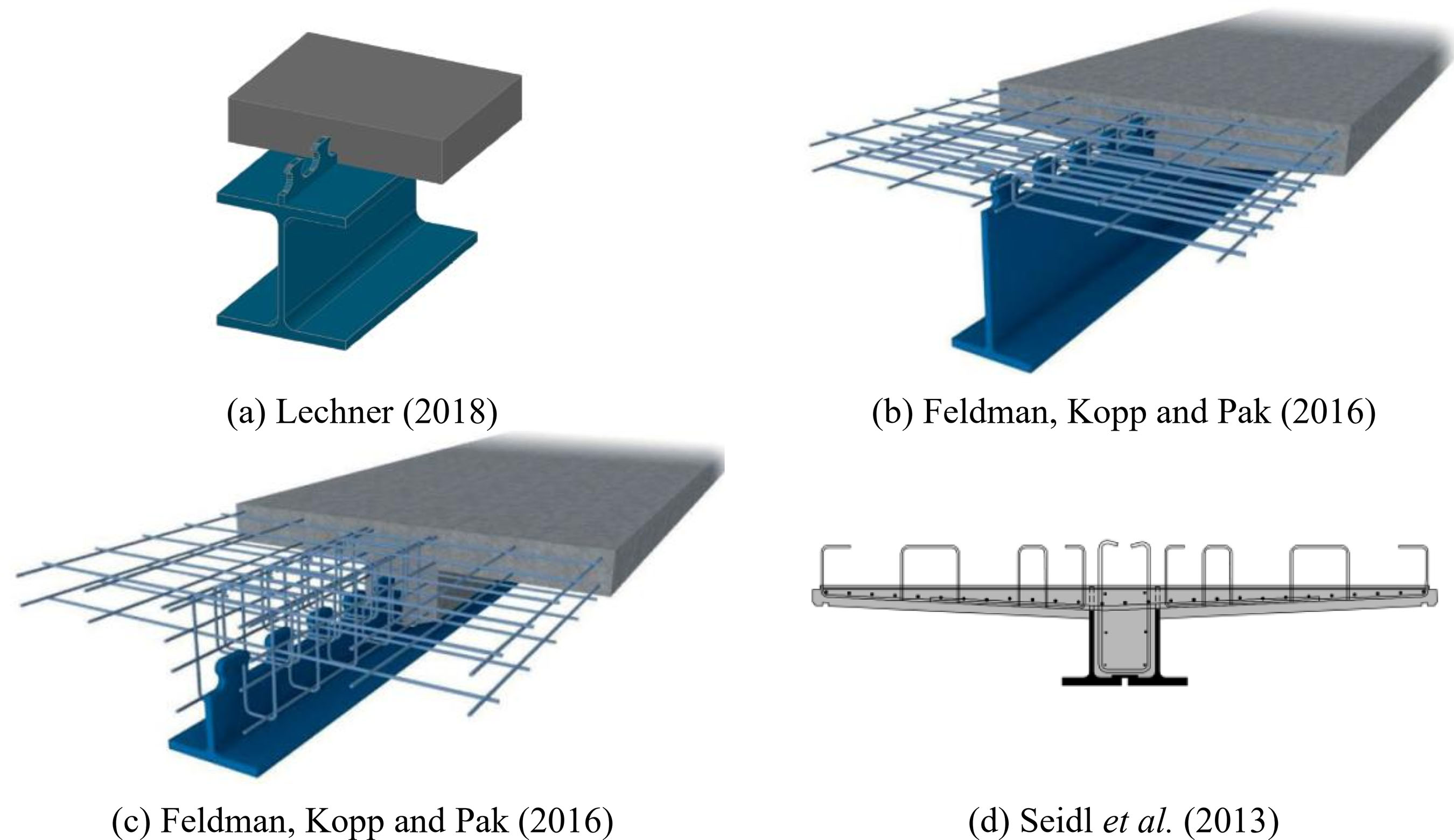
 Source: adapted from
  Source:
  Source: Kopp et al. (2018).
 Source: Veríssimo (2007).
 Source:
  Source: adapted from
  Source: Kopp et al. (2018).
 Source: Kopp et al. (2018).
 Source:
  Source: adapted from
  Source:
  Source:
  Source:
  Source:
  Source:
  Source: