
 Economic viability of a rainwater harvesting system in a single-family home in southern Brazil
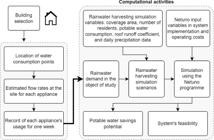
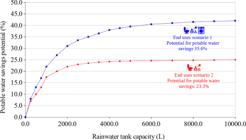
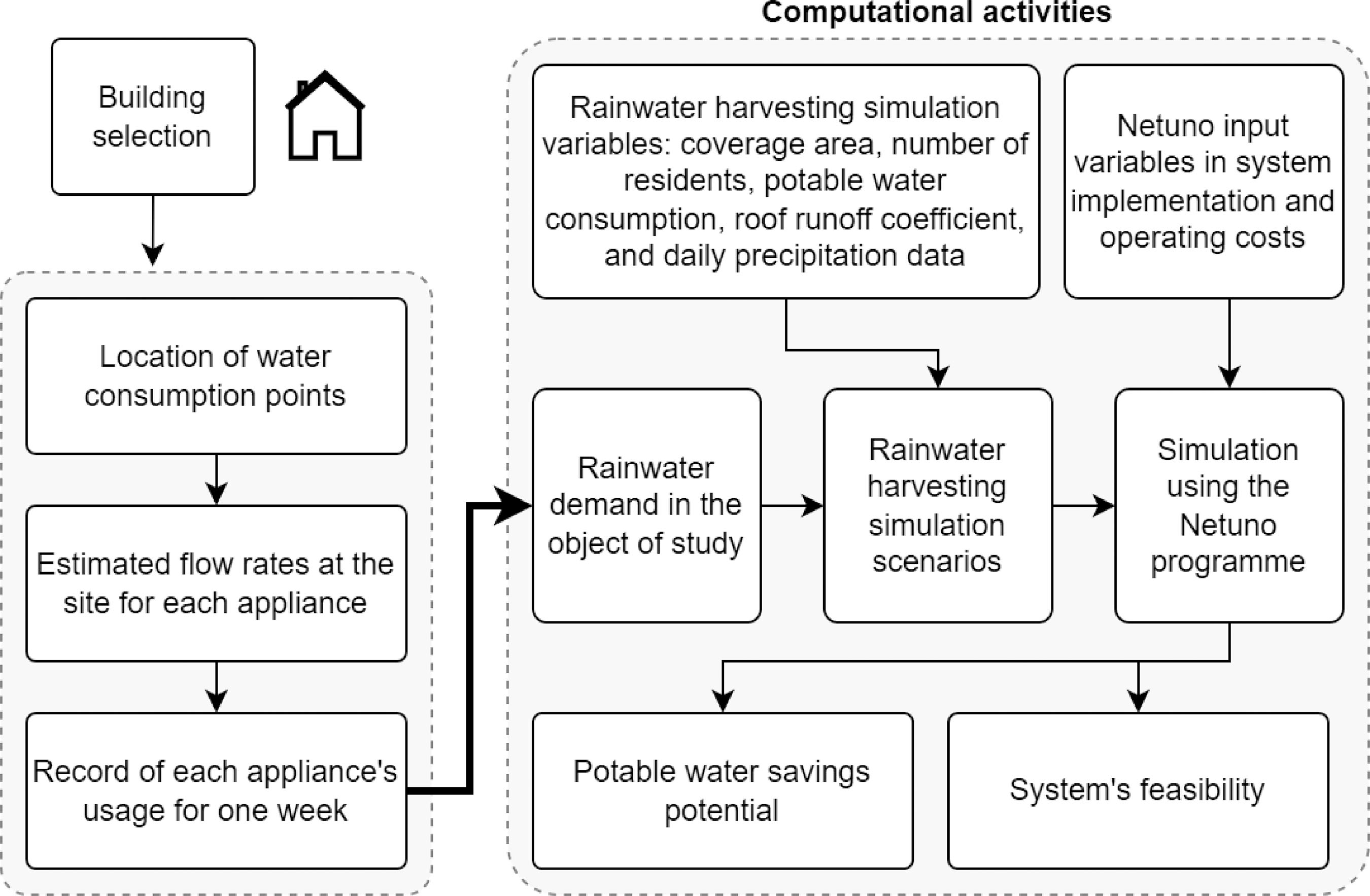
This study aimed to conduct a technical and economic analysis of a rainwater-harvesting system for a single-family house in Palhoça, Southern Brazil. The methodology comprised: assessment of water consumption and end-uses through site visits and weekly records; simulation using the Netuno computer programme based on historical rainfall data from Brazilian National Institute of Meteorology (INMET); and an economic viability analysis using local tariff structures and financial indicators such as Net Present Value (NPV) and Internal Rate of Return (IRR). The main end-uses of water were toilet flushing (28.81%), washing machine (28.75%), and showers (22.95%). Two rainwater harvesting scenarios were evaluated: scenario 1 considered its use for toilet flushing, garden irrigation, and washing machine; scenario 2 limited the use to toilet flushing and garden irrigation. The rainwater harvesting system, considering a lower rainwater tank of 3,000 L and an upper tank of 500 L, resulted in potable water savings equal to 35.6% (scenario 1) and 23.3% (scenario 2). The economic analysis indicated that the investment was viable under scenario 1, with a payback period of 55 months, a positive NPV, and an IRR exceeding the Minimum Acceptable Rate of Return. It is concluded that the system is technically practical and economically advantageous, contributing to sustainability in the built environment.
Keywords
Rainwater harvesting; Non-potable water; Residential buildings; Netuno
 Thumbnail
 Thumbnail
 Thumbnail
 Thumbnail
 Thumbnail

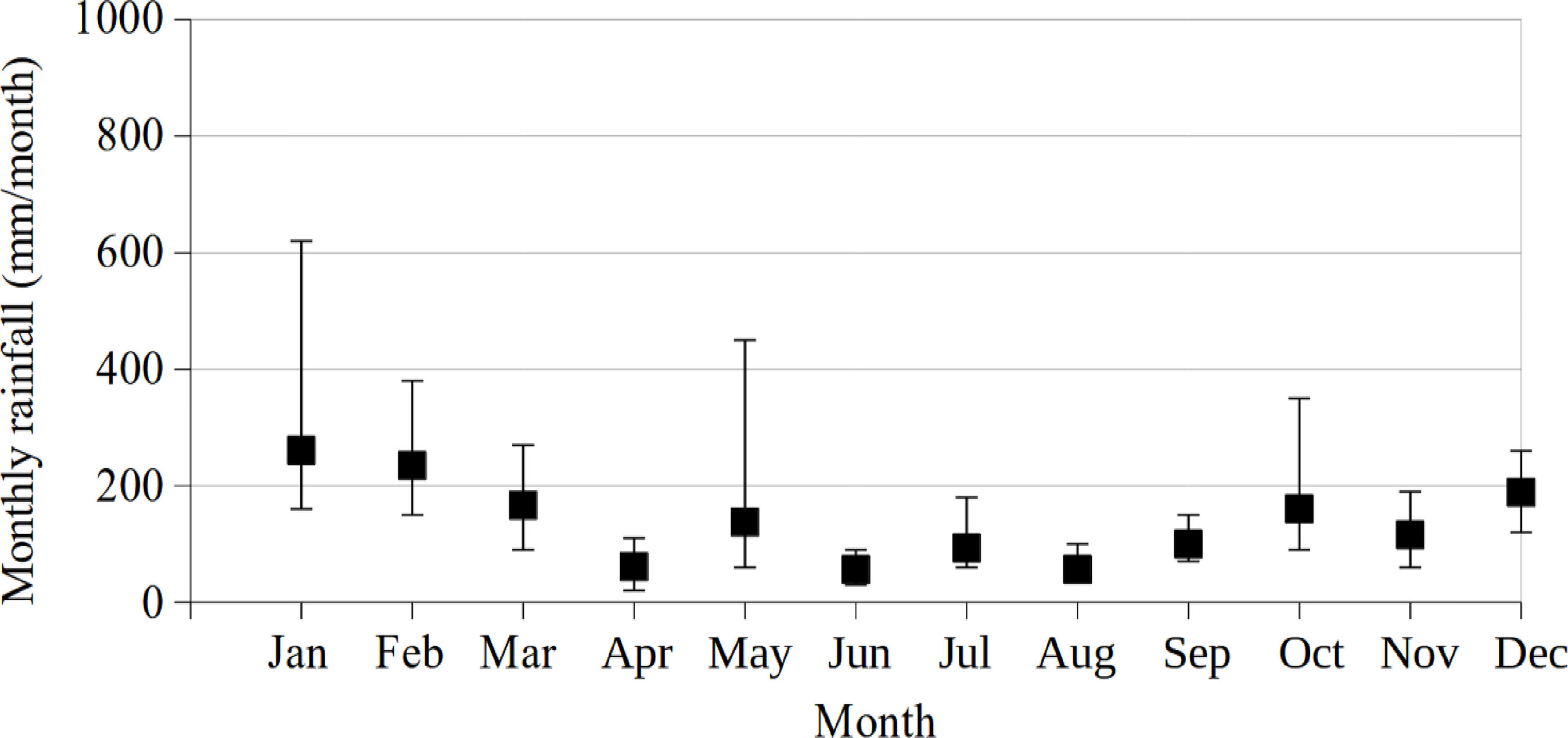 Source: adapted from INMET (2024).
