
 Economic viability of a rainwater harvesting system in a single-family home in southern Brazil
Abstract
This study aimed to conduct a technical and economic analysis of a rainwater-harvesting system for a single-family house in Palhoça, Southern Brazil. The methodology comprised: assessment of water consumption and end-uses through site visits and weekly records; simulation using the Netuno computer programme based on historical rainfall data from Brazilian National Institute of Meteorology (INMET); and an economic viability analysis using local tariff structures and financial indicators such as Net Present Value (NPV) and Internal Rate of Return (IRR). The main end-uses of water were toilet flushing (28.81%), washing machine (28.75%), and showers (22.95%). Two rainwater harvesting scenarios were evaluated: scenario 1 considered its use for toilet flushing, garden irrigation, and washing machine; scenario 2 limited the use to toilet flushing and garden irrigation. The rainwater harvesting system, considering a lower rainwater tank of 3,000 L and an upper tank of 500 L, resulted in potable water savings equal to 35.6% (scenario 1) and 23.3% (scenario 2). The economic analysis indicated that the investment was viable under scenario 1, with a payback period of 55 months, a positive NPV, and an IRR exceeding the Minimum Acceptable Rate of Return. It is concluded that the system is technically practical and economically advantageous, contributing to sustainability in the built environment.
Keywords
Rainwater harvesting; Non-potable water; Residential buildings; Netuno
Resumo
O objetivo deste estudo foi analisar técnica e economicamente um sistema de aproveitamento de água pluvial em uma residência unifamiliar em Palhoça (SC). O método incluiu: levantamento do consumo e de usos finais de água da residência por meio de visitas técnicas e registros semanais; simulação no programa Netuno com dados pluviométricos históricos do Instituto Nacional de Meteorologia (INMET); e análise de viabilidade econômica baseada em tarifas locais e indicadores de valor presente líquido (VPL) e taxa interna de retorno (TIR). Os principais usos finais de água foram em bacias sanitárias (28,81%), lavadora de roupas (28,75%) e chuveiros (22,95%). Foram analisados dois cenários para o aproveitamento de água pluvial: o cenário 1, com bacias sanitárias, irrigação de jardim e máquina de lavar roupas; e o cenário 2, com apenas bacias sanitárias e irrigação de jardim. O sistema de aproveitamento de água pluvial, com reservatório inferior de 3.000 L e superior de 500 L, resultou em economia de água potável igual a 35,6% (cenário 1) e 23,3% (cenário 2). A análise financeira indicou viabilidade do investimento no cenário 1, com tempo de retorno de 55 meses, VPL positivo e TIR superior à Taxa Mínima de Atratividade. Conclui-se que a adoção do sistema é tecnicamente eficaz e economicamente vantajosa, contribuindo para a sustentabilidade no ambiente construído.
Palavras-chave
Aproveitamento de água pluvial; Água não potável; Edificações residenciais; Netuno
1 Introduction
Approximately 12% of all the world's fresh water is found in Brazil, but, as observed globally, the distribution of water resources in the country is uneven (MMA, 2024). Reports indicate that demand for potable water varies by sector and by a country's level of economic development, but, globally, agriculture remains the largest user. Domestic consumption accounts for approximately 12% of potable water use worldwide, with an annual increase of just under 1% over the last 100 years (UNESCO, 2023).
The continuous increase in water consumption has raised growing concern among researchers and public managers. Given this scenario, several studies have highlighted the importance of reducing water consumption and improving water-use efficiency in buildings. Several studies show the importance of adopting strategies such as rainwater harvesting (Teston et al., 2018; Custódio; Ghisi, 2019; Custódio; Ghisi, 2024; Pacheco; Alves, 2023), grey water reuse (Ghisi; Oliveira, 2007; Cureau; Ghisi, 2020; Yang et al., 2023) and the use of water-saving equipment (Bertolazzi; Custódio, 2020; Alexandre et al., 2017). Among the benefits of rainwater harvesting are savings in potable water (Custódio; Ghisi, 2019), relief of urban drainage (Custódio; Ghisi, 2023), and reductions in greenhouse gas emissions (Teston et al., 2024).
Studies conducted in different locations worldwide show the potential of rainwater harvesting to reduce potable water consumption in residential buildings. Rostad et al. (2016) estimated an average potable water-saving potential of 40.0% across four cities in the United States of America, including rainwater use for irrigation and toilet flushing. In Barcelona, Domènech and Sauri (2011) reported an average water-saving potential of 18.0%. In Sweden, the potential for potable water savings through rainwater harvesting ranged from 40 to 60% (Villarreal and Dixon, 2005). In the Brazilian context, studies across different cities indicate significant potential to reduce potable water consumption by using rainwater in residential buildings. In Joinville, Custódio and Ghisi (2019) observed savings of 18.5% to 40.8%; in Palhoça, Ghisi and Oliveira (2007) found potential savings of 30.4% to 36.6%; in Blumenau, Fugi et al. (2023) estimated potential savings of 18.8% to 58.1%; in Belo Horizonte, Chaib et al. (2015) estimated potential savings of 12.3% to 42.4%; in Brasília, Cáceres et al (2019) estimated potential savings of 22.0% to 47.6%. It can therefore be observed that, although the potential savings in potable water vary depending on climatic conditions, consumption patterns, and forms of rainwater use, the literature generally agrees that rainwater harvesting is an effective measure for reducing household potable water demand.
However, the technical feasibility of reducing potable water consumption does not automatically guarantee the economic viability of implementing rainwater harvesting systems. Economic viability depends on variables such as the initial installation cost (rainwater tanks, filters, pumps, pipes) (Freitas; Ghisi, 2020), operating and maintenance costs, the potable and non-potable water demands (Hammes et al., 2020), the local water tariff (Istchuk; Ghisi, 2023), as well as the rainfall regime, the catchment area (Custódio; Ghisi, 2019) and the building's usage profile (Custódio; Ghisi, 2023). Istchuk and Ghisi (2022) evaluated different Brazilian cities. They concluded that, in the most promising scenarios, between 30% and 70% of simulations were economically viable, with a payback period of 6 to 9 years for single-family homes. Another study in João Pessoa (Paraíba) showed that 79.8% of the 104 residential-building scenarios simulated had payback periods of approximately 9 years (Dias et al., 2017). Freitas and Ghisi (2020) assessed the economic viability of rainwater harvesting in homes located in Imbituba-SC, considering different scenarios (different roof areas, number of residents, and potable water and rainwater demands) and obtained payback periods ranging from 9.3 to 19.7 years. These results indicate that, in addition to technical feasibility, rainwater harvesting can be highly cost-effective, especially in regions with regular rainfall and high public water supply tariffs. However, the different paybacks observed in the literature show that the parameters adopted in the system design, i.e. roof area, tank capacity, water consumption profile, and material costs, directly influence its economic viability. Many of these studies address technical performance, simulation results, or economic feasibility separately, while integrated analyses that combine detailed water end-use assessment, system simulation, and economic evaluation within a single residential case study remain limited.
In general, evidence shows that rainwater harvesting can significantly reduce potable water consumption in residential buildings, with reductions ranging from 18% to 60% depending on the context analysed. Similarly, when assessing economic viability, different payback periods are obtained according to the installation and operating conditions of the rainwater harvesting system. This range of results highlights both the potential of the technology and the need for local studies that consider factors such as rainfall patterns, user behaviour, and building types to support more efficient public policies and urban planning strategies. In this context, the analysis of water end-uses plays a central role in rainwater harvesting studies, as it directly influences the definition of non-potable demand, system sizing, and the resulting technical and economic performance. Thus, the objective of this study is to evaluate the potential for potable water savings and the economic viability of a rainwater-harvesting system in a single-family residential building in southern Brazil.
2 Method
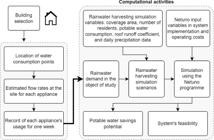
The Netuno computer programme, version 4, was used to estimate the potential for potable water savings and assess the economic viability of the rainwater harvesting system (Ghisi; Cordova, 2014). The data needed for the simulations were obtained at different stages of the study, as shown in Figure 1. Each stage is described in the following subsections.
2.1 Object of study
The object of this study was a single-family residential building located in the city of Palhoça, in southern Brazil. The house was built in 2003 and has a total built area of 228 m² on a 1440 m² piece of land. Its water supply is indirect, provided by two upper tanks which are filled with the local utility’s potable water. The building has 17 water points, including three showers, three washbasins, three toilets with flush valves, a bidet, a sink in the kitchen, a sink in the barbecue area, a dishwasher, a washing machine, a laundry sink, and two garden taps. Figure 2 shows the location and floor plan of the house. As this study adopts a case-study approach based on a single-family residence, the results are sensitive to variations in key parameters, particularly the household water consumption profile.

2.2 Daily rainfall data
The rainfall data used to size the rainwater harvesting system were obtained from Rainfall Station code 83897, monitored by the National Institute of Meteorology (INMET, 2024). Rainfall is recorded daily at the station located in Florianópolis, with a latitude of -27.60 south, a longitude of -48.62 west, and an altitude of 4.64 m. The data correspond to the total daily precipitation, in millimetres, measured from the start of the station's operation on 01/07/1961 until 01/07/2023.
2.3 Potable water demand
Article 194 of the Building Code of the municipality of Palhoça recommends tank sizes based on minimum daily consumption per building type, setting a consumption of 100 litres/day per long-stay living space for residential units. Consumption was calculated based on the highest number of occupants in the house, i.e. eight inhabitants, two per bedroom (Palhoça, 2009).
2.4 Water end-uses and rainwater demand
To maximise potable water savings, the water end-uses were identified by analysing residents' consumption habits using an appliance-use report. Water end-uses were considered when residents reported them as common uses and were technically suitable for replacement with rainwater. The four residents recorded the number of times and the duration of use of the water appliances over a week. For recording purposes, water appliances were classified into two types. Residents recorded the frequency and duration of use for each appliance using a structured use report, based on daily time estimates for continuous-flow devices and the number of uses for appliances operating in cycles. The one-week monitoring period was adopted because water end-uses in single-family households generally follow weekly routines, and a complete week captures both weekday and weekend consumption patterns. Nevertheless, this monitoring duration has some limitations, as it does not capture seasonal variations or occasional behavioural changes. In addition, the monitoring period was defined based on the residents' availability and willingness to participate in the data collection process. Longer monitoring periods could reduce user acceptance and data reliability, as prolonged self-reporting may lead to participant fatigue and less accurate records.
Water appliances of type 1 include those for which consumption estimates were obtained from average water flow and operating time determinations. The average flow rates were measured on site using the volumetric method, which consists of recording the time required to fill a container of known volume (in this case, 500 mL). The flow rate was calculated as the collected volume divided by the filling time, and the final value adopted was the arithmetic average of three measurements for each appliance. The residents themselves recorded the operating time of type 1 appliances. Prior to the monitoring period, the residents received guidance on how to record the duration of each use, including by recording the start and end times of each use or by estimating the use duration. Thus, the individual consumption of each appliance was determined by multiplying the average flow rate by the corresponding average operating time. This group includes showers, washbasin taps, sinks, and outdoor taps.
Water appliances of type 2 include those for which water consumption was estimated based on the number of uses and the volume of water consumed per use. This group includes toilets, washing machines and dishwashers. For these appliances, the volume of water consumed per use was obtained from the manufacturer's information. Thus, the total consumption of each appliance of type 2 was determined by multiplying the number of uses by the volume of water corresponding to one operation. As it was not possible to verify the toilet flush valve model, no water volume measurements were taken, and a flow rate of 1.7 L/s was adopted, in accordance with the design flow rate recommended for toilets by Macintyre and Vasconcellos (2017). The activation time of the flush valves was estimated by the residents themselves, based on toilet use type, as the duration of valve actuation may vary depending on users’ needs. This approach represents a limitation of the study, as self-reported activation times may be subject to uncertainties related to user perception and recording accuracy.
The total water consumption at the house was calculated by summing the consumption of all appliances over one week. The end uses of toilets, outdoor taps, and washing machines indicate the percentage of potable water demand that can be replaced by rainwater. Although the standard NBR 15527 (ABNT, 2019) does not explicitly recommend the use of rainwater for washing clothes, several studies indicate its feasibility, provided that the system's safety and performance requirements are met. Struk-Sokołowska et al. (2020) note that, with proper treatment and water-quality control, the use of rainwater in washing machines can be considered safe and efficient. In addition, several authors have evaluated the economic feasibility of this practice, demonstrating that supplying washing machines with rainwater can significantly increase the potential for potable water savings (Custódio and Ghisi, 2019; Freitas and Ghisi, 2020; Hammes et al., 2020; Cáceres et al., 2019; Ortiz et al., 2022). Thus, two scenarios were considered for rainwater demand: in the first, the use of rainwater in toilets, outdoor taps, and washing machines was evaluated; in the second, the use of water in washing machines was excluded.
2.5 Catchment area
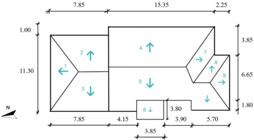
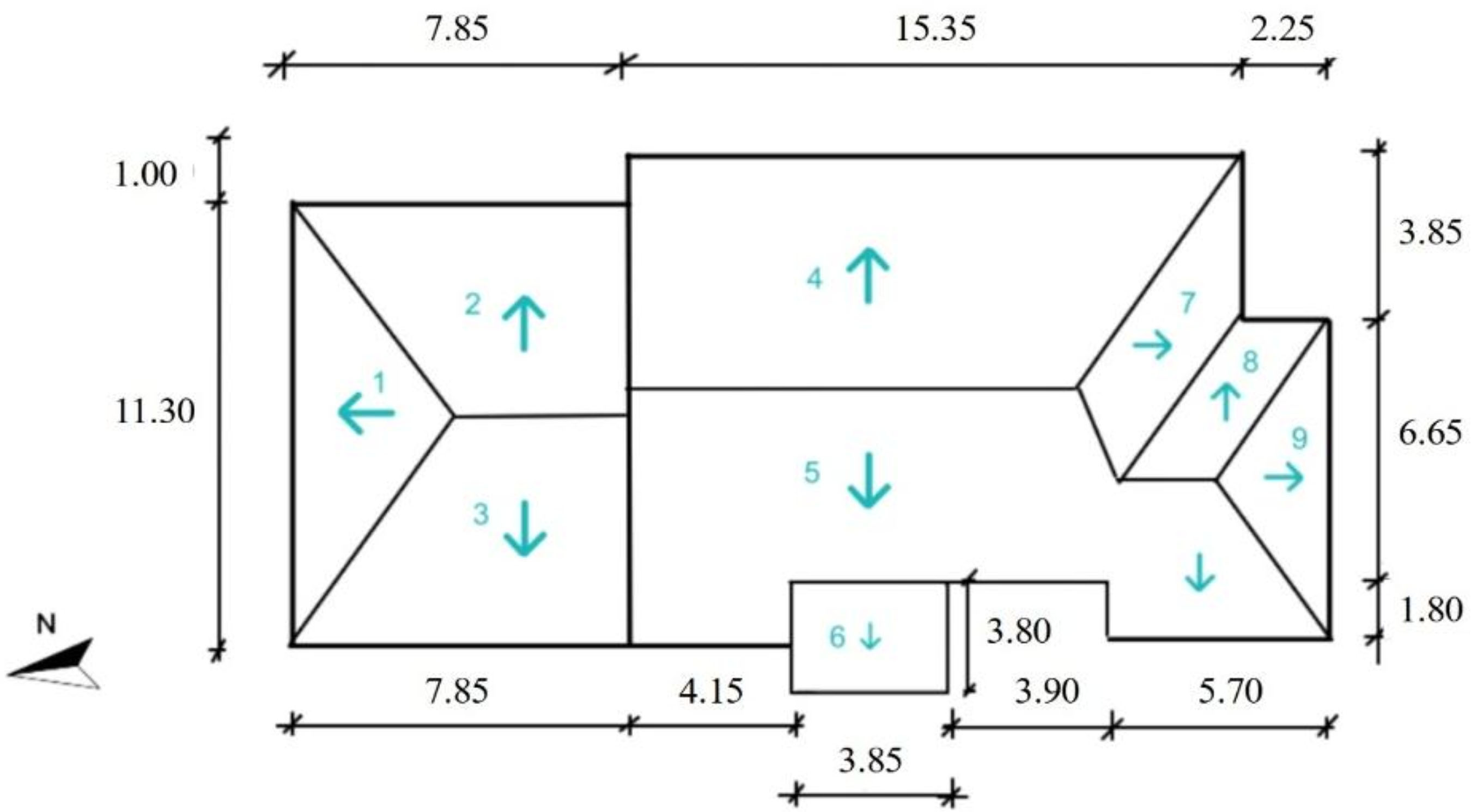
The house’s roof is made of glazed ceramic tiles. Because the volume of rainwater that falls is not the same as that which can be used, the surface runoff coefficient was used, which represents the ratio of the water that runs off the surface to the total water that falls on this type of tile (Tomaz, 2010). Also, according to Tomaz (2010), the surface runoff coefficient for glazed tiles ranges from 0.90 to 0.95. In this study, a surface runoff coefficient of 0.95 was adopted. According to NBR 15527 (ABNT, 2019), the catchment area is the roof area projected horizontally where rainwater is collected. As there is no circulation of people on the roof, all water collected could be used for consumption after the initial 2 mm was discarded (ABNT, 2019). Figure 3 shows the roof plan and its dimensions. The catchment area was calculated according to the procedure described in NBR 10844 (1989).
2.6 Rainwater tanks
The capacity of the rainwater tank was determined using the Netuno programme, version 4. For the upper tank, a fixed volume of 500 L was adopted. For the lower tank, a simulation was carried out in Netuno to verify the increase in the potable water savings potential for each tank capacity. The simulations performed in the Netuno programme used tank capacities at 250-litre intervals, up to a maximum of 10,000 litres. This range of volumes allows the potential for potable water savings to be assessed for different tank capacities. The ideal tank capacity was defined as one for which the increase in potential-to-volume ratio was less than 5%/m³. All simulations were conducted considering the maximum residential occupancy allowed by the municipal building code of Palhoça, corresponding to eight residents (Palhoça, 2009).
2.7 Economic viability
To verify the economic viability of installing a rainwater harvesting system, an analysis was conducted that exclude renovation costs. The operating period was set at 21 years, simulating a house built in the same year as the house herein. The costs considered were those of operating and installing the materials and equipment, while the benefits were calculated based on the potential savings in water consumption from the utility company. The tariff values per m³ of water by consumption range were obtained from the website of the water utility company of the city of Palhoça (SAMAE) and are shown in Table 1. Annual adjustments to water tariffs and the operating costs of the rainwater harvesting system were considered, based on the accumulated inflation rate over the last 12 months of 4.76% (IBGE, 2024).
In addition to the costs shown in Table 1, the water utility charges a sewage fee equivalent to 80% of the water consumption. The water tariff has a fixed charge for up to 10 m³ of water and a variable charge per m³ for the other consumption ranges, so the monthly water cost for analysis was calculated using Equation 1.
Where:
Cm is the monthly cost of water consumption (R$/month);
tf is the fixed tariff (R$);
te is the sewage rate (%);
v1 is the volume consumed in the first consumption range (m³);
t1 is the tariff for the first consumption range (R$/m³);
v2 is the volume consumed in the second consumption range (m³);
t2 is the tariff for the second consumption range (R$/m³);
v3 is the volume consumed in the third consumption range (m³); and
t3 is the tariff for the third consumption range (R$/m³).
The difference in the monthly cost of current potable water consumption at the house and consumption with the rainwater harvesting system installed was evaluated. The system's monthly operating and maintenance costs were also considered. Equation 2 shows the calculation of monthly savings.
Where:
Em is the monthly savings from using the rainwater system (R$/month);
Cm is the monthly cost of potable water consumption (R$/month);
Cmp is the monthly cost of consumption using the rainwater system (R$/month); and
Co is the monthly operating and maintenance cost of the rainwater system (R$/month).
The monthly operating cost of the motor pump was calculated using Netuno based on data provided on unit power, efficiency, flow rate and electricity tariff. It was assumed that the pump would be activated when the water volume in the upper tank reached 50% of its capacity. The system's maintenance cost also includes the cost of the chlorine tablets used in water treatment. To analyse the economic viability, the economic parameters of net present value, payback period, and internal rate of return were evaluated. The net present value updates the project's cash flow date to zero, representing the difference between the investment's inflows and outflows in current monetary values. Equation 3 shows the calculation of the parameter.
Where:
NPV is the net present value (R$);
n is the final analysis period;
i is the analysis period evaluated;
CF is the cash flow (R$);
MARR is the minimum attractive rate of return (%); and
I0 is the initial investment (R$).
The minimum attractive rate of return adopted was the SELIC rate for October 2024, which was 0.93% per month. The SELIC rate represents the yield on the most common investments in Brazil (BCB, 2024). The initial investment was calculated based on the cost of materials, equipment, and labour for the installation of the rainwater harvesting system. Cost estimates were based on the National Civil Construction Cost and Index Research System (SINAPI), using the reference tables for October 2024 for the state of Santa Catarina, considering costs without payroll tax exemption. The estimated installation costs included materials, equipment, and labour required for the implementation of the rainwater harvesting system, such as storage tanks, pipes, fittings, pumps, and accessories. Unit prices were obtained directly from the SINAPI compositions, and material quantities were derived from detailed quantity take-offs generated from the building information model developed in the Revit programme. This approach ensures consistency with standard Brazilian construction cost practices and improves the transparency and reproducibility of the economic analysis.
The architectural and hydraulic design of the rainwater harvesting system, as well as the detailed material quantification obtained from the building information model developed in the Revit programme, are presented in full in the undergraduate thesis that served as the basis for this study. Due to space limitations, only the aggregated cost results derived from this quantification are reported herein, while detailed drawings, quantity take-offs, and material tables can be consulted in the original thesis and can be consulted in the original undergraduate thesis (Bezerra, 2024).
The payback period indicates the time required for the savings generated by the rainwater harvesting system to exceed the initial investment. The payback period was calculated by analysing the Net Present Value (NPV) in each period and determining the period in which it first became non-negative. The internal rate of return is the monthly financial return generated for each evaluated scenario and is defined as the rate at which the net present value equals zero. For the rainwater harvesting system to be economically viable, it must exceed the minimum rate of attractiveness. Equation 4 shows the calculation performed.
Where:
NPV is the net present value (R$);
n is the final analysis period;
i is the analysis period evaluated;
CF is the cash flow (R$);
MARR is the minimum attractive rate of return (%); and
I0 is the initial investment (R$).
3 Results and discussion
3.1 Rainfall
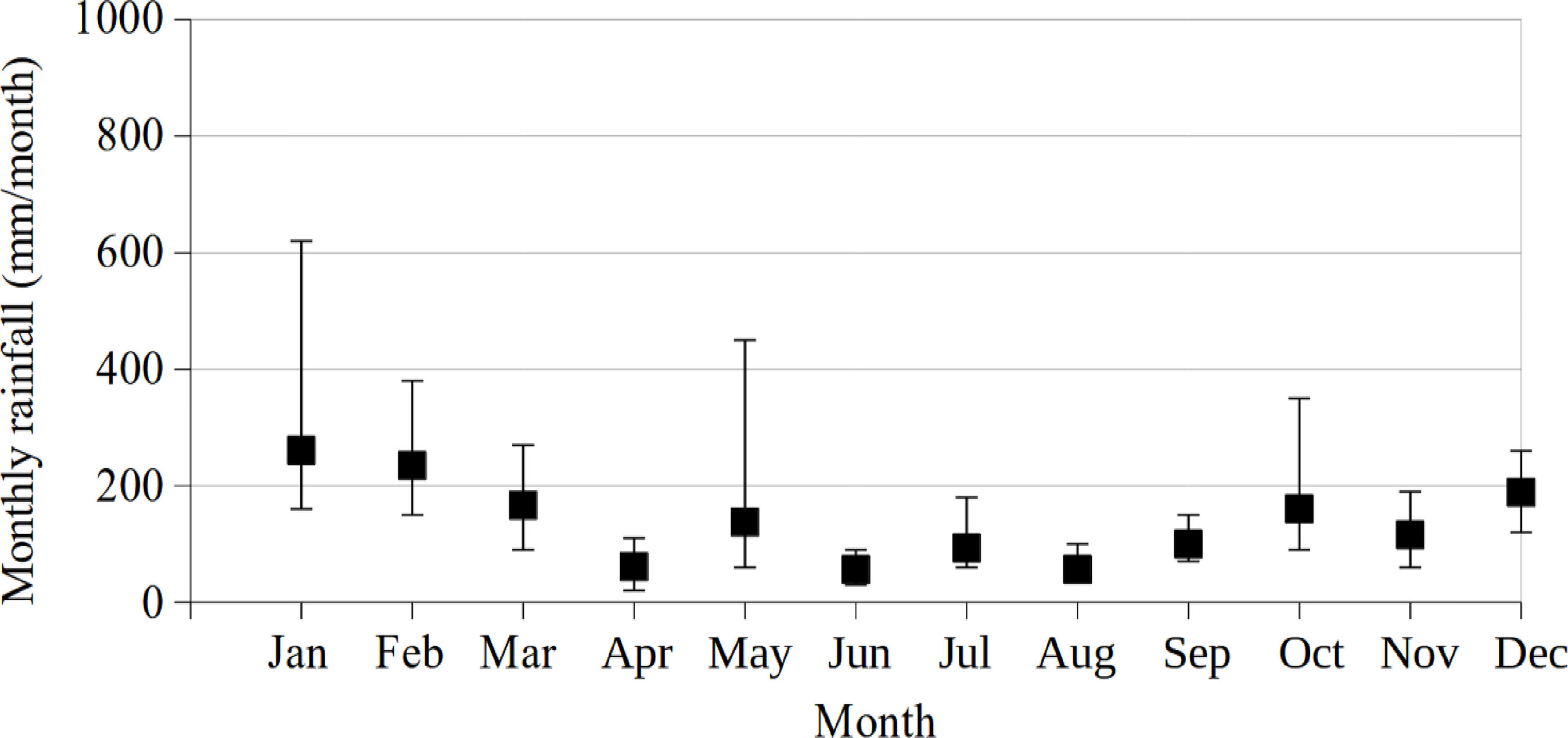
Figure 4 shows the average, minimum, and maximum monthly rainfall for the years 1945 to 2023. Figure 4 shows that, in all months, the average rainfall at the location exceeds 50 mm, and that the summer months (December to February) usually have the highest average rainfall of the year.

The average daily rainfall was 4.53 mm, and the annual rainfall was 1,544 mm. Custódio and Ghisi (2019) conducted a study on rainwater harvesting in the city of Joinville and found an average annual rainfall of 2358 mm. Fugi et al. (2023) conducted a similar study for the city of Blumenau and found that the average annual rainfall for the city (for the 20-year historical series) was 1770 mm. Both cities are located in southern Brazil. These differences in rainfall patterns directly influence the performance of rainwater harvesting systems, as higher precipitation generally increases rainwater availability and storage reliability. In addition to total annual rainfall, differences in rainfall distribution and frequency throughout the year may affect the continuity of rainwater supply, influencing system reliability during dry periods and the effective utilisation of storage capacity. Consequently, lower annual rainfall and greater variability tend to limit the achievable potable water savings under similar system configurations.
3.2 Water end-uses
Table 2 shows the average daily water consumption per resident for each water appliance. It indicates weekly and daily consumption, enabling identification of the water appliances with the most significant impact on total household water consumption. Table 2 also shows the total non-potable consumption for two scenarios in this study: one based on the sum of toilet, outdoor taps, and washing machine use (scenario 1), and another that excludes washing machines (scenario 2).
Table 2 shows that the average per capita consumption during the monitoring period was 213.67 L/person/day. The average billed consumption (recorded by the municipal sanitation company) during the six months before the study was 224.14 L/person/day. This means there was a 4.7% difference between the per capita consumption estimated by the monitoring and the average consumption recorded by the utility company. The difference between average per capita consumption values could be explained by variations in the consumption behaviour of residents who were absent in previous months or by the small sample size of only one week. Fugi et al. (2023) conducted a similar study in a house in Blumenau, in southern Brazil, and found differences between estimated and measured consumption ranging from 4.0 to 22.6%. As in the study by Fugi et al. (2023), some residents may not have recorded all uses. In addition, there are uncertainties in measuring water flow using the volumetric method. The flow rate of each water appliance may be higher or lower, depending on how taps and shower valves are opened and on each user's preferences. Despite these sources of uncertainty, the relatively small difference observed between monitored and billed consumption suggests that the monitoring period provided a reasonably representative estimate of household water use, supporting the reliability of the consumption data adopted for subsequent simulations and analyses.
3.3 Potential for potable water savings
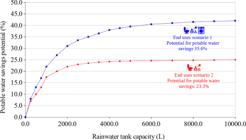
Figure 5 shows the potable water savings potential for the two scenarios analysed, using rainwater. In scenario 1, the ideal tank capacity was 3,500 litres; in scenario 2, a 2,750-litre tank would be more appropriate. To estimate system costs and perform the economic feasibility analysis, the 3000 L model was adopted, as the following commercially available model above 3000 L is the 5000 L model.
The estimated ideal tank capacities in this study are consistent with values reported in the literature for residential buildings. Custódio and Ghisi (2019) observed that the average capacity of simulated rainwater tanks for houses in Joinville, southern Brazil, was approximately 5,000 L. Similarly, Fugi et al. (2023) identified that the ideal tank capacity for the house analysed in Blumenau, also in southern Brazil, was 5000 L. On the other hand, Hammes et al. (2020), when evaluating a house also located in Blumenau, reported an ideal tank of 2000 L. These results demonstrate that, although there is variation between studies – mainly due to consumption characteristics, catchment areas, and rainfall data used – the values obtained in this research fall within the range observed in analyses conducted in houses in southern Brazil.
The ideal tanks have a potable water saving potential of 35.6% and 23.3% in scenarios 1 and 2, respectively. Custódio and Ghisi (2019) conducted a study with 33,720 simulations in the Netuno programme for residential buildings, both single-family and multi-family. For single-family buildings, the average potential for potable water savings from rainwater use was 19.3% when considering replacing potable water with rainwater only in toilets. When considering the end uses of toilets and washing machines, the authors concluded that the potential for potable water savings would be 43.9%.
Comparable potable water-saving potentials have also been reported in international studies. Villarreal and Dixon (2005), analysing a large-scale residential development in Sweden, reported water saving efficiencies of approximately 30% to 44% when rainwater was used for toilet flushing and laundry, depending mainly on storage capacity, appliance efficiency, and household occupancy. Rostad et al. (2016), for example, evaluated the performance of rainwater-harvesting systems for toilet flushing in single-family residential buildings in four major cities in the United States. Rostad et al. (2016) reported that typical systems could reduce potable water demand by more than 40%, depending on local precipitation patterns, roof areas, and operating conditions. Although the savings reported by Rostad et al. (2016) are higher than those obtained in Scenario 2 (23.3%) and close to those observed in Scenario 1 (35.6%) of this study, the differences can be attributed to variations in climate, end-use definitions, and system configuration. Nevertheless, the results indicate that the potable water-saving potentials estimated in this study are consistent with those reported in international contexts.
Ghisi and Oliveira (2007) analysed two houses in the municipality of Palhoça, southern Brazil, to estimate the potential for potable water savings through rainwater use. The authors reported savings potentials of 35.5% and 33.6% for the two houses evaluated. In both cases, rainwater was considered for use in toilets and washing machines, corresponding to 36.6% and 33.8% of the total water demand in each house. An interesting methodological aspect is that, in one of the houses analysed by Ghisi and Oliveira (2007), the percentage of non-potable demand adopted (36.6%) was lower than that considered in scenario 1 of this study (47.24%). Even so, the authors' savings potential (35.5%) is very similar to that found in this study (35.6%). This similarity can be explained by the fact that Ghisi and Oliveira (2007) designed a 5000 L rainwater tank. In contrast, in this study, a 35.6% potential was obtained with a 3500 L tank, highlighting the influence of storage capacity on system performance. Another factor contributing to differences in results between studies is the period and rainfall database used. Ghisi and Oliveira (2007) used daily rainfall series from 1969 to 2002, obtaining an average annual rainfall of 1706 mm. In this study, the average annual rainfall was 1544 mm. This reduction may indicate changes in the region's rainfall regime over the last two decades, possibly associated with climatic variability or climate change. Such a reduction in average annual rainfall may have direct implications for the performance of rainwater harvesting systems, as lower precipitation levels can reduce rainwater availability and, consequently, the potential for potable water savings under similar design conditions.
Fugi et al. (2023) performed simulations using Netuno, considering rainwater demands of 30%, 40%, 50%, and 60% of the total water demand for a residential building in Blumenau. The authors found that the potential for potable water savings ranged from 18.8% to 58.1%, with an average of 37.9%. The fact that the results obtained in this study (27.3% and 47.2%) fall within the range reported in the literature supports the consistency of the adopted methodology. Moreover, the results confirm the performance trends commonly observed for rainwater harvesting systems in single-family residential buildings, despite variations in rainwater demand and local conditions.
The results of this study and those reported in the literature indicate that the performance of rainwater harvesting systems in single-family residential buildings cannot be interpreted solely on the basis of isolated parameters, such as tank capacity or annual rainfall. Instead, potable water-saving potential emerges from the combined effects of household consumption profiles, the selection of non-potable end uses, storage capacity, and the temporal distribution of rainfall. Studies reporting higher savings generally involve broader end-use definitions or higher per capita consumption, whereas lower savings are often associated with more restrictive uses or less favourable rainfall conditions. The findings of this study reinforce the notion that increasing storage volume alone does not necessarily yield proportional gains in potable water savings, highlighting the importance of integrated analyses that jointly consider demand characteristics, climatic conditions, and system sizing strategies when evaluating the technical performance of rainwater harvesting systems.
3.4 Economic viability assessment
The monthly potable water consumption costs before and after the installation of the rainwater harvesting system are shown in Table 3. From the data in Table 3, it can be seen that in scenario 1 (potential savings of 35.6%), the average water bill decreases from R$303.93 to R$170.35, i.e. a reduction of R$133.58/month.
The economic parameters calculated for the two scenarios are shown in Table 4. For the scenarios to be considered economically viable, the total net present value assessed over the entire period must be positive and the internal rate of return must be greater than the minimum attractive rate of return of 0.93% per month. Based on these criteria, Scenario 1 was economically viable, while Scenario 2 did not meet the economic feasibility requirements. Scenario 2 was classified as economically unviable due to its negative net present value (–R$2,093.86) and an internal rate of return (0.75% per month) lower than the minimum attractive rate of return (0.93% per month), in addition to a longer payback period of 109 months.
In the study conducted by Fugi et al. (2023), a house located in the city of Blumenau was analysed. The economic evaluation carried out by the authors resulted in a net present value (NPV) of R$4,814.54, an investment return time of 89 months, and an internal rate of return (IRR) of 1.44% per month. The house analysed had a roof area of 165 m², four residents, and an average per capita consumption of 153.2 L/person/day. Although the rainwater demand used by Fugi et al. (2023) (59.3%) was higher than that found in this study (47.2%), the financial results reported by those authors differed from those found in this research. The payback period, for example, was 34 months longer in the study by Fugi et al. (2023). This difference can be mainly attributed to the adopted water tariffs and the buildings' consumption profiles.
In the work of Fugi et al. (2023), the average daily consumption of the residents was 612.8 L/day; in this study, the economic analysis was conducted considering a consumption of 800 L/day. As water utilities charge for water by consumption ranges, higher demands result in higher marginal costs. Thus, higher daily consumption results in greater financial savings when part of this water is replaced with rainwater, thereby reducing the payback period and increasing the economic attractiveness of the system analysed in this study.
Freitas and Ghisi (2020) analysed several scenarios for houses located in the city of Imbituba, southern Brazil. The authors found that across the scenarios, payback periods ranged from 9.3 to 19.7 years, and the internal rates of return reached 15.3% annually. The scenarios analysed by Freitas and Ghisi (2020) included variations in roof areas (70 to 160 m²); water consumption (100 to 150 L/person/day); number of residents (3, 4 or 5 people); and rainwater demand (32.2, 42.2, and 52.2% of the total water demand). Although the authors performed simulations in the Netuno programme using parameters similar to those adopted in this study, the economic analysis indicators presented values significantly different from those obtained herein. These differences can be attributed to the fact that, in the study by Freitas and Ghisi (2020), savings resulting from reduced potable water consumption were calculated only as the decrease in water bill payments. In contrast, in the present study, the analysed house is located in an area served by a public sewage network, whose charges are proportional to water consumption (corresponding to 80% of this value). Therefore, the savings estimated herein result from both the reduction in the water bill and, indirectly, the reduction in the sewage tariff, increasing the total economic benefit associated with the rainwater harvesting system.
Overall, the differences observed between this study and previous research can be primarily explained by a combination of key factors, including household water consumption levels, local water and sewage tariffs, the definition of rainwater demand, and the system design assumptions adopted. Higher water consumption levels and the inclusion of sewage tariff savings, as considered in this study, tend to increase the economic attractiveness of rainwater harvesting systems, while differences in roof area, rainfall regimes, and calculation approaches contribute to the variability reported in the literature.
4 Conclusion
The results of this study demonstrate that the rainwater harvesting system analysed shows consistent technical performance, with potential for potable water savings of 35.6% and 23.3% for scenarios 1 and 2, respectively. These values fall within the ranges reported in studies conducted in homes in southern Brazil, indicating that even in regions with moderate rainfall variability, the use of rainwater can yield significant savings when paired with appropriate water end-uses and sizing strategies aligned with the consumption profile and building type. However, from an economic perspective, only Scenario 1 proved economically viable, whereas Scenario 2 did not meet the established feasibility criteria. The convergence of the results from this study with those reported in the literature reinforces the reliability of the method used. It highlights the importance of using historical rainfall series and a detailed analysis of residents' consumption habits.
From an economic point of view, it was found that economic viability depends not only on the savings generated but also on the tariff structure and consumption profile of the house. Scenario 1 showed a positive return, with a net present value above zero (R$ 6,489.89), an internal rate of return above the minimum attractive rate of return (1.83%), and a relatively short payback (55 months), demonstrating that the system is viable when it incorporates multiple end uses and when water and sewage tariffs are marginally high. These results reveal that implementing rainwater harvesting systems can be an effective alternative for reducing household costs and alleviating pressure on urban water supply and sewage infrastructure. They also reinforce the need for public policies and incentive programmes to consider the tariff and climatic particularities of the regions where rainwater harvesting systems will be implemented.
From a practical perspective, this study's results highlight that properly sizing rainwater harvesting systems, combined with a detailed understanding of residents’ actual water consumption patterns, is essential to achieving both technical and economic benefits. Although both analysed scenarios demonstrated potential for potable water savings, the economic feasibility proved highly sensitive to variations in demand profiles and local tariff structures, with only Scenario 1 meeting the adopted economic criteria. These findings reinforce the idea that simplified or generalised approaches may lead to misleading conclusions, underscoring the importance of using simulation tools, such as the Netuno programme, alongside detailed water end-use monitoring to support decision-making. Accordingly, the conclusions drawn from this case study are sensitive to variations in key parameters, particularly household water consumption profiles and local water and sewage tariff structures, which should be considered when interpreting or extrapolating the results.
Based on the scope and findings of this study, future research could expand the proposed approach by incorporating water quality requirements for different non-potable end uses, as well as long-term operation and maintenance costs into the economic assessment. In addition, analyses that consider different tariff structures, rainfall series, and household consumption profiles may further improve understanding of the conditions under which rainwater harvesting systems become technically and economically viable. Extending the methodology to other residential building typologies or to scenarios involving changes in user behaviour could also enhance the applicability of the results and support more context-sensitive water management strategies.
Acknowledgments
This study was financed in part by the Coordenação de Aperfeiçoamento de Pessoal de Nível Superior – Brasil (CAPES) – Finance Code 001, and by the National Council for Scientific and Technological Development (CNPq), Brazil.
-
BEZERRA, I. W.; CUSTÓDIO, D. A.; VAZ, I. C. M.; GHISI, E. Economic viability of a rainwater harvesting system in a single-family home in southern Brazil. Ambiente Construído, Porto Alegre, v. 26, e152200, jan./dez. 2026. ISSN 1678-8621 Associação Nacional de Tecnologia do Ambiente Construído. http://dx.doi.org/10.1590/s1678-86212026000100977
-
Declaration of Generative AI and AI-Assisted Technologies in the Writing Process
The authors declare that no generative artificial intelligence tools were used in the writing of this manuscript.
-
Financial Support
This study was financed in part by the Coordenação de Aperfeiçoamento de Pessoal de Nível Superior – Brasil (CAPES) – Finance Code 001, and by the National Council for Scientific and Technological Development (CNPq), Brazil.
Data Availability Statement
The data that support the findings of this study are available from the corresponding author upon reasonable request.
References
- ALEXANDRE, A. C.; KALBUSCH, A.; HENNING, E. Avaliação do impacto da substituição de equipamentos hidrossanitários convencionais por equipamentos economizadores no consumo de água. Engenharia Sanitária e Ambiental, v. 22, n. 5, 2017.
- ASSOCIAÇÃO BRASILEIRA DE NORMAS TÉCNICAS. NBR 10844: instalações prediais de águas pluviais. Rio de Janeiro, 1989.
- ASSOCIAÇÃO BRASILEIRA DE NORMAS TÉCNICAS. NBR 15527: aproveitamento de água de chuva de coberturas para fins não potáveis: requisitos. Rio de Janeiro, 2019.
-
BANCO CENTRAL DO BRASIL. Taxa Selic 2024. Available: https://www.bcb.gov.br/controleinflacao/taxaselic Access: 07 nov. 2024.
» https://www.bcb.gov.br/controleinflacao/taxaselic - BERTOLAZZI, L.; CUSTÓDIO, D. A. Análise econômica de soluções para reduzir o consumo de água potável – estudo de caso de uma residência em Joinville – SC. Gestão e Sustentabilidade Ambiental, v. 9, p. 197-217, 2020.
- BEZERRA, I. W. Projeto sustentável de residência unifamiliar: implementação de sistema de aquecimento solar de água e aproveitamento de água pluvial 2024. Trabalho de Conclusão de Curso (Bacharelado em Engenharia Civil) – Universidade Federal de Santa Catarina, Florianópolis, Brasil. (In Portuguese).
- CÁCERES, P. S.; RAMOS, S. R.; SANT’ANA, D. Potencial de redução de exploração de recursos hídricos pelo aproveitamento de água pluvial em residências do Distrito Federal. Paranoá: Cadernos de Arquitetura e Urbanismo, v. 12, n. 23, p. 11-19, 2019.
- CHAIB, E. B. et al. Avaliação do potencial de redução do consumo de água potável por meio da implantação de sistemas de aproveitamento de água de chuva em edificações unifamiliares. Revista Brasileira de Recursos Hídricos, v. 20, n. 3, p. 605–614, 2015.
- CUREAU, R. J.; GHISI, E. Electricity savings by reducing water consumption in a whole city: A case study in Joinville, Southern Brazil. Journal of Cleaner Production, v. 261, p. 121194, 2020.
- CUSTÓDIO, D. A.; GHISI, E. Assessing the potential for potable water savings in the residential sector of a city: a case study of Joinville City. Water, v. 11, n. 10, p. 2074, 2019.
- CUSTÓDIO, D. A.; GHISI, E. Impact of residential rainwater harvesting on stormwater management: a case study in a southern Brazilian basin. Journal of Environmental Management, v. 316, p. 115303, 2023.
- CUSTÓDIO, D. A.; GHISI, E. Potential for potable water savings using rainwater: a case study in a university building in Southern Brazil. Urban Water Journal, v. 21, n. 2, p. 251-258, 2024.
- DIAS, I. C. S.; ATHAYDE JUNIOR, G. B.; GADELHA, C. L. M. Análises da viabilidade econômica de sistemas de aproveitamento de águas pluviais para fins não potáveis em residências na cidade de João Pessoa–PB. Revista Econômica do Nordeste, v. 38, n. 4, p. 542-562, 2017.
- DOMÈNECH, L.; SAURÍ, D. A comparative appraisal of the use of rainwater harvesting in single and multi-family buildings of the Metropolitan Area of Barcelona (Spain): social experience, drinking water savings and economic costs. Journal of Cleaner Production, v. 19, n. 1, p. 598-608, 2011.
- FREITAS, D. A.; GHISI, E. Economic feasibility analysis of rainwater harvesting: a case study in Imbituba, Brazil. Urban Water Journal, v. 20, n. 8, p. 905-911, 2020.
- FUGI, A. M.; MAYKOT, J. K.; GHISI, E.; THIVES, L. P. Economic feasibility of rainwater harvesting in houses in Blumenau, Brazil. Environmental Sciences Proceedings, v. 25, n. 1, p. 1-10, 2023.
-
GHISI, E.; CORDOVA, M. M. Netuno 4, Programa computacional. Universidade Federal de Santa Catarina, Departamento de Engenharia Civil. Available: http://www.labeee.ufsc.br/ 2014. Access: 18 set. 2024.
» http://www.labeee.ufsc.br/ - GHISI, E.; OLIVEIRA, S. M. de. Potential for potable water savings by combining the use of rainwater and greywater in houses in southern Brazil. Building and Environment, v. 42, n. 4, p. 1731–1742, 2007.
- HAMMES, G.; GHISI, E.; THIVES, L. P. Water end-uses and rainwater harvesting: a case study in Brazil. Urban Water Journal, v. 20, n. 2, p. 177-183, 2020.
-
INSTITUTO BRASILEIRO DE GEOGRAFIA E ESTATÍSTICA. Inflação 2024. Available: http://www.ibge.gov.br/explica/inflacao.php Access: 04 nov. 2024.
» http://www.ibge.gov.br/explica/inflacao.php -
INSTITUTO NACIONAL DE METEOROLOGIA. Banco de dados meteorológicos Available: https://bdmep.inmet.gov.br/ Access: 19 set. 2024.
» https://bdmep.inmet.gov.br/ - ISTCHUK, R. N.; GHISI, E. Financial feasibility analysis of residential rainwater harvesting in Maringá, Brazil. Sustainability, v. 14, n. 19, p. 12859, 2022.
- ISTCHUK, R. N.; GHISI, E. Influence of design variables on the financial feasibility of rainwater harvesting systems. Water, v. 15, n. 6, p. 1112, 2023.
- MACINTYRE, A. J; VASCONCELLOS, C. A. B. Manual de instalações hidráulicas e sanitárias 2. ed. Rio de Janeiro: LTC, 2017.
-
MINISTÉRIO DO MEIO AMBIENTE. Água Available: http://www.mma.gov.br/agua Access: 20 abr 2024.
» http://www.mma.gov.br/agua - ORTIZ, S.; BARRETO, P. B.; CASTIER, M. Rainwater harvesting for domestic applications: the case of Asunción, Paraguay. Results in Engineering, v. 16, p. 100638, 2022.
- PACHECO, G. C. R.; ALVES, C. M. A. Influência das incertezas no regime pluviométrico noaproveitamento de água pluvial em três cidades de Goiás -Brasil. Paranoá: Cadernos de Arquitetura e Urbanismo, v. 16, n. 34, 2023.
-
PALHOÇA. Código de Obras do Município de Palhoça Available: https://leismunicipais.com.br/codigo-de-obras-palhoca-sc Access: 7 nov. 2025.
» https://leismunicipais.com.br/codigo-de-obras-palhoca-sc - ROSTAD, N.; FOTI, R.; MONTALTO, F. A. Harvesting rooftop runoff to flush toilets: Drawing conclusions from four major U.S. cities. Resources, Conservation and Recycling, v. 108, p. 97-106, 2016.
-
SERVIÇO AUTÔNOMO MUNICIPAL DE ÁGUA E ESGOTO. Serviços Available: https://www.samaepalhoca.com.br/servico/ligacao-de-agua Access: 15 jul. 2024.
» https://www.samaepalhoca.com.br/servico/ligacao-de-agua -
SISTEMA NACIONAL DE PESQUISA DE CUSTOS E ÍNDICES DA CONSTRUÇÃO CIVIL. [Modernização]. Disponível em: https://www.caixa.gov.br/poder-publico/modernizacaogestao/sinapi/Paginas/default.aspx Acesso em: ago. 2024.
» https://www.caixa.gov.br/poder-publico/modernizacaogestao/sinapi/Paginas/default.aspx - STRUK-SOKOŁOWSKA, J. et al. The quality of stored rainwater for washing purposes. Water, v. 12, n. 1, p. 252, 2020.
- TESTON, A. et al. Modular life cycle assessment approach: Environmental impact of rainwater harvesting systems in urban water systems. Science of The Total Environment, v. 908, 168281, 2024.
- TESTON, A. et al. Rainwater harvesting in buildings in Brazil: a literature review. Water, v. 10, n. 4, p. 471, 2018.
- TOMAZ, P. Aproveitamento de água de chuva em áreas urbanas para fins não potáveis São Paulo: Navegar Editora, 2010.
- UNITED NATIONS EDUCATIONAL, SCIENTIFIC AND CULTURAL ORGANIZATION. Water for people water for life: executive summary. Paris: UNESCO Publishing, 2023.
- VILLARREAL, E. L.; DIXON, A. Analysis of a rainwater collection system for domestic water supply in Ringdansen, Norrköping, Sweden. Building and Environment, v. 40, p. 1174-1184, 2005.
- YANG, Y. Z. et al. Towards real-time detection of wastewater in surface waters using fluorescence spectroscopy. Journal of Environmental Sciences, v. 86, p. 195-202, 2023.
Edited by
-
Guest editor:
Daniel Sant’Ana


 Source: adapted from INMET (2024).
