Study of eucalyptus wood ash as a partial replacement of cement in mixed mortar
Abstract
The properties of mortars are influenced by the raw materials used and their proportions. In this context, the partial replacement of Portland cement with wood ash (WA), at appropriate levels, can enhance mortar performance by improving workability, water retention, and durability, while reducing permeability and production costs, representing a sustainable and conscious alternative in material use. This study evaluated the partial replacement of Portland cement with WA, by volume, at levels of 10%, 15%, and 20% in mixed mortars. The WA used was obtained from the combustion of eucalyptus wood in grain-drying boilers. XRF analysis indicated that the ash is mainly composed of CaO, SiO₂ and K₂O. Tests were carried out in the fresh state, including consistency, squeeze-flow, bulk density, and entrained air content, and in the hardened state, compressive strength, flexural tensile strength, and water absorption. The results showed that the 20% replacement level increased the plasticity of the mortars without reducing workability, behaving similarly to lime. However, in the hardened state, the mortars showed a decrease in mechanical strength at all replacement levels, suggesting the low pozzolanic reactivity of the WA. Thus, it was also understood that it is possible to improve the processing of wood ash, making it possible to obtain fractions with higher amounts of amorphous and/or crystalline silica. This can provide better utilization of the material and its proper application in mortar.
Keywords
Eucalyptus wood ash; Fresh properties; Squeeze-flow; Hardened properties
Abstract
As propriedades das argamassas são influenciadas pelas matérias-primas utilizadas e suas proporções. Neste contexto, a substituição parcial do cimento por cinzas de madeira, em porcentagens adequadas, pode auxiliar no desempenho da argamassa, proporcionando melhora na trabalhabilidade, retenção de água, permeabilidade e durabilidade, além de reduzir custo, como também representar uma alternativa sustentável e consciente no uso do material. Este trabalho avaliou a substituição parcial do cimento Portland por cinzas de madeira, em volume, em teores de 10%, 15% e 20%, em argamassas mistas. A cinza de madeira utilizada foi gerada pela combustão de madeira de eucalipto em caldeiras de secagem de grãos. A análise química por FRX indicou que os principais constituintes da cinza são CaO, SiO₂ e K₂O. Foram realizados ensaios no estado fresco, índice de consistência, squeeze-flow, densidade de massa e teor de ar incorporado; e no estado endurecido, resistência à compressão, tração na flexão e absorção de água. Os resultados mostraram que a substituição em teores de 20% proporcionou aumento na plasticidade das argamassas sem reduzir a consistência, tendo uma atuação parecida com a cal. Todavia, no estado endurecido, a argamassa sofreu queda de resistência mecânica em todos os teores, sugerindo a baixa reatividade pozolânica da cinza. Assim, compreendeu-se também que é possível aprimorar o processamento da cinza de madeira, tornando possível se obter frações com maior quantidade de sílica amorfa e/ou cristalina. Isso pode proporcionar o melhor aproveitamento do material e a aplicação correta na argamassa.
Keywords
Cinza de madeira de eucalipto; Propriedades no estado fresco; Squeeze-flow; Propriedades no estado endurecido
1 Introduction
Mortar is a construction material used in a wide range of applications, including laying bricks and blocks, surface coating and leveling, waterproofing, and structural or additional reinforcement (Bertolini, 2010; Recena, 2015; Lisboa; Alves; Melo, 2017). Its performance and function depend on the proportions of the constituent materials and on the intended use. In masonry, for example, mortar is responsible for bonding blocks, distributing loads across the wall, and accommodating deformations caused by thermal effects and drying shrinkage (Lisboa; Alves; Melo, 2017; Mesa-Lavista et al., 2024). Therefore, mortar must exhibit characteristics such as workability, water retention capacity, adequate adhesion, and an ideal modulus of elasticity to absorb internal stresses generated by the masonry, in addition to demonstrating durability (Bertolini, 2010; Recena, 2015).
Given these requirements, understanding the behavior of mortar in the fresh state is essential. In mortar technology, the fresh state is critical for constructability, bond development, and defect prevention. The fresh and hardened properties of mortar are determined by the materials used in the mix and their proportions. Mortar may be composed of one or more binders, fine aggregate, water, and may include admixtures and mineral additions (Lisboa; Alves; Melo, 2017). Inert or weakly reactive fines can increase particle packing and water retention, influencing consistency, spread, and rheological response during application.
To improve these characteristics and reduce the environmental impact of Portland cement, several studies have investigated the use of supplementary cementitious materials (SCM) in mortar compositions. In this context, among the various mineral additions that can be used in mortars. Researchers have studied wood ash (WA), which stands out due to its availability in agro-industrial chains and its potential to act as a filler or, depending on origin and processing, as a material with pozzolanic properties (Gluitz; Marafão, 2013; Centenaro; Silva; Paulino, 2021; Brandão; Coelho; Guimarães, 2022; Nascimento et al., 2025). However, Nascimento et al. (2025) showed that there is still little research evaluating the impact of using wood ash in mortars. Most studies use wood ash (WA) in concrete mixes as a partial cement replacement material (Chowdhury; Mishra; Suganya, 2015; Hamid; Rafiq, 2021; Sharma, 2023; Sae-Long et al., 2024).
Wood ashes are by-products generated in various industrial and agro-industrial processes, particularly those involving the processing and storage of grains, such as soybean and corn, and other commodities for food product manufacturers, since this material is typically produced during the moisture control process used for drying the grains, for example, to remove moisture content, and the combustion of wood in the furnace produces the ash (Afonso Júnior; Oliveira Filho; Costa, 2006; Gluitz; Marafão, 2013; Lima, 2019; Barbosa et al., 2022). In this context, boiler ash is commonly generated in facilities that require heat and steam production, such as grain-drying cooperatives, brick kilns, and thermoelectric power plants. The ash generally derives from the combustion of eucalyptus and pine firewood, although a fraction may also originate from residues generated within the industrial process itself (Centenaro; Silva; Paulino, 2021).
Although biomass is considered a renewable and low-carbon energy source, its increasing use has also resulted in a greater volume of ash residues, most of which still end up in landfills. González-Kunz et al. (2017) report that approximately 70% of wood fly ash is disposed of in landfills, around 20% is applied as a soil alkalinity improver, and only about 10% is directed to other uses, including construction materials.
Wood ash can partially replace cement (Gluitz; Marafão, 2013; Brandão; Coelho; Guimarães, 2022) or can also be used as fine aggregate (Centenaro; Silva; Paulino, 2021), acting as a pozzolan or as a filler, depending on its characteristics. However, it is necessary to evaluate the influence of this industrial by-product on the properties of the mortar.
Brandão, Coelho and Guimarães (2022) studied the use of wood ash from the combustion of eucalyptus and grevillea wood as a partial replacement of Portland cement in mortars. The results showed that in richer mixes, i.e., with a higher cement content (1:3), improvements in compressive strength and in absorption by immersion and capillarity were observed, even for replacements of up to 15%. However, the authors found that the WA did not exhibit pozzolanicity, acting in the mortar only through the filler effect (Brandão et al., 2022).
In contrast, Gluitz and Marafão (2013) obtained different results with the use of wood ash in mortars. The researchers used wood ash as a partial cement replacement at levels of 5%, 10%, 15%, and 20%. The results showed a decrease in the compressive strength of the mortars in all ash series. As the proportion of ash in the mix increased, the cementitious matrix was altered, potentially leading to lower cohesion between particles and a less dense and homogeneous microstructure, thereby affecting its mechanical properties (Gluitz; Marafão, 2013). The decrease in mechanical strength of mortars with the use of ash, at different proportions, was also observed by Ashour et al. (2022).
When used as a partial replacement for fine aggregate, the study by Centenaro, Silva and Paulino (2021) showed that wood ash can reduce the workability of mortar in the fresh state and increase the entrained air content. In hardened properties, WA can increase the water absorption and voids ratio of the mortar. However, the results also showed a gradual increase in compressive strength at 28 days. The authors attribute this improvement either to a potential filler effect, through the filling of voids and enhancement of matrix compactness, or to possible pozzolanic reactions with calcium hydroxide at later ages. Results higher than the reference mortar were reported for the 20% replacement level. Therefore, balancing sustainability and material performance becomes essential to ensure satisfactory behavior.
Although wood ash waste is a sustainable option for use in civil construction (Nascimento et al., 2025), optimizing replacement levels is crucial to preserve essential mortar properties such as workability, water retention, and resistance to deformation, avoiding the production of mortars unsuitable for their intended application. Most studies focus primarily on hardened-state properties, and when fresh-state assessments are performed, they are usually limited to workability evaluations. In addition, wood ash composition varies substantially, since its characteristics depend on factors related to its origin and production, such as wood species, combustion conditions, and temperature (Chowdhury; Mishra; Suganya, 2015; Ashour; Shaban; Elbaz, 2022).
In this context, the articles identified in the review were used to generate a word cloud, allowing the identification of research gaps within the set of studies analyzed. It is important to clarify that the literature review conducted in this study did not follow a systematic review protocol, nor was a specific time frame adopted for article selection. The search was performed in three major scientific databases (Scopus, Web of Science and ScienceDirect) and consisted of an exploratory review. The articles used to support the state of the art were those identified and selected during the development of the theoretical framework. From the selected studies, a frequency list of terms was generated, considering that the dataset contained articles in both Portuguese and English. Based on this frequency analysis, the word cloud was created to visually represent the most recurring terms. Figure 1 shows the word cloud.

As shown in Figure 1, the literature analyzed in this review heavily emphasizes mechanical properties (compressive strength, tensile strength, flexural strength), while discussion of the rheological behavior of mortars with wood ash in the fresh state is still incipient. Therefore, there is an important gap in understanding the influence of this residue on properties such as workability, water retention, consistency, and entrained air.
Therefore, this study aimed to evaluate the behavior of blended cement-lime mortars in both fresh and hardened states, incorporating eucalyptus wood ash (WA) as a partial cement replacement at volumetric levels of 10%, 15%, and 20%. The investigation focused on fresh-state properties (flow table spread, bulk density, entrained air content, and squeeze flow) and hardened-state properties (flexural and compressive strength, water absorption by immersion and capillarity), providing consistent data to enhance the understanding and optimization of WA use in mortars. Wood ash in mortar can play a role similar to that of lime in the fresh state. Lime contributes to improved plasticity, water retention capacity, and workability.
2 Materials and methods
2.1 Materials
For the development of the mortar, Portland cement type CP II F-32, hydrated lime type CH III, fine aggregate (natural sand), and eucalyptus wood ash were used. Density and bulk density of the materials are presented in Table 1. The hydrated lime and wood ash exhibited lower specific and bulk densities due to their fine and porous nature, while the fine aggregate showed values typical of natural sand. Figure 2 shows the particle size distribution of the fine aggregate. Although the limits presented in NBR 7211 (ABNT, 2022) refer to aggregates for concrete, they are shown here only as a reference for granulometric comparison. The fine aggregate used in this study lies below the lower usable limit defined in that standard, presenting a fineness modulus of 1.65.

The WA used as a partial replacement for Portland cement was obtained from the combustion of wood in boilers employed in grain-drying operations (soybean and corn) in agro-industrial facilities located in the region of Ponta Grossa, Paraná. In this process, thermal energy is generated to reduce the moisture content of the grains prior to storage, and the combustion of eucalyptus firewood in the furnace produces the ash that is subsequently collected. For incorporation into the mortar, the ash was milled in a high-energy ball mill with CT-242 alumina balls for 1 minute. After milling, no sieving step was carried out, since the samples, already beneficiated through the milling process, presented a particle size consistent with a fine powder. Figure 3 shows the ash before (a) and after milling (b). Laser particle size distribution, X-ray fluorescence (XRF), and X-ray diffraction (XRD) tests were performed.

For XRD, a Rigaku Ultima IV diffractometer was used with Cu Kα radiation, an X-ray tube operated at 30 kV and 10 mA, scan angles between 5° and 75°, and a step of 0.02°, using powder samples in a circular sample holder 8 mm in diameter. For XRF, the equipment used was a SHIMADZU EDX 700.
Figure 4 shows the particle size distribution (a) and the XRD pattern (b) of the WA. Table 2 shows the results of the chemical analysis of the WA.

From the ash characterization, it is possible to observe that it is composed mainly of silicon, calcium, and potassium (CaO, SiO2 e K2O). The XRD pattern indicates a predominantly crystalline material, with silica phases and a small amorphous halo. The laser particle size analysis indicated that, after milling, most WA particles fell between 10 and 100 μm, with a D50 of 31.9 μm and a D90 of 105.4 μm (Figure 4a). Although the ash behaved as a fine powder macroscopically, its mean particle size was higher than that typically reported for CP II-F-32 cement, whose average particle diameter is approximately 12.1 μm (ABCP, 2020). This confirms that the ash, even after milling, is coarser than the cement used in this study. This milling step, however, favored the use of the material as a filler, since the initial characterization indicates that WA may not exhibit significant pozzolanic activity.
2.2 Methods
For the experimental program, the mix proportion by volume adopted was 1:2:9 (cement: lime: fine aggregate), which is commonly used for masonry mortars in construction practice. The cement replacement levels with ash were 10%, 15%, and 20% by volume. The mass of each constituent was calculated based on the specific density and bulk density of the materials.
The water-to-dry-materials ratio (w/dm) was defined from the flow table test, as prescribed by NBR 13276 (ABNT, 2016a). The water demand was adjusted until the reference mortar reached a flow table spread of 260 ± 5 mm. The flow table spread (264 mm) was achieved with an w/dm of 0.18 (by mass) for the reference mortar, and this ratio was adopted for all mortars. The w/dm ratio was not changed, remaining constant for all mixes. A superplasticizer was not used so as to understand the influence of WA in the fresh state. Mortar mixing was carried out in accordance with NBR 16541 (ABNT, 2016b).
All dry materials are first placed in the mortar mixer and mixed until as homogeneous as possible. Then, with the mortar mixer running at low speed, 75% of the water is added over 10 seconds (10 s), and mixing continues at low speed for a further 20 seconds (30 s). Mix at high speed for an additional 60 seconds (1 min 30 s), then scrape the sides and bottom of the bowl and let the mixture rest for 90 seconds (3 min). With the mortar mixer running at high speed, add the remaining water over 10 seconds (3 min 10 s) and continue mixing at high speed for another 50 seconds (4 min).
After mixing, in the fresh state, the series were evaluated for flow table test according to NBR 13276 (ABNT, 2016a). Three measurements of the mortar flow table spread diameter on the flow table were taken to obtain an average, and the mean value, standard deviation, and coefficient of variation were calculated.
The mortars were also investigated for their rheological behavior using the squeeze-flow method at three different times (15, 30, and 45 minutes), in accordance with NBR 15839 (ABNT, 2010), using two plates: the metallic plate prescribed by the standard and a ceramic plate, in order to simulate a real application on a masonry block (Figure 5). The test ended when the plunger displacement reached 9 mm or when the maximum load of 1 kN was attained. The results were presented as load (N) versus displacement (mm) plots, with curves obtained at a displacement rate of 0.1 mm/s.

In the fresh state, the mortars were evaluated for bulk density and entrained air content, in accordance with NBR 13278 (ABNT, 2005c).
In the hardened state, the mortars were evaluated at 28 days for compressive strength and flexural strength, in accordance with NBR 13279 (ABNT, 2005b), using prismatic specimens of 40×40×160 mm. Twenty-four prismatic specimens measuring 4×4 cm were cast, six for each mix, and tested to failure at 28 days of curing. The specimens were stored immersed in lime-saturated water at controlled temperature (23 ± 2 °C) until the testing age.
The testing machine used was an Emic DL30000N, and the load was applied at 500 ± 50 N/s until failure. Once the specimens were positioned in the testing machine, the load was applied continuously and uniformly so that the increase in stress on the specimen was between 0.9 MPa/min and 1.2 MPa/min.
For water absorption by immersion, in accordance with NBR 9778 (ABNT, 2005a) and capillary water absorption, in accordance with NBR 9779 (ABNT, 2012), using cylindrical specimens of 50×10 mm. Three specimens were cast for each replacement level. After casting, all specimens were stored immersed in lime-saturated water at controlled temperature (23 ± 2 °C) until the testing age.
3 Results and discussion
3.1 Fresh state properties
The flow table test was performed after the initial definition of the w/dm ratio using the reference mix. All mortar series were produced with the same defined w/dm ratio. The results of the flow table test are shown in Table 3. Figure 6 shows the flow table spread of the mortars and the three positions at which the mortar spread diameter was measured (IC – Consistency Index). The photographs are presented to illustrate the visual homogeneity of the mixtures after spreading.

The mortar with 20% WA showed a darker tone compared to the reference, and the color intensity varied with the amount of ash added.
The flow table spread of the mortars produced ranged from 253 mm to 263 mm. As shown in Table 3, the higher proportions (15% and 20% WA) did not reduce the mortar flow table spread. For 10% WA, a 2.31% decrease was observed relative to the reference (6 mm), whereas for 15% and 20% WA, increases of 3.86% (10 mm) and 1.54% (4 mm) were obtained, respectively. Both replacement levels exceeded the flow table spread target defined as 260 ± 5 mm, indicating that the mortars became more fluid with the incorporation of WA at higher replacement levels.
The mortar behavior differed from other studies, such as Brandão, Coelho and Guimarães (2022). In that study, the authors observed a reduction in flow table spread as WA content increased. This difference is due to the composition of each ash used and to the mortar formulation and constituents. Factors such as material fineness, the use of lime, and the mode of replacement, which in this case was by volume, affect the outcome. Maintaining the same w/dm ratio also contributed to the observed behavior. Considering the material characterization results, the WA used in this study presents a fine particle size and a porous structure (a typical characteristic of wood ash), which may contribute to water retention within the mix.
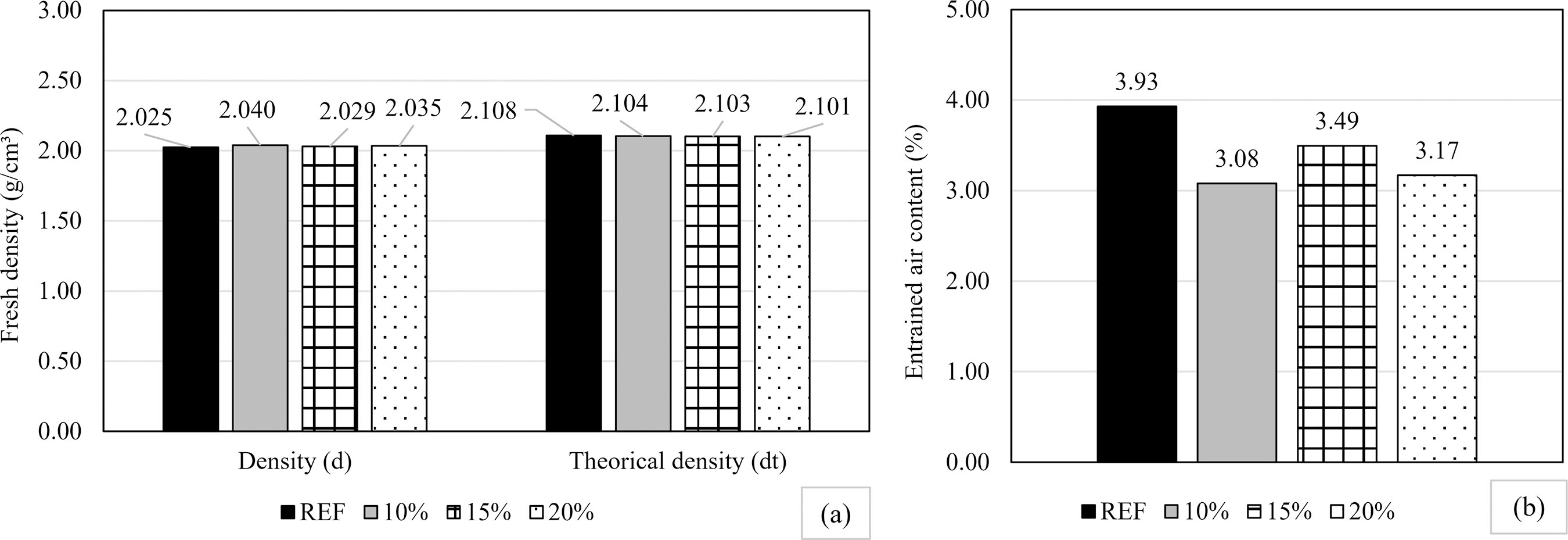
Therefore, in this study, the 15% and 20% WA series made the mortar more fluid and workable than the reference. The results for measured bulk density and theoretical density of the mortars and entrained air content of the mortars are presented in Figure 7.

(a) Measured bulk density and theoretical density of the mortars and (b) entrained air content
Given that the replacement of cement with wood ash was carried out on a volumetric basis (density WA = 2.24g/cm³, density cement = 3.12 g/cm³) the theoretical density of the mixtures decreased slightly (≈0.15 a 0.31%) relative to the reference. This behavior is coherent with the small volumetric fraction of cement in the mix and with the relatively small contrast in specific mass between the two materials (cement and WA).
Analyzing the results, it can be observed that the measured density decreased for all series with WA replacement when compared with the theoretical density, resulting in entrained air contents of approximately 3.1% to 3.9%, which are typical values for mortars with a similar lime-to-cement ratio.
Although wood ash has a lower specific mass than cement, its fine and porous particles improve particle packing, reduces interparticle voids, and consequently decreases the amount of entrained air, which explains the slight increase observed in the measured bulk density of the WA mixtures.
In addition, no clear linear trend was observed in the entrained air values with increasing WA content, likely due to the balance between the lower specific mass of the wood ash and the improved particle packing promoted by its fine particle size.
The limits stipulated by NBR 13281-2 (ABNT, 2023a) for non-structural masonry can be seen in Table 4. It can be observed that all mortars have bulk density above 2000 kg/m³, falling into density class DF4, which corresponds to high-performance mortars.
Considering density together with the entrained air content, the mortar containing 10% WA showed the lowest entrained air content and the highest fresh-state bulk density. In all series with WA, the entrained air content was lower than the reference, reduced by about 15% on average, indicating that the ash indeed acted by filling the pores of the matrix. This pore filling may have occurred through simple particle packing, since WA is a fine material, or may have resulted from a possible pozzolanic reaction over time. However, the initial characterization of the ash indicates predominantly crystalline phases, and therefore such reactivity cannot be confirmed.
The entrained air content meets the specifications of NBR 13281-2 (ABNT, 2023a) for inorganic mortar for bedding non-structural masonry units, which prescribes that it must be below 22%, therefore, the mortar meets this requirement.
Figures 8a, 10b and 10c and 9a, 10b and 10c present the results of the rheological characterization of the mortar using the squeeze-flow test. The test was performed at three different times, 15, 30, and 45 minutes, and on two different bases, metallic and ceramic. Figures 8d and 9d also show the mortars on both bases (metallic and ceramic) over the test duration.


The metallic base is used to characterize the mortar so that the base does not influence the results with respect to water absorption. From the analysis of the curves obtained, the mortars developed in this study exhibited similar rheological behavior on the metallic and ceramic substrates, regardless of the different test speeds adopted. Additionally, a greater spreading of the mortars was observed on the metallic substrate compared with the ceramic substrate, indicating lower resistance to flow on this type of surface (ceramic). This behavior is attributed to the porous and absorbent nature of the ceramic substrate, which tends to reduce mortar spreading due to the absorption of part of the mixing water. Conversely, the metallic surface, smooth and non-absorbent, offers lower resistance to flow, favoring a greater spread. From the force versus displacement curves obtained for all series, it is possible to observe that mortars with partial replacement of cement by wood ash reduced their plasticity only at 30 minutes. At the other times, the incorporation of WA resulted in displacements greater than or very close to those of the reference series.
The mortar containing 20% WA exhibited better plasticity at 45 minutes, showing better performance than the reference mortar and corroborating the flow table test results. The higher the fines content in the mix, the greater the water retention in the first hours of curing, which controls mortar shrinkage. Although the squeeze-flow test does not directly quantify shrinkage, the rheological response observed is consistent with this interpretation. In this context, the WA used in this study presents a fine particle size distribution, as can be observed in the particle size curve and mean particle diameter results (see Figure 4a). Moreover, the presence of porous grains in wood ash may also contribute in this respect, as observed by Nascimento et al. (2025). These porous grains tend initially to retain water present in the matrix; however, over time this water is released back into the system, producing the result observed in the 45-minute test.
Analyzing the results obtained on the ceramic base, it was verified that the mortars lost a significant amount of water due to substrate suction, which was expected since this result is closer to jobsite practice. Similar results were observed in other studies (Costa et al., 2020; Nascimento et al., 2025). The mortar with 20% WA showed behavior similar to the reference at 45 minutes. It is worth noting that studies evaluating the rheology of mortars with WA are still incipient; most fresh-state investigations are restricted to consistency and workability of mortar or concrete.
3.2 Hardened state properties
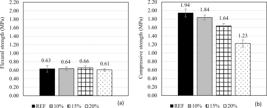
Figure 10 shows the results obtained in the tests of flexural strength (a) and compressive strength (b) of the mortar series at 28 days.
From the flexural strength test results, it can be observed that the greatest loss in strength occurred in the series with 20% WA. However, considering the error bar and the standard deviation of the samples, it is possible to infer that there was no considerable decrease in values with the incorporation of WA. In addition, flexural tensile strength in mortars is naturally low and tends to be less sensitive to microstructural variations, which may explain the absence of significant changes among the mixtures. Based on NBR 13281-1 (ABNT, 2023b), all mortars produced in this study fall within flexural strength class R2 (0.5 ≤ Rf < 1.5), indicating that the strengths obtained are within acceptable ranges for use in rendering and masonry bedding. Although the tensile strength test is described in NBR 13279 (ABNT, 2005b), there are no normative limits for tensile strength in NBR 13281-2 (ABNT, 2023a) for bedding mortars. Therefore, the values obtained in this study were compared with the limits specified in NBR 13281-1 (ABNT, 2023b), which refer to rendering mortars. This is an important property, since bedding mortars can be affected by deformation due to settlement and the movement of non-structural masonry walls.
As with flexural strength, compressive strength also decreased as cement was replaced by WA. It should be noted that the possible pozzolanic reactivity of the ash is discussed later in this section. For the 20% WA mix, the reduction was 36%. Similar results were obtained in other studies (Gluitz; Marafão, 2013; Tamanna et al., 2020). The higher the percentage of wood ash in the mix, the lower the mechanical strengths obtained. This occurs due to several factors, including ash composition, pozzolanic activity, WA particle shape, particle size, water content, and the percentage of WA (Tamanna et al., 2020).
NBR 13281-2 (ABNT, 2023a) defines minimum and maximum compressive strength limits to assess whether the mortar is being used correctly, with limits specified for inorganic mortar for bedding non-structural masonry units (AAV), inorganic mortar for bedding structural masonry units (AAE), and inorganic mortar used for the horizontal fixation of non-structural masonry (AAF). These limits can be seen in Table 5.
NBR 13281-2 (ABNT, 2023a) sets a lower limit of 2.0 MPa for inorganic mortar for bedding non-structural masonry (AAV). In the present study, none of the mortars reached compressive strength values that met this limit; only the reference mortar presented a value close to the limit (1.94 MPa). The mortars containing wood ash, with cement replacement percentages of 10% and 15%, presented values that could classify them for use as AAF (1.5 ≤ fa < 5.0 MPa). The mortar containing 20% wood ash presented a value below any limit prescribed by the standard. In this regard, it should also be noted that dimensional stability tests and potential tensile bond strength to the substrate were not performed, and such tests should be carried out to characterize the mortar for the intended use.
It is important to note that replacing cement with wood ash results in a lower amount of hydrated cement compounds, which can contribute to the lower values obtained in the mechanical test. In addition, the ash was not evaluated for pozzolanicity in this study; however, due to its predominantly crystalline structure, it can be assumed that the ash does not have high pozzolanic activity, acting mainly by filling and packing particles in the mortar. Therefore, the decrease in compressive strength values was expected. Furthermore, since this is a mixed mortar with a high lime content, high mechanical strength values were not expected.
In the initial characterization of the wood ash, XRD was performed on the milled sample. To resolve the composition of the wood ash by size fraction and to help interpret the mechanical strength results, the ash was sieved in its as-received condition using the standard sieve series for fine aggregate (4.75 mm, 2.38 mm, 1.18 mm, 600 µm, 300 µm, 150 µm, and pan). Figure 11 shows the XRD patterns obtained for each sieve fraction.

Observing Figure 11, the wood ash is predominantly crystalline in its coarser fractions (4.75 mm and 2.38 mm) and finer fractions (150 µm and pan), with characteristic quartz peaks, indicating that the ash contains a significant crystalline silica fraction. This is consistent with the mechanical strength results, since replacing cement with WA led to reduced compressive strength as the ash content increased, suggesting that it likely does not exhibit significant pozzolanic activity.
In addition to the crystalline phase, amorphous halos were observed in the material between 15° and 30° (2θ) for the 150 µm, 300 µm, 600 µm, and 1.18 mm sieve fractions. However, the halo is small compared with the crystalline phases.
This result is interesting from the standpoint of WA utilization, since sieving can be used to obtain a material that is more amorphous and/or more crystalline and thus optimize cement–mortar blends depending on the desired properties.
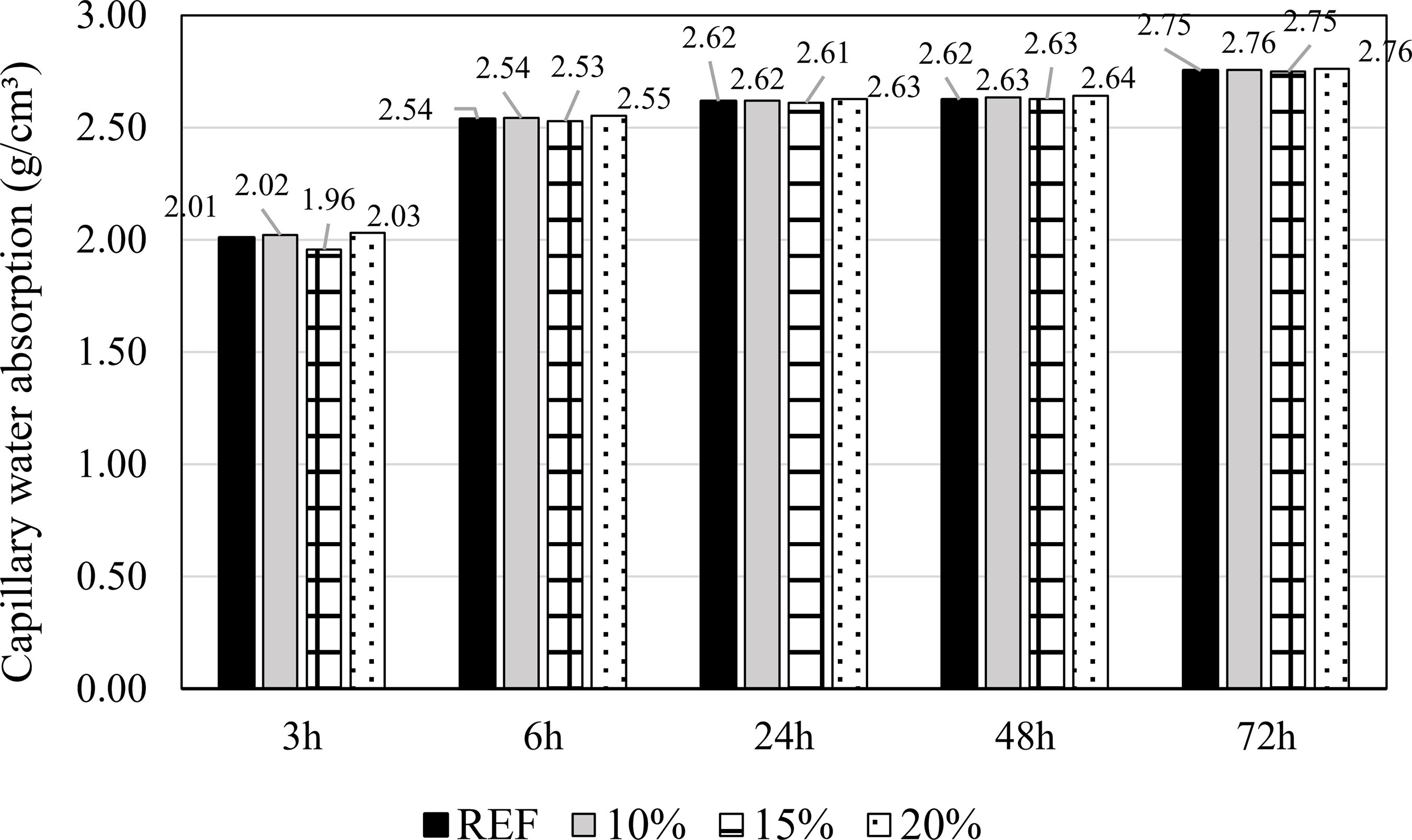
Figure 12 shows the results of the water absorption by immersion test and the voids index at 28 days. Figure 13 shows the result of the capillary water absorption test.


According to the results obtained in the water absorption by immersion tests, only small variations were observed. Compared to the reference mortar, the WA mixtures showed relative differences of approximately 0.4% to 1.8%, and the variation among the WA series themselves was also small (≈1.3%). Moreover, in the capillary water absorption test, the same behavior was observed for all mortars. This small variation can be explained by the fact that WA acts mainly as a filler, reducing interparticle voids, while its intrinsic porosity tends to retain water; therefore, these effects offset each other and the total void ratio remained practically unchanged. These results differ from those obtained by Brandão, Coelho and Guimarães (2022), who reported a reduction in water absorption of the specimens even with leaner mixes (lower cement content).
The reduction in the void ratio in the hardened state was also small, indicating that WA did not significantly alter the cementitious matrix. It is also important to note that the addition of lime tends to entrain air in the mortar, as evidenced by the void ratio approaching 30%. This factor is beneficial in the fresh state; however, in the hardened state it makes the mortar more permeable and increases the void ratio (Recena, 2015), which can also lead to a reduction in mechanical strength, as observed in the tests.
4 Conclusions
This study aimed to partially replace cement with wood ash (WA) at different percentages (10%, 15%, and 20%) to reduce the cost of mortars and to investigate their properties, particularly in the fresh state. The mortars were characterized in the fresh and hardened states, and based on the results it can be concluded that:
-
for 10% WA, a reduction in flow table spread was observed, whereas 15% and 20% WA increased the spread compared to the reference. In this study, the WA used presented fine particle size distribution, and the higher replacement levels resulted in more fluid and workable mortars. However, further investigation is required to better understand the mechanisms involved;
-
the bulk density of WA mortars was slightly higher than the reference, with small differences. The lower entrained air contents indicate a particle packing effect associated with WA fineness;
-
in the squeeze-flow test, WA mortars presented greater displacement at 45 min, corroborating the results from the flow table. WA improved plasticity and fresh-state workability in mixed mortars at 15% and 20%. It can thus be concluded that partial replacement of cement with wood ash, in mixed mortar mixes and at appropriate proportions, can improve the workability of bedding mortars in the fresh state;
-
in the hardened state, WA reduced flexural strength and compressive strength. The greatest loss in mechanical strength values occurred in the mortar with 20% replacement;
-
none of the mixtures reached the compressive strength limit for AAV. The 10% and 15% WA mortars fall within AAF classification, while 20% WA did not meet normative limits; and
-
water absorption by immersion, capillary absorption, and void ratio values were similar to the reference mortar with no significant variation.
In general, the partial replacement of cement with WA can improve the fresh-state properties of mixed mortars, especially in fresh properties. Furthermore, it was observed that sieving can be performed prior to milling in order to make use of WA fractions with higher amounts of amorphous and/or crystalline silica, depending on the intended application. This can provide better utilization of the material.
Therefore, these results show that WA changed the mortars, indicating promising potential for application in construction materials. WA behaved similarly to lime in the fresh state, which suggests that further studies should be conducted in this direction, possibly replacing lime rather than cement, given the loss of mechanical strength of the mortar.
-
RUPEL, B.; LANGARO, E. A.; GOBBI, A.; PEREIRA, E.; BICALTI, G. Study of eucalyptus wood ash as a partial replacement of cement in mixed mortar. Ambiente Construído, Porto Alegre, v. 26, e149922, jan./dez. 2026. ISSN 1678-8621 Associação Nacional de Tecnologia do Ambiente Construído. http://dx.doi.org/10.1590/s1678-86212026000100948
-
Financial Support
No funding was received for this study.
-
Declaration of Generative AI and AI-Assisted Technologies in the Writing Process
During the preparation of this work the author(s) used ChatGPT in order to to check grammar issues and to improve readability. After using this tool/service, the author(s) reviewed and edited the content as needed and take(s) full responsibility for the content of the publication.
Data Availability Statement
Research data is available in the body of the article.
References
- AFONSO JÚNIOR, P. C.; OLIVEIRA FILHO, D.; COSTA, D. R. Viabilidade econômica de produção de lenha de eucalipto para secagem de produtos agrícolas. Engenharia Agrícola, v. 26, p. 28-35, 2006.
- ASHOUR, A. G., SHABAN, W. M.; ELBAZ, K. Physical and mechanical properties of lime and wood ash plastering mortars. In: ZHU, H. H. et al (ed.). Advances in geoengineering along the belt and road BRWSG 2021. Lecture Notes in Civil Engineering. Singapore: Springer, 2022. v. 230.
-
ASSOCIAÇÃO BRASILEIRA DE CIMENTO PORTLAND. Introdução à fabricação de cimento Palestra on-line, 2020. Available: https://abcp.org.br/abcponline-introducao-a-fabricacao-de-cimento Access: 20 Nov. 2025.
» https://abcp.org.br/abcponline-introducao-a-fabricacao-de-cimento - ASSOCIAÇÃO BRASILEIRA DE NORMAS TÉCNICAS. NBR 13276: argamassa para assentamento e revestimento de paredes e tetos: determinação do índice de consistência. Rio de Janeiro, 2016a.
- ASSOCIAÇÃO BRASILEIRA DE NORMAS TÉCNICAS. NBR 13278: argamassa para assentamento e revestimento de paredes e tetos: determinação da densidade de massa e do teor de ar incorporado. Rio de Janeiro, 2005c.
- ASSOCIAÇÃO BRASILEIRA DE NORMAS TÉCNICAS. NBR 13279: argamassa para assentamento e revestimento de paredes e tetos: determinação da resistência à tração na flexão e à compressão. Rio de Janeiro, 2005b.
- ASSOCIAÇÃO BRASILEIRA DE NORMAS TÉCNICAS. NBR 13281-1: argamassas inorgânicas: requisitos e métodos de ensaios: parte 1:argamassas para revestimento de paredes e tetos. Rio de Janeiro, 2023b.
- ASSOCIAÇÃO BRASILEIRA DE NORMAS TÉCNICAS. NBR 13281-2: argamassas inorgânicas: requisitos e métodos de ensaios: parte 2: argamassas para assentamento e argamassas para fixação de alvenaria. Rio de Janeiro, 2023a.
- ASSOCIAÇÃO BRASILEIRA DE NORMAS TÉCNICAS. NBR 15839: argamassa de assentamento e revestimento de paredes e tetos: caracterização reológica pelo método squeeze-flow. Rio de Janeiro, 2010.
- ASSOCIAÇÃO BRASILEIRA DE NORMAS TÉCNICAS. NBR 16541: argamassa para assentamento e revestimento de paredes e tetos: preparo da mistura para a realização de ensaios. Rio de Janeiro, 2016b.
- ASSOCIAÇÃO BRASILEIRA DE NORMAS TÉCNICAS. NBR 9778: argamassa e concreto endurecidos: determinação da absorção de água, índice de vazios e massa específica. Rio de Janeiro, 2005a.
- ASSOCIAÇÃO BRASILEIRA DE NORMAS TÉCNICAS. NBR 9779: argamassa e concreto endurecidos: determinação da absorção de água por capilaridade. Rio de Janeiro, 2012.
- ASSOCIAÇÃO BRASILEIRA DE NORMAS TÉCNICAS. NBR 7211: agregados para concreto: Requisitos. Rio de Janeiro, 2022.
- BARBOSA, J. P. N. B. et al Estudo da caracterização mineralógica das cinzas do eucalipto para viabilidade na substituição parcial do cimento Portland em argamassas. Revista Multidisciplinar do Nordeste Mineiro, v. 3, p. 1-12, 2022.
- BERTOLINI, L. Materiais de construção: patologia, reabilitação e prevenção São Paulo: Oficina de Textos, 2010.
- BRANDÃO, F. L. S.; COELHO, V. A.; GUIMARÃES, C. C. Utilização de cinzas de caldeiras industriais como substituição parcial do cimento Portland em argamassas. Revista Militar de Ciência e Tecnologia, v. 39, n. 1, p. 18-26, 2022.
- CENTENARO, S. C.; SILVA, J. A. G.; PAULINO, R. Uso de cinzas de biomassa geradas na agroindústria do malte para produção de argamassas. Revista Internacional de Ciências, v. 11, n. 2, p. 158-176, 2021.
- CHOWDHURY, S.; MISHRA, M.; SUGANYA, O. The incorporation of wood waste ash as a partial cement replacement material for making structural grade concrete: an overview. Ain Shams Engineering Journal, v. 6, n. 2, p. 429-437, 2015.
- COSTA, E. B. C. et al. Squeeze flow of mortars on brick substrate and its relation with bond strength. Construction and Building Materials, v. 265, 2020.
- GLUITZ, A. C.; MARAFÃO, D. Utilização da cinza da madeira de eucalipto na substituição parcial do cimento Portland em argamassa. Pato Branco, 2013. Trabalho de Conclusão de Curso (Graduação em Química Industrial) – Universidade Tecnológica Federal do Paraná, Pato Branco, 2013.
- GONZÁLEZ-KUNZ, R. N. et al Plant biomass ashes in cement-based building materials: Feasibility as eco-efficient structural mortars and grouts. Sustainable Cities and Society, v. 31, p. 151-162, 2017.
- HAMID, Z.; RAFIQ, S. An experimental study on behavior of wood ash in concrete as partial replacement of cement. Materials Today: Proceedings, v. 46, p. 3426-3429, 2021.
- MESA-LAVISTA, M. M. et al. Shear strength dataset of hollow concrete block masonry with different mortar bedding. Data in Brief, v. 57, p. 111144, 2024.
- LIMA, R. A. P. Concretos auto-adensáveis com incorporação de cinza de madeira da algaroba como fíler alternativo. Caruaru, 2019. 80 f. Dissertação (Engenharia Civil e Ambiental) - Universidade Federal de Pernambuco, Caruaru, 2019.
- LISBOA, E. S.; ALVES, E. S.; MELO, G. H. A G. Materiais de construção: concreto e argamassa. 2. ed. Porto Alegre: SAGAH, 2017.
- NASCIMENTO, L. C. et al Performance of wood bottom ash as replacement for Portland cement in coating mortars. Journal of Materials Research and Technology, v. 34, 2025.
- RECENA, F. A. P. Conhecendo argamassa 2. ed. Porto Alegre: ediPUCRS, 2015.
- SAE-LONG, W. et al. Experimental and simulation analysis of RCA and para-wood ash as partial substitutes for NCA and cement in recycled aggregate concrete. Case Studies in Construction Materials, v. 21, 2024.
- SHARMA, A. Investigation of properties of concrete incorporating wood ash as partial substitute of cement and waste foundry sand as a partial substitute of sand. Materials Today: Proceedings, in press, 2023.
- TAMANNA, K. et al Utilization of wood waste ash in construction technology: a review. Construction and Building Materials, v. 237, 2020.
Edited by
-
Editor-in-chief:
Enedir Ghisi
-
Guest editor:
Juliana Machado Casali Peruch