 Use of the Brain4care® BcMM/2000 monitor in the assessment of non-invasive intracranial pressure waves in dogs with traumatic head injury
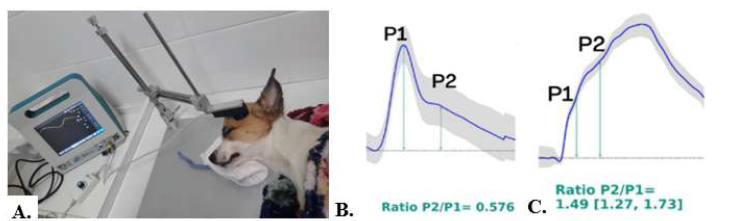
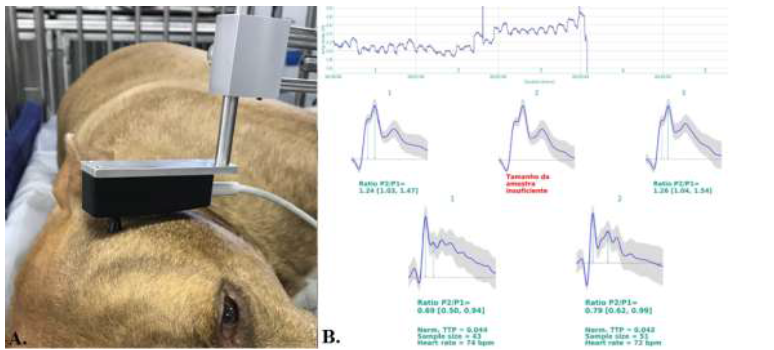
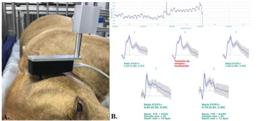
The objectives of the current study were to employ a non-invasive intracranial pressure waveform monitoring device (ICP-Ni) in dogs with traumatic brain injury (TBI) to assess its effectiveness in detecting intracranial pressure waveforms consistent with intracranial hypertension (ICH), determine if the waveform normalized following treatment, and investigate whether waveform alterations indicative of ICH correlate with clinical outcomes. Eleven dogs presented with TBI between May 2019 and December 2020 were evaluated. The low number of animals was due to COVID-19 pandemic phase. The Modified Glasgow Coma Scale (MGCS), heart rate (HR), respiratory rate (RR), blood pressure (BP), temperature, clinical outcomes, laboratory parameters, non-invasive intracranial waveform, and P2/P1 ratio before and after treatment were evaluated. The MGCS ranged from 8 to 18 (median=13), at initial assessment, and from 6 to 18 (median=17) after treatment. In six cases with an increased P2/P1 ratio and MGCS<8, there was an unfavorable clinical outcome. The use of an ICP-Ni monitor associated with the assessment by the coma scale in dogs with cranial trauma helped in the evaluation of intracranial pressure waveforms and decisions regarding therapeutic choices, including the use of hyperosmolar agents, with survival rates of 63,6%.
Keywords:
intracranial pressure; intracranial hypertension; dogs; critical care; nervous system
 Thumbnail
 Thumbnail
 Thumbnail