 Splicing variants impact in thyroid normal physiology and pathological conditions
Abstract
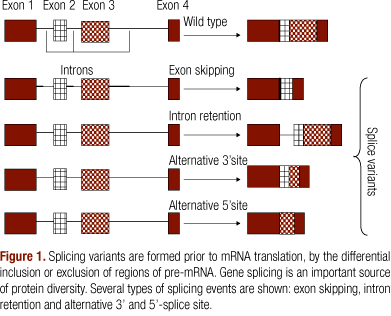
RNA splicing is an essential, precisely regulated process that occurs after gene transcription and before mRNA translation, in which introns may be removed and exons, retained. Variability in splicing patterns is a major source of protein diversity from the genome and function to generate a tremendously diverse proteome from a relatively small number of genes. Changes in splice site choice can determine different effects on the encoded protein. Small changes in peptide sequence can alter ligand binding, enzymatic activity, allosteric regulation, or protein localization. Errors in splicing regulation have been implicated in a number of different disease states. This study reviewed the mechanisms of splicing and their repercussion in endocrinology, emphasizing its importance in some thyroid physiological and pathological conditions.
Splicing; thyroid gland; TSH; TPO; thyroid hormone receptor; TGFbeta