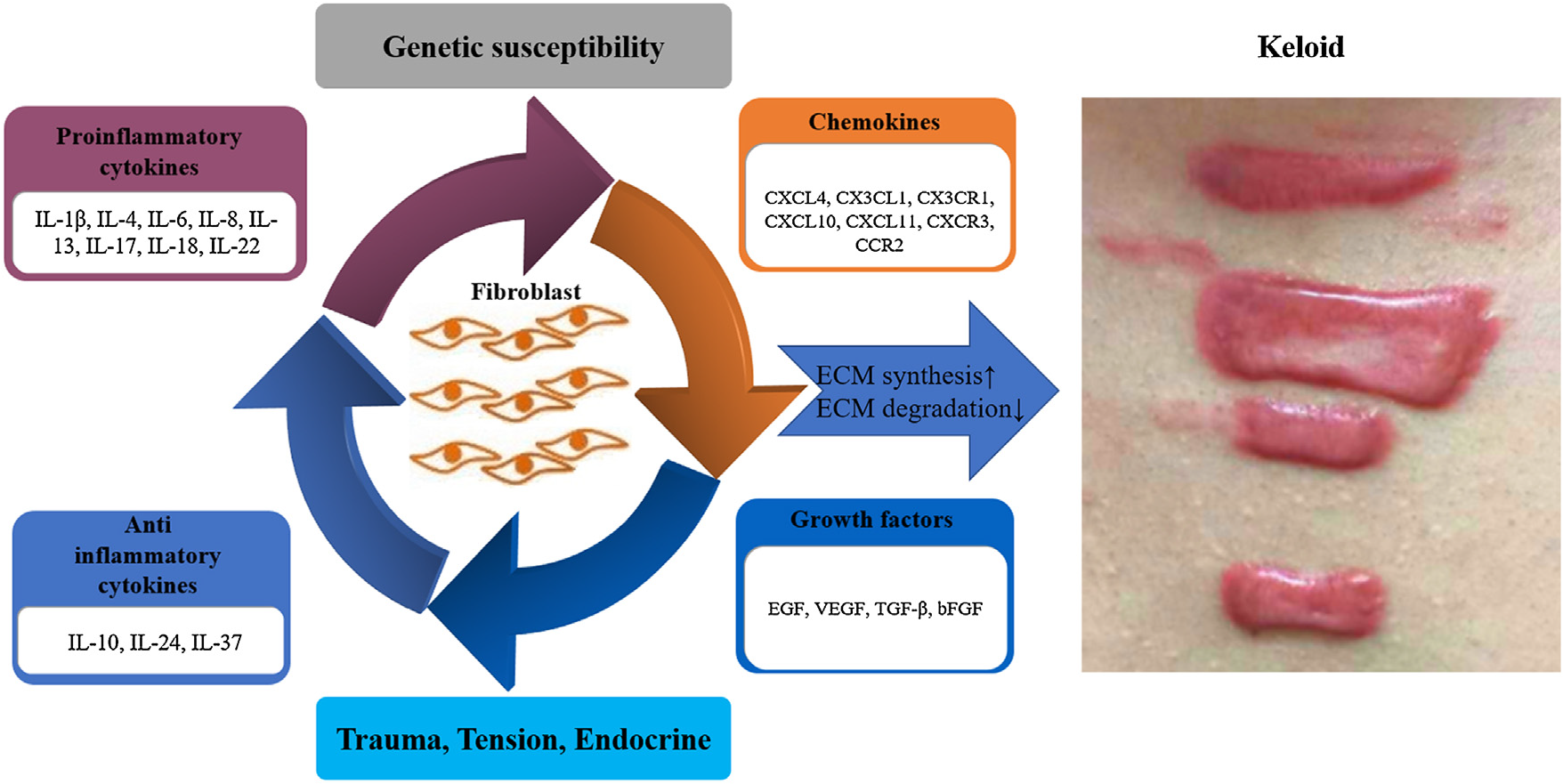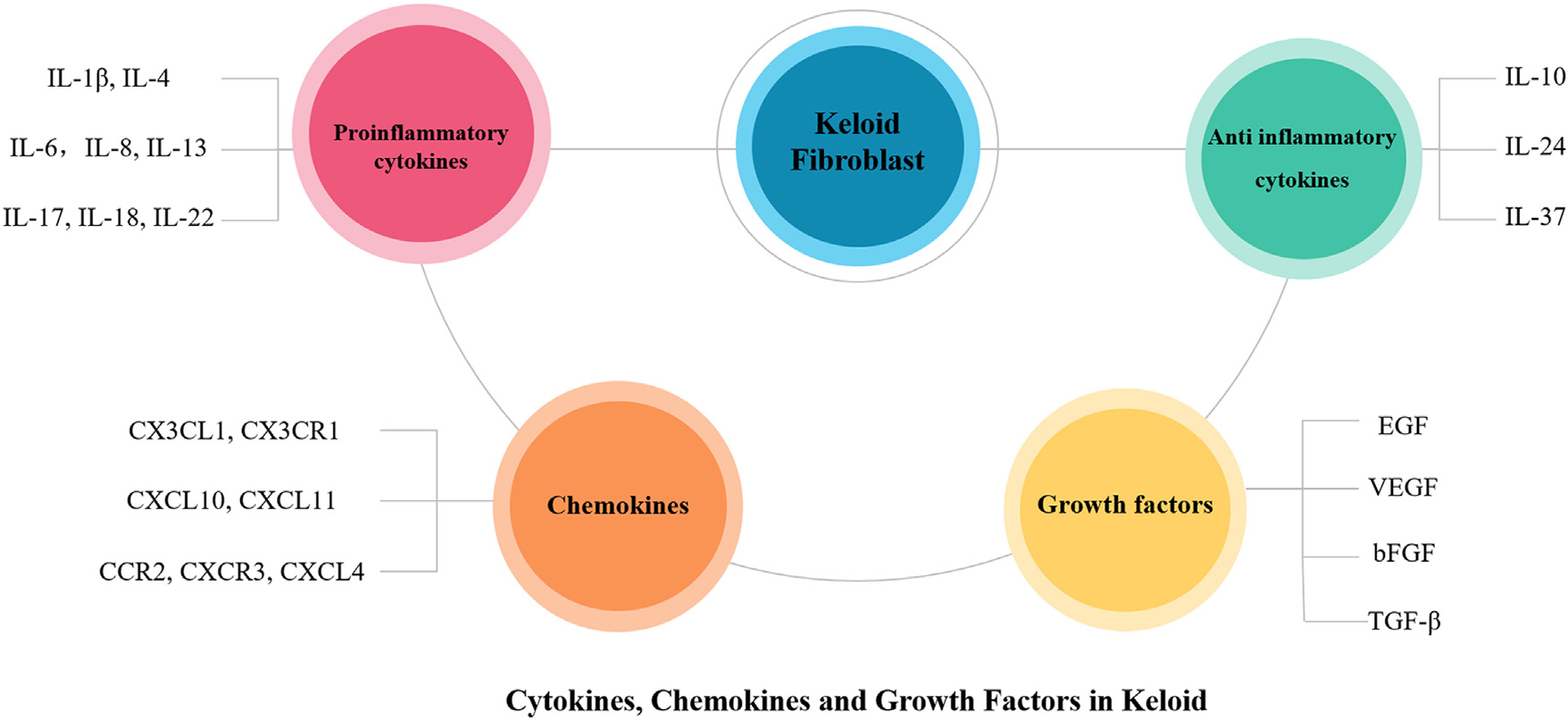
 Cytokines, chemokines and growth factors involved in keloids pathogenesis
Keloid is a common fibrotic disease, which is difficult to treat. It often causes itching and pain, which greatly disturbs patients in their work and daily life and causing difficulties in social interaction. Its pathogenesis is not clear, but may be related to several aspects: genetic susceptibility, environmental, immunological and endocrine factors, trauma and tension. The central point of its pathogenesis is the excessive proliferation of fibroblasts, with excessive synthesis and secretion of extracellular matrix such as collagen. However, the cause of fibroblast excessive proliferation and differentiation is not clear. Immune abnormalities may play an important role, with cytokines, chemokines, growth factors, and other important immune molecules acting on fibroblasts. This paper presents a detailed and comprehensive literature review on this subject.
KEYWORDS
Keloid; Cytokines; Chemokines; Growth factors
 Thumbnail
 Thumbnail