 Ki-67 staining pattern as a prognostic biomarker for advanced acral melanoma
Background Acral cutaneous melanoma (ACM) is an aggressive skin cancer, especially when diagnosed in the advanced stage. The Ki-67 is a rapid tool for proliferation rate analysis. Previous data indicated that its staining pattern is distinct during the several stages of the cell cycle among epithelial cells.
Objective To evaluate the prognostic impact of Ki-67 expression pattern classification among advanced acral cutaneous melanoma cases.
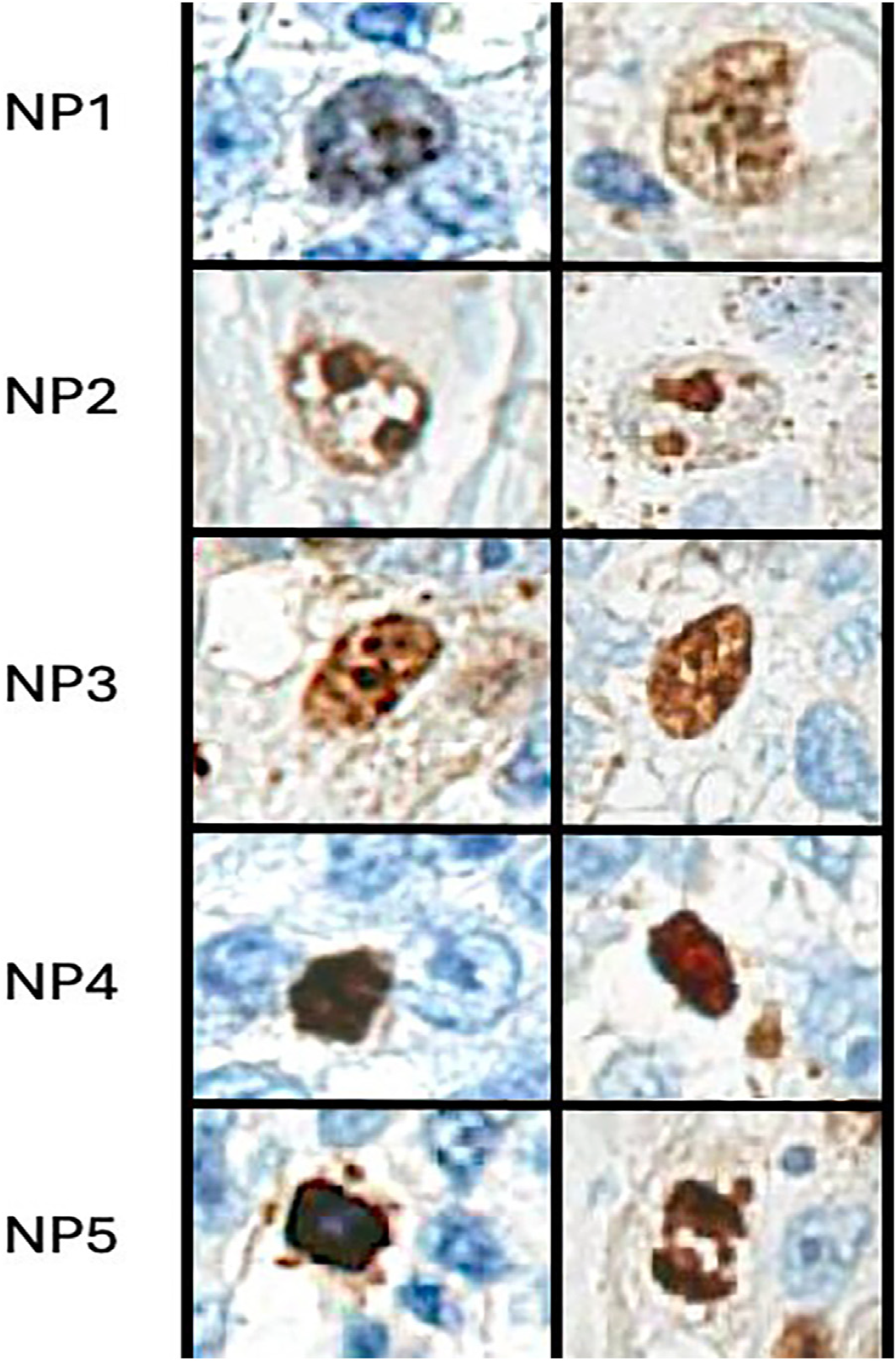
Methods Two pathologists classified staining nuclear patterns of Ki-67 in the hot spot of scanning slides of advanced ACM (pT4): NP1 (randomly Ki-67 immunopositive fine or coarse granules), NP2 (Ki-67 stained in one or two well defined and centralized nodules), NP3 (Ki-67 seen as granules or nodules occupying most of the nucleus), NP4 (nucleoplasm with intense and homogeneous Ki-67 staining) and NP5 (empty central area with peripheral Ki-67). For analysis, seven cases per group ‒ Alive (Al) and Melanoma-Related Death (De) ‒ were randomly selected.
Results This pilot study analyzed 5676 Ki-67 positive nuclei. Means comparison between the two groups revealed differences in nuclear patterns NP1 (p = 0.0014), NP4 (p = 0.038), NP5 (p = 0.0193), and the total number of stained nuclei (p = 0.0258).
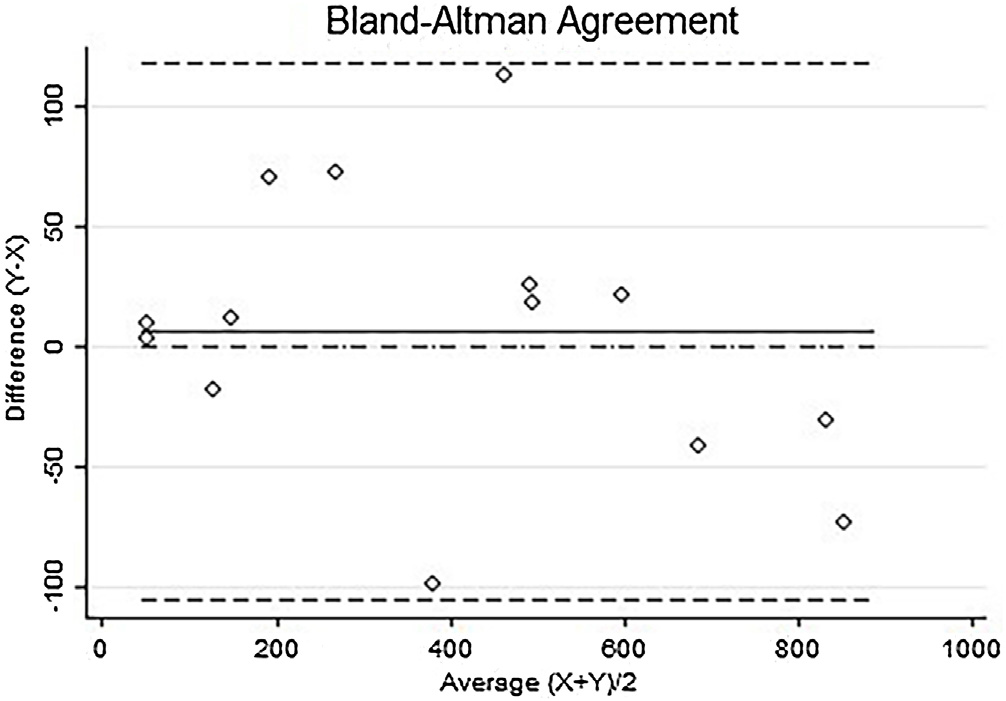
Study limitations Small number of cases and biased value of 6.35 through the Bland-Altman analysis.
Conclusion The present analysis highlights the importance of Ki-67 staining patterns as a potential prognostic marker among ACM. High Ki-67 positive nuclei were associated with worse outcomes (death), particularly in staining patterns before and after mitosis (NP1, NP4, and NP5).
Keywords
Immunohistochemistry; Ki-67 antigen; Melanoma; Pathology; Skin neoplasms
 Thumbnail
 Thumbnail
 Thumbnail