Assessment of Acute Chest Pain in the Emergency Department: How Point-of-Care Ultrasound Can Assist the Cardiologist
The use of point-of-care ultrasound (POCUS) in emergency settings is now well established as part of the initial assessment of critically ill patients. In cases of acute chest pain, POCUS plays a significant role in differential diagnosis, helping to reduce diagnostic errors and, most importantly, preventing the discharge of patients with potentially life-threatening conditions. In this context, the main diagnostic considerations include acute coronary syndrome (ACS), pericarditis, pulmonary thromboembolism (PTE), and acute aortic syndromes (AAS). POCUS has proven effective in all of these scenarios and can be widely applied with proper training, both by novice physicians and experienced echocardiographers. This article aims to discuss the key ways in which POCUS can specifically aid in the differential diagnosis of chest pain.
Keywords:
Emergencies; Acute Coronary Syndrome; Pulmonary Embolism; Aortic Dissection

Assessment of Acute Chest Pain in the Emergency Department: How Point-of-Care Ultrasound Can Assist the Cardiologist
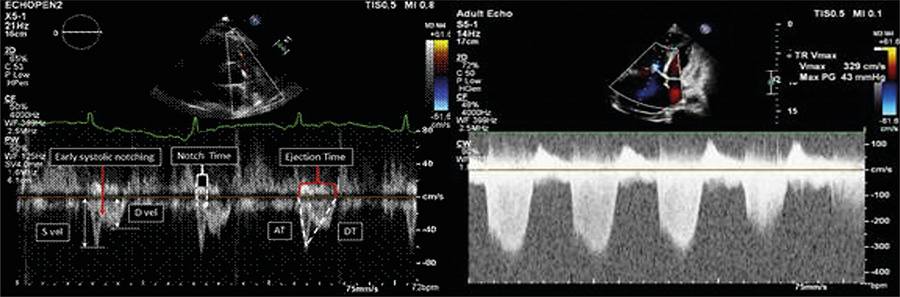
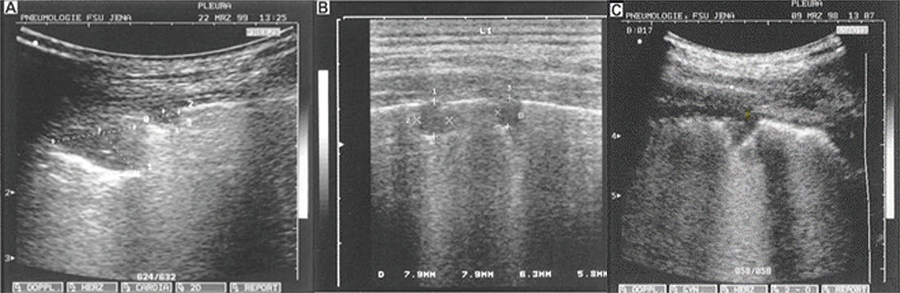
Use of POCUS in the differential diagnosis of acute chest pain. IVC: inferior vena cava; LVEF: left ventricular ejection fraction; LV: left ventricle; RA: right atrium; RV: right ventricle; RWMA: regional wall motion abnormality; Se: sensitivity; Sp: specificity; TAPSE: tricuspid annular plane systolic excursion.
 Thumbnail
 Thumbnail