
 Permissive Cardiotoxicity: When the Optimal Is the Enemy of the Good
Abstract
Cancer and cardiovascular diseases are the leading causes of mortality worldwide. As these diseases share common metabolic pathways, patients with cancer are currently seen as having subclinical alterations with great potential for developing cardiovascular diseases (and vice versa). This tenuous interrelationship has led to the emergence of cardio-oncology (CO) as an area of study and discussion, with a major impact on the management of these cases.
In clinical practice, CO is dominated by the dilemma of how to best manage cardiovascular toxicity during cancer treatment. The management of these cases focuses not only on restoring cardiovascular balance, but also on ensuring that the best oncological treatment will be offered, without suspensions or interruptions.
Within this context, the concept of permissive cardiotoxicity (PC) has emerged, proposing the idea of maintaining antitumor treatment in the event that ventricular dysfunction is detected, with no pauses or interruptions, provided that certain premises are respected.
This review aims to examine the concept of PC in depth, contextualizing its emergence, reviewing definitions, and analyzing the evidence from experimental clinical studies. Furthermore, management strategies are detailed, discussing the central role of cardiovascular imaging in guiding this management. Finally, limitations and gaps in the literature in the area are discussed.
Keywords
Cardiotoxicity; Cardio-Oncology; Ventricular Dysfunction; Antineoplastic Agents; Neoplasms
Resumo
O câncer e as doenças cardiovasculares são as causas líderes de mortalidade global. Por compartilharem vias metabólicas comuns, o paciente com câncer hoje é encarado como um indivíduo com alterações subclínicas com grande potencial para o desenvolvimento de doenças cardiovasculares (e vice-versa). Esta tênue interrelação propiciou o surgimento da cardio-oncologia (CO) como área de estudos e discussões, com grande impacto no manejo destes casos.
Na prática clínica, a CO é dominada pelo dilema de como manejar da melhor forma as toxicidades cardiovasculares durante tratamento do câncer. A condução destes casos prima não apenas pelo restabelecimento do equilíbrio cardiovascular, mas também pela garantia que o melhor tratamento oncológico será oferecido, sem suspensões ou interrupções.
Neste contexto, surge o conceito de cardiotoxicidade permissiva, que propõe a ideia de manter vigente o tratamento antitumoral frente à detecção de disfunção ventricular, sem pausas ou interrupções, desde que respeitadas certas premissas.
Esta revisão visa esmiuçar este conceito, contextualizando seu surgimento, revendo definições e analisando as evidências de estudos clínicos experimentais. Ainda, são detalhadas estratégias de condução, discutindo o papel central da imagem cardiovascular para guiar esta conduta. Finalmente, são discutidas as limitações e lacunas de literatura na área.
Palavras-chave
Cardiotoxicidade; Cardio-Oncologia; Disfunção Ventricular; Antineoplásicos; Neoplasias
Introduction
Cancer and cardiovascular diseases are currently the leading causes of mortality worldwide.1 These diseases share not only common risk factors (for example, smoking, obesity, sedentary lifestyle, alcohol consumption, diets rich in ultra-processed foods, etc.),2 but also equivalent metabolic pathways.3
Accordingly, patients receiving oncological treatment have come to be seen as having an elevated risk of cardiovascular disease.4 This fact allows us to predict that, at some point in the oncological journey, heart disease will be part of the list of these patients’ comorbidities. In this context, cardiologists have begun to face the challenge of managing cardiovascular events in patients with neoplasia, culminating in the organization of this recent area of study, CO.
Cardio-oncology: a vital field
CO emerged as a result of the intersection between cardiovascular health and cancer treatment.5 Driven by the growing practical need to manage cardiological events associated with these treatments, CO has rapidly evolved into a field of study and research. This new area brings together specialists who share the common goal of maintaining the most effective oncological treatment available while respecting the premises of cardiovascular safety.
Although the field of CO is vast, with important windows of opportunity for action in the diverse phases of the oncological journey, the main challenge lies in the management of events throughout the active phase of antitumor treatment. The appropriate management of these cases is crucial, as it directly impacts not only cardiovascular, but especially oncological prognosis and survival.
These data, in conjunction with the development of antineoplastic treatments that have significantly increased patient survival rates, have directed the focus of attention to CO, which has become fundamental to ensuring excellence in oncological care.
Cardiotoxicity: what every cardiologist needs to know
We broadly define cardiotoxicity as any pathological alteration of the cardiovascular system induced by oncological treatment.6 Possible cardiotoxic manifestations thus include all conditions that affect the cardiovascular system, from worsening of cardiovascular risk factors (for example, hypertension, dyslipidemia, metabolic syndrome, etc.) to major events such as acute coronary syndromes, pulmonary thromboembolism, severe ventricular arrhythmias, and others.
Although it has a broad spectrum of manifestations, the main types of cardiotoxic manifestations are presented in the form of the following two clinical syndromes: arrhythmias and chemotherapy-related cardiac dysfunction (CTRCD). Among these, systolic myocardial dysfunction has been the most impactful clinical presentation (due to its severity and risk), making CTRCD a near synonym of "cardiotoxicity." The antineoplastic medications most frequently associated with CTRCD are listed in Table 1 .
The most widely accepted and internationally applied definition for CTRCD in clinical practice was standardized by the publication of the Cardio-Oncology Guideline of the European Society of Cardiology in partnership with the International Cardio-Oncology Society in 2016, which defines CTRCD as a drop in left ventricular ejection fraction (LVEF) of ≥ 10% (in relation to the pre-treatment value) in the presence of absolute values < 50%.7 It is important to mention that CTRCD is a diagnosis of exclusion, making it mandatory to conduct differential diagnosis and rule out other etiologies related to ventricular dysfunction (especially coronary artery disease, which is the most prevalent etiology worldwide).8
Permissive cardiotoxicity: a new look for an old concept?
The main challenges of CO include the management of situations in which patients are exposed to a highly effective oncological treatment, but they progress with signs of cardiovascular toxicity. In this scenario, classically, a discussion takes place about whether to pause or suspend antineoplastic treatment, given that this was initially considered the most appropriate course of action. However, questions began to be raised when studies demonstrated that even brief and temporary suspension of oncological treatment resulted in a reduction in its efficacy.9 The practical observation of the good clinical evolution of patients with discrete drops in LVEF while using trastuzumab (generally oligosymptomatic and with excellent progress after initiating use of cardiovascular medications)10 provided the pathophysiological rationale for the concept of PC.11
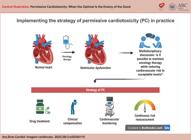
The strategy of PC consists of maintaining the antitumor treatment underway when ventricular dysfunction is detected, without pauses or interruptions.12 This conduct is based on the following pillars: 1 – Maintaining the antineoplastic treatment without temporary pauses or suspension; 2 – Initiating cardiovascular drug treatment that promotes the best cardiological prognosis possible.12 The strategy of PC assumes the premise that some degree of "manageable" cardiovascular damage (i.e., that does not result in serious cardiovascular events and/or high morbidity and mortality) may be acceptable in the name of maintaining the treatment that results in the best oncological prognosis.
Literally speaking, the strategy of PC is indicated in cases of CTRCD during antitumor treatment. Nonetheless, it can also be applied to candidates who have elevated cardiovascular risk. In this situation, "non-ideal" conditions are tolerated in the name of obtaining a major oncological benefit. In both cases, what differentiates the approaches is the moment when the permissive strategy is instituted: during cancer treatment (in cases of established cardiovascular toxicity) or pre-treatment (in cases of high baseline cardiovascular risk).
The concept of PC assumes that, even in unfavorable cardiological scenarios, the oncological treatment of choice can be maintained as long as the cardiovascular risk is reduced to acceptable levels. It is believed that, in the absence of evidence that proves the benefit of suspending antitumor treatment, clinical optimization provides sufficient conditions to continue to offer the oncological regimen. This concept encourages care teams to change their stances, replacing reactive approaches (modifying or suspending chemotherapy regimens) with proactive approaches (aimed at reducing cardiovascular risk and enabling the continuation of the antitumor regimen). Ultimately, the aim is to achieve a residual cardiovascular risk that is outweighed by the benefits of cancer treatment.12
The evidence supporting the PC approach is still scarce and has been published slowly, predominating in the scenario of HER2-positive breast cancer. It is important to underscore that PC is an exceptional approach and that eligible patients are not numerous on a daily basis; therefore, as is the case with rare diseases, it is not a condition that can easily be studied by robust clinical trials with large sample sizes. Table 2 summarizes the data from the experimental studies that are available to date.
These data, although they come from small, single-center, non-randomized studies, reveal the experience of groups who opted not to deprive patients of treatments that modified the natural history of their disease, resulting in a substantial increase in disease-free survival curves.18
The PC approach has also been applied in other contexts in oncology. Examples include situations of re-exposure to treatment after episodes of vasospasm with 5-fluorouracil,19 after myocarditis related to immune checkpoint inhibitors,20 or even after ventricular dysfunction with carfilzomib.21 Reports and case series from some centers have demonstrated that strategies of introducing cardioprotective medications before infusion, modifying the route of administration, and adjusting the combination of oncological agents can be useful to ensure continuity of the proposed treatment.19 - 21 In these situations, joint work with the CO specialist is fundamental.
Role of cardiovascular imaging in the implementation of the strategy of PC
Cardiovascular imaging tools are essential when implementing the strategy of PC, because they allow for the progressive monitoring of cardiac function during cancer treatment.22 This monitoring provides information that is essential to decision-making regarding the viability and safety of maintaining antineoplastic treatment.
Among cardiovascular imaging methods, echocardiography stands out as a non-invasive, widely available, and low-cost method, which facilitates regular, serial use in cardiotoxicity monitoring programs. This method's accessibility allows for frequent use for cardiovascular monitoring, making it possible to adjust the therapeutic strategy in real time, which maximizes the efficacy of oncological treatment without compromising patient safety. In this manner, echocardiography has proven to be a valuable resource for the dynamic management of cardiovascular risk in patients who will be exposed to potentially cardiotoxic therapeutic regimens.23
Myocardial strain is a quantitative measure of deformation during the cardiac cycle, and it is a sensitive tool for detecting subclinical cardiac dysfunction (before LVEF is affected).24 The ability to detect these early changes is crucial to the management of PC, as it allows early intervention (such as dose adjustment or inclusion of cardioprotective drugs) while the patient continues oncological treatment. In clinical practice, a 15% reduction in global longitudinal strain in relation to the baseline value is considered indicative of possible subclinical cardiotoxicity, even in the absence of a decrease in LVEF.24
Permissive cardiotoxicity in practice: prerequisites and management strategies
The strategy of PC has not been studied with sufficient methodological rigor to design protocols and guidelines based on scientific data. However, reports of successful experiences and studies conducted in the area13 - 17 suggest that some conditions must be met for the strategy to be conducted with due precaution and safety:
-
The concept of PC is applicable in cases of mild to moderate CTRCD (LVEF > 40%), provided that there are no severe symptoms (significant pulmonary congestion with worsening of the respiratory pattern; clinical, electrical, or hemodynamic instability; poor perfusion and/or signs of low output).
-
The strategy of PC applies to manageable cases of CTRCD (patients who have a window for the introduction of cardiovascular medications), always focusing on long-term cardiological safety.
-
It is mandatory to perform strict, regular monitoring of cardiac function during PC, preferably with the same professional and on the same device.
-
It is necessary to pre-define levels of cardiac dysfunction at which it is no longer safe to continue therapy. Routinely, continuation of PC is tolerated as long as LVEF is > 40%. This value varies according to LVEF at the beginning of PC, the magnitude of the drop in LVEF in relation to baseline, and the associated clinical repercussions.
The medical management of these cases should follow the recommendations of the current guidelines for the treatment of heart failure, respecting individual limitations related to the clinical/laboratory context of each case. Below, we will briefly discuss the medical management of CTRCD according to the most recent recommendations.4 , 8
It is suggested that, initially, priority should be given to the introduction of drugs studied for heart failure that also have specific evidence of cardioprotection in patients with cancer, such as beta blockers (BB) and angiotensin-converting enzyme inhibitors (ACEI) or angiotensin receptor blockers (ARBs). Carvedilol and enalapril are the medications with the highest number of favorable studies in CO, and they are the most commonly used medications in practice (although other BB and ACEI/ARB indicated for heart failure also have similar effects). The combination of BB and ACEI/ARB should be initiated at low doses, with progressive escalation up to the maximum tolerated doses. In the case of hypotension that limits concomitant initiation, each medication should be introduced individually; there is no defined order based on evidence, and the choice should be based on each case's characteristics and restrictions. Depending on the presence and degree of associated pulmonary congestion, the prescription of diuretics and/or mineralocorticoid antagonists may be indicated during this first stage of drug management. During a second stage, depending on the clinical response, functional class, presence (or absence) of residual symptoms, and tolerance (also related to laboratory alterations), it is possible to assess the need to add other first-line medications for the treatment of heart failure, with SGLT2 inhibitors and sacubitril/valsartan replacing ACEI or ARB.
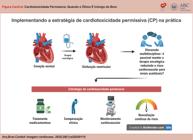
The key points for implementing the strategy of PC are summarized in the Central Illustration.
Limitations and gaps in the literature
The strategy of PC has numerous limitations, the main one being the lack of robust scientific evidence to support its use. A borderline context for its implementation is the presence of pre-treatment ventricular dysfunction, since further worsening of LVEF can result in significant impairment. In these cases, drug optimization should be even more immediate and aggressive, and the search for the best oncological outcome should respect the premises of cardiovascular safety. Finally, it is important to underscore that it is not considered appropriate to institute PC in cases that have therapeutic alternatives with similar efficacy or in cases where treatment is optional (a decision that should be delegated exclusively to the oncologist).
Gaps still abound in the literature regarding PC. They include the lack of studies that explore long-term cardiovascular outcomes, the lack of guidelines and standardized protocols for identifying safe levels of ventricular dysfunction to be tolerated, and the identification of specific risk predictors that could help individualize the PC approach.
Conclusions
Correct implementation of the strategy of PC depends on a combination of solid technical expertise in CO, a proactive stance regarding early interventions, and clear and effective communication (involving a medical and multidisciplinary team, patients, and family members). The main objective of this strategy is to offer oncology patients the most effective treatment available, avoiding interruptions or suspension of medications that can save lives. PC seeks to change the mindset when addressing a cardiotoxic event, encouraging professionals to seek ways to maintain cancer treatment with the greatest possible cardiovascular safety.
When facing diagnosis of CTRCD, it is up to cardiologists to weigh, equate, and manage the various factors involved, so that the choice of the PC approach will be appropriate and bring benefits, rather than risks, to the patient. In order to do so, it is essential for the diverse professionals involved in providing care for patients with cancer to share, discuss, and study this topic.
-
Sources of Funding
There were no external funding sources for this study.
-
Study Association
This study is not associated with any thesis or dissertation work.
-
Ethics Approval and Consent to Participate
This article does not contain any studies with human participants or animals performed by any of the authors.
References
-
1 Rache B, Rocha R, Medeiros LA, Okada LM, Ferrari G, Zeng H, et al. Transition Towards Cancer Mortality Predominance Over Cardiovascular Disease Mortality in Brazil, 2000-2019: A Population-Based Study. Lancet Reg Health Am. 2024;39:100904. doi: 10.1016/j.lana.2024.100904.
» https://doi.org/10.1016/j.lana.2024.100904 -
2 Masoudkabir F, Mohammadifard N, Mani A, Ignaszewski A, Davis MK, Vaseghi G, et al. Shared Lifestyle-Related Risk Factors of Cardiovascular Disease and Cancer: Evidence for Joint Prevention. ScientificWorldJournal. 2023;2023:2404806. doi: 10.1155/2023/2404806.
» https://doi.org/10.1155/2023/2404806 -
3 Karlstaedt A, Moslehi J, de Boer RA. Cardio-Onco-Metabolism: Metabolic Remodelling in Cardiovascular Disease and Cancer. Nat Rev Cardiol. 2022;19(6):414-25. doi: 10.1038/s41569-022-00698-6.
» https://doi.org/10.1038/s41569-022-00698-6 -
4 Marcondes-Braga FG, Moura LAZ, Issa VS, Vieira JL, Rohde LE, Simões MV, et al. Emerging Topics Update of the Brazilian Heart Failure Guideline - 2021. Arq Bras Cardiol. 2021;116(6):1174-212. doi: 10.36660/abc.20210367.
» https://doi.org/10.36660/abc.20210367 -
5 Singal PK, Iliskovic N. Doxorubicin-Induced Cardiomyopathy. N Engl J Med. 1998;339(13):900-5. doi: 10.1056/NEJM199809243391307.
» https://doi.org/10.1056/NEJM199809243391307 -
6 Chung R, Ghosh AK, Banerjee A. Cardiotoxicity: Precision Medicine with Imprecise Definitions. Open Heart. 2018;5(2):e000774. doi: 10.1136/openhrt-2018-000774.
» https://doi.org/10.1136/openhrt-2018-000774 -
7 Zamorano JL, Lancellotti P, Muñoz DR, Aboyans V, Asteggiano R, Galderisi M, et al. 2016 ESC Position Paper on Cancer Treatments and Cardiovascular Toxicity Developed under the Auspices of the ESC Committee for Practice Guidelines: The Task Force for Cancer Treatments and Cardiovascular Toxicity of the European Society of Cardiology (ESC). Eur Heart J. 2016;37(36):2768-801. doi: 10.1093/eurheartj/ehw211.
» https://doi.org/10.1093/eurheartj/ehw211 -
8 McDonagh TA, Metra M, Adamo M, Gardner RS, Baumbach A, Böhm M, et al. 2023 Focused Update of the 2021 ESC Guidelines for the Diagnosis and Treatment of Acute and Chronic Heart Failure. Eur Heart J. 2023;44(37):3627-39. doi: 10.1093/eurheartj/ehad195.
» https://doi.org/10.1093/eurheartj/ehad195 -
9 Sardesai S, Sukumar J, Kassem M, Palettas M, Stephens J, Morgan E, et al. Clinical Impact of Interruption in Adjuvant Trastuzumab Therapy in Patients with Operable HER-2 Positive Breast Cancer. Cardiooncology. 2020;6(1):26. doi: 10.1186/s40959-020-00081-9.
» https://doi.org/10.1186/s40959-020-00081-9 -
10 Yu AF, Yadav NU, Eaton AA, Lung BY, Thaler HT, Liu JE, et al. Continuous Trastuzumab Therapy in Breast Cancer Patients with Asymptomatic Left Ventricular Dysfunction. Oncologist. 2015;20(10):1105-10. doi: 10.1634/theoncologist.2015-0125.
» https://doi.org/10.1634/theoncologist.2015-0125 -
11 Solomon SB, Bellavia L, Sweeney D, Piknova B, Perlegas A, Helms CC, et al. Angeli's Salt Counteracts the Vasoactive Effects of Elevated Plasma Hemoglobin. Free Radic Biol Med. 2012;53(12):2229-39. doi: 10.1016/j.freeradbiomed.2012.10.548.
» https://doi.org/10.1016/j.freeradbiomed.2012.10.548 -
12 Porter C, Azam TU, Mohananey D, Kumar R, Chu J, Lenihan D, et al. Permissive Cardiotoxicity: The Clinical Crucible of Cardio-Oncology. JACC CardioOncol. 2022;4(3):302-12. doi: 10.1016/j.jaccao.2022.07.005.
» https://doi.org/10.1016/j.jaccao.2022.07.005 -
13 Nowsheen S, Aziz K, Park JY, Lerman A, Villarraga HR, Ruddy KJ, et al. Trastuzumab in Female Breast Cancer Patients with Reduced Left Ventricular Ejection Fraction. J Am Heart Assoc. 2018;7(15):e008637. doi: 10.1161/JAHA.118.008637.
» https://doi.org/10.1161/JAHA.118.008637 -
14 Lynce F, Barac A, Geng X, Dang C, Yu AF, Smith KL, et al. Prospective Evaluation of the Cardiac Safety of HER2-Targeted Therapies in Patients with HER2-Positive Breast Cancer and Compromised Heart Function: The SAFE-HEaRt Study. Breast Cancer Res Treat. 2019;175(3):595-603. doi: 10.1007/s10549-019-05191-2.
» https://doi.org/10.1007/s10549-019-05191-2 -
15 Leong DP, Cosman T, Alhussein MM, Kumar Tyagi N, Karampatos S, Barron CC, et al. Safety of Continuing Trastuzumab Despite Mild Cardiotoxicity: A Phase I Trial. JACC CardioOncol. 2019;1(1):1-10. doi: 10.1016/j.jaccao.2019.06.004.
» https://doi.org/10.1016/j.jaccao.2019.06.004 -
16 Khoury K, Lynce F, Barac A, Geng X, Dang C, Yu AF, et al. Long-Term Follow-Up Assessment of Cardiac Safety in SAFE-HEaRt, a Clinical Trial Evaluating the Use of HER2-Targeted Therapies in Patients with Breast Cancer and Compromised Heart Function. Breast Cancer Res Treat. 2021;185(3):863-8. doi: 10.1007/s10549-020-06053-y.
» https://doi.org/10.1007/s10549-020-06053-y -
17 Zhou S, Cirne F, Chow J, Zereshkian A, Bordeleau L, Dhesy-Thind S, et al. Three-Year Outcomes Following Permissive Cardiotoxicity in Patients on Trastuzumab. Oncologist. 2023;28(9):712-22. doi: 10.1093/oncolo/oyad086.
» https://doi.org/10.1093/oncolo/oyad086 -
18 Slamon DJ, Leyland-Jones B, Shak S, Fuchs H, Paton V, Bajamonde A, et al. Use of Chemotherapy Plus a Monoclonal Antibody Against HER2 for Metastatic Breast Cancer that Overexpresses HER2. N Engl J Med. 2001;344(11):783-92. doi: 10.1056/NEJM200103153441101. P
» https://doi.org/10.1056/NEJM200103153441101.P -
19 Desai A, Mohammed T, Patel KN, Almnajam M, Kim AS. 5-Fluorouracil Rechallenge after Cardiotoxicity. Am J Case Rep. 2020;21:e924446. doi: 10.12659/AJCR.924446.
» https://doi.org/10.12659/AJCR.924446 -
20 Inno A, Roviello G, Ghidini A, Luciani A, Catalano M, Gori S, et al. Rechallenge of Immune Checkpoint Inhibitors: A Systematic Review and Meta-Analysis. Crit Rev Oncol Hematol. 2021;165:103434. doi: 10.1016/j.critrevonc.2021.103434.
» https://doi.org/10.1016/j.critrevonc.2021.103434 -
21 Bishnoi R, Xie Z, Shah C, Bian J, Murthy HS, Wingard JR, et al. Real-World Experience of Carfilzomib-Associated Cardiovascular Adverse Events: SEER-Medicare Data Set Analysis. Cancer Med. 2021;10(1):70-8. doi: 10.1002/cam4.3568.
» https://doi.org/10.1002/cam4.3568 -
22 Lancellotti P, Nkomo VT, Badano LP, Bergler-Klein J, Bogaert J, Davin L, et al. Expert Consensus for Multi-Modality Imaging Evaluation of Cardiovascular Complications of Radiotherapy in Adults: A Report from the European Association of Cardiovascular Imaging and the American Society of Echocardiography. Eur Heart J Cardiovasc Imaging. 2013;14(8):721-40. doi: 10.1093/ehjci/jet123.
» https://doi.org/10.1093/ehjci/jet123 -
23 Melo MDT, Paiva MG, Santos MVC, Rochitte CE, Moreira VM, Saleh MH, et al. Brazilian Position Statement on the Use Of Multimodality Imaging in Cardio-Oncology - 2021. Arq Bras Cardiol. 2021;117(4):845-909. doi: 10.36660/abc.20200266.
» https://doi.org/10.36660/abc.20200266 -
24 Almeida ALC, Melo MDT, Bihan DCSL, Vieira MLC, Pena JLB, Del Castillo JM, et al. Position Statement on the Use of Myocardial Strain in Cardiology Routines by the Brazilian Society of Cardiology's Department Of Cardiovascular Imaging - 2023. Arq Bras Cardiol. 2023;120(12):e20230646.. doi: 10.36660/abc.20230646.
» https://doi.org/10.36660/abc.20230646
Edited by
-
Editor responsible for the review:
Marcelo Tavares

