
 Global strategies for the diffusion of robotic surgery
Background: The global adoption of robotic surgery has advanced rapidly in high-income countries, yet its diffusion remains limited in resource-constrained settings due to financial, infrastructural, and educational barriers. As surgical technology evolves, there is an urgent need to promote countries’ equitable access to robotic platforms worldwide.
Aims: The aim of this study was to analyze global strategies employed to promote the diffusion of robotic surgery, with a particular focus on overcoming barriers in resource-limited settings, and to provide practical insights that can guide its equitable and sustainable implementation.
Methods: This study is a multinational, policy-oriented integrative review conducted under the guidance of the Research Committee of the Society for Surgery of the Alimentary Tract in the USA (SSAT). The study integrates a bibliometric analysis, a literature review, and expert insights from diverse healthcare environments. Contributions were gathered from SSAT members.
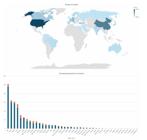
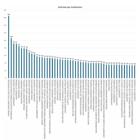
Results: Robotic platforms are predominantly concentrated in North America, Western Europe, and Eastern Asia, with the USA hosting nearly 60% of all installations. Research output is similarly skewed, with few countries and institutions producing most clinical trials. Key barriers to diffusion include high costs, lack of infrastructure, limited training capacity, regulatory hurdles, and resistance among surgeons. Facilitators include public–private partnerships, philanthropic support, technology transfer, simulation platforms, and curriculum integration by professional societies.
Conclusions: Achieving global equity in robotic surgery requires coordinated action across research, education, clinical practice, policy, and infrastructure. Global cooperation and innovation in implementation strategies can help bridge the current disparities and promote safe, cost-effective surgical care in underserved regions, improving patient outcomes.
Keywords:
Robotic Surgical Procedures; Technology; Laparoscopy; Social Determinants of Health; Teaching
Robotic surgery adoption is concentrated in high-income locations, with major disparities in access worldwide.
Financial, infrastructural, and educational barriers limit diffusion in resource-constrained settings.
Coordinated global strategies are crucial for expanding safe and cost-effective robotic surgery to underserved regions.

CENTRAL MESSAGE Robotic surgery is spreading quickly in wealthy countries but remains out of reach for many parts of the world. Our study reviewed global strategies for expanding access, with a focus on solutions for low-resource settings. We highlight the main barriers—costs, training, and infrastructure—and the strategies that can help, such as partnerships, education, and innovation.
PERSPECTIVES This study demonstrates how countries and institutions can collaborate to enhance the safety, affordability, and accessibility of robotic surgery. By sharing knowledge, supporting training, and creating fair policies, health systems can bring advanced surgical care to more patients worldwide.
 Thumbnail
 Thumbnail
 Thumbnail
 Thumbnail
 Thumbnail
 Thumbnail


