 Causal Relationship between Television Viewing Time, Cardiovascular Diseases, and Potential Mechanisms
Abstract
Background: As the predominant leisure-time sedentary behavior, television viewing was documented to increase cardiovascular diseases in observational studies, yet the causal relationship and potential mechanisms remain to be determined.
Objectives: To systematically investigate the causal relationship between television viewing time, cardiovascular diseases, and potential mechanisms.
Methods: We conducted a two-sample Mendelian randomization (MR) analysis to estimate causal associations with cardiovascular diseases and biomarkers of cardiometabolic risk. The random inverse-variance weighted method was used as the primary estimate. To account for multiple comparisons, a Bonferroni correction p value for cardiovascular diseases and biomarkers of cardiometabolic risk was 0.0045 and 0.0024, respectively.
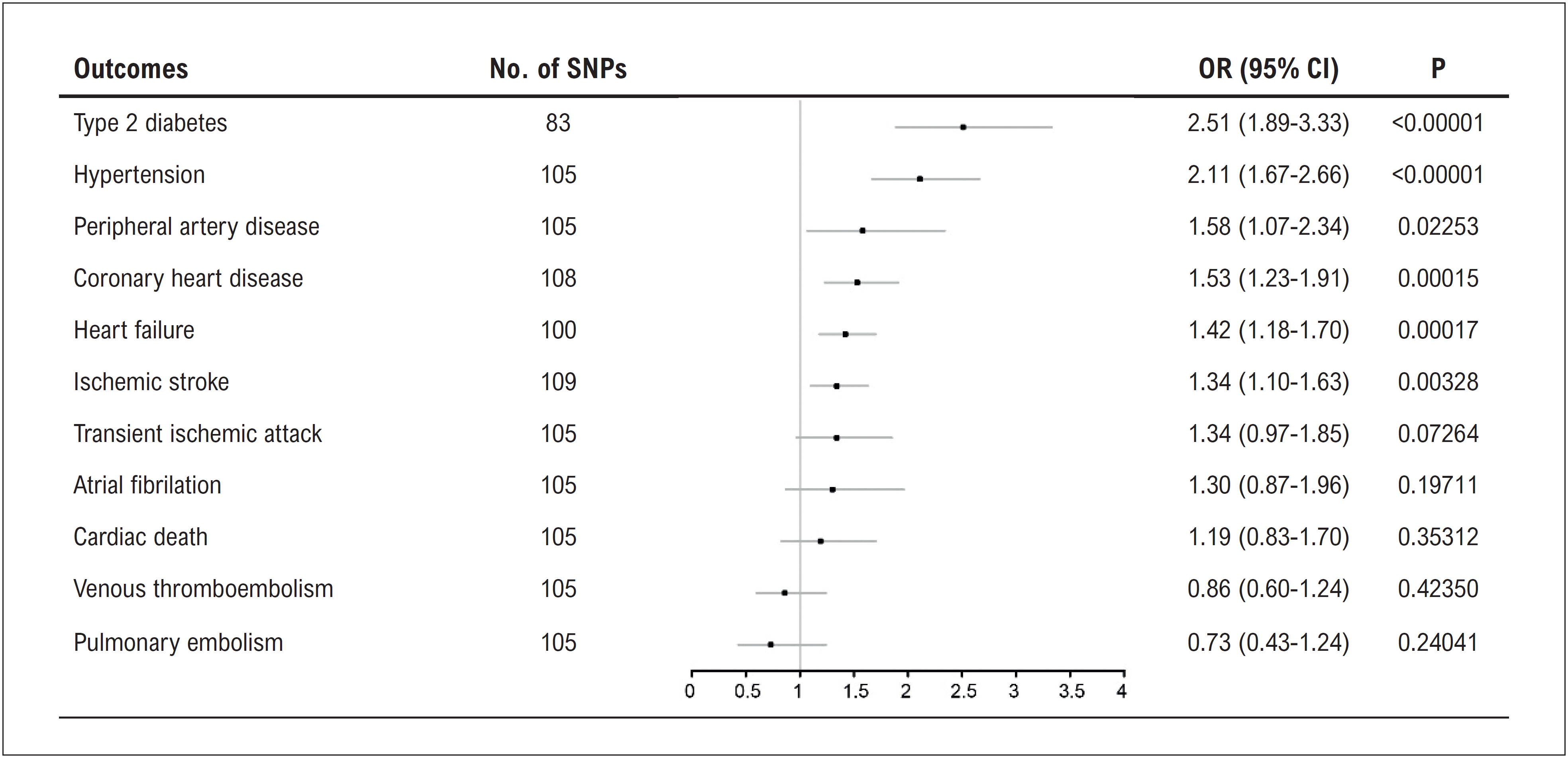
Results: Genetically instrumented television viewing time was associated with higher risks of type 2 diabetes (odd ratio [OR]=2.51; 95% confidence interval [CI]: 1.89-3.33; p<0.00001), hypertension (OR=2.11; 95% CI: 1.67-2.66; p<0.00001), coronary heart disease (OR=1.53; 95% CI: 1.23-1.91; p=0.00015), and heart failure (OR=1.42; 95% CI: 1.18-1.70; p=0.00017). Suggestive evidence of harmful associations was also observed for peripheral artery disease (OR=1.58; 95% CI: 1.07-2.34; p=0.02253) and ischemic stroke (OR=1.34; 95% CI: 1.10-1.63; p=0.00328). Biomarkers of cardiometabolic risk, including interleukin 10, leptin, visceral adipose, abdominal subcutaneous adipose, liver fat, body mass index, waist circumference, triglycerides, and C-reactive protein, were increased. Systolic blood pressure, heart rate, low-density lipoprotein, and total cholesterol were potentially increased while high-density lipoprotein was decreased. However, television viewing time had no effect on venous thromboembolism or pulmonary embolism.
Conclusion: Television viewing time was causally associated with increased risks of cardiovascular diseases, which may be explained by metabolic and inflammatory mechanisms.
Keywords:
Television; Cardiovascular Diseases; Cardiometabolic Risk Factors; Inflammation; Mendelian Randomization Analysis
Resumo
Fundamento: Como comportamento sedentário predominante no lazer, foi documentado que assistir televisão aumenta as doenças cardiovasculares em estudos observacionais, mas a relação causal e os mecanismos potenciais ainda precisam ser determinados.
Objetivos: Investigar sistematicamente a relação causal entre o tempo de exibição de televisão, doenças cardiovasculares e mecanismos potenciais.
Métodos: Realizamos uma análise de randomização mendeliana (RM) de duas amostras para estimar associações causais com doenças cardiovasculares e biomarcadores de risco cardiometabólico. O método aleatório ponderado pela variância inversa foi utilizado como estimativa primária. Para contabilizar múltiplas comparações, um valor P de correção de Bonferroni para doenças cardiovasculares e biomarcadores de risco cardiometabólico foi 0,0045 e 0,0024, respectivamente.
Resultados: O tempo de visualização de televisão geneticamente instrumentado foi associado a riscos mais elevados de diabetes tipo 2 (odd ratio [OR]=2,51; intervalo de confiança [IC] de 95%: 1,89-3,33; p<0,00001), hipertensão (OR=2,11; IC 95%: 1,67-2,66; p<0,00001), doença coronariana (OR=1,53; IC 95%: 1,23-1,91; p=0,00015) e insuficiência cardíaca (OR=1,42; IC 95%: 1,18-1,70; p=0,00017). Evidências sugestivas de associações prejudiciais também foram observadas para doença arterial periférica (OR=1,58; IC 95%: 1,07-2,34; p=0,02253) e acidente vascular cerebral isquêmico (OR=1,34; IC 95%: 1,10-1,63; p=0,00328). Biomarcadores de risco cardiometabólico, incluindo interleucina 10, leptina, adiposo visceral, adiposo subcutâneo abdominal, gordura hepática, índice de massa corporal, circunferência da cintura, triglicerídeos e proteína C reativa, estavam aumentados. A pressão arterial sistólica, a frequência cardíaca, a lipoproteína de baixa densidade e o colesterol total foram potencialmente aumentados, enquanto a lipoproteína de alta densidade diminuiu. No entanto, o tempo de visualização da televisão não teve efeito sobre o tromboembolismo venoso ou a embolia pulmonar.
Conclusão: O tempo de exibição de televisão foi causalmente associado ao aumento do risco de doenças cardiovasculares, o que pode ser explicado por mecanismos metabólicos e inflamatórios.
Palavras-chave:
Televisão; Doenças Cardiovasculares; Fatores de Risco Cardiometabólico; Inflamação; Análise da Randomização Mendeliana

Introduction
Television viewing, the predominant leisure-time sedentary behavior in many developed countries, was found to be detrimentally associated with cardiovascular diseases and cardiovascular risk factors independent of levels of physical activity,1,2 even in those adults who are physically active and met exercise guidelines.3 In addition, dose-response relationships have been documented, with moderate associations for television viewing <2 h/d and stronger associations for ≥4 h/d.4 However, it is noteworthy that the evidence for higher risks of cardiovascular diseases is generally generated from observational studies, which are challenging to interpret causality due to the existence of confounding factors. Although several potential confounding variables were adjusted, it is probable that other unmeasured or unknown confounding factors, such as social network interaction or loneliness, may result in prolonged television viewing time, especially for older individuals. Moreover, uncertainty remains as to whether the prolonged television viewing time occurred before, during, or after the onset of cardiovascular diseases. Even though participants with relevant diagnosed cardiovascular diseases were excluded to avoid reverse causation, other characteristics such as being overweight may probably lead participants to spend more time on the television screen. Therefore, reverse causality cannot be ruled out. Determining the causal links of potentially modifiable risk factors with cardiovascular diseases is of great significance in understanding the etiology of cardiovascular diseases as well as in preventing and managing cardiovascular diseases in clinical settings. In practice, randomized controlled trials (RCT) specifically increasing exposure to television viewing are an ideal method to infer causality. However, RCT is time-consuming and challenging to perform for practical or ethical reasons.
Currently, Mendelian randomization (MR) is increasingly used to examine the causal effects of exposures on cardiovascular diseases as genetic variants are determined at conception and therefore are not affected by confounding factors or reverse causality.5 In the current study, we systematically investigated whether the genetically predicted television viewing time is causally associated with cardiovascular diseases. Besides, the mechanisms linking television viewing time and cardiovascular diseases remain unknown, and there is no clear evidence of a relationship between television viewing time and biomarkers of cardiometabolic risk. Although the majority of studies reported significant associations between television viewing time and obesity in adults, these associations disappeared after adjustment for baseline body mass index (BMI).6 Therefore, the association between television viewing time and biomarkers of cardiometabolic risk was also investigated to find potential mechanisms underlying cardiovascular diseases.
Methods
Study design
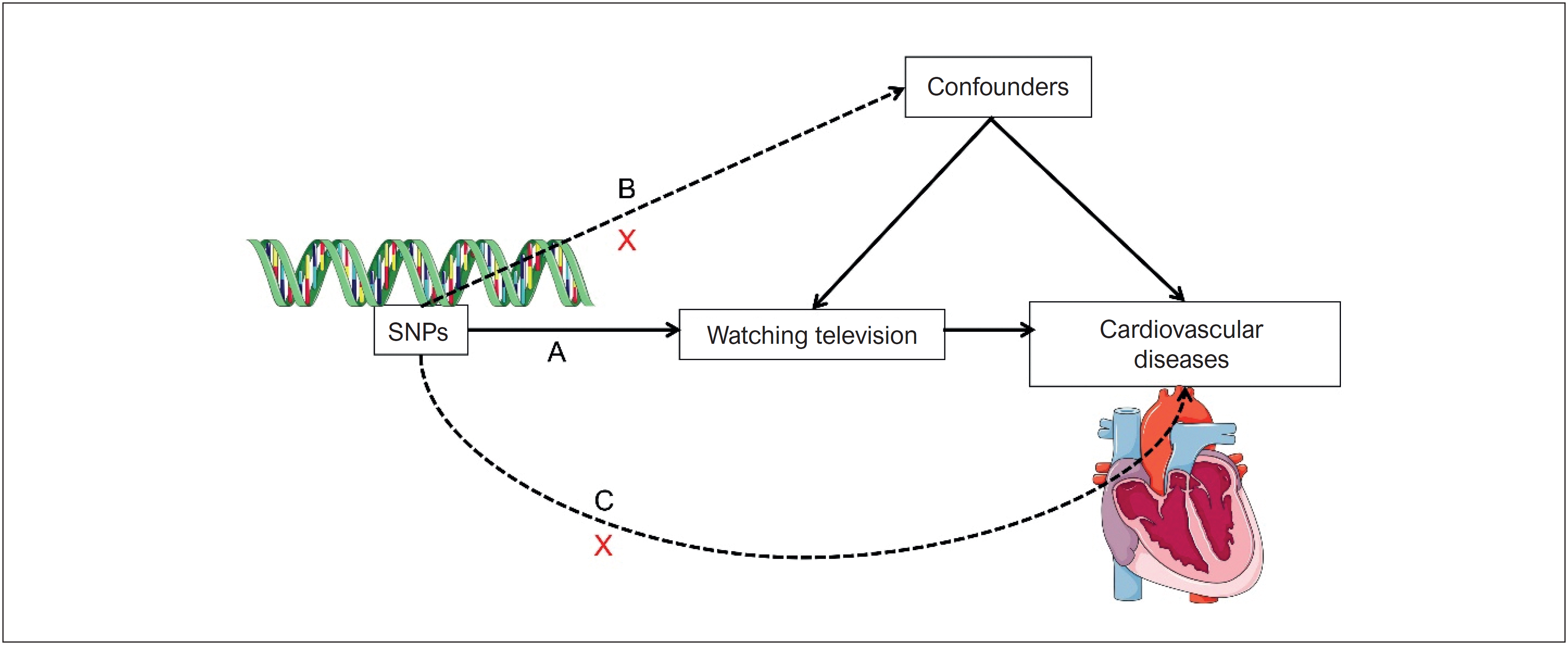
The single nucleotide polymorphisms (SNPs) selected as genetic variants for television viewing time had to meet the following three assumptions: A. SNPs are strongly associated with television viewing time; B. SNPs are not correlated with known confounders; C. SNPs affect cardiovascular diseases and biomarkers of cardiometabolic risk only via television viewing time (Figure 1).7

Three key assumptions of Mendelian randomization study. SNPs must be strongly associated with television viewing time; B. SNPs must be independent of confounders; C. SNPs must only be associated with the risk of cardiovascular diseases/biomarkers via television viewing time. SNP: single nucleotide polymorphism.
Data Source
Participants in our two-sample MR analysis were predominantly of European ancestry. Summary statistics for the association of each SNP with television viewing time were obtained from the UK Biobank.8 The investigated cardiovascular diseases included coronary heart disease, hypertension, atrial fibrillation, heart failure, type 2 diabetes, ischemic stroke, transient ischemic attack, venous thromboembolism, pulmonary embolism, peripheral artery disease, and cardiac death. The investigated biomarkers of cardiometabolic risk included systolic blood pressure (SBP), diastolic blood pressure (DBP), heart rate, body mass index, visceral adipose, abdominal subcutaneous adipose, liver fat, leptin, waist circumference, C-reactive protein (CRP), Interleukin 6 (IL-6), Interleukin 10 (IL-10), adiponectin, transforming growth factor−β (TGF-β), tumor necrosis factor−α (TNF−α), total cholesterol, triglycerides, high-density lipoprotein (HDL), low-density lipoprotein (LDL), fasting glucose, and fibrinogen. The baseline characteristics of included genome-wide association studies (GWAS) can be found in Supplementary Table 1. Ethics approval was not applicable for the present analysis because all included GWAS data are publicly available and had been approved by relevant ethical review boards.
Associations between genetically predicted television viewing time and cardiovascular diseases in sensitivity analyses using the weighted median and MR-Egger methods
SNP Selection
We considered SNPs reaching genome-wide significance (5 × 10⁻⁸) and evaluated the strength of each SNP using the F-statistic, with F ≥10 being considered a strong instrument. To ensure the contribution of included SNPs was independent, linkage disequilibrium was checked. When r2 > 0.001 (clumping window 10000 kb), the SNP associated with more SNPs or with a higher p value were deleted.
MR analysis
Inverse variance weighting (IVW) with random effect was regarded as the main estimate to mitigate the influence of heterogeneity. Several sensitivity analyses were conducted, including weighted median, MR-Egger, simple mode, and weighted mode. A weighted median method can give consistent estimates even if up to 50% of the information is from invalid SNPs.9 MR-Egger method assumes that the pleiotropic effects are independent of the distribution of genetic variants associated with the exposure. Moreover, the SNPs selected as genetic variants for television viewing time may be correlated with confounders. By checking the intercept from MR-Egger, we can evaluate the horizontal pleiotropy of selected SNPs.10 Additionally, to determine the effect of an individual SNP on the overall estimates, a leave-one-out sensitivity analysis was performed. Cochrane's Q value was used to assess heterogeneity among selected SNPs. To account for multiple comparisons, a Bonferroni correction p value (corrected p: 0.05/11 = 0.0045 for cardiovascular diseases and corrected p: 0.05/21 = 0.0024 for biomarkers of cardiometabolic risk) was used. P value between the Bonferroni-corrected value and 0.05 suggested evidence of association, and further confirmation was required. All statistical analyses were conducted using the "TwoSampleMR" packages in R version 4.0.3 (R Foundation for Statistical Computing, Vienna, Austria).
Results
Genetic instruments for television viewing time
As shown in Supplementary Table 2, we obtained 113 SNPs associated with television viewing time and all F >10.
Associations between genetically predicted television viewing time and cardiovascular biomarkers in sensitivity analyses using the weighted median and MR-Egger methods
Associations with cardiovascular diseases
Genetically instrumented television viewing time detrimentally affected four of the 11 cardiovascular diseases, including and with decreasing magnitude of associations: type 2 diabetes, hypertension, coronary heart disease, and heart failure. Suggestive evidence of harmful associations was also observed for peripheral artery disease and ischemic stroke. However, no association was observed for transient ischemic attack, atrial fibrillation, cardiac death, venous thromboembolism, or pulmonary embolism (Figure 2). The weighted median results also revealed consistent estimates, while no association was observed in MR-Egger results (Table 1). In simple and weighted mode methods, no association was found (Supplementary Table 3). As heterogeneity was higher for the majority of cardiovascular diseases (Table 1), IVW under a random model was adopted as the primary estimate. The intercept from MR-Egger suggested no evidence of directional pleiotropy (Table 1), that is the SNPs selected as genetic variants for television viewing time were not correlated with confounders.

Associations of genetically predicted television viewing time with cardiovascular diseases. CI: confidence interval; OR: odd ratio; SNP: single nucleotide polymorphism.
The scatter plots (Supplementary Figure 1) and forest plots (Supplementary Figure 2) of the association between television viewing time and cardiovascular diseases documented similar results. The overall estimates were not disproportionately affected by any individual SNP (Supplementary Figure 3), and no evidence of horizontal pleiotropy was observed (Supplementary Figure 4).
Associations with biomarkers of cardiometabolic risk
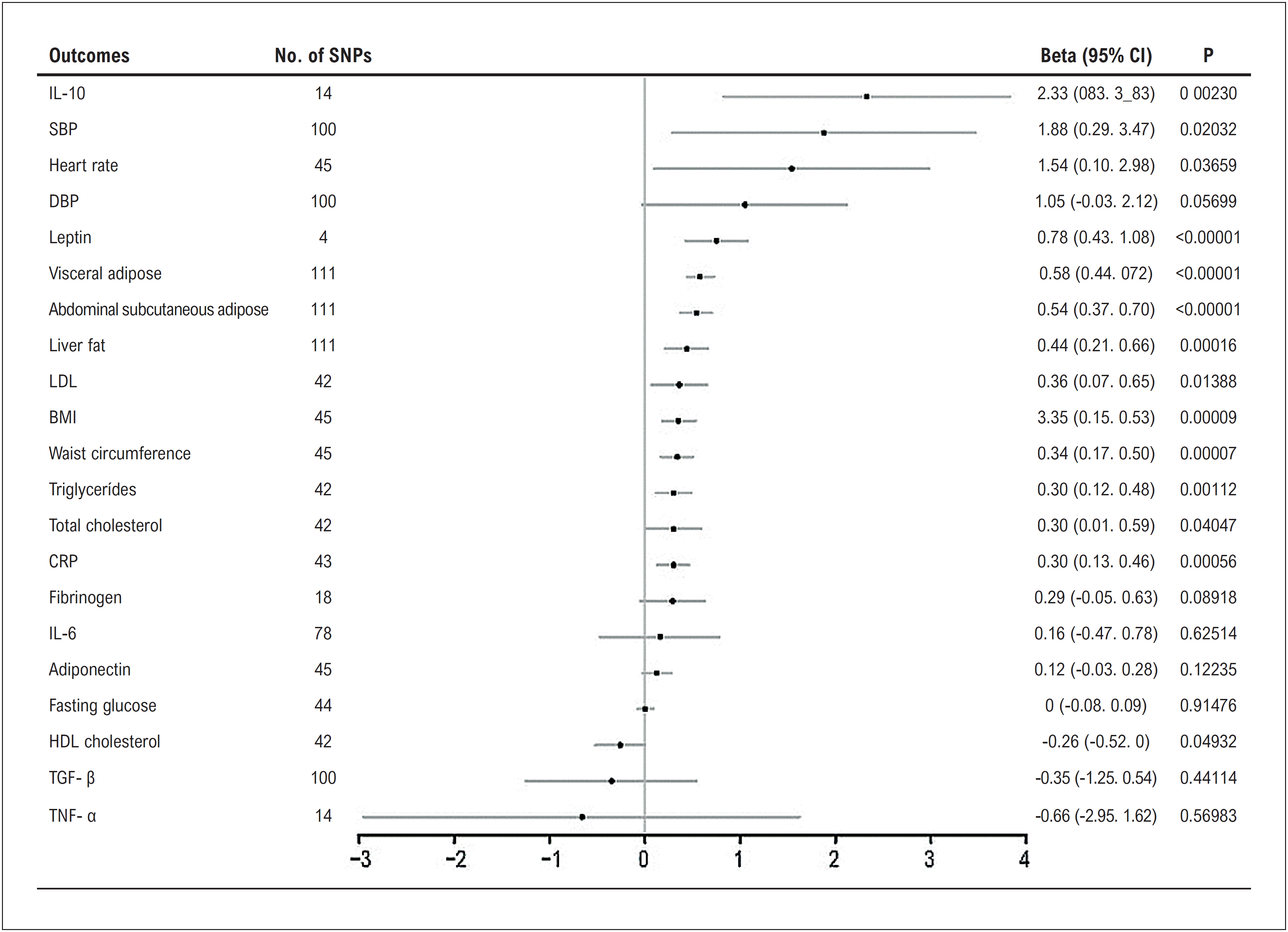
As shown in Figure 3, genetically instrumented television viewing time was positively associated with nine of the 21 biomarkers of cardiometabolic risk, including and with decreasing magnitude of associations: IL-10, leptin, visceral adipose, abdominal subcutaneous adipose, liver fat, BMI, waist circumference, triglycerides, and CRP. Suggestive evidence was observed between genetically instrumented television viewing time and high SBP, heart rate, LDL, and total cholesterol while low HDL. No significant causal associations were found for DBP, fibrinogen, IL-6, adiponectin, fasting glucose, TGF-β or TNF-α. The weighted median results revealed similar estimates, while just HDL revealed consistent estimates in MR-Egger results (Table 2). In simple and weighted mode methods, no association was found (Supplementary Table 4). The heterogeneity was higher for the majority of biomarkers of cardiometabolic risk (Table 2). The evidence of directional pleiotropy just existed in adiponectin, total cholesterol, HDL, and LDL (Table 2).
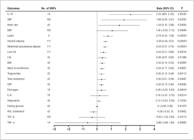
Associations of genetically predicted television viewing time with cardiovascular biomarkers. BMI: body mass index; CI: confidence interval; CRP: C-Reactive protein; DBP: diastolic blood pressure; HDL: high-density lipoprotein; IL: interleukin; LDL: low-density lipoprotein; SBP: systolic blood pressure; SNP: single nucleotide polymorphism; TGF: transforming growth factor; TNF: tumor necrosis factor.
The scatter plots (Supplementary Figure 5) and forest plots (Supplementary Figure 6) of the association between television viewing time and biomarkers of cardiometabolic risk showed similar results. A single SNP did not disproportionately affect the overall estimates (Supplementary Figure 7). No evidence of horizontal pleiotropy was found in the funnel plots (Supplementary Figure 8).
An overview of the effect of television viewing time on cardiovascular diseases and biomarkers of cardiometabolic risk can be found in the Central Illustration.
Discussion
This MR analysis confirmed previous observational studies by demonstrating causal associations between television viewing time and increased risks of type 2 diabetes, hypertension, coronary heart disease, and heart failure. We further confirmed the novel finding that this association was mainly mediated by inflammatory and metabolic markers, including increased IL-10, leptin, CRP, visceral adipose, abdominal subcutaneous adipose, liver fat, BMI, waist circumference, and triglycerides. SBP, heart rate, LDL, and total cholesterol were potentially increased while HDL was decreased. However, television viewing time had no effect on venous thromboembolism or pulmonary embolism.
Television viewing is one of the common sedentary behaviors that involve prolonged sitting. Aside from sleeping, television viewing was the behavior that occupied the most time in the domestic setting. The average time spent watching television was about 3 h/d in both Australia and the United Kingdom and was up to 8 h/d in the United States.4 A meta-analysis of prospective cohort studies suggested that television viewing increased the risks of type 2 diabetes, cardiovascular disease, and all-cause mortality. A linear increase existed for both type 2 diabetes and cardiovascular disease, and the association with all-cause mortality appeared stronger with television viewing time >3 h/d.2 However, although the included studies controlled for various known risk factors, the effect of residual or unmeasured confounding factors on outcomes cannot be ruled out. Although participants with chronic disease at baseline were excluded, reverse causality may still exist if participants with subclinical stages of disease become more sedentary. For example, the British Birth Cohort suggested that television viewing frequency was positively associated with CRP, fibrinogen, waist circumference, SBP, and DBP independent of television viewing habits and physical activity. However, these associations attenuated towards null after adjusting for baseline BMI.11 Results from the UK Biobank study also revealed that although television viewing time was associated with both ischemic heart disease (hazard ratio [HR]=1.30; 95% confidence interval [CI]: 1.27-1.33) and accidental death (HR=1.15; 95% CI: 1.07-1.24) in unadjusted models, the associations were attenuated and considerably converged for ischaemic heart disease (HR=1.09, 95% CI: 1.06-1.12) and accidental death (HR=1.06, 95% CI: 0.98-1.15) after adjustment for confounders.12 By applying MR analysis, we can overcome the effect of confounding factors and reverse causality. Moreover, MR can establish the risk markers for chronic disease as genetic variants can reflect life-long exposure. We revealed the causal relationship between prolonged television viewing time and increased risks of type 2 diabetes, hypertension, coronary heart disease, and heart failure. The increased risks may be explained by higher IL-10, leptin, visceral adipose, abdominal subcutaneous adipose, liver fat, BMI, waist circumference, triglycerides, and CRP. Concordant with our results, a meta-analysis of four RCTs showed that reducing television viewing time in children and youth can reduce BMI.13 Other MR results also supported a causal effect between television viewing time, coronary artery disease (odd ratio [OR]: 1.44; 95%CI: 1.25-1.66; p<0.001),14 and ischemic stroke (OR: 1.28; 95%CI: 1.10-1.49; p=0.04).15
However, less is known about the effect of television viewing time on other cardiovascular diseases and the mechanisms that might underlie the cardiometabolic correlates of television viewing behavior. Demonstrating biological plausibility is essential as it helps understand the causal nature of an association. From a behavioral perspective, prolonged television viewing reduces time engaging in physical activities, resulting in reduced whole-body energy expenditure. Television viewing was associated with increased snacking behavior, such as higher intakes of energy-dense snacks, sugar-sweetened beverages, and fast foods while lower intakes of fruits and vegetables. Moreover, snack-food advertisements on television may attract individuals to consume high-energy snacks and beverages and can trigger automatic eating behaviors that are independent of hunger.16 From a physiological perspective, television viewing commonly occurs after a large evening meal when liver/peripheral insulin sensitivity and lipid trafficking are suboptimal, partly because of circadian chronobiology.17 Television viewing was associated with loss of local contractile stimulation, resulting in the suppression of skeletal muscle lipoprotein lipase (LPL) activity. LPL is the rate-limiting enzyme involved in the uptakes of triglycerides and free fatty acids into skeletal muscle and the production of HDL. In addition, glucose uptake was also reduced through blunted translocation of GLUT-4 glucose transporters to the skeletal muscle cell surface.18 Another potential pathway may involve the changed body composition, especially intra-abdominal fat depots, including visceral adipose tissue, abdominal subcutaneous adipose, and liver fat, which are risk factors for dyslipidemia, glucose intolerance, hypertension, and cardiovascular disease.19 In our MR results, higher waist circumference, visceral adipose, abdominal subcutaneous adipose, liver fat, and BMI were observed. Adipose tissue is a significant site to produce inflammatory mediators, which may lead to a higher risk of inflammatory-related mortality with increasing television viewing time. Stamatakis et al.20 suggested that low-grade inflammation may explain about 20% of the association between screen-based leisure and cardiovascular events. In prolonged television viewing time, those with average weight tended to be at greater risk of inflammatory-related mortality compared with overweight individuals.21 Concordant with the opinion, that the inflammatory biomarkers, including CRP, IL-10, and leptin, were increased in our MR analysis. Lipid disorders were also observed in our MR results as reflected by high triglycerides, LDL, and total cholesterol while low HDL, which are known risk factors for cardiovascular diseases. However, television viewing time did not affect venous thromboembolism, pulmonary embolism, or hemostatic markers (fibrinogen).
Compared with other sedentary behaviors, television viewing is probably most susceptible to voluntary change. High levels of physical activity could attenuate but did not eliminate the increased mortality risk associated with prolonged television viewing time.22 Therefore, apart from the continued emphasis on physical activity, suggestions regarding reducing television viewing time may provide a valuable clinical and public health message in preventing cardiovascular diseases and biomarkers of cardiometabolic risk. The ARIC (Atherosclerosis Risk in Communities) cohort based on 13534 participants demonstrated that compared with watching more television, watching less television was associated with longer life expectancy free of coronary heart disease, stroke, and heart failure.23 Breaks in sitting could increase muscle expression of genes involved in anti-inflammatory and anti-oxidative pathways (e.g., N-methyltransferase and dynein light chain LC8-type 1),24 and were beneficially associated with the levels of triglycerides, BMI, waist circumference, and 2-h plasma glucose.25 Therefore, the USA guidelines for children recommend no more than two hours of screen time per day.26 However, current figures indicated that 62-83% of adolescents from Western countries exceed the screen-based recommendations.27 Worse still, cardiometabolic conditions such as obesity increase rapidly in the USA, affecting approximately 17% of all children and adolescents, and more than one-third of all adults.28 Therefore, apart from physical activity, reducing television viewing time should be targeted in childhood, before it becomes a chronic behavior. Further studies are required to validate the role of limiting television viewing time in the prevention of cardiovascular diseases.
Limitations
First, the associations found are relative to the European population, and may not generalize to others. However, studies among blacks also revealed that watching >4 hours of television was associated with higher risks of cardiovascular diseases and all-cause mortality compared with watching <2 hours of television daily.29 European origin also excluded the influence of population stratification bias on results. Second, the heterogeneity was substantial in the majority of outcomes. Therefore, a random-effects model was adopted to mitigate the influence of heterogeneity, and sensitivity analyses of the weighted median also yielded similar results. Third, the lack of raw data in the original GWAS limits us from making further analyses.
Conclusions
By applying MR analysis free from confounding factors and reverse causality, our results indicated that television viewing time was causally associated with increased risks of type 2 diabetes, hypertension, coronary heart disease, and heart failure. This association was mainly mediated by inflammatory and metabolic markers, including increased IL-10, leptin, CRP, visceral adipose, abdominal subcutaneous adipose, liver fat, BMI, waist circumference, and triglycerides. However, television viewing time had no effect on venous thromboembolism or pulmonary embolism. Given the high prevalence of excessive television viewing, apart from the continued emphasis on physical activity, public health recommendations should consider advising a reduction in television viewing time.
Acknowledgements
This work was supported by the National Key R&D Program of China (2023YFC3605000).
*Supplemental Materials
For supplementary tables, please click here.
References
-
1 Thorp AA, Healy GN, Owen N, Salmon J, Ball K, Shaw JE, et al. Deleterious Associations of Sitting Time and Television Viewing Time with Cardiometabolic Risk Biomarkers: Australian Diabetes, Obesity and Lifestyle (AusDiab) Study 2004-2005. Diabetes Care. 2010;33(2):327-34. doi: 10.2337/dc09-0493.
» https://doi.org/10.2337/dc09-0493 -
2 Grøntved A, Hu FB. Television Viewing and Risk of Type 2 Diabetes, Cardiovascular Disease, and All-cause Mortality: A Meta-analysis. JAMA. 2011;305(23):2448-55. doi: 10.1001/jama.2011.812.
» https://doi.org/10.1001/jama.2011.812 -
3 Healy GN, Dunstan DW, Salmon J, Shaw JE, Zimmet PZ, Owen N. Television Time and Continuous Metabolic Risk in Physically Active Adults. Med Sci Sports Exerc. 2008;40(4):639-45. doi: 10.1249/MSS.0b013e3181607421.
» https://doi.org/10.1249/MSS.0b013e3181607421 -
4 Dunstan DW, Barr EL, Healy GN, Salmon J, Shaw JE, Balkau B, et al. Television Viewing Time and Mortality: The Australian Diabetes, Obesity and Lifestyle Study (AusDiab). Circulation. 2010;121(3):384-91. doi: 10.1161/CIRCULATIONAHA.109.894824.
» https://doi.org/10.1161/CIRCULATIONAHA.109.894824 -
5 Lawlor DA, Harbord RM, Sterne JA, Timpson N, Smith GD. Mendelian Randomization: Using Genes as Instruments for Making Causal Inferences in Epidemiology. Stat Med. 2008;27(8):1133-63. doi: 10.1002/sim.3034.
» https://doi.org/10.1002/sim.3034 -
6 Meyer AM, Evenson KR, Couper DJ, Stevens J, Pereria MA, Heiss G. Television, Physical Activity, Diet, and Body Weight Status: The ARIC Cohort. Int J Behav Nutr Phys Act. 2008;5:68. doi: 10.1186/1479-5868-5-68.
» https://doi.org/10.1186/1479-5868-5-68 -
7 Emdin CA, Khera AV, Kathiresan S. Mendelian Randomization. JAMA. 2017;318(19):1925-6. doi: 10.1001/jama.2017.17219.
» https://doi.org/10.1001/jama.2017.17219 -
8 Sudlow C, Gallacher J, Allen N, Beral V, Burton P, Danesh J, et al. UK Biobank: An Open Access Resource for Identifying the Causes of a Wide Range of Complex Diseases of Middle and Old Age. PLoS Med. 2015;12(3):e1001779. doi: 10.1371/journal.pmed.1001779.
» https://doi.org/10.1371/journal.pmed.1001779 -
9 Burgess S, Bowden J, Fall T, Ingelsson E, Thompson SG. Sensitivity Analyses for Robust Causal Inference from Mendelian Randomization Analyses with Multiple Genetic Variants. Epidemiology. 2017;28(1):30-42. doi: 10.1097/EDE.0000000000000559.
» https://doi.org/10.1097/EDE.0000000000000559 -
10 Bowden J, Smith GD, Burgess S. Mendelian Randomization with Invalid Instruments: Effect Estimation and Bias Detection Through Egger Regression. Int J Epidemiol. 2015;44(2):512-25. doi: 10.1093/ije/dyv080.
» https://doi.org/10.1093/ije/dyv080 -
11 Stamatakis E, Hamer M, Mishra GD. Early Adulthood Television Viewing and Cardiometabolic Risk Profiles in Early Middle Age: Results from a Population, Prospective Cohort Study. Diabetologia. 2012;55(2):311-20. doi: 10.1007/s00125-011-2358-3.
» https://doi.org/10.1007/s00125-011-2358-3 -
12 Hamer M, Ding D, Chau J, Duncan MJ, Stamatakis E. Association between TV Viewing and Heart Disease Mortality: Observational Study Using Negative Control Outcome. J Epidemiol Community Health. 2020;74(4):391-4. doi: 10.1136/jech-2019-212739.
» https://doi.org/10.1136/jech-2019-212739 -
13 Tremblay MS, LeBlanc AG, Kho ME, Saunders TJ, Larouche R, Colley RC, et al. Systematic Review of Sedentary Behaviour and Health Indicators in School-aged Children and Youth. Int J Behav Nutr Phys Act. 2011;8:98. doi: 10.1186/1479-5868-8-98.
» https://doi.org/10.1186/1479-5868-8-98 -
14 van de Vegte YJ, Said MA, Rienstra M, van der Harst P, Verweij N. Genome-wide Association Studies and Mendelian Randomization Analyses for Leisure Sedentary Behaviours. Nat Commun. 2020;11(1):1770. doi: 10.1038/s41467-020-15553-w.
» https://doi.org/10.1038/s41467-020-15553-w -
15 Yang F, Chen S, Qu Z, Wang K, Xie X, Cui H. Genetic Liability to Sedentary Behavior in Relation to Stroke, Its Subtypes and Neurodegenerative Diseases: A Mendelian Randomization Study. Front Aging Neurosci. 2021;13:757388. doi: 10.3389/fnagi.2021.757388.
» https://doi.org/10.3389/fnagi.2021.757388 -
16 Harris JL, Bargh JA, Brownell KD. Priming Effects of Television Food Advertising on Eating Behavior. Health Psychol. 2009;28(4):404-13. doi: 10.1037/a0014399.
» https://doi.org/10.1037/a0014399 -
17 Poggiogalle E, Jamshed H, Peterson CM. Circadian Regulation of Glucose, Lipid, and Energy Metabolism in Humans. Metabolism. 2018;84:11-27. doi: 10.1016/j.metabol.2017.11.017.
» https://doi.org/10.1016/j.metabol.2017.11.017 -
18 Bey L, Hamilton MT. Suppression of Skeletal Muscle Lipoprotein Lipase Activity During Physical Inactivity: A Molecular Reason to Maintain Daily Low-intensity Activity. J Physiol. 2003;551(Pt 2):673-82. doi: 10.1113/jphysiol.2003.045591.
» https://doi.org/10.1113/jphysiol.2003.045591 -
19 Tchernof A, Després JP. Pathophysiology of Human Visceral Obesity: An Update. Physiol Rev. 2013;93(1):359-404. doi: 10.1152/physrev.00033.2011.
» https://doi.org/10.1152/physrev.00033.2011 -
20 Stamatakis E, Hamer M, Dunstan DW. Screen-based Entertainment Time, All-cause Mortality, and Cardiovascular Events: Population-based Study with Ongoing Mortality and Hospital Events Follow-up. J Am Coll Cardiol. 2011;57(3):292-9. doi: 10.1016/j.jacc.2010.05.065.
» https://doi.org/10.1016/j.jacc.2010.05.065 -
21 Grace MS, Dillon F, Barr ELM, Keadle SK, Owen N, Dunstan DW. Television Viewing Time and Inflammatory-related Mortality. Med Sci Sports Exerc. 2017;49(10):2040-7. doi: 10.1249/MSS.0000000000001317.
» https://doi.org/10.1249/MSS.0000000000001317 -
22 Ekelund U, Steene-Johannessen J, Brown WJ, Fagerland MW, Owen N, Powell KE, et al. Does Physical Activity Attenuate, or Even Eliminate, the Detrimental Association of Sitting Time with Mortality? A Harmonised Meta-analysis of Data from More than 1 Million Men and Women. Lancet. 2016;388(10051):1302-10. doi: 10.1016/S0140-6736(16)30370-1.
» https://doi.org/10.1016/S0140-6736(16)30370-1 -
23 Cuthbertson CC, Tan X, Heiss G, Kucharska-Newton A, Nichols HB, Kubota Y, et al. Associations of Leisure-time Physical Activity and Television Viewing with Life Expectancy Free of Nonfatal Cardiovascular Disease: The ARIC Study. J Am Heart Assoc. 2019;8(18):e012657. doi: 10.1161/JAHA.119.012657.
» https://doi.org/10.1161/JAHA.119.012657 -
24 Latouche C, Jowett JB, Carey AL, Bertovic DA, Owen N, Dunstan DW, et al. Effects of Breaking up Prolonged Sitting on Skeletal Muscle Gene Expression. J Appl Physiol. 2013;114(4):453-60. doi: 10.1152/japplphysiol.00978.2012.
» https://doi.org/10.1152/japplphysiol.00978.2012 -
25 Healy GN, Dunstan DW, Salmon J, Cerin E, Shaw JE, Zimmet PZ, et al. Breaks in Sedentary Time: Beneficial Associations with Metabolic Risk. Diabetes Care. 2008;31(4):661-6. doi: 10.2337/dc07-2046.
» https://doi.org/10.2337/dc07-2046 -
26 American Academy of Pediatrics. Committee on Public Education. American Academy of Pediatrics: Children, Adolescents, and Television. Pediatrics. 2001;107(2):423-6. doi: 10.1542/peds.107.2.423.
» https://doi.org/10.1542/peds.107.2.423 -
27 Foley LS, Maddison R, Jiang Y, Olds T, Ridley K. It's Not Just the Television: Survey Analysis of Sedentary Behaviour in New Zealand Young People. Int J Behav Nutr Phys Act. 2011;8:132. doi: 10.1186/1479-5868-8-132.
» https://doi.org/10.1186/1479-5868-8-132 -
28 Ogden CL, Carroll MD, Kit BK, Flegal KM. Prevalence of Childhood and Adult Obesity in the United States, 2011-2012. JAMA. 2014;311(8):806-14. doi: 10.1001/jama.2014.732.
» https://doi.org/10.1001/jama.2014.732 -
29 Garcia JM, Duran AT, Schwartz JE, Booth JN 3rd, Hooker SP, Willey JZ, et al. Types of Sedentary Behavior and Risk of Cardiovascular Events and Mortality in Blacks: The Jackson Heart Study. J Am Heart Assoc. 2019;8(13):e010406. doi: 10.1161/JAHA.118.010406.
» https://doi.org/10.1161/JAHA.118.010406
-
Sources of funding
This study was partially funded by National Key R&D Program of China (2023YFC3605000).
-
Study association
This study is not associated with any thesis or dissertation work.
-
Ethics approval and consent to participate
This article does not contain any studies with human participants or animals performed by any of the authors.
Edited by
-
Editor responsible for the review:
Natália Olivetti