 Short-term Oral Nitrite Administration Decreases Arterial Stiffness in Both Trained and Sedentary Wistar Rats
Abstract
Background Nitric Oxide (NO) plays an important role in blood pressure (BP) regulation, acting directly on peripheral vascular resistance through vasodilation. Physical training (via eNOS/NO) and intake of nitrite have been considered major stimuli to increase NO.
Objective We examined the effects of oral nitrite administration and aerobic exercise training on BP and arterial stiffness in Wistar rats.
Methods Thirty-nine (39) young male Wistar rats were divided into the following groups (n = 9 or 10 per group): Sedentary-Control (SC), Sedentary-Nitrite (SN), Trained-Control (TC), and Trained-Nitrite (TN). They were submitted to aerobic physical training on treadmills for 8 weeks (50-60% of physical capacity, 1h/day, 5 days/week) or kept sedentary. In the last 6 days of training, oral nitrite was administered (15 mg/Kg by gavage). BP, arterial stiffness, and plasma and tissue nitrite concentrations were assessed after the training and oral nitrite administration period. The significant level was defined as p < 0.05.
Results Oral administration of nitrite was effective in reducing arterial stiffness values (TN, -23%; and SN, -15%). Both groups that had only one type of intervention showed lower systolic BP compared with control (TC vs. SC, -14.23; and SN vs. SC, - 12.46).
Conclusion We conclude that short-term oral administration for 6 days and an aerobic physical training program promote several hemodynamic benefits in male Wistar rats, such as improvements in arterial stiffness and BP. These responses suggest that physical training and sodium nitrite supplementation can be alternatives for the prevention and treatment of hypertension.
Nitric Oxide; Nitrites; Exercise; Pulse Wave Analysis; Hypertension

Resumo
Fundamento O óxido nítrico (NO) desempenha um papel importante na regulação da pressão arterial (PA), atuando diretamente na resistência vascular periférica por meio da vasodilatação. O treinamento físico (via eNOS/NO) e a ingestão de nitrito foram considerados os principais estímulos para o aumento do NO.
Objetivo No presente estudo, examinamos os efeitos da administração oral de nitrito e do treinamento com exercícios aeróbicos sobre a PA e rigidez arterial de ratos Wistar.
Métodos Trinta e nove (39) ratos Wistar machos jovens foram divididos nos seguintes grupos (n=9 ou 10 por grupo): Sedentário-Controle (SC), Sedentário-Nitrito (SN), Treinado-Controle (TC) e Treinado-Nitrito (TN). Eles foram submetidos a treinamento físico aeróbico em esteiras por 8 semanas (50-60% da capacidade física, 1h/dia, 5 dias/semana) ou mantidos sedentários. Nos últimos 6 dias de treinamento, nitrito foi administrado oralmente (15 mg/Kg por gavagem). A PA, a rigidez arterial e as concentrações plasmáticas e teciduais de nitrito foram avaliadas após o treinamento e o período de administração oral de nitrito. O nível de significância foi definido como p < 0,05.
Resultados A administração oral de nitrito foi eficaz na redução dos valores de rigidez arterial (TN, -23%; e SN, -15%). Ambos os grupos que tiveram apenas um tipo de intervenção apresentaram PA sistólica menor em comparação com o controle (TC vs. SC, -14,23; e SN vs. SC, - 12,46).
Conclusão Assim, concluímos que a administração oral de curta duração (6 dias), associada a um programa de treinamento físico aeróbico promovem diversos benefícios hemodinâmicos em ratos Wistar machos, como melhorias na rigidez arterial e na PA. Essas respostas sugerem que o treinamento físico e a suplementação de nitrito de sódio podem ser alternativas satisfatórias para a prevenção e tratamento da hipertensão.
Óxido Nítrico; Nitritos; Exercício Físico; Análise de Onda de Pulso; Hipertensão

Introduction
It is well known in scientific literature that blood pressure (BP) should be close to 110-115 mmHg for systolic blood pressure (SBP) and 70-75 mmHg for diastolic blood pressure in healthy individuals. The values above are related to a high incidence of cardiovascular events and mortality, such as stroke and acute myocardial infarction, among others.1-4 Several factors are involved in BP regulation, including arterial stiffness (AS) which is characterized by loss of compliance of arterial walls.5,6 Currently, due to its consequences, it has been linked as a predictor of cardiovascular mortality risk even in the general population,7,8 as stiffer arteries promote less efficient blood supply through the vessels to tissues and organs, placing increasing demands on the heart.9
Conversely, physical training is recommended to counteract these effects by preventing HT, decreasing sympathetic tone, and improving peripheral vascular resistance and AS.10-12 Physical exercise can improve many mechanisms related to the regulation of BP levels, such as nitric oxide (NO) production and its bioavailability.13-15
Considered as a potent vasodilator, NO can be produced through two main metabolic pathways: a) eNOS/NO pathway, the production of NO via eNOS occurs from the cleavage of L-arginine into NO and L-citrulline. In aerobic exercise training, this occurs through physical stimulation due to the increase in cardiac output and the consequent promotion of shear stress in vascular endothelial cells.16 This pathway receives a great influence from physical training;17,18and b) Nitrate/Nitrite/NO pathway, in which NO concentration is increased through oral administration of nitrite (NO2 -) and nitrate (NO3 -).19,20 Initially, the ingested nitrite is converted into NO under acidic conditions in the stomach, while the remainder enters the blood circulation. In the tissues, the remaining nitrite is further reduced under low pH and hypoxic conditions by reductase proteins, converting nitrite to NO, being considered a good source of NO independent of eNOS.21-23
As aforementioned, physical exercise and intake of nitrate and nitrite are considered great stimuli to increase NO concentration. Overall, regardless of the production source (eNOS/NO/GMPc or Nitrate/Nitrite/NO pathways), NO plays an important role in controlling BP, acting directly on peripheral vascular resistance through vasodilation.24 However, it is still unclear what the effects of combining the two interventions would be on increasing NO concentration and its impact on AS.
Therefore, the purpose of this study was to verify the effects of oral nitrite administration and aerobic exercise training on BP and AS in Wistar rats. In this study, we hypothesize that oral nitrite administration associated with physical training promotes additional effects on BP regulation and AS than isolated interventions.
Methods
Animals
Forty Wistar rats (8-week-old / males / 250-300g) were obtained from the Animal breeding Facility of the São Paulo State University (UNESP-Botucatu, SP, Brazil). The animals were housed in the Animal Facility of UNESP-School of Sciences (Bauru, SP, Brazil) in cages of up to five animals in a 12-hour light/dark cycle and controlled temperature (22 °C). All procedures were approved by the Ethics Committee for the Use of Animals (CEUA) of São Paulo State University, Bauru, Brazil (protocol no. 003/2018).
Experimental groups, physical training, and pharmacological treatment
Initially, all animals underwent a 10-day adaptation period on a treadmill (5-10 m/min, 5 minutes). The animals were submitted to the maximum capacity test (Tmax), which consists of running on a progressive treadmill with increments of 5 m/min every 3 minutes until exhaustion, as previously described. The Tmax was repeated at the end of the 4th week to adjust the speed to maintain training intensity and at the end of the experimental protocol to verify the effects of training on physical capacity.25,26After the initial tests, all rats were separated into four groups with similar body weight, pulse wave velocity, and Tmax performance baseline values. Then, these groups were randomly selected to compose the following groups (n=9 or 10 per group): (1) Sedentary-Control (SC), (2) Sedentary-Nitrite (SN), (3) Trained-Control (TC), and (4) Trained-Nitrite (TN). The randomization method chosen was simple randomization. The sample size was based on previous present studies.27,28 The training groups performed aerobic physical training on an ergometric treadmill (Inbramed, Millenium, Brazil), with moderate intensity, at 50-60% of Tmax, for 1h/day, 5 days a week, over 8 weeks, while the non-exercised groups remained sedentary. In the last 6 days of training, nitrite was administered.
Sodium nitrite (15 mg/kg of body weight - Dinâmica®) or vehicle (water) was administered by gavage one hour before physical training (at 9 a.m.). The sodium nitrite concentration follows the previously published literature, which demonstrates the antihypertensive and antioxidant effects of the compound.29-31
Pulse Wave Velocity (PWV)
The pulse wave velocity (PWV) method has been used for the assessment of AS and it is considered the gold standard for arterial compliance.32,33
To assess the PWV, animals were anesthetized with ketamine hydrochloride and xylazine (50mg/kg and 10 mg/kg, respectively, i.p) and placed in the prone position on a heating table. Two pOpet® sensors (Axelife SAS, Saint Nicolas de Redon, France) were placed on the right forelimb and hindlimb. The traveled distance (D, m) estimated the distance between the two probes and transit time (TT, ms), measured by the pOpet 1.0 software, and was used to calculate the PWV by the following formula: PWV(m/s) = D(m)/TT(s). This method aimed to assess AS and recently demonstrated good validation.32 The average of ten measurements was considered as the result. This assessment occurred at two moments: at the beginning of the experiment and the end of the period of physical training and treatment.
Non-invasive blood pressure assessment
Tail-cuff Plethysmography system was used to determine indirect BP (PanLab LE5001, Barcelona, Spain). All animals were adapted for 5 days to the cylindrical acrylic tube that kept the rats at rest. Animals were kept in a cylindrical acrylic tube, preheated (37 °C) to promote caudal artery vasodilation, and then waited for 5-10 minutes to ensure that the animals were at rest. The cuff was placed in the proximal portion of the tail and connected to the sphygmomanometer to inflate. The measurement was analyzed by the pressure transducer (IITC Inc. Life Science - MRBP-r). The evaluation took place 1 hour after the last nitrite ingestion, and the average of five measurements (1-minute intervals between them) was considered as the result.33
Euthanasia procedures
The animals were euthanized by excess anesthetics, with xylazine hydrochloride (ANASEDAN®, 40mg/kg) and ketamine hydrochloride (DOPALEN®, 160mg/kg), VETEBRANDS Brazil (proportion 1:1, 0.1mg/100g of body weight), and then, decapitation. Euthanasia took place 2 hours after the last nitrite intake. Plasma, cardiac muscle, tibialis anterior, and soleus muscle were collected from the animals.
Measurement of nitrite concentrations in plasma and tissues
The plasma, cardiac, and muscle tissue (~125mg) were homogenized in a phosphate buffer. After centrifugation, the solution containing the tissues or plasma aliquots was analyzed in duplicate for nitrite concentrations using the ozone-based reductive chemiluminescence method and subsequently evaluated by a gas phase chemiluminescence NO analyzer (Sievers Model 280 analyzer NO; Boulder, CO, USA), as previously described.20,34
Statistical analysis
Descriptive statistics are presented as mean ± standard deviation (SD). The Shapiro-Wilk test was used to test for the normal distribution of the data. A Two-Way ANOVA was used to identify statistical differences in the SBP and plasmatic, muscle, and cardiac nitrite concentrations between groups (SC, SN, TC, and TN). In the presence of interactions, Tukey’s post hoc test was used, and the significant level was defined as p < 0.05.
For PRE and POST comparison in the PWV within groups (SC, SN, TC, and TN), an ANOVA of repeated measures was adopted. The data were analyzed using the SigmaPlot 12.0 statistical package (Systac Software, Inc., San Jose, CA, USA).
Results
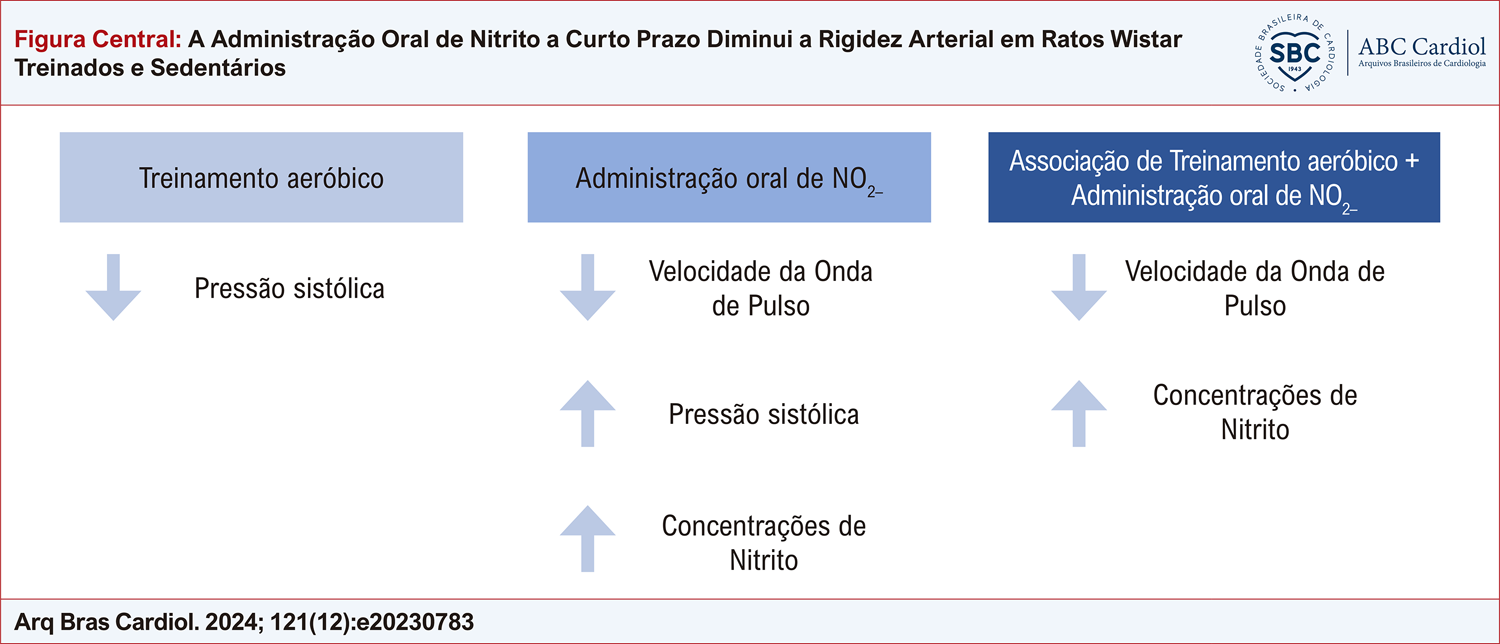
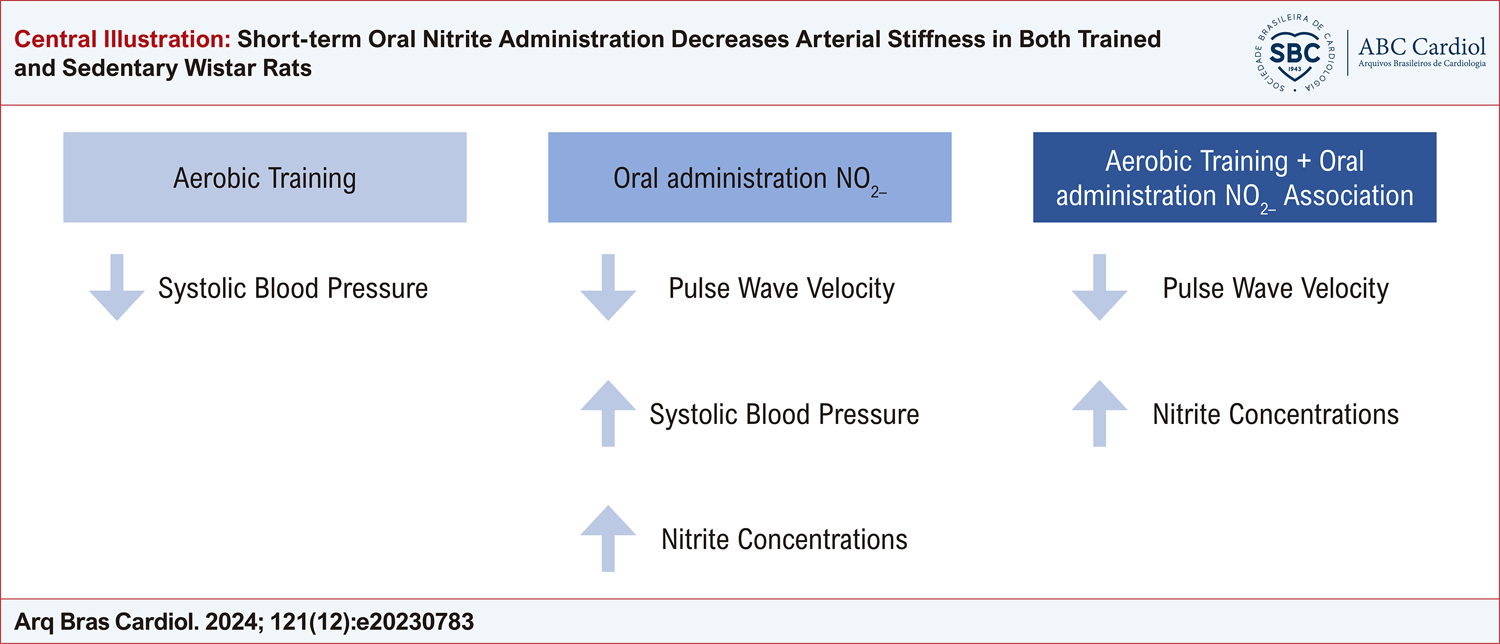
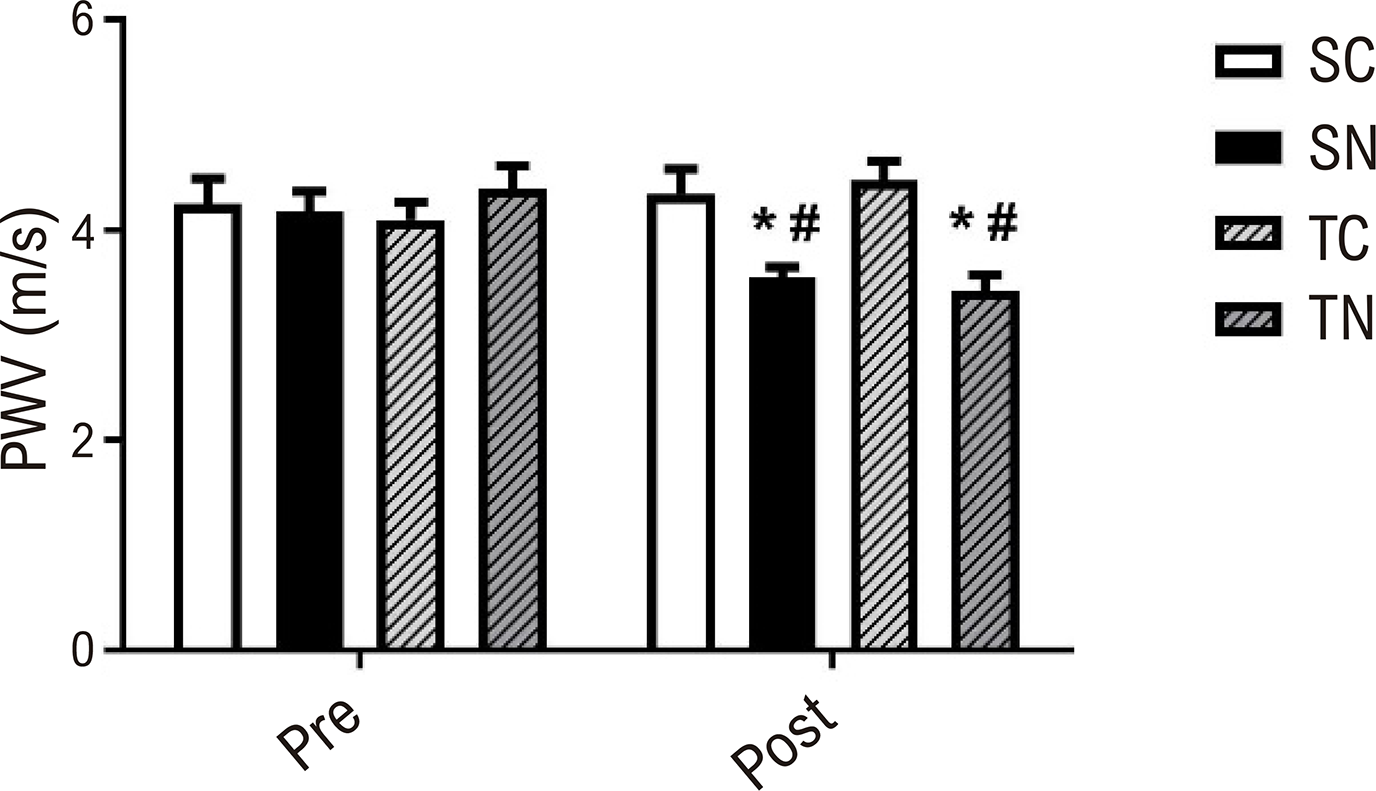
In the central image, we present the main findings of our study. All the groups showed similar results for PWV at the start of the study, demonstrating the homogeneity of the groups in this regard. Both treated groups had lower PWV values compared to the untreated groups (-19% SN vs. SC; -24% TN vs. TC). Figure 1 also shows the comparison between the pre and post-moments. No significant differences were found for the SC and TC groups for PWV. However, the TN (-23%) and SN (-15%) groups showed significant reductions in PWV after the training or treatment period.
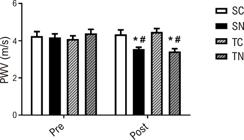
– Pulse wave velocity (PWV) before (pre) and after (post) in SC (Sedentary-Control, n=10), SN (Sedentary-Nitrite, n=10), TC (Trained-Control, n=10), and TN (Trained-Nitrite, n=9). *Statistical differences vs. respective control and - (SN vs. SC, p=0.003; and TN vs. TC, p=<0.001); # statistical differences between PRE and POST-intervention – (TN, p=0.007; SN, 0.011); level of significance p<0.05.
Figure 2 presents lower SBP in SN and TC compared to the SC group. This difference reached 12.46 mmHg in the SN group (p=<0.001) and 14.23 mmHg in the TC group (p=<0.001). However, the combination of physical training and oral administration of nitrite did not present additional benefits to those already found in isolation.

– Systolic blood pressure (SBP) values in SC (Sedentary-Control, n=10), SN (Sedentary-Nitrite, n=10), TC (Trained-Control, n=10), and TN (Trained-Nitrite, n=9). *Statistical differences, TC vs SC, p=<0.001; SN vs. SC, p=<0.001; level of significance p<0.05.
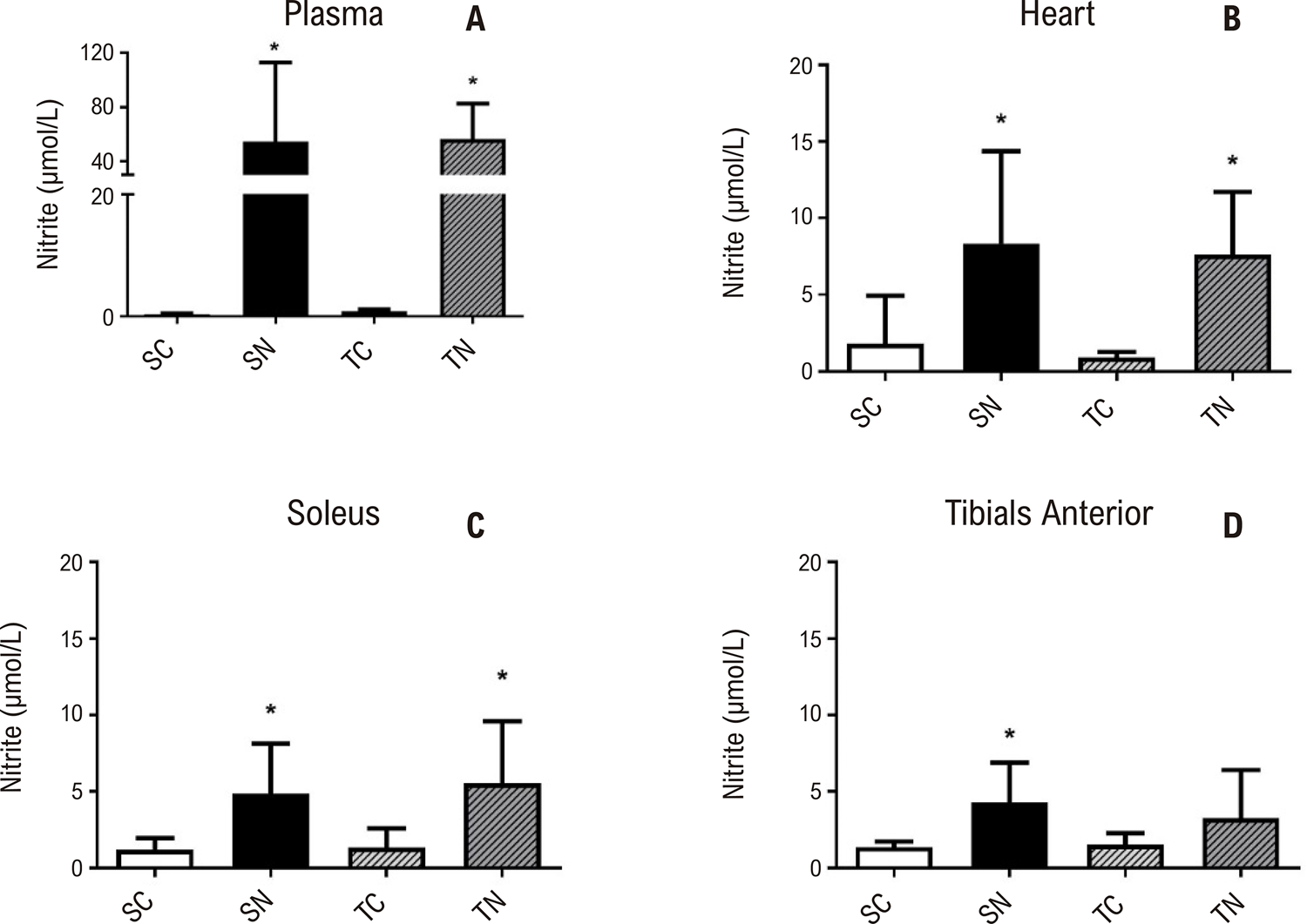
Figure 3 presents the nitrite concentrations in the different tissues. It can be observed that both treated groups (SN and TN) presented higher values compared with non-treated groups (SC and TC) in plasma (Figure 3A), heart (Figure 3B) and soleus (Figure 3C), except for the tibialis anterior muscle (Figure 3D).

– Nitrite concentrations in plasma nitrite (A), heart (B), and soleus skeletal muscle (C) and anterior tibial skeletal muscle (D) in SC (Sedentary-Control, n=10), SN (Sedentary-Nitrite, n=10), TC (Trained-Control, n=10), and TN (Trained-Nitrite, n=9). *Statistical differences, Plasm – SN vs. SC, p=0.006; TN vs. TC, p=<0.001; Heart – SN vs. SC, p=0.002; TN vs. TC, p=<0.001; Soleus – SN vs. SC, p=0.005; TN vs. TC, p=0.003; Tibialis Anterior – SN vs. SC, p=0.019; level of significance p<0.05.
No statistical difference was found between the SC and TC groups for plasma nitrite concentration. However, nitrite treatment induced an increase in the SN group (p=0.006) and TN group (p=<0.001) compared with their respective control groups.
The magnitude of the increase in cardiac and skeletal muscle (soleus) nitrite concentration was smaller compared with plasmatic nitrite concentration; however, the same tendency was found. No difference was found between the SC and TC groups for cardiac nitrite concentration. However, nitrite treatment induced an increase in the SN group (by approximately four times) and TN group (by approximately eight times) compared with their respective control groups.
For muscle tissue, no difference was found between SC and TC groups in soleus nitrite concentration and anterior tibial nitrite concentration. Moreover, the treated groups (SN and TN) showed differences concerning their respective controls in the soleus muscle (both by approximately four times). However, in the tibialis anterior muscle, only the SN group showed a difference compared to its control (by approximately three times).
Discussion
The purpose of this study was to verify the effect of oral nitrite administration on BP and AS in trained and sedentary rats. Briefly, our results demonstrated that the oral nitrite administration for a short period (6 days) was related to a 15% and 22.1% reduction in the PWV in the SN and TN, respectively, compared with groups that did not receive pharmacological treatment.
AS has been extensively studied in experimental animal models,5,6,32,35 and it is considered an important predictor of cardiovascular risk in the general population.7 Although the group that underwent only physical training did not present a reduction in PWV, there is some evidence in the literature that physical exercise promotes benefits on AS. In a systematic review by Lopes et al.,35 it was demonstrated that aerobic training, combined training, and resistance training can promote a reduction in PWV in hypertensive patients.
Nitrite concentration was higher in both groups that received oral nitrite supplementation, which was expected due to the study design. However, these results may contribute to improvements in the vascular endothelium and improvements in NO bioavailability. As a consequence, it contributes to the antihypertensive effects.18 It has been demonstrated that nitrite supplementation protects the vascular endothelium from antioxidant activity, reducing/inhibiting the activity of NADPH oxidase and xanthine oxidoreductase (XOR) in animals,36,37 not evaluated by this study. The inhibition of NADPH oxidase activity is an important mechanism since it is the most prominent source of reactive oxygen species (ROS), and it works by inactivating NO.38-40 Ling et al.18 also demonstrated that oral nitrite administration promotes positive changes in NADPH oxidase expression.
In addition, oral administration of nitrite also proved to be effective in increasing nitrite concentrations in plasma and other tissues (cardiac muscle and soleus), with higher values being found in the treated groups compared to control groups. These results agree with the literature, which reports that nitrite supplementation increases nitrite concentrations in plasma and other tissues.18,30,41 Conversely, in the tibialis anterior muscle, only the sedentary group that received treatment showed high nitrite concentration values. It should also be noted that the literature has shown that there are changes in plasma and tissue nitrite concentrations over time after oral administration.20 Pinheiro et al. showed that the increase in nitrite concentrations in plasma began 15 minutes after treatment and remained high for up to 4 hours. In the heart and skeletal muscle, concentrations remained high up to 2 hours after treatment, thus demonstrating the relationship between concentration and treatment time. Therefore, this relationship confirms our hypothesis that oral administration of sodium nitrite may be an alternative for increasing nitrite concentrations and, consequently, possibly NO bioavailability.
According to the BP results, both interventions, when carried out in isolation, whether physical training or pharmacological treatment, showed a reduction in SBP compared to the sedentary and untreated group. Although many studies have shown that aerobic exercise training does not reduce BP levels in Wistar animals.42,43 In our study, although the animals used in this study were considered normotensive (the strain of animals was normotensive), it can be seen in the SC group that the SBP values were around 140 mmHg, which showed altered BP values. Because of this, treatment with nitrite or physical training were sufficient to normalize BP values. A possible explanation for these results is the increase in NO production and concentration, the decrease in ROS concentration, increase in vascular endothelial growth factor (VEGF), which are responsible for the activation of the angiogenesis mechanism, reduction of Ang-II production, and lower sympathetic activity.10,42,44-46 In addition, nitrite supplementation has demonstrated benefits in vascular relaxation,47 and improvements in cardiac function and remodeling.48
The limitations of this study include the short period of treatment with nitrite, which requires further studies to verify the long-term response. The SBP levels of animals were close to 140 mmHg, which is considered an altered level for Wistar animals, and yet we were only able to assess BP at the end of the protocol. So, we can’t say that the physical training and treatment reduced SBP throughout the program.
Conclusion
In summary, short-term (6 days) oral administration or an aerobic physical training program promotes several hemodynamic benefits in male Wistar rats, such as improvements in AS and BP. These responses suggest that physical training and sodium nitrite supplementation can be alternatives for the prevention and treatment of hypertension.
Acknowledgments
This study was financed in part by the National Council for Scientific and Technological Development - BRAZIL (CNPq).
References
-
1 Al-Qatatsheh A, Morsi Y, Zavabeti A, Zolfagharian A, Salim N, Z Kouzani A, et al. Blood Pressure Sensors: Materials, Fabrication Methods, Performance Evaluations and Future Perspectives. Sensors (Basel). 2020;20(16):4484. doi: 10.3390/s20164484.
» https://doi.org/10.3390/s20164484 -
2 Fan H, Liu Y, Zhang X. Validation of Recommended Definition in Identifying Elevated Blood Pressure in Adolescents. J Clin Hypertens (Greenwich). 2019;21(9):1343-9. doi: 10.1111/jch.13640.
» https://doi.org/10.1111/jch.13640 -
3 Yano Y, Rakugi H, Bakris GL, Lloyd-Jones DM, Oparil S, Saruta T, et al. On-treatment Blood Pressure and Cardiovascular Outcomes in Older Adults with Isolated Systolic Hypertension. Hypertension. 2017;69(2):220-7. doi: 10.1161/HYPERTENSIONAHA.116.08600.
» https://doi.org/10.1161/HYPERTENSIONAHA.116.08600 -
4 Vischer AS, Burkard T. Principles of Blood Pressure Measurement - Current Techniques, Office vs Ambulatory Blood Pressure Measurement. Adv Exp Med Biol. 2017;956:85-96. doi: 10.1007/5584_2016_49.
» https://doi.org/10.1007/5584_2016_49 -
5 Laurent S, Boutouyrie P. Arterial Stiffness and Hypertension in the Elderly. Front Cardiovasc Med. 2020;7:544302. doi: 10.3389/fcvm.2020.544302.
» https://doi.org/10.3389/fcvm.2020.544302 -
6 Lacolley P, Regnault V, Segers P, Laurent S. Vascular Smooth Muscle Cells and Arterial Stiffening: Relevance in Development, Aging, and Disease. Physiol Rev. 2017;97(4):1555-617. doi: 10.1152/physrev.00003.2017.
» https://doi.org/10.1152/physrev.00003.2017 -
7 Ji C, Gao J, Huang Z, Chen S, Wang G, Wu S, et al. Estimated Pulse Wave Velocity and Cardiovascular Events in Chinese. Int J Cardiol Hypertens. 2020;7:100063. doi: 10.1016/j.ijchy.2020.100063.
» https://doi.org/10.1016/j.ijchy.2020.100063 -
8 Lindesay G, Ragonnet C, Chimenti S, Villeneuve N, Vayssettes-Courchay C. Age and Hypertension Strongly Induce Aortic Stiffening in Rats at Basal and Matched Blood Pressure Levels. Physiol Rep. 2016;4(10):e12805. doi: 10.14814/phy2.12805.
» https://doi.org/10.14814/phy2.12805 -
9 Leblanc C, Strong HR, Tabrizchi R. Evaluation of Different Metrics as an Index for the Assessment of Arterial Stiffness. Clin Exp Hypertens. 2018;40(4):390-7. doi: 10.1080/10641963.2017.1384484.
» https://doi.org/10.1080/10641963.2017.1384484 -
10 Paula SM, Fernandes T, Couto GK, Jordão MT, Oliveira EM, Michelini LC, et al. Molecular Pathways Involved in Aerobic Exercise Training Enhance Vascular Relaxation. Med Sci Sports Exerc. 2020;52(10):2117-26. doi: 10.1249/MSS.0000000000002355.
» https://doi.org/10.1249/MSS.0000000000002355 -
11 Lin YY, Lee SD. Cardiovascular Benefits of Exercise Training in Postmenopausal Hypertension. Int J Mol Sci. 2018;19(9):2523. doi: 10.3390/ijms19092523.
» https://doi.org/10.3390/ijms19092523 -
12 Larsen MK, Matchkov VV. Hypertension and Physical Exercise: The Role of Oxidative Stress. Medicina (Kaunas). 2016;52(1):19-27. doi: 10.1016/j.medici.2016.01.005.
» https://doi.org/10.1016/j.medici.2016.01.005 -
13 Gluvic ZM, Obradovic MM, Sudar-Milovanovic EM, Zafirovic SS, Radak DJ, Essack MM, et al. Regulation of Nitric Oxide Production in Hypothyroidism. Biomed Pharmacother. 2020;124:109881. doi: 10.1016/j.biopha.2020.109881.
» https://doi.org/10.1016/j.biopha.2020.109881 -
14 Tian D, Meng J. Exercise for Prevention and Relief of Cardiovascular Disease: Prognoses, Mechanisms, and Approaches. Oxid Med Cell Longev. 2019;2019:3756750. doi: 10.1155/2019/3756750.
» https://doi.org/10.1155/2019/3756750 -
15 Möller MN, Rios N, Trujillo M, Radi R, Denicola A, Alvarez B. Detection and Quantification of Nitric Oxide-derived Oxidants in Biological Systems. J Biol Chem. 2019;294(40):14776-802. doi: 10.1074/jbc.REV119.006136.
» https://doi.org/10.1074/jbc.REV119.006136 -
16 Davis ME, Grumbach IM, Fukai T, Cutchins A, Harrison DG. Shear Stress Regulates Endothelial Nitric-oxide Synthase Promoter Activity Through Nuclear Factor KappaB Binding. J Biol Chem. 2004;279(1):163-8. doi: 10.1074/jbc.M307528200.
» https://doi.org/10.1074/jbc.M307528200 -
17 Ling WC, Mustafa MR, Murugan DD. Therapeutic Implications of Nitrite in Hypertension. J Cardiovasc Pharmacol. 2020;75(2):123-34. doi: 10.1097/FJC.0000000000000771.
» https://doi.org/10.1097/FJC.0000000000000771 -
18 Ling WC, Mustafa MR, Vanhoutte PM, Murugan DD. Chronic Administration of Sodium Nitrite Prevents Hypertension and Protects Arterial Endothelial Function by Reducing Oxidative Stress in Angiotensin II-infused Mice. Vascul Pharmacol. 2018;102:11-20. doi: 10.1016/j.vph.2017.05.003.
» https://doi.org/10.1016/j.vph.2017.05.003 -
19 Pinheiro LC, Ferreira GC, Vilalva KH, Toledo JC Jr, Tanus-Santos JE. Contrasting Effects of Low versus High Ascorbate Doses on Blood Pressure Responses to Oral Nitrite in L-NAME-induced Hypertension. Nitric Oxide. 2018;74:65-73. doi: 10.1016/j.niox.2018.01.006.
» https://doi.org/10.1016/j.niox.2018.01.006 -
20 Pinheiro LC, Ferreira GC, Angelis CD, Toledo JC Jr, Tanus-Santos JE. A Comprehensive Time Course Study of Tissue Nitric Oxide Metabolites Concentrations after Oral Nitrite Administration. Free Radic Biol Med. 2020;152:43-51. doi: 10.1016/j.freeradbiomed.2020.03.006.
» https://doi.org/10.1016/j.freeradbiomed.2020.03.006 -
21 Pignatelli P, Fabietti G, Ricci A, Piattelli A, Curia MC. How Periodontal Disease and Presence of Nitric Oxide Reducing Oral Bacteria Can Affect Blood Pressure. Int J Mol Sci. 2020;21(20):7538. doi: 10.3390/ijms21207538.
» https://doi.org/10.3390/ijms21207538 -
22 Wickham KA, Spriet LL. No Longer Beeting Around the Bush: A Review of Potential Sex Differences with Dietary Nitrate Supplementation 1. Appl Physiol Nutr Metab. 2019;44(9):915-24. doi: 10.1139/apnm-2019-0063.
» https://doi.org/10.1139/apnm-2019-0063 -
23 Oliveira-Paula GH, Pinheiro LC, Tanus-Santos JE. Mechanisms Impairing Blood Pressure Responses to Nitrite and Nitrate. Nitric Oxide. 2019;85:35-43. doi: 10.1016/j.niox.2019.01.015.
» https://doi.org/10.1016/j.niox.2019.01.015 -
24 Radi R. Oxygen Radicals, Nitric Oxide, and Peroxynitrite: Redox Pathways in Molecular Medicine. Proc Natl Acad Sci U S A. 2018;115(23):5839-48. doi: 10.1073/pnas.1804932115.
» https://doi.org/10.1073/pnas.1804932115 -
25 Herrera NA, Duchatsch F, Kahlke A, Amaral SL, Vasquez-Vivar J. In Vivo Vascular Rarefaction and Hypertension Induced by Dexamethasone are Related to Phosphatase PTP1B Activation not Endothelial Metabolic Changes. Free Radic Biol Med. 2020;152:689-96. doi: 10.1016/j.freeradbiomed.2020.01.012.
» https://doi.org/10.1016/j.freeradbiomed.2020.01.012 -
26 Barel M, Perez OA, Giozzet VA, Rafacho A, Bosqueiro JR, Amaral SL. Exercise Training Prevents Hyperinsulinemia, Muscular Glycogen Loss and Muscle Atrophy Induced by Dexamethasone Treatment. Eur J Appl Physiol. 2010;108(5):999-1007. doi: 10.1007/s00421-009-1272-6.
» https://doi.org/10.1007/s00421-009-1272-6 -
27 Jesus I, Herrera NA, Andreo JC, Santos CF, Amaral SL. Training Counteracts DEX-induced Microvascular Rarefaction by Improving the Balance between Apoptotic and Angiogenic Proteins. Steroids. 2020;156:108573. doi: 10.1016/j.steroids.2019.108573.
» https://doi.org/10.1016/j.steroids.2019.108573 -
28 Herrera NA, Duchatsch F, Tardelli LP, Dionísio TJ, Shinohara AL, Santos CF, et al. MicroRNA-126 Upregulation, Induced by Training, Plays a Role in Controlling Microcirculation in Dexamethasone Treated Rats. Mol Cell Endocrinol. 2020;505:110732. doi: 10.1016/j.mce.2020.110732.
» https://doi.org/10.1016/j.mce.2020.110732 -
29 Rizzi E, Amaral JH, Guimarães DA, Conde-Tella SO, Pinheiro LC, Gerlach RF, et al. Nitrite Treatment Downregulates Vascular MMP-2 Activity and Inhibits Vascular Remodeling in Hypertension Independently of its Antihypertensive Effects. Free Radic Biol Med. 2019;130:234-43. doi: 10.1016/j.freeradbiomed.2018.11.002.
» https://doi.org/10.1016/j.freeradbiomed.2018.11.002 -
30 Neto-Neves EM, Pinheiro LC, Nogueira RC, Portella RL, Batista RI, Tanus-Santos JE. Sodium Nitrite Improves Hypertension-induced Myocardial Dysfunction by Mechanisms Involving Cardiac S-nitrosylation. J Mol Cell Cardiol. 2019;134:40-50. doi: 10.1016/j.yjmcc.2019.06.012.
» https://doi.org/10.1016/j.yjmcc.2019.06.012 -
31 Pinheiro LC, Ferreira GC, Amaral JH, Portella RL, Tella SOC, Passos MA, et al. Oral Nitrite Circumvents Antiseptic Mouthwash-induced Disruption of Enterosalivary Circuit of Nitrate and Promotes Nitrosation and Blood Pressure Lowering Effect. Free Radic Biol Med. 2016;101:226-35. doi: 10.1016/j.freeradbiomed.2016.10.013.
» https://doi.org/10.1016/j.freeradbiomed.2016.10.013 -
32 Fabricio MF, Jordão MT, Miotto DS, Ruiz TFR, Vicentini CA, Lacchini S, et al. Standardization of a New Non-invasive Device for Assessment of Arterial Stiffness in Rats: Correlation with Age-related Arteries' Structure. MethodsX. 2020;7:100901. doi: 10.1016/j.mex.2020.100901.
» https://doi.org/10.1016/j.mex.2020.100901 -
33 Tardelli LP, Duchatsch F, Herrera NA, Vicentini CA, Okoshi K, Amaral SL. Differential Effects of Dexamethasone on Arterial Stiffness, Myocardial Remodeling and Blood Pressure between Normotensive and Spontaneously Hypertensive Rats. J Appl Toxicol. 2021;41(10):1673-86. doi: 10.1002/jat.4155.
» https://doi.org/10.1002/jat.4155 -
34 Feelisch M, Rassaf T, Mnaimneh S, Singh N, Bryan NS, Jourd'Heuil D, et al. Concomitant S-, N-, and Heme-nitros(yl)ation in Biological Tissues and Fluids: Implications for the Fate of NO in Vivo. FASEB J. 2002;16(13):1775-85. doi: 10.1096/fj.02-0363com.
» https://doi.org/10.1096/fj.02-0363com -
35 Lopes S, Afreixo V, Teixeira M, Garcia C, Leitão C, Gouveia M, Figueiredo D, Alves AJ, Polonia J, Oliveira J, Mesquita-Bastos J, Ribeiro F. Exercise training reduces arterial stiffness in adults with hypertension: a systematic review and meta-analysis. J Hypertens. 2021 Feb 1;39(2):214-222. doi: 10.1097/HJH.0000000000002619.
» https://doi.org/10.1097/HJH.0000000000002619 -
36 Amaral JH, Ferreira GC, Pinheiro LC, Montenegro MF, Tanus-Santos JE. Consistent Antioxidant and Antihypertensive Effects of Oral Sodium Nitrite in DOCA-salt Hypertension. Redox Biol. 2015;5:340-6. doi: 10.1016/j.redox.2015.06.009.
» https://doi.org/10.1016/j.redox.2015.06.009 -
37 Gao X, Yang T, Liu M, Peleli M, Zollbrecht C, Weitzberg E, et al. NADPH Oxidase in the Renal Microvasculature is a Primary Target for Blood Pressure-lowering Effects by Inorganic Nitrate and Nitrite. Hypertension. 2015;65(1):161-70. doi: 10.1161/HYPERTENSIONAHA.114.04222.
» https://doi.org/10.1161/HYPERTENSIONAHA.114.04222 -
38 Schröder K, Zhang M, Benkhoff S, Mieth A, Pliquett R, Kosowski J, et al. Nox4 is a Protective Reactive Oxygen Species Generating Vascular NADPH Oxidase. Circ Res. 2012;110(9):1217-25. doi: 10.1161/CIRCRESAHA.112.267054.
» https://doi.org/10.1161/CIRCRESAHA.112.267054 -
39 Ray R, Murdoch CE, Wang M, Santos CX, Zhang M, Alom-Ruiz S, et al. Endothelial Nox4 NADPH Oxidase Enhances Vasodilatation and Reduces Blood Pressure in Vivo. Arterioscler Thromb Vasc Biol. 2011;31(6):1368-76. doi: 10.1161/ATVBAHA.110.219238.
» https://doi.org/10.1161/ATVBAHA.110.219238 -
40 Zhang M, Brewer AC, Schröder K, Santos CX, Grieve DJ, Wang M, et al. NADPH Oxidase-4 Mediates Protection Against Chronic Load-induced Stress in Mouse Hearts by Enhancing Angiogenesis. Proc Natl Acad Sci U S A. 2010;107(42):18121-6. doi: 10.1073/pnas.1009700107.
» https://doi.org/10.1073/pnas.1009700107 -
41 Guimaraes DA, Passos MA, Rizzi E, Pinheiro LC, Amaral JH, Gerlach RF, et al. Nitrite Exerts Antioxidant Effects, Inhibits the mTOR Pathway and Reverses Hypertension-induced Cardiac Hypertrophy. Free Radic Biol Med. 2018;120:25-32. doi: 10.1016/j.freeradbiomed.2018.03.006.
» https://doi.org/10.1016/j.freeradbiomed.2018.03.006 -
42 Rodrigues JA, Prímola-Gomes TN, Soares LL, Leal TF, Nóbrega C, Pedrosa DL, et al. Physical Exercise and Regulation of Intracellular Calcium in Cardiomyocytes of Hypertensive Rats. Arq Bras Cardiol. 2018;111(2):172-9. doi: 10.5935/abc.20180113.
» https://doi.org/10.5935/abc.20180113 -
43 Jordão CP, Fernandes T, Tanaka LY, Bechara LRG, Sousa LGO, Oliveira EM, et al. Aerobic Swim Training Restores Aortic Endothelial Function by Decreasing Superoxide Levels in Spontaneously Hypertensive Rats. Clinics (Sao Paulo). 2017;72(5):310-6. doi: 10.6061/clinics/2017(05)09.
» https://doi.org/10.6061/clinics/2017(05)09 -
44 Suvorava T, Cortese-Krott MM. Exercise-induced Cardioprotection Via eNOS: A Putative Role of Red Blood Cell Signaling. Curr Med Chem. 2018;25(34):4457-74. doi: 10.2174/0929867325666180307112557.
» https://doi.org/10.2174/0929867325666180307112557 -
45 Fernandes T, Gomes-Gatto CV, Pereira NP, Alayafi YR, Neves VJ, Oliveira EM. NO Signaling in the Cardiovascular System and Exercise. Adv Exp Med Biol. 2017;1000:211-45. doi: 10.1007/978-981-10-4304-8_13.
» https://doi.org/10.1007/978-981-10-4304-8_13 -
46 Masson GS, Michelini LC. Experimental Evidences Supporting Training-induced Benefits in Spontaneously Hypertensive Rats. Adv Exp Med Biol. 2017;999:287-306. doi: 10.1007/978-981-10-4307-9_16.
» https://doi.org/10.1007/978-981-10-4307-9_16 -
47 Amaral JH, Rizzi ES, Alves-Lopes R, Pinheiro LC, Tostes RC, Tanus-Santos JE. Antioxidant and Antihypertensive Responses to Oral Nitrite Involves Activation of the Nrf2 Pathway. Free Radic Biol Med. 2019;141:261-8. doi: 10.1016/j.freeradbiomed.2019.06.028.
» https://doi.org/10.1016/j.freeradbiomed.2019.06.028 -
48 Guimaraes DA, Batista RIM, Tanus-Santos JE. Nitrate and Nitrite-based Therapy to Attenuate Cardiovascular Remodelling in Arterial Hypertension. Basic Clin Pharmacol Toxicol. 2021;128(1):9-17. doi: 10.1111/bcpt.13474.
» https://doi.org/10.1111/bcpt.13474
-
Study association:
This article is part of the thesis of master submitted by Thiago Pereira de Souza, from Programa de Pós-Graduação em Ciências do Movimento Interunidades - Universidade Estadual Paulista “Júlio de Mesquita Filho” (UNESP).
-
Ethics approval and consent to participate:
This study was approved by the Ethics Committee of the CEUA - Faculdade de Ciências - UNESP Bauru under the protocol number 003/2018. All the procedures in this study were in accordance with the 1975 Helsinki Declaration, updated in 2013.
Edited by
-
Editor responsible for the review:
Marina Okoshi