 Environmental gradient drives variation in functional diversity: insights from Fissidens (Bryophyta) from the Atlantic Forest
Abstract
This study investigated the impact of abiotic factors (elevation and precipitation) on the functional diversity and composition of Fissidens in the Brazilian Atlantic Forest. Fissidentaceae has significant morphological and functional diversity, making it an ideal model for understanding biodiversity and ecosystem functioning. The research was conducted in the biogeographic region of ‘Serra do Mar’ in the Atlantic Forest, Southern Brazil, using 24 randomly selected plots. The functional strategies of each Fissidens species were described based on six traits, including sex segregation, presence and distribution of limbidium on the leaf and the vaginant lamina, and climate data were obtained from CRU-TS 4.06 and WorldClim 2.1 datasets. Our findings showed that precipitation led to greater functional richness, as higher precipitation levels supported a broader range of functional traits, thereby expanding the community’s functional space. Elevation, on the other hand, increased functional dispersion, reflecting a wider range of viable morphological traits. This pattern was likely driven by the combined effects of temperature and moisture, which vary predictably along the elevational gradient. Future research, including experimental approaches, should explore the influence of ecological and evolutionary factors on functional traits in this diverse and ecologically important group of mosses.
Keywords:
Bryophyte ecology; community composition; environmental filters; functional traits; Neotropical region
Introduction
Elucidating how multiple factors regulate the spatial variation of biodiversity is a central topic in ecology and biogeography (Machac et al., 2011). In the research agenda for bryology (liverworts, mosses, and hornworts), the question “What are the main drivers of taxonomic, phylogenetic, and functional diversity in bryophytes?” has been recently pointed as the third of the 50 issues that are critical in advancing the discipline (Patiño et al., 2022). Several studies have addressed this question; however, the taxonomic facet of diversity has received desproportionately more attention (Amorim et al., 2017; Peñaloza-Bojacá et al., 2018; Batista et al., 2021; Araújo et al., 2022) compared to functional (Pardow et al., 2010; Ah-Peng et al., 2014; Henriques et al., 2017; Asplund et al., 2022; Souza et al., 2020), and phylogenetic (Heinrichs et al., 2009; Cox et al., 2010) diversity, with the latter being particularly scarcer. Most authors agree with the idea that bryophyte diversity (regardless of the facet addressed) is based on environmental filtering. Environmental filters act on bryophyte assembly both at regional (e.g. disturbance, climate, or elevation; Pharo & Zartman, 2007; Santos & Costa, 2010; Amorim et al., 2017) and local scales (e.g. physical-chemical characteristics of the substrate, microhabitat, or microclimate; Patiño & González-Mancebo, 2011; Silva et al., 2014; de Oliveira & ter Steege, 2015; Batista et al., 2021). This can be attributed to the poikilohydric ecophysiology of bryophytes: since most of the species are desiccation-tolerant ( Proctor, 2000; Oliver, 2005; Proctor et al., 2007), their distribution is generally deterministic (niche-based), and driven by environmental filters (Mota De Oliveira et al., 2009).
Especially in the Neotropics, the diversity of bryophytes is dependent on habitat heterogeneity, mainly related to disturbance, vegetation type, climate, and/or elevation (Holz et al., 2002; Batista & Santos, 2016; Rodríguez-Quiel et al., 2022), suggesting that species coexist because they specialize in different parts of the niche or share common morphological traits that confer tolerance to abiotic conditions/disturbances (Mota De Oliveira et al., 2009). In this context, functional diversity is an interesting metric for the characterization of communities and phytogeographic domains and their respective vegetation types (Mason et al., 2005) because it allows for a comprehensive analysis of species composition and distribution in the ecosystem, providing a more complete understanding of its complexity and biological richness. Functional diversity includes four main parameters: functional richness, which is the total number of functions performed by species in a community; functional dispersion, which measures the distribution of these functions among species; functional divergence, which reflects the differences in functions between species; and functional evenness, which assesses the equity in the distribution of functions (Schleuter et al. 2010). These parameters are crucial for understanding the resilience and stability of ecosystems (Mason et al., 2005). On the other hand, functional composition patterns refer to the variety and abundance of functional traits of organisms within a community and how these traits influence the functioning of the ecosystem (Schleuter et al. 2010). This concept is crucial for understanding how plants interact with their environment and how their biological characteristics influence ecosystem dynamics (Cornwell & Ackerly, 2009). Such morphological trait-based approaches to elucidate functional diversity become more relevant in highly diverse and threatened ecosystems, such as the Atlantic Forest. In the tropics, the Atlantic Forest stands out as the most diverse and threatened Brazilian phytogeographic domain (INPE, 2001) and is classified as a biodiversity hotspot (Sloan et al., 2014). Regarding bryophytes, the Atlantic Forest is the most species-rich phytogeographic domain in Brazil (Alvarenga & Pôrto, 2007; Silva & Pôrto, 2010; dos Santos et al., 2011), primarily due to the heterogeneity of habitats and wide altitudinal and latitudinal ranges (Perrigo et al., 2020).
The genus Fissidens belongs to the monotypic moss family Fissidentaceae and is one of the largest and most diverse in the world, with approximately 450 species currently recognized (Bordin & Yano, 2013). These species are primarily found in tropical and subtropical regions (Pursell, 2007). In Brazil, Fissidentaceae stands out as the second richest family of mosses, occurring in all phytogeographic domains, but predominantly in the Atlantic Forest (Bordin & Yano, 2013). Currently, 55 species of Fissidens are reported for the Atlantic Forest, which corresponds to 7% of the total taxa of mosses occurring in the country (Flora e Funga do Brasil, 2023). Fissidens exhibits an unparalleled morphological diversity among bryophytes, encompassing a wide range of characteristics (Pursell, 2007; Bordin & Yano, 2013). For instance, all Fissidens species have a vaginant lamina that consists of an “expanded lamina at the base of the leaf which clasps the stem and the base of the leaf above it” (Magill, 1990). This trait, including the presence of limbidium (a differentiated leaf border), is highly variable. Studies by Pursell (Pursell & Vital, 1986; Pursell, 1990, 2007) suggest a strong correlation with environmental factors, particularly elevation. However, this relationship remains untested empirically. Thus, a wide range of morphological traits in different species of Fissidens is expected. Additionally, Fissidens exhibits a high diversity of sexual systems (Santos et al., 2023a; b), with different levels of gametangia segregation (sexual functions separated or together), but the relation between the presence and frequency of sexual systems and environmental factors is also still an open field for research. Such diversity of morphological and reproductive traits makes Fissidens a useful group capable of providing valuable insights into the relationship between plant functional traits and the environment (Pursell, 2007; Bordin & Yano, 2013).
Building on this knowledge, we used a regional scale to assess the role of abiotic (elevation and precipitation) factors on the functional diversity and composition of Fissidens assemblages in the Atlantic Forest. We hypothesized that environmental filtering - via abiotic factors - drives functional diversity and composition patterns. Considering that previous studies demonstrate how elevation and precipitation influence niche selection (Gabriel & Bates, 2005; Alvarenga & Pôrto, 2007) and community assembly patterns in bryophytes, it is crucial to understand how these variables interact. Generally, as elevation increases, temperature decreases, which can lead to higher relative humidity and varying precipitation regimes (Gazol et al., 2017). This variation in humidity and temperature can create conditions that favor the functional diversity of Fissidens, as different species may specialize in responding to these conditions. Furthermore, precipitation plays a critical role in the availability of water essential for the sexual reproduction of bryophytes; in areas with low precipitation, the frequency of sexual segregation may be reduced due to the limited availability of water necessary for reproduction. Consequently, we hypothesized that the interplay of lower temperatures due to increasing elevation and higher water availability would function as an environmental filter, enhancing the functional diversity of Fissidens across the Atlantic Forest at a regional scale. We anticipated that distinct functional strategies would emerge along environmental gradients, with leaf traits related to water conservation-such as the presence of papillae, limbidium on all laminae, and larger vaginant laminae-becoming more prevalent at higher elevations and in areas with reduced precipitation (Watson, 1914). Additionally, since sexual reproduction relies on water availability, we anticipate that the relative frequency of species with segregated sexual systems (i.e., where the sexes are separate) will be lower in areas with low precipitation levels.
Material and Methods
Target taxon
Fissidentaceae is a family of mosses widely distributed throughout the world except for Antarctica (Pursell, 2007; Bordin & Yano, 2013) with only one genus, Fissidens (Pursell, 2007; Bordin & Yano, 2013). The small and delicate plants of Fissidens are primarily found in humid habitats such as tropical and temperate forests (Pursell, 2007; Suzuki et al., 2018), but they also exhibit remarkable diversity in arid environments such as deserts and dry tropical forests (Bastos et al., 1998; McCleary, 1959), forming dense and compact tufts on rocks, soil or tree trunks, playing an essential role in the ecology of these environments. These dense and compact tufts, commonly found on rocks, soil, or tree trunks, play an essential role in the ecology of these environments by aiding in water retention and providing microhabitats for microinvertebrates that thrive within bryophyte colonies (Glime, 2017).
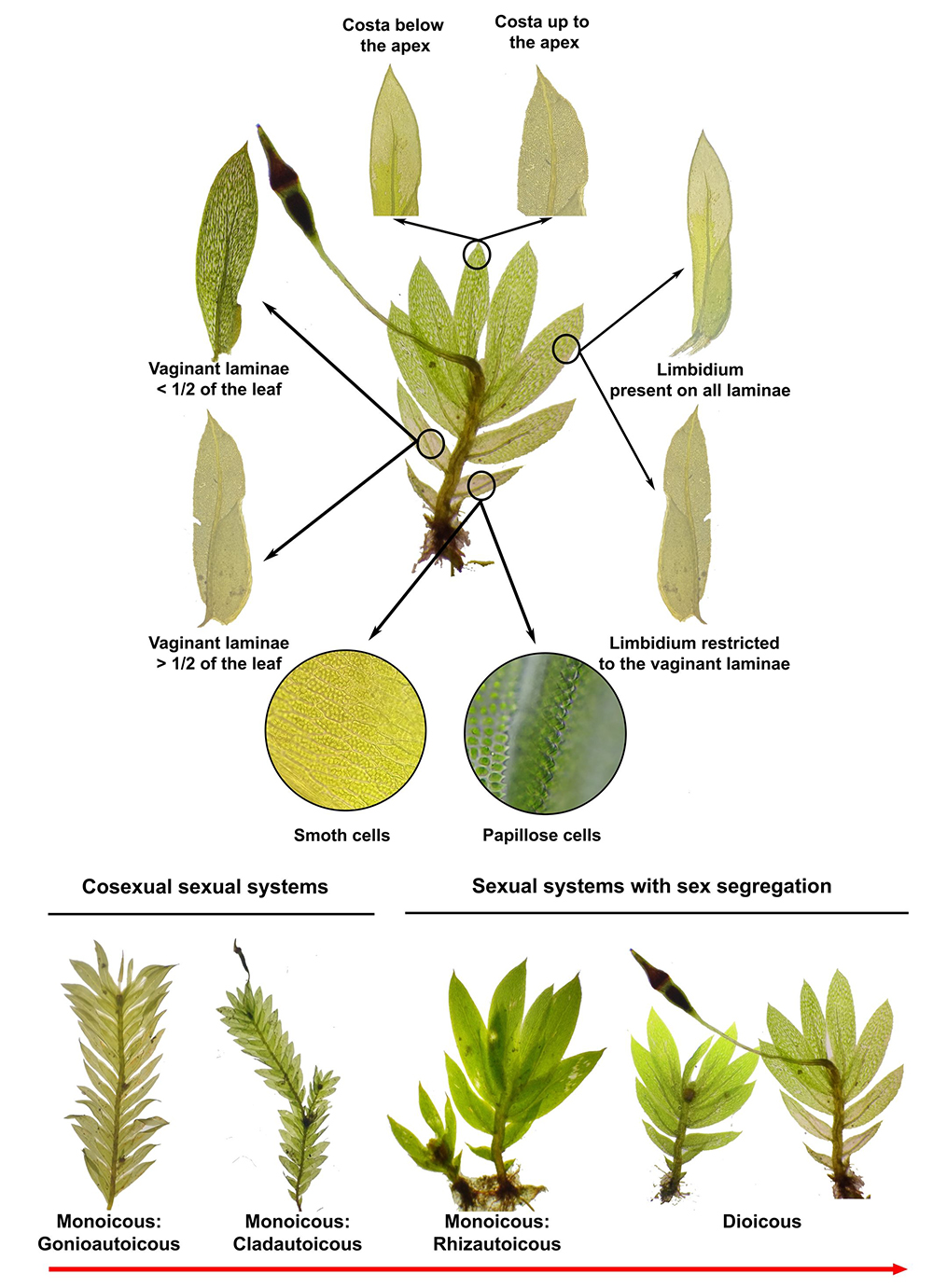
Fissidentaceae stands out as the most diverse and variable family of mosses in terms of morphological and functional traits (Pursell, 2007). The wide variety of traits such as leaf shape and structure, presence of limbidium, papillae, and others (Iwatsuki & Pursell, 1980; Bordin et al., 2011; Bordin & Yano, 2013; Guerra et al., 2021) (Figure 1) is thought to be in some cases a response to environmental factors and is so significant that it can even be considered a distinctive taxonomic characteristic of the group. For instance, in Fissidens wallisii Müll. Hal., specimens from higher elevations in the Atlantic Forest usually have clearly visible marginal teeth on the leaves and larger teeth at the apex of the leaves and the vaginant lamina. Also, epixylic samples of Fissidens weirii Mitt. var. weirii collected at high elevations usually have oblong-lanceolate leaves with acute and gradually long acuminate apex and bistratose limbidia (Bordin & Yano, 2013). This remarkable diversity makes the study of the Fissidentaceae family essential for a deeper understanding of the biodiversity in the ecosystems where these mosses occur. Investigating the morphological and functional traits of members of Fissidentaceae may provide valuable insights into their adaptations to the environment, ecological interactions, and importance for ecosystem functioning.

Map of Brazil with a zoomed-in view of the state of São Paulo, showing the collection sites marked in red. Samples were collected from various locations across the state, representing the geographic distribution of the studied populations.
Study site and data sampling
This study was conducted with a dataset collected in the ‘Serra do Mar’ biogeographic region of the Atlantic Forest in Southern Brazil (Table 1). The ‘Serra do Mar’ is an extensive mountain range that stretches over 1000 km along the south and southern coast of Brazil, spanning from the state of Espírito Santo to the northern part of Paraná (Almeida & Carneiro, 1998) and is extremely important from the geographical and environmental perspectives. Its distinctive features and substantial contribution to biodiversity and geological processes make it a remarkable formation within the coastal landscape (Almeida & Carneiro, 1998; Tabarelli et al., 2005; Carlucci et al., 2021). The ‘Serra do Mar’ is important for the conservation of the Atlantic Forest because it encompasses the largest refuge of this ecosystem (Vieira & Gramani, 2015). A significant portion of ‘Serra do Mar’ is found within environmental protected areas, which play a fundamental role in the protection of biodiversity and maintenance of ecosystem services.
Location and environmental data of the studied plots in the biogeographic region ‘Serra do Mar’, southeastern Atlantic Forest.
Sampling was conducted in 24 plots (100 m² each) distributed over a linear distance of 173.7 km and distant at least 11.9 km from each other (Figure 2). A summary of the main environmental conditions in each plot is given in Table 1. A random sampling method was adopted to ensure representativeness and impartiality in the collections (Santi et al., 2016). The use of random collections contributes to obtaining more comprehensive and reliable data for analysis. The samples were carefully stored in paper bags and properly labeled with information on sampling plot, geographic coordinates, and relevant ecological observations aspects according to the literature. In the laboratory, the samples were identified using specialized literature. The identified material was deposited in the herbarium of the Instituto de Pesquisa Ambiental de São Paulo, and the voucher codes can be found in (Table S1).
Elevation, mean annual temperature, and mean annual precipitation were obtained from the CRU-TS 4.06 climate dataset (Harris et al., 2020), downscaled with WorldClim 2.1 (Fick & Hijmans, 2017) with the resolution of 30s in the software QGis 3.32.0 (QGIS Development Team, 2023), using ‘Point Sampling Tools’ for each plot. The functional strategy of each Fissidens species was described using six traits, following specialized literature (Table 2), computed as binary variables: 1 indicated presence and 0 absence. The costa, which plays a fundamental role in water absorption, was categorized as “ending at the leaf apex” or “ending below the leaf apex”. In this classification, species with costa ending at the leaf apex have a greater water absorption capacity. Limbidia were classified into “present on all laminae” or “restricted to the vaginant lamina”. Additionally, papillae, which play a role in optimizing osmotic water uptake and regulation, were classified into “present” or “absent,” and vaginant laminae were classified into “reaching > ½ of the length of the leaf” or “reaching < ½ of the length of the leaf”. Regarding sexual systems, monoicous/rhizautoicous and dioicous species were considered to present sex segregation because the male and female gametangia are spatially separated, and monoicous/gonioautoicous and monoicous/cladautoicous species were considered to be cosexual, due to the greater proximity between male and female gametangia (Figure 1).
Traits used in the analyses of functional diversity and composition of Fissidens, with associated functions.
Traits used to measure functional diversity: position of the costa on the leaf (costa ending at the leaf apex or costa ending below the leaf apex); presence of limbidium on laminae (limbidium present on all laminae or limbidium restricted to the vaginant lamina); presence of absence of papillose cells; size of the vaginant lamina (reaching > ½ of the length of the leaf or reaching < ½ of the length of the leaf); type of sexual system: cosexual (male and female structures in the same shoot) or segregated (male and female reproductive structures in separate shoots). The red arrow indicates the direction in which the distance between the sexes increases across sexual systems.
Data analysis
Sampling sufficiency in each plot was calculated through sample coverage based on inventory completeness using the 'iNEXT' function of the iNEXT package (Chao & Jost, 2012) in the RStudio (RStudio Team, 2021). We applied the Abundance-based Coverage Estimator (ACE) to estimate the total species richness in each plot (Chao, 1984) and compared it with the observed species richness through a Chi-squared (X 2 ) test.
Collinearity among environmental variables and morphological traits was tested with the Spearman correlation test (Zuur et al., 2010). There was a strong correlation between temperature and elevation (rs = -0.99; p < 0.0001). Based on this relationship and several studies that demonstrated the influence of elevation on the composition and diversity of bryophytes communities (e.g., dos Santos & Costa, 2010; Araújo et al., 2022), we prioritized elevation as a primary parameter in our analyses. The correlation value found for environmental variables was low (rs = -0.14; p = 0.51), and thus, we assumed that our predictors were not collinear and included them in the subsequent analysis (Neter et al., 1990; Table S1). Regarding the morphological traits, only limbidium present on all laminae and limbidium restricted to the vaginant lamina were significantly correlated (rs = 0.56; p = 0.0148); however, we decided to include both traits in the analysis given their ecological significance. A species that has the limbidium restricted to the vaginant lamina and limbidium present on all laminae may show a greater reduction in evapotranspiration than a species that has only one of these traits (Henriques et al., 2017).
Functional diversity along environmental gradients was evaluated per plot using four indices to describe the distance and the distribution of the species in the multidimensional niche space. This was made through the function 'dbFD' of the package FD (Laliberté et al., 2014): FRic, FDiv, FEve, and FDis. Functional richness (FRic) is measured as the number of unique trait value combinations in a community (in our study, the term community corresponds to the set of all species in each plot); Functional divergence (FDiv) expresses the distance of the species frequencies from the center of the functional space (Villéger et al., 2008); Functional evenness (FEve) describes the equity of distribution of traits in the functional space; and Functional dispersion (FDis) is the variance in a species’ traits and where they are located in trait space, using both the relative abundances of the species and the pairwise functional differences to summarize functional diversity (Schleuter et al., 2010). The relationship between functional diversity indices and abiotic variables was evaluated at the regional scale using generalized linear models GLM (Bates et al., 2009; Marschner 2011). The functional indices were the response variable and the models were fit using the Gaussian family error distribution.
We performed a non-metric multidimensional scaling (NMDS) with the morphological traits of the species to identify the main trait differences in the community. The NMDS was based on the Gower distance using the ‘metaMDS’ function of the vegan package (Oksanen et al., 2019). The ‘envfit’ function of the same package was used to identify significant functional traits that differentiate the species. Additionally, to graphically display the representativeness of each trait along the environmental parameters, we used a scatterplot matrix containing the scatter plots of the relative frequency of the traits and the environmental variables using the ggplot2 package (Kassambara, 2013). Additionally, we performed a GLM (lme4 package; Bates et al., 2015) following the same methodology for the functional indices to investigate the relationship between the relative frequency of each trait and the environmental variables. All analyses were performed in R 4.3.1 (RStudio Team, 2021).
Results
The database had 18 Fissidens species (Table 3). The most frequent species was F. pseudoplurisetus (occurrences = 241; 18 plots) followed by F. weirii (occurrences = 218; 19 plots). In contrast, F. goyazensis and F. guianensis had only two occurrences, restricted to one plot each. The species number in the plots varied from 1 to 10. Based on the effective species richness (q = 0), all plots presented a robust sample coverage, exceeding 90% (see Table S1). The observed species richness did not differ significantly from the total species richness estimated by ACE (X2= 168, df = 144, p-value = 0.0836).
Species of Fissidens collected in the Brazilian Atlantic Forest during this study, along with their respective functional traits.
Functional diversity varied significantly along the environmental gradients. Functional richness was positively related to the mean annual precipitation, while functional dispersion was positively related to the altitudinal gradient (Table 4). The Functional divergence and Functional evenness indices showed no relation with environmental gradients.
Effects of mean annual precipitation (MAP) and elevation on functional diversity indices of Fissidens communities according to the generalized linear regression analysis. FRic = Functional richness; FDiv = Functional divergence; FEve = Functional evenness; FDis = Functional dispersion.
The NMDS showed one main trade-off among the most representative traits, observed between the presence of sex segregation (r2 = 0.8335, p = 0.001), costa ending at the leaf apex (r2 = 0.7663, p = 0.001), limbidium restricted to the vaginant lamina (r2 = 0.7207, p = 0.001), limbidium present on all laminae (r2 = 0.6313, p = 0.001), and the absence of these traits (Figure 3). Only the traits papillae (r2 = 0.2813, p = 0.098) and vaginant laminae reaching > ½ of the length of the leaf (r2 = 0.1630, p = 0.275) showed no significant trade-offs.
Overall, the traits analyzed in Fissidens showed opposing trends along elevation and mean annual precipitation gradients (Figure 4). Although not statistically significant, limbidium present on all laminae showed a trend toward a positive relationship with the altitudinal gradient; limbidium restricted to the vaginant lamina, papillae, and vaginant laminae < ½ of the length of the leaf displayed a trend toward a negative relation with the altitudinal gradient; and the costa showed no trend in this gradient. All traits exhibited a trend toward a positive relation with the mean annual precipitation gradient, with the exception of sex segregation, which showed no trend. The GLM showed no relation between the relative frequency of the traits and the environmental variables (Table S1).

Non-metric multidimensional scaling (NMDS) plot showing the distribution of Fissidens species and their traits in the ‘Serra do Mar’ Atlantic Forest, Southeastern Brazil. Stress = 0.0891, indicating a highly reliable representation of the data’s dissimilarity. F_ang = F. anguste-limbatus; F_asp = F. asplenioides; F_ele = F. elegans; F_fla = F. flaccidus; F_goy = F. goyazensis; F_gui = F. guianensis; F_hor = F. hornschuchii; F_ina = F. inaequalis; F_neg = F. neglectus; F_obl = F. oblongifolius; F_pel = F. pellucidus; F_pse = F. psedoplurisetus; F_ram = F. ramicola; F_sca = F. scariosus; F_ser = F. serratus; F_sub = F. submarginatus; F_wei = F. weirii; F_zol = F. zollingeri.
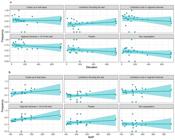
Relationship between the relative frequency values of Fissidens traits and the altitudinal gradient (A) and mean annual precipitation (MAP; B) in the study area.
Discussion
This study examined a segment of the Serra do Mar, providing a case study that reflects the responses of the Fissidens community to environmental gradients within this specific region. We acknowledge that the Serra do Mar can exceed 2200 m in elevation and recognize that broader elevational gradients may reveal additional ecological patterns and conditions that could further influence the functional diversity and composition of this group. Functional traits of organisms are linked to their performance in the environment and to the overall structure, function, and diversity of ecosystems (Patiño et al., 2022). Therefore, understanding how the composition of functional traits in the community changes with the environment is key to understanding the role of climate in ecology (Wang et al., 2019). The functional diversity and composition of the Fissidens community in the southeastern Atlantic Forest exhibited contrasting responses to environmental gradients. On one hand, functional diversity showed significant variations along these gradients, with positive associations between functional richness and the mean annual precipitation gradient and between functional dispersion and the altitudinal gradient. On the other hand, no relationship was observed between the relative frequency of traits and the environmental variables; however, general patterns of increased frequency with higher precipitation and decreased frequency with higher elevation were identifiable for most traits. These results highlight the importance of understanding the functional diversity and functional composition of bryophytes along environmental gradients, especially in highly diverse and endangered vegetation domains such as the Brazilian Atlantic Forest. This knowledge can help us to predict how bryophytes will respond to climate change and other environmental stressors, identify the bryophyte species that are most important for ecosystem functioning, and develop management strategies for conserving bryophyte diversity.
In accordance with the findings of Bordin & Yano (2013), who observed morphological variations in some species associated with higher elevations, our study provides support for the assumption that more favorable environmental conditions for bryophytes contribute to increased functional diversity in Fissidens within the southeastern Atlantic Forest. This is evident from the trend toward a positive relationship we observed between functional richness and precipitation and between functional dispersion and the altitudinal gradient. Functional richness represents the amount of functional space filled by the community, indicating resource use, and is considered a robust index underlying community assembly rules (Wang et al., 2019). In our study, the increase in functional richness with precipitation reflects an increase in the functional space occupied by the community of Fissidens influenced by precipitation. In fact, in plots with high precipitation levels, there was a wide range of traits in the community. In a single community, we found species without papillae, with limbidium present on all laminae, limbidium restricted to the vaginant lamina, and sexual system with sex segregation such as F. anguste-limbatus; species with papillae, without limbidium, and with a cosexual sexual system such as F. pseudoplurisetus; and species with a myriad of trait combinations varying between these two configurations. These trait variations expand the volume of the functional space, indicating higher niche availability for Fissidens in the study area. Similar results were found by Henriques et al. (2017) in the Azores archipelago, where functional richness increased with elevation.
The wide functional space occupied by the Fissidens community was also reflected in the functional dispersion. This index describes optimal plant strategies because it captures how abiotic and biotic factors influence the community structure (Daniel & Rooney, 2022). In our study, higher elevations were associated with high functional dispersion, indicating an increase in viable morphological traits and strategies under the environmentally favorable conditions provided by factors associated with elevation, such as low temperature. In other words, our results suggest that the niche space increases with the availability of resources at high elevations, leading to higher trait dispersion (Rabosky & Hurlbert, 2015). In a precipitation gradient in California studied by Cornwell & Ackerly (2009) and in altitudinal transects in a high-elevation region of western Himalaya studied by Thakur & Chawla (2019), the same directionality was observed in functional diversity. Elevation is recognized as a pivotal factor in the distribution and richness of bryophytes in tropical ecosystems (Amorim et al., 2017; Araújo et al., 2022; Batista et al., 2021; dos Santos & Costa, 2010; Thakur & Chawla, 2019). The present study indicates that elevation drives the functional diversity of Fissidens in the southeastern Atlantic Forest.
The trends in the functional diversity of Fissidens suggest that functionally more diverse species should co-exist (divergence in plant functioning) at higher elevations and precipitation levels. Considering that functionally diverse communities are more stable and functional diversity decreases along gradients of climatic stress (Cornwell & Ackerly, 2009; Gazol et al., 2017; Thakur & Chawla, 2019), the present data have implications for biodiversity conservation and can be used to evaluate the impact of climate change on communities. Climate change may affect the functional diversity of Fissidens communities in highly threatened environments such as the Atlantic Forest. The Atlantic Forest has an intricate network of ecosystems and unique species, making it highly susceptible to climatic change, including rising temperatures, shifts in rainfall patterns, and extreme weather events (Buytaert et al., 2011). The interconnection between plant functional diversity and ecosystem stability is pivotal for the resilience of the Atlantic Forest. Understanding the implications of functional diversity trends for ecosystem functioning is fundamental for environmental conservation and management strategies. In the face of escalating climatic pressures, the adoption of proactive approaches is imperative to preserve ecosystems as precious as the Atlantic Forest (Taylor, 2008). Exploratory research of plant functional diversity not only deepens our understanding of complex ecological processes but also empowers us to anticipate and mitigate the adverse effects of climate change. By merging scientific knowledge and conservation efforts, we contribute to safeguarding the biological uniqueness of the Atlantic Forest and ensure a sustainable future for this region.
Regarding functional composition, the most representative traits of the community were sex segregation, costa ending at the leaf apex, limbidium restricted to the vaginant lamina, and limbidium present on all laminae. All these traits exhibited a trend toward a positive relation, although not statistically significant, with precipitation, with the exception of sex segregation, which showed no trend. However, sexual segregation has been previously reported as a key trait due to its strong phylogenetic signal (Suzuki et al., 2018, Budke et al., 2022). It is important to note that while sex segregation did not show a trend in relation to precipitation, its phylogenetic relevance makes it a distinguishing feature of the community. On the other hand, only limbidium present on all laminae showed a trend toward a positive relation with the altitudinal gradient. We found that the sexual system is not related to precipitation. Moisture is crucial for fertilization in mosses, particularly in dioicous species, because sperm have to swim to reach the female gametophytes and accomplish fecundation (Maciel-Silva & Pôrto, 2014). Our results indicate that the relative frequency of sexual systems in Fissidens from the southeastern Atlantic Forest is not related to moisture, making it a feature with a strong phylogenetic signal. The sexual system is an efficient character for distinguishing subgenera and sections within the Fissidentaceae (Suzuki et al., 2018), and its phylogenetic signal was reported by Budke et al. (2022), using comparative phylogenetic inferences.
Most Fissidens sampled in our study are at one of the two ends of the spectrum for limbidium morphology: either they presented limbidia on the laminae and the vaginant laminae or presented elimbate laminae. Special border cells are rare among tracheophytes, suggesting that their presence in bryophytes has a function that is not useful in tracheophytes (Glime, 2017). Functionally, the limbidium may be involved in the structural support of the leaf (Lowell, 1998), water storage (Daniels, 1998), and/or water movement (Glime, 2017). In Fissidens, the absence of limbidium is reconstructed as the ancestral condition for Fissidentaceae (Budke et al., 2022; Suzuki et al., 2018) , and it has been reported that species with limbidium throughout the laminae are associated with a wider niche breadth (Budke et al., 2022). One potential interpretation for our findings is that more extensive limbidia enable the species to survive across the wide variety of habitats provided by the altitudinal gradient, and be, therefore, more flexible in their niche choice (Budke et al., 2022). However, morphological traits in Fissidens and their functional roles have not been explored experimentally, and thus, further exploration in the context of taxonomy, functional ecology, and evolution is needed.
This study analyzed the influence of precipitation and elevation on the functional diversity of the genus Fissidens in the southeastern Atlantic Forest of Brazil. The results revealed that precipitation and elevation act in conjunction to define the functional diversity of these mosses. Furthermore, sexual segregation stood out as the most explanatory trait in the community. Surprisingly, although a trend toward positive relationships of functional traits was more frequently observed with precipitation than with elevation, none of the traits showed significant relationships with the studied environmental gradients. This finding may indicate that these traits are primarily influenced by genetic factors and do not depend entirely on the local environment (Henriques et al., 2017; Souza et al., 2020; Suzuki et al., 2018). Future experimental studies are essential for a better understanding of functional diversity patterns and the evolution of Fissidens. Investigating different environmental contexts will help identify the key ecological and evolutionary forces shaping their functional traits. Based on the findings of this study, we emphasize the importance of considering both environmental and genetic factors when assessing the functional diversity of Fissidens. Only with an integrated approach, we will be able to reach a more comprehensive understanding of the ecology and evolution of these organisms, which is crucial for the structure and maintenance of biodiversity in the Atlantic Forest.
Acknowledgments
We would like to thank the Serra do Mar Park Nuclei for allowing us to collect samples and for all the assistance provided during the collection process. WLS acknowledges funding from the Fundação de Amparo à Pesquisa do Estado de São Paulo - FAPESP (processes 2018/24397-0, 2021/09506-0), the Conselho Nacional de Desenvolvimento Científico e Tecnológico (CNPq), and the Fundação Coordenação de Aperfeiçoamento de Pessoal de Nível Superior (CAPES) - Finance Code 001, within the Graduate Program in Ecology at the Universidade Estadual de Campinas. Additional funds were provided by grants to FP from FAPESP (2020/02150-3; CBioClima 2021/10639-5), CNPq (productivity grant 302849/2021-1) and The American Bryological and Lichenological Society (ABLS) for the Anderson and Crum award for WLS to carry out the fieldwork.
References
-
Ah-Peng C, Flores O, Wilding N et al 2014. Functional Diversity of Subalpine Bryophyte Communities in an Oceanic Island (La Réunion). Arctic, Antarctic, and Alpine Research 46: 841-851. doi: 10.1657/1938-4246-46.4.841.
» https://doi.org/10.1657/1938-4246-46.4.841 -
Almeida FFM, Carneiro CDR. 1998. Origem e evolução da Serra do Mar. Revista Brasileira de Geociências 28: 135-150. doi: 10.25249/0375-7536.1998135150.
» https://doi.org/10.25249/0375-7536.1998135150 -
Amorim ET, Carvalho FA, Santos ND, Luizi-Ponzo AP. 2017. Distribution of Bryophytes in South-Eastern Brazil: An Approach on Floristic Similarity and Environmental Filtering. Cryptogamie, Bryologie 38: 3-17. doi: 10.7872/cryb/v38.iss1.2017.3.
» https://doi.org/10.7872/cryb/v38.iss1.2017.3 -
Araújo FMS, Costa LEN, Souza JPS, Batista WVSM, Silva MPP. 2022. Altitudinal gradient drives regional and local diversity and composition patterns of epiphyllous bryophytes in ecological refuges. Plant Biology 24: 292-301. doi: 10.1111/plb.13365.
» https://doi.org/10.1111/plb.13365 -
Asplund J, van Zuijlen K, Roos RE et al 2022. Divergent responses of functional diversity to an elevational gradient for vascular plants, bryophytes and lichens. Journal of Vegetation Science 33: e13105. doi: 10.1111/jvs.13105.
» https://doi.org/10.1111/jvs.13105 - Bastos CJP, Albertos B, Vilas Bôas SB. 1998. Bryophytes from some Caatinga areas in the state of Bahia (Brazil). Tropical Bryology 14: 69-75.
-
Bates D, Mächler M, Bolker B, Walker S. 2015. Fitting Linear Mixed-Effects Models Using lme4 Journal of Statistical Software 67: 1-48. doi: 10.18637/jss.v067.i01.
» https://doi.org/10.18637/jss.v067.i01 -
Bates D, Mächler M, Bolker B, Walker S. 2009. Fitting linear mixed-effects models using lme4. Journal of Statistical Software 67: 1-48. doi: 10.18637/jss.v067.i01.
» https://doi.org/10.18637/jss.v067.i01 -
Batista WVSM, Pôrto KC, Santos ND. 2021. Niche-based processes structure tropical bryophyte assemblages in phytogeographic domains of Brazil. Flora 282: 151875. doi: 10.1016/j.flora.2021.151875.
» https://doi.org/10.1016/j.flora.2021.151875 -
Batista WVSM, Santos ND. 2016. Can regional and local filters explain epiphytic bryophyte distributions in the Atlantic Forest of southeastern Brazil? Acta Botanica Brasilica 30: 462-472. doi: 10.1590/0102-33062016abb0179.
» https://doi.org/10.1590/0102-33062016abb0179 -
Bordin J, Pursell RA, Yano O. 2011. Fissidens pseudoplurisetus sp. nov. (Fissidentaceae, subgenus Aloma), from the Atlantic Forest, Brazil. The Bryologist 114: 785-789. doi: 10.1639/0007-2745-114.4.785.
» https://doi.org/10.1639/0007-2745-114.4.785 - Bordin J, Yano O. 2013. Fissidentaceae (Bryophyta) do Brasil. Instituto de Botânica de São Paulo 22: 351.
-
Budke JM, Patel NR, Consortium G, Wienhold MD, Bruggeman-Nannenga MA. 2022. Exploring morphological evolution in relation to habitat moisture in the moss genus Fissidens using molecular data generated from herbarium specimens. Journal of Systematics and Evolution 61: 868-889. doi: 10.1111/jse.12926.cg.
» https://doi.org/10.1111/jse.12926.cg -
Buytaert W, Cuesta-Camacho F, Tobón C. 2011. Potential impacts of climate change on the environmental services of humid tropical alpine regions. Global Ecology and Biogeography 20: 19-33. doi: 10.1111/j.1466-8238.2010.00585.x.
» https://doi.org/10.1111/j.1466-8238.2010.00585.x -
Carlucci MB, Marcilio-Silva V, Torezan JM. 2021. The Southern Atlantic Forest: Use, Degradation, and Perspectives for Conservation. In: Marques MCM, Grelle CEV (eds.). The Atlantic Forest: History, Biodiversity, Threats and Opportunities of the Mega-diverse Forest. Cham, Springer International Publishing. p. 91-111. doi: 10.1007/978-3-030-55322-7_5.
» https://doi.org/10.1007/978-3-030-55322-7_5 - Chao A. 1984. Nonparametric Estimation of the Number of Classes in a Population. Scandinavian Journal of Statistics 11: 265-270.
-
Chao A, Jost L. 2012. Coverage-based rarefaction and extrapolation: Standardizing samples by completeness rather than size. Ecology 93: 2533-2547. doi: 10.1890/11-1952.1.
» https://doi.org/10.1890/11-1952.1 -
Cornwell WK, Ackerly DD. 2009. Community assembly and shifts in plant trait distributions across an environmental gradient in coastal California. Ecological Monographs 79: 109-126. doi: 10.1890/07-1134.1.
» https://doi.org/10.1890/07-1134.1 - Cox CJ, Goffinet B, Wickett NJ, Boles SB, Shaw AJ. 2010. Moss diversity: A molecular phylogenetic analysis of genera. Phytotaxa 9: 175-195.
-
Daniel J, Rooney RC. 2022. Functional dispersion of wetland birds, invertebrates, and plants more strongly influenced by hydroperiod than each other. Ecosphere 13: e3971. doi: 10.1002/ecs2.3971.
» https://doi.org/10.1002/ecs2.3971 - Daniels AD. 1998. Ecological adaptations of some bryophytes of the Western Ghats. Journal of Ecobiology 10: 261-270.
-
de Oliveira SM, ter Steege H. 2015. Bryophyte communities in the Amazon forest are regulated by height on the host tree and site elevation. Journal of Ecology 103: 441-450. doi: 10.1111/1365-2745.12359.
» https://doi.org/10.1111/1365-2745.12359 -
dos Santos ND, da Costa DP. 2010. Altitudinal zonation of liverworts in the Atlantic Forest, Southeastern Brazil. Bryologist 113: 631-645. doi: 10.1639/0007-2745-113.3.631.
» https://doi.org/10.1639/0007-2745-113.3.631 -
dos Santos ND, da Costa DP, Kinoshita LS, Shepherd GJ. 2011. Aspectos brioflorísticos e fitogeográficos de duas formações costeiras de Floresta Atlântica da Serra do Mar, Ubatuba/SP, Brasil. Biota Neotropica 11: 425-438. doi: 10.1590/S1676-06032011000200040.
» https://doi.org/10.1590/S1676-06032011000200040 -
dos Santos ND, Costa DP. 2010. Phytogeography of the liverwort flora of the Atlantic Forest of southeastern Brazil. Journal of Bryology 32: 9-22. doi: 10.1179/037366810X12578498135634.
» https://doi.org/10.1179/037366810X12578498135634 -
dos Santos WL, Maciel-Silva AS, Pôrto KC. 2020. How do sexual expression, reproductive phenology and reproductive success relate to sexual systems in Fissidens Hedw. (Fissidentaceae)? A case study comparing two different sexual systems in mosses. Plant Biology 22: 573-581. doi: 10.1111/plb.13122.
» https://doi.org/10.1111/plb.13122 -
Fick SE, Hijmans RJ. 2017. WorldClim 2: New 1‐km spatial resolution climate surfaces for global land areas. International Journal of Climatology 37: 4302-4315. doi: 10.1002/joc.5086.
» https://doi.org/10.1002/joc.5086 -
Flora e Funga do Brasil. 2023. Rio de Janeiro Botanical Garden. https://floradobrasil.jbrj.gov.br 15 Jan. 2024.
» https://floradobrasil.jbrj.gov.br - Frahm J-P. 1985. A bryophyte in an ant garden. Bryological Times 34: 1.
-
Gabriel R, Bates JW. 2005. Bryophyte community composition and habitat specificity in the natural forests of Terceira, Azores. Plant Ecology 117: 125-144. doi: 10.1007/s11258-005-2243-6.
» https://doi.org/10.1007/s11258-005-2243-6 -
Gazol A, Moiseev P, Camarero JJ. 2017. Changes in plant taxonomic and functional diversity patterns following treeline advances in the South Urals. Plant Ecology & Diversity 10: 283-292. doi: 10.1080/17550874.2017.1400126.
» https://doi.org/10.1080/17550874.2017.1400126 -
Glime, JM. 2017. Water Relations: Plant Strategies. In: Glime, JM. Bryophyte Ecology. https://digitalcommons.mtu.edu/cgi/viewcontent.cgi?article=1037&context=bryo-ecol-subchapters 10 Aug. 2024.
» https://digitalcommons.mtu.edu/cgi/viewcontent.cgi?article=1037&context=bryo-ecol-subchapters -
Guerra J, Jiménez JA, Martínez M, Cano MJ. 2021. Fissidens eremicus (Fissidentaceae), a new pseudocryptic African-European species with dimorphic stems. Journal of Bryology 43: 266-276. doi: 10.1080/03736687.2021.1910435.
» https://doi.org/10.1080/03736687.2021.1910435 -
Harris I, Osborn TJ, Jones P, Lister D. 2020. Version 4 of the CRU TS monthly high-resolution gridded multivariate climate dataset. Scientific Data 7: 109. doi: 10.1038/s41597-020-0453-3.
» https://doi.org/10.1038/s41597-020-0453-3 -
Heinrichs J, Hentschel J, Feldberg K, Bombosch A, Schneider H. 2009. Phylogenetic biogeography and taxonomy of disjunctly distributed bryophytes. Journal of Systematics and Evolution 47: 497-508. doi: 10.1111/j.1759-6831.2009.00028.x.
» https://doi.org/10.1111/j.1759-6831.2009.00028.x -
Henriques DSG, Rigal F, Borges PAV, Ah-Peng C, Gabriel R. 2017. Functional diversity and composition of bryophyte water-related traits in Azorean native vegetation. Plant Ecology and Diversity 10: 127-137. doi: 10.1080/17550874.2017.1315839.
» https://doi.org/10.1080/17550874.2017.1315839 -
Holz I, Gradstein SR, Heinrichs J, Kappelle M. 2002. Bryophyte Diversity, Microhabitat Differentiation, and Distribution of Life Forms in Costa Rican Upper Montane Quercus Forest. The Bryologist 105: 334-348. doi: 10.1639/0007-2745(2002)105[0334:BDMDAD]2.0.CO;2.
» https://doi.org/10.1639/0007-2745(2002)105[0334:BDMDAD]2.0.CO;2 - INPE, SMA. 2001. Atlas dos remanescentes florestais da Mata Atlântica e ecossistemas associados no período de 1995-2000. São Paulo, Fundação SOS Mata Atlântica/INPE.
- Iwatsuki Z, Pursell RA. 1980. Axillary hyaline nodules in Fissidens (Fissidentaceae). Journal of the Hattori Botanical Laboratory 48: 329-335.
- Kassambara A. 2013. Ggplot2: Guide to create beautiful graphics in R. CreateSpace Independent Publishing Platform.
-
Laliberté E, Legendre P, Shipley B, Laliberté ME. 2014. Package FD: Measuring Functional Diversity from Multiple Traits, and Other Tools for Functional Ecology. R package version 1.0-12.3. https://cran.r-project.org/web/packages/FD/index.html 10 Aug. 2024.
» https://cran.r-project.org/web/packages/FD/index.html -
Lowell J. 1998. Drought-adaptation in the leaf-border of Atrichum undulatum Journal of Bryology 20: 227-230. doi: 10.1179/jbr.1998.20.1.227.
» https://doi.org/10.1179/jbr.1998.20.1.227 -
Machac A, Janda M, Dunn RR, Sanders NJ. 2011. Elevational gradients in phylogenetic structure of ant communities reveal the interplay of biotic and abiotic constraints on diversity. Ecography 34: 364-371. doi: 10.1111/j.1600-0587.2010.06629.x.
» https://doi.org/10.1111/j.1600-0587.2010.06629.x - Maciel-Silva AS, Pôrto KC. 2014. Reproduction in bryophytes. In: Ramawat KG, Merillon JM, Shivanna KR (eds.). Reproductive biology of plants. Boca Raton, CRC Press. vol. III, p. 57-81.
- Magill RE. 1990. Glossarium polyglottum bryologiae: A multilingual glossary for bryology. Saint Louis, Missouri Botanical Garden.
- Marschner I. 2011. glm2: Fitting generalized linear models with convergence problems. R Journal 3: 12-15.
-
Mason NWH, Mouillot D, Lee WG, Wilson JB. 2005. Functional richness, functional evenness and functional divergence: The primary components of functional diversity. Oikos 111: 112-118. doi: 10.1111/j.0030-1299.2005.13886.x.
» https://doi.org/10.1111/j.0030-1299.2005.13886.x -
McCleary JA. 1959. The Bryophytes of a Desert Region in Arizona. The Bryologist 62: 58-62. doi: 10.2307/3240412.
» https://doi.org/10.2307/3240412 -
Mota de Oliveira S, ter Steege H, Cornelissen JHC, Gradstein SR. 2009. Niche assembly of epiphytic bryophyte communities in the Guianas: A regional approach. Journal of Biogeography 36: 2076-2084. doi: 10.1111/j.1365-2699.2009.02144.x.
» https://doi.org/10.1111/j.1365-2699.2009.02144.x - Neter J, Wasserman W, Kutner MH. 1990. Applied statistical models. New York, McGraw-Hill/Irwin.
-
Oksanen J, Blanchet FG, Friendly M et al 2019. vegan: Community Ecology Package. R package version 2.9. https://CRAN.R-project.org/package=vegan 10 Aug. 2024
» https://CRAN.R-project.org/package=vegan -
Oliver MJ. 2005. Desiccation Tolerance in Bryophytes: A Reflection of the Primitive Strategy for Plant Survival in Dehydrating Habitats? Integrative and Comparative Biology 45: 788-799. doi: 10.1093/icb/45.5.788.
» https://doi.org/10.1093/icb/45.5.788 -
Pardow A, Hartard B, Lakatos M. 2010. Morphological, photosynthetic and water relations traits underpin the contrasting success of two tropical lichen groups at the interior and edge of forest fragments. AoB Plants 2010: plq004. doi: 10.1093/aobpla/plq004.
» https://doi.org/10.1093/aobpla/plq004 -
Patiño J, Bisang I, Goffinet B et al 2022. Unveiling the nature of a miniature world: A horizon scan of fundamental questions in bryology. Journal of Bryology 44: 1-34. doi: 10.1080/03736687.2022.2054615.
» https://doi.org/10.1080/03736687.2022.2054615 -
Patiño J, González-Mancebo JM. 2011. Exploring the effect of host tree identity on epiphyte bryophyte communities in different Canarian subtropical cloud forests. Plant Ecology 212: 433-449. doi: 10.1007/s11258-010-9835-5.
» https://doi.org/10.1007/s11258-010-9835-5 -
Peñaloza-Bojacá GF, de Oliveira BA, Araújo CAT, Fantecelle LB, dos Santos ND, Maciel-Silva AS. 2018. Bryophytes on Brazilian ironstone outcrops: Diversity, environmental filtering, and conservation implications. Flora: Morphology, Distribution, Functional Ecology of Plants 238: 162-174. doi: 10.1016/j.flora.2017.06.012.
» https://doi.org/10.1016/j.flora.2017.06.012 -
Pereira Alvarenga LD, Pôrto KC. 2007. Patch size and isolation effects on epiphytic and epiphyllous bryophytes in the fragmented Brazilian Atlantic forest. Biological Conservation 134: 415-427. doi: 10.1016/j.biocon.2006.08.031.
» https://doi.org/10.1016/j.biocon.2006.08.031 -
Perrigo A, Hoorn C, Antonelli A. 2020. Why mountains matter for biodiversity. Journal of Biogeography 47: 315-325. doi: 10.1111/jbi.13731.
» https://doi.org/10.1111/jbi.13731 -
Pharo EJ, Zartman CE. 2007. Bryophytes in a changing landscape: The hierarchical effects of habitat fragmentation on ecological and evolutionary processes. Biological Conservation 135: 315-325. doi: 10.1016/j.biocon.2006.10.016.
» https://doi.org/10.1016/j.biocon.2006.10.016 - Proctor MCF. 1979. Structure and eco-physiological adaptation in bryophytes. In: Clarke GCS, Duckett JG (Eds.). Bryophyte systematics. London, Academic Press. p. 479-509.
-
Proctor MCF. 2000. The bryophyte paradox: Tolerance of desiccation, evasion of drought. Plant Ecology 151: 41-49. doi: 10.1023/A:1026517920852.
» https://doi.org/10.1023/A:1026517920852 -
Proctor MCF, Oliver MJ, Wood AJ et al 2007. Desiccation-tolerance in bryophytes: A review. The Bryologist 110: 595-621. doi: 10.1639/0007-2745(2007)110[595:DIBAR]2.0.CO;2.
» https://doi.org/10.1639/0007-2745(2007)110[595:DIBAR]2.0.CO;2 - Pursell RA, Vital DM. 1986. Distributional adumbrations of Fissidens in the Neotropics. The Bryologist 89: 300-301.
- Pursell RA. 1990. Fissidens in the Neotropics. The Bryologist 93: 193-200.
- Pursell RA. 2007. Fissidentaceae, Flora Neotropica Monograph 101. New York, The New York Botanical Garden Press.
-
QGIS Development Team. 2023. QGIS Geographic Information System. Version 3.32.0. Open Source Geospatial Foundation. https://www.qgis.org/ 10 Aug. 2024.
» https://www.qgis.org/ - Rabosky DL, Hurlbert AH. 2015. Species richness at continental scales is dominated by ecological limits. The American Naturalist 185: 572-583.
-
Rodríguez-Quiel EE, Kluge J, Mendieta-Leiva G, Bader MY. 2022. Elevational patterns in tropical bryophyte diversity differ among substrates: A case study on Baru volcano, Panama. Journal of Vegetation Science 33: e13136. doi: 10.1111/jvs.13136.
» https://doi.org/10.1111/jvs.13136 -
RStudio Team. 2021. RStudio: Integrated Development Environment for R. RStudio, PBC. https://www.rstudio.com/ 10 Aug. 2024.
» https://www.rstudio.com/ -
Santi E, Bacaro G, Rocchini D et al 2016. Methodological issues in exploring cross-taxon congruence across vascular plants, bryophytes and lichens. Folia Geobotanica 51: 297-304. doi: 10.1007/s12224-016-9265-9.
» https://doi.org/10.1007/s12224-016-9265-9 -
Santos WL, Bordin J, Pôrto KC, Pinheiro F. 2023a. Life-history traits and density dependence in metapopulations of a tropical moss: A monoicous species that is almost dioicous. Oecologia 201: 287-298. doi: 10.1007/s00442-022-05303-8.
» https://doi.org/10.1007/s00442-022-05303-8 -
Santos WL, Pôrto KC, Bordin J, Pinheiro F, Bisang I. 2023b. The spatial arrangement of sexes is related to reproductive allocation in mosses: A comparative study of reproductive allocation in three different monoicous sexual systems. Annals of Botany 131: 885-896. doi: 10.1093/aob/mcad052.
» https://doi.org/10.1093/aob/mcad052 -
Schleuter D, Daufresne M, Massol F, Argillier C. 2010. A user’s guide to functional diversity indices. Ecological Monographs 80: 469-484. doi: 10.1890/08-2225.1.
» https://doi.org/10.1890/08-2225.1 -
Silva JB, Santos ND, Pôrto KC. 2014. Beta-diversity: Effect of geographical distance and environmental gradients on the rocky outcrop bryophytes. Cryptogamie, Bryologie 35: 133-163. doi: 10.7872/cryb.v35.iss2.2014.133.
» https://doi.org/10.7872/cryb.v35.iss2.2014.133 -
Silva MPP, Pôrto KC. 2010. Spatial structure of bryophyte communities along an edge-interior gradient in an Atlantic Forest remnant in Northeast Brazil. Journal of Bryology 32: 101-112. doi: 10.1179/037366810X12578498136110.
» https://doi.org/10.1179/037366810X12578498136110 -
Sloan S, Jenkins CN, Joppa LN, Gaveau DLA, Laurance WF. 2014. Remaining natural vegetation in the global biodiversity hotspots. Biological Conservation 177: 12-24. doi: 10.1016/j.biocon.2014.05.027.
» https://doi.org/10.1016/j.biocon.2014.05.027 -
Souza JPS, Silva MPP, Pôrto KC. 2020. Spatial distribution of functional traits of bryophytes along environmental gradients in an Atlantic Forest remnant in north-eastern Brazil. Plant Ecology & Diversity 13: 93-104. doi: 10.1080/17550874.2019.1709227.
» https://doi.org/10.1080/17550874.2019.1709227 -
Stark LR, Brinda JC. 2013. An experimental demonstration of rhizautoicy, self-incompatibility, and reproductive investment in Aloina bifrons (Pottiaceae). The Bryologist 116: 43-52. doi: 10.1639/0007-2745-116.1.43.
» https://doi.org/10.1639/0007-2745-116.1.43 -
Suzuki T, Inoue Y, Tsubota H. 2018. Molecular phylogeny of the genus Fissidens (Fissidentaceae, Bryophyta) and a refinement of the infrageneric classification. Molecular Phylogenetics and Evolution 127: 190-202. doi: 10.1016/j.ympev.2018.05.020.
» https://doi.org/10.1016/j.ympev.2018.05.020 -
Tabarelli M, Pinto LP, Silva JMC, Hirota MM, Bedê LC. 2005. Desafios e oportunidades para a conservação da biodiversidade na Mata Atlântica brasileira. Megadiversidade 1: 132-138. doi: 10.1590/S0102-05362005000400034.
» https://doi.org/10.1590/S0102-05362005000400034 - Taylor P. 2008. An ecological approach to international law: Responding to the challenges of climate change. London, Routledge.
-
Thakur D, Chawla A. 2019. Functional diversity along elevational gradients in the high altitude vegetation of the western Himalaya. Biodiversity and Conservation 28: 1977-1996. doi: 10.1007/s10531-019-01728-5.
» https://doi.org/10.1007/s10531-019-01728-5 -
Vieira BC, Gramani MF. 2015. Serra do Mar: The Most “Tormented” Relief in Brazil. In: Vieira BC, Salgado AAR, Santos LJC (eds.). Landscapes and Landforms of Brazil. Dordrecht, Springer. p. 285-297. doi: 10.1007/978-94-017-8023-0_26.
» https://doi.org/10.1007/978-94-017-8023-0_26 -
Villéger S, Mason NWH, Mouillot D. 2008. New multidimensional functional diversity indices for a multifaceted framework in functional ecology. Ecology 89: 2290-2301. doi: 10.1890/07-1206.1.
» https://doi.org/10.1890/07-1206.1 -
Wang L, Zhao L, Song X et al 2019. Morphological traits of Bryum argenteum and its response to environmental variation in arid and semi-arid areas of Tibet. Ecological Engineering 136: 101-107. doi: 10.1016/j.ecoleng.2019.06.013.
» https://doi.org/10.1016/j.ecoleng.2019.06.013 - Watson W. 1914. Xerophytic Adaptations of Bryophytes in Relation to Habitat. The New Phytologist 13: 149-169.
-
Zuur AF, Ieno EN, Elphick CS. 2010. A protocol for data exploration to avoid common statistical problems. Methods in Ecology and Evolution 1: 3-14. doi: 10.1111/j.2041-210X.2009.00001.x.
» https://doi.org/10.1111/j.2041-210X.2009.00001.x
Supplementary Material
The following online material is available for this article:
Table S1.
-
Data availability:
All the data supporting the results of this study are available at the following link: https://doi.org/10.48331/scielodata.XL4V1S
All the data supporting the results of this study are available at the following link: https://doi.org/10.48331/scielodata.XL4V1S