 Diversity and use of non-conventional food plants in quilombola communities in northeast Brazil
Abstract
Studies on the cultural importance of unconventional food plants (UFP) have been scarce, in contrast to a vast literature focusing on medicinal plants. We adopted the widely used criterion of cultural importance to study UFP used in two quilombola communities in Bahia State, northeastern Brazil. Free-listing was applied to identify known/used food plants in the communities, and semi-structured interviews were carried out to collect information about them. Statistical analyses were performed using a correlation matrix of importance values. A random sample of the numbers of citations per species indicated a strong correlation between cultivated and wild species. The average ages of the two communities were similar, but indicated an influence of age on their knowledge of non-conventional plants and their consumption. Both wild and cultivated species have relevant cultural importance. Deforestation, the lack of availability of unconventional food plants, and the ease of access to conventional and industrialized foods are all directly related to the low consumption of UFP, pointing to a lack of nutritional and health information in those communities.
Keywords:
ethnobotany; quilombolas; maroon; seasonally dry tropical forest; wild edible plants
Introduction
Traditional and indigenous peoples recognize the importance of biodiversity conservation. Afro-descendant communities use many plant resources to guarantee their survival (such as foods, medicines, forage, construction, in rituals, and others) based on knowledge acquired from their ancestors, while at the same time managing and conserving those resources as well as their culture (Castro, 2006; Cavalcanti & De Souza, 2022). Afro-descendant communities, treated here as quilombola remnant communities (CQR), are found in several countries in Latin America, where they are known by names such as quilombos or mocambos (Brazil), palenques (Colombia), cumbes (Venezuela), marrons (Haiti and French Caribbean Islands), cimaronaje (Cuba and Puerto Rico), and maroons (Jamaica, English Caribbean, Suriname, and Southern USA) (Gomes, 2015; Santana et al., 2022). CQR are composed of self-declared descendants of enslaved peoples brought to the New World from the 16th century onwards (Leite, 2000). In their struggle for survival they demonstrated a history of resistance, but also of suffering, which persists today in the form of prejudice and discrimination, reducing them to inhabitants without any full enjoyment of their rights (Santos, 2016; Dos Santos, 2016; Leite, 2000). They often lack land ownership, health, educational and employment opportunities, and much more, leaving them in vulnerable situations (Mota et al., 2021). The absence of territorial rights for quilombola communities corresponds to the loss and maintenance of specific and unique forms of use of natural resources and coexistence with nature (Marés, 2021).
Ethnobotanical research in CQR has increased significantly in recent years (Ávila et al., 2015; Conde et al., 2017; Santos et al., 2019), although focusing mainly on medicinal plant surveys (Mota & Dias, 2012; Silva et al., 2012 a ; Ferreira et al., 2014; Santana et al., 2022) through the use of different approaches and methodological tools (Gomes & Bandeira, 2012; Silva et al., 2012b; De Santana et al., 2016; Zank et al., 2016; Pereira & Coelho-Ferreira, 2017). Ethnobotanical research focusing on wild food plants, treated as unconventional food plants (UFP), however, is more recent in Brazil and incipient in the semiarid region of that country (Campos et al., 2015; Gomes et al., 2020; Barbosa et al., 2021; Medeiros et al. 2021a; Medeiros et al. 2021b), especially in CQR (Ávila et al., 2015; Conde et al., 2017; Santos et al., 2019).
Wild food plants represent a biocultural heritage of the societies that recognize and consume them. They are important nutritional components for many people throughout the world, and the popularization of those plants has the potential to contribute to food and nutritional diversity (Medeiros et al., 2021b). Some of those plants are also reported to be medicinal, thus increasing the importance of traditional knowledge of plant uses (Medeiros et al., 2021b). Wild plant resources are important to human health and can reduce the vulnerability of socioecological systems and increase food security in marginalized communities (Berkes et al., 2000; Berkes et al., 2003; Hanazaki et al., 2013). In poor and developing countries, such as Brazil, modern changes in eating habits have been identified as being responsible for malnutrition and obesity (Cordeiro et al., 2014).
CQR face numerous challenges to their survival, and while nutrition and health are basic aspects of life, afro-descendant communities have often only had limited access to the benefits of modern society, and thus turned to the use of natural resources to resolve many problems - consolidating a vast knowledge concerning their uses over many generations (Santos et al., 2019; Marés, 2021). Traditional communities therefore have much to teach non-traditional populations about management practices consistent with biodiversity preservation (Melo & Barzano, 2021).
Ethnoscience studies, however, have indicated the gradual abandonment of traditional practices and a distancing from cultural roots by afro-descendant communities in Brazil due to the many challenges to their livelihoods, especially in terms of land ownership and invasive cultural influences (Santana et al., 2022). Increasing deforestation, the growth of urban areas, and access to modern (but often inappropriate) technologies have altered the habits of many quilombola communities, especially in regards to the use of native plants (Reyes-García et al., 2005; Zank et al., 2016). The erosion of traditional knowledge is associated with the abandonment of resource uses and lifestyle changes (Hunn, 1999; Reyes-García et al., 2005; Marchese et al., 2009). In terms of nutrition, easy access to processed foods has altered eating habits (OPAS, 2018) and triggered malnutrition and the onset of diseases such as hypertension, type 2 diabetes and obesity (Dauchet et al., 2006; Knai et al., 2006; Brasil, 2007).
Our goal was therefore to contribute knowledge concerning wild food plants and the dynamics of eating habits in quilombola communities, as well as to identify signs of cultural erosion and the loss of sociobiodiversity. We interviewed local specialists about the food plants used in two quilombola communities to determine their origins, habits, and management, and to examine relations between those species and the factors that interfere with the transmission of local knowledge. By attempting to better understand food security vulnerability in these communities, this research is in line with the Sustainable Development Goals: Zero Hunger and Sustainable Agriculture, Health and Well-being presented in the 2030 Agenda of the United Nations (2015).
Material and Methods
Study area
The focal communities of this study were Matinha dos Pretos (12°46’40”S x 38°55’08”W) in the municipality of Feira de Santana and Paus Altos (12°20’40”S x 39°07’08”W)) in the municipality of Antônio Cardoso, both in Bahia State, Brazil (Fig. 1). The regional climate there is tropical dry to semiarid (Andrade et al., 2020), with an average annual temperature of 23 °C and an annual rainfall rate of 800 to 1,100 mm (Bahia, 2015). The regional vegetation is predominantly seasonally dry tropical forest included within the Caatinga domain, one of the world's most biodiverse and threatened tropical biomes (Queiroz et al., 2017).

Map of the study region and quilombola communities of Paus Altos, municipality of Antonio Cardoso, and Matinha dos Pretos, municipality of Feira de Santana, Bahia State, northeastern Brazil.
The community of Matinha dos Pretos (MP) has approximately 250 inhabitants and Paus Altos (PA) approximately 270. There is a high degree of cultural proximity between these quilombola communities, reflecting their similar sociodemographic characteristics. Subsistence agriculture is practiced in both communities, with their main source of income coming from Federal pensions (elderly) and assistance programs (such as “Bolsa Família”). Only a few residents are formally employed in commerce or on nearby farms. MP has a small community industry producing fruit pulp. The residents of PA practice beekeeping, the home production of sweets, with recent implementations of agroforestry efforts to raise poultry and plant vegetables. Different levels of education exist within both communities, with some people having no schooling at all, while others have completed their basic studies or even gone on to acquire higher degrees. In terms of their religious beliefs, there is religious syncretism with a prevalence of Christianity branching into Catholics and Neo-Pentecostals, in addition to adherents of African matrix religions practices.
Data collection
Visits to the communities were undertaken from May/2021 to July/2023. During our initial visits, contacts were made through informal conversations with community leaders. Those leaders then facilitated meetings with additional members of the communities and indicated possible research participants. Meetings were held with community associations to present the project, explain our research objectives, and request local consent and cooperation. After consent and collective acceptance, interviews began with local specialists indicated by the community leaders. Based on these semi-structured interviews (see Albuquerque et al., 2010), lists of non-conventional and wild food plant species were assembled. Based on that information, a questionnaire was developed to explore socioeconomic (age, gender, education, income sources) and ethnobotanical factors (plant parts used, ways of preparing the cited species, ease of access to a given resource) related to the knowledge of UPV to present to other participants from both communities.
The classification of unconventional food use of the aforementioned botanical species was carried out in accordance with the concept of unconventional food plants (UFP) adopted by Kinupp and Lorenzi (2014), recognizing the implications and limitations of this concept highlighted by them. According to these authors, UFP are plants that have one or more categories of food uses, even if they are not common for the vast majority of the population of a region.
Three criteria were used to select the study participants: over 18 years-old, self-declared quilombola residents, and agreement to participate in the research. The inclusion criterion did not select based on the total time spent living in the study communities, meaning that some members may have lived away from Matinha dos Pretos and Paus Altos for parts of their lives. A total of 33 inhabitants of Paus Altos and 43 of Matinha dos Pretos participated in the study (16 men and 60 women, between the ages of 18 and 95). According to community leaders the participants in our study corresponded to more than 10% of the populations of both communities.
Ethical aspects of the research
Each interviewee who agreed to participate in the research was asked to read and sign an Informed Consent Form (ICF) that had been evaluated and approved by the Research Ethics Committee (REC) of the State University of Feira de Santana (CAE: 37655120.0.0000.0053). The study was also registered with the National System for the Management of Genetic Heritage and Associated Traditional Knowledge (SISGEN) for access to local intangible knowledge (Registration A1FAF5F).
Due to the SARS-CoV-2 pandemic, initial contact with community leaders took place by telephone. The first on-site visits were made only after vaccination of the traditional communities involved in the study, with prevention measures being adopted in accordance with the protocols of the Ministry of Health and the World Health Organization (WHO), which recommended the use of face masks, the social distancing with outdoor meetings and conversations and hygiene with the use of alcohol gel.
Botanical collections
Botanical species were classified according to their habit, biogeographical origin (native, exotic or naturalized), and management system (wild or cultivated). Botanical material was collected during interviews and visits to the communities, and was subsequently identified and incorporated into the State University of Feira de Santana herbarium (HUEFS). Botanical identifications were made based on the technical literature, comparison with herbarium specimens, and consultations with specialists in taxonomy. For the species mentioned that were not collected during the research period, we used images from the internet that were presented to the participants. Some corresponding images were not found, making identification impossible.
Data analysis
The plants were classified, based on the perceptions of the interviewees, regarding their availability (ease of access), cultural importance, and forms of use. The Importance Value technique was used (with adaptations following by Byg & Balslev, 2001) to determine the cultural importance of each species to the study communities, based on the formula: IVs=nis/n, where: nis= number of informants who cited the species “s”; n= total number of informants. The most cited plants were used for these analyses, and the correlation matrix was based on a random sample of 20 participants per community. All statistical analyses were performed using R software, version 3.4.1 (R Core Team, 2017).
Results
Botanical and ecological aspects of communities
A total of 91 edible species were recorded, 53 of which were unconventional food plants (UFP). The species identified are distributed in 36 families and 70 botanical genera (Table 1). The most representative botanical families were Solanaceae and Lauraceae (7 spp. each), Cucurbitaceae, Fabaceae and Anacardiaceae (6 spp.), and Myrtaceae (5 spp.). Four of the ethno-species mentioned by the interviewees (“trapiá”, “branganzela”, “folha-larga” and “yam”) were not observed or collected during our field visits, making their accurate identifications impossible.
Food plants used in the quilombola remnant communities Matinha dos Pretos and Paus Altos, Bahia, Brazil. Unconventional food plants (UFP); Habit: herb (H), shrub (S), tree (T), climbing (Cl), creeper (Cr), epiphyte (Ep); Origin: exotic (E), native (N), naturalized (Nd); Management: cultivated (C), wild (W); Part used; HUEFS Collection (Nascimento JOV).
The principle recorded habit among the nonconventional food species was arboreal (38.48%), followed by herbaceous (29.67%), shrubby (13.18%), climbing (12.08%), creeping (3.29%), and epiphytic (1.09%). In terms of their biogeographical origins, native (38.46%) and exotic (36.26%) species occurred in similar proportions, and in greater quantities, than naturalized taxa (20.87%). In terms of their management, cultivated species (63.73%) were predominant as compared to wild species (36.26%). All of the different plant organs were mentioned as being used, with fruits having the highest prevalence (60.43%), followed by leaves (26.37%), seeds (9.89%), tubers (6.59%), roots and flowers (2.19%). As for the method of preparation, most (60.43%) were consumed in natura (Table 2, Fig. 2).

Ethnobotanical characteristics of the food plants mentioned in the Paus Altos and Matinha dos Pretos quilombola remnant communities, Bahia State, Brazil. Subtitle: N (native); E (exotic); Nd (naturalized); T (tree); S (shrubby); H (herb); Cl (climbing); Cr (creeping); Ep (epiphyte); W (wild); C (cultivaded).
When considering only UFP, we observed the prevalence of tree (41.05%) and herbaceous (28.31%) species, followed by vines (15.09%), shrubs (11.32%), creepers and epiphytes (1.88%). Regarding food plants in general, the data were different in relation to their origins and management (Fig. 2). In regards to their origins, native species (52.83%) prevailed over exotic (18.86%) and naturalized (13.20%) species, as well as over wild (62.26%) and cultivated taxa (37.73%) (Fig. 2).
UFP and socioeconomic and ethnobotanical aspects of the communities
Thirty-nine UFP species were used by both communities (Fig. 3). Thirteen species were used exclusively by the inhabitants of Paus Altos, while only one species was cited exclusively in Matinha (Fig. 3). The most cited UFP species in both communities were bredo, língua-de-vaca, licuri, umbu, and jackfruit seeds, all cultivated. Among the most cited cultivated species were andu, mangalô, and cherry tomatoes. The graph in Fig. 4 lists the UFP species cited by the communities according to the average ages of the interviewees. It was possible to observe that the PA community cited the greatest number of species.

Data representing the unconventional food plants (UFP) cited in the Paus Altos and Matinha dos Pretos quilombola remnant communities, Bahia State, Brazil, focusing on the plants unique to each one.

Data related to the ages and numbers of species cited by participants from the Matinha dos Pretos and Paus Altos quilombola communities, Bahia State, Brazil.
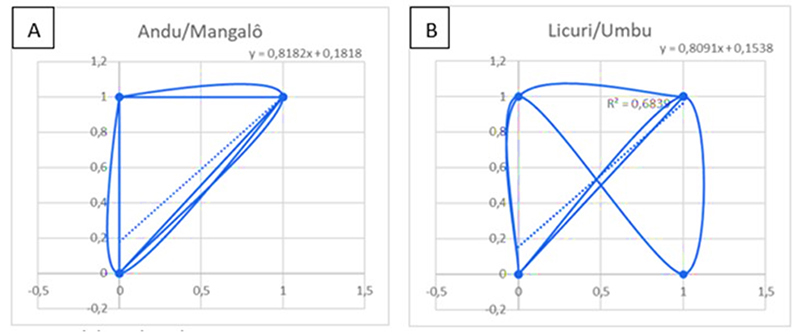
These results point to consumption/cultivation correlations between the UFPs analyzed. Cherry tomatoes showed a weak, regular or strong correlation with the other PFUs (Table 2). Mangalô and andu, both cultivated species, showed a strong correlation with each other, as well as with the wild species licuri and umbu (Table 2, Fig. 5). The UFP consumption and cultivation behaviors of the Paus Altos (PA) and Matinha dos Pretos (MA) communities (Table 3) indicated that bredo and lígua-de-vaca were among the most important UFP species in both communities. Umbu, licuri and cherry tomatoes were identified as very important in Paus Altos.
Correlation matrix obtained from the analysis of some unconventional food plants cited in the Matinha dos Pretos and Paus Altos quilombola remnant communities, Bahia State, Brazil.
Cultural importance of unconventional food plants cited in the the Matinha dos Pretos and Paus Altos quilombola remnant communities, Bahia State, Brazil.

Correlation between the unconventional food plants species of andu and mangalô (A), licuri and umbu (B) for the Matinha dos Pretos and Paus Altos communities, Bahia state, Brazil.
Discussion
Botanical and ecological aspects of communities
Local knowledge about 53 UFP species and their recorded uses, as identified in the MP and PA communities studied here, is quite notable when compared with the 83 botanical PANC species listed in the List of Food Species of Brazilian Biodiversity published by the Environmental Ministry (CRN5, 2018). On the other hand, this number is relatively small in relation to the estimated number of food species for Brazil, which is 5,000 spp (Kinupp & Lorenzi, 2014).
The main botanical families consumed in both of the quilombo communities have been commonly cited in ethnobotanical studies of UFP in the Brazilian semiarid region (Campos et al., 2015; Lima et al., 2022). Some species of these families are considered emergency foods (Chaves et al., 2019), as was also observed in the present study. Ethnospecies such as língua-de-vaca, bredo, chupa-chupa and licuri have been essential for survival in the PA community, as evidenced in the following conversations:
“There have been hard times, good lady. I remember when we took a small ceramic bowl and a bit of salt and went into the woods to gather some licuri, chupa-chupa and maracujá verde that we could eat. [...] That was our food for the day.” Sra. C, 76 anos, Paus Altos.
“Things are good today. People can choose what to eat.” Srta. P, 79 anos, Paus Altos.
The prevalence of native UFP species that are managed in the wild, as cited in the present study, is consistent with reports of other ethnobotanical studies in Brazil (Barbosa et al., 2021; Medeiros et al., 2021 a ). The preponderance of trees for providing edible resources can be explained by their ready availability and the fact that their fruits and seeds can very often be consumed in natura, as ease of access and the way a resource can be consumed influence food preferences and their other uses (Barbosa et al., 2021).
UFP and socioeconomic and ethnobotanical aspects of the communities
The comparison of the ethnobotanical repertoires of UFP species between the two quilombo communities revealed that the inhabitants of the PA community, which is closer to a forest, knew and used more species. That greater ease of access to plant resources apparently influenced their knowledge of UFP, as was likewise observed in a study of medicinal plants in a quilombola community in the Recôncavo Bahia (Santana et al., 2022). The authors of that study observed that the community’s proximity to the forest and relative isolation from more urbanized areas influenced local knowledge about medicinal plants.
Studies carried out in other quilombola communities with different degrees of urbanization, however, have generally shown that urbanization does not significantly influence their ethnobotanical repertoires (Ávila et al., 2015; Gomes et al., 2020), with other factors apparently exerting greater influence. In the present study, the participants from the community (AP) with the largest UFP repertoire were slightly older on the average, indicating age as a possible factor influencing a greater accumulated knowledge. This corroborates other studies indicating several socioeconomic factors as favoring the detention of a more detailed knowledge of plants - especially age and gender (Santana et al., 2022). Additionally, some plants cited as edible in the region are unknown to younger community members, and there are indications of local species extinctions (Campos et al., 2015).
Another factor that may influence a person’s knowledge of UFP is their length of permanence in the community, as most respondents claim to have lived in both communities for a long time. Age and length of residence have been noted in other studies as important factors for acquiring local knowledge of plant resources (Hanazaki et al., 2013; Campos et al., 2015).
Regarding the cultural importance of the species, the high popularity of bredo and língua-de-vaca in both communities is probably due to ecological factors, such as both being herbaceous species, their spontaneous growth, easy access to them, and their nutritional potential (Barbosa et al., 2021). Andu and mangalô, cultivated plants that are resistant to semiarid conditions can substitute conventional beans and thus guarantee food security. Low-maintenance perennial species such as umbu, licuri and jackfruit are also among the UFP having high cultural importance, reflecting their accessibility and availability (Campos et al., 2015). These tree and palm species can be consumed in natura (except for jackfruit seeds), which also helps explain their high citation rates. Such ecological and cultural factors help explain the preservation and cultivation of important species in gardens and backyards (Suto & Voeks, 2021). The preservation of cultural identity also appears as an important factor in the use of UFP species, as was observed in an ethnobotanical study of the gardens of Japanese-American expatriates (Suto & Voeks, 2021).
These findings reinforce the view that resource availability and ease of access are important factors for modeling knowledge of non-conventional and wild food plants. Availability, considered here to be related to management, indicates that despite the fact that few areas of caatinga remain still fully intact, it is still possible to extract varied renewable resources from them. Likewise, wild plants, such as bredo, are widely conserved in gardens and backyards as a way of having food resources close at hand, and are examples of cultural preservation (Almada & Souza, 2017).
Wild food species derived from both the local fauna and flora are part of the collective memories of families and populations, especially in rural areas, and reports of children collecting natural resources on their own are quite common (Oliveira, 2014; Ferreira & Franco, 2017). These forays, generally without adult supervision, serve to gather food, but also train younger generations in the arts of survival. By foraging, they learn to use simple available instruments (such as sticks, hooks and rocks), to collect and feed on natural resources - thus preserving cultural repertoires (Faustino & Mota, 2016).
However, according to the interviewees, foraging for food is rarely practiced now in the quilombo communities studied here. The organization of those communities into associations, the availability of government assistance programs, and easy access to urban centers have improved the general quality of life in quilombos (Marés, 2021). In the past, the availability of wild food plants meant survival, but such resources are of little interest now to young people or are even associated with poverty and low social status. This situation can lead to cultural erosion regarding these food resources, increasing future risks of food insecurity, especially in vulnerable communities and during difficult times (Silva et al., 2017).
The quilombola communities in this study know, cultivate, and consume both conventional and unconventional food plants. The consumption of species available in gardens and backyards is quite high, confirming the importance of ease of accessibility for maintaining the use of these species. Exotic species increase the diversity and nutritional potential of the human diet and are even acquired through exchange, a common practice among traditional peoples (Gonçalves et al., 2022). The reduced consumption of UFP can be due to lack of knowledge about them, limited access to them, taboos, as well as food prejudices, as was verified in interviews and informal conversations. Their high consumption in the past was linked to hunger, and to the difficulty of acquiring conventional foods (usually for economic reasons). Socioeconomic factors such as age, income, time of residence, and proximity to an urban center appear to influence UFP consumption more in the MP community in relation to the PA community. We suggest educational efforts in these quilombos that could make them more aware of the nutritional value of easily available UFP.
Acknowledgment
We acknowledge the quilombola residents of Paus Altos and Matinha for their hospitality
and collaboration throughout the research. We also wish to thank: the Post-graduate program in Recursos Genéticos Vegetais at the Universidade Estadual de Feira de Santana, Feira de Santana, Bahia, for financial support for the project. Finally, we acknowledge the Flora and Vegetation laboratory (FLOVE) and herbarium (HUEFS) teams, and the researchers who identified the collected species Daniela Carneiro, Efigênia de Melo, Luciano Paganucci Queiroz and Reyjane Patrícia Oliveira.
References
- Albuquerque UP, Lucena RFP, Cunha LVFC. 2010. Métodos e técnicas na pesquisa etnobiológica e etnoecológica. Recife, NUPPEA.
- Almada E, Souza M. 2017. Quintais: Memória, resistência e patrimônio biocultural. Belo Horizonte, EdUEMG.
- Andrade, E.M.; Guerreiro, M.J.S.; Palácio, H.A.Q.; Campos, D.A. Ecohydrology in a Brazilian Tropical Dry Forest: Thinned Vegetation Impact on Hydrological Functions and Ecosystem Services.J. Hydrol. Reg. Stud 2020,27, 100649.
- Ávila JVC, Zank S, De Oliveira Valadares KM, Maragno JM, Hanazaki N. 2015. The traditional knowledge of Quilombola about plants: Does urbanization matter? Ethnobotany Research and Applications 14: 453-462.
-
Bahia. 2015. Território de Identidade Portal do Sertão - Perfil Sintético. Secretaria de Desenvolviemnto Rural. http://www.portalsdr.ba.gov.br/intranetsdr/model_ territorio/Arquivos_pdf/Perfil_Portal%20do%20Sert%C3%A3o.pdf. 25 Jul. 2023.
» http://www.portalsdr.ba.gov.br/intranetsdr/model_ territorio/Arquivos_pdf/Perfil_Portal%20do%20Sert%C3%A3o.pdf. - Barbosa DM, Dos Santos GMC, Gomes DL, Da Costa Santos ÉM, Da Silva RRV, De Medeiros PM. 2021. Does the label ‘unconventional food plant’ influence food acceptance by potential consumers? A first approach. Heliyon 7: e06731.
- Berkes F, Colding J, Folke C. 2000. Redescoberta do conhecimento ecológico tradicional como manejo adaptativo. Aplicações Ecológicas 10.
- Berkes F, Colding J, Folke C. 2003. Introdução. In: Berkes F., Colding J., Folke C. (eds.). Navigating social-ecological systems: Building resilience for complexity and change. Cambridge, Cambridge University Press. p. 115-186.
- Brasil. 2007. Cadernos de Atenção Básica: carências de micronutrientes. Brasília, Ministério da Saúde.
- Byg A, Balslev H. 2001. Diversidade e uso de palmeiras em Zahamena, leste de Madagascar. Biodiversity & Conservation 10: 951-970.
- Campos LZO, Albuquerque UP, Peroni N, Araujo EL. 2015. Do socioeconomic characteristics explain the knowledge and use of native food plants in semiarid environments in Northeastern Brazil? Journal of Arid Environments 115: 53-61.
- Castro F. 2006. Economia familiar cabocla na várzea do médio-baixo Amazonas. In: Adams C., Murrieta R., Neves W. (orgs.). Sociedades caboclas Amazônicas: Modernidade e invisibilidade. São Paulo, Annablume. p. 173-194.
- Cavalcanti BRS, De Souza SA. 2022. O manejo florestal sustentável versus o desmatamento ilegal. Observatorio de la Economía Latinoamericana 20: 30-44.
- Chaves EMF, De Siqueira JIA, De Morais RF, De Barros RFM. 2019. Conocimiento y uso de plantas alimenticias silvestres en comunidades campesinas del Semiárido de Piauí, Noreste de Brasil. Ethnobotany Research and Applications 18: 1-20.
- Conde BE, Ticktin T, Fonseca AS et al 2017. Local ecological knowledge and its relationship with biodiversity conservation among two Quilombola groups living in the Atlantic Rainforest, Brazil. PLoS One 12: e0187599.
- Cordeiro MM, Monego ET, Martins KA. 2014. Overweight in Goiás' quilombola students and food insecurity in their families. Revista de Nutrição 27: 405-412.
-
CRN5 - Conselho Regional de Nutricionista 5ª região - Bahia e Sergipe. 2018. Lista de Espécies Alimentícias da Biodiversidade Brasileira. https://crn5.org.br/mma-publica-lista-de-79-especies-da-biodiversidade-brasileira-com-valor-alimenticio/ 19 Jul. 2023.
» https://crn5.org.br/mma-publica-lista-de-79-especies-da-biodiversidade-brasileira-com-valor-alimenticio/ - Dauchet L, Amouyel P, Hercberg S, Dallongeville J. 2006. Fruit and vegetable consumption and risk of coronary heart disease: A meta-analysis of cohort studies. The Journal of Nutrition 136: 2588-2593.
- De Santana BF, Voeks RA, Funch LS. 2016. Ethnomedicinal survey of a maroon community in Brazil's Atlantic tropical forest. Journal of Ethnopharmacology 181: 37-49.
- Dos Santos JB. 2016. Comunidades Quilombolas do Portal do Sertão da Bahia: A luta entre o reconhecimento e a redistribuição. ILUMINURAS 17: 133-165.
- Faustino RC, Mota LT. 2016. Indigenous children: The role of games, amusement and imitation in learning and development. Acta Scientiarum Education 38: 396-404.
- Ferreira DDF, Franco PC. 2017. Fandango Workshop at Caiçara’s Community in Juréia/Iguape/SP as Popular Education. Revista Teias 18: 210-227.
- Ferreira FMC, Lourenço FJC, Baliza DP. 2014. Levantamento etnobotânico de plantas medicinais na comunidade quilombola Carreiros, Mercês - Minas Gerais. Revista Verde de Agroecologia e Desenvolvimento Sustentável 9: 205-212.
- Gomes DL, Dos Santos Ferreira RP, Da Costa Santos ÉM, Da Silva RRV, De Medeiros PM. 2020. Local criteria for the selection of wild food plants for consumption and sale: A case study in rural settlements in Alagoas, Brazil. Ethnobiology and Conservation 9: 10.
- Gomes FS. 2015. Mocambos e quilombos: Uma história do campesinato negro no Brasil. São Paulo, Claro Enigma.
- Gomes TB, Bandeira FPSF. 2012. Uso e diversidade de plantas medicinais em uma comunidade quilombola no Raso da Catarina, Bahia. Acta Botanica Brasilica 26: 796-809.
- Gonçalves MC, Da Silva FR, Cantelli D et al 2022. Agricultura tradicional e soberania alimentar: Conhecimento quilombola e manejo de culturas alimentares. Journal of Ethnobiology 42: 241-260.
- Hanazaki N, Berkes F, Sexias CS, Peroni N. 2013. Diversidade de meios de subsistência, segurança alimentar e resiliência entre as caiçaras do litoral brasileiro. Ecologia Humana 41: 153-164.
- Hunn ES. 1999. The value of subsistence for the future of the world. In: Nazarea V.D. (ed.). Ethnoecology: Situated knowledge/located lives. Tucson, The University of Arizona Press. p. 23-36.
- Kinupp VF, Lorenzi H. 2014. Plantas Alimentícias Não Convencionais (PANC) no Brasil: Guia de identificação, aspectos nutricionais e receitas ilustradas. São Paulo, Nova Odessa & Instituto Plantarum de Estudos da Flora.
- Knai C, Pomerleau J, Lock K, McKee M. 2006. Getting children to eat more fruit and vegetables: A systematic review. Preventive Medicine 42: 85-95.
- Leite IB. 2000. Os quilombos no Brasil: Questões conceituais e normativas. Etnográfica 4: 333-354.
- Lima MSC, De Souza EB, Da Silva Sampaio V. 2022. Non-conventional food plants (PANC) and the challenge of valuing unknown wealth: A case study in the municipality of Itaiçaba, Ceará. Revista Brasileira de Geografia Física 15: 2164-2177.
- Marchese JA, Ming LC, Franceschi LD et al 2009. Medicinal plants used by" Passo da Ilha" rural community in the city of Pato Branco, southern Brazil. Anais da Academia Brasileira de Ciências 81: 691-700.
- Marés C. 2021. Demarcação das Terras Indígenas e seus entraves. In: Carneiro da Cunha M, Magalhães SB, Adams C (eds.). Povos Tradicionais e Biodiversidade no Brasil: Contribuições dos povos indígenas, quilombolas e comunidades tradicionais para a biodiversidade, políticas e ameaças. SBPC. p. 12-23.
- Medeiros PM, Dos Santos GMC, Barbosa DM, Gomes LCA, Santos ÉMDC, Da Silva RRV. 2021a. Local knowledge as a tool for prospecting wild food plants: Experiences in northeastern Brazil. Scientific Reports 11: 594.
- Medeiros PM, Figueiredo KF, Gonçalves PHS et al 2021b. Wild plants and the food-medicine continuum-an ethnobotanical survey in Chapada Diamantina (Northeastern Brazil). Journal of Ethnobiology and Ethnomedicine 17: 37.
- Melo AC, Barzano MAL.2021. “If the river comes to an end, the community comes to an end”: Pedagogical dimension of environmental racism. Praxis & Saber 12: e11075-e11075.
- Mota AN, Maciel ES, Quaresma FRP et al 2021. Um olhar sobre a vulnerabilidade: Análise da falta de acesso à saúde dos quilombolas no Brasil. Journal of Human Growth and Development 31: 302-309.
- Mota RS, Dias HM. 2012. Quilombolas e recursos florestais medicinais no sul da Bahia, Brasil. Interações 13: 151-159.
- Oliveira AC. 2014. Indígenas crianças, crianças indígenas: Perspectivas para construção da doutrina da proteção plural. Curitiba, Juruá.
- OPAS - Organização Pan-Americana da Saúde. 2018. Alimentos e bebidas ultraprocessados na América Latina: Tendências, efeito na obesidade e implicações para políticas públicas. Brasília, OPAS.
- Pereira MGS, Coelho-Ferreira M. 2017. Uso e diversidade de plantas medicinais em uma comunidade quilombola na Amazônia Oriental, Abaetetuba, Pará. Biota Amazônia 7: 57-68.
- Queiroz LP, Cardoso D, Fernandes MF, Moro MF. 2017. Diversity and evolution of flowering plants of the Caatinga domain.Caatinga: the largest tropical dry forest region in South America,. Springer, p. 23-63.
- R Core Team. 2017. R: a language and environment for statistical computing. R Foundation for Statistical Computing, Vienna. Available at . Access on 30 May 2023.
- Reyes-García V, Vadez V, Huanca T, Leonard W, Wilkie D. 2005. Knowledge and uses of wild plants: A comparative study in two Tsimane’ villages in the Bolivian lowlands. Ethnobotany Research & Applications 3: 201-207.
- Santana BF, Voeks RA, Funch LS. 2022. Quilombola ethnomedicine: The role of age, gender, and culture change. Acta Botanica Brasilica 36: e2020abb0500.
- Santos JAD, Silveira AP, Gomes VDS. 2019. Knowledge and use of the flora in a quilombola community of Northeastern Brazil.Floresta e Ambiente 26: e20170932.
- Santos OA. 2016. O território e a pedra de rumo: Uma experiência de delimitação territorial da comunidade quilombola de Paus Altos no município de Antônio Cardoso - Bahia. MSc Thesis, Universidade Estadual de Feira de Santana, Brazil.
- Silva EKPD, Medeiros DS, Martins PC et al 2017. Food insecurity in rural communities in Northeast Brazil: Does belonging to a slave-descendent community make a difference? Cadernos de Saúde Pública 33: e00005716-e00005716.
- Silva NCB, Regis ACD, Almeida MZ. 2012a. Estudo etnobotânico em comunidades remanescentes de quilombo em Rio de Contas - Chapada Diamantina - Bahia. Revista Fitos 7: 99-110.
- Silva NCB, Regis ACD, Esquibel MA, Santos JES, Almeida MZ. 2012b. Uso de plantas medicinais na comunidade quilombola Barra II - Bahia, Brasil. Boletim Latino-americano e do Caribe de Plantas Medicinais e Aromáticas 11: 435-453.
- Suto A, Voeks RA. 2021. Uprooted: Gardening and landscaping during the Japanese-American Internment. California Geographer 60: 73-94.
-
UN - Nações Unidas. 2015. Objetivos do desenvolvimento sustentável - Agenda 2030. https://brasil.un.org/pt-br/sdgs 18 Jul. 2023.
» https://brasil.un.org/pt-br/sdgs - Zank S, Ávila JVC, Hanazaki N. 2016. Compreendendo a relação entre saúde do ambiente e saúde humana em comunidades quilombolas de Santa Catarina. Revista Brasileira de Plantas Medicinais 18: 157-167.

 Source: http://patrimonio.ipac.ba.gov.br/ territorio/portal-do-sertao/ Adapted by the authors, 2023.