 Soil diatoms in rice fields: comparison between organic and conventional systems and alterations after herbicide application
Abstract
This study is the first effort to provide comparative information about soil diatom assemblages in organic (OF) and conventional (CF) rice fields. We aimed to investigate whether soil diatom assemblages (richness, relative abundance and species composition) differ between organic and conventional systems and detect alterations after the application of herbicides (clomazone and penoxsulam). Surface sediment was collected using a core (10 cm diameter, 2 cm depth) at three sites in each system in Rio Grande do Sul State, South Brazil. Live motile diatoms were isolated from the sediment using the trapping method. The presence and concentration of residual herbicides in the soil and the pH and temperature of interstitial water were measured. OF had higher temperatures and lower pH than CF. The diatom assemblages differed significantly in richness, composition, and relative abundance; OF had greater total richness (123 species) than CF (79 species).PinnulariaandNitzschiawere the richest genera for CF, whilePinnulariaandEunotiawere the richest for OF. Exclusive taxa were detected in OF and the relative abundance of species was related to the sampling period in CF.
Keywords:
agroecosystem; organic; pesticides; rice field; terrestrial diatoms
Introduction
Diatoms are the most widespread and diverse group of algae. They are well-known in aquatic ecosystems but are infrequently studied in agricultural soils. Recent efforts described the structure of soil diatom communities in response to anthropic disturbance (Vachtet al., 2014; Antonelliet al., 2017) and different land uses such as forests, agricultural fields and preserved or disturbed grasslands (Foetset al., 2020 a ).
Diatoms of soil rice fields have rarely been investigated, although they are a component of tropical and subtropical landscapes, especially in Asia and South America. These agroecosystems are complex temporary environments occupied by a rich composition of fauna and flora (Bambaradeniyaet al., 2004). Two rice cultivation systems can be distinguished - conventional and organic. The conventional system is the most frequently used and employs high amounts of pesticides to control weeds, fungi and insects. The organic system, on the other hand, is being used by some producers and employs no pesticides or inorganic fertilizers, and usually has a more diverse crop rotation (SOSBAI, 2018).
Worldwide, studies on rice fields have focused on phytoplanktonic and epiphytic flora (e.g., Irisarriet al., 2001; Prasanna & Nayaki, 2007; Alves-da-Silva & Tamanaha, 2008; Kumar & Sahu, 2012). Investigations have also addressed the variability of microalgae communities under agricultural practices (e.g., Sartoriet al., 2011; Cassolet al., 2013; Recket al., 2018; Liuet al., 2020) and organic versus conventional systems (e.g., Cassolet al., 2022). However, the soil diatom flora of rice fields has only been described by Negoro & Higashino (1986), Ohtsuka & Fujita (2001) and Fujita & Nakahara (2006) in Japan. Diatoms are important contributors to organic compounds and play a crucial role in the formation and stability of soil aggregates (Meetting, 1981). It remains unclear if soil diatoms can be used to monitor agricultural soil quality, however, there is evidence that diatom community composition is sensitive to land use (Hegeret al., 2012; Foetset al., 2020a).
Diatom diversity in conventionally cultivated soils has been documented under maize crops (Stanek-Tarkowska & Noga, 2012), under wheat and oat crops (Stanek-Tarkowska et al., 2017; 2018), in fallow soil (Stanek-Tarkowskaet al., 2015) and in pasture soil (Poradowska, 2020) in Poland. Terrestrial diatoms of rice fields have been mainly investigated in Asia (Negoro & Higashino, 1986; Ohtsuka & Fujita, 2001; Fujita & Nakahara, 2006; Vijayan & Ray, 2016; Nashima & Palanisamy, 2016).
Organic farming often has positive effects on species richness and abundance, but these effects differ among groups of organisms in landscapes (Almeidaet al., 2023; Bengtssonet al., 2005; Komatsuzaki & Syuaib, 2010; Katayamaet al., 2019). A single study of soil diatoms in organic systems was carried out in fields in Laos (Fujita & Ohtsuka, 2005).
In Brazil, the most common form of rice farming is the conventional system. Studies on the association between diatom species and pesticides improved in the first years of the 2000s (Falascoet al., 2009). Recent field studies highlighted pesticides as an important driver of structuring periphyton biomass in subtropical streams (Bartozeket al., 2022). However, most studies of diatoms and pesticides have used artificial conditions and usually a single species (Debenestet al., 2009; Larraset al., 2014; Woodet al., 2016). Thus, there is a need to analyze the ecological preferences of diatom taxa in areas exposed to constant anthropic pressure such as agricultural activity (Stanek-Tarkowskaet al., 2021). Describing how herbicides can directly influence soil diatom species composition and distribution is fundamental to understanding their ecology (Foetset al., 2021).
While the response of diatoms to detect eutrophication is very well documented, their tolerance and sensitivity to herbicides is still an open question, especially for benthic species. A diatom biomonitoring index was capable of detecting herbicide impacts on benthic diatom communities in Australia (Woodet al., 2019). The authors sampled diatoms from rocks, pebbles, cobbles and plants, and found some species to be strongly associated with sites polluted by herbicides. Pesticide contamination was found to have a more significant impact on the composition of ecological guilds of periphyton in lotic mesocosms, selecting motile, low-profile and mucous tubule diatom guilds in contaminated channels (Rimet & Bouchez, 2011). Additionally, in vitroexperiments have identified some species as sensitive to pesticide contamination (Debenestet al., 2009; Rimet & Bouchez, 2011; Larraset al., 2012; 2014; Woodet al., 2016; 2019).
Despite rice fields being a component of the subtropical landscape, especially in South America, there have been no studies of the soil diatom flora of organic rice fields nor the effects of herbicides in field conditions. Considering this lack of information in Brazil, we aimed to investigate soil diatom assemblages of rice fields.
This study represents the first effort to provide detailed information about soil diatoms of organic and conventional rice fields, including their response to herbicide application. The effects of the herbicides clomazone or penoxsulam on soil diatom communities are unexplored so far. Moreover, soil diatoms of agroecosystems can provide information about species that are directly exposed to agricultural impacts.
Thus, we aimed to investigate whether the soil diatom assemblages (richness, relative abundance and species composition) of organic and conventional rice fields differ and to detect alterations after the application of herbicides (clomazone and penoxsulam). Considering that most of the literature is based on bioassays, we expected to find differences in the attributes of the diatom assemblages of organic and conventional systems and particularly after the application of herbicides in field conditions.
Material and methods
Study area
The studied organic rice farm is located 22 km away from the urban center of the municipality of Manoel Viana in Rio Grande do Sul State, South Brazil. Four hundred hectares of rice fields are currently cultivated there by 224 families belonging to the Organic Rice Producers Association of Santa Maria do Ibicuí Settlement (Ramos, 2012). The water for the fields comes from the Ibicuí River, which extends 385 km into lowlands and sandy riverbeds. The cultivation system uses pre-germinated seedlings and does not use chemical fertilization or pesticides. Residual plants from the last crop are turned over to promote soil organic content.
The studied conventional rice farm is located 12 km from the urban center of the municipality of Alegrete City in the Rio Grande do Sul state, southern Brazil, and 45 km away from the OF. The area has been used for irrigated rice farming since 1986, employing no-tillage cultivation and chemical fertilization, according to recommendations of the Sociedade Brasileira de Arroz Irrigado (SOSBAI, Brazilian Society of Irrigated Rice). The water for the rice field comes from the Ibirapuitã River, which receives organic loads from livestock and agriculture, predominant activities in the region. The area is in the Pampean ecoregion and has a subtropical climate (type CFa Köppen, Alvareset al., 2014), with 1900 mm annual rainfall and well-defined seasons.
Diatom sampling
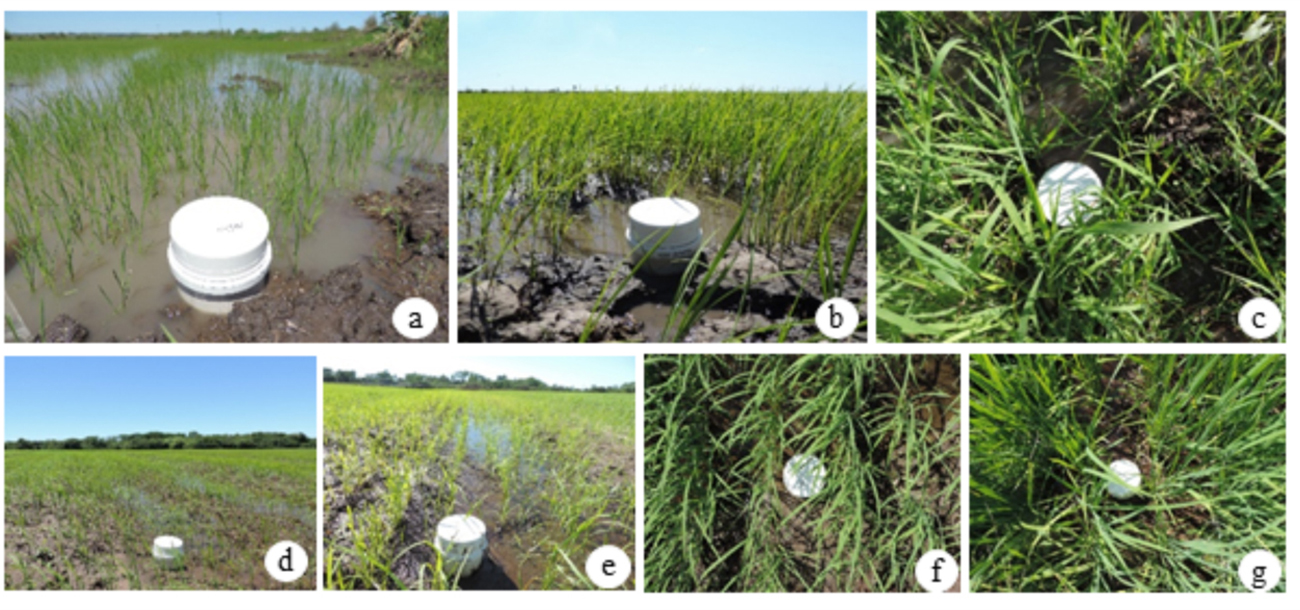
Sampling of the organic rice field (OF) was conducted at three different sites: OF1 29º30'36" S, 55º39'26" W; OF2 29º30'20" S, 55º39'17" W and OF3 29º30'10" S, 55º39'23" W. The three sites were sampled in three periods in 2018: Period 1 - November 19th, Period 2 - November 21st, and Period 3 December 2nd. Sampling of the conventional field (CF) was also conducted at three different sites: CF1 29º41'47" S, 55º50'44" W; CF2 29º41'34" S, 55º50'49" W and CF3 29º41'23" S, 55º51'07" W in four periods: Period 1 - one day before herbicide application; Period 2 - one day after herbicide application, Period 3 - twelve days after herbicide application and Period 4 - thirty-five days after herbicide application (Fig. 1).
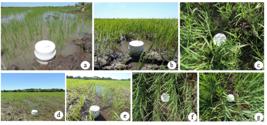
Soil core samples from the studied organic rice field taken during three different periods (a) Period 1 (b) Period 2 and (c) Period 3; and from the studied conventional rice field taken during four different periods (d) Period 1, (e) Period 2 (f) Period 4 and (g) Period 4.
Two soil samples were collected at each site using a PVC core (10 cm diameter; 2 cm depth), placed in plastic bags and carried to the laboratory. Interstitial water pH and temperature were measured using a pH meter (PHTEK®) and a thermometer (Incoterm®), respectively.
Live motile diatoms were isolated from the sediment using the trapping method (Eaton & Moss, 1966, adapted by Laudares-Silva & Cimardi, 1989). Each soil sample was homogenized in a flask and then placed in a Petri dish under natural light and avoiding artificial light during the night. A double layer of Whatman® 105 filter paper (2x2 cm) was put on the surface layer and removed the next morning, trapping live diatoms that migrated toward the light. A subsample was examined microscopically to verify the presence of live cells in the communities at the moment of sampling was carried out. The remaining sample was processed using the oxidation method described by Simonsen (1974) and mounted on permanent slides using Naphrax.
The herbicides penoxsulam and clomazone are widely used to control weeds in Brazilian rice fields. The presence and concentration of residual herbicides in the soil of CF were determined by the Solid Phase Extraction method and analyzed byLiquid Chromatography with Mass Spectrometry (LC-MS/MS), according to Donato et al. (2012), in the Pesticide Residue Laboratory (LARP) at the Universidade Federal de Santa Maria.
The abundance of taxa was obtained by counting valves on permanent slides using a Zeiss Axioplan Microscope, seeking to reach 80% sampling efficiency, according to Pappas & Stoermer (1996). The relative abundance (RA) of each species was presented as a proportion of the total valves counted. Species considered abundant were those whose population density was higher than the value obtained by dividing the total density by the number of identified species, while dominant species were those with densities greater than 50% of the general density for the entire community (Lobo & Leighton, 1986).
A two-way analysis of variance (two-way ANOVA) was used to detect differences in species richness between cultivation systems and among periods. Permutational analysis of variance (PERMANOVA) was performed to evaluate differences in diatom composition between OF and CF. Nonmetric multidimensional scaling (NMDS) was applied to the species abundance matrix to investigate species distribution between Of and CF. Species representing less than 2% of the relative abundance in all samples were removed to increase the significance of the data (Birks, 2010). NMDS was also used to detect associations between abundant species and herbicide concentration in the sampling periods for CF. The community matrices were transformed using Wisconsin double standardization and a Bray-Curtis dissimilarity matrix was calculated using the “metaMDS” function of the “vegan” package in R software. Vectors of the environmental variables were adjusted to the resulting bi-dimensional map using the function “EnvFit”, also of the “vegan” package of R software. All analyses were performed using the vegan package (Oksanen et al., 2020) of R software (R Core Team, 2021).
The samples were deposited in the Herbário Alarich Schultz (HAS), Museu de Ciências Naturais, Secretaria do Meio Ambiente e Estrutura, Porto Alegre, Brazil, under numbers HAS 11062-11073 for CF and HAS 11053-11061 for OF.
Results
Physical and chemical soil parameters
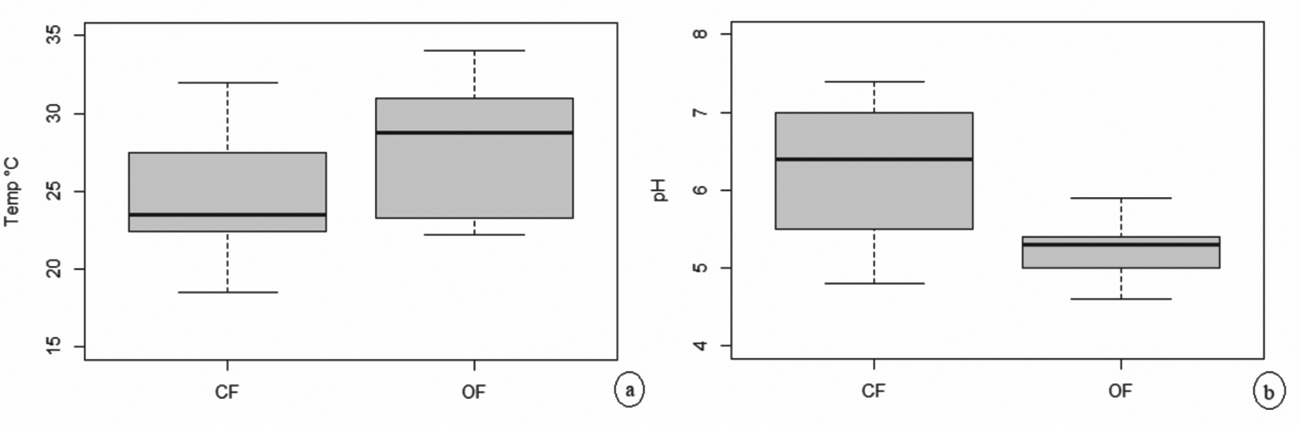
The physical and chemical parameters of the interstitial water of the soil of CF and OF are presented in Figure 2. The temperature ranged from 22.2 - 34.0 °C for OF and 18.4 °C - 32.0 °C for CF, decreasing over time in both cultivation systems. Acidic conditions were observed in OF (pH 4.6 - 5.9) and slightly acidic to neutral conditions in CF (pH 4.8 - 7.4). Changes toward neutral values were observed after flooding (Period 3 and Period 4).
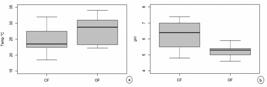
Temperature (a) and pH (b) values of interstitial water in the studied conventional (CF) and organic (OF) rice fields.
There was no residual herbicide in the soil in Period 1 of CF (one day before herbicide application) (Table 1), nor in OF at any time. The highest concentration of clomazone and penoxsulam was observed one day after herbicide application (Period 2), which decreased over time. Penoxsulam was not detected in some samples of Period 3 and Period 4, as it dissipates faster than clomazone.
Residual concentrations of herbicides of soil samples from the conventional rice field in period 1 (19/11/2018); period 2 (21/11/2018); period 3 (02/12/2018) and period 4 (25/12/2018). ND = non-detected, LQ =limit of quantification.
Organic versus conventional diatom assemblages
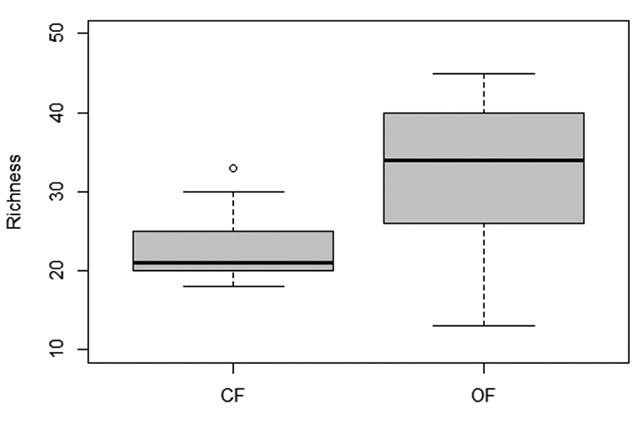
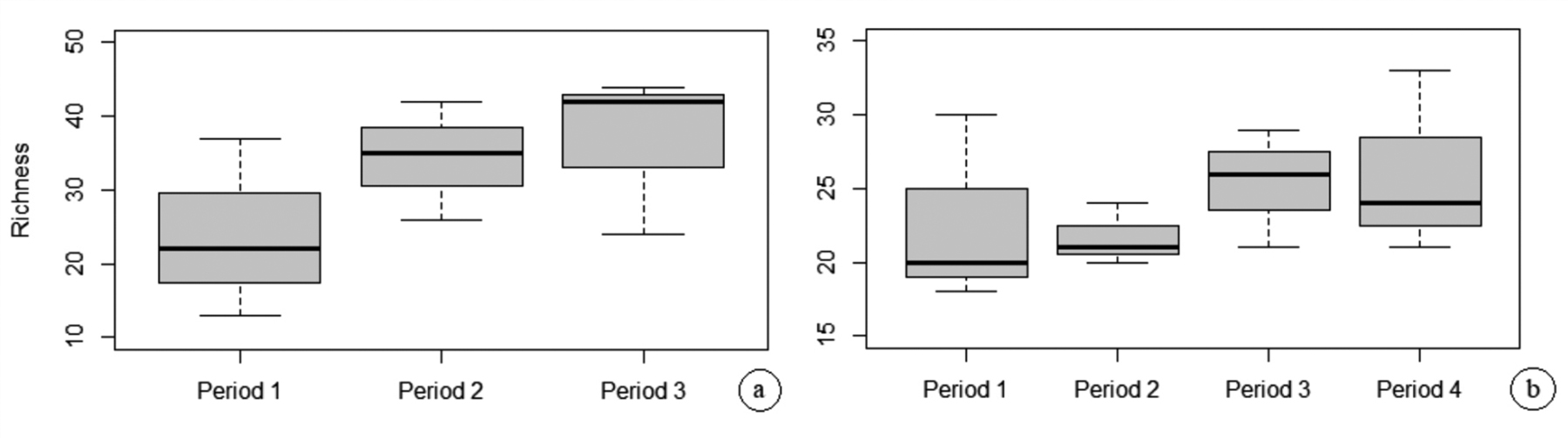
The evaluated attributes revealed important differences between the soil diatom assemblages of OF and CF. Soil diatom species richness differed significantly between the cultivation systems (p=0.03), with it ranging among samples from 13 to 45 species for OF and from 18 to 33 for CF (Fig. 3). Total species richness was greater for OF than CF, with the former having 123 taxa of 33 genera and the latter with 79 taxa of 23 genera (Supplementary Material).
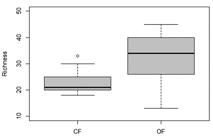
Total richness (number of species) of soil diatom assemblages of the studied organic and conventional rice fields, RS, Brazil.
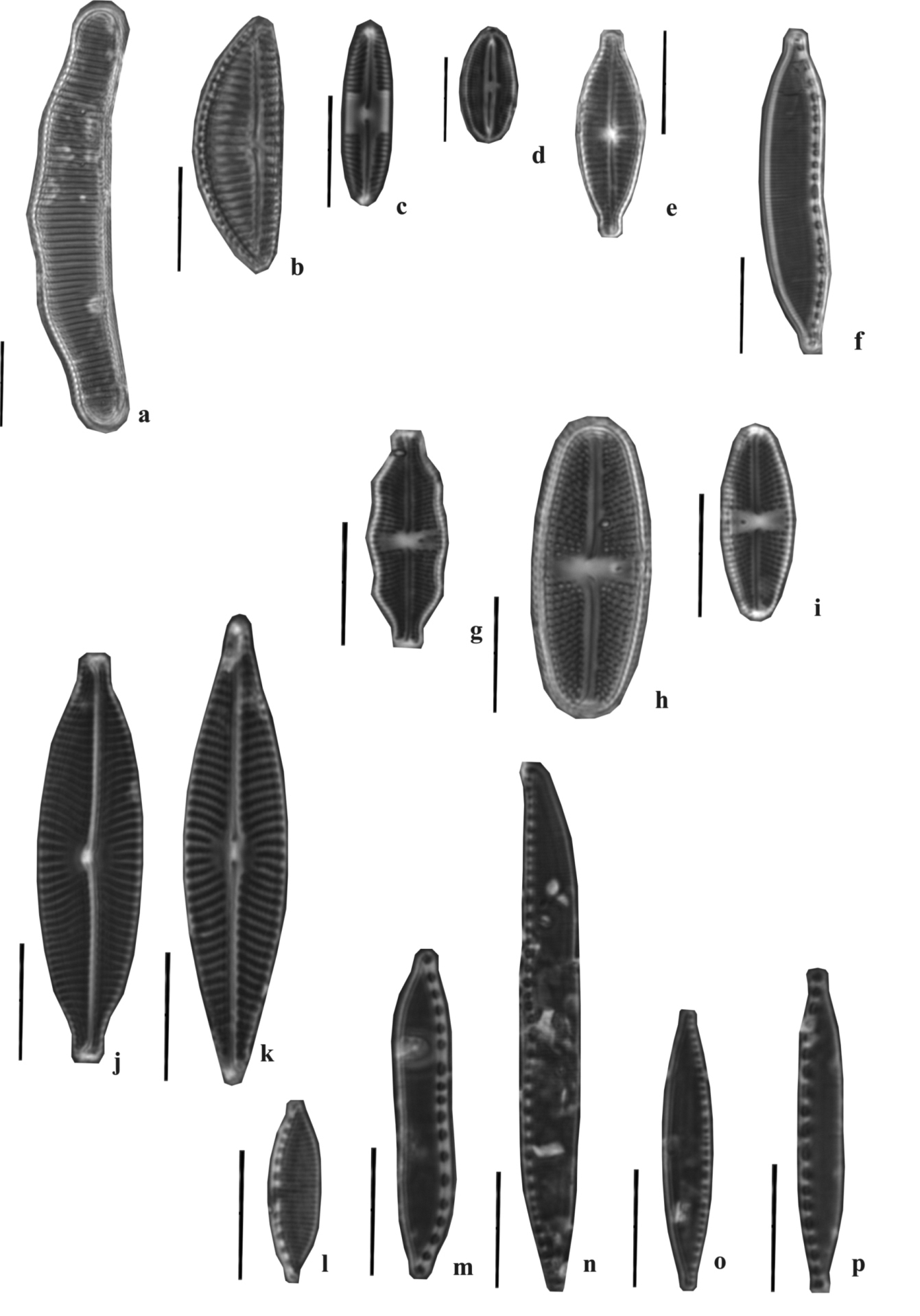
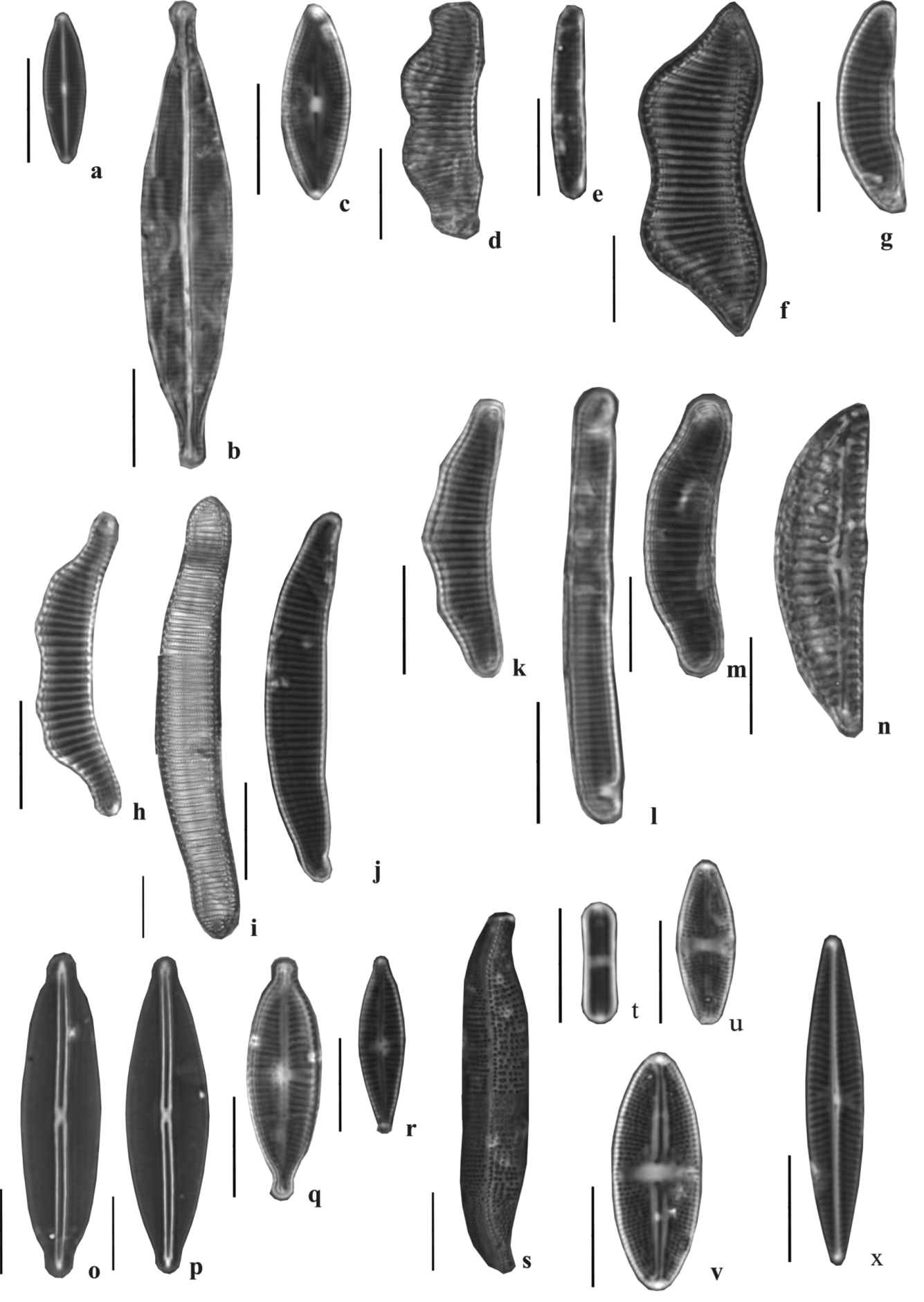
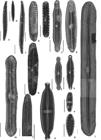
For both systems, species richness was not significantly different among samplings over time (Fig. 5). The average richness for OF ranged from 23 species (Period 1) to 36 species (Period 3). The average richness for CF ranges from a low of 22 species after herbicide application (Period 2) to 26 species (Period 4). A selection of the most representative diatom species (>1% abundance) of CF is shown in Figures 7-8 and of OF in Figures 9-10.
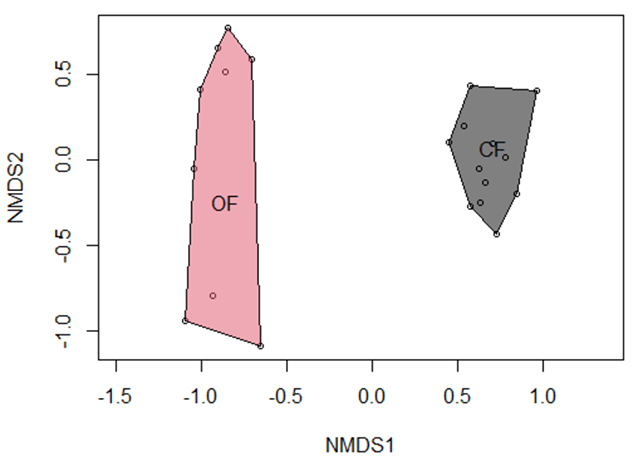
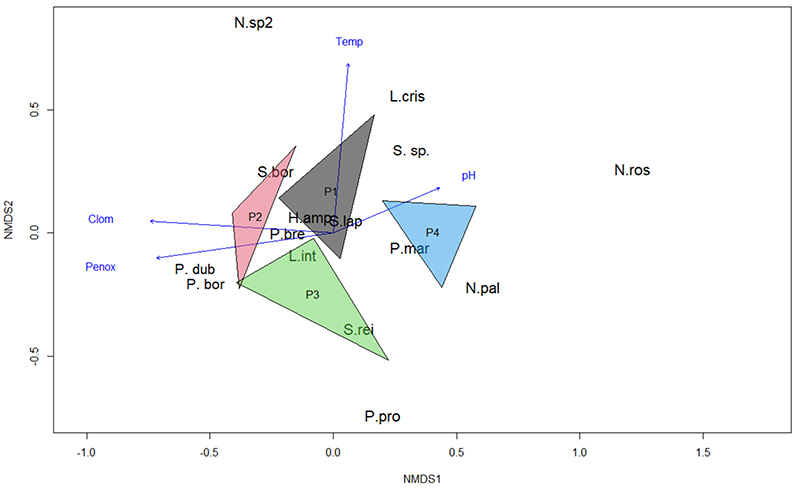
Species composition was a significant attribute of the soil diatom assemblages. The PERMANOVA analyses (R2= 0.34, P = 0.0002) and the distributions of species in the NMDS model (Fig. 4) revealed that the soil assemblages of OF and CF had distinct diatom species compositions (>2% relative abundance).

Nonmetric multidimensional scaling (NMDS) ordination of soil diatoms species (> 2% of abundance) (stress value = 0.02) from the studied organic (OF) and conventional rice fields (CF).

Variation in total richness (number of species) of soil diatom assemblages: during three periods in the studied organic rice field (a) and during four periods in the studied conventional rice field (b), RS, Brazil.
Pinnularia was the richest genus in both systems with 31 species in CF and 18 species in OF. Eunotia was the second-richest genus in OF with 25 species, while Nitzschia was the second-richest genus in CF with nine species.
Eighteen taxa were found in both systems: Diadesmis confervacea, Humidophila contenta, Encyonema silesiacum, Gomphonema parvulum, Hantzschia amphioxys var. amphioxys f. capitata, Hantzschia sp. 3, Luticola intermedia, Nitzschia nana, N. palea, Pinnularia borealis, P. dubitabilis, P. marchica, P. microstauron var. nonfasciata, P. rumrichae, P. subcapitata, Stauroneis lapponica and S. reichardtii. The following taxa are some of those exclusive to OF: Craticula sp1, Eunotia longicamelus, E. monodon, E. pseudosudetica, E. intermedia, E. didyma var. gibbosa, E. botuliformis, Frustulia saxonica, F. guayanensis subsp. ecuadoriana, Navicula leptostriata and Surirella tenuissima. The following 39 taxa were exclusive to CF: Caloneis fontinalis, C. bronderi, C. tenuis, Capartogramma crucicula, Craticula ambigua, Cymbopleura sp., Eunotia pyramidata, Eunotia sp., Gomphonema gracilioides, Hantzschia sp. 2, Luticola cristinae, L. fuhrmanni, Luticola sp. 4, Navicula trivialis, N. rostellata, Neidium sp. 1, Neidium sp. 2, Neidium sp. 4, Nitzschia amphibia, N. nana, Nitzschia sp. 3, Nitzschia sp. 5, Pinnularia brebissonii var. brebissonii, P. obscura, Pinnularia aff. schimanskii, P. renata, Pinnularia sp. 5, Pinnularia sp. 8, Pinnularia sp. 13, Pinnularia sp. 14, Pinnularia sp. 18, Pinnularia sp. 20, Sellaphora seminulum, Sellaphora sp. 2, Stauroneis phoenicenteron, Surirella cf. bouillonii, S. tenuissima and Surirella sp. 2.
Soil diatoms and herbicides
Richness decreased after herbicide application (Period 2) compared to before application (Period 1). Nonetheless, associations between period, herbicide presence/concentration and the diatom assemblage were detected in CF (Fig. 6). There was a tendency towards significant differences in soil diatom composition among the four sampling periods (permanova p = 0.06). The matrix of abundant species revealed that Hantzschia amphioxys var. amphioxys f. capitata, Stauroneis lapponica, Sellaphora sp. (pupula group) and Luticola cristinae were related to the period without herbicides (Period 1), while Pinnularia borealis, Pinnularia dubitabilis and Stauroneis borrichii were related to the period with highest herbicide concentrations (Period 2). Additionally, Pinnularia brebissonii, Stauroneis reichardtii and Luticola intermedia were related to Period 3 and Pinnularia marchica and N. palea to Period 4 (35 days after herbicide application).
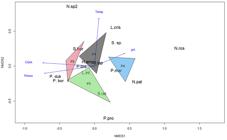
Nonmetric multidimensional scaling (NMDS) ordination of abundant soil diatom species (stress value = 0.11) during four periods in soil rice fields. P1: Period 1, P2: Period 2, P3: Period 3, P4: Period 4. Temp: temperature; pH: potential of hydrogen; Clom: Clomazone herbicide; Penox: Penoxsulam herbicide. Species: H.amp: Hantzschia amphioxys var. amphioxys f. capitata; S. sp.: Sellaphora sp. (pupula group); L.cris: Luticola cristinae; L.int: Luticola intermedia; N.sp2: Neidium sp2; N.ros: Navicula rostellata; N.pal: Nitzschia palea; P.bor: Pinnularia borealis; P.bre: Pinnularia brebissoni; P.dub: Pinnullaria dubitabilis; P.mar: Pinnularia marchica; P.pro: Pinnularia cf procera; S.bor: Stauroneis borrichii; S.lap: Stauroneis lapponica; and S.rei: Stauroneis reichardtii.
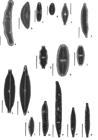
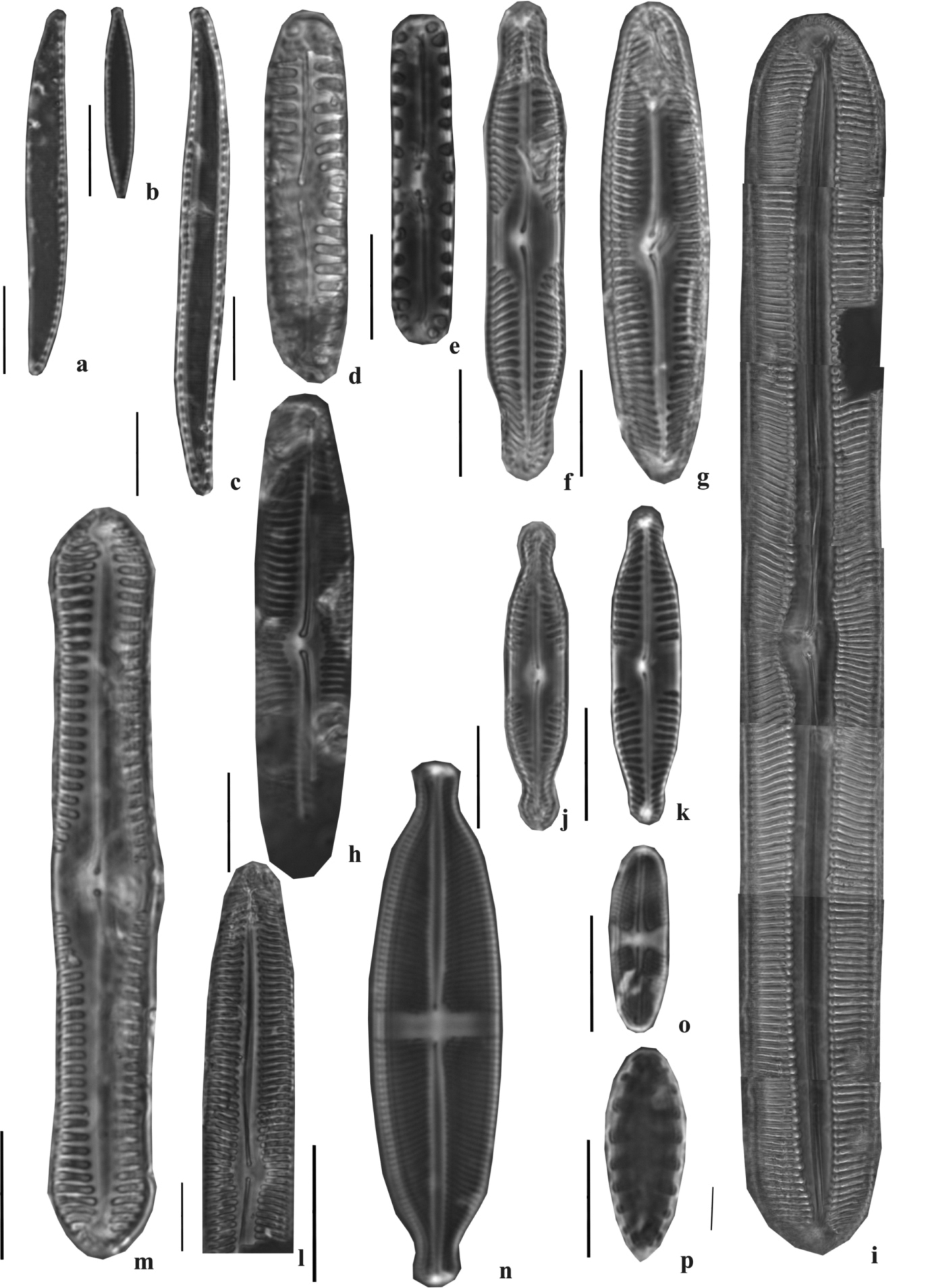
Some soil diatom species representing more than 1% of the relative abundance in the studied conventional rice field. a- Eunotia pyramidata, b- Encyonema silesiacum, c- Caloneis fontinalis, d- Fallacia insociabilis, e- Gomphonema parvulum, f- Hantzschia amphioxys var. amphyoxis f. capitata, g- Luticola cristinae, h- L. furhmanni, i- L. intermedia, j- Navicula rostellata, k- N. trivialis, l- Nitzschia amphibia, m- N. brevissima, n- N. nana, o- N. palea, and p- N. perminuta. Scale bar: 10µm.

Some soil diatom species representing more than 1% of the relative abundance in the studied conventional rice field. a- Neidium sp2, b- Pinnularia borealis, c- P. brebissonii, d- P. dubitabilis, e- P. marchica, f- P. microstaurum var. nonfasciata, g- P. obscura, h- Pinnularia cf. procera, i- P. renata, j- Pinnularia aff. schimanskii, k- Sellaphora sp. (pupula group), l- Sellaphora seminulum, m- Stauroneis borrichii, n- S. lapponica, and o- S. reichardtii. Scale bar: 10µm.

Some soil diatoms species representing more than 1% of the relative abundance in the studied organic rice field. a- Craticula sp1, b- Craticula sp3, c- Diadesmis confervacea d- Eunotia bidens, e- Eunotia botuliformis, f- E. didyma var. gibbosa, g- E. intermedia, h- E. longicamelus, i- E.monodon, j- E. pseudosudetica, k- E. tridentula, l- E. ursulae, m- Eunotia sp12, n- Encyonema silesiacum, o- Frustulia guayanensis subsp. ecuadoriana, p- F. saxônica, q- Gomphonema parvulum, r- G. angustatum. s- Hantzschia sp3, t- Humidophila contenta, u- Luticola intermedia, v- Luticola sp8, and x- Navicula leptostriata. Scale bar: 10µm.
Some soil diatoms species representing more than 1% of the relative abundance of the studied organic rice field. a- Nitzschia nana, b- N. palea, c- N. scalpelliformis. d- Pinnularia borealis, e- P. dubitabilis, f- P. marchica, g- P. peracuminata, h- P. microstauron var. nonfasciata. i- Pinnularia neomajor, j- P. rumrichae. k- P. subcapitata, l- P. viridiformis, m- Pinnularia sp27, n- Stauroneis reichadtii, o- S. lapponica, and p- Surirella tenuissima. Scale bar: 10µm.
Discussion
Physical and chemical soil parameters
The flooding of rice farms causes rapid physical, chemical, and biological changes (Bambaradeniya et al., 2004). Changes from wet to dry conditions promote an intense decomposition process in irrigated systems. Aerobic and anaerobic activity produces organic acids as a result of organic matter decomposition on the soil surface (Bohnen et al., 2005). This occurrence could be related to the acidic conditions registered in OF and CF just after flooding (Period 3 - Period 4). Such a change in pH from neutral (7.4) to slightly acidic (6.2) was also observed in Japanese conventional rice paddy fields after flooding (Otsuka & Fujita, 2001). Consequently, the maintenance of wet conditions during Period 1 and Period 2 could be related to the neutral conditions of interstitial water in CF.
Other areas exposed to agricultural activity on cultivated soil without flooding were characterized by acidic and slightly acidic soil conditions, such as a mean pH of 4.7 under oat farming (Stanek-Tarkowska et al., 2017) and of 5.4 under winter wheat (Stanek-Tarkowska et al., 2018). Thus, in general, agricultural activity is a determinant factor due to acidic soil conditions.
Soil temperature decreased during the time of the experiment in both OF and CF. Incident solar radiation in the water decreases over time due to the growth of the rice plants, as observed in the present study (Fig. 1) and in the mesocosms approach of Cassol et al. (2013). This evidence could explain why the highest temperatures observed in interstitial water of OF and CF were during the initial periods.
Organic versus conventional soil diatom assemblages
The present study found important differences in the attributes of the diatom assemblages OF and CF, such as in richness, species composition and relative abundance. The results corroborate differences in the local environment generated by historical exposure to OF and CF over the last two decades. The effects of intensive use of conventional practices can remain present in the soil for a long time (Almeida et al., 2023).
Considering environmental conditions, pH has an influence on the species richness of soil algae as well as on higher plants. Neutral and slightly acidic soils are generally richer in diatom species than acidic soils (Stanek-Tarkowska et al., 2017; Poradowska, 2020). However, the present study found higher richness in acidic conditions (OF) than in neutral conditions (CF).
Diatom richness in agricultural fields could vary in response to repetitive and intense
practices such as flooding, draining, plowing, transplantation and the application of fertilizers and herbicides. Organic Japanese rice fields had a richness of 104 species and 28 genera (Fujita & Ohtsuka, 2005), which is lower than that found here for OF (123 species and 33 genera). Besides, some taxa were found in both OF and CF, such as Diadesmis confervacea, Humidophila contenta and Nitzschia palea.
The richness found for CF (79 taxa and 23 genera) was higher than that of a conventional Japanese rice field with 53 species and 17 genera (Negoro & Higashino, 1986) and lower than that reported for Laotioan conventional rice fields (92 taxa belonging to 28 genera - Ohtsuka & Fujita, 2001). Some typical species of Japanese conventional rice fields, such as Hantzschia amphioxys, N. palea, G. parvulum, Navicula rostellata, Navicula trivialis, N. amphibia and N. perminuta (Negoro & Higashino, 1986; Ohtsuka & Fujita, 2001), were also recorded in CF in the present study.
The high number of species of the genera Eunotia and Pinnularia recorded in OF also may be explained by the acidic conditions (pH 4.8-5.8), which undoubtedly favored the development of these genera (Rower et al., 2021). Soil acidification (pH 4.4-5.6) and high diversity of Eunotia and Pinnularia were also found in pasture soils in Poland (Poradowska, 2020).
On the other hand, the genera Pinnularia and Nitzschia had higher species richness in CF. Higher contributions of these genera were also found in conventional Japanese rice paddy fields (Ohtsuka & Fujita, 2001) and in soil datasets from the Attert River basin, Luxembourg (Foets et al., 2021). Both of these genera are sediment-dwelling, but Pinnularia prefers acidic water (Krammer, 2000) and some species of Nitzschia are found mainly in alkaline waters (Bes & Torgan, 2010). Both of these pH conditions were observed in the rice fields studied here. Besides, species of Nitzschia were also found to be dominant in the subsurface of soil rice fields (Fujita & Nakahara, 2006).
Some terrestrial diatoms typical of agricultural areas were registered in CF and not in OF, such as Stauroneis borrichii (Stanek-Tarkowska et al., 2013 and Noga et al., 2014). Similarly, Pinnularia borealis and Hantzschia amphioxys, also considered typical soil diatoms, were registered in CF, but in low relative abundance in OF. Flooding must be considered an influential factor in diatom assemblages. Fujita & Nakahara (2006) observed the abundance of some species, such as Hantzschia spp., increased markedly during drainage, while Nitzschia spp. were dominant in relative frequency during rice field flooding.
Three abundant species were found in OF and CF simultaneously: Luticola intermedia, Nitzschia palea and Pinnularia marchica. Despite N. palea being widely distributed in soils and an ecological generalist (Trobajo et al., 2009), L. intermedia and P. marchica were infrequently recorded in soils. Pinnularia marchica was registered growing especially in soils covered with mosses in Poland (Poradowska, 2020). The taxon has been rarely reported in Brazil, just in planktonic and periphytic samples in São Paulo State (Rocha 2008).
Soil diatoms and herbicides
A few studies have highlighted soil diatom species in agricultural fields but rarely in rice paddy fields. The sampling method usually involves taking a thin soil layer (0-2 cm) using core samples (Ø 5-10 cm) with further preparation with some oxidation technique (Negoro & Higashino, 1986; Ohtsuka & Fujita, 2001; Barragán et al., 2017). Consequently, live and dead cells are counted and identified on the slide. This differs from the trapping method employed here, which collected live and motile cells that were trapped in cellulose paper when migrating to the surface (Laudares-Silva & Cimardi, 1989). This method is important to access representative living species before and after herbicide application. There have been no comparative studies using this trapping method in freshwater environments in Brazil, just in mangroves (Laudares-Silva & Cimardi, 1989) and salt marshes (Talgatti, 2014). The limited number of studies, and the lack of differentiation between live and dead cells, make it difficult to compare with other areas. Furthermore, dead cells in soil could imply an inappropriate analysis of results related to diatom tolerance to herbicides.
The present study detected associations between species, period and herbicide concentration. The NMDS analysis associated the increase in abundance of Pinnularia borealis, P. dubitabilis, P. brebissoni and Stauroneis borichii with periods of high penoxsulam and clomazone concentrations (Period 2 and Period 3). Pinnularia borealis is a typical subaerial form (Round et al., 1990), frequently found in conventionally cultivated soils in Poland (Noga et al., 2014; Stanek-Tarkowska & Noga, 2012; Stanek-Tarkowska et al., 2018); however, it has also been found to be dominant in fallow fields (Stanek-Tarkowska et al., 2015). Stauroneis borrichii has also been found to be dominant in fallow fields (Stanek-Tarkowska et al., 2015) and has been selected for use as an indicator species for agricultural fields (Foets et al., 2020 a ).
The NMDS analysis related Nitzschia palea, Sellaphora sp. (pupula group) and Luticola cristinae to the period without herbicides; these taxa were absent from most of the sites in Period 2. Bioassays found Nitszchia palea to display different tolerances to herbicides in biofilms (Larras et al., 2012), depending on the herbicide family tested (Larras et al., 2014). The tolerant strain exhibited an increase in carotenoid content, a molecule involved in short-term photoprotection in diatoms, after dosing with the herbicide atrazine (Esteves et al., 2018). Clomazone belongs to the isoxazolidinone chemical group and acts as an inhibitor of carotenoid biosynthesis (Senseman & Armbrust, 2007). The slower degradation rate of clomazone, compared to penoxsulam, could have affected the carotenoid content of Nitszchia palea in Period 2.
The Sellaphora pupula group is not a natural group but a familiar and recognizable series of species. According to Mann et al. (2008), molecular analyses will reveal synapomorphies in aspects of frustule morphology and structure. Species of Sellaphora have been recorded as indicative of undisturbed grassland soils, such as S. nana, and forested soils, such as S. harderi in Luxemburg (Foets et al., 2020 a ).
The abundance of Hantzschia amphioxys var. amphyoxis f. capitata, Stauroneis lapponica and S. reichardtii seems to be associated with periods of lower herbicide concentration. Other studies reported the presence of these species in agricultural areas. Hantzschia amphioxys was found to be the most abundant diatom in soils under oilseed cultivation (Stanek-Tarkowska et al., 2021) in agricultural areas of the Attert River basin in Luxembourg (Foets et al., 2020 a ; 2021), and in soils under conventional maize fields (Bérard et al., 2004). However, S. reichardtii has only been recorded in limno-terrestrial environments in the Antarctic (Zidarova, 2008) and Arctic (Van de Vijver et al., 2004), and in ponds and wetlands in North America (Bahls, 2010).
In summary, the findings of this study represent a pioneering contribution to the knowledge of soil diatom diversity of organic versus conventional rice fields. Differences were evident in species richness, composition and relative abundance. Therefore, it can be concluded that the diatom assemblage of organic rice fields is more diverse, with some exclusive taxa, characteristics of acidic conditions. Furthermore, species composition is likely associated with herbicide application. It would be interesting to evaluate other organic and conventional rice fields to further compare diversity and environmental conditions.
Acknowledgments
This study was financed by the Coordenação de Aperfeiçoamento de Pessoal de Nível Superior - Brasil (CAPES) - Finance Code 001. We are also grateful to Daniel Dutra Saraiva for supporting our efforts in statistical analyses. Finally, we are grateful to Davia Talgatti for helping to employ the trapping method.
References
- Almeida RA, Lemmens P, Cours M et al 2023. A moderate differential effect of organic and conventional agriculture across taxonomic groups inhabiting farmland ponds. Freshwater Biology 68: 645-658.
- Alvares CA, Stape JL, Sentelhas PC, Goncalves JC, Sparovek G. 2014. Koppen’s climate classification map for Brazil. Meteorologische Zeitschrift 22: 711-728.
- Alves-da-Silva SM, Tamanaha MS. 2008. Ocorrência de Euglenophyceae pigmentadas em rizipiscicultura na região do Vale do Itajaí, SC, Sul do Brasil. Acta Botanica Brasilica 22: 145-163.
- Antonelli A, Wetzel CE, Ector L, Teuling AJ, Pfister L. 2017. On the potential for terrestrial diatom communities and diatomindices to identify anthropic disturbance in soils. Ecological Indicators 75: 73-81.
- Bahls LL. 2010. St auroneis in the northern rockies: 50 species of Stauroneis sensu stricto from western Montana, northern Idaho, northeastern Washington and southwestern Alberta, including 16 species described as new. Northwest Diatoms. Helena, The Montana Diatom Collection. vol. IV.
- Bambaradeniya CNB, Edirisinghe JP, De Silva DN, Gunatilleke CVS, Ranawana KB, Wijekoon S. 2004. Biodiversity associated with an irrigated rice agro-ecosystem in Sri Lanka. Biodiversity and Conservation 13: 1715-1753.
- Bartozek ECR, Lambrecht RW, Zorzal‑Almeida S, Auricchio MR, Peres CK. 2022. Stream morphology, water dynamics, and agrochemicals are important drivers of periphyton biomass in subtropical streams. Hydrobiologia 849: 3031-3039.
- Barragán C, Wetzel CE, Ector L. 2017. A standard method for the routine sampling of terrestrial diatom communities for soil quality assessment. Journal of Applied Phycology 30: 1095-1113.
- Bengtsson J, Ahnström J, Weibull A. 2005. The effects of organic agriculture on biodiversity and abundance: A meta-analysis. Journal of Applied Ecology 42: 261-269.
- Bérard A, Rimet F, Capowiez Y, Leboulanger C. 2004. Procedures for Determining the Pesticide Sensitivity of Indigenous Soil Algae: A Possible Bioindicator of Soil Contamination? Archives of Environmental Contamination and Toxicology 46: 24-31.
- Bes D, LC Torgan. 2010. O gênero Nitzschia (Bacillariaceae) em ambientes lacustres na Planície Costeira do Rio Grande do Sul, Brasil. Rodriguésia 61: 359-382.
- Birks HJB. 2010. Numerical methods for the analysis of diatom assemblage data. In: Smol JP, Stoermer EF (eds.). The Diatoms: Applications for the environmental and earth sciences. 2nd. ed. Cambridge, Cambridge University Press. p 23-54.
- Bohnen H, Silva LS, Macedo VRM, Marcolin E. 2005. Ácidos orgânicos na solução de um gleissolo sob diferentes sistemas de cultivo com arroz irrigado. Revista Brasileira de Ciência do Solo 29: 475-480.
- Cassol APV, Oliveira MA, Figueiredo MCS, Luz DS, Sartori GMS, Marchesan E. 2013. Microalgas em Cultura de arroz: influência de diferentes manejos de adubação em áreas com residual de herbicidas (imidazolinonas). Iheringia Série Botânica 68: 261-271.
- Cassol APV, Zanella R, Torgan LC. 2022. Do phytoplankton and epiphyton ommunities differ between organic and conventional rice fields? Acta Botanica Brasilica 36: e2021abb0234.
- Debenest T, Silvestre J, Coste M, Delmas F, Pinelli F. 2008. Herbicide effects on freshwater benthic diatoms: Induction of nucleus alterations and silica cell wall abnormalities. Aquatic Toxicology 88: 88-94.
- Debenest T, Pinelli E, Coste M et al 2009. Sensitivity of freshwater periphytic diatoms to agricultural herbicides. Aquatic Toxicology 93: 11-17.
- Donato FF, Kemmerich M, Facco JF et al 2012. Simultaneous determination of pesticide and antibiotic residues at trace levels in water samples by SPE and LC-MS/MS. Brazilian Journal of Analytical Chemistry 7: 331-340.
- Eaton JW, Moss B. 1966. The estimation of numbers and pigment content in epipelic algal populations. Limnology and Oceanography 11: 584-595.
- Esteves SM, Almeida SFP, Gonçalves P, Rimet F, Bouchez A, Figueira E. 2018. Sensitive vs. tolerant Nitzschia palea (Kützing) W. Smith strains to atrazine: a biochemical perspective. Ecotoxicology 27: 860-870.
- Falasco E, Bona F, Badino G. 2009. Diatom teratological forms and environmental alterations: A review Hydrobiologia 623: 1-35.
- Foets J, Wetzel CE, Teuling AJ, Pfister L. 2020a. Temporal and spatial variability of terrestrial diatoms at the catchment scale: Controls on communities. PeerJ 8: e8296.
- Foets J, Wetzel CE, Teuling AJ, Pfister L. 2020b. Temporal and spatial variability of terrestrial diatoms at the catchment scale: Controls on productivity and comparison with other soil algae. PeerJ 8: e9198.
- Foets J, Stanek-Tarkowska J, Teuling A, Van de Vijver B, Wetzel CE, Pfister L. 2021. Autecology of terrestrial diatoms under anthropic disturbance and across climate zones. Ecological Indicators 122: 107248.
- Fujita Y, Ohtsuka T. 2005. Diatoms from paddy fields in northern Laos. Diatom 21: 71-89.
- Fujita Y, Nakahara H. 2006. Variations in the microalgal structure in paddy soil in Osaka, Japan: comparison between surface and subsurface soils. Limnology 7: 83-91.
- Heger TJ, Straube F, Mitchell EAD. 2012. Impact of farming practices on soil diatoms and testate amoebae: A pilot study in the DOK-trial at Therwil, Switzerland. European Journal of Soil Biology 49: 31-36.
- Irisarri P, Gonnet S, Monza J. 2001. Cyanobacteria in Uruguayan rice fields: diversity, nitrogen fixing ability and tolerance to herbicides and combined nitrogen. Journal of Biotechnology 91: 95-103.
- Katayama N, Osada Y, Mashiko M et al 2019. Organic farming and associated management practices benefit multiple wildlife taxa: A large‐scale field study in rice paddy landscapes. Journal Applied Ecology 56: 1970-1981.
- Komatsuzaki M, Syuaib MF. 2010. Comparison of the Farming System and Carbon Sequestration between Conventional and Organic Rice Production in West Java, Indonesia. Sustainability 2: 833-843.
- Krammer K. 2000. The genus Pinnularia Diatoms of Europe. Königstein, Gantner Verlag.
- Kumar A, Sahu R. 2012. Diversity of Algae (Chlorophyceae) in Paddy Fields of Lalgutwa Area, Ranchi, Jharkhand. Journal of Applied Pharmaceutical Science 2: 92-95.
- Laudares-Silva R, Cimardi JM. 1989. Nota sobre a utilização do “Trapping Method” no estudo das diatomáceas epipélicas do manguezal de Ratones, Florianópolis - SC. Ínsula 19: 299-304.
- Larras F, Bouchez A, Rimet F, Montuelle B. 2012. Using Bioassays and Species Sensitivity Distributions to Assess Herbicide Toxicity towards Benthic Diatoms. PLoS One 7: e44458.
- Larras F, Keck F, Montuelle B, Rimet F, Bouchez A. 2014. Linking Diatom Sensitivity to Herbicides to Phylogeny: A Step Forward for Biomonitoring? Environmental, Science and Technolology 48: 1921-1930.
- Liu Y, Zou G, Yuan Q, Huang W, Zhou W. 2020. Phytoplankton community characteristics in rice paddy fields under different nitrogen fertilizer applications. Acta Physiologiae Plantarum 42: 33.
- Lobo EA, Leighton G. 1986. Estructuras comunitarias de las fitocenosis planctónicas de los sistemas de desembocaduras de rios y esteros de la Zona Central de Chile. Revista Biología Marina 22: 1-29.
- Meeting B. 1981. The systematics and ecology of soil algae. The Botanical Review 47: 195-312.
- Mann DG, Thomas SJ, Evans KM. 2008. Revision of the diatom genus Sellaphora: a first account of the larger species in the British Isles. Fottea 8: 15-78.
- Nashima K, Palanisamy A. 2016. Prevalence and Distribution of Diatoms in the Paddy Fields of Rasipuram Area, Namakkal Dt, Tamilnadu, India. International Journal of Current Microbiology and Applied Sciences 5: 402-413.
- Noga T, Kochman N, Peszek L, Stanek-Tarkowska J, Pajączek A. 2014. Diatoms (Bacillariophyceae) in rivers and streams and on cultivated soils of the Podkarpacie region in the years 2007-2011. Journal of Ecological Engineering 15: 6-25.
- Negoro K, Higashino M. 1986. Diatom Vegetation of paddy field in Japan. Diatom 2: 1-8.
- Otsuka T, Fujita Y. 2001. The diatom flora and its seasonal changes in a paddy field in central Japan. Nova Hedwigia 73: 97-128.
-
Oksanen J, Blanchet GF, Friendly M et al 2020. Vegan: Community Ecology Package. R package version 2:5-7. https://CRAN.R-project.org/package=vegan 9 Aug. 2021.
» https://CRAN.R-project.org/package=vegan - Pappas JL, Stoermer EF. 1996. Quantitative method for determining a representative algal sample count. Journal of Phycology 32: 693-696.
- Poradowska, A. 2020. Diatoms (Bacillariophyta) from the Genus Eunotia and Pinnularia developing on soils in the open landscape of the Low Beskids. Journal of Ecological Engineering 21: 257-270.
- Prasanna R, Nayak S. 2007. Influence of diverse rice soil ecologies on cyanobacterial diversity and abundance. Wetlands Ecology and Management 15: 127-134.
- Ramos VG. 2012. As Estratégias Sociais e Produtivas no Assentamento Santa Maria Do Ibicuí, Manoel Viana - RS. MSc dissertation, Universidade Federal de Santa Maria, Brasil.
- Reck L, Reimche GB, Alves CR, Oliveita MA, Machado SL. 2018. Efeito dos herbicidas Imazapir e Imazapique na Comunidade Fitoplanctônica em Lavoura de Arroz Irrigado. Iheringia Série Botânica 73: 298-307.
- Rimet F, Bouchez A. 2011. Use of diatom life-forms and ecological guilds to assess pesticide contamination in rivers: Lotic mesocosm approaches. Ecological Indicators 11: 489-499.
- Rocha ACR. 2008. A família Pinnulariaceae (Bacillariophyceae) no Estado de São Paulo: levantamento florístico. MSc dissertation, Universidade Estadual Paulista Júlio de Mesquita Filho, Brasil.
- Round FE, Crawford RM, Mann DG. 1990. The Diatoms: Biology and Morphology of the Genera. Cambridge, Cambridge University Press .
- Rower DT, Blanco S, Rodrigues L. 2021. Eunotia Ehrenberg (Eunotiaceae, Bacillariophyta) in a subtropical floodplain: A new species and taxonomic contributions. Phytotaxa 505: 157-175.
-
R Core Team. 2021. R: A language and environment for statistical computing. R Foundation for Statistical Computing, Vienna, Austria. https://www.R-project.org/ 9 Aug, 2021.
» https://www.R-project.org/ - Sartori GMS, Marchesan E, Luz DS et al 2011. Manejo da adubação e seus efeitos na ocorrência de algas e na produtividade de arroz irrigado em áreas com residual de imidazolinonas. Ciência Rural 8: 1323-1330.
- Senseman SA, Armbrust K. 2007. Herbicide handbook. Lawrence, Weed Science Society of America.
- Simonsen R. 1974. The diatom plankton of the Indian Ocean expedition of R/V “Meteor”. Meteor-forscheingsergeb Reihe D. Biologie 19: 1-66.
-
Sosbai. Sociedade Sul-Brasileira de Arroz Irrigado. 2018. Arrroz irrigado: recomendações técnicas da pesquisa para o Sul do Brasil. https://www.sosbai.com.br/uploads/documentos/recomendacoes-tecnicas-da-pesquisa-para-o-sul-do-brasil_906.pdf 9 Aug. 2021.
» https://www.sosbai.com.br/uploads/documentos/recomendacoes-tecnicas-da-pesquisa-para-o-sul-do-brasil_906.pdf - Stanek-Tarkowska J, Noga T. 2012. Diversity of diatoms (Bacillariophyceae) in the soil under traditional tillage and reduced tillage. Inżynieria Ekologiczna 30: 287-296.
- Stanek-Tarkowska J, Noga T, Pajączek A, Peszek L. 2013. The occurrence of Sellaphora nana (Hust.) Lange-Bert. Cavacini, Tagliaventi & Alfinito, Stauroneis borrichii (J.B. Petersen) J.W.G. Lund, S. parathermicola Lange-Bert and S. thermicola (J.B. Petersen) J.W.G. Lund on agricultural soils. Algological Studies 142: 109-120.
- Stanek-Tarkowska J, Noga T, Kochman-Kędziora N, Peszek L, Pajączek A, Kozak E. 2015. The diversity of diatom assemblages developed on fallow soil in Pogórska Wola near Tarnów (southern Poland). Acta Agrobotanica 68: 33-42.
-
Stanek-Tarkowska J, Czyż EA, Kaniuczak J, Poradowska A. 2017. A physicochemical properties of silt loamy soil and diversity of diatom species under winter wheat and oats. Journal of Ecological Engineering 18: 142-151. doi: 10.12911/22998993/76828.
» https://doi.org/10.12911/22998993/76828. - Stanek-Tarkowska J, Czyż E A, Dexter AR, Sławiński C. 2018. Effects of reduced and traditional tillage on soil properties and diversity of diatoms under winter wheat. International Agrophysics 32: 403-409.
- Stanek-Tarkowska J, Szostek M, Rybak M. 2021. Effect of different doses of Ash from Biomass Combustion on the Development of Diatom Assemblages on Podzolic Soil under Oilseed Rape Cultivation. Agronomy 11: 2422.
- Talgatti D. 2014. Diatomáceas (Bacillariophyta) em marismas do sul do Brasil: estudo da comunidade bentônica. PhD Thesis, Universidade Federal do Rio Grande do Sul, Brasil.
- Trobajo R, Clavero E, Chepurnov VA et al 2009. Morphological, genetic and mating diversity within the widespread bioindicator Nitzschia palea (Bacillariophyceae). Phycologia 48: 443-459.
- Vacht P, Puusepp L, Koff T, Reitalu T. 2014. Variability of riparian soil diatom communities and their potential as indicators of anthropogenic disturbances. Estonian Journal of Ecology 63: 168-184.
- Van de Vijver B, Beyens L, Lange-Bertalot H. 2004. The genus Stauroneis in the Arctic and sub - Antarctic Regions. Bibliotheca Diatomologica 51: 1-317.
- Vijayan D, Ray JG. 2016. Ecology and Diversity of Diatoms in Kuttanadu Paddy Fields in Relation to Soil Regions, Seasons and Paddy-Growth-Stages. Journal of Plant Studies 5: 1-21.
- Wood Rj, Mitrovic S, Richard PL, Kefford BJ. 2016. How benthic diatoms within natural communities respond to eight common herbicides with different modes of action Science of the Total Environment 557-558: 636-643.
- Wood RJ, Mitrovica SM, Lima RP, Warne M J, Dunlope J, Keffordf BJ. 2019. Benthic diatoms as indicators of herbicide toxicity in rivers - A new SPEcies At Risk (SPEARherbicides) index Ecological Indicators 99: 203-213.
- Zidarova, R. 2008. Algae from Livingston Island (Shetland Islands): A checklist. Phytologia Balcanica 14: 19-35.
Supplementary material
The following online material is available for this article: