 Responses of anuran assemblages to the urban-rural gradients in a high biodiversity tropical region
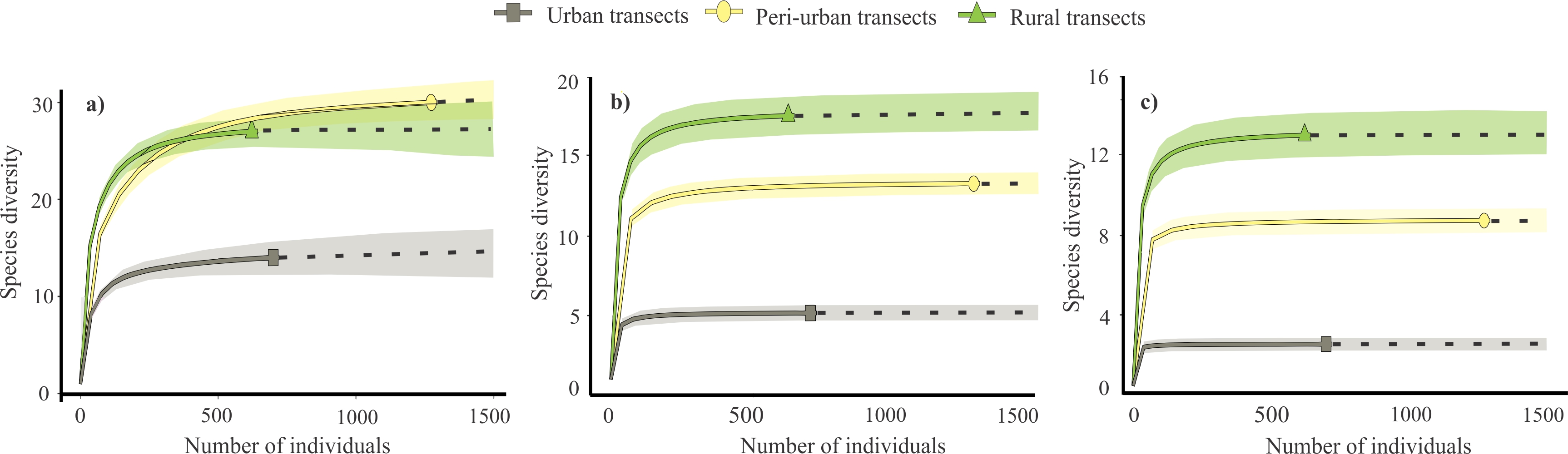
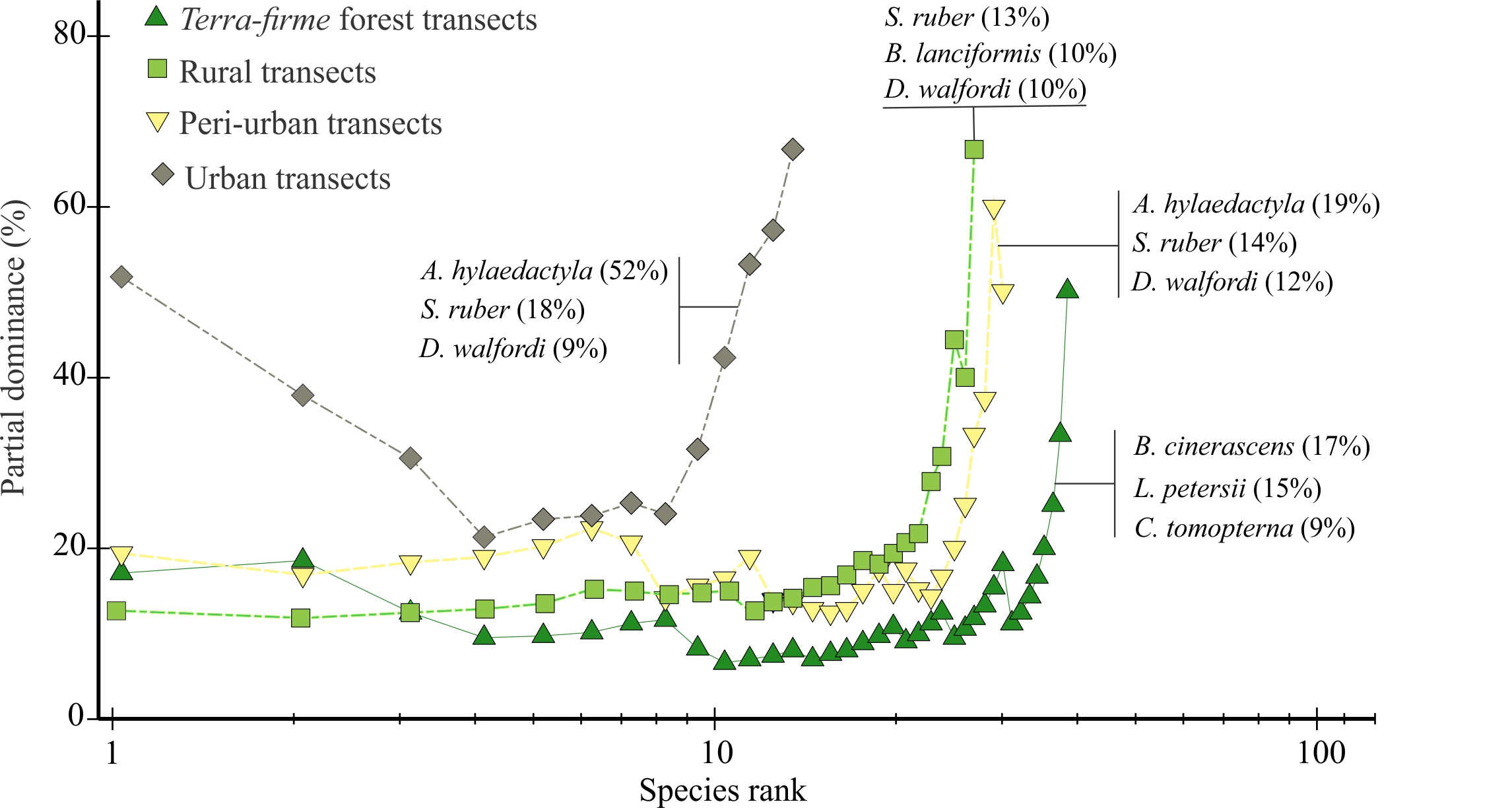
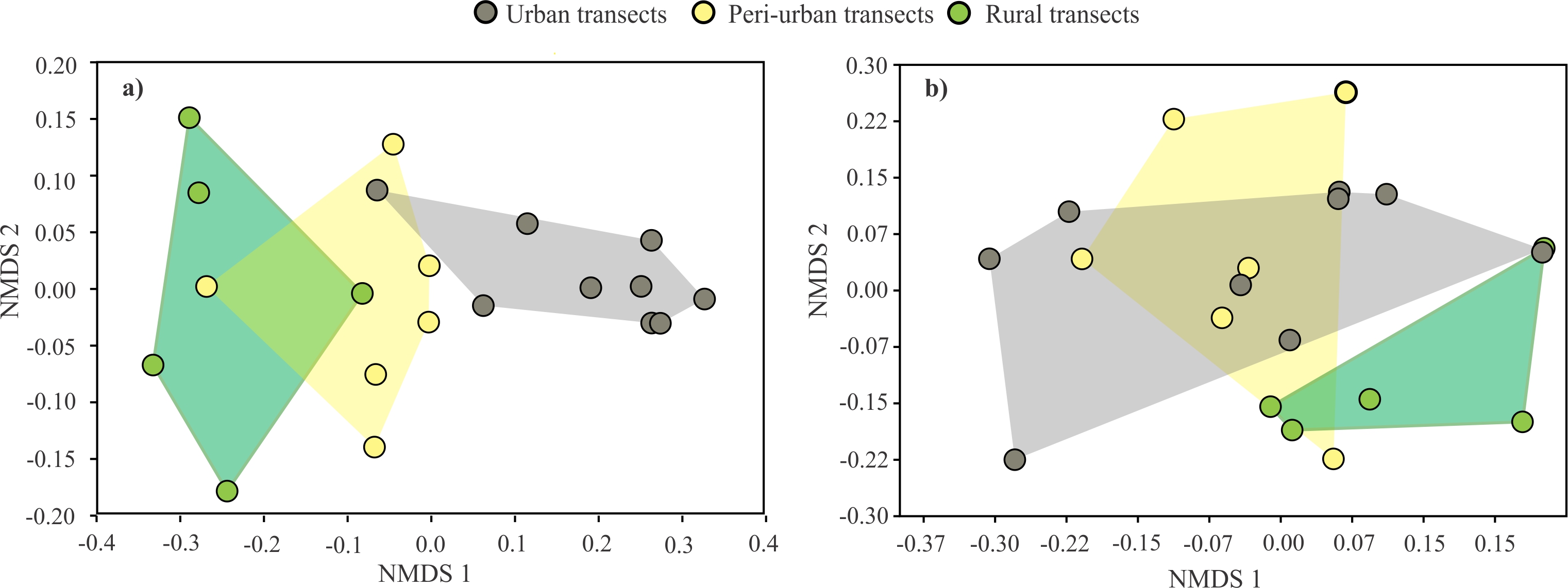
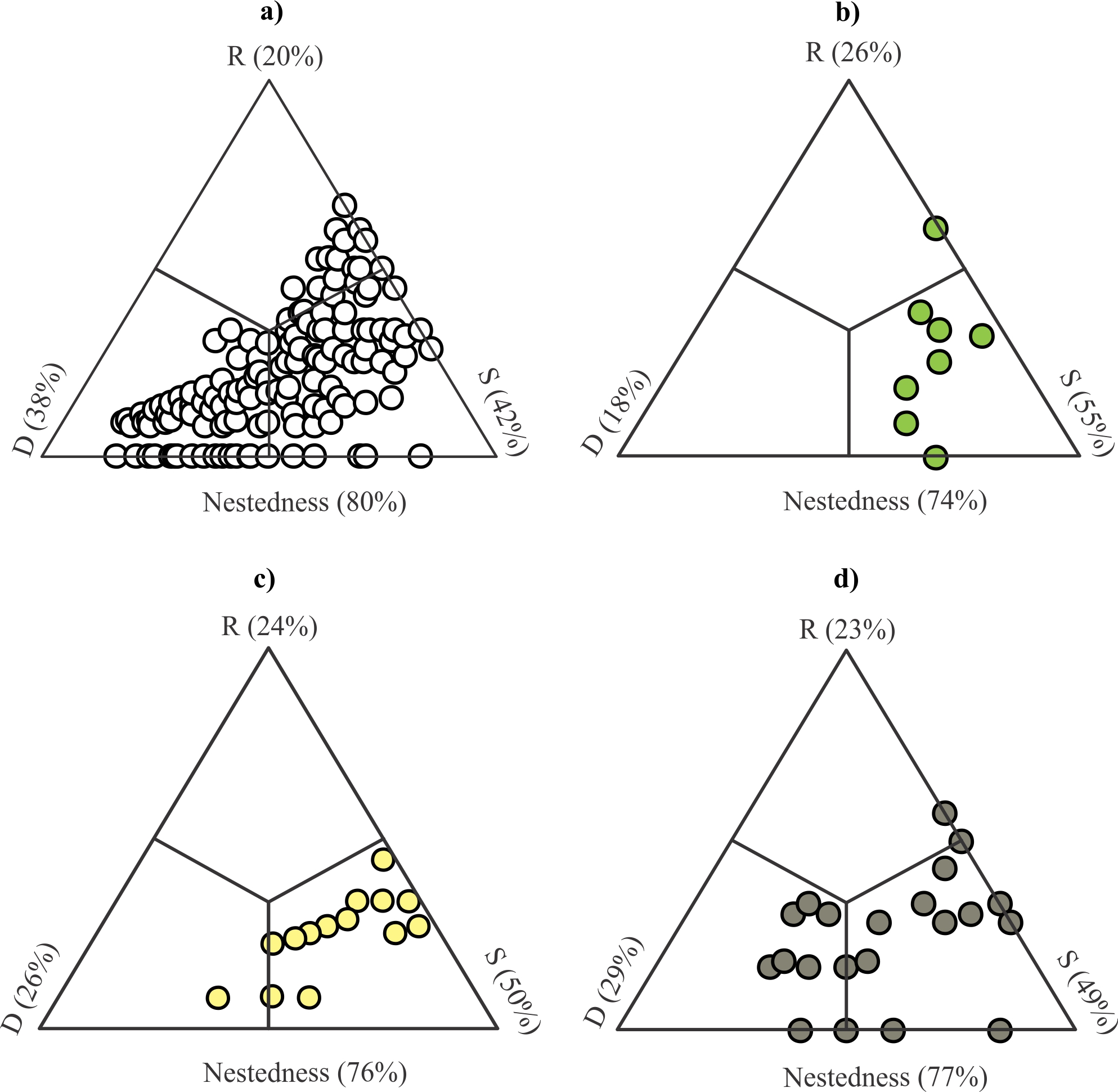
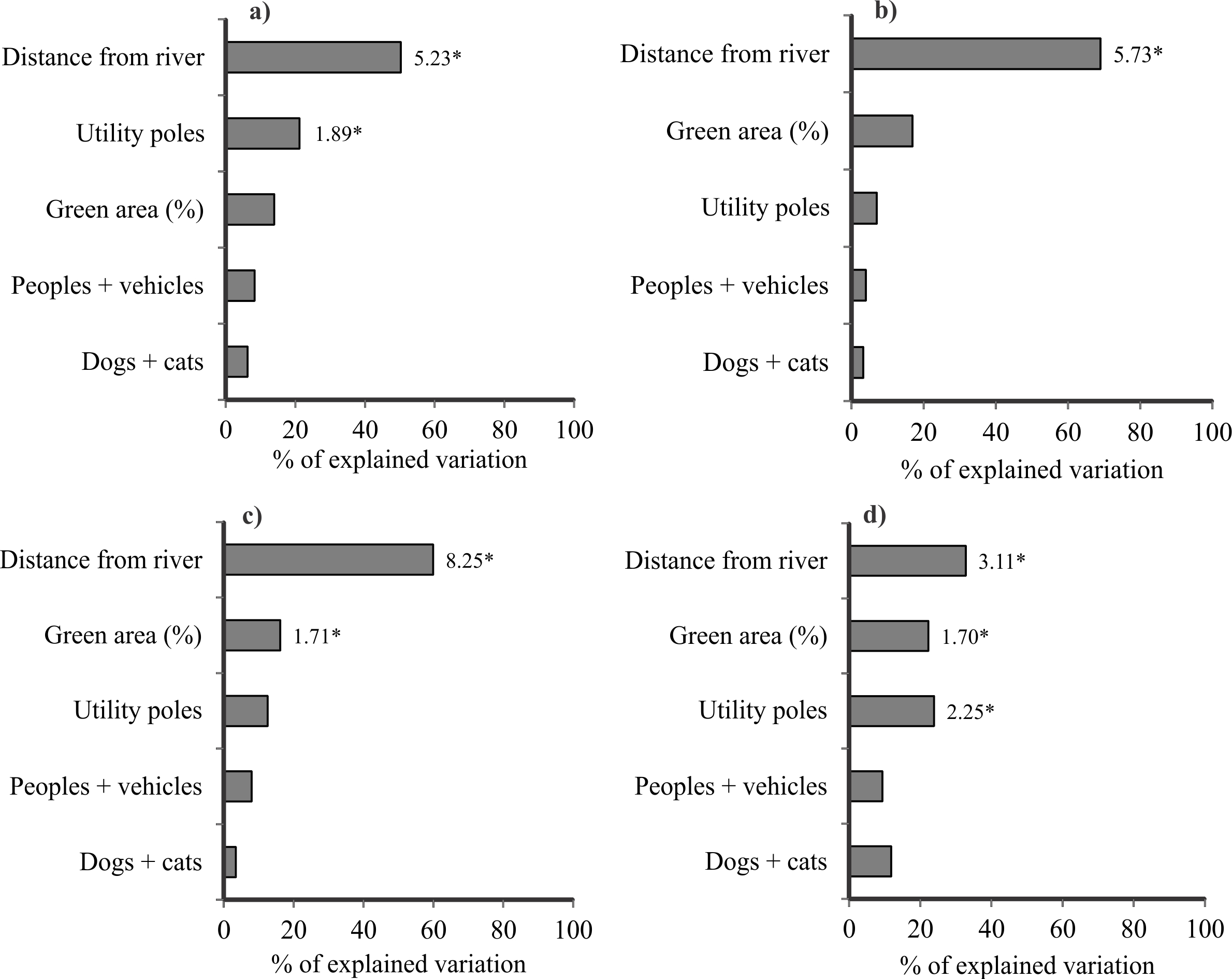
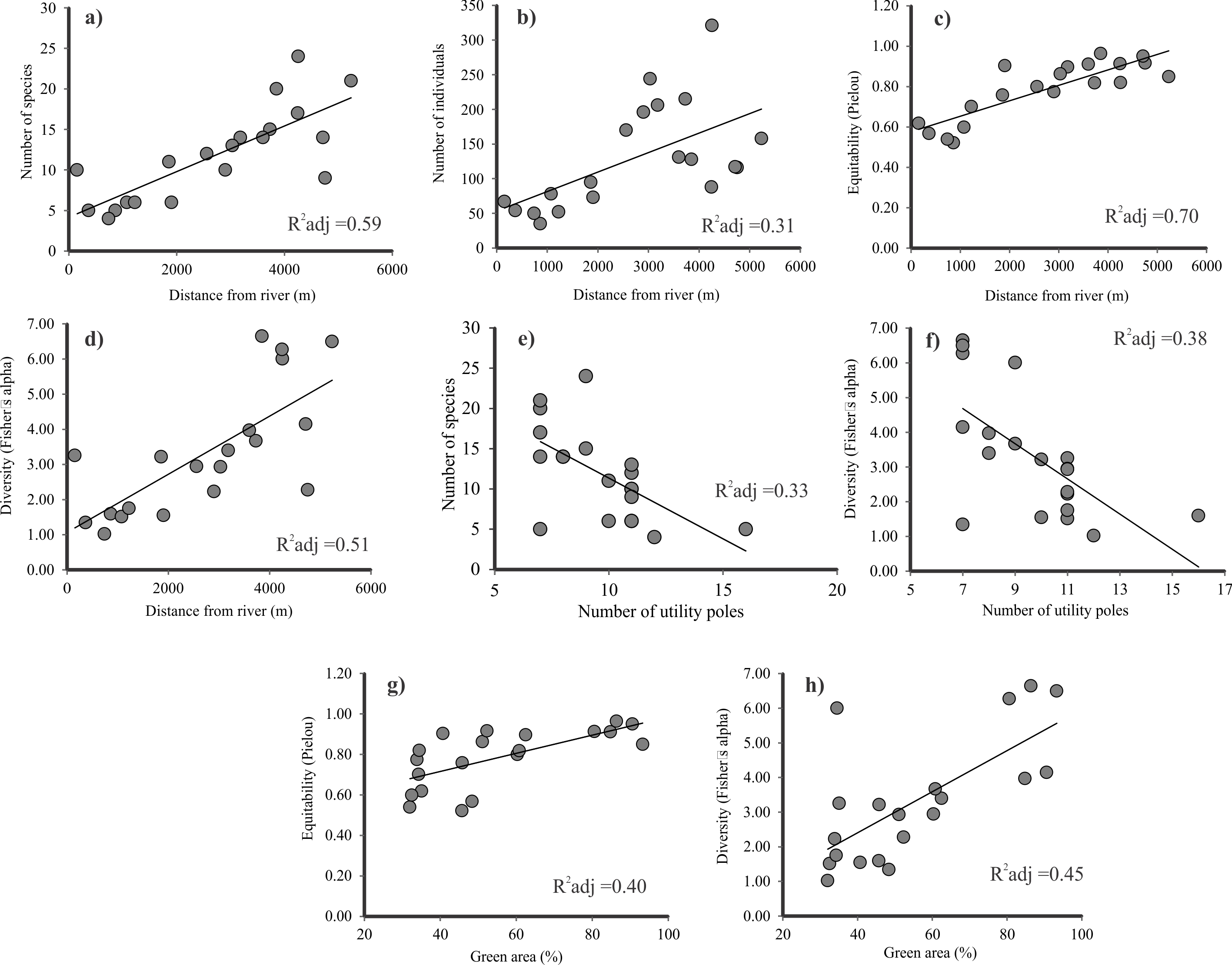
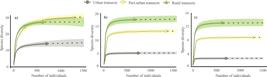
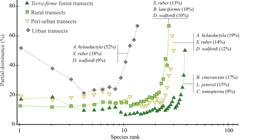
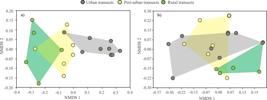
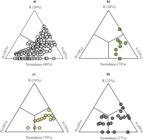
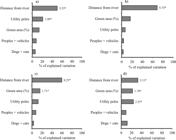
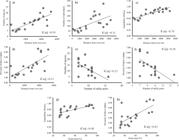
The responses of biodiversity to urban gradients are poorly characterized in tropical cities. We investigated the taxonomic structure of anuran assemblages along the urban-rural gradients in Tabatinga, an Amazonian city in a region with the highest amphibian diversity in the world. We carried out quantitative censuses of anurans in transects distributed in urban, peri-urban, rural and minimally disturbed forests. We sampled 2,841 individuals belonging to 51 anuran species. Rural and peri-urban habitats showed similar species richness, and both are richer than urban habitats. Species abundance distribution in urban transects was more strongly dominated by fewer species than peri-urban, rural and terra-firme forest habitats. Species composition was similar between urban, peri-urban, and rural habitats, with the anuran assemblages displaying a nested arrangement in the species distribution. Anuran alpha diversity was positively affected by distance from a major river and the amount of green area around transects. In contrast, the alpha diversity of anuran species is negatively influenced by increasing the number of utility poles. Studies around the world suggest that urban habitats in cities may harbor a diverse fauna of anurans. The maintenance of urban protected areas by municipal governments may be relevant for the conservation of amphibians in the Amazon.
Key words
Amphibians; Tropical Cities; Urban Biodiversity; Urban Protected Areas
 Thumbnail
 Thumbnail
 Thumbnail
 Thumbnail
 Thumbnail
 Thumbnail