 Non-catalytic and catalytic co-pyrolysis of neem seed cake and plastic waste: an experimental investigation on product distribution, synergistic interaction and characterization
Abstract
This investigation elucidates the co-pyrolysis of neem seed cake in combination with plastic waste across a spectrum of mass ratios namely, 0:1, 3:1, 2:1, 1:1, 1:2, 1:3, and 1:0 subjected to varying pyrolytic temperatures from 350°C to 650°C, employing a CuO catalyst as a facilitating agent. The research concentrated on elucidating the effect of reaction temperature and the blend ratio of neem seed cake to plastic waste on the distribution of products and the chemical composition of the resultant pyrolysis oil. The co-pyrolysis performed at a 1:2 ratio of neem seed cake to plastic waste yielded an optimal oil production of 69.4 wt% with maximum positive synergy of 6.25% at 500°C. The physicochemical characteristics of the resulting co-pyrolysis oil demonstrated a striking resemblance to those of conventional fossil diesel. Further analysis through FT-IR revealed the presence of a different range of aromatic components. Quantitative analysis utilizing chromatographic peak area evaluations was undertaken to elucidate the compositional profile of the pyrolysis oils, thereby accentuating the presence of synergistic effects. Furthermore, GC-MS analysis provided empirical validation of the interaction between neem seed cake and waste plastics during co-pyrolysis, as indicated by discernible decrease in the concentration of oxygenated compounds.
Key words
Biofuel; characterization; co-pyrolysis; mixed plastics; neem seed cake
INTRODUCTION
Currently, fossil fuels dominate the global energy landscape, whereas biomass is acknowledged as a sustainable and economically feasible renewable carbon resource with widespread availability (Shuba & Kifle 2018, Sambandam et al. 2024). Amidst rapid population growth and economic development, the production of plastic waste has surged, threatening ecological stability due to its complex composition (Gielen et al. 2019). The reduction of fossil fuel reserves and the persistent necessity for sustainable energy solutions have catalyzed considerable interest in alternative renewable energy technologies. As global energy consumption continues its upward curve, the imperative to transition towards renewable energy sources becomes increasingly critical, not only to alleviate greenhouse gas discharges but also to strengthen energy security and lessen the adverse impacts of climate change (Kumar et al. 2024a). Any energy source that is perpetually viable and cannot be exhausted is considered sustainable energy. Sustainable energy satisfies our energy needs without the need for renewal or replenishment; it never runs out or goes bad (Padmanabhan et al. 2024). Sustainable energy is important because it can help the planet and the economy in many ways, including reducing climate change, reducing air pollution, diversifying energy supply, and achieving energy independence (Mangesh et al. 2020). Among the myriad renewable energy technologies, thermochemical conversion processes, particularly pyrolysis, have emerged as formidable methodologies for the conversion of organic feedstocks into valuable energy products (Nemitallah et al. 2024). Pyrolysis is defined as a thermochemical decomposition process that occurs in the absence of oxygen, resulting in the thermal disintegration of biomass and waste materials into oil, syngas, and solid char (Yogalakshmi et al. 2022, Chandrasekran et al. 2024). This multifaceted technology presents a suite of advantages, encompassing waste management, resource recovery, and the generation of renewable fuels (Ubando et al. 2020, Lee et al. 2019). Slow, fast, and catalytic pyrolysis facilitates diverse product yields and compositions, allowing the process to be tuned to meet certain energy requirements (Dai et al. 2022). In pyrolysis, each feedstock was processed by unique operational parameters and mechanisms, which profoundly influenced both the quality and quantity of the yield products. The design and operational parameters of pyrolysis reactors are pivotal in determining the efficacy and efficiency of the pyrolysis process. Among the array of reactor configurations, fixed-bed pyrolysis reactors are frequently employed for processing biomass, offering a straightforward and effective method for the conversion of solid feedstocks (Kabir & Hameed 2017, Campuzano et al. 2019, Madhu et al. 2017). The combination of biomass with waste plastics in co-pyrolysis systems has gained prominence as an innovative strategy aimed at optimizing product yields and enhancing overall sustainability (Seah et al. 2023, Adeniyi et al. 2024). Co-pyrolysis is a process that produces biofuels and other products by combining several raw materials, such as waste from fossil fuels and bio-based sources. Co-pyrolysis offers numerous benefits, such as reducing waste, producing high-quality biofuels, reducing fossil fuel dependency, and emitting less carbon (Mehanathan et al. 2025). By combining various biomass materials with plastic waste, the co-pyrolysis method enhances the production of desired products (Chen et al. 2024, Abi Bianasari et al. 2024). The synergistic interactions that occur during co-pyrolysis can yield enhanced quality and quantity of pyrolysis oil, positioning it as a viable renewable fuel source (Sambandam et al. 2023). Furthermore, the incorporation of biomass may significantly influence the pyrolytic behaviour of plastics, potentially augmenting the thermal degradation process and the overall efficiency of conversion (Al-Rumaihi et al. 2022). Catalytic pyrolysis represents another escalating domain of research focused on enhancing both the yield and quality of pyrolysis oil through the application of catalysts (Mahari et al. 2021). By integrating catalysts within the pyrolysis framework, researchers aspire to optimize reaction kinetics, minimize the formation of undesirable by-products, and facilitate the synthesis of higher-value chemicals and fuels (Hoang et al. 2021, Kan et al. 2020).
Azadirachta indica, is generally known as the neem tree. This species, which belongs to the genus Azadirachta. The neem tree has achieved global significance due to its diverse applications, making it as the most valuable tree throughout the world. In India, neem trees are valued for their numerous beneficial uses. Various parts of the neem tree offer multiple functions for human use (Raguraman et al. 2021). For example, dried neem leaves are traditionally placed in storage areas to prevent insect infestations. Additionally, products derived from neem are highly valued in Siddha and Ayurvedic medicine. The de-oiled cake, a by-product is rich in nutrients and is often utilized as an organic fertilizer (Sowmya Dhanalakshmi & Madhu 2021). However, like other neem residues, neem seed cake lacks significant market value and is often underutilized. Despite the potential of neem seed cake, the existing literature on energy conversion techniques specific to this by-product remains limited, with limited research conducted on its pyrolysis properties. The current study seeks to explore the pyrolytic characteristics of Azadirachta indica seed cake for biofuel production (Kaushik et al. 2022). A review of the existing studies revealed a significant absence of research on the non-catalytic and catalytic conversion of neem seed and the utilization of its derived oil as a fuel (Alagu & Sundaram 2018). In contrast to the pyrolysis of individual plastic waste, mixed plastics yielded a lower liquid output, producing less than 50 wt% (Sharuddin et al. 2016). From an environmental perspective, pyrolysis offers an alternate to landfilling and contributes to the reduction of greenhouse gases, particularly carbon dioxide (CO2) emissions. Compared to other solid waste treatment methods, pyrolysis presents significant environmental benefits (A) emissions. Compared to other solid waste treatment methods, pyrolysis presents significant environmental benefits (Al-Salem et al. 2017). Plastics serve as an ideal co-reactant during pyrolysis with biobased materials. Given that waste plastics pose significant environmental challenges and risks to human health, their incorporation into the catalytic co-pyrolysis process not only aids in reducing pollutants but also helps to enhance energy recovery (Zhang et al. 2016). Exploring the synergy of co-pyrolysis on reaction pathways, conversion kinetics, and product development, beside the speciation of intermediates, is crucial for advancing our understanding of the distinct pyrolysis behaviour of biomass (lignocellulosic materials) and plastics (Burra & Gupta 2018). Catalytic pyrolysis enables in-situ deoxygenation of biomass during pyrolysis, preventing secondary reactions in pyrolysis oil storage and offering a cost-effective pathway for hydrocarbon production. However, challenges include low hydrocarbon yields, significant solid residue, and rapid catalyst deactivation from coke deposition, requiring frequent regeneration (Xue et al. 2016). Catalytic pyrolysis facilitates the improved yield and superior quality of oils through the application of appropriate bi-functional catalysts.
This investigation concentrated on the co-pyrolysis of neem seed cake and plastic waste containing equal amount of polyethylene terephthalate (PET) and low density polyethylene (LDPE), emphasizing the potential for energy recovery through waste valorization. In this study, initially, both neem seed cake and plastic waste were pyrolyzed separately. Then, they were co-pyrolyzed together with a CuO catalyst, using different weight ratios of plastic waste to neem seed cake. From the collective literature survey, no work can be identified in co-pyrolysis of neem seed cake and plastic waste and the initial examination was conducted to identify its suitability for pyrolysis. The research aimed to assess the influence of biomass-plastic combinations on product yields, specifically analyzing mass ratios of 0:1, 3:1, 2:1, 1:1, 1:2, 1:3, and 1:0. It is notable that existing literature regarding the co-pyrolysis of neem seed cake and plastic waste is sparse, despite the substantial availability of these low-value feedstocks in the environment. The aim of the experimental work was to optimize the yield of liquid oil while adhering to established quality standards. Subsequently, a thorough characteristics analysis of the pyrolysis oil produced under optimal conditions was performed. Furthermore, the effects of various operational conditions on the yield and composition of volatiles were thoroughly investigated. The resulting oil products were characterized for a range of physical and chemical properties using Fourier transform infrared Spectroscopy (FT-IR) and gas chromatography-mass spectrometry (GC-MS) to determine their potential applications.
MATERIALS AND METHODS
For the co-pyrolysis experiment, neem seed cake was sourced locally in Coimbatore, India. The de-oiled seed cake was dried and subsequently pulverized into a powder form. The plastic wastes were acquired from local vendor. These wastes are the combination of PET and LDPE. In order to free handling purpose, the plastic waste was also shredded. Both the feedstocks were obtained at no cost. Prior to the pyrolysis process, the materials were dried to remove water elements. This drying procedure involved a two-week exposure to sunlight, followed by an additional four hours in a furnace set at 105°C. The quantification of the synergistic effect in pyrolysis reaction is determined by evaluating the difference between the actual and theoretical product yields, as expressed in Equation (1):
The theoretical yields are calculated under the assumption of negligible interaction between neem seed cake and plastic waste during the co-pyrolysis process, as formulated below:
Here, XN and XP denote the mass ratios of neem seed cake and plastic waste within the mixture, while YN and YP correspond to the yields from the individual pyrolysis of neem seed cake and plastic waste, respectively.
Thus, a positive value of ΔY (where ΔY > 0) signifies a constructive synergistic effect, whereas a negative value (where ΔY < 0) denotes a deleterious synergistic interaction (Wang et al. 2019). This distinction is crucial for understanding the dynamics of product yield in the co-pyrolysis process, as it informs the efficacy of combining feedstocks in enhancing overall performance. Each experimental procedure was conducted in triplicate, and the mean value was employed for subsequent calculations. This approach ensures the reliability and accuracy of the data obtained, thereby enhancing the strength of the experimental findings.
Experimental reactor
A laboratory-scale pyrolysis process was conducted employing a stainless-steel reactor meticulously engineered for the synthesis of pyrolysis oil. This reactor, has a diameter of 50 mm and a length of 100 mm, was specifically designed to accommodate a predetermined quantity of feedstock. The heating was facilitated by an electric heater, controlled via an autotransformer, enabling the system to attain pyrolysis temperatures between 350°C and 650°C. The reactor was subjected to a controlled heating rate of 20°C/min, ensuring the attainment of the chosen temperature. The outlet pipe was coupled to a water-cooled condenser, which effectively condensed the evolved gases; this condenser was kept at a temperature of 0°C, with sufficient ice water flow to reach optimal cooling conditions. The individual and co-pyrolysis processes were sustained until the condenser signified the cessation of vapour production, with each experimental run extending for a minimum duration of 30 minutes. To quantify the pyrolysis yields, the weights of the resultant liquid and char were recorded using a precision balance and assessed using a below equation. The yield percentages of gaseous components were subsequently computed using material balance.
Experimental procedure
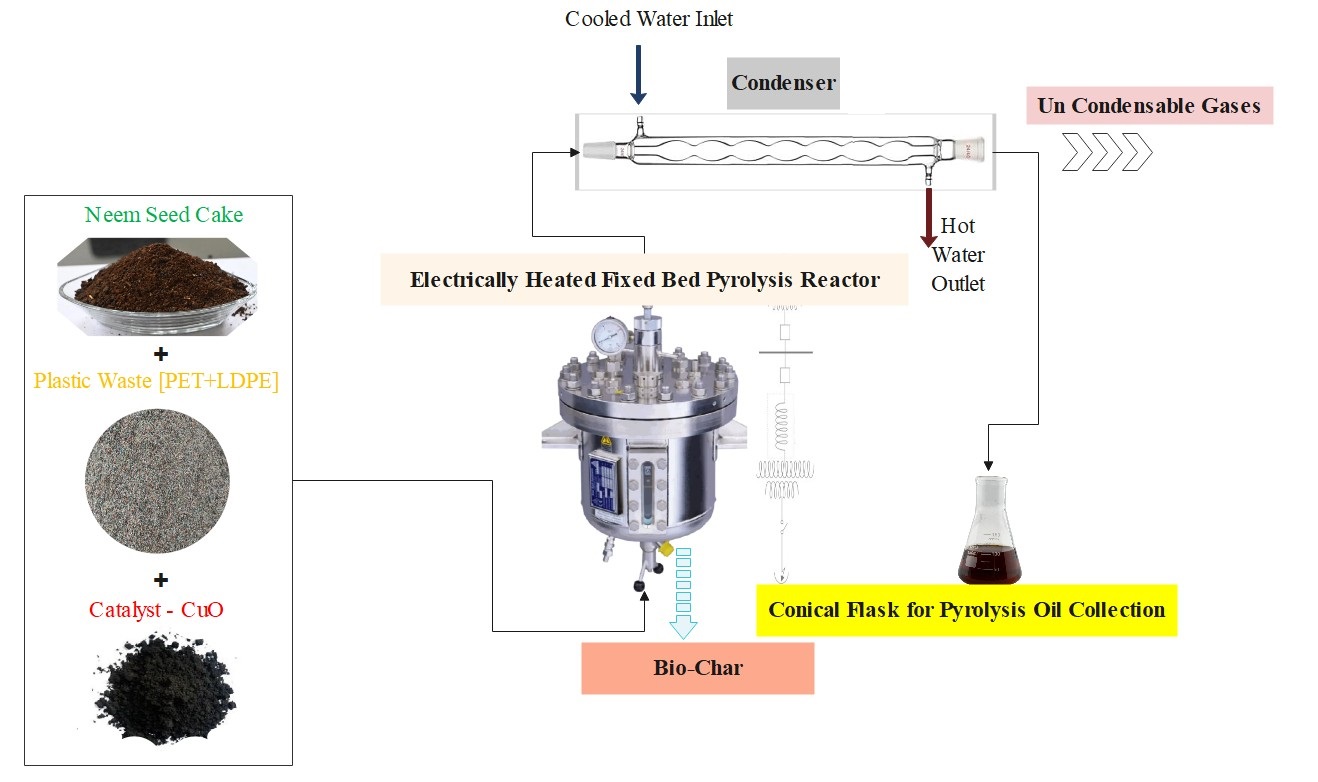
Before conducting the pyrolysis experiments, thermogravimetric analysis (TGA) was carried out on the individual samples to find their thermal stability. Following this characterization, initial pyrolysis experiments were planned to investigate the effect of temperature on the pyrolysis yield. The pyrolysis process was conducted at temperatures of 350, 400, 450, 500, and 550°C. The subsequent series of experiments focused on evaluating product yields during the co-pyrolysis process by systematically varying the proportions of plastic waste according to specific mass ratios of 0:1, 3:1, 2:1, 1:1, 1:2, 1:3, and 1:0. These experiments were conducted at a constant pyrolysis temperature of 500°C. To enhance product yields and optimize energy recovery, a CuO catalyst was incorporated into the co-pyrolysis process. This investigation highlights the promising potential of co-pyrolyzing neem seed cake and plastic waste as a viable strategy for energy recovery and waste valorization, particularly in light of the limited existing literature addressing this topic, despite the considerable availability of these low-value feedstocks in the environment. The study specifically aimed to elucidate the effects of various biomass-plastic combinations on yields through the analysis of the aforementioned mass ratios. Figure 1 shows the overall pyrolysis process and schematic of the reactor.

The figure represents the overall flowchart of the process comprising the feedstock used for the study, the type of reactor, and three types of product output.
Characterization study
A comprehensive examination of the physical characteristics of the biofuel obtained from pyrolysis process is imperative for elucidating its potential applications. The formation water based molecules in the pyrolysis oil is a commonly encountered phenomenon, due to the presence of water molecules within the biomass. Prior to the physical analysis of the oil, the aqueous phase found in the oil was effectively removed through centrifugation at 2000 rpm for duration of 15 minutes. The elemental analysis of the oils was quantitatively assessed utilizing a CHNS Elementar Vario EL II (EA 2400 Series II) analyzer. The calorific values of the fuels under investigation were determined employing a Parr-6772 bomb calorimeter (Parr Instrument Company, Illinois, USA). To explore the functional groups present within the pyrolysis oil, FT-IR spectroscopy (Bruker Optik GmbH TENSOR 27) was employed. FT-IR spectra were acquired at a resolution of 1 cm⁻¹, across a spectral range of 400 to 4000 cm⁻¹. All the physical properties were evaluated based on ASTM standards. The viscosity was measured using a Redwood viscometer (Model: SICBRV-01, Shambhavi Imp., Mumbai), where the density of the oil was measured by weighing known volume oil sample. The flash point was determined using a flash point kit. These analyses substantiate the evaluation of the potential applicability of co-pyrolysis oil as an alternative energy source.
RESULTS AND DISCUSSION
Characterization of feedstocks
Table I presents a proximate analysis of neem seed cake and plastic waste, detailing their composition in terms of volatile matter, moisture, ash, and fixed carbon, each expressed as a percentage by weight. This analysis is pivotal for evaluating the combustion and fuel qualities of these materials. Specifically, plastic waste exhibits a higher volatile matter content (91.70%) compared to neem seed cake (79.25%), indicating a greater tendency for vaporization upon heating (Madhu et al. 2022). The moisture content, representing inherent water, is substantially lower in plastic waste (0.15%) than in neem seed cake (8.52%), suggesting an improved combustibility profile. The ash content, signifying the non-combustible residue left post-combustion, is also markedly lower in plastic waste (0.3%) compared to neem seed cake (4.32%), implying potentially reduced solid waste post-combustion and thereby lesser environmental impact. The fixed carbon reflects the solid combustible fraction, with values nearly identical between the two materials (7.91% for and 7.95%, respectively). The higher volatiles and lower ash in plastic waste suggest its suitability for combustion processes, whereas the higher moisture and ash levels of seed cake may influence its effectiveness as a fuel source (Siddiqui et al. 2018).
Proximate analysis of the feedstocks. The analysis was carried out according to ASTM standard and reported in wt%.
Table II displays the ultimate analysis of neem seed cake and plastic waste, revealing their elemental compositions. This analysis is fundamental for assessing the fuel properties and energy potential of each material. Plastic waste demonstrates significantly higher carbon (76.36%) and hydrogen (10.54%) content than neem seed cake (50.75% and 5.40%, respectively), suggesting greater energy density and combustion efficiency. Conversely, neem seed cake contains higher portion of oxygen (40.41%) and nitrogen (3.15%), which could affect its combustion behaviour and emission profile. Notably, plastic waste exhibits minimal nitrogen (0.15%) and sulfur (0.05%), potentially minimizing NOx and SOx emissions compared to neem seed. With a much higher calorific value of 38.10 MJ/kg for plastic waste versus 18.55 MJ/kg for neem seed cake, plastic waste is indicated as a more energy-dense and cleaner-burning fuel source (Cheng et al. 2020). The parameters are measured per ASTM standards, specifically ASTM D5373 for elemental composition and ASTM D445 for calorific value, underscoring the critical role of this analysis in evaluating both the environmental impact and the fuel efficiency of these feedstocks.
Ultimate analysis of the feedstock materials. The analysis were carried out according to ASTM standard and reported in wt%. The ultimate analysis were carried out in air dry basis.
Table III describes the lignocellulosic composition of neem seed cake. These three principal constituents integrated the understanding of the structural framework and thermal conversion behaviour of biomass. Cellulose, constituting 17.58%, is a crystalline polysaccharide that imparts rigidity and resists thermal degradation, while hemicellulose, at 42.56%, is a less crystalline carbohydrate, prone to decomposition at lower temperatures, and contributes to the volatile profile during thermal processes. Lignin, comprising 39.86%, is a complex aromatic polymer that binds the cell wall structure, offering substantial energy content and decomposing across a wide temperature range, which aids in char and tar production. The composition, with its high hemicellulose and lignin contents, suggests a nuanced thermal degradation profile for neem seed cake. They are indicative of considerable energy potential and a tendency for both volatile release and char formation (Neto et al. 2023).
Lignocellulosic content of neem seed cake. The analysis was carried out to determine the composition of plant biomass.
Thermal degradation behaviour
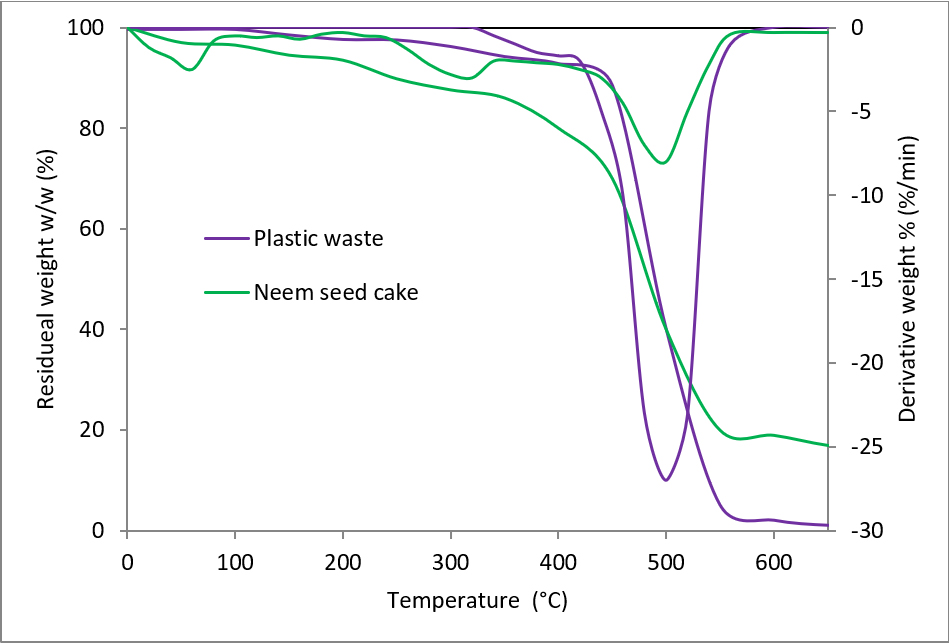
The thermogravimetric analysis (TGA) and derivative thermogravimetry (DTG) profiles for the various feedstocks are illustrated in Figure 2. The analysis is employed to assess the thermal stability and compositional characteristics by monitoring their mass loss relative to increasing temperature. The curve corresponds to plastic waste, characterized by a relatively stable thermal profile until rapid decomposition commences between 300°C and 500°C, whereas the curve, representing neem seed cake, exhibits a more gradual decomposition beginning at lower temperatures. This analysis facilitates a comparative understanding of the thermal degradation patterns of the two materials. The analysis of the plastic waste reveals that the thermal profile remains relatively stable up to approximately 200°C, after which a pronounced phase of decomposition initiates between 300°C and 500°C, characterized by a rapid loss of mass ending at around 600°C, where the majority of the sample’s weight is diminished; the derivative weight curve illustrates distinct peaks that signify multiple degradation phases throughout this process. Conversely, the neem seed cake exhibits an earlier weight loss below 100°C, representing the evaporation of moisture contents. The peak identified between 100°C and 200°C indicates the degradation of volatile constituents, followed by a notable mass reduction between 200°C and 400°C involving the breakdown of hemicellulose, cellulose, and lignin. Both the materials display distinctive peaks in their derivative weight curves that highlight various degradation stages, the weight loss in neem seed cake is comparatively more gradual and dispersed across a wider thermal range (Mulimani & Navindgi 2016). This comparative analysis shows that the plastic waste is thermally stable and undergoes an abrupt decomposition at elevated temperatures, whereas neem seed cake displays a more gradual thermal degradation due to the presence of many organic elements, commencing at lower temperatures and extending over a broader spectrum. During decomposition of neem seed cake, the major peak observed in the DTG profile predominantly corresponds to cellulose degradation, while the shoulder observed at lower temperatures is primarily indicative of hemicellulose devolatilization. The broad shoulders identified within the primary devolatilization range are evident for the decomposition of lignin and extractives. A comprehensive understanding of the devolatilization profiles for hemicellulose, cellulose, and lignin in biomass can be further elucidated through the application of a three-component devolatilization model to analyze the DTG peak (Ong et al. 2021).

TGA and DTG are both thermal analysis techniques used to study the thermal stability of a material by measuring its weight loss as a function of temperature.
Pyrolysis experiment
Effect of temperature on biomass pyrolysis
Figure 3 explains the product yield distribution of neem seed cake pyrolyzed between 350°C and 650°C. In the figure, each product is represented by a different bar, which is expressed in percentage. The yield of gas shows a clear upward trend that intensifies with increasing temperature. The gas yield at lower temperatures was 30.4 wt% and increased to 46.9 wt% when the temperature was changed to 650°C. The production of pyrolysis oil has a constant pattern, varying marginally between 30 wt% and 35 wt% over the entire process. The pyrolysis of neem seed cake is strongly influenced by temperature, with the best results observed at 500°C, yielding 38.8 wt% of liquid oil. This higher yield showcases the ability of waste biomass to produce aqueous and volatile compounds, demonstrating its strong efficiency in generating liquid products under high-temperature conditions (Chen et al. 2019). The yield of biochar shows a clear inverse relationship with rising temperatures. Starting at around 36.1 wt% at 350°C, the yield gradually decreases as the temperature increases, dropping to just 21.4 wt% by 650°C. As the temperature increases, neem seed cake exhibits unique thermal properties that favour liquid yield over gaseous components. The significant liquid yield at 500°C is due to intensified thermal degradation and the release of more condensable volatiles during the pyrolysis process. The general trend shows a reduction in liquid yield with increasing temperature, this was compensated by the increase of non-condensable gas production. Overall, these results emphasize the potential of neem seed cake as an effective feedstock for energy production through pyrolysis (Nayan et al. 2013).

This process allowing researchers to optimize the pyrolysis process of biomass wastes for specific applications by selecting the most suitable temperature range.
Effect of temperature on pyrolysis of plastic waste
The pyrolysis behaviour of plastic waste is intensely affected by temperature, with the highest liquid oil production observed at around 500°C (72.7 wt%). This finding highlights the effectiveness of plastic waste in converting to valuable liquid products under high-temperature conditions. As the temperature increases, plastic waste experiences thermal degradation, which involves breaking down polymer chains and forming olefin radicals (Gałko & Sajdak 2022). These processes together promote the production of various liquid hydrocarbons. This degradation typically takes place within a narrow temperature range of 350°C to 650°C, producing minimal residual char and tar by-products. In contrast, temperatures above 500°C can disrupt product distribution, often increasing gaseous outputs while decreasing liquid yields. Although higher thermal energy speeds up cracking reactions, it also reduces the formation of liquid products as a larger portion of the feedstock is converted into gaseous elements. This phenomenon is consistent with established pyrolysis principles, where higher temperatures generally lead to a greater production of non-condensable gases (Uddin et al. 2013). Figure 4 shows the yields obtained from waste plastics. The yield of oil consistently remains the highest among the three products, averaging around 70 wt% across the entire temperature range. The gas yield gradually increases, starting at about 17.2 wt% at 350°C and reaching around 34.4 wt% by 650°C. Meanwhile, the yield of char, which is the lowest, slightly decreases with rising temperatures, beginning at just 19.2 wt% at 350°C and falling to nearly negligible levels by 650°C (2.5 wt%). Pyrolysis oil consistently yields the highest amount, remaining stable at around 70% regardless of temperature variations. In contrast, the gas yield gradually increases with higher temperatures, while the biochar yield decreases as the temperature rises (Osman et al. 2023).

This process allows researchers to optimize the pyrolysis process of plastic waste for specific applications by selecting the most suitable temperature range.
Synergistic interaction
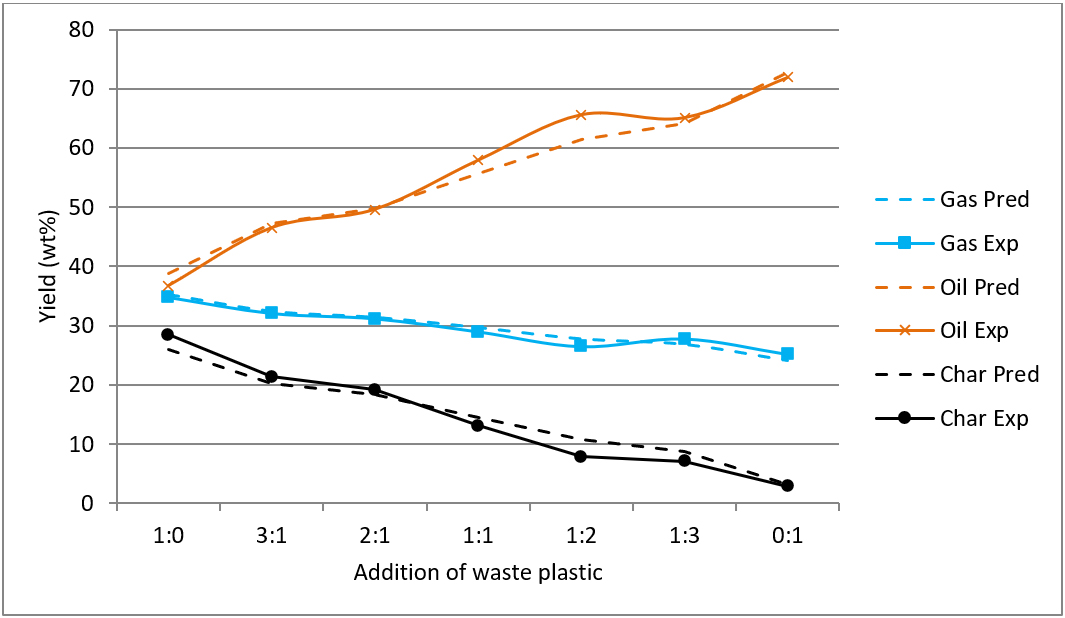
When two or more organisms or substances interact or cooperate, the result is a synergistic effect that is greater than the sum of their individual effects. During the pyrolysis process, the synergistic effect can be identified to achieve good-quality biofuels. The line graph elucidates the yields of three distinct products pyrolysis oil, char and gas with respect to the ratio of neem seed cake to plastic waste incorporated, with yields expressed in weight percentage (wt%). The horizontal axis shows the proportion of neem seed cake to plastic waste, indicating the different ratios of neem seed cake in the blended feedstock. The predicted gas yield shows a steady increase as the ratio of neem seed cake to plastic waste rises, indicating a positive relationship between the amount of neem seed cake and gas production. Similarly, the experimental gas yield shows a similar trend but slightly below the predicted value shown in Figure 5. In contrast, the predicted yield of oil shows a significant increase, reaching a peak at a certain neem seed cake-to-plastic waste ratio before stabilizing. Likewise, the experimental yield of pyrolysis oil also shows an upward trend, closely matching the predicted results. Both the predicted and experimental yields of char show a downward trend. This suggests that as the yields of gas and pyrolysis oil increase with higher ratios of neem seed cake, the yield of char decreases accordingly (Ghenai et al. 2020). The graph clearly displays that an increase in the ratio of neem seed cake to plastic waste is associated with a considerable rise in both gas and pyrolysis oil yield, while the yield of char decreases. This trend aligns with established principles in pyrolysis processes, and the predictive models closely match the experimental results. In this study the maximum synergy on pyrolysis oil yield was attained at the ratio of 1:2 biomass-to-plastic combinations. This reinforces the effectiveness of the methodology used to convert a mixed feedstock into economically valuable products. In this study, a more favorable synergistic impact was found at the 1:2 ratio. At this combination, the liquid yield was 6.25% greater than the yield that was predicted. The condensation of light molecular components is caused by radical secondary reactions, which were found to have a beneficial synergistic effect on oil output (Anandaram et al. 2022).

Synergistic effects during the pyrolysis process, improving solid/gas/oil yield and quality.
Catalytic pyrolysis
Catalytic pyrolysis represents a specialized modification of the traditional pyrolysis technique, wherein the deliberate incorporation of a catalytic agent serves to optimize the overall characteristics of the resultant pyrolytic outputs (Dhanalakshmi et al. 2022). This process allows for a higher yield of desired products at relatively lower temperatures. Basically, pyrolysis is the thermal breakdown of organic materials at high temperature in oxygen-free conditions. The mechanism of the catalytic co-pyrolysis of biomass and plastic waste can be explained in simple terms. During the co-pyrolysis process, the combination of biomass with olefins generated from plastic is the basic rationale for the positive synergy effect on oil output. It became evident that oxygenated elements might interact with olefins when catalysts were present. Moreover, it was shown that hydrocarbons formed from plastic can minimize the production of char by serving as hydrogen donors for oxygenates derived from biomass (Zhang et al. 2013). By reducing single aromatic and other oxygenated molecules during the catalytic pyrolysis process, more polycyclic aromatic hydrocarbons (PAHs) can be produced. Figure 6 displays the yield distribution of three pyrolytic products generated from the co-pyrolysis of neem seed cake and plastic waste under two conditions: one with CuO as a catalyst and one without catalyst. The figure emphasizes the effect of catalyst on distribution of pyrolysis by-products, potentially enhancing selectivity and overall efficiency in the conversion process. When CuO is used as a catalyst, the gas yield stabilizes at about 17.3 wt%, while the liquid fraction reaches its maximum yield of 69.4 wt%. The char yield makes up approximately 13.3 wt% of the total output. Without CuO, the gas yield stays slightly higher, also around 26.5 wt%, while the liquid yield was lower at about 65.6 wt%. However, the char yield decreases to below 7.9 wt%. Overall, the addition of CuO has a minimal impact on gas and liquid yields but slightly increases char production, suggesting a small change in the distribution of pyrolysis products (Su et al. 2023).

The difference in yield of the pyrolysis process during the catalytic and non-catalytic processes was compared.
Characterization of bio-oil
Physical analysis
The comparison between pyrolysis oil and diesel reveals significant differences in their physical and chemical properties, which impact their energy output, combustion behaviour, and environmental effects. Diesel has a much higher carbon content (85.4% vs. 71.82%) than pyrolysis oil, giving it a greater energy density, as shown by its higher calorific value (42.85 MJ/kg compared to 40.05 MJ/kg). Although pyrolysis oil has a slightly higher hydrogen content (12.54%), which could enhance its combustion, its significant nitrogen (0.30%) and oxygen (15.22%) levels create challenges, including increased NOx emissions and reduced combustion stability. The higher sulfur content (0.26%) of the diesel leads to greater SO₂ emissions, while pyrolysis oil, with lower sulfur content (0.12%), presents a more environmentally friendly option (Ahmad et al. 2016). Tigher viscosity (3.2 cSt), density (880 kg/m³), and higher flash (70°C) and fire points (78°C) of the pyrolysis oil indicate better handling safety. However, these properties reduce its energy efficiency, they contribute to a more sustainable environmental profile.
FT-IR analysis of co-pyrolysis oil
The FT-IR spectroscopy serves as a crucial analytical tool for elucidating the comprehensive composition of co-pyrolysis oil. Figure 7 illustrates the FT-IR analysis of the co-pyrolysis oil collected at maximum synergy point. The FT-IR spectrum reveals significant spectral features indicative of various functional groups formed during the thermal degradation process (Chen et al. 2016). Notably, the O-H stretching band at 3512.5 cm⁻¹ correlates with the existence of phenolic compounds and alcohols, a result of lignocellulose breakdown. The alkene functionality is evidenced by the =C-H stretching peak at 2982.3 cm⁻¹, while the C-H stretch associated with alkanes is observed at 2925 cm⁻¹. The peak at 1655.9 cm⁻¹ relates to the -C=C- stretching, which signifies the presence of alkenes and aromatic structures. Furthermore, the C-O stretching band at 1250.7 cm⁻¹ suggests the existence of esters and ethers. Alkene groups in the oil are found in the C-H bending peak at 980 cm⁻¹. The oil also had considerable amount of alkynes, which is confirmed by an absorbance at 680.4 cm⁻¹. Overall, the co-pyrolysis oil exhibits a predominance of aliphatic hydrocarbons, including a variety of alkynes, with minor constituents of alkanes, alkenes, esters, and ethers (Livingston et al. 2025).

GC-MS analysis of co-pyrolysis oil
The GC-MS analysis elucidates that the pyrolysis oil originating from mixed biomass and plastics comprises a diverse collection of functional groups, including alcohols, esters, phenols, organic acids, aromatic compounds, nitrogen-containing species, and hydrocarbons (Mariyam et al. 2022). Figure 8 illustrates the yield percentages of various chemical compounds generated from two feedstocks across different combinations. The data show how the concentrations of plastic waste on the feedstock affect the production of various chemical species, revealing significant differences in yields based on the specific feedstock. The yield analysis indicates that neem seed cake generally produces lower amounts of various compounds compared to plastic waste across different levels of plastic addition. However, the nitrogenated compounds and esters in the pyrolysis oil were significantly identified when the feedstock was pyrolyzed with 50% plastic wastes. The plastic waste and the addition of plastic with biomass show significantly higher yields of hydrocarbons. This suggests that these conditions are optimal for maximizing alcohol and hydrocarbon output. Co-pyrolysis also shows significant potential for producing stable pyrolysis oil with lower water content. These advantages could be further exploited for efficient waste management techniques on reaction kinetics and real-world applications (Fakayode et al. 2023).

The presence of different chemical compositions in the different pyrolysis oils was graphically displayed.
Application of the pyrolysis products
The use of fuels derived from biomass has grown in popularity during the past 20 years. This interest started out driven by concerns about possible crude oil deficits, but in the past few years, the environmental benefits of biomass fuels have taken the forefront. Biomass fuels are essentially carbon dioxide neutral and contain less sulfur than fossil fuels. Furthermore, the liquid bio-oil produced from the pyrolysis process is simple to transport and store. The properties of the bio-oil mentioned in Table IV clearly show that its energy values are 40.05 MJ/kg, which is comparable to fossil diesel. The oil and diesel fuel have similar physicochemical properties, so it can be used as a liquid fuel for internal combustion engines (Sambandam et al. 2024). It can also be used as a heating medium for furnaces and boilers. The chemical substances identified in the pyrolysis oil are used for many industrial purposes, including pharmaceutical, cosmetic, and medical sectors. The produced char in the pyrolysis process can be used as a solid fuel for industrial and domestic heating purposes. The chemical structure of the substance to be pyrolyzed greatly influences the use of char. Char is most commonly utilized as an adsorbent material because of its increased surface area and porosity. The non-condensable pyrolysis gas is a source of heat for different heating processes. The gas contains a variety of interesting compounds, including significant amounts of higher hydrocarbons, H2, and CH4 (Kumar et al. 2024b). These molecules may become more abundant after treatment, which would make them a valu, and CH4 (Kumar et al. 2024b). These molecules may become more abundant after treatment, which would make them a valuable sour (Kumar et al. 2024b). These molecules may become more abundant after treatment, which would make them a valuable source of biomolecules. There are numerous social and environmental advantages to co-pyrolyzing plastics and biomass. Plastics can be pyrolyzed to create fuels and valuable compounds. It is a promising method for resolving the worldwide plastic waste challenge and establishing a circular economy. Pyrolysis also reduces greenhouse gas emissions by reducing the quantity of waste that is disposed of in landfills.
Properties of the co-pyrolysis oil obtained from neem seed cake and plastic waste. The analysis were carried out according to ASTM standards and the plastic waste samples comprising PET and LDPE in equal proportion.
CONCLUSIONS
This investigation effectively explored the co-pyrolysis of neem seed cake in combination with plastic waste, demonstrating its viability as a dual-purpose approach for both waste valorization and energy recovery. The research findings highlight that co-pyrolysis, particularly at an optimized mass ratio of 1:2 (neem seed cake to plastic waste) and a pyrolysis temperature of 500°C, resulted in the production of pyrolysis oil with physicochemical properties closely resembling those of conventional fossil diesel. The inclusion of a CuO catalyst significantly contributed to enhanced product yields and quality. Advanced characterization techniques, including FT-IR and GC-MS, elucidated the formation of valuable aromatic compounds while endorsing the reduction in oxygenated compounds. The reduction of oxygenated compounds in the pyrolysis oil also highlighted the synergistic interactions between the biomass and plastic components. The outcomes of this study suggest that co-pyrolysis presents a promising pathway for the sustainable production of pyrolysis oil from mixed waste, offering a potential alternative to traditional fossil fuels. Further research should prioritize the scalability of this process, the refinement of catalyst efficiency, and a comprehensive evaluation of the long-term environmental effects of pyrolysis oil utilization in order to establish its feasibility as a large-scale energy solution.
References
-
ABI BIANASARI A, KHALED MS, HOANG TD, REZA MS, BAKAR MSA & AZAD AK. 2024. Influence of combined catalysts on the catalytic pyrolysis process of biomass: A systematic literature review. Energy Convers Manage 309: 118437. https://doi.org/10.1016/j.enconman.2024.118437.
» https://doi.org/10.1016/j.enconman.2024.118437 -
ADENIYI AG, IWUOZOR KO, EMENIKE EC, AJALA OJ, OGUNNIYI S & MURITALA KB. 2024. Thermochemical co-conversion of biomass-plastic waste to biochar: A review. Green Chem Eng 5(1): 31-49. https://doi.org/10.1016/j.gce.2023.03.002.
» https://doi.org/10.1016/j.gce.2023.03.002 -
AHMAD S, AHMAD M I, NAEEM K, HUMAYUN M & FAHEEM F. 2016. Oxidative desulfurization of tire pyrolysis oil. Chem Ind Chem Eng Q 22(3): 249-254. http://dx.doi.org/10.2298/CICEQ150609038A.
» https://doi.org/10.2298/CICEQ150609038A -
ALAGU RM & SUNDARAM EG. 2018. Preparation and characterization of pyrolytic oil through pyrolysis of neem seed and study of performance, combustion and emission characteristics in CI engine. J Energy Inst 91(1): 100-109. https://doi.org/10.1016/j.joei.2016.10.003.
» https://doi.org/10.1016/j.joei.2016.10.003 -
AL-RUMAIHI A, SHAHBAZ M, MCKAY G, MACKEY H & AL-ANSARI T. 2022. A review of pyrolysis technologies and feedstock: A blending approach for plastic and biomass towards optimum biochar yield. Renew Sustain Energy Rev 167: 112715. https://doi.org/10.1016/j.rser.2022.112715.
» https://doi.org/10.1016/j.rser.2022.112715 -
AL-SALEM SM, ANTELAVA A, CONSTANTINOU A, MANOS G & DUTTA A. 2017. A review on thermal and catalytic pyrolysis of plastic solid waste (PSW). J Environ Manage 197: 177-198. https://doi.org/10.1016/j.jenvman.2017.03.084.
» https://doi.org/10.1016/j.jenvman.2017.03.084 -
ANANDARAM H, SRIVASTAVA BK, VIJAYAKUMAR B, MADHU P, DEPOURES MV, PATIL PP & PRABHAKAR S. 2022. Co-pyrolysis characteristics and synergistic interaction of waste polyethylene terephthalate and woody biomass towards bio-oil production. J Chem 2022(1): 3699076. https://doi.org/10.1155/2022/3699076.
» https://doi.org/10.1155/2022/3699076 -
BURRA KG & GUPTA AK. 2018. Kinetics of synergistic effects in co-pyrolysis of biomass with plastic wastes. Appl Energy 220: 408-418. https://doi.org/10.1016/j.apenergy.2018.03.117.
» https://doi.org/10.1016/j.apenergy.2018.03.117 -
CAMPUZANO F, BROWN RC & MARTÍNEZ JD. 2019. Auger reactors for pyrolysis of biomass and wastes. Renewable Renew Sustain Energy Rev 102: 372-409. https://doi.org/10.1016/j.rser.2018.12.014.
» https://doi.org/10.1016/j.rser.2018.12.014 -
CHANDRASEKRAN G, AHALYA N, PAMILA R, MADHU P, VIDHYA L, VINODHA S & LALVANI JIJ. 2024. Thermal degradation of emerging pollutants in municipal solid wastes and agro wastes: effectiveness of catalysts and pretreatment for the conversion of value added products. Discover Appl Sci 6(4): 172. https://doi.org/10.1007/s42452-024-05844-y.
» https://doi.org/10.1007/s42452-024-05844-y -
CHEN W, SHI S, ZHANG J, CHEN M & ZHOU X. 2016. Co-pyrolysis of waste newspaper with high-density polyethylene: Synergistic effect and oil characterization. Energy Convers Manage 112: 41-48. https://doi.org/10.1016/j.enconman.2016.01.005.
» https://doi.org/10.1016/j.enconman.2016.01.005 -
CHEN WH, HO KY, ANIZA R, SHARMA AK, SARAVANAKUMAR A & HOANG AT. 2024. A review of noncatalytic and catalytic pyrolysis and co-pyrolysis products from lignocellulosic and algal biomass using Py-GC/MS. J Ind Eng Chem 154: 51-64. https://doi.org/10.1016/j.jiec.2024.01.020.
» https://doi.org/10.1016/j.jiec.2024.01.020 -
CHEN X, CHE Q, LI S, LIU Z, YANG H, CHEN Y & CHEN H. 2019. Recent developments in lignocellulosic biomass catalytic fast pyrolysis: Strategies for the optimization of bio-oil quality and yield. Fuel Process Technol 196: 106180. https://doi.org/10.1016/j.fuproc.2019.106180.
» https://doi.org/10.1016/j.fuproc.2019.106180 -
CHENG F, BAYAT H, JENA U & BREWER CE. 2020. Impact of feedstock composition on pyrolysis of low-cost, protein-and lignin-rich biomass: A review. J Anal Appl Pyrolysis 147: 104780. https://doi.org/10.1016/j.jaap.2020.104780.
» https://doi.org/10.1016/j.jaap.2020.104780 -
DAI L, ZHOU N, LV Y, CHENG Y, WANG Y, LIU Y & RUAN R. 2022. Pyrolysis technology for plastic waste recycling: A state-of-the-art review. Prog Energy Combust Sci 93: 101021. https://doi.org/10.1016/j.pecs.2022.101021.
» https://doi.org/10.1016/j.pecs.2022.101021 -
DHANALAKSHMI CS, AHALYA N, VIDHYALAKSHMI P, KRISHNARAJ C, SELVAM N, PATIL PP & PRABHAKAR S. 2022. Individual and Catalytic Co-Pyrolysis of Agricultural Outcomes and Polymeric Materials over Nano-HZSM-5 Zeolite: Synergistic Effects and Yield Analysis for Heating Applications. J Nanomater 2022(1): 3743299. https://doi.org/10.1155/2022/3743299.
» https://doi.org/10.1155/2022/3743299 -
FAKAYODE OA, WAHIA H, ZHANG L, ZHOU C & MA H. 2023. State-of-the-art co-pyrolysis of lignocellulosic and macroalgae biomass feedstocks for improved bio-oil production-A review. Fuel 332: 126071. https://doi.org/10.1016/j.fuel.2022.126071.
» https://doi.org/10.1016/j.fuel.2022.126071 -
GAŁKO G & SAJDAK M. 2022. Trends for the thermal degradation of polymeric materials: Analysis of available techniques, issues, and opportunities. Appl Sci 12(18): 9138. https://doi.org/10.3390/app12189138.
» https://doi.org/10.3390/app12189138 -
GHENAI C, RASHEED MA, ALSHAMSI MJ, ALKAMALI MA, AHMAD FF & INAYAT A. 2020. Design of hybrid solar photovoltaics/shrouded wind turbine power system for thermal pyrolysis of plastic waste. Case Stud Therm Eng 22: 100773. https://doi.org/10.1016/j.csite.2020.100773.
» https://doi.org/10.1016/j.csite.2020.100773 -
GIELEN D, BOSHELL F, SAYGIN D, BAZILIAN MD, WAGNER N & GORINI R. 2019. The role of renewable energy in the global energy transformation. Energy Strategy Rev 24: 38-50. https://doi.org/10.1016/j.esr.2019.01.006.
» https://doi.org/10.1016/j.esr.2019.01.006 -
HOANG AT, ONG HC, FATTAH IR, CHONG CT, CHENG CK, SAKTHIVEL R & OK YS. 2021. Progress on the lignocellulosic biomass pyrolysis for biofuel production toward environmental sustainability. Fuel Process Technol 223: 106997. https://doi.org/10.1016/j.fuproc.2021.106997.
» https://doi.org/10.1016/j.fuproc.2021.106997 -
KABIR G & HAMEED BH. 2017. Recent progress on catalytic pyrolysis of lignocellulosic biomass to high-grade bio-oil and bio-chemicals. Renew Sustain Energy Rev 70: 945-967. https://doi.org/10.1016/j.rser.2016.12.001.
» https://doi.org/10.1016/j.rser.2016.12.001 -
KAN T, STREZOV V, EVANS T, HE J, KUMAR R & LU Q. 2020. Catalytic pyrolysis of lignocellulosic biomass: A review of variations in process factors and system structure. Renew Sustain Energy Rev 134: 110305. https://doi.org/10.1016/j.rser.2020.110305.
» https://doi.org/10.1016/j.rser.2020.110305 -
KAUSHIK VS, DHANALAKSHMI CS, MADHU P & TAMILSELVAM P. 2022. Co-pyrolysis of neem wood bark and low-density polyethylene: influence of plastic on pyrolysis product distribution and bio-oil characterization. Environ Sci Pollut Res 29(58): 88213-88223. https://doi.org/10.1007/s11356-022-21746-1.
» https://doi.org/10.1007/s11356-022-21746-1 -
KUMAR ET AL. 2024a. Pyrolysis behaviour and synergistic effect in co-pyrolysis of wheat straw and polyethylene terephthalate: A study on product distribution and oil characterization. Heliyon 10(17): e37255. https://doi.org/10.1016/j.heliyon.2024.e37255.
» https://doi.org/10.1016/j.heliyon.2024.e37255 -
KUMAR I, TIRLANGI S, KATHIRESAN K, SHARMA V, MADHU P, SATHISH T & MURUGAN P. 2024b. Co-pyrolysis of furniture wood with mixed plastics and waste tyres: assessment of synergistic effect on biofuel yield and product characterization under different blend ratio. Sci Rep 14(1): 24584. https://doi.org/10.1038/s41598-024-72809-x.
» https://doi.org/10.1038/s41598-024-72809-x -
LEE SY, SANKARAN R, CHEW KW, TAN CH, KRISHNAMOORTHY R, CHU DT & SHOW PL. 2019. Waste to bioenergy: a review on the recent conversion technologies. BMC Energy 1(1): 1-22. https://doi.org/10.1186/s42500-019-0004-7.
» https://doi.org/10.1186/s42500-019-0004-7 -
LIVINGSTON TS, MADHU P, DHANALAKSHMI CS & KUMAR RV. 2025. An experimental investigation on performance, emission and combustion characteristics of IC engine using liquid fuel produced through catalytic co-pyrolysis of pressed oil cake and mixed plastics with the addition of nanoparticles. Fuel 379: 133092. https://doi.org/10.1016/j.fuel.2024.133092.
» https://doi.org/10.1016/j.fuel.2024.133092 -
MADHU P, SASIREKA M, SAMIKANNU R, VINOTH K, KUMAR AU, PATIL PP & GEBREKIDAN AM. 2022. Production and characterization of maximum liquid oil products through individual and copyrolysis of pressed neem oil cake and waste thermocol mixture. Adv Polym Technol 2022(1): 5258130. https://doi.org/10.1155/2022/5258130.
» https://doi.org/10.1155/2022/5258130 -
MADHU P, STEPHEN LIVINGSTON T & MANICKAM IN. 2017. Fixed bed pyrolysis of lemongrass (Cymbopogon flexuosus): Bio-oil production and characterization. Energy Sources Part A 39(13): 1359-1368. https://doi.org/10.1080/15567036.2017.1328623.
» https://doi.org/10.1080/15567036.2017.1328623 -
MAHARI WAW, AZWAR E, FOONG SY, AHMED A, PENG W, TABATABAEI M & LAM SS. 2021. Valorization of municipal wastes using co-pyrolysis for green energy production, energy security, and environmental sustainability: A review. Chem Eng J 421: 129749. https://doi.org/10.1016/j.cej.2021.129749.
» https://doi.org/10.1016/j.cej.2021.129749 -
MANGESH VL, PERUMAL T, SUBRAMANIAN S & PADMANABHAN S. 2020. Clean energy from plastic: production of hydroprocessed waste polypropylene pyrolysis oil utilizing a Ni–Mo/laponite catalyst. Energy Fuels 34(7): 8824-8836. https://doi.org/10.1021/acs.energyfuels.0c01051.
» https://doi.org/10.1021/acs.energyfuels.0c01051 -
MARIYAM S, ALHERBAWI M, RASHID N, AL-ANSARI T & MCKAY G. 2022. Bio-oil production from multi-waste biomass co-pyrolysis using analytical Py–GC/MS. Energies 15(19): 7409. https://doi.org/10.3390/en15197409.
» https://doi.org/10.3390/en15197409 -
MEHANATHAN S, MADHU P, DHANALAKSHMI CS & VIJAYAKUMAR R. 2025. Synergistic recovery of renewable hydrocarbon resources via co-pyrolysis of non-edible linseed and waste polypropylene: a study on influence of plastic on oil production and their utilization as a fuel for IC engine. J Energy Inst 118: 101905. https://doi.org/10.1016/j.joei.2024.101905.
» https://doi.org/10.1016/j.joei.2024.101905 -
MULIMANI HV & NAVINDGI MC. 2016. Analysis of physiochemical properties of de-oiled Mahua seed cake for their suitability in producing bio-oil. Int J Innovative Res Sci Eng Technol 5(4): 5061-5067. https://doi.org/10.15680/IJIRSET.2016.0504065.
» https://doi.org/10.15680/IJIRSET.2016.0504065 -
NAYAN NK, KUMAR S & SINGH RK. 2013. Production of the liquid fuel by thermal pyrolysis of neem seed. Fuel 103: 437-443. https://doi.org/10.1016/j.fuel.2012.08.058.
» https://doi.org/10.1016/j.fuel.2012.08.058 -
NEMITALLAH MA, ALNAZHA AA, AHMED U, EL-ADAWY M & HABIB MA. 2024. Review on techno-economics of hydrogen production using current and emerging processes: Status and perspectives. Results Eng 21: 101890. https://doi.org/10.1016/j.rineng.2024.101890.
» https://doi.org/10.1016/j.rineng.2024.101890 -
NETO FS, MELO NETA M, SOUSA A, DAMASCENO L, SOUSA B, MEDEIROS S & RIOS M. 2023. Analysis of the Fuel Properties of the Seed Shell of the Neem Plant (Azadirachta indica). Processes 11(8): 2442. https://doi.org/10.3390/pr11082442.
» https://doi.org/10.3390/pr11082442 -
ONG HC, YU KL, CHEN WH, PILLEJERA MK, BI X, TRAN KQ & PETRISSANS M. 2021. Variation of lignocellulosic biomass structure from torrefaction: A critical review. Renewable Sustainable Energy Rev 152: 111698. https://doi.org/10.1016/j.rser.2021.111698.
» https://doi.org/10.1016/j.rser.2021.111698 -
OSMAN AI, FARGHALI M, IHARA I, ELGARAHY AM, AYYAD A, MEHTA N & ROONEY DW. 2023. Materials, fuels, upgrading, economy, and life cycle assessment of the pyrolysis of algal and lignocellulosic biomass: a review. Environ Chem Lett 21(3): 1419-1476. https://doi.org/10.1007/s10311-023-01573-7.
» https://doi.org/10.1007/s10311-023-01573-7 -
PADMANABHAN S, JOEL L, MARIYAPPAN J & PREMNATH S. 2024. Investigation of hydrogen peroxide and ethanol blends as sustainable energy for gasoline engine applications. Interactions 245(1): 1-15. https://doi.org/10.1007/s10751-024-02204-5.
» https://doi.org/10.1007/s10751-024-02204-5 -
RAGURAMAN D, KUMAR A, PRASANNA RAJ YADAV S, PATIL PY, SAMSON ISAAC J, SOWMYA DHANALAKSHMI C, MADHU P & ISAAC JOSHUARAMESH LALVANI J. 2021. Performance and emission characteristics of pyrolysis oil obtained from neem de Oiled cake and waste polystyrene in a compression ignition engine. Adv Mater Sci Eng 2021(1): 3728852. https://doi.org/10.1155/2021/3728852.
» https://doi.org/10.1155/2021/3728852 -
SAMBANDAM P, JAMES RAJ D, THANGARAJ VK, MUTHIYA SJ, SUBRAMANIAN M, PACHAMUTHU S & PRAVEEN KUMAR T. 2024. Investigation of the environmental implications of using cerium oxide nano-additives in gasoline engines fueled with gasoline-oxyhydrogen. Energy Sources Part A 46(1): 75-94. https://doi.org/10.1080/15567036.2024.2391111.
» https://doi.org/10.1080/15567036.2024.2391111 -
SAMBANDAM P, KUMAR V, MAHALINGAM S, GANESAN S & GIRIDHARAN K. 2023. Sustainability improvement by utilizing polymer waste as an energy source for a diesel engine with alcohol additives. Environ Res Technol 6(1): 35-45. https://doi.org/10.35208/ert.1222222.
» https://doi.org/10.35208/ert.1222222 -
SAMBANDAM P, PUNITHA N, VIJETHA K, BASKAR S, SHAMPRASSHAATH SV, SEIKH AH & SHARMA A. 2024. Effect of Graphite Nanoadditives on the Behavior of a Diesel Engine Fueled with Pyrolysis Fuel Recovered from Used Plastics. ACS Omega 9(38): 39584-39595. https://doi.org/10.1021/acsomega.4c03715.
» https://doi.org/10.1021/acsomega.4c03715 -
SEAH CC, TAN CH, ARIFIN NA, HAFRIZ RSRM, SALMIATON A, NOMANBHAY S & SHAMSUDDIN AH. 2023. Co-pyrolysis of biomass and plastic: Circularity of wastes and comprehensive review of synergistic mechanism. Results Eng 17: 100989. https://doi.org/10.1016/j.rineng.2023.100989.
» https://doi.org/10.1016/j.rineng.2023.100989 -
SHARUDDIN SDA, ABNISA F, DAUD WMAW & AROUA MK. 2016. A review on pyrolysis of plastic wastes. Energy Convers Manage 115: 308-326. https://doi.org/10.1016/j.enconman.2016.02.037.
» https://doi.org/10.1016/j.enconman.2016.02.037 -
SHUBA ES & KIFLE D. 2018. Microalgae to biofuels: ‘Promising’ alternative and renewable energy, review. Renew Sustain Energy Rev 81: 743-755. https://doi.org/10.1016/j.rser.2017.08.042.
» https://doi.org/10.1016/j.rser.2017.08.042 -
SIDDIQUI MTH, NIZAMUDDIN S, BALOCH HA, MUBARAK NM, TUNIO MM, RIAZ S & HUSSAIN M. 2018. Thermogravimetric pyrolysis for neem char using novel agricultural waste: a study of process optimization and statistical modeling. Biomass Convers Biorefin 8: 857-871. https://doi.org/10.1007/s13399-018-0336-4.
» https://doi.org/10.1007/s13399-018-0336-4 -
SOWMYA DHANALAKSHMI C & MADHU P. 2021. Biofuel production of neem wood bark (Azadirachta indica) through flash pyrolysis in a fluidized bed reactor and its chromatographic characterization. Energy Sources Part A 43(4): 428-443. https://doi.org/10.1080/15567036.2019.1624893.
» https://doi.org/10.1080/15567036.2019.1624893 -
SU W, MENG W & CHEN X. 2023. The impact of nano-additives on the properties of sludge microwave pyrolysis products. Matéria (Rio de Janeiro) 28: e20230225. https://doi.org/10.1590/1517-7076-RMAT-2023-0225.
» https://doi.org/10.1590/1517-7076-RMAT-2023-0225 -
UBANDO AT, FELIX CB & CHEN WH. 2020. Biorefineries in circular bioeconomy: A comprehensive review. Bioresour Technol 299: 122585. https://doi.org/10.1016/j.biortech.2019.122585.
» https://doi.org/10.1016/j.biortech.2019.122585 -
UDDIN MN, DAUD WW & ABBAS HF. 2013. Potential hydrogen and non-condensable gases production from biomass pyrolysis: insights into the process variables. Renew Sustain Energy Rev 27: 204-224. https://doi.org/10.1016/j.rser.2013.06.031.
» https://doi.org/10.1016/j.rser.2013.06.031 -
WANG X, MA D, JIN Q, DENG S, STANČIN H, TAN H & MIKULČIĆ H. 2019. Synergistic effects of biomass and polyurethane co-pyrolysis on the yield, reactivity, and heating value of biochar at high temperatures. Fuel Process Technol 194: 106127. https://doi.org/10.1016/j.fuproc.2019.106127.
» https://doi.org/10.1016/j.fuproc.2019.106127 -
XUE Y, KELKAR A & BAI X. 2016. Catalytic co-pyrolysis of biomass and polyethylene in a tandem micropyrolyzer. Fuel 166: 227-236. https://doi.org/10.1016/j.fuel.2015.10.125.
» https://doi.org/10.1016/j.fuel.2015.10.125 -
YOGALAKSHMI KN, SIVASHANMUGAM P, KAVITHA S, KANNAH Y, VARJANI S, ADISHKUMAR S & KUMAR G. 2022. Lignocellulosic biomass-based pyrolysis: A comprehensive review. Chemosphere 286: 131824. https://doi.org/10.1016/j.chemosphere.2021.131824.
» https://doi.org/10.1016/j.chemosphere.2021.131824 -
ZHANG H, ZHENG J, XIAO R, SHEN D, JIN B, XIAO G & CHEN R. 2013. Co-catalytic pyrolysis of biomass and waste triglyceride seed oil in a novel fluidized bed reactor to produce olefins and aromatics integrated with self-heating and catalyst regeneration processes. RSC Adv 3(17): 5769-5774. https://doi.org/10.1039/C3RA40694F.
» https://doi.org/10.1039/C3RA40694F -
ZHANG X, LEI H, ZHU L, ZHU X, QIAN M, YADAVALLI G & CHEN S. 2016. Thermal behavior and kinetic study for catalytic co-pyrolysis of biomass with plastics. Bioresour Technol 220: 233-238. https://doi.org/10.1016/j.biortech.2016.08.068.
» https://doi.org/10.1016/j.biortech.2016.08.068