 Microplastic contamination in neotropical frugivorous bats (Phyllostomidae: Stenodermatinae, Carolliinae) shows no biome-specific differences between Cerrado and Amazon Forest
Abstract
Microplastic contamination has become an urgent concern for global ecosystems, especially for wildlife health in areas under intense anthropogenic pressures. This study analyzes the presence of microplastics in fruit bats (Phyllostomidae: Stenodermatinae and Carolliinae) in two Brazilian biomes: Cerrado and Amazon. Surprisingly, bats from the Amazon presented higher levels of contamination than those from the Cerrado, challenging the idea that more open and historically modified landscapes, such as the Cerrado, would have higher contamination. Land use and land cover classifications did not influence contamination levels, indicating that habitat-specific factors play a more relevant role. Contamination varied by organ, with the stomach presenting the highest concentrations in both biomes. Interestingly, bats from the subfamily Carolliinae, with more varied diets, presented higher contamination, probably due to dietary exposure and inhalation in anthropogenically altered areas. This study is the first to record microplastics in Cerrado bats and in detoxifying organs such as the liver. Our findings highlight the vulnerability of bats to microplastic pollution and the need for further research into its impacts, as well as suggesting conservation measures in regions of rapidly changing biodiversity.
Key words
Anthropogenic impact; Biodiversity conservation; Environmental pollution; Land use and land cover; Microplastic contamination
INTRODUCTION
As the only mammals capable of true flight, bats (Order Chiroptera) comprise a globally diverse group of 1,487 species (Simmons & Cirranello 2022), with 186 species documented in Brazil (Garbino et al. 2024). Within this diversity, frugivorous members of the Phyllostomidae family, particularly the Stenodermatinae and Carolliinae subfamilies, serve as keystone species in tropical ecosystems through their dual roles as pollinators and seed dispersers (Ramírez-Fráncel et al. 2022). Species such as Carollia perspicillata and Artibeus lituratus demonstrate ecological importance, contributing significantly to forest regeneration through their seed dispersal activities (Muscarella & Fleming 2007). Their characteristic foraging behavior - locating and collecting fruits during flight before consuming them at roosts (Charles-Dominique 1991) - while crucial for ecosystem maintenance, now poses potential risks due to increasing environmental microplastic (MP) contamination.
Microplastics (1-5 mm polymer particles) originate either as primary manufactured materials or secondary degradation products of larger plastics (Tziourrou et al. 2021). Their small size and diverse morphologies (fibers, fragments, films) enable widespread environmental dispersion (Xu et al. 2020) and uptake by wildlife through both dietary and respiratory pathways (Ribeiro-Brasil et al. 2020). For bats, this contamination likely occurs through two primary routes: (1) ingestion of MPs adhering to fruit skins and floral parts during feeding (Correia et al. 2023), and (2) inhalation of airborne MPs during flight, particularly in open habitats where vegetation provides minimal filtration (McLachlan & Horstmann 1998).
The ecological services provided by these volant frugivores are increasingly threatened by anthropogenic pollutants, particularly microplastics (1μm-5mm polymer particles) that accumulate in their food sources. Fruits and floral parts become contaminated through multiple pathways: airborne deposition of atmospheric MPs, adhesion to sticky surfaces like nectar and fruit skins, and uptake through polluted soil and water systems (Conti et al. 2020, Jin et al. 2021). This contamination presents two primary exposure routes for bats: (1) direct ingestion during consumption of contaminated fruits and floral resources, and (2) secondary ingestion through grooming behaviors that transfer MP-laden pollen and dust particles from their fur (Correia et al. 2023). These exposure mechanisms raise significant concerns about MP bioaccumulation in bat populations and the potential for trophic transfer through food webs, particularly given bats’ central role in tropical ecosystems.
The risk of MP exposure is further modulated by species-specific foraging ecologies and habitat characteristics. While all frugivorous bats face dietary exposure, those inhabiting open vegetation formations may experience additional respiratory exposure to airborne MPs, contrasting with species in dense forests where canopy cover may intercept atmospheric particles (Dong et al. 2020). This biome-dependent variation in exposure pathways underscores the need to understand how different landscape configurations influence MP contamination risks for these ecologically vital species. Current evidence suggests that MP contamination may interfere with bats’ crucial ecosystem services, potentially disrupting seed dispersal patterns and plant-pollinator networks, with cascading effects on tropical forest regeneration and maintenance.
The risk of MP exposure varies due to differences in vegetation structure and anthropogenic pressure. In the Brazilian Cerrado, characterized by open savanna vegetation with sparse trees averaging just 3m in height (Coutinho 2006), minimal canopy cover allows greater atmospheric MP circulation and deposition. Conversely, the dense Amazonian forest, with its multi-layered canopy reaching 60m (Lenza et al. 2024), likely intercepts and retains airborne MPs before they reach understory levels where bats typically forage (Dong et al. 2020). These structural differences are further exacerbated by land-use changes, as fragmented landscapes experience increased edge effects that facilitate pollutant influx (Rodrigues & Nascimento 2006), while also reducing available food resources and roosting sites (Carvalho et al. 2023). Despite growing recognition of MP contamination in terrestrial ecosystems, critical gaps remain in understanding how biome characteristics mediate exposure risks for volant fauna.
Our study aims to quantify MP contamination in fruit bats of the Stenodermatinae and Carolliinae subfamilies across two contrasting Brazilian biomes—the open-vegetation Cerrado and the dense Amazon Forest—by comparing MP loads in four organs (stomach, intestines, trachea-lungs, and liver) and assessing the influence of land-use intensity and vegetation cover. We hypothesize that biome-specific vegetation structures will drive distinct MP exposure pathways. First, we expect higher MP contamination in the trachea and lungs of Cerrado bats due to the biome’s open savanna physiognomy (Maracahipes-Santos et al. 2017) where airborne MPs from agricultural activity and dust resuspension are more likely to be inhaled during flight. In contrast, the Amazon’s dense canopy may intercept these particles, as observed in temperate forests where tree canopies reduce atmospheric MP deposition by 50–75% (Dong et al. 2020). Second, the stomach is predicted to be the most contaminated organ in both biomes, as bats ingest MPs adhered to fruit skins and floral parts (Conti et al. 2020) during prolonged mastication at feeding roosts (Charles-Dominique 1991) MP types (e.g., fibers in lungs vs. fragments in stomach) may further differentiate exposure sources (Lopes et al. 2023). Finally, we anticipate a negative association between primary vegetation cover and MP contamination across all organs and sexes, since intact forests likely reduce MP deposition through canopy interception, limited plastic fragmentation in shaded understories, and greater distance from anthropogenic sources. These hypotheses collectively suggest that biome type mediates MP contamination routes (respiratory vs. dietary) and levels in bats, highlighting vegetation structure as a critical factor in pollution interception, akin to its role in particulate matter mitigation (Tong et al. 2022).
MATERIALS AND METHODS
Study Area
The Cerrado biome has a tropical savanna climate with distinct dry and wet seasons, classified as Aw (Cwa) in the Köppen system (Sano et al. 2008). Its vegetation includes areas of savanna, ombrophilous forest, and seasonal forest (IBGE 2023). The Cerrado is considered one of the most threatened biomes globally due to rapid deforestation since the 1980s, largely driven by conversion of natural vegetation to pastureland and agricultural use (Caballero et al. 2023).
The Amazon biome has a humid equatorial climate with alternating dry and rainy seasons year-round, classified as Af (Am, Aw) in the Köppen system (Sano et al. 2008). Known as the largest tropical forest in the world, its dense vegetation consists of large trees and can be divided into floodplain forests, igapó, and terra firme forests (IBGE 2023). The Amazon also faces intense pressures from deforestation and forest degradation, with significant impacts from widespread burning and logging activities (Botelho et al. 2022).
Bat Sampling
The sampled specimens consisted of voucher material originally collected for other research projects and subsequently deposited in zoological collections. Our study included 25 bat specimens from 11 locations in the Brazilian Amazon (collected June-November 2022) and 18 specimens from eight Cerrado locations (collected February-November 2013) (Figure 1, Table I). These 43 specimens, representing 10 genera (five from each Stenodermatinae and Carolliinae subfamilies; Table SI - Supplementary Material). Collections in both biomes were conducted in forest patches using mist nets, set up at sunset and left in place for six consecutive hours.
List of species of fruit bats of the Phyllostomidae family collected in the Brazilian Amazon and Cerrado, subfamily, genus, amount of microplastic found in each organ analyzed and total particles.

In both locations, bats captured in the mist nets were placed in cotton fabric bags and sorted in the field. Specimens intended for collection were euthanized, fixed in 10% formalin, and stored in 70% alcohol. The bats collected in the Cerrado were initially registered in the Zoological Collection of the Federal University of Goiás and later transferred to the Chiroptera Collection of LABEQ at the Federal University of Pará (UFPA), Altamira Campus. The bats collected in the Amazon were directly registered in the LABEQ Chiroptera Collection.
The collections were conducted by the ChiroXingu research group, the Center for Studies in Ecology and Conservation of Chiropterans, under authorization from the Brazilian Chico Mendes Institute (SISBIO), via license number 57294-2, and approval from the Animal Ethics Committee of the Federal University of Goiás (protocol no. 004/21).
Microplastic Analysis
For everyone, we examined the digestive system (stomach and intestine), the respiratory system (from trachea to lungs), and the liver to assess potential microplastic accumulation. The organs were measured and weighed using a ruler and a semi-analytical digital scale (accuracy of 0.0001 g). Each organ was stored separately in five-milliliter glass vials containing 10% potassium hydroxide (KOH) to liquefy the tissues. This process was conducted in an oven at 50°C for 24 hours.
After digestion, the liquefied material was filtered through a cellulose acetate filter with a porosity of 0.22 μm. The filters were then stored in petri dishes, placed in aluminum foil envelopes, and dried in an oven at 50°C for one hour. Visual analysis of the filters was performed using a stereomicroscope at 100x magnification, with some samples photographed and tested with a hot needle to confirm the presence of plastic residues (Devriese et al. 2015).
Quality Control (QA/QC)
We used non-plastic materials, such as glass and aluminum, along with distilled and filtered water, to prepare the potassium hydroxide solution, wash glassware, and clean the filtration apparatus. Cotton clothing and lab coats were worn to minimize contamination from synthetic fibers in clothing (Gaylarde et al. 2021). An exhaust hood was used during specimen dissection to reduce environmental contamination.
Following the protocol of Nuelle et al. (2014), a blank sample was maintained throughout specimen handling to monitor potential environmental contamination. This blank sample involved exposing a Petri dish containing potassium hydroxide (KOH) to the laboratory environment during working hours to collect ambient residues. To avoid overestimating particle counts, the average number of particles detected in the blank sample was subtracted from the total count for each organism if more than one particle per organism was found.
Landscape Analysis
We used the classification of land use and land cover (LULC) from Mapbiomas (Mapbiomas Project – Collection 8), with data from 2013 for the Cerrado and 2022 for the Amazon, corresponding to the respective dates of bat collection in each biome. The LULC classes considered were the percentage of forest and savanna formation, flooded forest, non-forest natural formation, pasture, agriculture, non-vegetated area, and water bodies. The percentage of each class was calculated within a 3 km radius circular buffer centered on each collection point. This buffer size assessing landscape effects on Phyllostomid bats where 3 km radius capture both shortrange flights to nearby areas with longer (Aguiar et al. 2014, Voigt & Kingston 2016).
Data Analysis
To identify the relationship between LULC patterns and biomes (Table SI), we conducted a Permutational Multivariate Analysis of Variance Using Distance Matrices (PERMANOVA), using the Euclidean distance matrix based on LULC and considering the biomes studied. We visualized these patterns through a principal components analysis (PCA) (Figure S1), categorizing the scores by biome type. After observing the interaction between LULC and biomes, we excluded LULC from subsequent models and included only the biome variable.
To measure microplastic contamination in fruit bats between the Cerrado and Amazon biomes, we used generalized linear mixed models (GLMM) to examine microplastic quantity (dependent variable) as a function of subfamily (Stenodermatinae and Carolliinae), organ (stomach, intestine, trachea + lungs, and liver), and biome (Cerrado and Amazon). Microplastic quantity was analyzed in three ways: as the total number of particles per organ, and as values weighted by organ weight and by organ length. Since the organs analyzed came from the same individual, we included species and individual bats as a random effect. For count data, we used a Poisson distribution, and for weighted microplastic values, we applied a Gaussian distribution, selecting the best model for each dependent variable using the Akaike Information Criterion (AIC). All analyses were conducted in R, version 4.3.1 (R Core Team 2023), using the packages lme4 (Bates et al. 2015), vegan (Oksanen et al. 2016), MuMIn (Brunham & Anderson 2002), and car (Fox & Weisberg 2025).
RESULTS
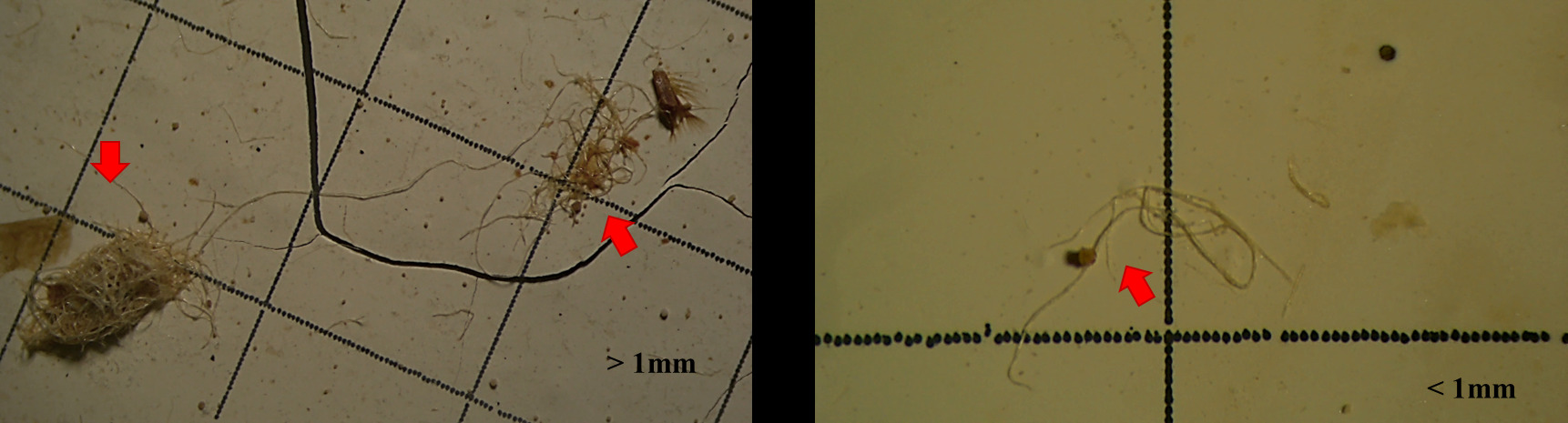
A total of 43 individuals from the two subfamilies of Phyllostomidae were analyzed (Table I), resulting in 172 membranes examined, four for each individual (stomach, intestine, trachea + lungs, and liver). Only fiber-type microplastics were detected, all of which were smaller than five millimeters (Figure 2).

Regarding the total number of microplastics (MPs), without considering size or weight, the best model revealed interactions between organ type (stomach, intestine, trachea + lungs, and liver) and both biome and subfamily, as well as between biome and subfamily (Table II). Generally, we found that the lungs + trachea and liver of Stenodermatinae bats tended to have a higher number of MPs compared to those of Carolliinae (Figure 3a, Table III). Additionally, the intestines and livers of bats from the Cerrado exhibited lower numbers of MPs than those from the Amazon (Figure 3b, Table III), which did not support our hypothesis that the Cerrado would have higher MP contamination.
Interactions found from the models used in the Generalized Linear Mixed Model (GLMM) analysis: the first with count data, total particles found, the second with microplastic abundance weighted by length, and the third weighted by weight. Significant results are in bold. For each model, we report coefficients with their standard errors (Std. Error), z-values, and associated p-values (Pr(>|z|)).
Summary of the Generalized Linear Mixed Model (GLMM) configurations, where ‘+’ denotes variable inclusion and ‘NA’ indicates exclusion. The optimal model (bolded) was selected based on ΔAICc values and is further characterized in Table III. Three model specifications were evaluated: (1) raw microplastic (MP) particle counts, (2) length-normalized MP abundance, and (3) weight-normalized MP abundance. Model fit statistics included degrees of freedom (df), log-likelihood (logLik), corrected Akaike Information Criterion (AICc), difference from top model (ΔAICc), and Akaike weights (weights).

Map of the study area with the location of the collection points and the type of land use and coverage in the Cerrado and Amazon biomes.
When examining MP contamination by length, we observed an interaction between organ and biome (Table II), with the intestines of Cerrado bats showing the lowest contamination levels (Figure 3c, Table III). Furthermore, the stomach had the highest concentrations of MPs in both biomes (Figure 3c, Table III), supporting our second hypothesis that the stomach would be the most contaminated organ in both environments.
Finally, when analyzing MPs by weight, the most parsimonious model indicated an interaction between organ and biome (Table II). This model demonstrated that the livers of bats from the Cerrado had lower concentrations of MPs than those from the Amazon, while the stomach remained the most contaminated organ in both biomes (Figure 3d, Table III). This finding further corroborates our second hypothesis regarding the stomach’s contamination levels.
DISCUSSION
In our study, we identified differences in microplastic contamination between fruit bats in the Cerrado and Amazon biomes, with unexpectedly lower levels of contamination in the Cerrado. These findings challenges assumptions that more open landscapes would inherently accumulate higher levels of microplastics. The Cerrado and Amazon biomes have distinct anthropogenic histories. While the Cerrado has been under human pressure since the 1920s, particularly due to the coffee industry’s expansion (Sano et al. 2008), 26% of this biome is now used for pasture, with 53% comprising savanna formations (Projeto MapBiomas 2022). In contrast, the Brazilian Amazon retains 84% of its original distribution, covering 308 million hectares (Mha), with a 13% reduction over the past 38 years (Projeto MapBiomas 2022). However, our bat samples from the Amazon were collected in Pará state, where significant anthropogenic pressure has resulted in over 50% of the forest area being converted to pasture (Adami et al. 2015). This context may explain why intestines and livers of bats from the Cerrado showed lower microplastic contamination compared to those from the Amazon, contrary to our initial hypothesis.
Contaminants, including mercury, toxic metals, plastics, and microplastics, are often higher in areas of intensive land use, such as pastures, monocultures, urban zones, and mining sites (Wright & Kelly 2017, Hoffman 2021). Thus, our findings of greater contamination in the Amazon suggest that the sampled areas exhibit a higher intensity of land use than the Cerrado, despite the Cerrado’s longer history of intense usage. The historical and current intensity of land use are key factors shaping bat community structure (Dos Santos et al. 2016). Cerrado bat communities tend to respond to modifications over a three-year period (Dos Santos et al. 2016); however, this response time remains unknown in the Amazon, possibly differing from the Cerrado’s. Land-use and cover changes significantly impact both biomes in terms of community structure (Alencastre-Santos et al. 2024, Bernardi Vieira et al. 2024), ecosystem services, parasitic loads (Bernardi Vieira et al. 2024, França et al. 2024), and genotoxic effects (Freitas et. 2024). Moreover, the higher microplastic contamination observed in the Amazon may be partly due to the non-forest natural formations at sampling sites, such as exposed rocks and várzea or campo vegetation (Projeto MapBiomas 2022). These open areas provide less edge protection, potentially leading to higher microplastic deposition.
Analysis of microplastic contamination by organ showed biome and subfamily effects, with the lungs and trachea in Stenodermatinae bats showing greater microplastic accumulation than in Carolliinae. This suggests that particle accumulation is not directly proportional to organ size (with the intestine being the largest organ studied) and may instead be influenced by morphological variations between species. For instance, Carolliinae stomachs and intestines showed higher contamination. Carolliinae species may consume a broader range of contaminated food sources, often supplementing their diet with arthropods and potentially acquiring microplastics from contaminated plants and food items (Li et al. 2020, 2021, Arias & Pacheco 2019).
Carolliinae primarily feed on pioneer plants, such as Piperaceae (Bianconi et al. 2007), often found in agricultural and pasture lands and secondary vegetation, which play critical roles in ecological succession (Galindo-González et al. 2000). We propose that Carolliinae bats inhale atmospheric particles from anthropogenic zones and ingest microfibers in pioneer plants and arthropods, as well as drink contaminated water from sources like rivers, streams, or even caves (Andrade et al. 2019, Balestra et al. 2023), resulting in both bioaccumulation and biomagnification of these contaminants.
This study presents the first record of microplastic contamination in bats from the Cerrado and the first report of microplastics in detoxifying organs like the liver. Although bats primarily respond to local fruit availability and adapt well to fragmented, human-altered environments, such areas increase their exposure to various contaminants, including microplastics. Our findings contribute insights into the ingestion and inhalation of microplastics by terrestrial animals, confirming that fibers are prevalent across habitats and have high contamination potential. We stress the need for more targeted analyses to understand the health impacts of these accumulated microfibers. Given frugivorous bats’ critical roles in seed dispersal and forest regeneration—often more effective than other herbivores (Peña-Domene et al. 2014) —investing in their conservation is essential.
Our findings further indicate that Amazonian bats experience higher microplastic levels than those in the Cerrado, suggesting that anthropogenic activity intensity in certain Amazon areas leads to increased contaminant exposure despite the biome’s overall preservation. The organ-specific contamination patterns observed highlight complex interactions between bat morphology, feeding behaviors, and habitat use, with the stomachs consistently showing the highest contamination levels, underscoring dietary microplastic exposure pathways. Frugivorous bats, particularly those in disturbed environments, face significant microplastic accumulation risks, which may negatively affect their health and ecological roles.
Considering the essential roles bats play in seed dispersal and forest regeneration, this study underscores the urgent need for continued research into the effects of microplastics on wildlife health and ecosystem dynamics. Our findings call for conservation efforts aimed at reducing microplastic pollution and protecting these vital species, especially in regions facing escalating land-use pressures. Future studies should investigate the physiological impacts of microplastic exposure on bats and its broader implications for biodiversity and ecosystem function in both the Cerrado and Amazon biomes.
Acknowledgements
Coordenação de Aperfeiçoamento de Pessoal de Nível Superior - Brazil (CAPES) - Finance Code 001.
References
- ADAMI M, GOMES AR, COUTINHO AC, ESQUERDO JCDM & VENTURIERI A. 2015. Dinâmica do uso e cobertura da terra no estado do Pará entre os anos de 2008 a 2012. An XVII Simpósio Bras Sensoriamento Remoto, p. 7028-7035.
- AGUIAR LMS, BERNARD E & MACHADO RB. 2014. Habitat use and movements of Glossophaga soricina and Lonchophylla dekeyseri (Chiroptera: Phyllostomidae) in a Neotropical savannah. Zoologia 31: 223-229.
- ALENCASTRE-SANTOS S, BERNARDI VIEIRA T & DOS SANTOS R. 2024. Impact of land use on bat communities: A comparative study of the Cerrado and Amazon. Biodivers Conserv.
- ANDRADE MC, WINEMILLER KO, BARBOSA PS, FORTUNATI A, CHELAZZI D, CINCINELLI A & GIARRIZZO T. 2019. First account of plastic pollution impacting freshwater fishes in the Amazon: Ingestion of plastic debris by piranhas and other serrasalmids with diverse feeding habits. Environ Pollut 244: 766-773.
- ARIAS E & PACHECO V. 2019. Dieta y estructura trófica de un ensamblaje de murciélagos en los bosques montanos del Santuario Nacional Pampa Hermosa, Junín, Perú. Rev Peru Biol 26: 169-182.
- BALESTRA V, VIGNA B, COSTANZO S De & BELLOPEDE R. 2023. Preliminary investigations of microplastic pollution in karst systems, from surface watercourses to cave waters. J Contam Hydrol 252: 89-95. 10.1007/978-3-031-34455-8_13.
- BATES D, MÄCHLER M, BOLKER B & WALKER S. 2015. Fitting Linear Mixed-Effects Models Using lme4. J Stat Softw 67: 1-48.
- BERNARDI VIEIRA T, RODRIGUES ALEXANDRE RJ, VALENTE DIAS S, ALMEIDA PENA S, DA SILVA ZD, LIMA CORREIA L, DA SILVA JB, BAIA RODRIGUES F & GRACIOLLI G. 2024. Association between bats (Mammalia: Chiroptera) and bat flies (Streblidae, Hippoboscoidea) from urban fragments of Amazon. Mastozoología Neotrop 31: 1-12.
- BIANCONI GV, MIKICH SB, TEIXEIRA SD & MAIA BHLNS. 2007. Attraction of fruit-eating bats with essential oils of fruits: A potential tool for forest restoration. Biotropica 39: 136-140.
- BOTELHO J, COSTA SCP, RIBEIRO JG & SOUZA CM. 2022. Mapping Roads in the Brazilian Amazon with Artificial Intelligence and Sentinel-2. Remote Sens 14: 1-17.
- BRUNHAM KP & ANDERSON DR. 2002. Model Selection and Multimodel Inference: A Practical Information—Theoretic Approach, 2nd ed., In: Ecological Modelling, p. 96-97.
- CABALLERO CB, BIGGS TW, VERGOPOLAN N, WEST TAP & RUHOFF A. 2023. Transformation of Brazil’s biomes: The dynamics and fate of agriculture and pasture expansion into native vegetation. Sci Total Environ 896: 166323.
- CARVALHO WD, ROSALINO LM, XAVIER BS, CASTRO IJ DE, HILÁRIO R, MARQUES TM, TOLEDO JJ DE, VIEIRA MV, PALMEIRIM JM & MUSTIN K. 2023. The relative importance of forest cover and patch-level drivers for phyllostomid bat communities in the Amazonian Savannas. Landsc Ecol 38: 117-130.
- CHARLES-DOMINIQUE P. 1991. Feeding strategy and activity budget of the frugivorous bat Carollia perspicillata (Chiroptera: Phyllostomidae) in French Guiana. J Trop Ecol 7: 243-256.
- CONTI GO, FERRANTE M, BANNI M, FAVARA C, NICOLOSI I, CRISTALDI A, FIORE M & ZUCCARELLO P. 2020. Micro- and nano-plastics in edible fruit and vegetables. The first diet risks assessment for the general population. Environ Res 187: 109677.
- CORREIA LL, RIBEIRO-BRASIL DRG, GARCIA MG, DE MELO E SILVA D, ALENCASTRE-SANTOS AB & VIEIRA TB. 2023. The first record of ingestion and inhalation of micro- and mesoplastics by Neotropical bats from the Brazilian Amazon. Acta Chiropt 25: 371-383.
- COUTINHO LM. 2006. O conceito de bioma_Biomas brasileiros. Acta Botânica Bras 20: 13-23.
- DEVRIESE LI, VAN DER MEULEN MD, MAES T, BEKAERT K, PAUL-PONT I, FRÈRE L, ROBBENS J & VETHAAK AD. 2015. Microplastic contamination in brown shrimp (Crangon crangon, Linnaeus 1758) from coastal waters of the Southern North Sea and Channel area. Mar Pollut Bull 98: 179-187.
- DONG C-D, CHEN C-W, CHEN Y-C, CHEN H-H, LEE J-S & LIN C-H. 2020. Polystyrene microplastic particles: In vitro pulmonary toxicity assessment. J Hazard Mater 385: 121575.
- DOS SANTOS AJ, VIEIRA TB & FARIA K DE C. 2016. Effects of vegetation structure on the diversity of bats in remnants of Brazilian Cerrado savanna. Basic Appl Ecol 17: 720-730.
- FOX J & WEISBERG S. 2025. Package ‘car.’ Companion to Appl Regres.
-
FRANÇA JO, ALEXANDRE RJR, CORREIA LL, SOUZA LM, GRACIOLLI G, MOURA DE SOUZA AGUIAR L & VIEIRA TB. 2024. Bat flies (Diptera: Streblidae) of Phyllostominae and Stenodermatinae (Chiroptera: Phyllostomidae) bats from cocoa and natural areas of Amazonia. Stud Neotrop Fauna Environ 59(3): 823-832. https://doi.org/10.1080/01650521.2023.2266190.
» https://doi.org/10.1080/01650521.2023.2266190 - FREITAS L, SOUSA L & BERNARDI VIEIRA T. 2024. Genotoxic effects of microplastics on terrestrial mammals. Environ Sci Technol.
- GALINDO-GONZÁLEZ J, GUEVARA S & SOSA VJ. 2000. Bat- and Bird-Generated Seed Rains at Isolated Trees in Pastures in a Tropical Rainforest. Conserv Biol 14: 1693-1703.
- GARBINO GST ET AL. 2024. Updated checklist of bats (Mammalia: Chiroptera) from Brazil. Zoologia 41: e90.
- GAYLARDE C, BAPTISTA-NETO JA & DA FONSECA EM. 2021. Plastic microfibre pollution: how important is clothes’ laundering? Heliyon 7: e07105.
- HOFFMAN JR. 2021. Microplastics in terrestrial environments: sources, fate, and ecological consequences. Sci Total Environ 775: 145750.
-
IBGE. 2023. Instituto Brasileiro de Geografia e Estatistica. https://www.ibge.gov.br/
» https://www.ibge.gov.br/ - JIN M, WANG X, REN T, WANG J & SHAN J. 2021. Microplastics contamination in food and beverages: Direct exposure to humans. Food Sci 86: 2816-2837.
- LENZA E, MARTINS J, ABADIA AC, GONÇALVES LA, NOGUEIRA DS, MARACAHIPES-SANTOS L & COLLI GR. 2024. Diversity patterns reveal the singularities of the savanna woody flora in the Cerrado-Amazonia transition. Biodivers Conserv 33: 2791-2808.
- LI C, GAN Y, ZHANG C, HE H, FANG J, WANG L, WANG Y & LIU J. 2021. “Microplastic communities” in different environments: Differences, links, and role of diversity index in source analysis. Water Res 188: 116574.
- LI M, HE L, ZHANG X, RONG H & TONG M. 2020. Different surface charged plastic particles have different cotransport behaviors with kaolinite ☆particles in porous media. Environ Pollut 267: 115534.
- LOPES GP, OLIVEIRA RC, SANTOS TCM, VELAZCO PM, BOBROWIEC PED, SILVA MNF, HRBEK T & FARIAS IP. 2023. First record of Platyrrhinus guianensis Velazco and Lim, 2014 (Chiroptera, Phyllostomidae) for Brazil. Mammalia 87: 591-595.
- MARACAHIPES-SANTOS L, LENZA E, SANTOS JO, MEWS HA & OLIVEIRA B. 2017. Effects of soil and space on the woody species composition and vegetation structure of three Cerrado phytophysiognomies in the Cerrado-Amazon transition. Brazilian J Biol 77: 830-839.
- MCLACHLAN MS & HORSTMANN M. 1998. Forests as filters of airborne organic pollutants: A model. Environ Sci Technol 32: 413-420.
- MUSCARELLA R & FLEMING TH. 2007. The role of frugivorous bats in tropical forest succession. Biol Rev 82: 573-590.
- NUELLE MT, DEKIFF JH, REMY D & FRIES E. 2014. A new analytical approach for monitoring microplastics in marine sediments. Environ Pollut 184: 161-169.
-
OKSANEN J, BLANCHET FG, KINDT R, LEGENDRE P, MINCHIN PR, O’HARA RB, SIMPSON GL, SÓLYMOS P, STEVENS MHH & WAGNER H. 2016. Vegan: Community Ecology Package. Available at: https://cran.r-project.org, https://github.com
» https://github.com - PEÑA-DOMENE MD LA, MARTÍNEZ-GARZA C, PALMAS-PÉREZ S, RIVAS-ALONSO E & HOWE HF. 2014. Roles of birds and bats in early tropical-forest restoration. PLoS ONE 9: 1-6.
- PROJETO MAPBIOMAS. 2022. Mapeamento anual de cobertura e uso da terra no Brasil entre 1985 a 2022.
- R CORE TEAM. 2023. R: A Language and Environment for Statistical Computing.
- RAMÍREZ-FRÁNCEL LA, GARCÍA-HERRERA LV, LOSADA-PRADO S, REINOSO-FLÓREZ G, SÁNCHEZ-HERNÁNDEZ A, ESTRADA-VILLEGAS S, LIM BK & GUEVARA G. 2022. Bats and their vital ecosystem services: a global review. Integr Zool 17: 2-23.
- RIBEIRO-BRASIL DRG, TORRES NR, PICANÇO AB, SOUSA DS, RIBEIRO VS, BRASIL LS & MONTAG LF DE A. 2020. Contamination of stream fish by plastic waste in the Brazilian Amazon. Environ Pollut 266: 115241.
- RODRIGUES PJFP & NASCIMENTO MT. 2006. Fragmentação Florestal: Breves Considerações Teóricas Sobre Efeitos De Borda. Rodriguésia 57: 63-74.
- SANO SM, DE ALMEIDA SP & RIBEIRO JF. 2008. CERRADO: Ecologia e Flora, 406 p.
- SIMMONS NB & CIRRANELLO AL. 2022. Bats of the World.
- TONG H, ZHONG X, DUAN Z, YI X, CHENG F, XU W & YANG X. 2022. Micro- and nanoplastics released from biodegradable and conventional plastics during degradation: Formation, aging factors, and toxicity. Sci Total Environ 883: 155275.
- TZIOURROU P, KORDELLA S, ARDALI Y, PAPATHEODOROU G & KARAPANAGIOTI HK. 2021. Microplastics formation based on degradation characteristics of beached plastic bags. Mar Pollut Bull 169: 112470.
- VOIGT CC & KINGSTON T. 2016. Bats in the anthropocene: Conservation of bats in a changing world, Springer International Publishing, 606 p.
- WRIGHT SL & KELLY FJ. 2017. Plastic and Human Health: A Micro Issue? Environ Sci Technol 51: 6634-6647.
- XU S, MA J, JI R, PAN K & MIAO AJ. 2020. Microplastics in aquatic environments: Occurrence, accumulation, and biological effects. Sci Total Environ 703: 134699.