 Are freshwater turtles macro-epibionts indicators of water quality of the streams where the turtles live?
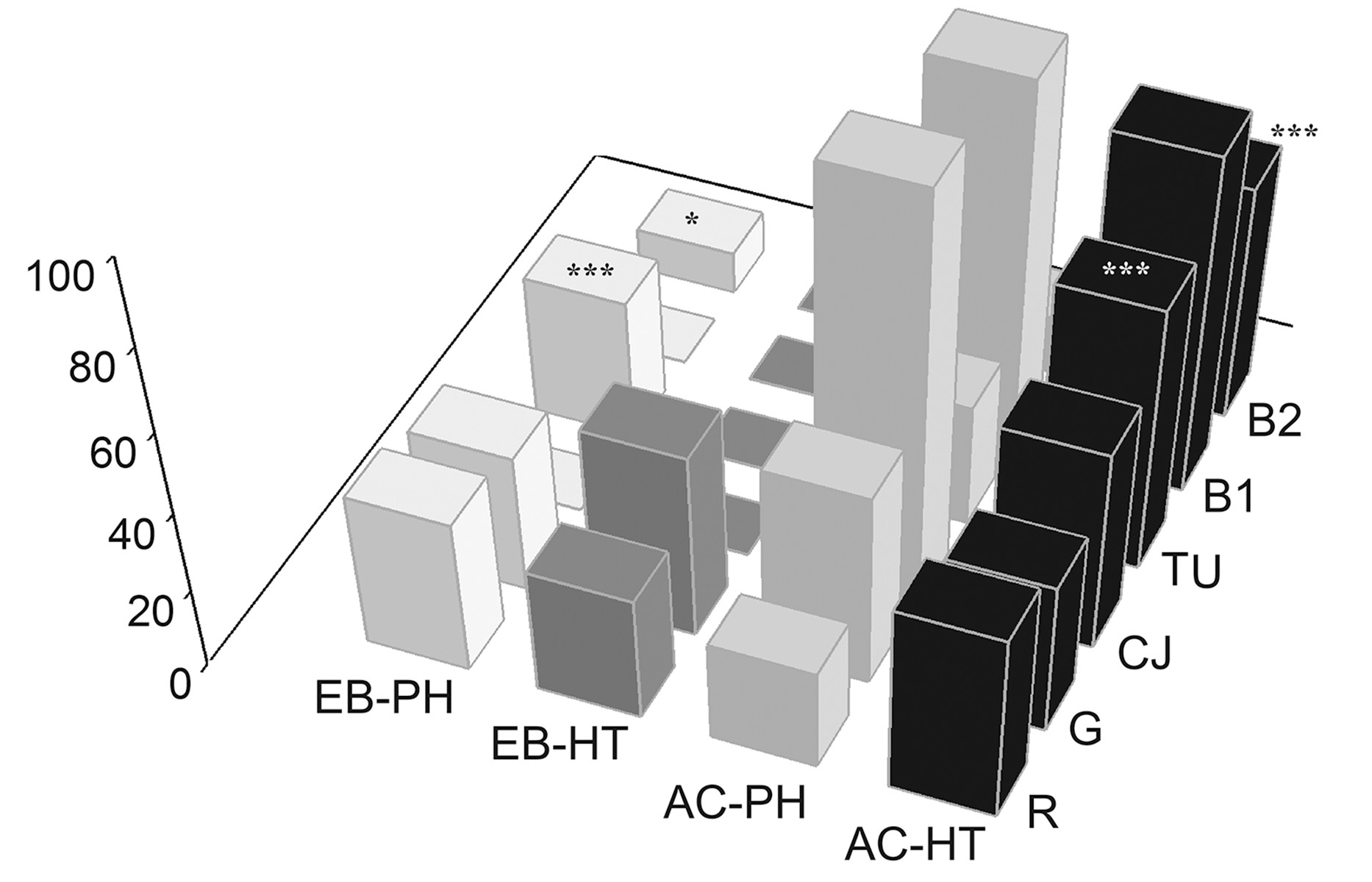
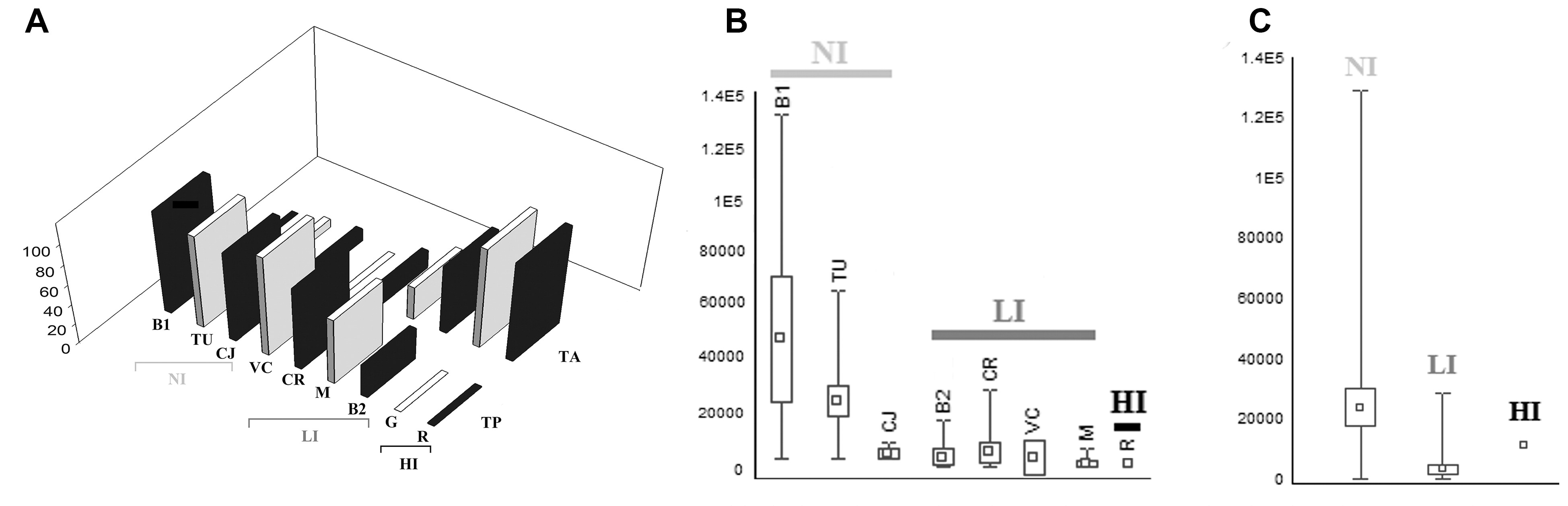
Organisms that live above others can give information not only about the relation between them but also about the environment they inhabit. In that sense, this work studies the relationship between epibionts living on freshwater turtles and the impact degree of streams where they live. We studied the macro-epibiont assemblages and algal and epipelic biofilm covers in two species of freshwater turtles with contrasting habits (the bottom-dwelling-aquatic basking <italic>Hydromedusa tectifera</italic> and the swimming-aerial basking <italic>Phrynops hilarii</italic>), from streams with different types and degrees of anthropogenic impact. Algal and epipelic biofilm covers and animal epibiont assemblages were, in most cases, greater in <italic>H. tectifera</italic> than in <italic>P. hilarii</italic>. In general, turtles from polluted streams had higher algal and epipelic biofilm covers and poorer epibiont assemblages with low abundance of sensible species. Our results also highlighted a key mutualistic relationship between <italic>H. tectifera</italic> and <italic>Temnocephala brevicornis</italic>,<italic> </italic>for which this turtle is the main host. We provide insights for using this biological unit to monitor water quality, particularly in low impacted streams where temnocephalans offer modulate responses, useful to early detection of pollution.
Key words
Hydromedusa tectifera; Phrynops hilarii; Temnocephala brevicornis; algal cover; pollution
 Thumbnail
 Thumbnail
 Thumbnail
 Thumbnail