 Potential of Cupriavidus necator as a versatile platform for producing a wide range of polyhydroxyalkanoates
Abstract
Polyhydroxyalkanoates (PHAs) are bioplastics with increasing commercial interest due to their thermomechanical properties, which are comparable to those of petrochemical plastics. Furthermore, they biodegrade in various environments and biocompatible. Applications related to both packaging and biomedical purposes have therefore prompted research to improve their production. Among the microorganisms capable of producing them, Cupriavidus necator stands out as one of the most widely studied and efficient platforms and is the model microorganism for PHA production. This bacterium is highly versatile, capable of utilizing diverse carbon sources, from sugars and organic acids to CO2 and hydrogen, to produce a wide range of polymers in high concentrations. This review provides a comprehensive overview of C. necator covering its taxonomic history, metabolic pathways, and the genetic regulation of PHA synthesis. We examine the stoichiometry of growth and polymer production, presenting generalized equations for different carbon sources. Furthermore, we discuss the biotechnological production of PHAs, comparing performance between Erlenmeyer flasks and bioreactors, and analyzing the effect of different feeding strategies on polymer yield and composition. Finally, current challenges and prospects are addressed, emphasizing the potential of C. necator as a sustainable and versatile cell factory for the large-scale production of biopolymers.
Key words
Polyhydroxyalkanoates (PHAs); Cupriavidus necator; carbon substrate; fermentation strategy; scale up
INTRODUCTION
Why to produce PHAs?
Plastic pollution, the accumulation of synthetic plastic products in the environment, is a political, social, and ecological problem in which we are all involved. At the same time petroleum, the raw material for all petrochemical plastics, becomes more expensive as the crude oil reserves reduce (Muhammadi et al. 2015). Both plastic pollution and the warning of oil depletion pushes the interest in polyhydroxyalkanoates (PHAs), a family of biodegradable plastics (Kolybaba et al. 2003, Chee et al. 2010, Yin & Yang 2020).
PHAs were marketed for the first time by Imperial chemical Industries (ICI), under the trade name Biopol® for packaging (Anderson et al. 1990, Brandl & Püchner 1991). Currently, the increasing commercialization of PHAs is due to the excellent combination of their properties: thermoplasticity, biodegradability, and biocompatibility, which allow the design of products for diverse applications (Singh et al. 2019, Koller 2018b, Tan et al. 2016, Gao et al. 2011, Chen 2009). Certain types of PHAs are suitable for “high volume, low price” applications such as biodegradable packaging and disposables, while others are specific “low volume, high price” applications such as medical devices or drug delivery systems (Philip et al. 2007, Grigore et al. 2019, Tan et al. 2016). According to the latest market data published by European Bioplastics, global biopolymers production reached 2.31 million tons in 2025, including almost 100 mil tons of PHAs. PHAs are expected to increase 9-fold in the next five years (European Bioplastics & Institute for Bioplastics and Biocomposites 2025).
The carbon source used in bacterial fermentation for the production of PHAs represents more than 30% of the total production cost; thus one of the strategies to lower production costs focuses on this point (Basnett et al. 2017). Therefore, both industry and research have focused on the selection of the microorganisms, carbon source and bioprocesses that optimize the productivity of these biopolymers (Mozejko-Ciesielska et al. 2019). The main challenge is to find PHA-producing strains with the ability to use a wide range of substrates, to reach high production levels, and synthesize several polyesters of this family. Since the industry seeks to scale up laboratory results of commercial interest, an exhaustive literature review of suitable carbon substrates for a specific PHA producing strain is of great interest to both research and industry.
What are PHAs?
PHAs are large chains of hydroxyalkanoic acids (Fig. 1); their general chemical structure is illustrated in Figure 1, where R is a lateral n-alkyl group of variable chain length, m is the number of methylene groups per monomer, and n is the degree of polymerization (Khanna & Srivastava 2005b, Koller & Braunegg 2015a).

General chemical structure of PHAs (above). Wild-type Cupriavidus necator can add up 5 different monomers to the same polymer chain. Type of monomers added by these bacteria from various carbon substrates is specified below. m is the number of methylene groups per monomer; n is the degree of polymerization and Ri is a lateral n-alkyl group of variable chain length.
PHAs are classified according to the type of monomers and according to the number of carbon atoms in each monomeric unit (Fig. 2). On one hand, they can be classified as homopolymers, if they are composed of only one type of monomers, or as heteropolymers if they are composed of two or more types of monomers. The most common PHA is the homopolymer P3HB, commonly referred to as PHB, built up by 3-hydroxybutyrate (3HB) monomers, where R is the methyl group. The most common copolymer is poly(3hydroxybutyrate-co-3hydroxyvalerate), denoted P(3HB-co-3HV) or more synthetically PHBV, composed of 3hydroxybutyric acid (3HB) and 3hydroxyvalerate acid (3HV) monomers.
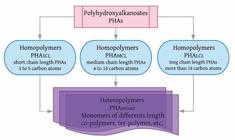
PHAs classification. PHAs can be classified into three groups, according to the number of carbon atoms in the lateral chain or into two groups, as homopolymers (composed of only one type of monomers) or heteropolymers (composed of two or more types of monomers).
On the other hand, PHAs can be classified into three groups, according to the number of carbon atoms in the lateral chain: PHASCL (short chain length PHAs, 3 to 5 carbon atoms); PHAMCL (medium chain length PHAs, 6 to 14 carbon atoms); PHALCL (long chain length PHAs, more than 14 carbon atoms) (Lee 1996, Rai et al. 2011). The length of the lateral chain and the different combinations of monomeric units are the key parameters to tailor the mechanical properties of PHAs. In fact, the mechanical response ranges from a stiffness similar to that of polypropylene to the elasticity of natural rubber (Sudesh et al. 2000).
How are PHAs produced?
Intracellular granules of PHAs are accumulated by microorganisms, as a carbon and energy source, when the carbon source is in excess and one nutrient (e.g. nitrogen, phosphorus, oxygen) is limited (Sudesh et al. 2000, Khanna & Srivastava 2005a, Kachrimanidou et al. 2014). Besides the energy storage function, recent research has shown that the presence of PHA granules into the cytoplasm increases the stress resistance and robustness of microbes to various environmental stresses, such as high or low temperature, freezing, oxidation, and osmotic pressure (Obruca et al. 2018, 2020).
The chemical structure and concentration of PHAs depend on the microorganism used, the type of carbon substrate, and the fermentation strategies. This is linked to the biosynthetic pathways and the type or PHA synthase present in that organism (Sudesh et al. 2000, Kachrimanidou et al. 2014).
More than 300 species, mainly bacteria, have been reported to produce PHAs polymers, including several varieties of Gram-positive and Gram-negative bacteria (Anjum et al. 2016). Among them, Cupriavidus necator is recognized as the model microorganism for PHA production. This is due to its remarkable capacity to accumulate PHAs of various chemical structures (mostly PHASCL) up to 90 % of the cell dry weight using a wide range of substrates (Doi 1990, Cruz et al. 2016) and the simplicity of the metabolic pathway that involves three enzymatic reactions (Choi & Lee 1999, Guzman Lagunes & Winterburn 2016, Reinecke & Steinbüchel 2008, Kutralam-Muniasamy & Peréz-Guevara 2018, Novackova et al. 2019). Additionally, the type of PHA produced can be controlled by the carbon source, thus it’s critical to understand the carbon supply requirements if you want to produce a specific PHA.
This review focuses on identifying the pure carbon sources and fermentation techniques that allow wild-type C. necator to produce a particular PHA at their highest levels.
C. necator as a model organism for PHAs production
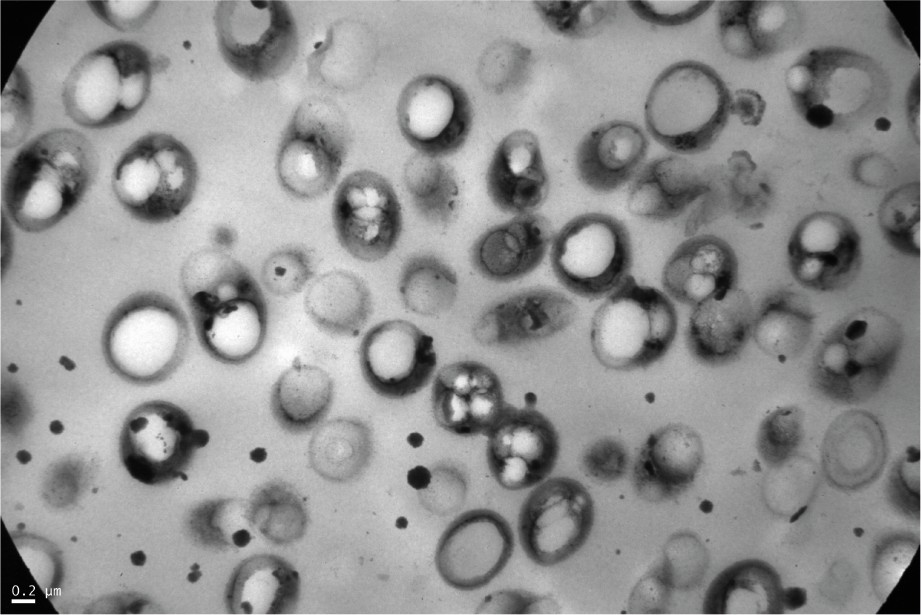
C. necator is a versatile microorganism found in different environments such as soil and water (Figure 3). It is a Gram-negative, hydrogen-metabolizing bacterium with heterotrophic and autotrophic metabolisms depending on the environmental conditions (Sohn et al. 2021). Since the 1960s, C. necator has become an important microorganism used in applied research for the synthesis of products of public interest, such as single-cell proteins (SCP), polyphosphates and PHAs (Schlegel 1990, Dawes & Senior 1973). The pioneering study of PHB fermentation was in 1961 by Schlegel et al. (1961), who demonstrated that C. necator accumulated PHB up to 65% of the total cell dry weight during chemolithotrophic growth with nitrogen limitation in batch culture. An interesting feature of this model bacterium is that it changes shape, size, and length during PHA synthesis, depending on the fermentation conditions (Nygaard 2021a).

Transmission electron microscopy images of Cupriavidus necator ATCC 17697 were the intracellular granules can be seen at ×20,000 (Nygaard et al. 2019).
Cupriavidus necator: the bacterium with several names
Cupriavidus necator has received different names along the years. In the mid-twentieth century, Wittenberger and Repaske taxonomically classified this bacterium as Hydrogenomonas eutropha, for its ability to use hydrogen to get energy and grow autotrophically in the presence of CO2 (Wittenberger & Repaske 1958, 1961). A decade later, after characterizing cell morphology, metabolism, and GC content, the Hydrogenomonas nomenclature was disbanded because it comprised many species of microorganisms. H. eutrophus was then renamed Alcaligenes eutropha because it was a micro-organism with degenerated peritrichous flagellation (Davis et al. 1969). At the end of the 20th century, a new genus Ralstonia was defined; then, according to the phenotype, lipid composition, fatty acid composition and 16S rRNA analysis A. eutrophus was renamed as Ralstonia eutropha (Yabuuchi et al. 1995). At the beginning of the 21st century, upon further study of the genus Ralstonia was found to comprise two phenotypically distinct clusters; the comparative 16S rDNA sequence and the phenotypic analysis indicated that two distinct sublineages existed within the genus Ralstonia. The Ralstonia eutropha lineage gave rise to a new genus, Wautersia gen. nov., where the type species of the genus was Wautersia eutropha. In this sense, the species R. eutropha was renamed Wautersia eutropha (Vaneechoutte et al. 2004).
Makkar & Casida (1987) classified this bacterial species as Cupriavidus necator. Vandamme & Coenye (2004) compared the genomes of the newly defined Wautersia eutropha and C. necator and found that W. eutropha was the same species as the one previously described as C. necator. Given the problem of finding a bacterium with two names, the priority Rule 23a of the International Code of Nomenclature of Bacteria was used; since C. necator had been described in 1987, it prevails over Wautersia eutropha (Sohn et al. 2021, Vandamme & Coenye 2004).
This review focuses on PHA production by two of the most studied wild type strains of C. necator: ATCC 17697 (CCUG 1776, CIP 104763, DSM 531, ICPB 3984, JCM 11282, LMG 1199, NCCB 82041, NCIB 11842, NRRL B-14690, NRRL B-4383, R-10-e) and ATCC 17699 (ATCC 23440, DSM 428, H16, NCIB 10442, S-10-1, KCTC 22469, CCM 3726), although it does not rule out the results obtained with other less researched wild type strains.
PHAs production according to the carbon substrate
Wild type C. necator is capable of using diverse carbon substrates such as CO2, sugars, organic acids, and their derivatives, alcohols, and several vegetable oils. Depending on the precursors available within the culture medium, the bacteria may synthesize PHAs with up to 10 different monomers (Figure 1).
The predominant monomer unit in the polymer chain of PHAs synthesized by C. necator is 3-hydroxybutyrate (3HB). The homopolymer PHB is synthesized by C. necator from several substrates: CO2 (Ishizaki & Tanaka 1990, 1991, Tanaka & Ishizaki 1994), sugars (Saratale & Oh 2015, Nygaard et al. 2019, 2021a, b, Khanna & Srivastava 2005a, b, c, 2008, Taniguchi et al. 2003, Aramvash et al. 2015, Azhar et al. 2009a, b, Irorere et al. 2014, Gang et al. 2019, Sen et al. 2019, Franz et al. 2011, Wang et al. 2013, Tanaka & Ishizaki 1994, Barbosa et al. 2005, Dorado et al. 2024), organic acids and their derivatives (Doi et al. 1987, 1988, Liebergesell et al. 1991, Kunioka et al. 1989, Fukui & Doi 1998, Linko et al. 1993, Yu & Si 2004) alcohols (Kunioka et al. 1989, Saito et al. 1996, Fukui et al. 2014, Nygaard et al. 2022) vegetable oils (Kamilah et al. 2013, Irorere et al. 2014, Fukui & Doi 1998, Kek et al. 2008, Obruca et al. 2014a, b, Reddy Prasad et al. 2019, Zainab-L et al. 2018, Taniguchi et al. 2003, Obruca et al. 2010, Verlinden et al. 2011, Ng et al. 2010, López-Cuellar et al. 2011, Park & Kim 2010, Khunthongkaew et al. 2018) and others (Wang et al. 2013).
C. necator may produce heteropolymer PHA with a molar fraction of 3-hydroxyvalerate (3HV) up to 70 % according to the precursors employed. The main precursors of 3HV monomers are: valerate (Volova et al. 2008, Liebergesell et al. 1991, Ng et al. 2011, Lee et al. 2008), propanoate (Kim et al. 1992, Doi et al. 1987, Yu et al. 2002, 2005, Yang et al. 2010, Ng et al. 2011, Lee et al. 2008, Wang et al. 2010, Yan et al. 2003, Kobayashi et al. 2000, Huschner et al. 2015, Shimizu et al. 1998), hexanoate (Volova et al. 2008, Aramvash et al. 2016), heptanoate, octanoate (Volova et al. 2008), propanol (Aramvash et al. 2016), valeric acid (Doi et al. 1988, Zinn et al. 2003, Koyama & Doi 1995, Park et al. 2014), propanoic acid (Doi et al. 1988), citric acid, acetic acid, beef extract (Aramvash et al. 2016), levulinic acid (Novackova et al. 2019, Wang et al. 2013), canola oil (López-Cuellar et al. 2007, 2011, Rathinasabapathy et al. 2014), peanut oil (Pérez-Arauz et al. 2019) and avocado oil (Flores-Sánchez et al. 2017). Doi et al. (1988) stated that C. necator incorporates butyric and valeric acids in the copolyester as 3HB and 3HV, respectively, without decomposing the carbon skeleton within the cells.
Furthermore the bacterium can synthesize PHA copolymers containing from 1 to 6 mol% of 3-hydroxypropionate (3HP), by feeding with octanoate + acrylate (Green et al. 2002), 5-hydroxyvalerate or omega pentadecalactone (Chuah et al. 2013), and alkanediols of odd carbon numbers (Doi 1990). PHAs composed by monomers with medium carbon chains, such as 3-hydroxyhexanoate (3HHx), 3-hydroxyheptanoate (3HHp), 3-hydroxyoctanoate (3HO), and 3-hydroxydodecanoate (3HDD) can be produced by C. necator as well. The molar fraction of 3HHx in PHA polymer varies between 0.1 and 14 mol% by supplementing the culture medium with hexanoate (Volova et al. 2008), octanoate (Volova et al. 2008, Liebergesell et al. 1991), octanoate + acrylate (Green et al. 2002), 4-hydroxyhexanoic acid (Valentin et al. 1994), and canola oil (Rathinasabapathy et al. 2014). The monomer 3HHp can be incorporated in very low molar fraction (0.1-0.4 mol %) by feeding the autotrophic culture with valerate or heptanoate (Volova et al. 2008). The molar fraction of 3HO in PHA polymer can be up to 3 mol% by supplementing the culture medium with octanoate (Volova et al. 2008), octanoate + acrylate (Green et al. 2002), and canola oil (López-Cuellar et al. 2007, 2011, Rathinasabapathy et al. 2014). It has been reported that canola oil can serve as 3HDD monomer precursor (López-Cuellar et al. 2007, 2011).
Another kind of PHAs produced by C. necator are those that include monomers with more than 3 carbon atoms in PHA backbone, when m is higher than 1 (m > 1) (Fig.1), such as 4-hydroxybutyrate (4HB), 4-hydroxyvalerate (4HV) and 5-hydroxyvalerate (5HV). 5HV can be incorporated into PHA molecule in the molar fraction of 1 mol % by feeding the bacteria with 5-hydroxyvalerate or omega pentadecalactone (Chuah et al. 2013). Similarly, 4HV may reach 3 mol %, when the carbon source includes levulinic acid (Yu & Stahl 2008) or 4HB, from 1 to 100 mol% using any of these carbon sources: butyrolactone (Park & Kim 2010, 2011, Kim et al. 2005, Song & Kim 2005, Kunioka et al. 1989), 4-hydroxybutyric acid (Saito et al. 1996), 4-chlorobutyric acid, 1,4-butanediol (Kunioka et al. 1989) or alkanediols of even carbon numbers (Doi 1990, Saito et al. 1996).
Finally, Lütke-Eversloh et al. (2001a, b, 2002, 2003) identified 3-mercaptoalkanoates, expanding the substrate range and monomers synthesized by C. necator. A novel type of polymer was synthesized by wild type C. necator when was cultivated in mineral salts medium containing 3-mercaptopropionic acid (3MP), 3-mercaptobutyric acid (3MB), or 3-mercaptovaleric acid (3MV) (Lütke-Eversloh et al. 2001a, b, 2002, Lütke-Eversloh & Steinbüchel 2003). This new type of polymer contained 3HB and thioesters monomers were called poly(thioesters) or poly(oxo-thioesters) (Koller 2020). The molar fraction of 3MP into P(3HB-co-3MP) was between 5 to 43 mol % (Lütke-Eversloh et al. 2001b, 2002). In a similar way, different poly (3HB-co-3MB) were produced with molar fraction of 3MB between 33 to 72 mol % (Lütke-Eversloh et al. 2001a, 2002). However, the molar fraction of 3MV into P(3HB-co-3MV) was less than 5 mol % (Lütke-Eversloh & Steinbüchel 2003).
In synthesis, C. necator can synthesize an infinite number of PHAs. From a biotechnological point of view, the medium can be properly designed to obtain different combinations of the monomers summarized in Figure 1, to adjust the properties to the needs of the desired application.
Stoichiometry of growth and PHB production
Stoichiometric equations relate the consumption of nutrients and the product conversion into mathematical mass balance. The stoichiometric balances of biomass and biopolymer production for C. necator bacteria depend on the feeding strategy, i.e., whether it is autotrophic or heterotrophic, the type of nutrients and on the growth phase of the bacteria. Key stoichiometric parameters, including the yields of substrates consumed and products formed, are determined experimentally. These parameters are key as they are used in mathematical models to optimize PHA production by balancing growth and PHA storage.
The PHA optimization process often uses a two- or three-phase approach: sometimes an adaptation phase is considered, and great importance is placed on the growth phase for high cell density followed by a PHA accumulation phase under nutrient limitations, such as nitrogen or oxygen. Taking these considerations into account and based on key stoichiometric parameters, sensitive, robust and cost-effective control strategies for the optimization of PHAs production have been developed (Mozumder et al. 2014, 2015, Nygaard et al. 2021a, López-Cuellar et al. 2011).
Ishizaki and Tanaka determined the stoichiometry associated to the biomass production from CO2, water and a nitrogen source as (Ishizaki & Tanaka 1990):
where energy is the amount required for electrolysis of water.
Furthermore, Ishizaki and Tanaka determined the stoichiometry for the PHB production from CO2 under oxygen limitation (Ishizaki & Tanaka 1991):
These equations show that the hydrogen consumption per mole of CO2 for PHB production is larger than that for cell formation, indicating that biomass synthesis requires less reduced power than PHB synthesis. The proteins, lipids, carbohydrates and nucleic acids that constitute bacterial biomass contain oxygen and nitrogen, whereas PHB is richer in C-H bonds (i.e. more reduced). Therefore, the synthesis of PHB requires more reducing equivalents than the synthesis of biomass.
Mozumder et al. (2014) calculated the stoichiometry of residual biomass, using Eq. 1 with glucose and ammonium as the sole carbon and nitrogen sources, respectively, leading to:
Moreover, Garcia-González & De Wever (2018) claim that acetic acid can be used by C. necator for both biomass growth and PHA production, according to Eqs. 4 and 5, respectively.
These stoichiometric formulas for C. necator are essential for future improvements to PHA production in biotechnological fermentations strategies.
Genes involved in PHA synthesis
The extensive knowledge about PHAs production indicates that C. necator is the referent organisms in this field, and the most studied is the H16 strain (ATCC 17699). C. necator ATCC 17699 entire genome was sequenced, and every gene was annotated. (Pohlmann et al. 2006, Reinecke & Steinbüchel 2008). The PHA synthesis is encoded on chromosome 1 by the phaCAB operon. This operon contains three key genes: phaC, phaA and phaB. The primary metabolite and precursor to PHB synthesis in this canonical route is Acetyl-CoA. The 3-keto-thiolase enzyme, which condenses two acetyl-CoA molecules into one acetoacetyl-CoA molecule, is encoded by phaA. Acetoacetyl-CoA reductase encodes for phaB, oxidizes NADPH to convert acetoacetyl-CoA to 3-hydroxybutyryl-CoA. The final essential enzyme in PHA synthesis, PHA synthase, is encoded by phaC and adds the 3-hydroxybutyryl-CoA to an existing polymer (Pohlmann et al. 2006). Furthermore, the enzyme PHA synthase presents low substrate specificity. Purified PHA synthase has been shown in vitro to accepts the R-stereoisomers of 3HB, 3HV and even lactyl-CoA as substrates (Reinecke & Steinbüchel 2008). Moreover, in vivo experiments show that 13 monomer types can be incorporated into PHA by C. necator from pure carbon sources. The monomers are hydroxyalkanoates and mercaptoalkanoates: 10 hydroxyalkanoates, such as, 3HP, 3HB, 3HV, 3HHx, 3HHp, 3HO, 3HDD, 4HB, 4HV, and 5HV and 3 mercaptoalkanoates, such as 3MP, 3MB and 3MV (Figure 1).
The PHA biosynthesis incorporates various metabolic intermediates from glycolysis, fatty acid β-oxidation, and fatty acid de novo synthesis (Paduvari & Somashekara 2025). For example, C. necator H16 possesses two phaJ genes, phaJ4a and phaJ4b, respectively, which encode enzymes capable of effectively catalyzing the conversion of the β-oxidation intermediate (2-hexenoyl-CoA) into a precursor of the 3HHx monomeric (Arikawa & Matsumoto 2016).
Phasin proteins are a group of amphipathic proteins that structurally stabilize granules within PHA-producing cells. In addition, all phasin proteins regulate the quantity and size of granules differentially depending on their functions. For example, genetic analyses studied the effect of phaP and phaR mutations on PHB synthesis and demonstrated the regulatory roles of PhaP and PhaR phasins in C. necator (Eggers & Steinbüchel 2013, Mezzina et al. 2017). PhaP actively promotes the synthesis of PHA, while the PhaR acts as a negative regulator: in the absence of PHA granules, PhaR suppresses the synthesis of PhaP. However, when the concentration of PHA granules increases, PhaR binds to them, lifting the repression of PhaP synthesis. This allows more PhaP to be synthesized, leading to increased PHA production, creating a positive feedback loop that increases the accumulation of these polymers (Paduvari & Somashekara 2025, Mezzina & Pettinari 2016).
Intracellular degradation systems of PHA granules can be extremely complicated. C. necator may have up to nine depolymerases that are divided into four classes (PhaZa, b, c, and d) and encoded by the PhaZ genes. These enzymes act synergistically, and the location of both in PHA granules ensures rapid degradation of PHA in vivo (Eggers & Steinbüchel 2013, Pohlmann et al. 2006).
Although, this work refers to wild type C. necator, its genomic fingerprinting, including protein components of the PHA metabolic machinery and fatty acid metabolism, has been employed to develop molecular engineering strategies to improve PHAs production (Kutralam-Muniasamy & Peréz-Guevara 2018).
Biotechnological production of PHAs by wild type C. necator
As previously mentioned, the intracellular content of PHA in C. necator cells can exceed 90 % of the dry cell weight. A biotechnological fermentation is expected to reach a high PHA content (PHA percent of the cell dry weight) and PHA concentration (g/l); a high cell density is also sought. To achieve these goals several factors must be addressed.
The biotechnological production of PHAs involves several steps: the selection of the bacterial strain, and the study of its growth parameters and stoichiometry for the optimization in an Erlenmeyer scale, studies in lab and pilot plant bioreactors and finally, the industrial scale up production (Chen 2009) (Figure 4). Wild type or recombinant microorganisms with economic potential for the production of PHAs are selected from international microbial culture collections or during isolation from different environments (Anjum et al. 2016). Polymer production is then enhanced by optimizing the culture medium and the physicochemical variables of the fermentation process. Generally, the first optimization studies are performed in Erlenmeyer flasks, using “one-factor-at-a-time” (OFAT) methods or “design of experiments” (DOE) (Kennedy & Krouse 1999). The process is then scaled up and optimized in a laboratory-scale bioreactor in batch, fed batch, and/or continuous systems (Kaur 2015). Lastly, if the production warrants, it should be scaled up in pilot plants or industrial bioreactors (Koller & Braunegg 2015b). The following sections present an exhaustive review of the laboratory scale PHA production by wild type C. necator carried out by different scientific research groups as well as cases of pilot scale and industrial production of PHA.

Scale up production of PHAs. Selecting the bacterial strain and analyzing its growth parameters for Erlenmeyer scale optimization, followed by studies in laboratory bioreactors and pilot plants, precedes industrial-scale production in the biotechnological production of PHAs.
Optimization of PHA production on Erlenmeyers
The Erlenmeyer scale is recommended to carry out the first growth tests and optimize the components of the culture medium since it has few variables to control, small amounts of culture medium and requires simple equipment. Most of the substrates evaluated as carbon sources for cell growth and PHAs production have been tested on the Erlenmeyer scale. As can be seen in columns 1 and 2 of Table I.
PHA production by wild type C. necator from several carbon sources in Erlenmeyer flasks scale.
C. necator growth can be autotrophic, heterotrophic, or mixotrophic. The PHA concentration varied between 0.1 and 16.3 g/l, with 1 to 5 different monomeric units per chain; the PHAs content of C. necator reached 95 % of the cell dry weight.
In the autotrophic culture of wild type C. necator, where CO2 is used as a sole carbon source under limiting nitrogen conditions, 5.8 g/l of cell biomass were obtained, and the PHA content reached 63 %. The predominant monomer in the synthesized polymer chains was 3HB (97–99 mol%) with minor monomer fractions of 3HV (0.6–1.7 mol%) and 3HHx (0.2–1.3 mol%) (Volova et al. 2008).
In most cases, the heterotrophic culture of C. necator is used to produce PHAs from a wide variety of organic substrates as carbon sources. Particularly, C. necator is capable of synthesizing PHA from various types of sugars, such as, xylose, arabinose, fructose, glucose, and sucrose; organic acids and its derivates, like, acetate, propanoate, propionate, butyrate, valerate, hexanoate, heptanoate, octanoate, acetic acid, propanoic acid, butyric acid, valeric acid, 4-hydroxybutyric acid, 5-hydroxyvalerate, levulinic acid, pentadecalactone gluconate, citric acid, butyrolactone; alcohols, including, propanol glycerol, 1,4 butanediol, 1,5 pentanediol, 1,6 hexanediol, 1,7 heptanediol, 1,8 octanediol, 1,9 nonanediol, 1,10 decanediol, and 1,12 dodecanediol, dextrin, soluble starch, beef extract, and fresh vegetable oils from African elemi (or Amygdalus pedunculata), avocado, canola, cartamo, coconut, corn, bitter apple, desert date, jatropha, olive, palm, peanut, rapeseed, rubber, sesame, soybean, and sunflower. The advantage of using non-edible vegetable oil lies in the replacement of the traditional organic components used as the carbon source in PHA biosynthesis by wild type C. necator.
PHB, the most common PHA, was obtained from the most of carbon sources listed above: sugars (Saratale & Oh 2015, Nygaard et al. 2019, 2021a, b, Khanna & Srivastava 2005a, c, 2006a, b, 2008, Taniguchi et al. 2003, Aramvash et al. 2015, Irorere et al. 2014, Gang et al. 2019, Sen et al. 2019, Franz et al. 2011, Khanna & Srivastava 2005a, Wang et al. 2013, Tanaka & Ishizaki 1994, Barbosa et al. 2005, Azhar et al. 2009a, b, Dorado et al. 2024), fatty acids and their derivatives (Doi et al. 1987, 1988, Liebergesell et al. 1991, Kunioka et al. 1989, Fukui & Doi 1998, Linko et al. 1993), alcohols (Kunioka et al. 1989, Saito et al. 1996, Fukui et al. 2014) vegetable oils (Kamilah et al. 2013, Irorere et al. 2014, Fukui & Doi 1998, Kek et al. 2008, Obruca et al. 2010, 2014a, b, Reddy Prasad et al. 2019, Zainab-L et al. 2018, Taniguchi et al. 2003, Verlinden et al. 2011, Ng et al. 2010, López-Cuellar et al. 2011, Park & Kim 2010, Ciesielski et al. 2015) and others (Wang et al. 2013). The highest PHB concentration was 15.2 g/l when 20 g/l rubber seed oil was used as the sole carbon source in the culture medium. The advantage of using seed oil as carbon source is not only to lower the cost of the carbon source but also to increase productivity, both of which lower the total cost of production. PHB is a polymer suitable for a wide range of applications (Adeleye et al. 2020, Kalia et al. 2023). However, due to its crystallinity, PHB is somewhat brittle. Its mechanical properties could be improved by adding other monomers to the chain. These properties will depend on the type and proportion of monomers in the polymer chain (Dalton et al. 2022). These properties combine biodegradability, biocompatibility, and mechanical properties that are better than those of PHB. These excellent properties make them copolymers suitable for various medical uses, such as drug delivery and tissue regeneration.
It is possible to obtain other types of PHAs by adding specific co-substrates to the culture medium whose main carbon source results in the synthesis of PHB. Specific co-substrates added to main carbon source is the strategy to get PHAs heteropolymers as summarized in Figure 1 and Table I. The content of PHBV (Liebergesell et al. 1991, Volova et al. 2008, Aramvash et al. 2016, Doi et al. 1988, Yu et al. 2002, Yang et al. 2010, Ng et al. 2011, Lee et al. 2008, Obruca et al. 2010, Vega-Castro et al. 2016), P(3HB-co-3HHx) (Valentin et al. 1994, Liebergesell et al. 1991) and P(3HB-co-4HB) (Rao et al. 2010, Park & Kim 2011, Saito et al. 1996, Song & Kim 2005) have reached or exceeded 90% of the cell dry weight.
PHBV has been the most studied heteropolymer; its impact strength, flexural modulus, and melting temperature depends on the content of 3HV units. It is pointed out that Doi et al. (1988) produced the PHBV by C. necator in Erlenmeyer and achieved the highest mole fraction of 3HV (75 mol %).
Another example of the copolymer is a PHA with a molar fraction of 4HB, between 1 and 100%, that accelerates the biodegradability of the biopolymer (Saito et al. 1996).
PHAs with more than two types of monomers have also been synthesized by C. necator; the PHA content reached up to: 50 % in the case of P(3HP-co-3HB-co-HHx-co-HO) (Green et al. 2002) and 34 % for P(HP-co-3HB-co-5HV) (Chuah et al. 2013). P(3HB-co-3HP-co-5HV) with 5HV content ranging from 1 to 32 mol % is particularly interesting since it exhibited low melting temperature, reduced crystallinity and elastomeric behavior (Chuah et al. 2013).
Volova et al. (2008) determined that during the mixotrophic growth (CO2 + co-substrate), C. necator can synthetize PHAs between 70 and 95 % of the dry cell weight, where 3HB or 3HV monomeric units were found in high proportion, 3HHx in a moderate rate and 3HHp and HO in the minority. In this way, heteropolymers of PHAs with more than two types of monomers were synthesized with different percentages of polymer content of the cell dry weight up to: 63 % of P(3HB-co-3HV-co-3HHx), 77 % of P(3HB-co-3HV-co-3HHx-co-3HO) and 90 % of P(3HB-co-3HV-co-3HHx-co-3HHp-co-3HO). So, by varying the amount and kind of added acids (with even and odd number of carbons) as well as the fermentation time they managed to produce PHASCL and PHAMCL with different physical properties (degree of crystallinity, melting and degradation temperatures). The highest HV fractions registered in experiments of PHA production from fatty acids with odd number of carbons were between 60 and 70 %. When using hexanoate as a co-substrate, 13.68 mol % of 3 HHx and 3.38 mol% of 3HO and 3HHp were the maximum fractions (Volova et al. 2008). This is particularly important since the higher the 3HHx fraction, the lower the degree of the crystallinity and thus higher the flexibility, ductility, and impact resistance, which makes them promising materials for various applications (Sudesh et al. 2000). In addition, P(3HB-co-3HHx) copolymers also have better biocompatibility than PHB and polylactic acid, resulting in several applicable materials for medical bioimplants and tissue engineering (Bartels et al. 2020). P(3HB-co-3HHx) was the third member of PHAs commercialized by Danimer Scientific Company (Bainbridge, United States) and Kaneka Corporation (Osaka, Japan) due to its suitable mechanical properties and excellent biocompatibility (Bartels et al. 2020, Qiu et al. 2005). C. necator can produce PHAs copolymers with different fractions of 3HHx, which are of similar quality to the polymer synthetized by Aeromonas hydrophyla, isolated as a producer of P(3HB-co-3HHx) (Volova et al. 2008, Lee et al. 2000).
Different strategies have been used to optimize the polymer concentration, polymer content and molar fraction of monomers units in polymer chain. Conventionally, the fermentation conditions were improved by the “one-factor-at-a-time” methodology. However, this approach is time-consuming and assumes that the effect of each process variable is independent of the other variable effects (Mu et al. 2009). In recent years, this approach has been replaced by the DOE, that is, a statistical optimization method that takes into account the relationship between multiple variables (Anderson-Cook et al. 2009, Singh et al. 2017). DOE combined with the response surface methodology (RSM) allows to determine optimal fermentation conditions to enhance PHA productivity (Yolmeh & Jafari 2017, Zafar et al. 2012, Nygaard et al. 2019, Kennedy & Krouse 1999).
Several DOE have been performed to optimize the PHA production by C. necator. For instance, in a previous work, we increased PHB concentration by 2.5-fold, achieving 4.6 g/l, by applying DOE to determine the main variables and optimize the culture medium at the same time (Nygaard et al. 2019). Khanna & Srivastava (2005c), doubled and Aramvash et al. (2015) tripled the concentration of PHB from fructose as a sole carbon source reached 6,75 and 7,48 g/l, respectively. Aramvash et al. (2016) applied DOE to optimize the PHBV production, with 54 % molar fraction of HV, from different combinations of fructose, beef extract, acetic acid, citric acid and propanol. Yang et al. (2010), using different concentrations of acetate, propionate, and butyrate as substrates, statistically optimized the PHBV production and increased its content from 66.5 to 83.7 % of the dry cell weight.
Optimization of PHA production on bioreactor scale
Parameters such as the specific growth rate, the biomass and PHA concentrations obtained in Erlenmeyers have been useful to adjust the variables for the production in bioreactors. The great advantage of using a bioreactor are: the higher transfer of dissolved oxygen, the possibility of maintaining a constant pH range by the automatic addition of acid/base and the regulation the dissolved oxygen concentration in cascade with agitation and aeration (Kennedy & Krouse 1999). Given the advantages that bioreactors have over stirred Erlenmeyers, the production of PHAs in this system is considerably improved. In general, for the same carbon source, biomass and PHA concentrations are higher, and the fermentation time is shorter in bioreactors than in the Erlenmeyer flasks, increasing the PHA productivity. Although this term is not directly reported in the tables, it can be calculated as the ratio between the PHA concentration values of the columns, and the time reported in tables I to IV.
Batch fermentation
Wild type C. necator has been investigated in batch cultures, at different fermentation scales and times, obtaining different production yields and PHAs types from various substrates: sugars, organic acids, and their derivatives, alkanediols and vegetable oils. In fact, the same culture media as in Erlenmeyer allow similar or higher PHA concentration in batch mode but in shorter times, due to greater agitation, aeration, and pH regulation; this is illustrated in the comparison of the right columns of Tables I and II. In this fermentation strategy, there are two possible options of improvement: decreasing the fermentation time and/or increasing the PHA concentrations as a maximum 10-fold. Productivity is improved if one or another option succeeds, and it increases if both improvements are possible. In many cases, the last scenario has been the result obtained (Table II).
PHA production by wild type C. necator from several carbon sources in batch-mode laboratory-scale bioreactor.
When C. necator were cultured in a bioreactor in an autotrophic manner, the increase in PHA and biomass was about 10-fold, compared to the Erlenmeyer scale. Dry cell weight and PHB concentration increased to 60 and 36 g/l, respectively (Ishizaki & Tanaka 1991).
Khanna & Srivastava (2005c) scaled up the PHB production from fructose in a 7 l bioreactor. The biomass and PHB production values increased a 50 %, from 13.4 to 20.73 g/l and from 6.75 to 9.35 g/l, respectively.
Fed batch fermentation
Most of the results in bioreactors were carried out in fed batch mode, since controlling the feeding considerably increases the production of PHA. For the PHA production, wild type C. necator has been cultivated in fed batch systems by autotrophic, heterotrophic, and mixotrophic feeding, from a wide variety of organic carbon sources (Table III).
PHA production by wild type C. necator from several carbon sources in laboratory scale bioreactor in fed-batch mode.
Fed-batch culture has been extensively employed to achieve high cell density culture, often necessary to obtain high yield and productivity (Ramisetti et al. 2003, Choi & Lee 2004). The PHA concentration in the fed-batch system increases from 2 to 10-fold, compared to that obtained in batch system. The continuous or sequential addition of substrates during the fed batch cultivation allows the bacteria to increase its consumption, having a positive effect on biomass and PHA production.
The mass balance between substrate consumption and product generation is fundamental in feeding strategies. Therefore, stoichiometric formulae and key parameters, such as growth rate, are key for developing different feeding strategies. In addition, control strategies to maximize the synthesis of products of interest in bioreactors often use these mass balances, e.g., bacterial growth can be controlled by measuring oxygen or carbon source consumption, or CO2 production. For example, the carbon source concentration significantly affects the specific growth rate of the C. necator; its optimal level is between 10 and 20 g/l. The strategy of maintaining the carbon source concentration around 20 g/l in fed-batch systems is widely applied in PHAs production by different wild type strains of C. necator (Kim et al. 1994a, b, Kahar et al. 2004, García et al. 2013, Cavalheiro et al. 2009, 2012, Mozumder et al. 2014). A crucial challenge for an appropriate feeding strategy is the prediction of the culture nutritional requirements in real-time (Blunt et al. 2018). The most commonly employed methods involve monitoring directly dissolved oxygen (DO) (Koller 2018a, Shang et al. 2008, Kim et al. 2005), pH (Tsuge et al. 1999, Kim et al. 1992, Kobayashi et al. 2000), cell optical density (Noseda et al. 2013, Lee et al. 2000), substrate concentration, pressure, and exit gas composition and combinations thereof (Lee et al. 2000, Huschner et al. 2015). Therefore, when a carbon source limitation is detected, due to a change in any of the above mentioned variables, feeding strategies are usually applied to bring the carbon source concentration back to the desired level: pulse feeding, continuous feeding, linear or exponential substrate flow by pump control, pH-stat and DO-stat techniques, and substrate concentration monitoring coupled to controlled carbon source feeding (Huschner et al. 2015, Blunt et al. 2018).
In pulse feeding the substrate is dosed by pulses at regular intervals depending on the physiological state of the microorganisms (Mutturi et al. 2020). The exponential feeding strategy manipulates the feeding rate according to the mass balance model (Nygaard et al. 2021b). The DO-stat and pH-stat strategies are based on feeding the medium as a function of the pH and DO changes of the culture, respectively. Carbon limitation causes a reduction in O2 demand and CO2 production, reducing the stirring rates and increasing the DO signal. In addition, pH rises due to the excretion of ammonium ions when the principal carbon substrate is depleted. In these strategies, substrate is fed to the fermentation culture when DO (or pH) becomes higher than its set point (Parisien et al. 2014, Lee et al. 1999).
A three-stage fermentation strategy is used to improve yield using different feeding strategies in three consecutive stages. The first stage consists of a batch mode operation that favors the bacterial adaptation, the second stage consists of a fed batch operation to enhance biomass growth and the third stage is the nitrogen limitation that enhances the PHB accumulation (Ruales-Salcedo et al. 2021). A three-stage fed-batch fermentation with an exponential feeding strategy enabled Nygaard et al. (2021b), to achieve the highest value of PHB concentration of 25.7 g/l from fructose as the main carbon source. The PHB productivity during this PHB production by C. necator 17697 was 7.2 and 3.3 times higher than the one obtained in shake-flasks and batch strategies, respectively.
High yield PHB production by C. necator H16 (ATCC 17699) from soybean oil was obtained by fed batch fermentation using pulses strategy to keep oil concentration at 20 g/l. The biomass was 126 g/l, the PHB content 76 % of the cell dry weight, and the PHB concentration 95.6 g/l (Kahar et al. 2004, Khunthongkaew et al. 2018). Similarly, fed batch fermentation using palm oil led to 156 g/l of biomass, 63 % of the cell dry weight and a PHB concentration of 97 g/l (Kahar et al. 2004, Khunthongkaew et al. 2018). The feeding strategies used in these works increased the PHB production from oils more than 6-fold over Erlenmeyer and 10-fold over batch mode.
The addition of propionate/propionic acid for the biosynthesis of PHBV requires a specially designed fed-batch strategy to decrease the toxic effects of organic acids on C. necator. A three-stage fermentation strategy with a pH-stat feeding in combination with an additional O2-dependent feeding, led to a PHBV production containing 7.6 mol% of 3HV with a high productivity of 2.11 g/(l.h) and concentrations up to 101.2 g/l (Huschner et al. 2015). This strategy increased the PHBV production from fatty acids and their derivatives 33 and 50 times compared to Erlenmeyer and batch production, respectively.
Also, Kim et al. (2005) used fed-batch strategies to improve the production of PHAs with a 4HB molar fraction by C. necator ATCC 17699. In the first step, DO-stat feeding of fructose was used to increase cells concentration. In the second step, feeding fructose and butyrolactone with nitrogen limitation was applied. The effects of butyrolactone/fructose relation in the second step were examined. It was reported that this ratio increased, cell and PHA concentration, PHA content, and productivity decreased, while the 4HB fraction increased. The best results obtained were 49.1 g/l of cell concentration, 24.4 g/l of PHA concentration, 50.2% of PHA content, and 25.2 mol% of 4HB fraction. The concentration of the heteropolymer P(3HB-co-4HB) produced during this fed-batch fermentation is the highest reached by wild type strains of C. necator. Song & Kim (2005) applied a similar fed batch strategy, reaching 32 mol % of 4HB fraction. They also applied similar fed batch strategy with glucose as main carbon source with C. necator NCIMB 11599. This mutated bacterium that utilizes glucose has been extensively used to produce several types of PHAs. They reported that wild type C. necator ATCC 17699 was better than recombinant C. necator NCIMB 11599 not only in terms P(3HB-co-4HB) production, but also in the concentration of 4HB monomer fraction, which was almost 30 times higher in wild type strain.
It has been reported that C. necator ATCC 17699 can synthesize two types of heteropolymers with four different PHA monomers from fructose and canola oil by adopting a three-step fed-batch strategy. Initially, the biomass was adapted to batch culture. Then, a fed-batch was applied to increase the cell dry weight and PHA concentration. Finally, canola oil was added as a carbon source under nitrogen limitation conditions. During the implementation of this three stages production system with constant feed flow, Lopez-Cuellar et al. (2007, 2011) obtained 18.27 g/l of P(3HB-co-3HV-co-3HO-co-3HDD) heteropolymer. The PHA content was 92 - 98 %, the higher PHA content reported by wild type C. necator up to now. Rathinasabapathy et al. (2014) used exponential feed flux in the second step of this fermentation system and obtained 44 g/l of P(3HB-co-3HV-co-3HHx-co-3HO) with mechanical properties similar to ultra-high molecular weight polyethylene.
Furthermore, C. necator H16 was cultivated using two-stage fed-batch strategy to produce significant amounts of P(3HB-co-3MP) polythioesters. In the first stage, sodium gluconate and ammonium chloride were supplied to achieve high cell density, whereas in the second stage, 3MP acid was added as a co-substrate for P(3HB-co-3MP) accumulation. Approximately up to 70 g of highly purified heteropolymer was obtained. The molar fraction of 3MP varied between 4.6 and 42.5% (Lütke-Eversloh et al. 2001b, 2002). So far, it has been demonstrated that the PHA accumulation, productivity and the fraction of interesting monomers can be considerably enhanced by fed batch system. Therefore, the implementation of this system is essential to improve PHA productivity.
Continuous fermentation
In continuous culture, fresh medium is constantly supplied to the bioreactor, whereas to keep the culture volume constant, the culture solution is continuously removed at the same rate (Blunt et al. 2018). The dilution rate (D), in units per hour (h-1), is the ratio of the medium flow rate in the bioreactor, expressed in l/h, to the culture volume inside the bioreactor in l.
Despite the significant advantages of continuous cultivation processes, the PHA concentration and content have not reached the levels reported for fed-batch cultivation (Hartmann et al. 2010). Other disadvantages of continuous fermentation are: the higher risk of contamination due to a large number of fittings and pumping processes; the risk of back-growth into the feed medium reservoir; and if D is greater than the maximum specific growth rate, the result is washout, i.e., the biomass concentration decreases with time (Koller & Muhr 2014, Preusting et al. 1993, Ramsay et al. 1991, Blunt et al. 2018). Thus, regarding this last drawback, the effect of the dilution rate on the production of PHBV by C. necator in a continuous fermentation system has been studied in detail (Table IV). PHBV concentration of 3 to 5 g/l, containing between 30 and 60 mol % of HV was synthesized from a mixed feed with glucose and sodium propionate with variables D from 0.016 to 0.136 (Yu et al. 2005). Similarly, PHBV concentration less of 4 g/l containing between 11 and 79 mol % of 3HV was synthesized from mixed feed with fructose and pentanoic acid with variables D from 0.06 to 0.362 (Koyama & Doi 1995). Comparing these results obtained using continuous fermentation with those achieved by batch and fed-batch modes, we found a high molar fraction of 3HV but lower PHBV concentrations.
PHA production by wild type C. necator from several carbon sources in laboratory scale bioreactor in continuous mode.
Therefore, so far commercial production of PHA has been done by fed-batch microbial fermentation, despite its disadvantages: variable product quality and the inevitable downtime for preparation and post-treatment processes (Atlić et al. 2011).
Pilot and Industrial scale
The success of industrial PHA production depends on low production costs, the ability of the process to meet sustainability aspects and to generate biodegradable polymers with attractive properties for market and social demands (Kachrimanidou et al. 2014).
To multiply the level of worldwide PHA production annually, it is necessary to greatly improve both the fermentation process and the polymer extraction and purification at industrial level (Kourmentza et al. 2017). Worldwide, over 20 companies have been dedicated to PHA industrialization (Wang & Chen 2017, Chen 2009), however, most of these companies were not successful in producing PHA in an economically competitive mode (Chen 2009, Doi 1990, Wang et al. 2019). C. necator has been the first microorganism used for industrial PHA production (Asrar & Gruys 2005). PHB, PHBV, and P(3HB-co-4HB) obtained from this bacterium were commercially produced by several companies (Table V). In the 1990s ICI (UK) was able to grow the biomass of C. necator over 100 g/l to produce PHBV.
After 60h of fermentation in a 1 m3 bioreactor the highest cell density produced was 200 g/l with a PHB content over 80 % (Tianjin Northern Food, China). Regarding copolymers, the highest biomass concentration reached 160 g/l with more than 75 % of PHBV, when glucose was fed together with propionate in a bioreactor of 50 m3 after 48h of fermentation (NingboTian An, Zhejiang, China), while the biomass concentration grew over 100 g/l with 75% of P(3HB-co-4HB) after 100 h in a fermenter of 120 m3 (Tianjin Green Bioscience, China) (Wang et al. 2019).
Several companies have started using sugar from low-cost raw renewable materials for PHAs production by C. necator on an industrial scale. The Bio-On company (Italy) produced from 5,000 to 10,000 tons per annum of PHB and PHBV (MINERVA-PHATM) by C. necator from sugar beets and cane (http://www.bio-on.it/mission.php). The TianAn Biologic Materials company (China) produced from 10,000 to 50,000 tons per annum of PHB and PHBV (ENMATTM) by C. necator from glucose derived from local corn and cassava (Kourmentza et al. 2017). In Brazil, one of the main sugarcane producers worldwide, PHB Industrial company uses saccharose, obtained from sugar cane, to produce PHB/PHBV polymer (Biocycle™) in a joint venture between a sugar producer (Irmaoes Biagi) and an alcohol producer (the Balbo Group) (Chanprateep 2010). This biocompatible plastic production is carried out by means of C. necator fermentation of saccharose from sugarcane that is initially converted into a mixture of glucose and fructose by an enzymatic process (Pessoa-Jr et al. 2005). The company has been running a pilot plant at 50 tons per annum and currently its production capacity has increased to 15,000 tons per annum (http://www.biocycle.com.br/).
Prospects of the PHA production by C. necator
The most recent market data from European Bioplastics indicates that 92,400 tons of PHAs were produced as part of the 2.31 million tons of biopolymers that were produced globally in 2025. PHAs are anticipated to expand by almost ten times, reaching 787,920 tons in 2030 (European Bioplastics & Institute for Bioplastics and Biocomposites 2025). The global market size associated with this technology is expected to increase from almost USD 130 million in 2025 (Polaris Market Research) to USD 636.1 million in 2033 (IMARC Group 2025). However, this market is smaller than the market for petrochemical plastics as they have a higher manufacturing price. In comparison, the production costs of PHAs can be up to ten times higher than that of petrochemical polymers (Sehgal & Gupta 2020, Kalia et al. 2019). This price depends on the cost of the carbon substrate, the microorganism used, the extraction efficiency, and the sterilization process (Chen et al. 2020). Depending on the type and use, the market price of PHAs can range from $4,000 to $15,000 per metric tonne, or $7.6 to $11.9 per kilogram. Although the cost of these biopolymers is five to ten times that of petrochemical plastics, over 20 businesses worldwide are focused on PHA industrialization (Wang & Chen 2017, Chen 2009, Doi 1990, Wang et al. 2019). This contrast, however, is only meaningful when both polymers are rivals in the same application industry. PHAs, for example, have a great chance in the biomedical industry because they are biocompatible and resorbable. The cost, however, is subject to change. Prices for biomedical applications tend to be higher (Ganesh Saratale et al. 2021, IMARC Group 2026).
In the Introduction we have highlighted one of the most important characteristics of the PHA family: the large number of mechanical properties and degradation rates that can be achieved with different monomer units. In fact, the same carbon sources used to produce PHB can be combined with different co-substrates as precursors of more than 10 monomers co-constituents, leading to several short-, medium- or long-chain PHAs. Feeding C. necator with different co-substrates leads to the production of a wide range of heteropolymers: PHBV, P(3HB-co-3HHx) P(3HB-co-4HB), P(HP-co-3HB-co- 5HV), P(3HB-co-3HV-co-3HHx), P(3HB-co-3HV-co-3HO), P(3HP-co-3HB-co-HHx-co-HO ), P(3HB- co-3HV-co-3HHx-co-3HO) and P(3HB-co-3HV-co-3HHx-co-3HHp-co-3HO) in various monomeric ratios. An endless number of PHAs can be synthesized by C. necator.
Besides the mole fraction of the different monomers in the PHA chain, the mechanical properties and degradation rate strongly depend on the molecular weight distribution of the biopolymer produced as well as on the presence of other molecules that remain after harvesting the polymer. That is, the final properties of the PHA obtained by C. necator fermentation depend not only on the upstream processes but also on the downstream processes: extraction and purification, that were beyond the scope of this work.
C. necator produces PHA and is capable of accumulating up to 90% of its dry weight in PHA, as mentioned in the introduction. However, in this review, we have found that it can accumulate up to 97%. However, the correct selection of the carbon source used to produce PHAs is crucial since it accounts for 30% to 50% of the manufacturing cost and regulates the quality and output of PHA. The ability of wild type C. necator to assimilate a variety of carbon sources, such as CO2, sugars, organic acids and their derivatives, alcohols, vegetable oils, etc., as well as accumulating numerous PHAs at high concentrations has thus been shown in this review. Due to the high percentage of the carbon source total cost, it is important to look for cheap carbon sources to sharply reduce the overall production cost. In fact, C. necator can produce PHAs with excellent performance from residual carbon sources, lowering the cost of production and producing them in a sustainable way. However, several factors must be considered, such as the location where the waste is produced, the transport to the production site, the handling of the waste, the pre-treatment necessary to convert it into a suitable carbon source and the formulation of the culture medium. All these issues have been discussed in detail in a review (Nygaard et al. 2025). Conversely, it is important to know the pure carbon sources from which this bacterium can grow, and then to analyze whether a residual carbon source containing this compound would be useful for this micro-organism. Likewise, specific yields and stoichiometric formulas are calculated from pure carbon sources, hence the importance of this work.
Fed-batch is the most effective fermentation approach for a variety of feeding types, which is a corollary of the work that has been described. There are multiple steps in the most successful strategies, but two of them are crucial: First, a take out stage without nutrient constraints was employed to maximize biomass production. To promote PHA formation during the second stage, some nutrients were later reduced. Since the first stage’s production of biomass restricts the total amount of PHA that may be produced, both stages are necessary for raising PHA concentration.
When a co-substrate is added during the PHA accumulation stage to produce heteropolymers, the bacteria may be harmed, and their growth may be stifled. A large biomass is consequently necessary, and the feeding strategy of the co-substrate, including the proper concentration and administration technique, is vital for the synthesis of heteropolymers. In this sense, the mass balances calculated in the stoichiometry formulas are essential to develop highly productive and easily reproducible fermentation strategies.
The formulation of the culture medium and fermentation procedures that maximize the synthesis of a particular type of PHA present a challenge once the carbon source has been chosen. Analyzing the stoichiometric formulations for the carbon sources presented from several metabolic pathways outlined in section 2 and considering all the carbon sources presented in section 3, we managed to get generalized stoichiometric equations for the generation of biomass and PHAs from any organic carbon source. The generalized stoichiometry to produce biomass from any carbon source presented on equation (6) is derived from equations (3) and (4). These equations are the stoichiometry calculated to biomass production from glucose by Mozumder et al. (2014) and from acetic acid by Garcia-González & De Wever (2018), respectively. Both equations are equal in terms; however they have different coefficient value. We proposed a generalized equation where the coefficients and carbon source indices are not a specific value and can be replaced for specific for any carbon source and yiels and useful for any metabolic pathway.
In the same way, the equation (5), calculated to PHB production from acetic acid by Garcia-González & De Wever (2018), was generalized changing the specific coefficient and subindices (acetic acid and PHB) values with not specific value to obtain an equation useful for any carbon source consumed and any PHA produced
where CIHIIO2 is the general formula of the PHA molecule, Cw1Hx1Oy1 and Cw2Hx2Oy2 are the general formulas of the pure carbon sources employed as substrate and co-substrate, respectively, and the stoichiometric coefficients depend on the carbon source and the monomers of the PHA molecule.
In summary, all the contributions presented throughout this review allow to claim that this work can lay the foundation for those seeking to optimize the production of PHAs from different sources of pure carbon, with particular emphasis on the different stages of fermentation processes. From a biotechnological viewpoint, the C. necator culture medium can be appropriately engineered to yield various combinations of the monomers compiled in this work, allowing the properties to be tailored to the demands of the intended use.
Reaching an industrial scale and broadening the copolymers of a family of thermoplastics suited for a variety of applications, particularly for high value-added applications like biomedical, are among the future challenges.
Acknowledgements
The authors would like to thank Agencia Nacional de Promoción de la Investigación, el Desarrollo Tecnológico y la Innovación (ANPCyT) (Award Numbers: PICT-2020-SERIEA-02912 and PICT-2021-I-INVI-00877), Comisión Nacional de Energía Atómica (CNEA), Consejo Nacional de Investigaciones Científicas y Técnicas (CONICET) and Universidad Nacional de San Martín (UNSAM) for their research support.
References
- ADELEYE AT, ODOH CK, ENUDI OC, BANJOKO OO, OSIBOYE OO, TOLUWALOPE ODEDIRAN E & LOUIS H. 2020. Sustainable synthesis and applications of polyhydroxyalkanoates (PHAs) from biomass. Process Biochem 96: 174-193.
- ANDERSON AJ, HAYWOOD GW & DAWES EA. 1990. Biosynthesis and composition of bacterial poly(hydroxyalkanoates). Int J Biol Macromol 12: 102-105.
- ANDERSON-COOK CM, BORROR CM & MONTGOMERY DC. 2009. Response surface design evaluation and comparison. J Stat Plan Inference 139: 629-641.
- ANJUM A, ZUBER M, ZIA KM, NOREEN A, ANJUM MN & TABASUM S. 2016. Microbial production of polyhydroxyalkanoates (PHAs) and its copolymers: A review of recent advancements. Int J Biol Macromol 89: 161-174.
- ARAMVASH A, HAJIZADEH-TURCHI S, MOAZZENI-ZAVAREH F, GHOLAMI-BANADKUKI N, MALEK-SABET N & AKBARI-SHAHABI Z. 2016. Effective enhancement of hydroxyvalerate content of PHBV in Cupriavidus necator and its characterization. Int J Biol Macromol 87: 397-404.
- ARAMVASH A, SHAHABI ZA, AGHJEH SD & GHAFARI MD. 2015. Statistical physical and nutrient optimization of bioplastic polyhydroxybutyrate production by Cupriavidus necator. Int J Environ Sci Technol 12: 2307-2316.
- ARIKAWA H & MATSUMOTO K. 2016. Evaluation of gene expression cassettes and production of poly(3-hydroxybutyrate-co-3-hydroxyhexanoate) with a fine modulated monomer composition by using it in Cupriavidus necator. Microb Cell Fact 15: 1-12.
- ASRAR J & GRUYS KJ. 2005. Biodegradable Polymer (Biopol®). In: Biopolymers Online. https://doi.org/10.1002/3527600035.bpol4003.
- ATLIĆ A, KOLLER M, SCHERZER D, KUTSCHERA C, GRILLO-FERNANDES E, HORVAT P, CHIELLINI E & BRAUNEGG G. 2011. Continuous production of poly([R]-3-hydroxybutyrate) by Cupriavidus necator in a multistage bioreactor cascade. Appl Microbiol Biotechnol 91: 295-304.
- AZHAR A, ABDELHADY HM, HAFEZ AMA & KHODAIR TA. 2009a. Batch Production of Polyhydroxybutyrate (PHB) by Ralstonia Eutropha and Alcaligenes Latus Using Bioreactor Different Culture Strategies. Res J Appl Sci 5: 556-564.
- AZHAR A, HAFEZ AMA, ABDELHADY M & KHODAIR TA. 2009b. Poduction of Polyhydroxybutyrate (PHB) Using Batch and Two-stage Batch Culture Strategies. Aust J Basic Appl Sci 3: 617-627.
- BARBOSA M, ESPINOSA HERNÁNDEZ A, MALAGÓN ROMERO D & MORENO SARMIENTO N. 2005. Producción de poli-β-hidroxibutirato (PHB) por Ralstonia eutropha ATCC 17697. Rev La Fac Ciencias Pontif Univ Javeriana 10: 45-54.
- BARTELS M, GUTSCHMANN B, WIDMER T, GRIMM T, NEUBAUER P & RIEDEL SL. 2020. Recovery of the PHA Copolymer P(HB-co-HHx) With Non-halogenated Solvents: Influences on Molecular Weight and HHx-Content. Front Bioeng Biotechnol 8: 1-12.
- BASNETT P, LUKASIEWICZ B, MARCELLO E, GURA HK, KNOWLES JC & ROY I. 2017. Production of a novel medium chain length poly(3-hydroxyalkanoate) using unprocessed biodiesel waste and its evaluation as a tissue engineering scaffold. Microb Biotechnol 10: 1384-1399.
-
BLUNT W, LEVIN DB & CICEK N. 2018. Bioreactor operating strategies for improved polyhydroxyalkanoate (PHA) productivity. Polymers (Basel) 10(11): 1197. https://doi.org/10.3390/polym10111197.
» https://doi.org/10.3390/polym10111197 - BRANDL H & PÜCHNER P. 1991. Biodegradation of plastic bottles made from “Biopol” in an aquatic ecosystem under in situ conditions. Biodegradation 2: 237-243.
- CAVALHEIRO JMBT, DE ALMEIDA MCMD, GRANDFILS C & DA FONSECA MMR. 2009. Poly(3-hydroxybutyrate) production by Cupriavidus necator using waste glycerol. Process Biochem 44: 509-515.
- CAVALHEIRO JMBT, RAPOSO RS, DE ALMEIDA MCMD, TERESA CESÁRIO M, SEVRIN C, GRANDFILS C & DA FONSECA MMR. 2012. Effect of cultivation parameters on the production of poly(3-hydroxybutyrate-co-4-hydroxybutyrate) and poly(3-hydroxybutyrate-4-hydroxybutyrate-3-hydroxyvalerate) by Cupriavidus necator using waste glycerol. Bioresour Technol 111: 391-397.
- CHANPRATEEP S. 2010. Current trends in biodegradable polyhydroxyalkanoates. J Biosci Bioeng 110: 621-632.
- CHEE J-Y, YOGA S-S, LAU N, LING S, ABED RMM & SUDESH K. 2010. Bacterially Produced Polyhydroxyalkanoate (PHA): Converting Renewable Resources into Bioplastics. In: Current Research, Technology and Education Topics in Applied Microbiology and Microbial Biotechnology, Méndez-Vilas A (Ed), Formatex Research Center, Spain, p. 1395-1404.
- CHEN GQ. 2009. A microbial polyhydroxyalkanoates (PHA) based bio- and materials industry. Chem Soc Rev 38: 2434-2446.
- CHEN GQ, CHEN XY, WU FQ & CHEN JC. 2020. Polyhydroxyalkanoates (PHA) toward cost competitiveness and functionality. Adv Ind Eng Polym Res 3: 1-7.
-
CHOI J-IL & LEE SY. 2004. High level production of supra molecular weight poly(3-hydroxybutyrate) by metabolically engineered Escherichia coli. Biotechnol Bioprocess Eng 9: 196-200. https://doi.org/10.1007/BF02942292.
» https://doi.org/10.1007/BF02942292 -
CHOI J & LEE SY. 1999. Factors affecting the economics of polyhydroxyalkanoate production by bacterial fermentation. Appl Microbiol Biotechnol 51: 13-21. https://doi.org/10.1007/s002530051357.
» https://doi.org/10.1007/s002530051357 - CHUAH JA, YAMADA M, TAGUCHI S, SUDESH K, DOI Y & NUMATA K. 2013. Biosynthesis and characterization of polyhydroxyalkanoate containing 5-hydroxyvalerate units: Effects of 5HV units on biodegradability, cytotoxicity, mechanical and thermal properties. Polym Degrad Stab 98: 331-338.
- CIESIELSKI S, MOZEJKO J & PISUTPAISAL N. 2015. Plant oils as promising substrates for polyhydroxyalkanoates production. J Clean Prod 106: 408-421.
- CRUZ MV, FREITAS F, PAIVA A, MANO F, DIONÍSIO M, RAMOS AM & REIS MAM. 2016. Valorization of fatty acids-containing wastes and byproducts into short- and medium-chain length polyhydroxyalkanoates. N Biotechnol 33: 206-215.
-
DALTON B, BHAGABATI P, DE MICCO J, PADAMATI RB & O’CONNOR K. 2022. A Review on Biological Synthesis of the Biodegradable Polymers Polyhydroxyalkanoates and the Development of Multiple Applications. Catalysts 12(3): 319. https://doi.org/10.3390/catal12030319.
» https://doi.org/10.3390/catal12030319 -
DAVIS DH, DOUDOROFF M, STANIER RY & MANDEL M. 1969. Proposal to reject the genus Hydrogenomonas: Taxonomic implications. Int J Syst Bacteriol 19(4). https://doi.org/10.1099/00207713-19-4-375
» https://doi.org/10.1099/00207713-19-4-375 - DAWES EA & SENIOR PJ. 1973. The Role and Regulation of Energy Reserve Polymers in Micro-organisms. Adv Microb Physiol 10: 135-266.
- DOI Y. 1990. Microbial polyesters, USA: VCH, p. 2451.
- DOI Y, KUNIOKA M, NAKAMURA Y & SOGA K. 1987. Biosynthesis of Copolyesters in Alcaligenes eutrophus H16 from 13C-Labeled Acetate and Propionate. Macromolecules 20: 2988-2991.
- DOI Y, TAMAKI A, KUNIOKA M & SOGA K. 1988. Production of copolyesters of 3-hydroxybutyrate and 3-hydroxyvalerate by Alcaligenes eutrophus from butyric and pentanoic acids. Appl Microbiol Biotechnol 28: 330-334.
- DORADO I, PINEDA L, ASCENCIO-GALV ML, LÓPEZ-AGUDELO VA, CAICEDO JC, GÓMEZ-RÍOS D & RAMÍREZ-MALULE H. 2024. Valorization of Dextrose from Cassava Starch and Sugarcane Vinasse as Polyhydroxyalkanoates by Submerged Cultures of Cupriavidus necator: A Valorization of Dextrose from Cassava Starch and Sugarcane Vinasse as Polyhydroxyalkanoates by Submerged Cultures. Chem Engineering 8: 1-17.
- EGGERS J & STEINBÜCHEL A. 2013. Poly(3-hydroxybutyrate) degradation in Ralstonia eutropha H16 is mediated stereoselectively to (S)-3-hydroxybutyryl coenzyme a (CoA) via crotonyl-CoA. J Bacteriol 195: 3213-3223.
-
EUROPEAN BIOPLASTICS & INSTITUTE FOR BIOPLASTICS AND BIOCOMPOSITES. 2025. Bioplastics market development update 2025. p. 1-2. Available at: https://docs.european-bioplastics.org/publications/market_data/2025/EUBP_Market_Data_Report_2025.pdf
» https://docs.european-bioplastics.org/publications/market_data/2025/EUBP_Market_Data_Report_2025.pdf -
FLORES-SÁNCHEZ A, LÓPEZ-CUELLAR MDR, PÉREZ-GUEVARA F, FIGUEROA LÓPEZ U, MARTÍN-BUFÁJER JM & VERGARA-PORRAS B. 2017. Synthesis of Poly-(R-hydroxyalkanoates) by Cupriavidus necator ATCC 17699 Using Mexican Avocado (Persea americana) Oil as a Carbon Source. Int J Polym Sci 2017(3): 1-10. DOI: 10.1155/2017/6942950.
» https://doi.org/10.1155/2017/6942950 -
FRANZ A, SONG HS, RAMKRISHNA D & KIENLE A. 2011. Experimental and theoretical analysis of poly(β-hydroxybutyrate) formation and consumption in Ralstonia eutropha. Biochem Eng J 55(1): 49-58. https://doi.org/10.1016/j.bej.2011.03.006.
» https://doi.org/10.1016/j.bej.2011.03.006 - FUKUI T & DOI Y. 1998. Efficient production of polyhydroxyalkanoates from plant oils by Alcaligenes eutrophus and its recombinant strain. Appl Microbiol Biotechnol 49: 333-336.
- FUKUI T, MUKOYAMA M, ORITA I & NAKAMURA S. 2014. Enhancement of glycerol utilization ability of Ralstonia eutropha H16 for production of polyhydroxyalkanoates. Appl Microbiol Biotechnol 98: 7559-7568.
- GANESH SARATALE R ET AL. 2021. A comprehensive overview and recent advances on polyhydroxyalkanoates (PHA) production using various organic waste streams. Bioresour Technol 325: 124685.
- GANG S, LEE W, KWON K, KIM T, KIM JS & CHUNG CW. 2019. Production of Polyhydroxybutyrate from Ralstonia eutropha H-16 Using Makgeolli Lees Enzymatic Hydrolysate. J Polym Environ 27: 2182-2188.
- GAO X, CHEN JC, WU Q & CHEN GQ. 2011. Polyhydroxyalkanoates as a source of chemicals, polymers, and biofuels. Curr Opin Biotechnol 22: 768-774.
-
GARCIA-GONZALEZ L & DE WEVER H. 2018. Acetic acid as an indirect sink of CO2 for the synthesis of polyhydroxyalkanoates (PHA): Comparison with PHA production processes directly using CO2 as feedstock. Appl Sci 8(9): 1416. https://doi.org/10.3390/app8091416.
» https://doi.org/10.3390/app8091416 - GARCÍA IL, LÓPEZ JA, DORADO MP, KOPSAHELIS N, ALEXANDRI M, PAPANIKOLAOU S, VILLAR MA & KOUTINAS AA. 2013. Evaluation of by-products from the biodiesel industry as fermentation feedstock for poly(3-hydroxybutyrate-co-3-hydroxyvalerate) production by Cupriavidus necator. Bioresour Technol 130: 16-22.
-
GREEN PR, KEMPER J, SCHECHTMAN L, GUO L, SATKOWSKI M, FIEDLER S, STEINBU A & REHM BHA. 2002. Formation of Short Chain Length / Medium Chain Length Polyhydroxyalkanoate Copolymers by Fatty Acid - Oxidation Inhibited Ralstonia eutropha. Biomacromolecules 3(1): 208-213. doi: 10.1021/bm015620m.
» https://doi.org/10.1021/bm015620m - GRIGORE ME, GRIGORESCU RM, IANCU L, ION RM, ZAHARIA C & ANDREI ER. 2019. Methods of synthesis, properties and biomedical applications of polyhydroxyalkanoates: a review. J Biomater Sci Polym Ed 30: 695-712.
- GUZMAN LAGUNES F & WINTERBURN JB. 2016. Effect of limonene on the heterotrophic growth and polyhydroxybutyrate production by Cupriavidus necator H16. Bioresour Technol 221: 336-343.
-
HARTMANN R, HANY R, WITHOLT B & ZINN M. 2010. Simultaneous biosynthesis of two copolymers in pseudomonas putida GPO1 using a two-stage continuous culture system. Biomacromolecules 11(6): 1488-1493. https://doi.org/10.1021/bm100118t.
» https://doi.org/10.1021/bm100118t - HUSCHNER F, GROUSSEAU E, BRIGHAM CJ, PLASSMEIER J, POPOVIC M, RHA C & SINSKEY AJ. 2015. Development of a feeding strategy for high cell and PHA density fed-batch fermentation of Ralstonia eutropha H16 from organic acids and their salts. Process Biochem 50: 165-172.
-
IMARC GROUP. 2025. Polyhydroxyalkanoate (PHA) Market Size, Share, Trends, & Industry Analysis Report By Type, By Feedstock, By Application, and By Region – Market Forecast, 2026-2034. Available at: https://www.polarismarketresearch.com/industry-analysis/polyhydroxyalkanoate-market
» https://www.polarismarketresearch.com/industry-analysis/polyhydroxyalkanoate-market -
IMARC GROUP. 2026. Polyhydroxyalkanoates (PHA) Prices, Trend, Chart, Demand, Market Analysis, News, Historical and Forecast Data Report 2026 Edition. Available at: https://www.imarcgroup.com/polyhydroxyalkanoates-pricing-report
» https://www.imarcgroup.com/polyhydroxyalkanoates-pricing-report -
IRORERE VU, BAGHERIASL S, BLEVINS M, KWIECIEŃ I, STAMBOULIS A & RADECKA I. 2014. Electrospun fibres of polyhydroxybutyrate synthesized by ralstonia eutropha from different carbon sources. Int J Polym Sci 2014: 11. DOI: 10.1155/2014/705359.
» https://doi.org/10.1155/2014/705359 - ISHIZAKI A & TANAKA K. 1990. Batch culture of Alcaligenes eutrophus ATCC 17697T using recycled gas closed circuit culture system. J Ferment Bioeng 69: 170-174.
- ISHIZAKI A & TANAKA K. 1991. Production of poly-B-hydroxybutyric acid from carbon dioxide by Alcaligenes eutrophus ATCC 17697(T). J Ferment Bioeng 71: 254-257.
- JUNG Y & LEE Y. 2000. Utilization of Oxidative Pressure for Enhanced Production of Poly-P-Hydroxybutyrate and Poly (3-Hydroxybutyrate- 3-Hydroxyvalerate) in Ralstonia eutropha. J Biosci Bioeng 90: 266-270.
- KACHRIMANIDOU V, KOPSAHELIS N, WEBB C & KOUTINAS AA. 2014. Bioenergy Technology and Food Industry Waste Valorization for Integrated Production of Polyhydroxyalkanoates. In: Bioenergy Research: Advances and Applications, Elsevier, p. 419-433.
- KAHAR P, TSUGE T, TAGUCHI K & DOI Y. 2004. High yield production of polyhydroxyalkanoates from soybean oil by Ralstonia eutropha and its recombinant strain. Polym Degrad Stab 83: 79-86.
- KALIA VC, PATEL SKS & LEE J-K. 2023. Exploiting Polyhydroxyalkanoates for Biomedical Applications. Polymers (Basel) 15: 1-19.
- KALIA VC, RAY S, PATEL SKS, SINGH M & SINGH GP. 2019. Biotechnological applications of polyhydroxyalkanoates, Seoul: Springer Nature Singapore Pte Ltd., p. 1-11.
- KAMILAH H, TSUGE T, YANG TA & SUDESH K. 2013. Waste cooking oil as substrate for biosynthesis of poly(3-hydroxybutyrate) and poly(3-hydroxybutyrate-co-3-hydroxyhexanoate): Turning waste into a value-added product. Malays J Microbiol 9: 51-59.
- KAUR G. 2015. Strategies for Large-scale Production of Polyhydroxyalkanoates. Chem Biochem Eng Q 29: 157-172.
-
KEK YK, LEE WH & SUDESH K. 2008. Efficient bioconversion of palm acid oil and palm kernel acid oil to poly(3-hydroxybutyrate) by Cupriavidus necator. Can J Chem 86(6): 533-539. https://doi.org/10.1139/v08-001.
» https://doi.org/10.1139/v08-001 - KENNEDY M & KROUSE D. 1999. Strategies for improving fermentation medium performance: a review. J Ind Microbiol Biotechnol 23: 456-475.
- KHANNA S & SRIVASTAVA AK. 2005a. A simple structured mathematical model for biopolymer (PHB) production. Biotechnol Prog 21: 830-838.
- KHANNA S & SRIVASTAVA AK. 2005b. Recent advances in microbial polyhydroxyalkanoates. Process Biochem 40: 607-619.
- KHANNA S & SRIVASTAVA AK. 2005c. Statistical media optimization studies for growth and PHB production by Ralstonia eutropha. Process Biochem 40: 2173-2182.
- KHANNA S & SRIVASTAVA AK. 2006a. Computer simulated fed-batch cultivation for over production of PHB: A comparison of simultaneous and alternate feeding of carbon and nitrogen. Biochem Eng J 27: 197-203.
- KHANNA S & SRIVASTAVA AK. 2006b. Optimization of nutrient feed concentration and addition time for production of poly(β-hydroxybutyrate). Enzyme Microb Technol 39: 1145-1151.
- KHANNA S & SRIVASTAVA AK. 2008. Productivity enhancement of poly-(β-hydroxybutyrate) by fed-batch cultivation of nutrients using variable (decreasing) nutrient rate by Wautersia eutropha. Chem Eng Commun 195: 1424-1436.
-
KHUNTHONGKAEW P, MURUGAN P, SUDESH K & IEWKITTAYAKORN J. 2018. Biosynthesis of polyhydroxyalkanoates using Cupriavidus necator H16 and its application for particleboard production. J Polym Res 25: 131. https://doi.org/10.1007/s10965-018-1521-7.
» https://doi.org/10.1007/s10965-018-1521-7 - KIM BS, LEE SC, LEE SY, CHANG HN, CHANG YK & WOO SI. 1994a. Production of Poly(3-Hydroxybutyric Acid) by Fed-Batch Culture of Alcaligenes eutrophus with Glucose Concentration Control. Biotechnol Bioeng 43: 892-898.
- KIM BS, LEE SC, LEE SY, CHANG HN, CHANG YK & WOO SI. 1994b. Production of poly (3-hydroxybutyric-co-3-hydroxyvaleric acid) by fed-batch culture of Alcaligenes eutrophus with substrate control using on-line glucose analyzer. Enzyme Microb Technol 16: 556-561.
- KIM JH, KIM BG & CHOI CY. 1992. Effect of propionic acid on poly (beta-hydroxybutyric-co-beta-hydroxyvaleric) acid production by Alcaligenes eutrophus. Biotechnol Lett 14: 903-906.
- KIM JS, LEE BH & KIM BS. 2005. Production of poly(3-hydroxybutyrate-co-4-hydroxybutyrate) by Ralstonia eutropha. Biochem Eng J 23: 169-174.
- KOBAYASHI G, TANAKA K, ITOH H, TSUGE T, SONOMOTO K & ISHIZAKI A. 2000. Fermentative production of P(3HB-co-3HV) from propionic acid by Alcaligenes eutrophus in fed-batch culture with pH-stat continuous substrate feeding method. Biotechnol Lett 22: 1067-1069.
-
KOLLER M. 2018a. A review on established and emerging fermentation schemes for microbial production of polyhydroxyalkanoate (PHA) biopolyesters. Fermentation 4: 30. https://doi.org/10.3390/fermentation4020030.
» https://doi.org/10.3390/fermentation4020030 - KOLLER M. 2018b. Biodegradable and biocompatible polyhydroxy-alkanoates (PHA): Auspicious microbial macromolecules for pharmaceutical and therapeutic applications. Molecules 23: 1-20.
- KOLLER M. 2020. Advances in polyhydroxyalkanoate (PHA) production, Vol 2. Bioengineering 7: 1-8.
- KOLLER M & BRAUNEGG G. 2015a. Biomediated production of structurally diverse poly(hydroxyalkanoates) from surplus streams of the animal processing industry. Polimery/Polymers 60: 298-308.
- KOLLER M & BRAUNEGG G. 2015b. Potential and prospects of continuous polyhydroxyalkanoate (PHA) production. Bioengineering 2: 94-121.
-
KOLLER M & MUHR A. 2014. Continuous production mode as a viable process-engineering tool for efficient poly(hydroxyalkanoate) (PHA) bio-production. Chem Biochem Eng Q 11: 1220271. doi: 10.3389/fbioe.2023.1220271.
» https://doi.org/10.3389/fbioe.2023.1220271 - KOLYBABA M, TABIL LG, PANIGRAHI S, CRERAR WJ, POWELL T & WANG B. 2003. Biodegradable Polymers: Past, Present, and Future. An ASAE Meet Present Biodegrad 0300: 15.
- KOURMENTZA C, PLÁCIDO J, VENETSANEAS N, BURNIOL-FIGOLS A, VARRONE C, GAVALA HN & REIS MAM. 2017. Recent advances and challenges towards sustainable polyhydroxyalkanoate (PHA) production. Bioengineering 4: 1-43.
- KOYAMA N & DOI Y. 1995. Continuous production of poly(3-hydroxybutyrate-co-3-hyhroxyvalerate) by Alcaligenes eutrophus. Biotechnol Lett 17: 281-284.
- KUNIOKA M, KAWAGUCHI Y & DOI Y. 1989. Production of biodegradable copolyesters of 3-hydroxybutyrate and 4-hydroxybutyrate by Alcaligenes eutrophus. Appl Microbiol Biotechnol 30: 569-573.
-
KUTRALAM-MUNIASAMY G & PERÉZ-GUEVARA F. 2018. Genome characteristics dictate poly-R-(3)-hydroxyalkanoate production in Cupriavidus necator H16. World J Microbiol Biotechnol 34: 79. https://doi.org/10.1007/s11274-018-2460-5.
» https://doi.org/10.1007/s11274-018-2460-5 - LEE J, LEE SY, PARK S & MIDDELBERG APJ. 1999. Control of fed-batch fermentations. Biotechnol Adv 17: 29-48.
- LEE SH, OH DH, AHN WS, LEE Y, CHOI J-IL & LEE SY. 2000. Production of poly(3-hydroxybutyrate-co-3-hydroxyhexanoate) by high- cell-density cultivation of Aeromonas hydrophila. Biotechnol Bioeng 67(2): 240-244.
- LEE SY. 1996. Plastic bacteria? Progress and prospects for polyhydroxyalkanoate production in bacteria. Trends Biotechnol 14: 431-438.
-
LEE WH, LOO CY, NOMURA CT & SUDESH K. 2008. Biosynthesis of polyhydroxyalkanoate copolymers from mixtures of plant oils and 3-hydroxyvalerate precursors. Bioresour Technol 99(15): 6844-6851. https://doi.org/10.1016/j.biortech.2008.01.051.
» https://doi.org/10.1016/j.biortech.2008.01.051 - LIEBERGESELL M, HUSTEDE E, TIMM A, STEINBIICHEL A, FULLER RC, LENZ RW & SCHLEGEL HG. 1991. Formation of poly(3-hydroxyalkanoates) by phototrophic and chemolithotrophic bacteria. Arch Microbiol 155: 415-421.
- LINKO S, VAHERI H & SEPPÄLÄ J. 1993. Production of poly-β-hydroxybutyrate on lactic acid by Alcaligenes eutrophus H16 in a 3-l bioreactor. Enzyme Microb Technol 15: 401-406.
- LÓPEZ-CUELLAR MR, ALBA-FLORES J, RODRÍGUEZ JNG & PÉREZ-GUEVARA F. 2011. Production of polyhydroxyalkanoates (PHAs) with canola oil as carbon source. Int J Biol Macromol 48: 74-80.
- LOPEZ-CUELLAR MR, GRACIDA-RODRIGUEZ JN & PÉREZ-GUEVARA F. 2007. Production of polyhydroxyalcanoates by Wautersia eutropha using vegetal oils as carbon source. J Biotechnol 131s: S156.
- LÜTKE-EVERSLOH T, BERGANDER K, LUFTMANN H & STEINBÜCHEL A. 2001a. Biosynthesis of poly(3-hydroxybutyrate-co-3-mercaptobutyrate) as a sulfur analogue to poly(3-hydroxybutyrate) (PHB). Biomacromolecules 2: 1061-1065.
- LÜTKE-EVERSLOH T, BERGANDER K, LUFTMANN H & STEINBÜCHEL A. 2001b. Identification of a new class of biopolymer: Bacterial synthesis of a sulfur-containing polymer with thioester linkages. Microbiology 147: 11-19.
- LÜTKE-EVERSLOH T, KAWADA J, MARCHESSAULT RH & STEINBÜCHEL A. 2002. Characterization of microbial polythioesters: Physical properties of novel copolymers synthesized by Ralstonia eutropha. Biomacromolecules 3: 159-166.
- LÜTKE-EVERSLOH T & STEINBÜCHEL A. 2003. Novel precursor substrates for polythioesters (PTE) and limits of PTE biosynthesis in Ralstonia eutropha. FEMS Microbiol Lett 221: 191-196.
- MAKKAR NS & CASIDA LE. 1987. Cupriavidus necator gen. nov., sp. nov.; a Nonobligate Bacterial Predator of Bacteria in Soil. Int J Syst Bacteriol 37: 323-326.
- MEZZINA MP, ÁLVAREZ DS, EGOBURO DE, DÍAZ PEÑA R, NIKEL PI & PETTINARI MJ. 2017. A New Player in the Biorefineries Field: Phasin PhaP Enhances Tolerance to. Appl Environ Microbiol 83: 1-14.
- MEZZINA MP & PETTINARI MJ. 2016. Phasins, multifaceted polyhydroxyalkanoate granule-associated proteins. Appl Environ Microbiol 82: 5060-5067.
- MOZEJKO-CIESIELSKA J, SZACHERSKA K & MARCINIAK P. 2019. Pseudomonas Species as Producers of Eco-friendly Polyhydroxyalkanoates. J Polym Environ 27: 1151-1166.
- MOZUMDER SI, GARCIA-GONZALEZ L, WEVER H & VOLCKE EIP. 2015. Poly(3-hydroxybutyrate) (PHB) production from CO2: Model development and process optimization. Biochem Eng J 98: 107-116.
- MOZUMDER SI, WEVER H & VOLCKE EIP. 2014. A robust fed-batch feeding strategy independent of the carbon source for optimal polyhydroxybutyrate production. Process Biochem 49: 365-373.
- MUHAMMADI, SHABINA, AFZAL M & HAMEED S. 2015. Bacterial polyhydroxyalkanoates-eco-friendly next generation plastic: Production, biocompatibility, biodegradation, physical properties and applications. Green Chem Lett Rev 8: 56-77.
- MUTTURI S, IKE M, YAMAGISHI K & TOKUYASU K. 2020. Isolation, characterization, and application of thermotolerant Streptomyces sp. K5 for efficient conversion of cellobiose to chitinase using pulse-feeding strategy. Process Biochem 94: 58-65.
- MU W, CHEN C, LI X, ZHANG T & JIANG B. 2009. Optimization of culture medium for the production of phenyllactic acid by Lactobacillus sp. SK007. Bioresour Technol 100: 1366-1370.
- NG K, OOI W, GOH L, SHENBAGARATHAI R & SUDESH K. 2010. Evaluation of jatropha oil to produce poly (3-hydroxybutyrate) by Cupriavidus necator H16. Polym Degrad Stab 95: 1365-1369.
- NG KS, WONG YM, TSUGE T & SUDESH K. 2011. Biosynthesis and characterization of poly(3-hydroxybutyrate-co-3- hydroxyvalerate) and poly(3-hydroxybutyrate-co-3-hydroxyhexanoate) copolymers using jatropha oil as the main carbon source. Process Biochem 46: 1572-1578.
- NOSEDA DG, RECÚPERO MN, BLASCO M, ORTIZ GE & GALVAGNO MA. 2013. Cloning, expression and optimized production in a bioreactor of bovine chymosin B in Pichia (Komagataella) pastoris under AOX1 promoter. Protein Expr Purif 92: 235-244.
- NOVACKOVA I, KUCERA D, PORIZKA J, PERNICOVA I, SEDLACEK P, KOLLER M, KOVALCIK A & OBRUCA S. 2019. Adaptation of Cupriavidus necator to levulinic acid for enhanced production of P(3HB-co-3HV) copolyesters. Biochem Eng J 151: 107350.
- NYGAARD D, YASHCHUK O & HERMIDA ÉB. 2019. Evaluation of culture medium on poly(3-hydroxybutyrate) production by Cupriavidus necator ATCC 17697: application of the response surface methodology. Heliyon 5: 1-18.
- NYGAARD D, YASHCHUK O & HERMIDA ÉB. 2021a. PHA granule formation and degradation by Cupriavidus necator under different nutritional conditions. J Basic Microbiol 61: 825-834.
- NYGAARD D, YASHCHUK O & HERMIDA ÉB. 2022. Polyhydroxyalkanoates (PHAs) production from residual glycerol by wild type Cupriavidus necator. Waste Biomass Valorization 1-8.
- NYGAARD D, YASHCHUK O & HERMIDA ÉB. 2025. Cupriavidus necator: A sustainable triple tool for waste reduction, biopolymer production, and cost optimization. Clean Mater 17: 100332.
- NYGAARD D, YASHCHUK O, NOSEDA DG, ARAOZ B & HERMIDA ÉB. 2021b. Improved fermentation strategies in a bioreactor for enhancing poly(3-hydroxybutyrate) (PHB) production by wild type Cupriavidus necator from fructose. Heliyon 7: 1-9.
-
OBRUCA S, BENESOVA P, OBORNA J & MAROVA I. 2014a. Application of protease-hydrolyzed whey as a complex nitrogen source to increase poly(3-hydroxybutyrate) production from oils by Cupriavidus necator. Biotechnol Lett 36: 775-781. https://doi.org/10.1007/s10529-013-1407-z.
» https://doi.org/10.1007/s10529-013-1407-z - OBRUCA S, MAROVA I, SNAJDAR O, MRAVCOVA L & SVOBODA Z. 2010. Production of poly(3-hydroxybutyrate-co-3-hydroxyvalerate) by Cupriavidus necator from waste rapeseed oil using propanol as a precursor of 3-hydroxyvalerate. Biotechnol Lett 32: 1925-1932.
- OBRUCA S, PETRIK S, BENESOVA P, SVOBODA Z, EREMKA L & MAROVA I. 2014b. Utilization of oil extracted from spent coffee grounds for sustainable production of polyhydroxyalkanoates. Appl Microbiol Biotechnol 98: 5883-5890.
- OBRUCA S, SEDLACEK P, KOLLER M, KUCERA D & PERNICOVA I. 2018. Involvement of polyhydroxyalkanoates in stress resistance of microbial cells: Biotechnological consequences and applications. Biotechnol Adv 36: 856-870.
- OBRUCA S, SEDLACEK P, SLANINOVA E, FRITZ I, DAFFERT C, MEIXNER K, SEDRLOVA Z & KOLLER M. 2020. Novel unexpected functions of PHA granules. Appl Microbiol Biotechnol 104: 4795-4810.
-
PADUVARI R & SOMASHEKARA DM. 2025. Advancements in genetic engineering for enhanced Polyhydroxyalkanoates (PHA) production: a comprehensive review of metabolic pathway manipulation and gene deletion strategies. Bioengineered 16(1): 2458363. https://doi.org/10.1080/21655979.2025.2458363.
» https://doi.org/10.1080/21655979.2025.2458363 - PARISIEN A, DEMBÉLÉ S, THIBAULT J & LAN QC. 2014. Expression of single domain antibody ToxA5.1 in recombinant Escherichia coli: Part II - Effects of medium composition and operation conditions. Curr Top Biotechnol 8: 39-50.
- PARK DH & KIM BS. 2010. Characteristics of Polyhydroxyalkanoates Synthesis by Ralstonia eutropha from Vegetable Oils. KSBB J 25: 239-243.
- PARK DH & KIM BS. 2011. Production of poly(3-hydroxybutyrate) and poly(3-hydroxybutyrate-co-4-hydroxybutyrate) by Ralstonia eutropha from soybean oil. N Biotechnol 28: 719-724.
- PARK I, JHO EH & NAM K. 2014. Optimization of Carbon Dioxide and Valeric Acid Utilization for Polyhydroxyalkanoates Synthesis by Cupriavidus necator. J Polym Environ 22: 244-251.
- PÉREZ-ARAUZ AO, AGUILAR-RABIELA AE, VARGAS-TORRES A, RODRÍGUEZ-HERNÁNDEZ AI, CHAVARRÍA-HERNÁNDEZ N, VERGARA-PORRAS B & LÓPEZ-CUELLAR MR. 2019. Production and characterization of biodegradable films of a novel polyhydroxyalkanoate (PHA) synthesized from peanut oil. Food Packag Shelf Life 20: 100297.
- PESSOA-JR A, ROBERTO IC, MENOSSI M, DOS SANTOS RR, ORTEGA FILHO S & PENNA TCV. 2005. Perspectives on bioenergy and biotechnology in Brazil. Appl Biochem Biotechnol - Part A Enzym Eng Biotechnol 121: 59-70.
-
PHILIP S, KESHAVARZ T & ROY I. 2007. Polyhydroxyalkanoates: Biodegradable polymers with a range of applications. J Chem Technol Biotechnol 82(3): 233-247. https://doi.org/10.1002/jctb.1667.
» https://doi.org/10.1002/jctb.1667 - POHLMANN A ET AL. 2006. Genome sequence of the bioplastic-producing “Knallgas” bacterium Ralstonia eutropha H16. Nat Biotechnol 24: 1257-1262.
- PREUSTING H, HAZENBERG W & WITHOLT B. 1993. Continuous production of poly(3-hydroxyalkanoates) by Pseudomonas oleovorans in a high-cell-density, two-liquid-phase chemostat. Enzyme Microb Technol 15(4): 311-316.
- QIU YZ, HAN J, GUO JJ & CHEN GQ. 2005. Production of poly(3-hydroxybutyrate-co-3-hydroxyhexanoate) from gluconate and glucose by recombinant Aeromonas hydrophila and Pseudomonas putida. Biotechnol Lett 27: 1381-1386.
- RAI R, KESHAVARZ T, ROETHER JA, BOCCACCINI AR & ROY I. 2011. Medium chain length polyhydroxyalkanoates, promising new biomedical materials for the future. Mater Sci Eng R Reports 72(3): 29-47.
-
RAMISETTI S, KANG HA, RHEE SK & KIM CH. 2003. Production of recombinant hirudin in galactokinase-deficient Saccharomyces cerevisiae by fed-batch fermentation with continuous glucose feeding. Biotechnol Bioprocess Eng 8: 183-186. https://doi.org/10.1007/BF02935894.
» https://doi.org/10.1007/BF02935894 -
RAMSAY BA, SARACOVAN I, RAMSAY JA & MARCHESSAULT RH. 1991. Continuous production of long-side-chain poly-β-hydroxyalkanoates by Pseudomonas oleovorans. Appl Environ Microbiol 57. https://doi.org/10.1128/aem.57.3.625-629.1991
» https://doi.org/10.1128/aem.57.3.625-629.1991 - RAO U, SRIDHAR R & SEHGAL PK. 2010. Biosynthesis and biocompatibility of poly(3-hydroxybutyrate-co-4-hydroxybutyrate) produced by Cupriavidus necator from spent palm oil. Biochem Eng J 49: 13-20.
- RATHINASABAPATHY A, RAMSAY BA, RAMSAY JA & PÉREZ-GUEVARA F. 2014. A feeding strategy for incorporation of canola derived medium-chain-length monomers into the PHA produced by wild-type Cupriavidus necator. World J Microbiol Biotechnol 30: 1409-1416.
-
REDDY PRASAD DM, PENDYALA R, SENTHILKUMAR R & AZRI MHB. 2019. Microbial production of poly (3-hydroxybutyrate) (PHB) from rubber seed oil using Cupriavidus necator H16. IOP Conf Ser Earth Environ Sci 398. https://doi.org/10.1088/1755-1315/398/1/012008
» https://doi.org/10.1088/1755-1315/398/1/012008 - REINECKE F & STEINBÜCHEL A. 2008. Ralstonia eutropha strain H16 as model organism for PHA metabolism and for biotechnological production of technically interesting biopolymers. J Mol Microbiol Biotechnol 16: 91-108.
- RUALES-SALCEDO AV, GRISALES-DÍAZ VH, MORALES-RODRIGUEZ R, FONTALVO J & PRADO-RUBIO OA. 2021. Production of High-Added Value Compounds from Biomass. In: Biofuels and Biorefining. Vol. 1. Fundamentals and Modelling of Conventional Technologies, p. 381-445.
- SAITO Y, NAKAMURA S, HIRAMITSU M & DOI Y. 1996. Microbial Synthesis and Properties of Poly(3-ydroxybutyrate-co-4-hydroxybutyrate). Polym Int 39: 169-174.
- SARATALE GD & OH MK. 2015. Characterization of poly-3-hydroxybutyrate (PHB) produced from Ralstonia eutropha using an alkali-pretreated biomass feedstock. Int J Biol Macromol 80: 627-635.
- SCHLEGEL HG. 1990. ALCALIGENES EUTROPHUS AND ITS SCIENTIFIC AND INDUSTRIAL CAREER. In: Novel Biodegradable Microbial Polymers, Kluwer Academic Publishers, p. 133-134.
-
SCHLEGEL HG, GOTTSCHALK G & VON BARTHA R. 1961. Formation and utilization of poly-β-hydroxybutyric acid by knallgas bacteria (hydrogenomonas). Nature 191: 463-465. https://doi.org/10.1038/191463a0.
» https://doi.org/10.1038/191463a0 - SEHGAL R & GUPTA R. 2020. Polyhydroxyalkanoate and its efficient production: an eco-friendly approach towards development. 3 Biotech 10: 1-14.
- SEN KY, HUSSIN MH & BAIDURAH S. 2019. Biosynthesis of poly(3-hydroxybutyrate) (PHB) by Cupriavidus necator from various pretreated molasses as carbon source. Biocatal Agric Biotechnol 17: 51-59.
-
SHANG L, JIANG M, YUN Z, YAN HQ & CHANG HN. 2008. Mass production of medium-chain-length poly(3-hydroxyalkanoates) from hydrolyzed corn oil by fed-batch culture of Pseudomonas putida. World J Microbiol Biotechnol 24: 2783-2787. https://doi.org/10.1007/s11274-008-9808-1.
» https://doi.org/10.1007/s11274-008-9808-1 - SHI H, SHIRAISHI M & SHIMIZU K. 1997. Metabolic flux analysis for biosynthesis of poly(β-Hydroxybutyric Acid) in alcaligenes eutrophus from various carbon sources. J Ferment Bioeng 84: 579-587.
- SHIMIZU H, KOZAKI Y, KODAMA H & SHIOYA S. 1998. Maximum production strategy for biodegradable copolymer P(HB-co-HV) in fed-batch culture of Alcaligenes eutrophus. Biotechnol Bioeng 62: 518-525.
- SINGH AK, SRIVASTAVA JK, CHANDEL AK & SHARMA L. 2019. Biomedical applications of microbially engineered polyhydroxyalkanoates: an insight into recent advances, bottlenecks, and solutions. Appl Microbiol Biotechnol 103: 1-26.
-
SINGH V, HAQUE S, NIWAS R, SRIVASTAVA A, PASUPULETI M & TRIPATHI CKM. 2017. Strategies for fermentation medium optimization: An in-depth review. Front Microbiol 7: 2087. doi: 10.3389/fmicb.2016.02087.
» https://doi.org/10.3389/fmicb.2016.02087 - SOHN YJ ET AL. 2021. Chemoautotroph Cupriavidus necator as a potential game-changer for global warming and plastic waste problem: A review. Bioresour Technol 340: 125693.
- SONG JY & KIM BS. 2005. Characteristics of poly(3-hydroxybutyrate-co-4-hydroxybutyrate) production by Ralstonia eutropha NCIMB 11599 and ATCC 17699. Biotechnol Bioprocess Eng 10: 603-606.
- SUDESH K, ABE H & DOI Y. 2000. Synthesis, structure and properties of polyhydroxyalkanoates: Biological polyesters. Prog Polym Sci 25: 1503-1555.
- TANAKA K & ISHIZAKI A. 1994. Production of poly-D-3-hydroxybutyric acid from carbon dioxide by a two-stage culture method employing Alcaligenes eutrophus ATCC 17697. J Ferment Bioeng 77: 425-427.
- TAN D, YIN J & CHEN GQ. 2016. Production of Polyhydroxyalkanoates. Pandey A, Negi S & Soccol CR (Eds), Current Developments in Biotechnology and Bioengineering: Production, Isolation and Purification of Industrial Products, Xian; Beijin: Elsevier BV, p. 655-692.
- TANIGUCHI I, KAGOTANI K & KIMURA Y. 2003. Microbial production of poly(hydroxyalkanoate)s from waste edible oils. Green Chem 5: 545-548.
- TSUGE T, TANAKA K & ISHIZAKI A. 2001. Development of a novel method for feeding a mixture of L-lactic acid and acetic acid in fed-batch culture of Ralstonia eutropha for poly-D-3-hydroxybutyrate production. J Biosci Bioeng 91: 545-550.
- TSUGE T, TANAKA K, SHIMODA M & ISHIZAKI A. 1999. Optimization of L-lactic acid feeding for the production of poly-D-3- hydroxybutyric acid by Alcaligenes eutrophus in fed-batch culture. J Biosci Bioeng 88: 404-409.
- VALENTIN H, LEE EY, CHOI CY & STEINBÜCHEL A. 1994. Microbiology Biotechnology Identification of 4-hydroxyhexanoic acid as a new constituent of biosynthetic polyhydroxyalkanoic acids from bacteria. Appl Microbiol Biotechnol 40: 710-716.
- VANDAMME P & COENYE T. 2004. Taxonomy of the genus Cupriavidus: a tale of lost and found. IJSEM 54(6): 2285-2289.
- VANEECHOUTTE M, KÄMPFER P, DE BAERE T, FALSEN E & VERSCHRAEGEN G. 2004. Wautersia gen. nov., a novel genus accomodating the phylogenetic lineage including Ralstonia eutropha and related species, and proposal of Ralstonia [Pseudomonas] syzygii (Roberts et al. 1990) comb. nov. Int J Syst Evol Microbiol 54: 317-327.
- VEGA-CASTRO O, CONTRERAS-CALDERON J, LEÓN E, SEGURA A, ARIAS M, PÉREZ L & SOBRAL PJA. 2016. Characterization of a polyhydroxyalkanoate obtained from pineapple peel waste using Ralsthonia eutropha. J Biotechnol 231: 232-238.
-
VERLINDEN RAJ, HILL DJ, KENWARD MA, WILLIAMS CD, PIOTROWSKA-SEGET Z & RADECKA IK. 2011. Production of polyhydroxyalkanoates from waste frying oil by cupriavidus necator. AMB Express 1: 11. https://doi.org/10.1186/2191-0855-1-11.
» https://doi.org/10.1186/2191-0855-1-11 - VOLOVA TG, KALACHEVA GS & STEINBU A. 2008. Biosynthesis of Multi-Component Polyhydroxyalkanoates by the Bacterium Wautersia eutropha. Macromol Symp 269: 1-7.
- WANG J, YUE ZB, SHENG GP & YU HQ. 2010. Kinetic analysis on the production of polyhydroxyalkanoates from volatile fatty acids by Cupriavidus necator with a consideration of substrate inhibition, cell growth, maintenance, and product formation. Biochem Eng J 49: 422-428.
- WANG Y & CHEN G-Q. 2017. Polyhydroxyalkanoates: Sustainability, Production, and Industrialization. In: In book: Sustainable Polymers from Biomass, Chuanbing T & Chang YR (Eds), Wiley-VCH Verlag & Co, p. 11-33.
- WANG Y, CHEN R, CAI JY, LIU Z, ZHENG Y, WANG H, LI Q & HE N. 2013. Biosynthesis and Thermal Properties of PHBV Produced from Levulinic Acid by Ralstonia eutropha. PLoS One 8: 4-11.
- WANG Y, DAO J & CHEN GQ. 2019. Polyhydroxyalkanoate/polyhydroxybutyrate. 3rd ed., Elsevier, p. 244–257.
- WITTENBERGER C & REPASKE R. 1958. Studies on the electron transport system in Hydrogenomonas eutropha. Bact Proc 237. 10.1016/S0021-9258(18)60333-3.
- WITTENBERGER CL & REPASKE R. 1961. Studies on hydrogen oxidation in cell-free extracts of Hydrogenomonas eutropha. BBA - Biochim Biophys Acta 47: 542-552.
- YABUUCHI E, KOSAKO Y, YANO I, HOTTA H & NISHIUCHI Y. 1995. Transfer of Two Burkholderia and An Alcaligenes Species to Ralstonia Gen. Nov. Proposal of Ralstonia pickettii (Ralston, Palleroni and Doudoroff 1973) Comb. Nov., Ralstonia solanacearum (Smith 1896) Comb. Nov. and Ralstonia eutropha (Davis 1969) Comb. Nov. Microbiol Immunol 39: 897-904.
- YAN Q, DU G & CHEN J. 2003. Biosynthesis of polyhydroxyalkanoates (PHAs) with continuous feeding of mixed organic acids as carbon sources by Ralstonia eutropha. Process Biochem 39: 387-391.
- YANG YH, BRIGHAM CJ, BUDDE CF, BOCCAZZI P, WILLIS LB, HASSAN MA, YUSOF ZAM, RHA C & SINSKEY AJ. 2010. Optimization of growth media components for polyhydroxyalkanoate (PHA) production from organic acids by Ralstonia eutropha. Appl Microbiol Biotechnol 87: 2037-2045.
- YIN GZ & YANG XM. 2020. Biodegradable polymers: a cure for the planet, but a long way to go. J Polym Res 27: 1-14.
- YOLMEH M & JAFARI SM. 2017. Applications of Response Surface Methodology in the Food Industry Processes. Food Bioprocess Technol 10: 413-433.
- YU J & SI Y. 2004. Metabolic carbon fluxes and biosynthesis of polyhydroxyalkanoates in Ralstonia eutropha on short chain fatty acids. Biotechnol Prog 20: 1015-1024.
- YU J, SI Y, KEUNG W & WONG WKR. 2002. Kinetics modeling of inhibition and utilization of mixed volatile fatty acids in the formation of polyhydroxyalkanoates by Ralstonia eutropha. Process Biochem 37: 731-738.
- YU J & STAHL H. 2008. Microbial utilization and biopolyester synthesis of bagasse hydrolysates. Bioresour Technol 99: 8042-8048.
- YU ST, LIN CC & TOO JR. 2005. PHBV production by Ralstonia eutropha in a continuous stirred tank reactor. Process Biochem 40: 2729-2734.
- ZAFAR M, KUMAR S, KUMAR S & DHIMAN AK. 2012. Artificial intelligence based modeling and optimization of poly(3-hydroxybutyrate-co-3-hydroxyvalerate) production process by using Azohydromonas lata MTCC 2311 from cane molasses supplemented with volatile fatty acids: A genetic algorithm paradigm. Bioresour Technol 104: 631-641.
- ZAINAB-L I, UYAMA H, LI C, SHEN Y & SUDESH K. 2018. Production of Polyhydroxyalkanoates From Underutilized Plant Oils by Cupriavidus necator. Clean - Soil, Air, Water 46 (11): 1700542.
- ZINN M, WEILENMANN H-U, HANY R, SCHMID M & EGLI T. 2003. Tailored Synthesis of Poly([R]-3-hydroxybutyrate-co-3-hydroxyvalerate) (PHB/HV) in Ralstonia eutropha DSM 428. Acta Biotechnol 23: 309-316.
Edited by
-
Handling editor
Alexander Kellner
All data supporting the findings of this study are available within the article or from the corresponding author upon request.