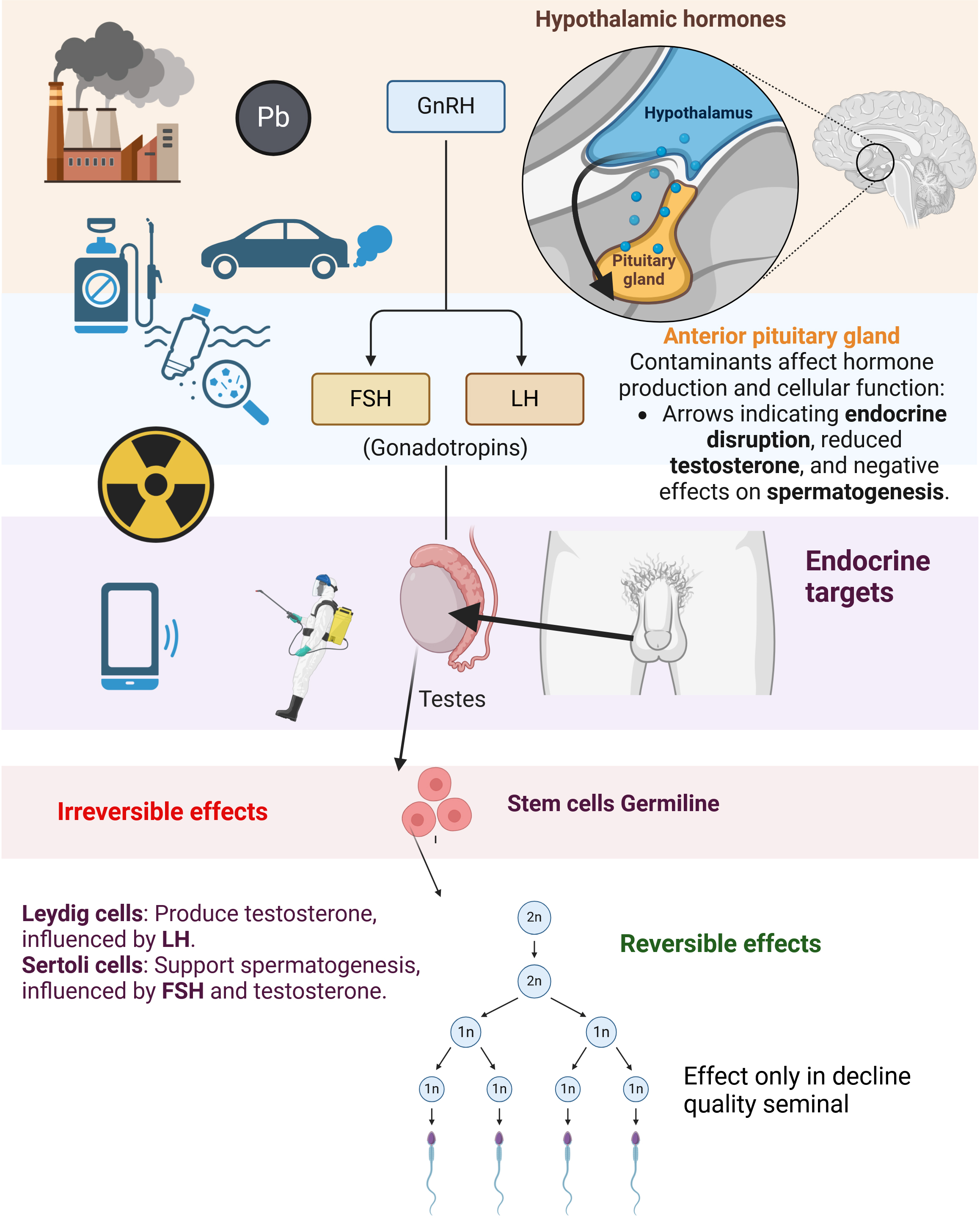
 Environmental contamination and male reproductive health: (ir) reversible effects in child- and adulthood
Infertility affects 10-15% of reproductive-age couples, with causes ranging from genetic factors to unidentified reasons. Environmental conditions, particularly pollutants, play a significant role in male fertility. Yet, public health policies often overlook reproductive health, despite mounting evidence of pollutants’ detrimental repercussion. Understanding this impact is crucial to prevent the effects of dangerous exposure, especially given the high levels of environmental pollutants in today’s world. Most of the previous research about the adverse effects from contaminants has been conducted in rodents, with limited human epidemiological research. This article reviews the evidence about the impact of various contaminants (air pollutants, water contaminants, pesticides, herbicides, radiation, heavy metals, and plastics) on male reproductive health, particularly sperm quality and fertility. The literature suggests that exposure to contaminants during fetal development and childhood has irreversible effects, while those of adult exposure are often reversible. These findings highlight the need to alert society about reproductive health threats from certain contaminants. Public authorities should consider this situation when designing health plans, and individuals envisaging fatherhood should be aware of these risks.
Key words
air pollution; male infertility; pesticides; plastics; radiation; water contaminants
 Thumbnail