
 Stachytarpheta serrana, a new species of Verbenaceae endemic to the Diamantina Plateau in Espinhaço Range (Minas Gerais, Brazil), with palynological and anatomical notes
Abstract
Stachytarpheta serrana, a new Brazilian species from the Serro municipality in the campos rupestres of the Diamantina Plateau, Minas Gerais state, is described and illustrated. Like most species of the genus found in this region, S. serrana has blue corollas and is morphologically related to S. glabra. Its recognition as a distinct species is supported by morphological, palynological, and anatomical evidence. The main traits for its recognition are its erect or suberect leaves, amphistomatic, with a foveolate abaxial surface and hirsute veins forming a reticulate network, flowers with a calyx 1.3–1.6 cm long and a corolla tube 2.3–2.6 cm long, subprolate pollen grains with a granulate colpi membrane, and fruits with a short beak at the apex. With a restricted distribution and known from only two recent collections, S. serrana should be classified as Data Deficient (DD).
Key words
Brazilian flora; Cerrado; conservation; endemism; Lamiales
INTRODUCTION
The Espinhaço Range is an extensive and continuous Precambrian orogenic belt in eastern Brazil that is renowned for its exceptional biodiversity, particularly of plants growing in the rupestrian grasslands (campos rupestres) above 900 meters of altitude (Giulietti & Pirani 1988, Rapini et al. 2008). It extends from north to south through the states of Bahia and Minas Gerais, within the Caatinga, Cerrado and Atlantic Forest domains (Gontijo 2008). Notably, both the Cerrado and Atlantic Forest are recognized as global biodiversity hotspots (Myers et al. 2000, Mittermeier et al. 2011).
The importance of conserving the Espinhaço Range has been underscored by numerous floristic studies since its first explorations in the 18th century (Almeida et al. 2023) and by the description of several new species in recent years (e.g. Echternacht & Trovó 2015, Romero & Versiane 2016, Scatigna et al. 2017, São-Mateus et al. 2018, Pacifico et al. 2019, Assunção-Silva et al. 2020, Bueno & Heiden 2021, Carvalho & Forzza 2022, Cabral et al. 2023, Mendes et al. 2024). However, substantial knowledge gaps remain concerning the flora of the Espinhaço Range, particularly given its altitudinal and topographical variation, which challenges the access to many areas (Martinelli 2007, Rapini et al. 2008, Silva et al. 2008).
Among the subdivisions of the Espinhaço Range, the Diamantina Plateau, situated to the north of Serra do Cipó and to the south of Grão Mogol, stands out as one of the most important centers of plant diversity and endemism (Echternacht et al. 2011, Gonçalves et al. 2017, Colli-Silva et al. 2019). The average altitude of the Diamantina Plateau is approximately 1,200 m, with its highest peak, namely Pico do Itambé, reaching 2,062 meters. Some protected areas within the Diamantina Plateau, such as Sempre-Vivas National Park, Biribiri State Park, Pico do Itambé State Park, and Rio Preto State Park, play a crucial role in safeguarding a significant portion of the region’s environmental and scientific value (Magalhães Júnior et al. 2015).
Verbenaceae are an important component of the flora in the Diamantina Plateau, comprising shrubby and subshrubby species predominantly found in the campos rupestres (Cardoso et al. 2021, 2024a, Salimena et al. 2024). Taxonomic treatments of the family for this region were carried out in Pico do Itambé State Park and Biribiri State Park (Cardoso et al. 2020a, Ribeiro et al. 2022). Additionally, four new and endemic species have been recently described for the Diamantina Plateau, including Lippia krenakiana P.H.Cardoso, V.I.R.Valério & Salimena (Cardoso et al. 2020b), Lippia raoniana P.H.Cardoso & Salimena (Cardoso et al. 2021), Stachytarpheta meninii P.H.Cardoso (Cardoso et al. 2024a), and Stachytarpheta vianae P.H.Cardoso (Cardoso et al. 2022). To date, the Diamantina Plateau is known to harbor 17 species of Lippia and 24 species of Stachytarpheta (Cardoso et al. 2021, 2024a). Many of these species are endemic and some of them are classified as rare or endangered (Salimena et al. 2009, 2013, 2014), underscoring the region’s significant botanical value.
In this study, we describe another new and endemic species of Stachytarpheta from the Diamantina Plateau, in Serro municipality. This new species was discovered through our taxonomic efforts, which included detailed analysis of herbarium collections and recent field expeditions. Illustrations, a geographic distribution map, comparisons with morphologically related species, palynological and anatomical data, as well as a preliminary assessment of its conservation status are provided.
MATERIALS AND METHODS
The recognition of the new Stachytarpheta species is the result of a comprehensive analysis of numerous specimens housed in Brazilian herbaria (Cardoso et al. 2024b), review of key taxonomic literature (protologues, Atkins 2005, Cardoso & Salimena 2024), and comparisons with morphologically similar species. These comparisons were made by personally analyzing specimens deposited at ALCB, BHCB, CEN, CESJ, ESA, HB, HEPH, HUEFS, MBM, R, RB, RFA, SP, SPF, and UB (acronyms according to Thiers 2024, continuously updated), as well as by examining high-quality digital images of samples available in the REFLORA (https://floradobrasil.jbrj.gov.br/), speciesLink (www.splink.org.br), and JSTOR Global Plants (https://plants.jstor.org) databases. Fieldwork conducted by F. R. G. Salimena in the municipality of Serro in April 2024 led to the observation of a population of the new species in its natural habitat and the collection of additional specimens.
Our conceptual view of species aligns with the fundamental idea of species as a metapopulation lineage that evolves separately (de Queiroz 2007), and we adopt morphology, palynology and anatomy as the main lines of evidence for delimitation. Morphological characters were examined by careful observation of the specimens under a stereomicroscope. Descriptive terminology was based on Harris & Harris (2003), Atkins (2005), Gonçalves & Lorenzi (2007), and Beentje (2010). Phenology and distribution data of the new species were gathered from specimen labels and field observations.
For the palynological analyses, specimens of the new species (F.R.G. Salimena 4248, V.A.O. Dittrich 2416) and specimens of the closely related Stachytarpheta glabra Cham. (J.A. Oliveira & R.R. Berbel 741, D.R. Gonzaga 452, C.C. Reis et al. 26) were utilized, all housed at CESJ herbarium and identified by F. R. G. Salimena and P. H. Cardoso. For observations under light microscopy, pollen grains were prepared directly in glycerin jelly (Wodehouse 1935, with adaptations proposed by Melhem et al. 2003) and by the lactic acetolysis method at 60% (Raynal & Raynal 1971). The slides were analyzed using an Olympus BX-41 microscope equipped with a micrometric eyepiece (used to take measurements). The pollen grains were then photomicrographed using a PrimeScan 12Pro camera attached to a Nikon Eclipse Ei microscope. Measurements of pollen grain diameters were taken, whenever possible, from 25 randomly selected grains across at least three slides (Salgado-Labouriau 1973); namely: largest diameter (in polar view) and equatorial and polar diameters (in equatorial view). The statistical analysis of the measurements allowed the presentation of amplitude (Xmin-Xmax), mean (M), standard deviation (S), standard error (Sx), 95% confidence interval and coefficient of variability. To test the normality of the data, the Shapiro-Wilk test was applied, and the means were compared using the t test. All these analyses were carried out using the software PAST ver. 4.03 (Hammer et al. 2001). To observe the thickness of the exine, as well as the length and width of the apertures, ten pollen grains were measured, and the mean values were presented. Observations under scanning electron microscopy (SEM) were carried out using FEI Quanta equipment, with pollen grains directly attached to stubs covered with double-sided tape.
To characterize the leaf anatomy, fully expanded fresh leaves (third or fourth node) with no signs of senescence from specimen F.R.G. Salimena 4248 were submitted to transverse sections using a table microtome. Cross-sections from the middle third of the leaf blade were mounted on slides with water, analyzed under a light microscope (Olympus BX-41), and photomicrographed with an attached camera. Basal, median, and apical regions of the leaf blade from young (first or second node) and mature (third to sixth node) herborized leaves of two specimens of the new species (F.R.G. Salimena 4248, V.A.O. Dittrich 2416) and two specimens of Stachytarpheta glabra (F.R.G. Salimena 4225, 4259) were analyzed and photomicrographed using a Tabletop Scanning Electron Microscope (SEM, Hitachi-TM3030 model) at 5 kV, without any sample preparation techniques. The vouchers are deposited at CESJ herbarium.
The distribution map of the new species was generated using QGIS ver. 3.16 (QGIS Development Team 2024). Preliminary threat assessments were conducted in accordance with the categories and criteria described in IUCN (2012), following the guidelines of IUCN - Standards And Petitions Committee (2022), with an area of occupancy (AOO) based on 2 × 2 km grids.
RESULTS
Taxonomic treatment
Stachytarpheta serrana P.H.Cardoso & Salimena sp. nov.
––TYPE: BRAZIL. Minas Gerais, Serro, Pedro Lessa, Estrada para Presidente Kubitscheck, 14 April 2024, F.R.G. Salimena 4248 (holotype: CESJ 80646, isotypes CEN and RB) (Figs. 1, 2).
Diagnosis:Stachytarpheta serrana differs from S. glabra by its erect or suberect leaves with foveolate abaxial surfaces and hirsute veins that form a reticulate network, flowers with longer calyces and corollas, and fruits with a short beak at the apex. Additionally, its pollen grains display a granulate colpi membrane, and its leaf blades are amphistomatic.
Shrubs 1.2–1.5 m tall, erect, densely branched, branches tetragonal, minutely strigose, becoming glabrescent with age. Leaves opposite or rarely 3-verticillate, erect or suberect, deciduous at maturity, sessile or petiolate, petioles 0.3–0.5 cm long, sometimes with small axillar leaves, blades 2.6–4.2 × 1.3–2.2 cm, elliptic or ovate, subcoriaceous, slightly discolorous, apices acute or obtuse, bases cuneate or attenuate, decurrent into petioles, margins entire near the base or up the middle, crenate towards the apices, revolute, purplish, minutely ciliate, adaxial surfaces shiny, slightly bullate, puberulent or glabrescent, strigose along the central vein, abaxial surfaces strigose along the central vein, densely hirsute along the other veins, penninerved, with prominent and ascending veins forming a reticulate network, foveolate, nectaries and peltate glandular trichomes present on both surfaces. Inflorescences 2.2–7 × 1.3–1.6 cm, cylindric, rachis usually visible, densely strigose; bracts bracteose, 0.5–0.7 × 0.1–0.15 cm, cylindric, shorter than the calyces, narrow triangular or linear, green or green-purplish, chartaceous, apices acuminate, abaxial surfaces strigose, margin ciliate, sessile glands present, becoming rigid after fruiting. Flowers sessile; calyces 1.3‒1.6 × 0.2–0.25 cm, erect, narrow from base to apex, free, green-purplish, 4-nerved, 4-toothed abaxially, teeth acute, ca. 0.05 cm long, 1 sinus adaxial ca. 0.4 cm long, tubes densely strigose externally, glabrous internally; corollas hypocrateriform, limbs blue, lobes ca. 0.3 cm wide, with short glandular-pedicellate trichomes, throat white, strigose, tubes blue-purplish, 2.3–2.6 cm long, well-exserted from the calyces, straight; androecium composed by two fertile stamens with divergent thecae, anthers lying at top of the corolla tube, staminodes pilose; gynoecium reduced to a single functional carpel, two-locular with one ovule per locule, ovary ca 0.25 cm long, a dense ring of trichomes just above the ovary, styles 2.4‒2.6 cm long, stigmas capitate. Fruits ca. 0.6 cm long, with a short beak at the apex, with a thin commissure, external surface reticulate, covered by the persistent calyces, separating into two cluses when ripe.

Stachytarpheta serrana P.H.Cardoso & Salimena. a) habit. b) detail of the indument on the branches. c) leaf, abaxial surface. d) leaf, detail of the abaxial surface showing the indument. e) bract, abaxial surface showing the indument. f) flower, showing the calyx and corolla. g-h) dissected calyx, showing the indument, ribs and teeth (external and internal surfaces, respectively). i) dissected corolla, showing the lobes, androecium and internal indumentum. j) gynoecium. k) detail of the stigma. l) fruit. (Illustrated by Klei Sousa, based on Salimena 4248).
Paratype: BRAZIL. Minas Gerais, Serro, Pedro Lessa, proximidades da Rodovia BR-259, 10 August 2023, V.A.O. Dittrich 2416 (CESJ).
Distribution, ecology, and provisional conservation assessment: Stachytarpheta serrana is known from two recent collection records in the municipality of Serro, Minas Gerais state, Brazil (Fig. 2a). This municipality is part of the Diamantina Plateau, a sub-region of the Espinhaço Range, and is located within the Cerrado domain, but in a transition zone with the Atlantic Forest. The specimens were collected in August 2023 and April 2024, growing in campos rupestres between grasses, at 1,130‒1,150 m a.s.l. Overall, the restricted distribution is a striking feature of several Stachytarpheta species (Atkins 2005, Cardoso et al. 2024b), therefore, S. serrana is probably endemic to the Diamantina Plateau.

Distribution map and photographs of habitat and individuals of Stachytarpheta serrana P.H.Cardoso & Salimena. a) map. b) habitat. c-d) habit. e) inflorescence. f) infructescence. State abbreviations: Bahia (BA), Distrito Federal (DF), Espírito Santo (ES), Goiás (GO), Minas Gerais (MG), Rio de Janeiro (RJ), São Paulo (SP). Photos by Pedro Henrique Nobre.
During a field expedition conducted by F. Salimena in April 2024, only a single population of the new species was found, comprising fewer than 10 individuals. Most of these individuals were fruiting, with only a few in flowers. Given the limited data currently available, we propose to classify Stachytarpheta serrana as Data Deficient (DD). Future surveys are crucial to identify additional populations and implement continuous monitoring. Ex-situ conservation strategies to protect the species from potential extinction should also be considered.
Etymology: The epithet “serrana” refers to the striking mountainous landscapes (serras) of the Espinhaço Range in Minas Gerais state, Brazil. Renowned for its unique geomorphological, historical, biological, and aesthetic features, this region was designated by UNESCO as the Serra do Espinhaço Biosphere Reserve, underscoring its exceptional importance for biodiversity conservation.
Taxonomic notes: Stachytarpheta serrana is distinguished as a multi-branched shrub with erect leaves, blades 2.6–4.2 × 1.3–2.2 cm, elliptic or ovate, subcoriaceous in texture, acute or obtuse at apices, with prominent veins forming a reticulate network abaxially. Its inflorescences are short, up to 7 cm, with narrow triangular or linear bracts, and its flowers have 4-toothed calyces and blue corollas.
Morphologically, Stachytarpheta serrana is related to the species of the informal group “Glabra” proposed by Atkins (2005). This group is characterized by including species with inflorescences over 0.6 cm wide, calyces free, 4-toothed abaxially, blue corollas, anthers at top of tube, styles equal in length to the corolla tube, and fruit surfaces externally reticulate with a thin commissure (Atkins 2005). Within this group, S. serrana is most similar to S. glabra, which is also found in the campos rupestres of the Espinhaço Range (Atkins 2005, Cardoso & Salimena 2024). Both species have elliptic or ovate leaves, narrow triangular or linear bracts, calyces longer than the bracts, green-purplish in color, with 1 adaxial sinus, and hypocrateriform corollas. However, they can be easily distinguished by the morphological characteristics summarized in Table I. See also the illustration of S. glabra in Atkins (2005, p. 253, fig. 29 F-K).
Stachytarpheta serrana also shares some similarities with S. itambensis S.Atkins, S. pohliana Cham., and S. reticulata Mart. ex Schauer, all of which are found in the Diamantina Plateau (Atkins 2005). Stachytarpheta itambensis and S. serrana share petiolate leaves, with cuneate or attenuate bases, decurrent into petioles, bracts shorter than the calyces, 4-toothed calyces, and blue corollas. However, the former belongs to the informal group “Sellowiana” according to Atkins (2005) and can be distinguished by its bracts measuring 0.3–0.5 cm in length, calyces 0.7–1 cm in length, corolla tubes 1.4–1.5 cm in length, and fruits with rounded apices. Stachytarpheta pohliana, as well as S. glabra, belongs to the informal group “Glabra” (Atkins 2005), but it is distinguished by having a hirsute indumentum along the branches, leaf adaxial surfaces, rachis, bracts, and calyces, often canescent. Additionally, the leaf blades of S. pohliana are not foveolate on abaxial surfaces (Atkins 2005). Stachytarpheta serrana and S. reticulata have leaf blades with prominent veins on the abaxial surfaces forming a reticulate network (Atkins 2005). It is important to note that S. reticulata represents a species complex, but it is readily distinguished from S. serrana by its 5-toothed calyces and shorter corolla tubes, measuring 1.2–1.8 cm in length. Additionally, the number of calyx teeth represents a trait with high taxonomic value within Stachytarpheta. Atkins (2005) included S. reticulata in the “Gesnerioides” group because it has 5-toothed calyces.
Palynological notes: Pollen grains of Stachytarpheta serrana and S. glabra are monads, very large (Table II), isopolar, with radial symmetry, anguloaperturate, and have a verrucate ornamentation, a simple margin and a membrane (Fig. 3). Patrício et al. (2024) conducted a palynological study on 11 Brazilian species of Stachytarpheta, demonstrating that the characteristics of the membrane, margin, and shape are critical for differentiating the species of the genus. Although S. serrana and S. glabra do not differ in their margin characteristics, they do exhibit differences in the shape and membranous structure of the colpi (Fig. 3). Regarding shape, the pollen grains of S. serrana are subprolate (Fig. 3a-c), while in S. glabra they are prolate-spheroidal (Fig. 3f). The membrane of the colpi is granulate in S. serrana (Fig. 3c), whereas those of S. glabra are perforate (Fig. 3d). Additionally, the amb in S. glabra varies from triangular to subtriangular, while the pollen grains of S. serrana consistently appear triangular in polar view. The t-test results showed that the largest diameter and equatorial diameter presented a significant difference between the pollen grains of the two species, whereas the polar diameter showed no significant difference (Fig. 4).
Morphometric data for pollen grains of the new species and its most similar congener (measurements in micrometers).

Light photomicrographs (LP) and scanning electromicrographs (SEM) of pollen grains of the new species and its most similar congener. a), b) and c) Stachytarpheta serrana P.H.Cardoso & Salimena; d), e) and f) S. glabra Cham.: a) polar view (LM). b) equatorial view (LM). c) polar view (SEM). d) details of the margin and membrane (SEM). e) polar view (LM). f) equatorial view (LM). Images by Andrea Pereira Luizi Ponzo and Pâmela Timóteo Patrício.
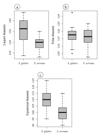
Box Plots of examined palynological characters of Stachytarpheta glabra Cham. and S. serrana P.H.Cardoso & Salimena: a) Largest diameter; t-test significant difference. b) polar diameter; t-test no significant difference was found. c) equatorial diameter; t-test significant difference.
Anatomical notes: The leaves of Stachytarpheta serrana are amphistomatic. The epidermis is uniseriate on both surfaces (Fig. 5a), with a higher density of stomata and eglandular trichomes on the abaxial surfaces. The eglandular trichomes are uni-bicellular, and the glandular trichomes are peltate (Fig. 5b-e). Eglandular trichomes occur along the leaf margins (Fig. 5b). Facing the adaxial surfaces, there is a parenchymatous hypodermis with isolated sclereid cells near the collateral vascular bundle (Fig. 5a). The mesophyll is dorsiventral. Peltate nectaries are distributed on both surfaces of the leaf blade (Fig. 5c, f).
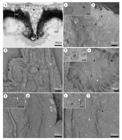
Leaf anatomical characteristics of the new species and its most similar congener. a-f) Stachytarpheta serrana P.H.Cardoso & Salimena; g-j) S. glabra Cham.: a) transversal section of fresh leaf (LP). b-c) adaxial surface (SEM). d-f) abaxial surface (SEM). g-h) adaxial surface (SEM). i-j) abaxial surface (SEM). Abbreviations: Epidermis adaxial surface (ead); epidermis abaxial surface (eab); mesophyll (me); vascular bundle (vb). Symbols: black arrow (stomata); white arrow (peltate nectary); black arrowhead (eglandular trichome); white arrowhead (glandular trichome); star (hipodermis). Magnification scale: c (100 µm); f (200 µm); h, j (60 µm). Images by Nádia Somavilla.
The anatomical differences between the new species and samples of Stachytarpheta glabra (Fig. 5h-j) observed in SEM analyses were as follows: eglandular trichomes were present only in the new species, and stomata were absent on the adaxial surface of S. glabra (Fig. f), identifying it as a hypostomatic leaf blade. It is important to note that Atkins (2005) described the indumentum of S. glabra leaves as follows: “upper and lower surfaces glabrous, with occasional scattered white hairs”; however, specimens of S. glabra anatomically analyzed in this study have glabrous leaves.
DISCUSSION
The Espinhaço Range is the region in Brazil with the highest concentration of Stachytarpheta species (Cardoso et al. 2024b). In addition to S. serrana, four other Verbenaceae species were recently described for the Diamantina Plateau in the state of Minas Gerais: Lippia krenakiana, L. raoniana, Stachytarpheta meninii, and S. vianae. These species are also known from recent collection records and have a restricted distribution (Cardoso et al. 2020b, 2021, 2022, 2024a), underscoring Verbenaceae as a noteworthy group for promoting effective conservation efforts. Furthermore, these discoveries emphasize the urgent need for increased collection efforts in the campos rupestres of the Espinhaço Range. In this context, despite challenges related to recognition and funding, traditional taxonomy remains critically important (Löbl et al. 2023). The effectiveness of conservation efforts is closely tied to the expansion of taxonomic knowledge and a thorough understanding of the geographical distribution of species (Salafsky et al. 2002, Godfray & Knapp 2004, Whittaker et al. 2005).
According to Silva et al. (2008), protected areas along the Espinhaço Range are insufficient to safeguard local biological diversity, especially given the considerable number of endemic plant species. This situation is concerning, as vegetation in the Diamantina Plateau and other subregions of the Espinhaço Range has been undergoing progressive degradation due to successive cycles of exploitation—mainly mining—and other anthropogenic activities, such as illegal fires (Neves et al. 2016, Fernandes et al. 2020). These factors have severely compromised the survival of endemic species and those known from few collection records, such as Stachytarpheta serrana. For this reason, taxonomic studies should be better valued, as they are essential for identifying yet-undescribed species before they face extinction (Callmander et al. 2005, Brown et al. 2023, Löbl et al. 2023).
Acknowledgements
The authors thank Dr. Vinicius A.O. Dittrich for the information about the species’ location and Dr. Pedro Henrique Nobre for his support during field expedition and for the beautiful photos of Stachytarpheta serrana. The authors would also like to thank the Laboratório Multiusuário de Bioprodutos e Bioprocessos (CentralBio) at the Faculdade de Farmácia, Universidade Federal de Juiz de Fora, for their support and infrastructure provided during the completion of this work. This study is part of the first author’s postdoctoral research, supported by a scholarship from the Conselho Nacional de Desenvolvimento Científico e Tecnológico (CNPq 150222/2024-6).
References
- ALMEIDA RBP, MURER BM & SANO PT. 2023. What is being published on floristics? An overview of floristic studies carried out in the Espinhaço Range. Acta Bot Bras 37: e20220267.
- ASSUNÇÃO-SILVA CC, MAGALHÃES RA & ASSIS LC. 2020. Ocotea mellosilvae (Lauraceae): a new species from the Espinhaço Range, Brazil. Kew Bull 75: 48.
- ATKINS S. 2005. The genus Stachytarpheta (Verbenaceae) in Brazil. Kew Bull 60: 161-272.
- BEENTJE HJ. 2010. The Kew plant glossary: An illustrated dictionary of plant terms. Kew: Royal Botanic Gardens, 160 p.
- BROWN M, BACHMAN S & LUGHADHA EN. 2023. Three in four undescribed plant species are threatened with extinction. New Phytol 240: 1340-1344.
- BUENO VR & HEIDEN G. 2021. Calea funkiana (Compositae, Neurolaeneae), a new endemic species from Serra do Cipó, Minas Gerais, Brazil. Syst Bot 46: 470-475.
- CABRAL A, FERREIRA-JÚNIOR CA & DE MENEZES NL. 2023. Two new remarkable species of Barbacenia (Velloziaceae) from the Brazilian Espinhaço Range in honor of Renato Mello-Silva. Phytotaxa 616: 279-287.
- CALLMANDER MW, SCHATZ GE & LOWRY PP. 2005. IUCN Red List assessment and the Global Strategy for Plant Conservation: taxonomists must act now. Taxon 54: 1047-1050.
- CARDOSO PH, COLLI-SILVA M, NETO LM & TROVÓ M. 2024b. Distribution and historical aspects of Brazilian Stachytarpheta (Verbenaceae): Exploring a comprehensive dataset of taxonomically verified specimens. Flora 317: 152561.
- CARDOSO PH, GONZAGA DR & TROVÓ M. 2024a. Stachytarpheta meninii (Verbenaceae), a new micro-endemic and threatened species from the Diamantina Plateau in Minas Gerais state, Brazil. Nord J Bot 2024(1): e04200.
- CARDOSO PH, MENINI NETO L, NOBRE PH, TROVÓ M & SALIMENA FRG. 2020a. Verbenaceae no Parque Estadual do Pico do Itambé, Estado de Minas Gerais, Brasil. Hoehnea 47: e122020.
- CARDOSO PH, MENINI NETO L, TROVÓ M & SALIMENA FRG. 2021. Checklist and a new species of Lippia (Verbenaceae) from the Diamantina Plateau, Minas Gerais, Brazil. Eur J Taxon 733: 42-55.
- CARDOSO PH, MORONI P, ANTAR GM, MENINI NETO L & TROVÓ M. 2022. Two new Brazilian species of Verbenaceae from the Espinhaço Range: Stachytarpheta olearyana and S. vianae Kew Bull 77: 729-736.
-
CARDOSO PH & SALIMENA FRG. 2024. Stachytarpheta in Flora e Funga do Brasil. Jardim Botânico do Rio de Janeiro. Available at: https://floradobrasil.jbrj.gov.br/FB15189 Accessed on September 17, 2024.
» https://floradobrasil.jbrj.gov.br/FB15189 - CARDOSO PH, VALÉRIO VIR, MENINI NETO L, TROVÓ M & SALIMENA FRG. 2020b. Novelties in Lippia (Verbenaceae) from Minas Gerais State, Brazil. Phytotaxa 455: 47-52.
- CARVALHO BDM & FORZZA RC. 2022. Pitcairnia mineira (Bromeliaceae): A new rheophytic species from the Espinhaço Range, Brazil. Acta Bot Bras 36: e2021abb0377.
- COLLI-SILVA M, VASCONCELOS TN & PIRANI JR. 2019. Outstanding plant endemism levels strongly support the recognition of campo rupestre provinces in mountaintops of eastern South America. J Biogeogr 46: 1723-1733.
- DE QUEIROZ K. 2007. Species concepts and species delimitation. Syst Biol 56: 879-886.
- ECHTERNACHT L & TROVÓ M. 2015. Paepalanthus serpens, a new microendemic species of Eriocaulaceae from the Espinhaço Range, Minas Gerais, Brazil. PhytoKeys 48: 43-49.
- ECHTERNACHT L, TROVÓ M, OLIVEIRA CT & PIRANI JR. 2011. Areas of endemism in the Espinhaço Range in Minas Gerais, Brazil. Flora 206: 782-791.
- FERNANDES GW ET AL. 2020. Biodiversity and ecosystem services in the Campo Rupestre: A road map for the sustainability of the hottest Brazilian biodiversity hotspot. Perspect Ecol Conserv 18: 213-222.
- GIULIETTI AM & PIRANI JR. 1988. Patterns of geographic distribution of some plant species from Espinhaço Range, Minas Gerais and Bahia, Brazil. In: VAZZOLINE PE & HEYER WR (Eds), Proceedings of a workshop on neotropical distribution patterns, Rio de Janeiro: Academia Brasileira Ciências, Rio de Janeiro, p. 39-68.
- GODFRAY HCJ & KNAPP S. 2004. Introduction. Taxonomy for the twenty-first century. Philos Trans R Soc Lond B Biol Sci 359: 559.
- GONÇALVES DJP, SHIMIZU GH, YAMAMOTO K & SEMIR J. 2017. Vochysiaceae na região do Planalto de Diamantina, Minas Gerais, Brasil. Rodriguésia 68: 159-193.
- GONÇALVES EG & LORENZI H. 2007. Morfologia vegetal: organografia e dicionário ilustrado de morfologia das plantas vasculares. Nova Odessa: Instituto Plantarum, 416 p.
- GONTIJO BM. 2008. Uma geografia para a Cadeia do Espinhaço. Megadiversidade 4: 7-14.
- HAMMER Ø, HARPER DA & RYAN PD. 2001. PAST: paleontological statistics software package for education and data analysis. Palaeontol Electronica 4: 1-9.
- HARRIS JG & HARRIS MW. 2003. Plant identification terminology: an illustrated glossary. 2nd ed., Spring Lake: Spring Lake Publ., 216 p.
- IUCN. 2012. IUCN Red List Categories and Criteria, Version 3.1, 2nd ed., IUCN, Cambridge & Gland, 32 p.
-
IUCN - STANDARDS AND PETITIONS COMMITTEE. 2022. Guidelines for Using the IUCN Red List Categories and Criteria, Version 15. Available at: http://www.iucnredlist.org/documents/RedListGuidelines.pdf Accessed on September 17, 2024.
» http://www.iucnredlist.org/documents/RedListGuidelines.pdf - LÖBL I, KLAUSNITZER B, HARTMANN M & KRELL FT. 2023. The silent extinction of species and taxonomists: An appeal to science policymakers and legislators. Diversity 15: 1053.
- MAGALHÃES JÚNIOR AP, DE PAULA BARROS LF & FELIPPE MF. 2015. Southern Serra do Espinhaço: the impressive plateau of quartzite ridges. In: VIEIRA B, SALGADO A & SANTOS L (Eds), Landscapes and landforms of Brazil, World Geomorphological Landscapes, Dordrecht: Springer, p. 359-370.
- MARTINELLI G. 2007. Mountain biodiversity in Brazil. Rev Bras Bot 30: 587-597.
- MELHEM TS, CRUZ-BARROS MAV, CORRÊA MAS, MAKINOWATANABE H, SILVESTRE-CAPELATO MSF & ESTEVES VLG. 2003. Variabilidade polínica em plantas de Campos do Jordão (São Paulo, Brasil). Bol Bot Univ São Paulo 16: 1-106.
- MENDES JCR, DE S SECCO R & VIANA PL. 2024. An account of a new and endangered tiny species of Phyllanthus (Phyllanthaceae) from Serra da Gandarela, Minas Gerais, Brazil. Brittonia 76(1): 1-7.
- MITTERMEIER RA, TURNER WR, LARSEN FW, BROOKS TM & GASCON C. 2011. Global biodiversity conservation: the critical role of hotspots. In: ZACHOS F & HABEL J (Eds), Biodiversity hotspots, Berlin Heidelberg: Springer, p. 3-22.
- MYERS N, MITTERMEIER RA, MITTERMEIER CG, FONSECA GAB & KENT J. 2000. Biodiversity hotspots for conservation priorities. Nature 403: 853-858.
- NEVES ACDO, BARBIERI AF, PACHECO AA, RESENDE FDM, BRAGA RF, AZEVEDO AA & FERNANDES GW. 2016. The human dimension in the Espinhaço Mountains: land conversion and ecosystem services. In: FERNANDES G (Ed), Ecology and conservation of mountaintop grasslands in Brazil, Springer, Cham, p. 501-530.
- PACIFICO R, CANDIDO LF & FIDANZA K. 2019. Microlicia donii (Melastomataceae: Microlicieae), an endangered new species from Serra do Cabral, Minas Gerais, Brazil. Kew Bull 74: 59.
- PATRÍCIO PT, CARDOSO PH & LUIZI-PONZO AP. 2024. Pollen morphology and its taxonomic potential in Stachytarpheta sect. Stachytarpheta (Verbenaceae) occurring in Brazil. Palynology 48: 2284144.
-
QGIS DEVELOPMENT TEAM. 2024. QGIS Geographic Information System. Version 3.6. Open Source Geospatial Foundation Project. Available at: https://www.qgis.org Accessed on September 17, 2024.
» https://www.qgis.org - RAPINI A, RIBEIRO PL, LAMBERT S & PIRANI JR. 2008. A flora dos campos rupestres da Cadeia do Espinhaço. Megadiversidade 4: 15-23.
- RAYNAL J & RAYNAL A. 1971. Une technique de preparation des grains de pollen fragiles. Adansonia 11: 77-79.
- RIBEIRO ARCP, CARDOSO PH, MENINI L, NOBRE PH & SALIMENA FRG. 2022. Verbenaceae no Parque Estadual do Biribiri, Estado de Minas Gerais, Brasil. Hoehnea 49: e102022.
- ROMERO R & VERSIANE AFA. 2016. Microlicia candolleana (Melastomataceae): a new endemic species to the Espinhaço Range, Minas Gerais, Brazil. Phytotaxa 261: 275-281.
- SALAFSKY N, MARGOLUIS R, REDFORD KH & ROBINSON JG. 2002. Improving the practice of conservation: A conceptual framework and research agenda for conservation science. Conserv Biol 16: 1469-1479.
- SALGADO-LABOURIAU ML. 1973. Contribuição à palinologia dos cerrados. Rio de Janeiro: Acad Bras Cienc, 293 p.
- SALIMENA FRG, FRANÇA F & SILVA TRS. 2009. Verbenaceae. In: GIULIETTI AM, RAPINI A, ANDRADE MJG, QUEIROZ LP & SILVA JMC (Eds), Plantas raras do Brasil. Belo Horizonte: Conservação Internacional, p. 399-405.
- SALIMENA FRG, KUTSCHENKO DC, MONTEIRO NP & MYNSSEN C. 2013 Verbenaceae. In: MARTINELLI G & MORAES MA (Eds), Livro vermelho da Flora do Brasil. Rio de Janeiro: Instituto de Pesquisas Jardim Botânico do Rio de Janeiro, p. 1010- 1016.
- SALIMENA FRG, MORAES L, KUTSCHENKO DC & NOVAES L. 2014. Verbenaceae. In: MARTINELLI G, MESSINA T & SANTOS-FILHO L (Eds), Livro Vermelho da Flora do Brasil – Plantas raras do Cerrado. Rio de Janeiro: Instituto de Pesquisas Jardim Botânico do Rio de Janeiro, p. 266-273.
-
SALIMENA FRG, O’LEARY N, CARDOSO PH, SCHAEFER J, SILVA TRDS, MORONI P, SILVA GB, THODE VA & BOLDORINI A. 2024. Verbenaceae in Flora e Funga do Brasil. Jardim Botânico do Rio de Janeiro. Available at: https://floradobrasil.jbrj.gov.br/FB246 Accessed on September 17, 2024.
» https://floradobrasil.jbrj.gov.br/FB246 - SÃO-MATEUS W, PAGANUCCI DE QUEIROZ L, JARDIM JG & CARDOSO DB. 2018. Harpalyce riparia (Leguminosae, Papilionoideae), a new species from the campos rupestres of the Chapada Diamantina in Bahia, Brazil. Syst Bot 43: 206-211.
- SCATIGNA AV, SOUZA VC & SIMÕES AO. 2017. Stemodia cipoensis (Plantaginaceae): A new species from Serra do Cipó, Minas Gerais, Brazil. Syst Bot 42: 371-377.
- SILVA JA, MACHADO RB, AZEVEDO AA, DRUMOND GM, FONSECA RL, GOULART MF, JÚNIOR EAM, MARTINS CS & NETO MBR. 2008. Identificação de áreas insubstituíveis para conservação da Cadeia do Espinhaço, estados de Minas Gerais e Bahia, Brasil. Megadiversidade 4: 273-309.
-
THIERS B. 2024. [continuously updated]. Index Herbariorum: A global directory of public herbaria and associated staff New York Botanical Garden’s Virtual Herbarium. Available at: http://sweetgum.nybg.org/ih Accessed on September 17, 2024.
» http://sweetgum.nybg.org/ih - WHITTAKER RJ, ARAÚJO MB, JEPSON P, LADLE RJ, WATSON JE & WILLIS KJ. 2005. Conservation biogeography: assessment and prospect. Divers Distrib 11: 3-23.
- WODEHOUSE RP. 1935. Pollen grains. Their structure, identification and significance in Science and Medicine. New York: McGraw-Hill Book Company, 574 p.


