 Enhancement of Javanese grasshopper and kidney bean tempeh patties with giant foot yam (Amorphophallus muelleri) glucomannan: a study of physicochemical, sensory characteristics and its correlation
Abstract
Analogous meat should possess physical and sensory characteristics similar to or better than beef. Patties made from analog meat present challenges in texture properties and consumer acceptability. When making analog meat from Javanese grasshopper and kidney bean tempeh, a binder may be necessary to improve the texture. This study aimed to determine the effect of different levels of glucomannan on the physicochemical and sensory properties of Javanese grasshopper patties with kidney bean tempeh and its correlation. A completely randomized design (CRD) was used, with glucomannan levels as a factor. Physicochemical properties such as color, pH, WHC, OHC, texture, microstructure, and proximate were analyzed, along with sensory characteristics. The addition of glucomannan significantly affected the physicochemical properties and sensory characteristics of Javanese grasshopper patties (p<0.05), except color (L*and b*), carbohydrate content, and sensory attributes of compactness, and aftertaste. Javanese grasshopper patties with kidney bean tempeh and 4% giant foot yam glucomannan (F2) offer the best balance between product quality and sensory acceptability. The giant foot yam glucomannan can be used as a binder and food additive to produce meat analogs in the food industry.
Key words
Analogue meat; Binder; Glucomannan; Javanese grasshopper; Kidney bean tempeh
INTRODUCTION
As a basic human need, food plays a vital role in health and nutrition. Beef is a significant dietary source of protein, essential for the growth and maintenance of the human body. In Indonesia, current beef production is insufficient to meet consumption demands (Central Bureau of Statistics 2023). This issue can be addressed by substituting beef with alternative high-protein foods such as meat analogs. A meat analog is a protein substitute designed to closely resemble the physical, chemical, and sensory properties of beef. Typically, meat analogues are produced from soy protein isolate combined with carbohydrates (Lindriati et al. 2018).
Previous research has focused on creating insect-based analog meat in patty form using Javanese grasshopper (Valanga nigricornis), kidney beans, and giant foot yam flour as a binder (Priyatnasari et al. 2024). The aim is to harness Indonesia’s potential to use edible insects as a sustainable and halal protein alternative. Javanese grasshoppers boast a high protein content of 62.2%, surpassing beef (54.7%) and chicken (40.5%) (Chakravorty et al. 2014). Regarding body shape, Javanese grasshoppers (JG) are challenging themselves to process into other food products and have low acceptability. Further processing of JG flour can significantly maintain protein levels, simplify further processing, and extend its shelf life (Kusmaryani 2005). Kidney beans are also used, which offer folate, vitamin B1, phosphorus, protein, and fiber. These beans can be transformed into tempeh to enhance their nutritional value and reduce allergenicity. This process breaks down bean proteins into smaller peptides and free amino acids, altering the protein structure—particularly the secondary and tertiary structures, making them less recognizable by IgE antibodies (Rumagit et al. 2013, Wilson et al. 2005). However, the short shelf life of kidney bean tempeh (2-3 days at room temperature) necessitates a grinding process to extend its shelf life (Astawan et al. 2016).
The production of meat substitutes like patties involves the use of binding and texture-forming ingredients, such as glucomannan, which interacts with proteins and carbohydrates to enhance the texture of the meat analog (Lindriati et al. 2018). Previous studies showed that adding fiber in the form of semi-refined carrageenan to tempeh flour resulted in lower protein content compared to control samples. Priyatnasari et al. (2024) reported that incorporating 3% porang flour led to sensory scores below 5 (out of a maximum of 8) for parameters such as juiciness, hardness, springiness, and cohesiveness in the patties.
Based on the explanation provided, JG and kidney bean tempeh can be used as binders in making analog meat patties. The addition of glucomannan is believed to enhance the physical and chemical properties of the Javanese grasshopper patty. Studies have shown that porang flour can also be used in making sausages and plant-based fish balls as a binder (Nuhriawangsa et al. 2021). Therefore, it is necessary to research the effect of giant foot yam glucomannan concentration on the physicochemical and sensory characteristics of Javanese grasshopper patties and its correlation.
MATERIALS AND METHODS
Materials
The experiment was conducted in January – June 2024 at Advanced Laboratory of National Research and Innovation Agency in Gunungkidul, DI Yogyakarta (BRIN – Gunungkidul). The materials used in the production of meat analogue include Javanese Grasshopper (Valanga nigricornis) with size ± 8-10 cm sourced from the MSME Extreme Food supplier in Gunungkidul, Indonesia; kidney beans (Phaseolus vulgaris L) obtained from Agro Inti in Semarang, Indonesia; and giant foot yam (Amorphophallus muelleri) glucomannan flour supplied by Gut Living Indonesia. Additional ingredients used in meat analogue production included gluten, distilled water, and various spices, such as soy sauce, tomato sauce, shallots, garlic, pepper, salt, and beef stock. For protein crosslinking purposes, the enzyme transglutaminase (PT Ajinomoto, Indonesia) was used at a concentration of 1%.
Preparation samples
The process of making the patty involves using raw materials such as Javanese grasshopper (JG) flour and kidney bean tempeh flour. First, the Javanese grasshoppers are thoroughly washed, then soaked in a 0.3% sodium bicarbonate solution for 10 mins, and blanching (70-80 °C) for 3 mins. After that, the JG are dried in an oven at 50 °C for approximately 24 h. The dried JG are then ground with a blender and sieved with a 100-mesh sieve (Kristanti et al. 2024). Meanwhile, to make kidney bean tempeh flour, start by washing the kidney beans until cleaned and then boiling them for 10 mins. After that, soak the kidney beans in a 0.5% vinegar solution (pH 4-5) for 7h and then rinse them with distilled water. Peel the kidney bean skin and steam at 100 °C for 15 mins. Cooling kidney beans and then add yeast, about 0.2% of the weight of the kidney beans. The kidney beans are packaged in plastic with a hole cut in them and then incubated at room temperature (25-27 °C) for 48 h. After incubation, dry the kidney bean tempeh at 50 °C for 24 h using a tray dryer (Memmert), and then grind and sieve it with a 100-mesh sieve. The giant foot yam glucomannan used was the Ikarie brand, which has a 100% purity content (Tungga & Bhuja 2020).
To prepare the patty, begin by mixing giant foot yam glucomannan flour with ice water until it forms a gel. Then, add JG flour, kidney bean tempeh flour, gluten, spices (onions, garlic, tomato sauce, soy sauce, pepper, salt, and beef extract powder) and mix using a food processor until well combined. Next, add cooking oil and the 1% (w/w) transglutaminase enzyme and mix until well combined. Once the dough is mixed, knead it until it becomes smooth and compact. Shape the dough into rounds (80 g) and steam for 30 mins at 45 °C to optimize the enzyme performance. Finally, steam the patties again at 100 °C for 30 mins to cook them (Priyatnasari et al. 2024).
Experimental design
The experimental design used a randomized control design (CRD), with factor: glucomannan flour levels (F), namely, control, without glucomannan flour (F0), 2%(F1), 4%(F2), 6%(F3) and 8%(F4), with triplicates, 15 experimental units. The formulation of the Javanese grasshopper analogue meat patty is presented in Table I.
Procedure analysis
Proximate composition
The proximate analysis was conducted based on AOAC International (2005) standards to determine the moisture, fat, ash, protein, and carbohydrate content. The following methods were used: gravimetric method (No. 925.10) for moisture, Soxhlet extraction method (No. 920.39) for fat, gravimetric method (No. 923.03) for ash, Kjeldahl method (No. 955.04) for protein, and by-difference calculations (Nielsen 2010) for carbohydrate, respectively. All analyses were performed in triplicate.
pH value
A pH meter (Eutech PH700 Benchtop pH Meter, Singapore) was used to determine the pH value of every sample. A 10 g sample was placed into a beaker, mixed with 10 mL of distilled water (pH 7.0), and stirred until a homogeneous solution was formed. The mixture was then allowed to stand at room temperature for 10 minutes. Afterward, the pH of the solution was measured (Iwansyah et al. 2021).
Color
Instrumental color analyses of the samples were performed using a Hunter Laboratory Colorimeter (model SN 7877, Ultrascan, Hunter Associates Laboratory, Inc., Virginia) using CIE L*a*b* space, where L* denotes lightness (0 = darker, 100 = lighter), coordinate a* represents the shade of red and green, in which a*> 0 indicates red color and a*< 0 means green color and coordinate b* represents the tone of blue and yellow, in which b*> 0 shows the intensity of yellow and b*< 0 indicates the hue of blue (Iwansyah et al. 2021).
Water holding capacity and oil holding capacity
The water holding capacity (WHC) and oil holding capacity (OHC) were measured based on the Excess-Water or Oil method with modification (Li et al. 1993). Pattys (2 g) was added 9 mL of water or oil in a centrifuge tube, then shaken with a vortex mixer for 1 minute and centrifuged for 20 minutes at 3000 rpm, 15 °C. WHC and OHC was calculated based on the difference between the wet and dry patty against the initial patty weights.
Texture profile
Patties texture profiles were tested using a texture analyzer model TA-XT2 (Stable Microsystems Ltd. Surrey, England, UK). The patty sample 1x1x2 cm was placed in the sample area and then measured using a P36 probe. Setting the condition of the tool was pre-test speed 2mm/sec, test speed 1mm/sec, post-test speed 10mm/sec, 30% strain mode, 5 sec, and trigger force 5 g. The parameters obtained include hardness (N); springiness (mm); cohesiveness; adhesiveness (Ns); gumminess (N/mm2); and chewiness (N/mm) (Solichah et al. 2021).
Microstructure (Scanning Electron Microscopy)
Scanning electron microscopy was performed according to the methods described by (Shin et al. 2020). Mall rod-shaped pieces of patty approximately 0.5 cm long and 0.3 cm thick were prepared. The samples were fixed using Carnoy fluid (60% ethyl alcohol, 30% chloroform, and glacial+ 10% acetic acid, v/v) at 4 °C for 24 h, and they were then dehydrated at 4 °C using ethyl alcohol: 70% (12 h), 95% (2 h), and 100% (2 h) (Shin et al. 2020). The samples were then immersed twice in acetone for 10 mins each and dried in a fume hood. The dried samples were carefully mounted on carbon-taped aluminum stubs and the sample was coated with gold at 10 nm thick for 15 mins. Next, the picture shows a voltage of 3 kV (S-4800, Hitachi Ltd., Tokyo, Japan).
Sensory evaluation
Sensory evaluation was conducted using a hedonic scale assessment of parameters including aroma, texture, flavor, aftertaste, mouthfeel, and overall using a hedonic rating scale of 1-7 which represents the level of panelists’ liking for the product (very strongly dislike to very strongly like). In addition, a ranking test was also conducted. Sensory evaluations were conducted with 35 semi-trained panelists at the Food Technology and Processing Research Center – BRIN. The samples were prepared by grilling them on a non-stick pan (Teflon) over low heat for 2.5 minutes on each side. After cooking, the samples were cooled and cut into eight pieces before being placed on small plates (4 cm in diameter) for presentation. All samples were presented simultaneously, and each sample was randomized and coded differently for each panelist.
Before the sensory evaluation, panelists provided personal data, including allergy history, and those with known allergies were excluded. Each panelist received a fork, tissue, water, and plain biscuits. They were instructed to drink water between samples and eat plain biscuits if their flavor perception became affected. Ethical approval for the research was obtained from the Ethics Commission of the National Research and Innovation Agency, Indonesia (Approval No: 008/KE.04/SK/02/2024).
Statistical analysis
Data are presented as mean ± standard deviation (SD). Statistical analyses were performed using a statistical software program for Windows and R-Statistics x64.1.1.1. The normality of the data was assessed. Data were analyzed using analysis of variance (ANOVA), followed by Duncan’s multiple range test. A multivariate analysis was conducted through principal component analysis (PCA) using R software to examine the relationship between glucomannan levels and the physicochemical and sensory characteristics of the Javanese grasshopper patty.
RESULTS AND DISCUSSION
Physicochemical properties
The results of the physicochemical properties of Javanese grasshopper (JG) with kidney bean tempeh patty are presented in Table II. The water holding capacity (WHC) and oil holding capacity (OHC) of a food material can be affected by external factors such as cutting, heating, grinding, and pressure. According to Table II, adding glucomannan significantly affected the WHC and OHC of Javanese grasshopper patty and kidney bean tempeh (p<0.05). The patty with a 2% glucomannan concentration (F1) had the highest WHC at 117%, while the patty with an 8% glucomannan concentration (F4) had the highest OHC at 92.98%. Purnawijayanti et al. (2024) reported that the concentration of glucomannan in meat, like soy protein isolate, did not significantly affect the WHC produced, but the value tended to increase as the glucomannan concentration increased. Glucomannan functions as a crosslinker, binding protein filaments. The decrease in WHC in grasshopper patty and kidney bean tempeh at concentrations of 2%, 4%, and 6% may be attributed to the interaction between glucomannan and protein becoming non-repulsive at a certain concentration (Lindriati et al. 2018). This causes the starch gel to be inserted between the matrices, preventing water from entering and closing the pores, thereby reducing the WHC value. This is consistent with previous research on meat analogs based on soy protein isolate treated with glucomannan concentration (Lindriati et al. 2018). Glucomannan also plays a role in protein-starch interactions, providing a site for bound oil. The increase in glucomannan percentage is directly proportional to the decrease in protein in the patty, resulting in a reduced ability to absorb oil (Lindriati et al. 2018).
Physicochemical properties of the Javanese grasshopper and kidney bean tempeh patty with various levels of giant foot yam glucomannan.
The pH values of JG and kidney bean tempeh patties significantly affect with varied based on the concentration of giant foot yam glucomannan (p<0.05). The patty with a glucomannan concentration of 2% had the lowest pH (6.06), while the patty with an 8% concentration had the highest pH (6.58). As the concentration of glucomannan increases, the pH also rises. This aligns with Wardani & Widjanarko (2023), who found that higher glucomannan concentrations also raised the pH of diclofenac sodium gel. Based on research by Putri (2018), the pH range of porang glucomannan is 6.5-6.63. According to Sukma et al. (2022), the pH of glucomannan flour is around 7, which is considered neutral. Therefore, the addition of glucomannan will lead to a product pH approaching neutral (pH=7).
Texture analysis revealed that the concentration of added glucomannan significantly affected the hardness, chewiness and gumminess of the grasshopper patty and kidney bean tempeh (p<0.05) (Table II). The hardness of the grasshopper patty and red bean tempeh increased as the glucomannan concentration increased. The patty with the highest hardness had a glucomannan concentration of 8% (F4). The hardness of the patty can be influenced by the density of the matrix structure, as increased density will enhance the hardness of the product (Charoenrein et al. 2011). In a study by Ran et al. (2022), it was found that adding porang glucomannan to plant-based fish ball products significantly increased their hardness. This is because the addition of glucomannan creates a stiff and compact three-dimensional network. Ran et al. (2022) also reported that adding more than 6.5% glucomannan is not recommended, as it produces a texture that is excessively stiff and hard.
The term gumminess refers to the amount of energy required to decrease the size of a product so that it can be swallowed. This characteristic is commonly found in semi-solid food ingredients. From a sensory perspective, gumminess can also be described as elasticity (Knaapila et al. 2024). A higher value of gumminess indicates a denser product. However, excessively high gumminess suggest that the product is difficult to chew. The gumminess value tends to increase with the concentration of porang glucomannan. Gumminess is directly proportional to the concentration of glucomannan (Razin 2024), indicating that higher glucomannan concentration increases the structural strength of a product. This increased elasticity is due to the gelatinization of glucomannan, which binds air. Glucomannan also synergizes with proteins, improving gel texture and influencing elasticity (Rahma & Sutrisno 2017). Additionally, the use of the transglutaminase enzyme also enhances the elasticity of the patty. Akalil et al. (2023) reported that in chicken sausage products, the transglutaminase enzyme increases elasticity by forming cross-links between proteins, resulting in a denser structure that resembles meat fibers.
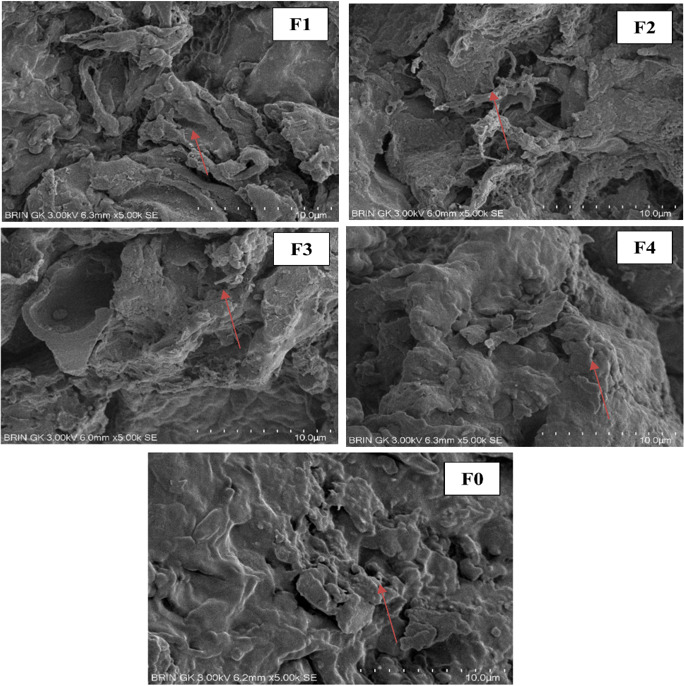
The microstructure of Javanese grasshopper and kidney bean tempeh patties with giant foot yam glucomannan can be observed by scanning electron microscopy (SEM) and reported in Fig. 1.

Microstructure of Javanese grasshopper and kidney bean tempeh patties with giant foot yam glucomannan. 5000x magnification.
The patty has an irregular microstructure with small pores on the surface. When the glucomannan concentration is higher, there are fewer pores, resulting in a smoother structure (Fig. 1). This indicates a more compact texture. The pores or cavities are water channels formed during the patty drying process. The denser the pores will reduce water retention during the patty cooking process. This will affect the juicy texture when the patty is cooked (Feng et al. 2022). The texture of the patty is affected by the size and number of cavities. Larger and more cavities result in a softer texture, while smaller and fewer cavities lead to a more compact but less juicy texture (Debusca et al. 2014). In Fig. 1, it is evident that the control patty has the most and largest pores, causing a soft texture. This is supported by the results of the hardness and gumminess texture test (see Table I), which showed that the control patty had the lowest values for hardness and gumminess compared to patties with a glucomannan concentration of 2 - 8%.
Proximate composition
The Proximate composition of Javanese grasshopper (JG) with kidney bean tempeh patty are presented in Table III.
Proximate composition of the Javanese grasshopper and kidney bean tempeh patty with giant foot yam glucomannan.
In Table III, it is showed that the concentration of glucomannan had a significant impact on the moisture, ash, fat and protein content of patties (p<0.05). However, it did not have a significant effect on the carbohydrate content (p>0.05). The ash content of Javanese grasshopper patties consistently increased with higher concentrations of added glucomannan (p<0.05). Samples with different superscripts showed significant differences, indicating a progressive increase in ash content across formulations. Meanwhile, the moisture content showed an increasing trend up to 4% glucomannan (F2), but no significant differences were observed between F1, F2, F3, and F4 (p>0.05), as indicated by the shared superscript ‘a’ in these samples. The increase in patty water content is due to glucomannan’s ability to bind water. According to Anggraeni et al. (2014), glucomannan is involved in binding water through β-1,4 glycoside and β-1,6 glycoside bonds. In the meantime, the increase in ash content was attributed to the presence of ash content in glucomannan, which in turn led to an increase in the ash content of patties. This finding was agreement with the research conducted by Sari & Suharti (2015), the ash content of porang flour was 4%, resulting in an increase in the ash content of the patty under the given treatment. Purified glucomannan of giant foot yam has an ash content value of 1.5% (Zhu & Zhang 2019).
A decrease in the protein and fat content of the patties was observed with increasing concentrations of added glucomannan (p<0.05) (refer to Table III). The findings align with a study by Shada et al. (2022) which found that the protein content of nuggets decreased as the amount of kala kai (a fiber-rich plant) used in making them increased. Similarly, research by Yuliarti et al. (2024) demonstrated that adding konjac to soybean analog patty meat also led to a decrease in protein levels. The addition of glucomannan in Javanese grasshopper patty reduced the fat content, which is supported by a study by Kim et al. (2007) indicating that increasing glucomannan concentration decreased the fat content of chicken patties. Similarly, substituting porang flour also led to a decrease in fat content in pork patties (Wei et al. 2024) and in plant-based patties (Han et al. 2023).
Carbohydrates play a significant role in determining the characteristics of food ingredients, including color, taste, and texture. According to Table III, the concentration of glucomannan did not have a significant effect (p>0.05) on the carbohydrate content of Javanese grasshopper patty and kidney bean tempeh. The carbohydrate content of this patty is higher than in previous research on similar products, such as Javanese grasshopper and kidney bean patties, which had carbohydrate content ranging from 37.06% to 43.76% (Priyatnasari et al. 2024). This difference is attributed to the fact that the previous research only added 3% glucomannan in all treatments. The research by Pasaribu et al. (2016) confirmed that glucomannan in porang flour contains a high level of carbohydrates, approximately 71.83%. Additionally, research conducted by Rahmawati et al. (2023) indicated that the carbohydrate levels in patties tend to decrease as the concentration of glucomannan increases.
Sensory characteristics
Sensory characteristics of meat analog made from the Javanese grasshopper can be seen in Table IV. The concentration of glucomannan did not have an impact on the panelists’ preferences for the color, and aroma of Javanese grasshopper meat analogs (p>0.05). However, the glucomannan treatment affected the panelists’ preferences for texture attributes such as juiciness, compactness, gumminess, hardness, flavour, aftertaste and overall acceptance (p<0.05). The findings align with Da Silva et al. (2016), indicating that low-fat cheese with added porang glucomannan did not show significant differences in brightness level (L*). Similarly, Kartina (2022) found that adding glucomannan did not enhance the brightness of egg chips. Purnawijayanti et al. (2024) found that in the flavor sensory test, soybean analog meat treated with glucomannan concentrations ranging from 0% to 20% did not show significant differences, indicating that the strong soybean taste was maintained according to the panelists. Aroma can be defined as a substance that causes the reaction of receptors in the nose. Food aroma is usually a complex mixture of different organic chemical compounds. Razin (2024) reported that glucomannan concentration did not significantly impact the aroma of catfish tekwan products. However, at higher concentrations, subtle changes in aroma may still occur. Additionally, Rusdianto et al. (2024) reported that using 13% - 55% glucomannan affected the aroma of bubble pearl products, as higher quantities of glucomannan produced a distinct, potentially unpleasant aroma of porang tubers that could interfere with product characteristics.
Sensory characteristics of the Javanese grasshopper and kidney bean tempeh patty with giant foot yam glucomannan.
The characteristics that significantly influence the overall acceptance of the Javanese grasshopper and kidney bean tempeh patty product are texture-related attributes, including juiciness, elasticity, and hardness. According to Eckles et al. (1943), the overall acceptance of a product depends on its texture and taste. Additionally, the acceptance of similar products like meatballs is influenced by aroma, texture, and tenderness (Rosita et al. 2015). In a study by Ran et al. (2022), it reported that adding more than 6.5% glucomannan to plant-based fish ball products is not recommended as it results in an undesirable texture, described as excessively firm and rubbery, which negatively impacts consumer acceptance. The study also showed that panelists’ liking for elasticity increased with higher glucomannan concentrations. However, excessive gumminess may result in a product that is difficult to chew, while low gumminess may cause the product to break down too easily during chewing. Thus, there is an optimal range of gumminess that influences preference for elasticity in a product (Fitriyani 2017). Among the Javanese grasshopper analog meat treatments, the addition of 4% glucomannan (F2) received the highest liking scores for juiciness (5.03), compactness (5.29), gumminess (5.29), hardness (4.86), and overall acceptance (5.11) compared to other treatments (Table IV).
Principal component analysis
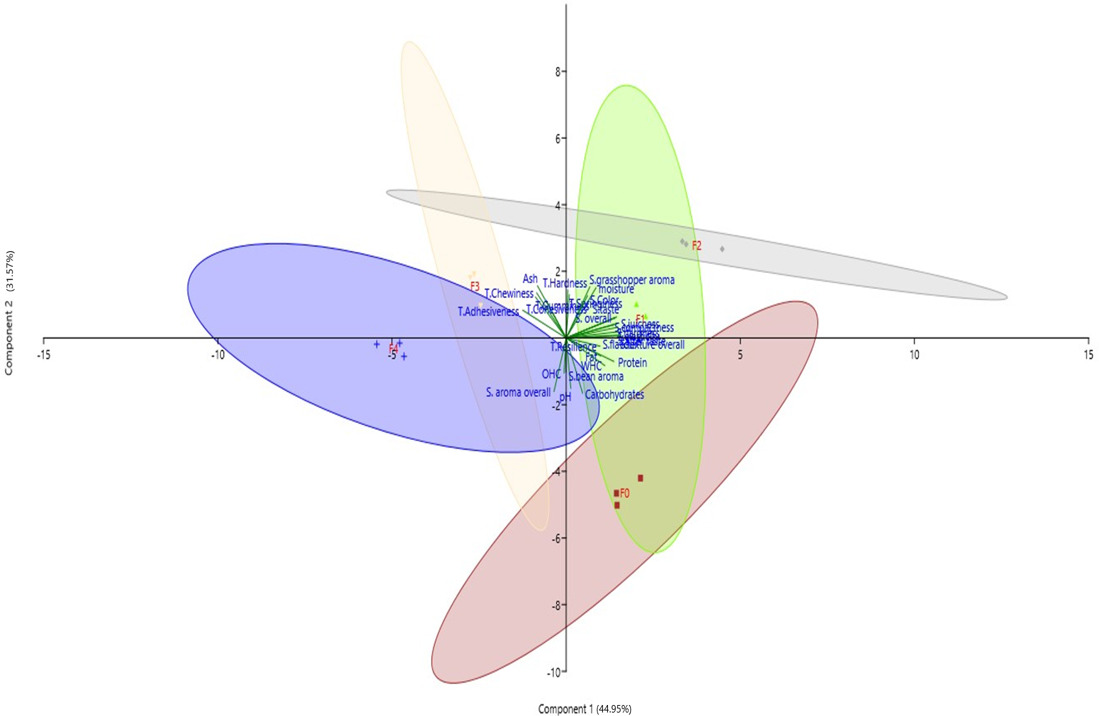
The physicochemical and sensory characteristics of Javanese grasshopper patties with the addition of various concentrations of giant foot yam glucomannan were explained through principal component analysis (PCA) (Fig. 2). The results of the PCA analysis consist of two main components (PC), namely PC1 and PC2. PC accounted for 76.52% of the total variability. PCA analysis effectively separated five Javanese grasshopper patty samples. Javanese grasshopper patties with the addition of 6% glucomannan (F3) are in quadrant I, while patties F1 and F2 are in quadrant II. Javanese grasshopper patty without added glucomannan (F0) is in the third quadrant, and F4 is in the fourth quadrant.

Bi plots of the relationship between the glucomannan levels and the physicochemical and sensory characteristics in Javanese grasshopper patties with giant foot yam glucomannan.
In each quadrant, different characteristics are dominant. Quadrant I is characterized by texture (chewiness, adhesiveness, cohesiveness, gumminess, and hardness) and ash content. Quadrant II is characterized by moisture content and sensory (juiciness, cohesiveness, elasticity, hardness, texture, and overall perception). Quadrant III is prominent for WHC, pH, and protein. Oil holding capacity (OHC) describes the characteristics of quadrant IV.
The optimal formulation was determined using the effectiveness index test described by De Garmo et al. (1984). The effectiveness value was calculated by considering parameters where lower values are better (such as hardness, moisture content, fat, and water holding capacity) and parameters where higher values are better (including pH, oil holding capacity, color, texture, aroma, taste, and overall quality). Among the various formulations (F0, F1, F2, F3, and F4), Javanese grasshopper and kidney bean tempeh patties with 4% giant foot yam glucomannan (formulation F2) achieved the highest effectiveness value, which is 3.93 (Supplementary Material - Table SI). The effectiveness value indicates product quality based on tested parameters.
CONCLUSIONS
In conclusion, our findings indicate that the addition of glucomannan significantly enhanced several important product characteristics, including certain color values (L*, b*, C, and hue), pH, moisture content, ash content, water holding capacity (WHC), and important textural attributes such as hardness, chewiness, and gumminess. However, despite these improvements, glucomannan also led to a reduction in oil holding capacity (OHC), protein content, and certain sensory qualities, particularly aroma. The optimal concentration of glucomannan was determined to be 4%, which provides the best balance between product quality and sensory acceptability. These findings highlight glucomannan’s potential as a functional ingredient to improve the texture and physicochemical properties of insect-based patties. Nevertheless, further optimization is necessary to improve aroma without compromising the overall sensory profile. This study contributes to expanding the knowledge on the application of edible insects as sustainable and halal protein sources and provides a foundation for the future development of innovative hybrid food products. Future research could explore the synergistic effects of other functional ingredients, such as dietary fiber and plant-derived proteins, in improving both the nutritional and sensory properties of insect-based meat analogs.
Acknowledgements
The author would like to thank the Research Center for Food Technology and Processing, National Research and Innovation Agency, Indonesia for facilitating and supporting research activities through e-science services (ELSA-BRIN). The financial support of the Research Organization of Agriculture and Food, National Research and Innovation Agency, Indonesia (No. 6/III.11/HK/2024) is gratefully acknowledged.
References
- AKALIL RZ, SUPRIYANTO S, PRIHANTA W & INDARTO C. 2023. Improving sausage quality using transglutaminase enzymes to increase selling value. In Proceeding International Conference on Economy, Management, and Business 1(1): 1393-1399.
- ANGGRAENI DA, WIDJANARKO SB & NINGTYAS DW. 2014. Proportion of porang flour (Amorphophallus muelleri blume): cornstarch on sausage characteristics. AJOFAI 2(3): 214-223.
-
AOAC INTERNATIONAL - ASSOCIATION OF OFFICIAL AGRICULTURAL CHEMISTS. 2005. Official Method of Analysis. Association of Official Analytical Chemist. Washington DC. Available at: https://www.researchgate.net/publication/292783651_AOAC_2005
» https://www.researchgate.net/publication/292783651_AOAC_2005 -
ASTAWAN M, WRESDIYATI T & ICHSAN M. 2016. Physicochemical characteristics of sprouted soybean tempeh flour. Nutr J 11(1): 35-42. https://doi.org/10.25182/jgp.2016.11.1.%25p.
» https://doi.org/10.25182/jgp.2016.11.1 -
CENTRAL BUREAU OF STATISTICS [BPS]. 2023. Beef Production by Province. Central Bureau of Statistics, Jakarta. Available at: https://www.bps.go.id/en/statistics-table/2/NDgwIzI=/undefined
» https://www.bps.go.id/en/statistics-table/2/NDgwIzI=/undefined - CHAKRAVORTY J, GHOSH S, JUNG C & MEYER-ROCHOW VB. 2014. Nutritional composition of Chondacris rosea and Brachytrupes orientalis. J Asia-Pac Entomol 17(3): 407-415.
- CHAROENREIN S, TATIRAT O, RENGSUTTHI K & THONGNGAM M. 2011. Effect of konjac glucomannan on syneresis, textural properties and the microstructure of frozen rice starch gels. Carbohydr Polym 83(1): 291-296.
- DA SILVA DF, DE SOUZA FERREIRA SB, BRUSCHI ML, BRITTEN M & MATUMOTO-PINTRO PT. 2016. Effect of commercial konjac glucomannan and konjac flours on textural, rheological and microstructural properties of lowfat processed cheese. Food Hydrocoll 60(1): 308-316.
- DEBUSCA A, TAHERGORABI R, BEAMER SK, MATAK KE & JACZYNSKI J. 2014. Physicochemical properties of surimi gels fortified with dietary fiber. Food Chem 148: 70-76.
-
DE GARMO EP. 1984. Materials and Processes in Manufacture. Eds. 7th. PT Pradaya Paramita. Jakarta. Available at: https://archive.org/details/materialsprocess0000dega
» https://archive.org/details/materialsprocess0000dega -
ECKLES CH, COMB WB & MACY H. 1943. Milk and Milk Products. Van Nostrand’s Encyclopedia of Chemistry Graw Hill, New York. Available at: https://archive.org/details/milkmilkproducts00eckl
» https://archive.org/details/milkmilkproducts00eckl - FENG J, KONG B, SUN F & XIA X. 2022. Effect of potato dietary fiber on the quality, microstructure, and thermal stability of chicken patty. Foods 11(24): 3978.
- FITRIYANI E. 2017. Sweet potato flour as a filler to form the texture of fish meatballs. Galung Tropika 6(1): 19-32.
- HAN JH, KEUM DH, HONG SJ, KIM YJ & HAN SG. 2023. Comparative Evaluation of Polysaccharide Binders on the Quality Characteristics of Plant-Based Patties. Foods 12(20): 3731.
- IWANSYAH AC, DESNILASARI D, AGUSTINA W, PRAMESTI D, INDRIATI A, MAYASTI NKI & KORMIN FB. 2021. Evaluation on the physicochemical properties and mineral contents of Averrhoa bilimbi L. leaves dried extract and its antioxidant and antibacterial capacities. Food Sci Technol 41: 987-992.
- KARTINA K. 2022. Characteristics of egg chips with the addition of different fillers ingredients (Dissertation). Hasanuddin University. (Unpublished).
- KIM SJ, CHOI WS, YOU SG & MIN YS. 2007. Effect of glucomannan on quality and shelf-life of low-fat chicken patty. KJFST 39(1): 55-60.
- KNAAPILA A, KANTANEN K, RAMOS-DIAZ JM, PIIRONEN V, SANDELL M & JOUPPILA K. 2024. Sensory and physical properties of fibrous meat analogs made from faba bean, pea, and oat using high-moisture extrusion. Foods 13(10): 1444.
-
KRISTANTI D, IWANSYAH AC, SETIABOMA W, FAISAL A, ARIANI D, HERAWATI ERN, ADITYA IGMA, PRAMARETI GMJ, INDRIATI A & HAMID AH. 2024. Physicochemical, nutritional, and functional properties of Javanese grasshopper (Valanga nigricornis Burm.) flour, PREPRINT (Version 1). Available at: https://doi.org/10.21203/rs.3.rs-4209615/v1
» https://doi.org/10.21203/rs.3.rs-4209615/v1 - KUSMARYANI. 2005. Prospects for grasshopper flour (Melanoplus cinereus) as an alternative source of animal protein for public health (Thesis). The State University of Semarang. (Unpublished).
- LINDRIATI T, HERLINA H & EMANIA JN. 2018. Physical properties of analog meat made from a mixture of porang flour (Amorphophallus oncophyllus) and soy protein isolate. PQRS 22(2): 175-186.
- LI WEI, BOWERS JA, CRAIG JA & PERNG SK. 1993. Sodium tripolyphosphate stability and effect in ground turkey meat. J Food Sci 58(3): 501-504.
-
NIELSEN SS. 2010. Introduction to Food Analysis. Food Analysis 3-14. Available at: https://doi.org/10.1007/978-1-4419-1478-1_1
» https://doi.org/10.1007/978-1-4419-1478-1_1 - NUHRIAWANGSA AMP, HERTANTO BS, BUDIHARJO A, SWASTIKE W & KARTIKASARI LR. 2021. Physical quality chicken patties containing red beans (Vigna angularis) with different filler levels of taro meal. In IOP Conference Series: Earth and Environmental Science 902(1): 012011. IOP Publishing.
- PASARIBU G, WALUYO TK, HASTUTI N, PARI G & SAHARA E. 2016. Effect of adding sodium bisulfite and graded ethanol washing on the quality of porang (Amorphophallus muelleri Blume) flour. For Prod J 34(3): 241-248.
- PRIYATNASARI NS, PALUPI E, KAMILA F, ARDHIANI KR, PRILYADI GT & IWANSYAH AC. 2024. Meat-analog made from Javanese Grasshopper, kidney beans, and elephant foot yam as a high-protein and low-cholesterol product. Agric Food Res 16: 101071.
- PURNAWIJAYANTI HA, PUJIASTUTI VI & WIJAYANTI ME. 2024. Physical and sensory characteristics of soy and glucomannan-based artificial meat for obesity nutritional intervention. Amerta Nutr 8(1): 67-73.
- PUTRI IAP. 2018. Modification of the wet extraction method of glucomannan from fresh porang tubers (Amorphophallus onchophyllus) to improve glucomannan quality and reduce solvent requirements [Dissertation]. Gadjah Mada University. (Unpublished).
- RAHMA P & SUTRISNO A. 2017. Analog sausage based on black soy tempeh (Glysine soja) differences in the percentage of glucomannan gel and type of starch. AJOFAI 5(2): 1-8.
- RAHMAWATI SH, WIJAYANTI A & FAHRULSYAH F. 2023. An analysis of the chemical characteristics of Tilapia (Oreochromis niloticus) fish crackers with the addition of Porang (Amorphophallus oncophyllus) flour. Agrokompleks 23(2): 149-157.
- RAN X, LOU X, ZHENG H, GU Q & YANG H. 2022. Improving the texture and rheological qualities of a plant-based fishball analogue by using konjac glucomannan to enhance crosslinks with soy protein. Innov Food Sci Emerg Technol 75(1): 1-9.
- RAZIN M. 2024. The Effect of adding glucomannan as a natural thickener on the quality of patin fish tekwan. Adv In Social Humanities Res 2(3): 338-351.
- ROSITA F, HAFID H & AKA R. 2015. Cooking loss and organoleptic quality of beef meatballs with the addition of sago flour at different levels. Trop Anim Husb 2(1): 14-20.
- RUMAGIT BI, WULLUR AC & KALONIO DE. 2013. Kidney bean porridge, cholesterol and uric acid. INFOKES - HEALTH Sci 8(1): 36-41.
- RUSDIANTO AS, PURNAMASARI DA & HERLINA H. 2024. Characterization of bubble pearls from a mixture of tapioca and glucomannan. IJ-FANRes 5(2): 44-53.
- SARI R & SUHARTATI S. 2015. Porang plants: cultivation prospects as an agroforestry system. Bulletin Eboni 12(2): 97-110.
- SHADA R, HAFIZAH E & SAUQINA S. 2022. The Effect of adding kalakai (Stenochlaena palustris) filler on the protein and fiber content of chicken nuggets. JSSIT 1(3): 40-56.
- SHIN YH, MOON SJ, KIM YJ & OH KY. 2020. Vibration control of scanning electron microscopes with experimental approaches for performance enhancement. Sensors 20(8): 2277.
- SOLICHAH E, IWANSYAH AC, PRAMESTI D, DESNILASARI D, AGUSTINA W, SETIABOMA W & HERMINIATI A. 2021. Evaluation of physicochemical, nutritional, and organoleptic properties of nuggets based on moringa (Moringa oleifera) leaves and giant catfish (Arius thalassinus). Food Sci Technol 42: e72020.
- SUKMA M, SURYATI S, MERIATNA M, NASRUL ZA & JALALUDDIN J. 2022. influence of glucomannan extraction conditions from porang tubers (Amosrphopallus muelleri blume). CHEMCAS (CEJS) 2(1): 114-123.
- TUNGGA AM & BHUJA RP. 2020. Protein analysis tempeh made from a combination of kidney beans (Phaseolus vulgaris l.) with red rice (Oryza sativa L.). BIOS 17(1): 19-25.
- WARDANI NAK & WIDJANARKO SB. 2023. Potential of oyster mushroon (Pleurotus ostreatus) and gluten in the production of artificial meat with high fiber content. Int J Agric Technol 14(3).
- WEI L, REN Y, HUANG L, YE X, LI H, LI J, CAO J & LIU X. 2024. Quality, Thermo-Rheology, and Microstructure Characteristics of Cubic Fat Substituted Pork Patties with Composite Emulsion Gel Composed of Konjac Glucomannan and Soy Protein Isolate. Gels 10: 111.
- WILSON S, BLASCHEK K & DE MEJA E. 2005. Allergenic protein in soybean: processing and reduction of P34 allergenicity. Nutr Rev 63(2): 47-58.
-
YULIARTI O, RASUL S, TARIQUE M, ALKAABI AOH, KAMAL-ELDIN A & HONG CJ. 2024. Evaluating the effects of insoluble date fruit (Phoenix dactylifera L.) fibers on meat analogue patties composed of pea and wheat protein isolates. Food Res Int 115158. https://doi.org/10.1016/j.foodres.2024.115158
» https://doi.org/10.1016/j.foodres.2024.115158 - ZHU F & ZHANG Y. 2019. Effect of konjac glucomannan on physicochemical properties of quinoa and maize starches. Cereal Chem 96(5): 878-884.