
 Bioaccumulation of trace elements by Loricariidae (Teleostei: Siluriformes) in Brazilian Savanna streams
Abstract
Trace elements are present in small concentrations in nature, but have a high potential for contamination and toxicity in aquatic environments. Although they occur naturally, the intensity of human actions increases the contamination of these environments. In this study, we evaluated the bioaccumulation of zinc (Zn) and cadmium (Cd) in Loricariidae species in streams of the Brazilian Cerrado. Trace elements were quantified in the muscle and liver tissues of different Loricariidae species by atomic absorption spectrometry. In addition, limnological variables and the concentrations of Zn and Cd in the water of the studied streams were measured. We collected 40 individuals belonging to six Loricariidae species. Zn concentrations in the water were higher than Cd concentrations. Zn and Cd were bioaccumulated by all Loricariidae species. Liver tissue accumulated higher concentrations of Zn, while Cd was accumulated in greater quantities in muscle tissue. The concentrations of trace elements accumulated by fish were related to some limnological variables, but especially to the concentrations of Zn and Cd dissolved in the water. The presence of Zn and Cd in the environment and in animals may indicate potential contamination for other communities that use water resources, especially those at higher trophic levels, i.e. humans.
Key words
Heavy metals; Biomonitoring; Cadmium; Environmental quality; Catfish; Zinc
INTRODUCTION
Hydric resources have been consistently threatened by human activities carried out in their drainage basins (Ellis 2021). Changes in land use and land cover lead to the removal of native vegetation, soil compaction, and the release of numerous chemical substances into water bodies (e.g., nutrients and metals) (Loureiro et al. 2021). Although the Brazilian Savanna is a global biodiversity hotspot, it is estimated that more than half of the area has been deforested due to the intensification of human activities (Lopes & Guimarães 2016). In this sense, successive changes in land use and land cover directly affect aquatic biodiversity, resulting in the loss of species diversity and ecosystem services (Philip et al. 2023). These changes can occur at multiple scales and factors, from river basins to small streams, in addition to factors such as economic development (Huang et al. 2025). Among the chemical substances that most affect the structure and functioning of aquatic environments, trace elements have drawn significant attention of the scientific community due to their high contamination potential (Loureiro & Hepp 2020, Abdel-Halim et al. 2022, Arumugam et al. 2024).
There are several trace elements present in aquatic environments that can occur naturally or, more commonly, through human activities. Once available in the environment, trace elements can be readily incorporated by organisms, either through food or contact with the contaminated environment (Magalhães et al. 2015, Zahran et al. 2025). Furthermore, trace elements depend on several factors, such as the type of element, the animal species, and the environmental conditions of exposure (Zahran et al. 2025). Zinc (Zn), although it has defined biological pathways, can accumulate in tissues and cause toxicological damage when present at high concentrations (Tuzen 2009, Ehiemere et al. 2022). Zn toxicity can cause hypocalcemia, fusion of secondary lamellae in gills, degeneration of muscle fibers, and even necrosis of different tissues in fish (Bánfalvi 2011, Beegam et al. 2020). In turn, Cadmium (Cd) lacks biological excretion routes and has a high potential for accumulation in animal tissues even at low concentrations (Das et al. 2023). Effects such as vascular degeneration, infertility, anaemia, bone disorders, histopathological changes and cancer development have been recorded in fish (Abdel-Rahman et al. 2019, Kumar et al. 2024, Zahran et al. 2025).
Liver tissue has the function of detoxifying the organism, being rich in molecules that readily bind to different substances, including trace elements (Beheary et al. 2015, Ardeshir et al. 2017). On the other hand, muscle tissue tends to accumulate fewer trace elements (Squadrone et al. 2013), as it is less metabolically active when compared to liver tissue (Begum et al. 2013). Furthermore, muscle tissue does not have molecules that easily connect to trace elements, which limits its accumulation capacity these substances (Squadrone et al. 2013). Although it is not a target tissue due to its low biological activity, studies with approaches that seek to detect contamination of organisms by trace elements usually use muscle tissue for two main reasons: (i) it may indicate chronic pollution by trace elements and (ii) because it is the region of the fish that is normally consumed by humans (Crafford & Avenant-Oldewage 2010). Several studies have shown the accumulation of Zn and Cd from the liver and muscle tissues of different groups of fish (e.g., Cichlidae, Cypriniformes and Siluriformes), providing evidence of the efficiency of both structures in studies with biomonitoring approaches (Arantes et al. 2016, Siraj et al. 2016, Li et al. 2018, Leite et al. 2023, Quintela et al. 2024).
Loricariidae is the most diverse family among Siluriformes, with six subfamilies, 115 genera, and 1060 species (Fricke et al. 2024, Dagosta et al. 2024). Loricariidae have a wide ecological distribution, which gives them a high potential as bioindicators of environmental contamination (Silva et al. 2024). However, there are few studies with approaches that use Loricariidae as model organism to assess environmental contamination by trace elements. Paschoalini & Bazzoli (2021) highlighted the absence of Loricariidae in studies that monitor the bioaccumulation of trace elements by fish in the last 10 years. In addition, the Ecotox platform (EPA 2025) gathers information on model species used in ecotoxicological studies. In this platform, no references were found to the use of Loricariidae species as model studies in environmental assessment.
Thus, the lack of approaches using Loricariidae as model organism underestimates the potential of this group as indicator of contamination of aquatic environments by trace elements. In this study, we used species of Loricariidae to evaluate the bioaccumulation of Zn and Cd present in streams of a river basin in the Brazilian Savanna. We selected Zn and Cd as model trace elements in this study because they are easily detected in places with different land uses and land cover (e.g., agricultural pesticides, cattle feed, and other activities related to livestock). Thus, we aimed to adress the following questions: (1) Do Loricariidae accumulate Zn and Cd? (2) Which biological structure (liver or muscle tissue) will accumulate higher concentrations of Zn and Cd? (3) Do Loricariidae have potential as monitoring organisms for environmental monitoring studies? We expect that Zn and Cd are being accumulated by Loricariidae species, especially in the liver tissue, as it is a relevant organ in the metabolic process of individuals. In addition, we expect that there is an association between the concentrations of Zn and Cd in the tissues of fish and the environmental characteristics observed in the streams studied.
MATERIALS AND METHODS
Study area
This study was conducted in the Sucuriú River basin (Central-Western Brazil; 18°12’36” to 20°49’1.6”S; 51°38’2.79” to 53°31’27.96” W) (Fig. 1). The watershed has an area ~25,000 km2 and is located in the Brazilian Savanna, with soil predominantly classified as Argisol and Latosol (Pott et al. 2014). The climate is hot tropical, with monthly temperatures equal to or above than 18°C and average monthly rainfall ranging from 30 to 250 mm (Rocha 2020). In general, the landscape of the watershed is composed of a mosaic of land uses and land cover types, with pasture being the main use class (~58%), while native vegetation corresponds to ~28% of the land cover (Benini 2015). The upper zone of watershed (>490 m a.s.l.) has agriculture (e.g., soybeans and corn) as its main activity, while the middle zone (altimetric elevation ~320 to ~490 m a.s.l.) has as mainly occupied by livestock farming (Benini 2015, Ferreira & Piroli 2016). Finally, the lower zone (<320 m a.s.l.) is predominantly occupied by eucalyptus plantations (Benini 2015, Rocha 2020). In this watershed, 15 small streams (<3rd order, sensu Strahler; Fig. 1) were selected for fish and water sampling.
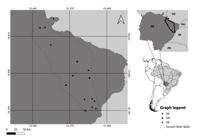
Geographical location of the sampled streams in Sucuriú River watershed, Mato Grosso do Sul (MS), Central-Western Brazil. SA: Upper zone streams; SM: Middle zone streams; SB: Lower zone streams. The watershed is outlined in black.
Limnological variables and concentrations of Zn and Cd in water
We conducted two sampling expeditions in September 2023, coinciding with the end of the dry season, when the streams exhibiting limnological stability. However, in September 2024, we will return to the upper reaches of the streams for a supplementary collection to increase the sample size of individuals to be analyzed. In each stream, we measured the variables water temperature, pH, turbidity, electrical conductivity, dissolved oxygen, and total dissolved solids using a HORIBA® U-50 multiparameter analyzer. We collected water samples for laboratory analysis of alkalinity, ammonia, total phosphorus, Zn, and Cd. We determined alkalinity by titrating the samples with 0.02 N H2SO4. To quantify the concentrations of ammonia and total phosphorus, we used spectrophotometric methods using a UV/VIS digital spectrometer (Logen model LS 7022). To analyze the concentrations of Zn and Cd, we digested the water samples with HNO3 and HCl and subsequently quantified the trace elements by Atomic Absorption Spectrometry (VarianTM, model 240 FS). All analytical procedures followed the protocols described in Standard Methods (APHA 2017). The quantification limits of each trace element were determined from certified reference material standards (Detection limits - LOD: Cd = 0.0006 mg g-1 and Zn = 0.002 mg g-1; Quantification limits - LOQ: Cd = 0.007 mg g-1 and Zn = 0.006 mg g-1). We constructed calibration curves using certified reference material (CRM) standards, starting from a 1000 mg L-1 concentration solution (Manufacturer: Inorganic Ventures). For Cd, the calibration curve had serial solutions starting at 0.25 mg L-1 and going down to 1 mg L-1, in 0.25 mg L-1 intervals. For Zn, the calibration curve started at 0.2 mg L-1 and went down to 0.8 mg L-1, with 0.2 mg L-1 intervals. We used a recovery percentage between 90% and 110%, following the guidelines of the auditors from the National Institute of Metrology, Quality and Technology (Inmetro).
Collection and identification of fish
We collected fish specimens using a trawl net and a 2.5 mm mesh sieve, with a sampling effort of approximately 30 minutes in a stretch of approximately 100 m in each stream. The sampled stretches included meso- and microhabitats (i.e., rapids and pools, rocky substrate, leaves, among others), varying according to each stream. To avoid potential alterations in trace elements concentrations, we not to expose the fish to eugenol after being collected. Once in the laboratory, the fish were euthanized by a section of the spinal cord followed by exposure to low temperatures (~10°C; Rosso et al. 2015, Burghausen et al. 2023, Misra et al. 2024). We identified the fish specimens according to the taxonomic key of Ota et al. (2018) and Thereza & Langeani (2019). After identification, we remove muscle and liver tissue and frozen until analysis. The activities of this study were authorized by CEUA/UFMS (1.207/2022).
Zn and Cd concentrations in fish tissues
Liver and muscle tissue samples for Zn and Cd concentrations were obtained from individuals with a size >15 mm, due to the tissue biomass required for the analyses. We prepared the tissues for analysis by drying the samples in an oven (30°C/24h), weighing them and then digesting them with 10 mL of concentrated HNO3 under heating (~200°C). After three digestion cicles, the material was diluted in 50 mL of deionized water and sent for determination of Zn and Cd concentrations by Atomic Absorption Spectrometry (VarianTM, model 240 FS). The concentrations of Zn and Cd in the tissues of the specimens were expressed in mg g-1 of dry weight.
Data analysis
The mean concentrations of environmental variables were compared among the three zones of the watershed using a one-way ANOVA followed by a Tukey-HSD post-hoc test, after verifying the assumptions required by analysis. Next, we performed a Pearson linear correlation to verify the association between Zn and Cd concentrations in fish tissues with the environmental variables measured in the water. Finally, we evaluated the variation in Zn and Cd concentrations among Loricariidae species (two categorical levels), tissues (two categorical levels), and locations in the watershed (three categorical levels), using a Generalized Linear Model (GLM). Only data from the two frequently occurring species, were included in the models, avoiding potential noise generated by the lower frequency of the other species. In this analysis, we considered only the species Hypostomus nigromaculatus and H. ancistroides, because they are the species with the highest occurrence in the studied streams and found in all zones of the watershed. All analyses were performed using the R. 4.2.3 software (R Core Team 2023).
RESULTS
Limnological variables and trace elements in water
Water temperature and pH were lower in streams located in the upper zone compared to those in the middle and lower zones (F2;12 = 4.3, p = 0.03; F2;12 = 10.8, p = 0.002, respectively; Table I). Electrical conductivity, total dissolved solids, and alkalinity were higher in streams in the middle zone (F2;12 = 3.7, p = 0.05; F2,12 = 4.8, p = 0.02; F2,12 = 4.1, p = 0.04, respectively; Table I). In contrast, dissolved oxygen, total phosphorus, and ammonia were similar among streams in the three zones of the watershed (p > 0.05; Table I).
Limnological variables and trace elements quantified from water samples collected in 15 streams of the Sucuriú River watershed, Brazil. LOD: limit of detection, Zn = 0.002 mg g⁻¹ and Cd = 0.0006 mg g⁻¹. Limits established by Brazilian legislation for class II surface waters. (CONAMA 430/2011; Brasil 2011): Zn = 0.18 mg L⁻¹, Cd = 0.001 mg L⁻¹. * Streams with Zn and Cd values above the limits established by Brazilian legislation (CONAMA 430/2011; Brasil 2011).
The concentration of Cd present in the watershed water varied among the zones (F2;12 = 10.0; p = 0.002; Table I). In the water of the streams in the upper zone, Cd was below the detection limit, while in the streams in the lower zone, were markedly higher compared to other zones (Table I). Zn concentrations were similar in the waters of the streams in the three zones of the hydrographic basin (p > 0.05; Table I).
Loricariidae and Zn and Cd bioaccumulation
We collected 40 individuals of six species of Loricariidae (Table II). We extracted tissue samples (liver and muscle) from 24 individuals, due to the size of specimens (<15 mm), which would make it difficult to obtain sufficient biomass for analysis. The species H. nigromaculatus and H. ancistroides were the most frequent, with the latter sampled in streams from the three zones of the watershed. H. hermanni and H. variipictus had only one individual collected in all streams (Table II).
Zinc and cadmium concentrations (Mean ± Standard Deviation) in biological tissues (liver and muscle) of Loricariidae species collected from streams in the Sucuriú River watershed, Central-Western Brazil. The concentrations were expressed in dry weight. n: number of individuals collected per species; x: number of individuals analyzed due to size. LOD: limit of detection, Zn = 0.002 mg g⁻¹ and Cd = 0.0006 mg g⁻¹. *Individuals not analyzed due to size limitation (<15mm).
In the general, Zn concentrations in the specimens were 27.8 ± 39.9 mg g⁻¹ (dry weight, DW) while Cd concentrations were 0,4 ± 0,9 mg g⁻¹ (DW). The fish accumulated higher concentrations of Zn in the liver tissue compared to the muscle tissue (Table II). In muscle tissue, the mean accumulation was 0.9 ± 1.1 mg g-1 (DW) for Cd and 15.1 ± 10.9 mg g-1 (DW) for Zn. In liver tissue, Zn showed a mean accumulation of 40.4 ± 52.9 mg g-1 (DW), while Cd was not detected (Table II). The H. nigromaculatus exhibited higher concentration of Zn in liver tissue, while the H. ancistroides in muscle tissue (Table II). Cd, in turn, was found in higher concentration in the muscle tissue of H. nigromaculatus and was below the detection limit in all species (Table II).
We collected H. nigromaculatus individuals from streams in the middle and lower zones (15 individuals), while H. ancistroides was collected from streams in all three zones (14 individuals). When we evaluated the concentrations of Zn and Cd in these two species, we observed that the concentrations of both trace elements were higher in muscle tissue (Zn: p = 0.01, AIC = 103.5; Cd: p < 0.001, AIC = 37.6). In contrast, we did not observe variation in the concentrations of trace elements between species and watershed zones (p > 0.05).
The Cd concentrations in muscle tissue were positively correlated with the Cd concentration in water (r = 0.57, p = 0.003), pH (r = 0.54, p = 0.005) and dissolved oxygen (r = 0.42, p = 0.03; Table III). In contrast, Zn concentrations in muscle tissue were positively correlated with Zn concentration in water (r = 0.63, p = 0.001; Table III). In liver tissue, Zn concentrations were positively correlated with electrical conductivity (r = 0.40, p = 0.04), total dissolved solids (r = 0.40, p = 0.04) and alkalinity (r = 0.39, p = 0.05; Table III). Cd concentrations in liver tissue were below the detection limit. Therefore, no correlations of this element with limnological variables were observed.
Linear correlations between Zn and Cd concentrations in the tissues of Loricariidae species and environmental variables measured in streams of Sucuriú River watershed, Central-Western Brazil. Cd concentrations in liver tissue were below the detection limit (< 0.0006 mg g⁻¹). Bold values: p < 0.05.
DISCUSSION
Here, we observed that Loricariidae species bioaccumulated varying concentrations of Zn and Cd in liver and muscle tissues. In addition, we observed that the concentrations bioaccumulated by organisms were related to some limnological variables along the watershed. Nevertheless, we can consider the use of Loricariidae as bioindicator organisms or even biomonitor of environmental contamination by trace elements, contributing to a more efficient and integrated management of water resources.
Streams in the upper zone presented low water temperature, slightly acidic pH, as well as low electrical conductivity and alkalinity. These conditions may enhance the toxicity of trace elements available in the environment (Pereira et al. 2010, Toussaint et al. 2016, Paredes Del Puerto et al. 2021). Increased pH and alkalinity tend to release toxic forms of Cd (Cd²⁺) (Erten-Unal et al. 1998). In addition, increased temperature and decreased dissolved oxygen enhance the toxicity of trace elements, leading to greater mobility and accumulation of Cd in fish biological tissues (Gupta et al. 2009, Aksari et al. 2015, Paschoalini & Bazzoli 2021, Martinez et al. 2023). In this sense, Jolaosho et al. (2025) highlight that these environmental variables, in addition to potentiating the toxic effects of trace elements, have a direct and indirect influence on the development of aquatic biota.
The Zn and Cd concentrations in streams were above the reference limits established by Brazilian legislation (CONAMA 430/2011; Brasil 2011). According to this legislation, the maximum limit for Zn in class II surface waters is 0.18 mg L-1, indicating that the average values found in the streams in the upper and middle zones are above the maximum limit established by law. In turn, the legislation establishes that the maximum limit for Cd should be 0.001 mg L-1 in class II surface waters. In our study, we observed values above the legal limits in the streams of the middle and lower zones. According to Brazilian legislation, class II aquatic environments are places with water quality intended for human consumption after treatment and for other industrial and agricultural purposes.
All analyzed Loricariidae species accumulated Zn and Cd. Among them, H. nigromaculatus and H. ancistroides exhibited higher accumulation of both elements compared to other species. Zinc was more bioavailable in the waters and was the element most accumulated by the organisms. This suggests that its greater environmental availability facilitated the Zn accumulation by the organisms. In contrast, Cd showed accumulation levels across individuals when compared to Zn. However, this lower accumulation does not necessarily indicate a favorable environmental condition. Studies by Naddy et al. (2002) and Forero et al. (2009) indicate that the presence of calcium and carbonates significantly influence Cd concentration in water and reduce its incorporate into fish tissues (Adeniyi et al. 2008, Jeffree et al. 2014). In addition, findings by Xie & Klerks (2004) demonstrated that reduced Cd accumulation may be linked to competition for absorption pathways, which can be shared and saturated by different compounds (e.g., calcium and other trace elements present; Alinnor & Alagoa 2014). Thus, we believe that unmeasured factors are influencing the different accumulations of Zn and Cd. Although all sampled species are subject to the same environmental variations and occupy the same trophic position (i.e., detritivores), factors such as water chemical profile (e.g., calcium, carbonates, and other trace elements), exposure time, seasonality, individual gender, age, weight, and coloration are described in the literature as factors that influence the difference in accumulation of trace elements, even in congeneric species (Kehrig et al. 2013, Aksari et al. 2015, Rosso et al. 2022).
Previous studies on other Siluriformes are consistent with our findings. Gupta et al. (2009) found higher Zn concentrations in the muscle tissue of Aorichthys aor (Asian catfish), while Barbieri et al. (2010) found higher Zn concentrations in the muscle tissue of Cathorops spixii (Yellow catfish). Similarly, Subotić et al. (2013) found high Zn levels in the muscle tissue of Silurus glanis (African catfish). These results suggest that the tendency to accumulate non-essential trace elements (i.e., Cd) and excess of essential elements (i.e., Zn) may also apply to Loricariidae species analyzed in this study. Although we recognize the importance of using muscle tissue in bioaccumulation approaches, since it is a structure that indicates chronic accumulation and is highly consumed, it is necessary to use it in conjunction with other biological structures (Fletcher et al. 2014, Rosso et al. 2015, He et al. 2024). Thus, the use of scales, epidermis, bone, gonads, intestine, spleen, and blood are promising in analyses with trace element monitoring approaches (Alquezar et al. 2006, Rauf et al. 2009, Siraj et al. 2016, Habib et al. 2024).
Elevated concentrations of trace elements in environment increase the exposure of organisms to these substances, which is one of the main causes of histopathological changes (Kumar et al. 2024, Zahran et al. 2025). In fish liver tissue, trace elements are associated with cases of hypertrophy and atrophy, nuclear degeneration of hepatocytes, leading to necrosis of liver tissue (Corredor-Santamaría et al. 2016, Abdel-Rahman et al. 2019, Kumar et al. 2024). In muscle tissue, the accumulation of trace elements causes degeneration of muscle fibers, multiple edemas and tissue necrosis (Beegam et al. 2020, Kumar et al. 2024). Furthermore, Choudhury et al. (2021) recorded the impairment of target genes in fish liver tissue due to exposure to trace elements, increasing the risk of death. Souza et al. (2025) noted that metals accumulation by fish may be similar across species with different feeding habits or habitat types. However, the effects of trace elements can reach communities that depend on contaminated water resources, resulting in chronic health problems for humans as well (He et al. 2024, Souza et al. 2025).
Liver tissue was the biological structure that accumulated the highest concentrations of analyzed trace elements. Due to its detoxification function, the liver possesses several biological adaptations (i.e., a greater presence of metallothionein proteins, porphyrins, and enzymes) that help mitigate contamination effects (Subotić et al. 2013). With these multiple adaptations, the contact surface of liver tissue with trace elements increases, causing greater interaction between them (Magalhães et al. 2015). Thus, as a result of its biological function, liver tissue is one of main target organs and is subject to greater contamination by trace elements (Fletcher et al. 2014). The absence of Cd in liver tissue supports the notion that different trace elements preferentially accumulate in distinct target organs (Magalhães et al. 2015). Analyses by Squadrone et al. (2013) used different biological structures (e.g., liver tissue, kidneys, muscle tissue) and observed greater associations of Cd with the kidneys of fish than in any other structure analyzed. Therefore, liver tissue, because it promotes the regulation of essential trace elements such as Zn, tends to have greater association with the element. Meanwhile, other organs and tissues, such as muscle, store essential trace elements in high concentrations and non-excreted ones (i.e., non-essential), such as Cd (Burghausen et al. 2023). Although muscle tissue does not exhibit biological adaptations for regulating contaminants like liver tissue, it tends to store unassimilated or excreted trace elements over the long term, even accumulating concentrations higher than in the gonads (Subotić et al. 2013, Beheary et al. 2015, Ayim et al. 2024).
The Zn and Cd accumulation in biological structures was related to the specific limnological characteristics of each particular location. In general, Cd accumulation by fish was associated with water Cd concentrations, although pH and dissolved oxygen also showed a positive relationship. On the other hand, Zn accumulation by fish was related to values of electrical conductivity, total dissolved solids, and alkalinity. Erten-Unal et al. (1998) indicate that slightly alkaline pH (i.e., pH ~8) favors the release of Cd2+, a highly toxic form of Cd that is easily assimilated by fish. Similarly, the release of ions into the environment increases electrical conductivity and alkalinity (Esteves 2011). He et al. (2024) highlights that Zn is strongly adsorbed to organic matter in locations with higher alkalinity values. Therefore, we believe that the greater accumulation of Zn is related to the adsorption of this trace element to the food resource of Loricariidae species, causing it to be incorporated via food. Unlike Cd, which may have been incorporated, above all, via direct contact with water and is accumulated in other biological structures, facilitating this contact, such as the gills (Rosso et al. 2015).
CONCLUSIONS
Our findings demonstrate that the accumulation of Zn and Cd in the biological structures evaluated (liver and muscle tissues) was related to the limnological conditions of the streams, demonstrating that the characteristics of the adjacent areas influence the physical and chemical conditions of the water and, consequently, facilitate the incorporation and bioaccumulation of trace elements by aquatic organisms. Among the two biological structures studied, Zn accumulated in greater quantities in liver tissue, while Cd accumulated only in muscle tissue. Thus, our hypotheses were partially refuted, demonstrating that trace elements, once accumulated by organisms, have distinct biological fates, remaining in different biological structures.
Although we recognize that the number of organisms studied was small (n=40), we observed that Loricariidae species can be considered potential bioindicator species of aquatic trace element contamination. In this sense, the species H. nigromaculatus and H. ancistroides stand out because they are widely distributed in streams and, therefore, represent potential monitoring organisms of environmental quality. Furthermore, we recommend that future studies evaluate other biological structures (e.g., gills, stomach, kidneys, intestines, and gonads) and environmental structures (e.g., sediment), thus expanding our understanding of the effects of trace elements on aquatic communities.
Finally, the concentrations of Cd and Zn in the water are above the maximum limit established by Brazilian legislation. These results are concerning, as both trace elements have toxic potential and compromise the maintenance of aquatic communities. Furthermore, it is important to consider that the high concentrations of these two trace elements, used as a study model, may indicate high concentrations of other elements not measured here. Considering the One Health goals, which seek to balance environmental, animal, and human health, our study points to a worrying scenario regarding the maintenance of ecological integrity and human well-being. In this sense, our study serves as a warning to managers and decision-makers, since river basins with a high level of anthropic occupation tend to lose, more intensely, their properties and functions, thus compromising the multiple uses of water resources.
Acknowledgements
The authors would like to thank Júlio Trofino (USP) for his assistance with the metal analyses. We would also like to thank Maria Eduarda D’Ávila and Alana Fonseca for their assistance with the fieldwork. We would like to thank José Vitor Costa for creating the map used in this work. We would like to thank Dr. Carlos Eurico dos Santos Fernandes (UFMS) for his suggestions throughout the work and in this final text. We would like to thank Fundação de Apoio ao Desenvolvimento do Ensino, Ciência e Tecnologia do Estado de Mato Grosso do Sul (FUNDECT) for its financial support (process number 284/2022). MRP would like to thank Conselho Nacional de Desenvolvimento Científico e Tecnológico (CNPq) for the research grant awarded (process number 132291/2024-0). LUH received support from the CNPq (number 310394/2023-6).
References
- ABDEL-HALIM KY, ABD EL-MONEM SA, WANAS AA & MOSTAFA NA. 2022. Bioaccumulation profiles of heavy metals in fish collected from Rosetta branch of Nile River, Egypt: A case study for organ’s responsibility. Egypt J Chem 65 (13): 501-518.
- ABDEL-RAHMAN AN, ELHADYA M, HASSANINA ME & MOHAMED AAR. 2019. Alleviative effects of dietary Indian lotus leaves on heavy metals-induced hepato-renal toxicity, oxidative stress, and histopathological alterations in Nile tilapia, Oreochromis niloticus (L.). Aquaculture 509(1): 198-208.
- ADENIYI AA, YUSUF KA & OKEDEYI OO. 2008. Assessment of the exposure of two fish species to metals pollution in the Ogun river catchments, Ketu, Lagos, Nigeria. Environ Monit Assess 137(1): 451-458.
- AKSARI YD, PERWITASARI D & BUTET NA. 2015. Kandungan logam berat (Cd, Hg, and Pb) pada ikan sapu-sapu, Pterygoplichthys pardalis (Castelnau, 1855) di Sungai Ciliwung. J Iktiologi Indones 15(3): 257-266.
- ALINNOR IJ & ALAGOA AF. 2014. Trace metal distribution in fish, sediment and water samples from Nkisa River, Nigeria. Br J Appl Sci Technol 4(20): 2901-2913.
- ALQUEZAR R, MARKICH SJ & BOOTH DJ. 2006. Metal accumulation in the smooth toadfish, Tetractenos glaber, in estuaries around Sydney, Australia. Environ Pollut 142(1): 123-131.
- APHA - AMERICAN PUBLIC HEALTH ASSOCIATION. 2017. Methods for the Examination of Water and Wastewater. District of Columbia: Washington, 3000 p.
-
ARANTES FP, SAVASSI LA, SANTOS HB, GOMES MVT & BAZZOLI N. 2016. Bioaccumulation of mercury, cadmium, zinc, chromium, and lead in muscle, liver, and spleen tissues of a large commercially valuable catfish species from Brazil. An Acad Bras Cienc 88: 137-147. DOI 10.1590/0001-3765201620140434.
» https://doi.org/10.1590/0001-3765201620140434 - ARDESHIR RA, MOVAHEDINIA A & RASTGAR S. 2017. Fish liver biomarkers for heavy metal pollution: A review article. Am J Toxicol 2 (1): 1-8.
- ARUMUGAM S, SAKTHIVADIVEL S, IBRAHIM SSM, MURUGAN P, RAMAIAH S, RAMAIAH M, CHINNATHAMBI A & ALHARBI SA. 2024. Evaluation of the toxic metals, proximate composition and length–weight relationships of selected fish species from the Gadananathi River, Southern Tamil Nadu. Environ Monit Assess 196(446): 1-13.
- AYIM EM, SAM-UKET NO, ONEJEME JT & OWALI IO. 2024. Heavy metal concentrations and potential human health risk for consuming gills, muscles, liver and gonads of silver catfish (Chrysichthys nigrodigitatus) reaped from Great Kwa River, Calabar, Cross River State, Nigeria. J Appl Sci Environ Manag 28(12): 3973-3982.
- BÁNFALVI G. 2011. Cellular Effects of Heavy Metals. Springer, n. 1. Nova York: Nova York, 13 p.
- BARBIERI E, PASSOS EA, ARAGÃO KAS, SANTOS DB & GARCIA CAB. 2010. Assessment of trace metal levels in catfish (Cathorops spixii) from Sal River Estuary, Aracaju, State of Sergipe, Northeastern Brazil. Water Environ Res 82 (12): 2301-2305.
- BEEGAM A, LOPES M, FERNANDES T, JOSE J, BARRETO A, OLIVEIRA M, SOARES AMVM, TRINDADE T, THOMAS S & PEREIRA ML. 2020. Multiorgan histopathological changes in the juvenile seabream Sparus aurata as a biomarker for zinc oxide particles toxicity. Environ Sci Poll Res 27(1): 30907-30917.
- BEGUM A, MUSTAFA AI, AMIN MN, CHOWDHURY TR, QURAISHI SB & BANU N. 2013. Levels of heavy metals in tissues of shingi fish (Heteropneustes fossilis) from Buriganga River, Bangladesh. Environ Monit Assess 185(1): 5461-5469.
- BEHEARY MS, ABU-ALMAATY AH & EL-MATARY FA. 2015. Genetic polymorphism and changes in the concentration of heavy metals in catfish Clarias gariepinus from different sites as a result of environmental contamination. Adv Environ Biol 9(18): 20-32.
- BENINI SM. 2015. Uso de sistemas de informação geográfica na análise ambiental em bacias hidrográficas. ANAP, n. 1. São Paulo: Tupã, 150 p.
- BRASIL. 2011. Conselho Nacional do Meio Ambiente – CONAMA. Resolução nº 430, de 13 de maio de 2011. Dispõe sobre as condições e padrões de lançamento de efluentes, complementa e altera a Resolução nº 357, de 17 de março de 2005, do Conselho Nacional do Meio Ambiente-CONAMA. Diário Oficial da União, Brasília, DF, p. 89, 16 mai. 2011. Seção 1.
- BURGHAUSEN JH ET AL. 2023. Avaliação do uso de *Ancistrus brevipinnis* (Loricariidae) como bioindicador da qualidade da água do rio Ilha, RS, Brasil. Acta Sci, Biol Sci 45: e62305.
- CHOUDHURY C, MAZUMDER R, KUMAR R, DHAR B & SENGUPTA M. 2021. Cadmium induced oxystress alters Nrf2-Keap1 signaling and triggers apoptosis in piscine head kidney macrophages. Aquat Toxicol 231: 105739.
- CORREDOR-SANTAMARÍA W, GÓMEZ MS & VELASCO-SANTAMARÍA YM. 2016. Using genotoxic and haematological biomarkers as an evidence of environmental contamination in the Ocoa River native fish, Villavicencio—Meta, Colombia. SpringerPlus 5: 351.
- CRAFFORD D & AVENANT-OLDEWAGE A. 2010. Bioaccumulation of non-essential trace metals in tissues and organs of Clarias gariepinus (sharptooth catfish) from the Vaal River system – strontium, aluminium, lead and nickel. Water SA 36(5): 621-640.
- DAGOSTA FCP ET AL. 2024. Fishes of the upper rio Paraná basin: diversity, biogeography and conservation. Neotrop Ichthyol 22: e230066.
- DAS S, KAR I & PATRA AK. 2023. Cadmium induced bioaccumulation, histopathology, gene regulation in fish and its amelioration – A review. J Trace Elem Med Biol 79(1): 127202.
- EHIEMERE VC, IHEDIOHA JN, EKERE NR, IBETO CN & ABUGU HO. 2022. Pollution and risk assessment of heavy metals in water, sediment and fish (Clarias gariepinus) in a fish farm cluster in Niger Delta region, Nigeria. J Water Health 20(6): 927-945.
- ELLIS EC. 2021. Land Use and Ecological Change: A 12,000-Year History. Annu Rev Environ Resour 46(1): 1-33.
-
EPA - UNITED STATES ENVIRONMENTAL PROTECTION AGENCY. 2025. ECOTOX. (September 11th, 2025). Retrieved on September 7th, 2025, from https://cfpub.epa.gov/ecotox/index.cfm
» https://cfpub.epa.gov/ecotox/index.cfm - ERTEN-UNAL M, WIXSON BG, GALE N & PITT JL. 1998. Evaluation of toxicity, bioavailability, and speciation of lead, zinc, and cadmium in mine/mill wastewaters. Chem Speciat Bioavailab 10(2): 37-46.
- ESTEVES FA. 2011. Fundamentos de Limnologia. Interciência, n. 3. Rio de Janeiro: Rio de Janeiro, 323 p.
- FERREIRA CC & PIROLI EL. 2016. Zoneamento ambiental das paisagens: estudo de caso do alto curso da bacia hidrográfica do Rio Sucuriú, Mato Grosso do Sul, Brasil. Bol Goia Geog 36(2): 341-358.
- FLETCHER DE, LINDELL AH, STILLINGS GK, MILLS GL, BLAS SA & MCARTHUR JV. 2014. Variation in trace-element accumulation in predatory fishes from a stream contaminated by coal combustion waste. Arch Environ Contam Toxicol 66(1): 341-360.
- FORERO AR, MANTILLA G & MARTINEZ RS. 2009. Accumulation of lead, chromium, and cadmium in muscle of capitán (Eremophilus mutisii), a catfish from the Bogotá River basin. Arch Environ Contam Toxicol 57(1): 359-365.
-
FRICKE R, ESCHMEYER WN & VAN DER LAAN R. 2024. Eschmeyer’s Catalog of Fishes: Guide To Fish Collections. Electronic version accessed April 12th, 2025, Available at: http://researcharchive.calacademy.org/research/ichthyology/catalog/collections.asp
» http://researcharchive.calacademy.org/research/ichthyology/catalog/collections.asp - GUPTA A, RAI DK, PANDEY RS & SHARMA B. 2009. Analysis of some heavy metals in the riverine water, sediments and fish from river Ganges at Allahabad. Environ Monit Assess 157(1): 449-458.
- HABIB SS, NAZ S, FAZIO F, CRAVANA C, ULLAH M, RIND KH, ATTAULLAH S, FILICIOTTO F & KHAYYAM K. 2024. Assessment and Bioaccumulation of Heavy Metals in Water, Fish (wild and Farmed) and Associated Human Health Risk. Biol Trace Elem Res 202(1): 725-735.
- HE M, LIU G, SHI X, WU L & CHEN Q. 2024. Distribution, bioaccumulation, trophic transfer and risk assessment of trace elements in fish from a typical shallow outflow lake basin, China. Front Environ Sci Eng 18(7): 1-16.
- HUANG R, CHEN BMAC, DENG C, ZHANG J, XIAO Z, WANG Z, LIU Y & LIU X. 2025. Positive correlation between economic activities and fish diversity in small river basins of less developed regions: a case study of the Lixian River Basin. Animals 15: 2416.
- JEFFREE RA, MARKICH SJ & TWINING JR. 2014. Diminished metal accumulation in riverine fishes exposed to acid mine drainage over five decades. PLoS ONE 9 (3): e91371.
- JOLAOSHO TL, ELEGBEDE IO, NDIMELE PE, MAROUANI M, YUSUF AO, OMOREGHA JK, MUSTAPHA AA, HUNGBO JJ & RASAQ MF. 2025. Seasonal and spatial variations of physicochemical parameters and heavy metals in surface water of interconnected Nigeria lagoons experiencing distinct anthropogenic disturbances. Sci Rep 15(1): 1-39.
- KEHRIG HA, SEIXAS TG, MALM O, DI BENEDITTO APM & REZENDE CE. 2013. Mercury and selenium biomagnification in a Brazilian coastal food web using nitrogen stable isotope analysis: A case study in an area under the influence of the Paraiba do Sul River plume. Mar Pollut Bull 75 (1): 283-290.
- KUMAR M, SINGH S, JAIN A, YADAV S, DUBEY A & TRIVEDI SP. 2024. A review on heavy metal-induced toxicity in fishes: Bioaccumulation, antioxidant defense system, histopathological manifestations, and transcriptional profiling of genes. J Trace Elem Med Biol 83: 127377.
- LEITE LAR, PEDREIRA-FILHO WR, AZEVEDO RK & ABDALLAH VD. 2023. Bioaccumulation and health risk assessment of trace metal contamination in the musculature of the trahira fish (Hoplias malabaricus) from two neotropical rivers in southeastern Brazil. J Trace Elem Med Biol 78: 127185.
- LI J, YAN Y, YUE N, LUO Q, LI W & XIE X. 2018. COMPARATIVE study of metal accumulation in three fish species (Silurus asotus, Cyprinus carpio, and Carassius auratus auratus) from the Jinsha and Tuo Rivers located upstream of the Yangtze River, China. Bull Environ Contam Toxicol 101(1): 26-32.
- LOPES AS & GUIMARÃES LRG. 2016. A career perspective on soil management in the Cerrado region of Brazil. Adv Agron 137(1): 1-72.
- LOUREIRO RC, CALISTO JF, MAGRO JD, RESTELLO RM & HEPP LU. 2021. The influence of the environment in the incorporation of copper and cadmium in scraper insects. Environ Monit Assess 193: 215.
- LOUREIRO RC & HEPP LU. 2020. Stream contamination by trace elements: biota incorporation and phytoremediation. Acta Limnol Bras 32: e201.
- MAGALHÃES DP, MARQUES MRC, BAPTISTA DF & BUSS DF. 2015. Metal bioavailability and toxicity in freshwaters. Environ Chem Lett 13(1): 69-87.
- MARTINEZ AEJ, GALOSKI CE, FIGUEIRA RCL, FERREIRA PAL & FROEHNER S. 2023. 136 years of variation of sediment-associated metals in a subtropical reservoir in southern Brazil: Implications for environmental change. Catena 231: 107315.
- MISRA A, BISSESSUR A, SELALA MC & LEBEPE J. 2024. Accumulation and health implications of arsenic, mercury, and selenium in selected freshwater fish species in the Mngeni River, South Africa. Environ Pollut Bioavailab 36(1): 2296973.
- NADDY RB, STUBBLEFIELD WA, MAY JR, TUCKER SA & HOCKETT JR. 2002. The effect of calcium and magnesium ratios on the toxicity of copper to five aquatic species in freshwater. Environ Toxicol Chem 21(2): 347-352.
- OTA R, DEPRÁ GC, GRAÇA WJ & PAVANELLI CS. 2018. Peixes da planície de inundação do alto rio Paraná e áreas adjacentes: revisado, anotado e atualizado. Neotrop Ichthyol 16 (2): 1-111.
- PAREDES DEL PUERTO JM, PARACAMPO AH, GARCÍA ID, MAIZTEGUI T, GARCIA DE SOUZA JR, MAROÑAS ME & COLAUTTI DC. 2021. Fish assemblages and water quality in Pampean streams (Argentina) along an urbanization gradient. Hydrobiologia 848(1): 4493-4510.
- PASCHOALINI AL & BAZZOLI N. 2021. Heavy metals affecting Neotropical freshwater fish: A review of the last 10 years of research. Aquat Toxicol 237: 105906.
- PEREIRA HM ET AL. 2010. Scenarios for global biodiversity in the 21st century. Science 330(1): 1496-1501.
- PHILIP S, NOWEG GT, TUEN AA & GRINANG J. 2023. Fish communities of tropical headwater streams under multiple land-use influence. Borneo J Resour Sci Tech 13(1): 62-71.
- POTT VJ, POTT A & MOREIRA SN. 2014. Vegetação da unidade de planejamento e gerenciamento da Bacia do Rio Sucuriú. Rev GeoPantanal 16(1): 221-233.
- QUINTELA FM, SILVA FA, CORREA F, CARVALHO FR, GALIANO D, PIRES MCO & GALATTI U. 2024. Essential and non-essential elements levels in fish species highly consumed in the middle Miranda River, Brazilian Pantanal. Arch Environ Contam Toxicol 87(1): 16-33.
-
R CORE TEAM. 2023. R: A Language and Environment for Statistical Computing. R Foundation for Statistical Computing, Vienna, Austria. URL https://www.R-project.org/
» https://www.R-project.org/ - RAUF A, JAVED M & UBAIDULLAH M. 2009. Heavy metal levels in three major carps (Catla catla, Labeo rohita and Cirrhina mrigala) from the River Ravi, Pakistan. Pak Vet J 29(1): 24-26.
- ROCHA F. 2020. Unidade de planejamento e gestão – UPG Sucuriú Avaliação Ambiental Integrada (AAI). Ferreira Rocha – Gestão de Projetos Sustentáveis, n. 1. Minas gerais: Belo Horizonte, 369 p.
- ROSSO GT, MANSUR CB, SÚAREZ YR & SILVA S. 2015. Heavy metals in the fishes Astyanax altiparanae, Leporinus friderici and Hypostomus strigaticeps collected in the stream Curral de Arame, Dourados, MS. Cienc Nat 37(4): 625-633.
- ROSSO JJ, AVIGLIANO E & CIRELLI AF. 2022. Essential and non-essential metals in three lowland rivers of temperate South America (Argentina): Distribution and accumulation. J Trace Elem Med Biol 73: 127016.
- SILVA CP, SILVEIRA EL, SANTOS AMV & CAMPOS SX. 2024. Metal cross-contamination relationships between sediments and Loricariidae species (Siluriform) in a neotropical riverine system. Environ Res 258(1): 119412.
- SIRAJ M, KHISROON M & KHAN A. 2016. Bioaccumulation of heav39y metals in different organs of Wallago attu from River Kabul Khyber Pakhtunkhwa, Pakistan. Biol Trace Elem Res 172(1): 242-250.
- SOUZA DCD, VIANA LF, KUMMROW F, CARDOSO CAL, LIMA NA, LACERDA IAR, CRISPIM BA, BARUFATTI A, DIAS LAV & FLORENTINO AC. 2025. Bioaccumulation of metals in fish collected from Macapá urban aquatic environments (Brazilian Amazon) and the risks to human health. Toxics 13(67): 1-13.
- SQUADRONE S, PREARO M, BRIZIO P, GAVINELLI S, PELLEGRINO M, SCANZIO T, GUARISE S, BENEDETTO A & ABETE MC. 2013. Heavy metals distribution in muscle, liver, kidney and gill of European catfish (Silurus glanis) from Italian rivers. Chemosphere 90(1): 358-365.
- SUBOTIĆ S, VIŠNJIĆ JEFTIĆ Ž, SPASIĆ S, HEGEDIŠ A, KRPO-ĆETKOVIĆ J & LENHARDT M. 2013. Distribution and accumulation of elements (As, Cu, Fe, Hg, Mn, and Zn) in tissues of fish species from different trophic levels in the Danube River at the confluence with the Sava River (Serbia). Environ Sci Poll Res 20(1): 5309-5317.
- THEREZA MR & LANGEANI F. 2019. Bagres e Cascudos do Rio Grande, Alto Rio Paraná. Editora CRV, n. 1. Paraná: Curitiba, 40 p.
- TOUSSAINT A, CHARPIN N, BROSSE S & VILLÉGER S. 2016. Global functional diversity of freshwater fish is concentrated in the Neotropics while functional vulnerability is widespread. Sci Rep 6: 22125.
- TUZEN M. 2009. Toxic and essential trace elemental contents in fish species from the Black Sea, Turkey. Food Chem Toxicol 47(1): 1785-1790.
- XIE L & KLERKS PL. 2004. Changes in cadmium accumulation as a mechanism for cadmium resistance in the least killifish Heterandria formosa Aquat Toxicol 66(1): 73-81.
- ZAHRAN E, MAMDOUH A, ELBAHNASWY S, EL-SON MMA,RISHA E, ELSAYED A, EL BARBARY MI & EL SEBAEI MG. 2025. The impact of heavy metal pollution: bioaccumulation, oxidative stress, and histopathological alterations in fish across diverse habitats. Aquac Int 33: 1-39.
Edited by
-
Handling editor
Luiz Drude Lacerda
Data will be made available upon reasonable request.

