
 Extraction and characterization of starch from green-matured cowpea beans (Vigna unguiculata L. Walp.)
Abstract
Cowpea starch is a non-conventional starch source. The use of green beans in food applications has been limited due to high levels of antinutrients, long cooking times, and high perishability. The objective of this study was to analyze the physicochemical and functional properties of starch from cowpea beans during the green maturation stage. The starch granules had oval and irregular shapes with an average diameter of 16.44 μm. Cowpea bean starch had a high apparent amylose content (47%), indicating its potential for use in bioplastic production. The absolute density was 1.39 g/mL, and the phosphorus content was 0.008%. Its water absorption capacity (68.24 g/100g) was higher than that of oil (53.35 g/100g), an ideal characteristic for applications in baking and confectionery. Thermogravimetric analysis showed good thermal stability, an essential parameter for use in canned products. The starch had a final viscosity of 4250 cP, a minimum of 3154 cP, and a high tendency to retrograde (1099 cP). The pasting temperature was 78 ºC, indicating resistance to swelling. In general, cowpea starch exhibited attractive properties for applications in the bioplastics, baking, and canning industries; however, it is not suitable for products that require a freezing process.
Key words
Amylose; biopolymer; green bean; physicochemical properties
INTRODUCTION
Biopolymers are macromolecules obtained from natural sources through chemical processes or biosynthesis by living organisms, which have garnered attention due to characteristics such as sustainability and biodegradability (Getahun et al. 2024). The global biopolymer market is on a rapid growth trajectory, with projections indicating it will reach USD 10.70 billion by 2030 (Data Bridge Market Research 2025). Among them are starches, biopolymers of great fundamental importance for various applications (Singh et al. 2024). Starch is one of the most structurally important and economically relevant polysaccharides on a global scale, with an annual production exceeding 50 million tons (Rashwan et al. 2024). The main botanical sources used in the production of starches are corn, cassava, wheat and potatoes, with the vast majority being produced from corn (Marta et al. 2023).
However, it is important to investigate non-conventional sources of starches (such as underutilized crops and agricultural residues) as they offer unique chemical compositions and functional properties (Singh et al. 2024), in addition to regional availability, and cultural and social importance of the starch source. Several alternative sources, such as fruits, seeds, roots, culms, and legumes have been studied and used in processes over the last few years (Marta et al. 2023). Unlike cereals and tubers, leguminous plants are rarely processed for starch production. Thus, few studies are reported (Prazeres et al. 2021).
Pulses are edible dry seeds of leguminous crops. Due to their rich nutritional composition, their fractionation is being studied to obtain components like proteins, fibers, and starches, increasing their use as ingredients (Nagai & Andrés 2023). In legume seeds, starch is the most abundant carbohydrate reserve (Punia et al. 2020), and it is commonly extracted through dry or wet fractionation techniques (Ren et al. 2021). The interactions between starch and protein in legumes can complicate starch extraction and increase processing costs. However, legume starches possess unique characteristics compared to conventional starches derived from cereals and tubers (Punia et al. 2020), such as enhanced thermal stability (Mhaske et al. 2024), high amylose content (31–49%), slow digestibility (which contributes to a low glycemic index) (Pulse Canada 2025), and superior gel properties (Dhull et al. 2024). Among pulses, peas, lentils, and fava beans stand out as the most commercially relevant sources for fractionating substances such as starch (Ren et al. 2021).
Several studies on the extraction and characterization of bean starches have also been conducted in recent years, focusing on various bean varieties. These include mung bean (Huang et al. 2024, Agvaandorj et al. 2025), black bean (Vázquez-León et al. 2022), kidney bean (Punia et al. 2020), red adzuki bean (Liu et al. 2023), white and brown varieties of cowpea beans (Ashogbon & Akintayo 2013) and mangalô bean (Prazeres et al. 2021). The cowpea bean (Vigna unguiculata) is one of the most consumed legumes in the dry region of Northeast Brazil, whether in its dry or green form. It has high nutritional quality, being rich in proteins and minerals, and its main composition is carbohydrates, representing 60% of the grain. Among the carbohydrates, starch stands out (Oyeyinka et al. 2021).
The use of cowpea in food applications has been limited, being mostly consumed in a traditional way. This is mainly due to high levels of antinutrients and long cooking times (Oyeyinka et al. 2021). Processing green cowpea beans for starch extraction can therefore broaden their industrial applications. Limited information is available on the properties of bean starches, such as cowpea bean starch, at the green maturity stage. Green cowpea refers to the phase when the pods are close to maturation, when the accumulation of photosynthates ceases, and the grains have a moisture content between 60% and 70% (Sousa et al. 2015). There is evidence that the degree of maturation of cowpea beans may influence the molecular clustering of their respective starch polymer chains. In a previous study, strong internal bonds between molecules and a higher degree of association between the starch chains of green cowpea compared to mature cowpea were observed (Salgado et al. 2005). Processed and discarded green bean seeds from industrial processing represent a high-potential byproduct (Tassoni et al. 2020). Thus, the extraction of starch from green cowpea emerges as a sustainable valorization alternative for this raw material.
Therefore, this article aims to extract and characterize starch from cowpea in the green maturation stage, in order to provide useful information to determine possible industrial applications. The evaluated parameters were moisture, total lipids, ash, phosphorus content, amylose, density, water and oil absorption capacities, freezing and thawing stability, morphology, thermal stability, and properties of the starch paste.
MATERIALS AND METHODS
Green cowpea (Vigna unguiculata) was purchased at local markets in the city of Feira de Santana, Bahia, Brazil. Maturity was assessed based on the color of the beans. The chemical reagents used were of analytical grade. Cowpea beans were crushed in an industrial blender, model LB-25 (Skymsen, Brusque, Brazil), with water in the proportion of 2:1 (water:beans) for 5 min. The material was pressed, permeated, and washed with distilled water (4 times). At each washing, a decantation step of 4 h was conducted at 25 °C. The resulting material, without the supernatant, was oven-dried at 40 °C for 24 h. The starch was crushed in a knife mill, sieved through a 0.177-mm mesh, and stored at room temperature until analyzed (Sathe & Salunkhe 1981).
Moisture, total lipids, ash and elemental phosphorus content were determined as described by Prazeres et al. (2021). Starch absolute density was determined and calculated by the methodology proposed by Schoch & Leach (1964), using the Equation (1):
Where: a = starch weight in grams; b = weight of the flask with xylene; c = weight of the flask with xylene plus sample; d = density of xylene; density of xylene = density / 20 °C: 0.860 (861 kg/m³).
The apparent amylose content was obtained colorimetrically through absorbance (610 nm) in a spectrophotometer model 600 plus (FEMTO, São Paulo, Brazil). The amylose content was calculated using a previously constructed standard curve (Martínez & Cuevas 1989). 100 mg of cowpea starch was weighed, and 1 mL of 96% GL ethyl alcohol and 9 mL of 1 N NaOH solution were added, followed by heating (100 ºC). The dispersed sample was transferred to a 100 mL volumetric flask, and the volume was completed with distilled water. Into a 100 mL flask, a 5 mL aliquot of the previous solution was pipetted, and 1 mL of 1 N acetic acid and 2 mL of 2% (w/v) iodine solution (Iodine-KI solution) were added, after which the volume of each volumetric flask was completed with distilled water. Pure amylose (Sigma) was used for the construction of the standard curve. For water and oil absorption capacities, ten milliliters of either distilled water or soybean oil were added to 1 g of cowpea starch, previously weighed in centrifuge tubes. The aqueous suspension was stirred for 30 s at 25 °C ± 2 and allowed to stand for 30 min. The tubes were closed, and the samples were centrifuged in a centrifuge model Excelsa®4 280-R (Fanem, São Paulo, Brazil) for 15 min at 3018 g. The absorbed water and oil masses were expressed as grams per 100 g of starch (g.100 g-1) on dry basis. The density of the soybean oil used was 0.92 g/mL. The methodology used was that of Beuchat (1977), with adaptations. The water and oil absorption capacities were calculated using the Equation (2):
Where: AC = absorption capacity (water or oil); wc = weight of the tube with the sample after centrifuging; wd = weight of the tube with the dried sample.
The methodology for Freeze-thaw cycle was described by Lee & Yoo (2011) and is as follows: Cowpea starch suspended in distilled water (5% by weight) was heated to 95 °C under stirring for 30 min and then cooled to 25 °C in a cold water bath. Fifteen grams of the paste were transferred to centrifuge tubes and subjected to five freeze-thaw cycles. The samples were frozen at -18 °C for 24 h, thawed at 30 °C for 1.5 h and finally centrifuged at 3018 g for 30 min. The supernatant released from the gel was weighed and the extent of syneresis expressed as a percentage of liquid released per total sample weight.
The morphological study of cowpea bean was developed as follows: The starch granule samples were sputtered with gold for 2 min in a sputtering unit, model DESK V (Denton Vacuum, New Jersey, USA), and analyzed on a scanning electron microscope, model JSM-6610LV (JEOL, Japan), with a maximum voltage of 30 kV. Infrared absorption spectroscopy was performed in a Fourier transform infrared absorption spectrometer, model Spectrum Two (PerkinElmer, Waltham, USA), in the range from 4000 to 400 cm-1.
The thermogravimetric analysis (thermal analyzer model DTG-60; Shimadzu, Kyoto, Japan) of the cowpea bean starch was conducted under a nitrogen flow rate of 50 mL/min. Approximately 6 mg of cowpea starch was heated from 30 to 650 °C at 10 °C/min.
The starch paste properties were determined on an RVA equipment (Newport Scientific, Jessup, USA). Cowpea starch suspension at 10% concentration was heated to 50 °C for 1 minute, and then to 95 °C at 6°C/min for 5 minutes. The sample was then cooled to 50 °C and several parameters were obtained (pasting temperature, maximum, minimum and final viscosities, viscosity breakdown and tendency to retrogradation).
The parameters of moisture, lipids, ash, phosphorus, amylose, absolute density and grain diameter were submitted to analysis of variance (ANOVA) at 5% significance level. Origin 2021b software was used for statistical treatment.
RESULTS AND DISCUSSION
The moisture content of green cowpea starch was 12.27 ± 0.13%. Lower moisture levels facilitate starch storage, as they allow for room temperature storage and reduce the risk of bacterial contamination (Ramli et al. 2020). Schirmer et al. (2013) and Ramli et al. (2020) found moisture contents of 24.8% for algae starch and 13.0% for wheat starch, respectively. Nguetcho et al. (2021) reported a range of 9.2% to 11.3% for legume starches, including red bean (11.25%), bambara groundnut (9.25%), yellow bean (10.72%), and cowpea (10.22%).
The lipid content was 0.11 ± 0.07, a value considered low. Elevated lipid levels can result in a starch paste with low clarity (as encountered in cereal starches) and limit grain swelling (Chen et al. 2003). The lipids on the starch surface are monoacyl non-starch lipids that penetrate the granules during maceration and wet milling, common steps in extraction processes. Traces of lipids occasionally reported in starches from roots, tubers, and legumes correspond to contaminating non-starch lipids. However, native cereal starches contain lysophospholipids and free fatty acids, being the only ones among the main starches to exhibit these lipids (Morrison et al. 1984).
Ash levels were 0.13%. Brazilian legislation establishes a maximum ash content of 0.5%; therefore, the starch under study meets the standards set down for this parameter (Brasil 2005). The ash content corresponds to the inorganic fraction of the starch. The lower the ash content, the higher the quality of the starch, due to the lower presence of inorganic matter, which is directly related to the peeling and washing steps of the rhizomes (Souza et al. 2019).
Similar lipid and ash contents were observed in black bean starch, with values of 0.13% and 0.15%, respectively (Ambigaipalan et al. 2011). Lipid and ash contents in kidney bean starches have been reported in the literature, ranging from 0.1% to 0.6% and from 0.1% to 0.7%, respectively (Punia et al. 2020).
The phosphorus content for cowpea starch was 0.008% (dry weight). Phosphorus contents in starch vary from 0.003% (waxy maize starch) to 0.09% (potato starch) (Jane et al. 1996). The value found is close to those of other bean starches (for example, black bean starch with 0.008% (Ambigaipalan et al. 2011), and mung bean starch with 0.012% (Lim et al. 1994). Phosphorus levels are related to phosphate groups linked with amylopectin molecules containing a slight negative charge and results in Coulombic repulsion, which can contribute to a rapid swelling of the granules, greater viscosity, clearer paste and low tendency to retrograde (Chen et al. 2003). Phosphorus is an important component of starches, existing in the form of phosphate monoesters and phospholipids. Its presence in the granules influences applications in various sectors, such as food (bioplastics for packaging), paper (coating adhesives), and textiles (thickening) (Leonel et al. 2021).
Cowpea starch presented an absolute density of 1.39 ± 0.03 g/mL. Fuentes et al. (2019) found densities of 1.34 g/mL and 1.22 g/mL for corn and potato starches, respectively. Amorim et al. (2021) obtained a native breadfruit starch with a density of 1.47 g/mL. Marquezi et al. (2016) found densities between 1.55 and 1.78 for starches extracted from different common bean cultivars. Starch density is extremely important in technological applications, since it represents the real volume occupied by the material (Schoch & Leach 1964). The greater the density of a starch, the shorter the retention time in decanters and centrifuges. Therefore, density is a parameter that economically influences the decision when choosing the starch source to be processed (Nunes et al. 2009).
Amylose content performs a central role that impacts on various physicochemical parameters, such as: starch gelatinization and retrogradation, and susceptibility to enzyme hydrolysis (Mesquita et al. 2016). The apparent amylose content of cowpea starch was 46.85 ± 1.25%. The result is within the range found for amylose content in legumes, which varies between 17% and 52% (He & Wei 2017). The difference could be related to the stage of maturation of the legume grains, geographical origin or climatic conditions during the development of the grains (Gani et al. 2017). Starches with an amylose content of around 50% or more, such as the cowpea starch in this study, are considered high-amylose starches (Weber et al. 2009). High-amylose starches gel easily, as the gelatinization process occurs due to the rearrangement of the amorphous regions within the hydrated granules, forming new intermolecular interactions (Jiménez et al. 2012). Therefore, cowpea starch is suitable for use as a polymeric matrix in the production of bioplastics. It also has potential for the production of gummies and foods such as nuggets, providing crunchiness.
The native cowpea starch presented a water absorption capacity (WAC) of 68.24 g/100 g. Lima et al. (2014) found a WAC of 175 g/100 g for native andu bean starch (Cajanus cajan (L.)). Dhull et al. (2024) found a WAC of 54.6 g/100 g for mung bean starch, which is close to that obtained in this study. The differences in the WAC of starches can probably be attributed to variations in their granular structures (Ali et al. 2016). The water absorption capacity of starches depends on the number of pores, channels, and cavities within the starch granule. Water enters the internal region of the granules through surface pores during hydration. Finally, the H₂O molecules move to the amorphous region and preferentially hydrate it over the crystalline structure (Sarifudin et al. 2020). Studies indicate that legume starches typically exhibit a water absorption capacity below 1000 g/100 g starch (Munjal et al. 2024).
The absorption capacity in oil (ACO) for the cowpea bean starch was 53.35 g/100g. Mendes et al. (2015), found an ACO value for mango seed starch (59.78 g/100g) similar to that found for the native starch in this study. ACO is an important functional property, influencing flavor, texture, and mouthfeel. It is attributed to the physical entrapment of oil within proteins and non-covalent bonds, such as those involved in lipid-protein interactions (Wang et al. 2020). As starch does not possess apolar groups, the oil absorption is only a result of physical containment and depends on the form and size of the starch (Ali et al. 2016). Starch is the main oil-absorbing component in many fried foods, such as potato chips and wheat dough. The evaporation of water from starchy foods during frying leads to the development of a porous surface, thereby promoting oil absorption (Chen et al. 2019). Due to concerns related to obesity and cardiovascular diseases, it is important to reduce the oil content in fried foods. Oil absorption is modulated by the formation of a starch-lipid complex, which, due to its denser structure, prevents oil penetration (Luo et al. 2023).
Therefore, as noted, WAC is greater than ACO. Starches with greater water absorption capacity, such as the one studied, are recommended for products in segments such as bakery and pastry, as they allow for the manipulation of the functional properties of doughs (Tatiana et al. 2021).
The freeze-thaw stability reflects the ability of starch gel to resist rough and successive physical changes of temperature (Saho & Njintang 2023). Cowpea starch showed low syneresis in the first 24 hours of analysis, with an increase in the amount of water released in the second cycle (48 h) and third cycle (72 h), followed by a reduction in the fourth cycle (96 h) and a trend of increase in the last storage cycle (120 h), totaling 8.89% of water released over the 120-hour period – a value considered high (Figure 1).

Srichuwong et al. (2012) also observed a significant increase in syneresis in the third cycle for mung bean starch (from 42.8% to 64.5%) and lotus seed starch (from 52.6% to 62.4%). Molecular reorganization during the first two freeze-thaw cycles may have led to a more fragile structure, due to possible freezing damage, resulting in a significant increase in water release in the third cycle. The high syneresis commonly observed in legume gels results from their high amylose content, as evidenced by green cowpea starch in this study. Amylose is unstable in water, and it accelerates in the initial gelification stage, provoking hardness when the gels are cooled or stored (Betancur et al. 2001) and expelling water from between adjacent chains (Keskin et al. 2021). Starches with higher amylopectin content exhibit lower syneresis, owing to their branched molecular structure (Takeiti et al. 2007).
The low stability of green cowpea starch gel under these conditions suggests that it is not adequate for use in food systems that involve freezing processes. As a suggestion for future studies, it is recommended to use modification methods to improve the stability of cowpea starches during freeze-thaw processes. Physical and enzymatic methods have been preferred over chemical ones due to the absence of chemical residues after starch modification (Saho & Njintang 2023). Enzymatic reactions can produce amylopectin clusters with high freeze-thaw stability, providing greater water solubility and high-level food stability to starches (Woo et al. 2021). Physical modifications, such as partial gelatinization, can promote the release of soluble starchy chains, which reassociate, resulting in a more stable gelled structure. Additionally, the addition of hydrocolloids can enhance the effect of physical modifications, forming polymeric networks with starch (Zhang & Lim 2021).
The scanning electron microscope showed that the cowpea starch granules were predominantly ovoid and irregular. The grain surface was smooth and without fissures or cracks, which showed that the granules were whole and undamaged (Figure 2). These characteristics are consistent with previous findings concerning other legume starches (Reddy et al. 2017). Morphological differences between starches are attributed to biological origin, amyloplast biochemistry and the plant physiology (Ma et al. 2017). The average grain diameter was 16.44 ± 3.82 μm, within the range found for other legumes, such as black beans (6.61-52.48 μm), red beans (11.5-60.3 μm), mangalô beans (17.33 ± 1.65 μm) and faba bean cotyledon (22.8 ± 6.7 μm) (Du et al. 2014, Ma et al. 2017, Prazeres et al. 2021, Nilsson et al. 2022). Paste viscosity, thermal transitions and functional properties of starch granules, are strongly connected with starch grain size (Reddy et al. 2017).

Scanning electron micrograph (SEM) (1000X) of native cowpea starch (granule size range: 11.13 – 27.84 µm).
The starch was analyzed using FTIR to evaluate the existence of functional groups and elucidate the structure. The spectrum for cowpea starch (Figure 3) showed absorption bands at 754, 906, 993, 1180, 1449, 1600, 1640, 2923 and 3276

cm-1, confirming its polysaccharidic nature (Wang et al. 2018). The broad band at 3276 cm-1 represents a complex stretching vibration that contains free hydroxyl and inter- and intra-molecular groups (Reddy et al. 2017). The band observed at 2923 cm-1 corresponds to the hydrogen stretching vibration and the bonds (C-H) associated with the glycopyranose ring (Moo-Huchin et al. 2015). The water absorbed by the starch appears on the spectrum as a medium band between 1640-1650 cm-1 (Jamir & Seshagirirao 2017). This band is a result of the vibrations of water molecules in the non-crystalline region (Xiong et al. 2017). The peaks observed between 754 and 993 cm-1 were due to group O-H hydrogen bonding, skeletal mode vibrations of the α-1.4 glycosidic bond and C-C stretching, respectively (Reddy et al. 2017). In the fingerprint region, characteristic starch peaks were identified at 1146, 1080, and 993 cm-1, corresponding to the vibration of the glucose C-O-C bond, and at 906, 927, 861, 754, 695 and 539 cm-1, corresponding to the pyranose ring (Moo-Huchin et al. 2015).
The thermic behavior of cowpea starch was investigated by thermogravimetric analysis. The TG curves show that decomposition occurred in three principle steps of mass loss. The first mass loss occurred between 60-100 °C, which is associated with dehydration and volatile compounds loss (Hornung et al. 2017). In this step, there was a humidity loss of ± 13%, a value similar to that found in the humidity analysis (12.27%), confirming the event as dehydration. The TG/DTG curves for cowpea starch are presented in Figure 4.
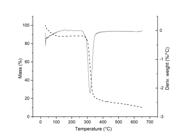
The second step is attributed to the degradation of the organic sample, specifically amylose and amylopectin, which occurs between 320 °C and 338 °C, and in this step the sample presented a mass loss of approximately 63%. The third step was attributed to carbonization and ash formation, which generally occurs at temperatures above 550 °C (Nogueira et al. 2018). The carbonization of cowpea starch occurred at a temperature of 584 °C, and the ash formation (9%) at 650 °C.
The narrow and long peak of the DTG curve indicates that a rapid degradation reaction occurs between 300 and 338 °C. The temperature of cowpea starch thermal decomposition was 319.93 °C. As a result, cowpea starch has good thermal stability since it does not decompose at 190 °C (Sharlina et al. 2017). Thus, cowpea starch shows potential for use in the canning industry. Canning is a preservation process that involves heating, filling, and sealing containers. The coldest part of the food must reach at least 120 °C for 20 minutes or 145 °C for a few seconds. During can filling and heating, starches are employed to control product thickness (Nguyen Starch 2025).
The starch paste properties were affected by amylose, lipid and phosphorus content as well as by the length of amylopectin branch chains (Mesquita et al. 2016). Peak viscosity, which is the capacity of the starch to swell without physical breakdown, was 5129 cP. Hamid et al. (2015) explained that a higher value for peak viscosity is attributed to a higher level of amylose content. The results obtained for cowpea starch paste properties are presented in Figure 5.

The minimum viscosity was 3154 cP, a value similar to that reported for water chestnut starch, 3258 cP. Normally the minimum viscosity is characterized by a decline in starch viscosity after peak viscosity is achieved, due to granule breakdown at high temperature (95 °C) (Wang et al. 2018). Minimum viscosity was followed by a reduction in viscosity known as break viscosity, and the value for cowpea starch was 1978 cP. The break viscosity measures the cooked starch´s susceptibility to disintegration. The higher the break viscosity the lower the capacity of starch to tolerate heating and sheer stress (Hamid et al. 2015). The break viscosity is influenced by the extent of amylose leaching, friction provoked by swollen granules and competition between the leached amylose and the remaining granules for available water (Hamid et al. 2015).
At break viscosity, the dilated granules burst and the amylose molecules are leached. As the temperature drops (50 °C), amylose molecules and the leached amylopectin tend to reassociate, resulting in starch retrogradation (Wang et al. 2018). The high retrogradation value of cowpea starch (1099 cP) is consistent with its high amylose content. In a study involving cowpea flour conducted by Hamid et al. (2015), it was reported that the high retrogradation tendency of the sample indicated its suitability for food products such as gluten-free oriental noodles.
The final viscosity was 4250 cP, a value similar to that found for corn starch (4173 cP) and superior to purple bean starch (2569 cP). This parameter is used to measure the affinity to retrogradation of starches. The rise in final viscosity is attributed to the aggregation of amylose molecules that occurs during cooling (Wang et al. 2018).
On the other hand, variations in the final viscosities among cultivars may be linked to variations in amylose content. It seems that starch with high amylose content reassociates more readily than starch with high amylopectin content. This occurs because linear chains (amylose molecules) can orient themselves in parallel (Wang et al. 2018). The pasting temperature of cowpea starch was 78 °C, similar values were reported for other bean starches, varying between 76.6 and 77.8 °C. The high temperature of bean starch paste indicates that this starch possesses greater resistance to swelling and rupture (Du et al. 2014).
CONCLUSIONS
The origin of the starch source, the high apparent amylose content, resistance to swelling and high gelatinization temperature suggest a considerable amount of resistant starch. The starch had an apparent amylose content of 46% and a high retrogradation content, which may be correlated. The starch showed good thermal stability with degradation at a temperature of 319 °C. The FTIR spectra of the starch confirms its carbohydrate nature. The starch had a high viscosity peak value and resistance to pasting temperature. Regarding industrial applications, green cowpea bean starch has potential in the canned food industry (due to its thermal stability), the baking industry (due to its higher water absorption capacity), and the bioplastics industry (due to its high amylose content). However, this starch is not suitable for products that require a freezing process (due to high syneresis). Future research should focus on modification methods, especially physical or enzymatic, to improve the freeze-thaw stability of cowpea starches.
As a suggestion for future research, we recommend the use of ultrasonic technology as an alternative to conventional methods for extracting starch from cowpea. This technique leverages acoustic cavitation to disrupt starch–protein interactions and remove impurities, such as micrometer-scale fibers, thereby enabling more sustainable extraction with reduced processing times (Pasumarthi et al. 2025). In addition to improving starch purity, this approach may enhance both the economic and environmental viability of the extraction process.
Acknowledgements
To Fundação de Amparo à Pesquisa do Estado da Bahia (FAPESB) for financial support.
References
- AGVAANDORJ A, LI Y & NO J. 2025. Effects of structural changes in cross-linked mung bean starch on freeze–thaw properties and in vitro digestibility. Foods 14: 689.
- ALI A, WANI TA, WANI IA & MASOODI FA. 2016. Comparative study of the physico-chemical properties of rice and corn starches grown in Indian temperate climate. J Saudi Soc Agric Sci 15: 75-82.
- AMBIGAIPALAN P, HOOVER R, DONNER E, LIU Q, JAISWAL S, CHIBBAR R, NANTANGA KKR & SEETHARAMAN K. 2011. Structure of faba bean, black bean and pinto bean starches at different levels of granule organization and their physicochemical properties. Food Res Int 44: 2962-2974.
- AMORIM TS, ANDRADE IHP, OTONI CG, CAMILLOTO GP & CRUZ RS. 2021. Tailoring breadfruit (Artocarpus altilis) starch: cross-linking starch from this non-conventional source towards improved technologically relevant properties and enabled food applications. Starch-Stärke 73: 2100058.
- ASHOGBON AO & AKINTAYO ET. 2013. Isolation and characterization of starches from two cowpea (Vigna unguiculata) cultivars. International Food Res J 20: 3093-3100.
- BETANCUR DA, ANCONA LAC, GUERRERO RI, MATOS GC & ORTIZ D. 2001. Physicochemical and functional characterization of baby lima bean (Phaseolus lunatus) starch. Starch-Stärke 53: 219-226.
- BEUCHAT LR. 1977. Functional and electrophoretic characteristics of succinylated peanut flour protein. J Agric Food Chem 25: 258-261.
- BRASIL. 2005. Resolução da Diretoria Colegiada RDC nº 263, de 22 de setembro de 2005. Regulamento técnico para produtos de cereais, amidos, farinhas e farelos. Diário Oficial da República Federativa do Brasil. Brasília: Ministério da Saúde.
- CHEN L, MA R, MCCLEMENTS DJ, ZHANG Z, JIN Z & TIAN Y. 2019. Impact of granule size on microstructural changes and oil absorption of potato starch during frying. Food Hydrocoll 94: 428-438.
- CHEN Z, SCHOLS HA & VORAGEN AGJ. 2003. Physicochemical properties of starches obtained from three varieties of Chinese sweet potatoes. J Food Sci 68: 431-437.
-
DATA BRIDGE MARKET RESEARCH. 2025. Global Biopolymers Market – Industry Trends and Forecast to 2030. Available from: https://www.databridgemarketresearch.com/reports/global-biopolymers-market#:~:text=Data%20Bridge%20Market%20Research%20analyses,4.1%25%20during%20the%20forecast%20period
» https://www.databridgemarketresearch.com/reports/global-biopolymers-market#:~:text=Data%20Bridge%20Market%20Research%20analyses,4.1%25%20during%20the%20forecast%20period - DHULL SB, TANWAR M, KHATKAR SK, CHANDAK A, CHAWLA P & GOKSEN G. 2024. Exploring the effects of thermal and non-thermal modification methods on morphological, functional, and pasting properties of mung bean starch. Innov Food Sci Emerg Technol 92: 103581.
- DU SK, JIANG H, AI Y & JANE JL. 2014. Physicochemical properties and digestibility of common bean (Phaseolus vulgaris L.) starches. Carbohydr Polym 108: 200-205.
- FUENTES C, KANG I, LEE J, SONG D, SJÖÖ, M, CHOI J, LEE S & NILSSON L. 2019. Fractionation and characterization of starch granules using field-flow fractionation (FFF) and differential scanning calorimetry (DSC). Anal Bioanal Chem 411: 3665-3674.
- GANI A, ASHWAR BA, AKHTER G, SHAH A, WANI IA & MASOODI FA. 2017. Physico-chemical, structural, pasting and thermal properties of starches of fourteen Himalayan rice cultivars. Int J Biol Macromol 95: 1101-1107.
- GETAHUN MJ, KASSIE BB & ALEMU TS. 2024. Recent advances in biopolymer synthesis, properties, & commercial applications: A review. Process Biochem 145: 261-287.
- HAMID S, MUZZAFAR S, WANI IA & MASOODI FA. 2015. Physicochemical and functional properties of two cowpea cultivars grown in temperate Indian climate. Cogent Food Agric 1: 1099418.
- HE W & WEI C. 2017. Progress in C-type starches from different plant sources. Food Hydrocoll 73: 162-175.
- HORNUNG PS, AVILA S, LAZZAROTTO M, LAZZAROTTO SRS, DE SIQUEIRA GLDA, SCHNITZLER E & RIBANI RH. 2017. Enhancement of the functional properties of Dioscoreaceas native starches: mixture as a green modification process. Thermochim Acta 649: 31-40.
- HUANG Z, LI Y, GUO T, XU L, YUAN J, LI Z & YI C. 2024. The physicochemical properties and structure of mung bean starch fermented by Lactobacillus plantarum Foods 13: 3409.
- JAMIR K & SESHAGIRIRAO K. 2017. Isolation, characterization and comparative study of starches from selected Zingiberaceae species, a non-conventional source. Food Hydrocoll 72: 247-253.
- JANE JLJ, KASEMSUWAN T, CHEN JF & JULIANO BO. 1996. Phosphorus in rice and other starches. Cereal Foods World 41: 827-832.
- JIMÉNEZ A, FABRA MJ, TALENS P & CHIRALT A. 2012. Edible and biodegradable starch films: a review. Food Bioproc Tech 5: 2058-2076.
- KESKIN SO, ALI TM, AHMED J, SHAIKH M, SIDDIQ M & UEBERSAX MA. 2021. Physico-chemical and functional properties of legume protein, starch, and dietary fiber-A review. Legume Sci 4: e117.
- LEE HL & YOO B. 2011. Effect of hydroxypropylation on physical and rheological properties of sweet potato starch. LWT-Food Sci Technol 44: 765-770.
- LEONEL M, DEL BEM MS, DOS SANTOS TP & FRANCO CML. 2021. Preparation and properties of phosphate starches from tuberous roots. Int J Biol Macromol 183: 898-907.
- LIM S, KASEMSUWAN T & JANE J. 1994. Characterization of phosphorus in starch by 31P-nuclear magnetic resonance spectroscopy. Cereal Chem 71: 488-493.
- LIMA RRO, SILVA JÚNIOR NPD, SÁ F & DE MP. 2014. Propriedades funcionais do amido do feijão andú (Cajanus cajan L.) nativo e modificado por acetilação. Rev Cient Faema 5: 113-126.
- LIU X, SUN Z, ZHAO W, ZHENG J, LIANG W & LI W. 2023. Spotlight on the multiscale structural and physicochemical properties of red adzuki bean starch through partial amylose removal combined with hydrochloric acid. Foods 12: 3366.
- LUO S, XIONG S, LI X, HU X, YE J & LIU C. 2023. Impact of starch–lipid complexes on oil absorption of starch and its mechanism. J Sci Food Agric 103: 83-91.
- MA M, WANG Y, WANG M, JANE JL & DU SK. 2017. Physicochemical properties and in vitro digestibility of legume starches. Food Hydrocoll 63: 249-255.
- MARQUEZI M, GERVIN VM, WATANABE LB, BASSINELLO PZ & AMANTE ER. 2016. Physical and chemical properties of starch and flour from different common bean (Phaseolus vulgaris L.) cultivars. Braz J Food Technol 19: 1-8.
- MARTA H, RIZKI DI, MARDAWATI E, DJALI M, MOHAMMAD M & CAHYANA Y. 2023. Starch nanoparticles: preparation, properties and applications. Polymers 15: 1167.
- MARTÍNEZ C & CUEVAS F. 1989. Evaluación de la calidad culinaria y molinera del arroz, 3rd ed., Cali: CIAT, 75 p.
- MENDES MLM, RIBEIRO APL & ALMEIDA EC. 2015. Efeito da acidificação nas propriedades físico-químicas e funcionais do amido de sementes de manga (Mangifera indica L.), variedade Tommy Atkins. Rev Ceres 62: 225-232.
- MESQUITA CB, LEONEL M, FRANCO CML, LEONEL S, GARCIA EL & SANTOS TPR. 2016. Characterization of banana starches obtained from cultivars grown in Brazil. Int J Biol Macromol 89: 632-639.
- MHASKE P, FARAHNAKY A & MAJZOOBI M. 2024. Advancements in pulse starches: exploring non-thermal modification methods. Foods 13: 2493.
- MOO-HUCHIN VM, CABRERA-SIERRA MJ, ESTRADA-LEÓN RJ, RÍOS-SOBERANIS CR, BETANCUR-ANCONA D, CHEL-GUERRERO L, ORTIZ-FERNÁNDEZ A, ESTRADA-MOTA IA & PÉREZ-PACHECO E. 2015. Determination of some physicochemical and rheological characteristics of starch obtained from Brosimum alicastrum Swartz seeds. Food Hydrocoll 45: 48-54.
- MORRISON WR, MILLIGAN TP & AZUDIN MN. 1984. A relationship between the amylose and lipid contents of starches from diploid cereals. J Cereal Sci 2: 257-271.
- MUNJAL SD, DHANKHAR J, SHARMA A & GULERIA P. 2024. Studies on physicochemical properties of rice bean (Vigna umbellata) starch: an underutilized legume. Curr. Res. Nutr Food Sci J 12: 408-422.
- NAGAI NF & ANDRÉS SC. 2023. Non-conventional starches isolated from agronomic-improved beans (Phaseolus vulgaris L.): a study of their structure and physicochemical properties. J Sci Food Agric 103: 5253-5260.
- NGUETCHO VST, BOUBA AA & YANOU NN. 2021. Technological potential of under-utilized starches from eight varieties of legumes grown in Cameroon. Braz J Biol 81: 01-10.
-
NGUYEN STARCH. 2025. The use of starch in the process of canning food. Available from: https://nguyenstarch.com/the-use-of-starch-in-the-process-of-canning-food/
» https://nguyenstarch.com/the-use-of-starch-in-the-process-of-canning-food/ - NILSSON K, SANDSTRÖM C, ÖZEREN HD, VILAPLANA F, HEDENQVIST M & LANGTON M. 2022. Physiochemical and thermal characterization of faba bean starch. J Food Meas 16: 4470-4485.
- NOGUEIRA GF, FAKHOURI FM & OLIVEIRA RA. 2018. Extraction and characterization of arrowroot (Maranta arundinaceae L.) starch and its application in edible films. Carbohydr Polym 186: 64-72.
- NUNES LB, SANTOS WDJ & CRUZ RS. 2009. Rendimento de extração e caracterização química e funcional de féculas de mandioca da região do semi-árido baiano. Alim Nutr Araraquara 20: 129-134.
- OYEYINKA SA, KAYITESI E, ADEBO OA, OYEDEJI AB, OGUNDELE OM, OBILANA AO & NJOBEH PB. 2021. A review on the physicochemical properties and potential food applications of cowpea (Vigna unguiculata) starch. Int J Food Sci Technol 56: 52-60.
- PASUMARTHI P, SINDHU S & MANICKAVASAGAN A. 2025. Ultrasound-assisted extraction and modification of pulse starches: a review. Cereal Chem 102: 266-289.
- PRAZERES KGM, ANDRADE IHP, CAMILLOTO GP & CRUZ RS. 2021. Physicochemical and functional properties of mangalô bean (Lablab purpureus L.) starch. Coll Surf A: Physicochem Eng Asp 610: 125706.
-
PULSE CANADA. 2025. Producing Pulse Starch. Available from: https://pulsecanada.com/processing/processing-technology
» https://pulsecanada.com/processing/processing-technology - PUNIA S, DHULL SB, SANDHU KS, KAUR M & PUREWAL SS. 2020. Kidney bean (Phaseolus vulgaris) starch: a review. Legum Sci 2: e52.
- RAMLI RN, LEE CK & KASSIM MA. 2020. Extraction and characterization of starch from microalgae and comparison with commercial corn starch. IOP Conf Ser Mat Sci Eng 716: 012012.
- RASHWAN AK, YOUNIS HA, ABDELSHAFY AM, OSMAN AI, ELETMANY MR, HAFOUDA MA & CHEN W. 2024. Plant starch extraction, modification, and green applications: a review. Environ Chem Lett 22: 2483-2530.
- REDDY CK, LUAN F & XU B. 2017. Morphology, crystallinity, pasting, thermal and quality characteristics of starches from adzuki bean (Vigna angularis L.) and edible kudzu (Pueraria thomsonii Benth). Int J Biol Macromol 105: 354-362.
- REN Y, YUAN TZ, CHIGWEDERE CM & AI Y. 2021. A current review of structure, functional properties, and industrial applications of pulse starches for value-added utilization. Compr. Rev. Food Sci Food Saf 20: 3061-3092.
- SAHO VTN & NJINTANG YN. 2023. Morphological, textural analysis and freeze-thaw stability of starches from legume grow in Cameroon. Braz J Biol 84: e269844.
- SALGADO SM, GUERRA NB, ANDRADE SAC & LIVERA AVS. 2005. Physico-chemical characteristics of the granule of the starch of the cowpea bean. Food Sci Technol 25: 525-530.
- SARIFUDIN A, KEERATIBURANA T, SOONTARANON S, TANGSATHITKULCHAI C & TONGTA S. 2020. Pore characteristics and structural properties of ethanol-treated starch in relation to water absorption capacity. LWT 129: 109555.
- SATHE SK & SALUNKHE DK. 1981. Isolation, partial characterization and modification of the great northern bean (Phaseolus vulgaris L.) starch. J Food Sci 46: 617-621.
- SCHIRMER M, HÖCHSTÖTTER A, JEKLE M, ARENDT E & BECKER T. 2013. Physicochemical and morphological characterization of different starches with variable amylose/amylopectin ratio. Food Hydrocoll 32: 52-63.
- SCHOCH TJ & LEACH W. 1964. Determination of absolute density; liquid displacement. Methods Carbohydr Chem 4: 101-103.
- SHARLINA ME, YAACOB WA, LAZIM AM, FAZRY S, LIM SJ, ABDULLAH S, NOORDIN A & KUMARAN M. 2017. Physicochemical properties of starch from Dioscorea pyrifolia tubers. Food Chem 220: 225-232.
- SINGH AK, LEE M, JANG D & LEE YS. 2024. Non-conventional starch nanoparticles: Novel avenues towards improving sustainability of the food packaging sector. Trends Food Sci Technol 143: 104273.
- SOUSA JLM, ROCHA MDM, SILVA KJD, NEVES ACD & SOUSA RRD. 2015. Potential of genotypes for fresh pod and fresh-shelled cowpea market. Pesqui Agropecu Bras 50: 392-398.
- SOUZA DCD, SILVA RDJ, GUERRA TS, SILVA LFL, RESENDE LV & PEREIRA J. 2019. Characterization of arrowroot starch in different agronomic managements. Rev Ceres 66: 323-332.
- SRICHUWONG S, ISONO N, JIANG H, MISHIMA T & HISAMATSU M. 2012. Freeze–thaw stability of starches from different botanical sources: Correlation with structural features. Carbohydr Polym 87: 1275-1279.
- TAKEITI C, FAKHOURI F, ORMENESE R, STEEL C & COLLARES F. 2007. Freeze-thaw stability of gels prepared from starches of non-conventional sources. Starch/Stärke 59: 156-160.
- TASSONI A ET AL. 2020. State-of-the-art production chains for peas, beans and chickpeas—valorization of agro-industrial residues and applications of derived extracts. Molecules 25: 1383.
- TATIANA TS, KING NML, KWITHONY DW, JOSI-NOELLINE S, JUDICAËL BN & PATRICE KL. 2021. Influence of experimental conditions and size on water absorption capacity and water solubility index of cassava root starch (Manhiot esculenta Cranz) cv Bonoua 2. Int J Curr Microbiol Appl Sci 10: 1095-1107.
- VÁZQUEZ-LEÓN LA, APARICIO-SAGUILÁN A, MARTÍNEZ-MEDINILLA RM, UTRILLA-COELLO RG, TORRUCO-UCO JG, CARPINTERO-TEPOLE V & PÁRAMO-CALDERÓN DE. 2022. Physicochemical and morphological characterization of black bean (Phaseolus vulgaris L.) starch and potential application in nano-encapsulation by spray drying. J Food Meas Charact 16: 547-560.
- WANG N, MAXIMIUK L, FENN D, NICKERSON MT & HOU A. 2020. Development of a method for determining oil absorption capacity in pulse flours and protein materials. Cereal Chem 97: 1111-1117.
- WANG X, REDDY CK & XU B. 2018. A systematic comparative study on morphological, crystallinity, pasting, thermal and functional characteristics of starches resources utilized in China. Food Chem 259: 81-88.
- WEBER FH, COLLARES-QUEIROZ FP & CHANG YK. 2009. Physicochemical, rheological, morphological, and thermal characterization of normal, waxy, and high amylose corn starches. Food Sci Technol 29: 748-753.
- WOO SH, KIM JS, JEONG HM, SHIN YJ, HONG JS, CHOI HD & SHIM JH. 2021. Development of freeze-thaw stable starch through enzymatic modification. Foods 10: 1-10.
- XIONG J, LI Q, SHI Z & YE J. 2017. Interactions between wheat starch and cellulose derivatives in short-term retrogradation: Rheology and FTIR study. Food Res Int 100: 858-863.
- ZHANG C & LIM ST. 2021. Physical modification of various starches by partial gelatinization and freeze-thawing with xanthan gum. Food Hydrocoll 111: 106210.


