| Matute Formation, Spain |
Tithonian–Berriasian |
Pteranodontoidea indet. Pterodactyloidea indet. |
Puértolas-Pascual et al. (2023)
|
– |
| Purbeck Group, England |
Berriasian |
Ctenochasmatidae Gnathosaurus macrurus Plataleorhynchus streptorophodon Ctenochasmatidae indet. Ornithocheiromorpha Ornithocheiriformes indet. Azhdarchoidea ?Azhdarchidae indet. Pterosauria indet. (‘Doratorhynchus validus’) |
Howse & Milner (1995), Martill et al. (2013)
|
“Ornithocheirus species A” (NHMUK PV R 11958) was originally referred to Ornithocheiridae Seeley, 1870 by Howse & Milner (1995), the extent of which is subequal to Ornithocheiriformes Andres 2021. |
| Münder Formation, Germany |
Berriasian |
Ctenochasmatidae Ctenochasma roemeri |
Bennett (2007), Abel et al. (2021)
|
– |
| Cornet bauxite, Romania |
Berriasian |
?Dsungaripteridae indet. (or Azhdarchoidea indet.) ?Azhdarchidae indet. Pterodactyloidea indet. |
Dyke et al. (2011), Averianov (2014)
|
The pterosaur remains from Cornet bauxite have highly controversial affinities. Dyke et al. (2011) assigned one rostrum to Dsungaripteridae based on its edentulous tip. Averianov (2014) interpreted the purported alveoli behind the edentulous tip as neurovascular foramina, and accordingly referred it to Azhdarchoidea. Besides, the midline groove in this specimen is not commonly seen on the occlusal surface of the rostrum but the mandibular symphysis. Thus the phylogenetic position of this specimen needs to be revised. |
| Hastings Group, England |
Berriasian–Valanginian |
Ornithocheiromorpha ?Lonchodectidae Serradraco sagittirostris cf. Lonchodraco (or S. sagittirostris) ?Istiodactylidae indet. Anhangueridae Coloborhynchus clavirostris ?Azhdarchoidea indet. (‘Palaeornis cliftii’) |
Witton et al. (2009), Rigal et al. (2018), Sweetman (2023) |
Rigal et al. (2018) placed Serradraco sagittirostris in Lonchodectidae, but this was rebutted by Averianov (2020), who argued that Serradraco did not preserve diagnostic features of Lonchodectidae. The latter hypothesis was proved by the cladistic analysis of Andres (2021). ‘Palaeornis cliftii’ (NHMUK PV R 2253) was referred to Lonchodectidae by Witton et al. (2009) and considered to be distinct from Ornithocheiroidea sensu Unwin 2003 (which is roughly equal to Pteranodontoidea sensu Kellner 2003). Lonchodectidae has a controversial phylogenetic position but recently it was generally resolved as a subclade within Ornithocheiromorpha, which is in turn a deeply diverging lineage of Pteranodontoidea sensu Kellner 2003. Averianov (2012) instead considered NHMUK PV R 2253 to be an azhdarchoid. These authors reached the consensus that this specimen did not belong with Pteranodontoidea. |
| Mengyin Formation, China |
Berriasian–Valanginian |
Ornithocheiromorpha idet. |
Young (1964), Xu & Li (2015)
|
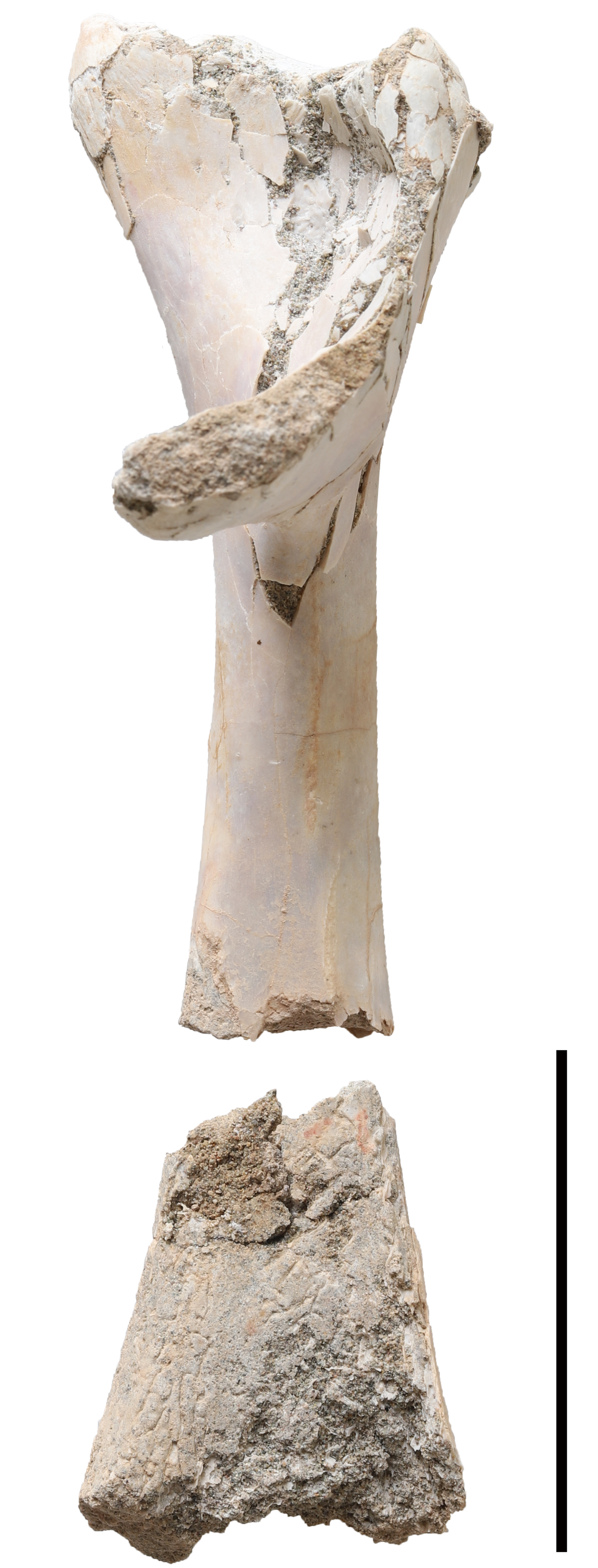
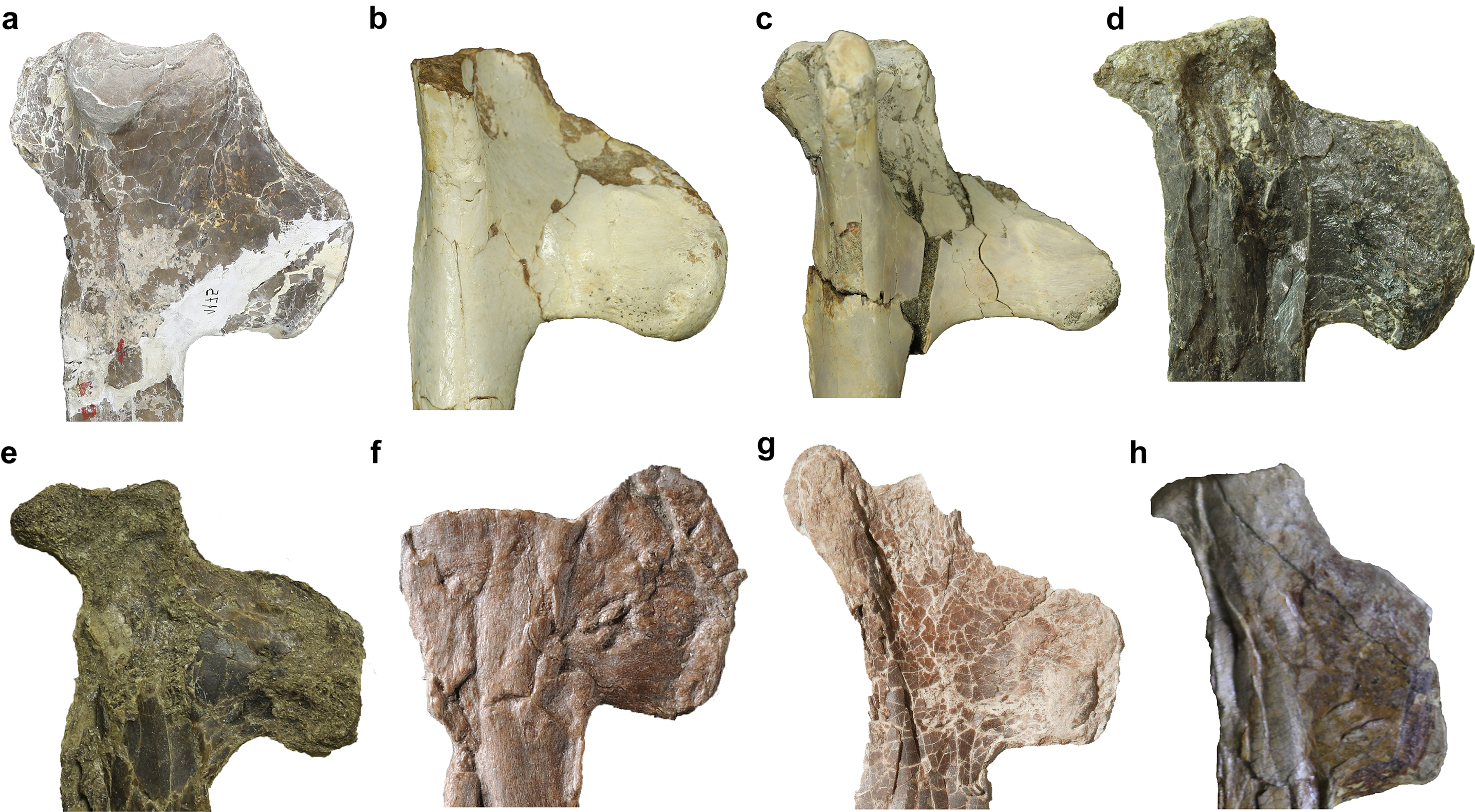
Young (1964) indicated that a first wing phalanx from Mengyin Formation pertained to Dsungaripterus. However, the conspicuous proximal groove of the extensor tendon process, and the posteroventral pneumatic foramen, suggest its affinity with Ornithocheiromorpha instead of Dsungaripteridae. |
| Stadthagen Formation, Germany |
Early Valanginian |
Ornithocheiromorpha Anhangueria indet. |
Abel et al. (2021)
|
– |
| Tugulu Group, Wuerho, China |
Valanginian |
Dsungaripteridae Dsungaripterus weii Noripterus complicidens Ornithocheiromorpha indet. |
Young (1964, 1973), this article |
– |
| Rosablanca Formation, Columbia |
Late Valanginian |
Ornithocheiromorpha Ornithocheiriformes indet. Pterodactyloidea indet. |
Cadena et al. (2020)
|
– |
| Sao Khua Formation, Thailand |
Late Valanginian– early Hauterivian |
Ornithocheiromorpha Ornithocheiriformes indet. |
Buffetaut (2003), Tucker et al. (2022)
|
– |

 The first ornithocheiromorph humerus from Wuerho (Urho), China, with a new isotopic age of the Tugulu Group
 Thumbnail
 Thumbnail
 Thumbnail
 Thumbnail
 Thumbnail
 Thumbnail