 Spectral-Directional Thermography for Scientific Applications
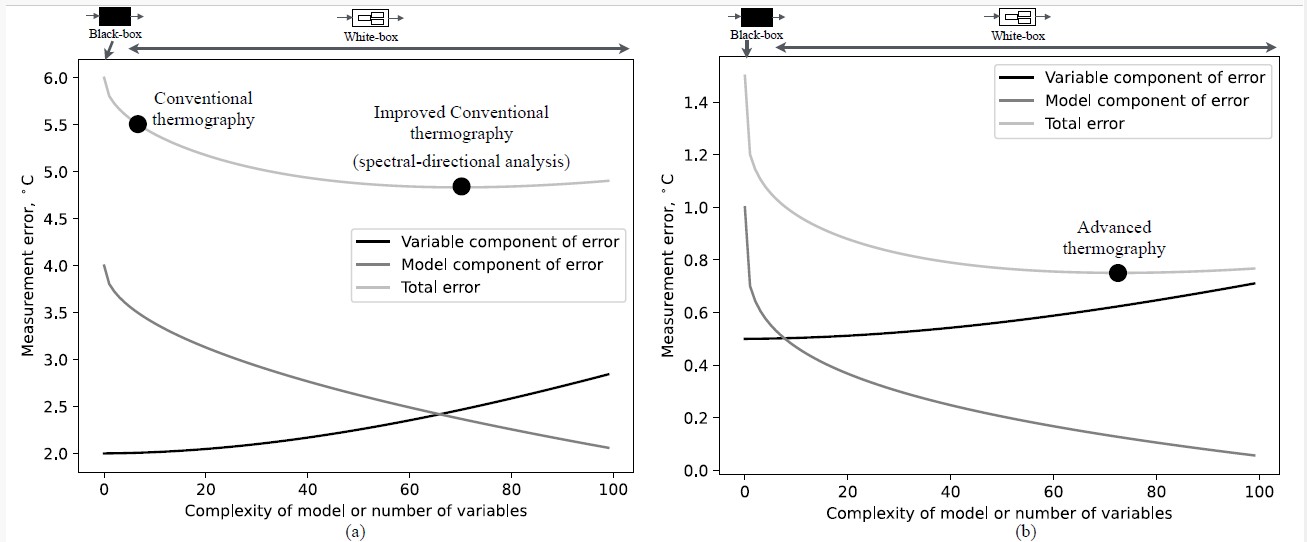
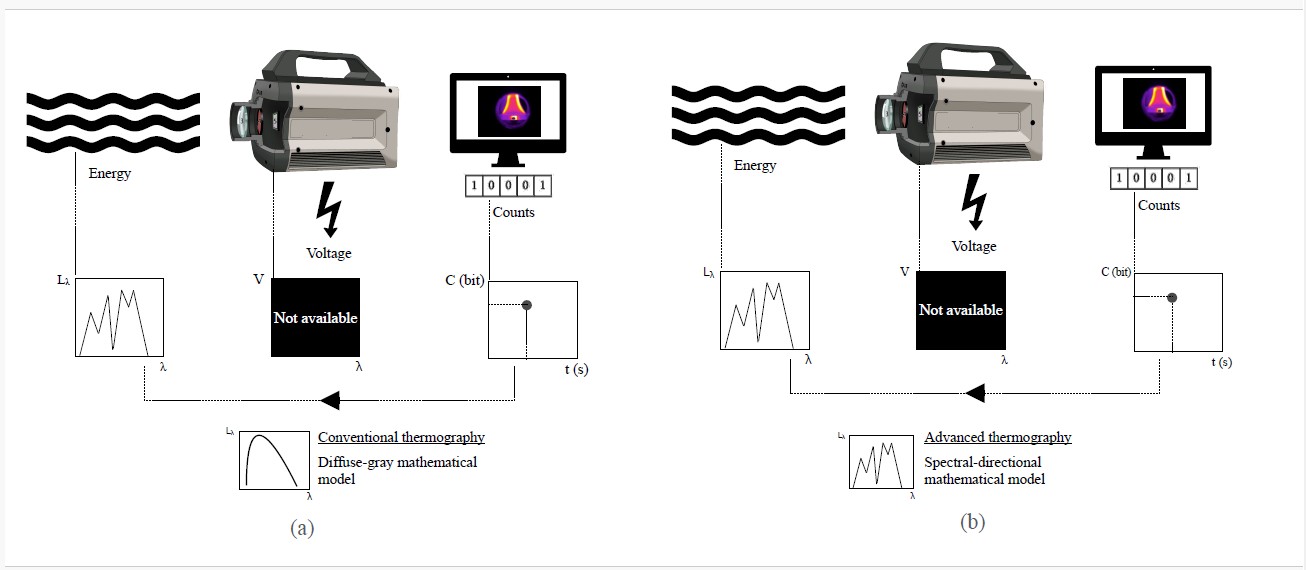
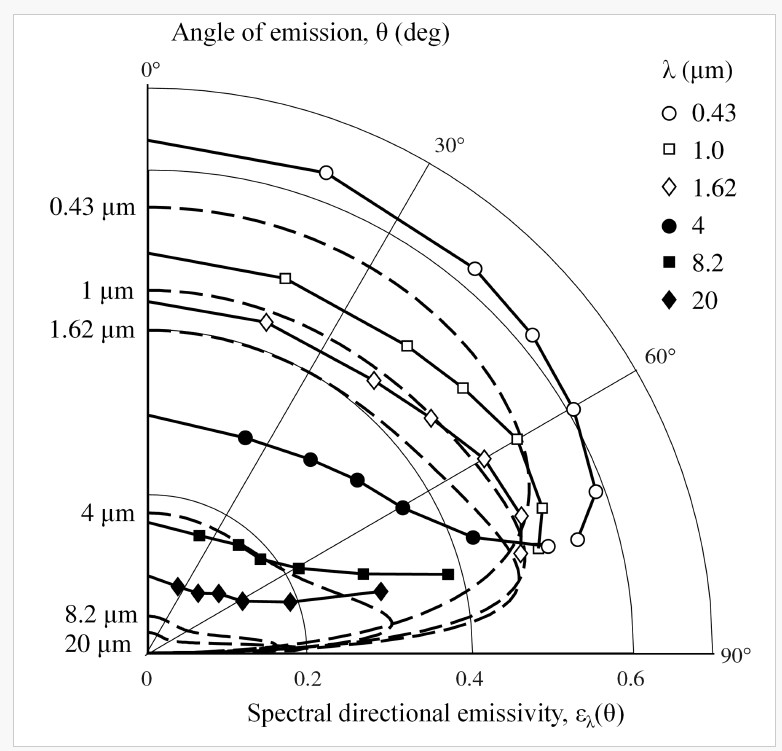
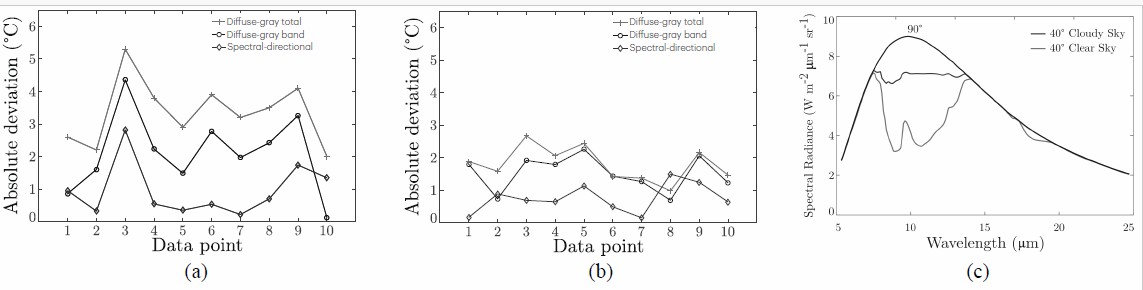
Thermography is a widely used non-contact technique in scientific research for temperature estimation and thermal analysis. However, conventional thermographic methods often suffer from significant measurement errors due to oversimplified thermal radiation models. This work addresses these limitations by contrasting conventional techniques with advanced thermography methods, introducing a spectral-directional modeling framework to enhance measurement accuracy and scientific rigor. Key contributions include the development of robust mathematical models, such as the three-component spectral-directional model, which effectively reduces measurement errors by accounting for the complexities of thermal radiation phenomena. These advancements enable accurate thermographic measurements, expanding the technique’s applicability across diverse scientific fields. To the best of the author’s knowledge, the application of the spectral-directional model to post-process thermal imager data represents a novel contribution to the field. Experimental results, supported by comparisons with peer-reviewed literature, highlight the transformative potential of this framework in a range of scientific applications.
Key words
thermography; measurement uncertainty; thermal radiation; calibration
 Thumbnail
 Thumbnail
 Thumbnail
 Thumbnail
 Thumbnail
 Thumbnail
 Thumbnail