
 Health consequences of deforestation and wildfires in the Amazon: a scoping review
ABSTRACT
The Amazon is crucial for global environmental balance, including climate regulation, yet deforestation and wildfires increasingly threaten human health. This scoping review aims to map and synthesize evidence on the human health impacts of deforestation and wildfires in the Amazon and to identify key knowledge gaps. Empirical studies linking deforestation or wildfires to human health outcomes in the Amazon, published up to December 2023, were eligible for inclusion. Comprehensive searches were conducted in Web of Science, Scopus, and PubMed, supplemented by reference backward citation tracking. Data were extracted and synthesized to categorize findings by study characteristics (e.g., geographic scope, methodology) and health outcomes. The review included 108 studies identifying 41 distinct health outcomes. Malaria was the most researched, in 43.5% of the studies, showing strong associations with forest loss, alongside leishmaniasis (American tegumentary leishmaniasis and visceral leishmaniasis), evaluated in 13.9% of them. Biomass burning was linked to respiratory and cardiovascular diseases, particularly in Brazil, and was associated with genotoxicity and mutagenicity. Land-use change is therefore a critical driver of public health vulnerability in the Amazon. There is an urgent need for integrative analytical models and multisectoral policies within the One Health framework to mitigate these complex impacts.
Keywords:
health and environment; heath and land use; land use land change; vector-borne diseases; smoke exposure
RESUMO
A Amazônia é crucial para o equilíbrio ambiental global, incluindo a regulação climática. Contudo, o desmatamento e os incêndios florestais ameaçam cada vez mais a saúde humana. Esta revisão de escopo visa mapear e sintetizar evidências sobre os impactos do desmatamento e dos incêndios florestais na Amazônia sobre a saúde humana, bem como identificar as principais lacunas de conhecimento. Estudos empíricos associando o desmatamento ou queimadas a desfechos de saúde humana na Amazônia, publicados até dezembro de 2023, foram considerados elegíveis para inclusão. Foram realizadas buscas abrangentes nas bases Web of Science, Scopus e PubMed, complementadas por rastreamento reverso de citações. Os dados foram extraídos e sintetizados de forma a categorizar os resultados de acordo com as características dos estudos (por exemplo, pelo escopo geográfico e metodologia) e os desfechos de saúde. A revisão incluiu 108 estudos, identificando 41 desfechos de saúde distintos. A malária foi o desfecho mais pesquisado, em 43,5% dos estudos, apresentando fortes associações com a perda de cobertura florestal, juntamente com a leishmaniose (leishmaniose tegumentar americana e leishmaniose visceral), pesquisada em 13,9% deles. A queima de biomassa foi associada a doenças respiratórias e cardiovasculares, sobretudo no Brasil, e também a genotoxicidade e mutagenicidade. A mudança no uso da terra é, portanto, um fator crítico de vulnerabilidade para a saúde pública na Amazônia. Há uma necessidade urgente de modelos analíticos integrativos e políticas multisetoriais no âmbito da Saúde Única (One Health) para mitigar esses impactos complexos.
Palavras-chave:
saúde e meio ambiente; saúde e mudanças no uso da terra; mudanças no uso da terra; doenças transmitidas por vetores; poluição do ar
INTRODUCTION
The Amazon is the world’s largest tropical rainforest, spanning approximately 6.7 million km2 across nine South American countries and containing about 40% of the planet’s remaining tropical forests (FAO and UNEP 2020, RAISG 2022). Beyond its ecological significance, the region plays a critical role in regulating global climate and hydrological cycles (Bottino et al. 2024).
However, this biome is increasingly threatened by accelerating deforestation and forest fires. The expansion of economic frontiers has already caused the loss of an estimated 8.7% of the Amazon’s forest cover between 2000 and 2020, with Brazil alone accounting for over 81% of this cumulative loss (RAISG 2022). By 2024, 15.3% of the Brazilian Amazon alone was already under anthropic use (Mapbiomas 2024). Despite recent deceleration of deforestation, numbers are still significant-with 1.24 million hectares of forest removed in Brazil in 2024 (Mapbiomas 2024). Wildfires, on the other hand, have not subsided. During the intense 2024 dry season, over 102,000 fire hotspots were recorded in the Brazilian Amazon-almost twice the number from the same period in 2023 (INPE 2024). These data highlight the magnitude of the environmental degradation driven by frontier expansion.
Such changes in land cover and land use not only exacerbate climate change through greenhouse gas emissions, but also endanger human health across South America. Deforestation significantly changes the ecology of wide areas, creating favorable conditions for the proliferation of vector-borne and zoonotic diseases (Codeço et al. 2021, Winck et al. 2022), while associated forest fires critically affect air quality (Requia et al. 2021, Ye et al. 2021). Simultaneously, social, demographic, and economic dynamics bring about multiple vulnerability factors to populations (Souza et al. 2019).
However, despite a growing body of research on health-environment interactions in the region, a comprehensive and integrated synthesis of how land-use change-particularly deforestation and wildfires-affects multiple dimensions of human health remains lacking. Existing literature often focuses on single diseases or specific air pollution events, limiting an integrated understanding of the numerous and complex causal pathways involved. This lack of a unified mapping of the evidence base, the varying methodologies used, and the diverse health outcomes prevent the formulation of integrated, One Health policy responses (FAO et al. 2022). Therefore, the complexity and breadth of this topic demand a scoping review approach to comprehensively map the field and identify diverse evidence types and knowledge gaps.
For this reason, this study aims to systematically map and synthesize the literature on the impacts of deforestation and wildfires on human health in the Amazon. Specifically, our objectives are to: 1) identify and classify the range of health outcomes linked to deforestation and wildfires; 2) characterize the nature, extent, and methodological approaches of the available evidence; and 3) identify knowledge gaps and implications for public health policies within the Amazon region and its exposed populations.
METHODS
Study design and protocol
This study was conducted as a scoping review and guided by the following research question: “What is the extent and nature of the available evidence regarding the impacts of deforestation and wildfires on human health in the Amazon region?” The methodology for reporting follows the guidance provided by the PRISMA Extension for Scoping Reviews (PRISMA-ScR) checklist (Tricco et al. 2018). The protocol for this review was not formally registered.
Eligibility criteria
We established the following criteria for selecting sources of evidence: 1) Population/Context: studies focused on health outcomes in the Amazon region, defined as conditions directly linked to environmental stressors, including infectious diseases, respiratory and cardiovascular morbidity, and indicators of genotoxicity; socio-economic determinants like food security or violence were noted when directly associated with the environmental drivers; 2) Concept: empirical studies that directly investigated the relationship between deforestation and/or wildfires and human health outcomes; 3) Study Design: no restrictions were placed on study design; 4) Language: to ensure broad geographic and linguistic coverage, we included studies published in English, Portuguese, Spanish, and French; 5) Publication Status: a) Primary Sources: the core of the evidence base was restricted to peer-reviewed articles indexed in the selected databases; b) Contextual Sources: a small number of non-peer-reviewed sources were also incorporated when they provided essential contextual data that supported the interpretation and discussion of the peer-reviewed findings, particularly those identified during the reference list checks; 6) Years Considered: We included studies published up to December 2023 with no start date restriction (this date was selected as the final point of the search execution to ensure the inclusion of the latest, fully available, and peer-reviewed literature at the time of the review’s commencement).
We therefore excluded studies that: 1) focused on particulate matter or air pollution without analyzing specific human health effects; 2) linked air pollution to health outcomes without identifying wildfires as the pollution source; 3) addressed climate change and health without isolating the role of deforestation or fires; and 4) discussed mercury contamination without connecting it to specific human health effects.
Search strategy and information sources
A comprehensive search was conducted in the following indexed bibliographic databases: Web of Science, Scopus and PubMed. We deliberately focused on indexed databases to ensure the replicability, quality control, and transparency of the search process. Google Scholar was excluded due to the low signal-to-noise ratio, lack of structured metadata necessary for systematic data extraction, and challenges related to search replication. The most recent search was conducted in April 2024.
The following combination of keywords (adapted for each database’s syntax) was used to ensure the capture of relevant evidence: (deforestation OR “forest fire” OR fire OR wildfire OR burn OR “slash and burn”) AND health AND Amazon. For Scopus, the two queries below were used for separate searches for deforestation and for wildfires:
1) TITLE-ABS-KEY (Amazon AND deforestation AND health);
2)TITLE-ABS-KEY (Amazon AND Health AND ( fire* OR “forest fire” OR wildfire* OR burn OR “slash and burn” ) )
Following the initial systematic search, we performed reference list checks (backward citation tracking) of all included articles to identify additional relevant studies that may have been missed by the initial search strategy.
Study selection and data charting
Screening was conducted initially using title and abstracts for duplicate removal and selection of studies based on the defined eligibility criteria. This initial screening was performed by Author 1 and checked by Author 2. Final selection over the remaining documents was based on full text assessment, resulting in the final inclusion of 108 studies (Figure 1).

Search and selection flowchart detailing inclusion and exclusion criteria for studies on health impacts of deforestation and wildfires in the Amazon.
Relevant data were extracted for every included study using a pre-defined and standardized data charting form. The extraction was performed by Author 1 and checked by Author 4 to ensure accuracy and minimize charting error.
Data were then classified according to the following variables: health outcomes; environmental drivers (deforestation and/or wildfires); impacted countries; impacted Brazilian states, if in Brazil; scale of health impacts (local, municipal, state level, country level, Brazilian Amazon, Pan-Amazon, etc.); time scale and duration of study; scale of environmental change involved; demographics (age, gender, ethnicity); and methodology. Stratification by one or more variables allowed for knowledge gap detection, comparison and contrast between studies (e.g., studies using similar methodologies in similar spatial scales), as well as for analysis of relationships between variables (e.g., associations between drivers and health outcomes). Finally, data were aggregated by driver (i.e., deforestation and wildfires) and, within each driver, by health outcome.
RESULTS
Study characteristics
Our literature search and selection procedure identified 108 documents matching inclusion criteria for full review (Figure 1, Appendix Table A1). Research on the potential links between land use change and human health in the Amazon started to gain traction in the 2010s, with nearly 70% of the studies included in this review published in the last ten years of our search period (Figure 2), likely due to the integration of large-scale datasets and models on deforestation, wildfires, and air pollution, combined with improved analytical tools.
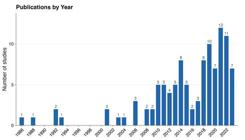
Number of published studies per year on health impacts of deforestation and forest fires in the Amazon.
Of the 108 studies included in our review (Supplementary Table S1), 58 (53.7%) specifically investigated deforestation, while 45 (41.7%) focused on wildfires; three studies addressed both drivers and the remaining two investigated deforestation indirectly by analyzing conservation actions (Figure 3a). Geographically, the impacts researched are highly concentrated in Brazil and the Brazilian Amazon, accounting for 88.9% of all studies. Only six studies (5.6%) focused the Colombian Amazon, other six Peru, five (4.6%) Venezuela, and four each (3.7%) addressed Bolivia and French Guiana (Figure 3b).

Bibliometric characteristics of included studies (n = 108). (A) distribution of studies by primary ecological driver; (B) countries where health impacts were investigated (percentages reflect proportion of total studies, with values exceeding 100% as individual studies may cover more than one country); (C) country of affiliation of the first author; (D) institutional location of the first author, classified as Amazonian or Non-Amazonian.
We also analyzed the institutional landscape by charting the primary affiliations of the first authors. This analysis reveals a critical asymmetry in knowledge production, confirming the strong concentration of research in Brazil. Institutions located in this country lead 73.1% of the studies, followed by institutions in the United States (14.8%) and the United Kingdom (5.6%) (Figure 3c). The presence of non-Brazilian Amazonian countries leading the research is negligible, with only one study led by a Colombian university, one by a Venezuelan one, and one by an institution in French Guiana. Within Brazil, the research footprint is dominated by institutions in the largest southeastern cities: the main branch of Fundação Oswaldo Cruz (Fiocruz), in Rio de Janeiro, has the strongest presence, leading 12 studies (11.1%), followed by the University of São Paulo (7 studies, 6.5%). More significantly, 76.9% of the research studies are led by institutions located outside the Amazon, including those in other Brazilian regions (Figure 3d). Furthermore, a substantial portion (23.2%) is led by non-South American institutions. This indicates that the majority of research published on the health impacts of deforestation and wildfires in the Amazon is executed by non-local institutions. A temporal analysis reveals that studies produced by Amazonian institutions have increased both in absolute and relative numbers over the last decade. However, their participation has not shown a consistent upward trend. Instead, they have fluctuated significantly-for instance, dropping from a 60% participation in 2010 to 0% in 2018 and up to 28.6% in 2023 (Figure 4). This indicates that the expansion of the field remains primarily driven by non-Amazonian institutions, reinforcing the structural nature of this institutional knowledge gap.

Temporal trend for research leadership of studies on health impacts of deforestation and wildfires in the Amazon by Amazonian institutions. Bars represent the number of studies per year.
In terms of spatial scale, 23 studies (21.3%) assessed health impacts at the municipal, parish or community level while 20 studies (18.5%) focus the Brazilian Amazon as a whole, 18 (16.7%) address them at a state or province scale, and 11 (10.2%) gather or compare two or more municipalities (Figure 5).

Distribution of studies by geographic scope of health impact researched. Continental: health impacts of Amazon environmental changes analyzed for all of South America; Supranational: impacts encompass more than one country; National: country wide health impacts; Brazilian Amazon: since there are different delimitations of what is considered the Amazon in Brazil, we chose to classify them all under the category “Brazilian Amazon”, whether referring to the Legal Amazon, as defined by Brazilian law, the Amazon biome, as defined by IBGE, the Brazilian Institute for Geography and Statistics, or any other limits; Regional: impacts over two or more states or provinces within one country; Intermunicipal: impacts over two or more municipalities/districts/parishes; Municipal/District/Parish: impacts researched within municipal, district or parish limits; Local: impacts analyzed for one or more specific locations within the boundaries of one municipality/parish/district.
Methodologically, the studies fall into four study design and analytical categories: 1) Ecological and Spatiotemporal Studies: the largest group, encompassing 82.4% of the reviewed studies, focused on correlating aggregate environmental change with aggregate health outcomes over space or time; 2) Modeling and Risk Assessment Studies: using environmental transport models and exposure-response functions to estimate population risk or burden of disease from exposure to wildfire pollutants -9.3% of the studies; 3) Analytical Ecological/Quasi-Experimental Designs: employing advanced statistical or econometric models to infer causality, often by exploiting policy changes or time-series variation-4.6%; and; 4) Laboratory-based Assays: studies using in vitro or ex vivo samples to assess the cellular and genetic mechanisms of toxicity related to biomass smoke exposure- 3.7%.
Regarding the populations studied, 77.8% of the articles did not disaggregate results by demographic groups. Among those that did, children (54.2%) and the elderly (33.3%) were the most commonly analyzed, given their recognized vulnerability especially to smoke exposure. Despite the environmental and political significance of Indigenous populations in the Amazon, only five studies (4.6%) focused explicitly on their health in the context of deforestation or wildfires. Similarly, although a few studies mentioned gender and racial disparities, none was specifically designed to analyze these dimensions of vulnerability.
Main health outcomes
The studies collectively examined 41 distinct health impacts, grouped into seven outcome categories (Table 1). The most frequently studied issue was vector-borne diseases, appearing in 74.1% of the studies. Respiratory and cardiovascular diseases ranked second (39.8%), followed by other infectious diseases (11.1%).
The links between environmental change and epidemiological patterns are often complex. Malaria, for instance, shows quadratic relationships with deforestation, meaning that malaria risk does not increase linearly with forest loss, but rather peaks at intermediate levels of deforestation and declines thereafter, as the clearing of vegetation beyond a certain threshold reduces vector habitat (Santos and Almeida 2018). It also develops with extreme spatial focality, whereby transmission is highly concentrated in small, discrete geographic areas rather than distributed evenly across a landscape (Feged-Rivadeneira et al. 2018); and there are also bidirectional causal feedbacks, in which deforestation drives malaria incidence, but malaria burden in turn shapes land-use decisions by affecting the labor capacity and settlement patterns of affected populations (MacDonald and Mordecai 2019). American tegumentary leishmaniasis, in certain contexts, presents a negative correlation to deforestation (Rodrigues et al. 2019) and heterogeneous spatial distribution (Schroeder et al. 2020, Sousa Júnior et al. 2020). Health consequences of deforestation are shaped by a complex interplay of environmental, spatial, and socio-economic factors that vary across geographies and timeframes (de Oliveira Padilha et al. 2019, MacDonald and Mordecai 2019). This complexity challenges simplistic models or universal assumptions (Lana et al. 2017, Dal’Asta et al. 2018). The impacts therefore are profound, complex, and context-dependent, revealing that land-use change is not only an ecological concern but also a critical driver of social vulnerability and public health.
Ecological drivers of diseases
Deforestation is most consistently linked to vector-borne diseases, especially malaria (Sawyer 1986, 1988, 1992, Sawyer and Sawyer 1992, Castro et al. 2006, Vittor et al. 2006, Barros et al. 2011, Barros and Honório 2015, Saccaro et al. 2016, Chaves et al. 2018, Dal’Asta et al. 2018, Feged-Rivadeneira et al. 2018, Ilacqua et al. 2018, Santos and Almeida 2018, Souza et al. 2019, Codeço et al. 2021, Grillet et al. 2021, Laporta et al. 2021) and leishmaniasis in its distinct clinical manifestations (Saccaro et al. 2016, Gonçalves et al. 2019, Reis et al. 2019, Rodrigues et al. 2019, Sousa Júnior et al. 2020).
Worldwide, wildfires, mainly through the emissions of fine and coarse particulate matter (PM10 and PM2.5), have been consistently associated with a broad range of health impacts, with acute, medium, and long-term effects, especially respiratory and cardiovascular problems (Anderson et al. 2012, Reid et al. 2016). In the Amazon, the most consistent associations are with respiratory and cardiovascular morbidity and mortality (Ignotti et al. 2010, Smith et al. 2014, Reddington et al. 2015, Ballesteros-González et al. 2020, Butt et al. 2020, Requia et al. 2021, Ye et al. 2021, Campanharo et al. 2022, Rocha and Sant’Anna 2022, Schroeder et al. 2022, Santos Gonçalves et al. 2023). These effects extend beyond the Amazon, with transboundary pollution possibly burdening health systems across South America (Requia et al. 2021, Ye et al. 2021).
Malaria
Malaria remains the most studied health outcome. Evidence from Brazil (Sawyer 1986, 1988, 1992, Sawyer and Sawyer 1992, Castro et al. 2006, Barros et al. 2011, Barros and Honório 2015, Saccaro et al. 2016, Chaves et al. 2018, Dal’Asta et al. 2018, Ilacqua et al. 2018), Venezuela (Grillet et al. 2021), Colombia (Feged-Rivadeneira et al. 2018), and Peru (Vittor et al. 2006) confirm strong associations with deforestation.
In an analysis for the Brazilian Amazon (2004-2012), annual increases of 1% in municipal deforested area were associated with an increase of 14.5% (SE=5.59) to 23.2% (SE=9.03) in malaria incidence (Saccaro et al. 2016). Another analysis, also for the Brazilian Amazon (2003-2012), found that every 100 km2 of forest loss is associated, on average, with 11.78 (SE=0.053) malaria cases per 1,000 inhabitants (Santos and Almeida 2018).
The Frontier Malaria Hypothesis (FMH) (Sawyer 1986, 1988, 1992, Sawyer and Sawyer 1992, Castro and Singer 2001, Castro et al. 2006) is the theoretical model predominantly used to predict the emergence of malaria in rural settlements in the Brazilian Amazon (Ilacqua et al. 2018, de Oliveira Padilha et al. 2019). It posits that malaria on economic frontiers follows a temporal trajectory divided into three stages represented by a convex incidence curve over the period of settlement: 1) the Epidemic Stage, characterized by a rapid increase and high malaria rates, which predominate roughly 3 to 5 years after the onset of colonization and deforestation; 2) the Transition Period, during which malaria rates begin to decline, generally prevalent in the following years, approximately between the third and eighth year; 3) the Endemic Stage, in which malaria rates become low and more stable, typically beginning after the eighth year of colonization (Sawyer and Sawyer 1992).
Although widely used, the FMH has been criticized mainly for its emphasis on temporality (Ilacqua et al. 2018) and for assuming settlement homogeneity (Barros and Honório 2015). Studies show, for example, that older settlements-those more than 10 years old-are equally or more likely to experience high malaria incidence than recently opened areas (Barros et al. 2011, Barros and Honório 2015, Ilacqua et al. 2018). It has been suggested, in this regard, that forest-cover fragmentation, synthesized in the Forest Fringe Model (FFM) (Barros et al. 2011, Barros and Honório 2015) may have greater explanatory and predictive power than the length of occupation of a given area, as emphasized by the FMH.
More recent studies, however, confirm the predictive power of the FMH, because it accounts for both temporal and spatial aspects, and reinforce the complementarity between the two models (Laporta et al. 2021). The FFM provides the ecological and entomological mechanisms that explain the observed dynamics, whereas the FMH functions as a theoretical framework that combines ecology and socioeconomic factors to explain malaria epidemiology. In summary, three fundamental elements for health policy stand out in the combined models: 1) the deforestation of new areas is directly associated with malaria occurrence (Vittor et al. 2006, Olson et al. 2010, Chaves et al. 2018, Santos and Almeida 2018); 2) deforestation and malaria, however, have a bidirectional relationship: as deforestation advances beyond a certain threshold, it may reduce environments favorable to vector reproduction, leading to a subsequent decline; conversely, an increase in disease incidence may slow deforestation by affecting the economic, demographic, and migratory dynamics of the areas in question (MacDonald and Mordecai 2019, Laporta et al. 2021); 3) improvements in socioeconomic indicators, such as income, access to health services, or better housing and sanitation, are negatively associated with malaria incidence (Sawyer 1986, Sawyer and Sawyer 1992, Castro and Singer 2001, Castro et al. 2006, Achcar et al. 2011, Vieira et al. 2014, Terrazas et al. 2015, Santos and Almeida 2018, de Oliveira Padilha et al. 2019).
Other vector borne-diseases
Deforestation in the Amazon is significantly associated with the incidence of leishmaniasis in general, which is classified as a neglected tropical disease and an indicator of social and ecological vulnerability (Saccaro et al. 2016, Codeço et al. 2021). Rising leishmaniasis incidence has been associated with the percentage of deforested area and with the occupation of forested areas by populations living in precarious housing conditions (Saccaro et al. 2016, Barcellos et al. 2018). For example, an annual increase of 1% in municipal deforested area was associated with a 5.12% (SE=1.04) to 9.26% (SE=2.76) rise in American tegumentary leishmaniasis incidence (Saccaro et al. 2016). Human-driven landscape change, often linked to economic activities such as agriculture, livestock, mining, and urban expansion, creates new ecological conditions that favor contact among humans, vectors (phlebotomine sandflies), and reservoirs of the disease, including both wild and domestic animals (Ramos et al. 2014, Barcellos et al. 2018, Rodrigues et al. 2019, Codeço et al. 2021, Miranda et al. 2022). The persistence of the disease in degraded areas reinforces that prevention and control measures must take deforestation into account (Saccaro et al. 2016).
The different manifestations of the disease, including two forms of American Tegumentary Leishmaniasis (ATL) -Cutaneous and Mucocutaneous- and Visceral Leishmaniasis (VL), are caused by different parasites with distinct ecologies including different vectors and reservoir hosts, and therefore display distinct relationships with deforestation. These differences may help to explain seemingly contradictory findings. ATL is strongly associated with environmental degradation and the encroachment into forest ecosystems (Gonçalves et al. 2019, Codeço et al. 2021), with deforestation emerging as the most significant risk factor in some contexts and showing strong, direct spatial autocorrelation with case occurrence (Gonçalves et al. 2019). This arises possibly because vectors adapt well to secondary vegetation (capoeiras) and pasturelands that emerge after forest clearing (de Oliveira et al. 2021). However, studies in the Brazilian state of Amazonas have suggested a negative association with the continuous proportional increase of deforested area, under the hypothesis that extensive removal of primary forest may increase the distance between households and the wild transmission cycle (Rodrigues et al. 2019). Visceral Leishmaniasis has been associated both with deforestation (Miranda et al. 2022) and denser forest cover, as expressed by EVI (Enhanced Vegetation Index) (Reis et al., 2019). A likely explanation of such apparently contradictory results lies in disorganized urbanization pushing toward forest edges. As deforestation gives way to urban expansion, livestock, and mining, it facilitates the adaptation of the transmission cycle to peri-domestic and urban environments (Miranda et al. 2022).
For dengue, zika, and chikungunya, evidence of associations with deforestation is weaker, reflecting their predominantly urban dynamics (Saccaro et al. 2016, Barcellos et al. 2018, Kalbus et al. 2021, Marinho et al. 2022, Fernandes et al. 2023). However, dengue (and other diseases transmitted by the Aedes mosquito) have been associated with unplanned urban expansion and to the absence of basic sanitation, factors that become more severe in areas affected by large infrastructure projects that drive deforestation (Barcellos et al. 2018, Kalbus et al. 2021). Studies in Porto Velho (Rondônia state, Brazil), for example, have found that deforestation, combined with migratory processes and poor housing and sanitation conditions, can facilitate the introduction and spread of pathogens, with dengue showing an outbreak in the direct influence area of hydroelectric complexes (Barcellos et al. 2018). A study in the Brazilian state of Tocantins showed that deforestation and temperature were among the most important variables associated with dengue cases (Marinho et al. 2022). Moreover, the incidence of Aedes-borne diseases (Dengue, Zika and Chikungunya) is higher in municipalities dominated by agricultural and grain-based technological trajectories, which are associated with higher deforestation rates (Codeço et al. 2021). However, the correlation between the magnitude of deforestation and dengue incidence can be inconsistent in some contexts -studies have not found a significant relationship between dengue incidence in rural areas and deforestation (Kalbus et al. 2021).
Respiratory and cardiovascular diseases
Across scales and methodologies, there is strong evidence linking wildfire-related air pollution in the Amazon -especially PM2.5 and PM10- to respiratory and cardiovascular illnesses, increase in micronuclei frequency, lung cancer and low birth weight among other impacts (Sisenando et al. 2011, 2012, Oliveira Alves et al. 2014, 2015, 2017, Silva et al. 2014, de Oliveira Galvão et al. 2018, Machin and Nascimento 2018, Requia et al. 2021, Ye et al. 2021). However, biomass burning in the Amazon affects not only air quality in the region, but throughout South America (Reddington et al. 2015, Ballesteros-González et al. 2020). “Wildfire waves” - days when both fire activity and PM2.5 levels exceed the 99th percentile (2008-2018) - are associated with 23% (95% CI: 12-33) more respiratory and 21% (95% CI: 8-35) more cardiovascular hospitalizations nationally in Brazil, with the North region experiencing even greater spikes-38% (95% CI: 30-47) and 27% (95% CI: 15-39), respectively (Requia et al. 2021).
A 10 μg/m³ rise in wildfire-related PM₂.₅ was associated with increases in all-cause hospitalizations in Brazil by 1.65% (95% CI: 1.51-1.80), respiratory admissions by 5.09% (4.73-5.44), and cardiovascular cases by 1.1% (0.78-1.42) within 24 hours. Children under four, children aged 5-9, and the elderly, are especially affected. It has been estimated that 0.53% (95% CI: 0.48-0.58) of all-cause hospitalizations in Brazil-around 35 cases per 100,000 people annually-could be attributed to these pollutants (Ye et al. 2021). Prist and colleagues (Prist et al. 2023) have estimated that an increase of 1 kg of PM2.5 in the Brazilian Amazon to lead to 21 new additional respiratory and cardiovascular disease cases (±0.1 case) in the same region, and two new cases (±1 case) specifically within Indigenous territories. The deforestation of 1% of forest area in a municipality in the Brazilian Amazon could generate 82 new additional respiratory and cardiovascular disease cases (±4 cases).
For nine Brazilian Amazon states, it has been found that a 1% increase in air pollution from biomass burning was associated with 8% more child hospitalizations (p=0.001), 10% more for the elderly (p < 0.001), and 5% more for adults in general (p=0.017; no measure of uncertainty supplied) (Ignotti et al. 2010). Similarly, a 1.5% monthly increase (CI=95%: 0.6-2.4) in respiratory admissions was found, for the 2010 decade, per standard deviation of pollution, across the Brazilian Amazon, reaching up to 14% when PM2.5 exceeded 75 μg/m³-indicating a non-linear relationship (Rocha and Sant’Anna 2022). At least 5% (95% CI: 4.9-5.1) of all respiratory hospitalizations, between 2005 and 2018, in the Amazon, are estimated to be attributable to fire exposure (Campanharo et al. 2022). In the 2019 fire season alone, nearly 5,000 premature deaths, or 10% (95% CI: 5-17) of all premature deaths due to PM2.5 in Brazil, were attributable to fire emissions (Nawaz and Henze 2020). Vulnerable groups such as Indigenous peoples (Fellows et al. 2021, Vitorino et al. 2022), children (Ignotti et al. 2010, Silva et al. 2013, Ye et al. 2021, Rocha and Sant’Anna 2022), and the elderly (Ignotti et al. 2010, Ye et al. 2021) are disproportionately affected. Wildfires account for 50-80% (1998-2005) of the variance in mortality by acute respiratory disease and chronic obstructive pulmonary disease among the elderly in the Brazilian state of Rondônia (p < 0.001 for all associations; no measure of uncertainty supplied) (Castro et al. 2009). Had Brazil met its deforestation targets between 2013 and 2020, improved air quality during this period could have prevented an estimated 2,300 (95% CI: 2,000-2,650) PM2.5-related deaths in 2020, and 88,140 (95% CI: 68,250-111,720) fewer disability adjusted life years (DALYs) (Butt et al. 2022). Furthermore, in the Brazilian states of Acre, Amazonas, Pará, Mato Grosso and Rondônia, individuals exposed to high concentrations of PM2.5 faced a risk nearly two times higher of COVID-19 morbidity and mortality (Santos Gonçalves et al. 2023).
Nevertheless, it should be noted, a complicating factor for the implementation of effective health policies regarding the impacts of biomass burning lies on the fact that the affected areas are not necessarily those where wildfires occur. After all, air pollution often reaches far from its sources (Nascimento and Medeiros 2012, Rodrigues et al. 2013, de Andrade Filho et al. 2017, Schroeder et al. 2020, Requia et al. 2021, Ye et al. 2021).
Other impacts
Particulate matter (especially PM₁₀) collected from aerosols in the Brazilian Amazon have induced molecular and cellular damage in lung tissue, raising concerns about its carcinogenic potential (Oliveira Alves et al. 2017, de Oliveira Galvão et al. 2018). In vitro studies have shown that exposure to particulate matter from biomass burning in the Amazon leads to increased Reactive Oxygen Species (ROS) and oxidative stress, the secretion of inflammatory cytokines (TNF-α and IL-1β), and DNA fragmentation and cell death (apoptosis/necrosis) in pulmonary epithelial cells (Oliveira Alves et al. 2017). The presence of compounds such as polycyclic aromatic hydrocarbons (PAHs), nitro-PAHs, and oxy-PAHs in these emissions contributes to this genotoxic potential (Oliveira Alves et al. 2017).
Deforestation has also been associated with Hansen disease (Silva et al. 2010) and zoonotic infections (Winck et al. 2022). During COVID-19, deforestation, fires, and road expansion were associated with increased spread of the disease, with transport networks acting as facilitating mechanisms and environmental degradation potentially aggravating health outcomes (Vitorino et al. 2022). Indigenous mortality by COVID-19 was up to 136% higher than the national average (Fellows et al. 2021).
Conservation policies and health co-benefits
Evidence suggests that reducing deforestation and wildfires yields measurable health benefits. Policies that led to reductions in wildfires in Brazil have been associated with a ∼30% decline in particulate matter concentrations during the dry season in the Amazon (Reddington et al. 2015). It has been estimated that the 40% reduction in deforestation rates achieved after 2004 may have prevented 1,060 premature adult deaths (95% CI: 390-1,720) annually in South America through reductions in air pollution (Reddington et al. 2015). Because Indigenous lands are responsible for 27% of all fine particulate matter absorption in the Amazon, it has been estimated they avoid 15 million cases of respiratory and cardiovascular diseases and save over US$ 2 billion in health costs every year (Prist et al. 2023).
Policy simulations suggest that reducing certain types of fires could decrease hospitalizations, although the causal effect of fire control policies themselves was not directly identified (Morello 2023). Protected areas and Indigenous territories are pointed as particularly effective, being associated with improved birth outcomes (Carrillo et al. 2019), and lower incidence of respiratory infections, diarrhea, and malaria-the 63% expansion of protected areas seen in Brazil between 1990 and 2010 is estimated to have reduced ARI (Acute Respiratory Infection), diarrhea, and malaria by 1.5% (SE=0.012), 2% (SE=0.010), and 6% (SE=0.036), respectively, in an average Amazonian municipality (Bauch et al. 2015).
It has also been suggested, however, that conservation efforts may increase malaria burden (Valle and Clark 2013) by increasing forest fringe areas in certain contexts, with towns closer to protected areas showing a greater incidence of the disease than more distant ones.
Research gaps and limitations
Knowledge gaps remain significant, with the links between environmental degradation and neglected tropical diseases, such as Chagas disease, dengue, Zika and Chikungunya, still poorly understood. In that sense, a key limitation of the included studies is their heavy reliance on mandatory disease notification systems, which are subject to underreporting, especially in remote or marginalized Amazonian areas with poor healthcare coverage (Cucunubá et al. 2024, dos Santos Hage et al. 2025).
Most studies focus on the Brazilian Amazon, neglecting other Amazonian countries, while vulnerable groups such as Indigenous peoples, women, and racial minorities remain underrepresented. Long-term outcomes, including chronic respiratory conditions, mental health, and intergenerational impacts, are also poorly studied.
Methodologically, the reliance on ecological designs and aggregate data introduces several well-documented limitations. They are particularly vulnerable to ecological bias - the failure of group-level effect estimates to reflect individual-level biological relationships - which can be severe and cannot be detected from ecological data alone (Morgenstern 1995). This fundamentally limits causal inference, as cross-level inferences from aggregate to individual are susceptible to confounding by group-level factors, effect modification across groups, and temporal ambiguity (Morgenstern, 1995). Additionally, when aggregate measures are drawn from multiple data sources, as is common in studies linking deforestation or biomass burning indicators to disease registries, sampling fraction bias may further attenuate observed associations (Li 2025). Furthermore, few studies also integrate socioeconomic and behavioral variables, which are essential to disentangling pathways between environmental change and health.
Beyond this, the relatively low proportion of studies led by institutions within the Amazon region itself is noteworthy. As shown, institutions from other parts of Brazil predominantly coordinate the research, and the sum of studies conducted by institutions from non-Amazonian countries is also greater than that of research carried out by institutions actually located in the Amazon, pointing to important institutional weaknesses in the region.
DISCUSSION
The environmental health burden in the Amazon
This scoping review consolidates evidence that deforestation and wildfires in the Amazon are not only ecological disruptors, but also potential drivers of several major public health issues. The findings align with the assessment of the Science Panel for the Amazon (Hacon et al. 2024), which identifies a “quadruple burden” facing the region: the synergistic effects of climate change, biodiversity loss, ecosystem pollution (terrestrial and aquatic), and land-use change. Our results confirm that this burden likely translates into specific, measurable health outcomes, most notably the persistence of vector-borne diseases like malaria-strongly linked to deforestation frontiers-and the widespread impact of respiratory and cardiovascular conditions associated with wildfire smoke. However, important research gaps remain, especially regarding neglected tropical diseases, such as Chagas disease, dengue, Zika, Chikungunya, and the risk of zoonotic spillovers, as also noted by Rosenstock et al. (Rosenstock et al. 2023) and Hacon et al. (Hacon et al. 2024).
Vulnerability and inequality
A crucial finding is that these health impacts are unevenly distributed. The poorest, and among them Indigenous Peoples, emerge as the most vulnerable populations, facing a “double exposure” to environmental degradation and limited access to healthcare, as also pointed out by Chowdhury et al. (2024) and Hacon et al. (2024). While our review noted that only 5.6% of studies focused explicitly on Indigenous health, the available evidence indicates that these groups often act as the first line of defense against deforestation yet suffer disproportionately from its consequences. This shows a poor alignment between research and the most vulnerable populations (Rosenstock et al. 2023).
The results suggest that the relations between deforestation, wildfires and health in the Amazon should be considered in the context of converging social inequalities and environmental changes. Therefore, solutions must also come both ways, systemically integrating social and economic analysis to an enhanced understanding of the dynamics of land use change (Chowdhury et al. 2024, Hacon et al. 2024) through a One Health framework. Additionally, health policies must not only be regional but culturally sensitive and territorially specific.
Synergies and co-benefits of conservation
The evidence suggests that environmental governance is, effectively, health policy. Reducing deforestation and curbing illegal land clearing yield health co-benefits, safeguarding biodiversity while simultaneously reducing the ecological niches for disease vectors and the emission of toxic particulate matter. But promoting health in this context should go beyond conservation and fighting deforestation to include restoration and the strengthening of sustainable food systems (Hacon et al. 2024). These co-benefits provide a compelling economic and ethical justification for embedding health metrics into environmental licensing and land-use planning - a recommendation with precedent in the literature, from early calls to integrate health considerations upstream into land-use policy (Patz et al. 2004) to more recent frameworks for incorporating health outcomes into land-use decision-making (McClure et al. 2019).
However, policy prescriptions must navigate the complexity of local realities. As noted in the results, fire remains deeply intertwined with smallholder livelihoods. “Zero-fire” policies that ignore the lack of alternative technologies may inadvertently deepen social vulnerability and food insecurity. Effective interventions must therefore move beyond prohibitions to support sustainable production models and technical assistance for fire-free agriculture, ensuring that environmental protection does not come at the cost of the subsistence of local families (Morello et al. 2019, 2022, Cancio et al. 2025).
Challenges and the One Health imperative
Structural barriers persist in translating the evidence into action. The current monitoring infrastructure is fragmented; health data and environmental data are rarely integrated (Hacon et al. 2024). This review highlights the urgent need for integrative analytical models and context-sensitive public health tools that can attribute health damages to specific environmental drivers.
The complexity of the causal pathways-where deforestation alters vector ecology, water safety, and food security simultaneously-demands a shift from isolated responses to a One Health framework (FAO et al. 2022, Chowdhury et al. 2024, Hacon et al. 2024). This approach must be transdisciplinary and multisectoral, bridging the gap between ecology, epidemiology, and the social sciences (Rosenstock et al. 2023, Chowdhury et al. 2024). Furthermore, addressing the “institutional knowledge gap” identified in our results -where research is largely led by non-Amazonian institutions- is vital. Strengthening local research capacity will be essential in developing solutions that are grounded in the socio-ecological reality of the Amazon.
Limitations of this Review
This review has several methodological limitations. The search strategy, although systematic and reproducible, was restricted to indexed databases, which may have excluded grey literature, technical reports, and studies published in languages other than English, Portuguese, French and Spanish. Although backward citation tracking was carried out to minimize this risk, older scientific production on the health consequences of environmental changes in the Amazon may still have been missed.
The predominance of ecological study designs in the included literature also constrained our ability to synthesize findings at the individual level or to draw causal conclusions, as the methodological limitations inherent to such designs - including ecological bias, limited causal inference, and restricted confounder control - are largely inherited by any review that aggregates them. Similarly, the concentration of available studies in the Brazilian Amazon limited the geographic scope of our synthesis, regardless of the broader regional focus we sought to maintain. Finally, the heterogeneity of outcomes, exposures, and methods across included studies required a primarily narrative synthesis, which, despite our efforts toward systematization, inevitably involves some degree of interpretive judgment.
CONCLUSIONS
This review shows that deforestation and wildfires have wide and varied impacts on human health in the Amazon-many of them still underestimated-, and how environmental degradation and human health are deeply connected in the region. Most of the available evidence associates these environmental drivers with vector-borne, respiratory, and cardiovascular diseases. By offering a broad and encompassing view of health outcomes in the Amazonian context, this comprehensive synthesis points to the need for an integrative approach that further links environmental degradation and social inequality, also providing an essential, previously lacking, basis for One Health multisectoral policies. Strengthening environmental governance and public health policies through intersectoral and cross-border actions, aligned with the One Health framework, is urgently needed. Future studies should focus on gaps related to neglected tropical diseases, social inequalities, Indigenous peoples, and emerging health risks.
ACKNOWLEDGEMENTS
This study was developed within the scope of the Projeto de Saúde Única e Meio Ambiente at the Programa de Pós-Graduação em Ciências Ambientais of Universidade Federal de Goiás, which is financed by Fundação de Amparo à Pesquisa do Estado de Goiás (FAPEG and Coordenação de Aperfeiçoamento de Pessoal de Nível Superior (CAPES, Edital 38/2022). PCN benefited from a CAPES/FAPEG Doctoral scholarship, grant 202310267001307. DMS thanks CNPq for her scholarship.
REFERENCES
- Achcar, J.A.; Martinez, E.Z.; de Souza, A.D.P.; Tachibana, V.M.; Flores, E.F. 2011. Use of Poisson spatiotemporal regression models for the Brazilian Amazon forest: Malaria count data. Revista da Sociedade Brasileira de Medicina Tropical 44: 749-754.
- Anderson, J.O.; Thundiyil, J.G.; Stolbach, A. 2012. Clearing the Air: A Review of the Effects of Particulate Matter Air Pollution on Human Health. Journal of Medical Toxicology 8: 166-175.
- Ballesteros-González, K.; Sullivan, A.P.; Morales-Betancourt, R. 2020. Estimating the air quality and health impacts of biomass burning in northern South America using a chemical transport model. Science of the Total Environment 739: 139755.
- Barcellos, C.; Xavier, D.R.; Bulcão, J.A.S.; de Oliveira Silva, H.V.; Luigi, G.; da Silva, D.D.S.; et al. 2018. Health risk assessment associated with the implementation of the Madeira Hydroelectric Complex, Brazilian Amazon. Ambiente e Sociedade 21: e00191.
- Barros, F.S.M.; Honório, N.A. 2015. Deforestation and malaria on the amazon frontier: Larval clustering of Anopheles darlingi (Diptera: Culicidae) determines focal distribution of malaria. American Journal of Tropical Medicine and Hygiene 93: 939-953.
- Barros, F.S.M.; Arruda, M.E.; Gurgel, H.C.; Honório, N.A. 2011. Spatial clustering and longitudinal variation of Anopheles darlingi (Diptera: Culicidae) larvae in a river of the Amazon: The importance of the forest fringe and of obstructions to flow in frontier malaria. Bulletin of Entomological Research 101: 643-658.
- Bauch, S.; Birkenbach, A.; Pattanayak, S.; Sills, E. 2015. Public health impacts of ecosystem change in the Brazilian Amazon. Proceedings of the National Academy of Sciences 112: 7414-7419.
- Bottino, M.J.; Nobre, P.; Giarolla, E.; Da Silva Junior, M.B.; Capistrano, V.B.; Malagutti, M.; et al. 2024. Amazon savannization and climate change are projected to increase dry season length and temperature extremes over Brazil. Scientific Reports 14: 5131.
- Butt, E.W.; Conibear, L.; Reddington, C.L.; Darbyshire, E.; Morgan, W.T.; Coe, H.; et al. 2020. Large air quality and human health impacts due to Amazon forest and vegetation fires. Environmental Research Communications 2: 095001.
- Butt, E.W.; Conibear, L.; Smith, C.; Baker, J.C.A.; Rigby, R.; Knote, C.; et al. 2022. Achieving Brazil’s deforestation target will reduce fire and deliver air quality and public health benefits. Earth’s Future 10: e2022EF003048.
- Campanharo, W.A.; Morello, T.; Christofoletti, M.A.M.; Anderson, L.O. 2022. Hospitalization due to fire-induced pollution in the Brazilian legal Amazon from 2005 to 2018. Remote Sensing 14: 69.
- Cancio, A.K.C.; Guerrero-Moreno, M.A.; Da Silva, E.C.; Oliveira, F.A.; Dias-Silva, K.; Moura Jr, J.F.; et al. 2025. The impacts of fire use in the Brazilian Amazon: a bibliometric analysis. International Journal of Wildland Fire 34: WF24182.
- Carrillo, B.; Branco, D.K.; Trujillo, J.C.; Lima, J.E. 2019. The externalities of a deforestation control policy in infant health: Evidence from Brazil. Economic Development and Cultural Change 67: 369-400.
- Castro, H.A. de; Goncalves, K. dos S.; Hacon, S. de S. 2009. Trend of mortality from respiratory disease in elderly and the forest fires in the state of Rondonia/Brazil - period between 1998 and 2005. Ciência & Saúde Coletiva 14: 2083-2090.
- Castro, M.C.; Singer, B. 2001. Malaria foci and colonization processes on the Amazon frontier: New evidence from a spatial analysis and GIS approach. Princeton, NJ: Princeton University, Office of Population Research Paper presented at the XXIV General Population Conference (IUSSP) in Salvador, Bahia, Brazil, August 18-24, 2001.
- Castro, M.C. de; Monte-Mór, R.L.; Sawyer, D.O.; Singer, B.H. 2006. Malaria risk on the Amazon frontier. Proceedings of the National Academy of Sciences of the United States of America 103: 2452-2457.
- Chaves, L.S.M.; Conn, J.E.; López, R.V.M.; Sallum, M.A.M. 2018. Abundance of impacted forest patches less than 5 km2 is a key driver of the incidence of malaria in Amazonian Brazil. Scientific Reports 8: 7077.
- Chowdhury, R.; Talukder, B.; Basta, P.C.; Olivero-Verbel, J.; Polson-Edwards, K.; Galvao, L.; et al. 2024. Saving the Amazon in South America by a regional approach on climate change: the need to consider the health perspective. The Lancet Global Health 12: e913-e915.
- Codeço, C.T.; Dal’Asta, A.P.; Rorato, A.C.; Lana, R.M.; Neves, T.C.; Andreazzi, C.S.; et al. 2021. Epidemiology, Biodiversity, and Technological Trajectories in the Brazilian Amazon: From Malaria to COVID-19. Frontiers in Public Health 9: 647754.
- Cucunubá, Z.M.; Gutiérrez-Romero, S.A.; Ramírez, J.-D.; Velásquez-Ortiz, N.; Ceccarelli, S.; Parra-Henao, G.; et al. 2024. The epidemiology of Chagas disease in the Americas. The Lancet Regional Health - Americas 37: 100881.
- Dal’Asta, A.P.; Lana, R.M.; Amaral, S.; Codeço, C.T.; Monteiro, A.M.V. 2018. The urban gradient in malaria-endemic municipalities in acre: Revisiting the role of locality. International Journal of Environmental Research and Public Health 15: 1254.
- De Andrade Filho, V.S.; Artaxo Netto, P.E.; Hacon, S.S.; do Carmo, C.N. 2017. Spatial distribution of biomass burning and mortality among the elderly in a Brazilian Amazon region, 2001-2012. Ciência e Saúde Coletiva 22: 245-253.
- De Oliveira Padilha, M.A.; De Oliveira Melo, J.; Romano, G.; De Lima, M.V.M.; Alonso, W.J.; Sallum, M.A.M.; et al. 2019. Comparison of malaria incidence rates and socioeconomic-environmental factors between the states of Acre and Rondônia: A spatio-temporal modelling study. Malaria Journal 18: 306.
- Dos Santos Hage, R.; Bohm, B.C.; Casagrande, C.P.; Silva, S.C.M.; Soares, A.T.; Lima, J.V.; et al. 2025. Spatiotemporal expansion of dengue in Brazilian Amazon between 2001 and 2021. Scientific Reports 15: 1032.
-
FAO; UNEP. 2020. The State of the World’s Forests 2020 Forests, biodiversity and people Rome: FAO and UNEP, 214 p. ( (http://www.fao.org/documents/card/en/c/ca8642en ). Accessed on 11 apr 2026.
» http://www.fao.org/documents/card/en/c/ca8642en -
FAO; UNEP; WHO; WOAH. 2022. One Health Joint Plan of Action, 2022-2026 FAO; UNEP; WHO; World Organisation for Animal Health (WOAH). ( (http://www.fao.org/documents/card/en/c/cc2289en ). Accessed on 12 oct 2025.
» http://www.fao.org/documents/card/en/c/cc2289en - Feged-Rivadeneira, A.; Ángel, A.; González-Casabianca, F.; Rivera, C. 2018. Malaria intensity in Colombia by regions and populations. PLOS ONE 13: e0203673.
- Fellows, M.; Paye, V.; Alencar, A.; Nicácio, M.; Castro, I.; Coelho, M.E.; et al. 2021. Under-Reporting of COVID-19 Cases Among Indigenous Peoples in Brazil: A New Expression of Old Inequalities. Frontiers in Psychiatry 12: 638359.
- Fernandes, K.A.P.; de Almeida Filho, A.R.; Alves, T.V.M.; Bernardo, C.S.S.; Montibeller, M.J.; Mondini, A.; et al. 2023. A tale of 141 municipalities: the spatial distribution of dengue in Mato Grosso, Brazil. Transactions of the Royal Society of Tropical Medicine and Hygiene 117: 751-759.
- Gonçalves, N.V.; do Socorro Carvalho Miranda, C.; da Costa, R.J.F.; Guedes, J.A.; de Souza Matsumura, E.S.; Costa, S.B.N.; et al. 2019. Cutaneous leishmaniasis: Spatial distribution and environmental risk factors in the state of Pará, Brazilian Eastern Amazon. Journal of Infection in Developing Countries 13: 939-944.
- Grillet, M.; Moreno, J.; Hernández-Villena, J.; Vincenti-González, M.; Noya, O.; Tami, A.; et al. 2021. Malaria in Southern Venezuela: The hottest hotspot in Latin America. Plos Neglected Tropical Diseases 15: e0008211.
-
Hacon, S.; Rivera, G.A.; Rodrigues, Y.E.; Vscarra, F.E.; Andreazzi, Cecilia Siliansky; Winck, G.; et al. 2024. Saúde na Amazônia: desafios ambientais, sociais e econômicos - Policy Brief Painel Científico para a Amazônia, Rede de Soluções para o Desenvolvimento Sustentável das Nações Unidas, New York, 28 p. ( (https://www.aamazoniaquequeremos.org/pca-publicacoes/ ). Accessed on 12 dec 2025.
» https://www.aamazoniaquequeremos.org/pca-publicacoes/ - Ignotti, E.; Valente, J.G.; Longo, K.M.; Freitas, S.R.; de Souza Hacon, S.; Netto, P.A. 2010. Impact on human health of particulate matter emitted from burnings in the Brazilian Amazon region. Revista de Saude Publica 44: 121-130.
- Ilacqua, R.C.; Chaves, L.S.M.; Bergo, E.S.; Conn, J.E.; Sallum, M.A.M.; Laporta, G.Z. 2018. A method for estimating the deforestation timeline in rural settlements in a scenario of malaria transmission in frontier expansion in the Amazon region. Memórias do Instituto Oswaldo Cruz 113: e170522.
-
INPE. 2024. Plataforma Terra Brasilis. ( (https://terrabrasilis.dpi.inpe.br/ ) Accessed on 24 mar 2025.
» https://terrabrasilis.dpi.inpe.br/ - Kalbus, A.; de Souza Sampaio, V.; Boenecke, J.; Reintjes, R. 2021. Exploring the influence of deforestation on dengue fever incidence in the Brazilian Amazonas state. PLOS ONE 16: e0242685.
- Lana, R.M.; Riback, T.I.S.; Lima, T.F.M.; Da Silva-Nunes, M.; Cruz, O.G.; Oliveira, F.G.S.; et al. 2017. Socioeconomic and demographic characterization of an endemic malaria region in Brazil by multiple correspondence analysis. Malaria Journal 16: 397.
- Laporta, G.Z.; Ilacqua, R.C.; Bergo, E.S.; Chaves, L.S.M.; Rodovalho, S.R.; Moresco, G.G.; et al. 2021. Malaria transmission in landscapes with varying deforestation levels and timelines in the Amazon: a longitudinal spatiotemporal study. Scientific Reports 11: 6477.
- Li, Q. 2025. Assessing and adjusting for bias in ecological analysis using multiple sample datasets. BMC Medical Research Methodology 25: 112.
- MacDonald, A.J.; Mordecai, E.A. 2019. Amazon deforestation drives malaria transmission, and malaria burden reduces forest clearing. Proceedings of the National Academy of Sciences of the United States of America 116: 22212-22218.
- Machin, A.B.; Nascimento, L.F.C. 2018. Effects of exposure to air pollutants on children’s health in Cuiabá, Mato Grosso State, Brazil. Cadernos de Saúde Pública 34: e00006617.
-
Mapbiomas. 2024. Mapeamento Anual de Cobertura e Uso da Terra no Brasil - Coleção 9. ( (https://brasil.mapbiomas.org/wp-content/uploads/sites/4/2024/10/Factsheet-Amazonia_C9_01.10_v2.pdf ). Accessed on 11 apr 2026.
» https://brasil.mapbiomas.org/wp-content/uploads/sites/4/2024/10/Factsheet-Amazonia_C9_01.10_v2.pdf - Marinho, R.; Duro, R.; Mota, M.; Hunter, J.; Diaz, R.; Kawakubo, F.; et al. 2022. Environmental Changes and the Impact on the Human Infections by Dengue, Chikungunya and Zika Viruses in Northern Brazil, 2010-2019. International Journal of Environmental Research and Public Health 19:12665.
- McClure, M.; Machalaba, C.; Zambrana-Torrelio, C.; Feferholtz, Y.; Lee, K.D.; Daszak, P.; et al. 2019. Incorporating health outcomes into land-use planning. EcoHealth 16: 627-637.
- Miranda, C.; Costa de Souza, B.; Carvalho Garcia Miranda Filgueiras, T.; de Sousa, A.M.; Cibelle da Silva Peixoto, M.; Carvalho Garcia Miranda Filgueiras, T.; et al. 2022. Visceral Leishmaniasis and land use and cover in the Carajás integration region, eastern Amazon, Brazil. Tropical Medicine and Infectious Disease 7: 255.
- Morello, T.; Anderson, L.; Silva, S. 2022. Innovative fire policy in the Amazon: A statistical Hicks-Kaldor analysis. Ecological Economics 191: 107248.
- Morello, T.; Martino, S.; Duarte, A.F.; Anderson, L.; Davis, K.J.; Silva, S.; et al. 2019. Fire, tractors, and health in the amazon: A cost-benefit analysis of fire policy. Land Economics 95: 409-434.
- Morello, T.F. 2023. Hospitalization due to fire-induced pollution in the Brazilian Amazon: A causal inference analysis with an assessment of policy trade-offs. World Development 161: 106123.
- Morgenstern, H. 1995. Ecologic Studies in Epidemiology: Concepts, Principles, and Methods. Annual Review of Public Health 16: 61-81.
- Nascimento, L.; Medeiros, A. de. 2012. Admissions due to pneumonia and biomass burning: a spatial approach. Jornal de Pediatria 88: 177-183.
- Nawaz, M.O.; Henze, D.K. 2020. Premature Deaths in Brazil Associated With Long-Term Exposure to PM2.5 From Amazon Fires Between 2016 and 2019. GeoHealth 4: e2020GH000268.
- Oliveira Alves, N.; Brito, J.; Caumo, S.; Arana, A.; de Souza Hacon, S.; Artaxo, P.; et al. 2015. Biomass burning in the Amazon region: Aerosol source apportionment and associated health risk assessment. Atmospheric Environment 120: 277-285.
- Oliveira Alves, N. de; Vessoni, A.T.; Quinet, A.; Fortunato, R.S.; Kajitani, G.S.; Peixoto, M.S.; et al. 2017. Biomass burning in the Amazon region causes DNA damage and cell death in human lung cells. Scientific Reports 7: 10937.
- Oliveira Alves, N. ed; De Souza Hacon, S.; De Oliveira Galvão, M.F.; Simões Peixotoc, M.; Artaxo, P.; De Castro Vasconcellos, P.; et al. 2014. Genetic damage of organic matter in the Brazilian Amazon: A comparative study between intense and moderate biomass burning. Environmental Research 130: 51-58.
- de Oliveira Galvão, M.F.; de Oliveira Alves, N.; Ferreira, P.A.; Caumo, S.; de Castro Vasconcellos, P.; Artaxo, P.; et al. 2018. Biomass burning particles in the Brazilian Amazon region: Mutagenic effects of nitro and oxy-PAHs and assessment of health risks. Environmental Pollution 233: 960-970.
- de Oliveira, R.A.C.; do Socorro Carvalho Miranda, C.; Guedes, J.A.; Filgueiras, T.C.G.M.; Bichara, C.N.C.; de Souza Araújo, M.; et al. 2021. Cutaneous leishmaniasis in protected environmental areas in the Eastern Amazon: The case of São Félix do Xingu, Pará, Brazil. Journal of Infection in Developing Countries 15: 1724-1730.
- Olson, S.H.; Gangnon, R.; Silveira, G.A.; Patz, J.A. 2010. Deforestation and malaria in Mâncio Lima county, Brazil. Emerging Infectious Diseases 16: 1108-1115.
- Patz, J.A.; Daszak, P.; Tabor, G.M.; Aguirre, A.A.; Pearl, M.; Epstein, J.; et al. 2004. Unhealthy landscapes: policy recommendations on land use change and infectious disease emergence. Environmental Health Perspectives 112: 1092.
- Prist, P.; Sangermano, F.; Bailey, A.; Bugni, V.; Villalobos-Segura, M.; Pimiento-Quiroga, N.; et al. 2023. Protecting Brazilian Amazon Indigenous territories reduces atmospheric particulates and avoids associated health impacts and costs. Communications Earth & Environment 4: 34.
-
RAISG. 2022. Deforestación en la Amazonía al 2025. ( (https://infoamazonia.org/wp-content/uploads/2023/03/DEFORESTACION-AMAZONIA-2025_21032023.pdf ). Accessed on 11 apr 2026.
» https://infoamazonia.org/wp-content/uploads/2023/03/DEFORESTACION-AMAZONIA-2025_21032023.pdf - Ramos, W.R.; Medeiros, J.F.; Julião, G.R.; Ríos-Velásquez, C.M.; Marialva, E.F.; Desmouliére, S.J.M.; et al. 2014. Anthropic effects on sand fly (Diptera: Psychodidae) abundance and diversity in an Amazonian rural settlement, Brazil. Acta Tropica 139: 44-52.
- Reddington, C.L.; Butt, E.W.; Ridley, D.A.; Artaxo, P.; Morgan, W.T.; Coe, H.; et al. 2015. Air quality and human health improvements from reductions in deforestation-related fire in Brazil. Nature Geoscience 8: 768-771.
- Reid, C.E.; Brauer, M.; Johnston, F.H.; Jerrett, M.; Balmes, J.R.; Elliott, C.T. 2016. Critical Review of Health Impacts of Wildfire Smoke Exposure. Environmental Health Perspectives 124: 1334-1343.
- Reis, L.L. dos; da Silva Balieiro, A.A.; Fonseca, F.R.; Gonçalves, M.J.F. 2019. Visceral leishmaniasis and its relationship with climate and environmental factors in the state of Tocantins, Brazil, from 2007 to 2014. Cadernos de Saúde Pública 35: e00047018.
- Requia, W.J.; Amini, H.; Mukherjee, R.; Gold, D.R.; Schwartz, J.D. 2021. Health impacts of wildfire-related air pollution in Brazil: a nationwide study of more than 2 million hospital admissions between 2008 and 2018. Nature Communications 12: 6555.
- Rocha, R.; Sant’Anna, A. 2022. Winds of fire and smoke: Air pollution and health in the Brazilian Amazon. World Development 151: 105722.
- Rodrigues, M.G.D.A.; Sousa, J.D.D.B.; Dias, Á.L.B.; Monteiro, W.M.; Sampaio, V.D.S. 2019. The role of deforestation on American cutaneous leishmaniasis incidence: spatial-temporal distribution, environmental and socioeconomic factors associated in the Brazilian Amazon. Tropical Medicine and International Health 24: 348-355.
- Rodrigues, P.C. de O.; Ignotti, E.; Hacon, S. de S. 2013. Spatial and temporal distribution of burning and hospitalizations for respiratory diseases in children in the state of Rondônia, 2001-2010. Epidemiologia e Serviços de Saúde 22 (3): 455-464.
- Rosenstock, T.S.; Rowland, D.; Liew, Z.; Hickson, K.; Zeitler, L.; McMullin, S.; et al. 2023. Blind spots obscure understanding of how forests affect human health. The Lancet Planetary Health 7: e644-e645.
-
Saccaro, N.L.; Mation, L.F.; Sakowski, P.A.M. 2016. Impacts of deforestation on the incidence of diseases in the Brazilian Amazon. Instituto de Pesquisa Econômica Aplicada. ( (https://portalantigo.ipea.gov.br/agencia/images/stories/PDFs/TDs/ingles/dp_212.pdf ). Accessed on 14 aug 2024.
» https://portalantigo.ipea.gov.br/agencia/images/stories/PDFs/TDs/ingles/dp_212.pdf - Santos, A.S.; Almeida, A.N. 2018. The Impact of Deforestation on Malaria Infections in the Brazilian Amazon. Ecological Economics 154: 247-256.
- Santos Gonçalves, K..; Cirino, G.G.; da Costa, M.O.; de Oliveira do Couto, L.; Tortelote, G.G.; de Souza Hacon, S. 2023. The potential impact of PM2.5 on the Covid-19 crisis in the Brazilian Amazon region. Revista de Saúde Pública 57: 67.
- Sawyer, D. 1986. Malaria on the Amazon Frontier: economic and social aspects of transmission and control. Southeast Asian J Trop Med Public Health 17: 342-345.
- Sawyer, D. 1988. Frontier malaria in the Amazon region of Brazil: types of malaria situations and some implications for control. Brasília: PHO, WHO, TDR.
- Sawyer, D. 1992. Malaria and the environment. Brasília: Instituto Sociedade, População e Natureza.
- Sawyer, D.; Sawyer, D. 1992. The Malaria Transition and the Role of Social Research. In: Advancing Health in Developing Countries: The Role of Social Research, Auburn House, New York, p.105-122.
- Schroeder, L.; Veronez, M.R.; de Souza, E.M.; Brum, D.; Gonzaga, L.; Rofatto, V.F. 2020. Respiratory diseases, malaria and leishmaniasis: Temporal and spatial association with fire occurrences from knowledge discovery and data mining. International Journal of Environmental Research and Public Health 17: 3718.
- Schroeder, L.; de Souza, E.M.; Rosset, C.; Marques Junior, A.; Boquett, J.A.; Francisco Rofatto, V.; et al. 2022. Fire association with respiratory disease and COVID-19 complications in the State of Pará, Brazil. The Lancet Regional Health - Americas 6: 100102.
- Silva, A.M.; Mattos, I.E.; Ignotti, E.; Hacon, S.S. 2013. Material particulado originário de queimadas e doenças respiratórias. Revista de Saúde Pública 47: 345-352.
- Silva, A.M.C. da; Moi, G.P.; Mattos, I.E.; de Souza Hacon, S. 2014. Low birth weight at term and the presence of fine particulate matter and carbon monoxide in the Brazilian Amazon: A population-based retrospective cohort study. BMC Pregnancy and Childbirth 14: 309.
- Silva, D.R.X.; Ignotti, E.; Reinaldo, S.-S.; De Souza Hacon, S. 2010. Hansen’s disease, social conditions, and deforestation in the Brazilian Amazon. Pan American Journal of Public Health 27: 268-275.
- Sisenando, H.A.; Batistuzzo De Medeiros, S.R.; Saldiva, P.H.; Artaxo, P.; Hacon, S.S. 2011. Genotoxic potential generated by biomass burning in the Brazilian Legal Amazon by Tradescantia micronucleus bioassay: A toxicity assessment study. Environmental Health 10: 41.
- Sisenando, H.A.; de Medeiros, S.R.B.; Artaxo, P.; Saldiva, P.H.N.; de Souza Hacon, S. 2012. Micronucleus frequency in children exposed to biomass burning in the Brazilian Legal Amazon region: A control case study. BMC Oral Health 12: 6.
- Smith, L.; Aragao, L.; Sabel, C.; Nakaya, T. 2014. Drought impacts on children’s respiratory health in the Brazilian Amazon. Scientific Reports 4: 3726.
- Sousa Júnior, A.S.; Gonçalves, N.V.; do Socorro Carvalho Miranda, C.; de Oliveira Santos, B.; de Oliveira, R.A.C.; da Costa, R.J.F.; et al. 2020. Cutaneous leishmaniasis spatial distribution and epidemiological and environmental risk factors in Cametá, state of Pará, Brazil. Brazilian Journal of Infectious Diseases 24: 330-336.
- Souza, P.F.; Xavier, D.R.; Mutis, M.C.S.; da Mota, J.C.; Peiter, P.C.; de Matos, V.P.; et al. 2019. Spatial spread of malaria and economic frontier expansion in the Brazilian Amazon. PLOS ONE 14 (6): e0217615.
- Terrazas, W.C.M.; Sampaio, V.D.S.; De Castro, D.B.; Pinto, R.C.; De Albuquerque, B.C.; Sadahiro, M.; et al. 2015. Deforestation, drainage network, indigenous status, and geographical differences of malaria in the State of Amazonas. Malaria Journal 14 (1): 379.
- Tricco, A.C.; Lillie, E.; Zarin, W.; O’Brien, K.K.; Colquhoun, H.; Levac, D.; et al. 2018. PRISMA Extension for Scoping Reviews (PRISMA-ScR): Checklist and Explanation. Annals of Internal Medicine 169: 467-473.
- Valle, D.; Clark, J. 2013. Conservation Efforts May Increase Malaria Burden in the Brazilian Amazon. PLOS ONE 8 (3): e57519.
- Vieira, G.D.; Gim, K.N.M.; Zaqueo, G.M.; Alves, T.C.; Katsuragawa, T.H.; Basano, S.A.; et al. 2014. Reduction of incidence and relapse or recrudescence cases of malaria in the western region of the Brazilian Amazon. Journal of Infection in Developing Countries 8: 1181-1187.
- Vitorino, L.; De Souza, U.J.B.; Oliveira Reis, M.N.; Bessa, L.A. 2022. The impact of COVID-19 on the indigenous peoples related to air and road networks and habitat loss. PLOS Global Public Health 2: e0000166.
- Vittor, A.Y.; Gilman, R.H.; Tielsch, J.; Glass, G.; Shields, T.; Lozano, W.S.; et al. 2006. The effect of deforestation on the human-biting rate of Anopheles darlingi, the primary vector of falciparum malaria in the Peruvian Amazon. American Journal of Tropical Medicine and Hygiene 74: 3-11.
- Winck, G.; Raimundo, R.; Fernandes-Ferreira, H.; Bueno, M.; D’Andrea, P.; Rocha, F.; et al. 2022. Socioecological vulnerability and the risk of zoonotic disease emergence in Brazil. Science Advances 8: eabo5774.
- Ye, T.; Guo, Y.; Chen, G.; Yue, X.; Xu, R.; Coêlho, M.; et al. 2021. Risk and burden of hospital admissions associated with wildfire-related PM2.5 in Brazil, 2000-15: a nationwide time-series study. Lancet Planetary Health 5: E599-E607.
Data availability
The data that support the findings of this study are available, upon request, from the corresponding author, Pedro da Costa Novaes.
APPENDIX
Novaes et al. Health Consequences of Deforestation and Wildfires in the Amazon: A Scoping Review


