 A test of the River Continuum Concept with copepod functional groups in an Amazonian river
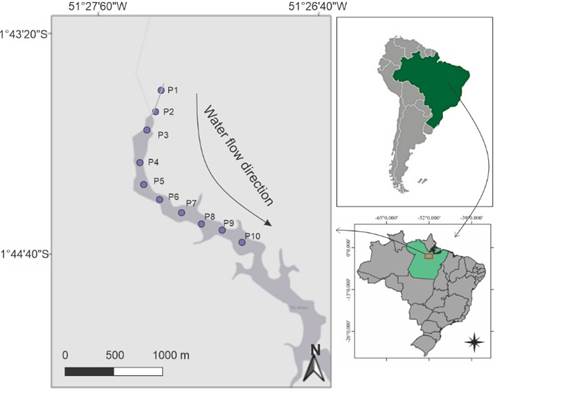
The River Continuum Concept (RCC) proposes links between functional groups within assemblages with habitat and ecological characteristics of different river sizes. This theory is supported by extensive evidence from fish and macroinvertebrate assemblages, mainly in temperate environments. We tested this theory with functional groups of copepods, a crustacean zooplankton, in a tropical river. We sampled 10 locations in September 2022 along the Curuá River in the northern Amazon. The individuals collected were classified into three groups (Calanoida, Cyclopoida, and Harpacticoida), reflecting their functional roles in the ecosystem (filter-feeders, predator and detritivore, respectively). River size was positively related to Calanoida abundance, and Cyclopoida occurred along all the river sizes, as expected by the RCC due to habitat structure and resource availability. Other habitat metrics were unimportant in explaining the distribution of copepods. Our study advances the knowledge about copepod assembly in Amazonian rivers, showing that the river continuum concept explains to some extent the structure of this assemblage.
Keywords:
RCC; Cyclopoida; Harpacticoida; Calanoida; width gradient
 Thumbnail
 Thumbnail
 Thumbnail