 Environmental filtering and network structure in ant-plant mutualisms across flooded and unflooded Amazonian forests
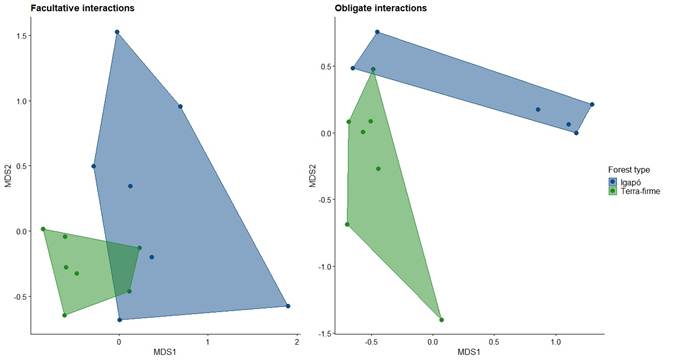
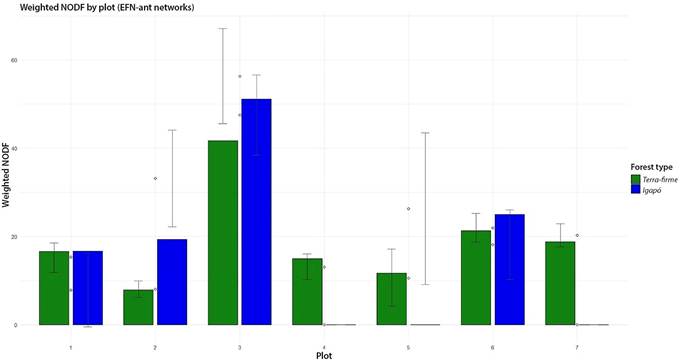
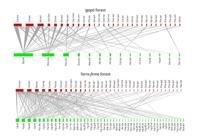
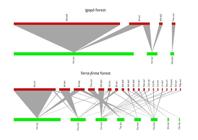
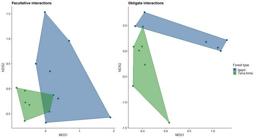
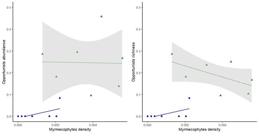
Environmental filtering associated with contrasting hydrological regimes may influence species persistence and the organization of network interactions in Amazonian forests. We evaluated how facultative (ant-extrafloral nectary) and obligate (ant-myrmecophyte) mutualisms differ between seasonally flooded igapó and unflooded terra-firme forests in Central Amazon. Across 14 plots, we recorded 446 interactions (273 facultative; 173 obligate) involving 72 plant and 72 ant species. Facultative interactions were richer and more frequent in terra-firme forests, forming significantly nested and modular networks, whereas igapó networks exhibited lower richness and no statistically significant network structure. In contrast, obligate interactions remained nested and modular in both forest types, despite substantial reductions in species richness in seasonally flooded igapó forests. The composition of ant-plant interaction pairs differed strongly between environments, mainly for obligate networks. Opportunistic ants nesting in myrmecophytes occurred almost exclusively in terra-firme and increased with myrmecophyte density. Overall, our results show that the structure and composition of ant-plant interactions differ markedly across flooded and unflooded Amazonian forests, with contrasting responses between facultative and obligate mutualisms. These findings reinforce the role of environmental heterogeneity in conserving ecological interactions in Amazonian forests.
Keywords:
ecological networks; extrafloral nectar; myrmecophyte plants; modularity; nestedness; opportunistic species
 Thumbnail
 Thumbnail
 Thumbnail
 Thumbnail
 Thumbnail
 Thumbnail